Author: Mei Ling Tan

  • Cebu Pacific to launch Clark-Guangzhou flights

    Cebu Pacific to launch Clark-Guangzhou flights

    Cebu Pacific said it is set to launch in November direct flights between Clark in Pampanga and Guangzhou, China amid increasing demand for leisure and business travel.

    “Cebu Pacific will launch next month direct flights between the Clark International Airport and Guangzhou, China, becoming the first Philippine carrier to link the two cities,” the low-cost carrier said in a statement on Saturday.

    Flights between Clark and Guangzhou will be operating four times a week beginning Nov. 11: Monday, Wednesday, Friday, and Saturday.

    “The flight departs Clark at 11:35pm; while the return flight departs at 3:15am of the next day,” it said.

    Cebu Pacific said the new route will cater to “increasing demand for leisure and business travel” and it will “further enhance the potential for investments in the special economic zones in Central Luzon, including the 9,450-hectare New Clark City.”

    It noted that the Clark International Airport is within proximity to Manila-Clark passenger railway connecting Manila to Clark and a cargo railway connecting Subic to Clark, which are both expected to be operational by 2022.

    “With direct air service between Clark and Guangzhou, it will be easier for entrepreneurs and businessmen in the e-commerce space to meet up with suppliers, Cebu Pacific Vice-President for Commercial Alex B. Reyes was quoted as saying in the statement.

    Guangzhou, one of China’s nine National Central Cities, is a wholesalers’ “haven for retail and popular consumer goods,” the budget carrier noted.

    The low-cost airline currently flies 27 times weekly between the Philippines and mainland China, with direct flights between Shanghai, Manila and Cebu; as well as Manila and Beijing, Guangzhou, Xiamen and Shenzhen.

    Cebu Pacific operator Cebu Air, Inc. recorded a 116% growth in its net income in the first half to P7.14 billion, driven by its increased passenger volume and higher average fares.

    Shares in Cebu Air went up 20 centavos or 0.22% to close at P92.20 apiece on Friday.

  • Strandbags owner invests $8 million in luggage startup

    Strandbags owner invests $8 million in luggage startup

    Direct-to-consumer luggage brand July has received $10.5 million from investors, including $8 million from Strandbags’ owner Michael Lewis, to take on luggage giant Samsonite.

    The online retailer, which opened its first brick-and-mortar store in Melbourne Emporium in August, says it will use some of the capital to launch in Singapore by the end of the year. It also plans to launch in New Zealand in the next six months and further Asia Pacific markets in 2020.

    “We’re not just opening stores [in these markets],” Athan Didaskalou, July’s co-founder, told Inside Retail. “We’re setting up warehousing and local teams.”

    According to Didaskalou, Australian brands that operate in Asian markets remotely are “arrogant”.

    “They think they can do everything from Australia,” he said. “It’s not just about [providing] local delivery and customer service, it’s about understanding the mindset of the country you’re in.”

    The elephant in the room

    The retailer, which currently offers three sizes of a hard-shell suitcase – carry-on, checked and ‘plus’ – is investing the rest of the capital into product development. Didaskalou declined to provide specific details about forthcoming products but said they would “shock” market leader Samsonite when released next March.

    “Samsonite is known for being ‘strong and light’. We’ll be tackling them on that ground,” he said.

    Didaskalou said the company is more focused on taking market share from Samsonite than competing with US-based direct-to-consumer rival Away, which entered the Australian market via a Sydney pop-up earlier this year.

    “Everyone wants to either talk about Away or Horizn Studios,” he said, referring to a Berlin-based brand in the same vein as July and Away, which was valued at more than US$1.4 billion this year.

    “The elephant in the room is the 90 percent market share-holder, which is Samsonite,” he said.

    “They own something between 10 and 15 brands and absolutely dominate the market, especially in Asia Pacific. These are the people we’re going after.”

    July has another trick up its sleeve. The brand has developed a new method of monogramming its suitcases using ultraviolet light, which will enable the retailer to offer new fonts and designs from artists and personalize products at scale. It currently takes about an hour to hand paint each design.

    The new system will launch in three weeks, and Didaskalou anticipates being able to personalize every suitcase it sells in 2020.

    Didaskalou said he and fellow July co-founder Richard Li, who also co-founded online furniture brand Brosa, have received “phenomenal” insights and advice on the luggage business from Felicity McGahan,
    Strandbags’ managing director, and Lewis, its owner.

    “I wouldn’t say it was a formal part of the deal for them to mentor us, it was more that they really know the space and wanted to help support [us],” he said.

    Strandbags currently is undergoing a digital transformation, and July is providing the bricks-and-mortar retailer with feedback on how it could operate better online and what today’s customers want in terms of delivery and e-commerce, according to Didaskalou.

    July is on track to reach $5 million in sales this year, its first full year in business, and working towards profitability. The company is in the process of opening new stores in Melbourne, Sydney and Singapore, and employs 24 people. It will continue to sell its products exclusively through its own channels.

  • RFG recapitalisation plan balloons to $190m

    RFG recapitalisation plan balloons to $190m

    Just days after the beleaguered Donut King, Gloria Jeans and Michel’s Patisserie franchisor announced a $160m capital raising initiative, Retail Food Group (RFG) has doubled down on their plans.

    Initially aiming to raise $150m from a fully underwritten institutional placement to repay the company’s crippling debt, RFG has now raised that figure to $170m, adding a further 200 million ordinary shares to the fold at a price of $0.10.

    Additionally, the brand has also upsized its share purchase plan from $10m to $20m.

    RFG executive chairman Peter George said the recapitalization plan had gathered significant support from investors and the wider community.

    “We are delighted with the support received for the Placement, and welcome a number of highly credentialed and supportive institutional investors to the shareholder register,” he said.

    “The recapitalization is transformational for the RFG business and will allow the RFG team to continue to harness the underlying value of the franchise network and enhance franchisee profitability.”

    RFG capital raising increase

    The now $190m RFG recapitalization plan forms part of a wider strategy to reduce the company’s mountain of debt.

    It comes after two successive years of dwindling profit, culminating in a $150m FY19 loss and bringing the net debt to $260m.

    “Following completion of the offer and debt restructure, RFG will have a sustainable go-forward debt facility, and a liquidity buffer to provide stability whilst management implements various performance improvement initiatives,” the company said.

    “The company considers the Debt Restructure and equity raising to be the best outcome available to the company and shareholders, delivering a strengthen the balance sheet and an opportunity for stabilization and business improvement.”

    Soliton Capital proposal

    Previous reports had indicated that RFG had received a $160m recapitalization proposal from Soliton Capital Partners, granting the firm limited exclusivity, however, the company on Tuesday confirmed no offer had been reached.

    “The company engaged in extensive discussions with Soliton Capital Partners during the exclusivity period,” RFG said.

    “However, the exclusivity period has now expired, and the company has not received any binding proposal from Soliton Capital Partners at this time.”

    Debt restructuring

    Tuesday’s announcement also brought further operational initiatives into the frame, with RFG revealing how it plans to achieve a previously announced $30m gross margin generation into the franchisee network.

    Specifically, the company plans on passing on significant savings to franchisees in connection with rental arrangements, fit-out and refurbishment costs, as well as greatly reducing the cost of goods. This includes a 15 to 20 per cent reduction in wholesale coffee pricing, which kicked off on July 1 this year.

    According to the franchisor, the initiative delivered an 18 percent increase in average coffee volumes ordered per store in July when compared to the prior months, and a 10 percent increase compared to July 2018.

    At present, RFG is still clinging to Friday’s FY20 underlying EBITDA guidance projection of between $42.0 and $46.0m.

    “Whereas retail continues to represent a challenging sector, RFG is beginning to observe the positive impacts of the business improvement measures being implemented by the company,” RFG said.

    The company will be hoping to see those positive impacts flow on, particularly in light of the share price slump that hit once the trading suspension was lifted early on Tuesday.

    Shares hit an all-time low of 12.5c following Friday’s initial recapitalization announcement, before regaining to 15c by around 11am.

  • ‘Unprecedented’ South Korean boycott damaging Japan’s retailers

    ‘Unprecedented’ South Korean boycott damaging Japan’s retailers

    Having now run for more than 100 days, the scale and impact of the South Korean boycott movement against Japanese products is unprecedented.

    It is costing retailers, importers, airlines and travel companies millions of dollars as a largely volunteer group of consumers rally citizens to their cause, popularised by its slogan ‘I Will Not Buy, I Will Not Go, and I Will Not Wear”.

    The South Korean boycott is rooted in discord between the two countries dating back to Japan’s colonial occupation of the Korean Peninsula before and during the Second World War and controversy over forced labor and sexual slavery. It expanded into a diplomatic crisis in July after Japan threatened to throttle exports of materials essential to South Korean industries.

    Prior to July, Japan was South Korea’s largest source of imports by value. Shortly after the boycott began, its ranking fell to third in July and to 13th in August. Last month it fell to 28th.

    Emforce, a South Korean digital marketing firm, has reported that the word ‘boycott’ appeared 1.18 million times on social media networks this year, which was 10 times the size of the previous boycott movement following Japan’s celebration of Takeshima Day in 2013.

    Japanese retailer Uniqlo is a prime example of the impact of the ‘I Will Not Wear’ boycott movement. Uniqlo has closed four Uniqlo stores since July and the number of people visiting stores that remained open has plummeted.

    According to records from eight credit-card companies, Uniqlo sales plunged by 70.1 percent to 1.77 billion won (US$1.49 million) in the fourth week of July from 5.94 billion won ($5 million) in the last week of June.

    However, amid the decrease in brick-and-mortar store sales, there is a sign of consumption picking up at Uniqlo’s online mall, with its popular winter products, heat-retaining underwear called Heattech and light-weight padded jackets selling out.

    Uniqlo is still expected to experience mixed fortunes in Korea this winter, as social media is still awash with messages urging users not to buy Japanese products and support the boycott.

    According to the Emforce analysis, among some 1.28 million posts on Twitter related to the boycott movement between July and August, 93.3 percent were retweets, and 6.7 percent were new posts. While retweets still account for the majority, there were 85,000 new posts about the boycott movement between July and August, which was eight times more than the total number of relevant tweets posted in the entire year of 2013.

    “It shows the scale of the movement and how each participant is taking deep interest in the matter from various standpoints,” said the report.

    “Netizens retweeted posts made not by the media or civil groups, but by other netizens advancing their own opinions and sharing the boycott list of Japanese products.”

    Data Lab, Line parent Naver Corp’s big-data platform, reported a decrease in the number of clicks on Japanese products throughout almost all sectors at online shopping malls.

    “The initial drive that’s been leading the movement is weakening. Nevertheless, it is now being replaced with a collective habit of rejecting Japanese products since more consumers are less inclined to buy due to the bad economy,” Data Lab said.

    “The aftereffects of the movement are expected to continue.”

    While some South Koreans are still purchasing Japanese products, the voluntary participation of the public still leaves little room for Japanese companies, according to Korea Bizwire.

    Japanese beer has all but disappeared from store shelves, with the Korea Customs Service, reporting just $6000 worth of Japanese beer crossed the border in September.

    The South Korean boycott of travel to Japan has also sent shockwaves through the Japanese economy. Passengers on flights bound for Japan dropped 30 percent in September from a year earlier during the Chuseok holiday season, the peak travel season.

    According to the Korea Economic Research Institute, there was a 27.6-per-cent drop in the number of South Korean tourists visiting Japan in July-August which cost the Japanese economy an estimated US$292 million.

    The October reservation rate also dropped and despite a reduction in the number of flights, occupancy was just 60 per cent on those still scheduled.


  • Karl Lagerfeld to launch in India this month

    Karl Lagerfeld to launch in India this month

    Fashion house Karl Lagerfeld is collaborating with premium Indian brand Cover Story to enter the Indian market.

    A limited-edition collection is being sold in selected Future Group stores in cities such as Ahmedabad, Pune and Hyderabad.

    “The collection is very global,” said Future Style Lab CEO Manjula Tiwari, according to a CNBC report. “The idea is to introduce the best of international fashion to India, but tailored for the Indian customer, whether it is in shape, color or even fabrics that work for our weather.

    “While scaling the operations for Future Style Lab, I realized there were lots of opportunities for international quality fashion. That is how we had conceived Cover Story to occupy the premium end of the Indian market. Our retail strategy also positions us next to some of the best high-street and luxury brands in malls. Maison Karl Lagerfeld approached us in London. The collaboration has been in the works for the past year.

    “There has been no attempt to play around with the House of Karl Lagerfeld’s DNA, which ensures that the clothes look like they have been bought in any world city in Europe or in London,” added Tiwari. “Even someone in Pune or Ahmedabad should be able to access global fashion without actually having to travel to say, London, to buy a Karl Lagerfeld. This was the last collection that the designer Karl Lagerfeld himself supervised before he passed away.”

    The brand is not the only international luxury label to make moves into the Indian market, with high-end jewelry retailer Tiffany setting up shop in the territory just two months ago in a joint venture with Reliance Brands.

  • Fave launches takeaway platform in Singapore

    Fave launches takeaway platform in Singapore

    Southeast Asian digital merchant-platform Fave has launched a food takeaway service in Singapore.

    Fave Takeaway will allow customers to pre-order their meal selection and make payment via the app’s digital wallet FavePay before picking up their order at participating stores. Customers can expect to collect their order within 30 minutes (or less) depending on the restaurants’ speed of service.

    Takeaway is part of Fave’s strategy to further digitize Southeast Asia’s F&B sector by allowing merchants to serve more customers beyond the capacity of their outlets while diversifying their revenue streams and increasing productivity.

    “As the [Singapore] government continues to push for a digital and seamless economy, Fave is helping SMEs adapt to the new landscape and in a more cost-effective way by giving them the tools to enable them to serve their customers in the best and efficient way possible,” said Fave co-founder and CEO Joel Neoh. “The introduction of Takeaway is our way of enabling that our merchants get the most out of the platform by increasing productivity and revenue.”

    “Queueing makes up a large portion of the average Singaporean’s time, but it is not something we would want to do when we are in a rush,” said Fave Singapore MD Ng Aik-Phong. “With the introduction of Takeaway, we hope to bring convenience and efficiency to our consumers while improving our platform for both merchants and consumers.”

    More than 200 merchants are participating in the launch of Takeaway with more to follow in the coming months.

    The new feature follows the launch of Fave’s Table Ordering service in May this year.

  • Hyundai Group To Invest $35 Billion In Mobility And Auto Technologies By 2025

    Hyundai Group To Invest $35 Billion In Mobility And Auto Technologies By 2025

    Hyundai Motor Group said it plans to invest 41 trillion won ($35 billion) in mobility and other auto technologies by 2025, part of which will be directed to an ambitious effort to become more competitive in self-driving cars that has also received government backing.

    The plan, which Hyundai said encompasses autonomous, connected and electric cars as well as technology for ride-sharing, comes after the automaker and two of its affiliates announced an investment of $1.6 billion in a venture with U.S. self-driving tech firm Aptiv.

    South Korea’s government is also onboard, unveiling more funding for autonomous vehicle technology with President Moon Jae-in declaring on Tuesday that he expected self-driving cars to account for half of new cars on the country’s roads by 2030.

    “The self-driving market is a golden market to revitalize the economy and create new jobs,” Moon said in a speech at Hyundai Motor’s research centre near Seoul.

    The government intends to spend 1.7 trillion won between 2021 and 2027 on self-driving technology. It expects Hyundai to launch level 4, or fully autonomous, cars for fleet customers in 2024 and for the general public by 2027, an industry ministry official told Reuters.

    But some experts question whether targets set by the government and the automotive group, which also includes Kia Motors Corp, are realistic given the technological and cost challenges and the lack of home-grown technology.

    In a 45-page report on future automotive technology, the government acknowledged South Korea lags in some key areas necessary for self-driving cars such artificial intelligence, sensors and logic chips.

    Other analysts noted that the prospects for self-driving cars are quite murky.

    General Motors Co’s self-driving unit, Cruise, said in July it was delaying the commercial deployment of cars past its target of 2019 as tech firms and automakers acknowledge it will take more time and money than they had expected to make autonomous vehicles safe for unrestricted use on public roads.

    South Korea’s government said it would prepare a regulatory and legal framework for autonomous cars and the safety questions they pose by 2024.

    It is also aiming to lay the technological and legal groundwork for demonstrations of flying cars by 2025. Hyundai Motor’s executive vice-chairman Euisun Chung said last month that the company is looking at developing flying cars.

    Hyundai has also received much government backing for hydrogen fuel cell cars, with Moon calling hydrogen power the “future bread and butter” of Asia’s No. 4 economy and declaring himself an ambassador for the technology.

  • Louis Vuitton in Thailand expands to Phuket

    Louis Vuitton in Thailand expands to Phuket

    Louis Vuitton in Thailand has unveiled a new store in Phuket, its first store outside the capital city of Bangkok. 

    Located in Central Phuket mall, the new boutique features unique interiors as the brand wants to embrace local elements and yet keep its international spirit.

    The interior expresses the Maison’s codes with subtle off-white cut-out panels in a pattern that reflects Louis Vuitton’s famous monogram motif, which appears to float like lace.

    The wall sculptures and installations reflect the store’s Sino-Portuguese style.

    Finally, to reflect the environment of Louis Vuitton in Thailand, tropical plants are placed through the store to highlight “tropical modernism”.

  • Vietnam’s Mobile World launches fashion-watch retail model

    Vietnam’s Mobile World launches fashion-watch retail model

    Vietnamese smartphone retailer, The Gioi Di Dong (Mobile World), has discovered a thriving new business model: a fashion-watch retail concept.

    The company offers a wide selection of watches from well-known fashion brands, including Michael Kors, Fossil and Casio. Watches are displayed along with other tech products in Mobile World’s outlets in a store-within-a-store concept.

    Since launching the fashion-watch retail model earlier this year, Mobile World claims to have built its share to 15 percent of the country’s fashion-watch sales. Last month, it sold more than 50,000 timepieces across 100 outlets.

    Doan Van Hieu Em, CEO of Mobile World Group, told Vietnam News he is planning to take his company’s share of the fashion-watch market to 50 percent next year, by opening stores in 500 of its 2000-strong network across the country.  His target is to sell 3 million units.

    “Mobile World’s sales capacity has even surpassed the suppliers’ expectations,” he said.

    “We are trying to find watch manufacturers around the world, supplying exclusive goods in large quantities to meet the rapidly expanding demand in the near future.”

  • Sri Lanka’s Island Tea opens its first branch at home

    Sri Lanka’s Island Tea opens its first branch at home

    Sri Lankan retail tea chain Island Tea has opened for the first time in its home territory with its first branch in Ella.

    The Ceylanka Trading-owned chain has blossomed in the Philippines over the past two years with more than 35 branches selling specialty Ceylon teas and fusion blends. The brand offers a range of popular drinks, including a variety of milk teas as well as fruit teas & green teas.

    Following the signing of franchise agreements in Columbo between ITC’s marketing director for the Philippines, India and Qatar Minodh de Sylva and Wild Holidays Limited chairman Vijith Welikala, the brand plans to expand in key Sri Lankan cities with an offering that is distinct from other local tea houses.

    As well as Sri Lanka, the firm also plans to further expand in the Philippines, India and Qatar this year.

  • Mobile app Ritual launches in Hong Kong to organize pickups

    Mobile app Ritual launches in Hong Kong to organize pickups

    Mobile pickup app Ritual has launched in Hong Kong as it expands its global footprint, targeting cities with strong restaurant industries.

    At the same time, the Canadian-and US-headquartered tech company is launching in Amsterdam, Hamburg and Berlin.

    “Whenever we expand into a new city or country, we look for population density, strong restaurant coverage, and a food-focused culture,” said Ray Reddy, co-founder and CEO of Ritual. “Hong Kong, Berlin, Hamburg and Amsterdam met that criteria for us while also allowing us to maximize on how much we could learn from new, non-English speaking markets.”

    Ritual provides restaurants with real-time data on store experience, food quality and customer satisfaction metrics so operators can increase their customer base, and keep up with customers’ favorites and run a better business, overall. The company’s social-ordering feature Piggyback connects more than 150,000 teams globally to connect and collaborate on lunch and coffee orders, making ordering more social and convenient.

    The mobile pickup app Ritual now covers more than 50 cities in seven countries globally. The company was founded in 2014 and has raised US$127.5 million in venture funding to date with headquarters in San Francisco and Toronto.

  • Japan’s RMK aims for Chinese consumers with Tmall Global launch

    Japan’s RMK aims for Chinese consumers with Tmall Global launch

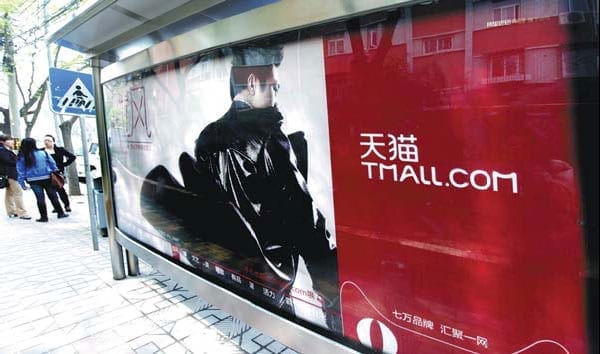
    Japanese cosmetics brand RMK has launched a flagship store on Chinese e-commerce platform Tmall Global.

    The move has been described as part of RMK’s broader focus to tap the lucrative Asia-Pacific beauty market and create a stable platform for beauty brands in China.

    Shagun Sachdeva, a consumer insights analyst at GlobalData, says RMK is already available in Japan, Taiwan, Hong Kong and South Korea.

    “The calculative move to tie up with Tmall Global has been made to indulge in omnichannel retailing with an aim to increase its presence in the high-value Chinese market and get access to a wider customer base,” he said.

    According to GlobalData, the Cosmetics and Toiletries market in China is growing at a steady pace and is almost double than that of in Japan last year.

    GlobalData’s 2018 fourth-quarter consumer survey revealed that 63 percent of Chinese consumers prefer online channels to buy beauty and grooming products.

    “The strategic decision to expand seems to be driven by rising popularity and growing demand of Japanese beauty products among Asia-Pacific consumers owing to perceived safety, better quality and multi-functionality,” said Sachdeva.

    “The brand has grabbed the opportunity of looking at the high intensity of J-beauty products being imported in China or bought by Chinese visitors in Japan. With the launch on Tmall Global, the company aims to target such customer base first and then include more products in its range soon.”

  • One-in-three Hongkongers leaving plastic credit cards in favor of e-wallets

    One-in-three Hongkongers leaving plastic credit cards in favor of e-wallets

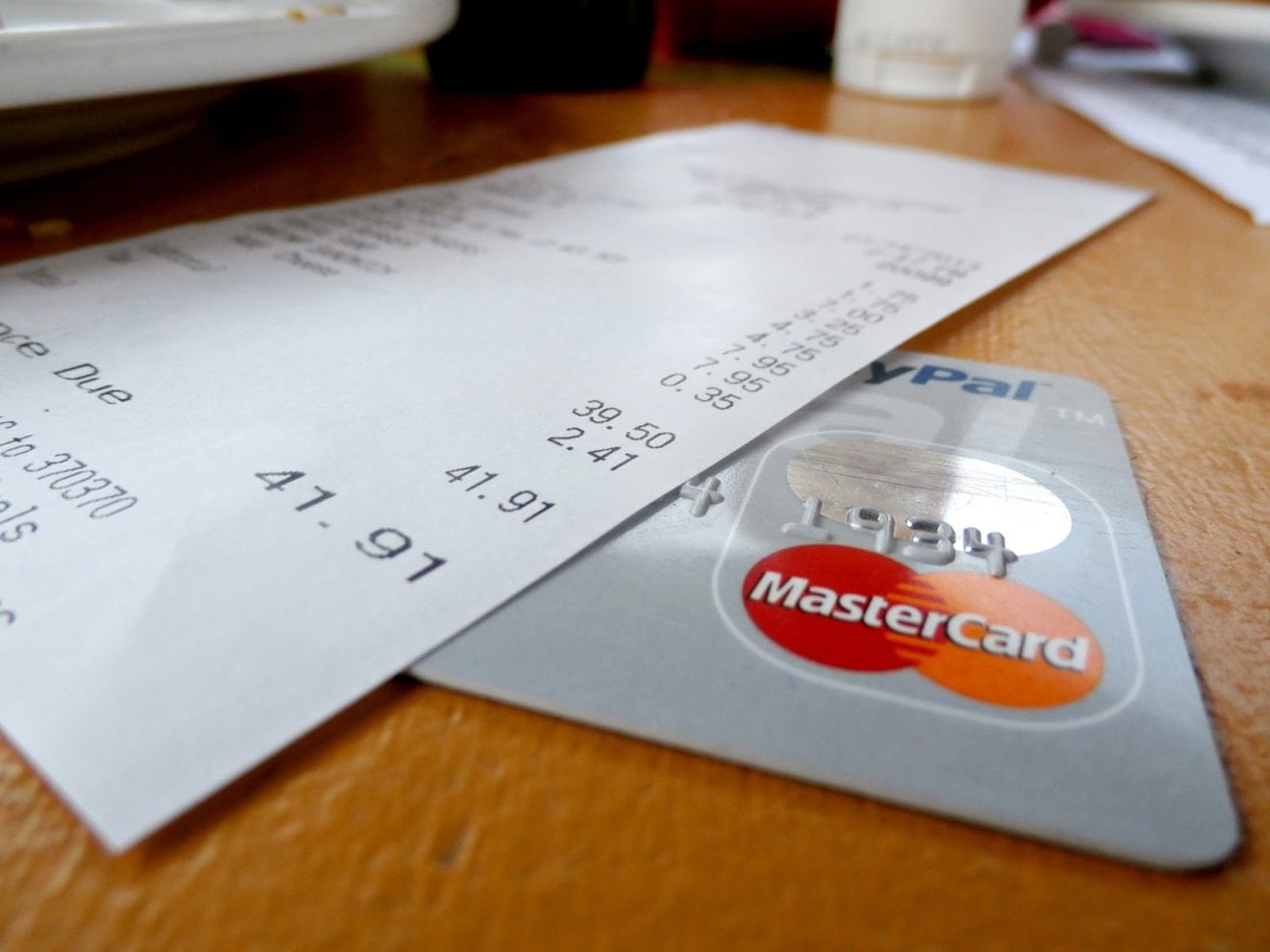
    More than one-third of Hong Kong consumers are ditching plastic in favor of e-wallets, according to a new FIS report on global retail payment trends.

    The report showed that e-wallets are now the preferred way for Hong Kong consumers to pay for goods online. Data from the Worldpay from FIS product suite shows that more than a third (36 percent) of all online retail purchases made in Hong Kong last year were via digital wallets, followed by credit cards (30 percent) and bank transfers (12 percent). In Hong Kong, digital wallets are the preferred payment method for shopping online for clothing and footwear, electrical goods, and health and beauty products, accounting for 36 percent, 44 percent and 32 percent of these purchases respectively.

    Even though credit cards still lead in-store, when it comes to shopping online, Hongkongers embrace digital wallets such as Alipay, WeChat Pay and PayPal, which now account for 36 percent of all online retail purchases.

    The report also shows a growing consumer preference for mobile commerce, which currently comprises 16 percent of all online retail in Hong Kong. Mobile commerce is expected to grow by 34 percent by 2022.

    “Consumers in Hong Kong are increasingly choosing digital payments over the more traditional credit-debit card combinations when shopping online, according to our 2019 Retail Global Payments Report,” said FIS GM for APAC, global enterprise e-commerce, merchant solutions Phil Pomford.

    The report also highlights Hong Kong’s strong overall retail e-commerce growth, which is expected to grow by more than 18 percent to almost US$4 billion by 2022. During the same period, in-store sales are also projected to grow by 4 percent compound annual growth rate (CAGR) to be worth US$70 billion, indicating the sustained long-term health of the retail industry in Hong Kong.

    The data was published in FIS’s 2019 Retail Global Payments Report, an analysis into payments trends of 16 countries from across the world, representing 80 percent of online global retail and 60 percent of instore global retail sales.

  • UOB Issued Letter of Demand To Libra Group

    UOB Issued Letter of Demand To Libra Group

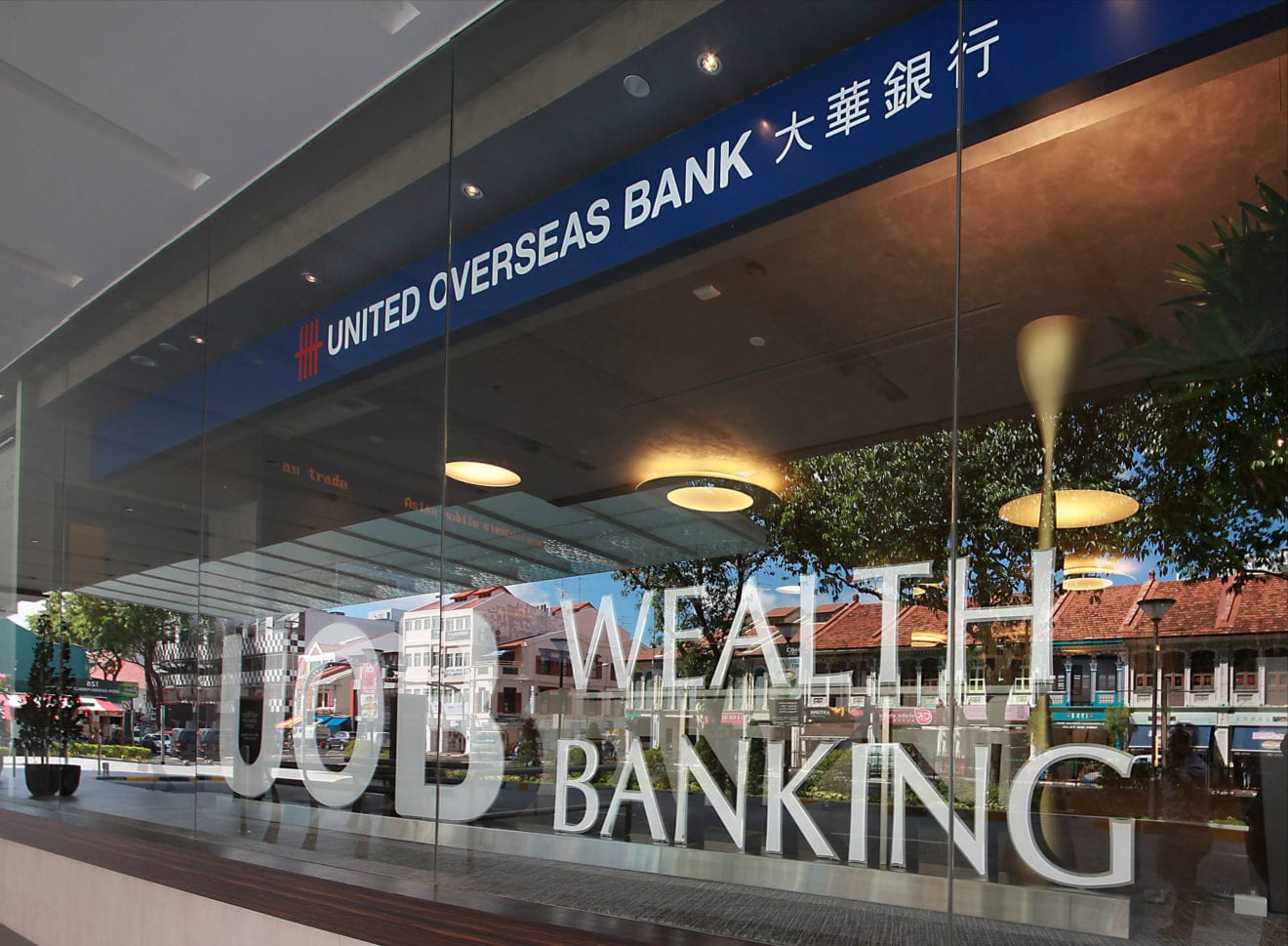
    UOB has asked  Libra Group, which is mired in financial troubles, to pay up $18.8 million.

    UOB has issued a letter of demand to Libra Group for the above amount, based on outstanding banking facilities, the Catalist-listed company announced in a filing on Friday. The letter, dated Oct 8, reveals that events of default have occurred, and «UOB shall cease to be under any further commitment to the Company.»

    The entire sum of $18.8 million is immediately payable to the bank by last Friday, the filing said.

    The Singapore lender also issued a letter demand to Kin Xin Engineering, a unit of Libra that provided guarantees for the US$18.8 million sum, for repayment by the same deadline.

    Another Libra unit, Libra Engineering & Manufacturing, separately received a letter of demand dated Sept 30 from WMS Industrial Gas & Equipment for 72,940 Ringgit (S$23,940), related to goods sold and delivered.

  • Singapore Fintech Investments Crossed S$1 Billion

    Singapore Fintech Investments Crossed S$1 Billion

    Investment in financial technology ventures in Singapore rose sharply in the first nine months of 2019, led by fundraising with payments startups and insurtech firms and a shift toward more-mature companies.

    The total value of financial technology (fintech) deals in the nine months ended September jumped 69 percent from the prior-year period to $735 million (S$1 billion) from $435 million, and exceeded the $642 million raised in all of 2018, according to an Accenture analysis of venture-finance data from CB Insights, Pitchbook and Tracxn. The 2019 and 2018 figures included $47 million and $12 million respectively in undisclosed venture capital transaction data provided by the Monetary Authority of Singapore.

    Crossing a billion-Singapore-dollar investment threshold is a recognition from investors around the world of the potential of Singapore’s fintech ecosystem and the outlook for digital financial services not just in Singapore, but also in Southeast Asia, said Sopnendu Mohanty, chief fintech officer of the Monetary Authority of Singapore in a statement.

    Singapore’s active investments into its fintech ecosystem, alongside its annual Singapore Fintech Festival, seems to be paying off: the city-state saw a nearly six-fold increase since 2015.

    It’s encouraging to see the local startups financing their global growth from Singapore. Additionally, several global fintech companies with regional headquarters in Singapore have recently raised sizeable funds to fuel their Asian expansion, Mohanty added.

    However, the number of fintech deals fell by almost one-third (29 percent) in the first nine months of 2019, to 94 from 133 in the prior-year period showing that investors made larger bets into fewer deals as startups grow their business.

    As we’ve seen in other parts of the world, fundraising is shifting to support the scaling up of challenger and collaborative fintech, which will cause lumpiness in some rounds as the market becomes more mature, said Divyesh Vithlani, a managing director at Accenture and head of Financial Services in the ASEAN region in a statement on Monday. Investments in payments startups and those in lending took the bulk of fintech fundraising, accounting for 34 percent and 20 percent of the total, respectively, while insurtechs raked in 17 percent.

    The value of payments deals jumped 113 percent, to $251 million, making the biggest contribution to the overall gains this year. Insurtech funding nearly quadrupled, to $128 million from $35 million, and lending rose more than 50 percent, to $145 million.