Author: Mei Ling Tan

  • Tesla Takes On Porsche With Battle On Germany’s Toughest Circuit

    Tesla Takes On Porsche With Battle On Germany’s Toughest Circuit

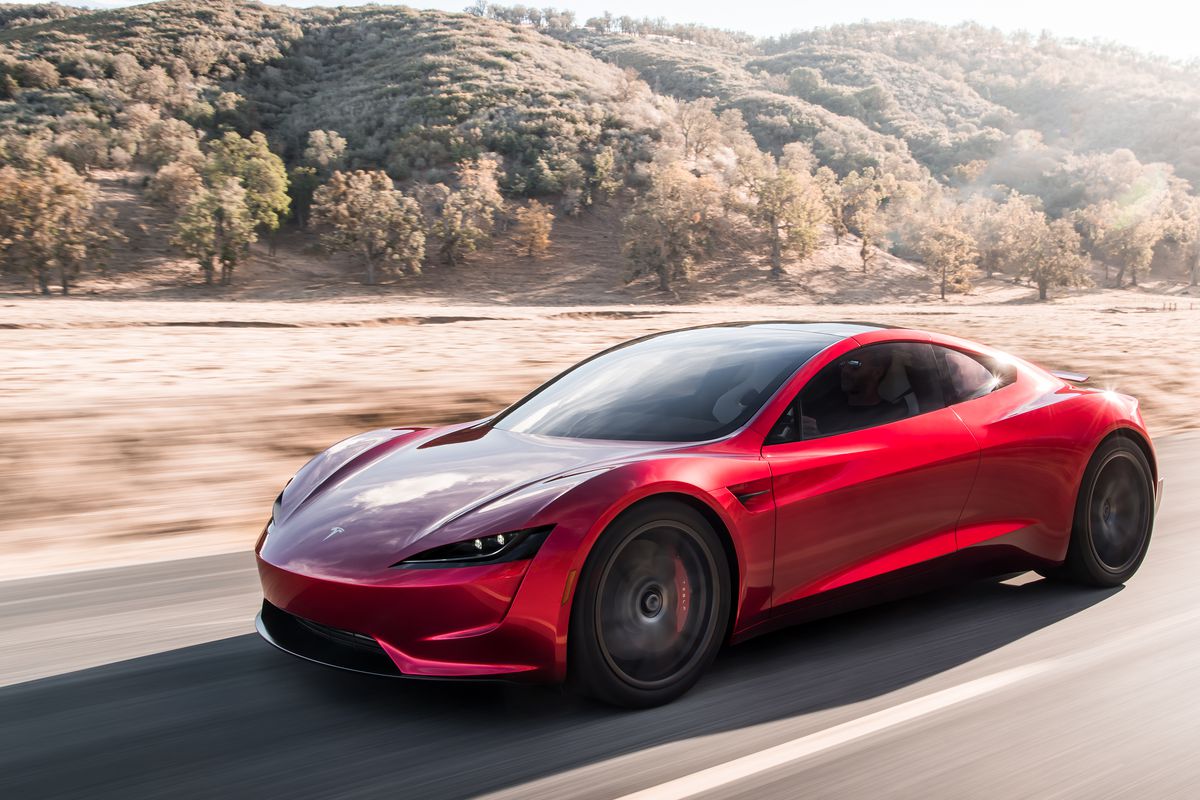
    Germany’s Auto Motor und Sport this week published photographs of a Tesla with “100D+” markings on the track where according to the magazine, it clocked an unofficial time of 7 minutes and 23 seconds, beating the recently launched electric Porsche Taycan’s lap time of 7 minutes 42 seconds.

    Tesla wants to steal Porsche’s bragging rights by testing its Model S on the northern loop of Germany’s Nuerburgring circuit, using a marketing tool that German carmakers have long used to tout the superiority of their products.

    Germany’s Auto Motor und Sport this week published photographs of a Tesla with “100D+” markings on the track where according to the magazine, it clocked an unofficial time of 7 minutes and 23 seconds, beating the recently launched electric Porsche Taycan’s lap time of 7 minutes 42 seconds.

    A formally timed record attempt was due to take place on Wednesday, with another attempt scheduled for Saturday, Auto Motor und Sport said.

    Tesla is using the Nordschleife, as the track is known, to market its “Plaid” mode on a 7-seater Tesla Model S, CEO Elon Musk confirmed on Twitter.

    “We expect these track times to be beaten by the actual production 7 seat Model S Plaid variant that goes into production around Oct/Nov next year,” Musk said on Tuesday.

    Setting a new record time for four-door electric cars would give the U.S.-based manufacturer’s ageing Model S a new lease of life just as Audi, Mercedes-Benz, BMW and Porsche prepare to launch electric cars.

    The Nordschleife is one of the world’s most treacherous thanks to its length of just over 20 km (12.5 miles), slanted cambers and an altitude difference of 300 meters (yards) between its highest and lowest point.

    Porsche says its 919 Evo hybrid racecar currently holds the record with a lap time of 5 minutes 19 seconds, set in 2018 by keeping up an average speed of 234 km (146.3 miles) an hour, despite blind corners, narrow bends and limited safety run-off zones.

    Porsche, BMW, Mitsubishi, Nissan, Cadillac and Aston Martin have used the racetrack as a boot camp to hone reliability and handling and to benchmark their vehicles against top competitors.

    “If you take the same corner, on the same road, at the same speed, in two different cars, you can see how your car measures up to the competition,” said driver Dirk Schoysman, who set a Nordschleife lap record in 1996 in a Nissan Skyline with a time of 7 minutes 59 seconds.

    For Nissan, the new record underscored the Skyline R33 GT-R’s global status as a serious sportscar, proving that Japanese brands could be as competitive as vehicles made by Germany’s finest manufacturers.

    The circuit opened in June 1927 to become an important battleground where legendary drivers like Tazio Nuvolari and Juan Manuel Fangio drove some of their most memorable races.

    In 1935 senior Nazi officials gathered at the German Grand Prix ready to cheer the home team, only to see Italy’s Nuvolari beat the Mercedes-Benz W25 and the Auto Union Typ B in an Alfa Romeo Tipo B P3.

    The track remained a venue for Grand Prix races until 1976 when a horrendous crash almost killed driving ace Niki Lauda, leading to the opening of a shorter, wider Nuerburgring track with improved facilities in May 1984.

    But carmakers have continued to use the older circuit’s 40 right-hand and 33 left-hand turns through the Eifel region’s forested hills to develop their regular vehicles.

    “Cars cannot keep secrets here, mistakes and problems will eventually rise to the surface,” Schoysman said.

    At the Hatzenbach corner, cars enter a dip forcing them over a series of undulations with their suspension compressed, testing the chassis to the limit.

    “If the car changes its line in that corner it may be a tire flexing, the suspension bushes that have gone through their stroke, or a problem with the stiffness of the car body, or its electronic stability program,” Schoysman explained.

    These development tweaks continue to be relevant for electric cars as well as for marketing purposes.

    Understanding the circumstances of the test lap will be crucial for evaluating Tesla’s achievement, Schoysman said.

    “Getting a new lap record shows the know-how of the company but there are always questions: Are the cars realistic copies of what the customer finds in a showroom? Or were they modified?”

  • Bugatti Celebrates 110th Anniversary With Baby 2

    Bugatti Celebrates 110th Anniversary With Baby 2

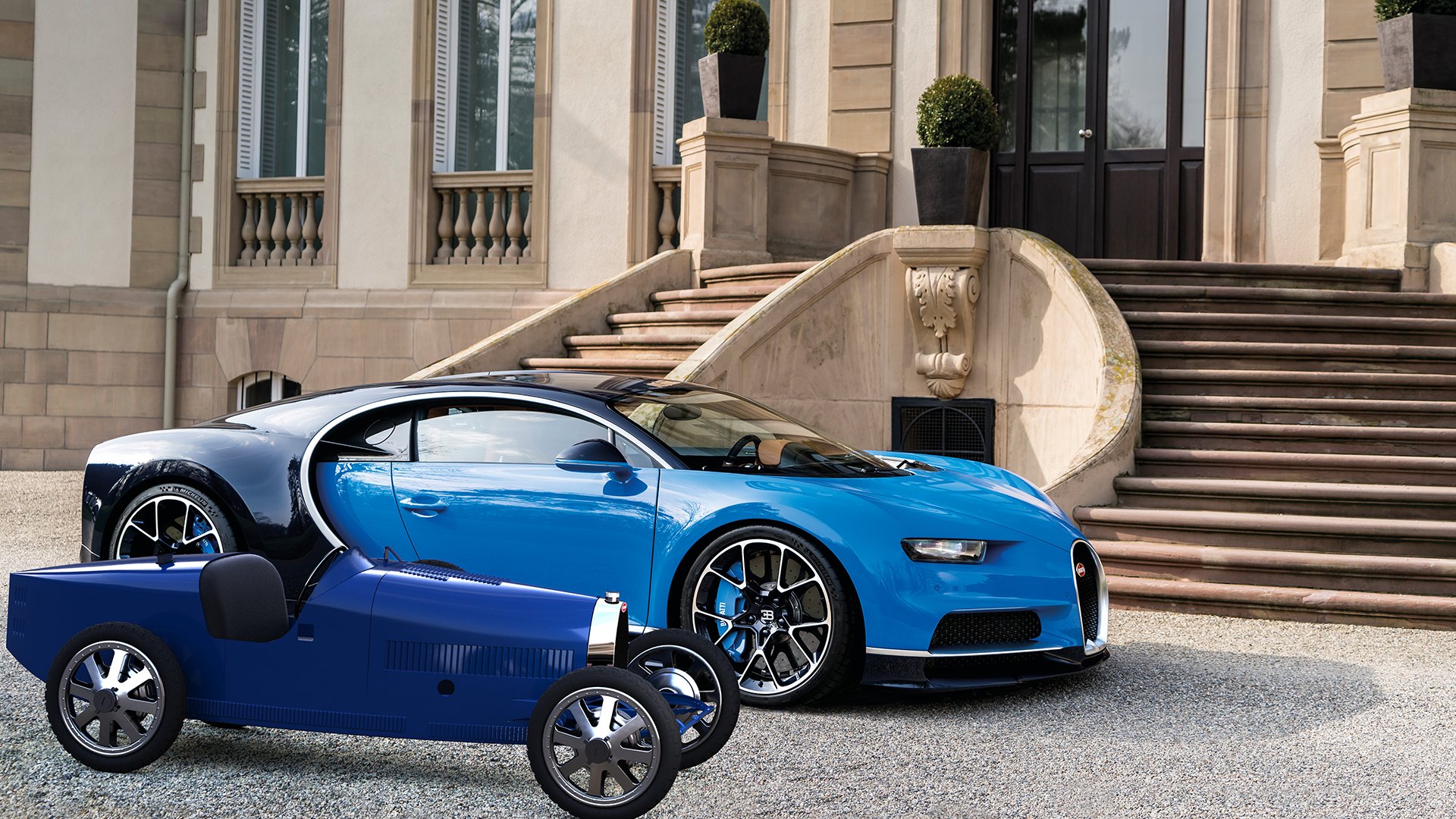
    Well! This one is not going to go transcending and set any earth-shattering speed record, yet it’s a Bugatti. It’s definitely something which rich kids with developing taste in cars would love to have, more so as it’s a bit grown up now. It’s the Bugatti Baby 2 which we first saw as a 3D printed model at the 2019 Geneva Motor Show and it is going to have a limited edition run. Bugatti will be manufacturing only 500 units of the Baby 2 and 500 lucky teenagers have already got one in their cart. Yes! It’s completely sold out.

    In fact, Stephen Winkelmann, President of Bugatti who also has a history of working with fast car brands is intrigued by the model and is excited to see it driving around the Bugatti premises. Incidentally, the Baby 2 also marks Bugatti’s 110th birthday. It has partnered with The Little Car Company to make this junior car. The first prototype, called the XP1, is already ready for test drives at La Grande Fete in Molsheim. To allow the Baby II to be driven by both adults and children, it has grown from the 50 percent scale of the original to a 75 percent scale replica of the Type 35 and includes a sliding pedal box for drivers of all age. In the first stage of its inception, the engineering team digitally scanned every single component of a 1924 Type 35 Lyon Grand Prix car. Then it got a new electric powertrain with lithium-ion batteries and regenerative braking along with few more redesigned elements to suit the need of modern age. It gets the same eight-spoke alloy wheels shod in new Michelin tires and it gets new hollow front axle along with the suspension and steering mechanism from the old Type 35.

    The old oil and pressure meters in the Baby 2 are now replaced with battery level, indicator and power gauge and the four-spoke steering wheel continues to be there.

    The cockpit gets the same four-spoke steering wheel ahead of the aluminum casing which sports Bugatti’s signature instruments. The old oil and pressure meters are now replaced with battery level, indicator and power gauge but the clock used to measure race performance in the iconic Type 35 remains as a symbol. The fuel pressure pump from the Type 35 has been digitally replicated and repurposed as a forward or reverse control, and all cars will come with a horn, rearview mirror, handbrake, headlights and a remote control to disable the car from up to 50 meters. In the centre of the dashboard is a plaque giving the unique chassis number of the Baby 2 and displayed on the nose of every car will be Bugatti’s famous ‘Macaron’ badge, made of 50g of solid silver, just like the Chiron.

    It also gets a rear-wheel drive powertrain and comes with two selectable power modes for drivers of a different experience. A 1kW ‘child mode’ with the top speed limited to 20 km/h, and a 4kW ‘adult mode’ with the top speed limited to 45 km/h. That said, there is also a Speed Key for experienced and confident drivers which takes the total power output to 10 kW and bars the speed limiter. It also comes equipped with a limited-slip differential which channelizes all the torque to the rear wheels. The car will come with two sizes of a removable battery, a standard 1.4 kWh pack and a long-range 2.8 kWh version. While the exact range will depend on driving style, the larger pack is expected to give a range of more than 30km.

    The standard car will be painted in French Racing Blue with a black leather interior, but other color options will be available for both the exterior and interior. Additionally, all owners of Baby IIs will receive membership of The Little Car Club, and be able to attend events where they, their children and their grandchildren can drive their cars at famous motor racing circuits. The Baby 2 is available in the European markets for 30,000 Euros.

  • Google Maps’ Incognito Mode is being tested for those who don’t want their whereabouts known

    Google Maps’ Incognito Mode is being tested for those who don’t want their whereabouts known

    Google Chrome has an Incognito Mode that allows users to browse the web privately. Even someone else that you might share the same device with won’t be able to discover that you’ve been checking out the latest news about the Google Pixel 4 because you plan on pre-ordering one. Not only will your browsing history be protected from prying eyes, but any forms that you fill out while incognito will also remain private. To go incognito on Chrome, tap on the three-button overflow menu on the right-hand corner of the screen. Go to Settings > New incognito tab. You can tell you’re in this mode when you see the Walter White like image of a man wearing hat and glasses to the left of the web address.
    Believe it or not, YouTube also offers an Incognito Mode. To activate it, open up the YouTube app and tap on your profile picture in the upper right-hand corner of the screen. Click on Turn on Incognito. With the Mode on, your Boston Red Sox-loving’ girlfriend will never know that you’ve just watched highlights of the recent New York Yankee game. Or when your conservative father-in-law borrows your phone, he won’t be able to notice that you’ve been watching Stephen Colbert clips every night. When the man wearing hat and glasses appears where your profile picture normally shows up, you know that you’re in Incognito Mode.
    Now, Google is testing an Incognito Mode for Google Maps. This would allow you to search for directions to a place that you don’t want anyone to know you’ve visited. Those who are part of the test group received an email today from Google. If you are one of the lucky ones who were able to update to the preview of Maps version 10.26, open the app and tap on the profile picture which is-wait for it-in the upper right-hand corner of the screen. Select “Turn on Incognito mode.” You’ll notice that the locator marker will turn colors from blue to a dark gray.
    If you’re not part of the test group, you might have to wait a few weeks for Google to disseminate this feature to all eligible Android users. Until then, anyone you share your phone with can look at the addresses you’ve looked up directions for.
  • Leverage Etail in Singapore

    Leverage Etail in Singapore

    In Singapore, more and more people are connected to the Internet and the number of online shoppers follows the same trend. Back in 2014, Visa stated that approximately 26% of Singaporeans used to shop online on weekly basis and recent surveys from Hootsuite and We Are Social show that 89% are searching online for a product or service, while 73% purchased, during Q2 and Q3 2018. The market is growing it is expected that the number of Singaporeans shopping online exceed 4.1 million, by 2021 according to Statista, which makes the market as one of the most active in Asia Pacific.

    This expanding market represents a fantastic potential for e-commerce store owners and Singapore offers numerous advantages to people that are getting started in business.

    Why establishing your business in Singapore?

    Singapore is known globally as a great place to do business. Investors from around the globe are attracted by this place thanks to the benefits it offers. This includes people that want to get involved with the e-commerce sector, and those that do will find that Singapore is a great place to get established, especially when it comes to conquer the Asian market.

    Competitive Economy

    According to the World Economic Forum, Singapore is ranked 2nd in the list of the world’s most competitive countries, making it an ideal place for entrepreneurs. This makes it the most competitive economy in Asia, with it’s next closest Asian rival, Japan, in 5th place. Hong Kong is also in the top 10 in 7th place.

    Singapore’s impressive performance does not stop there as it also ranks very highly for other metrics, including:

    • Ranked as number one for its infrastructure.
    • Ranked as number one for its product market.
    • Ranked in third place for its labour market.

    A Key Regional Player

    Singapore’s impressive reputation globally puts it centre stage in the APAC economy.  According to Singapore’s International Development Board22, approximately 2,600 international firms used Singapore as the location for their APAC headquarters in 2016.

    At the same time, Hong Kong was home to 1,389 international headquarters, while even Shanghai only boasted 470.

    Favourable Taxation and Incorporation

    Another factor that makes Singapore such an attractive place to do business is that starting up is made to be as easy as possible. According to World Atlas, Singapore ranks in 2nd place globally for ease of doing business. Not only are the processes streamlined as much as possible, but Singapore also ranks highly when it comes to supporting businesses.

    For example, it has the fastest court system in the world for resolving business disputes and its business-friendly reputation is helped even more by its reasonable corporate tax rate, which stands at only 17% at the most.

    Building your e-shop

    When you have something to sell, you need a shop in which to sell it. In the past, this would mean building a team to code the platform and while having experts around you for such project still stands, the process is way much easier nowadays, especially with website builders like Shopify that allow you to sell online quite quickly.

    Customise your online store

    These platforms come with numerous features that will help you build a successful store:

    • Themes: Pre-built themes are like skeletons that you can then modify as you wish. This means that much of the work is done for you already, with a few clicks needed to get it just as you like.
    • Extensions: While many features are already included in the packages, website builders propose extensions in case you need something specific, which makes it easy to add features to your store.
    • Shopping Cart: If used properly, the shopping cart can be used to help enhance your marketing, and generate more revenue. People will usually abandon their shopping cart without buying anything, but in placing items in there, they are letting you know what they are interested in. You can take full advantage of this with retargeting and other tools that will help you to make more sales.

    Market your online store

    If Singapore is one of the main location entrepreneurs will choose to launch their companies and to open an online store, it is also a competitive market and the online industry require efforts to make your first sales. While platforms like Shopify are designed to convert, they also provide ranges of features to help you improving your marketing campaigns.

    However, most successful stores also spend time defining and implementing powerful marketing campaigns to develop their brand awareness on the local market.

    As such, Shopify includes functionnalities that will help you to get more customers:

    • SEO: Singapore is a challenging market when it comes to appear first in Google when people search for your products. Website builders include features to customize Title Tags, to submit sitemap, to launch a blog, that should help your pages to rank higher.
    • Social Media: Social media can be such a powerful tool if used right. In addition to being used to market your products, it can also be used to help you develop loyalty to your brand. Get people involved, share related information that will appeal to them and you will develop your very own audience that will be eagerly waiting for your next instalment. Such platforms are fully integrated with the social media world.
    • Email Marketing: As mentioned, with platforms like Shopify you can track users that abandoned their shopping cart and you can easily retarget them or use email marketing to chase them. Newsletters is also a great solution to engage with your audience and website builders come with such features.

    Singapore is a great location to take full advantage of e-commerce and if the market will grow, there are still few spots left. As with any other businesses, however, it needs to be done properly if the venture is to be a success and Singapore offers the right environment for that. Skilful labour, tax-friendly country, developed infrastructure, strategic location in Asia Pacific are among the main advantages you can get by starting your business in Singapore.

  • AirAsia reveals exclusive route from Kuala Lumpur to Da Lat

    AirAsia reveals exclusive route from Kuala Lumpur to Da Lat

    Air asia has launched an exclusive route to Da Lat from Kuala Lumpur, further expanding its footprint in Vietnam.

    The four times weekly service to Da Lat, capital of Lam Dong province in the Central Highlands, will commence on Dec 20.

    Da Lat, known as the City of Eternal Spring for its pleasant weather, was developed as a leisure town by the French in the early 1900s, and boasts some fine examples of colonial architecture, such as Da Lat Railway Station and Lycée Yersin. Da Lat is also home to three mansions owned by Emperor Bao Dai, the last emperor of Vietnam.

    Other attractions include Xuan Huong Lake, a popular icon of Da Lat located in the city centre, and Linh Phuoc Pagoda, which is covered in colourful mosaic made from pieces of pottery and glass. For nature lovers, Robin Hill offers a panoramic view of the city and its natural surroundings, including Tuyen Lam Lake and Lang Biang Mountain, while trekking to the top of Mount Samson allows visitors to get a highland view of Da Lat.

    AirAsia Malaysia CEO Riad Asmat said, “We are proud to expand our fast-growing network with the introduction of this new and unique route to Da Lat, Vietnam. As the first international airline to fly to Da Lat, visitors from Malaysia no longer need to drive three hours from Nha Trang or five hours from Ho Chi Minh City to get to this picturesque city. This new route will strengthen economic ties for the people of southern Vietnam, while enhancing connectivity into other parts of Asean and beyond.”

    To celebrate the new route, AirAsia is offering all-in members fare for Kuala Lumpur-Da Lat from as low as RM99 from now until Sept 29 for travel from Dec 20 until March 27, 2020, only on airasia.com and the AirAsia mobile app.

    Da Lat is AirAsia’s seventh destination in Vietnam after Hanoi, Ho Chi Minh City, Da Nang, Nha Trang, Can Tho and Phu Quoc.

  • Wirecard Forms Strategic Partnership With UnionPay

    Wirecard Forms Strategic Partnership With UnionPay

    Wirecard, a global financial technology company, has signed a Memorandum of Understanding with UnionPay, the world’s largest card scheme, to form a global strategic partnership.

    The agreement will support UnionPay’s ongoing international expansion and Wirecard’s growth in China and with Chinese businesses, both companies said in a media statement.

    As the world’s largest card scheme in terms of card issuance, UnionPay will be one of our key alliances in Asia, said Georg von Waldenfels, EVP Group Business Development at Wirecard.

    As a major tourist and business destination, China receives hundreds of millions of travelers every year, which means that the scope of our solutions will also address non-Chinese nationals and enable them to pay with UnionPay nationwide, added Waldenfels.

    Union Pay has 7.59 billion cards issued under its brand, amounting to 57.6 percent of the world’s payment cards in circulation according to the Nilson Report. It is also an association for China’s banking card industry.

    Larry Wang, Vice President at UnionPay International said that the cooperation between Wirecard and UnionPay will focus on expanding the global acceptance of UnionPay as a digital payment method across all channels.

    In addition, the partnership will also launch a number of issuing projects, including corporate solutions such as payout products and SCP (Supplier and Commission Payments), and consumer-oriented products in the form of digital wallets for incoming tourists to China.

    The initial stage of the partnership will focus on launching additional projects in Asia-Pacific, Europe, and the U.S., where both partners already work together for several years. Additionally, a consumer solution for the upcoming 2022 Winter Olympics in Beijing is being planned to take advantage of the large number of tourists who will visit the country.

  • Online payments for digital and physical goods hits record

    Online payments for digital and physical goods hits record

    New research shows the total transaction value of online remote payments for digital and physical goods will exceed US$6 trillion by 2024.

    The new findings are based on data from Juniper Research that predict the growth of 53 percent in the transaction values from this year’s figures. An analysis of the data is now published in the firm’s report Mobile & Online Remote Payments for Digital and Physical Goods: Opportunities, Pain Points & Competition 2019-2024.

    The report reveals that online sales will be dominated by physical goods, forecast to account for almost 80 percent of online retail purchases by 2024. It urges traditional retailers to provide omnichannel offerings to ensure services align with ever-increasing consumer expectations.

    According to the report, online remote payments for digital and physical goods will be driven by purchases made via mobile devices, with the number of smartphone buyers increasing by nearly 60 per cent between 2019 and 2024. Consequently, just 21 per cent of purchases will be made using PCs, laptops and connected TVs globally by 2024.

    The shift to mobile has impacted purchasing behaviour, with the average value of transactions expected to decline by 2024. Underpinning this growth, and the change in average transaction values, is the adoption of mobile ticketing – which is becoming increasingly remote and cashless..

    Juniper Research assessed the digital strategies of 25 leading brick-and-mortar retailers according to their levels of agility and innovation. The Home Depot ranked first, owing to its proactive e-commerce strategies and engagement with new technologies, such as augmented reality and analytics, to improve online consumer experiences.

    The Home Depot’s retail services are built on an omnichannel strategy; offering customers a comprehensive network of physical stores alongside robust online shopping experiences. Analytics is leveraged to adapt to evolving customer behaviours and AR technology to enable customers to visualise virtual products in the real world via their smartphones.“Brick-and-mortar retailers have to go beyond simple e-commerce to become digital-first companies,” said research author Morgane Kimmich. “Retailers must fundamentally embrace the digital era by optimizing data analytics and embracing new technologies; enabled by radical internal organisational change.”

  • Kayak Travel Comparison opens Hong Kong Headquarter

    Kayak Travel Comparison opens Hong Kong Headquarter

    Online travel-services comparison site Kayak has established its regional headquarters in Hong Kong.

    The move was made in recognition of Hongkongers’ penchant for bargain holidays and straightforward booking arrangements, according to an email from the firm.

    “Hong Kong is a global city with great accessibility to so many other places,” said Kayak’s senior regional manager APAC Matthew Wong. “[The city] also serves as a gateway for visitors from North America and Europe into Asia, and vice versa. In fact, our 2018 travel-search data showed that Hong Kong is ranked in the top three of the most-frequented stopover cities among North Americans and Europeans traveling to other destinations in Asia-Pacific.”

    Wong added that travelers are becoming more flexible in what they want, citing data showing that multi-city, open-jaw and one-way flight searches are constantly increasing. Also, besides popular destinations such as Tokyo and Taipei, Kayak has seen an increase of interest in the more under-the-radar cities from its users in Hong Kong and Mainland China.

    “Second-tier cities are showing 150- to 300-per-cent year-on-year increase in travel searches, proving an intense uptick in interest,” said Wong.

    Kayak was founded in 2004 by CEO Steve Hafner and CTO Paul English, and now operates in 60 countries and territories using more than 30 languages.

  • Domino’s expands solar program nation-wide

    Domino’s expands solar program nation-wide

    Pizza retailer Domino’s has announced a renewable energy strategy that will see it roll-out solar power systems and energy controllers across all Domino’s stores across Australia.

    The strategy is aiming to reduce Domino’s operational impact on the environment, while reducing energy costs, in partnership with Construction, Supply & Service.

    Domino’s Australia and New Zealand chief executive Nick Knight said the business initially started the strategy with only one store – Domino’s Aspley, Queensland, in 2017 – which has seen a 34 percent reduction in energy usage, and a 48 percent saving in electricity costs.

    “We are really excited that Domino’s Aspley is now sourcing power from renewable energy and are thrilled with the results,” Knight said.

    “We are looking to implement this strategy in more stores across our network, with Domino’s Ballina, Noarlunga, and Kelso already operating with solar power systems and energy demand controllers.”

    According to Knight, Domino’s already has 70 stores with energy demand controllers installed, which de-energizes non-essential equipment during peak power usage, and has an additional seven stores currently in the works.

    Domino’s is not alone in turning to solar energy in order to cut down on energy costs, with Coles recently announcing it is constructing three solar plants in regional New South Wales which will provide 10 percent of Coles’ national energy electricity needs.

    Likewise, Woolworths is implementing solar into the redevelopment of its Adelaide regional distribution center – with 3500 solar panels to provide around one-fifth of the center’s needs.

    Vicinity Centres has also announced it is investing $75 million into a large scale solar program, which will see 22 of its centers fitted with rooftop solar panels, and will cut the group’s consumption from the national energy grid by up to 40 percent.

  • Lazada to offer installment credit with AsiaKredit in Philippines

    Lazada to offer installment credit with AsiaKredit in Philippines

    Lazada Philippines customers can now buy goods online and pay by installments.

    Called eShopaLoan, the service targets the increasing population of middle-class Filipino shoppers offering monthly installment options for purchases made via Lazada’s platform.

    Consumer loans range from PHP4000 to PHP20,000 (US$77 to $384) over a six-month period. EshopaLoan finances products within the PHP 5000 to PHP 50,000 price range. To apply for eShopaLoan service, Lazada customers can install the AsiaKredit pera247 app and fill out the application.

    “Our partnership with Lazada Philippines marks the beginning of many exciting and transformative retail partnerships we hope to embark on to improve access to finance for millions of underbanked Filipinos left out of the traditional financial system,” said Michael Singh, CEO and co-founder at AsiaKredit.

    “The World Bank considers credit as one of four key enablers to drive financial inclusion. The Philippines remains two to five times behind in unsecured consumer loans per capita compared to markets like Indonesia and Malaysia. This is a very positive development for our market.”

    Ray Alimurung, CEO of Lazada said the collaboration with AsiaKredit was a privilege as they shared the same goal in creating a secure and inclusive digital economy in the Philippines.

    Headquartered in Singapore, AsiaKredit currently operates in the Philippines, with plans to enter other Southeast Asian markets. AsiaKredit provides advanced installment-based finance products through a mobile app to Southeast Asia’s half a billion unbanked people.


  • SoftBank Doubles Stake in Brazilian Zero-Fee Digital Lender

    SoftBank Doubles Stake in Brazilian Zero-Fee Digital Lender

    SoftBank has reportedly agreed to double its stake in Brazilian online lender Banco Inter in the midst of the Japanese giant’s ongoing buying spree in Latin America.

    The deal will include acquiring stakes from controlling family members of the bank, unnamed sources said, adding that Banco Inter CEO Joao Vitor Menin, who owns 5.4 percent, isn’t among the sellers.

    In July, SoftBank bought an 8.1 percent stake in Banco Inter valued at around $186 million.

    Banco Inter aside, Tokyo-based SoftBank has been in the midst of an ongoing buying spree in Latin America with about 300 targets in the region. SoftBank launched a fund in March to back tech firms in the region and has already spent more than $1 billion of its $5 billion of capital.

  • Google Fi announces its first Unlimited Plan

    Google Fi announces its first Unlimited Plan

    Google Fi is getting its first Unlimited Plan, which should offer subscribers everything in unlimited quantities. Well, that’s not how it really works in the United States, at least when it comes to data.

    Since the carrier’s launch in 2015, only one plan was available for customers, the Fi Flexible plan. Starting today, Fi is adding a second plan, a Google Fi Unlimited Plan. It will be available for $70 for a single line, but the more people you’re sharing it with, the less it will cost. So, for two lines, the Unlimited Plan is priced at $60, while three lines cost just $50 per line. Finally, if you add between four and six lines, you’ll be paying $45 per individual user (taxes excluded)

    Google Fi’s Unlimited Plan offers 22GB of unthrottled data per line, after which your data speed will be limited. Also, Google mentions that it “may optimize video streaming quality to 480p to extend customers access to high-speed data before they hit 22GB.”

    Besides data, you’ll get unlimited calls and texts, including international calls. Google says that the plan covers free international calls from the US to 50 countries and territories, as well as unlimited data and texting abroad in 200 destinations at no extra charge.

    To make things even more appealing, the Unlimited Plan comes with a Google One membership with 100GB of cloud storage and extra benefits such as expert support across Google, discounts on Google products, and much more.

  • Hyundai Motor Group Develops New Centre Side Airbag

    Hyundai Motor Group Develops New Centre Side Airbag

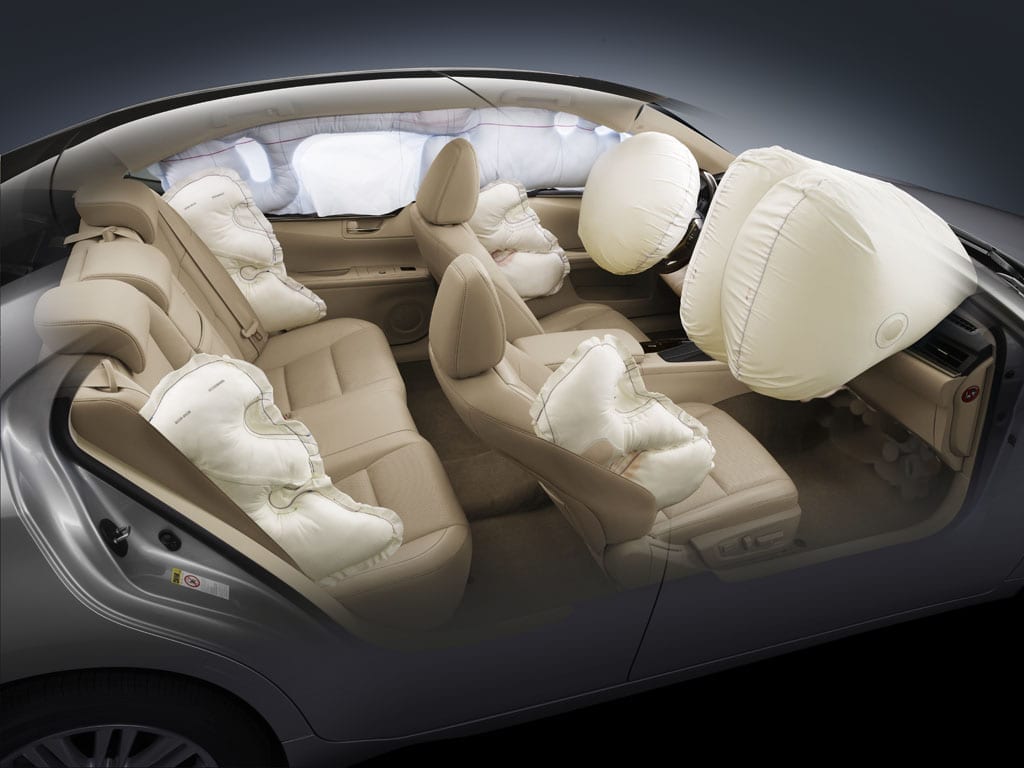
    Hyundai Motor Group has developed a new center side airbag, which works to separate the space between driver and passenger. The Group will roll out the technology in upcoming vehicles. This new, additional airbag expands into the space between driver and passenger seats to prevent head injuries of passengers in the front row. If there is no one in the front passenger seat, the airbag will protect the driver from side collision coming from the right side. The center side airbag is installed inside the driver’s seat and will deploy once the impact is sensed.

    The new center side airbag is expected to diminish head injuries caused by passengers colliding with each other by 80 percent. The Group has applied newly patented technology to maintain reliability but reduce the weight and size of the airbag.

    Hyundai Motor Group has developed a new technology to simplify the design and reduce the weight of component produce an airbag which is about 500g lighter than the competing products. Thanks to the smaller size of the airbag, the company’s design teams will have more flexibility in the type of seat design they envision for future products.

    The additional airbag expands into the space between driver and passenger seats to prevent head injuries

    Upcoming Euro NCAP is expected to include side-impact into its consideration beginning year 2020 and Hyundai Motor Group’s airbag will certainly help in addressing this.

  • Osaka’s Micasadeco & Cafe opens outlet outside Japan

    Osaka’s Micasadeco & Cafe opens outlet outside Japan

    Japanese fluffy-pancake franchise Micasadeco & Cafe is launching its first flagship outside of Japan at Langham Place in Mong Kok.

    Opening on September 20 in an airy basement, Micasadeco & Cafe will be serving diners breakfast till dinner Monday through Sunday. Limited-edition tote bags will be presented to early diners in celebration of the Hong Kong opening.

    The new venture presents the brand’s signature Ricotta Cheese Pancake, which received the highest ranking of three stars at the Sarah Japan Menu Award last year, alongside an extensive menu mixing sweet and savoury items.

    For the sake of authenticity, four chefs stationed in Hong Kong were invited to to Micasadeco & Cafe’s original branch in Osaka to learn how to make perfect pancake towers and other delicacies.

  • Kathmandu posts record profit

    Kathmandu posts record profit

    Strong sales growth in Kathmandu’s Australian business and North American wholesale operations drove another year of record profit for the outdoor apparel and equipment retailer.

    Just days after announcing it has become the biggest B Corp in ANZ, the retailer on Wednesday reported a 9.7 percent increase in total sales to NZ$545.6 million ($505 million).

    Gross profit was up 5.4 per cent to NZ$332.5 million ($307.8 million), and earnings before interest, tax, depreciation, and amortization increased 10.9 per cent to NZ$99.6 million ($92.2 million). Net profit after tax was up 13.6 per cent to NZ$57.6 million ($53.3 million).

    Excluding Oboz, the North American hiking boot brand that Kathmandu acquired in April 2018, sales were up 2.1 percent at constant exchange rates in FY19.

    In Australia, Kathmandu’s largest market, total sales were up 4.5 percent year on year and same-store sales were up 2.7 percent. Total sales fell 3.1 percent and same-store sales dropped 3.9 per cen in New Zealand, where the brand was founded in 1987.

    Oboz saw a 30 per cent sales increase on a pro forma basis to US$44.6 million ($65.1 million), as Kathmandu expanded its wholesale operations in North America. Earnings before interest and tax increased 38.6 per cent of US$7.9 million ($11.5 million) on a pro forma basis.

    “We’re really happy with those numbers,” Xavier Simonet, Kathmandu CEO, said on a media call on Wednesday.

    Simonet said the retailer had maintained its momentum in the first seven weeks of FY20, with 6.1 percent growth in same-store sales, though the crucial trading period in the first half is yet to come.

    Kathmandu would continue to focus on driving sales and profit growth in its core markets of Australia and New Zealand, Simonet said, and on enhancing the customer experience through digital.

    The retailer reported online sales growth of 9.2 percent at constant exchange rates. E-commerce now accounts for 10.1 percent of direct-to-consumer sales, up slightly from FY18, when online accounted for 9.4 percent of sales.

    Kathmandu had 2.2 million members in its Summit Club loyalty program as at June 30, 2019, a 12.4 percent increase on the previous corresponding period. Simonet called the program an “immensely powerful tool”, with members spending 29 percent more per transaction than non-members.

    Total operating expenses increased 3.7 percent to NZ$234 million ($216.6 million) in FY19, including an NZ$11.8 million ($10.9 million) incremental increase related to the first full-year inclusion of Oboz and the establishment costs for Oboz North America. As a percentage of sales, however, operating expenses fell 2.5 percent to 42.9 percent, reflecting the benefits of diversification into wholesale.

    The retailer spent NZ$15.7 million ($14.3 million) on new stores and refurbishments and paid down NZ$14 million ($13 million) of net debt in FY19. Kathmandu had NZ$19.3 million in net debt as at July 31, 2019.

    Kathmandu declared a final dividend of NZ$0.12 ($0.11) per share, taking the full-year dividend to a record NZ$0.16 ($0.15) per share.The final dividend will be fully imputed for New Zealand shareholders and fully franked for Australian shareholders.