Author: Mei Ling Tan

  • Global athleisure wear market expect strong growth numbers

    Global athleisure wear market expect strong growth numbers

    Consumer desire for a multifunctional wardrobe is set to continue driving the global athleisure wear market, according to data and analytics research group GlobalData.

    Over the last two years, the athleisure trend has risen as demand for comfort, performance and style has driven the need for a multifunctional wardrobe. 68 percent of consumers who purchased sports clothing for exercise also wore such items for eating out or shopping.

    The firm forecasts that the global athleisure wear market will rise 9 percent this year and will continue to outperform the total clothing and footwear market beyond their 2023 forecast period.

    “Over the next five years, the sportswear market will be one of the leading retail sectors,” said GlobalData principal retail analyst Honor Strachan. “Activewear brands are selling consumers a lifestyle, and fashion retailers are leveraging their style credentials to produce affordable fitness ranges to sell alongside core casual and formalwear collections.”

    In the UK, 20 percent of consumers purchased sports clothing specifically for leisure activities and free time, not to exercise in.

    “This willingness to pair sportswear with core wardrobe pieces has opened sportswear brands up to new audiences and allowed them to diversify into new product areas,” said Strachan, “boosting their share of the global clothing & footwear market.”

    While fashion trends and influencers have driven the success of the global athleisure wear market , the sustainability movement will continue to support the desire for a multifunctional wardrobe. Consumers are purchasing more consciously and reducing spend on fast fashion, playing into the hands of those retailers and brands that can showcase the versatility of their items, as well as the durability and quality.

    Moreover, increasing consumer appetite for comfort has also fuelled sales of activewear and trainers with brands utilizing their technical expertise in ensuring products offer freedom of movement, aid temperature and sweat control, shape the body and provide support. These qualities have filtered into consumers’ everyday wear and not just when they are at the gym.

    Adoption of the athleisure trend in much of Asia has been slower, so international and national brands are leveraging social media, third-party selling platforms and brand ambassadors to sell the appeal of having a sports and street-influenced wardrobe.

    “Chinese brand Li-Ning has exploited its credentials as a sports manufacturer to produce high fashion casualwear which can be worn for training or leisure,” concluded Strachan, “while Nike’s instore and online outfit styling provides inspiration on how to wear pieces for multiple uses encouraging consumers in China, Taiwan, South Korea, and Japan to incorporate sportswear into their everyday wardrobes.”

  • Estee Lauder Asia sales uphill

    Estee Lauder Asia sales uphill

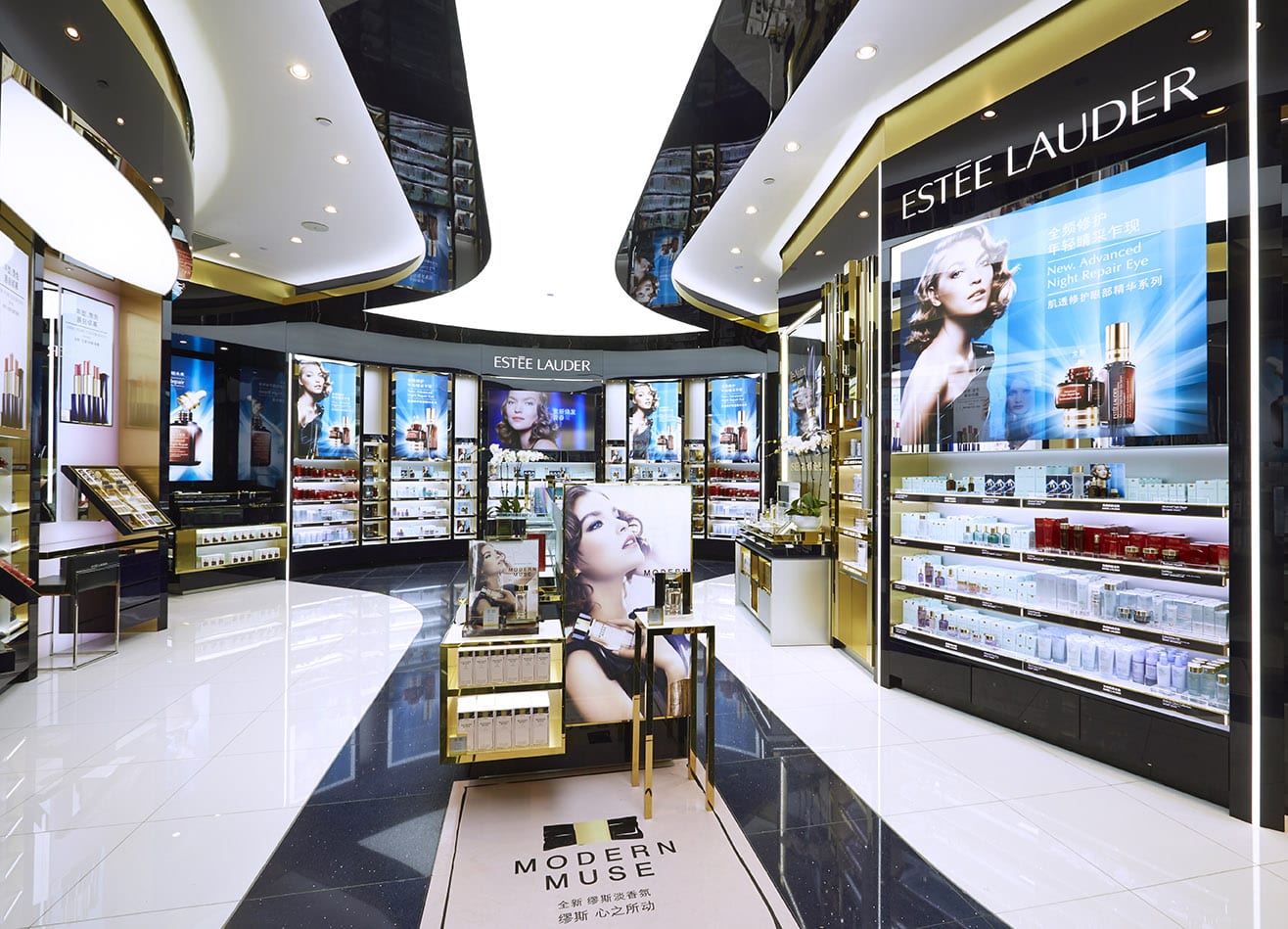
    Estee Lauder Asia sales soared 25 percent in the year to June, with China, Hong Kong, and the emerging markets in Southeast Asia the main performers.

    The more mature Japanese and South Korean markets were also “strong contributors” to the company’s result in the region.

    “The company delivered strong double-digit net sales increases, both on a reported basis and in constant currency,” Estee Lauder reported in a statement. “The growth was broad-based, with all markets in the region growing and more than half up double-digits in constant currency. The Company generated double-digit net sales growth in every product category and major channel.”

    Estee Lauder Asia was a standout in the company’s results, with global net sales up 9 percent to US$14.86 billion, or 12 percent on a currency-neutral basis. Net earnings rose from $1.11 billion last year to $1.79 billion.

    “This was an outstanding year for our company,” said president and CEO Fabrizio Freda.

    “We achieved strong net sales gains across our business, fuelled by investments in our strategic priorities, including improved data analytics that helped power our innovation and digital marketing. Our winning strategy led to continued share gains in global prestige beauty.

    “With savings from our Leading Beauty Forward initiative and cost discipline throughout the organization, we grew profit far ahead of our net sales growth, while also investing in our strategic priorities,” he said.

    “Many engines drove our growth. They included: nearly every market in the Asia/Pacific region and many other important emerging markets around the world; our skincare category in every region; the travel retail and online channels globally; and compelling innovations and high-quality products, which drove strong repeat purchases. Globally, three of our four largest brands grew strongly as did many of our small and mid-sized brands. Our results were particularly impressive given macro volatility and challenges in several key markets demonstrating our successful strategy of multiple engines of growth and our agility to reallocate resources to the best opportunities.”

    Freda said the results capped a remarkable decade of strategic and operating achievements.

    “Since launching our current strategy in 2009, we have diversified and strengthened our company, creating a solid foundation to continue our growth.”

    He said the prestige beauty category continues to be one of the most desirable consumer sectors.

    “As the best diversified pure-play in the industry, we are uniquely positioned to capture global share. In fiscal 2020, we plan to continue to invest in the most compelling opportunities, including those in emerging markets beyond China. We expect another year of strong net sales growth, margin improvement and a double-digit increase in earnings per share.”

  • Fat Brands opens five Restaurants in Pakistan

    Fat Brands opens five Restaurants in Pakistan

    Fast-food franchise owner Fat Brands has developed five co-branded Fatburger and Buffalo’s Express concepts in Pakistan.

    In partnership with local operator Crescent Star Foods, the co-branded restaurants will increase the brand’s presence in Pakistan to six restaurants.

    “Our partners and friends at Crescent Star Foods not only know the business, but they know and care about the people of Pakistan,” said Fat Brands CEO Andy Wiederhorn. “We couldn’t be more thrilled to work with them to bring our delicious, homemade burgers and wings to Pakistan residents and visitors.”

    Fat Brands strategically acquires, markets and develops fast casual and casual dining restaurant concepts around the world. The company currently owns eight restaurant brands and franchises more than 400 units worldwide.

  • Allbirds launches first outlet in New-Zealand

    Allbirds launches first outlet in New-Zealand

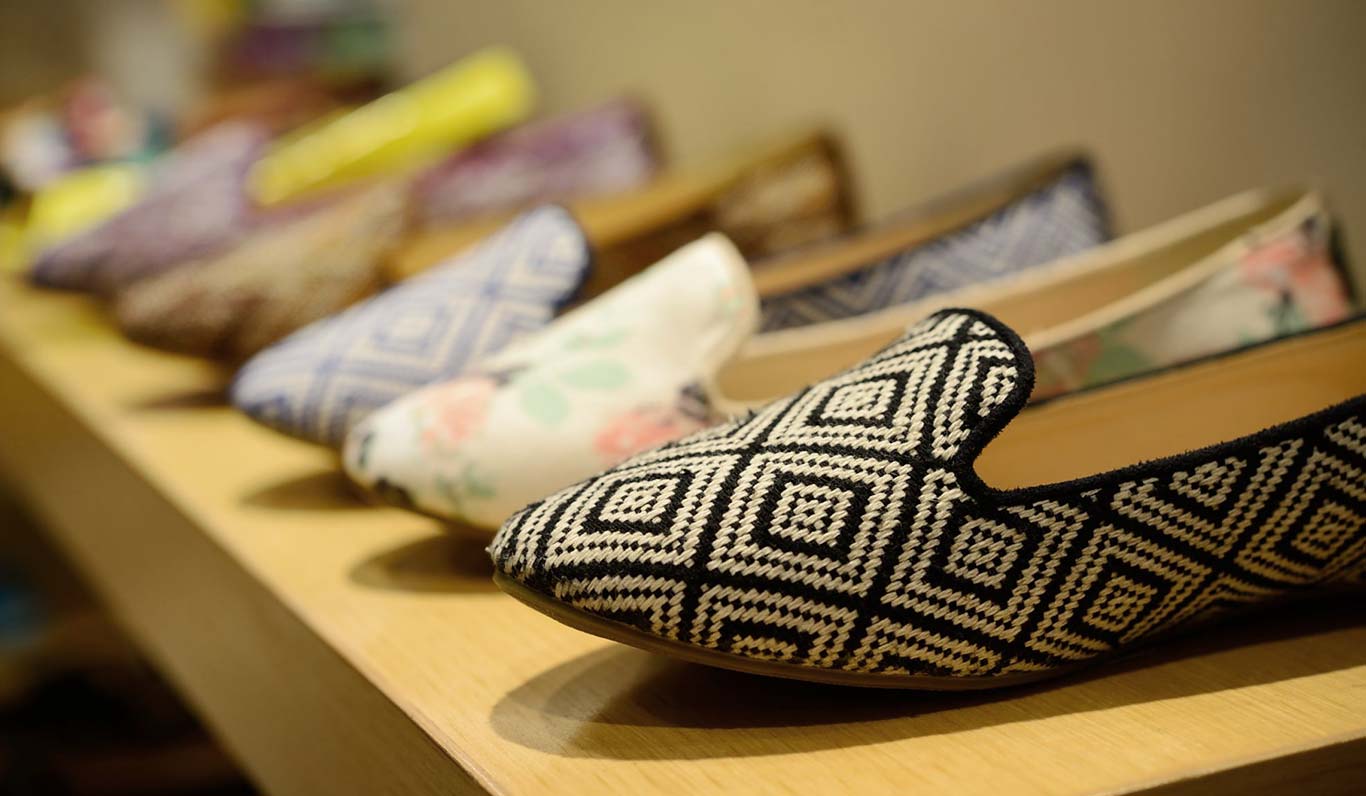
    Despite being started by New Zealand entrepreneur and former footballer Tim Brown, wool-based footwear brand Allbirds has only been available online its home country – until now.

    The launch comes after the business successfully raised $76.7 million at the end of 2018, aiming to help fuel the business’ expansion into Asia and the UK.

    The company, which is headquartered in San Francisco, opened its first New Zealand bricks-and-mortar store in the Britomart precinct of Auckland on Thursday, August 15.

    “We always imagined we would open a store in New Zealand. It’s one of our founding markets, it’s where I am from and where our key material, wool, is from,” Allbirds co-founder Tim Brown said, according to Stuff.

    Allbirds makes its shoes predominantly with New Zealand merino wool, which helps to make them ‘the world’s most comfortable shoes’, the brand’s tagline.

    Wool uses 60 percent less energy than materials used in a synthetic shoe, according to the brand, which also uses recycled bottles for laces, bean oil in insoles and 90 percent recycled cardboard in its packaging.

    Allbirds are available internationally online, and through brick-and-mortar stores in the US, UK and China. The Britomart store is the brand’s first location in its home country of New Zealand.

    The 150sqm store offers the brand’s entire range, as well as limited-edition Auckland-inspired laces: Waiheke Island Teal, Light Path Magenta, and West Coast Black Sand.

    The retailer offered a number of events, such as dried flower arranging workshops, meditation classes and drawing classes, in the first week of the store’s operation.

    According to Brown, it is a challenge to transpose the brand’s online experience into an offline one.

    “Bad retail is being challenged and good retail, thoughtful retail that is about storytelling and leans into the people that work there, that has educated people working in that environment that understand the products and are able to give a good experience is old fashioned and important,” Brown said to

  • JD may list Dada-JD Daojia in the US Store

    JD may list Dada-JD Daojia in the US Store

    Chinese e-commerce giant JD is considering a share listing in the US, according to a Reuters report.

    The firm has entered into early-stage discussions with bankers about a deal that could raise US$500 million for the firm’s joint venture in the territory, Dada-JD Daojia.

    According to Coresight Research, Dada-JD Daojia was created in 2016 through the merger of JD’s supermarket business and the crowdsourcing delivery service Dada Nexus, with a 10-per-cent stake owned by US retailer Walmart.

    Dada-JD Daojia provides a one-hour professional delivery service for more than 74 million users, working with more than 5000 retailers including Walmart, Carrefour, Vanguard, Yonghui supermarket and Watsons.

    The JV has already secured roughly the same amount in funding last year with investments from JD and Walmart.

    JD itself has just come off a solid second quarter thanks to strong online sales in recent months.

  • S. Culture warns shareholder for loss

    S. Culture warns shareholder for loss

    S. Culture International has warned shareholders it expects to post a net loss in the range of HK$3 million to $4 million for the six months to June. That would equate to as much as 10 times last year’s first-half loss of $400,000.

    The Hong Kong-listed retailer sells a range of international footwear brands including Clarks, Josef Seibel, The Flexx and Yokono. It has a network of around 100 stores across Hong Kong, Macau and Taiwan trading as S.Culture, Shoe Mart and Scoops and under individual brands, such as Clarks, Clarks Originals and Josef Seibel.

    Last March S. Culture hinted at a change of fortune after closing non-performing stores and booking gains from property disposals.

    But yesterday the company essentially revealed its shoe-trading business did not return enough profit to compensate for the absence of a one-off property gain last year, worth $7.57 million.  The company said another factor in the looming loss was overheads relating to the expansion of the management team it is putting in position to oversee the group’s future development.

    The exact result will be revealed later this month.

  • 80 Percent of Thai Wealth Held Onshore

    80 Percent of Thai Wealth Held Onshore

    Lombard Odier is bullish about its onshore partnership strategy in Thailand, claiming that 80 percent of high net worth wealth remains onshore with local banks.

    The bank is bullish on Thailand’s wealth market, citing industry projections of 10-30 percent annual growth of high net worth individuals, depending on segmentation. Interestingly, the billionaire segment is expected to increase the fastest despite an ongoing U.S.-China trade war.

    Growth is here, said Lombard Odier’s APAC CEO Vincent Magnenat, who expressed optimism regarding the bank’s benefits from its four-year-old partnership with major Thai lender Kasikornbank (Kbank).

    Lombard Odier’s ventures into building onshore revenue lines have been supported not only by its investment capabilities but also through effective delivery to meet non-investment needs. According to Magnenat, the new generation of Thai entrepreneurs are increasingly demonstrating not only demand for professional investment management but also wealth planning and family or business governance needs.

    Perfect wealth comes from a combination of wealth and happiness; customers can live a worry-free lifestyle by easing their concerns in the areas of maintenance and succession of wealth, said Jirawat Supornpaibul, head of Kbank’s private banking group in a local media report.

    KBank’s private banking arm has assets under management of 760 billion Thai baht ($25 billion) with more than 11,000 clients and it estimates the latter to grow five percent annually.

  • Swiss Fintechs to Showcase Expertise at Singapore Fintech Festival

    Swiss Fintechs to Showcase Expertise at Singapore Fintech Festival

    Switzerland Global Enterprise and the Swiss Business Hub ASEAN announced that they will showcase the best of the country’s fintech ecosystem and expertise under its Swiss Pavilion in the upcoming Singapore FinTech Festival 2019.

    Returning for the third year, the Swiss Pavilion will host close to 30 companies involved in cutting-edge innovation in financial services technologies that encompass regulation technology, blockchain solutions, Big Data and analytics, algorithm trading and cybersecurity among others. The Swiss Pavilion, one of the larger national pavilions taking part at the Singapore festival, will present opportunities for co-innovation, collaborations, partnerships, and deal-making.

    The Switzerland Global Enterprise (S-GE) is pleased to showcase the Swiss ecosystem of top financial institutions and leading Fintech players at the Singapore Fintech Festival 2019.  As one of the Top 10 Financial Centres of the world, Switzerland offers the ideal combination of dense and diverse ecosystem in the fintech space, a regulator addressing the needs of the industry and a great pool of talents to create new solutions for the future, said Patrik Wermelinger, Member of the Executive Committee of Switzerland Global Enterprise.

    Besides demonstrating the expertise of Swiss companies to international audiences, the other goal of the Swiss Pavillion is to enable Swiss fintechs to use Singapore as a hub to grow in the Southeast Asia (ASEAN) region, Wermelinger added.

    Interest from Swiss fintech enterprises in Singapore has been growing rapidly. Over the past few years, we have seen escalating interest from Swiss fintech companies to spread their winds into ASEAN using Singapore as a hub.  There is potential for more Swiss-Singapore exchanges and it is my wish to see more of such collaborations.  Together, we can explore more markets and help the financial institutions grow rapidly, said H.E. Fabrice Filliez, Switzerland’s Ambassador to Singapore.

    Switzerland is home to over 1,000 fintech companies, deeply active in Investment Management, Payment solutions, Banking infrastructure and Deposit & Lending. Their interest to a greater presence in Singapore arises from the republic’s fintech cooperation framework and agreements with ASEAN, China, India, Japan, and South Korea.

    Singapore’s annual FinTech Festival is organized by MAS, in partnership with The Association of Banks in Singapore, and in collaboration with SingEx Holdings. The 4th edition of the Singapore FinTech Festival will attract a global array of speakers and exhibitors.

    The upcoming event will carry four major underlying themes that are driving the financial ecosystem: Sustainability and Climate Finance; Future of Finance; Exponential Technologies and FinTech and Beyond.

  • HSBC Slighted in China

    HSBC Slighted in China

    In a tell-tale sign that HSBC’s relations with Beijing are on the edges, the bank has been noticeably excluded from a list of 18 involved in China’s interest rate reform.

    Hong Kong’s biggest bank was not included in a list of 18 lenders that will participate in pricing for a new loan prime rate that will be unveiled by the People’s Bank of China on Tuesday. The roster includes foreign lenders such as Standard Chartered and Citigroup, which have smaller China presence than HSBC.

    The People’s Bank of China (PBOC) said in a statement  that the benchmark lending rates set by the bank will be replaced with new national Loan Prime Rates (LPRs) — which will be based on the interest rates that a basket of 18 commercial banks charge their more creditworthy borrowers — as a new reference point for lending.

    The exclusion deals a blow to HSBC, which has made Greater China a key pillar for its growth strategy. The lender is the third-largest corporate bank in the country by market penetration, according to data provider Greenwich Associates LLC.

    The recent departures of chief executive officer John Flint and the bank’s Greater China head, Helen Wong signal troubles at the bank. HSBC’s shares fell 13 percent in Hong Kong year-to-date, compared with a decline of less than 1 percent in the benchmark Hang Seng Index.

    Speculations about how the London-based bank has fallen into China’s bad books include the bank’s involvement with Huawei Technologies. According to a Financial Times report on Monday, Liu Xiaoming, China’s ambassador to the UK, summoned HSBC’s ex-CEO John Flint to the embassy earlier this year to interrogate him over the bank’s role in the arrest and prosecution of Meng Wanzhou, the chief financial officer of Huawei.

    The then-CEO told him HSBC had no option but to turn over information that helped US prosecutors build a case against Meng, the FT said.

    Wong’s departure came at a time when HSBC was facing criticism in China’s state-owned media over its role in the Huawei case. The way HSBC helped the U.S. Department of Justice acquire documents concerning Huawei was unethical, citing a source close to the matter. Hence, the bank was likely to be included in China’s first “unreliable entity” list of companies that have jeopardized the interests of Chinese firms, it said.

    An HSBC spokesman on 9 August has denied that Wong’s departure was linked to any issue involving Huawei, pointing out that she announced her resignation before Flint’s departure.

  • MAS Warns Against Lee Hsien Loong Bitcoin Scam

    MAS Warns Against Lee Hsien Loong Bitcoin Scam

    The Monetary Authority of Singapore warned the public about a website using fabricated comments from Prime Minister Lee Hsien Loong to solicit investments in bitcoin.

    The website not only used fabricated comments but also attempted to impersonate a news page from a local media organization, the Monetary Authority of Singapore (MAS) added.

    The information on the website is highly deceptive and misleading. The statements attributed to PM Lee are completely false, said MAS in a media statement last Friday. The site tries to get readers to provide credit card or bank account information, plus payments into a trading platform, which would automatically initiate trades on the client’s behalf.

    Members of the public are advised to exercise extreme caution and avoid providing any financial or personal information on the forms linked from the website, MAS added. Members of the public who suspect that an investment could be fraudulent or misused for other unlawful activities should report such cases to the police, the regulator said.

    Since last year, MAS has issued at least four consumer advisories on such fraudulent websites that use the names and photographs of ministers and other prominent people in Singapore to solicit bitcoin investments. The ministers included Emeritus Senior Minister Goh Chok Tong and Deputy Prime Minister Heng Swee Keat.

  • Bank of Singapore Expands UHNW Shelf with Senior Hire

    Bank of Singapore Expands UHNW Shelf with Senior Hire

    Continued growth from its ultra-high net worth clients business has led Bank of Singapore to bolster its product capabilities with the addition of a new head of bespoke investments for Greater China and North Asia.

    Kelvin Teo joins the bank in the new Hong Kong-based role to source unique and exclusive investment opportunities for UHNW clients in Greater China and North Asia, particularly with regards to buyout funds and real estate. Teo reports locally to Derrick Tan, Hong Kong branch CEO and global market head of Greater China and North Asia; and functionally to Carolyn Tham, head of UHNW bespoke investments.

    Teo was most recently a Hong Kong-based director of equity capital markets for Credit Suisse. He was responsible for the origination of capital market transaction for corporate and institutional clients. Previously, he had 15 years of experience in investment banking across various areas including IPO, pre-IPO financing, acquisition financing and more.

    Since 2017, the bank’s number of UHNW clients has doubled and assets from the client segment grew nearly 40 percent. The UHNW segment aside, Bank of Singapore is also boosting its Greater China business, which reportedly nearly tripled assets under management in five years.

    Teo’s hire follows a number of senior appointments for the regional business including the hire of Richard Hu earlier this year as market head for Greater China. Last year, the bank also hired Phonda Chan and Anne Song as market heads, alongside Jacqueline Lee as head of risk.

  • Cross-brand file sharing feature announced by three phone manufacturers

    Cross-brand file sharing feature announced by three phone manufacturers

    As many Apple iPhone users know, AirDrop is a feature that allows them to share photos, videos and documents with nearby Apple devices without requiring an internet connection. This is achieved using Bluetooth and Wi-Fi connectivity. A WeChat post published today by Xiaomi reveals that three Chinese phone manufacturers are teaming up to provide their customers with wireless peer-to-peer file sharing across the different brands.

    This new feature will apparently use Bluetooth to pair the devices, creating a peer-to-peer Wi-Fi network just like AirDrop does, and transfer files at speeds up to 20Mbps. Xiaomi says that other smartphone manufacturers are welcome to join the trio. By the end of this month, a beta version of the new file-sharing protocol is expected to be rolled out. According to Counterpoint Research, Vivo, Oppo, and Xiaomi made up 49% of the domestic phone market during the first quarter. Adding some additional manufacturers, especially Huawei, would allow the vast majority of handsets in the country to share files without the use of internet connectivity. There is no indication whether Huawei or other Chinese companies are or aren’t interested in joining the original trio.

    Google itself has had a feature since 2011’s Ice Cream Sandwich called Android Beam that uses NFC to share “photos, videos, contact information, links to webpages, navigation directions, YouTube URLs, and more” by tapping two devices together. But Android Beam is being phased out in Android Q, replaced by a Google Play Services feature called Fast Share. This will be similar to Apple’s AirDrop thanks to the use of Bluetooth. Android Q users will be able to share files, images, URLs and small parts of text messages even without an internet connection.

    The Files by Google app, available in the Google Play Store, uses Bluetooth to allow Android devices with the app installed to share files at speeds as fast as 480Mbps. Encryption is employed to protect the privacy of those using the app.

  • Google shuts down service that helped carriers provide better coverage

    Google shuts down service that helped carriers provide better coverage

    Google has shut down a service that was aimed at helping carriers around the world improve their coverage, by providing them with aggregated data from Android devices. The closure comes at a time of heightened concerns about data privacy across the industry.

    Google’s Mobile Network Insights service was launched in 2017 as a free tool for wireless providers around the world that allowed them to see weak spots in their network coverage. The service was “essentially a map showing carriers signal strengths and connection speeds they were delivering in each area.”

    Thee data shared by Google were aggregated and anonymized, meaning that carriers didn’t get information about individual users, but it was still a valuable tool for providers, as they could see stats about the performance of their network in different regions. The platform also displayed stats relating to competitor services, which were not identified by name.

    The data for Google’s Mobile Network Insights was sourced from devices running Android, which totals to about 75% of the world’s smartphones, but was limited only to users who had “Location History Sharing” and usage and diagnostics enabled on their Google accounts. Despite this, Google opted to discontinue the service in April, without citing any formal reasoning behind the decision. Carriers around the world were simply notified of the closure.

    A Google spokeswoman has confirmed for Reuters that the service is now, indeed, discontinued and that changing “product priorities” was the main driving factor behind the decision. However, people with knowledge of the decision claim that Google’s move was motivated by “concerns about data privacy,” and possibly to avoid further scrutiny from lawmakers.

  • Information hidden in app reveals how much Apple will charge for Arcade

    Information hidden in app reveals how much Apple will charge for Arcade

    Back in March, Apple introduced Apple Arcade. This service will allow subscribers to pay a monthly fee for unlimited gameplay. There will be over 100 new titles that will be available, all exclusive to the app. Apple could release a launch date and pricing for Arcade on September 10th; that is when the company’s fall event is expected to be held according to a screenshot found on the most recent iOS 13 beta. But it appears that we might already know the pricing. The latter discovered information inside one of the APIs used by the App Store app that apparently reveals how much Arcade will cost (an API, or Application programming interface, is used to help two applications communicate with each other).

    According to the information discovered by 9to5Mac, Apple will charge $4.99 a month for the service after a one-month free trial. All members in a Family Sharing account will have access to the games inside the Arcade app, and since subscribers are paying for the service, there will be no in-app purchases offered. Arcade subscribers can start a game on an iPhone, iPad, Mac or Apple TV and switch devices without missing a beat.

    Apple Arcade will join Apple Music, Apple News+ and Apple TV+ as features that bring in recurring revenue to Apple. It’s all part of the company’s plan to take advantage of the 900 million+ iPhones active around the world while lessening its reliance on new iPhone sales, which peaked in 2015. The services unit, which includes the aforementioned subscription-based features, the App Store, Apple Pay, AppleCare, iCloud and more, is Apple’s second-largest in terms of revenue and is it’s most profitable. Apple is targeting $50 billion in services revenue for next year, which would double the $25 billion the unit grossed in 2016. During its most recent earnings announcement covering the fiscal third quarter (April through June), the firm took in a record $11.5 billion in revenue for the division, up 12.7% from the $10.2 billion it took in during the same quarter in 2018.

    Apple has been using its employees to test Arcade and get some feedback before it is released for public use. This past weekend, we told you that after a one-month free trial, the company is asking employees for 49 cents a month to test early builds of some of the games. This early access program will end once iOS 13 is officially launched.

    Banking firm HSBC expects Arcade to garner as many as 29 million subscribers by 2024, raking in $4.5 billion. However, that estimate is based on a monthly subscription rate of $12.99 a month; that would seem to be too steep a price hike over a short period of time if Apple does indeed debut the service at $4.99 a month. So HSBC’s analysts are going to have to go back and rework the estimate.

    Some of the titles that you should expect to find when Apple Aracade launches include:

    • Hot Lava
    • Oceanhorn 2: Knights of the Lost Realm
    • Beyond a Steel Sky
    • Sonic Racing (yes, starring “that” Sonic)
    • LEGO Brawls (yes, starring those LEGO)
    • No Way Home
    • Yaga

    These are games that you won’t find elsewhere. And by offering you a free trial period, Apple is looking to get you hooked on the service. It is the same approach that the company takes with Apple Music. And if Apple does price Arcade at $4.99 a month, it might seem like a bargain to those who were expecting it to be priced at $9.99 a month or more. The failure or success of Arcade will go a long way toward determining whether Apple hits its goal of $50 billion in services revenue next year.

  • Microsoft confirms Gears of War mobile game drops this month

    Microsoft confirms Gears of War mobile game drops this month

    Unveiled more than a year ago, Microsoft’s Gears of War mobile game will be released on August 22, just a few weeks before Gears 5 hits PC and consoles in September. Dubbed Gears Pop!, since it’s a collaboration between Microsoft and Funko Pop!, the game will be available on both Android and iOS devices, Microsoft announced earlier.

    After a brief soft-launch, Gears Pop! will be fully available for everyone around the world with a compatible phone. The game features more than 30 Gears of War characters, ready to take your orders, all brought to life from authentic Funko Pop designs.

    In Gears Pop!, you’ll be building your squad mixing and matching COG and Locust units, use ultimate abilities, as you strive for supremacy on popular Gears maps. You can play against AI opponents to try out new squads before you take on real players.

    Since this is a free-to-play game, expect Gear Pop! to be heavy on in-app purchases, especially if you want to build a pretty solid team of Gears of War heroes and villains. You can still pre-register for the game via Google Play Store and App Store before the game launched on August 22.