Author: Mei Ling Tan

  • Uniqlo Indonesia plans several new stores

    Uniqlo Indonesia plans several new stores

    Japanese clothing retailer Uniqlo in Indonesia is set to launch new outlets in Batam, as well as Jakarta and Bekasi next month.

    The Batam store, opening in the Grand Batam mall in Penuin, Lubuk Baja, will be the first Uniqlo in Indonesia to be located in the city. The company hopes it will help locals avoid travelling to other cities to purchase the brand’s collections.

    The new Jakarta outlet is slated for Mall of Indonesia in Kelapa Gading, while the Bekasi opening is at Grand Galaxy Park – bringing the total number of locations in the territory to 29 stores in nine cities.

    “The addition of stores in Jakarta and Bekasi will further strengthen our presence in providing our Lifewear products and services in these cities,” said Uniqlo Indonesia’s president director of PT Fast Retailing Naoki Kamogawa.

  • Unifying clicks-and-mortar for more sales success

    Unifying clicks-and-mortar for more sales success

    At e-commerce fashion brand Love, Bonito’s newest – and largest – physical store at Singapore’s Funan mall, shoppers pose and post at “Instagrammable” spots while others collect online orders at the express counter.

    Less visible is what is taking place at the cashiers, where shoppers pay using any mode – cash, credit or digital wallets. Payment and product preferences are tracked for when the shopper next shops, online or off, so that the shopping experience is constantly fine-tuned and personalised.

    The new store reflects what an increasing number of retailers recognise – that today’s digitally savvy, sophisticated shopper wants experiences that are integrated, seamless and tailored. And Singapore shoppers are leading the pack in Asia Pacific.

    In a recent Adyen-451 Research survey, 51 per cent of Singapore shoppers said cross-channel options would influence their decision to shop with a specific retailer; 60 per cent have abandoned an online purchase because they could not use their preferred payment method; and 89 per cent ditched a purchase or left a store because an item was not in stock.

    More so than ever, retail today is about prioritising the consumer’s experience. And as Singapore shoppers increasingly demand convenient and frictionless experiences, unified commerce – ensuring seamless online-offline transitions, from discovery to checkout – will separate the retailers who succeed from those who don’t.

    Four strategic priorities for winning at retail 

    With US$1 trillion in sales volume in Asia Pacific at stake, the business case for unified commerce is clear. But having the right technology is not enough – it requires a mindset and strategic shift towards customer-centric innovation.

    Any action plan must consider these four strategic priorities:

    1. Commit to a digital transformation strategy: Buy-in across the organisation – from the C-suite through to front-line sales associates – is critical. While one-in-three retailers in Singapore execute against a formal strategy, there is still much ground to cover. An important consideration is the high preference for contactless payments at 28 per cent of Singapore shoppers. Digital transformation must incorporate both globally-used digital wallet options like Apple Pay and Google Pay, and local payment methods like Alipay and WeChat Pay.

    2. Convert the store into a strategic asset: While in-store is the choice channel across all age groups – preferred by 41 per cent of Singapore shoppers compared to 32 per cent online – a frictionless experience is key. Some 89 per cent abandoned a purchase because a product is out-of-stock, and short or no queues are a deciding factor for a whopping 96 per cent. Mobile points-of-sale (mPOS) help bust queues, and by allowing cross-channel buying and contactless payments, shoppers can complete purchases seamlessly.

    3. Embrace contextual commerce: Channels like social media and smart speakers that allow shoppers to move from impulse to purchase in a single interaction are quickly catching on in the region, where the percentage of consumers shopping on social media and third-party messaging apps is the highest in the world (more than 45 per cent). But only 22 per cent of retailers enable purchases on social media, and 13 per cent on smart speakers.

    4. Prioritise payments: Consider that 60 per cent of Singapore shoppers have abandoned an online purchase because their preferred payment method is not available. Shoppers demand fast and efficient transactions, so eliminating friction is critical. To ensure the sale is in the bag, retailers need to smoothen payment pathways, from accepting an array of payment methods and offering one-click checkouts, to avoiding unnecessary declined transactions.

    Sealing the sale

    Simply put, unified commerce identifies – and eliminates – friction points that lead to abandoned purchases.

    To succeed, retailers must prioritize strategies that ease that process, providing a shopping experience that is consistent, convenient, and contextual for today’s shoppers who are more demanding than ever before.

    The ability to do that is what give retailers the edge to win in the next chapter of retail.

  • La Vie en Rose Swimwear launching in China

    La Vie en Rose Swimwear launching in China

    Canadian specialty lingerie and swimwear label La Vie en Rose is expanding its business into Mainland China as part of a strategy to become twice as large and profitable within the next three years.

    The brand will launch in Guangzhou’s PO Park shopping mall later this month with further locations in Guangzhou to follow.

    “We were ready to accept the challenge of taking our first steps in China,” said La Vie en Rose president and CEO Francois Roberge. “We are looking at our first two years in the country as a real learning period. It’s very important to understand how the market works in order to build a foundation for our expansion.”

    The brand operates more than 360 stores, including 95 international locations in more than 15 countries, targeting women between 25 and 45.

    “Over the next two years, we plan on opening several physical locations in Guangzhou and continuing our expansion in China from there,” said La Vie en Rose VP of strategy and development Aurélie Daoust-Lalande.

    “We have the ambitious goal of doubling the size and profitability of the company by 2022, and our expansion outside of Canada will definitely play a major role in achieving this objective.”

    The firm’s products are also to be launched online on the Tmall online retail platform.

  • Microsoft approaches former Siri chief from Apple

    Microsoft approaches former Siri chief from Apple

    Bill Stasior, longtime head of Apple’s Siri team, has left the company to join Microsoft’s AI division. After nearly a decade at Apple, Stasior will step into the shoes of a corporate vice president at Microsoft later this month. At his new job, the former Siri chief will lead an artificial intelligence group.

    Last year, Apple poached Google’s former head of search and AI, John Giannandrea. The served as further indication of Apple’s woes with Siri, which beat the competition to the AI assistant race, but was relegated to a firm third place behind Google Assistant and Amazon Alexa.

    Stasior’s reasons for leaving Apple aren’t clear at this point, but Giannandrea’s hiring is a likely guess. Since his hiring last summer, Giannandrea became very involved with the development of Siri and was eventually promoted to a senior vice president, reporting directly to Apple CEO Tim Cook.

    Although Stasior was in charge of Apple’s Siri team since the assistant’s initial launch, he won’t be working on Cortana at Microsoft. The company behind Windows is lagging far behind the competition, as far as AI assistants are concerned, with Cortana being a distant fourth to Google’s, Amazon’s, and Apple’s offerings. However, Stasior’s talents apparently won’t be used to better Cortana, but rather in Microsoft’s broader AI efforts. The Information reports that people familiar with the matter have said that the former Siri chief will head a special AI group at Microsoft

  • Google Play Music subscription gifting removed

    Google Play Music subscription gifting removed

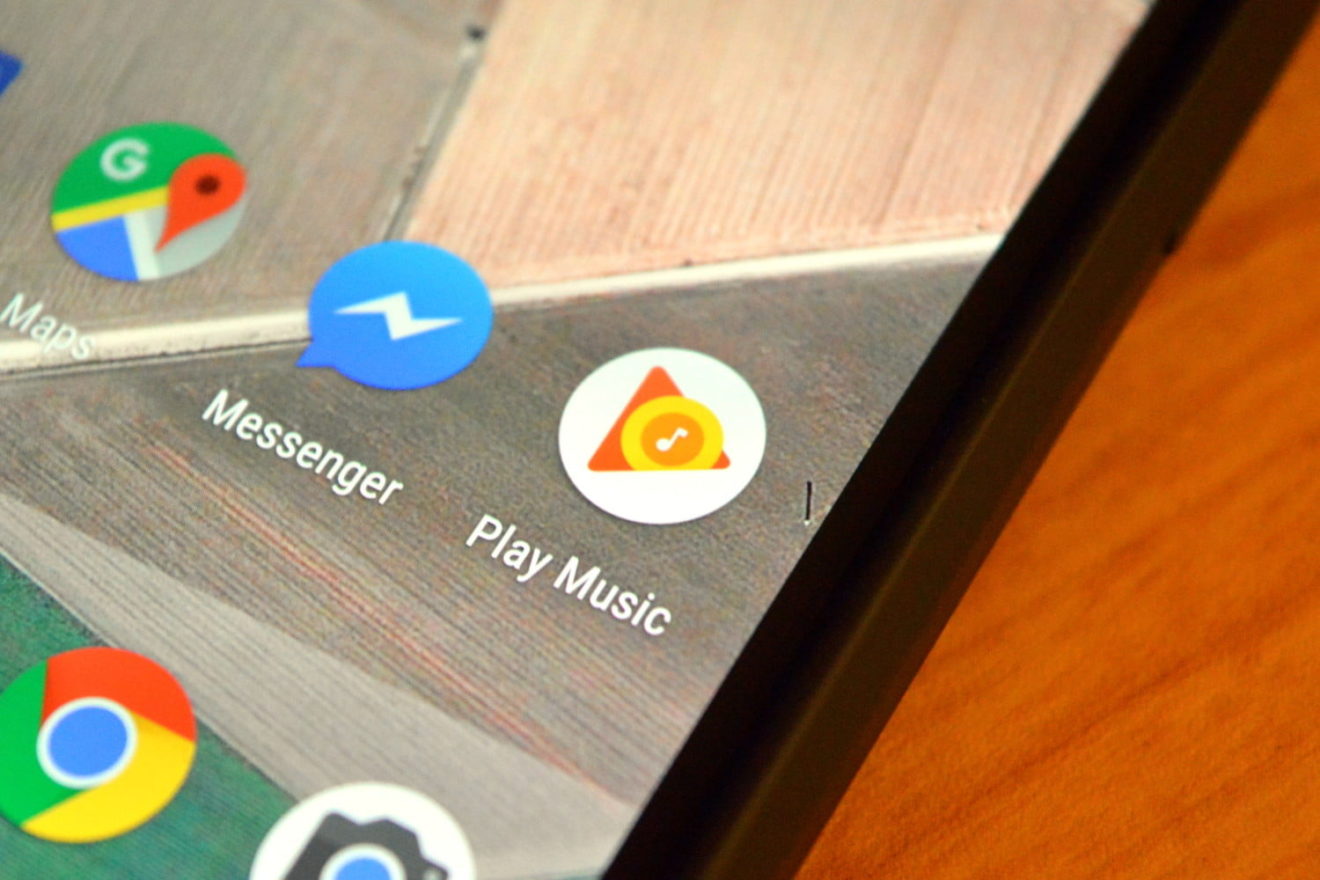
    It looks like Google no longer allows users to gift Play Music subscriptions via Android. The move is far from being surprising as the app rarely received updates and those that were pushed out added minor improvements and very few new features.

    The messages someone gets when trying to gift a Play Music subscription reads: “Important – Google Play Music subscriptions can no longer be purchased as gifts.” However, if you really want to gift someone a Play music subscription, there’s a workaround, but it involves using an older version of the Android app or simply gifting it through the web app.

    It’s unclear whether or not Google plans to bring back the feature in some other form, so, for now, you can only use the web app or the workaround mentioned above to gift someone a Play Music subscription from an Android device.

    Reports about Google phasing out Play Music and replacing it with YouTube Remix have been running around since April, so this might be one of the first steps towards its demise.

  • OnePlus TV confirmed to arrive in September

    After revealing the name of its upcoming TV, OnePlus announced today that the device will be launched on the market in September in just one country. If you’re looking to buy the OnePlus TV, you’ll be able to do that next month in India, as this is the first country getting it.

    In case you’re wondering why OnePlus decided to launch it India first, it appears that the Chinese company’s products have had great success in this country thanks to the many fans and supportive community.

    Over the past 6 years, we have achieved great success in India in large part because of our passionate and supportive community. Even after all these years, we’re excited to explore exciting new opportunities hand-in-hand with you. OnePlus TV is such an important product for all of us, and we can’t wait to see it in living rooms all over India.

    The good news is OnePlus announced it is working hard to launch the OnePlus TV in North America and Europe as soon as it establishes partnerships with most of the local and regional content providers because we all know “content is king.”

    Not many technical details about the OnePlus TV are known for the moment, but the company’s CEO Pete Lau said that “image and sound quality are fundamental features” the OnePlus must get right. He also said that OnePlus TV’s design and smart interconnectivity will probably make it even more exciting.

  • Google brings new spelling and grammar correction capabilities to Gmail app

    Google brings new spelling and grammar correction capabilities to Gmail app

    Google has announced a couple of nifty features will soon be rolled out to Gmail on all platforms. Although the app does feature predictive text, users are still prone to typos or grammar mistakes.

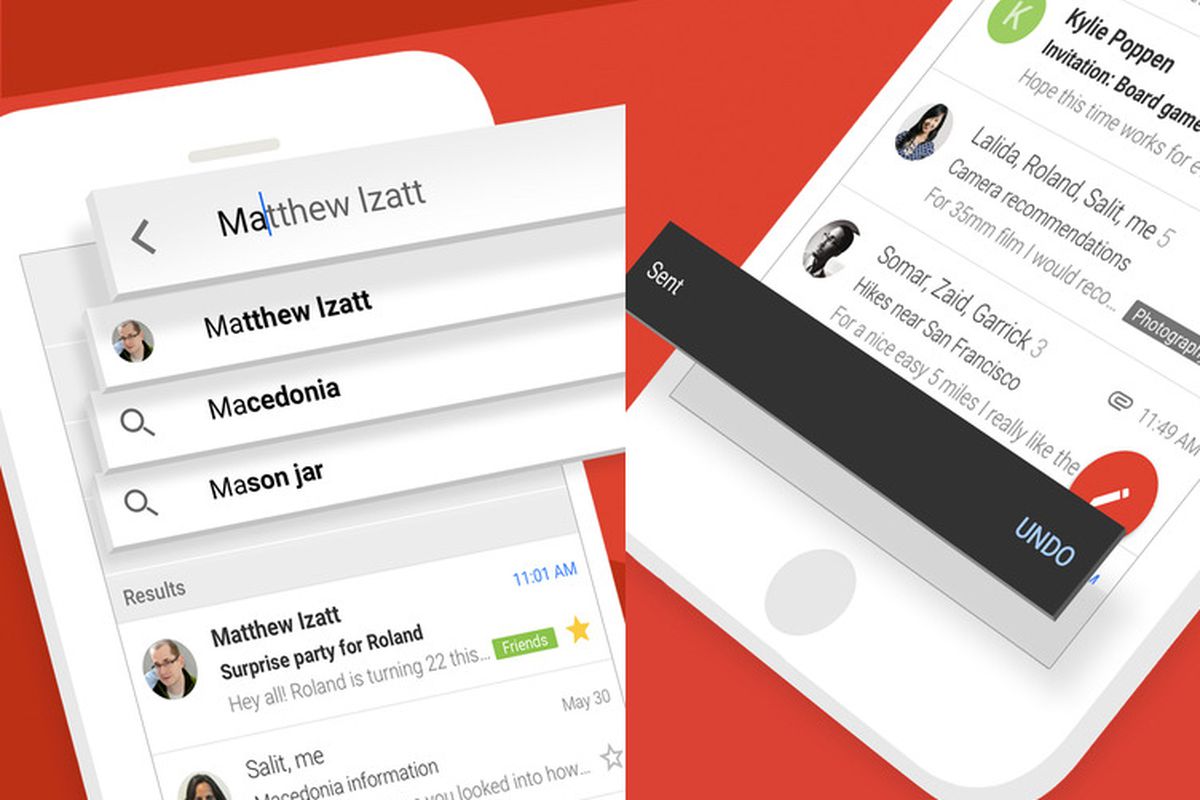
    To correct that issue, Google announced it will introduce new spelling and grammar correction capabilities for Gmail which are meant to help users with G Suite accounts compose emails faster.

    The new capabilities will trigger ones you start typing a message and will use artificial intelligence to make smarter spell-check suggestions while detecting potential grammar issues at the same time. Moreover, Google mentions that it has added as-you-type autocorrect.

    Google says these new features will be rolled out gradually to all G Suite accounts starting today, but the full deployment will last until mid-September. Unfortunately, the new features are not yet available for regular users, although we can safely assume they will be made available to all Gmail users at some point, just like it happened with the Smart Compose function.

  • Upcoming Maruti Suzuki XL6 Will Be BS6 Compliant

    Upcoming Maruti Suzuki XL6 Will Be BS6 Compliant

    Maruti Suzuki India’s today announced that half of its petrol line-up is already Bharat Stage VI or BS6 compliant. The Indo-Japanese carmaker is the first OEM to bring BS6 compliant vehicles in the mass segment, ahead of the statutory timeline, and currently, the Alto 800, Wagon R 1.2, and petrol options of the Swift, Baleno, Dzire, and Ertiga have already made the shift to BS6. In fact, the BS6 models offered by the company currently constitute around 70 percent of the total petrol vehicles sold. Now, the carmaker has confirmed that the upcoming Maruti Suzuki XL6 premium MPV will also be BS6 compliant from the time of its launch, which is slated for August 21, 2019.

    Like the aforementioned models, the upcoming Maruti Suzuki XL6 is likely to get only a petrol BS6 engine, while the diesel options are likely to remain BS4 compliant for now. The new XL6 will get the new BS6 compliant 1.5-liter K15 petrol motor with the company’s SHVS (Smart Hybrid Vehicle by Suzuki) technology, which was recently introduced in the Ertiga. The XL6 is also likely to come with the Ertiga’s 1.5-litre diesel motor. Both engines are mated to a 5-speed manual gearbox as standard, along with an optional 4-speed automatic torque converter for the petrol model.

    The new Maruti Suzuki XL6 will get the same 1.5-liter BS6 petrol engine that powers the Ertiga

    Maruti Suzuki introduced its first BS6 compliant petrol car, a Baleno in April 2019. This was followed by the launch of BS6 compliant petrol variants of Alto 800, WagonR (1.2-litre), Swift, Dzire, and Ertiga much before the government stipulated date of implementation of the regulations. The BS6 compliant petrol vehicles will lead to a substantial reduction of nearly 25 percent in Nitrogen Oxide (NOx) emissions.

    Talking about the company’s proactive measures to introduce BS6 cars beforehand, Kenichi Ayukawa, Managing Director & CEO, Maruti Suzuki India said, “As a responsible and environment-conscious brand, Maruti Suzuki is aligned with Government of India’s vision to introduce BS6 compliant vehicles before April 2020. Seven of our top-selling models are BS6 compliant much before the deadline. We are committed to progressively upgrade our entire range of petrol cars to BS6 technology before stipulated timelines. The BS6 vehicles use Suzuki’s proven technology that helps to substantially reduce the emissions thus contributing to a cleaner and greener environment.”

  • Jaguar And Audi Are Having A Really Hard Time Beating Tesla In The US

    Jaguar And Audi Are Having A Really Hard Time Beating Tesla In The US

    It’s a trope that’s been around roughly as long as Elon Musk has been in the car business: When a new electric vehicle is unveiled, it’s dubbed a potential “Tesla killer.”

    But from the flaming-out of Fisker to present day, Tesla has largely dominated the American electric-vehicle market. Musk has even managed to expand the company’s preeminence over the still small segment despite two new battery-powered luxury SUVs arriving in U.S. showrooms the last 10 months: Jaguar’s I-Pace and Audi’s e-tron.

    Their starts are the latest indications that legacy automakers aren’t assured instant success when they roll out new plug-in models. Tesla’s Model S and X have largely held its own against the two crossovers that offer a shorter range and less plentiful public charging infrastructure. Jaguar and Audi also lack the cool factor Musk has cultivated for the Tesla brand by taking an aggressive approach to autonomy and using over-the-air software updates to add games and entertainment features.

    “If a customer is choosing the I-Pace over the comparable Tesla, they are making the conscious decision: I don’t want the Tesla,” said Ed Kim, an analyst at the car-market research and consulting firm AutoPacific. “You really have to be someone who doesn’t like Tesla, who doesn’t want the Tesla product, in order to go for this.”

    Tesla’s Model X and Model S each boast more than 300 miles of range, and the cheaper Model 3 travels 240 miles between charges. Jaguar’s $69,500 I-Pace is rated at 234 miles, and Audi’s $74,800 e-tron registers 204 miles.

    Jaguar’s marketing team spent years laying the groundwork to introduce the I-Pace. In 2016, the brand joined Formula E, an open-wheeled, electric-powered race circuit similar to Formula One.

    “We had an electric car in our development plan – the I-Pace – at the time,” said James Barclay, Jaguar’s racing director. “We had to create awareness about the fact that we had an electric car coming to market, firstly, and to showcase why you’d buy a Jaguar electric vehicle over something else.”

    Porsche and Mercedes-Benz are also joining Formula E for the 2019-2020 season to help generate buzz for the new all-electric models they have coming out. The circuit makes stops in cities including New York, Hong Kong and London, which the brands are banking on as major markets for plug-in cars.

    “City centers are where there’s going to be a really good application for electric vehicles,” said Kim McCullough, Jaguar Land Rover’s vice president of marketing for North America. “So having them be able to see something firsthand – it starts the education process.”

    But while Formula E is drawing crowds of urban dwellers and a substantial audience on social media, all that buzz may not necessarily translate into showroom traffic.

    “Auto racing really comes as one of the last influencers, in terms of influencing people to buy whatever car they’re looking at,” according to AutoPacific’s Kim. If Jaguar is doing well in Formula E, it couldn’t hurt the I-Pace, he said. “But I don’t think it would have a huge positive impact on awareness of the vehicle.”

    Jaguar has sold an average of about 190 I-Pace crossovers a month since U.S. sales began. Tesla, by comparison, was delivering Model Xs at a clip of about 550 a month in its first year on the market, beginning in 2015, according to InsideEVs.com estimates.

    The Audi e-tron has been on the market in the U.S. for only four months, but during that time, it has averaged sales of about 745 units, InsideEVs estimates. In July, 3.5% of Audi’s U.S. sales were all-electric, and the company expects that number to climb to 30% by 2025.

    “We are confident that we are and will continue to deliver an offering that customers will want to be part of,” Cian O’Brien, the interim president, and chief operating officer of Audi of America, said in an email.

    After initial efforts to nab electric-car buyers proved challenging, Jaguar has decided to attack Tesla head-on.

    The brand is offering Tesla owners a $3,000 discount on the I-Pace for the next month and a half. “This is all about capturing a share of voice,” Stuart Schorr, a Jaguar Land Rover spokesman, said in an email. “The EV market is just at its infancy.”

    “Consumers, as a result of seeing our race program, do consider us to be a car brand they would consider for their electric car purchase,” said Barclay, the racing director. “Rome wasn’t built in a day, and for a premium automotive manufacturer with their first electric vehicle, it takes time in the market.”

  • Apple’s healthcare unit needs to see a doctor

    Apple’s healthcare unit needs to see a doctor

    Earlier this year, Apple CEO Tim Cook said healthcare would be “Apple’s greatest contribution to mankind.” It appears that Apple is having problems with this unit after a number of members have left the team. Citing eight sources said to be familiar with the situation, CNBC says that there is tension in the company’s healthcare division and the group is essentially without direction after a series of changes at the top of the unit.

    The report says that while some employees have done well, others feel stifled and closed in, unable to get the team to work on their ideas. Part of the problem is getting the unit to agree on a direction to take. Half of the eight sources say that employees wanted Apple to take on some of the larger problems that the healthcare system faces today such as medical devices, telemedicine, health payments and the treatments of chronic disease. Apple, notes the report, has instead focused on creating features for its devices that focus on wellness and prevention for healthy people. The latter end of the healthcare industry is considered to be less risky and less regulated. Despite the issues inside the group, all eight sources agreed that healthcare remains a “strategic priority” for the company.

    Apple’s healthcare features are found mainly on the Apple Watch. The heart rate monitor has saved a number of lives, and the Series 4 model added an electrocardiogram (ECG) sensor that looks for abnormal heartbeats. The latter has also been a lifesaver and other watches, like the Samsung Galaxy Watch Active 2, also is equipped with an ECG feature. We do have to point out that it will remain disabled on the Galaxy Watch Active 2 until it receives FDA approval, expected sometime during the first half of next year. Apple’s Chief Operating Officer Jeff Williams is in charge of the healthcare team, and reportedly it was his idea to add sensors and algorithms to the Apple Watch once it became apparent that the device would not be a big seller as a fashion accessory.

    The company is reportedly working on a way for diabetics to measure their blood glucose levels using the Apple Watch, without having to draw blood. Currently, diabetics who depend on insulin prick themselves to draw a small drop of blood that is tested on a glucometer. This is a huge market because a new test strip is required for each test and insulin-dependent diabetics need to test themselves three or more times a day. If Apple can develop such a technology, it could take Apple’s healthcare initiative and the Apple Watch into uncharted territory. The Apple Watch happens to be the world’s top-selling smartwatch and anchors a wearables unit that saw revenue for the fiscal third quarter soar from $3.73 billion in 2018 to $5.53 billion this year. That was a 48.3% year-over-year gain.

    Earlier this year, Apple sent out a survey to check on the morale of employees in its healthcare unit. When the survey indicated that employees were not happy, Williams spoke with a number of employees to let them know that he was still committed to the business. But the executive also wears many hats at Apple and as COO he is responsible for overseeing Apple’s operations and its vast supply chain. Thus, the healthcare group might not have his full attention at times.

    Some of the sources say that Apple needs to be less secretive with its work in the $3.5 trillion healthcare industry. The company is traditionally tight-lipped about its projects, but that doesn’t fly in the world of medicine where clinical studies and published research play a big role.

  • Facebook launches tool that lets users see and control data shared

    Facebook launches tool that lets users see and control data shared

    Facebook is making it easier for users to see and control the data that apps and websites share with the social network by launching a new tool called Off-Facebook Activity. The new feature will be gradually rolled out to Facebook users in Ireland, South Korea, and Spain. However, Off-Facebook Activity will be made available to everywhere over the coming months, so don’t lose hope if you’re not living in any of these countries.

    But what exactly is Off-Facebook Activity and is it as useful as Facebook claims? Well, first off, you can see a summary of the information other app and websites have sent Facebook through its online business tools, including Facebook Pixel and Facebook Login.

    Also, you will be able to disconnect all the information you see from your account if you want to. On top of that, you can choose to disconnect future off-Facebook activity from your account. Facebook says that you’ll be able to do that for all your off-Facebook activity, or just for specific apps and websites.

    Once you clear your off-Facebook activity, the social network will remove your identifying info from the data that apps and websites choose to send to Facebook. Basically, Facebook will no longer know which websites a user visits or what they did during their visit.

    Also, Facebook says that it will not use any of the data that users disconnect to target ads to them on apps like Facebook, Instagram or Messenger. The social network expects some impact on its business but believes giving people control over their data is more important.

  • Impossible Foods and The Butchers Club commission 3D art work at K11

    Impossible Foods and The Butchers Club commission 3D art work at K11

    The “Impossible Burger”, featured plant-based ‘meat’ from Impossible Foods, can now be bought at all The Butchers Club locations in Hong Kong.

    To celebrate the launch of The Butchers Club Impossible Classic Burger, the two companies have commissioned local artist Terena Wong to create a thought-provoking 3D artwork in the Piazza at K11.

    The artwork is a symbolic representation of Impossible Food’s stated mission to restore biodiversity and reduce the impact of climate change by transforming the global food system, as well as The Butchers Club’s ongoing commitment to being more sustainable.

    Impossible Foods’ long-term goal is to accelerate the switch to a more sustainable food system, starting with its burger offering and expanding to a range of pork, chicken, fish and dairy products made directly from plants.

    Served in more than 15,000 restaurants in the US, Hong Kong, Macau and Singapore, the Impossible Burger uses a fraction of natural resources needed to produce animal beef: 96-per-cent less land, 87-per-cent less water and 89-per-cent fewer greenhouse gas emissions.

    Terena Wong has completed more than 40 community art projects, street art works, 3D mural paintings and 3D floor paintings in Hong Kong, the US and China, and has worked with many different parties including the government and non-profit organisations.

    The artwork is available to view and interact with until August 31.

  • Cosmo Lady’s CEO leaves

    Cosmo Lady’s CEO leaves

    Chinese fashion label Cosmo Lady’s CEO Zheng Yaonan has resigned. The resignation took effect as of yesterday, with Zheng remaining as the chairman of the board and an executive director of the company. He is replaced by new CEO Siu Ka Lok, who has been appointed to the position with immediate effect.

    Zheng was chairman, CEO and an executive director of the company since its Hong Long Stock Exchange listing in June 2014. He voluntarily resigned his post as CEO for the purposes of improving the firm’s operating results and enhancing the corporate governance of the group, splitting the roles of chairman and CEO, according to a company stock-exchange filing.

    As CEO, Siu’s major duty will be to manage the intimate wear business of the group, responsible for planning the group’s strategic development, implementing the resultant strategies, policies and regulations, and supervising the daily work of core senior officers.

    Siu was formerly the senior VP of Adidas Greater China.

  • Ikea focused to smart home products

    Ikea focused to smart home products

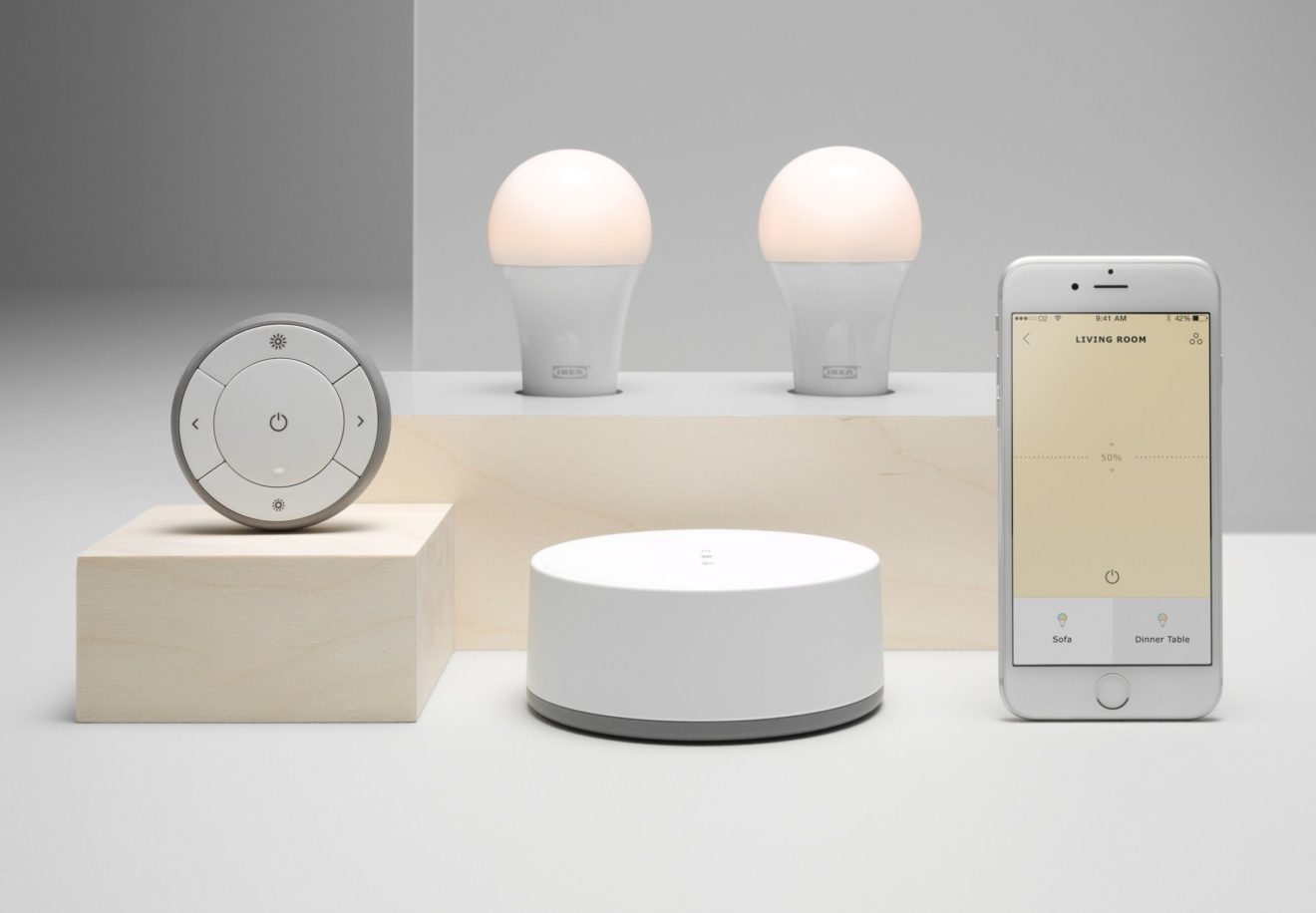
    Swedish furniture business Ikea has committed to invest further into smart home products and has spun off the Ikea Home smart project team into a dedicated business unit within Ikea Sweden.

    Ikea Home Smart was initially conceived in 2012 in order to integrate new, smart technologies into Ikea products, such as wireless charging, smart lighting, as well as smart speakers made in collaboration with Sonos.

    “At Ikea we want to continue to offer products for a better life at home for the many people going forward. In order to do so we need to explore products and solutions beyond conventional home furnishing,” said Björn Block, head of the new Ikea Home smart business unit.

    “By working together will all other departments within Ikea, the business unit of Ikea Home smart will drive the digital transformation of the Ikea range, improving and transforming existing businesses and developing new businesses to bring more diverse smart products to the many people.

    “We are just getting started.”

    According to Ikea’s range and supply manager Peter van der Poel, this is the biggest new business the brand has established since the introduction of Children’s Ikea.

    In June, Ikea renamed its smart eco-system control app TRÅDFRI to Ikea Home Smart app, saying the name change signaled a shift in direction for the business.

    “We started out our journey within the smart home with our smart lighting range TRÅDFRI where we also named the steering app with the same name,” Black said.

    “Now, moving into the next step we want to simplify [the eco-system]. We want to make it possible for you to steer all your smart products in the same app, also making it possible for you to steer all your smart products in the same app.”