Author: Mei Ling Tan

  • What retailers can learn from Ikea Retail

    What retailers can learn from Ikea Retail

    “Innovation has nothing to do with how many R&D dollars you have. When Apple came up with the Mac, IBM was spending at least 100 times more on R&D. It’s not about money. It’s about the people you have, how you’re led, and how much you get it.”

    – Steve Jobs

    “These businesses are wholly aware that Amazon is eyeing what’s theirs and that what worked yesterday probably won’t work tomorrow. They are motivated to embrace change and their customers are certainly changing.”

    – Beck Besecker, Forbes

    As Besecker goes on to say, consumers, today have constant access to entertainment and communication through smartphones and the internet, while real estate development trends are leaning away from bedroom communities and towards new urbanism and gentrification.

    And so adaptation remains far more relevant than innovation. To adapt we must have:

    • vision
    • bravery
    • skill
    • risk appetite
    • insights
    • and an insatiable ability to question why.

    Businesses that meet these criteria will be hugely successful in this retail landscape both now and into the future because they will be best placed to meet three inescapable trends emerging quickly:

    • In-store retail is naturally becoming less about inventory and more about providing intermediary and indispensable, location-based services that result in sales, craft relationships with customers and captures new data.
    • Advances in fulfillment and same-day delivery services will dictate largely the role of retail shops as points of sheer fulfillment
    • As this blends into the landscape, physical space in shops will start to decrease, and digitally integrated experiences will become more common, and sales will occur in different ways.

    Bricks-and-mortar retail has always been about the fantasy of what is possible, and that inspirational experience remains at the heart of retail.

    Emerging retail formats will further blur the line between shopping and entertainment – so much so that the customer may lose sight of the fact that they are in a store.

    Take the Ikea shopping experience, which is designed to help people imagine Ikea products as part of their day-to-day lives. Ikea doesn’t just sell furniture, it sells a lifestyle, and its stores are set up to entice customers to adopt the Ikea way of thinking.

    But while the global retailer traditionally has built huge lifestyle outlets, now the brand is adapting its store format to global consumer trends around urbanization.

    Last year, the Swedish furniture brand announced it would open 30 new store concepts in urban centers, from stores of the future to sub-100sqm shops to pop-ups, to standalone cafes and singular category shops.

    The stores are backed up by the most advanced technology, providing everything Ikea has to offer, but in a virtual environment. The goal is to make every interaction between the customer and the brand more seamless, allowing consumers to have fun while shopping and learning about the brand along the way.

    Looking at Ikea’s urban store in Madrid, there are three very important reasons for the success of this concept:

    • services
    • proximity
    • entertainment.

    The new store offers much more than a standard Ikea store. There is a high level of entertainment available, with the main goal being to engage customers. And since the store is located in the city center, customers can easily shop on their way to work, or while they spend their time in the city.

    Customer can learn how to customize their products, try different furniture concepts and styles, receive expert decoration and design advice, enjoy various projections and visual merchandising of products, and so much more.

    Other retailers can learn from Ikea’s example. Aside from delivering the highest level of brand engagement, inspiration, and entertainment, it also uses digital to make its services and products fully customer-centric.

    Ikea is also continuing to explore new store methods and formats that will allow it to get even closer to its customers and deliver world’s best omnichannel offer while remaining a leading brand in furniture retail, and potentially revolutionizing the way people buy products.


  • Losses widen for Larry Jewelry in subdued luxury-goods market

    Losses widen for Larry Jewelry in subdued luxury-goods market

    Listed Hong Kong jewelry and Chinese-medicine retailer Larry Jewelry has reported a higher loss as its sales plunged 23.1 percent in the six months to June.

    Sales in its jewelry business fell by 17.6 percent, largely in the Hong Kong market, however, the group achieved a better profit margin both there and in Singapore. The company said the luxury-goods market remained soft in the first half of the year.

    The Tung Fong Hung (TFH) business, which retails Chinese pharmaceutical products, dry seafood, health products, and foodstuffs in Hong Kong, Macau and Mainland China, recorded a sales decline of about 25 percent. TFH has 15 stores in Hong Kong, two in Macau and 36 on the mainland.

    The company said it will review the sales network and customer focus of TFH and introduce more locally made products to suit the needs of domestic market through its newly refurbished food and traditional Chinese medicine production facilities.

    The loss attributable to shareholders was HK$49.485 million for the six months to June 30, up from $41.066 million in the same period last year, on group sales of $147.138 million, down from $191.236 million.

    A 31.2-per-cent decrease in gross profit margin was attributed to changes in the company’s product mix during the period.

    Executive director Danny Wong said that in light of the recent business environment and financial resources on hand, the group will continue to seek suitable business opportunities to diversify its existing business stream.

    “The group remains cautiously optimistic in the luxury jewelry market in the long-run. [We] will explore opportunities to broaden the geographic base of customers to markets outside Hong Kong and Singapore and increase its visibility across Southeast Asian countries,” he said.

    “The group also seeks to achieve a diversified customer base through the introduction of new distinctive and unique product designs to more youthful, cosmopolitan audience.”

  • Tata launches steel store for consumers

    Tata launches steel store for consumers

    Indian steel manufacturer Tata Steel has launched a steel retail store called Steeljunction in an attempt to create new paradigms in the industry for B2C consumers.

    The outlet will provide a “one-stop destination” for consumers intending to shop for the metal. It will showcase steel products catering to four consumer segments – Home Decor & Gifting, Home Building, Home Making, and Tools & Implements.

    The 6000sqft store promises a comprehensive product range, services, and in-store facilities. The firm’s investment is part of its strategy to build stronger customer relationships, distribution networks and brands that focus on value-added segments such as retail and help to strengthen the revenue profile.

    Apart from showcasing its own branded products, Tata Steel has also collaborated with its vendor partners to feature their premium branded products in the home-making space at this store. While the Steeljunction store will promote the look and feel of the products, customers can easily purchase them online through the Company’s e-selling platform Aashiyana, which made more than ₹100 crore (US$14.1 million) within one year of its launch.

    “Steeljunction is integral to our strategic focus on the retail segment,” said Tata Steel CEO & MD T V Narendran. “It is aimed at providing a differentiated steel purchase experience to discerning customers. Steel is the most sustainable metal and has diverse applications. This initiative will give a fillip to the consumption of steel, as products will be made available from more accessible locations.”

    The Company has a large retail business that leverages an extensive network of more than 200 distributors and 12,000+ dealers, as well as a strong portfolio of brands to sell branded steel across the country. This segment is relatively insulated from international cycles and provides strong cash flows.

    “The core purpose of Steeljunction has remained the same since 2005,” said Tata Steel VP steel marketing & sales Peeyush Gupta. “It is to provide a touch-and-feel experience to its consumers, including consultation on the right choice of product for their home building and home making needs.”

    Tata Steel’s branded products, retails and solutions business grew by 30 per cent YOY during the last fiscal year. Since inception, 1 million units of Tata Pravesh steel have been installed and more than 10,000 consumers have been served.

  • 7-Eleven Japan Experience first sales decline in a decade

    7-Eleven Japan Experience first sales decline in a decade

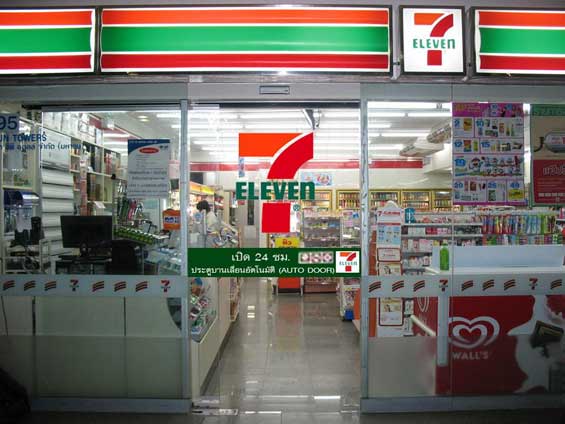
    Japanese convenience-store chain 7-Eleven has suffered its first year-on-year downturn in more than nine years.

    The decline in monthly sales throughout the chain has been attributed to heavy rains and the hack of its doomed 7Pay e-payment platform last month, which prompted customers to use rival services.

    Sales chainwide dropped 1.2 percent last month, with a 5.6-per-cent decline in same-store customer traffic. The inclement weather has also affected sales of particular items such as drinks and ice cream.

    7-Eleven’s same-store sales receded 3.4 percent this month, while the number of franchises grew 2.7 percent² to 20,990 stores.

    7-Eleven has discontinued its 7Pay service following a security breach that prompted the firm to stop the app from charging linked cards and put a block on new registrations.

    The firm has also been struggling with its 24-hour service model, with some franchisees growing increasingly uncomfortable with rising labor costs involved with round-the-clock opening hours.

  • Spotify removes Android homescreen widget

    Spotify removes Android homescreen widget

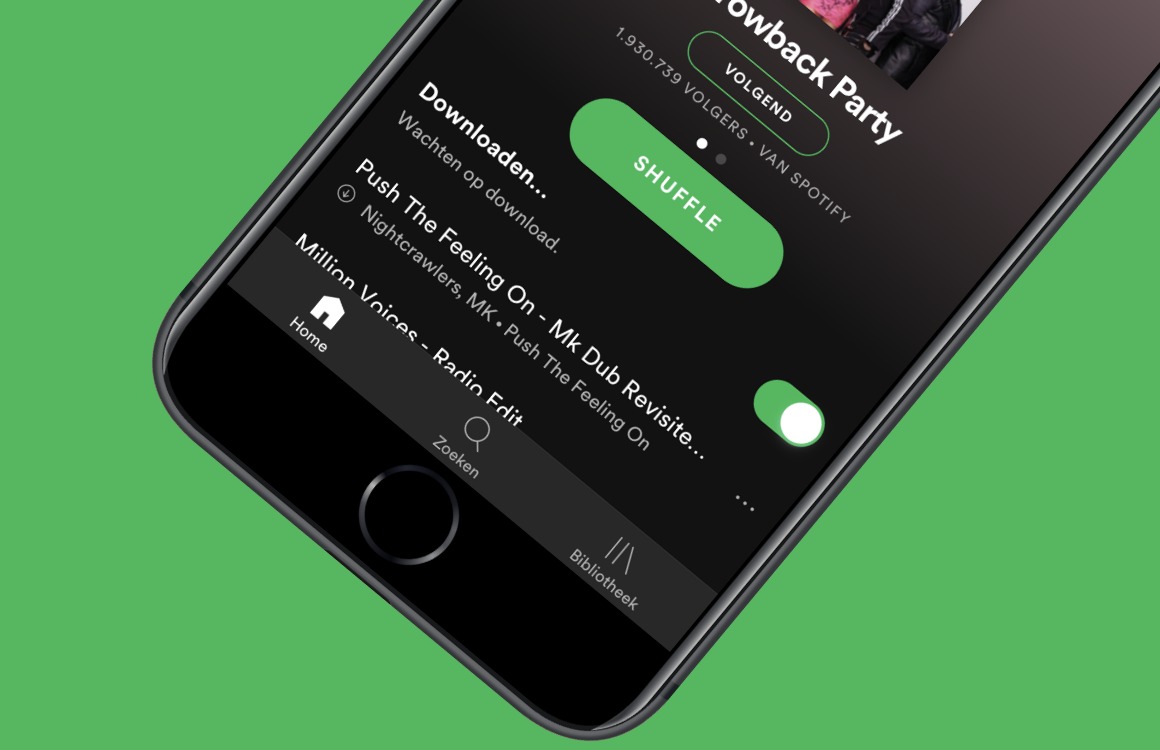
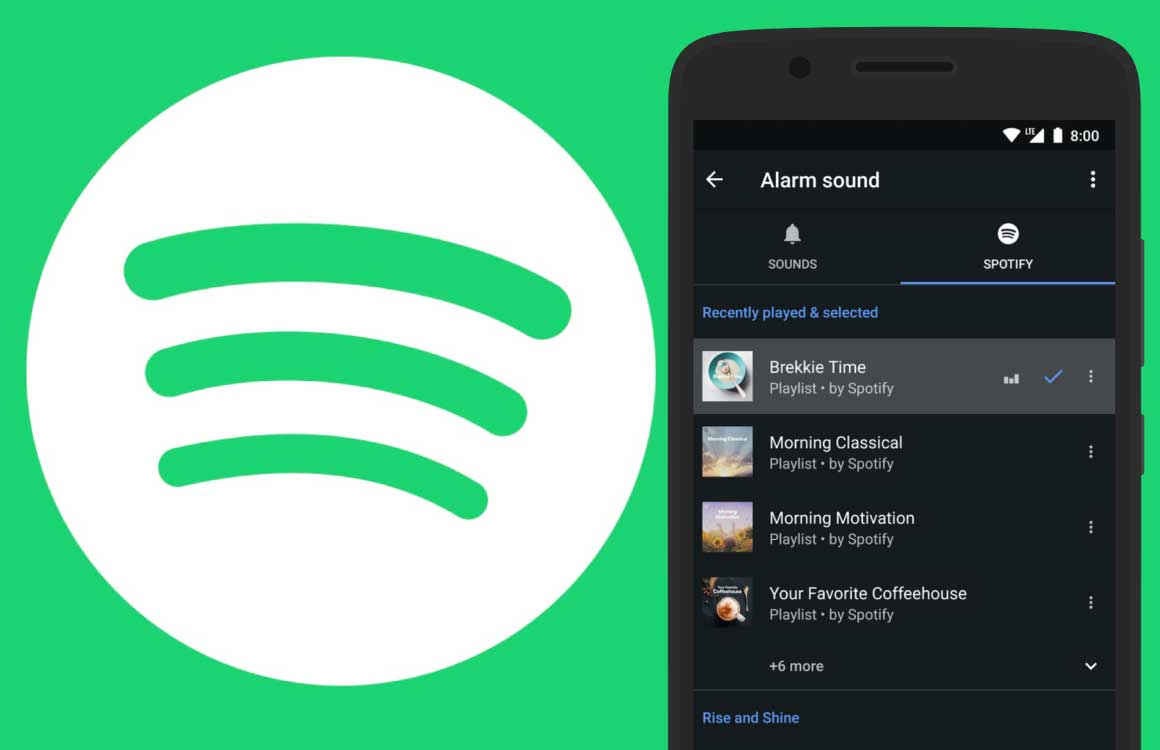
    Spotify has announced that it will remove the home screen widget from the Android app at some point this week. Spotify users will still be able to access the same playback features and information about what is playing through the app’s playback notification and device lock screen.

    Even though the company confirmed the Spotify Widget for Android will be going away, there’s a small chance that the feature will make a comeback in the same or slightly different form. Apparently, Spotify has introduced a new Live Idea feature that will allow users to vote to show their support for adding a widget.

    For the time being, the idea is tagged as “Not right now,” but if the number of voters will increase to a certain level, it might consider adding the widget back. Still, don’t get your hopes too high, even though there are a few thousand votes for the home screen widget.

    Anyway, going forward, you’ll be able to access the playback controls on Android by simply swiping down while you are using Spotify to access the controls.

  • WhatsApp close to adding fingerprint locking feature to Android app

    WhatsApp close to adding fingerprint locking feature to Android app

    WhatsApp is quietly testing new ways to make its mobile app more secure. The latest addition to the Android app could be the fingerprint locking feature, which is now being tested in the beta channel.

    WhatsApp has been working on the fingerprint locking feature for quite a few months now, but the new function is not yet ready for prime time. Previously known as Authentication or Screen Lock, the new feature can be enabled from the Settings menu under the Account / Privacy tabs.

    Keep in mind though that you will still be able to reply to messages directly from notifications, as well as answer WhatsApp calls since the app will only ask you for authentication when you want to open WhatsApp.

    Fingerprint lock will also allow users to choose when they must authenticate to use the app, but they can also choose when exactly WhatsApp will automatically lock after use: immediately, after 1 minute, after 30 minutes.

    For the time being, the new feature is available only in WhatsApp for Android beta, although you need version 2.19.221 or newer to find it in the Settings menu. If everything goes well during tests, Fingerprint Lock might be deployed to all Android users in the next couple of weeks.

  • Audi India To Launch Q8 SUV In 2019

    Audi India To Launch Q8 SUV In 2019

    It might have been a very slow start to 2019 for Audi India, but the second half of the year brings in a burst of action. Audi has announced that it will launch 4 cars in India by the end of 2019 and as we told you earlier, it will all start with the launch of the new generation of the A6. But the Q8 Coupe- SUV will soon join the line-up. The Audi Q8 will be the company’s first coupe-SUV from the Ingolstadt-based carmaker and will be the range-topping model in Audi’s Q line-up, which was up until now led by the Audi Q7. The Q8 will be launched in India during the festive season, so expect it to be here by October or November this year.

    The new Audi Q8 is built on the same aluminum-rich platform that underpins the like of the Audi Q7, the Lamborghini Urus and the Bentley Bentayga. In terms of dimensions, the Audi Q8 measures 4999 mm in length, 2011 mm in width and 1710 mm in height, which makes the Coupe-SUV wider, shorter and lower than its Q7 sister model. Visually, the Q8 comes with an imposing stance accentuated by the bold and aggressive face which comes with a large single-frame grille with fat borders with both vertical and horizontal slats that come with chrome highlights. The grille is flanked by a pair of sleek LED headlamps with HD Matrix LED technology available as an option and 3D-effect daytime running lamps. The front bumper comes with a beefy skid plate and large air intakes, while the sloping bonnet features prominent character lines adding to the muscular look of the new Q8.

    The rear section comes with roof-mounted spoiler and wide LED taillamps with a digital character, which are connected by a light strip creating the impression of one single unit. The rear bumper looks well-designed and features a mesh design element that houses the sensors, while below we have the rear skid plate and styling inserts finished in dark chrome.

    On the equipment front, the SUV features a host of tech like adaptive cruise assist, efficiency assist, crossing assist, lane change warning, curb warning and 360-degree cameras. One highlight is the remote garage pilot, which will come in early 2019, allows the drive to guides the SUV into a garage and back out again autonomously, and all can be done by the myAudi app on their smartphone. Behind all of these features is the central driver assistance controller. It continuously computes a differentiated model of the surroundings and uses this to manage the assistance systems. The required data are obtained – depending on the selected options – from up to five radar sensors, six cameras, twelve ultrasound sensors and the laser scanner.

    The Q8 will get a 3.0-litre V6 TDI in the Q8 50 TDI variant delivering 286 bhp and 600 Nm of torque, which are channelled to all four wheels through an eight-speed tiptronic automatic transmission and Audi’s Quattro AWD system. Later the Q8 will also get a less-powerful 3.0 TDI and a 3.0 TFSI petrol variant offering 340 bhp.

  • Volkswagen Confirms Participation At The 2020 Auto Expo

    Volkswagen Confirms Participation At The 2020 Auto Expo

    After missing out on the Auto Expo in 2018, Volkswagen India has confirmed that it will participate in the 2020 Auto Expo which is all set to be held from February 7 2020. We’ve already told you about the dates of the 2020 Auto Expo but Volkswagen promises that there’s a lot that it will bring to the Expo. Steffen Knapp, Director, Volkswagen Passenger Cars India said, “You will see Volkswagen at the Auto Expo in 2020. You will experience a completely different Volkswagen and that I can assure you really stay tuned to it because we will have a lot of fun on this show. Volkswagen will be seen in all its glory and we at Volkswagen are very excited about it. So it will be really different”

    2020 marks the beginning of the India 2.0 strategy for the Volkswagen Group. The India 2.0 strategy will see major changes within the Volkswagen Group, and is part of the company’s consolidation efforts across multiple markets. In India, the Skoda-led VW Group will introduce its first ‘Made in India’ and ‘Made For India’ offering around 2020, which will be a Hyundai Creta rivaling midsize SUV. The Skoda and VW SUV will be built on the MQB A0-IN platform, a domesticated version of the company’s modular architecture. The company has also confirmed that all future model will be based o on the MQB platform. The automaker also plans to export vehicles built in India on the said platform and is currently evaluating the feasibility.

    Part of the strategy also includes production rising more of the small displacement TSI petrol engines in India, including the new global 1.0 3-cylinder engine that will go into the new SUV. In fact Maier believes that the car may launch as petrol only, though the final choice of fuel types will be made based on unfolding policy and market trends. The 1.0 TSI would also go into other products of course; making economies of scale kick in on a wider basis.

    The India 2.0 plan also keeps future electrification in mind, something the new MQB A0 based models would also provision for. The investments will also cater to a significant ramp-up of Skoda and VW’s existing countrywide network. This would be crucial towards achieving the market share target for the VW Group, according to Maier. VW currently operates 121 dealerships in India, while Skoda’s network is 70 strong.

  • New World relaunches Cooking site with Easy to make Recipes

    New World relaunches Cooking site with Easy to make Recipes

    Grocery retailer New World has unveiled a new online platform, in partnership with design agency AKQA, designed to offer New World customers an optimized customer experience, designed to give them more choice, convenience and value, as well as encourage healthier food choices.

    Rather than simply acting as a traditional e-commerce portal, the New World website also functions to provide inspirational content to its customers – providing recipes, facts about products, as well as tips to get the most out of food.

    “The launch of the new website is a vital step forward to providing our customers with connected, personalized customer experience, from inspiration through to shopping and loyalty,” Foodstuffs New Zealand head of digital David Brem said.

    “As the most visited digital touchpoint across the Foodstuffs group, [New World] acts as the digital front-door for our 143 stores and local New World owner-operators across New Zealand.”

    According to Brem, the new site offers an improved mobile experience, enabling them to shop when, where and how they want – facilitating an enhanced omnichannel experience which is strengthened by the release of the inspiration content-driven site.

    This connected experience is further enhanced by the delivery of new e-commerce experiences for New World and PAK’nSAVE earlier in the year.

    “AKQA partnered with us to provide expertise across customer experience strategy and design through to solution architecture and development,” Brem said.

    “Our digital product and CX teams collaborate incredibly well, and are building up a track record of great work which makes an impact with customers and across our business.”

    AKQA managing partner of Asia Pacific Brian Vella said the partnership has made great progress over the past three years, and together they have been able to implement a leading brand and customer experience for one of the country’s largest organisations.

  • Mercedes-Benz GLB To Be Launched Globally Before the End of the Year

    Mercedes-Benz GLB To Be Launched Globally Before the End of the Year

    Mercedes-Benz has officially said that its upcoming compact SUV will hit showrooms by the end of this year. The GLB will be the first compact luxury SUV to get three-row seating and could occupy seven passengers. The entry-level five-seater variant in Europe will be priced at € 37,746.80 (approximately ₹ 30.20 lakh in Indian currency) while the third row individual retractable seats will cost € 1309 (approximately ₹ 1.07 lakh) more.

    The new GLB gets a range of Mercedes’ latest features and equipment including the new MBUX infotainment system and the comfort control functionality. Under the hood, it gets the OM 654q 2-litre, four-cylinder engine which already complies with the 2 RDE (Real Drive Emission) requirements coming into force in Europe in 2020. This also entails that the model is future proof for the Indian market and meets the upcoming BS6 emission norms as well. The 2-liter engine in the GLB belts out 218 bhp and 350 Nm of peak torque and is mated to an eight-speed automatic transmission.

    At the Frankfurt Motor Show this year, the Stuttgart based automaker will also unveil the hotter AMG version of the SUV. The Mercedes-AMG GLB will use the same 2.0-liter, Four-Cylinder, Turbocharged engine but we are still not sure if it will be tuned for the 35 nomenclature or for the even more powerful AMG 45 badge. The engine will churn out 298 bhp in the AMG 35 iteration while the power output will be upgraded to over 400 bhp in the AMG 45 iteration.

  • Spotify for Podcasters officially introduced

    Spotify for Podcasters officially introduced

    After a long period of testing, Spotify for Podcasters is finally out of beta. Described as a discovery and analytics dashboard, Spotify for Podcasters allows content creators to track many things like average listening times, episode streams, and total listeners.

    Long story short, if you’d like to obtain more details about the audience listening to your podcasts, as well as grow it based on the data received, Spotify’s new tool is the best thing it can happen to you.

    Besides demographic data and insight related to the audience, podcasters will also receive information about gender, music tastes, country data, as well as listening patterns, and more.

    The ultimate goal of Spotify’s new tool is to deepen the engagement between customers, as well as allow podcasters to grow their audiences and careers. Spotify for Podcasters is available for all content creators for free starting today.
  • EuroShop 2020 in Germany Sets Retail Record

    EuroShop 2020 in Germany Sets Retail Record

    Who does the real rock’ n’ roll? The mushroom heads from Liverpool or the rough boys from London? These questions split the camps in the 60s. Today it is clear: The Rolling Stones and the Beatles are the two biggest bands in pop history. Another star was also born in the 60s, wrote a success story and continues to do so today, more successfully than ever:

    EuroShop in Duesseldorf is the real rock’ n’ roller in retail!

    EuroShop 2020 not only looks back on more than 50 years of history of success, but it will be as well the 20th EuroShop. Three times 20 – lucky numbers for an outstanding trade fair!

    EuroShop is the hot spot for innovations and trends, a networking and discussion platform and a creative hub especially for retail – worldwide.

    Six months to the event, the prospects for EuroShop 2020, the World’s No 1 Retail Trade Fair, could not be any better. Next year’s EuroShop is in as high demand as ever with the Düsseldorf trade fair organizers expecting to beat the record figures of 2017. The previous event was attended by 2368 exhibitors from 61 countries on 127,598sqm of net exhibition space. Out of a total of 114,000 trade visitors from around the world, 1100 visitors traveled to Düsseldorf from Australia and New Zealand.

    More action, more drama, more emotion and better focusing on the wishes of the customers, that´s what´s necessary for retail and that´s what EuroShop already does. With its eight experience dimensions, it puts the focus on offerings tailored to specific visitor communities, a more flexible framework to operate in, and gives plenty of scope for presenting forward-looking developments and innovative products. The experience dimensions are Retail Marketing, Expo & Event Marketing, Retail Technology, Lighting, Visual Merchandising, Shop Fitting & Store Design, Foodservice Equipment, and Refrigeration & Energy Management.

    The extensive line-up of exhibitor ranges is complemented by high-caliber stages with practitioners’ lectures presented on all five exhibition days right amidst trade fair activities. These forums cover the following topics: Store Design, Retail Technology, Omnichannel, Retail Marketing, Energy Management, Retail Designers, Start-ups und Expo & Event. EuroShop’s supporting program also includes numerous specials, such as Popai Village, Ecopark, Designers Village and Italian Lighting Lounge. All specials and stages are included in the entrance fee and can be visited without advance reservation.

    EuroShop has as well its own one-stop global online information channel for expertise and communication in the international retail community, the EuroShop.mag. It offers news, interviews, reports, specialist articles, studies, photo galleries and videos on topics and trends from the international retail scene 365 days a year.

    EuroShop 2020 is open to trade visitors from Sunday 16 to Thursday 20 February 2020, daily from 10.00 to 18.00 hrs. The day ticket costs 80 euros (60 euros for online advance sale/e-ticket), the 2-day ticket 120 euros (e-ticket 100 euros) and the season ticket 180 euros (e-ticket 150 euros). The online-shop opens on October 2019.

  • Gull continues CEO search

    Gull continues CEO search

    The leader of Caltex Australia for the past decade has announced his upcoming retirement.

    Managing director and chief executive Julian Segal, who started at the petrol and convenience business in 2009, will stay on board until a suitable replacement is found.

    Caltex chairman Steven Gregg said Segal has made significant contributions to the company during his tenure.

    “Julian has delivered outstanding outcomes for Caltex’s shareholders, improving operational and financial performance and steering the company through a number of challenges and transitions,” Gregg said.

    “We are pleased that Julian will continue to work to execute our strategy and ensure continuity of leadership as we implement plans to find his successor.”

    Julian oversaw major milestones in the petrol business, such as the closure of the Kurnell refinery, the establishment of Ampol Singapore, our expansion into New Zealand and the Philippines, and developing Caltex’s international fuel sourcing and supply chain, as well as driving an improved convenience offer in Australia.

    According to Gregg, Segal will be leaving an agile and resilient Caltex that is poised for further growth.

    Segal said leading the business has been an honour, and that he is committed to leading the business through the search for his replacement.

    “I am proud of what’s been achieved for shareholders, customers, employees and our community partners,” Segal said.

    “Caltex’s strength has always been its ability to adapt and transform and the company has an exciting future. I look forward to continuing to work with my colleagues to deliver the Caltex strategy as the Board works through the succession process.”

    Caltex will deliver its half-year results later this month. It expects group earnings before interest and tax to be just $120-140 million, compared to the $443 million it reported in the 2018 half, due to difficult conditions rising from a slowing Australian economy.

  • Venmo borrows popular PayPal feature to expand on its Instant Transfer capabilities

    Venmo borrows popular PayPal feature to expand on its Instant Transfer capabilities

    PayPal has been doing pretty much everything in its power to keep the likes of Apple Pay at bay in the increasingly competitive online and mobile payment market, joining forces with Google on a number of mutually advantageous initiatives, vastly improving its main app, and making it easier and faster to transfer funds to a US bank account.

    Of course, the company’s arsenal includes a popular special weapon in Venmo, the 2009-released digital payments system that PayPal acquired in 2013 as part of Braintree. It shouldn’t come as a surprise that PayPal is attempting to unify the user experience across its multiple services in a way, adding the aforementioned Instant Transfer feature to Venmo’s already robust list of strengths.
    While Venmo picked up a similar functionality for both iOS and Android devices last year, that only allowed its users to send money to Visa and Mastercard debit cards “within minutes.” Now it’s possible to do the same for actual bank accounts, and once again, the only restriction you need to take into consideration is geographical. Otherwise, you’re looking at (almost) instant transfers in the US for a 1 percent fee that can’t exceed $10 or go under $0.25.
    If that feels too rich for your blood, fret not, as the free standard bank transfer option isn’t going anywhere. Just remember that might keep you waiting up to three whole business days. Depending on your bank, an “instant” transfer from Venmo could take up to 30 minutes as well, but unless your funds are frozen for some reason, you will never have to wait a second longer. The feature is being slowly rolled out to iPhones and Android handsets with the latest app version, which means it could take a few weeks before “wide” availability is achieved.
  • Serious flaws have been discovered in WhatsApp

    Serious flaws have been discovered in WhatsApp

    During the Black Hat security conference held last week in Las Vegas, security researchers at Check Point discussed several flaws that they found in popular messaging app WhatsApp. The latter, as many of you probably already know, was acquired by Facebook in 2014 for a price north of $21 billion. One of the features that drive users to WhatsApp is its use of end-to-end encryption; this means that a message posted by a user cannot be read by anyone but the recipient. Even Facebook can’t see the message. But the flaws found by Check Point have some serious consequences for users.

    The security team noted that one of the flaws it found in WhatsApp could allow a hacker to not just read a message sent by a member, but change the message as well. I would imagine that we don’t have to tell you the implications of this. Another flaw could allow a hacker to attribute a message to another person instead of the actual sender. Again, we don’t have to spell out the chaos that could result should some attacker actually exploit this vulnerability. After all, WhatsApp has over 1.5 billion users in more than 180 countries. By 2021, WhatsApp is expected to have 25.6 million users in the states.
    Check Point also discovered that yet another flaw in WhatsApp could allow a hacker to disguise a public message as a private message. This could lull the recipient into thinking that his or her response will be private when in fact, it would be visible to others. When Check Point originally discovered these three issues last year and pointed them out to Facebook, the company was able to fix this particular problem although the first two flaws remain available for what Check Point calls “threat actors.”
    So keep in mind that just because WhatsApp has end-to-end encryption, it doesn’t mean that there aren’t any flaws that can’t be exploited for evil reasons.