Author: Mei Ling Tan

  • Eraman and AirAsia’s Ourshop.com announce partnership to transform travel retailing in Malaysia

    Eraman and AirAsia’s Ourshop.com announce partnership to transform travel retailing in Malaysia

    Duty-free operator Eraman Malaysia and AirAsia-controlled online retailer Ourshop have entered into a major new partnership. It allows travelers to collect products pre-booked on Ourshop.com at a dedicated pick-up point, located at the Eraman duty-free outlet in klia2 at Kuala Lumpur International Airport.

    Owned by airport operator Malaysia Airports, Eraman is Malaysia’s largest airport travel retailer. It operates more than 50 shops and F&B outlets at airports including Kuala Lumpur International, Kuching, Kota Kinabalu, Penang, Langkawi and Labuan.

    Ourshop, launched in July last year, is AirAsia’s online marketplace offering a wide selection of products from duty free, high street and local retailers from across the world.

    The partnership has the added benefit of allowing access to passenger trends and travelers’ departing and arrival destinations, enabling more precise marketing and product selection.

    Travelers purchasing products on ourshop.com can earn AirAsia BIG Points, which can be used to redeem free flights on airasia.com. AirAsia said it was thereby creating a “cycle of value”, as the more miles traveled or items bought, the more travelers earn points.

    AirAsia added that passengers can enjoy the peace of mind that they are purchasing from an official retailer or brand directly, thus removing any doubt of product authenticity that it says has plagued e-commerce traditionally.

    Eraman General Manager Zulhikam Ahmad said his company is thrilled to be part of the Trinity collaboration with parent company Malaysia Airports and Ourshop. “This initiative is very timely as we have just undergone a brand refresh exercise,” he said. “We fully understand that e-commerce is fast becoming significant in the travel retail and duty-free market space.

    “Hence, Eraman is embarking on this journey to ensure we too do not miss out on providing the convenience and keeping up with the trends.”

    Malaysia Airports Senior General Manager Mohammad Nazli Abdul Aziz commented: “The partnership between the nation’s key players in the travel retail industry will undoubtedly elevate the shopping experience for all travelers passing through our doors.

    “This is just a taste of the many exciting activities and initiatives that we have lined up as part of Malaysia Airports’ Commercial Reset strategy.

    “We want to bring excitement and joy to our guests when they are at the airport; and in doing so, we hope to change the traditional perceptions of the airport as a mere hub for connectivity, becoming also a place to enjoy the vast retail offerings available – both at our airports and now digitally.”

    Ourshop General Manager Hassan Choudhury said: “What used to be a 20-minute shopping experience as travelers rush to their boarding gates is now 365 days of shopping indulgence.

    “I want to thank Eraman for exploring this unique online shopping experience for travelers with us. We look forward to sharing incredible success together.”

  • Vietnam cashless transactions among lowest in ASEAN

    Vietnam cashless transactions among lowest in ASEAN

    Cash transactions remain highly popular in Vietnam compared to other ASEAN countries as it has low banking penetration. A new Standard Chartered report says Vietnam has the lowest bank account ratio in six ASEAN countries at 30.8 percent of the population aged 15 and up.

    This ratio is 34.5 percent in the Philippines, 48.9 percent in Indonesia and 81.6 in Thailand. Credit card ownership in Vietnam accounts for only 4.1 percent of the population, compared to 9.8 percent in Thailand. The debit card ownership ratio, meanwhile, is 26.8 percent, lower than Indonesia at 30.9 percent and Malaysia at 73.8 percent.

    Only 3.5 percent of the Vietnamese population have a mobile money account, while this ratio is 10.9 in Malaysia.

    Even though the country’s e-commerce industry has been growing at a double-digit rate in recent years, 90.2 percent of online purchases are paid with cash, the report said. This ratio is highest, compared to only 47 percent in the Philippines where the percentage of the population with bank accounts is only slightly higher than that of Vietnam.

    “Although there is a rise in alternative electronic means of payments in the region, cash still dominates. Apart from Singapore, the more traditional means of banking and payments remain more popular for the rest of ASEAN,” the report said.

    The reasons for high cash usage, Standard Chartered said, is a lack of understanding of how digital payments methods work and how to start using them.

    Others included concerns over the confidentiality of financial records and the perception that cash is still the simplest and most straightforward payment method, the bank said.

    But there is still a lot of potential for cashless payment to grow in Vietnam, the report said, noting that with over 70 million mobile users and 64 million internet users, e-wallet payments are set to gain more traction in the coming time.

    There are over 20 e-wallet apps in Vietnam, while foreign operators such as Samsung Pay, Alipay, and Amazon have also entered the local market to tap the large potential, the report said.

    The value of e-wallets transactions in 2017 exceeded VND53 trillion ($2.2 billion), an increase of 64 percent from the previous year, according to the State Bank of Vietnam.

    The government is striving to increase cashless payment in the country. A resolution issued in January recommended that cashless transactions made viable for all urban household bill payments by the end of this year, prioritizing mobile payments and payment via card readers.

    Ho Chi Minh City this week has instructed all schools, hospitals and many others to accept non-cash payments.

  • Maruti Suzuki Opens 300th Commercial Vehicle Outlet

    Maruti Suzuki Opens 300th Commercial Vehicle Outlet

    Maruti Suzuki India has inaugurated its 300th commercial vehicle showroom in India. The 300th outlet comes in less than three years, and with it Maruti Suzuki’s Commercial retail outlet network is now present in over 230 cities across the country. With the recent addition, the Company’s total sales network has crossed over 2,940 showrooms covering more than 1,860 towns and cities. Currently, the company sells only the Super Carry LCV in the country and it commands a 12 percent market share in India and it’s sold 23,000 units already ever since it was launched. It is offered in two colors Superior White and Superior Silver.

    The Super Carry LCV comes with a loading bay of 3.25 sq.mt and offers a payload capacity of 740 kg. The ground clearance stands at 175mm, while suspension duties are performed by MacPherson struts at the front and a rigid axle with leaf springs at the rear. The wheelbase measures 2110mm and at 4.3 meters, the turning radius similar to that of a hatchback. The LCV gets all the basic features including a light steering wheel, mobile charging socket, dual assist grip, multi-purpose storage spaces, lockable glovebox and bottle holders. An air-conditioner, however, is missing from the ensemble.

    The Super Carry is available with a diesel engine in the country and this 793cc twin-cylinder diesel engine that made its debut on the Celerio last year and comes paired to a 5-speed manual transmission. However, the diesel variant will be discontinued as it would not comply with the upcoming BS6 norms. The company will therefore only offer it with petrol and the CNG variant, which according to the company will be great for its consumers.

    Shashank Srivastava, Executive Director, Maruti Suzuki India said, “The Light Commercial Vehicle segment has been the largest volume contributor in the commercial vehicle industry in the country. Globally, Suzuki Motor Corporation has expertise in this segment and the Super Carry is part of that lineage. Super Carry for India has been developed specifically keeping in mind the unique requirements of the Indian mini truck customer. Starting the commercial segment with Super Carry, we have rapidly rolled out our network to keep pace with the growing demand and business opportunity for light commercial vehicles. With the growth in entrepreneurship and businesses, we see a continuous requirement of Light commercial vehicles for various business applications.”

  • Hero Pleasure Plus 110 Launched In India

    Hero Pleasure Plus 110 Launched In India

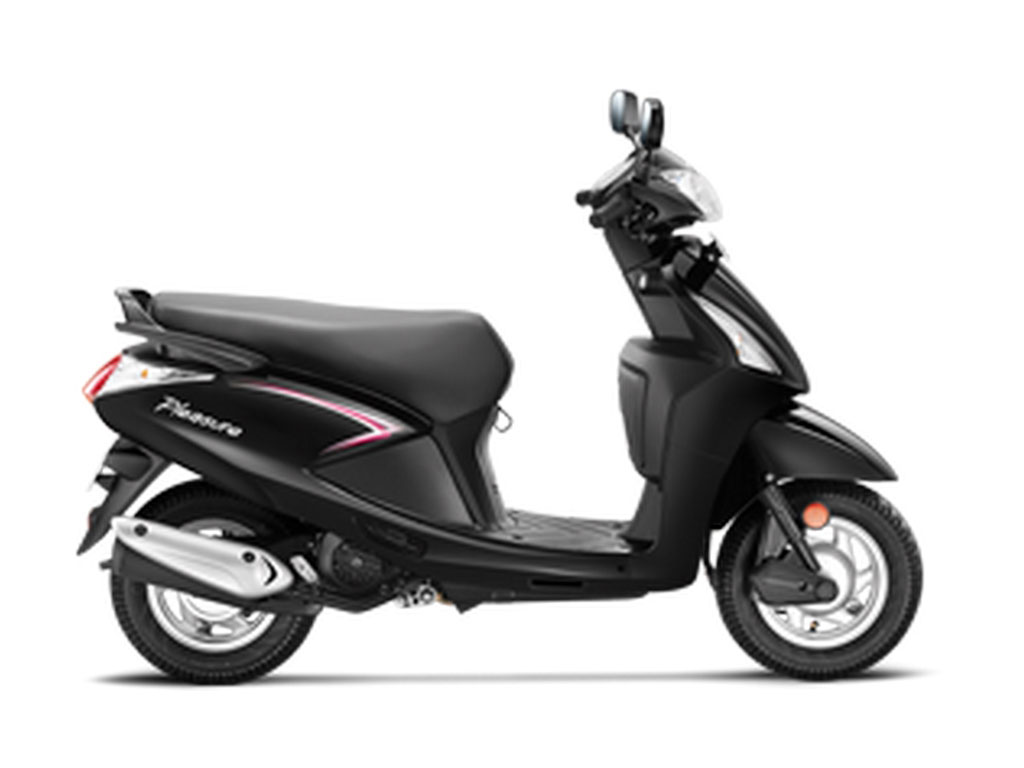
    Hero MotoCorp’s second launch for the day is the all-new Pleasure Plus scooter. The new Hero Pleasure 110 is priced at ₹ 47,300going up to ₹ 49,300  and gets comprehensive upgrades over the outgoing version with a revised design, new colors and more features on offer. It still remains one of the most affordable scooters on sale and will be attracting a number of first-time female buyers. Bookings for the new Pleasure commence from today across the two-wheeler maker’s dealerships pan India, while deliveries will begin by the end of this month.

    The all-new Hero Pleasure had been given a number of revisions for a smart looking appearance. The scooter looks fresh with the bright colors, while the front apron gets a bow-tie like silver plastic cladding that lends a cute face to the model. The headlamp design is completely new and is an angular-upright shaped unit that gets a retro-touch while looking all modern. The side panels have been reworked and get brushed silver highlights for added effect. The taillights are new and the instrument console has been revised as well with a new digital display. The scooter comes with a USB charging slot as well.

    The 2019 Hero Pleasure Plus draws power from the more powerful 110 cc single-cylinder air-cooled engine that is tuned for 8 bhp and 8.7 Nm of peak torque. The motor is paired with a CVT unit. The more powerful engine replaces the 102 cc mill that was seen on the predecessor and belt out nearly 7 bhp and 8.1 Nm of peak torque. The updated scooter continues to use spring loaded shocks at either end that help keeps costs low. Braking performance too comes from the 130 mm drum brakes at the front and rear with Integrated Braking System (IBS) offered as standard.

    The Hero Pleasure has always been an entry-level offering and comprehensively updated version will certainly help the scooter solidify its position in that space. The aggressive pricing will also help the model that competes against the likes of the Honda Activa-i and the TVS Scooty Zest. Bookings for the updated Pleasure scooter are now open.

  • New outlets boost Koufu Sales

    New outlets boost Koufu Sales

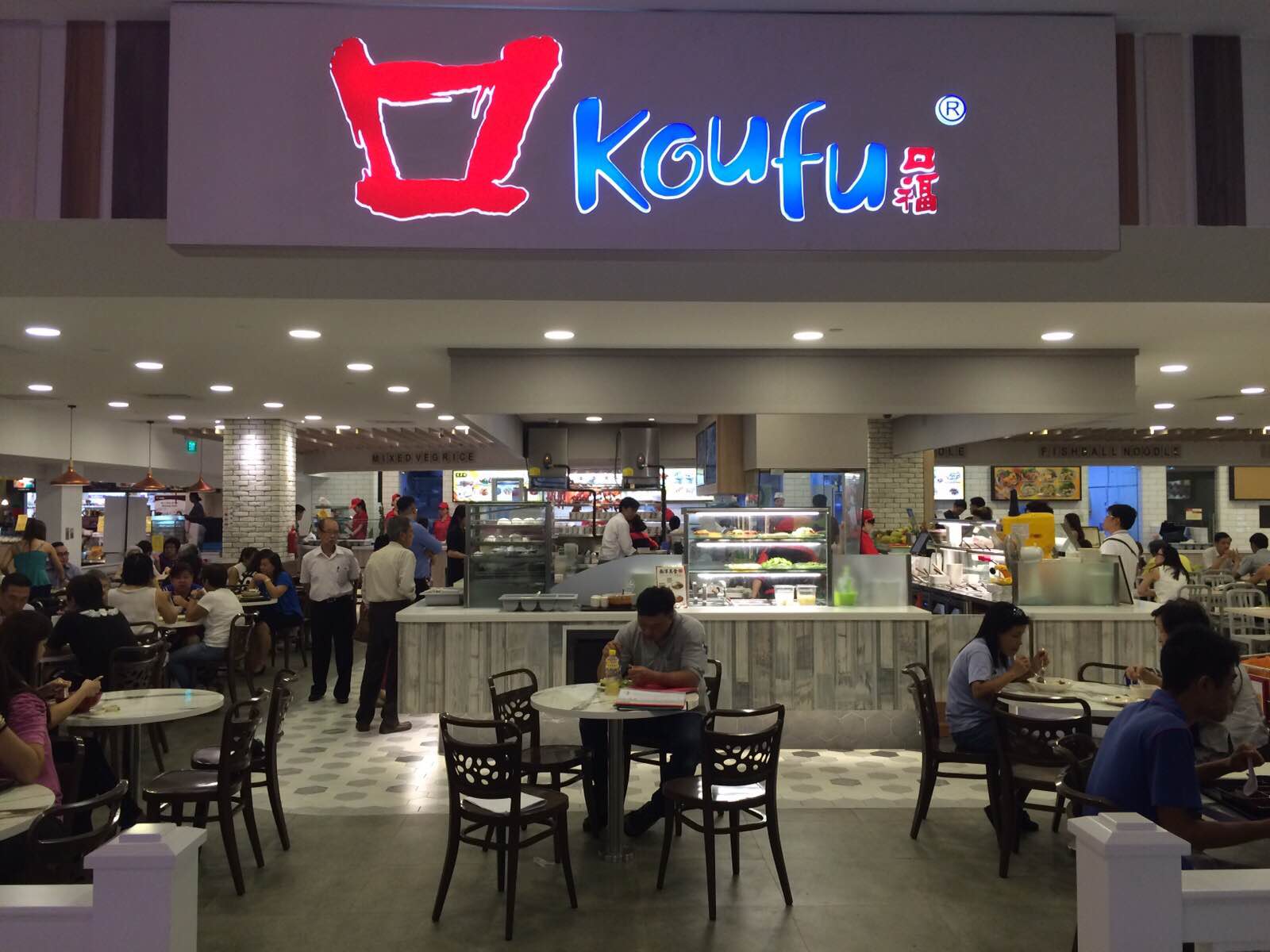
    Singaporean food court and coffee shop management firm Koufu has reported 12.3 percent net profit growth for this year’s first quarter to S$7 million (US$5.13 million) on higher contributions across its business segments.

    The growth in net profit outpaced the 4.9 percent growth in Q1 revenue to $57.8 million compared to $55.1 million during the same period last year.

    “We are pleased to have achieved a strong start for the year,” said Koufu’s executive chairman and CEO Pang Lim. “We remain firmly focused on the expansion of our market share in food courts and coffee shops, growing our F&B concept stores, and bringing new food options and varieties to consumers both locally and in the region, leveraging on our distinct portfolio of brands.

    “We are encouraged by the strong reception of our R&B Tea brand and will continue to nurture this fast-growing brand in Singapore and in the region. Overseas, we have opened our second tea-beverage kiosk at Macau University this quarter and are currently negotiating terms with potential partners to operate both the R&B Tea and Elemen brands abroad. In Singapore, we will continue to seek and secure new premises to expand the number of F&B outlets in pursuit of sustainable growth.”

    Koufu’s synergistic business segments – outlet and mall management as well as F&B retail – both registered increased contributions during the period. The outlet and mall management segment, which contributed 51.4 percent of the group’s revenue, achieved a 9.2 per cent rise in segment revenue during the period. F&B Retail, which contributed 48.6 percent of the group’s revenue, saw a 0.7 percent growth to SGD28.1 million. The improved performance from both segments was due to new openings and overall robust revenue growth from all outlets that outweighed store closures during the quarter.

    The group’s islandwide network numbers 49 food courts, 15 coffee shops, a hawker center and a commercial mall under the outlet and mall management segment, while the F&B retail segment constitutes 73 self-operated F&B stalls, 16 F&B kiosks, eight quick-service restaurants, and three full-service restaurants.

  • Spectrum cash grabs could hinder 5G’s potential

    Spectrum cash grabs could hinder 5G’s potential

    Poorly designed 5G spectrum auctions could seriously hamper the potential of the 5G era before it even begins in earnest, the GSMA has warned.

    A new Auction Best Practice by the industry body highlights some key concerns from recent 4G and 5G spectrum allocations, including a trend towards governments artificially inflating spectrum prices.

    This could have the effect of limiting subsequent network investment, thus harming consumers and delaying the potential of 5G from materializing.

    The GSMA has also outlined policy recommendations for governments including ensuring that the top priority for spectrum auctions is supporting affordable, quality mobile services for consumers.

    According to the regulator, spectrum auctions are not always suitable and should not be the only award process considered.

    Where an auction model is used, the auction design should not create unnecessary risk and uncertainty for bidders and should include adequate lot sizes with flexible packages of the spectrum.

    GSMA Intelligence estimates that the socio-economic impact of 5G will be $2.2 trillion over the next 15 years. But these benefits will depend on a favorable regulatory and policy environment for 5G.

    “Auctions can and do fail when poorly designed. We’re seeing a worrying trend of badly run spectrum awards that could seriously impact the potential of 5G before we get started. It’s time for policymakers to work more closely with stakeholders to enable more timely, fair and effective awards,” GSMA head of spectrum Brett Tarnutzer said.

    “This is a crucial time in the development of 5G. Spectrum is an essential to fuel for mobile networks and its ineffective use will only lead to bad consequences for consumers. The most important objective of awarding frequencies should not be about making the most money, but rather about ensuring consumers benefit from the best mobile connectivity.”

  • PTA lays out mobile license renewal terms

    PTA lays out mobile license renewal terms

    The Pakistan Telecommunications Authority has laid out the terms of the renewal of the mobile licenses of mobile operators Jazz, Telenor Pakistan and China Mobile Pakistan.

    Under the terms set by the government, a renewal price for the spectrum included in the licenses will be set at $39.5 million per MHz for 900-MHz spectrum and $29.5 million per MHz for 1800-MHz spectrum. This is based on benchmarks set during spectrum auctions in 2016 and 2017.

    Operators will be able to choose to pay 100% of the renewal fees upfront, or 50% upfront with the remainder in five annual installments. The upfront payment will be due on June 25.

    The renewed licenses will have a tenure of 15 years and will have technology-neutral terms as well as provisions for spectrum sharing or trading. Operators will need to comply with certain terms and conditions related to coverage, quality of service and other matters.

    China Mobile Pakistan will be provided with options to replace its 900-MHz spectrum that is subject to cross-border interference, the PTA said. If these options are not accepted, the allocation shall be dealt with without any compensation in the form of additional frequency assignments

  • Going into 5G, don’t forget security

    Going into 5G, don’t forget security

    For years telco revenues as measured in Average Revenue Per User (ARPU) have been on a decline. As consumers and business acquire a taste for broadband and mobile broadband connectivity, operators are pressured to offer bigger and faster pipes and to do so more cheaply lest competition from OTTs and mobile virtual network operators (MVNO) take home the bacon. We have reached a point where telcos are finding themselves becoming almost exclusively connectivity vendors– what some call “the pipe business”.

    As Gunter Reiss, vice president of strategy at A10 Networks, tells it, that a lot of operators want to get out of being labeled a telco – a connectivity provider.

    He cites the comment made by Johan Johan Wibergh, chief technology officer at Vodafone: “We want to become a technology provider. We want to become a service provider to the enterprise community.”

    Based on what we understand about 5G technology, this may just be what the industry is praying for. Some believe that 5G features like network splicing, enhanced mobile broadband, ultra reliable low latency communications and massive machine type communications, are all geared towards the performance requirements of enterprises.

    To date, a number of telcos in Asia and around the world are making significant investments in 5G with the intent to target enterprise opportunities. One area that has always lagged when it comes to understanding and planning for is around security.

    At the 2019 Total Security Conference, a chief security officer speaking at a panel noted that “if you want to stay secure from cyber threat, then stay out of the internet.” However, the reality is that the internet has become so embedded into everyday living and business that it would be a business suicide if any business stays out of it.

    So for telcos, the challenge is building infrastructure, including 5G-based connectivity solutions, that appeal to the risk appetite of their enterprise customers.

    In an exclusive with Telecom Asia, Reiss opens up to the threats and opportunities operators must face as they rise to the 5G challenge.

    Given that operators will need to invest more around security as part of their 5G rollout. How do they monetize in these investments?

    Gunter Reiss: There are two ways:

    First, every operator has to protect their own infrastructure because the system is their bread and butter.

    Secondly, we see a lot of operators today starting to offer managed security services to enterprises. Cloud providers are doing the same thing.

    Instead of buying a DDoS appliance directly for your premises, you want a DDoS service – literally just buying it as part of your connectivity, or part of any of the other specific IoT services you would buy from a mobile operator. You would add the security services on top of it.

    This is why service providers and mobile operators in the 5G world will finally become a true service provider and partner to the enterprise community.

    This is how they will monetize their investments, including security.

    As operators near 5G rollout, what remains their biggest concern?

    Gunter Reiss: That would be – “How can we protect our mobile infrastructure?”

    It’s the same as what they have now with 4G – just with 5G, they realize that they have more points to protect. If you think about it in 4G it was the GI-LAN infrastructure they just needed to protect – and it doesn’t scale. Scale requirements just weren’t there.

    But what we see now, they have to protect the peer points. They have to protect the mobile edge – this is what they are building the architecture for. That’s the conversations we have with them.

    There is another aspect – our latest DDoS weapons report revealed more than 23.5 million DDoS weapons all around the world. The largest number is more than 6 million in China, followed by 3 million in the US. And as you go into each country, we can actually highlight how many DDoS weapons there are. This is important for operators because this is a proactive defense of your infrastructure.

    So that’s basically how we help these operators to protect the infrastructure. And again, it doesn’t really matter if they’re on 4G right now. They are realizing that they have to protect the infrastructure. They have to start planning, investing and allocating budgets for the protection of the mobile infrastructure along the journey to 5G.

    You don’t want to wait and suddenly say, “Now that I’m launching 5G, it’s time for me to adjust my security architecture or infrastructure, and how I deal with connectivity suppliers.”

    As operators look to harness the non-traditional business opportunities presented by 5G, including areas like Smart Cities, what should I be looking at as an operator?

    Gunter Reiss: What you should look at is in order to support – ultimately as an operator – you need to increase your ARPU, you want to sell more services.

    Now, particularly then with 5G, you need to build relationships with the various industries from smart cities, to governments, to hospitals, to whatever industry it is. And, of course, in that way, industry explosion of the IoT endpoints – depending on what data you trust – up to 35 billion over the next years.

    When you take all that into consideration, you have to protect your infrastructure all the way, obviously, to where the IoT endpoints get connected, and as a consequence you need a comprehensive security architecture.

    And the only way to really be able to manage the scale requirements is with Intelligent Automation.

    And this is where you leverage machine learning algorithms, any AI type of capabilities and analytics to get more visibility about your network and your application environment in order to really be able to secure your infrastructure. The complexity is just getting that much larger than what these operators are dealing with today.

    This is basically the straightforward message I try to explain to them.

    It’s not about how cyberattacks will come through the internet anymore. They come through those peering partners, and they come directly from the IoT devices which get weaponized from the phones. So, you have to have protection right away at the mobile edge.

    And for this, you need to leverage automation capabilities.

    As activities around 5G accelerate in 2019, what’s your expectation?

    Gunter Reiss: 5G is still in its early stage. I think we will see over the next 12 months a lot more operators commercially launching 5G services with various used-cases.

    And I would say that at least within this year, we’ll see between 20 and 30 mobile operators launching new commercial services around the world.

    But 2020 is going to be, I think, that big push where more operators will come with 5G commercial services. And this, from an A10 perspective, is the opportunity. We are working with a lot of them already right now under 4G virtualization developments and securing the 4G virtualized and NFV type of environment.

    Now that they are future proof and ready, from a scale perspective, to take that all the way into this full 5G architecture.

    As I mentioned before, for some time, we will see a hybrid type of 4G / 5G network architecture. Then some of those early adopters will go out with the 5G standalone, network architecture.

    Even if the operator is not launching 5G yet in 2019, they’re already working and starting to work with us on their plans towards 5G and how to protect that infrastructure. This is why we are super thrilled and excited about it.


  • Airtel to merge VSAT business with Hughes India

    Airtel to merge VSAT business with Hughes India

    India’s Bharti Airtel has agreed to merge its domestic satellite operations with Hughes Network Systems’ Indian subsidiary Hughes Communications India.

    The companies will combine their very small aperture terminal (VSAT) satellite operations in a bid to benefit from enhanced scale, improved operational efficiencies and wider market reach.

    Under the agreement, Hughes will take a majority stake in the combined entity, with Airtel owning a significant minority stake.

    The combined company will continue to serve existing Hughes and Airtel customers while introducing new VSAT and related technologies in the Indian market.

    “We are very excited about the synergies that this partnership will bring to the Indian ecosystem,” Hughes Communications India president Partho Banerjee said.

    “These are exciting times for satellite broadband service providers as VSAT becomes more mainstream, driven by growing demand from both, enterprise and government segments.”

    Airtel Business director and CEO Ajay Chitkara added that the tie-up is aimed at better serving the connectivity needs of what he called Digital India.

    “The partnership will bring amazing synergies to the forefront and combine the proven capabilities of both the companies. Customers can look forward to highly secure and reliable connectivity solutions across the length and breadth of India,” he said.

  • McLaren GT Teased Ahead Of Its Debut On May 15

    McLaren GT Teased Ahead Of Its Debut On May 15

    We have seen the McLaren GT before in its prototype version and McLaren has finally teased the production spec model. The new McLaren is a Gran Tourer and the brand has decided to call it GT (without any suffix or prefix). As we are aware that McLarens are categorized into three segments- Sports, Super, and Ultimate Series, the upcoming GT will be positioned between the Sports and Super segment. In fact, McLaren has said that the GT will be slightly different having a mix of cross-country abilities and McLaren’s dynamic and agile characteristics. The McLaren GT also takes inspiration from the Speedtail.

    As customary as it could be, the new teaser gives just a slight idea of its design and aerodynamics, leaving us curious about the rest. However, it reveals the silhouette and rear of the car and the outline looks pretty much identical to the 720 S. The air ducts on the bulbous rear haunches are sizeable and the tail looks angular housing the integrated spoiler. However, it gets dual exhaust pipes and different LED lights.

    The McLaren GT will get a center mounted engine which is unlike other models. The engine in the question is the same 4.0-litre, twin-turbocharged, V8 engine which will be differently tuned and given it’s a GT, it’s not expected to have the outright performance of track-focused cars like the McLaren 600lt Spider or even the 720 S.The McLaren GT will make its first public appearance on May 15.

  • China Mobile USA’s license application denied

    China Mobile USA’s license application denied

    As expected, the US Federal Communications Commission today voted to deny China Mobile’s application to provide telecom services between the US and foreign destinations. The vote was unanimous.

    China Mobile USA filed an application back in 2011 requesting authority to provide international facilities-based and resale services in the US, but it wasn’t until last year that the government made a recommendation on behalf of the executive branch to deny the application due to national security and law enforcement concerns.

    In the order adopted today, the FCC said it found that China Mobile USA did not demonstrate that its application was in the public interest. In fact, the FCC found that due to several factors related to China Mobile USA’s ownership and control by the Chinese government, granting such an application would raise substantial and serious national security risks.

    Several commissioners also called on the agency to do more in terms of protecting the nation’s telecom security, especially in light of 5G coming down the pike.

    Commissioner Brendan Carr said the Chinese government owns a number of other carriers that already are operating in the US, including China Unicom and China Telecom, and those companies hold the same Section 214 authorization that China Mobile sought. “Our national security agencies should examine whether the FCC should revoke those existing Section 214 authorizations, and the FCC should open a proceeding on those matters,” he said.

    Commissioner Geoffrey Starks said the need for strong FCC action to address security vulnerabilities has never been greater. “As we move into a world of 5G and the Internet of Things, and our network grows larger and more interconnected than ever, real risks and the potential harm of telecom network vulnerabilities will grow exponentially,” he said, before raising a number of questions he said need to be answered, including how to address the continued operation of 2G and 3G networks with known cybersecurity flaws.

    Commissioner Jessica Rosenworcel also made a call to action. “We are at an inflection point as the world races to deploy next-generation wireless networks,” she said. “With 5G service, we will have wireless capability built into the world around us. This will provide a whole new range of opportunities for civic and commercial life. But as they multiply, this will vastly expand our surface exposure to attack.”

    Chairman Ajit Pai was part of a US delegation that last week attended an international conference on 5G network security hosted by the Czech Republic. There was a broad consensus at that meeting that network security is not only a priority but a necessity, he said. The conference produced a set of 5G security principles that reflect a common understanding of the importance of security in 5G.

    Pai also joined several other Administration officials yesterday in a detailed briefing of members of the Senate Select Committee on Intelligence, and while he said he can’t discuss what transpired in the meeting, “I can say that at the intersection of national security and communications lies a strong bipartisan consensus in favor of proactive measure to protect our networks at the front end, not as an afterthought,” he said.

    Separately, the commission adopted a Notice of Proposed Rulemaking (NPRM) that proposes to reallocate the 1675-1680 MHz band for terrestrial fixed and mobile (except aeronautical mobile) use on a shared basis with existing federal users. The NPRM also seeks comment on appropriate service and technical rules for the band.

  • Forever New Building Ouit Presence in North America

    Forever New Building Ouit Presence in North America

    Australian retailer Forever New is ramping up its presence in North America, with plans to launch a standalone website in the US, sell through major department stores, including Bloomingdales and Nieman Marcus, and open two new stores in Canada.

    The news, announced on Monday, is the latest sign of Forever New’s global aspirations. The brand has formed a string of partnerships with retailers around the world, including Asos and Next in the UK, Zalora in Singapore and Zalando in Europe, and last year, it revamped its website to better serve international customers.

    “Forever New has a unique product offering and our handwriting is not only relevant to the markets in the Southern Hemisphere but also in the Northern Hemisphere. We offer a real point of difference,” Carolyn Mackenzie, managing director of Forever New, told Inside Retail.

    Focus on third-party expansion

    According to Mackenzie, the retailer’s presence in the Canadian market over the last few years has sparked interest from American retailers.

    Forever New, which trades as Ever New in North America, appears to have four bricks-and-mortar stores in Canada – three in the Vancouver area, and one in Toronto. The retailer plans to open a second store in Toronto a new location in Calgary this year.

    The retailer started selling in the US market via Nordstrom.com in 2018, and on Monday, it announced it will launch a standalone website in the coming months. It will also launch offline in Bloomingdales and Nieman Marcus department stores, and expand its online presence via Nordstrom, Lulus, South Moon Under and Amazon.

    Mackenzie said the privately-held business is currently focusing its efforts on third-party and digital expansion, but that it may open standalone stores in the US in future.

    “Being an agile and fast-moving business means there is always the possibility…” she said.

    Broader transformation underway

    The ramp-up overseas is just part of the multi-faceted transformation currently underway at Forever New.

    In late 2018, it overhauled its global e-commerce platform to make the online shopping experience more seamless, and in 2019, it unveiled two first-to-market digital initiatives: a reserve-in-store option and visually-similar product recommendation tool.

    It has also launched a new high-end store concept designed by Hecker Guthrie, featuring terrazzo tiled floors, brushed brass detailing and fluted glass panels.

    “[T]he new store concept embodies the feminine signature of the brand,” Mackenzie said, calling it “the perfect backdrop to the brand’s distinctive designs and prints”.

    Next up for Forever New? More inclusive sizes.

    “Following on from the success of Forever New Petite and to ensure the accessibility of Forever New for all, we’re planning on expanding our category offering with ‘Forever New Curve’,” Mackenzie said.

    “Stay tuned for more details on these exciting initiatives.”

  • Indian Drivers Face The Heat As Uber Plans IPO

    Indian Drivers Face The Heat As Uber Plans IPO

    As Uber drivers planned a global strike on Wednesday ahead of the ride-hailing giant’s massive initial public offering (IPO), Uber drivers in India said they are facing the heat as cash incentives have considerably gone down while work hours have gone up. Drivers in cities like Los Angeles, New York City, London and Tokyo were to join the strike and log off from the apps on Wednesday.

    According to Santosh, an Uber driver in Delhi-NCR, the initial adrenaline rush is over and it has been difficult to run the family as income is low, incentives are down and stress levels are high owing to the pressure to pay monthly EMIs towards car and home loans.

    “When I joined Uber, things were just going fine. Now, with low cash incentives, I have to drive for long hours to make the ends meet,” Santosh told IANS.

    Dharam and Shamu, both Uber drivers, also echoed Santosh’s view.

    An email sent to Uber India for comment went unanswered.

    Uber launched its services in India in 2013 with its UberBLACK service and launched its premium UberX service in 2014.

    Uber currently operates in 31 cities in the country and aims to take its services to other, deeper parts of the country.

    The global ride-hailing platform in January announced the appointment of Indian Institute of Technology (IIT)-Kharagpur alumnus Pavan Vaish as the new Head of Central Operations.

    Uber filed its IPO process last month. It would be listed on the New York Stock Exchange (NYSE) under the symbol “UBER”.

    The company is seeking a market value just above $90 billion in its IPO, according to documents filed with regulators. The ride-hailing company has also announced a one-off bonus for drivers as it prepared to go public.

    As of December 31, 2018, it had 91 million, or 9.1 crores, monthly active platform users. There were 3.9 million, or 39 lakh, drivers on the platform by the end of 2018.

    Uber and Lyft drivers in cities, including Los Angeles, New York City, and London, were set to join the strike and log off from the apps (from 7 am to 9 am ET) on Wednesday.

    “Wall Street investors are telling Uber and Lyft to cut down on driver income, stop incentives and go faster to Driverless Cars,” Bhairavi Desai, Executive Director of the New York Taxi Workers Alliance, was quoted as saying by the CNET.

    “With the IPO, Uber’s corporate owners are set to make billions, all while drivers are left in poverty and go bankrupt,” she added.

    In a statement to CNET, an Uber representative said: “Drivers are at the heart of our service — we can’t succeed without them — and thousands of people come into work at Uber every day focused on how to make their experience better, on and off the road”.

  • Toyota, Panasonic To Set Up Firm To Connect Cars

    Toyota, Panasonic To Set Up Firm To Connect Cars

    Japan’s Toyota Motor and Panasonic Corp said they plan to establish a joint company to develop “connected” services to be used in homes and urban development. The tie-up deepens the partnership between the companies, which in January announced a joint venture to build electric-vehicle (EV) batteries, pooling the R&D and manufacturing strengths of one of the world’s largest automakers and battery makers to compete in the fast-growing EV market.

    In their latest venture, Toyota and Panasonic said they will set up a new company early next year to focus on technology that could be used to offer personalized services in the home. The pair plan to be 50-50 partners in the new firm and will increase cooperation at their respective housing operations in Japan.

    “We will put our respective strengths together to offer new value in everyday life,” Panasonic President Kazuhiro Tsuga said in a joint statement on Thursday.

    The move comes at a time when lower-emissions vehicles and ride-sharing services have opened up the auto industry to new competitors, leaving traditional car makers and their suppliers scrambling to find alternate revenue streams.

    Toyota has been developing connected cars that can share information on usage – data that could be leveraged for on-demand ride-sharing, insurance, and maintenance.

    The automaker has said it will tap into its partner network and its operations which range from building and selling cars, homes and companion robots to expand into new transportation and home energy services.

    “If we are able to use this network going forward not only to manufacture and sell vehicles but to also provide new services, our future possibilities will greatly expand,” President Akio Toyota told reporters on Wednesday.

    “In addition to cars, I think that having our own housing business and connected business will be a big advantage for us.”

  • 2019 Triumph Scrambler 1200 India Launch Date Out

    2019 Triumph Scrambler 1200 India Launch Date Out

    Triumph Motorcycles India will be launching the long-anticipated Triumph Scrambler 1200 on May 23, 2019. The motorcycle made its global debut in last year in October 2018 and went on sale in the global marker early this year, and now the British motorcycle maker is finally ready to launch the new Scrambler 1200 in India as well. Globally, the motorcycle is offered in two variants, the base trim Scrambler 1200 XC, and a top-spec Scrambler 1200 XE. India, however, will only get the former and we have already ridden the bike and told you all about it.

    The Triumph Scrambler 1200 is powered by the company’s ‘high-torque’ 1,200 cc parallel-twin engine that already powers the Thruxton R and the newly launched Speed Twin. However, Triumph has made several changes to it to make it more suited for the all-terrain nature of the bike. In the Scrambler 1200, the engine churns out 89 bhp @ 7,400 rpm and develops a peak torque of 110 Nm @ 3,950 rpm. This means the Scrambler 1200 will have more grunt with minimal throttle input, suitable for traversing broken trails and for riding off-road. The motor comes mated to a 6-speed gearbox with a torque-assisted clutch.

    Both motorcycles come with superior off-road capabilities thanks to the fully adjustable 45 mm USD forks from Showa up front (47 mm for XE) and fully adjustable twin-spring Ohlins rear suspension. While the XC comes with 200 mm of travel both at the front and back, on the XE, the suspension units offer 250 mm of travel. The XE also gets gold anodized front forks compared to the black unit on the XC. Both models are equipped with piggy-back reservoirs. Furthermore, the Scrambler 1200 also comes with the first-in-segment 21-inch front wheel, along with 17-inch rear wheels, both are spoked and come shod in dual-purpose tires from Metzler Tourance tubeless tires. The bike comes with twin 320 mm discs with Brembo M50 monoblock calipers up front and a single 255 mm disc, also gripped by a Brembo’s 2-piston floating. Both bikes get switchable ABS, but the XE trim gets switchable cornering ABS.

    The 2019 Triumph Scrambler 1200 also come loaded with some of the best-in-class features like – ride-by-wire, cruise control, heated grips, under seat mobile storage with a USB charging port, keyless ignition, Single-button cruise control, and torque assist clutch. Triumph has also equipped the motorcycle with its latest generation full-color TFT instrument display, with 5 riding modes – Road, Rain, Sport, Off-Road and Rider-Configurable. The classy bits include – all-LED lighting with DRL headlight, Intuitive switch cubes & 5-way joystick, illuminated backlit switches. Furthermore, the Scrambler 1200 also gets a first-of-its-kind integrated accessory fit connectivity Bluetooth module, enabling the world’s first integrated GoPro control system, ‘turn-by-turn’ navigation, plus phone and music operation. The bike comes in two color options – Jet Black with Matt Black, and Khaki Green with Jet Black.