Author: Mei Ling Tan

  • New Zealand introduces groundbreaking zero carbon bill

    New Zealand introduces groundbreaking zero carbon bill

    New Zealand’s long-awaited zero carbon bill will create sweeping changes to the management of emissions, setting a global benchmark with ambitious reduction targets for all major greenhouse gases.

    The bill includes two separate targets – one for the long-lived greenhouse gases carbon dioxide and nitrous oxide, and another target specifically for biogenic methane, produced by livestock and landfill waste.

    Launching the bill, Prime Minister Jacinda Ardern said, “carbon dioxide is the most important thing we need to tackle – that’s why we’ve taken a net zero carbon approach. Agriculture is incredibly important to New Zealand, but it also needs to be part of the solution. That is why we have listened to science and also heard the industry and created a specific target for biogenic methane.”

    The Climate Change Response (Zero Carbon) Amendment Bill will:

    • Create a target of reducing all greenhouse gases, except biogenic methane, to net zero by 2050
    • Create a separate target to reduce emissions of biogenic methane by 10% by 2030, and 24-47% by 2050 (relative to 2017 levels)
    • Establish a new, independent climate commission to provide emissions budgets, expert advice, and monitoring to help keep successive governments on track
    • Require the government to implement policies for climate change risk assessment, a national adaptation plan, and progress reporting on the implementation of the plan.

    Bringing in agriculture

    Preparing the bill has been a lengthy process. The government was committed to working with its coalition partners and also with the opposition National Party, to ensure the bill’s long-term viability. A consultation process in 2018 yielded 15,000 submissions, more than 90% of which asked for an advisory, independent climate commission, provision for adapting to the effects of climate change and a target of net zero by 2050 for all gasses.

    Throughout this period there has been a discussion of the role and responsibility of agriculture, which contributes 48% of New Zealand’s total greenhouse gas emissions. This is an important issue not just for New Zealand and all agricultural nations, but for world food supply.

    Ministry for the Environment, CC BY-ND
    Another critical question involved forestry. Pathways to net zero involve planting a lot of trees, but this is a short-term solution with only partly understood consequences. Recently, the Parliamentary Commissioner for the Environment suggested an approach in which forestry could offset only agricultural, non-fossil emissions.

    Now we know how the government has threaded its way between these difficult choices.

    Separate targets for different gases

    In signing the Paris Agreement, New Zealand agreed to hold the increase in the global average temperature to well below 2°C and to make efforts to limit it to 1.5°C. The bill is guided by the latest Intergovernmental Panel on Climate Change (IPCC) report, which details three pathways to limit warming to 1.5°C. All of them involve significant reductions in agricultural methane (by 23%-69% by 2050).

    Farmers will be pleased with the “two baskets” approach, in which biogenic methane is treated differently from other gasses. But the bill does require total biogenic emissions to fall. They cannot be offset by planting trees. The climate commission, once established, and the minister will have to come up with policies that actually reduce emissions.

    In the short term, that will likely involve decisions about livestock stocking rates: retiring the least profitable sheep and beef farms, and improving efficiency in the dairy industry with fewer animals but increased productivity on the remaining land. Longer-term options include methane inhibitors, selective breeding, and a possible methane vaccine.

    Net zero by 2050 on all other gasses, including offsetting by forestry, is still an ambitious target. New Zealand’s emissions rose sharply in 2017 and effective mechanisms to phase out fossil fuels are not yet in place. It is likely that with protests in Auckland over a local 10 cents a liter fuel tax – albeit brought in to fund public transport and not as a carbon tax per se – the government may be feeling they have to tread delicately here.

    But the bill requires real action. The first carbon budget will cover 2022-2025. Work to strengthen New Zealand’s Emissions Trading Scheme is already underway and will likely involve a falling cap on emissions that will raise the carbon price, currently capped at NZ$25.

    In an initial reaction to the bill, the National Party welcomed all aspects of it except the 24-47% reduction target for methane, which they believe should have been left to the climate commission. Coalition partner New Zealand First is talking up their contribution and how they had the agriculture sector’s interests at heart.

    While climate activist groups welcomed the bill, Greenpeace criticized the bill for not being legally enforceable and described the 10% cut in methane as “miserly”. The youth action group Generation Zero, one of the first to call for zero carbon legislation, is understandably delighted. Even so, they say the law does not match the urgency of the crisis. And it’s true that since the bill was first mooted, we have seen a stronger sense of urgency, from the Extinction Rebellion to Greta Thunberg to the UK parliament’s declaration of a climate emergency.

    New Zealand’s bill is a pioneering effort to respond in detail to the 1.5ºC target and to base a national plan around the science reported by the IPCC.

    Many other countries are in the process of setting and strengthening targets. Ireland’s Parliamentary Joint Committee on Climate recently recommended adopting a target of net zero for all gasses by 2050. Scotland will strengthen its target to net zero carbon dioxide and methane by 2040 and net-zero all gasses by 2045. Less than a week after this announcement, the Scottish government dropped plans to cut air departure fees.

    One country that has set specific goals for agricultural methane is Uruguay, with a target of reducing emissions per kilogram of beef by 33%-46% by 2030. In the countries mentioned above, not so different from New Zealand, agriculture produces 35%, 23%, and 55% of emissions, respectively.

    New Zealand has learned from processes that have worked elsewhere, notably the UK’s Climate Change Commission, which attempts to balance science, public involvement and the sovereignty of parliament. Perhaps our present experience in balancing the demands of different interest groups and economic sectors, with diverse mitigation opportunities and costs, can now help others.

  • Temple & Webster posts strong Sales during First half of the Year.

    Temple & Webster posts strong Sales during First half of the Year.

    Temple & Webster’s revenue grew by around 40 percent to roughly $32 million in the first four months of the year, the online furniture and homewares business said in a trading update to analysts.

    With two months still go in the second half of fiscal 2019, the retailer indicated it has seen the continued uptake of online furniture shopping due to demographic changes, something chief executive Mark Coulter previously explained when the business revealed its $3 million profit during the first half of its 2019 financial year.

    “The trend to online actually accelerated during a tougher retail environment, and I think we’re benefiting from that trend,” Coulter told.

    “Irrespective of any macro-economic trend, there’s still that shift toward online. Millennials are still growing up, and are still moving out of home and are buying their first or second property. That’s going to happen regardless of any downturn.”

    The business’s focus on improving and increasing its range has allowed it to sell across multiple demographics, and the number of active customers grew 36 percent to approximately 260,000 as of April 30, 2019.

    In the first four months, the company also launched its first by-appointment trade and commercial showroom in Sydney.

    The showroom is described as the brand’s first permanent physical experience, offering customers the ability to touch and feel products, view samples, and review designs prior to large scale purchases.

    “I think as the order value gets bigger and as the order gets more complicated, having a physical space for someone to meet an account manager will help,” Coulter previously told.

    “From a customer point of view, we don’t envisage having many showrooms around the country… I think the main game for us is going to online for a very long time.”

  • Bosch Goes For Platinum-Light Fuel Cells

    Bosch Goes For Platinum-Light Fuel Cells

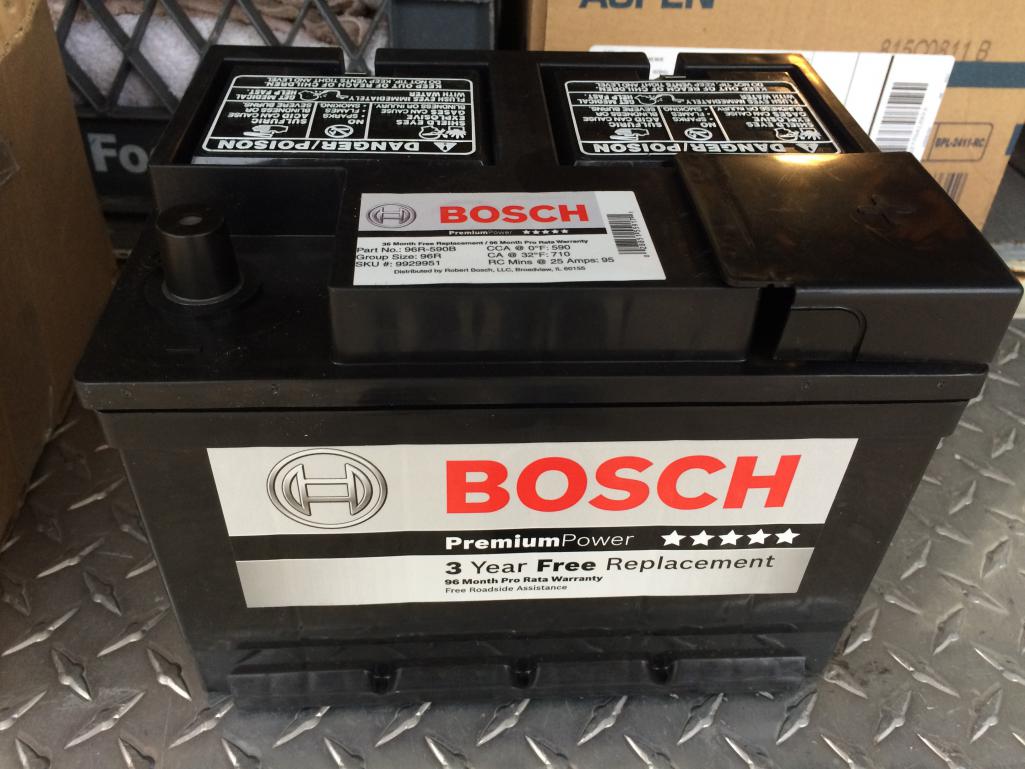
    Global automotive supplier Bosch expects platinum to play only a minor role in its new fuel cells, giving precious metal markets scant benefit even as the technology gains momentum for pollution-free transport. According to Reuters calculations, Bosch would only need a tenth of the platinum used in current fuel cell vehicles.

    Hopes of reviving demand and prices of platinum increasingly hinges on widespread uptake of fuel cells in vehicles, ships, and trains to make up for dwindling amounts used in each device, analysts say.

    The spot price of platinum has shed more than 40 percent in the last five years, burdened by persistent oversupply, before rebounding slightly in recent months.

    But hopes that fuel cells will boost long-term demand may be dampened after Germany’s Robert Bosch GmbH told Reuters that platinum was expected to play only a “minor role” in its plans to mass produce fuel cells.

    Privately-owned Bosch, which last month signed a deal with Powercell Sweden AB to mass-produce fuel cells, said its fuel cell design was not finalized, but it expects them to use only as much platinum as a diesel catalytic converter.

    A catalytic converter in a diesel passenger vehicle typically uses three to seven grams of platinum compared with around 30-60 grams currently needed for a fuel cell for the same vehicle, according to analysts.

    “There has been lots of optimization work concerning platinum in fuel cells,” Achim Moritz, product manager for mobile fuel cells at Bosch, told Reuters.”If you look at a diesel catalytic system, there is about the same amount of platinum content you need for a fuel cell,” he added.

    He declined to give specific estimated figures for the S3 fuel cell system it is developing with Powercell and expects to launch by 2022, citing commercial sensitivities.

    Bosch’s fuel cell deal with Powercell, announced last month, was another signal that the technology is poised to be rolled out more widely as governments toughen emissions regulations.

    China is leading the way, targeting 2 million fuel cell vehicles by 2030.

    Fuel cells generate electricity through a chemical reaction using hydrogen as a fuel and platinum as a catalyst but comprise only a fraction of the electric vehicle (EV) market even though they allow vehicles to travel much longer distances between charges than battery powered cars.

    For years, fuel cells were expected to boost platinum demand dramatically, but doubts have increased due to reports that scientists have found ways to cut the amount of platinum they contain.

    The best selling fuel cell vehicle, Toyota’s Mirai, is expected to cut platinum by two-thirds to around 10 grams per vehicle in its next version, down from 30 grams in the current model, according to David Hart, director of E4tech consultancy, based in Lausanne.

    “They (fuel cell makers) all have a pathway of using less platinum, which is fairly clear,” Hart said.

    Toyota Motor Corp declined to comment.

    Hyundai Motor Co has cut the amount of platinum needed for the fuel cell stack in the latest edition of its NEXO, released last year, to 56 grams from 78 grams previously, a company spokesman told Reuters.

    Hyundai plans to invest over 6 billion euros to make 700,000 fuel cell systems annually by 2030.

    Fuel cells give EVs longer ranges and recharging takes a matter of minutes, a fraction of what is needed for batteries.

    Hyundai’s NEXO has a range of 380 miles compared to 226 miles for the best-selling battery electric vehicle, Nissan’s Leaf.

    That is especially useful for heavy goods vehicles and buses, which are expected to be the primary market for fuel cells initially.

    “The heavy-duty truck side is the biggest initial opportunity for fuel cells because they are very hard to electrify with batteries,” said Marten Wikforss, a consultant for Sweden’s Powercell.

    Batteries would take up more space in a heavy goods truck and would take hours to recharge.

    Once costs come down, fuel cells may also appeal to car buyers who do not want to worry about frequent and time-consuming recharging.

    If fuel cells catch on in ships and trains as well as road vehicles, platinum demand may get a boost despite the lower loadings due to the sheer numbers, some analysts said.

    Global demand for platinum for all fuel cells from vehicles is forecast rise to 366,000 ounces by 2030 but to surge to 965,000 ounces when including other fuel cell and hydrogen uses, said Jonathan Butler, head of business development at Mitsubishi.

  • American burger chain Five Guys to open Restaurants in Singapore

    American burger chain Five Guys to open Restaurants in Singapore

    American burger chain Five Guys is to open in Singapore later this year.

    According to an unidentified F&B industry source, the chain also plans to open in Malaysia.

    The Singapore branch will be Five Guys’ second outlet in Asia, following the one which opened in Hong Kong last November.

    Founded in 1986, Five Guys runs more than 1500 outlets in America, Europe, and the Middle East. It also plans to expand into the UK.

  • Gmail on Android gets Google Tasks integration

    Gmail on Android gets Google Tasks integration

    Google Tasks has been around for years, though it was largely neglected and forgotten by both its creators and users alike. This, however, changed last year, when Google realized that it needs an up-to-date “to-do” platform that puts the focus on getting things done. That’s when the company revived Tasks as a mobile app, alongside the big redesign of the web version of Gmail.

    Said redesign also brought Tasks integration to Gmail for web, which proved to be a very convenient feature, indeed, but it didn’t appear in the Gmail app for reasons unknown. This changes with the latest update, which finally introduces Google Tasks integration to the Android Gmail app.

    Adding important emails to Tasks is quite easy. All you need to do is open the email you want to add, tap the three-dot menu in the top right corner of the screen, and select “Add to Tasks.” If you don’t have the Tasks app installed on your device, doing this will send you to the Google Play Store page of the app. If you already have and use Tasks, this will add the email to your to-do list. You can also add details, change the date and time for reminders, and include subtasks on a per-email basis, which is pretty neat.

    Tasks integration should be going live in the latest update for the Gmail app on Android, though as we’ve come to expect from Google, it’s likely going to be a staged roll-out, which means that not everyone is going to get it on the same day. We’ve already received the update, but you may have to wait a bit longer, depending on your region.

  • Tata Motors’ Passenger Car Sales Felt Last Month

    Tata Motors’ Passenger Car Sales Felt Last Month

    The Tata Motors Group global wholesales in April 2019, including Jaguar Land Rover, were at 79,923 units. This number is lower by nearly 22 percent when compared to April 2018. The sales of the company’s commercial vehicles too were lower in April 2019 compared to the same period last year. The company sold 31,726 units of its commercial vehicles lower by 20 percent.

    The passenger vehicle side of the story was no different as the company’s global wholesales of all passenger vehicles in April 2019 were at 48197 units a drop of 23 percent lower compared to April 2018.

    Global wholesales for Jaguar Land Rover were 35,451 vehicles. Jaguar wholesales for the month were 13,301 vehicles, while Land Rover wholesales for the month were 22,150 vehicles.

  • Ola Aims To Deploy 10,000 Electric Two And Three-Wheelers In India

    Ola Aims To Deploy 10,000 Electric Two And Three-Wheelers In India

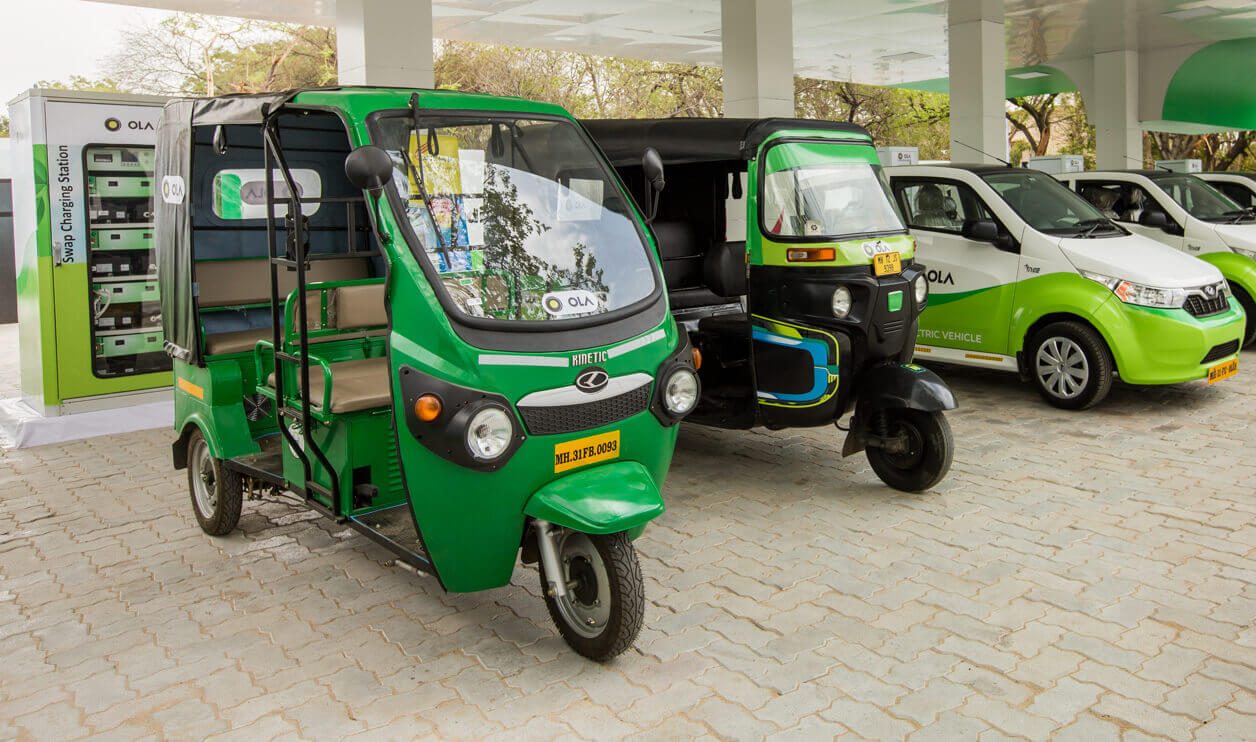
    India’s Ride-hailing service provider Ola is reportedly betting big on two and three-wheelers for its electric mobility drive. In fact, the company is expected on deploying 10,000 electric vehicles (EVs), a mix of two and three-wheelers, in India by March 2020. A PTI report claims that, according to a senior company official, the company believes that mass scale adoption of four-wheeler electric vehicles will take some more time. It was a lesson that the company learned from Ola and Mahindra’s 2017 joint pilot project in Nagpur, for which the former had partnered with the leading SUV maker for a multi-modal electric mass mobility project. It showed Ola that right now “four-wheelers are not yet ready” for such usage in India on a large scale.

    Speaking to PTI, Ola Electric Mobility (OEM) co-founder Anand Shah said, “The biggest lesson (from Nagpur) was that, (electric) four-wheelers, are not yet ready. It is going to take a couple of years for the math on four-wheelers to work.” According to Ola, right now electric three-wheelers / e-Rickshaws are the largest population of EVs by natural adoption. Further, he said, “We think two-wheelers are also emerging very quickly, partially because of policy and also because of the rising interest in the commercial use of two-wheelers, whether that is in deliveries for our own food business or any of our competitors, e-commerce companies or scooter sharing.” In fact, Ola has already started pilots with a fleet of a hundred of three-wheelers in Gurugram. Considering Mahindra has the Treo e-Rickshaw in its fleet now we wouldn’t be surprised if Ola and Mahindra come together for a new project.

    The company expects to deploy the 10,000 electric vehicles by the end of March 2020 in whichever viable cities/states of the country that are willing to work with it. The possible candidate cities include – Delhi, Maharashtra, Kerala, Karnataka, Telangana, AP, and Gujarat. All that said, Ola, hasn’t given up on it, and is confident that electrification is viable in the long run. In fact, Ola is still actively working on electric four-wheelers as well Shah said, and further told PTI “We are testing electric cars. We have tried every electric car that exists in India today, but we think it’s going to take some time for rapid four-wheeler EV adoption at scale.”

    Talking about the learnings from the Nagpur project, Shah said that they noticed a need for more four-wheeler EVs models because when they started there was only one make of electric car available in the market. He also addressed the need for appropriate battery technology for the Indian conditions and usage along with a proper understanding of infrastructure utilization to strike a balance between usage of land, power and time of the day. He also talked about electricity cost being a very significant input while mentioning that now the government is beginning to address this.

    Talking about investments for electric mobility, Shah said, “We have raised Rs 400 crore from some of our early investors — Tiger Global Management, Matrix India. That money will be spent on meeting these milestones, on getting the technology right, getting the business model right and we will keep growing from there.”

  • Online food store Grain Expanding Rapidly

    Online food store Grain Expanding Rapidly

    Singapore-based online food store Grain has raised US$10 million in series B funding. The cash will be used to accelerate growth in Singapore, and expand into Thailand.

    To do that, the company will be cooperating with Thailand’s Boonrawd Brewery group’s subsidiary Singha Corporation.

    Singha will help Grain gain clearer insights into the target audience in Bangkok, and develop better products and services.

    “Grain will work with Singha by using Singha’s extensive F&B network across the country, including logistics and distribution, to bring delightful innovations to consumers,” said Bhurit Bhirombhakdi, chairman of the executive board at Singha Ventures.

    The collaboration between the two companies aims to help online food store Grain expand in Southeast Asia and realize its regional vision.

    “We want to disrupt the F&B landscape and evolve with consumer preferences, but also have solid fundamentals,” said Yi Sung Yong, Grain’s co-founder and CEO.

  • Consumers willing to pay a premium for 5G

    Consumers willing to pay a premium for 5G

    Despite concerns surrounding the commercial proposition of 5G technology, smartphone users are willing to pay an average of a 20% premium for 5G services, according to Ericsson.

    The company’s latest ConsumerLab report on the 5G consumer potential finds that half of the early adopters would be willing to pay as much as 32% more for 5G.

    But consumers’ willingness to pay a premium for 5G is reliant on operators introducing new use cases and payment models and providing a consistently high uplink and downlink speed, the report finds.

    Meanwhile, 5G is expected to drive usage behaviors that also promise to increase revenues. The study finds that 5G is expected to significantly increase video consumption, both by enabling streaming in higher resolutions and through the increased use of augmented reality, virtual reality, and other new formats.

    Ericsson predicts that one in five smartphone users’ data usage could reach more than 200GB per month over 5G devices by 2025.

    Consumers also expect that 5G will bring additional benefits such as reducing network congestion in dense urban areas and introducing more home broadband choices.

    Based on the research, Ericsson ConsumerLab has drawn up a consumer roadmap of 5G use cases involving 31 different applications and services.

    These applications are divided into six categories – entertainment and media; enhanced mobile broadband; gaming and AR/VR applications; smart home and fixed wireless access; automotive and transportation; and shopping and immersive communications.

    “Trough our research, we have busted four myths about consumers’ views on 5G and answered questions such as whether 5G features will require new types of devices, or whether smartphones will be the silver bullet for 5G,” Ericsson Research head of ConsumerLab Jasmeet Singh Sethi said.

    “Consumers clearly state that they think smartphones are unlikely to be the sole solution for 5G.”

  • Apple looks to open its first store in India

    Apple looks to open its first store in India

    India is a great place for certain phone manufacturers to sell their products, and for others, it is a contradiction that is hard to figure out. With approximately 1.4 billion people in the country, it is the second largest smartphone market in the world after China. But with a per capita income in the country of $1,670 as of 2016, the consumers in the country usually favor lower priced handsets. That explains the success that Xiaomi, with its value for money policy, has had in the country.

    Apple’s business in India has been driven by demand for lower-priced models like the discontinued iPhone SE. To avoid a 20% tariff on imported phones, Apple had manufactured the iPhone SE in India and still produces older devices such as the iPhone 6s and iPhone 7 in the country.  Starting this year, it will also manufacture some of its high-end handsets in the region. Contract manufacturer Foxconn is said to be running quality tests of the iPhone XR in India with mass production of the device expected to start soon.

    More than ever, Apple is looking toward India to generate sales in light of the troubles the company has had over the last year selling iPhones in China. But business now is not booming. Research firm Canalys recently reported that during the first quarter of 2019, iPhone shipments in India declined by 75% year-over-year leaving the firm with just 1% of the country’s smartphone market. But Apple CEO Tim Cook is optimistic. He said during last week’s earnings call that “We have made some adjustments in India and we’ve seen preliminarily some better results there.”

    To help generate sales in India, Apple is planning to open its very first retail store in the market. Expanding the local production of iPhone models in the country is expected to help pave the way for government approval of India’s first Apple Store. The green light could come at the end of this month or early next month when a new government takes over in the country. Canalys analyst Rushabh Doshi says that opening a store before the launch of the 2019 iPhone models later this year will help Apple “restart its Indian growth story.” Doshi says that Apple is caught in a bind in India. On one hand, it wants to lower its prices in order to compete with the likes of Xiaomi and Vivo, but it also wants to maintain its “premium” image.

    “India is a very important market in the long term. It’s a challenging market in the short term, but we’re learning a lot. We plan on going in there with sort of all of our might.”-Tim Cook, CEO, Apple

    Still, last month Apple cut the price of the “more affordable” iPhone XR in the country by 17,000 rupees (equivalent to $244 USD). That phone is now priced in India for 59,000 rupees ($846 at current exchange rates).

    Apple is apparently planning to open its first Apple Store in India at one of several upscale locations in Mumbai, according to anonymous sources cited in the report. Apple will decide on the exact location in the next few weeks. No matter which location it selects, the Indian Apple Store will be in a prestigious area of the country comparable with Apple’s Fifth Avenue store in New York City, the Regent Street location in London and the store on the Champs-Elysees in Paris. This might be part of the game plan designed to keep promoting the iPhone as a premium device in India. But again, for Apple to succeed in the country, it will have to be mindful of its pricing.

  • Apex Legends is coming to mobile

    Apex Legends is coming to mobile

    Respawn’s wildly successful battle royale shooter, Apex Legends, is likely getting a mobile version, EA revealed in its quarterly earnings report. Unsurprisingly, the game was a huge hit and turned into “the fastest-growing franchise we’ve ever had,” the report says.

    During today’s call, the publisher said that it has entered “advanced negotiations to bring Apex Legends to China and to mobile.” This is a strategy that both PUBG and Fortnite—Apex Legends’ biggest competitors in the battle royale genre—followed to great results, so it’s no wonder that EA is looking to replicate their success and keep Apex’s momentum going.

    Fortnite’s approach is unique, however, as it is essentially the exact same game across mobile devices, consoles, and PC, which allows for seamless cross-platform play, while PUBG’s mobile outing is a separate entity that’s limited to smartphones and tablets. Unfortunately, it is yet unclear which approach EA is planning to take with the mobile version of Apex Legends, or when the game is going to release. Seeing as how the publisher has entered an advanced stage of negotiations to port the title to mobile devices, we might see something by the end of this year, though it depends entirely on how scalable the experience is going to be.

    Respawn Entertainment, the game’s developer, further added that it is committed to “updating the game with seasonal updates, with a focus on the quality of content over novelty or speed of release.” This seems to be in an attempt to address complaints that the game is not getting enough new updates.

  • Jaguar Land Rover Sales Decline Last Month

    Jaguar Land Rover Sales Decline Last Month

    UK-based auto giant Jaguar Land Rover (JLR) has posted a decline of 13.3 percent in sales for April 2019. The Tata Motors-owned automaker sold 39,185 units last month, a sharp decline in year-on-year volumes when compared to April 2018. The carmaker attributed to the weak demand for its vehicles largely due to the subdued market conditions in China. JLR, did, however, stated that sales of the new Jaguar I-Pace electric SUV and the new generation Range Rover Evoque continued to be encouraging during this period. Markets like the US and the UK also showed impressive growth last month.

    Felix Brautigam, Jaguar Land Rover Chief Commercial Officer, said, “Although this was a tough month for us due to continuing pressures in China, we are delighted to see good growth in the UK and the US. Once again we strongly outperformed the UK market and the US marked its best-ever April sales. This reflects the strength of our brands and continued demand for our unique and evolving product line-up. This month was a historic milestone for Jaguar, with the all-electric Jaguar I-PACE winning an extraordinary hat trick of awards – the 2019 World Car of the Year, World Car Design of the Year and World Green Car – which no car has ever done before.”

    He further added, “This is in addition to scooping the European Car of the Year and the China Green Car of the Year 2019 trophies, to name just a few of the accolades for the I-Pace. We continue to be encouraged by the market response to this incredible vehicle.”

    Retail sales increased in the UK by 12.1 percent, while in North America were raised by 9.6 percent. However, sales in China saw a dramatic drop of 45.7 percent. Sales in overseas markets also slowed down by 22.3 percent with retails in Europe down by 5.5 percent.  Jaguar retail sales in April 2019 stood at  11,462 units, a drop of 13.7 percent year-on-year, while Land Rover sold 27,723 units last month, a drop of 13.1 percent over the same period last year.

    Between January and April 2019, Jaguar Land Rover’s total retail sales stood at 198,101 units, down by 9.1 percent compared to the same period last year.

  • Thai AirAsia parent Q1 operating profit halves

    Thai AirAsia parent Q1 operating profit halves

    Revenue for the quarter ended 31 March was flat at Bt11.6 billion, but expenses rose 10% to Bt10.5 billion. Net profit fell 50% to Bt497million. The company says that fuel costs rose during the quarter, as did airport and MRO costs. Despite this, the carrier’s CASK was flat compared with a year ago at Bt1.53 due to a 10% increase in ASKs and a longer average stage length.

    RPKs grew 9%, while load factor was flat at 91%. The carrier’s average fare for the first quarter was Bt1554, down 7%.b Cash and cash equivalents were Bt4.1 billion on 31 March, down from Bt5.97 billion a year earlier.

    In its outlook, the carrier notes that international trade frictions could hurt the global economy and affect exchange rates.

    “As the company has revenues and expenses in various different currencies such as passenger fares, repair, and maintenance as well as aircraft rental, the company has adopted the practice of natural hedging by matching cash expenses and revenues in the same currency as practically possible,” it says.

    It believes that global crude prices could fall in the second half of the year, but has hedged 52% of its 2019 fuel conception at cost of $80 per barrel.

    It adds that Thailand’s tourism industry will remain strong in 2019. It plans to add new routes later this year from Bangkok Don Mueang to new Vietnam destinations such as Can Tho and Nha Trang, as well as the addition of a Chiang Mai-Da Nang service.

    It plans two Cambodia services, Bangkok Don Mueang-Sihanoukville, and Phuket-Phnom Penh. In addition, it will add a Bangkok Don Mueang-Ahmedabad service.

    “This diversified strategy tends to minimize the risk of dependence on the major customer base, enhancing the company and Thai AirAsia’s sustainable revenue growth in the future and maintain its leading low-fare airline in Thailand,” it says.“In 2019, Thai AirAsiamaintains a target of 23.15 million passengers, with a solid load factor at 86%, and plans to acquire more energy efficient aircraft during the year to bring its fleet to 63 aircraft.”

  • Cebu Pacific Q1 profit more than doubles

    Cebu Pacific Q1 profit more than doubles

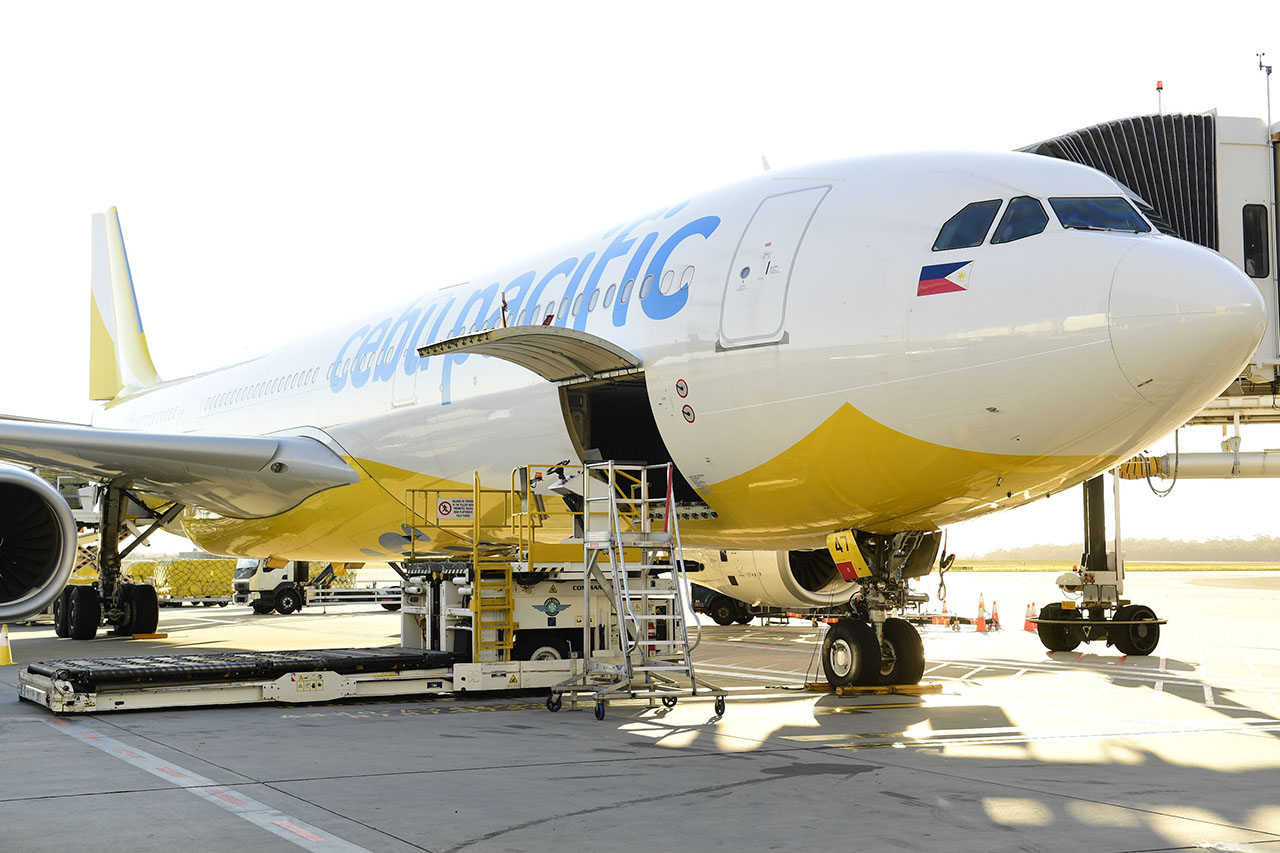
    Budget airline Cebu Pacific saw profit in the first quarter of the year more than doubled on strong demand and as fuel costs, which weighed on earnings in 2018, eased during the period.

    Cebu Pacific, owned by the Gokongwei family’s JG Summit Holdings, said in a stock exchange filing that net income from January to March this year hit P3.43 billion, up more than 138 percent compared to the same period in 2018.

    The airline, which signaled its intention to expand aggressively this year, also saw total revenues hit P21.18 billion, up 16 percent. Most of this came from passenger ticket sales, which rose 14.6 percent to P15.68 billion. Cebu Pacific, which recently took delivery of newer planes such as the next-generation A321neo, saw passenger volume increase 8.5 percent to 5.3 million. Average fares also ticked higher to P2,965, an increase of 5.7 percent.

    The airline also improved cargo revenues by 12.7 percent to P1.44 billion as well as ancillary revenues, which increased 22.7 percent to P4.1 billion.

    As noted, the carrier’s bottom line was propped up by the 4.3-percent decline in oil prices, a major operating expense.

    The company’s flying expenses alone rose 3.8 percent to P7.17 billion mainly as it ramped up operations.

    Overall, operating expenses went up 8.4 percent to P17.34 billion.

    “The increase was driven by its expanded operations, growth in seat capacity from the acquisition of new aircraft and the weakening of the Philippine peso against the US dollar,” Cebu Pacific said in its filing.

  • OCBC Cycle 2019 Expands On Green Initiatives

    OCBC Cycle 2019 Expands On Green Initiatives

    The eleventh edition of OCBC Cycle featured new initiatives associated with the environment, adding on to those implemented last year.  About 6,800 cyclists, ranging from casual riders to competitive athletes, participated in the OCBC Cycle event held on Sunday. The event’s eleventh edition expanded on its green initiatives from previous years.

    Cycling is a green sport.  I am especially glad that, this year, we have planned seven new initiatives associated with OCBC Cycle for the environment. Some are modest in scope, but it is our belief that every small thing we do matters, said Samuel Tsien, Group CEO of OCBC Bank in a media statement.

    Last year, OCBC Cycle engaged the help of the Singapore Sports Hub to recycle the plastic bottles that thirsty cyclists use by the hundreds. With the increased focus on environment conservation efforts, OCBC Cycle retained the bottle-recycling arrangements and expanded on its green initiatives this year.

    These include stopping the usage of single-use plastics in its event pack, replacing trophies for the OCBC Cycle Speedway Championships with reusable steel tumblers and used plastic containers into useful items, such as tote bags and furniture.

    Our event banners will be repurposed to make useful items such as tote bags; we will compost all fruit peels to make fertilizer.  Our goal is to work with the Singapore Environment Council to be the first event in Singapore to achieve the ‘Eco Event’ certification, added Tsien.