Author: Mei Ling Tan

  • Gucci store closed after staff Measles

    Gucci store closed after staff Measles

    Gucci’s Harbour City store has been closed for disinfecting after three staff members fell ill with measles within the last week.

    A Harbour City spokeswoman told that store staff advised mall management about the infections last evening and the Canton Road store was closed early.  Gucci’s office at Ocean Centre has also been closed.

    “We are carrying out thorough disinfection and extra cleaning throughout the mall,” the spokeswoman said. “The two washrooms near the store have also been temporarily suspended for disinfection and cleaning.”

    Hong Kong health officials are on high alert as the territory has witnessed a rapid escalation in the number of measles cases reported in recent weeks. Last year, 15 people were reported to have contracted the highly infectious disease, but already this year there have been 73 cases, including 29 people working at Hong Kong International Airport.

    According to the SCMP, the first Gucci staff member, a male aged 30, became ill last Tuesday after flying to Tokyo. He is now back in Hong Kong and recovering in hospital.

    The second and third victims, both women aged 25, have since developed symptoms and are also recovering in hospital.

    The incubation period of measles lasts from seven to 21 days before symptoms are obvious.

    None of the three staff had worked at other Gucci shops and none of their family members have developed symptoms.


  • Hong Kong online retailers ‘ignoring’ Gen Z consumer needs

    Hong Kong online retailers ‘ignoring’ Gen Z consumer needs

    Hong Kong online retailers are ignoring Gen Z consumers, according to a new report on the local payments market by unified commerce platform Tofugear and financial technology firm Wirecard.

    The research found that the territory’s e-commerce sites are not catering to Gen Z consumers when it comes to the payment options they offer.

    In contrast to older millennial and Gen X consumers, credit-card ownership rates among this demographic – those born between 1997 and 2012 – are low. As a result, one in three Gen Z consumers (35 percent) prefer to make online purchases via a cash-on-delivery option.

    The Digital Payments Landscape in Hong Kong 2019 report finds that while Hong Kong online retailers such as Zalora are already catering to this trend, they are in the minority as only around 5 percent of all retailers in the territory offer a cash-on-delivery option for online purchases.

    “Retailers should ignore Gen Z at their own peril,” says Tiffany Lung, retail analyst at Tofugear.  “Much focus has been on millennials, but the consumer behaviors of Gen Z are radically different – particularly when it comes to payment preferences. They think traditional payment methods are as lame as Facebook.”

    Digital wallets such as AlipayHK are also an important means of transaction for this young demographic, with 86 percent using this payment method – typically for purchases of less than HK$500.

    “Rather than passively waiting for years to qualify for a credit card like millennials have done, Gen Z has been much more proactive,” says Lung. “They have turned to digital wallets to solve the barriers they face when it comes to in-store and online payments. I believe this habit will stay with them as they come of age.”

    Based on a survey of 1000 Hongkongers, the report compares the payment habits of Gen Z, millennial and Gen X consumers and finds that while many perceive Hong Kong to be a laggard when it comes to smart payments, there is a genuine willingness to adopt new payment methods such as digital wallets – regardless of the consumer’s age.

    “After years of complacency, the payments ecosystem in Hong Kong is finally waking up to the fact that cash might be knocked off its throne – or at least see its dominance challenged by a plethora of new payment methods,” says Lung.

    Alongside the consumer survey, key players in Hong Kong’s digital payment industry were interviewed including Google Pay, Octopus Card, TNG FinTech Group, BBPOS Merchant Services, as well as online retailers such as Zalora and SkyMart.

  • Australian dollar slides Again

    Australian dollar slides Again

    The Australian dollar has fallen Tuesday, buying 69.45 US cents from 69.75 US cents on Monday.

    Yesterday, the local currency lost ground as the stalemate in Sino-US trade talks clouded the outlook for the Asian giant in its demand for resources.

    The Aussie dollar slipped 0.4 percent to 69.75 US cents on Monday and ever closer to the recent four-month trough at 69.60 US cents.

    China is a major buyer of commodities from Australia so any threat to its trade is considered a potential negative for the currency.

    Investors also use the Aussie as a liquid proxy for China plays, in this case shorting it as well as the yuan.

    Joseph Capurso, a senior currency strategist at CBA, noted that Washington was due to release a “Section 232” report into the national security implications of car imports this week, which could give President Donald Trump more ammunition in his trade disputes.

    “Global stock markets, and global growth-sensitive currencies such as AUD and NZD, may be hit by fears a ‘trade war’ will spread,” Capurso said.

    “Europe, Japan, Korea, and Mexico are major exporters of cars to the US.”

    The Aussie also faces domestic hurdles from data on wages and jobs due this week, where any sign of weakness would fuel wagers on a rate cut by the Reserve Bank of Australia.

    The central bank last week emphasized that further improvement was needed in the labor market to bring unemployment down and lift inflation.

    Wage figures for the first quarter are due on Wednesday and are forecast to show modest growth for the year.

    The jobs report on Thursday is expected to show 14,000 net new hires in April, with the unemployment rate ticking up to 5.1 percent.

    “Downside surprises will raise pricing for a rate cut as soon as June,” added Capurso.

    “The AUD can drop more than one US cent if the labor data disappoints.”

    The futures market implies around a 63 percent chance of a quarter-point cut in July and is almost fully priced for a move in August.

    Yields on three-year bonds are already well below the 1.5 percent cash rate at 1.26 percent, and only just above record lows.

    Three-year bond futures were up one tick at 98.750, while the 10-year contract rose one tick to 98.2700.

  • Volkswagen Plans To Produce Batteries In Germany

    Volkswagen Plans To Produce Batteries In Germany

    Volkswagen will invest almost 1 billion euros ($1.1 billion) in battery cell production at a facility in western Germany and is seeking to simplify the group by spinning off or selling units, the automaker said on Monday. Volkswagen said in a statement after a supervisory board meeting it would set up the battery facility in Lower Saxony under a partnership and would also begin talks on a planned new multibrand plant in Europe. The statement confirms a Reuters report earlier on Monday, on the eve of the company’s annual general meeting.

    Battery cells are a key battleground in the automotive industry as it shifts to electric mobility. Currently the industry chiefly sources its requirements from Asian manufacturers. Volkswagen also said it was looking into options for its MAN Energy Solutions business, which makes large diesel engines for ships and power generators, as well as transmissions maker Renk, including joint ventures, partnerships, a full or partial sale.

    Reuters reported earlier this month that Volkswagen had approached several companies to gauge their interest in buying MAN Energy Solutions, which is expected to achieve a valuation of about 3 billion euros in a potential sale. The moves are part of Volkswagen Chief Executive Herbert Diess’s efforts to slim down and simplify the group which has 12 brands, trucks, buses, motorbikes, cars and electric bicycles as part of its business.

    “Given the ever greater complexity of our industry and the related challenges, it is essential to focus on our core business,” Supervisory Board Chairman Hans Dieter Poetsch said. Volkswagen also said it would resume preparations for an initial public offering (IPO) of its trucks unit Traton, which it put on hold in March due to volatile market conditions.

  • Singtel full-year profit falls 44%

    Singtel full-year profit falls 44%

    Singtel Group has reported a 44% slump in net profit for the financial year ending in March, partly as a result of lower contributions from the group’s regional mobile associates.

    Net profit declined to S$3.10 billion ($2.26 billion), despite revenue remaining stable at S$17.37 billion, and growing 4% in constant currency terms.

    But the bottom line was impacted by an exceptional gain last year arising from the divestment of a 75% stake in NetLink Trust – the company established by Singtel to deploy Singapore’s national broadband network.

    Losses at Indian mobile associate Airtel, a lower contribution from Indonesia’s Telkomsel, and the erosion of revenue from carriage services also contributed to the decline.

    During the fourth quarter, Singtel’s wholly-owned Australian subsidiary Optus reported a 10% increase in revenue, while Singtel’s domestic Singapore business reported 1% higher revenue and 5% higher ebitda.

    “We have executed well to our strategy amid tougher industry, business and economic conditions. The fundamentals of our core business remained strong,” Singtel Group CEO Chua Sock Koong said.

    “We gained market share in mobile across both Singapore and Australia led by our product innovations, content and services that were well-received by customers. Our digital businesses Amobee and Trustwave continued to deepen their capabilities and to scale. Looking ahead, we will accelerate our digitalization efforts to drive better customer experience and improve productivity and cost structure by transforming our processes.”

  • Spotify introduces Instagram-like Stories

    Spotify introduces Instagram-like Stories

    Back in 2016, Spotify teamed up with song lyrics database Genius to bring “Behind the lyrics” annotations to the Spotify app. They appeared as cards and displayed interesting tidbits about various songs, sourced from the Genius platform. Now, Spotify has decided to outright launch a dedicated “Storylines” feature that allows the artists themselves to share behind-the-scenes insights on their songs.

    Similar to Instagram Stories, Spotify’s implementation gives artists complete freedom to share interesting facts about the process of making songs. Storyline cards will appear peeking from the bottom of the Now Playing screen, allowing you to pull up on the card and read it while listening to the song. The card will disappear after some time, though you can stop it from going away by pressing and holding on the screen. Spotify Storylines may be made up of numerous cards containing text, lyrics highlights, and images. Tapping the right side of a card will move to the next part of the story while tapping the left will go back.

    Storylines are going live in the latest update for the Spotify app (version v8.5.5.853, to be exact). Seeing as how the feature is still in its infancy, not many artists seem to be using it. Give it a couple of weeks, though, and you’re sure to see those cards start popping up in songs all over the place.

  • Indonesia’s Kimia Farma eyes Growth into Vietnam

    Indonesia’s Kimia Farma eyes Growth into Vietnam

    Indonesian state-owned pharmaceuticals firm Kimia Farma is considering expanding into Vietnam by acquiring a local company. The firm recently invested US$10.26 million in a Saudi Arabian firm, purchasing 60 percent of its shares and renaming it as Kimia Farma Dawaa.

    It is currently investigating Vietnamese regulations to discover whether or not it can own a majority stake in a local firm, a critical factor in securing its investment.

    “It depends on the regulation in the country,” said Kimia Farma finance director IGN Suharta Wijaya. “It the regulation is okay, we will enter the country this year.”

    “If the sales of each Kimia Farma outlet in the country is IDR1.5 billion ($104,877) per month, [the sales of an outlet of the Vietnamese company] could be IDR4 billion per month,” Wijaya added.

    Investment in the pharmaceutical industry is stepping up in Vietnam, with the announcement last week that Vietnam-focussed private equity firm Mekong Capital has issued funding to pharmacy chain Pharmacity.

    With 186 outlets retailing both traditional Vietnamese and Western medicines, Pharmacity is the country’s most widespread network of pharmaceutical products stores, with 1 million subscribers to its loyalty program. The firm is targeting 1000 outlets in Vietnam within two years.

    Reportedly, Kimia Farma is seeking to buy a chain with 400 outlets nationwide.

  • Facebook’s Opens Lawsuit against an app developer

    Facebook’s Opens Lawsuit against an app developer

    Kettle, meet pot. Or perhaps we should say, man bites dog. Either way, it symbolizes news announced on Friday by Facebook. The company, which faces an FTC fine of $3 billion to $5 billion for allegedly using members’ personal data without consent, filed a lawsuit against a company for doing the same thing. The suit was filed this past Friday in California Superior Court for the County of San Mateo against a South Korean company called Rankware.

    Rankware is an app developer; the company and its apps have been suspended from Facebook. Despite the suspension, it appears that the company still has in its possession some Facebook user data. In the suit, Facebook asks the court to demand that Rankware delete the user data it obtained and hints that the defendant might have sold this information to other firms. The social networking company says that Rankware refuses to say who it turned over the user data to, and would not “[p]rovide a full accounting of Facebook user data in its possession.”  The filing adds that while Rankware had agreed contractually to follow Facebook’s rules, it “failed to comply with Facebook’s requests for proof of Rankwave’s compliance with Facebook policies, including an audit.”

    The filing goes on to note that since 2014, Rankware has been “us[ing] Facebook Pages data associated with its apps for its own business purposes, which include providing consulting services to advertisers and marketing companies.” The filing claims that the defendant has generated $9.8 million by selling Facebook members’ user data to advertisers. The social networking firm sent a cease and desist letter to Rankware earlier this year, and while the developer said it did not violate Facebook’s terms of service and policies, it would not provide any proof of this.

    “By filing the lawsuit, we are sending a message to developers that Facebook is serious about enforcing our policies, including requiring developers to cooperate with us during an investigation.”

    The suit says that Rankware’s actions harmed the reputation, public trust and goodwill of Facebook. It seeks an injunction that would prevent Rankware from accessing Facebook’s platform, force the South Korean developer to show proof of its compliance, and delete any user data that it obtained in violation of Facebook’s rules. Despite asking the court to award it financial damages and any money that Rankware received “unjustly,” Facebook says that money isn’t enough to make up for the harm caused by Rankware’s actions.

  • Long wait times driving bad CX experiences

    Long wait times driving bad CX experiences

    Nine out of 10 customers say a bad experience with a company impacts their future buying decisions, with 42 percent saying it stops them buying from a brand altogether, according to new research by customer service software company Zendesk.

    The firm’s Quantifying the Business Impact of Customer Service in Australia Report found that companies that fail to deliver quality customer service experiences may be losing loyal customers, as well as sales.

    “Businesses are always competing to offer the latest and greatest products or services,” said Zendesk ANZ managing director Amy Foo. “But what is often overlooked is how quality customer service remains to be a cornerstone of business success.”

    “What this data suggests is that businesses can no longer afford to overlook the importance of delivering consistent excellence in customer service.”

    The research also found that customers are four times as likely to remember an unfavorable experience compared to a positive one for as long as two years, dramatically impacting a customer’s desire to return to a store.

    Some customer service lowlights include being expected to wait too long or failing to have an issue resolved at all. Highlights, on the other hand, include fast service and not having to explain an issue multiple times.

    “Providing positive experiences can mean the difference between poor, short-term and positive, long-standing customer relationships,” Foo said.

    “This inevitably has a significant impact on sales and revenue in the long-term.”

  • Apple TV and AirPlay 2 are now available on Samsung smart TVs

    Apple TV and AirPlay 2 are now available on Samsung smart TVs

    Earlier this year, news broke that Apple would bring the Apple TV app to all Samsung smart TV models from 2018 and 2019. Today, alongside the redesign of the Apple TV app, support for it and AirPlay 2 is going live on Samsung’s smart TVs, turning the South Korean tech giant into the first TV manufacturer to natively support Apple’s services without a set-top box.

    In order to gain access to Apple TV and AirPlay 2, Samsung Smart TV owners will have to install a new firmware update that enables the services. Users in Australia have already started receiving the update, though there’s no official schedule for when the update will be rolled out in other regions.

    Starting this year, all new Samsung smart TVs should have AirPlay 2 and Apple TV integration out of the box, meaning that the app will be compatible with Samsung’s TV search function, Bixby Voice, and the Universal Guide feature, which surfaces shows and movies based on your interests and preferences. The update also enables casting content from iPhones and iPads to Samsung TVs via AirPlay 2.

    The redesigned Apple TV app now features a Channels tab, where users can find their favorite content from various networks and streaming services, as well as a curated section, where content will be surfaced on a per-user basis, depending on interests.

    If Apple TV is available in your country, and you own a Samsung smart TV model from the last year, keep an eye out for the firmware update. If you’d like to manually check for an update, go to Settings > Support > Software Update on your TV and select “Check for updates.”

  • Victoria’s Secret drops Broadcasted Fashion Shows

    Victoria’s Secret drops Broadcasted Fashion Shows

    A root-and-branch review of the Victoria’s Secret business has spelled the end of its famed televised catwalk shows – and even its giant flagship stores may be under threat.

    The world’s most famous lingerie retailer is trying to arrest falling sales and counter competition from the likes of American Eagle Outfitters’ Aerie and Rihanna’s lingerie company Savage X Fenty.

    Recognizing it needs to reconnect with its core customer base, L Brands founder and chairman Leslie Wexner together with recently hired CEO John Mehas, are “re-birthing the brand” through a strategic review.

    “Fashion is a business of change. We must evolve and change to grow,” Wexner said in an internal memo to staff passed on to CBS News. “For the past few months, we’ve said that we are taking a fresh look at every aspect of our business – from merchandising, marketing and brand positioning, to our real estate portfolio, digital business and cost structure … literally everything. We have made enormous progress in a very short time, and are looking forward to a successful fall and holiday with an elevated, fashion-forward assortment.”

    An early decision is that the Victoria’s Secret Fashion Show will no longer screen on national television in the US.

    “Going forward we don’t believe network television is the right fit,” said Wexner in the memo.

    “In 2019 and beyond, we’re focusing on developing exciting and dynamic content and a new kind of event — delivered to our customers on platforms that she’s glued to … and in ways that will push the boundaries of fashion in the global digital age.”

    The annual show was launched in 1995, debuting on network television in 2001. However last year’s audience on ABC was 3.27 million, the smallest to date and less than half the viewership of two years earlier.

    The Victoria’s Secret business has taken some hits in the court of public opinion during recent years. The format of the show, featuring models in scanty costume lingerie has been labeled out of touch in an era where #MeToo movement is reshaping attitudes. Last year, the company was embroiled in controversy after former chief marketing officer Ed Razek said he would not use transgender or plus-sized models in its campaigns.

    Institutional shareholders are demanding higher returns, many lobbying for a spin-off of the highly profitable Bath & Body Works subsidiary.

    Early responses to Victoria’s Secret’s review appear positive. Analyst Lee Peterson, executive VP at Dublin-based retail consultancy WD Partners, said the lingerie giant appeared to be taking the right steps.

    “Everything [Wexner] said – albeit a little tardy – is the right thing to do,” he said. “It seems to me they had an epiphany and realized it’s a new age. You can’t do anything in retail for 20 years and not change.

    “Don’t forget Victoria’s Secret is still more than 60 percent of the market. It’s a big ship to turn around,” said Peterson.

  • HTC experienced massive losses during the First Months

    HTC experienced massive losses during the First Months

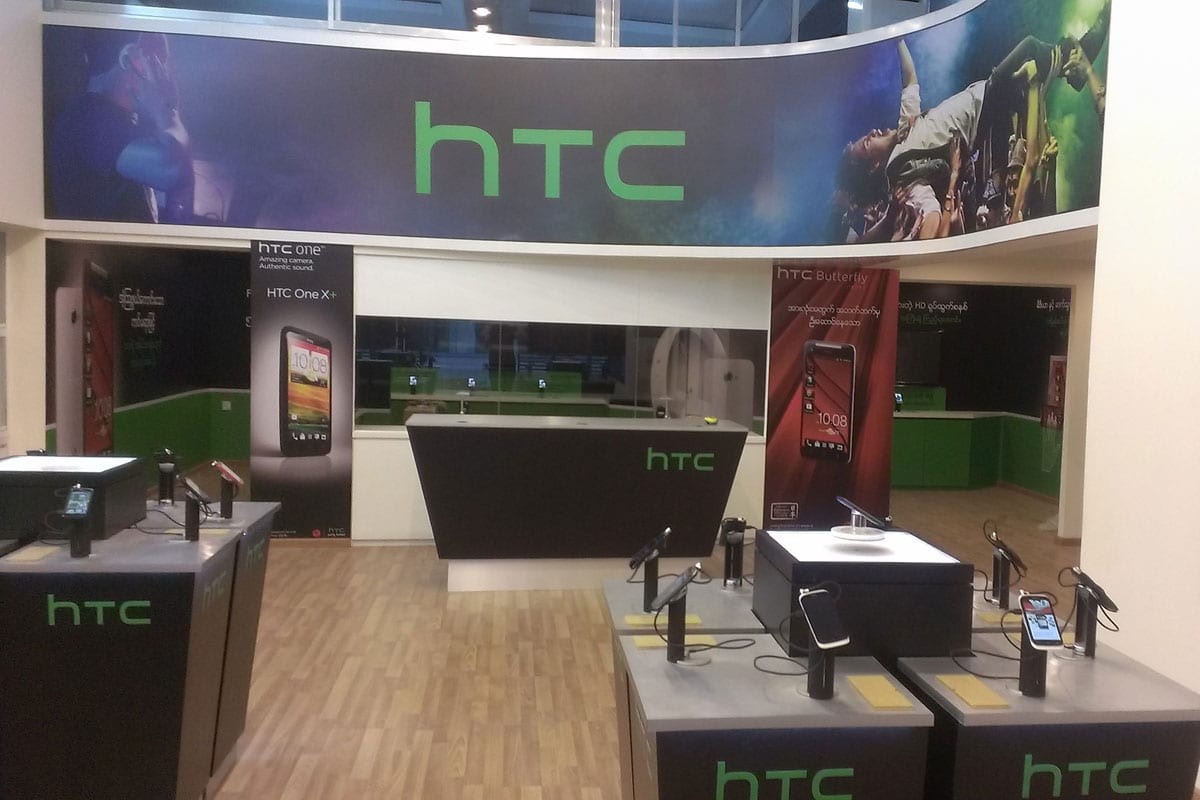
    HTC’s revenue numbers continued to drop massively between January and March 2019, and to no surprise today the company has confirmed that it experienced massive financial losses throughout the period.

    Despite seeing an improved gross margin of 14.7% during the quarter – a year earlier HTC’s gross margin was -3.1% – the Taiwan-based company still experienced a worse-than-expected loss of NT$ 2.73 billion ($87.68 million). The primary cause of this huge loss was HTC’s operating expenses, which essentially skyrocketed throughout the first three months of the year. In fact, within the space of 12 months, the company’s operating margin has gone from an awful -58.9% to an absolutely horrendous -92.9%, which means, at the moment, HTC is spending almost double what it earns.

    Overall, the company generated NT$ 2.94 billion ($94.45 million) in revenue throughout the quarter. The strong performance of HTC’s VR headsets appears to have been the primary source of income, although the company’s smartphone sales did also play an important role.

    Looking towards the second quarter of the year, HTC’s newly-announced Exodus 1s blockchain smartphone and the HTC 5G Hub are expected to positively affect the company’s finances. Both the Vive Pro Eye and Vive Focus Plus headsets are set to boost HTC’s sales too, all of which will lead up to the company’s 5G flagship during the second half of the year, as well as a couple of mid-range smartphones.

  • JJJ Superstore opens at M3 Shopping Mall in Malaysia

    JJJ Superstore opens at M3 Shopping Mall in Malaysia

    Bok Marketing will open its fourth preloved goods superstore Jalan Jalan Japan (JJJ Superstore) at M3 Shopping Mall in Gombak Kuala Lumpur.

    The phrase “Jalan Jalan” in the name means “going for a walk” in Malay.

    All goods sold in the store are “pre-loved” and imported from Japan. Items are sold under three categories: “Preloved in Japan” (indicating good quality); “Hargagiler” (meaning “crazy low price”); and “Large Stock” (indicating “treasure hunting” shopping).

    Bok is a subsidiary of Bookoff, which operates more than 800 preloved goods stores in Japan – purchasing more than 400 million items from customers every year for resale.

    Each JJJ Superstore stocks around 200,000 SKU under a wide range of categories, including its latest range of traditional Japanese kimonos.

    The firm plans to open JJJ Superstores all over Malaysia.

  • Singapore retail sales slipped last Month

    Singapore retail sales slipped last Month

    Singapore retail sales slid by 1.5 percent in March, after excluding motor vehicle sales from the data.

    According to Statistics Singapore, most retail categories recorded lower sales for the month compared with the same period last year.

    Sales of optical goods and books fell by 6.4 percent and of computers and telecommunications equipment by 4.9 percent.

    Food retailers, watch and jewelry retailers, and department stores reported sales declines of between 4.6 percent and 5.7 percent.

    In contrast, sales of medical goods and toiletries rose by 2.8 percent, due in part to higher demand for cosmetics. Supermarkets and hypermarkets registered sales growth of 0.9 percent.

    Month on month, Singapore retail sales were essentially stable.

    The total market for March was estimated at $3.8 billion, with online sales comprising about 5.3 percent.

    Year-on-year sales of food and beverage services in Singapore rose by 0.7 percent in March.

    On a seasonally adjusted basis, sales of food and beverage services increased 1.3 percent month on month.

    Total sales value for the sector was $868 million, compared to $863 million in March last year.

  • McDonald’s ends food fight in India

    McDonald’s ends food fight in India

    International fast food chain McDonald’s has bought out its former partner Vikram Bakshi’s 50 percent stake in its Indian operations, ending a six-year dispute.

    The disagreement arose when McDonald’s India attempted to oust Bakshi as MD of local operator CPRL in 2013, a decision that was overturned after local arbitration hearings ruled in favor of his reinstatement.

    “With the transfer of ownership and management today, Mr. and Mrs. Bakshi end their association with CPRL and McDonald’s,” the company said in a statement. “McDonald’s acknowledges the significant work and contribution of Mr. Bakshi in establishing McDonald’s restaurants in North and East India.”

    Bakshi was responsible for opening the first McDonald’s in the territory in the mid-90s, growing the franchise to more than 160 outlets in northern and eastern India.

    McDonald’s now wholly owns CPRL, which will be headed by Robert Hunghanfoo going forward. The financial details of the transaction were not disclosed.

    The firm is now seeking a new development licensee for the region.