Author: Mei Ling Tan

  • T-Mobile promises cheap 5G services

    T-Mobile promises cheap 5G services

    T-Mobile has just announced that it’s starting limited home internet pilot, an invitation-only test for in-home internet service on LTE, which is meant to connect up to 50,000 homes by the end of the year, in both rural and underserved markets in the United States.

    The carrier states that due to LTE network and spectrum capacity constraints it can’t expand the pilot to more than 50,000 households, but if T-Mobile’s pending merger with Sprint is approved, it will most certainly cover more than half of US households with 5G service by 2024.

    If you’re interested, then you’ll be happy to know that the T-Mobile Home Internet pilot is offered exclusively in areas the carrier expects to deliver speeds of around 50 Mbps through fixed unlimited wireless service over LTE (no data caps). The cost is $50 per month with AutoPay, and there are no annual service contracts, no hidden fees, and no equipment costs.

    Considering customers pay at least $80 per month for wired in-home broadband service these days, T-Mobile pilot programs seems quite a good deal. Moreover, the carrier claims that if the merger with Sprint is approved, it will be able to cover more than half of US household with 5G broadband service by 2024 possibly at the same price.

    Upgrade from LTE to 5G for free, but the monthly fee could be different

    If you’re eligible and chosen to take part in T-Mobile’s Home Internet pilot, a small router will be shipped to you and you’ll be given simple step-by-step instructions on how to install it. You’ll also have to install a mobile app on your phone to optimize placement of router in the house, but that’s just about all you need to do to access T-Mobile’s LTE speeds.

    The router will be upgraded to provide customers 5G services when they will be available in their region, at no additional costs. However, it’s yet unclear whether or not the monthly price will be increased when that happens.

    It’s not the first time that T-Mobile’s CEO John Legere promises something, but it’s also worth mentioning that he kept his promises most of the time.Two weeks ago, I laid out our plans for home broadband with the New T-Mobile. Now, we’re already hard at work building toward that future. We’re w alking the walk and laying the foundation for a world where we can take the fight to Big Cable on behalf of consumers and offer real choice, competition and savings to Americans nationwide.

    Even if 5G services won’t be as cheap as we want them to be, it’s quite clear that thanks to competition customers will have at least a couple of alternatives that will fit their budget. And when it comes to competition, T-Mobile has been able to undercut its rivals many times in the past.

    T-Mobile’s Home Internet pilot is an admirable initiative

    Although all major US carriers announced plans to roll out 5G networks across the country by the end of the year, none have been willing to share anything about prices. Well, at least T-Mobile says it will offer lower prices if Sprint merger is approved.

    T-Mobile’s initiative is quite admirable considering that almost half of American households have no competitive choice for high-speed in-home broadband with speeds of 100Mbps, and in rural areas, more than three quarters have no high-speed service or only one option at their disposal.

    The Un-carrier won’t just bring better internet speeds to rural and underserved areas, but it will also allow 9.5 million households to cut the cord if the merger with Sprint is approved.

    At the other end, AT&T and Verizon are expected to announce their 5G network pricing as well, as both are preparing to launch home 5G services before bringing them to smartphones. It’s a fight between three giants that will have at least one winner: consumers.


  • Royal Enfield Classic & Thunderbird Range Get Optional Alloy Wheels

    Royal Enfield Classic & Thunderbird Range Get Optional Alloy Wheels

    Chennai-based motorcycle maker, Royal Enfield has added alloy wheels as an optional accessory for the Classic and Thunderbird range of motorcycles. The alloy wheels are priced at ₹ 10,000 for a pair and can be purchased at any of the brand’s 800+ dealerships across the country. The black with chrome finished nine-spoke alloy wheels are the same ones that are already offered on the Thunderbird X series, and will seamlessly integrate with the original tyres, tubes and brakes, replacing the stock spoked wheels that are offered with all Royal Enfield offerings.

    The alloys are compatible with any of the Royal Enfield Classic and Thunderbird range of motorcycles

    Compatible with the Royal Enfield Classic 350 and 500, as well as the Thunderbird 350 and 500, the front alloy wheel measures at 19-inch while the rear is an 18-inch unit. The alloys come with a warranty period of two years, and the bike maker’s lists the installation time at 105 minutes. The new alloy wheels not only add to the visual appeal of the motorcycle but also bring the convenience of tubeless tyres, which are easier to repair, in case of a puncture.

    Given the fact that Royal Enfield motorcycles tend to be one of the most customisable motorcycles out there, offering factory-backed accessories is a smart move from the manufacturer. This should also help reduce the use of substandard alloys that are available in the market that tend to break easily with a simple bump or thud. It’s a safety risk afterall, putting the rider and pillion’s life in danger.

    In addition, Royal Enfield is expected to roll out alloy wheel options for the Interceptor 650 as well in the coming weeks. The alloy could sport a different design while prices are likely to be in the same vicinity. Both the front and rear wheels are 18-inch spoked-units on the Interceptor 650 and Continental GT 650, and come shod with Pirelli tyres.

  • Huawei Mate 30 line can be first to use chips made with new energy technology

    Huawei Mate 30 line can be first to use chips made with new energy technology

    Extreme Ultraviolet lithography (EUV) uses light to etch out the layout of transistors and other components on a silicon wafer. Consider that today’s modern chipsets employ billions of transistors on a single chip. If you think that this is an over exaggeration, the Apple A12X chipset used on the the 2018 iPad Pro tablets feature 10 billion transistors. And that is without the use of EUV. The latter technology will make the placement of these transistors more precise, allowing for a 20% increase in the density of transistors on a chip, making these components more powerful with less energy consumption.

    The first smartphone chip to use EUV will most likely be Huawei’s Kirin 985 SoC, which will be fabricated by TSMC. The latter was the first to roll out chips using the 7nm process, an improvement from the previous generation of 10nm chips. That change alone, which signifies denser deployment of transistors, brings more power and less energy consumption to the newest smartphones; add in the capabilities of EUV and the next generation of chips will be faster while conserving more battery life.

    EUV will really show its worth in succeeding generations of chips (5nm and forward) because on 7nm chips, it really doesn’t show its true potential. So while Moore’s law, the observation made by former Intel CEO Gordon Moore that the number of transistors on a chip doubles every other year, might soon reach its physical limitations, EUV will help chip designers and manufacturers draw up and produce the components that will make current phones seem slow and inefficient in comparison.

    We could see the Kirin 985 chipset hit the market sometime during the first half of this year. The Kirin 985 will arrive too late for the soon to be unveiled Huawei P30 series, which will be unveiled on March 26th and launch on April 5th, powered by the Kirin 980. Perhaps we will see the Kirin 985 SoC make its debut on the Huawei Mate 30 range due out later this year.

  • Suzuki Patents Reveal Radar-Based Anti-Collision System

    Suzuki Patents Reveal Radar-Based Anti-Collision System

    Suzuki may be the next two-wheeler manufacturer which is likely working on advanced rider assist systems (ARAS) which could be based on radar technology. Images filed in a recent patent in Japan indicates that Suzuki is looking to install radar reflectors at strategic points on their motorcycles to make them more visible to other vehicles – vehicles which already have collision sensors installed on them. Collision sensors and advanced driver assist systems (ADAS) are the latest technologies to have been introduced in building safer cars, warning drivers of potential collisions and even triggering evasive measures like braking and deceleration.

    Motorcycles, and indeed, any two-wheeler on the road isn’t always visible to other motorists, and being in the blind spot of a car driver is not always a good sensation, when you realise that the car may suddenly change lanes or brake without noticing a motorcycle in the vicinity. And if sensors can warn other motorists about the presence of a motorcycle, then it’s only good news, because it increases a motorcycle’s visibility on the road to other motorists. That is precisely what the new Suzuki patents seem to be doing. The radar reflectors in the patent images will work in tandem with advanced automobiles, like self-driven cars, who can sense the presence of a motorcycle. Now, these don’t seem to be designed to make the motorcycle brake or take any evasive action sensing a potential collision, but even if it’s just warning other cars of the motorcycle’s presence, it may seem like a good idea to have such technology installed.

    Radar-based safety technology isn’t all-new. Bosch has been known to be working on such ARAS for some time now, and motorcycle brands like KTM and BMW Motorrad have been testing such technology, and possibly radar-based motorcycle technology will debut sometime later this year, possibly at the EICMA show in Milan. While the Suzuki patents may not be hi-tech radar-based systems which trigger the motorcycle’s electronic safety systems, like braking, cruise control and deceleration, these do go a long way in making motorcycles more visible on the road. And that’s a better thing to have than relying entirely on the rider’s reflexes when a car does not sense the presence of a motorcycle in its vicinity.

    The radar reflectors seem to be still in concept stage, but the images seem to imply that these reflectors may be available as a bolt on system; so as more and more cars come equipped with advanced driver assist systems, it may be an easy retrofit, even on older or current motorcycles. And yes, these reflectors can be a good pre-emptive safety measure even for human error on the part of car drivers – who may be distracted by a passenger, or even a cellphone.

  • Toyota To Use Maruti Suzuki’s Platforms To Develop New Models

    Toyota To Use Maruti Suzuki’s Platforms To Develop New Models

    Toyota Motor Corporation and Suzuki Motor Corporation have announced their agreement to begin considering concrete collaboration in new fields. The two Japanese companies have been considering the details of the collaboration since they signed an MOU for business partnership in February 2017. The companies have spelt out the broad areas of collaboration keeping different markets in mind. It was already known that the Maruti Suzuki Vitara Brezza and Baleno will be cross-badged and Toyota will retail them through their network after making minor design changes and in return, Maruti Suzuki will do the same with the Suzuki badged Corolla. The company has shared that Maruti Suzuki will also supply two compact vehicles which will be developed on Suzuki’s Global C and Heartec platforms which spawn the Ciaz and Ertiga, respectively.

    Though Toyota will be outsourcing the Ciaz and Ertiga along with the Vitara Brezza and Baleno for the African market, the company will be using Suzuki’s expertise and platforms to develop a similar but new C-segment MPV for the Indian market. This means that Toyota’s version of the Ertiga and Ciaz for our market won’t be limited to cross-badging, but could see some substantial modifications as well. Toyota will also start the production of its version of the Vitara Brezza in 2022 at its Karnataka plant while the Toyota badged Baleno will go on sale in 2019 itself.

    The Toyota-Suzuki pact, however, will go beyond sharing of vehicles and platforms. The company will supply hybrid electric vehicle (HEV) technologies to Maruti Suzuki through local procurement of HEV systems, engines and batteries. Toyota’s hybrid technology will hence be a replacement for the mild hybrid or SHVS technology which Maruti Suzuki has been using so far in the Ciaz and Ertiga along with introducing some plug-in hybrid models. Globally, Toyota will also supply Suzuki hybrid systems which will make way in its models worldwide.

  • Hong Kong to have its first Superyacht Management Services Center

    Hong Kong to have its first Superyacht Management Services Center

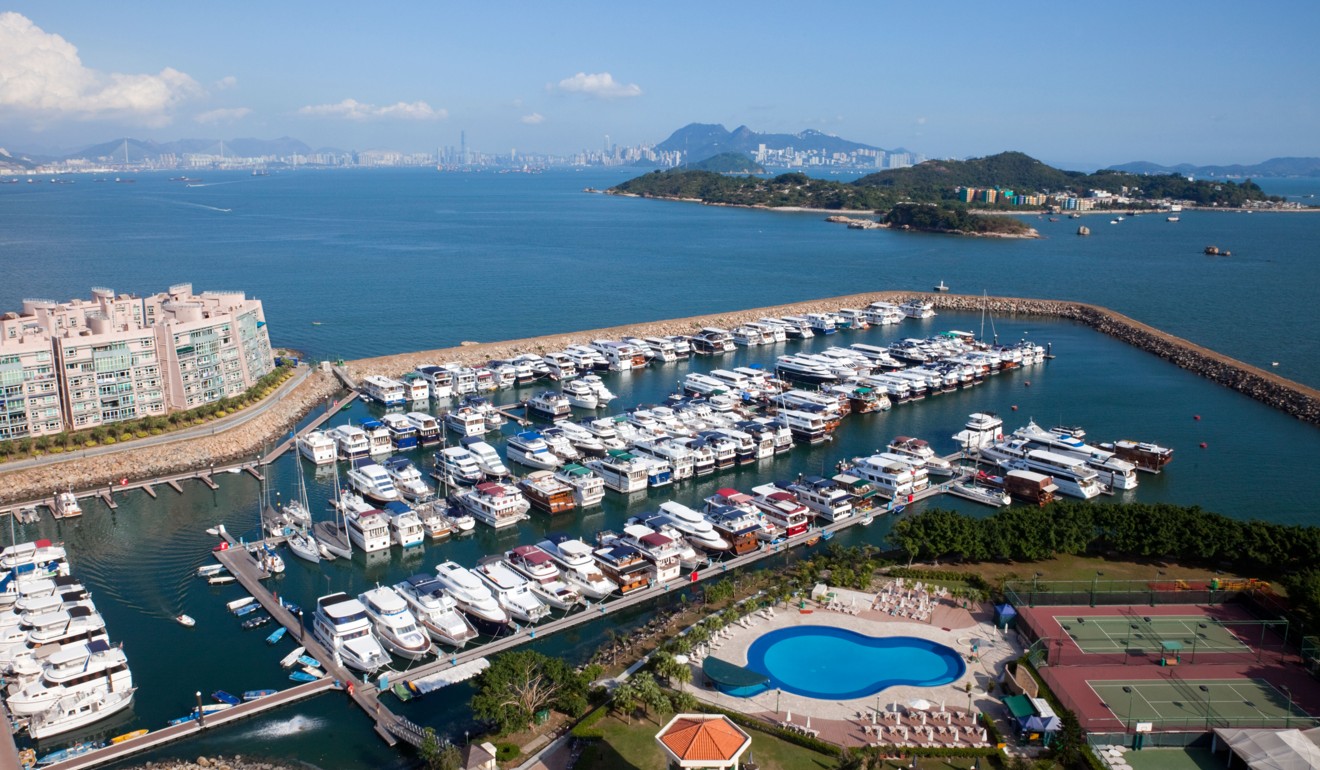
    Hong Kong Cruise and Yacht Industry Association (HKCYIA) has reached a partnership agreement with the China Merchants Industry Holdings Co. Ltd for the establishment of the Hong Kong’s first Superyacht Management Services Center in Tsing Yi. Located at the Yiu Lian and Euroasia Dockyards, the centre will provide world-class supporting services for superyachts of over 45 meters, including yacht refit, repair and maintenance services.

    Speaking at the signing ceremony witnessed by lawyers of Stephenson Harwood, Kara Yeung, HKCYIA Executive Director said “the establishment of a yacht management services center specifically designed for superyachts has marked a major milestone in the development of the yacht industry in Hong Kong. As more yachts are becoming bigger in recent years, the demand for quality superyacht management services is on the rise. However, existing facilities in Hong Kong are lagging behind leaving some very big space for development in this field.”

    “Currently the majority of the maritime business in Hong Kong is taken up by commercial and cargo ships, with the repair and maintenance systems being mainly designed for these kind of ships. However, yacht management and maintenance is another service segment which the current system cannot cater to meet their specific needs,” She said.

    Yeung remarked that the move is in line with China’s plan to develop the maritime economy. According to the Outline of the 13th Five-Year Plan for the National Economic and Social Development of China, the maritime economy grew by 7.5 per cent annually on average in the past five years reaching 7.8 trillion yuan in 2017. Beijing expects the maritime industry to be worth 10 trillion yuan by 2020 and account for around 15 percent of her GDP by 2035, showing the bright future of the maritime business.

    As Hong Kong is expected to be a “super connector” in the implementation of the Belt and Road Initiative and the strategy to build a 21st century maritime Silk Road, the enhancing of multilateral maritime co-operations and fostering of world-class marine industrial clusters in the Greater Bay Area will be of special significance for Hong Kong.

    Yeung said the HKCYIA Superyacht Management Services Center is set up in response to this national strategy as it will provide a transit point for superyachts to obtain supplies and fuel when they travel to destinations in Asia. Not only will more superyachts come to Hong Kong to help promote tourism, but also more foreign investors are expected to come and develop the related businesses.

    According to Yeung, the HKCYIA Superyacht Management Services Center will collaborate with international yacht brands and top yacht management companies in providing world-class supporting services, including repair and maintenance, audit and survey, bunkering services, crew administration, logistics support, etc. Exclusive onshore tours with tailor-made itinerary can also be provided for ship owners and their crew.

    HKCYIA will also join hands with the Maritime Services Training Institute (MSTI) and RINA Services S.p.A. to develop a superyacht management course, providing hands-on training to young people who have an interest in pursuing their careers in the yacht industry.

    Yeung said this programme will be the first of its kind and the collaboration with RINA will provide training that meets international standards. “Nurturing the next generation is important for the long-term development of the high-end maritime economy. The Superyacht Management Services Center will provide the perfect environment for youngsters to learn the necessary skills from industry practitioners, as well as getting the opportunities to develop their careers.

    Since last year, HKCYIA has been working closely with the relevant associations and organizations, with the plan of fostering the development of the yacht industry in China. A Memorandum of understanding was signed between the association and Asia Pacific Superyacht Association (APSA); Taiwan Yachts Industry Association (TYIA); Shenzhen Boating Industry Association (BIA); Zhuhai Ocean Association; Yacht Industry Development Association of Fujian; Hainan Cruise and Yacht Association and Sanya Yachting Association (SYA) to provide the foundations for future co-operations.

    HKCYIA will also participate in the Singapore Yacht Show 2019 in April and the Versilia Yachting Rendez-vous in Viareggio in May in meetings with industry experts to seek further co-operations. Yeung has been invited as a guest speaker of the Asia Pacific Superyacht Conference 2019 to share her insights on the development of yacht industry in Hong Kong.

  • FIS to merge with Worldpay

    FIS to merge with Worldpay

    FIS and Worldpay have arranged to merge to bolster their combined financial services portfolio

    Upon closing, the combined company is expected to be better positioned to offer enterprise banking, payments, capital markets, and global eCommerce capabilities empowering financial institutions and businesses worldwide.

    The combination is expected to expand FIS’ capabilities by enhancing its acquiring and payment offerings while increasing Worldpay’s distribution footprint by accelerating its entry into new geographies.

    FIS and Worldpay solutions and services encompass financial institution issuer services, network and merchant services including global leadership in eCommerce, as well as loyalty and fraud solutions benefiting consumers and businesses. Clients are expected to benefit from the combined omnichannel payment and multi-currency capabilities, robust risk, and fraud solutions and advanced data analytics.

    “Scale matters in our rapidly changing industry,” stated FIS chairman, president and CEO Gary Norcross said.

    “Upon closing later this year, our two powerhouse organizations will combine forces to offer a customer-driven combination of scale, global presence and the industry’s broadest range of global financial solutions. As a combined organization, we will bring the most modern solutions targeted at the highest growth markets.”

    “Combining with FIS helps us accelerate the achievement of that, now benefiting from new scale and capabilities that will truly differentiate the company globally,” Worldpay CEO And executive chairman Charles Drucker said.

    The merger has drawn mixed reactions from commentators. Barron’s Robert Teitelman questions what Worldpay is number one at: “How do you judge solutions sets, global communities and client focus? Define personalization. And then there’s the accelerating future! Either Norcross is trying to obscure how these two companies fit together in a complicated jigsaw puzzle, or this is just how payment-processing folks talk.”

    In a PaymentsSource article by John Adams that comments on the pressure to build a global powerhouse to counter large-scale Fintech mergers, he pulls in a quote from Zil Bareisis, a senior analyst at Celent who said: “As open banking and faster payments grow, the ability to offer end-to-end solutions from merchants to account funding irrespective of payment rails will be increasingly important.”

  • Ericsson to provide 5G NR equipment for KT

    Ericsson to provide 5G NR equipment for KT

    South Korea’s KT has awarded Ericsson a 5G contract aimed at allowing the operator to launch commercial 5G services early next month.

    South Korean operators have agreed to launch 5G services at the same time in April at the request of regulator KCC.

    Under the contract with Ericsson, the vendor will provide 5G new radio hardware and software for KT’s 3.5-GHz non-standalone 5G network.

    KT selected Ericsson as a key 5G supplier in November last year as part of its preparations for a commercial launch.

    “Having worked successfully with Ericsson on 4G LTE, we are pleased to continue that partnership to make our 5G ambitions a reality with Ericsson’s leading 5G technology,” KT VP of access network design Jinho Choi said.

    “Korea is one of the most competitive and technology-advanced markets in the world. By taking a global lead to enable nationwide commercial 5G services through commercially available 5G smartphones, KT is demonstrating our commitment to our customers and showing how we can drive a global 5G ecosystem where Korea plays a key role.”

  • U Mobile taps ZTE to conduct 5G trials in Malaysia

    U Mobile taps ZTE to conduct 5G trials in Malaysia

    U Mobile has signed an MoU with ZTE to support its 5G deployment in Malaysia

    The agreement will see both parties collaborating on various 5G related developments including live testing, 5G showcases well as implementation of Massive MIMO.

    U Mobile CEO Wong Heang Tuck said the operator has a long standing working relationship with ZTE and it is a logical next step for the companies to collaborate on initiatives related to 5G.

    “In the near future, we will be working closely with ZTE to conduct live tests in select areas in the KL city, so Malaysians may experience the first-hand power of 5G,” Wong said in a statement.

    U Mobile CTO Woon Ooi Yuen added that the operator has been aggressively expanding its 4G LTE networks all across West and East Malaysia in recent months and started plotting its journey towards 5G.

    “As part of our 5G roadmap, we will be implementing Massive MIMO in certain areas in the KL City to further enhance customer experience by leveraging the wider bandwidths.”

    Steven Ge, managing director of ZTE Malaysia, said the company has 5G end-to-end solution capabilities, adding that the partnership with U Mobile will “turn 5G into a reality in the near future to benefit Malaysians.”

    Earlier this week, U Mobile has also formed a strategic partnership with Razer to collaborate in e-payments, e-sports, and 5G testbeds.

    Under the partnership, U Mobile and Razer are looking into leveraging e-sports events for 5G testbeds in Malaysia by conducting e-sports-related 5G testbeds and trials in the country.

  • Hong Kong’s Ofca assigns first 5G spectrum

    Hong Kong’s Ofca assigns first 5G spectrum

    Hong Kong operators HKT, SmarTone and China Mobile Hong Kong have all been granted spectrum in the 26-GHz and 28-GHz frequency bands for 5G use.

    The three operators, which had each applied to be assigned spectrum across the two bands, have each been offered 400 MHz of spectrum on a provisional basis by telecommunications regulator Ofca.

    The applicants were all found to have fulfilled the required licensing criteria to be granted assignment of the non-shared spectrum.

    The administrative assignment of the 26-GHz and 28-GHz spectrum will be followed up with the auction of 380MHz of spectrum in the 3.3-GHz, 3.5-GHz and 4.9-GHz bands in the middle of the year.

    Hong Kong’s second largest operator by market share 3 Hong Kong declined to apply to be assigned 26-GHz and 28-GHz spectrum, opting instead to rely on its existing airwaves and the spectrum it expects to be able to acquire in the upcoming 5G auction.

    In addition, 3 Hong Kong cited factors including Ofca’s requirement that operators establish thousands of radio units compatible with the spectrum within five years of the assignment, as well as the shortage of announced devices that support the two frequency bands.

  • Google Pay is catching up with Apple Pay

    Google Pay is catching up with Apple Pay

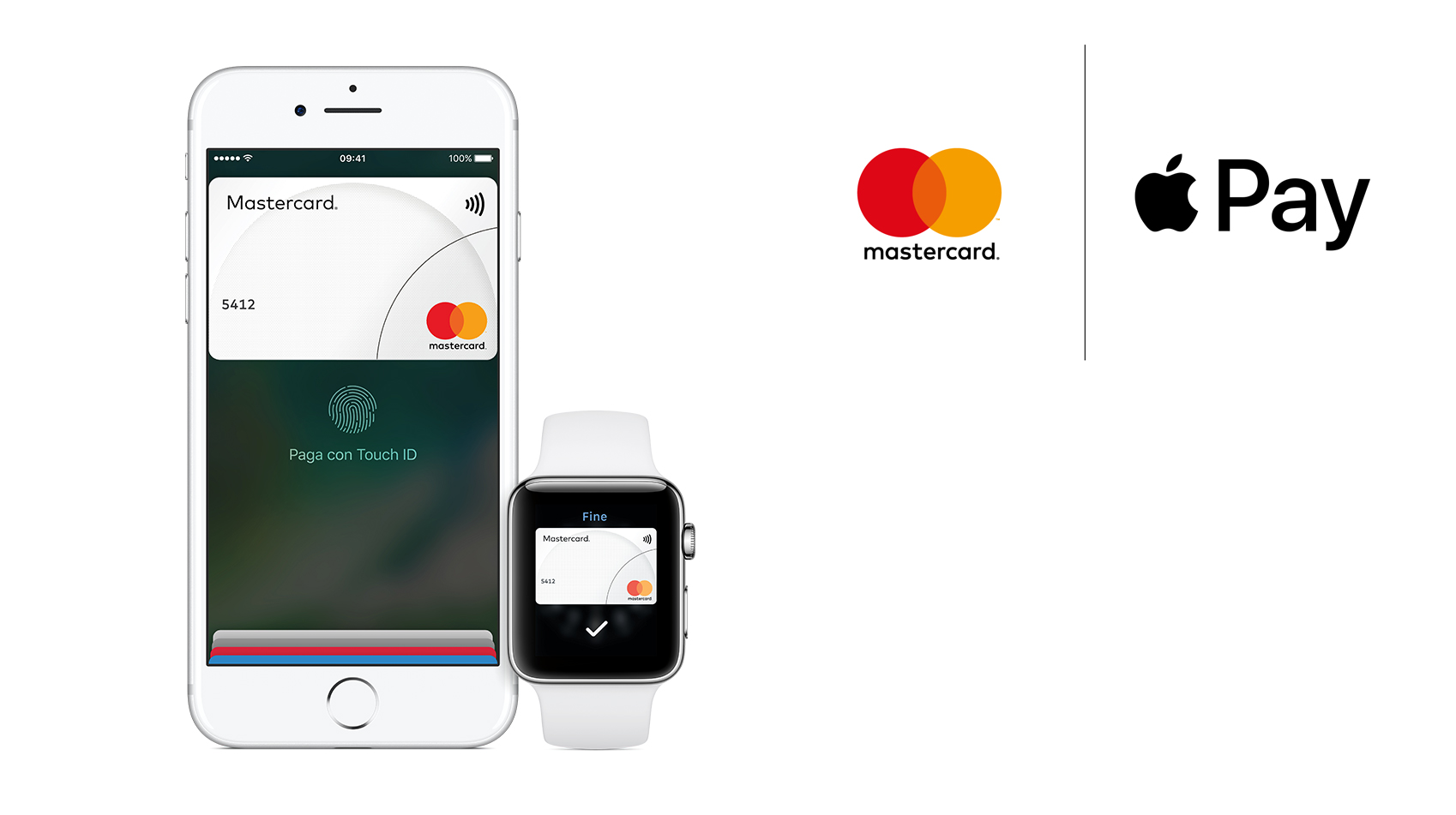
    Google’s proprietary digital wallet service has done a pretty good job of keeping up with Apple Pay over the last year or so in terms of both US availability and international expansions, frequently spreading its wings to new banks, as well as major retailers like Target.

    Before long, Google Pay will also catch up with its arch-rival as far as eBay support is concerned, according to an official announcement issued earlier today. After relying almost entirely on PayPal for payment processing on its extensive e-commerce platform, eBay started a transition in 2018 that’s scheduled to be completed by 2021. The eventual goal is to manage transactions on its own with the help of a lesser-known company called Adyen.

    From customers’ perspective, this gradual move seems to be improving the flexibility of the shopping experience, which is certainly a welcomed change. Apple Pay already joined eBay’s list of PayPal alternatives several months back, with Google Pay availability set to be offered to Android users “starting in early April.” To complete an eBay purchase using the search giant’s digital wallet app, you’ll need to shop from a seller enrolled in this new “payments experience”, and something tells us that will only include a small piece of the huge marketplace to begin with.

    But rest assured, as eBay plans to make both Google Pay and Apple Pay “increasingly available to shoppers as the program grows to process more volume in additional geographies.” And if you prefer the “classic” e-shopping experience, you have no reason to fret either, as PayPal is not going anywhere. Not today and not in 2021. eBay is simply branching out, offering customers more payment options on their end, from Android and iOS devices, as well as computers running all sorts of operating systems.

  • Lazada strengthens its position as Singapore’s top eCommerce platform with RedMart’s move to the Lazada app

    Lazada strengthens its position as Singapore’s top eCommerce platform with RedMart’s move to the Lazada app

    With RedMart officially completing its move to the Lazada platform on 15 March, customers can now enjoy a one-stop solution for all their shopping needs. Those who buy their groceries online via RedMart now have access to more than 400,000 retailers in Lazada’s ecosystem, all within the same app and at redmart.lazada.sg. The move also makes Lazada the top eCommerce platform in Singapore in terms of traffic and product range.

    RedMart’s move is part of Lazada’s plan to become Southeast Asia’s biggest eCommerce ecosystem and offer customers the best selection of products across all categories. Combined with RedMart, Lazada has more than 165,000 grocery and supermarket offerings, more than any other grocer (retail or otherwise) in Singapore and Southeast Asia.

    James Chang, CEO of Lazada Singapore, said: “Bringing Lazada and RedMart together is an ambitious project aimed at offering Singapore customers a platform to shop for all their needs more easily and conveniently. Customers can compare similar products across all the retailers in our ecosystem, shop for complementary offerings and benefit from having more payment options, such as the Lazada Wallet.”

    “Since making the move, order volume generated via the new RedMart store on Lazada has been encouraging, with customer orders submitted in the first five days after the move (15-19 March) growing at a similar rate as on the previous platform. This shows that we have been successful in bringing together general merchandise and groceries to create a truly one-stop shopping experience. Lazada is now the top eCommerce platform in Singapore, offering more products and attracting more shoppers than any other platform.”

    Lazada will be rolling out a series of app updates over the next few months to further enhance the shopping experience for customers.

    “We are constantly looking at ways to improve the platform. We take our customers’ feedback seriously and want to ensure that we not only offer them the best selection of products, but also the best user experience,” James added.

    Lazada will launch the following RedMart features and functionalities by end-June 2019:

    1. Order Amend – allowing customers to add more items to an existing placed order;
    2. Delivery Slot Incentives – incentivising customers to consolidate deliveries within the same area and timeframe to reduce our carbon footprint;
    3. My List Features – including managing lists and stock up reminders.

    Other improvements in the pipeline include:

    1. Search Functionality – additional sorting by relevance and/or savings;
    2. Delivery Slot Reservation – allowing customers to reserve their delivery slot before they add items to their shopping cart;
    3. Order Rescheduling – allowing customers to change their delivery timing post-checkout.

    Orders made on the new RedMart on Lazada will continue to be fulfilled according to customers’ chosen two-hour delivery slot between 7AM and 10PM, seven days a week including public holidays, while orders with other Lazada sellers will be fulfilled separately. LiveUp Loyalty Programme members will continue to enjoy free shipping on RedMart for orders over $40, and cashback benefits in the form of Lazada credits which can be used for any orders on Lazada, including for RedMart items.

  • Why you need to change your Facebook and Instagram password

    Why you need to change your Facebook and Instagram password

    If you didn’t think that Facebook could go lower than sharing personal information from 87 million users with third party sites, violating a signed FTC consent decree in the process, maybe you’re not giving the social media company enough credit. Hundreds of millions of Facebook users could have had their passwords discovered by Facebook employees. These passwords were stored by the company in plain text dating back as far as 2012. Facebook engineers noticed the mistake when reviewing new code back in January of this year.

    While 2018 was not a great year for Facebook, 2019 has started just as poorly for the company. Earlier this month, the company was accused of using data provided by subscribers for two-factor authentication, like phone numbers, for advertising and marketing purposes. And The New York Times revealed last week that Facebook is the subject of an investigation for deals it made with other tech firms for data.

    We don’t know if this is going to make you feel better, but an internal investigation by Facebook reveals that there is no sign that employees took advantage of this oversight. Still, if you are a Facebook or Instagram user, or even if you were a Facebook or Instagram user and still have an active account, it might be a good idea to change your password now.  Facebook does not feel that such a move is required and company engineer Scott Renfro said, “We’ve not found any cases so far in our investigations where someone was looking intentionally for passwords, nor have we found signs of misuse of this data.” Still, the number of accounts that are involved could number somewhere between 200 million and 600 million, and the number of Facebook employees with access to them was approximately 20,000. We’d suggest that you ignore Facebook’s recommendation and change your password.

    “We’ve not found any cases so far in our investigations where someone was looking intentionally for passwords, nor have we found signs of misuse of this data,” Renfro said. “In this situation what we’ve found is these passwords were inadvertently logged but that there was no actual risk that’s come from this. We want to make sure we’re reserving those steps and only force a password change in cases where there’s definitely been signs of abuse.”-Scott Renfro, engineer, Facebook

    A statement made by Facebook says that it plans on notifying “hundreds of millions of Facebook Lite users, tens of millions of other Facebook users, and tens of thousands of Instagram users.” But when it comes to Facebook and its associated apps and sites, your best bet is to get out in front of whatever privacy issue the next shoe to drop will expose.

  • Li & Fung Announces 2018 Annual Results

    Li & Fung Announces 2018 Annual Results

    Li & Fung Limited, the world’s leading supply chain solutions partner for brands and retailers, today announced its annual results for the year ended 31 December 2018.

    For the year under review, the Company was affected by the rapidly changing retail landscape, with record store closures and customer bankruptcies. Owing to the Company’s investments in a speed-enabled supply chain, its customers have been able to reduce their inventory levels, although this produced short-term negative impacts on the Company’s turnover. The ongoing US-China trade war had a minimal impact on Li & Fung’s business due to the company’s diversified sourcing network outside of China.

    On a like-for-like basis and excluding the impact of the strategic divestment of the three Product Verticals in April 2018, which triggered a one-off disposal loss of US$114 million, core operating profit (“COP”) of Continuing Operations decreased by 20% to US$285 million. This was largely due to decreases in turnover and total margin in the Supply Chain Solutions business, as well as continued investment in digitalization in line with the Company’s long-term strategic plan. Turnover decreased by 6.2% to US$12.7 billion, mainly due to customers’ ongoing destocking, customer turnover and bankruptcies. Total margin percentage improved by 0.4% to 10.6%, primarily a result of the increased contribution from the higher-margin Logistics business. Adjusted Profit Attributable to Shareholders decreased 15.9% to US$117 million, excluding gain on remeasurement of contingent consideration payable. Profit attributable to shareholders for Continuing Operations decreased by 26.2% to US$126 million. The Board of Directors has proposed a final dividend of 4 HK cents (2017: 2 HK cents). This brings the full-year total dividend to 7 HK cents per share.

    Spencer Fung, Group CEO of Li & Fung, said: “2018 was a demanding year and we’ve made a fundamental reorganization of our business in line with our Three-Year Plan to build the Supply Chain of the Future. We initiated a structural change with a new management team to focus on our core customers and operational excellence. This includes a new Group President, a new Chief Operating Officer and an entirely new Chief Digital Officer position. We have the right strategy, and now the right structure and people in place. With all three elements in place we have built the right foundation for the future. I am confident that we are on the right track.

    Mr Fung continued, “Group President, Joseph Phi, has a strong track record having organically grown LF Logistics over the past decade. In his new role, Joseph will focus on account management and business development. As a team, we are focused on driving greater productivity in our global production platform by truly leveraging the scale of Li & Fung for our customers, capitalizing on our clear leadership in 3D design, and accelerating the build-out of our end-to-end digital platform. These initiatives are already helping to strengthen relationships with core customers and to convert new customers.”

    The Logistics business continued to grow organically with double-digit increases. With strong demand for in-country logistics services, turnover and COP increased 10.2% and 14.6% to US$1.13 billion and US$86 million respectively. The growth of the Logistics business continued to be driven by strong growth momentum in China; e-logistics growth; accelerating growth in ASEAN across all services; and rapid expansion in the newer geographies of Japan, Korea and India. To further accelerate the pace of its growth, preparation is underway for the potential spin off and separate listing of LF Logistics to take place in 2019 depending on market conditions and other factors.

    In addition, 2018 was a turnaround year for the Onshore Wholesale business in the Americas, Europe and Asia with its turnover increasing by 7.4% to US$1.7 billion with recovery at major US customers and growth in the Asia onshore wholesale business. Furthermore, operating costs as a percentage of turnover improved by 80 basis points.

    Joseph Phi, Group President of Li & Fung, said: “The strong organic growth of LF Logistics is due to active engagement with our people and close collaboration with our customers. At Li & Fung, we are well positioned to integrate logistics with our traditional sourcing and supply chain solutions offering. This provides a faster and more digital supply chain, enabling us to cultivate closer and longer-lasting customer partnerships. We are pursuing market share gain and pipeline conversion as the twin drivers for our growth.”

    Group Chairman, William Fung added, “With ongoing trade uncertainties, we continue to help existing and new customers optimize their production across over 50 countries of export. This provides the best defense against fluctuations in trade policy and mitigates any negative impact from tariff increases. I am confident that our new leadership team and organizational structure will help us drive productivity, strengthen customer relationships and, in turn, grow market share.

  • Lazada Fires Up Growth Of “Super eBusinesses” In Southeast Asia

    Lazada Fires Up Growth Of “Super eBusinesses” In Southeast Asia

    Southeast Asia eCommerce leader Lazada today announced an allen compassing series of products and services that will fire up the growth of its brands and sellers – big or small – to win market share in the region by transforming them into “Super eBusinesses”.

    The offerings, dubbed super-solutions, are aimed at resolving three pain points that brands and sellers face – branding, marketing and sales. These features, which have been rolled out in conjunction with Lazada’s 7th Birthday celebration, are aimed at brands and sellers, of all sizes, to ensure they are well-positioned to ride the eCommerce boom in Southeast Asia.

    “No seller is too small to aspire, and no brand is too big to be a Super eBusiness. That is why we are thrilled to roll out super-solutions to help our brands and sellers become more nimble in digitising their businesses and better reach customers,” said Pierre Poignant, Lazada Group Chief Executive Officer. The “super-solutions” which were unveiled include: – A series of ‘Super’ campaigns in which LazMall brands and sellers can choose to take part to boost

    their brand image and better engage with customers;

    – A new and improved Marketing Solutions Package and Business Advisor Dashboard that can deliver more traffic to their storefronts, and arm brands and sellers with near real-time information to help them make faster and better decisions to sell more effectively and efficiently;

    – New tech tools like Store Builder for brands and sellers to customise their storefronts to differentiate themselves on Lazada, while in-app live streaming, news feed and in-app consumer games can help win the hearts of consumers with higher consumer engagement. (See factsheet for details)

    At the same time, Lazada also formalised cooperation partnerships with 12 leading global lifestyle, technology and fashion companies that will boost collaboration and strengthen their online retail presence. Called Joint Business Partnerships (JBP), these collaborations will enable brands to tap on Lazada’s industry-leading tech and logistics infrastructure, innovation and e-commerce expertise. Lazada today inked Memorandums of Understanding (MOU) with electronics leaders Realme and Coocaa, while the one with Huawei was signed earlier this month. Other brands that are set to join will include several of the world’s biggest FMCG companies.

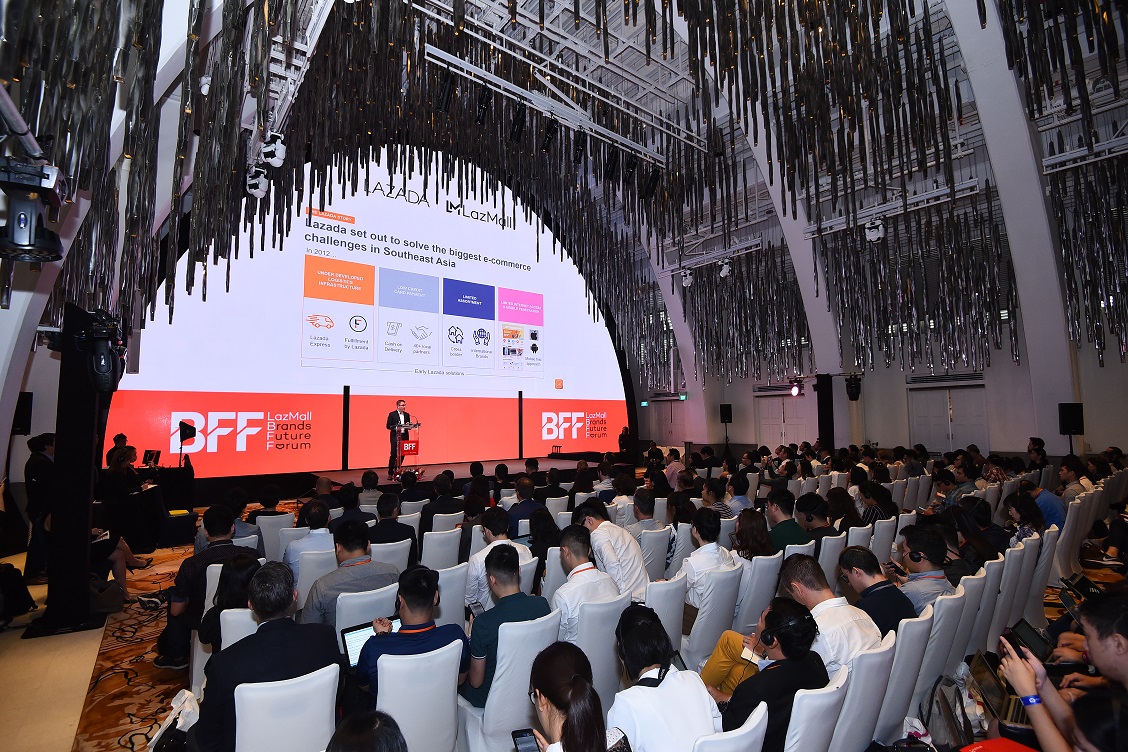
    Backed by Alibaba’s technology and logistics infrastructure, Lazada has been able to launch over the past year industry-leading tech innovations like search-image function, consumer engagement games and in app live streaming to become the region’s only “shoppertainment” platform on which people can watch, shop and play, said Poignant at the inaugural LazMall Brands Future Forum (BFF). The annual summit gathers brands and sellers to discuss growth opportunities and technological advancements that will create

    ‘Super eBusinesses’, shaping the future of Southeast Asia’s eCommerce landscape. Accelerating the growth of Lazada brands and sellers The super-solutions will also make it easier for brands and sellers to open up stores on LazMall. Qualified merchants can now take advantage of the new self-sign up feature, a simplified sign-up process that can now be completed in mere minutes. This is in line with the Lazada’s goal of enabling SMEs to become globally competitive.

    “Since the launch of LazMall in 2018, we have seen tremendous growth among our key pioneer brand partners. We want to extend the benefits of LazMall to even more brands and sellers to elevate their eCommerce operations,” said Lazada Group President Jing Yin. “We want to incubate them so they can grow alongside us and become sustainable and successful e-businesses.”

    Across the region, 60 percent of small and medium enterprises (SMEs) are keen to invest in technologies to achieve sustainable growth in today’s digital economy. Business-oriented tools including online commerce solutions, customer relationship management (CRM) and business intelligence, were identified as the top investment priorities1.

    Further promoting excellence in eCommerce, Lazada also handed out awards to top performing brands that have proven to be shining examples of “eBusinesses”. Five awards were presented to outstanding brands and sellers that have been constantly innovating to drive new ways to reach their customers on

    Lazada. Comprising global and Southeast Asian brands, the winners are Unilever (Best Marketing Innovation), Pampers (Best Social Media Activation), Coocaa (Fastest Growing Brand), Philips (Customers’ Choice Award) and Wardah (Best Product Launch).

    Driving ‘Shoppertainment’ in Southeast Asia Pushing boundaries in eCommerce in Southeast Asia, Lazada is driving ‘shoppertainment’ to provide shoppers with a fun, interactive and entertaining experience. As part of its 7th birthday celebrations, Lazada is hosting a first-of-its-kind concert, called “Super Party”, in Jakarta on March 26, 8 pm (Jakarta time).

    The concert, which features a star-studded lineup including British popstar Dua Lipa, culminates with Lazada’s birthday shopping event on March 27. The one-day sale promises a new online shopping experience that includes a new selection of exciting games for redeeming vouchers and attractive deals for consumers in the region.