Author: Mei Ling Tan

  • HSBC launches PayMe for Business in Hong Kong

    HSBC launches PayMe for Business in Hong Kong

    HSBC has officially launched PayMe for Business, enabling customers to make purchases at 45 participating brands at launch.

    The new PayMe for Business app is now available for download at Hong Kong Apple App Store and Google Play. By using the latest version of the PayMe app, customers can make a payment by activating the scanner with a simple swipe to the left, and then scan the dynamic PayCode provided by the merchant.

    The PayMe for Business app requires no set-up cost. It also has no limits on payment collections amount and enables merchants to instantly transfer money to their HSBC Business Banking account and have access to their money in real time. It also offers features to help them gain insights into their business performance, as well as easily export transaction histories into compatible business accounting software.

    Currently, HSBC is waiving merchant transaction fees until 30 June 2019 as a promotion and early bird offer.

    “Recent beta testing has given us invaluable merchant and consumer insights, allowing us to refine the user experience before today’s launch.  We’re thrilled to have launched the app knowing that it was co-designed with our customers, and we look forward to continue building out new features to support all their business needs and help them grow,” said Greg Chapman, head of PayMe, HSBC.

    PayMe will also introduce PayMe Perks soon which features special offers such as discounts and limited edition F&B items exclusive to PayMe customers at participating merchants.  It’s expected that more details will be revealed in the coming weeks.

  • Firefox latest update makes it a much better browser for iPad users

    Firefox latest update makes it a much better browser for iPad users

    If you’re using Firefox on your iPad, you’ll be pleased to know that Mozilla is now making your life much easier. Since the iPad offers a bigger display than the iPhone, which means you can use it differently like for example watch a video and browse the Internet.

    In order for that to work, your browser must support split screen, a feature that allows you to have two apps side-by-side making it easy for you to share links or take notes without having to switch back and forth between apps. The latest Firefox update enables iPad users to divide the screen between the browser and another app like Google Maps or Slack.

    Besides split screen support, Mozilla also included some quality of life improvements, such as better tab management, easier to access Private Browsing, and keyboard shortcuts.

    After the update, you’ll notice that Firefox will display tabs like tiles, which makes it easier to see them. Also, whenever you try to get to a private page on an iOS device, you usually have to go through a couple of steps, but the latest version puts Private Browsing in the lower left corner of the browser window so that you can access it with just one click.

    Now, if you’re using an external keyboard with your iPad, you’ll be happy to learn that you can hold down the command key on your tablet to show keyboard shortcuts. Mozilla has implemented some shortcuts exactly as they are on the Mac, so you might be familiar with many of them. There’s also another feature introduced which will allow you to send tabs between devices without having to leave the browser, but you will need a Firefox account for that.

    Last but not least, a much-requested feature is now being implemented in Firefox, but only to some extent. Since iOS doesn’t allow Mozilla to enable users to set Firefox as the default browser, the developers have found a way to allow them to set it as default browser when they open email links from Microsoft Outlook.

  • Military-grade rugged Kyocera DuraForce PRO 2

    Military-grade rugged Kyocera DuraForce PRO 2

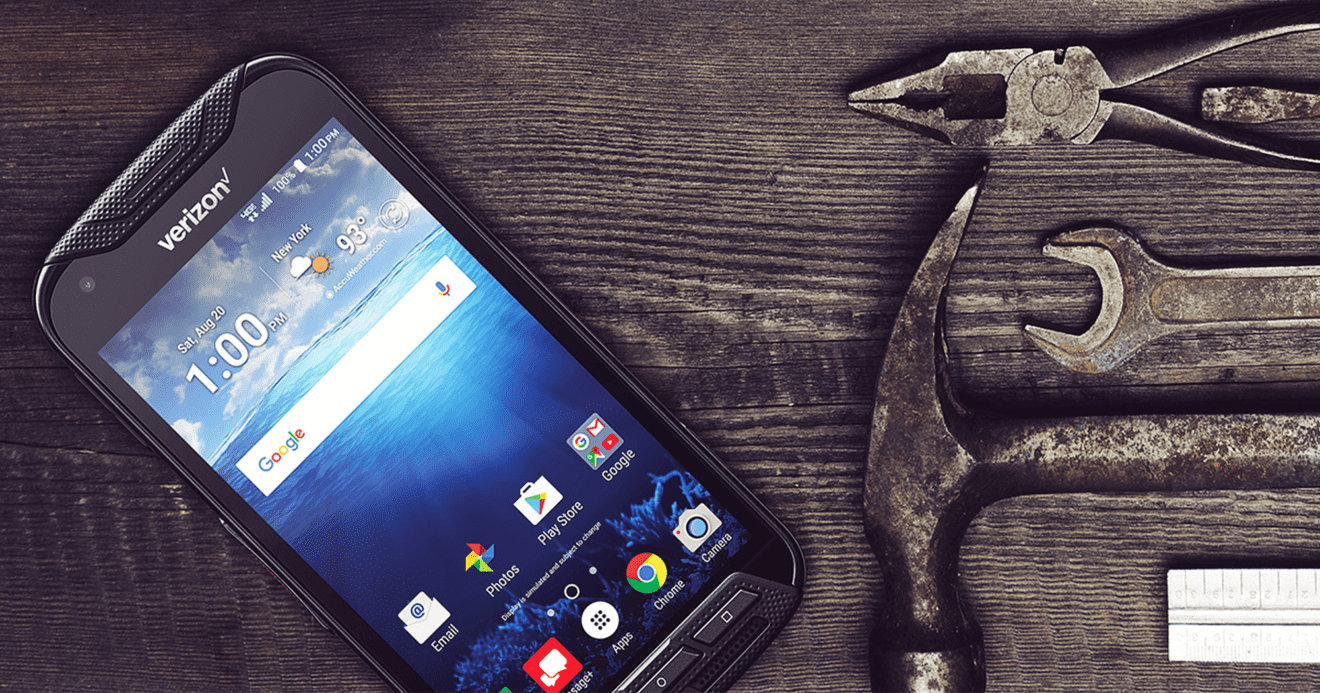
    Kyocera’s DuraForce PRO 2 is not a new phone and AT&T is not the first carrier that sells it in the United States. Verizon has already added the rugged smartphone to its offering back in November, but AT&T is doing it a little bit differently.

    First off, the DuraForce PRO 2 is an unusual smartphone in the fact that it features IP68 waterproof and dustproof certification and Military Standard 810G for protection against shock, vibration, temperature extremes, blowing rain, low pressure, solar radiation, salt fog, humidity, immersion, temperature shock, and icing or freezing rain. On top of that, the phone’s display is protected by Dragontrail PRO, a scratch and crack-resistant glass.

    However, Kyocera and AT&T announced that the phone is also FirstNet Ready, which means it’s been tested and certified to work on FirstNet, the nationwide public safety broadband communications platform. This makes the Kyocera DuraForce PRO 2 perfect for first responders and those critical to their emergency response.

    DuraForce PRO 2 includes HD Voice and Wi-Fi calling support, as well as dual front speakers and four noise-canceling mics that feature Qualcomm’s Fluence PRO technology. The latter makes Enhanced Push-To-Talk (EPTT) calls, speakerphone use, music, and calls crystal clear regardless of background noise.

    The ultra-rugged smartphone includes enhanced security features like a biometric fingerprint sensor. It’s not an in-display or rear-mounted fingerprint sensor, as Kyocera put it under the power button.

    Unlike previous Kyocera ultra-rugged smartphones that don’t focus on hardware, the DuraForce 2 PRO comes with double the amount of memory: 4GB RAM and 64GB internal memory. Also, the back side features a dual-camera setup.

    As far as the pricing goes, Kyocera DuraForce PRO 2 is now available for purchase for just $15 per month on AT&T Next pricing (for 30 months), $170 with a two-year agreement or $445 outright. Of course, the phone comes with a two-year standard warranty.

  • Some Nokia phones were spotted sending user data to China

    Some Nokia phones were spotted sending user data to China

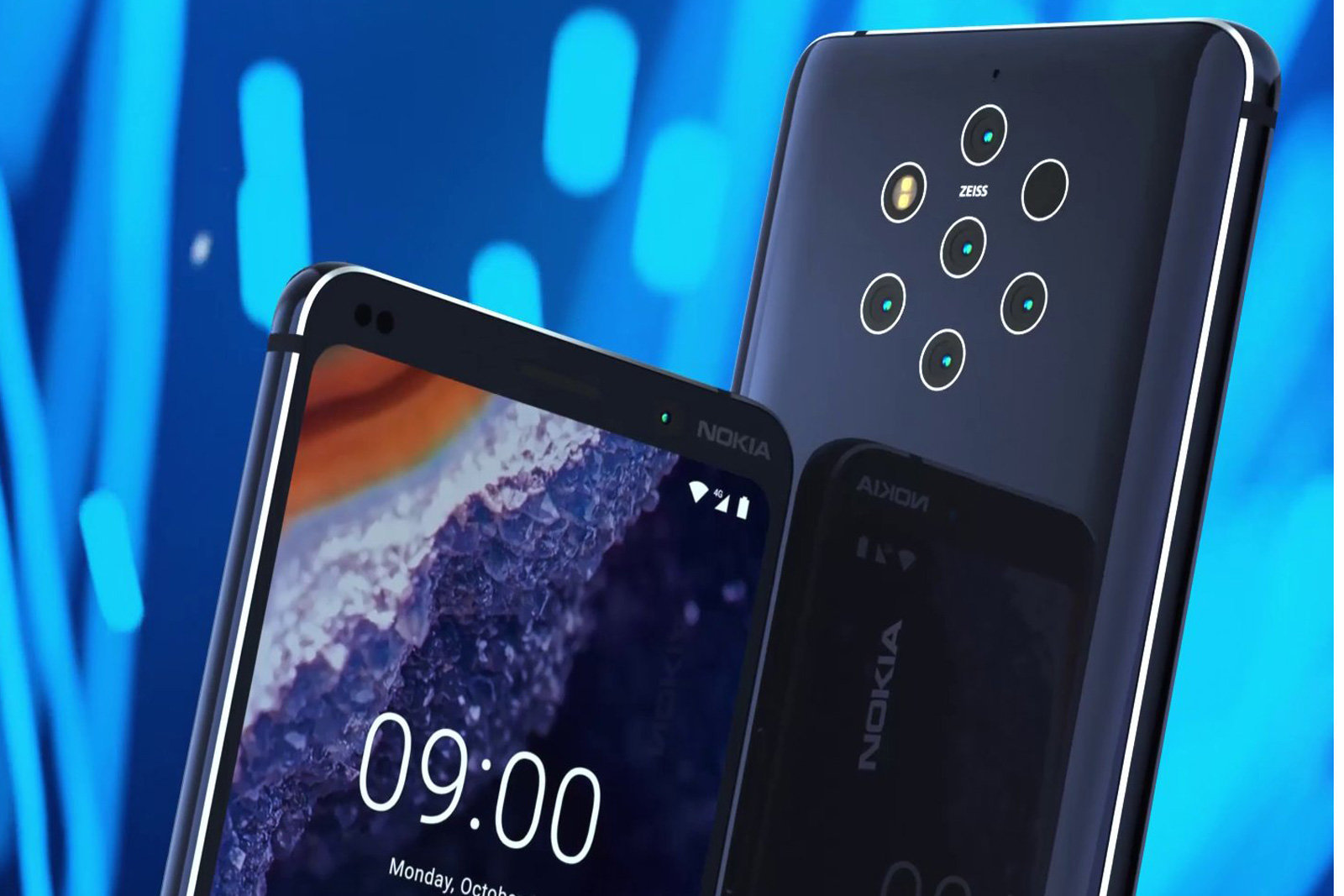
    HMD Global has managed the Nokia smartphone brand impressively well since it took over in December 2016, but now the Finnish company has found itself in hot water. In a report published earlier today, Norway’s public broadcaster NRK claims to have found proof that certain Nokia smartphone have been transmitting unencrypted user information to China. Allegedly, on-device data such as GPS location, the device serial number, and even the user’s phone number were being transmitted back to a Chinese server.

    The server in question was under the domain “vnet.cn,” which is reportedly managed by state-owned carrier China Telecom. From the look of things, every time the Nokia 7 Plus units were powered on, data would immediately be transferred over to the server. Similarly, simply turning on the display or unlocking the device would trigger the same process.
    Fortunately for consumers, this issue was present only a “single batch” of Nokia 7 Plus units. Presumably, the smartphones were initially intended for the Chinese market but ultimately made it into the hands of European consumers. Moreover, since the issue has been raised, HMD Global has removed the infringing files from the devices.
  • New AirPower image found on Apple’s website

    New AirPower image found on Apple’s website

    It’s been over one year and a half since Apple first announced AirPower, the infamous wireless charging pad which still hasn’t been released, despite the promise of a launch during 2018. Reports and rumors about the status of AirPower have been floating around for months, with many now speculating that Apple will announce it sometime this week. Rather unsurprisingly, Apple has made no official statement on the matter, but now a new finding on the company’s website suggests AirPower could be just around the corner.

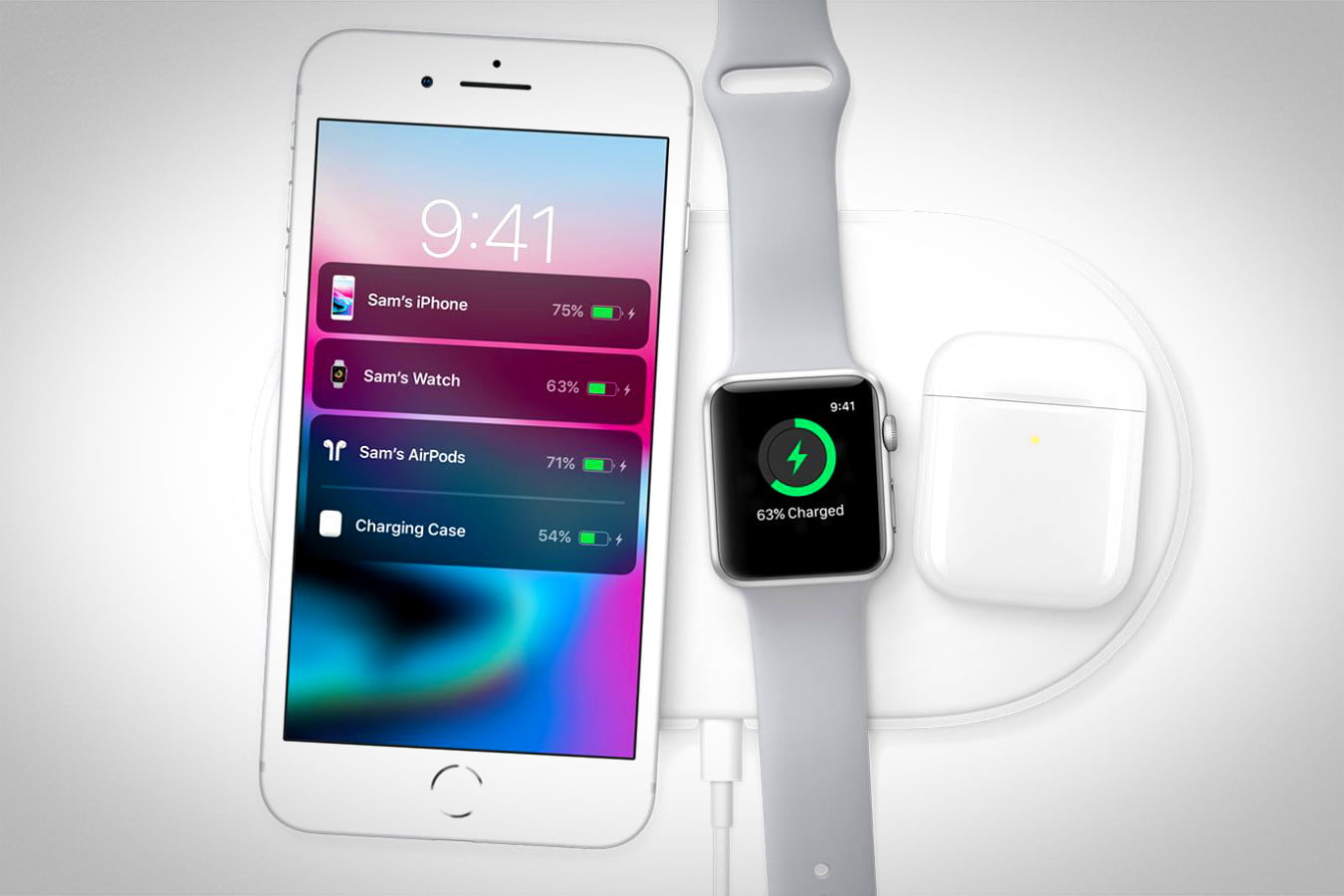
    The new AirPower image on Apple’s website

    Yesterday, when Apple updated the AirPods page on its website following the announcement of an improved pair, the company proceeded to remove all references to AirPower – it even removed the old marketing image showing AirPower charging an iPhone X and a pair of AirPods.  A replacement image is yet to be added to the page, but as it turns out, there is actually a new, never-before-seen official AirPower image hidden within the source code of Apple’s Australian website.

    Overall, the new press image is pretty similar to the original. This time around, though, Apple has replaced the iPhone X with a newer iPhone XS. Another tiny detail which has changed is the device owner’s name – it was previously Sam but is now David. Presumably, this new AirPower image will be used once the charging pad is officially introduced. The expectation was that it’d debut today, but Apple appears to have paused its announcements for the time.

    When will Apple actually release AirPower?

    At this rate, it’s unclear when Apple will announce its highly-anticipated wireless charger. There do, however, appear to be three options. The first option, and one which could be considered wishful thinking, is an announcement tomorrow. Apple successfully created hype earlier this week with iPad, iMac, and AirPods announcements on Monday, Tuesday, and Wednesday respectively. Then, earlier today a number of iPad Air and iPad Mini reviews dropped, hogging the limelight for the day. In order to complete the week, Apple could schedule an AirPower unveiling for tomorrow, guaranteeing itself another day in the headlines

    The second option is an announcement at Monday’s event. This is certainly possible but does seem pretty unlikely at this point. The focus of next week’s press event is Apple’s upcoming subscription services, and by announcing its newest hardware products this week, the company has successfully removed any potential distractions from the big day. But AirPower, rather naturally, would prove to be a pretty big one.

    The last option is an announcement later this year. When exactly remains a bit of a mystery, but the company could either launch it at WWDC or at its iPhone event in September, or choose to release it quietly on any given day.

    What key features will AirPower offer?

    In terms of what AirPower actually has to offer – aside from its integration within Apple’s ecosystem – the charging mat should offer the ability to wirelessly charge up to three devices simultaneously.

    This means that keen Apple users out there looking to purchase the charging pad will be able to charge their iPhone 8 (or newer) alongside an Apple Watch Series 3 (or newer) and a pair of AirPods – as long as the new wireless charging case has been purchased.

    As for pricing, no official details have been provided yet. However, rumors do point towards a retail price in the region of $150, although this is pure speculation at the moment and the final price could be either higher or lower.

  • Triumph Motorcycles Recalls Over 12,000 Bikes In The US

    Triumph Motorcycles Recalls Over 12,000 Bikes In The US

    Triumph Motorcycles USA is recalling more than 12,000 motorcycles for a potential fault, where the clutch cable may come in contact with the wiring harness, causing loss of electrical power. As many as 12,654 motorcycles are likely to be affected by the recall, and spans across Triumph modern classic models. The affected models are 2016-2019 Triumph Bonneville T120 and Bonneville T120 Black, 2017-2019 Bonneville T100 and T100 Black, 2017-2018 Street Cup and Street Scrambler, and 2016-2018 Street Twin motorcycles. According to the National Highway Traffic Safety Administration (NHTSA), clutch cable may contact the main harness cover and cause damage to wiring within the main harness, and lead to a loss of electrical power to various electrical circuits.

    Triumph will notify owners of the affected motorcycles, and dealers will replace the original securing guide for the clutch cable and main harness with an updated one, free of charge. Owners may also get in touch with Triumph dealerships directly, or with Triumph customer service to check if their motorcycles are affected by the latest recall. So far, the recall has been issued only in the US for the affected motorcycles, and there’s no update yet if any bikes in India are likely to be affected by the same issue. If you’re a Triumph owner, the official Triumph website does have a provision for checking your VIN (vehicle identification number) to see if that particular motorcycle is under recall.

    The Triumph modern classic range is the most popular range of motorcycles from the British motorcycle brand globally. As much as 60-70 per cent of Triumph Motorcycles’ sales across the world come from the modern classic range in the Bonneville family. In India too, the Triumph Bonneville range is the most popular range of motorcycles from the British brand.

  • Apple can make you forget about the new AirPods with new Beats headphones

    Apple can make you forget about the new AirPods with new Beats headphones

    Apple isn’t known for its costly acquisitions, generally focusing on buying small companies that can add valuable resources to new areas of development for the Cupertino-based tech giant without entailing a great risk from a return on investment standpoint. But the iPhone and iPad makers actually splashed the cash on Beats Electronics back in 2014, acquiring Dr. Dre’s buzzworthy audio device outfit in exchange for a whopping $3 billion.

    While we will obviously never know exactly how much Apple has gained or lost as a result of this extravagant purchase in its immediate aftermath, the future of the Beats brand appeared to hang in the balance as there were no new products released under the once fruitful label for the entirety of last year. But fret not, Dre fans, as a redesigned Powerbeats version is expected out pretty soon.

    AirPods rival or something for a different target audience?

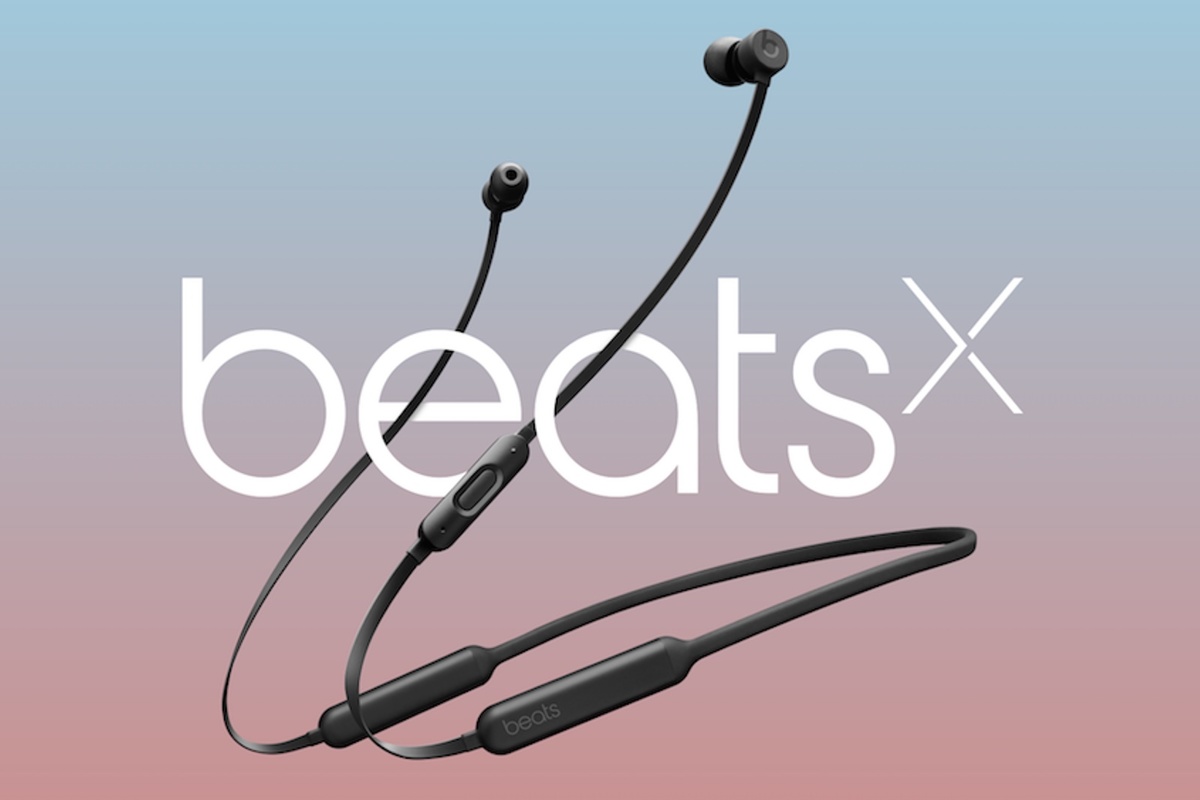
    There are plenty of popular Beats-branded wireless headphones already on the market, ranging from the $120 BeatsX all the way up to the $350 Beats Studio3, but one thing that’s missing is a “true wireless” option. The reason for that is simple, as Apple probably didn’t want anything to steal attention away or reduce the appeal of its first-generation AirPods.
    With a second edition now out and about, and many signs the AirPods are a runaway success, the company might finally feel confident enough to expand its already vast lineup of audio products. Enter a sequel for the $200 Beats Powerbeats3 that’s expected to cut the cord altogether and make it even harder for the likes of Google and Samsung to compete on the Apple-dominated “hearables” scene.
    Instead of thinking about the Powerbeats4 (name obviously unconfirmed) as better or worse than the 2019 AirPods generation, you should just regard them as different products. Rumor has it the new, completely wire-free Beats Powerbeats could “borrow” the H1 chip of the freshly upgraded AirPods, as well as the hands-free “Hey Siri” capabilities. But water resistance, better bass, and a more ergonomic design focused on keeping these things snug in your ears at all times, might be added to the mix.
    That… arguably makes the impending Beats product sound superior to the 2019 AirPods, although we clearly don’t have the full story yet. There’s no mention of wireless charging support, while battery life is presumed but not guaranteed to be better. Perhaps most importantly, we have no idea how the reimagined Powerbeats will actually look. We know the cable keeping the Powerbeats3 together will disappear, but absolutely nothing else, which suggests this sequel might be more about functionality and outdoor endurance than fashion.

    It’s all about the money

    We’re sorry to break it to you, but Beats headphones are not generally what we’d call affordable. The sporty Powerbeats3 are (typically) pricier than the stylish Apple-branded AirPods, although unlike those market-leading bad boys, these slightly less successful wireless audio accessories routinely go on sale at massive discounts. At the time of this writing, for instance, they’re just $99.99 at Best Buy after a 50 percent markdown that’s actually become a common occurrence in recent months.
    That probably signals a follow-up effort is indeed right around the corner, but it also suggests it won’t be a very good idea to purchase said sequel straight off the bat. That being said, whether or not the Powerbeats4 will be better than the AirPods 2, a starting price of more than $200 is likely to put off a large number of potentially early adopters. The question is can Apple deliver all the aforementioned upgrades over the Beats Powerbeats3 and refrain from adding a premium of, say, 50 bucks? We’ll apparently see about that in just a few weeks or so.
  • Mobile-only Netflix and chill could be coming soon

    Mobile-only Netflix and chill could be coming soon

    While it doesn’t look like Apple will be unveiling a true Netflix-rivaling video streaming service next week after all, the global masters of “chill” and great encouragers of the binge-watching phenomenon are still in a constant pursuit of new subscribers. After wrapping up last year with a record 139 million paying members around the world, a number expected to grow to 148 million people by the end of 2019’s first quarter, Netflix is reportedly testing the budget-friendly waters as a way to further accelerate its growth pace.

    Netflix has recently kicked off a regional experiment in which a small number of users can get a cheaper tier of service accessible only on a single mobile device at once. This smartphone-exclusive plan is priced at the local equivalent of roughly $3.60 a month, compared to the $7.30 or so “Basic” plan that’s the most affordable option widely available in India at the moment.

    Regional tests, global deployment?

    What’s interesting is that Netflix hasn’t denied the report (it wouldn’t have mattered anyway), supplying a fairly standard press statement about how “different options in select countries” will continue to be tested in the near future to find the best ways of delivering premium content on mobile devices “for a lower price.” While the company is highlighting that “not everyone will see these options and we may never roll out these specific plans beyond the tests”, something tells us this particular experiment means more than others conducted relatively recently

    For one thing, India is a much larger market than Malaysia, where Netflix ran somewhat similar tests a few months back. It’s a larger market for smartphones and video streaming platforms as well. As such, Netflix is facing tough competition at insanely low price points. Amazon, for instance, offers Prime Video subscriptions starting as low as $2 (Rs 129) in the country.

    While these types of services are generally costlier in the US, it’s becoming harder and harder for Netflix to fend off the likes of Hulu, not to mention the looming Disney+ threat. Of course, US prices actually went up not that long ago, which is perhaps yet another reason why a new entry-level plan makes perfect sense.

    But is mobile-only streaming something people actually want?

    Well, that’s what tests are for. In theory, the concept is certainly sound, but at the same time, the downsides are obvious. You also have to wonder exactly what audience Netflix is thinking of catering to here. If we’re talking high-end smartphone users, you have to imagine someone willing to pay, say, $800 or $1,000 on a new handset can afford one of Netflix’s pricier service tiers as well.

    It’s also essential to point out that what Netflix is reportedly testing is a mobile-only plan with standard definition (SD) content playing support. That doesn’t sound like something high-end smartphone users would show any interest in. Then again, mid-range and even low-end mobile devices have grown bigger and bigger in recent years, supporting a relatively comfortable streaming experience on the fly.

    That’s probably the audience Netflix is targeting with this potential move, but it remains to be seen if it’s a large enough group of people to justify a global or even regional rollout.

    Stateside, the cheapest Netflix plan currently sets you back $9 a month with SD streaming capabilities on a single screen (be it small or large) at once. The Standard and Premium options are $13 and $16 respectively, while Hulu is available at $11.99 without ads, $5.99 with commercials, or $0 for Spotify Premium subscribers. Yup, Netflix definitely needs to change something to keep those subscriber numbers up. Going after mobile users on tight budgets is certainly worth a shot.

  • Apple Music wants to expand your musical knowledge

    Apple Music wants to expand your musical knowledge

    Apple Music doesn’t get a ton of attention compared to services like Spotify, but the service quietly has racked up a ton of subscribers simply due to the fact of Apple’s massive hardware install base. Those subscribers are a diverse set of people from around the globe and now Apple wants to highlight some of that diversity with a new playlist.
    The new Apple Music playlist will be called “Suave” and it will be built around R&B songs in English, Spanish, and Portuguese. The plan is to have a multi-lingual, globally inspired playlist and apparently Apple Music execs were inspired to make the playlist because of the song “Fresh Air” by Melii, which is a pretty catchy tune if you haven’t heard it. The Suave playlist is launching today and will be available worldwide tomorrow.
    Alaysia Sierra, R&B and Hip Hop Programmer for Apple Music, told that the idea was to have the Suave playlist “be the intersection of culture where the music comes first,” because Apple enjoys when music breaks down barriers.
    The plan is to update the playlist with new music weekly with music from artists like by Paloma Mami and Rosalia. Obviously, you’ll need to be an Apple Music subscriber to get the playlist, but the smart money says someone will copy the playlist to Spotify pretty quickly (though we obviously can’t endorse that sort of thing.)
  • AppsFlyer Performance Index puts Facebook and Google on top

    AppsFlyer Performance Index puts Facebook and Google on top

    acebook and Google may rule the rankings but persistent challenges and rampant fraud are mixing things up, according to the latest Performance Index from Appsflyer.

    According to Appsflyer’s study, Apple Search Ads and Snap are continuing to grow despite trailing behind the reigning champs. Meanwhile, high fraud rates are hitting rankings and budgets all around, encouraging a re-evaluation of strategies like affiliate marketing.

    The mobile attribution and marketing analytics company looked at mobile activity in the latter half of 2018, drawing on 370 media networks, examining 20 billion app installations and 39 billion app openings, across 11,500 apps. It was a worldwide study spanning North America, Latin America, Asia, Europe, Africa, and the Middle East. App categories surveyed included shopping, utilities, lifestyle and culture, and gaming. Gaming was split into subcategories of casual, mid-core and strategy, and social casino apps.

    Shani Rosenfelder, head of mobile insights at AppsFlyer said, “As marketing campaigns become more dynamic, complex, and transcend various media platforms, marketers are looking for ways to engage audiences across a diverse range of media sources, regions, platforms and channels in order to build messages that resonate — and to connect the dots across the user journey.”

    The other main findings from the study are as follows:

    Continuing its success at sustaining user demand for games, Facebook held onto its position as the top network for mobile apps, driven by its performance in gaming. Google, meanwhile, saw higher growth in non-gaming apps compared to the social media giant, likely a reflection of Google’s search intent model.

    The search giant’s 190%  jump in its share of the app retargeting landscape marked an impressive showing for Google, while Facebook maintained its No. 1 perch on this metric.

    AppLovin cemented its No. 3 spot in gaming rankings behind Facebook and Google, having made significant strides the last two years in its share of the gaming app install pie. When it comes to driving gaming app installs, ironSource has almost doubled its market share, surpassing Unity Ads with the 4th largest piece of the pie. Having said that, Unity Ads held its #4 position in the universal power ranking in the gaming category overall, compared to ironSource’s 5th spot.

    Among the networks to see the biggest changes were Snap, which rose to fourth place from ninth in the non-gaming ranking, while declining from the top spot to No. 12 in casual games; CrossInstall, which plunged from first to sixth in universal gaming; and Vungle, which rocketed from 12th to fifth place in universal gaming.

    Among the networks appearing in AppsFlyer’s previous Growth Index, which showcases performance of up-and-coming media sources in a specific region, 40% saw absolute negative growth, and only 10% remained in the rankings of the current and previous editions of the Index. All were emerging media sources.

    At 30% worldwide, app install fraud remained high, impacting some rankings and underscoring the magnitude of the threat to marketers’ budgets and decision-making based on polluted data.

    Amid growing attention to mobile ad fraud, the second half of 2018 saw a shift away from the affiliate model, with a 12% drop in affiliate-driven app installs, even as overall app installs increased by 32%.

    Making its first appearance on the index, the Africa/Middle East region showed substantial growth, reflecting the region’s continued economic development. As the number of smartphone owners increases in the area at breakneck speed, the region represents fertile ground for marketers vying to attract and retain new customers.

  • Microsoft Asia’s senior director of comms Andrew Pickup to exit after many years

    Microsoft Asia’s senior director of comms Andrew Pickup to exit after many years

    Microsoft Asia’s senior director, communications, Andrew Pickup (pictured) will be leaving the company after 26 years of service. Pickup said that in June 2019, he will be leaving Singapore for personal reasons and is looking forward to new adventures in the UK. He said, “I can honestly say I’ve enjoyed every day of my long career at Microsoft (not necessarily every minute or hour because there are always challenges in any job). But every day? Yes.”

    Helming the role of a senior comms director for six years, Pickup was in charge of leading the communications for Microsoft in Asia. He covered the Asia Pacific region, as well as Japan, India and China. According to his LinkedIn, his responsibilities included managing all media relations, analyst relations, internal and executive communications, crisis and change management and government/citizenship outreach. He was also managing the regional team in Singapore and led a community of 40 communications professionals across 17 countries in Asia. 

    Previously, Pickup was chief marketing and operations officer, a role he held for five years focusing on the ASEAN and ANZ markets. He was responsible for the revenue, market share and P&L performance of all Microsoft Business Groups for the Asia Pacific region and the overall orchestration of regional go-to-market sales, marketing and services plans.

    Pickup also oversaw the long-term growth planning, the management of the regional core business processes – business and marketing planning, target setting, marketing budget management – market intelligence, competitive initiatives, integrated marketing communications and public relations. He had a team of 32 reporting directly to him.

    Prior to this, he was chief of staff, Microsoft Asia Pacific, for over two years. The role tasked him to establish core process infrastructures to support executive decision-making(fiscal-planning, process-management, governance and operational models) and manage large-scale projects (geographic expansion). Before this, in 2003, he was chief marketing and operations officer of Singapore operations. 

    Some of his previous accolades with the company include head of desktop marketing, group marketing manager and relationship marketing manager in the UK. Before joining Microsoft, Pickup had a stint with Saatchi & Saatchi in 1988. Helming the role of senior account director, he was responsible for maximising revenue, profitability and client satisfaction from existing blue-chip accounts, as well as identifying and winning new business. At that point in time, he handled clients such as British Airways, Vodafone and Avis.

  • Google’s new lab lends news publishers a hand in digital subscription

    Google’s new lab lends news publishers a hand in digital subscription

    Google News Initiative is preventing traditional print publishers from dying with the launch of the GNI Subscriptions Lab. In partnership with the Local Media Association and FTI Consulting, the lab seeks to develop a sustainable and thriving business model for newspapers across North America powered by digital subscriptions.

    While Local Media Association president Nancy Lane noted in a post on Google’s blog that publishers have been putting digital subscription at the center of their business transformation, she said that there has yet been “a clear template at the metro and local levels.”

    “One local publisher told me that his organisation’s existence is being threatened like never before, and that seeing his community lose the kind of journalism they produce is not an option. Another said if we as an industry can’t figure out the digital subscription model, then the end could be near,” added Lane.

    Eight publishers will be chosen to participate in an experience designed by the GNI Subscriptions Lab addressing every step of the digital subscriptions process. They are said to “represent a cross-section of the local news industry, with a mix of both chain-owned and independent community and metro titles,” said the blog post. On the selection criteria, Lane said that the publishers must be ready to involve their higher management and be dedicated to figuring out a subscriptions strategy.

    Over six months, the publishers will undergo a mix of quantitative and qualitative market research in existing and potential reader segments to understand the market, readers willingness to pay and more. The learnings will be shared with the industry at large, including at the LMA-LMC Elevate Summit in September, through experiential learning, playbooks and conference workshops. Lane said,

    The future of community journalism is indeed at stake. I can’t think of a project more important at this moment in time. This is a powerful group effort, and our expectations are high.

    Google teams will be supporting the initiative with its expertise in data, technology, product and subscriptions, while FTI Consulting will perform a full diagnostic evaluation of each participating publisher across multiple dimensions. Additionally, FTI Consulting will provide a detailed scorecard to show how each publisher sizes up, and a dashboard for measuring ongoing progress.

  • The tech advancements transforming the Hong Kong retail environment

    The tech advancements transforming the Hong Kong retail environment

    Ever-changing market dynamics and audience preferences are pushing retailers into a digital-driven world to respond promptly to consumer needs. Though e-payment machines are an increasingly common in-store sight, there are other retail tech trends that will have a longer lasting impact and help businesses stay one step ahead.

    Despite the rise of eCommerce, physical stores are not going anywhere. Customers will always want the option of visiting a physical store to try on jeans and dresses rather than buying three different sizes online. Sue Temple, vice president of global consumer insights at Nielsen, sees the trend of shoppers doing smaller, but more shopping trips in general, including online and physical stores. Connecting online and physical store experiences remains a major focus this year.

    Shops without shopkeepers

    When Amazon launched its Amazon Go to the public last year, the cashier-free store concept was seen as a revolutionary model for the future of retail, enticing the rest of the industry worldwide to play catch up. This year we are likely to witness more movements on smart, automated and cashier-less checkout schemes. Unmanned stores will eventually become ubiquitous in retail.

    Hong Kong shoppers had a taste of this kind of smart retail experience during the Chinese New Year. Tencent’s WeChat Pay HK and JOOX collaborated with Sun Hung Kai Properties to open an unmanned shop at the apm mall in January. The 1,000 square foot unmanned shop featured five themed zones offering trendy gaming, Chinese New Year merchandise, limited edition souvenirs, a self-service karaoke station and an AI mechanical arm interactive experience zone.

    The highlight of the unmanned store was a digitised consumer journey with more than 1,000 assorted goods in the store embedded with RFID chips. Customers could pick out items they wanted to purchase and then scan the QR code. The RFID system would automatically detect their chosen goods at the store exit, at which point, customers could use the Wechat Pay HK system to settle their transactions and leave.

    Tencent’s International Business Group (Tencent IBG) tells Marketing: “The unmanned store has been well-received by shoppers. It is a real-life demonstration for consumers to experience smart retail through a seamless and secure mobile payment solution. We aim to enhance the overall consumer journey, and empower consumers through greater flexibility and convenience as they go about their daily lives.”

    In the unmanned store, Tencent’s technologies not only enhanced the consumer experience, but also reduced operation costs for the retailer. It also provided analysable data to allow businesses and marketers to better understand consumer traffic, preferences and behaviour.

    Tencent IBG has noticed a number of challenges that traditional retailers are currently face: rising offline operating costs, declining revenue as shoppers move online, and increased consumer demand. At the same time, there are visible opportunities for retailers to drive business efficiency by disrupting old channels, gaining a better understanding of consumers, and exploring new technological possibilities such as facial recognition and voice recognition.

    Unmanned stores are all about removing friction and increasing productivity. While the minimisation of time in store has proven particularly effective for some retail categories (such as convenience and groceries) they are not suitable for other categories. Luxury, for instance, relies on the experience and time spent in-store, along with a high-touch service, as part of its value proposition.

    Reality bytes

    Great customer experiences will come from blending technology with a personal touch. Retailers are continuing to strive towards more personalised experiences with the use of AR and VR tech in their marketing campaigns and consumer journeys.

    Recently, L’Oréal Group brand Lancôme partnered with Alibaba Cloud to introduce an AR game to Hong Kong customers. The launch of a seasonal mobile app coincided with the opening of a Lancôme pop-up store in Harbour City. The partnership leveraged Alibaba Cloud’s data, image search and AR technologies with Lancôme’s beauty product lines to create a holistic online-to-offline experience.

    Customers could activate and play the AR game on their smartphones from anywhere in the city. Moving their cameras around, they were able to find and capture AR images of Lancôme’s signature beauty products.

    “The retail store is no longer simply a place for making a purchase, it is also an entertainment destination.”

    Larry Luk, CMO at L’Oréal Group, says, “As a beauty-tech company, L’Oréal combines beauty-tech with integrated marketing plans to drive the ‘retailtainment’ trend. This adds an entertainment element into the traditional retail approach, providing consumers with better interactive experiences.”

    Alibaba aims to demonstrate that cloud technology can also be used in offline retail shops, by not only offering innovative ways of engaging consumers, but also showing how Lancôme will better understand customers’ needs by using data analytic tools.

    “Lancôme began the Year of the Pig by breaking its daily sales record and achieving double-digit growth in Hong Kong by leveraging AR, Alibaba Cloud’s image search technology and cloud services,” Luk says. “Employing Lancôme as the pilot brand, the Chinese New Year campaign succeeded in creating unique and fun experiences and establishing personalised relationships with consumers.”

    The ultimate goal of all these types of innovative and interactive campaigns is to stimulate customers’ interest in the products and drive business growth. Nevertheless, in 2019, retailers may go a step further from AR and VR to the  world of IR (immersive reality).

    The potential of IR could be immense. While AR overlays digital content onto an existing physical space and VR transports users into a synthesised 3D world through sight and sound input, IR is a dramatic advancement. It provides an immersion of all five senses (sight, sound, touch, smell and taste) and far more interactivity. Which could, of course, result in far more data.

    Consumer soothsayers

    While marketers believe collecting big data is enough to understand current consumer behaviour for planning campaigns or business strategies, building accurate predictions of future consumer behaviour may be the game changer.

    “A lot of big data looks backwards. It is what happened five minutes ago, an hour ago or last week. Now we are trying to predict what happens next,” Nielsen’s Temple explains.

    Shopper behaviour is changing rapidly; a tool that enables retailers to keep up with the speed of change, or even stay ahead of it, will be the key to winning. Temple says: “If we can get quicker at research, we can model more things, more quickly, and we can look forwards not backwards, then the retailers have a real chance to win, to differentiate themselves from competitors, to deliver something the shopper wants.”

    After rolling out in 12 markets in 2018, in February 2019, Nielsen’s Smartstore launched in Hong Kong. Smartstore is a digital solution that captures shopper insights in a 3D virtual immersive environment. Respondents will be tested in multiple live scenarios in a variety of custom store formats to gather predictive information. Their shopper experience will provide tracked head, eye and feet movements, alongside 3D heat maps for analysis. The turnaround for results can be as fast as one week.

    This solution combines store planning, merchandising and marketing research. Retailers can measure, evaluate and optimise a range of retail concepts on sales and profit, based on how target shoppers react at the moment of truth. The solution allows retailers to measure the effectiveness of point of sale merchandise based on what shoppers “see, think and do”.

    Technological advancements help businesses to create better marketing strategies with a better understanding of consumer behaviour, and ultimately, achieve greater business uplift with higher conversion. However, Temple thinks Hong Kong is lagging behind adopting retail tech.

    “Digital is not an option anymore, it is not about being a digital marketeer, it is about being a marketeer that embraces all of that, the traditional and the digital, and getting the right mix for your brand, your category and your store.”


  • Xiaomi Mi Band 4 could include major Apple Watch features

    Xiaomi Mi Band 4 could include major Apple Watch features

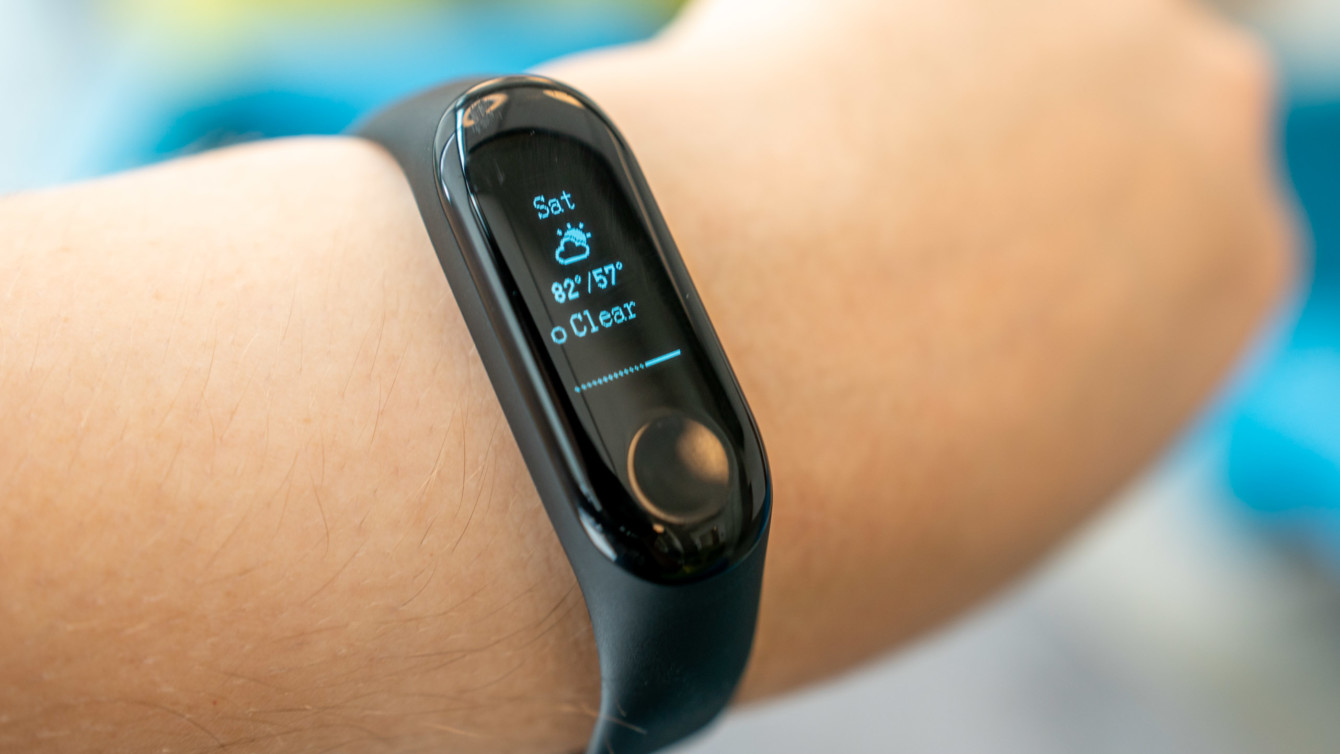
    A few days ago, we told you that Xiaomi will release the Mi Band 4 fitness tracker sometime this year. An executive from Huami, the company that is the source of Xiaomi’s wearables, said that the Mi Band 3 is still selling in big numbers and that there is no reason for Xiaomi to launch the next generation model at this point. We should point out that the Mi Band traditionally has sold well because of its low price. For example, the Mi Band 3 is offered by Amazon in the U.S. for $33.53.

    While Xiaomi has been tight lipped about any new features we might find on the Mi Band 4, we do have some specs to pass along. We spotted a certification from the Bluetooth SIG (Special Interest Group) revealing that the next generation of the fitness band will sport Bluetooth 5.0 LE (Low Energy). That is an upgrade from the current model’s use of Bluetooth 4.2 LE and indicates that the Mi Band 4 will offer improved connectivity. In addition, the Bluetooth Launch Studio web site indicates that the Mi Band 4 will feature NFC connectivity as well, at least in some markets.

    Two different variants of the device were listed on the site and the one with the model number of XMSH08HM will include NFC; the other, listed as XMSH07HM, will not. The model with NFC could include support for the company’s Xiaomi Pay mobile payment service.

    The Mi Band 4 could include an electrocardiogram sensor to watch for abnormal heart rhythms

    There is also speculation that like the Apple Watch series 4 smartwatch, the Xiaomi Mi Band 4 will come with an electrocardiogram (ECG) monitor that will detect abnormal heart rhythms. This is mainly used to alert users to the possibility that they are suffering from atrial fibrillation (AFib), which can lead to strokes, blood clots, heart disease and death. Including an ECG monitor with a low priced fitness ban could make the Mi Band 4 even more popular than its hot selling predecessor, especially if the feature is as accurate as the one on Apple’s timepiece. There is also speculation that the Mi 4 will be equipped with better activity tracking features and a larger, color display.

    The Xiaomi Mi Band 3 has been such a hit that globally it has challenged the Apple Watch for the top spot among wearable devices based on shipments. As long as Xiaomi adds new features to its next-gen fitness band without substantially hiking the price, we can expect the Mi Band 4 to be just as popular as the current iteration of the product. Speaking of which, the Mi Band 3 comes with an OLED touchscreen and is waterproof to a depth of 164 feet. It will monitor physical activities, count your steps, watch your heart rate, track your sleep, display SMS messages and those from certain apps (like WhatsApp), and allow you to accept or reject incoming calls. The battery will run as long as 20 days with the heart rate monitor off, and 3 to 9 days with the monitor on. We would expect to see all of these features, some of them improved, carry over to the Mi Band 4.

    Xiaomi launched the first Mi Band in July 2014, and followed it up with the sequel two years later. The Mi Band 3 was released last May, which means that we could be only a couple of months away from seeing the Mi 4 hit the marketplace.

  • Comcast beats Apple by announcing its own TV streaming service

    Comcast beats Apple by announcing its own TV streaming service

    Comcast beats Apple to it and announces its own TV streaming, the Xfinity Flex. Although Apple’s TV service isn’t official yet, the latest report claims it will work just like Comcast’s when it comes to content.

    However, Comcast’s Xfinity Flex is available to Internet-only customers and for an extra monthly fee. The service promises to provide customers with an easy way to use their TV and voice control to manage all their connected devices in their home. Basically, if you’re an Xfinity Internet customer, starting next week, the Xfinity Flex service will be available to you in a package that contains an Internet-connect, 4K HDR streaming TV device.

    Along to the streaming TV device, the retail box will also include a voice remote, one integrated guide for accessing popular streaming video and music choices (Netflix, Amazon Prime Video, HBO, Showtime, Pandora, iHeartRadio), along with Comcast’s home Wi-Fi, mobile, security, and automation services.

    The price is $5 per month and the subscription will give you access to more than 10,000 videos (TV shows and movies), as well as live TV from ESPN3, Xumo, Pluto, Tubi TV, Cheddar, and YouTube.

    On top of that, Comcast said that all Xfinity Flex customers will be able to upgrade to the full Xfinity X1 cable service directly from the guide, to get access to hundreds of live channels, tens of thousands of on-demand titles, and a cloud DVR.

    Keep in mind that if you’re an Xfinity Internet-only customer, you will have to pay the $5/month for the Xfinity Flex on top of what you’re already paying for your existing Internet plan.