Author: Mei Ling Tan

  • Cebu Pacific income down 50.6% in 2018

    Cebu Pacific income down 50.6% in 2018

    The operator of budget carrier Cebu Pacific saw earnings dip by 50.6 percent last year amid challenges such as the closure of a popular tourist destination, rising fuel prices and increased competition.

    In a statement, Gokongwei-owned Cebu Air Inc. said profits fell to P3.9 billion from P7.9 billion a year earlier even as revenues climbed 9 percent to P74.1 billion from P68.03 billion.

    Passenger revenues, in particular, hit P54.3 billion, 9 percent higher than the P49.93 billion recorded in 2017. The listed airline carried 20.3 million passengers last year, up 3 percent from 2017’s 19.7 million.

    The cargo business also witnessed double-digit growth at 19 percent, the firm said.

    “The growth in CEB’s (Cebu Air’s stock symbol) 2018 business came amidst a challenging environment with high fuel prices, a volatile Philippine peso, rising interest rates, increased competition, the six-month closure of Boracay, and operational limitations in the country’s key airports,” the firm said.

    Michael Ivan Shau, Cebu Pacific chief operations officer, said the carrier expected to bounce back due to fleet and network expansions.

    “2019 is definitely the year we accelerate our growth,” Shau said in a statement.

  • The Galaxy S10 has helped Samsung triple its market share in China

    The Galaxy S10 has helped Samsung triple its market share in China

    Samsung has been the number one smartphone manufacturer for years. It dominates key markets such as North America and Europe, while also remaining a strong player across Asia. In China, though, the situation is pretty different. Despite the company’s best efforts, over the past few years Samsung has seen its market share drop to a measly 1%. But thanks to the recent release of the Galaxy S10 lineup, things seem to be improving.

    The Samsung Galaxy S10 has accelerated growth in China

    According to reliable industry insider Ice Universe, Samsung’s market share in China has almost quadrupled since the beginning of the year, going from just 1% in early January to an impressive 3.6% during the tenth week of 2019 (March 4th to March 10th). The primary source of this growth is the recently-announced Galaxy S10 lineup.

    The new flagship series, which launched globally on March 8th, has reportedly been outperforming last year’s Galaxy S9 lineup by massive margins in China. In fact, the number of Galaxy S10/S10+ units sold within the first two hours of pre-orders was allegedly equal to double the number of Galaxy S9/S9+ devices sold during the first day.This impressive performance has also extended to a number of key global markets. In both the US and the UK, the Galaxy S10 series set new pre-order records for Samsung. The most popular model proved to be the Galaxy S10+, despite its higher price.

    10 million Galaxy S10 units could be shipped this month alone

    Although predictions do vary by analyst, the overall consensus appears to be that Samsung’s Galaxy S10 trio will achieve sales of between 40 and 45 million units by the end of 2019. Around 20 million of these should ship by the very end of June. If this is successfully achieved, the new lineup will have outperformed last year’s Galaxy S9 duo, which sold 19.2 million units during the same period. In regards to short-term performance, recent forecasts have suggested the Galaxy S10, Galaxy S10+, and Galaxy S10e are on track to ship a combined 10 million units by the end of this month alone.

    Things are looking positive for Samsung in China

    As a result of intense competition from local brands, Samsung revamped its mid-range strategy late last year. The South Korean giant started implementing a number of new designs and focused heavily on its mobile cameras. Additionally, it promised to make flagship features more accessible by introducing them to consumers via the new Galaxy A-series. So far this year, the company has introduced the public to the Galaxy A10, A20, A30, and A50. These represent some of the company’s best value-for-money offerings in years and help cater towards a range of consumers in the budget segment.

    Eventually, these four devices will be joined by the Galaxy A40, Galaxy A60, and Galaxy A70. As indicated by their respective names, these will target consumers with slightly larger budgets and should help cover any remaining price points that Samsung doesn’t yet have covered. Lastly, Samsung’s new Galaxy A series should be completed by the Galaxy A90. This device will act as the most expensive model but should still cost less than the Galaxy S10e. In fact, a rumor floating around leads us to believe that it may be some sort of budget flagship powered by the Snapdragon 855. The smartphone is also rumored to include a bezel-less display paired with a unique pop-out camera mechanism which will remove the need for separate front and rear cameras thanks to its ability to rotate.

  • Grab launches ‘Buy Now, Pay Later’ option

    Grab launches ‘Buy Now, Pay Later’ option

    Grab has expanded its fintech offer with “Buy Now Pay Later” facility and an online store check-out plugin.

    Through its joint venture with Credit Saison, the ride-hailing platform offers a post-paid payment facility which allows customers to pay for Grab services at the end of the month, without additional fees.

    This is geared towards consumers who face exceptional expenses, but are keen to avoid being hit with high credit card or personal loan interest payments.

    The platform will also launch another pay-later product, which will allow consumers to shop online immediately, but pay for their purchases in installments.

    Only Grab’s most creditworthy customers can use these two products. Credit risk is based on their tenure on the Grab platform, frequency of use and spending patterns.

    Grab has been boosting its financial services in Southeast Asia in recent years. Its GrabPay service has teamed with e-commerce platforms such as Qoo10 and 11Street.

    It has recently signed with Adyen, Boku, iPay88, Dragonpay, Cathay Cineplexes, and SM Cinema in the Philippines.

  • Ihop Pakistan franchise deal got signed

    Ihop Pakistan franchise deal got signed

    Dine Brands Global has announced a deal with several principals of Gerry’s Group, a leading logistics and F&B group, to launch Ihop Pakistan.

    The deal calls for 19 Ihop locations throughout the country over the next nine years, nine of which will be franchised by the principals of Gerry’s Group with the other 10 sub-franchised. The first location is expected to open in Karachi by the end of this year and continues the brand’s expansion into the Asia-Pacific market.

    Ihop, founded in 1958, has been a global brand since 1969. It already has a presence in India, Thailand and Guam as well as 11 other countries and Puerto Rico.

    “My commitment as CEO of Dine Brands Global was to return it to a growth company, and our international development is certainly a major component of that growth,” said Steve Joyce. “Key to our international strategy is identifying and entering new markets, such as Pakistan, that have a rapidly growing economy, are contiguous to existing markets to offer an economy of scale, and above all, have an appetite for Ihop’s unique guest experience of warm hospitality with world famous pancakes, breakfast and other menu items.

    “The opportunity to partner with principals from Gerry’s Group as franchisees was also a major factor in our decision. Under their ownership, Gerry’s Group is an experienced, established company based in Pakistan with multinational experience across a broad number of industries as well as food and beverage, including operating and owning 40 Costa Coffee locations in the UK.”

    “The principals of Gerry’s Group bring a strong track record of success with global brands,” added the firm’s regional VP and GM, Asia Pacific and the Middle East Gary Moore. “They bring an infrastructure – and the shared values and commitment to excellence – that will be key to introducing Ihop in this exciting new country for us.”

    “We have had a lot of interest in Pakistan from potential franchisees and while it fits perfectly with our expansion strategy in the region, we wanted to be sure we found the strongest partner in the country to take that step,” said Dine Brands executive director, international, development Dan Lecocq. “Gerry’s Group brings exactly the qualities and qualifications we look for in every franchisee as we look to continue our expansion here and in our other international areas of opportunity.”

    MD for Gerry’s Group, Akram Wali Muhammad, said that while Ihop will be a new brand in Pakistan, there is already significant awareness of and excitement about the brand. “We look forward to the opening of our first location later this year.”

    Asia Pacific has been targeted as a key area of growth for Dine Brands, along with Latin America, Canada and the Middle East. The company has already signed deals to bring the Ihop brand to South America this year in Peru and Ecuador, and to expand its presence in Canada to Atlantic provinces of New Brunswick, Prince Edward Island, Nova Scotia, and Newfoundland and Labrador.

    Dine Brands is also actively exploring opportunities to take the Ihop brand to the UK.

  • Happy Lemon teashop showcases Alibaba tech

    Happy Lemon teashop showcases Alibaba tech

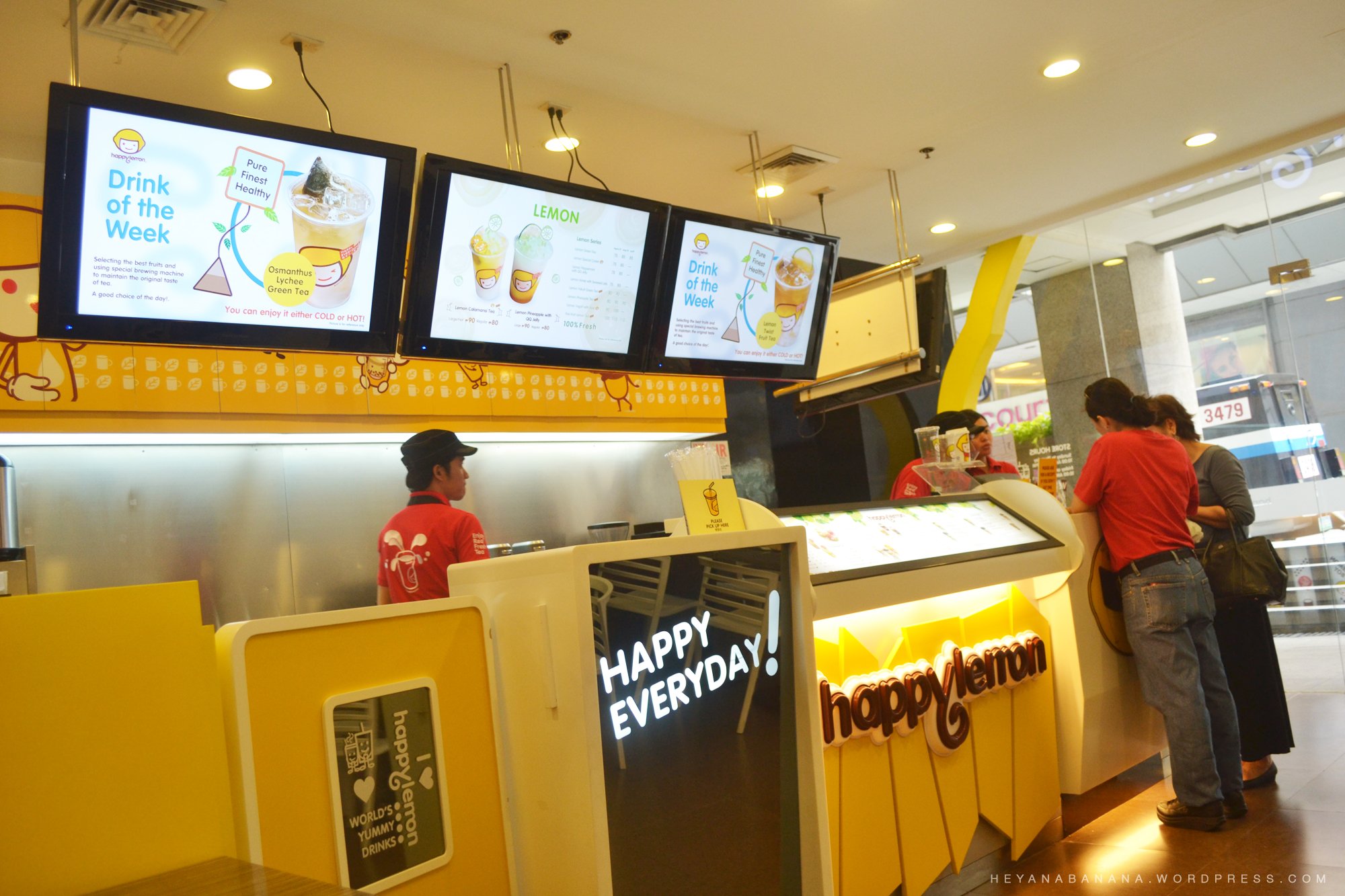
    Taiwanese bubble-tea chain Happy Lemon has teamed up with Koubei, Alibaba Group’s local-services app, to upgrade its in-store technology, including a new drink-making robot. At its pilot “smart store” in Shanghai, customers have the option of buying their drinks at a counter manned by employees or, for a fully automated experience, purchasing via their smartphones for service by the robot. Customers scan a QR code with the Koubei app, tick a few boxes to customise their drink, then wait for a text notification to pick up their tea at a smart locker, which opens when they tap a “pick-up” button on the app.

    The robot can make eight types of drinks with about 40 variations based on customer preferences for different amounts of ice and sugar – each taking about 90 seconds, Koubei said.

    “The smart-store initiative is part of our journey to bring New Retail to food and beverage merchants,” said Guo Haodang, head of Koubei’s smart-store program. “We bring advanced technologies, such as our QR codes, intelligent pick-up lockers and robotic tea mixers, to merchants’ brick-and-mortar stores, helping the sector rethink how they sell and engage with consumers.”

    Koubei and Happy Lemon’s tea-making robot can serve up drinks in 90 seconds.

    Koubei and Happy Lemon’s tea-making robot can serve up drinks in 90 seconds.

    Happy Lemon, which operates more than 1000 stores worldwide, including in the US, Canada, the UK and South Korea, is the latest company to join the smart-store program. Launched in 2017, there are now about 100 brands that have partnered with Koubei to upgrade their brick-and-mortar locations with in-store technology, such as features that allow consumers to pre-order by mobile app and skip queues. Other brands that have signed on include the century-old Chinese restaurant chain Wu Fang Zhai, Hong Kong traditional sweets maker Honeymoon Dessert and pastry chain Kengee.

    Daniel Lee, deputy GM of global marketing at Happy Lemon, said that high employee turnover can lead to drinks being made inconsistently. The robot, which knows right ingredients and amounts, is the perfect solution to that problem, he said.

    Happy Lemon is working with Koubei to replicate this model at more of its stores across China, according to a statement from the local-services app.

    A Happy Lemon customer uses the Koubei app to place his order.

    “Aside from hardware innovations like with the robotic tea mixer, what’s more important to us are the big-data applications behind it,” said Lee, adding that Koubei’s analytics had helped determine where to build the pilot smart store as well as provide AI-powered customisations to customers.

    Last year, the company leveraged Koubei’s consumer analytics to better reach its potential customers online and drive traffic to its physical stores. In 2016, Happy Lemon had joined Alibaba’s on-demand delivery arm, Ele.me. The brand said that 30 per cent of its orders come from delivery rather than in-store purchases, and it expects that ratio to grow further.

    Market research firm Mintel says demand for tea-shop drinks has grown remarkably in the last couple of years in China, reaching a total retail value of RMB 48.5 billion (US$7.2 billion) last year. While nearly all tea-shop consumers in China have bought their beverages in physical stores, just over two-thirds have ordered their drinks online, Mintel noted, which means online channels are a potential growth opportunity for tea chains.

  • Competition increases in Bangkok market

    Competition increases in Bangkok market

    Competition is increasing in the Bangkok retail-property market, according to international property consultant CBRE.

    The competition is focused on the bricks vs clicks sector as e-commerce grows, and the bricks vs bricks market, as developers build new malls.

    “All over the world, e-commerce is challenging traditional retail stores, and Thailand is no exception,” said CBRE in a report.

    Currently e-commerce only forms a small percentage of total retail sales in Thailand, but CBRE expects that to change rapidly.

    In the UK, 18 per cent of retail sales are now online rather than through traditional stores.

    Globally, retail tenants are having to pursue an omnichannel approach with both online e-commerce sales and offline traditional sales in stores. In many cases, this has led to a rationalisation of their retail portfolio and a reduction in the number of stores.

    In the Bangkok retail-property market, the threat to landlords is not just from the rise of e-commerce, but also from the increase in supply.

    2019-03-18 - Retail Supply in Bangkok

    Based on the latest survey by CBRE Research, there is more than 600,000sqm of space under construction due for completion by 2023, mainly in large-scale shopping malls like EmSphere, Bangkok Mall and One Bangkok. There are also new malls being planned where construction will start soon, such as the redevelopment of the Dusit Thani Hotel.

    Competition in the Bangkok retail-property market is going to be fierce and landlords are going to have to adapt to the new environment to survive. That, according to CBRE Research, will mean big changes to their business model.

    Historically, landlords have leased out space on three-year leases at monthly rents. Landlords have set rents based on the tenant’s ability to pay driven by business type, size of shop, which floor in the building and which location on the floor. Landlords have tried to extract as much rent as the tenant can afford to pay with the tenant bearing the obligation of a fixed amount of rent and assuming much of the business risk.

    Now the business model is changing with tenants wanting the landlord to share more of the risk by basing the rent on a percentage of the tenant’s revenue, known in Thailand as a Gross Profit (GP) rent.

    The landlord, along with the tenant, will benefit if business is good, but suffer if business is bad, with the landlord not only taking a risk on the ability of the mall to attract customers but also on the success of tenant’s business.

    Landlords are also now expected not just rent space but to be data providers and analysts.

    Tenants now want landlords to collect, analyse and share data on how many people come to the mall, how often and what they are spending their money on along with many other details, said CBRE.

    Tenants are going to be increasingly demanding about the quantity and quality of information that they get from the landlord so they can best match their products and services to the mall’s customers.

    In the current era, online retailers have to give people a reason to visit their store and not just to buy online.
    Increasing the volume of food outlets providing “retailtainment” is one way to get more foot traffic into malls, but restaurants cannot pay the same rents as luxury brand retailers.

    “Creating limited time opportunities through pop-up stores or events is another emerging trend giving people a reason to get up and go to a mall because they will not be able to get the product or have the experience elsewhere or at another time,” said CBRE Thailand’s head of advisory and transaction Jariya Thumtrongkitkul.

    “The revolution in retailing with the coming of e-commerce and competition from new supply means that landlords will have to be a lot more sophisticated in what they provide both in terms of mall format and data”.

  • Qualcomm’s new line of chips will make smart speakers better than ever

    Qualcomm’s new line of chips will make smart speakers better than ever

    Qualcomm, manufacturer of the popular Snapdragon chips that power billions of devices, is now aiming to dominate another segment of smart products: speakers and displays with voice assistant support. To do that, the company announced today a new family of chips called the QCD400 Series Smart Audio SoCs. The new chips are designed specifically for the needs of smart speakers like the Google HomePod and Home mini, Amazon’s Echo lineup and others. That is why Qualcomm has focused on two main aspects: sound reproduction and voice recognition.

    The QCS400 line promises “truly superior audio performance” that should come not only from Qualcomm’s own technologies, but support for Dolby Atmos and DTS:X as well. The chips will be capable of supporting up to 32 audio channels.

    To make your communication with the voice assistant better, Qualcomm is once again putting AI to use. The AI should help with voice recognition so you can expect fewer misheard words and phrases in the future. The new chips should also allow the device to better separate voices from background noises or music and detect trigger words easier.

    Besides those main capabilities, Qualcomm is also looking to improve a couple more things that are also quite important.The first one is an improvement in power consumption which will come handy for portable Bluetooth speakers and other battery-powered devices. Devices with the new chips are expected to have a significantly longer standby time during which voice wakeup will be available.

    And finally, the new chips will ensure that your smart device is always well connected. Whether that is to the internet via Wi-Fi or to your phone through Bluetooth, Qualcomm has made improvements in any aspect of the smart speaker connectivity.

    The QCD400 chips are four in total, two of them are for audio only. The least powerful is the dual-core QCS 403, followed by a quad-core QCS404. The two chips that come with video capabilities have the Adreno 306 GPU and support HDMI. Only the highest tier chip, the QCS407 supports 32 channel audio, while the rest top up at 12 channels.

    If you’re a frequent user of smart speakers these new developments are good news for you. And if not, well, you’re probably concerned about the fact that soon these pesky always-listening devices will be able to hear you even better. Like them or not, it seems they’re here to stay!

  • Huawei adopts Open Rack for cloud data centers

    Huawei adopts Open Rack for cloud data centers

    Huawei has revealed plans to adopt the Open Compute Project’s (OCP) Open Rack standard for rack and power delivery architecture for its new public cloud data centers worldwide.

    The Open Rack initiative seeks to redefine the data center rack to significantly reduce energy consumption, while driving operational efficiency by reducing the time it takes to install and maintain racks.

    Huawei will be joining major hyperscale internet companies such as Facebook, Google and Microsoft in adopting the Open Rack standard, which is designed to integrate the rack into data center infrastructure.

    This marks the first OCP standard adopted by Huawei since the Chinese vendor joined the project last year. The vendor is also contributing to a number of OCP projects including rack and power, system management and server projects, and has developed an OCP-based compute module.

    “Huawei’s strategic investment and commitment to OCP is a win-win,” commented Kenneth Zhang, general manager of FusionServer within the Huawei Intelligent Computing Business Department.

    “Combining Huawei’s extensive experience in Telco and Cloud deployments together with the knowledge of the vast OCP community will help Huawei to provide cutting edge, flexible and open solutions to its global customers. In turn, Huawei can leverage its market leadership and global datacenter infrastructure to help introduce OCP to new geographies and new market segments worldwide.”

  • ADLINK, Charles Industries demo mobile edge AI/ML solution

    ADLINK, Charles Industries demo mobile edge AI/ML solution

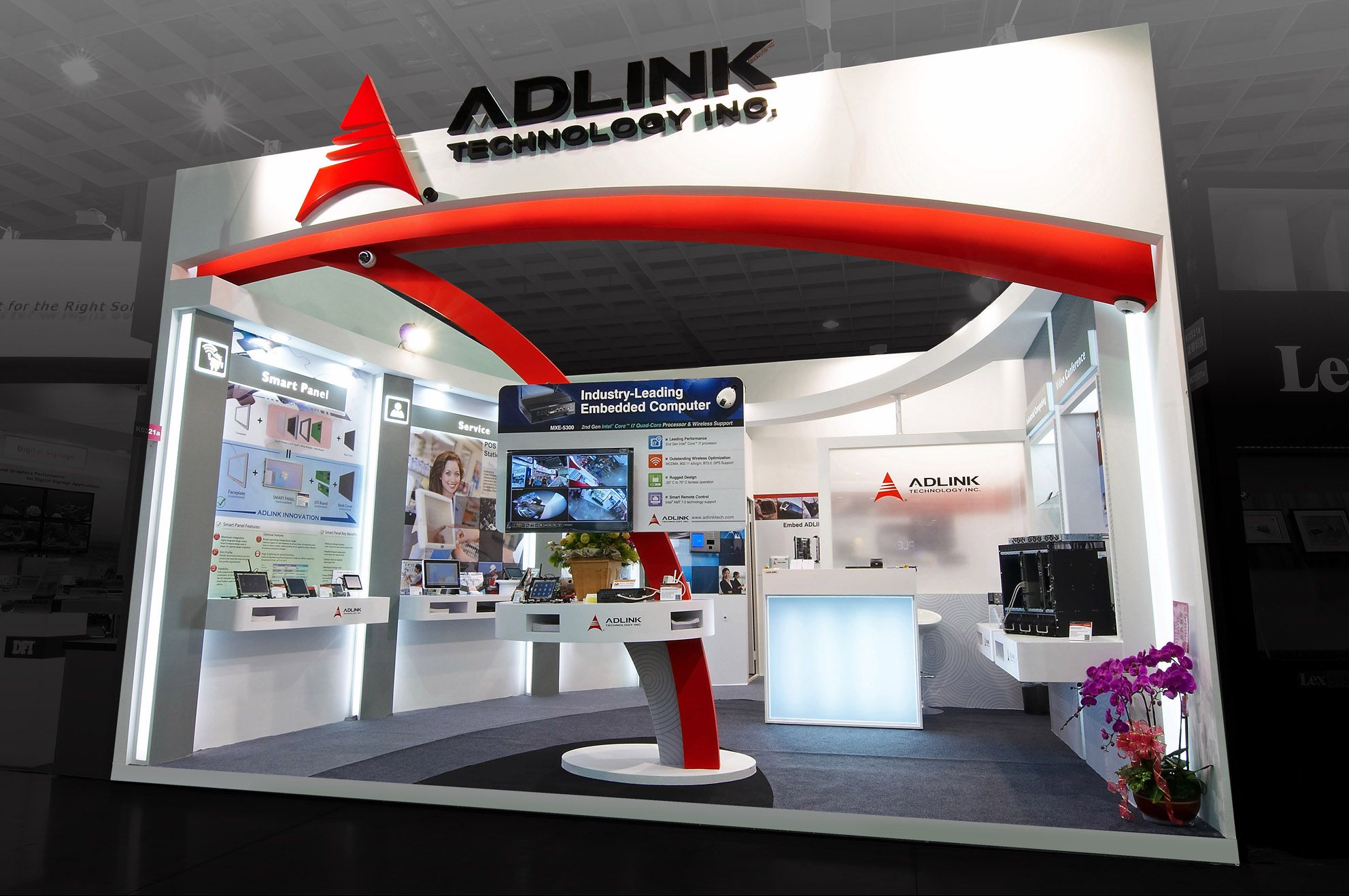
    Test and measurement company ADLINK Technology and telecoms, marine and industrial manufacturer Charles Industries have developed the industry’s first pole-mounted multi-access Edge AI and machine learning solution.

    The solution, a complete micro-edge low latency AI, machine and deep learning solution can be co-located on LTE small cell poles or 5G radios, is specifically designed for outdoor telecoms use cases.

    The solution, which can be either pole or wall mounted, integrates ADLINK’s latest AI Edge Server with a Charles Industries Mico Edge Enclosure.

    According to the companies, the solution has the potential to enable a range of new and advanced services, including autonomous vehicles/pods, virtual and augmented reality applications, and vision analytics.

    ADLINK’s mobile edge computing platform has been designed to fully comply with the Open Data Center Committee’s Open Telecom IT Infrastructure standard to meet the 5G requirements of ultra-low latency, high bandwidth, and real-time access to the radio network.

    The companies are showcasing the solution at the NVIDIA GPU Technology Conference in San Jose in the US this week.

  • Vodafone Idea contracts Nokia for LTE expansion

    Vodafone Idea contracts Nokia for LTE expansion

    India’s Vodafone Idea has awarded Nokia a contract to improve the operator’s LTE coverage and capacity.

    Under the contract, Nokia will provide Single RAN Advanced, massive MIMO and small cell technology across multiple Indian telecoms circles to support the operator’s network consolidation and modernization program.

    The small cell deployment will help improve both indoor and outdoor coverage and capacity in the circles. Vodafone Idea will also adopt dynamic spectrum sharing technology to make the most productive use of the converged company’s spectrum.

    “Vodafone Idea is undertaking the world’s biggest telecom network integration in India [following the merger between Vodafone India and Idea Cellular], and creating India’s most advanced, secure and cost-efficient network,” Vodafone Idea CTO Vishant Vora said.

    “Extensive use of UBRs, dynamic spectrum sharing, massive MIMO and HetNets are key to our plan in this integration exercise, and we are very happy to partner with Nokia to deploy these futuristic, next generation technologies to prepare a future-proof network for the digital era.”

    Last month Vodafone Idea also contracted Ericsson to deploy LTE equipment for the network integration program, including radio systems and transport equipment from Ericsson’s 5G-ready Ericsson Radio System portfolio.

  • Data-sharing Algorithm launched for Indian rural store owners

    Data-sharing Algorithm launched for Indian rural store owners

    Data platform Next Billion is collaborating with data exchange service Ocean Protocol to pilot a new data-sharing model that gives Indian rural store owners an extra income stream.

    Next Billion, which creates insights to enable companies to expand in high-growth emerging markets, provides free point-of-sale platforms to rural store owners to record real-time inventory and sales data. It is building a data marketplace and piloting a new data sharing model based on Ocean Protocol, the first general platform for borderless data sharing that marries blockchain, data and AI.

    Through the pilot, Indian rural store owners will capture real-time transactions via the POS platform and are incentivised to consistently use this platform to submit verified data. When companies buy their syndicated data, transactions can be traced back to the source via Ocean Protocol, enabling Next Billion to reward these rural store owners with royalties.

    “We believe global companies’ needs for commercial data can unlock sustainable and inclusive business models that empower local data providers to share fair value from their data,” said Next Billion MD Oliver Gilbert. “Ocean Protocol enables Next Billion to monetise data and share it with companies in a safe and secure manner.”

    Despite the lack of digitisation in retail practice in rural Asia, sales are climbing. Driven by the rise of the middle class, the consumption of fast moving consumer goods (FMCG) in rural areas is growing across Asia. From 2009 to 2012, spending by India’s 800+ million rural residents reached $69 billion, some 25 per cent more than their urban counterparts over the same period.

    According to recent estimates, consumption in rural areas is growing at 1.5 times the rate in urban areas. The current $12 billion consumer goods market in rural India is expected to reach $100 billion by 2025.

    FMCG companies are eyeing this new opportunity and have revved up their distribution channels in rural areas.

    This has been reflected by a significant rise in demand for rural market-research data. However, traditional market-research firms lack rural reach, maintain outdated platforms premised on different environments, and their costs remain prohibitively expensive.

    Ocean Protocol is a blockchain-based platform for the safe sharing of data that enables companies and data services to build on top. Its technology allows organisations to put a value on, own and control their data while addressing many frictions around data sharing today – including privacy concerns, trust, and auditability. Ocean also allows algorithms and models to come to the data, get trained and then leave without exposing the data or taking a copy, thereby retaining privacy and freeing up data to advance the economy and society.

    “A lot of data is generated today, yet they are locked up in silos because people are scared of losing control and not getting rewarded. Ocean helps to solve this by giving the tools for people to own and control their data and develop new data-driven business models,” said Ocean Protocol founder Bruce Pon. “Data owners can program the conditions of access which are then executed precisely. In addition, data can be traced back to its source, enabling incentives to be spread across all stakeholders in the data sharing process.”

    “Being incentivised, along with transparency on how data is being used, increases the willingness of people to share data,” Gilbert added. “We hope to provide high quality and agile retail insights at a fraction of what the traditional market research firms would charge while targeting an increase in sustainable livelihoods by 30-50 per cent.”

  • Cambodia’s SINET to expand into residential market

    Cambodia’s SINET to expand into residential market

    Cambodia’s largest enterprise-focused ISP SINET has selected Nokia to support its expansion into the residential market with FTTH services.

    Under the agreement, Nokia will roll out a nationwide access network starting in major housing apartments and gated communities – known as borey – in Phnom Penh and Siem Reap.

    SINET plans to deliver broadband services targeted at residents living in newly built gated areas and apartment buildings using Nokia’s Gigabit capable GPON Mini optical line terminal solution.

    SINET CEO Meta Sy said the company plans to use the high speeds and qualities available with GPON technologies to stand out from the crowd and gain a competitive foothold in the residential market.

    “The Cambodia market is crowded with low-quality residential broadband services available at low prices using many off-the-shelf access equipment with little consideration to long term quality and reliability,” he said.

    “When we decided to deploy GPON in borey and housing apartments, we wanted a quality-based and future-proof offering that would set us apart from the competitions. That means the service has to be on-par with international broadband standard in terms of speed, reliability, efficiency and ease of troubleshooting which are key criteria why we selected Nokia.”

  • Ooredoo launches global blockchain initiative

    Ooredoo launches global blockchain initiative

    Blockchain is a fast-growing digital enabler, with safe, secure, and reliable “distributed ledger” technology providing a permanent digital record of ownership that allows every part of a transaction to be verified.

    While many organizations may know blockchain powering cryptocurrency, there are wider applications of blockchain empowering solutions that can save time and money, and can enhance information security and privacy.

    According to a recent report by IDC, global blockchain spend will grow over 10-fold from $1.5 billion in 2018 to $11.7 billion by 2022.

    As a digital enabler, Ooredoo Group already works closely with public, private and academic sectors in its global footprint to develop blockchain solutions that can create new value in the digital space and enrich people’s digital lives.

    Ooredoo Group’s new blockchain initiative is an open call for innovators to develop blockchain partnerships, solutions, and protocols across business-to-business and business-to-consumer sectors.

    Sheikh Saud Bin Nasser Al-Thani, group chief executive officer, Ooredoo, said: “Blockchain will facilitate new digital business models and revenue in the next five years – helping organisations to run better and to transform people’s daily lives. Using blockchain, organisations and their customers can optimise costs, find new levels of efficiency, transparency, and trust, and enable secure digital payments.”

    For example, property developers can provide smart contracts for ensuring titles, deeds, and facilities management are accurate and secure. Banks can better track cross-border payments, and logistics companies can track and trace products. Healthcare providers can enable digital patient records to optimise treatment. Mega-event organizers can introduce virtual digital payment tokens for merchandise and food and beverage. Sports teams can have real-time athlete health and performance metrics and also manage fan loyalty programs.

    With Ooredoo Group’s Blockchain Initiative, Ooredoo aims to leverage its experience and industry-leading solutions in blockchain combined with 5G, cloud, and the Internet of Things to deliver the biggest benefits to organisations and to customers.

    The Initiative is also bringing together subject matter experts from across the company’s global footprint and business units, including small- and medium-sized businesses, commercial, digital, and legal.

    Sheikh Saud said: “Our Blockchain Initiative aims to open the blockchain floodgates, leveraging global best practices to deliver localised innovation across many of the world’s fastest-growing markets. Our open call to blockchain innovators will also explore integrating blockchain with artificial intelligence and machine learning, cloud, and the Internet of Things.”

  • SK Telecom using quantum cryptography for 5G security

    SK Telecom using quantum cryptography for 5G security

    South Korean mobile carrier SK Telecom said it will use quantum cryptography technology to ensure security of its 5G mobile networks.

    The mobile carrier said Monday it has completed applying Quantum Random Number Generator (QRNG) technology of ID Quantique (IDQ), to its 5G subscriber authentication center. The move is designed to prevent hacking and ensure quantum-safe security.

    “The subscriber authentication process is the first and essential step in verifying a mobile device user before he/she is granted access to any voice and video data service, SMS, etc,” SK Telecom said in a statement.

    “Security in this process is crucial since the leakage of authentication key value can lead to serious crimes such as eavesdropping and hacking.”

    In February 2018, SK Telecom invested $65 million into IDQ to accelerate development of quantum technologies for the IoT and telecoms markets.

    SKT plans to expand the use of QRNG in its long-term evolution (LTE) networks in April.

    The mobile carrier will also strengthen security further by applying IDQ’s quantum key distribution (QKD) technology to its 5G and LTE networks between Seoul and Daejeon – the area which has highest mobile data traffic in the country- next month.

    QKD provides cryptographic security based on the laws of quantum mechanics. It enables two parties to produce a shared random secret key known only to them, which can then be used to encrypt and decrypt messages, the mobile carrier noted.

    “As security emerges as one of the most important issues in the 5G era, SK Telecom is determined to provide the most secure 5G network and focus on expanding the ecosystem by developing quantum cryptography technologies,” SK Telecom CTO Park Jin-hyo said.

    SKT will further enhance the safety and security of its mobile networks by expanding the application of quantum cryptography technologies by stages, Park added.

  • Konnectivity to buy out remaining shares of M1

    Konnectivity to buy out remaining shares of M1

    Konnectivity, the joint venture buying out Singapore’s M1, has revealed plans to embark on a multi-year transformation of the operator to enhance its competitiveness in the market. The venture revealed it will compulsorily acquire the remaining shares in M1 after securing a 94.55% stake.

    Konnectivity, which is jointly owned by Keppel Corporation and Singapore Press Holdings, announced it will exercise its rights to acquire all remaining M1 shares at the offer price of S$2.06 ($1.52) per share, and then take the company private.

    After the compulsory acquisition, Konnectivity will own 80.69% in M1, while Keppel Corp subsidiary Keppel Telecommunications and Transportation will own the remainder.

    After the acquisition closes, Keppel Corporation and SPH plan to work with M1 on a transformation strategy focused on the three prongs of innovation, technology adoption, and digitalization to help Singapore’s smallest operator better compete with larger rivals Singtel and StarHub.

    “As a member of the Keppel Group, M1 looks forward to working closely with the Keppel Group and with SPH to accelerate the changes needed to deliver even more innovative and compelling products and services, to stay ahead of the competition,” M1 CEO Manjot Singh Mann said.

    “M1 shall endeavour to transform to be at the heart of convergence of various digital services and technologies that present day consumers and enterprises demand. Keppel and SPH bring with them their organisational strengths and stability, which will help us chart our growth plans aggressively, while seeking significant opportunities of synergy with them.”