Author: Mei Ling Tan

  • Dunhill menswear store opens in Tokyo

    Dunhill menswear store opens in Tokyo

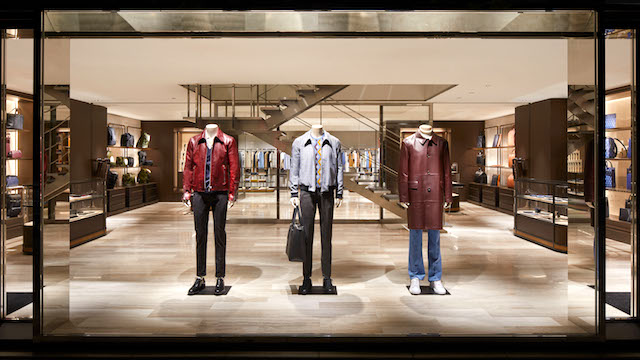
    A new Dunhill menswear store has opened inside Japanese department store Isetan. The new outlet, located in the department store’s new men’s annex, is designed to showcase the best of British luxury menswear while conveying an approachable aesthetic. Engineered to create an engaging contemporary space, core decorative elements in the store include fluted stainless steel (a visual reference to the textures and finishes of the iconic Rollagas lighter) alongside marble, leather and metal – all recognisable codes of the brand.

    Dunhill menswea - Isetan 1

    Walnut burl details feature throughout the space, inspired by the original furniture from London’s Duke Street and Paris’ Rue de la Paix stores.

    Dunhill menswea - Isetan 2


    A statement from the brand said the new store marks “over 125 years of innovation for Dunhill and Japan’s most iconic department store”.

    Dunhill menswea - Isetan 4

    Featuring a curated selection of luxury pieces, the store will house ready-to-wear garments alongside leather goods and fine accessories.

    Dunhill menswea - Isetan 5

    Dunhill has more than 90 stores in 16 countries, with noteworthy locations in London, New York, Paris, Tokyo, Osaka, Shanghai, Beijing, Hong Kong and Dubai.

  • Eslite Taipei bookstore closing down

    Eslite Taipei bookstore closing down

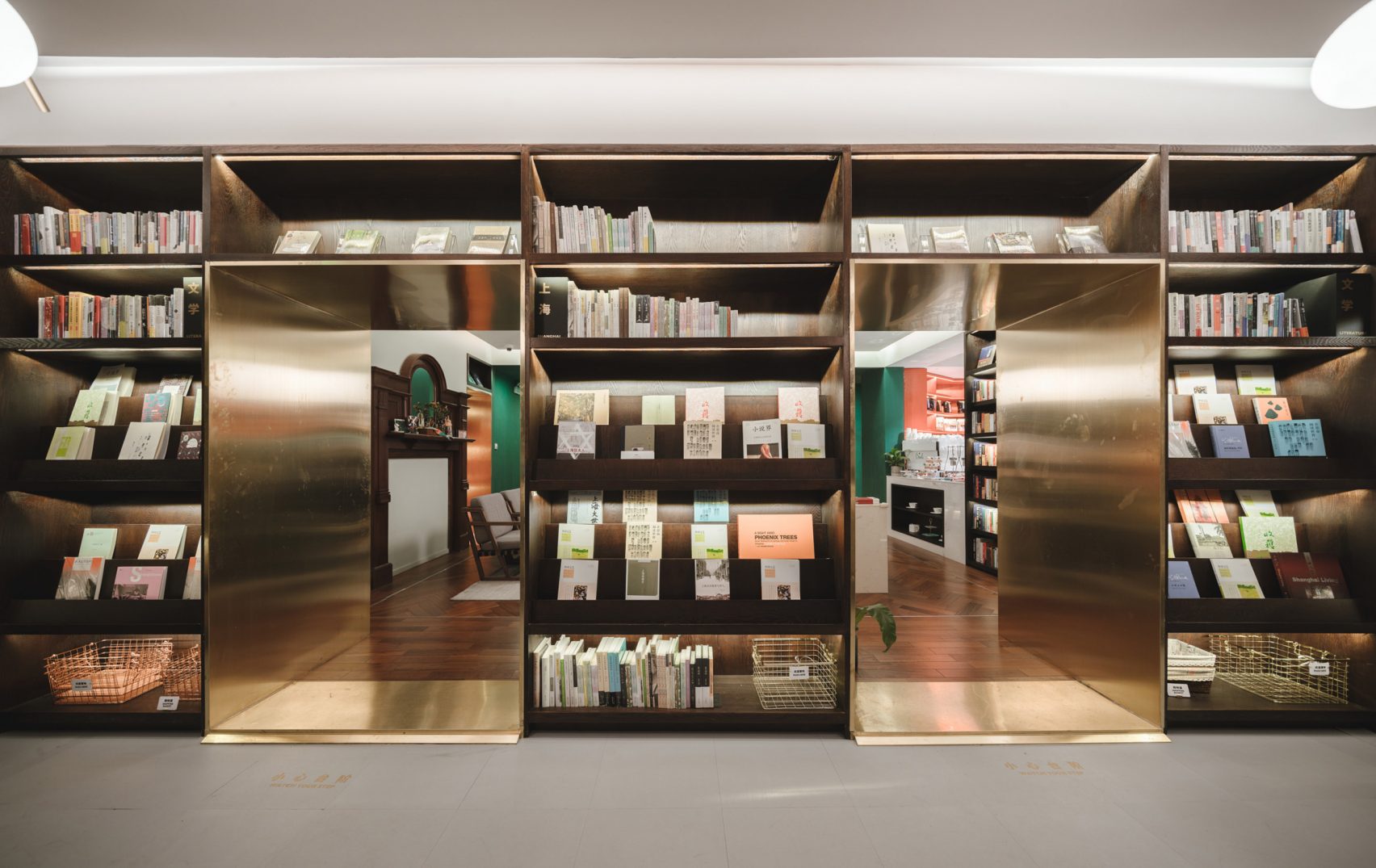
    Eslite Taipei, the world’s first 24-hour bookstore, is scheduled to shut down next year.

    The popular Taiwanese bookstore chain will discontinue its flagship location in Dunnan, upon the expiry of its lease next year after 19 years of trading.

    The firm’s chairwoman Mercy Wu has admitted that no plans for the store are in the works following closure. She had previously stated that another Eslite location could have its hours extended to offer a 24-hour service to replace the Dunnan store.

    However, the firm’s previous experiments in round-the-clock bookstore service – including a trial in Hysan Place, Hong Kong – have proved not to be viable due to low customer turnout.

    Wu has been quoted as expressing hopes that Eslite stores will maintain their independence and “remain the first and last stop of book lovers in the next 10 years”.

  • Tumi powers solid Samsonite sales growth, focus in Asia

    Tumi powers solid Samsonite sales growth, focus in Asia

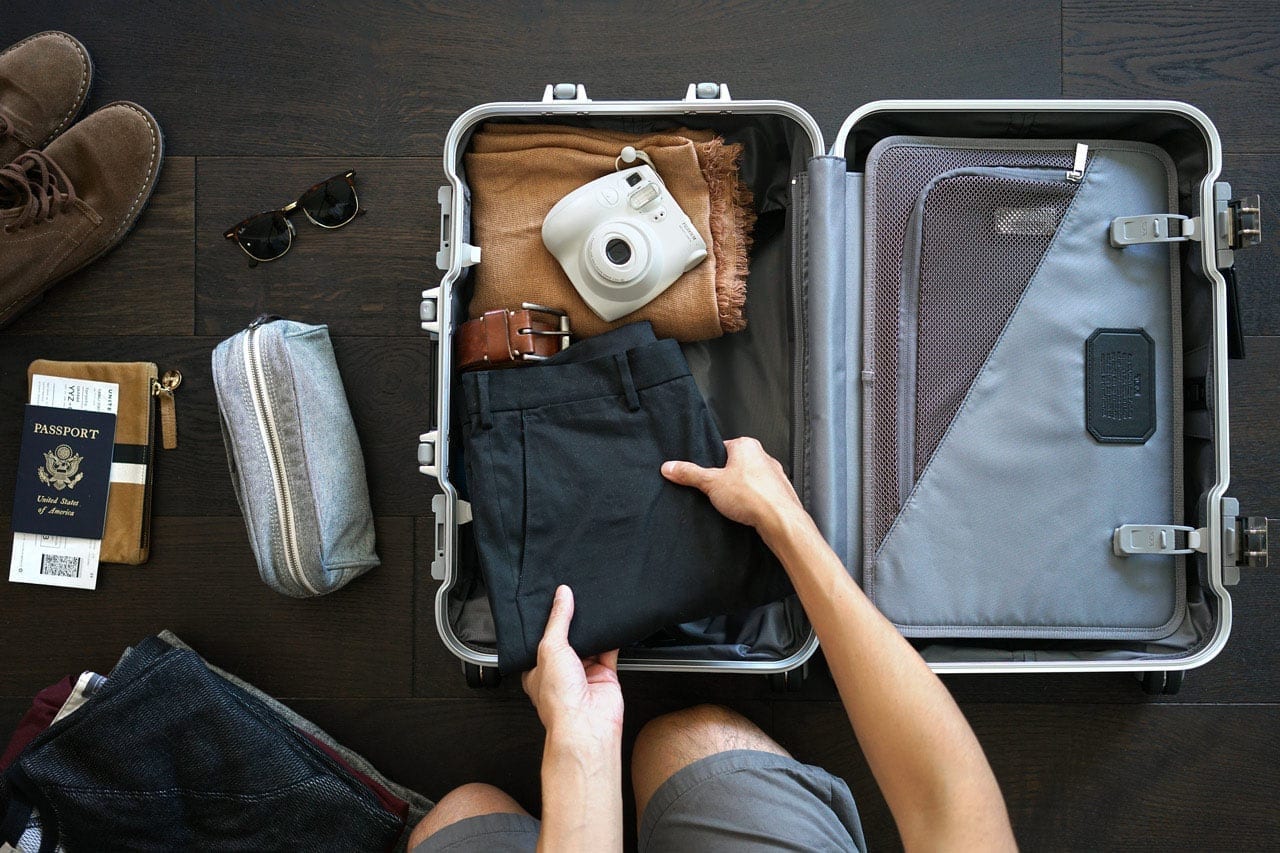
    Hong Kong-listed luggage giant Samsonite International has achieved its seventh consecutive year of sales growth following its listing in 2011.

    Net Samsonite sales were up 8.4 per cent on a constant-currency basis to US$3.797 billion in the year to December 31. Profit attributable to shareholders rose by 23.9 per cent before extraordinary items saw that figure reversed into a 29.2 per cent decline to $236.7 million.

    Net sales in Asia increased by 10.2 per cent year on year to $1.324 billion, driven by the Tumi, American Tourister, Samsonite and Kamiliant brands. Tumi’s sales increased by 29.5 per cent, due in part to the full-year contribution from having taken direct control of Tumi distribution in certain Asian markets during 2017, as well as increased brand penetration in key Asian markets.

    A boost in marketing saw American Tourister’s net sales increase by 8.9 per cent in Asia, while Samsonite sales rose by a more modest 2.1 per cent. The group’s entry-level brand Kamiliant achieved a 44.1 per cent increase in sales in Asia as it continued to take market share from other entry-level brands across the region.

    Overall, Asia recorded second-half net sales growth of 6.5 per cent and full-year growth of 10.2 per cent.

    CEO Kyle Gendreau said sales in Japan rose by 14.1 per cent and in India by 28.5 per cent, in the second half, but these gains were partially offset by slower growth in China, which recorded just 3.2 per cent growth as consumer sentiment weakened amid concerns about trade relations with the US; and in South Korea where net sales decreased by 1.5 per cent in the second half.

    “Our growth was underpinned by positive performances from our core brands,” said Gendreau. “Tumi continued to perform ahead of expectations, making great strides in enhancing its international presence, with strong growth in Asia and Europe.”

  • Samsung Galaxy flagship store to open in Tokyo

    Samsung Galaxy flagship store to open in Tokyo

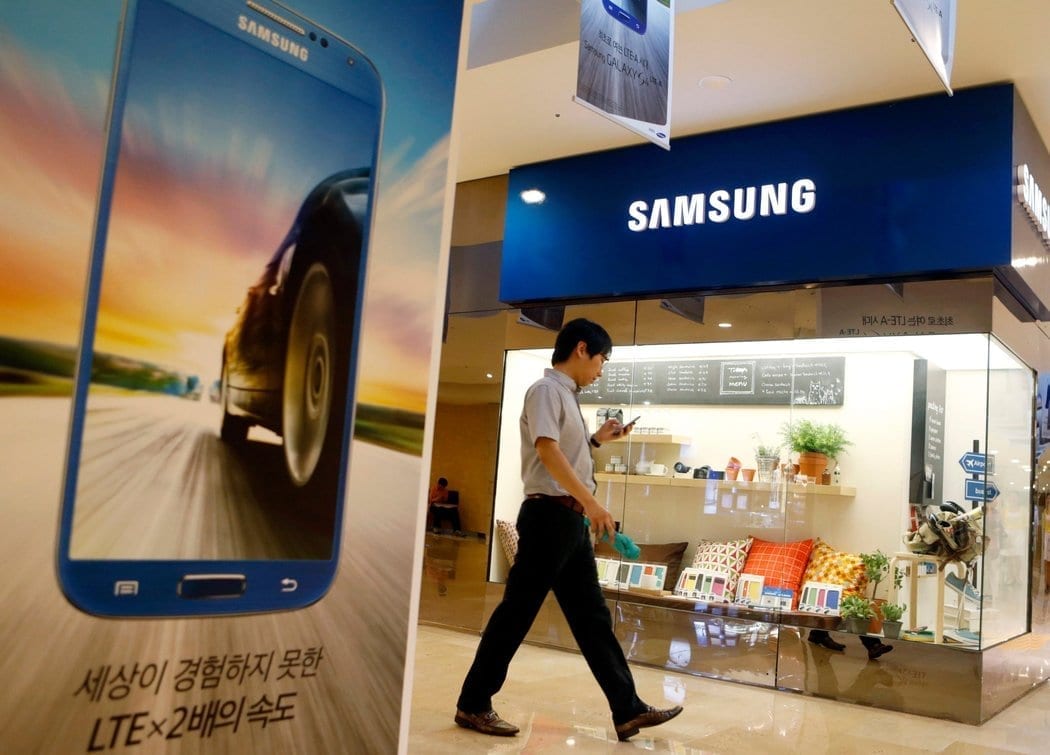
    Smartphone brand Samsung has opened a new Galaxy flagship in Tokyo.

    The six-level location is the largest Galaxy showcase store worldwide, and features a front facade decorated with more than 1000 smartphones, celebrating the 10th anniversary of the product line.

    The store will offer a range of phones and wearable devices, as well as offer repair services.

    The opening coincides with Japan’s 500-day countdown to the 2020 Olympic Games. Samsung is an Olympic Partner in wireless communications equipment. The firm is seeking a stronger market share in anticipation of impending 5G network rollout across the country.

  • Boardwalk Advendture vending machine cluster opens at Sentosa

    Boardwalk Advendture vending machine cluster opens at Sentosa

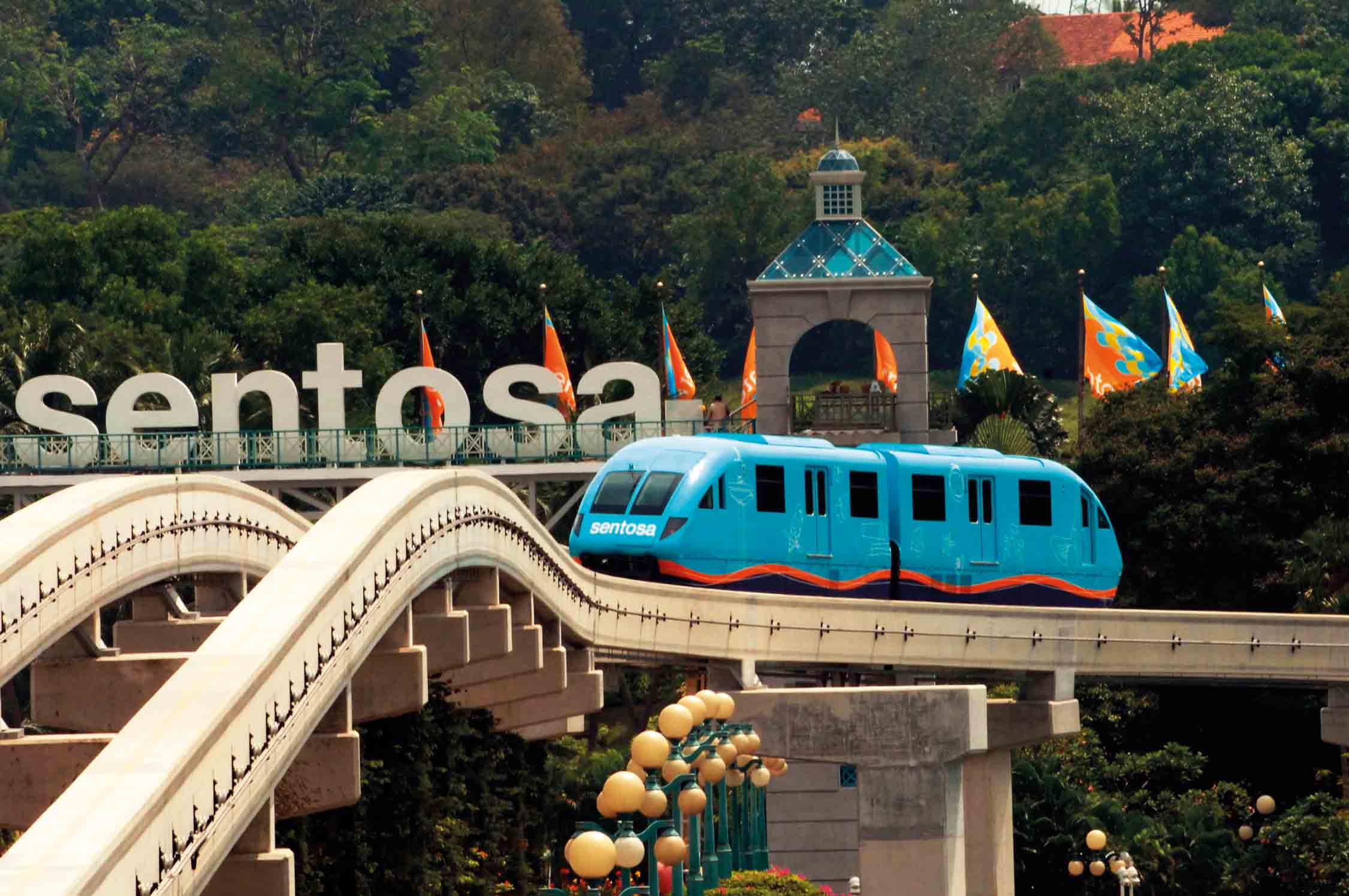
    Royal Vending has launched 35 cashless-enabled vending machines in a cluster it calls Boardwalk Advendture.

    Featuring more than 50 brands, Boardwalk Advendture is the first automation cluster set in a tourist attraction which the company says ushers in a new age of automated retail-tainment.

    “Boardwalk Advendture pushes the envelope and signals a new age of smart retailing,” said Jae Teo, Royal Vending MDr.

    “The innovative vending concepts of today can help hero made-in-Singapore brands, start-ups and host unexpected products. We hope that the Boardwalk Advendture will inspire other locales to embrace the next generation of retailing.”

    GOH meeting the artists from the Art Faculty by Pathlight

    GOH meeting the artists from the Art Faculty by Pathlight

    Starting off from VivoCity, the first ‘Fresh Point’ cluster kicks off with snacks, refreshments and essentials that visitors can grab to beat the heat and stay cool.

    The midway point houses a ‘Gift Street’ featuring quirky souvenirs, local crafts and tourist favourites from the city.

    There are other pleasant surprises dotted along the way, including ‘Fun Alley’ with game machines and outdoor must-haves that will keep both parents and children entertained.

    An air-conditioned ‘Foodie Zone’ is available at the end for tourists to re-fuel before heading into Sentosa.

    “With the support from Enterprise Singapore, Royal Vending was able to adapt its business model and curate a range of products that … enhance the customer experience as they walk down the Sentosa Boardwalk,” said Alan Yeo, director of Retail & Design, Enterprise Singapore.

    “We encourage more retailers to take the bold step to innovate and introduce differentiated retail concepts that can serve to delight their customers and ensure long-term business growth,” he added.

    Royal Vending’s Boardwalk Advendture will enrich the experience with 24-hour amenities such as food and beverage takeaways.

    Brands already signed up to the cluster include Art Faculty by Pathlight, beauty brand su:m37 and Singapore souvenirs and gift supplier Love SG.

    Royal Vending is one of Singapore’s largest vending machine companies, with more than 15 years of experience.

  • Chinese Streetwear brand INXX Expands

    Chinese Streetwear brand INXX Expands

    Chinese streetwear brand INXX is officially launching its US e-commerce site.

    “We want to open up to a broader market and develop more forward-looking and global design paths while forming our own symbols,” said co-founder Henry Mao.

    Targeting global youth, INXX achieved US$3.5 million in sales on China’s 2018 Single’s Day and is now setting sights on the major fashions of worldwide street trends. By keeping roots in its blended Asian streetwear background, the brand has been able to forge a strong identity while growing into new markets.

    INXX made its 2018 debut with a presentation on Vfiles. In its showcase at New York Fashion Week SS19, INXX blended craftsmanship with an underground urban street aesthetic, mixing surreal grungy graphics and a strong focus on design detail to achieve “a look without boundaries”.

  • Zara growth slows down

    Zara growth slows down

    Zara growth is slowing substantially and analysts fear worse is to come.

    The fast-fashion brand’s Spanish parent Inditex says the slowing growth is due to a stronger euro, flat margins, less-frequent discounting and a store optimisation strategy that focuses on larger stores in prime locations and online growth at the expense of smaller stores.

    While the retail giant reported a 7 per cent sales increase at constant currency rates year on year to 26.1 billion, this was less than half the rate of growth the company reported a few years ago, Morgan Stanley said in a note.

    “[W]e believe it is evidence that the group’s growth profile is slowing sharply,” Morgan Stanley said.

    Like-for-like sales grew 4 per cent in last financial year, compared to 5 per cent in 2017. Online sales grew 27 per cent to 3.2 billion, or 12 per cent of net sales. This is on the low end for an apparel company, where online penetration tends to be higher.

    Inditex opened 370 stores during the year, and closed 355, which was nearly twice as many as the 200 stores it said it was planning to close last year. This may have had an impact on sales growth , an investor told, but could prove to be the right strategy long term.

    The group increased gross new space in prime locations by 8 per cent and is continuing to roll out its omnichannel store format, which integrates bricks-and-mortar and online channels. The group said it sees strong opportunities for growth in this space going forward.

    Inditex said global online sales are on track. Zara launched online in Australia and New Zealand last March and entered an additional 106 markets online in November, bringing the total number of markets it sells online in to 202.

    The company has reported a profit of 3.44 billion for the year, up 2 per cent on the previous year.

    In its first five weeks of the new fiscal year, the group lifted store and online sales 7 per cent at constant-currency rates. The company said it expects like-for-like sales to grow between 4 and 6 per cent this fiscal year, and gross space in prime locations to grow between 5 and 6 per cent.

    The fashion giant expects to open around 300 stores and close around 250 in the year ahead. As at  January 31, Inditex had 7490 stores worldwide across the Zara, Pull & Bear, Massimo Dutti, Bershka, Stradivarius, Oysho and Uterque brands.

  • Hyperscale operator capex jumped 43% in 2018

    Hyperscale operator capex jumped 43% in 2018

    New data from Synergy Research Group revealed that hyperscale operator capex reached over $32 billion in Q4, outperforming the first three quarters of the year, which had themselves set records.

    Full-year hyperscale capex jumped 43% to almost $120 billion. Meanwhile telco capex was over double that of hyperscale operators, but notably telco spending remained at the same level as the previous two years. The top five hyperscale spenders in 2018 were Google, Amazon, Microsoft, Facebook and Apple. Coincidentally their aggregate 2018 capex was almost identical to the capex of the top five telco spenders – China Mobile, AT&T, Verizon, NTT and Deutsche Telekom.

    The hyperscale data is based on analysis of the capex and data center footprint of 20 of the world’s major cloud and internet service firms, including the largest operators in IaaS, PaaS, SaaS, search, social networking and e-commerce.

    Outside of the top five, other leading hyperscale spenders in 2018 included Alibaba, Tencent, IBM, JD.com and Baidu. Much of the hyperscale capex goes towards building, expanding and equipping huge data centers, which have now grown in number to 439.

    The telco data is based on tracking and analysis of the world’s 40 largest telcos, which in aggregate account for 85% of the communications services market.

    “The hyperscale operators are quickly becoming the capex kings of the IT world,” said John Dinsdale, a chief analyst at Synergy Research Group. “On average hyperscale operator revenues are growing by 20% per year driven by expansion of cloud services, e-commerce, social media and online advertising; and it is notable that the leading players are investing an ever-increasing share of their revenues into capex. This is in stark contrast to telcos who are seeing neither revenues nor capex growing. We do not see these trends changing any time soon.”

  • Smart, Nokia to pilot 5G deployments in schools

    Smart, Nokia to pilot 5G deployments in schools

    The Philippines’ PLDT and mobile division Smart have signed an agreement with Nokia to pilot the deployment of 5G technologies and services in schools.

    The agreement will see PLDT, Smart and Nokia collaborate to identify real-world 5G standalone solutions for use in schools, colleges and universities, including arificial intelligence, drones and advanced IoT applications.

    The companies will levearge the PLDT-Smart Technolab in Makati and the Nokia Technology Center in Quezon City for the project.

    In addition, the agreement covers deploying 5G standalone products and services, such as 5G handsets and applications, in the Philippines.

    “We are happy to partner with Nokia to help develop intelligent solutions and technologies for the benefit of the Philippine education sector,” PLDT-Smart chairman and CEO Manuel V. Pangilinan said.

    “As the country’s leading and most trusted technology enabler, PLDT and Smart are excited to work with Nokia and the academe in realizing our 5G vision,” added the company’s chief revenue officer Ernesto R. Alberto.

    PLDT and Smart claim to be the best positioned company to deploy 5G in the Philippines due to its status as the operator as the country’s most extensive fiber network, which now spans over 244,000 route kilometers.

  • 4 in 5 APAC operators plan to deliver 5G for sport events

    4 in 5 APAC operators plan to deliver 5G for sport events

    More than four in five (81%) operators in Asia-Pacific plan to deliver 5G services to major live sports and esports event organizers, according to research conducted by Ovum for Amdocs.

    The research found that operators in the region view sports events such as the Tokyo 2020 Olympic Games as an opportunity to create new enterprise services grounded in 5G communications.

    As well as 5G, 81% of APAC operators plan on offering IoT-related technology and services to stadium owners and tournament organizers to create efficiencies in stadium management, and 56% plan to offer services that will improve fan experiences, such as introducing the ability to order food and beverages over mobile devices.

    Operators anticipate new commercial opportunities from supporting major sporting events with 5G. Around 44% of operators in the region believe 5G will drive growth in terms of ARPU and 32% believe it will boost their enterprise business.

    Meanwhile 50% of Asia-Pacific operators believe that 5G will drive growth in sports TV subscribers, and 43% believe it will drive mainstream adoption of virtual reality services.

    To capitalize on these opportunities, 81% of operators plan on creating new partnerships with broadcasters and OTT service providers.

    The same proportion are planning to create new partnerships with device manufacturers, 64% are seeking direct partnerships with sports venues, and 56% want partnerships with social media and video game companies.

    But operators are also anticipating network related challenges regarding new 5G services for sports and esports. When asked about the biggest expected challenges, 69% cited issues with delivering the required levels of capacity and connectivity to support live HD video, and 56% cited indoor coverage to stadiums.

    “Operators see both short-term benefits in supporting sports with 5G, including growth in ARPU and their media business line, as well as longer-term benefits, such as enhanced brand appeal among younger demographics,” Amdocs CMO Gary Miles said.

    “Furthermore, working with new types of partners on 5G and sports will give operators a vital role in a new digital business ecosystem. Out of a multitude of potential 5G use cases, our research shows that sports and esports is certainly among the most compelling.”

  • GateHouse Telecom developing universal satcom interface

    GateHouse Telecom developing universal satcom interface

    Satellite industry software provider GateHouse Telecom has revealed it is developing a technology that will allow a single physical satcom terminal to use multiple satellite systems.

    The company is developing a new interface that will allow users to run the same satcom terminal hardware and interface on different satellite services.

    GateHouse Telecom product manager Svend Holme Sørensen said the project reflects the company’s belief that there is a need for a universal satcom application interface.

    “To stay connected, user terminals have to adapt to changes in data routing and frequent changes of satellites,” he said.

    “Our new software platform, when based on software defined radio hardware, combined with the increasing availability of multi-service antenna systems opens the possibility of operating terminals on several satellite systems.”

    He said such demand appeared to be reflected in discussions at this year’s SmallSat Symposium in Silicon Valley.

    “There seems to be a general wish to run satellite constellations using network management functions, for example, software defined networks. However, this kind of functionality goes beyond the existing protocol specifications used today.”

    Using the same hardware terminal for multiple satellite systems would allow developers and engineers to bring down user terminal costs by increasing volumes to improve business cases.

  • PTCL engages Nokia to deploy 100G OTN

    PTCL engages Nokia to deploy 100G OTN

    Pakistan’s PTCL has deployed a new 100G optical transport network in partnership with Nokia.

    The Nokia DWDM network utilizes PTCL’s extensive fiber footprint to provide multipath redundancy.

    It will be instantly upgradeable to 200G and 400G per wavelength as demand dictates, and the software-defined network (SDN) capabilities of the solution will allow the operator to increase network capacity and efficiency.

    The network also uses set-partition quadrature phase shift keying (SP QPSK) modulation technology to allow PTCL to cover very long distance links with improved signal-to-noise tolerance and latency.

    Finally, the solution has been designed to allow for the easier launch of services based on ROADM (reconfigurable optical add-drop multiplexer) technology.

    “We are committed to providing a world class network experience to our subscribers and this deployment is a significant step in that direction,” PTCL CTIO Saad M Waraich said.

    “Nokia’s state of the art optical network technology and their expertise will help us to differentiate our portfolio as we provide our business and consumer subscribers with faster and more reliable broadband and carrier services.”

    Nokia this week also announced it has secured a five-year contract to expand the 4G network capacity and coverage of another Pakistani operator, Jazz.

  • Shoe Mart operator S.Culture booking gains

    Shoe Mart operator S.Culture booking gains

    Footwear retailer S.Culture International has turned around its fortunes after closing non-performing stores and booking gains from property disposals.

    S.Culture sells a range of international footwear brands including Clarks, Josef Seibel, The Flexx and Yokono. It has a network of more than 100 stores across Hong Kong, Macau and Taiwan trading as S.Culture, Shoe Mart and Scoops and under individual brands, such as Clarks, Clarks Originals and Josef Seibel.

    In a note to the stock market commenting on a recent increase in the price and trading volume of its shares, the company said it expects an improvement in its 2018 results, based on a preliminary review of its accounts.

    “It is expected that the group will record a net profit for the year as compared to a net loss for the corresponding period in 2017 and a substantial decrease in loss attributable to

    owners of the company for the year by over 85 per cent, as compared to the loss the previous year,” write chairman Yang Jun.”

    He said closing down low-performing retail outlets and fine-tuning the group’s retail outlet mixt and a positive profit contribution from the newly acquired financial services business had driven the result, which will be released in detail later this month.

  • French Connection brighter future

    French Connection brighter future

    UK fashion retailer French Connection has recorded another massive loss – which overshadowed a milestone improvement in underlying profit.

    For the full year to January 31, the company’s operating loss almost tripled, from £3.8 million (US$4.97 million) the previous year to £9.3 million ($12.2 million).

    However for the first time in seven years, French Connection’s achieved an underlying profit, a somewhat modest £100,000 which was a stark contrast to the previous year’s £2.1 million loss.

    In what the company described as a “tough” trading environment, sales fell 10.6 per cent overall, or by 6.8 per cent on a like-for-like basis, to £58.4 million.

    While figures were not released for the brand’s Hong Kong sales, the company said shipments to its partners there and in Australia reduced during the year.

    The company is continuing to close stores. During the last five years it has reduced its store count by more than half, and currently has 96 standalone stores and 195 franchised and licensed stores worldwide. Nine more are slated for closure this year.

    However, wholesale sales rose 10.3 per cent to £76.9 million in the UK, Europe and North America, which drove group revenue up by 0.2 per cent year on year to £135.3 million.

    “I am pleased that we have achieved our target of returning the group to underlying profitability this financial year,” said CEO Stephen Marks.

    ”This is only part of our overall journey, however it represents a significant achievement given the results over recent years.

    ”This has been achieved despite the ongoing difficult retail trading environment in the UK and is the result of the changes we have made in all areas of the business to adapt to the ever evolving markets in which we operate.

    ”While we still have a way to go to return the business to an appropriate level of profitability, I believe that we have made and continue to make significant progress.”

    GlobalData senior retail analyst Sofie Willmott said French Connection’s “more subtle brand handwriting fails to stand out” against more distinctive players such as Ted Baker, Reiss and Whistles, which all have a clear design direction.

    “To return to like-for-like growth, French Connection must give consumers a clear reason to shop with the brand by refining its range,” she said.

    “French Connection has got a hard slog ahead. As consumer confidence is expected to remain low this year, the retailer must better define its brand identity and point of difference to both convince a buyer it has future growth potential, and to attract shoppers back.”

    Marks said talks are continuing on a potential sale of French Connection.
  • Singapore retail sales up with 5.3 per cent

    Singapore retail sales up with 5.3 per cent

    Singapore retail sales rose by 5.3 per cent in January, underpinned by consumers stocking up ahead of the Lunar New Year holiday.

    When motor vehicles are included in the data, the official topline figure was a 7.6 per cent increase.

    Lunar New Year fell two weeks earlier this year compared with last year, which means some volume of pre-holiday stocking up was completed in January rather than the first half of February.

    According to Statistics Singapore, the total retail sales value in January was about S$4.2 billion. Online retail sales accounted for a solid 4.8 per cent of sales.

    Most retail industries recorded higher sales in January this year compared to last. Sales of apparel & footwear, medical goods & toiletries and by department stores, supermarkets & hypermarkets and food retailers registered growth rates of between 8 per cent and 10.5 per cent, as a result of higher demand during the Lunar New Year lead up.

    In contrast, sales of computer & telecommunications equipment declined 11.5 per cent, due in part to lower demand for mobile phones during this period.

    Sales of food & beverage services increased 5.9 per cent in January, reaching $862 million, compared to $814 million in January last year.