Author: Mei Ling Tan

  • Apple’s manufacturers gearing up production of new iPad and AirPods hardware

    Apple’s manufacturers gearing up production of new iPad and AirPods hardware

    Apple’s March 25 event is around the corner and naturally, rumors about it are abundant. The event is expected to be focused on new services but its almost inevitable that there will be a hardware release or two, even if there won’t be any dedicated time for them during the presentations. The latest news coming from distant Taiwan seems to confirm that. Some of Apple’s part suppliers are preparing to ramp up production of components for new products.

    Flexium Interconnect and Zhen Ding Technology are manufacturers of flexible PCB (printed circuit boards) that are reportedly starting production of PCBs for a new iPad model. Rumors are that Apple is going to refresh its iPad Mini. The last model of the line came out in 2015, so it’s long overdue for an overhaul. The revamp is expected to be primarily internal, however, so expect a familiar looking iPad with a more powerful chip.

    Both part suppliers are also providing components for the current line of iPhones. The release of a new iPad comes as a blessing for them since both saw their orders reduced after demand for the iPhones was weaker than anticipated.

    At the same time, two other companies, Compeq Manufacturing and Unitech PCB, are now working on rigid-flex boards for the yet unannounced AirPods, according to sources within the industry. Tech insiders are still divided whether Apple is going to introduce the AirPods 2, or a less meaningful refresh of its popular earbuds that may consist only of a new wireless-charging case.

    If Apple does indeed announce new hardware products on March 25, preorders will likely begin either on the same day or within a week. If you’ve been itching for a new Apple gadget for a while, the time has almost come!

  • Credit cards declining, Australians switch to new methods

    Credit cards declining, Australians switch to new methods

    A new report from data and analytics firm ilion suggests there is a mass-shift underway in the way Australians finance their purchases.

    According to its inaugural credit card report released on Sunday, Australian consumers under the age of 30 hold over half of all buy now, pay later accounts but just 10 per cent of total credit cards.

    One reason for this may be that banks are traditionally reluctant to give credit cards to younger consumers, who they view as a “more risky demographic group”. This coincided with new, alternate payment methods.

    “With evolving forms of repayments offering consumers more choice in an increasingly fragmented and competitive credit system, Australia is at the tipping point of its credit card cycle,” illion chief executive Simon Bligh said.

    As the payments landscape changes, retailers need to consider whether they should offer alternate payment options, if they haven’t already.

    “Retailers will need to respond to shifts in how consumers want to purchase and pay off their goods and services over coming years, particularly as younger Australians enter adulthood and constitute a growing and more influential proportion of the spending population,” Bligh said.

    While a majority of under 30s still hold a credit card (57 per cent), the long term trend is exponentially changing in the favour of BNPL options.

    Source: illion

    As the ilion report highlights, however, those under the age of 30 are twice as likely as their parents to fall more than two months behind in credit card payments.

    “[This suggests] they have a greater difficulty balancing spending and debt, regardless of their credit limit,” Bligh said.

    “Likewise, the likelihood of failing to pay off credit card debt on time increases if consumers have more than one card, and increases again if those cards are with multiple banks.”

    According to a recent investigation into the BNPL industry by the Australian Securities and Investments Commission, one in six users of the services had become overdrawn, delayed a bill payment or borrowed additional money to overcome payment obligations.

    This stems from the fact that both BNPL and credit cards allow customers to buy something that may be out of their price range, and easily put themselves in a position of becoming unable to meet their repayments.

    “The exponential growth in this industry, along with the risks we have identified, means this will be remain an ongoing focus for ASIC,” ASIC commissioner Danielle Press said.

  • Why retailers struggle to expand globally

    Why retailers struggle to expand globally

    Global retail may be becoming more homogeneous due to international expansion by various chains, but the success of internalisation is patchy within and across retailers, and there have been failures on an industrial scale.

    This made me curious as to why a retailer fails in some markets and not others. It turns out there are a few common themes. Here’s what I’ve been able to discern from some of the more notable and/or recent failures and market withdrawals.

    Walmart loses the culture wars

    The Arkansas-based behemoth closed 269 stores worldwide in 2016, just over half of which (154) were in the US. Its efforts in Germany and Korea were two examples of a lack of cultural understanding and demonstrate why cut-and-paste is ineffective.

    Walmart pulled out of Germany in the late noughties, having learned that what is “customer service” in one country may be offensive in another. German customers, for example, were offended by greeters and Walmart’s 10-foot rule (greeting/interaction/eye contact if coming within 10 feet of a customer). Germans didn’t like having their groceries bagged or taken to their cars. Walmart was also using plastic bags in a country that’s very eco-conscious. Walmart’s employee policies and lack of understanding of German labour laws and unions resulted in it being considered anti-democratic, and its employee “no fraternisation” policy grated. To add insult to injury, EDLP pricing wasn’t a differentiator in a country with Aldi, Lidl and Kaufland.

    Walmart also pulled out of South Korea in the late noughties. The retailer didn’t understand the cultural importance of Korea’s local fresh food markets and that Koreans understood the nature of supermarkets as having a dry-goods focus rather than food and beverage. Koreans are frequent shoppers doing top-up shops, not the stock-up trip nature of a Walmart format. And the company’s locations outside cities didn’t work because Koreans wouldn’t travel to shop.

  • Countdown shares impact of family violence

    Countdown shares impact of family violence

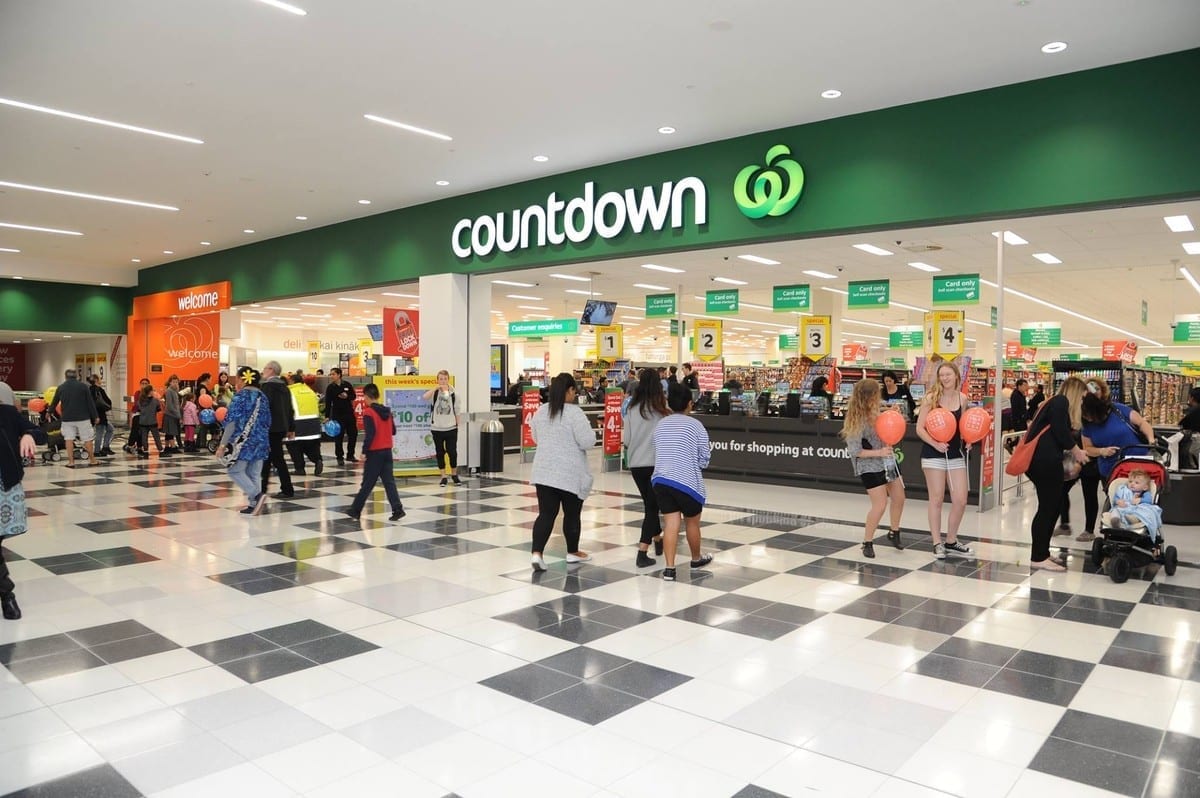
    Countdown was one of the first companies in New Zealand to adopt a family violence leave policy across its business, and it is encouraging other retailers to do the same by the sharing the positive impact its policy has had for employees since it was implemented in November 2016.

    Last week, Kiri Hannifin, the supermarket’s general manager of corporate affairs, safety and sustainability, revealed that Countdown has actively supported 28 team members impacted by family violence and provided more than 100 days of paid leave to team members through the policy. Eighty-six per cent of those seeking support have been female.

    Hannifin was speaking alongside the Minister for Workplace Relations and Safety, Hon Iain Lees-Galloway, Under-Secretary Jan Logie and representatives from Shine and the Human Rights Commission at Countdown’s Cable Car Lane store on Thursday last week, ahead of the government’s Domestic Violence – Victims’ Protection Act, which is coming into effect on April 1.

    “Countdown recognises what a significant issue family violence is and as a large employer we wanted to do something meaningful to support our team and show leadership on a really important issue,” Hannifin said.

    “We are committed to providing a safe and supportive workplace at Countdown, and we care about our team and their families – so implementing this policy was just the right thing to do.”

    The range of support Countdown has provided to date also includes free counselling sessions, including on-site; variations to hours; relocation; longer-term leave and facilitating where to seek extra support.

    The policy has also opened up the conversation about family violence across the business, according to Hannifin.

    “Through training, [we have] given our people skills on how to approach and talk to team members who are impacted by family violence,” she said.

    “The more openly our country’s leaders and businesses talk about family violence, the easier we make it for people to ask for our help.

    “That’s why the new Act is so important, not just because of the additional support it gives New Zealanders but because it sends a real signal to all of us that we each have a role to play.”

    Hannifin added that Countdown is very willing to share its knowledge and learnings from the implementing the policy over the last few years, and she encouraged other businesses to think strongly about what they can do to support their team who might be impacted by family violence.

  • The future of retail has arrived

    The future of retail has arrived

    Once upon a time, the future seemed a long way off. Remember Tom Cruise in 2002’s Minority Report? And the famous shopping centre scene?

    Director Steven Spielberg recruited a panel of futurists to predict a far-off tomorrow that included responsive, personalised advertising and sales assistants, triggered by iris and facial recognition.

    Well, today, we’re living in that future. Geo-location is ho-hum, facial recognition is a feature built into our phones and Alibaba in China has already tested “smile to pay” in kiosk screens in KFC stores, that replace the need for a wallet.

    Way back in 1994 (was that really 25 years ago?) American phone carrier AT&T ran a TV ad that forecast a future where shoppers could check out “a whole shopping cart at a time” through a scanner, and you could receive “a phone call on your wrist”.

    Fast forward to today, and frictionless grocery retail is a reality with Amazon Go stores (now rolling out across the US), and when I visited one in Seattle recently the receipt was pinged to my Apple Watch along with my trip time. Shoppers are actively gamifying grocery shopping, seeing how fast they can get in and out of the store.

    AmazonGo receipts are pinged to your wrist.

    The future, as science fiction writer William Gibson famously wrote, is already here. It’s just not very evenly distributed. Or, as Matt Thompson from American grocery giant Kroger put it even more succinctly: “The future is now”.

    I see examples of the “future of retail” in the US every day. Creator Burger in San Francisco has a burger-making robot. Nordstrom’s “Local” retail concept centres around click-and-collect, and services, and has no stock in store. Amazon’s 4-Star stores stream ratings and reviews live to the shelf. Kroger is testing self-driving grocery delivery vehicles with Nuro in Arizona.

    China takes things to a whole new level. When I attended Singles’ Day in China last year, I witnessed first-hand a shopping culture that was more “Bladerunner” than suburban mall. There, the mobile rules and stores are not destinations but “nodes”, designed to be interacted with both physically and virtually as the need fits. (My colleague in China ran out of garlic while cooking at home. No problem – he jumped on his app, and had the ingredient delivered in time to finish preparing the meal.)

    As I write this, I am about to return to Australia for a visit. I can’t wait to share my experiences and observations of perhaps the most dynamic time in the history of retail. At the same time, I’m also looking forward to seeing what’s new and exciting in our part of the world. The truth is that, particularly today, the future of retail is not limited to a geographic region. From Telstra stores to innovative supermarket and convenience store design, there is a lot to learn from what’s going on in the Southern hemisphere. You just have to look. Because the future is already here.

  • H&M announces opening date of new Botany store

    H&M announces opening date of new Botany store

    H&M has announced the opening date of another bricks-and-mortar store in New Zealand, with the launch of Botany Town Centre location set for 2 May 2019.

    The retailer currently operates four stores in the country, with plans to open a 5th location at Tauranga Crossing on 4 April 2019, making the Botany store its 6th location.

    Last week, the fast fashion giant revealed there is already a 7th store in the works. It is set to open at Chartwell Shopping Centre this winter.

    The Botany Town Centre shop marks H&M’s third location in Auckland, following the opening of H&M at Sylvia Park Shopping Centre in October 2016 and Commercial Bay in 2018.

    Spanning approximately 2000sqm, the single-level store will showcase apparel and accessories for men, women, kids and baby.

    “We are thrilled to finally announce the opening date for our third Auckland store, and look forward to greeting our customers with an incredible fashion destination within a superb shopping centre” said Daniel Lattemann, country sales manager for H&M New Zealand.

    H&M entered the New Zealand market in 2016.

  • Employers are more trusted than government,

    Employers are more trusted than government,

    New Zealanders trust their employers significantly more than they trust the government, NGOs, business or the media, according to the 2019 Acumen Edelman Trust Barometer.

    According to the report, “my employer” was more trusted (74 per cent) than government (50 per cent), NGOs (48 per cent), business (47 per cent) and the media (34 per cent).

    This is the result of trust in other institutions remaining flat, while trust in employers is on the rise. The finding aligns with the trend of employees seeking out purpose in the their jobs and organisations shifting away from being ‘customer-first’ to being ‘employee-first’.

    Acumen Republic’s chief executive Adelle Keely said organisations should see this finding as an opportunity to play a more critical role in the lives of their employees, and reap the benefits of loyalty and productivity.

    “Employees are looking for trusted sources of information in a time of change and disruption and there is an opportunity for employers to provide education and useful insights that help them navigate the new world,” she said.

    Keely noted there is a growing expectation for business leaders to step up as change-makers, with three-quarters of employees wanting CEOs to take the lead on change instead of waiting for government to impose it. This is 15 points higher than last year, she said.

    “Employers need to lead on change, address workers’ concerns, provide information and equip employees for the future. They should demonstrate their relevance and contribute to the communities where they operate. This is particularly important for those not headquartered in New Zealand.”

    Interestingly, there is a gender divide in trust in institutions, with women being less trusting than men. Women trust only government, while men have trust in both business and NGOs.

    “Trust in business shows the biggest gender divide. This is likely the result of lack of female representation and reporting around pay equity and the #metoo movement,” Keely said.

  • David Jones plans board expansion

    David Jones plans board expansion

    David Jones’ South African parent company Woolworths Holdings has appointed two independent non-executive directors, David Kneale and Thembisa Skweyiya, effective March 11 2019.

    The business said it plans to add further non-executive directors moving forward.

    Skweyiya has previously held positions at Citigroup and Nedbank Capital, has been a non-executive director of Rothschild, and has risk, audit, social and ethics and sustainability committee experience at both public and private companies.

    Currently, Skweyiya serves as a non-executive director on the boards of Imperial Logistics Limited, Liberty Holdings Limited, Sumitomo Rubber South Africa Limited and Jonsson Workwear Limited.

    Kneale has over 40 years of local and international retail experience in senior leadership and executive roles, according the Woolworths Holdings, having previously been the chief executive of Clicks Group between 2006 and 2019.

    Kneale held senior retail positions at Boots plc, and served as the chief commercial officer and managing director of International Retail Development, as well as managing director at Waterstone’s Booksellers for approximately two years.

    The appointments are made as the group chief executive Ian Moir is stepping in to fill the shoes of departed David Jones boss David Thomas while the search for a replacement continues.

    Thomas had been in the position for almost 18 months, and resigned abruptly, citing personal reasons. He had been the target of an internal discrimination complaint last year, but was cleared of any wrongdoing in November 2018.

  • Kathmandu suffers a data breach, customers potentially exposed

    Kathmandu suffers a data breach, customers potentially exposed

    An unidentified third-party has breached Kathmandu’s website and potentially accessed customers’ personal information and payment details, the outdoor retailer revealed on Wednesday.

    The business was alerted to the breach, which took place between January 8 and February 12, 2019, through bank fraud monitoring.

    A Kathmandu spokesperson told that the business is currently investigating how many customers are affected by the breach, but that it remains an ongoing process.

    “Whilst the independent forensic investigation is ongoing, we are notifying customers and relevant authorities as soon as practicable,” Kathmandu chief executive Xavier Simonet said.

    “As a company, Kathmandu takes the privacy of customer data extremely seriously and we unreservedly apologise to any customers who many have been impacted.”

    The business has enlisted the help of external IT and cyber security experts to assist in investigating the circumstances, and to confirm which customers have been impacted.

    While the financial impact of the incident is still unclear, the dual-listed retailer saw its stock price fall to $2.31 per share after the announcement, though rebounded to $2.37 by the end of trade.

  • UOB Hires New Managing Director

    UOB Hires New Managing Director

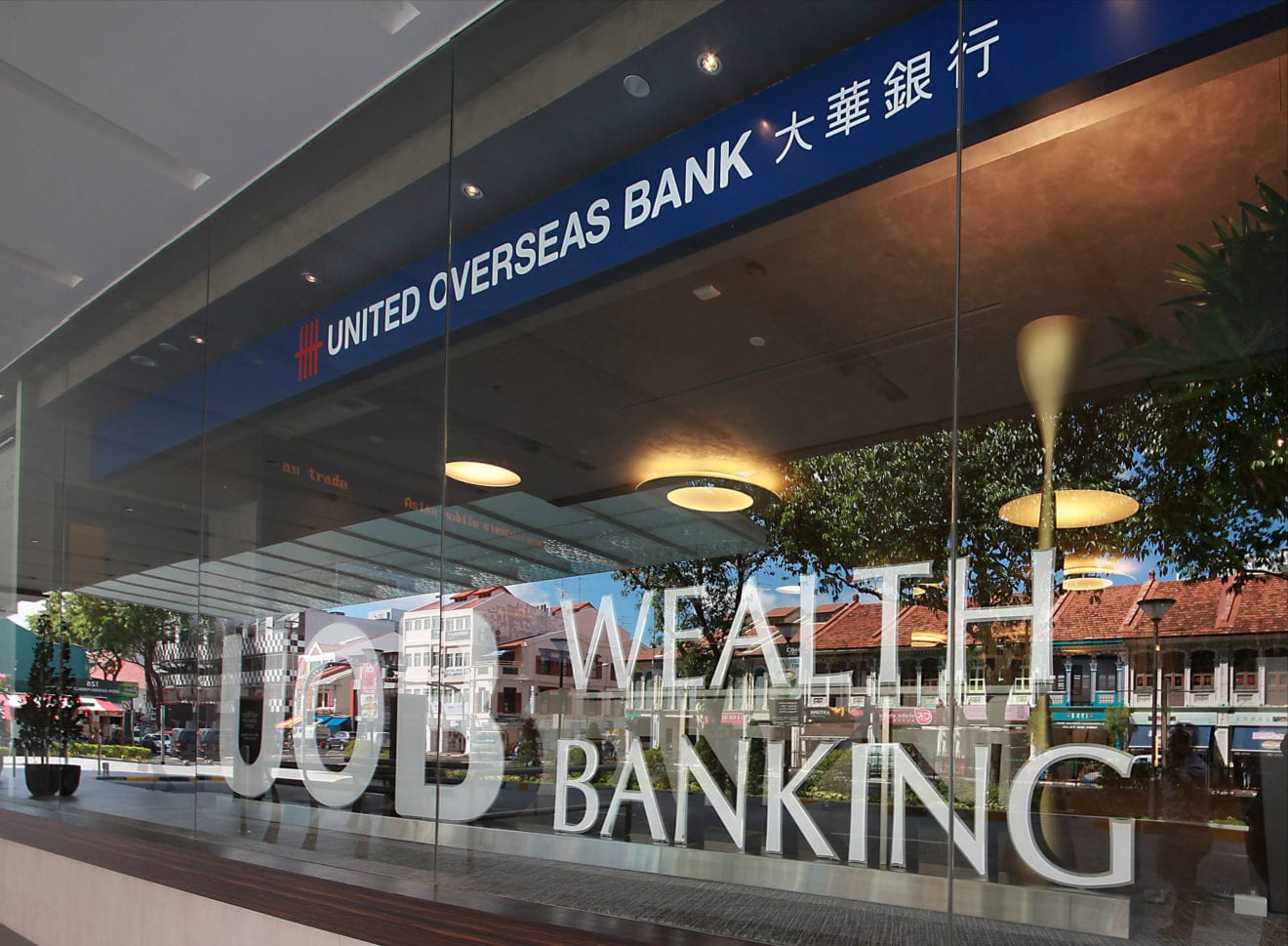
    United Overseas Bank recently hired a regional head of engagement to expand its digital team in SingaporeIndustry veteran Kristina Curtis joined UOB two months . ago as managing director, regional head of engagement, group retail digital. Her LinkedIn profile shows extensive experience in digital banking, having worked for ANZ as customer analytics and digital for global wealth, and for BT financial group as chief digital officer.

    When contacted, the bank declined to comment on the personnel move.

    Experience in digital banking

    The demand for people who have leadership and project management experience in digital banking is high in Singapore as banks are pushing to launch new digital platforms in areas of payment and wealth management.

    The ability to leverage on mobile application and new technologies to build an effective communication pathway with the customers and allow for continuous engagement is increasingly valued, evident from the fact that Curtis is not the only recent senior digital.

    Last October, UOB officially appointed Aaron Chia, formerly from Western Union, as the new head of its digital plus unit for wealth and lifestyle products.

  • Franchising report reveals “cultural problems”

    Franchising report reveals “cultural problems”

    The Australian Senate thinks there needs to be a comprehensive shift in power in the franchising sector.

    In a long-awaited report on its inquiry into the sector, released today, the Senate said the current regulatory environment has failed to deter poor conduct and exploitation within the sector and created an imbalance in power.

    On that basis, it recommends giving greater protection to franchisees and whistleblowers and applying greater penalties for misconduct. This would involve making several changes to the Franchising and Oil Codes and giving more responsibility and enforcement powers to the ACCC to conduct investigations into misconduct in the sector.

    “There are deeply rooted cultural problems that will not be resolved by a franchisor replacing a few senior executives,” the report stated.

    The report points out that disclosure has been the principal and almost only protection for franchisees, and that while many franchisors would like to keep it that way, it is no longer sufficient.

    “The extent and breadth of misconduct within the franchise sector demonstrates that disclosures and transparency alone, while vitally important, are an insufficient response to power and information asymmetry,” the report said.

    The report recommends more protection for franchisees and employees who want to blow the whistle on franchisors engaging in misconduct, and suggests that whistleblower protections should apply in these cases. The inquiry uncovered many instances of franchisors using intimidation to keep franchisees from speaking out.

    The report also recommends steeper civil penalties be introduced into the Competition and Consumer Act 2010, and the Franchising Code of Conduct, in order to ensure they act as a “meaningful deterrent” against further misconduct.

    The penalty amounts would be similar to those currently found under Australian Consumer Law, and should be prescribed in legislation so that the limit on penalties under industry codes does not apply to franchising.

    One of the major issues in the sector presented in the report is wage theft, partly due to the business model franchisors operate under, and partly due to social and cultural problems within the industry.

    “At times, wage theft is occurring as a way for franchisees to extract profits or service payments in order to stay afloat in a financially constrained business model (given wages are one of the greatest costs in the franchisee’s control),” the report said.

    “Whilst many franchisors cited greed as the primary motivation for wage theft, the committee notes that the issue is far more complex and partly inherent to the business models’ structural breakdown of power and the imposition of cost controls.”

    Last week, the Migrant Workers Taskforce recommended criminal penalties be put in place for businesses which intentionally conduct staff underpayment, noting it had found “widespread levels of non-compliance with relevant laws.”

  • Kogan looks to cash in on marketplaces

    Kogan looks to cash in on marketplaces

    Online retailer Kogan.com announced the launch of Kogan Marketplace on Thursday, calling it a “win-win” for customers and businesses.

    The marketplace currently offers more than 100,000 products from brands such as Microsoft, Breville, Lego, Fisher-Price, Paw Patrol, SodaStream, Gillette, Gucci and Philips.

    That number is set to grow after today, when brands can apply to sell via the marketplace. According to Kogan.com’s most recent annual report, select brands and distributors were already selling on the marketplace in the 12 months to 30 June 2018.

    “With today’s launch, there are now over 100,000 products available to purchase on Kogan.com — meaning customers have more choice than ever before,” Lazar Monin, Kogan.com’s director of marketplace, said in a statement. “Our mission is to make the most in-demand products and services more affordable for all Australians.”

    The marketplace gives brands and retailers access to more than 1.5 million active customers on Kogan.com, as well as the retailer’s marketing and online distribution capabilities.

    “We’re obsessed with creating a great experience at Kogan.com for our customers and sellers alike,” Monin said.

    The marketplace also gives Kogan.com an opportunity to expand its range, reach new customers and increase sales, without having to buy and hold inventory or lose margin to the new low-value GST, which has dampened its global brands business over the last eight months.

    The potential for growth through an online marketplace is perhaps best demonstrated by Kogan.com’s rival Catch, which has seen significant success since launching a marketplace in 2017. The former ‘deal-of-the-day’ site now carries nearly two million SKUs and has roughly the same number of active customers as Kogan.com.

    According to a UBS forecast reported by the Australian Financial Review in October 2018, Kogan.com currently has a bigger share of the online retail market excluding food in Australia, but Catch, thanks to its marketplace, was expected to leapfrog Kogan.com to grab a bigger share of the market after FY19.

    Meanwhile, Catch has been diversifying its offering into telecommunications and financial services, a strategy that Kogan.com has been executing in a bid to meet more of its customers’ needs. Catch last year launched mobile phone plans with Optus called Catch Connect, and recently partnered with Now Finance to offer small personal loans to customers.

    Kogan.com has been launching similar services for the past few years and now has a portfolio of insurance offerings, credit cards, internet plans and even superannuation.

    The online retailer recently reported record trading during the peak Christmas period, driving first-half revenue to $231.8 million, up 10.6 per cent on the previous corresponding period. Gross profit in the half was $45.1 million, up 10.8 per cent on first-half trading in FY18.

  • API doubts Sigma plans

    API doubts Sigma plans

    The proposed merger between the owners of the Priceline and Amcal pharmacy chains is off after Sigma Healthcare rebuffed an approach by its rival.

    Amcal owner Sigma, which is restructuring after losing a contract to supply Chemist Warehouse, said on Wednesday that October’s cash-and-scrip approach by Australian Pharmaceuticals Industries had undervalued its long-term prospects.

    Instead of responding with an increased offer, API questioned Sigma’s plans and said it would now decide what to do with the 12.85 per cent stake it bought late last year.

    “The Sigma Board has chose a path to restructure its significantly downsized business, rather than pursue a merger to create a future that benefits consumers, pharmacists and both sets of shareholders,” API said.

    Sigma said it agreed the tie-up could save the combined company $60 million a year through supply chain consolidation, but that a business review completed last month found $100 million in potential savings through cost-cutting as a stand-alone company.

    It also said that a decline in API’s share price also meant the offer was worth 12 per cent less than when it was made in October.

    The offer was worth about $727 million when it was made public in December.

    API countered by saying the cost savings that Sigma was citing were uncertain and unclear, and would mostly be offset by revenue lost by Chemist Warehouse’s decision to take its business elsewhere.

    It also pointed out its offer represented a 41.8 per cent premium to the average price of Sigma shares in the month before the offer was announced.

    “API notes that very little information has been provided by Sigma in relation to its intended restructure,” API said.

    Sigma shares slumped on the development, dropping 14 per cent to 52.5 cents by 1423 AEDT, their lowest since before the merger proposal was made public.

    API shares were down 3.57 per cent, at $1.35.

    Sigma is the owner of franchise brands Amcal, Chemist King, Discount Drugs and Guardian.

    API owns the Priceline, Soul Pattinson and Pharmacist Advice brands.

  • Grand Opening of Elizabeth Arden White Tea House In The Shilla Duty Free Changi Airport

    Grand Opening of Elizabeth Arden White Tea House In The Shilla Duty Free Changi Airport

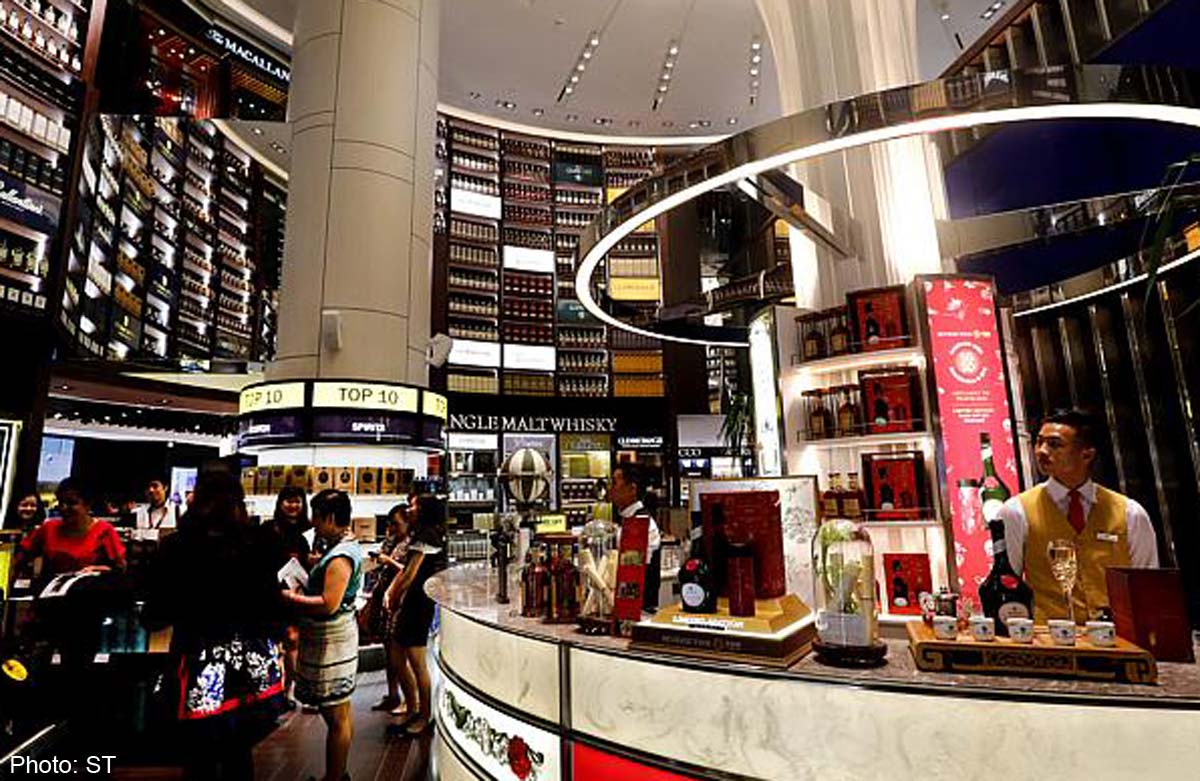
    Elizabeth Arden has partnered with Changi Airport Group and The Shilla Duty Free to open a world exclusive pop-up concept celebrating the travel retail prelaunch of two new fragrances – White Tea Wild Rose and White Tea Vanilla Orchid.

    The Elizabeth Arden White Tea House opens on Sunday 3 March and sits beside The Shilla Cosmetics & Perfumes Central Store at Singapore Changi Airport’s Terminal 1 Transit Departure Hall until 13 April 2019.

    Elizabeth Arden’s first White Tea fragrance launched in 2017 with the aim to capture the feelings of simple pleasures, a carefree afternoon, a good book or the first sip of tea in a pure and uncomplicated fragrance. Today, Elizabeth Arden is expanding the experiential collection with the launch of White Tea Wild Rose and White Tea Vanilla Orchid.

    Experiential

    The White Tea House is part of Elizabeth Arden’s commitment to present memorable and coveted travel experiences and presents travellers with the opportunity to embark on a #WhiteTeaMoments experiential journey.

    Fragrance and skincare sampling are presented to travellers in a “degustation style” – customers get to experience the three scents of White Tea, White Tea Wild Rose and White Tea Vanilla Orchid before deciding on their complimentary cup of tea, inspired by each of the fragrances.

    Elizabeth Arden’s best-selling skincare products are presented in sampling portions, and plated in degustation style. Customers will be able to share their experience with other travellers via the Tea House message board and photos against a specially designed floral wall to share with friends and family on social media via hashtags #WhiteTeaMoments #Changi 1st. They will also receive a free hardcopy polaroid photo.

    Stephane Bonnet, Elizabeth Arden Vice President of Global Travel Retail explained: “The White Tea House is an excellent way to kickstart the launch of our new White Tea fragrances. The tea house integrates beauty and lifestyle elements beautifully with various memorable touch points during the service journey. We hope the travellers will attach this pleasant memory to the subtle yet enchanting scents of Elizabeth Arden’s White Tea Fragrances.”

    Exclusive gifts

    Customers are rewarded with a Changi Airport-exclusive magnet and postcard set designed in collaboration with Grace Ciao, an illustrator globally recognised for her delicate and chic fashion illustrations using real flowers and watercolours.  The design depicts a modern woman in a dress created from wild rose, posing elegantly against a backdrop of pink roses and white vanilla orchids, symbolizing the two new pre-launch fragrances. Elizabeth Arden also provides free mailing service for travellers who want to post the postcard to their loved ones.

    The shopping experience in the White Tea House is further elevated by a tea blending activity where customers can customise their own White Tea blend to bring home in a personalised sealed tea bag upon purchase of a White Tea fragrance.  This customisable gift is available only at the White Tea House in Changi Airport.  “Personalisation of gifts, either for yourself or for your loved ones is becoming increasingly important in the competitive and congested retail environment. Customers want to be part of the process of creating something unique for themselves,” shared Yumie Chia, Senior Regional Director of Asia Pacific Travel Retail Division at Elizabeth Arden.

    “Multi-level engaging expereience”

    “Changi Airport is honoured to host the world’s first Elizabeth Arden White Tea House experiential pop-up concept and be the first airport to launch the two new beautiful fragrances ahead of the rest of the world. Passengers flying through Terminal 1 can take a moment to indulge in the fragrance of white tea to ease the stress of travelling, and bring home some elegant mementos from Changi Airport,” said Teo Chew Hoon, Group Senior Vice President of Airside Concessions, Changi Airport Group.

    Phil Yoon, Managing Director from The Shilla Duty Free added: “As The Shilla Duty Free continues to seek for innovative partnership launches, this collaboration with Elizabeth Arden provides a multi-level engaging experience that will delight even the weariest travellers.  A traveller’s buying behaviour has evolved in marvellous ways.  The concept of a Tea House is a great way to appeal to our increasingly sophisticated travellers and engage with them on both olfactory and gastronomical levels.”

  • Hypebeast Japan to launch with on-boarding of Akihiro Wajima, former Director of Farfetch Japan

    Hypebeast Japan to launch with on-boarding of Akihiro Wajima, former Director of Farfetch Japan

    Hypebeast Ltd. is pleased to announce the official launch of Hypebeast Japan Ltd., grounding its cultural influence in the region and marking another step in furthering expansion in Asia. The Company is also pleased to announce the appointment of Mr. Akihiro Wajima, former director of Farfetch Japan, as the new Managing Director of Hypebeast Japan Ltd., who will play an instrumental role in leading the Hypebeast Japan team to success and continue to push forward its market share. Japan is known for its impressive lens and unique take on expressing local and global culture. Hypebeast Japan, being one of Hypebeast’s flagship language sites, has been steadily building a distinctive editorial voice for its streetwear, music and lifestyle space in the country.

    “Japan is one of my favorite places in the world – it’s one of the top places globally for cultural opportunities, and possesses an inquisitive, progressive and ready audience to the types of activations, content curation, e-commerce services, and creative production which are indigenous to Hypebeast,” said Kevin Ma, CEO of Hypebeast Ltd. “We are ready to take our business in Japan to the next level. As a first step, we will focus on expanding local editorial coverage and content in Japan, which will help to connect its unique cultural voice to the rest of the world through our Hypebeast platform.”

    “I am pleased to lead Hypebeast Japan Ltd. and help the team to achieve a new level. Along with Kevin Ma and the team, I am sure we will achieve something exciting together and build a strong presence in Japan,” said Akihiro Wajima.