Author: Mei Ling Tan

  • US trails world in 5G mid-band spectrum

    US trails world in 5G mid-band spectrum

    The mid-band spectrum is critical to 5G but the United States trails other countries in mid-band availability, according to a 2018 Analysys Mason study, which shows other countries plan to make over four times more licensed mid-band spectrum available than the US by 2020.

    Next-generation 5G networks rely on a mix of high-, mid- and low-band spectrum. Low-band spectrum carries signals over long distances and was the foundation for the first four generations of wireless networks. High-band spectrum travels much shorter distances, but offers the greater capacity required for data-intensive applications. Mid-band spectrum blends the attributes of both, delivering high capacity across larger geographic areas.

    In 2018, Analysys Mason compiled the mid-band spectrum plans of 13 countries, including the United States, to produce a report for US wireless industry association CTIA.

    Among the key findings of a 2018 compilation of mid-band spectrum plans in 13 countries around the world suggests that by the end of 2020:

    • On average, countries included in the study will make 4 times more licensed mid-band spectrum available than the United States.
    • Japan is planning to make ten times more licensed mid-band spectrum available than the United States.
    • China is planning to make more than seven times more licensed mid-band spectrum available than the United States; the United Kingdom is planning to make nearly five times more licensed mid-band spectrum available.

    “Resources available to US operators are improving, but spectrum in the mid-band remains limited compared to other leading 5G markets,” said Janette Stewart, a principal with Analysys Mason and the lead author of the report, “Mid-band spectrum will be key to wider-area 5G coverage.”

  • Automated frequency coordination at tipping point

    Automated frequency coordination at tipping point

    Automated spectrum management databases and algorithms are an important public policy tool for meeting surging demand for low-cost high speed wireless broadband connectivity, according to a new report from the Dynamic Spectrum Alliance (DSA).

    The report argues that automated frequency coordination (AFC) is critical to allowing more efficient shared use of underutilized spectrum bands, while protecting incumbent services from interference.

    The DSA, which includes members including Amazon, Facebook, Google, Microsoft, Cisco and Hong Kong’s Applied Science and Technology Research Institute (ASTRI), released the report yesterday at an event co-sponsored by the Congressional Spectrum Caucus in the US.

    It argues that automated spectrum management systems have reached a tipping point for adoption worldwide, and that these systems will greatly extend the supply of wireless connectivity in markets that adopt them.

    AFC also has the potential to lower transaction costs and help national regulatory authorities meet the growing and very diverse spectrum needs of both industries and individuals.

    The US FCC is considering the use of AFC systems to manage spectrum capacity across several bands for licensed and unlicensed use. The EU and the UK are also conducting consultations over adopting AFC systems for shared spectrum access.

    “At a time when regulators are under increased pressure to meet wireless connectivity demands, AFC is critical to enable more efficient shared use of underutilized frequency bands while protecting incumbent services from interference,” DSA board chairman Paul Garnett said.

    “Automated spectrum databases are now a proven means of achieving large-scale, low-cost, and virtually real-time access to communications capacity that would otherwise go unused.”

    Other members of the DSA include HPE’s Aruba Networks, Broadcom, Ruckus Wireless, the IEEE and the Taiwan Institute for Information Industry.

  • 5G will power outdoor robots in the future, but not now

    5G will power outdoor robots in the future, but not now

    Low latency and cloud intelligence are the two main features of 5G that will significantly change the deployment of mission critical and business critical robots, particularly those deployed outdoors. ABI Research argues that the commercialization of a 5G network is expected to usher in the significant growth of commercial robotics.

    Shipments of 5G robots are expected to reach 570,000 by 2027, largely deployed in mission critical and business critical settings. Outdoor applications that will be enabled by 5G connectivity include public safety and first responders, critical asset inspection, last mile delivery and transportation, precision agriculture, field extraction, and haulage.

    Traditionally, high-speed broadband connectivity is only available to robotics systems in indoor environments via Wi-Fi and broadband fiber. Therefore, existing outdoor commercial and industrial robots are often fully autonomous devices with onboard intelligence. With 5G, robots’ capabilities will be upgraded.

    “Existing onboard capabilities, such as object and people detection, path planning, and optimization can be shifted to the cloud to benefit from a larger set of data lake,” said Lian Jye Su, Principal Analyst at ABI Research.

    “At the same time, robotics systems will have access to capabilities that could not be previously hosted on existing systems. At present, remote control appears to be the focus, with Toyota’s T-HR3 and Naver’s AMBITEX, but the real game-changers will be conversational Artificial Intelligence (AI) and swarm intelligence. 5G’s low latency will enable robotics vendors to augment the onboard intelligence or even move parts of it to the cloud to introduce new capabilities to existing robotics hardware. Enterprise users will be able to connect their fleet of outdoor robots to the cloud and enjoy the performance, scalability, and flexibility of the cloud-based intelligence.”

    In order to enable 5G capabilities, robotics vendors must work closely with connectivity and chipset vendors in their design and prototyping phase to maximize the benefits of ubiquitous connectivity. Qualcomm has recently launched the Robotics RB3 Platform, powered by its Snapdragon 845 SoC with future 5G upgradability and Inseego has partnered with CloudMinds to provide 5G connectivity to the XR-1 Cloud Robot.

    By integrating LTE and 5G connectivity from the onset, robotics vendors can provide a clear roadmap in terms of future upgrades. The clear connectivity roadmap will provide the industry guidance on the future capabilities that cellular connectivity can enable.

    This includes multi-access edge computing that provides computing, networking, and caching at the network edge and wide area machine-to-machine communication that facilitates situational awareness and information exchange between mobile robots, cloud platforms and surrounding infrastructure.

    “In the long run, 5G will become the de facto connectivity method for outdoor robots. As a global standard, 5G enjoys economies of scale. This brings down the total cost of ownership of 5G networks and the price of 5G modem chipsets, allowing robotics developers to integrate 5G connectivity with ease,” Su concluded.

  • Globe opens its first Esports Center

    Globe opens its first Esports Center

    The Philippines’ Globe Telecom has announced the launch of its first Esports Center, aimed at supporting various local esports communities.

    The Esports Center at Play Nation in the UP Town Center in Quezon City will offer various initiatives including esports competitions, as well as support helping gamers create live streaming content and interact with other members of different esports communities.

    Globe SVP and head of content business group Nikko Acosta said the facility will help Globe’s Games and Esports division achieve one of its key goals of strengthening support for esports in the Philippines in cooperation with various fan communities.

    “We want to bring together different communities of popular games like Arena of Valor, Rules of Survival, League of Legends, and Tekken – among others – in one venue to upgrade their knowledge and gauge their skill levels with others through peer learning of new strategies and techniques,” he said.

    “We are positioning esports as a real sport, to make a gamer into a real athlete harnessing both physical and mental attributes by playing it right,” Acosta added, mentioning the company’s #PlayItRight advocacy campaign, which seeks to emphasize the importance of discipline, nutrition, physical wellness, and cognitive development in esports.

  • Airtel, TTSL could be hit with $2.15b bill over merger

    Airtel, TTSL could be hit with $2.15b bill over merger

    India’s Bharti Airtel and Tata Teleservices may need to pay nearly 150 billion rupees ($2.15 billion) in spectrum charges to the government to clinch approval for their planned merger.

    The Department of Telecom is preparing to issue the demand as a condition for granting approval for the merger, unnamed DoT officials told.

    The expected bills will cover unpaid license fees, spectrum usage charges and a one-time spectrum reallocation charge. It will include a 120 billion rupee charge for Bharti Airtel and a 28 billion rupee charge for Tata Teleservices.

    DoT approval is the last remaining major hurdle that the companies will need to clear to approve of the merger, which was announced in 2017. The deal has already been signed off on by the National Company Law Tribunal.

    According to the report, license fees, which will be based on adjusted gross revenue, may further add to the cost.

    But the department is already expecting the operators to appeal the one time spectrum charges with the Telecom Disputes Settlements and Appellate Tribunal (TDSAT).

    The operators may also potentially seek to block DoT’s efforts to demand spectrum usage charges based on the legal uncertainty over the definition of an operator’s adjusted gross revenue, against which annual license fees are calculated.

  • Getting The Right Roof for Your House Location

    Getting The Right Roof for Your House Location

    The roof is just about the biggest investment in any residential property. The kind of roof you choose for your home will determine the level of protection from the elements you’re bound to enjoy. It will also determine how much you spend on maintenance through the lifetime of the roof. Today, there are many different kinds of roofs by style, design, and roofing material. Before choosing any option however, it is highly important to consider the geographical location of the home you’re choosing the roof for. In other words, not all roofs are created to withstand the climatic conditions of all locations.

    With this in mind, here are some helpful pointers on getting the right roof for your house based on its location.

    Climate Factors

    According to Mr. Mike LaPointe of Point Roof Restoration, one of the most experienced roofing contractors Boise has to offer, some types of roofs do better than others in certain weather conditions. Needless to mention, different geographic locations have different climates and weather patterns. This means that when choosing a roof for your home, it is important to consider its location as well as the following important climate/weather factors.

    • Heat – Needless to mention, some locations are generally hotter than others throughout the year. If your home is built in such an area, it is always better to go for a roof with the ability to reflect heat and absorb as little as possible. This allows your home to stay cooler, which can reduce the amount of money you spend on cooling and air conditioning. Experts also suggest that flat roofing systems are more ideal for buildings in regions that generally experience hot and dry weather.
    • Wind – Again, some areas are generally windier than others. In the Southern coastal areas, for instance, winds can have an average speed of 17 mph but may also be prone to high winds, tropical storms and hurricanes. In such an area, you need a roof made from thicker material that is tried and tested to withstand high winds. You don’t want to wake up and find your entire roof blown off!
    • Humidity – Airborne moisture is one of the most damaging elements to roofing. If your home is built in a high-humidity area, say near the eastern coasts, you need a quality roof that can withstand just that.
    • Rainfall – This is where your roof’s design will count most. In rainy regions, a sloped roof could work best as it would reduce pooling and increase rainwater drainage. When ponds of water get trapped on various surfaces of the roof, it leads to rotting, leaks, and weaknesses on the entire building. In most cases, sloped roofs are accompanied with gutter systems that help eliminate the possibility of ponding on the roof.
    • Salt – If your home is built near the coastline, it is important to note that some roofs are prone to corrosion by salt from the ocean. This is especially the case with certain metal roofs. If you have to use a metal roof system, in this case, it is important to ensure that it has an alloy coating to extend its lifespan.
    • Fire Risks – Some areas are prone to forest fires. For homes in such areas, it can be an extra precaution to use fireproof roofing.

    Common Types of Roof by Material

    • Metallic roofs – As you can tell from the name, these are roofs made from metal. The most common options include iron, copper, and aluminum roofing. As far as quality goes, copper tends to be more superior than the rest. this is because it is generally heavier and can thus withstand high winds, not forgetting its high ability to withstand corrosion by salt and moisture. Unlike iron, it is less prone to rusting. However, copper roofing tends to be a bit more expensive compared to the other alternatives. Depending on the metal type, metal roofing can last somewhere from 40 to 100 years.
    • Slate roofs – This one is considered the most durable roofing options. With proper installation and maintenance, slate tiles can last up to 100 years of service. They are also excellent at withstanding the elements and can greatly increase the value of your home.
    • Shingles – These are also known as asphalt or composition shingles. Most people prefer them for their enormous versatility and the fact that they come in numerous patterns and colors to choose from. Well maintained, asphalt shingles have an average lifetime of 20-30 years.

    Other common options in the roofing industry today include wood shakes and EPDM (rubber) roofing, which can last from 20 to 40 years with proper installation and maintenance.

    Once you get it right on the elements and choose a suitable roofing material, you just need to figure out which roof design will work out best for you. This is both in terms of functionality and aesthetic appeal. With the above tips, however, choosing the right roof for your home based on its location becomes a breeze.


  • No original shows at launch for Apple TV service

    No original shows at launch for Apple TV service

    Apple’s TV service is still a no show, but that’s probably going to change very soon. The Cupertino-based company plans to use the March 25 event to outline how it will take on rivals like Amazon and Netflix, a new Bloomberg report claims. While Apple is gearing up to launch its TV service, the company needs to sign deals with Pay-TV programmers like HBO, Showtime, and Starz, which in return must decide whether or not Apple is either a threat or a potential partner.

    If everything goes well, Apple TV will offer HBO and Showtime TV shows at launch, but no original content, people familiar with the matter claim. Apple’s own movies and TV shows are still in development and might not be ready until later this year at the earliest. Although Apple may take the wraps off its TV service this month, it’s almost certain that it will not be actually available until fall.

    Another important thing to note is that Apple plans to integrate the TV service into the iPhone, iPad and set-top box’s TV app, which will offer two types of content: Apple original shows or content bought/funded by the company, as well as content from third-party media companies like HBO and Showtime.

    The same report mentions that the first partnerships are expected to be closed as early as Friday, but since the talks are still going on, it’s impossible to predict what will happen.

  • Xiaomi Pocophone F1 Lite could launch soon

    Xiaomi Pocophone F1 Lite could launch soon

    The Pocophone F1 is one of the most competitively-priced smartphones out there. It offers Qualcomm’s Snapdragon 845, 6GB of RAM, and 64GB of storage for just €329/$389. But not everyone can afford to spend that on a smartphone, and it now seems as though a solution might be on the way. From the look of two Geekbench listings, Xiaomi sub-brand Pocophone is developing a slightly less powerful device that will be offered to consumers at a much lower price. Rather than including the high-end Snapdragon 845, the device looks set to adopt Qualcomm’s mid-range Snapdragon 660.

    This chip has already been succeeded by the newer Snapdragon 670 and 675 but should still provide decent levels of performance. In fact, Xiaomi recently used it inside the Redmi Note 7 and the Android One-powered Xiaomi Mi A2.

    The smartphone, which is codenamed ‘Uranus,’ also includes a respectable 4GB of RAM and Android 9 Pie straight out of the box. As for external features, the notched display and 3.5mm headphone jack will probably both be retained. Xiaomi may also keep the second rear camera, although a downgrade to the sensor is likely.

    At the moment, it’s unclear when this smartphone will hit shelves across the globe. But pricing wise, Xiaomi could easily price this device below $200. After all, the Redmi Note 7 mentioned above costs just €179 ($202) in Asia.

  • Disneyland for all things pasta

    Disneyland for all things pasta

    Five or six years ago, Australian retail pundits who’d visited the 50,000sqf Eataly Italian “food emporium” in New York (which opened in 2010), were breathlessly rhapsodising about it in presentations back home.

    My visit to its Munich outpost two years ago was pleasant but not earth-shattering. Still, the enterprise continues to march across the globe, currently with 40 locations across its core countries of Italy and the US, as well as Japan, Korea, Germany, Sweden, Russia, Brazil, Turkey and the Middle East, with further sites planned for Belgium, Hong Kong, South Africa, France, Canada, the UK and Australia in the “near future”.

    Eataly executive chairman Andrea Guerra told the Financial Times at the end of 2017 that the company was planning major expansion over the next decade and wanted to “have a store in every world capital”. Or maybe he was just talking the company up in advance of a theoretical IPO, which a potential overreach into theme parks may have derailed. Let’s take a look.

    Authentic or dumbed-down?

    For those not familiar with it – or somehow immune to past hype – Eataly is a large format/footprint Italian marketplace or food hall comprising a variety of upscale restaurants, food and beverage counters and delicatessens, bakery and other specialty food counters, a supermarket, other retail such as homewares and kitchen utensils, and a cooking school.

    Guerra defined its concept as “a complete emotional food experience where customers shop, eat and learn all about Italian food, all in a cross-selling approach”. Its strapline, Alti Cibi, translates literally as “high food” – which perhaps may go some way to explaining its perceived high prices, a continual source of aggravation on its Tripadvisor reviews.

    Eataly originally showcased a number of small and artisan companies operating in the food and wine sector, such as durum wheat pasta from Gragnano, mineral water from the Maritime Alps, Veneto and Piedmont wines, Ponente Riviera Ligure oil, Piedmont fassone meat, and traditional Italian cheese and cold cuts. In theory, Eataly offers “the best artisan products at reasonable prices” and says it creates a “direct relation between producers and distributors, focusing on sustainability, responsibility and sharing”.

    Despite its pun-in-English name, Eataly is not a US franchise. It’s actually Italian, and therefore in theory “authentic” although some Italians think it’s dumbed-down. It was founded in 2004 in Italy’s northern Piedmont region by Oscar Farinetti, an entrepreneur formerly involved in the consumer electronics business. In 2007 he converted a closed vermouth factory in Turin into the first location of Eataly.

    Fast forward to 2018 and Eataly has 40+ locations in the northern hemisphere and a 2017 revenue of €465 million ($737 million), a 20 per cent revenue increase on the previous year (7 per cent up in Italy, 48 per cent up in the US but primarily through lateral growth via new store openings) although its profits are negligible and variable. Like-for-like store growth statistics are hard to come by.

    Eataly was theoretically due to list on the Italian stock exchange in mid-2018 with a 33 per cent floating capital and a huge valuation (more than €2 billion). However it does not yet appear to have done so, and has been suspiciously “quiet” in new store openings in any market since early 2018.

    An educational dinner at the farm

    It appears ambition may have strangled the golden goose. In advance of a theoretical mid-2018 IPO, in November 2017 Farinetti and Guerra launched Fico Eataly World in the northern Italian city of Bologna, with at best mixed results and feedback.

    Dubbed the Disneyland of Pasta, Fico Eataly World was inaugurated by prime minister Paolo Gentiloni and claimed to be the world’s largest agri-food park. Its 20 acres contains three dozen restaurants, a gigantic market, farms and factories enabling visitors to see how products are made and processed, and a variety of “multimedia experiences”. It is intended to “unify Italy’s diverse food culture under one roof”. There is a multitude of pop-up-style stores selling Italian produce and kitchenware; six experiential educational pavilions; several classrooms, sports and play areas as well as a cinema and a 1000-capacity congress space. It is surrounded by several hectares of farm animals and vegetable plots. The project took four years to complete, at a cost of €120 million. It works with over 150 Italian companies, from relatively small to very large, and has created more than 3000 jobs.

    But inevitably it has its detractors, who denounce it as an American concept in search of an Italian home, and has had patchy performance.

    Forecast to bring in three million visitors a year, in 2018 in its first five months of operation it had brought in just 1.5 million. And only 1.8 per cent of them were foreigners versus a projection of 30 per cent. Reports suggested that on those initial numbers, it won’t meet the required breakeven of four million visitors a year.

    The site has been plagued by claims of isolation – the “culinary cathedral in the desert” is not readily accessible by public transport. It is now, apparently, investigating hotel and resort development to cater to the conference market. According to reports, it has laid off substantial numbers of staff.

    Where are the tourists?

    Either way, the question remains whether an American-style retail idea can work in Italy unless it’s substantially marketed to foreign visitors as a tourism (not retail) destination, and made readily accessible.

    It appears the substantial capital required for Fico Eataly World and its mixed performance have stalled its IPO.

    And regarding its Australian visions, it’s not as if the nation is bereft of Italian restaurants. Due to its sizeable Italian-heritage population, there are Italian eateries everywhere, both alti and not-so-alti. If and when Eataly’s food emporium returns to its retail roots and comes to Australia, it will be interesting to see how it caters to this market.


  • Jack Ma steps down from Alibaba divisions

    Jack Ma steps down from Alibaba divisions

    Alibaba founder Jack Ma has stepped back from active roles in five subsidiary companies as he prepares to hand over executive chairmanship of the company in September.

    Management of Alibaba say the moves were intended to improve the firm’s governance and administrative transparency.

    Ma has exited Alibaba’s Technology, Education Technology, Taobao Software, Network Technology, and Software departments.

    Stepping away from the business divisions was signalled before Ma announced last September his intention to resign as executive chairman and officials say the latest move is normal industry practice.

    One commentator described the step as “goodwill” and encouraging transparency when he is no longer active in Alibaba on a day to day basis.

    In an interview last September, which Ma owns, he said relinquishing the executive chairmanship was “not about retiring, stepping away, or backing off”. “This is a systematic plan,” he said.

  • Iuiga defends use of Muji brand on its website

    Iuiga defends use of Muji brand on its website

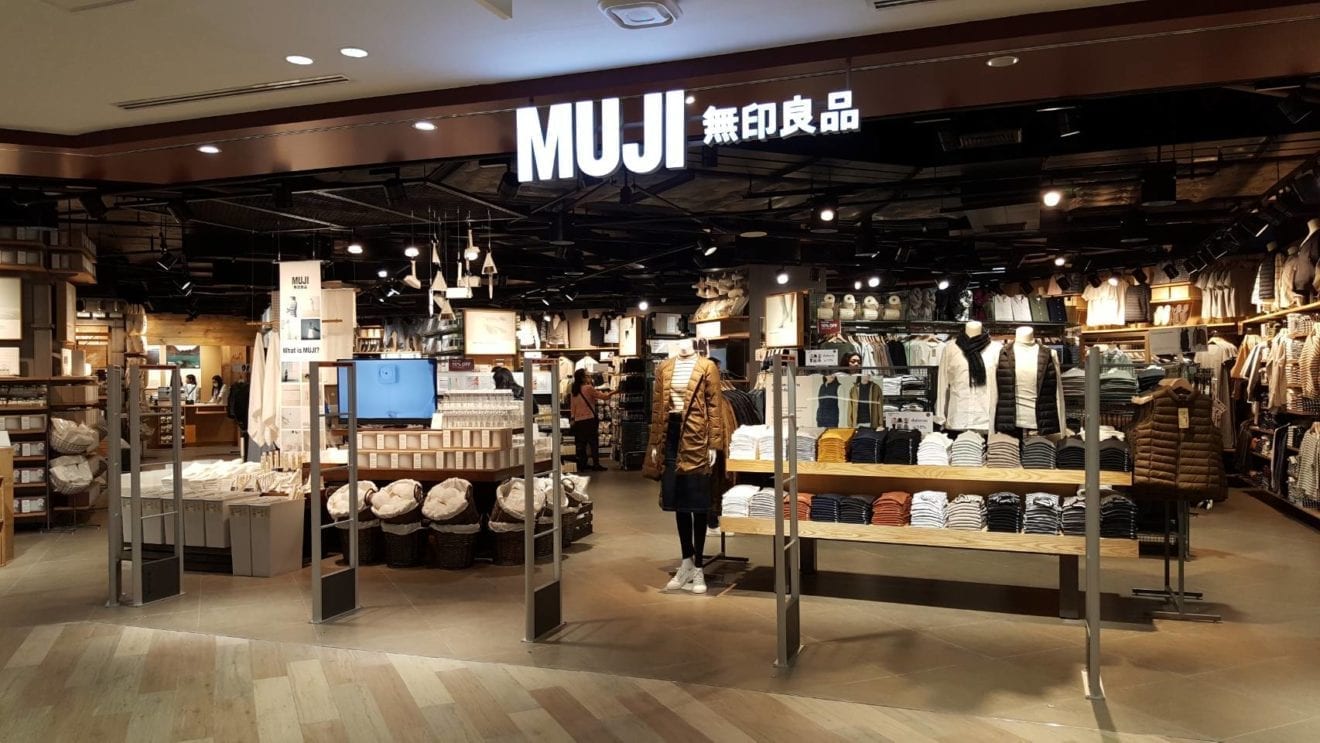
    Singaporean retailer Iuiga says it has done “nothing wrong” using the Muji brand name on its website.

    “The information on our website is factually accurate and our manufacturing processes are legal,” said Jaslyn Chan, Iuiga chief growth officer.

    Iuiga says it works directly with Original Design Manufacturers (ODM), who produce for large international brands including Muji. Under the ODM business model, the exterior, aesthetics, materials, dimensions and patented technologies are developed by the ODM and these product and design rights belong to them.

    “There is no direct ownership of the product by any single brand entity, allowing the ODM to produce for more than one brand. This is what Iuiga means when it says a certain product is from the “same manufacturer as Brand A”.

    Based on this, Iuiga maintains it is working with ODMs that also work with Muji.

    “Iuiga is also preparing a list of manufacturers that both Iuiga and Muji work with to be released to the media later,” Chan added.

  • Jazz contracts Nokia for 4G network expansion

    Jazz contracts Nokia for 4G network expansion

    Pakistan’s Jazz has contracted Nokia to expand the operator’s 4G network capacity and coverage.

    Under the five-year agreement, Nokia will provide its radio solutions for Jazz’s network in the central and southern Punjab province as well as the Sindh and Baluchistan provinces.

    The rollout area will cover densely populated cities including Faisalabad, Multan, Bhawalpur, Rahimyar Khan and Sukkur, allowing Jazz to provide improved services for customers.

    The deployment will include Nokia AirScale base stations for expanded 4G coverage and Massive MIMO technology for enhanced capacity and speed.

    “Expanding 4G coverage across all cities and towns in Pakistan is one of the key strategic pillars of Jazz to fuel the consumption of broadband services,” Jazz chief technology and information officer Khalid Shehzad said.

    “Nokia’s advanced equipment coupled with its commitment to provide quality professional services will ensure that our subscribers enjoy superior service experience. It will help us maintain our growth momentum and attract new subscribers.”

  • Vodafone Idea doubles 4G speeds in Mumbai

    Vodafone Idea doubles 4G speeds in Mumbai

    India’s Vodafone Idea has announced it has doubled 4G download speeds in the Mumbai metro area as part of a major network modernization program in the city.

    The operator is deploying new technologies in the metro area including Massive MIMO, small cells and more TD-LTE cell sites, and has so far deployed more than 5,000 such sites across several regions.

    As part of the network upgrade, Vodafone Idea has also installed over 1,900 pieces of dedicated indoor coverage equipment at high rises and commercial buildings.

    Vodafone Idea’s capacity and coverage in Mumbai has also benefited from 4G spectrum refarming conducted as part of the network consolidation between the former Vodafone India and Idea Cellular, which combined to become Vodafone Idea last year in a $23 billion merger.

    “I am happy to announce that ‘Mumbai just got two times faster’ which means that our customers will now experience two times the download speeds on the 4G network,” Vodafone Idea business head Sunil Tolani said.

    This is based on statistics from Valu Connex Telecom Services indicating that average download speeds in Mumbai have improved by 2.16 times compared to prior to the modernization program.

    “We will be utilizing multiple [advertising] media like OOH [out-of home], radio and digital to reach out to our audience and hope they will enjoy the benefits of our focused network initiatives in Mumbai,” Tolani concluded.

  • Ericsson to supply gear for XL Axiata’s 5G transport network

    Ericsson to supply gear for XL Axiata’s 5G transport network

    Indonesia’s XL Axiata has awarded Ericsson a contract to contribute to the deployment of the operator’s planned 5G ready transport network. Under the expanded partnership, Ericsson will provide 5G ready routers for the rollout over the next three years, commencing in the second quarter. Ericsson will provide its Router 6000 for all sites selected to be modernized under the contract. The router is optimized for 10G/100G connectivity, as well as the low latency, high accuracy internal clock and IPsec security capabilities required in 5G backhaul networks.

    “We are looking forward to continuing our partnership with Ericsson with state of the art transmission equipment,” XL Axiata director Yessie D Yosetya said.

    “We believe this will increase our network capacity performance and also beneficial for our customers to deliver a good user experience. This is one of our initiatives into the 5G era.”

    XL Axiata announced during Mobile World Congress in Barcelona that it has partnered with Huawei to construct Southeast Asia’s first 5G-ready simplified transport network covering all of Indonesia.

    Huawei is providing its Optical Networking 2.0 solution to help the operator simplify network architecture and build a simplified transport network.

  • Valextra Beijing flagship finally unveiled

    Valextra Beijing flagship finally unveiled

    Luxury leather good brand Valextra has opened a flagship store in Beijing.

    Valextra Beijing flagship 1


    Valextra-Beijing-flagship handbag close up

    The luxe label, which recently launched much-publicised spaces in Shanghai and Chengdu, has taken a unit at high-profile location Taikoo Li Sanlitun. The Valextra Beijing space at the open-air shopping mall features an expansive glass facade with a lofty ceiling, maximising on ambient daylight, and an interior design created by London-based Italian designer Martino Gamper.

    Valextra Beijing flagship 3

    To the right of the boutique, diamond-shaped wooden shelves display the brand’s first sneakers capsule collection, opposite a selection of small leather goods. Travel bags and suitcases are showcased on light blue terrazzo stands and plinth at the top level.

    The Valextra Beijing store also features a high-end rest area to the back with a plush green sofa and matching geometric-shaped coffee table.

    Valextra Beijing flagship 4