Author: Mei Ling Tan

  • Nike global warehouses goes carbon neutral

    Nike global warehouses goes carbon neutral

    A Nike warehouse in Melbourne’s Altona North suburb has become the first facility in Australia to receive a ‘whole-of-building’ carbon-neutral certification from the National Carbon Offset Standard.

    The certification is the latest recognition for the site, which has also received a Green Star Performance rating and was named the ‘Best Industrial Project’ at the National Energy Efficiency Awards in 2017.

    The 18,000sqm warehouse, which is owned by the Stockland property group and was custom-built for Nike by Toll, was designed with environmental efficiency in mind.

    Some of the site’s unique features include translucent roof sheeting to maximise daylight so warehouse lighting can be switched off when ambient light is sufficient, roof insulation to assist with temperature control and an optimised conveyor system, which was rewired and reprogrammed to operate in relation to product volumes, eliminating unnecessary movement.

    The retrofitting of 1300 light fixtures with high-efficiency LEDs also helped the site to halve its total electricity consumption, exceeding the greenhouse reductions required by NCOS.

    Toll and Nike offset the remaining greenhouse emissions generated by the building by investing in forest conservation projects in Tasmania as well as in an energy recovery waste water treatment plant in Thailand. These projects protect local biodiversity and native species support jobs in local communities and reduce greenhouse gas emissions, according to a statement from the comp

    Nike’s operations director Marie Varrasso said the success of the facility reflects its commitment to reducing its carbon footprint whilst delivering efficient solutions and savings which can be passed on to its customers directly.

    “Through this collaboration, continuous improvements have been introduced into the supply chain, which ultimately benefits Nike’s footwear, apparel and equipment customers. It’s a unique relationship, with innovation at the heart of everything we do,” she said.

    Stockland’s general manager of logistics and business parks Tony D’Addona said the project has has been a worthwhile education process for the property group’s warehousing and logistics business and helped to improve its management approach to sustainability.

  • Porsche Taycan Electric Car To Make Its Debut In September 2019

    Porsche Taycan Electric Car To Make Its Debut In September 2019

    The first purely electrically powered sports car from Porsche, the Taycan, will not be presented to the public until September and its final design is not yet known; nonetheless, according to Porsche there are more than 20,000 people around the world with serious interest in buying one of their own. The company confirmed this development at the 2019 Geneva Motor show. 20,000 people have already registered to join a list of prospective buyers – and registration are already underway in Europe. The Porsche Taycan will debut in September 2019 with a market launch scheduled for the end of this year.

    The Porsche Taycan will have a range of more than 500 kilometres. The new Porsche Taycan will sport two permanently excited synchronous electric motors that are capable of churning out max power of 600 bhp and will juice out travel range of more than 500kms with its high voltage lithium-ion batteries. The two permanently excited synchronous motors, like those deployed in the Le Mans-winning 919 Hybrid, generate a permanent rotary motion that can be applied at any time without needing to be started.

    The vehicle will be able to accelerate from 0 to 100 kmph in considerably less than 3.5 seconds. It will have a range of more than 500 kilometers as measured in accordance with the NEDC. Moreover, it will be possible to add sufficient charge for a range of 100 kilometers in just four minutes (measured in accordance with the NEDC).

    Detlev von Platen, Member of the Executive Board for Sales and Marketing at Porsche AG says “The overwhelming interest in the Taycan shows us that our customers and fans are just as excited about the first Porsche electric athlete as we are – and we’ve therefore increased our production capacities. The Taycan will be the most sporty and most technically advanced vehicle in its segment – a true Porsche.”

    Porsche will foray into the electric car segment with the Taycan, and according to the company, by 2025 every second Porsche car sold will be with an electric motor. The Taycan will be the flagship electric product from Porsche and yes, the car will make it to India too by 2020.

  • Yamaha Fascino Dark Knight Edition Launched In India

    Yamaha Fascino Dark Knight Edition Launched In India

    India Yamaha Motor has launched the Fascino Dark Knight Edition in India at a price of ₹ 56,793 (ex-showroom, Delhi). It is the Fascino only, but with a new colour scheme of dark black and a maroon seat. Apart from the new colour scheme, the Fascino Dark Knight edition also gets a unified braking system, which is the Yamaha equivalent of Honda’s Combi-braking system and a maintenance free battery. Rest everything else remains the same. In 2019, the company introduced the ABS enabled YZF-R15 Version 3.0, the new FZ FI, FZS FI, FZ 25, Fazer 25 and other scooters in its portfolio with UBS and maintenance free battery in different colour options.

    Motofumi Shitara, Chairman, Yamaha Motor India group of companies said on the occasion, “Yamaha is committed to establish its uniqueness through exciting, stylish and sporty products and experiences. Yamaha Fascino has already gone up and about its unique style and excitement in the market. The new Dark Knight edition will further create an urbane style which is in line with Yamaha’s efforts to add Dark Knight editions in many other two wheelers.”

    Apart from the new colour scheme, there are no other changes to the Yamaha Fascino Dark Knight edition. It is still powered by a 113 cc single-cylinder engine which makes 7 bhp and 8.1 Nm of peak torque. The gearbox is still a CVT and it continues to get electric and kick start.

  • Audi Installs Used Lithium-Ion Batteries In Factory Vehicles

    Audi Installs Used Lithium-Ion Batteries In Factory Vehicles

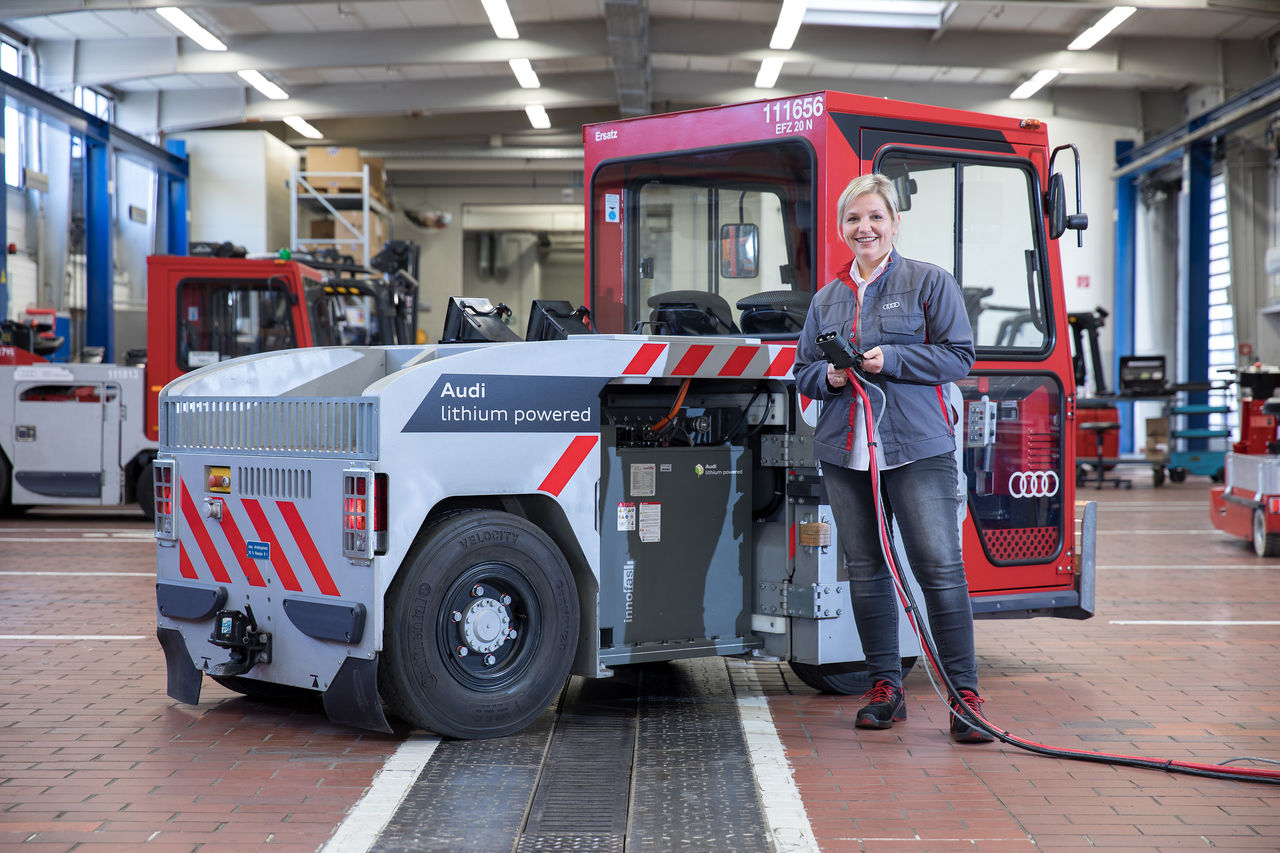
    Audi is testing factory vehicles powered by used lithium-ion batteries at its main plant in Ingolstadt. Audi is obliged by law to take back energy carriers after they have been used in cars because they still have a large proportion of their original charging capacity. An interdisciplinary project team is now investigating how batteries from the Audi e-tron test vehicles, for example, or from hybrid models such as the Audi A3 e-tron and Audi Q7 e-tron, can continue to be used sensibly. A number of other advantages have already become apparent during the test phase.

    Factory vehicles in Audi’s production plants such as fork-lift trucks and tow tractors have so far been powered by lead-acid batteries. When the batteries are empty, employees remove the battery packs weighing up to two tons from the vehicles and connect them to a charging station for several hours. However, lithium-ion batteries can be charged directly where the vehicles are parked during normal downtimes, in breaks between shifts for example. This saves space and also eliminates the high manual effort required to replace the batteries. Audi would save millions if it converted its entire fleet of factory vehicles to lithium-ion batteries at its 16 production sites worldwide.

    The battery of an Audi e-tron consists of 36 individual battery modules and is located under the car’s passenger cell between the axles in the form of a flat, wide block. After the batteries are taken back, the project team checks each individual module for its continued usability. They then install 24 modules in each new battery tray. This has the same dimensions and weight as the previous lead-acid batteries of the factory vehicles, so the company can continue to use all of those vehicles without any major investments. In the future, specialised employees could take over the assembly of the second-use batteries in the company’s own battery centre.

  • Chloe’s brand new flagship opens in Seoul

    Chloe’s brand new flagship opens in Seoul

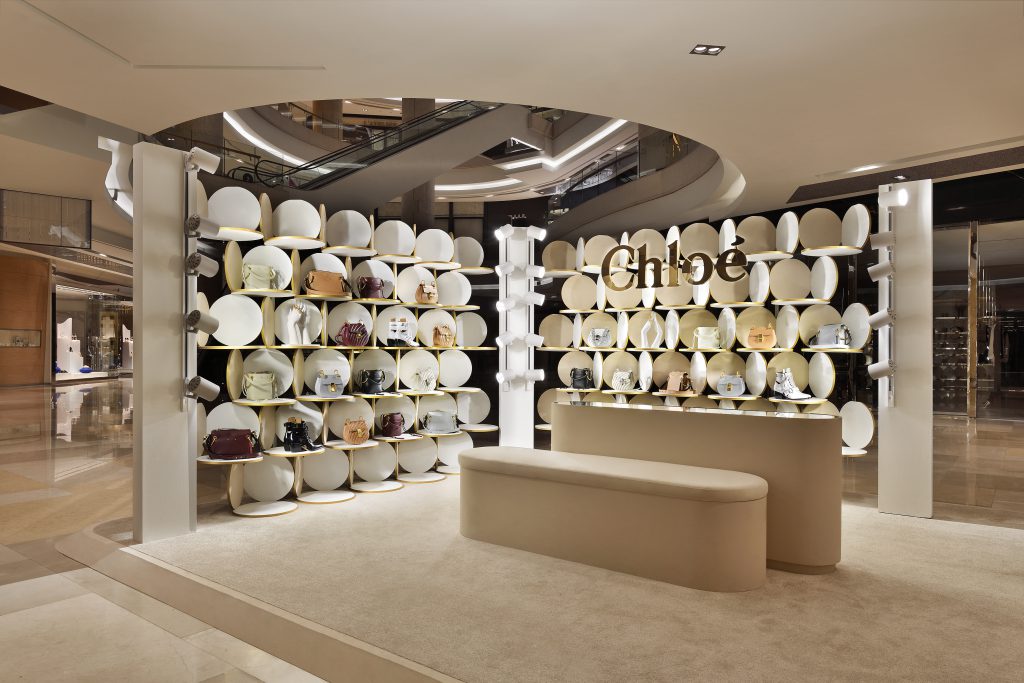
    French fashion house Chloe has opened a new flagship in Seoul.

    The new 386sqm two-story boutique in the luxury shopping district of Cheongdam features an eye-catching facade consisting of beige marble stones and the maison’s logo in brass.

    Chloe flagship - Seoul 1

    The first floor entrance ushers clients into the accessories and small leather goods section, while on the second floor the full collection is hung up on brass rails, sitting alongside footwear.

    Chloe flagship - Seoul 2

    Furnishings and decor are used to express the brand’s vocabulary, mirroring the maison’s flagship boutique on avenue Montaigne which contrasts a light femininity with robust architectural details and raw mineral materials.

    Chloe flagship - Seoul 3


    Chloe flagship - Seoul 4

    Tender curvilinear forms on the ceiling, floor and furniture echo the roundness of the letters in the Chloe logo, while a palette of white and powdery beige rose warmed by mustard and polished natural brass illuminate the space.

    Vintage designer furniture is found on the second floor, which includes a private VIP space.

  • APAC mobile advertising market booming

    APAC mobile advertising market booming

    The Asia Pacific region is leading in mobile ad request with a growth of 44%. This is almost twice the average growth of the Americas and EMEA regions, both of which are pegged at 23%.

    This was the conclusion of the Global Trends in Mobile Advertising H2 2018 report by Smaato, which offers programmatic insights designed to help publishers and advertisers with their decision-making on ads.

    Among others, the report investigated in-app growth, advertising spending, mobile video and advertising fraud.

    The mobile ad market is healthy, according to Smaato, with significant growth across all key advertising metrics, including ad request volume and eCPMs. Demand and supply both increased year-over-year, as advertisers direct more money into mobile advertising.

    In the APAC, India stood out from the pack with a 425% growth in mobile ad requests. This was more than twice the growth rate of the fastest growing markets in EMEA and the Americas, which were led by Spain at 152% and the USA at 170% respectively.

    Smaato says India’s meteoric ad request growth is characteristic of an emerging mobile market in which the number of mobile device owners, their time spent on mobile, and overall app downloads all rise quickly.

    When it comes to the top countries for eCPM growth, Singapore (154%), Japan (125%), Australia (111%), Hong Kong (99%) and Indonesia (96%) topped the charts. As comparison, eCPMs increased in the United States by 79% and in Canada by 70%, while Switzerland (92%) and the United Kingdoms (66%) topped the chart in the EMEA.

    “The impressive ad request and eCPM growth in APAC are driven by app developers finding new ways to better monetize their content even as consumers are spending more time on apps. Advertisers from all verticals are realizing that apps are where consumers are — and they are directing more funds into this channel,” Smaato APAC managing director Alex Khan said.

    “With app usage increasing across the region, there will also be more monetization opportunities for mobile publishers.”

    The full report can be downloaded here (free registration).

  • NTC extends migration date to eight-digit landline numbers

    NTC extends migration date to eight-digit landline numbers

    The Philippines’ National Telecommunications Commission has extended the migration to eight digit landline numbers in the Greater Metro Manila area by six months, at the request of the banking industry.

    The Bankers Association of the Philippines (BAP) and the Credit Card Association of the Philippines (CCAP) have requested more time to prepare for the introduction of eight digit landline numbers by implementing the necessary changes to their operations and systems.

    As a result, the NTC has ordered local operators to extend the migration date to October 6 from March 18.

    Both Globe Telecom and PLDT have announced they will comply with the demand and informed customers of the delay.

    Globe Telecom has stated that until January 5, customers still incorrectly dialing an old 7-digit number will hear a special announcement stating that the format has been changed to 8 digits.

    The company has also pledged to continue remaining customers of the upcoming migration over all available channels – including SMS, email and social media – up to the deadline.

    “We will make the necessary adjustments when it comes to our internal systems and communication efforts to ensure smooth service continuity for all of our affected customers,” Globe general counsel Froilan Castelo said.

    “Our teams are continuously working closely with the NTC and other telcos to assist affected customers before, during, and after the migration.”

  • Singtel to invest a further $536m in Bharti Airtel

    Singtel to invest a further $536m in Bharti Airtel

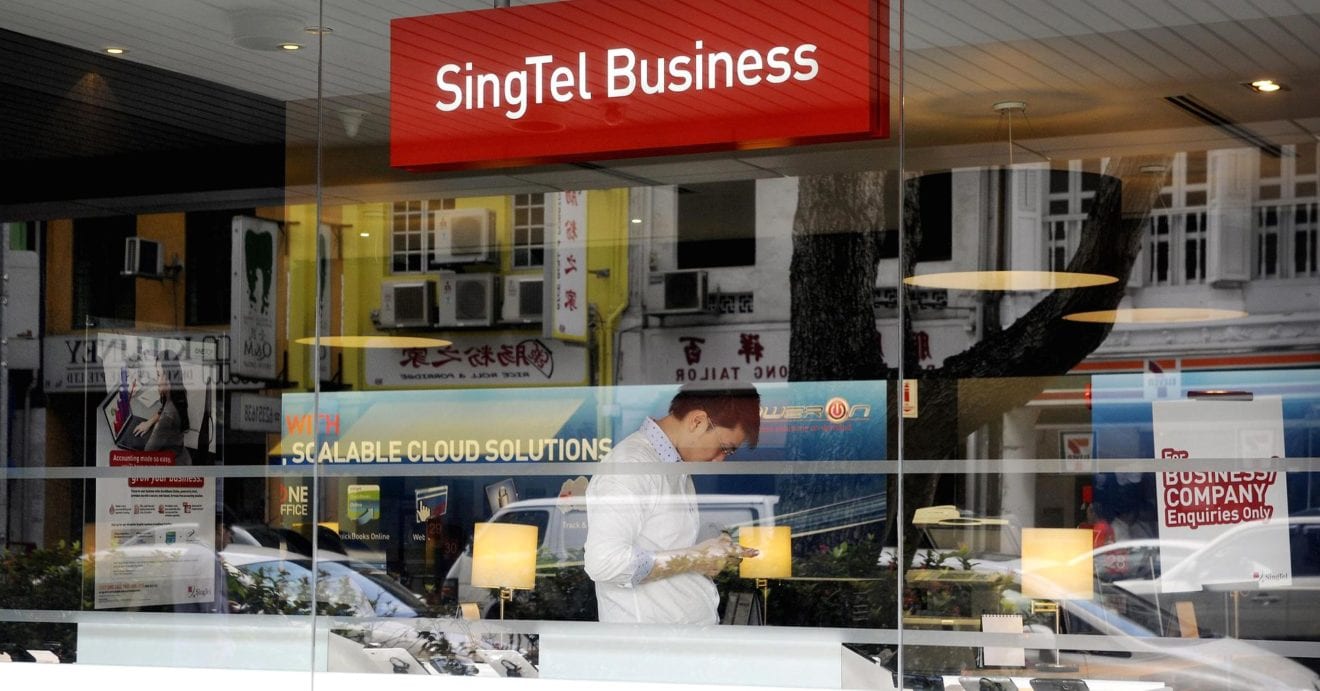
    Singtel Group has revealed plans to subscribe to Bharti Airtel’s 250 billion rupee ($3.57 billion) right issue, taking up its full entitlement for its direct stake of 15%.

    Airtel will take up 170 million new shares at an issue price of 220 rupees per share for a total of 37.5 billion rupees ($535.7 million).

    Airtel major shareholder Bharti Group has also committed to taking its full entitlement under the issue, while fellow major shareholder Bharti Telecom has renounced part of its entitlement in favor of Singapore sovereign investment fund GIC Singapore, which will invest around 50 billion rupees.

    The major shareholders and GIC have together committed a total of 67% of the rights issue. The renunciation to GIC will take Singtel’s effective interest in Airtel to 35.2%, with the operator maintaining its position as Airtel’s largest shareholder.

    “Our participation in this rights offering with our partners and a leading investor such as GIC reflects our long-standing commitment to Airtel and the confidence in the future of the Indian market,” Singtel International CEO Arthur Lang said.

    “Airtel has performed well despite business headwinds and is consolidating its position in a more sustainable market. Our partnership with Airtel spans some two decades and we continue to take a long-term view of India, having recently invested in Bharti Telecom and Airtel Africa.”

  • India has world’s cheapest mobile data

    India has world’s cheapest mobile data

    India is the cheapest country in the world for mobile data, while 10 of the top 20 cheapest countries are in continental Asia, according to analysis from broadband price comparison site cable.co.uk.

    Analysis of mobile data plans in the 230 countries with mobile broadband availability found that Indian operators offer an average price per 1GB of data of $0.26 – well below the global average of $8.53.

    The analysis also shows that Asian countries made up half of the top 20 cheapest markets in the world, with the average price of 1GB of data being well over $1 in Sri Lanka, Mongolia, Myanmar and Bangladesh.

    Malaysia ($1.18 per 1GB), Indonesia ($1.21), Bhutan ($1.25), Iran ($1.28) and Vietnam ($1.31) also made the top 20 list, and only three Asian countries are more expensive than the global average – Taiwan ($9.49), China ($9.89), and South Korea ($15.12).

    The analysis did not include countries in the Oceania/Pacific region. Australia is by far the cheapest country in the region with average prices of $2.47 per 1GB. The most expensive market in the region is Samoa at $30.09.

    “Many of the cheapest countries in which to buy mobile data fall roughly into one of two categories,” Cable.co.uk consumer telecoms analyst Dan Howdle said.

    “Some have excellent mobile and fixed broadband infrastructure and so providers are able to offer large amounts of data, which brings down the price per gigabyte. Others with less advanced broadband networks are heavily reliant on mobile data and the economy dictates that prices must be low, as that’s what people can afford.”

  • V-MORE Enters Thailand’s E-Commerce Market With More Than 500 Marketplace Platforms and Merchants

    V-MORE Enters Thailand’s E-Commerce Market With More Than 500 Marketplace Platforms and Merchants

     V-MORE, Asia’s leading e-commerce supply chain management platform, has announced its plans to expand into Thailand. Over the pasts 12 months, the fast-growing one-stop e-commerce platform which has already garnered 500,000 users in the region.  V-MORE aims to recruit new Thai e-commerce merchants as part of its expansion strategy and has rolled out onboarding programs for new merchants and users.

    “We are pursuing a plan of expansion and hope to achieve revenue growth through mass adoption by users and merchants in our ecosystem. Thailand is fast becoming the leading e-commerce market, and we seek to increase our user and merchant base through user incentive programs, brand awareness and marketing programs,” said Sir Eldee Tang, CEO and Founder of Noble Vici Group.

    V-MORE is a one-stop marketplace for high quality products which are value for money. Its unique shop, save and earn program has gained the trust of many online shoppers. Through V-MORE, consumers can shop and be rewarded at over 500 marketplace and shopping sites including leading online brands, hotel and flight booking sites, technology as well as food and beverages merchants. Thai merchants can participate in its e-commerce program and increase their exports to other countries in Asia and beyond.

    According to research, there are more than 57 million internet users in Thailand who are well-versed with digital technologies, mobile and e-commerce. The market is valued at USD 3.5 billion and is expected to generate revenue growth rate of 13.2% annually, reaching USD 5.8 billion by 2022.

    “We look forward to new local merchants to come on board our platform and welcome sellers and buyers to experience the online marketplace for the first time,” Eldee added.

  • Estée Lauder Wants to Maximise Every Second of your Beauty Sleep

    Estée Lauder Wants to Maximise Every Second of your Beauty Sleep

    Join us as Estée Lauder celebrates its first ever Power of Night exclusive pop-up. Visit us from 23th to 24th March (11am to 8pm) to understand how modern life affects our skin and discover our iconic Advanced Night Repair serum maximises skin repair with every second of beauty sleep. Learn how a lack of sleep* and constant exposure to blue light** accelerates skin ageing, causes fine lines and a loss of firmness and pigmentation.

    As a leader in skin repair for over 35 years, Estée Lauder continuously studies the key factors behind visible skin ageing. Research shows that a lack of sleep not only affects our skin’s natural reparative process but also accelerates premature signs of skin ageing.

    Sleeping less than five hours every night increases the impact of stress on the body, resulting in a breakdown of collagen and elastin, causing it to be more susceptible to damage caused by environmental aggressors*.

    Modern life equals multiple skin assaults and the constant exposure to blue light, especially at night, disrupts the skin’s natural repair process and causes accelerated skin ageing**.

    It is no surprise then that a good night’s sleep is not only important to recharge the body but also helps keep skin youthful and healthy.

    Beauty Sleep In Progress

    During our exclusive pop-up, learn about Estée Lauder’s iconic Advanced Night Repair in the Living Room. Through an interactive night discovery quiz, discover how our patented ChronoluxCB™ Technology works with the body’s natural circadian rhythm to boost skin repair and renewal functions for a radiant and youthful look when you wake.

    In the bedroom, explore different ways of using Advanced Night Repair serum with our Power Of Night film series muses Joanne Peh, Nurul Aini and Oon Shu An and journey with them through our Insta-worthy beauty stations. Learn beauty hacks with Estée Lauder’s breakthrough repair serum for all your beauty occasions by strengthening the skin, improving hydration and enhancing your skin’s glow.

    Take our discovery quiz and bring home your very own Advanced Night Repair serum sample to kick start your Advanced Night Repair beauty regimen.

    Create your customised bedtime renewal routine and steal the spotlight with our Pro Artists using our best-selling Double Wear Stay-in-Place Foundation and our new luxury lipstick collection Pure Color Desire.

    Scribe your sleep resolutions on the Sleeping Beauties Wall and join us in spreading the love for Advanced Night Repair by posting your favourite sleeping beauty images on the ‘gram. Tag your photos with the event hashtags to enter the Estée Lauder #PowerOfNightSG Instagram contest, and stand a chance to win a full-size bottle of Advanced Night Repair.

    Unleash the power of night with Singapore’s #1 serum — Estée Lauder Advanced Night Repair.

  • Watson and L’Oréal’s ModiFace drive retail innovation  with the launch of virtual makeup try-on service

    Watson and L’Oréal’s ModiFace drive retail innovation with the launch of virtual makeup try-on service

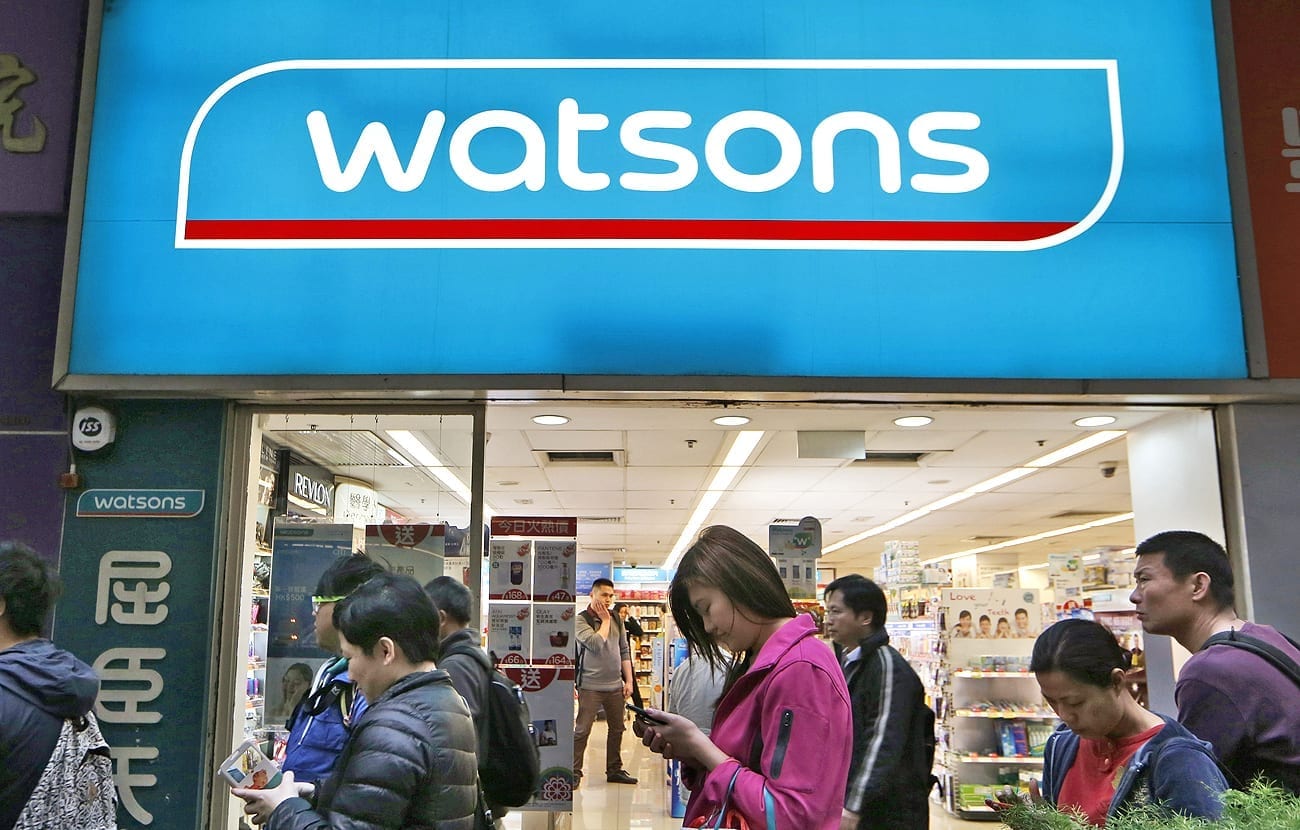
    L’Oréal’s AI and AR company ModiFace and A.S. Watson Group (“ASW”) announce the launch of the virtual makeup try-on #ColourMe, making ModiFace’s industry-leading AR technology available to consumers across Asia on mobile.

    #ColourMe, launching in March, is a virtual try-on service which will be available on Watsons mobile apps providing shoppers with the opportunity to virtually try on 300 makeup products including lipsticks, mascara, eyeshadow, brow colouring and foundation. Users will also be able to try on recommended trend looks, create and save their own look creations, as well as capture photos and videos of their makeup. Products associated with each look can be delivered to the shopper’s home or collected from a local Watsons store as quickly as four hours.

    The technology will roll out with L’Oréal Paris and Maybelline brands in the first phase of the launch, and it will be available exclusively in e-commerce mobile apps of Watsons Malaysia, Taiwan, Thailand and Singapore. ASW will consider extending the collaboration to other brands and markets across its portfolio in Asia and Europe in the future.

    Malina Ngai, A.S. Watson Group Chief Operating Officer is excited about the new digital experience created with the support of L’Oréal, “Customers are at the heart of all our innovations. We strive to create bespoke online and offline experiences that add value for their lifestyle. We have a shared vision with L’Oréal in driving digital leadership in beauty, and we discussed about creating the exclusive experience since the second half of last year utilizing ModiFace’s technology. Together we will transform the way beauty lovers discover and experience makeup and a one-stop shopping experience on our mobile app.”

    Alexis Perakis-ValatPresident of L’Oréal’s Consumer Products Division, says, “Digital technologies are about to revolutionize retail, making shopping more entertaining, easy and personalized. We want to be a driving force of this transformation and so does A.S. Watson who is a long-standing and trusted retail partner for us. This is why we are thrilled to launch the virtual makeup try-on #ColourMe powered by our own beauty AR and AI company Modiface. This technology offers consumers a unique way to discover and enjoy makeup and will allow us to further reinvent the beauty experience in the future”.

  • VinaPhone launches eSIM technology in Vietnam

    VinaPhone launches eSIM technology in Vietnam

    Vietnam has today officially become the 25th nation in the world to launch eSIM technology.

    VinaPhone, the mobile subsidiary of state-owned operator VNPT, has held the official mass market launch of eSIM technology, Vietnamese state news agency SGGP reported.

    VinaPhone has already distributed nearly 5,000 eSIM preorders to customers.

    The company is also offering customers the ability to change to an eSIM by entering their EMEI and a one-time password, and then scanning a QR code sent from the system, and has revealed it received more than 7,000 eSIM registration requests in less than a month.

    VinaPhone deputy general director Nguyen Truong Giang told the publication the operator is now developing applications designed specifically to be integrated into eSIMs and introduce more features and utilities for users.

  • Australians love their pets

    Australians love their pets

    Venture to the local shops and you’ll probably see dogs outside on the footpath waiting for their owners. Perhaps the store has provided a hook for dog leads and a bowl of water for thirsty canines. But travel further from home, into the city centre for example, and you are unlikely to see many dogs, or other pets. The same applies to most parks and beaches, and certainly to cafés, bars, restaurants, department stores, and public transport.

    Although Australia is a nation of pet owners and pet lovers, our non-human companions are not welcome in most public spaces in our towns and cities.

    Pets outnumber people

    Some 62% of Australian households have a pet. While these rates are similar to those in the United States (65%), they are much higher than the United Kingdom (40%) and continental Europe (around 40%), where pets are much more visible and tolerated in public places.

    There are 4.8 million pet dogs, 4.2 million pet birds and 3.9 million pet cats in Australia. Of those of us who don’t have a pet, 59% report we would like one in the future. The ratio of pets to people in Australia is 101:100 – there are more animal companions than Homo sapiens.

    In fact, more of us live in a house with a cat and/or a dog than with a child. For many people, especially those without children, pets are increasingly being anthropomorphised and replacing human family members.

    Pet ownership rates are not rising significantly in Australia, but our spending on pet-related goods and services is increasing substantially. In 2016 we spent A$12.2 billion on pets and pet-related goods and services.

    Businesses are responding to the growth of the pet supplies sector by developing and marketing everything from vegetarian pet food to sophisticated smartphone surveillance apps. The market for pet insurance, pet day care, pet taxis, grooming and funeral services is robust, providing many opportunities for entrepreneurs and start-ups to tap into consumer demand for pampered pets.

    High-density housing and shrinking yards

    At the same time as spending on pets is increasing, our backyards are shrinking, with many of us choosing high-density apartment living. In addition, new housing developments feature larger houses and garages, which dominate the block at the expense of front and back yards. This means there is much less room for our pets at home than ever before.

    Historically, the Australian dream was a house on a quarter-acre block with plenty of outside space for pets, but blocks and yard space are shrinking in new housing developments.

    With outdoor living space disappearing, pets and their owners must increasingly turn to public spaces for social activity and interaction.

    Pets in public places

    The problem is that pets are not welcome in many public places. In most local council areas, the presence of domesticated animals is heavily restricted and governed by myriad council by-laws.

    Local parks and beaches are mostly off-limits. The fines for non-compliance are hefty.

    If you want to take your dog to a local café, you’ll have to sit outside. Even if you go to a “human-friendly” dog or cat café you won’t be served food because most pet cafés aren’t permitted to make or serve human food.

    In most cities, pets are not allowed to travel on trains, trams, buses or ferries; travelling with pets is either outlawed altogether or managed with strict guidelines for restraining pets and restricted travelling times.

    Research confirms the many benefits of pet ownership. In terms of general health and well-being, they improve our mental health and often provide the impetus to exercise. These are important issues for our time-poor, fast-paced and stressed-out society.

    Pet ownership also allows for interaction with others in social settings and in local communities. The importance of pets in fostering social interaction has been established in a study that found owning a pet is incredibly important for well-being and increasing social connectedness in neighbourhoods. In fact, 60% of participants in the study who owned a dog knew their neighbours better than those without a dog. Even 25% with a different type of pet reported the same.

    City planning for pets

    There is clearly a need to provide more public places for animals and humans to interact, particularly in settings that allow for greater social interplay. As city planners work towards cities that are “smart”, “green” and “walkable”, the focus should also be on making our towns and cities much more pet-friendly by providing outdoor spaces that encourage and foster interaction between animals and humans.

    We need an approach that recognises the benefits of human-animal connection and makes provisions for “animal-friendly” cities by opening up more areas for pets and their owners.

    Given Australia’s passion for pets, we should be able to interact with them in public. This will help us strengthen social ties, build local communities, improve our health and reduce social isolation.


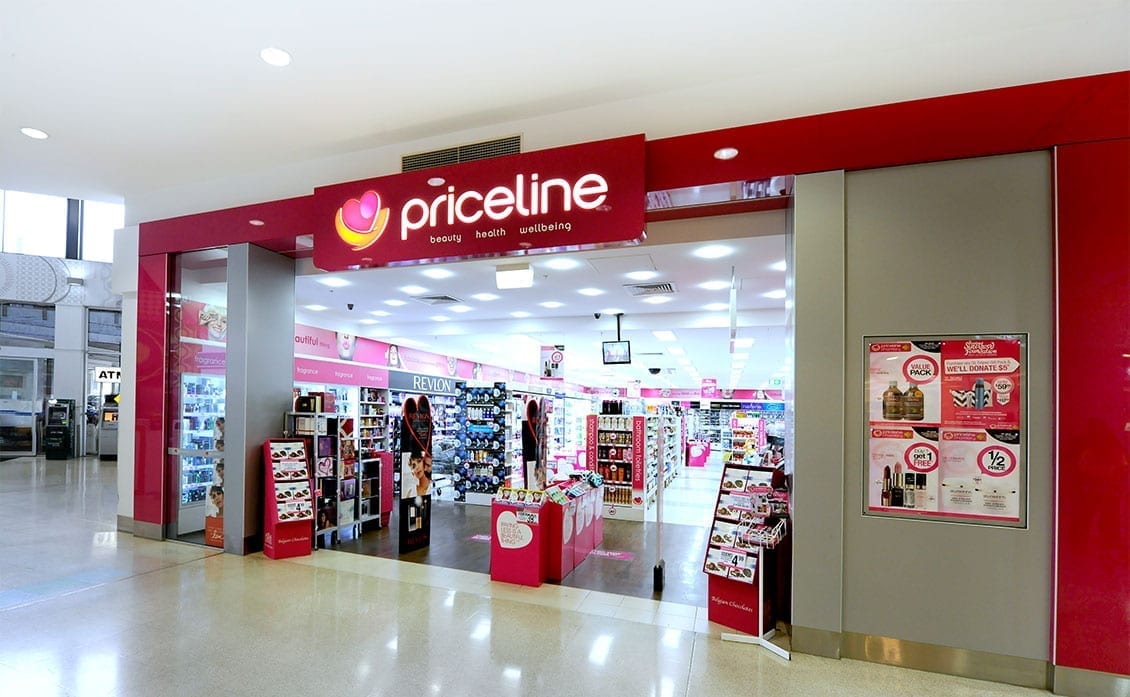
  • Improved penalty rates and conditions for Priceline workers

    Improved penalty rates and conditions for Priceline workers

    Retail workers’ union SDA has secured a new agreement for Priceline Pharmacy workers that improves penalty rates and leave conditions for staff.

    The new agreement, which came into effect on Friday March 8, will see annual pay increases backdated from July last year, through to July 2020.

    “Wage growth for Australian workers is at an all time low and we’re proud we’ve been able to lock in strong annual pay increases for Priceline workers for the next three years,” SDA national secretary Gerard Dwyer said.

    “Priceline workers will receive an immediate 3.5 per cent pay increase backdated from 1 July 2018, and 3 per cent pay increases from 1 July 2019 and 1 July 2020. This means the permanent hourly rate for Priceline workers will increase to A$21.81 and the casual hourly rate will increase to A$27.26 per hour. With the rate of inflation at 1.8 per cent these pay increases will make it a little easier for Priceline workers and their families to make ends meet.”

    The new agreement also includes five days paid and five days unpaid Family and Domestic Violence Leave for all employees per year.

    “Unions, employers and government must all take responsibility for addressing family and domestic violence and we’re pleased we’ve taken the first steps in this agreement,” said Dwyer.

    Workers will also be paid superannuation on all paid leave, including paid parental leave. The SDA said this will help address the gender pay gap, as previously superannuation was not paid when parental leave was taken.