Author: Mei Ling Tan

  • Google struggled to sell Pixel 3 smartphones

    Google struggled to sell Pixel 3 smartphones

    Apple, Samsung, LG, Sony, HTC… The list of smartphone manufacturers that have experienced a decline in sales at some point throughout the past year is already pretty long but today it grew by one.

    During Alphabet’s earnings call earlier today, the company’s Chief Financial Officer Ruth Porat revealed that Google experienced a year-on-year decline in Pixel smartphones sales during the first quarter of 2019. Specific numbers weren’t provided, but the negative results do appear to have dragged down the company’s hardware business as a whole.

    Regarding the cause of this drop, Google didn’t mention any concrete details but it did highlight the general “pressures in the premium smartphone industry” at the moment. Moreover, it noted the “heavy promotional activity” by competitors which have been struggling to keep sales up recently.

    Another factor that wasn’t mentioned but one that may have negatively affected Pixel 3 smartphone sales is design. Although Google’s smartphone cameras have once again received almost universal praise, the larger Pixel 3 XL has been heavily criticized since before it even launched due to the large notch and huge chin that it features.

    The Google Pixel 3 and Pixel 3 XL were also plagued with memory management issues, something that affected day-to-day use by prematurely closing apps running in the background.

    Despite the lack of Pixel sales, Google pointed out that it was pleased with the “momentum for Assistant-enabled home devices, particularly the Home Hub and Mini devices.” It also mentioned plans for hardware announcements on May 7th at Google I/O, essentially confirming the Pixel 3a’s debut at the event.

    The Google Pixel 3a and Pixel 3a XL, for those of you that don’t already know, are expected to represent Google’s first entries in the mid-range smartphone segment. Building upon the reputation of flagship Pixels, both Pixel 3a smartphones are expected to carry the same rear camera as the Pixel 3 and support software features such as Night Sight. But in order to keep costs down, a number of modifications have been made internally.

    Rather than utilizing Qualcomm’s flagship-level Snapdragon 845, the Pixel 3a duo is expected to include the Snapdragon 670 which will be paired with 4GB of RAM and either 32GB or 64GB of internal storage. This will then be accompanied by stock Android 9 Pie, eSIM support, Google’s dedicated Titan M security chip, and the Active Edge squeezable frame. The smartphones also look set to support 18W fast charging. Speaking of which, the 5.6-inch Pixel 3a will carry a 3,000mAh battery while the 6-inch Pixel 3a XL should feature a larger cell, although its capacity is yet to be specified.

    Pre-orders for the Google Pixel 3a and Pixel 3a XL are expected to commence immediately after their announcement at Google I/O next week. Regarding official pricing, US market details are yet to leak. However, previous information has pointed towards price points of $400/€450 for the Pixel 3a and $500/€550 for the Pixel 3a XL.

    In terms of availability, the devices were previously rumored to be Verizon exclusives. However, more recent reports suggest T-Mobile will also carry them. And for those of you out there that aren’t fans of carriers, the smartphones should be sold unlocked via the Google Store too.

    At the price points mentioned above, the Pixel 3a and Pixel 3a XL probably won’t become runaway successes. But with Google’s smartphone business currently struggling, a boost from the mid-range segment could be all it needs to get back on track.


  • Toyota Glanza Spotted For The First Time

    Toyota Glanza Spotted For The First Time

    Toyota is all set to bring in the Glanza hatchback to India. Essentially a Toyota-badged version of the Maruti Suzuki Baleno, the new Toyota Glanza is the first model to come out as part of the Toyota – Suzuki alliance which was announced in 2017. While a teaser has already been released, the Glanza has not been seen in the flesh in its entirety, well until now.

    The Glanza hatchback was spotted in a car park and yes, this is the first time you get to see what it really looks like, up front and the rear. Up front, you see it get a a new grille and slightly tweaked face, in order to differentiate it from the Baleno. So, we can see the two chrome slates which gets the Toyota badge right in the centre of the car. Much of the rest of the details on the car remain the same as on the Baleno. So the chrome strip, the headlamps, the fog lamps and even the lower air dam, remains identical to the Baleno.

    The similarity continues at the rear as there are no changes apart from the variant and brand badging. The Toyota Glanza will compete with the likes of the Maruti Suzuki Baleno, Hyundai i20, Honda Jazz. Considering that Maruti Suzuki has had great success with the Baleno and manages to sell close to 18,000 units a month on an average, it will be interesting to see how Toyota manages to boost its sales figures with this car.

    While the cabin of the car too is likely to remain unchanged, there will be a few tweaks made to make it feel more like a Toyota. As far as engine options go, the Toyota Glanza is expected to be launched in two petrol options, which will include Maruti Suzuki’s 1.2-litre, four-cylinder K12 petrol engine which powers the Baleno. The other one could be Toyota’s 1.2-litre four-cylinder petrol engine that is tuned to make 79 bhp and 104 Nm torque.

    The Toyota and Suzuki partnership extends not only to sharing vehicles but also technological development, vehicles production and market development. An MoU signed in November 2017 further expanded the partnership to consider a cooperative structure for introducing battery-powered electric vehicles.

  • Google adds Dark mode to an Android Apps

    Google adds Dark mode to an Android Apps

    If your eyes feel strained at the end of every day, it could be because of Google’s Material Design, which it is using on many of its core apps. Because Material Design uses plenty of bright white background, it can be blinding to look at at night or in a dark room. Not only can the light hurt a phone user’s eyes, but it can also be annoying to other people in a dark room.

    To combat this, Google started adding a Dark mode feature on apps that it gave a Material Design makeover. This changes the appearance of an app from having black text on a white background, to show white text on a black background. While many only use Dark mode at night or in a movie theater, others just like the look and keep the setting enabled on all compatible apps at all times.

    And thanks to the use of the black background, those using a phone sporting an AMOLED screen could end up extending their battery life. The color black is created on an AMOLED display by turning off the RGB sub-pixels in the screen. This means that battery power is not needed to make an OLED panel display the color black. An LCD screen uses a backlight and when the color black is called for, the pixel turns opaque blocking the LED light from being seen on the display. In this case, there is still a draw on the battery to power the backlight.

    The latest Android app to receive the Dark mode option is the Google Calculator app for Android. This is a must-have for the calculator, which has a huge white box that covers the top 40% of the screen. Dark mode can be found in version 7.6 of the utility app, although only version 7.5 is currently available from the Google Play Store. Once the new version is installed on your Android phone, open it and tap on the three-dot overflow menu in the upper right corner. You’ll see a box with several options; click on Choose theme. You can select from the regular retina melting Light theme, Dark theme or Set by Battery Saver. The latter is supposed to turn on the Dark theme once the battery saver feature is enabled.

    Android Q and iOS 13 are both supposed to include a system-wide Dark mode. We should learn more at Google I/O and WWDC, which start May 7th and June 3rd, respectively.

  • Daimler Will Pull Smart Mini-Cars Out Of United States, Canada

    Daimler Will Pull Smart Mini-Cars Out Of United States, Canada

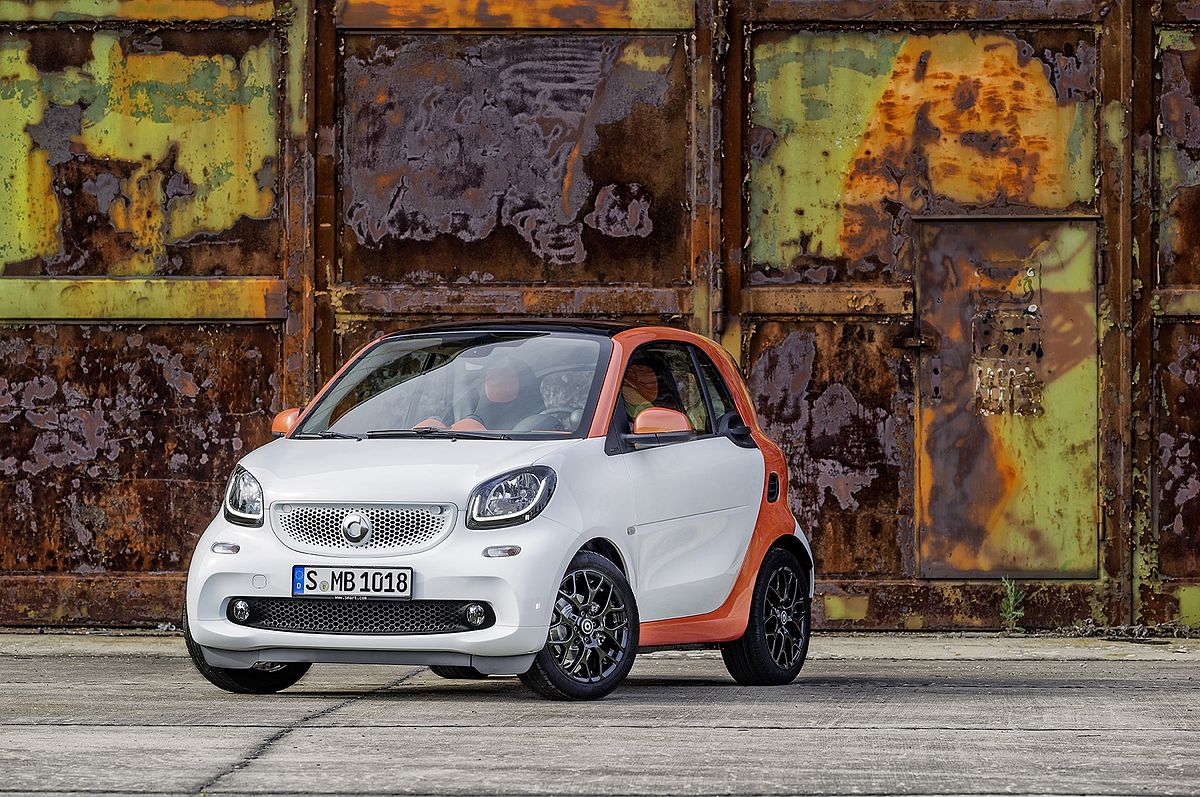
    The tiny, two-person Smart cars once pitched as the next big thing in urban mobility will be discontinued in the United States and Canada at the end of the current model year, German automaker Daimler AG said on Monday. Smart cars, with their unique styling and ability to fit in half a parking space, found an audience in densely populated U.S. and Canadian cities. But that audience was small and rapidly declining. Smart reported just 90 cars sold in the United States during March, down 18 percent from the year before.

    U.S. sales of a wide range of small cars have collapsed over the past several years as relatively cheap gasoline and a strong economy have encouraged consumers to buy larger trucks and sport utility vehicles.

    The Smart brand’s electric cars offered just 58 miles (93 km) of driving range. Competing models such as the “mid-range” Tesla Model 3, with an estimated range of 264 miles, offered more range and more room for passengers and cargo. The range figures are from the U.S. Environmental Protection Agency.

    Daimler’s Mercedes-Benz brand, in a statement, cited “a number of factors” for the decision to end Smart’s run in the United States and Canada, “including a declining micro-car market in the U.S. and Canada, combined with high homologation costs for a low volume model.” Homologation refers to the changes required to bring the European-designed Smart in line with U.S. regulations. Daimler ended sales of gasoline-fueled Smart cars in 2017.

    Mercedes plans to bring new, larger electric vehicles to the United States, starting with the launch of the EQC sport utility next year. Those vehicles will help Mercedes meet zero emission vehicle quotas in California and other states. Mercedes dealers will still offer parts and repairs for Smart cars, the company said.

  • Trump Again Goes After India

    Trump Again Goes After India

    President Donald Trump has criticised India’s “big tariffs” on American paper products and the iconic Harley-Davidson bikes, saying the US has been losing billions of dollars to countries like India, China and Japan. Addressing a Republican political rally in Wisconsin state’s Green Bay city on Sunday, Trump alleged that every country has been ripping off America for years.

    The President has repeatedly claimed that India is a “tariff king” and imposes “tremendously high” tariffs on American products. “For so many decades we’ve been losing tens of billions of dollars to China and Japan, and India, and name any country and we lost, but we’re not losing anymore,” he said to his cheering supporters. He said that the US was being charged high tariffs on foreign paper products.

    “We charge other countries zero tariffs on foreign paper products, but when Wisconsin paper companies export it abroad… China charged us big tariffs, India charged us big tariffs, Vietnam charge us massive tariffs,” Trump said. He claimed that people of the US demanded a government that puts America first. “And we’re doing that with China, we’re doing that with India, we’re doing that with Japan, we’re doing it with a great new trade deal, that hopefully will get approved in the house,” the President said.

    Early this year at a White House event to announce his support for reciprocal tax, Trump had said that he was satisfied with the Indian decision to reduce the import tariff on high-end Harley-Davidson motorcycles from 100 per cent to 50 per cent. The President said that he called up Prime Minister Narendra Modi on the issue of tariffs on Harley-Davidson motorcycles. “Look at Harley-Davidson. I met with them three years ago, they would tell me tough to do business in certain kind. I asked ‘How you’re doing in India?’ and they said, ‘Oh, we don’t do any business’. They weren’t even complaining because so many years.

    “So India charged a 100 per cent tariff on Harley-Davidson, but when they send their motorcycles and they may come to us, we charge them nothing,” Trump said. “So I called up Prime Minister Modi, I said unfair, he cut it 50 per cent… But that’s not good enough because look, it’s 50 per cent to nothing. And what we’re doing is changing all of that stuff, changing all of that rapidly,” he added.

    India is pressing for exemption from the high duty imposed by the US on certain steel and aluminium products, resumption of export benefits to certain domestic products under the Generalised System of Preferences (GSP) programme, greater market access for its products from agriculture, automobile, automobile components and engineering sectors.

    On the other hand, the US is demanding greater market access through a cut in import duties for its agriculture goods, dairy products, medical devices, IT and communication items. India has stated that it would be difficult for them to cut duties on IT products.

    India’s exports to the US in 2017-18 stood at USD 47.9 billion, while imports were USD 26.7 billion. The trade balance is in favour of India.

  • France and Germany To Support Battery Cell Consortium

    France and Germany To Support Battery Cell Consortium

    France and Germany have asked the European Commission to approve state subsidies for a cross-border battery cell consortium including carmaker PSA with its German subsidiary Opel and French battery maker Saft, a German official said on Monday. The two countries have earmarked 1.7 billion euros ($1.9 billion) to support company alliances to help reduce European carmakers’ dependence on Asian suppliers and protect jobs at risk from the shift away from combustion engines.

    The economy ministries of both countries sent a letter of intent to the European Union’s executive body asking it to give a provisional go-ahead, a German economy ministry spokeswoman said, without giving a sum for the planned state funding.

    “We’re now waiting for Brussels to give us the green light,” the spokeswoman said.

    German Economy Minister Peter Altmaier will meet French counterpart Bruno Le Maire in Paris on Thursday to discuss the matter, aiming to make progress with forging further battery alliances. The FAZ report said that the PSA/Saft alliance was planning to convert an Opel factory in the western city of Kaiserslautern close to the French border into a battery cell production site.

    Among the more than 30 companies that applied for state funding at the German Economy Ministry are carmakers Volkswagen and BMW, as well as German battery maker Varta and Swedish battery manufacturing startup Northvolt. Saft, a 100-year old French company owned by energy company Total, produces a range of batteries for industrial applications.

    It has joined forces with German industrial group Siemens, electronic components specialist Manz, Belgian chemicals group Solvay and Belgian material group Umicore to develop a new generation of batteries for electric vehicles.

  • Maruti Suzuki Ertiga Launched With The New 1.5-Litre Diesel

    Maruti Suzuki Ertiga Launched With The New 1.5-Litre Diesel

    Just days after announcing phasing out of diesel engines within a year, Maruti Suzuki has launched the 2019 Ertiga with its in-house developed 1.5-litre, DDiS 225 diesel engine. Maruti is offering the Ertiga 1.5 in three variants- VDI, ZDI and ZDI+ with prices starting at ₹ 9.86 lakh for the base trim and going up to ₹ 11.20 lakh for the top-end variant, all prices ex-showroom, Delhi. The DDiS 225 which will eventually replace the Fiat-sourced 1.3-litre DDiS 200 made its debut in the Maruti Suzuki Ciaz. At present, the 1.3-litre DDiS 200 engine will be offered alongside the new engine.

    It’s a 1498 cc, four-cylinder, turbocharged engine which churns out 94 bhp at 4000 rpm and 225 Nm of peak torque at 1500 – 2500 rpm. In fact, the DDiS 225 nomenclature alludes to the maximum torque the new engine puts out. Maruti has used Dual-Mass flywheel as a linkage between the engine and the transmission which helps to channelize the torque evenly, in-turn adding to the refinement. This engine in the Ertiga is mated only to a six-speed manual gearbox as standard and an automatic transmission is not on option as of now.

    The Maruti Suzuki Ertiga is India’s best-selling MPV and commands a market share of 39 per cent in its segment.

    The second-generation Maruti Suzuki Ertiga was launched last year in November and has been India’s best-selling MPV since then. It commands a market share of 39 per cent in the segment and Maruti Suzuki has sold over 40,000 units since its launch which is a year-on-year growth of a whopping 150 per cent in the November-April period.

    Maruti Suzuki in its last quarter financial result announcement had said that it will phase-out all its diesel models by April 2020 when the BS6 norms will kick-in, pertaining to the high transition cost. However, the company’s Chairman R C Bhargava did mention that the 1.5-litre engine may have future in bigger models if the market demand is there. After the Ertiga, we also expect the DDiS 225 engine to make its way in the S-Cross which is Maruti’s only model above four metres, yet to get the new 1.5-litre DDiS 225 diesel engine.

  • Pininfarina Battista Launched In The Middle East

    Pininfarina Battista Launched In The Middle East

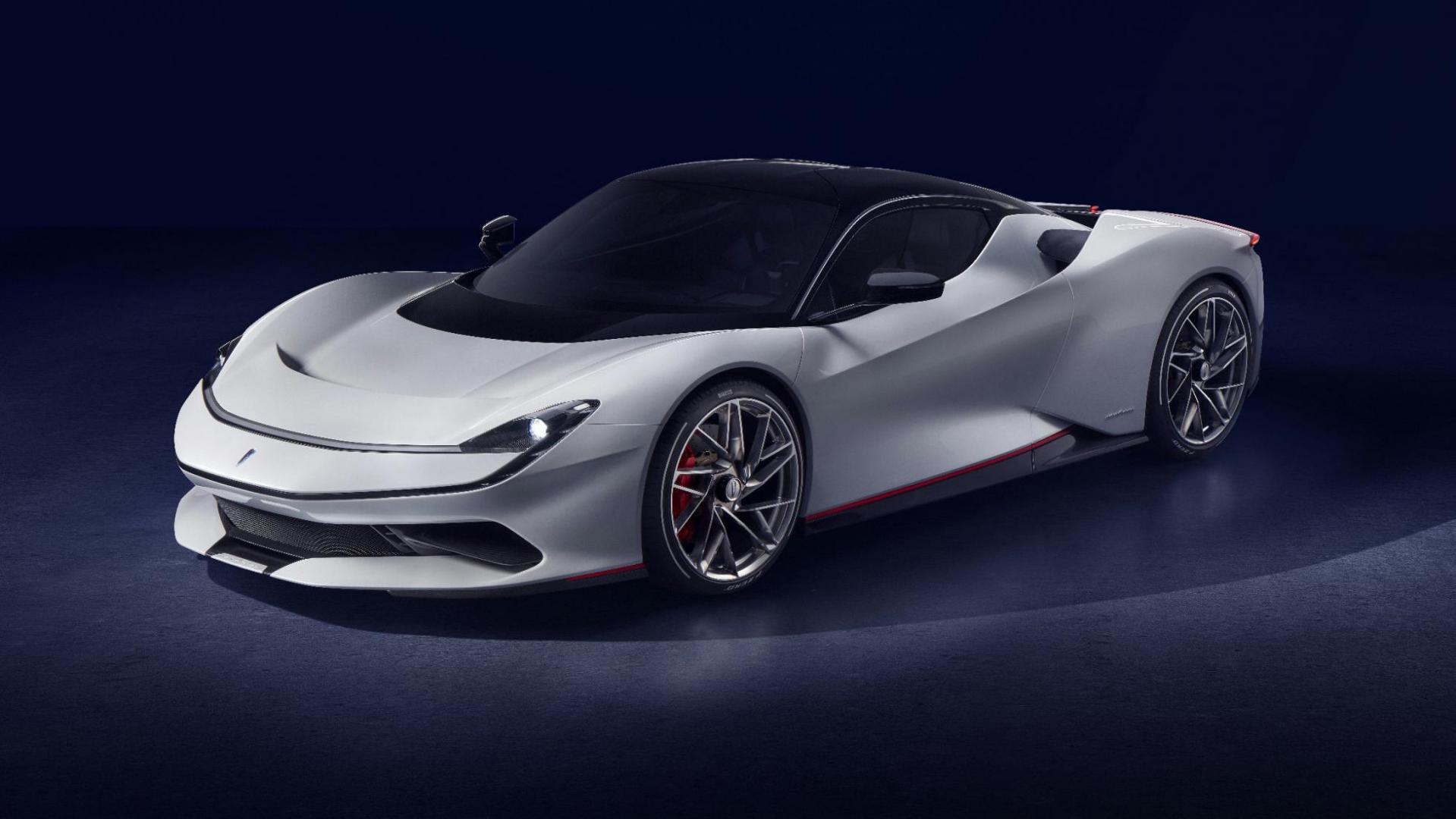
    Automobili Pininfarina has announced the introduction of its fully-electric hypercar, Pininfarina Battista, in the Middle East market. Expected to be priced around $2 million ( ₹ 13.95 crore approx.), the Italian marque’s zero-emission electric hypercar was launched in Dubai, at specialist luxury car retailer Adamas Motors showroom. The new Battista electric hypercar is slated to enter production in the second half of 2020 at Pininfarina’s Cambiano facility in Italy. Initially, the carmaker will be producing a maximum of 150 units, out of which only 50 are anticipated to be available to cover the Middle East and Asia markets, so the company expects the demands to be exceptionally high.

    Talking about the Luca Borgogno, Design Director, Automobili Pininfarina, said, “We are proud to be in Dubai for the Battista’s Middle East debut. Just a few weeks after it was launched at the Geneva International Motor Show, where it received an amazing reception, we have arrived in one of the world’s most discerning countries for supercars and luxury cars. The Battista’s classic hypercar proportions combined with cutting-edge technology that delivers 1,900 hp and zero emissions will be a new experience for its owners in the UAE, and we believe will make them fall in love with ultra-high-performance electric vehicles.”

    In addition to Adamas Motors as the brand’s retail partner for the UAE, Pininfarina will soon announce a second retail partner for the Middle East, which will cover the important Saudi Arabia market. Meanwhile, potential customers are invited to apply to own a Battista using an online service within the company’s website.

    The Pininfarina Battista will be the first of the Italian marque’s pure-electric luxury cars, and it comes with a 120-kWh battery providing power to four electric motors – one for each wheel – offering a combined output close 1,900 horses while developing 2,300 Nm of peak torque. Pininfarina claims that the Battista electric hypercar is faster than a current Formula 1 race car. While 0-100 kmph is achieved in under two seconds, 0-300 kmph takes less than 12 seconds and it can reach a top speed of 350 kmph. As for the range, the company claims that the Battista has a potential zero-emissions range of up to 450 kilometres.

    The Battista comes with the classic Pininfarina design, using the same principle of form and function coming together, as seen in classic Pininfarina cars reaching back to the Cisitalia 202 of 1947 and through more than 100 Ferraris. The car also comes with a futuristic-looking cabin with a completely driver-oriented dashboard with two displays positioned behind the steering wheel offering a host of information. The hypercar features dual tone black and brown interior using high-quality leather. Plans are in place for the opportunity to fully personalise each car at Pininfarina SpA’s Cambiano headquarters.

  • Next Generation Mercedes-Benz S-Class Interior Leaked

    Next Generation Mercedes-Benz S-Class Interior Leaked

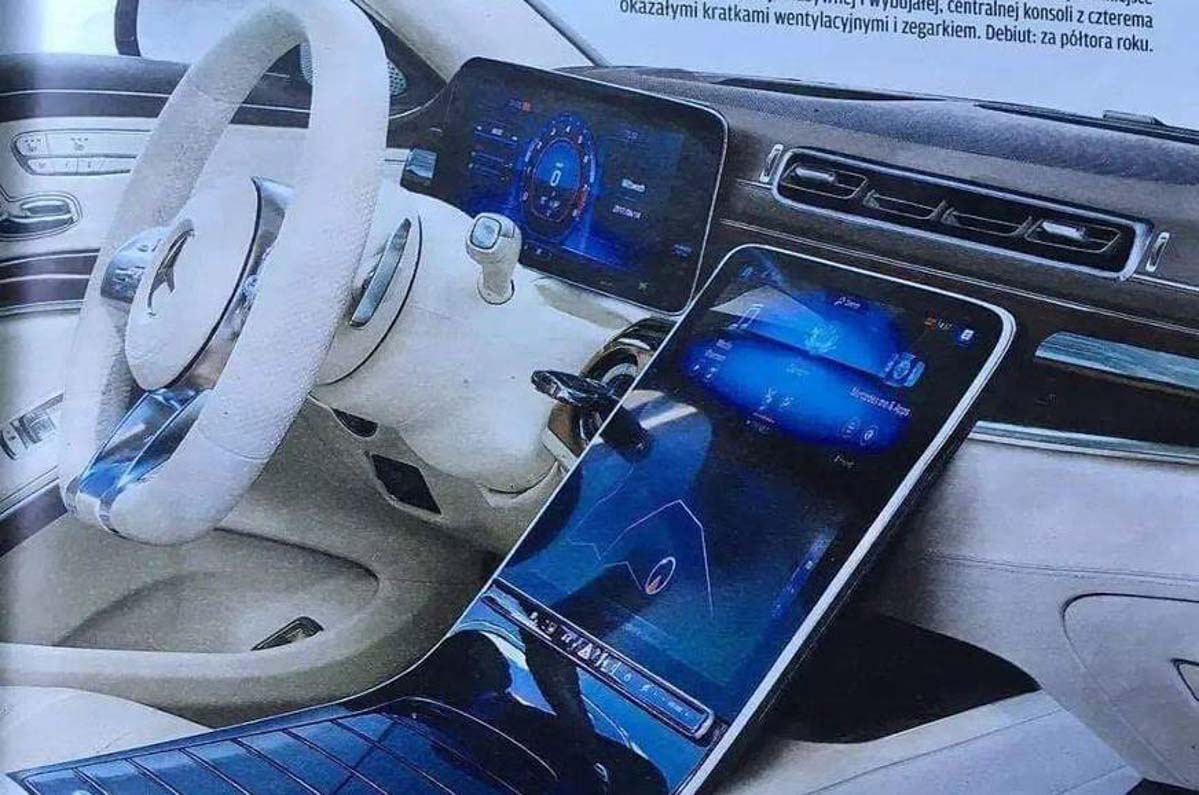
    Mercedes-Benz is readying the next generation of its flagship S-Class sedan and while we’ve seen test mules in the past, a leaked image of the interior have now made its online. The next generation Mercedes-Benz S-Class due to make its debut sometime in 2020 and going by the leaked image, the car appears future ready. Confirmed by earlier spy shots, the W223 S-Class replaced the dual infotainment screen with single unit for the instrument console and a massive vertically-stacked display for all other controls. The Tesla like touchscreen system replaces a tonne of switches on dashboard that gets a clutter-free appearance with sleek looking air-con vents and a new steering wheel. The leaked image also reveals the dual-tone treatment to the cabin in pristine while and black shades.

    The new generation Mercedes-Benz S-Class will be based on the automaker’s MRA platform and will come with a range of six and eight cylinder petrol and diesel engines. There will also be an electrified version called – the EQ S – and will be based on the company’s new Modular Electric Architecture (MEA). The new electrified version is expected to sport a range of 500 km on a single charge, as the automaker’s new top-of-the-line electric saloon. Not to forget, there will be the Affalterbach versions too with the AMG-tuned S-Class drawing power from the 4.0-litre V8 bi-turbo motor that is likely to go hybrid.

    In addition, the new Mercedes-Benz S-Class is expected to be offered in only the long-wheelbase guise globally. That said, do expect the Pullman and Maybach versions to follow suit packing in tech and comfort over the current W222 S-Class. It needs to be seen if Mercedes will continue with the Coupe and Convertible versions on the next generation. With respect to new tech, expect improved autonomous driving capability possibly up to Level 3; a new and updated version of the Airmatic suspension and more segment-first creature comforts on the offering.

    In terms of design, the new S-Class is likely to get an evolutionary styling along lines of the new A-Class, CLS and the likes. The current version is one of the most gorgeous looking saloons out there, which really sets the benchmark for the new version. It is also likely to serve as the design inspiration for the next C-Class and E-Class models, when its time for their respective new life cycles.

    More details on the new S-Class will be available in the months to come. A global debut will happen next year while sales globally should commence by 2021 or 2022, depending on the market. The W222 S-Class is assembled in India, and given the sheer demand for the flagship Mercedes, expect the new model to be locally assembled as well.

  • Chatime facing allegations of Employee Underpayment

    Chatime facing allegations of Employee Underpayment

    Bubble tea chain Chatime is the subject of the latest underpayment scandal, after an in-depth report alleged rampant underpayment in both corporate-owned stores and the franchisee network stretching back to 2009.

    Employees of the Taiwanese company’s Australian subsidiary – Infinite Plus – are owed more than $10 million, according to the report. Many of the underpaid workers are foreign students on visas from China and Taiwan, who were too afraid to complain to authorities, the report said.

    A spokesperson for the Fair Work Ombudsman (FWO) told it has a current investigation relating to Infinite Plus, so could not comment further on the matter at this stage.

    The report comes after a parliamentary inquiry earlier this year called for a total overhaul of the franchise sector, after a series of underpayment scandals at 7-Eleven, Retail Food Group, Domino’s Pizza Enterprises Ltd and other franchise businesses.

    Chatime had not previously been insinuated in the underpayment scandals, but according to the report, the bubble tea business had in fact received a formal complaint from the Fair Work Ombudsman (FWO) in 2018, after an audit of its corporate-owned stores from August to December 2016 revealed 150 workers had been underpaid.

    Chatime was told to back-pay workers an estimated $113,494 in NSW and $62,975 in Victoria, the report stated, but was not further penalised by the FWO. The Ombudsman also chose not to make the finding public.

    Earlier this month, however, the regulator commenced legal action against a Chatime franchisee in Sydney, which it alleged underpaid 17 workers more than $46,000. A Chatime insider told, “It’s pretty standard picking on the little guys, not the big guys”.

    The spokesperson for the FWO told it is examining the rapid establishment and expansion of overseas franchise businesses.

    “These businesses often implement operating models and workplace practices associated with their countries of origin,” the spokesperson said.

    “In combination with employing migrant workers, who may be unaware of their rights, there is significant potential for non-compliance. We are proactively auditing several emerging franchisees in the fast food, restaurant and café sector to check compliance of their business models with Australia’s workplace laws.”

    The spokesperson said recent litigations commenced against PappaRich and Chatime franchisee outlet operators are the result of this activity.

    The spokesperson also confirmed that the FWO investigated Bakery Venture, a business that Infinite Plus’s key shareholders – Charlley Zhao and Iris Qian – were involved directors of and key shareholders, last year.

    The Ombudsman secured $350,000 in back-pay for employees and former employees of Bakery Venture, trading as Dough Collective, but further enforcement options were limited, since the company went into liquidation during the investigation.

    We asked Chatime for comment, but had not received a reply by the time of publication.

  • Central Phuket opens luxury VIP Zone

    Central Phuket opens luxury VIP Zone

    Thai property developer and the operator of Central Phuket shopping centre, CPN, has celebrated a new luxury zone with the launch of a range of world-class brands.

    The company says the new stores are being introduced in line with “the rapid growth and high demand of the affluent world tourist market in support of Thailand’s tourism industry’s move to elevate Phuket city as a global beach lifestyle destination comparable to the French Riviera, Miami, and Hawaii”.

    “As a global player, we aim to elevate Central Phuket to become one of the most complete travel destinations in the world,” said CPN deputy CEO Wallaya Chirathivat. “Central Phuket has the concept of ‘The Magnitude of Luxury & Leisure Resort Shopping Destination’ in the form of a ‘Beach Lifestyle’, which perfectly matches with Phuket as a beach city comparable to the world’s greatest beach cities. We truly appreciate that the global luxury brands have placed trust and confidence in our project as the first luxury mall located outside Bangkok, Thailand.”

    To mark the occasion, Central Phuket held a grand celebration entitled “The Unveiling of the New World of Luxury” highlighting the prestigious “Universe of Sirivannavari: The First View from Paris to Phuket” exhibition. HRH Princess Sirivannavari Nariratana allowed the exhibition to be held for the first time in Thailand at Central Phuket Floresta from April 28 to May 26.

  • Joy City reveals management Revamp

    Joy City reveals management Revamp

    Hong Kong property company Joy City has revealed new management appointments and the departure of its CFO.

    Two new deputy GMs have been appointed: Song Bingxin and Guo Fengrui.

    Song, 49, joined Cofco Corporation, Joy City’s controlling shareholder, in 1994. From December 2016 to April this year, she was deputy GM at Grand Joy Holdings.

    Guo, 50, served as GM of the operations management from February 2015 and acted as the GM assistant from April 2019 at Grand Joy Holdings.

    At the same time, CFO Xu Hanping has ceased her role “due to work reallocation”, according to a stock exchange filing by Joy City.

    “Ms Xu confirmed that she has no disagreement with the board and there is no matter in relation to her cessation as the CFO that needs to be brought to the attention of the shareholders of the Company,” the statement read, before expressing gratitude for her service.

    Zhang Jianguo, 53, has been appointed as her replacement. He joined Grand Joy Holdings in 1994 and most recently served as CFO at Grand Joy Holdings.

    All the changes took effect on April 26.

    The Joy City management team now comprises Zhou Peng (GM), Yao Changlin, Song, Guo and Li Wenyao as deputy GMs and Jianguo as CFO.

  • Under Armour Singapore showcases Rush

    Under Armour Singapore showcases Rush

    Under Armour Singapore has partnered with Celliant to create performance apparel line UA Rush and Recovery.

    Designed to enhance performance, the collection includes men’s and women’s fitted tees, long-sleeved shirts, leggings and tights and more.

    All pieces will range from S$69-$199, and are now available for purchase on Under Armour Singapore’s online store, retail stores in Orchard Central, Bugis Junction, VivoCity, and through authorised Under Armour resellers.

    In conjunction with the launch, Under Armour is hosting an admission-free “Rush & Recovery Experience” at Orchard Central Discovery Walk until May 2.

    The interactive exhibits bring to life the inner workings of Rush technology. Distinct experiential zones will showcase how the technology generates performance improvements for the wearer, and helps power recovery.

    Another zone, “Test of Will”, features Under Armour’s annual advanced urban fitness challenge where visitors can see a preview of this year’s unique challenges and put their grit, strength and determination to the test.

    Under Armour’s Rush-and-Recovery-engineered fabric promotes improved performance and energy return. It is intended to provide the same benefits to the body as an infrared sauna.

    “The introduction of UA Rush is our commitment to giving athletes 360-degrees of training support both in the gym and beyond,” said Dan Leraris, GM of men’s training at Under Armour.

    “With the launch of UA Rush, we now complete the training cycle – there is now UA gear designed to optimise human performance at every training occasion.”

    Under Armour athletes from around the globe have been training in UA Rush including Singapore Athletic Association athletes such as swimmer Amanda Lim, marathon runner Jasmine Goh, master coach at Ritual Gym, Shrek Ismail, and SuperheroRunners founder Nelson Wong.

  • Low-cost imports challenge Furniture Retailers

    Low-cost imports challenge Furniture Retailers

    The furniture retailing industry may face a tough trading environment in 2019-20 with revenue expected to decline by 3.3 per cent during the period, according to IBISWorld analysts.

    Mounting internal and external competition is expected to continue to threaten the viability of furniture operators in the current year, with revenue expected to decline to $890.0 million as the industry continues to struggle with a challenging operating environment.

    Bao Vuong, IBISWorld senior industry analyst, said the rising volume of low-cost furniture imported into New Zealand is also forecast to hinder the industry’s performance in the current year.

    “The availability of low-cost furniture imports is projected to heighten industry competition,” Vuong said.

    Industry revenue is also likely to be suppressed by slower growth in residential building construction, which will reduce retail demand for furniture items.

    An IBISWorld furniture retailing industry report last year showed it has faced a tough trading environment over the past five years, with revenue growth stifled by increasing competition.

    Within the industry, players typically compete on the basis of price and product range.

    External competition comes from a range of other operators that sell furniture as part of their operations, including department stores, auction websites and online-only players.

    In the next five years through 2023-24, IBISWorld analysts forecast the furniture retailing industry to be operating within a challenging environment .

    “Mounting internal and external competition is projected to continue threatening the viability of operators over the period,” analysts said.

    The report also showed softer real household discretionary income growth could hinder retail demand for furniture products during the period.

  • Easter spending up 4.6 per cent over Last Year

    Easter spending up 4.6 per cent over Last Year

    While nationwide spending was down year-on-year over the week to Easter Monday, the holiday period performed better compared to its 2018 counterpart, according to nationwide spending data from Paymark.

    The seven days to Monday, April 22, 2019, saw spending increase by 4.6 per cent compared to the Easter week in 2018, which ran to April 2. This is down slightly from the 4.9 per cent year-on-year spending increase in 2018.

    Gisborne saw the strongest growth at 14.6 per cent, followed by Marlborough at 13.3 per cent, when comparing Easter periods.

    Spending was also up across clothing and footwear stores (13.8 per cent), and liquor retailers (9.9 per cent).

    Compared to the exact same week in 2018, rather than last year’s East period, spending in the Canterbury region was down 7 per cent, with Kiwis spending a total of $125.1 million in the region over the week.

    Wellington brought in $106.2 million, a 5.9 per cent drop, while Auckland brought in $454.1 million – a 6 per cent drop compared to the same period in 2018.

    Auckland made up about a third of the spending in the country, with Paymark recording $1.19 billion spent over the week (0.8 per cent down on 2018), though the region was far outstripped in terms of overall growth.

    The Bay of Plenty saw spending grow to $92.9 million – a 14.5 per cent increase year over year. Gisborne enjoyed 19.6 per cent spending growth to $11.7 million, while Otago brought in $76.6 million, or an increase of 7.1 per cent.

    According to Paymark, grocery, fuel and hospitality providers, drove almost all of the spending increase.

    “This year these merchants recorded $43 million more spending (up 15.7 per cent) outside of the three largest Paymark regions,” Paymark said.