Author: Mei Ling Tan

  • For first few years, Koreans will be biggest users of 5G

    For first few years, Koreans will be biggest users of 5G

    Korea is forecasted to have the highest proportion of fifth-generation (5G) smartphone usage in the world over the next couple of years, a market tracker said on Sunday. According to Strategy Analytics’ Service Provider Group, the adoption rate of 5G smartphones in Korea is expected to reach 5.5 percent in 2019 and 10.9 percent in 2020, which will be the highest level among major global nations.

    The estimate is based on the fact that Korea is to commercialize 5G services next March, making it the first country in the world to do so, with tech giant Samsung Electronics planning to release a model featuring the high-end technology, the market tracker said.

    By 2020, 5G will account for 4.7 percent of total market share in the United States, 5.2 percent in Japan and 2.8 percent in China, Strategy Analytics said, adding that its penetration rate would increase after that date in line with the broader establishment of the network.

    In 2021, the adoption rate of 5G smartphones is expected to begin to surge in major countries, with numbers hitting 27 percent in the United States, followed by 21.3 percent in South Korea, 19.7 percent in Japan and 8.5 percent in China.

    “The 5G standard will become the mainstream of the global network industry in years to come,” said an industry insider.
  • Steve Madden has launched in Malaysia

    Steve Madden has launched in Malaysia

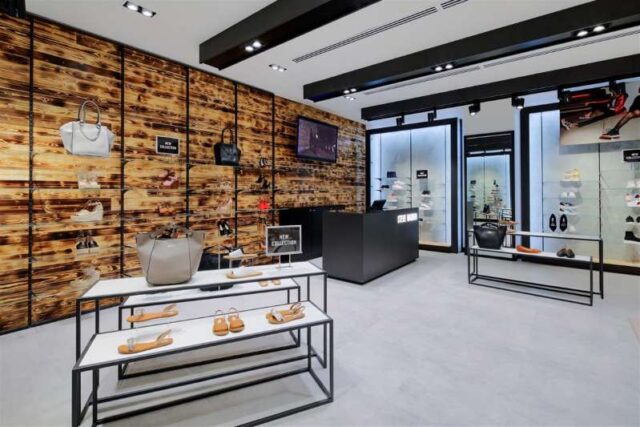
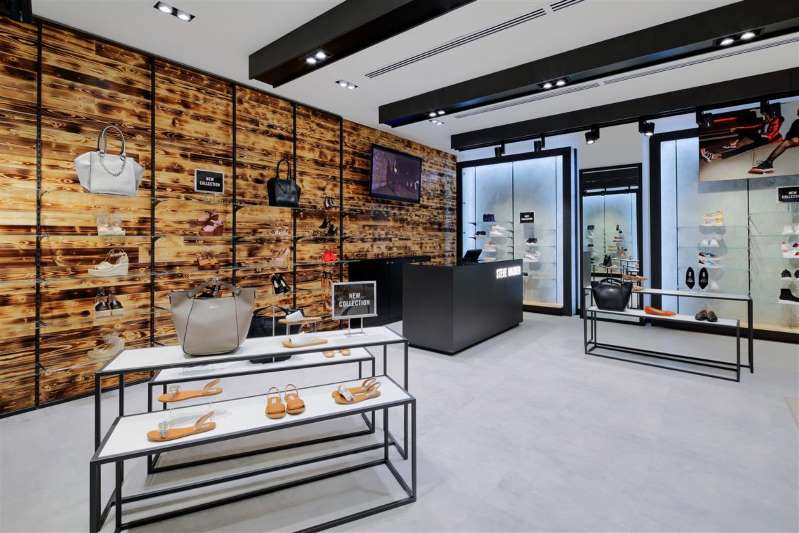
    American footwear brand Steve Madden has opened its first store in Malaysia. The new location at Mid Valley Megamall in Kuala Lumpur is the second Steve Madden store launched by the brand’s retail partner Valiram after the first opening in Takashi­maya Singapore.

    A statement from the brand that describes the new store’s aesthetic as “distilled urban” reads: “Making use of several materials, the intention is to stage the stars – shoes and accessories – in a way that allows each of them to tell their style story.”

    Featured in store is the brand’s Holiday 2018 collection for women, as well as its signature rock-n-roll-inspired shoes and leather goods.

  • ShoppRe online portal targets Indians living abroad

    ShoppRe online portal targets Indians living abroad

    International shipping and consolidation company ShoppRe.com is setting up in Dubai with a series of marketing campaigns. The shopping portal optimises cross-border e-commerce from India, acting as a bridge between people living abroad and Indian shopping sites such as Flipkart and Myntra.

    According to the site’s founders, most Indian sellers do not offer international shipping and several Indian websites do not accept international card payments.

    ShoppRe’s brand ambassadors, actress Priyamani and her husband Mustufa Raj, kick-started the official launch in Dubai by releasing the new ad campaign.

    “I can totally relate to people who have just shifted abroad and badly miss shopping from India. ShoppRe makes it possible to have your favorite Indian goods delivered right to your doorsteps,” said Priyamani.

    The firm’s major investor V A Hassan said: “I have been in Dubai for more than four decades. I have seen the huge demand for Indian products like fashion, food, etc, which are popular everywhere, but not easily accessible or are extremely overpriced”.

    ShoppRe was founded in October 2016 and has fulfilled orders worth INR 40 million (US$565,200) for more than 15,000 customers, including both Indian and non-Indian consumers. It has shipped products to more than 80 countries.

  • Vietnamese currency falls to new low, could go lower

    Vietnamese currency falls to new low, could go lower

    The official exchange rate between Vietnamese dong and U.S. dollar reached its highest this year Wednesday, and  experts said the dong could depreciate further. The State Bank of Vietnam set a central exchange rate of VND22,757 on Wednesday, the sixth time the rate has gone up in the last two weeks.

    The dong has fallen by VND352, or 1.57 percent, against the greenback since the beginning of the year.

    The dollar’s value increased at commercial banks. At 3p.m. Wednesday, Vietcombank sold the dollar for VND23,350, VND15 higher than Tuesday.

    Vietinbank also sold its dollar for VND23,350, VND17 higher than Tuesday, while BIDV sold it at VND23,355, VND25 higher.

    The dollar also inched up on the free market. At 11.30 a.m. Wednesday, it was selling for VND23,360-23,410, VND10-20 higher than on Tuesday.

    Economist Nguyen Tri Hieu said that the reason for the hike was high demand for dollars toward the end of the year as businesses often import large amounts of materials needed for manufacturing.

    The ongoing U.S.-China trade war continues to exert exchange rate pressures, despite the U.S. announcing a 90-day halt on additional tariffs on Chinese goods starting next year, as there is no certainty that tensions will decline, he said.

    “There is a high possibility that the dong’s value will continue to fall this year,” Hieu said.

    Hieu said that the government should also devaluate the dong against the Chinese yuan so that the trade deficit between Vietnam and China can be reduced.

    Vietnam relies heavily on China for materials and equipment for its labor-intensive manufacturing sector.

    As the yuan’s value has fallen by 9 percent to the dollar since the beginning of this year, some experts have said that the dong should be devaluated even more to avoid impacts a cheaper yuan. Cheap made-in-China goods could be imported in large quantities to Vietnam and compete with domestic products, they said.

    But economist Tran Dinh Thien said that the dong should be kept at a balanced rate between the U.S. dollar and the Chinese yuan. A 2-3 percent band a year is acceptable, he added.

    A stronger dollar will benefit exporters, but will also create stronger pressure on inflation and interest rates which will increase business costs in a country with high imports and public debt, Thien said at a recent conference.

    He added that the fluctuation of the dong should be controlled to help local companies conduct their business with greater certainty.

    The government doesn’t want businesses to suffer shocks, he said.

    Prime Minister Nguyen Xuan Phuc had said in August that the devaluation of the dong needs to be kept within a 2-percent band this year compared with the end of last year.

  • Kering leads the way to gender diversity

    Kering leads the way to gender diversity

    French luxury goods giant Kering has received a prize for its high level of female representation on its board. The company has made gender equality one of its corporate priority and has, this week, been chosen to receive the “Most Feminine Board of Directors” award.

    Handed out by the European Women on Boards along with Ethics & Boards, Kering was selected among the 200 largest companies of the Stoxx Europe 600 index based on the percentage of women on the boards as well as the presence of women serving as chief executive officer or chair of the executive board.

    The company, which owns a range of high-end labels including Saint Laurent, Bottega Veneta and Pomellato, launched a leadership and diversity program in 2010 with the aim of increasing access for women to leadership positions.

    Kering has also committed to reaching gender parity and pay equality at all levels by 2025.

    French companies are leading the way on gender diversity and Kering is a great model setting an example for the rest of the world to follow.

    Indeed, more than half of the group’s managers are women while they constitute 64% percent of the board and 33% of its executive committee.

    François-Henri Pinault, Kering’s CEO, also announced that the company would be doubling the budget of the Kering Foundation, aimed at tackling violence against women.

    Kering is also partnering with Michelle Obama for the French leg of her blockbuster tour for her memoir titled “Becoming.”

  • Japan Foods in regional tie-up with Minor Singapore

    Japan Foods in regional tie-up with Minor Singapore

    Japan Foods has entered a joint venture with Minor Singapore to support each other’s operations in Japan, Thailand and China. Japan Foods is to operate the partners’ Thai restaurants in Japan and support Japanese cuisine operations. Minor Singapore will meanwhile run Japanese outlets in Thailand and China, supporting the preparation of Thai cuisine.
    The JV is being funded by a combined shareholder loan of $2.3 million to be disbursed equally for working capital. Japan Foods will fund its half of the loan with internal cash resources.

    Japan Foods executive chairman and CEO Takahashi Kenichi said he believes the expanded network will “make us more attractive as a franchise partner to Japanese brand owners who may be looking to expand beyond their local market”.

    Minor Singapore executive chairman and CEO Dellen Soh said the partnering firms “share many synergies, including strong brand portfolios and good operating track records”.

  • Alibaba to open e-commerce hub in Belgium

    Alibaba to open e-commerce hub in Belgium

    Alibaba Group Holding Ltd has signed an agreement with the Belgium government to launch an e-commerce trade hub, which will include investments in logistics infrastructure. The project is part of Alibaba’s Electronic World Trade Platform (eWTP), and Belgium is the first European country to join the project following similar agreements in Malaysia and Rwanda.

    Alibaba’s logistics arm, Cainiao, will lease a 220,000 square meter logistics port at Belgium’s Liege airport as part of the deal and invest an initial 75 million euros ($85 million) in the project set to begin operations in 2021, it said.

    “We strongly believe that under the eWTP, we will open up the huge potential for European businesses to reap the benefits of global cross-border trade, especially into the China market,” Alibaba CEO Daniel Zhang said in a statement.

    Alibaba’s eWTP is designed to help countries reduce trade barriers for e-commerce trade, including lowering or eliminating tariffs and speeding up customs clearance.

    The company has previously said the project is designed to “compliment” the World Trade Organization (WTO).

    Alibaba is expanding the project to Europe amid wider trade tensions, which have forced the firm to back down from efforts to tap U.S. sellers.

    Recently, Alibaba Chairman Jack Ma said previous plans to create a million jobs in the United States had been put on ice due to trade tensions, according to Chinese state media.

  • Indonesia’s Traveloka Co-Founder Resigns

    Indonesia’s Traveloka Co-Founder Resigns

    Indonesian unicorn startup Traveloka announced the resignation of its co-founder, Derianto Kusuma, from his position as chief technology officer on Tuesday. Derianto was one of three persons involved in the establishment in February 2012 of the online ticketing and hotel booking service, which has since become one of the leading tech companies in Southeast Asia.

    “Deri has played an unparalleled role in Traveloka’s development and success by building, scaling, and making not only sustainable technology capability and systems but also a sustainable organization,” said Ferry Unardi, chief executive and co-founder of Traveloka.

    Following his exit from the company, Derianto took to online publishing platform Medium to write about his journey. In his post, he wrote about what drove him to start the company and the actual implementation of different business models throughout the nearly seven years since Traveloka was founded.

    He also touched on why he decided it was best for him to leave.

    “A few years ago, the battle started to show trends towards being more commercially than innovation-driven, predatory than productive, perception-oriented than fundamentals-oriented,” Derianto wrote.

    With these new trends, Derianto felt that his duty – building the technological foundation – had been fulfilled.

    “Two years ago, I ensured Traveloka had strong technological, organizational foundations built for scale and sustainability, and put in place a solid senior team that can take them forward,” Derianto wrote.

    Though Derianto wrote that he would be spending more time with family and friends after resigning, he said he “yearns” to develop a new venture in a noncompeting category, a technology that would “fundamentally transform society.”

    “I’m glad that we have finally reached this milestone where I believe it’s a win-win for everyone involved,” Derianto wrote.

  • Amazon-go to open more stores in the airports

    Amazon-go to open more stores in the airports

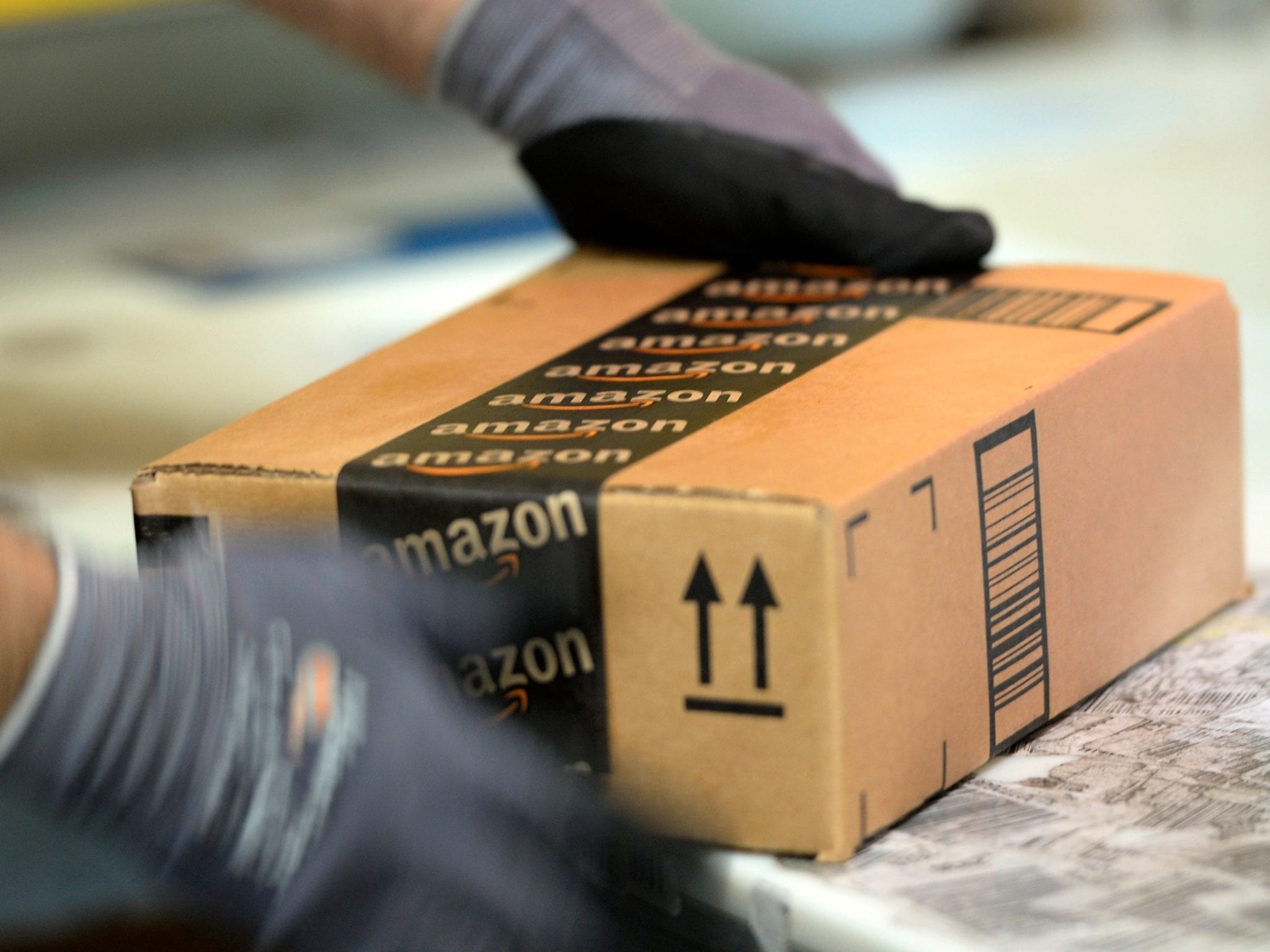
    Online giant Amazon is looking to expand the reach of its automated bricks-and-mortar Amazon Go offer by opening stores in airports, according to a report by Reuters. The retailer’s Go stores utilise myriad cameras which are able to identify customers as they enter, see what they pick up and leave with, and subsequently charge the customer’s Amazon account without the need for any staff interaction – a natural fit for customers needing to get from gate to gate in a short amount of time.

    According to emails obtained by Reuters, Amazon requested a meeting with staff from several airports, including Los Angeles International and San Jose International, referencing Amazon Go as “one of many possibilities we can discuss”.

    Beyond the meetings, which took place in June, officials from both airports confirmed they have had no further correspondence with the business, and that it would need to undergo a competitive bid process in order to acquire the locations necessary.

    The move would put Amazon in front of the more than 350 million people who boarded flights from the country’s top 12 airports last year, according to data from the US Department of Transportation.

    Amazon has been slowly expanding its physical retail offering through numerous Whole Foods, seven Amazon Go stores, and three reviews-driven Amazon 4-star stores, spread across the US, though efforts to bring these offers internationally are reportedly heating up.

    Telegraph UK has learned that Amazon is planning to open an Amazon Go store near Oxford Circus in London, with the location serving as a flagship store for the UK.

  • What is Amazon’s Japan bestseller fashion?

    What is Amazon’s Japan bestseller fashion?

    Amazon Japan has revealed its most popular items sold on the online retailer’s platform in the last twelve months, with basics and sportswear taking the top spot in both fashion and accessories, and footwear categories. According to the ‘Amazon Ranking Grand Prize 2018’, the United Athle 5.6 Ounce High Quality T-shirt took first place in the clothing and accessories category. In a classic design, the affordable fashion item was followed in popularity by the brand’s crew neck t-shirt, which came in second place.

    Looking at the top 20 apparel brands, Champion gained five spots in the report, while in the womenswear section, casual tops by And It_ sat high in the rankings.

    Asics’ running shoes won both first and second place in footwear, while Anello’s poly-canvas mini bag proved popular in the bag category.

    In watches, Casio’s G-Shock shock-resistant smart-watch continued to gain popularity, with the Casio brand featuring 11 times in the Amazon Japan top 20. In the jewellery ranking, products by Tiffany & Co. gained in popularity too, said the report.

    The “Amazon Ranking Grand Prize 2018” ranked the U.S. e-commerce giant site’s most popular products by category for the period beginning in November 13, 2017, and ending on October 31, 2018.

    In the last twelve months, retail expenditure has continued to grow in Japan.

    In September, the archipelago nation recorded its 11th consecutive month of retail revenue growth, with sales up 2.1% on the same period last year, according to data by the Japanese trade ministry.

    Specifically, online shopping is at the forefront of this drive with the Japanese love for online shopping helped by the trend to online shop using mobile phones.

    In the latest Criteo survey, mobile devices accounted for 55% of all EC transactions in Japan, up 4 points on the year.

    Transactions through smartphones increased 9%, and tablets 3%, but purchases by PC were down 9%, said the report.

  • Ikea China biggest project revealed

    Ikea China biggest project revealed

    Swedish furniture group Ikea will build a US$1.2 billion, 430,000sqm shopping complex in Shanghai, to be completed by 2022. The new Ikea China centre will house an Ikea store and an additional 120,000sqm in retail area, hosting more than 300 businesses. It will also include 60,000sqm of office space.

    The move represents the largest single investment the firm has made in one location, and is its sixth complex to be announced or built in China. It will be constructed near the Hongqiao airport as the Shanghai Linkong Project.

    Ikea has completed three Livat-branded shopping centres in China, and has 26 stores across the country. Two other shopping center projects have been announced within the territory.

  • Which tourists spend the most overseas?

    Which tourists spend the most overseas?

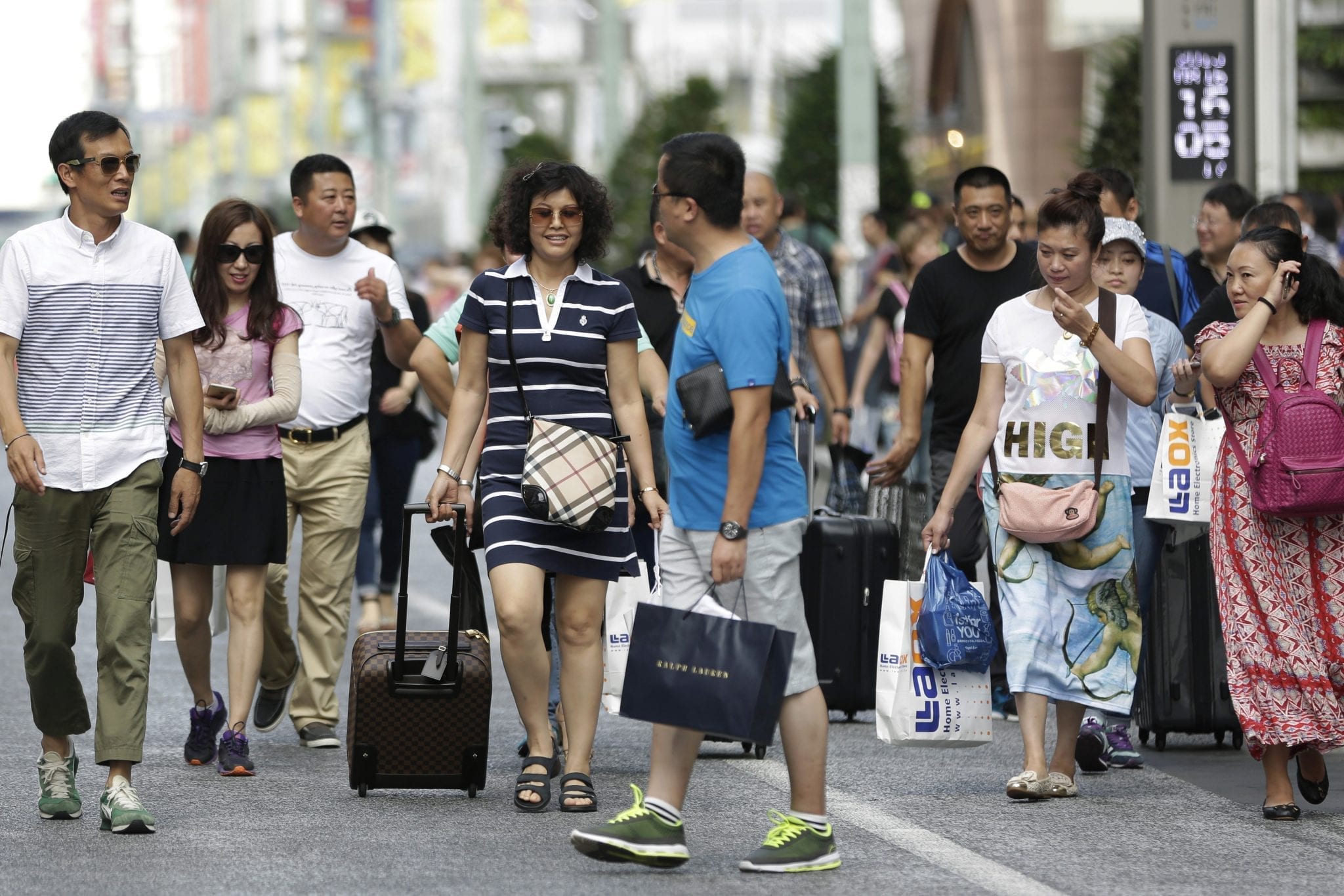
    Overseas spending by South Korean tourists ranks among the top of advanced economies, research data showed on December 5. Figures provided by the Korea Economic Research Institute, affiliated with the Federation of Korean Industries, put the proportion for South Korea at minus 1.9 percent in 2016, ranking it the fifth highest among 32 member states of the Organization for Economic Cooperation and Development (OECD).

    The institute derived the proportion by subtracting overseas expenditures by South Koreans from foreigners’ spending in South Korea and measured the sum’s ratio against household spending.

    Higher numbers in the negative means that local citizens spent more abroad that what inbound foreigners spent.

    Results showed Norway topped the list with minus 4.3 percent, followed by Lithuania (minus 2.7 percent), Belgium (minus 2.5 percent) and Germany (2.3 percent).

    In the case of Japan, the number turned positive in 2014 and came to 0.6 percent in 2016.

    “The outflow of spending is the result of choices by local and foreign consumers of tourism services,” the institute said. “It indicates weaknesses in the competitiveness of the domestic tourism industry.”

    The institute cited a report last year from the World Economic Forum that said South Korea’s competitiveness in prices fell from 84th in 2007 to 88th in 2017.

    “(This) was one of the important elements that undermined South Korea’s competitiveness in the tourism business,” it said.

  • Indonesia’s November Inflation Rate Surprisingly Picks Up

    Indonesia’s November Inflation Rate Surprisingly Picks Up

    Indonesia’s annual inflation rate accelerated for a second straight month in November, the statistics office said on Monday, against an expectation for price pressures to ease. The consumer price index rose 3.23 percent in November from a year earlier, Central Statistics Agency (BPS) chief Suhariyanto said, attributing the increase to rising prices of some food products and airfares. On a monthly basis, it rose 0.27 percent.

    October’s rate was 3.16 percent, while a Reuters poll had expected a November annual inflation rate of 3.15 percent.

    The November rate was still well within the central bank’s target range of 2.5 percent to 4.5 percent for 2018.

    The annual core inflation rate, which excludes government-controlled and volatile prices, also picked up more than expected in November to 3.03 percent, from 2.94 percent in October. The poll had expected a core inflation rate of 2.97 percent.

    Bank Indonesia has hiked interest rates six times this year by a total of 175 basis points since May to support the rupiah, despite benign inflation. The currency plumbed levels not seen since 1998 earlier this year but has sharply strengthened last month due to improving global investor sentiment.

  • E-mart US buys supermarket operator

    E-mart US buys supermarket operator

    South Korean discount retail chain E-mart is acquiring US food retailer Good Food Holdings for US$270 million. A subsidiary of retail conglomerate Shinsegae, the E-mart US acquisition intends to stabilise and expand its operations in North America. It is the company’s first acquisition of an overseas firm.

    Good Food operates 24 stores across the American West under three brands: Bristol Farms, Lazy Acres and Metropolitan Market. Its original executive board will be retained by E-mart.

    Good Food Holdings employs 3100 people and brings in average sales of KRW 670 billion ($596.75 million) per annum. E-mart plans to open a premium store-restaurant in Los Angeles next year called PK Market.

  • Millennials Dominate Indonesia’s Online Shopping Scene

    Millennials Dominate Indonesia’s Online Shopping Scene

    Millennials are driving growth in Indonesia’s e-commerce industry as they buy a wide range of items, from clothes and gadgets to phone credit and electricity tokens, from online outlets with increasing frequency, according to a recent report from market research and consulting firm Ipsos Indonesia. The E-Commerce Outlook 2018 report released on Monday looked at the profiles of 32 million online shoppers in the country.

    The study drew results from an online survey in August. Ipsos Indonesia said the study served as an exploratory stage to be followed up by a more extensive survey planned for next year.

    The study found that 64 percent of online shopping is dominated and driven by millennials, both in terms of product categories and revenue, Ipsos research director Andi Sukma said, referring to the 25-30 age group.

    “They are made up of young families that have a minimum income of Rp 4 million [$280] per month,” said Indah Tanip, an associate director at Ipsos Observer.

    Most millennials are drawn to e-commerce for its convenience and competitive prices, the rise of financial technology and online payment platforms, such as OVO and Go-Pay, which have also encouraged more millennials to purchase their phone credit and pay bills through e-commerce apps, the Ipsos report said.

    The report also identified the five most-visited e-commerce sites: Tokopedia, Shopee, Lazada, Bukalapak and Blibli.com.

    Citing data from the Indonesian Internet Service Providers Association (APJII), Ipsos said the wider availability of broadband internet in the country has helped fuel e-commerce growth. About 72 percent of Indonesians living in urban areas and nearly 50 percent in rural-urban areas have internet access.

    The E-Commerce Outlook 2018 report also looked at community habits, online service accessibility, popular e-commerce sites and consumers’ preferred payment methods.