Author: Mei Ling Tan

  • Alibaba’s second-quarter revenue jumps high

    Alibaba’s second-quarter revenue jumps high

    Alibaba’s second-quarter revenue grew 54 per cent year on year, reaching RMB 85.1 billion ($US12.3 billion). Net income attributable to shareholders was RMB 20 billion ($2.9 billion), a 13 per cent year-on-year increase. “Alibaba had another strong quarter of rapid growth,” said Alibaba Group CEO Daniel Zhang.

    “Annual active customers increased by 25 million to reach 601 million in the year ended September 30.”

    “Annual active customers increased by 25 million to reach 601 million in the year ended September 30.”

    Alibaba’s cloud-computing arm saw 90 per cent year-on-year growth to RMB 5.6 billion, launching more than 600 products and features during the quarter ranging from big data analytics, AI application innovation, security and internet-of-things enhancements.

    The business’s online Tmall operations saw a 30 per cent increase in gross merchandise value, driven by improved conversion rates and increased traffic in the fast-moving consumer goods, home furnishings and apparel categories.

    Alibaba’s New Retail strategy has continued to pay off across its Hema supermarkets network, with stores that have been in operation for at least 1.5 years seeing online sales account for 60 per cent of turnover for the September quarter. By the end of the quarter, 77 Hema stores had been opened in China.

    The group has dropped its forecast revenue guidance for the full year by 4 to 6 per cent to between RMB 375 billion and RMB 383 billion. As it stands, the group expects revenue to grow by 54 to 56 per cent.

  • Coach & Kate Spade power Tapestry sales

    Coach & Kate Spade power Tapestry sales

    One year into its major push to become an American luxury conglomerate, things appear to be moving in the right direction at Tapestry, which recently posted first-quarter results that topped expectations across the board. The firm — parent of Coach, Kate Spade and Stuart Weitzman — said its Q1 sales advanced 7 percent to $1.38 billion, driven mostly by the flagship Coach brand but also helped by Kate Spade, which it acquired in 2017.

    “Results were driven by continued growth at Coach, where global comparable store sales rose 4 percent, led by outperformance in digital, and reflected our compelling offering across categories and channels,” said Tapestry CEO Victor Luis. “Kate Spade contributed to our overall performance, as we made continued progress on our integration efforts, including the realization of synergies and the execution of strategic initiatives.”

    Trends at Stuart Weitzman, improved from the prior quarter, according to Luis, but results continued to be negatively impacted by development and delivery delays, which pressured sales and margins.

    “Production levels and shipments have now stabilized, reflecting the investment in talent and processes, as well as added manufacturing capacity. As a result, we remain on track to achieve profitable sales growth in the holiday quarter,” Luis added.

    Overall, the company reversed the prior year’s losses, posting profits of $122 million, or 42 cents per diluted share. Adjusted profits were $142 million, or 48 cents per share, topping analysts’ bets for 45 cents per share.

    By brand, net sales at Coach rose 4 percent to $961 million, Kate Spade’s sales surged 21 percent to $325 million, and Stuart Weitzman fell 1 percent to $95 million.

    “Our first-quarter performance and progress on our strategic priorities to date give us confidence in our ability to achieve the goals we’ve set out for fiscal 2019,” said Luis.

    “We continue to expect to deliver strong revenue and operating income growth, while making investments to support our long-term vision and drive a return to both double-digit operating income and earnings-per-share growth in fiscal 2020.”

    To that end, the firm lifted its profit outlook for the fiscal year and now projects earnings per diluted share in the range of $2.75 to $2.80, compared with the previous range of $2.70 to $2.80. It continues to expect revenues to increase at a mid-single-digit rate to $6.1 billion to $6.2 billion.


  • Vietjet Air targets young aircraft fleet to keep costs low

    Vietjet Air targets young aircraft fleet to keep costs low

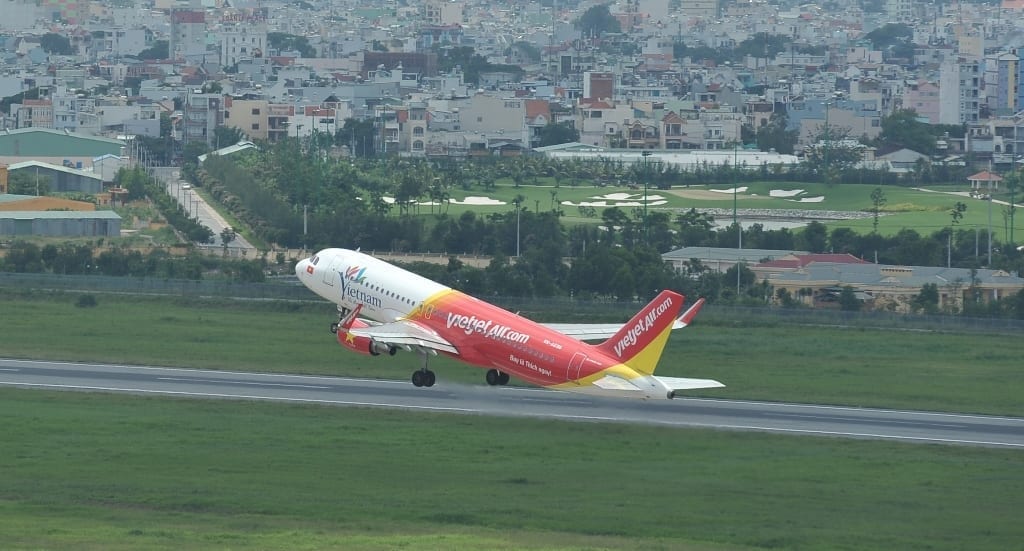
    Budget carrier Vietjet Air plans a fleet age average of three years to keep fuel and maintenance costs low. Vietjet Air is in negotiations to firm up the deal after ordering 100 Boeing 737 MAX aircraft and 50 Airbus A321neo aircraft at the Farnborough International Airshow in the U.K. in July.

    The planes are expected to be delivered between 2020 and 2025, Vietjet CEO Nguyen Thi Phuong Thao said recently.

    But some analysts have questioned whether Vietjet is equipping itself with way too much aircraft, given that it already owns 62 Airbus narrow body jets.

    The carrier, which leads the domestic market with a 45 percent share, expects to receive 30 new aircraft and “retire” 10 each year between 2020 and 2025 to keep its fleet young, Thao said.

    “The average age of Vietjet aircraft is three years now and we want to keep it that way,” she said on the sidelines of a CEO conference in Bangkok.

    The average age of Vietjet’s planes is half that of other low-cost and fast-growing carriers in Asia like Malaysia’s AirAsia, Indonesia’s Lion Air and India’s IndiGo, according to Airfleets.net.

    “The main reason for the young fleet is to keep the maintenance and fuel costs low and to ensure a good service for passengers on fresh, convenient planes,” said Thao.

    Deliveries of those planes are expected to happen from now until early next year.Last month, Vietjet inked a deal to buy 10 Airbus aircraft worth $1.24 billion from Japanese and French companies.

    Thai Vietjet, which operates under a franchise contract in Thailand, is flying with seven jets and expected to add ten more jets each year, the carrier had said this month.

    Vietjet runs 385 flights daily within Vietnam and to Japan, Hong Kong, South Korea, Taiwan, Singapore, mainland China, Thailand, Myanmar and Malaysia.

  • Korea’s Cafe24 launched in Japan

    Korea’s Cafe24 launched in Japan

    South Korean e-commerce platform Cafe24 has launched in Japan. The new Japanese service offers local businesses solutions to use online stores, payment gateways, logistics networks and marketing tools to reach global customers. Japanese businesses are able to use the service to build multilingual online stores and offer international and Japanese payment gateway services.

    The Japanese e-commerce market is currently the world’s fourth largest, growing in value at more than ¥1 trillion per year.

    Cafe24’s CEO Lee Jae-suk said: “Our expansion into Japan’s e-commerce market marks an important milestone and adds momentum to our growth as a global company … We will continue to rigorously sophisticate the Japanese platform in accordance with local situations to successfully set roots in Japan’s e-commerce market.”

    Cafe24 has indicated plans to expand into English-speaking countries and Southeast Asia, following Japan.

  • Malaysia’s exports rebound in September

    Malaysia’s exports rebound in September

    Malaysia’s exports rebounded by 6.7% in September 2018 to RM83 billion year-on-year (y-o-y) after a slight decrease in the previous month, according to Statistics Department. Total trade which was valued at RM150.8 billion increased RM3.3 billion or 2.3% in September 2018, chief statistician Malaysia Datuk Seri Dr Mohd Uzir Mahidin said in a statement.

    Mohd Uzir said the trade surplus recorded the highest value since October 2008 at RM15.3 billion, increased RM7.1 billion or 85.9% from a year ago.

    Re-exports was valued at RM16.5 billion registering an increase of 26.2% y-o-y and accounted for 19.9% of total exports, while domestic exports increased 2.7% or RM1.8 billion to RM66.5 billion.

    The export growth was contributed by expansion in exports to Hong Kong, Taiwan, Singapore, Australia and Republic of Korea. Meanwhile, lower imports were mainly from India, Republic of Korea, Vietnam, UAE and EU.

    The main products which contributed to the expansion in exports were electrical & electronic products, refined petroleum products, crude petroleum and liquefied natural gas (LNG).

    However, the department said decline was recorded for palm oil and palm oil-based products, timber and timber-based products and natural rubber.

    For imports, the lower in imports by ‘end use’ was mainly attributed to intermediate goods, capital goods, and consumption goods, it added.

  • Karl Lagerfeld x Mood by Christofle

    Karl Lagerfeld x Mood by Christofle

    Karl Lagerfeld has collaborated with Christofle, the luxury Parisian silversmith, on an exclusive edition of the “MOOD” flatware set and decorative case. Taking inspiration from the Art Deco movement, Karl — himself a long-time connoisseur of Christofle — designed a striking, symmetrical pattern of graphic lines to appear on the elliptical egg shape.

    There are two versions that have been created: one in polished silver and one in black, lacquered stainless steel. The sleek MOOD opens to reveal a 24-piece silver-plated cutlery set.

    Each piece is stamped with a subtle linear print, the Christofle hallmark and the iconic Karl Lagerfeld silhouette logo.

    The Mood is Christofle’s most renowned design that reimages the classic codes of table setting; it reflects the brand’s vision for relaxed but refined entertaining.

    The partnership with Karl Lagerfeld marks the first time in Christofle’s 188-year history that it has worked with a fashion brand.

  • Parkson Retail Asia continues drowning

    Parkson Retail Asia continues drowning

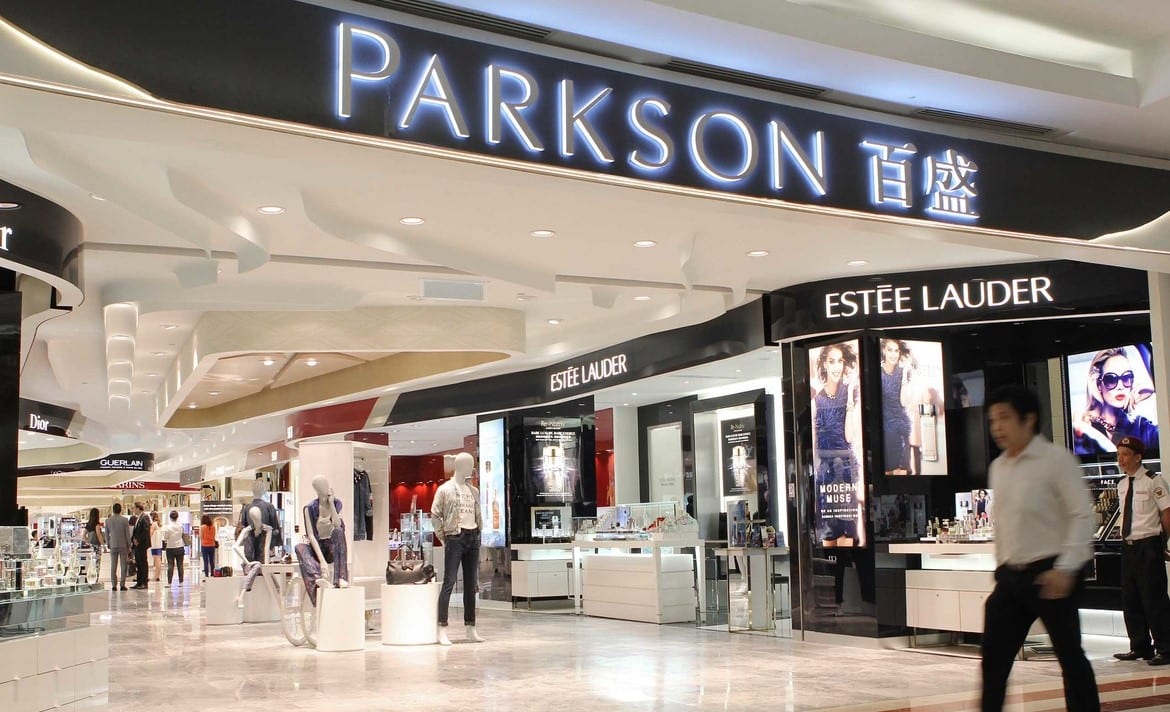
    Struggling department store operator Parkson Retail Asia has hinted it may close further stores as it posted yet another loss. For the first quarter of the new trading year, the Singapore headquartered company lost S$11.1 million, a slight improvement on the $12.9 million of a year ago.

    Last full trading year, the company lost $40.1 million for the full year.

    In a statement, the company said it would will continue to prioritise on enhancing product offerings “as well as on optimising both our operational efficiency and network of stores,” suggesting further exits, most likely in Vietnam where it has just five stores remaining from a peak of 10 and continues to lose money.

    Parkson credited the reduced loss on an improved performance of the Malaysian and Indonesian store networks, together with the effect of the closure of seven loss-making stores last financial year.

    Group sales rose 1.7 per cent to $92.6 million.

    On Friday the company announced the immediate resignation of its CFO Chia Cang Yang, with immediate effect. CEO Michael Remsen will oversee financial matters until a replacement is recruited.

  • Vietnam urges China to import more agriculture produce

    Vietnam urges China to import more agriculture produce

    China should import more Vietnamese products, especially agriculture produce, so as to balance bilateral trade, PM Nguyen Xuan Phuc said Sunday. “As Vietnam is seeing a great trade deficit with China, you [Chinese businesses] should import more products from Vietnam, starting with agricultural products, to balance bilateral trade,” the prime minister said at a meeting with Chinese businesses in Shanghai before the November 5-10 China International Import Expo (CIIE).

    “This is in line with the policy of China’s top leaders, who have repeatedly told us that they are keen to move towards a trade balance between China and Vietnam,” he noted.

    China is currently the largest market for agricultural products in Vietnam with the export turnover of agriculture, forestry and fishery products this year estimated at over $35 billion, up nearly 9 percent over the same period last year, Phuc said.

    However, most Vietnamese produce are mostly consumed in China’s southern Yunnan Province and the Guangxi region bordering Vietnam, not in the rest of the country, he said.

    As the second largest agricultural produce exporter in ASEAN with over 20 agriculture products that have an annual export value of over $1 billion worth, Vietnam offers many products favored by Chinese consumers, the PM said.

    Many Vietnamese agriculture produce are among the world’s best, like rice, pepper, cashew, pangasius fish and shrimp, he noted, adding that its fruits, like dragonfruit, mango, longan and watermelon, have passed import standards set by Australia, the EU, Japan, South Korea and the U.S.

    These products have great potential to boost bilateral trade cooperation, the PM stressed.

    Representatives of Chinese corporations at the meeting said they value the investment potential in Vietnam and are interested in bringing Vietnamese agriculture produce to China and and the world.

    Pu Jian, executive director of the CITIC International Asset Management company, said that he could bring Vietnamese products more deeply into the Chinese market as his company specializes in importing rice, fruits and other produce.

    His corporation also owns 60 percent of McDonald shares with over 3,500 stores in China, and this could be a potential channel to consume Vietnamese produce, he added.

    Johnson Choi, executive director of China’s conglomerate Sunwah Group and general director of Sunwah Vietnam, said that his company would like to distribute Vietnamese coffee in the Chinese market and invest in Vietnam’s “green” agriculture.

    In a meeting with Chinese President Xi Jinping the same day on the sidelines of the CIIE, China’s major event seeking more import opportunities, PM Phuc stressed that Vietnam always attaches great importance to the development of friendly, stable and healthy relations with China.

    China should adopt policies and practical measures to reduce the current large trade deficit with Vietnam, he added.

    Xi said that his country doesn’t want to pursue a trade surplus with Vietnam, and will increase imports from Vietnam towards more balanced and sustainable bilateral trade.

    Vietnam-China trade reached $93.69 billion last year, up 30.2 percent from 2016. Vietnam earned $35.46 billion from exports to China, up 61.5 percent, while spending $58.22 billion on imports from the country, up 16.4 percent.

    In the first nine months this year, bilateral trade between the two countries reached $76.06 billion, up 18.7 percent over the same period last year.

    China continues to be Vietnam’s largest trading partner and the one with which it has the largest trade deficit. It is also Vietnam’s second largest export market after the U.S, according to Vietnam Customs.

  • Why is the Chinese economy slowing down?

    Why is the Chinese economy slowing down?

    China’s economy appears to be slowing faster than expected at the start of the fourth quarter, a bad omen for growth early next year when the full force of the trade war with the United States comes to bear. This situation is likely to spur Beijing to introduce new measures to support growth, analysts said.

    The government will try to avoid returning to its battle-tested plan of large-scale monetary and fiscal stimulus so as not to exacerbate the country’s already huge stock of debt, but it may have no choice but to move some way in that direction to stabilize growth.

    Business sentiment in both the manufacturing and non-manufacturing sectors was weaker than expected in October, led by sharp declines in export demand, according to the official purchasing managers’ index published on Wednesday by the National Bureau of Statistics and the China Federation of Logistics and Purchasing.

    The figures were the first gauges of the trade war’s impact since the U.S. levied 10 percent tariffs on $200 billion worth of Chinese goods in late September.
    The manufacturing sentiment index dropped to 50.2 in October, from 50.8 a month earlier.

    The reading, which was its lowest in more than two years and barely above the 50 point line that separates expansion from contraction in the sector, suggests the possibility of contraction in November as the U.S. tariffs take effect.

    That situation could worsen in January, when the tariff on the $200 billion of Chinese imports is set to rise to 25 percent.

    It might also be exacerbated by the “front loading” behavior of many Chinese exporters — boosting production and shipments now to fill orders for early next year before the scheduled tariff rate increase.

    Production and unemployment among export manufacturers are at risk of falling sharply from January due to lack of orders to fill.

    New export orders contracted for the fifth month in a row in October, to 46.9 from 48 in September.

    Imports also contracted for a fourth straight month, indicating weakening demand within China, while the decline in manufacturing employment accelerated.

    Non-manufacturing activity, dominated by the service sector, also slowed in October, with the index dropping a full point to 53.9.

    While the index still indicates a healthy level of activity, the size of the drop could be a sign of a sharp slowdown ahead.

    Indeed, the contraction in service sector export orders seen in September accelerated sharply in October, falling a further two points to 47.8.

    The October data also reinforce the picture that small- and medium-sized companies are struggling, with indices for both groups falling further into contraction.

    In contract, the index for large companies fell but remained in positive territory.

    “The economic conditions facing China’s private sector are much worse than the headline figure suggests, in our view,” analysts at ANZ said in a report. “The October PMIs for mid-sized and smaller sized companies fell to 47.7 and 49.8, respectively.”

    “So we expect the Caixin PMI to have already fallen into the contractionary zone,” the report said.

    The Caixin PMI data better reflects sentiment in smaller, usually private sector firms.

    Analysts said that a faster than expected economic slowdown this year could be compounded early next year by a lack of new orders and higher U.S. tariffs, prompting further action by the government to prop up growth.

    “We expect a worse growth slowdown in spring 2019 for several reasons [especially after export front loading],” said Ting Lu, chief China economist at Nomura Global Market Research.

    “Beijing’s policy focus so far has been on containing a credit freeze. If our more cautious views prove to be valid, growth is likely to slow to such a worrying pace in spring 2019 that Beijing may have to greatly ramp-up its easing/stimulus measures.”

    The economic forecasts do not take into account the possibility of a large escalation of the trade war.

    U.S. President Donald Trump said again on Monday that tariffs on an additional $267 billion worth of Chinese imports — which would equate to sanctions on virtually all Chinese goods — were “ready to go” if there was no trade progress.

    He said he expected the trade war to result in a “great deal” for the U.S., but did not say how and when that would happen.

    Analysts warned that while the direct impact of U.S. tariffs on the Chinese economy is limited, the negative impact on business and consumer sentiment, and so on the economic outlook, could be much larger.

    Steven Cochrane, the chief Asia-Pacific economist with Moody’s Analytics, said in an interview that additional tariffs would have an outsize impact.

    “There would be much more uncertainty that would tend to slow the pace of investment and consumption,” he said.

    “Consumers are [already] feeling uncertain about next year, so they are going to pull back.”

    In retaliation, China might implement qualitative measures, such as more aggressive inspections of imports from the U.S., creating stiffer visa requirements for visiting American workers, slowing regulatory approval for U.S. companies operating in China or targeting service imports from the U.S., including restricting the enrollment of Chinese students at American universities.

    In a research note released last week, Cochrane estimated that if a 25 percent tariff were imposed on all China-U.S. trade and Beijing applied qualitative countermeasures, China’s gross domestic product growth would fall by 1.2 percentage points to 5.2 percent in 2019 and the Chinese stock market would fall by 9.4 percent.

    The U.S. is reportedly preparing to impose the next round of tariffs on the $267 billion in Chinese goods in early December if Trump’s scheduled meeting with Chinese President Xi Jinping at the G-20 summit in late November produces no progress.

    If true, and given the 60-day comments period that would start when the tariffs are announced, this would mean that the new tariffs would be implemented in early to mid-February, during or just after Lunar New Year.

    Like Christmas in the West, the celebration is the largest instance of consumer spending during the year, so any fall in sentiment caused by the introduction of the new tariffs could have a very negative effect on China’s economy.

    Business sentiment in both the manufacturing and non-manufacturing sectors was weaker than expected in October, led by sharp declines in export demand, according to the official purchasing managers’ index.

    The figures were the first gauges of the trade war’s impact since the U.S. levied 10 percent tariffs on $200 billion worth of Chinese goods in late September.
  • Korea’s Yuhan licenses lung cancer drug

    Korea’s Yuhan licenses lung cancer drug

    Yuhan Corporation announced on Monday that it has entered into a licensing agreement with Janssen Biotech, a subsidiary of Johnson & Johnson, to develop Lazertinib, a treatment for non-small cell lung cancer (Nsclc) that is undergoing clinical trials in Korea.

    Under the agreement, Yuhan will receive an upfront payment of $50 million and is eligible for double-digit royalties on future sales.

    It is also eligible for up to $1.255 billion in payments according to development phases.

    Going forward, Janssen will be responsible for developing the drug, manufacturing and commercialization with exclusive worldwide rights to Lazertinib excluding Korea, where the rights belong to Yuhan.

    The companies will work together on global clinical trials evaluating Lazertinib.

    Trials are expected to begin in 2019.

    “We are excited to start this collaboration and dive into advancing this treatment regimen with a focus on improving the lives of people who suffer from lung cancer,” said Lee Jung-hee, president and CEO of Yuhan, in a statement.

    The combined $1.255 billion Yuhan is set to receive from Janssen is the second-largest export contract for a single pharmaceutical product from Korea, according to people in the industry.

    Lazertinib is a potent, mutant-selective, irreversible, brain-penetrant and orally-active third-generation inhibitor for Nsclc, with the potential to be a first-line therapy.

    The compound is in a Phase 1/2 clinical trial in Korea. Interim results showed that Lazertinib inhibited robust disease activity in patients with Nsclc.

    Established in 1926, Yuhan is one of the top pharmaceutical companies in Korea in terms of market capitalization and revenue.

    Its core business consists of primary and specialty care, dietary supplements, household and animal care, and contract manufacturing of active pharmaceutical ingredients.

    On the news of the agreement with Janssen Biotech, shares of Yuhan spiked 29.78 percent to close at 231,000 won ($205) Monday.

  • Twenty4 opens cash-free retailer in Ipoh Malaysia

    Twenty4 opens cash-free retailer in Ipoh Malaysia

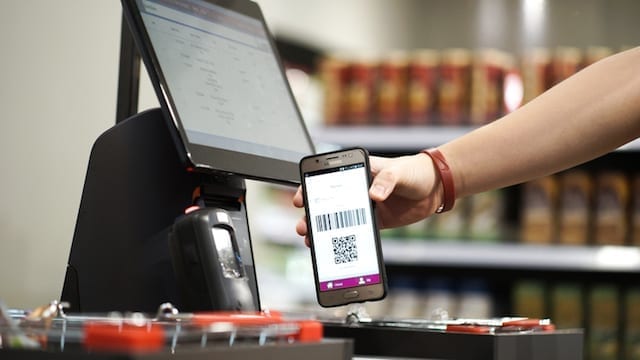
    Malaysian convenience store Twenty4 has opened in Ipoh as the region’s first cash-free retailer of its kind. The “smart” convenience store accepts only cashless transactions, earning it a spot in the Malaysia Book of Records. The brand’s CEO Kenny Ng said: “The shop is open round-the-clock and customers can purchase a variety of items, including food and personal care items, through cashless transactions.

    Customers can buy products at the store using debit cards, credit cards, Paywaves, Samsung Pay, Apple Pay or use other E-Wallet payments. We hope the concept will set the pace … be a pioneer in Malaysia, where people buy items without using cash.”

    Twenty4 sells various local and international products via self-service machines.

  • Versus to merge into Versace Jeans line

    Versus to merge into Versace Jeans line

    It has only been a month since Versace announced it was to be sold to Michael Kors’ parent company Capri Holdings for a reported sum of 2.12 billion dollars. As an early indicator of change, and perhaps cost-saving measures under its new structuring, Versace is to integrate its Versus line into Versace Jeans.

    Versace Chief Executive Jonathan Akeroyd said “During the last few months we have studied how to simplify our business model with a view to focusing on the portfolio of our brands, continuing to ensure innovation and relevance in everything we do. We decided to integrate our two contemporary collections into one, merging Versus and Versace Jeans. This operation will allow us to further develop Versace Jeans’ proposals and, at the same time, not to lose the DNA and the codes that have made this iconic Versus “.

    The collection was notably absent from the catwalk and fashion week after it decamped to London to show its autumn winter 2018 collection.

    The Versace Jeans label is currently under license to Swinger International, also the licensing partner to brands including Genny and Cavalli Class.

    The unexpected move by Versace is indicative of the transformations and shakeups happening in luxury brand’s diffusion ranges.

    Earlier this week Blufin announced the launch of the new Be Blumarine label that will replace Blugirl; Missoni recently reported Margherita Missoni as the new creative director of its M Missoni diffusion line; Marc Jacobs famously shuttered his Marc by Marc Jacobs stores, integrating the label under a single brand umbrella.

    Donatella Versace will reportedly continue to lead the creative vision for the Versace brand.

    At the time of the acquisition it was reported she would become a shareholder of Capri Holdings, along with her brother and daughter.

  • Christopher Ong Appointed As New Managing Director for Singapore

    Christopher Ong Appointed As New Managing Director for Singapore

    DHL Express, a leading international express services provider, on Nov 1 announced the appointment of Christopher Ong, to the role of managing director for DHL Express Singapore. Ong, a Singaporean, will report to Ken Lee, CEO, DHL Express, Asia Pacific, effective immediately. He will be responsible for charting the company’s overall business growth and success in Singapore.  Ong brings over two decades of professional experience across logistics and the business sectors. Most recently the managing director for Malaysia and Brunei at DHL Express, he spent four years driving business strategy for the organisation, managing over 1,200 employees and 27 facilities, including seven international gateways, across East and West Malaysia, and Brunei.

    On the appointment, Lee, said, “Chris joins DHL Express Singapore with a deep bench of experience, having served across a range of senior roles in DHL over the last 12 years. Not only was he instrumental in driving the B2C e-commerce and digitalisation agenda in Malaysia and Brunei, Chris has also demonstrated passion and unyielding commitment towards excellence in employee engagement and customer centricity.

    “His business acumen and broad experience at the regional and country levels will prove invaluable in his new role in Singapore, as we continue to realize the market’s growth potential.”

    Ong joined DHL Express in October 2006 as vice president for Business Development, and was responsible for mergers and acquisitions, partnerships and planning for the Asia Pacific region. In 2011, he assumed the role of country manager for Vietnam.

    Ong, said, “I am delighted to be given the opportunity to further DHL’s success in Singapore and continue raising the bar in delivering superior services and experiences to our customers. I look forward to continue engaging our talented employees and empowering them to make a difference. They are the foundation of our success and the lynchpin for delivering great service quality to earn the trust and loyalty of our customers. ”

    Prior to DHL Express, Ong spent 10 years with Temasek Holdings, the global investment company headquartered in Singapore, where he played a key role in managing the company’s international investments.

  • For Art’s Sake store opens

    For Art’s Sake store opens

    Hot on the heels of For Art’s Sake’s new collection launch is the opening of its first standalone retail store in London’s Covent Garden. Situated in the heart of The Piazza, the store borrows bold design details from the brand’s penchant for eclectic style: think decadent blue velvet furnishingS and brass fixtures that beautifully elevate the statement-making frames.

    The store will incorporate a host of new features, from a selfie station to personal shopping (in five languages: Mandarin, French, Spanish, Italian and English), a concierge option, tax-free shopping, Click and Collect as well as exclusive colourways. To celebrate the launch, For Art’s Sake has collaborated with one of London’s most exciting new design studios – Studio LaPeche – on a window installation that reimagines the most striking features of the London skyline.

    A deliberate avoidance of trend-based silhouettes has led to a rapid pace of growth for For Art’s Sake in a short space of time. On top of Beyoncé and J Lo, For Art’s Sake counts Kristen Bell, Eva Chen, Poppy Delevingne, Olivia Palermo and Aimee Song amongst some of its most devoted fans. The brand can currently be found in over 550 exclusive stockists around the world, including Harvey Nichols, Saks 5th Avenue, Net-A-Porter, Yoox and more, and after the London store opening, they’ll be opening in Shanghai’s XinTianDi Mall. They then plan to open stores in Hong Kong, Miami and New York before 2020.

  • Bolloré Logistics Awarded at the 5th FPSO & FLNG & FSRU Asia Pacific Summit

    Bolloré Logistics Awarded at the 5th FPSO & FLNG & FSRU Asia Pacific Summit

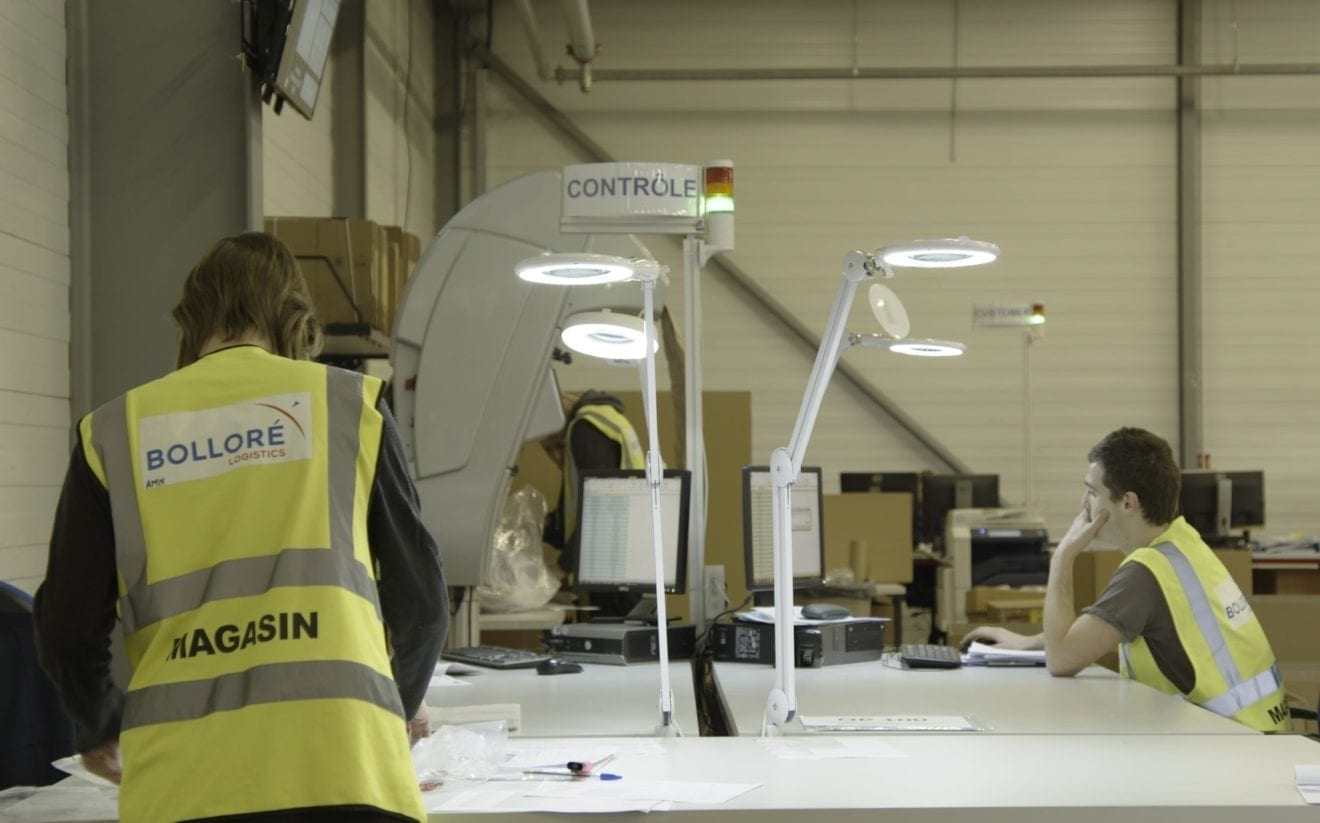
    From October 18th – 19th, 2018, Bolloré Logistics participated in the 5th FPSO & FLNG & FSRU Asia Pacific Summit held in Shanghai – China.  This event gathered more than 800 decision makers from the FPSO, FLNG and FSRU industry sectors to discover the latest industry trends, technological wave for digitization and business model innovations.

    Bolloré Logistics, represented by their Chinese entity, was awarded the “Outstanding FPSO Logistics Contractor of the Year”. Bruce BOUDAILLER, Oil & Gas Regional Director at Bolloré Logistics Asia-Pacific, who received the award on behalf of the team, said: “We are very appreciative of the confidence and loyalty shown by our customers and partners. Bolloré Logistics has been a leader for the last 15 years in supporting the FPSO industry, with a track record of more than 20 FPSO conversion projects handled, and contract logistics for around the same number of FPSOs in production.”

    This experience allowed Bolloré Logistics to be entrusted with a high profile FSRU project which was completed last year. The award comes as earned recognition of the professionalism shown by Bolloré Logistics’ Oil & Gas teams located in the construction and conversion countries, as well as in the countries from where all materials originate.

    “Our valuable and experienced long lasting colleagues, which must be seen as our main asset, are prepared to face the industry upturn after the challenging last three years that the industry went through,” added Bruce BOUDAILLER.

    Kari GU, Oil & Gas Product Manager at Bolloré Logistics China, confirms the readiness of the teams to cater for any new opportunity: “China is becoming the main location in terms of conversions and construction, with what appears as a shift from Singapore and South Korea. Together with our Oil & Gas teams of specialists, we are ready to support locally and internationally any new project related to FPSO, FLNG or FSRU,” she highlighted.

    An expert in Oil & Gas solutions and services

    Present in the major global hubs, as well as in most of the oil and gas producing countries, with a strong implementation in Africa and Asia, Bolloré Logistics offers tailor-made solutions on contract or project basis. It prides itself in delivering simple or complex solutions to its oil & gas customers, sometimes in the most challenging areas of the world, in full compliance with Ethics and the QHSE standards. Differentiating itself from the other major international freight forwarders, Bolloré Logistics has developed a very strong expertise and track record in handling very big capital asset projects onshore and offshore, and extended the logistics chain beyond the entry gates of the supply bases.

    As an extension of the supply chain, Bolloré Logistics has been integrating for many years in its solutions marine services as well as supply base services. With reference to the Oil & Gas players and many industry suppliers in its portfolio, Bolloré Logistics also created a movie showcasing its technical expertise of logistics operations dedicated to the Oil & Gas in Port Gentil, Gabon.