Author: Mei Ling Tan

  • Marriott International Wins AON Best Employer in APAC

    Marriott International Wins AON Best Employer in APAC

    Marriott International has once again been crowned Best Employer Asia Pacific by Aon plc (NYSE: AON). The company was also recognized as Aon Best Employer in 17 markets across APAC – an increase in four markets from last year. The accolades are testament to Marriott International’s commitment to its people and its active encouragement for them to be their best in both their professional and personal lives.

    Craig S. Smith, Marriott International’s President and Managing Director for Asia Pacific, said, “At Marriott International we put people first and take care of our associates so that they, in turn, take care of our guests. We are thrilled that this commitment to our people, which has been embedded in the company’s DNA from the outset, has been recognized yet again by Aon. We focus on training, developing and retaining our associates, creating a loyal and passionate workforce that is committed to offering the best service and experiences to our guests.”

    With over 680 properties across 23 brands in more than 20 markets and a further 530 plus properties in the pipeline, Asia Pacific is Marriott International’s second fastest-growing region. The organization’s approach to developing talent is central to this growth as increased opportunities in the company enable associates to progress their careers from within, retaining not only talent but also the legacy of service values and commitment to excellence throughout the entire operation.

    “We implement a systematic and purposeful approach to enable associates to realize their full potential through a structured human capital planning process,” said Regan Taikitsadaporn, Chief Human Resources Officer for Asia Pacific at Marriott International. “We see it as important to nurture and groom our talent with comprehensive training and leadership development programs to enable career growth and facilitate internal promotions that will empower the growth of our company. These initiatives help us attract best-in-class talent as well as create a positive and nurturing environment for all associates.”

    Marriott International also offers professional development programs for associates at every stage of their career, from the Global Voyage Leadership Development Program for recent university graduates to the Marriott Development Academy, which helps prepare aspiring and new managers for the leadership role of general managers. As part of its commitment to diversity and inclusion, Marriott also focuses on promoting and developing women leaders. In 2018 alone, the Asia Pacific region saw a 12 percent increase in the number of women general managers across Asia Pacific.

    Marriott International is the only company to receive global recognition consecutively since Aon began the program in 2014 – a testament to the group’s commitment to putting its people at the core of its business. In 2018, Marriott also achieved certification as Best Employer globally.

    With more than 15 years of experience in best employer studies across the world, backed by more than 20 years of experience in employee research, the Aon Best Employer program recognizes the achievements of organizations that demonstrate excellence in the workplace.

    The company’s research proves that Aon Best Employers drive a committed workforce and performance through a compelling employer brand, effective leadership, and a high performance culture and level of employee engagement.

    • Engagement: Employees speak positively about their employer, intend to stay, and are motivated to exert extra effort at work.
    • Leadership: Leaders treat employees as valued assets, engage employees in the vision, and lead the organization to success.
    • Performance Culture: Employees are aligned to organizational goals and are rewarded and recognized for their contribution.
    • Employer Brand: Employees are proud of being part of their organization and can clearly explain what makes their employer different from others.
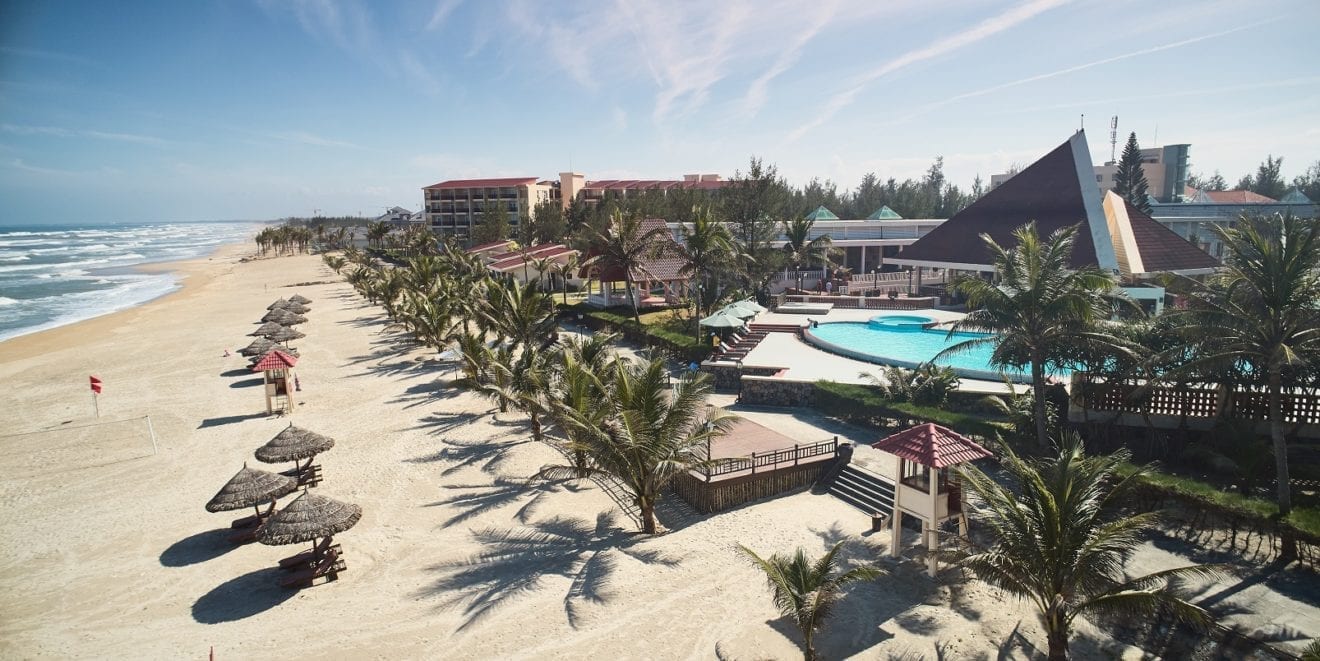
  • Centara listed in Thailand Sustainability Investment (THSI) 2018 for Sustainability Performance Excellence

    Centara listed in Thailand Sustainability Investment (THSI) 2018 for Sustainability Performance Excellence

    Centara Hotels & Resorts (CENTEL), Thailand’s leading hotel operator, was categorised a “Thailand Sustainability Investment (THSI)”, an annual recognition for listed companies that operate with responsibility for Environmental, Social and Governance (ESG) aspects. The THSI list aims to recognise and motivate companies for their efforts towards sustainability, while offering investors an alternative investment in high-performance ESG stocks.

    Centara Hotels & Resorts aims to balance its operations to attain financial goals and practice good governance, while creating positive social impact, reducing its environmental footprint, and encouraging innovation to sustain the organisation’s competitiveness. The company has formally developed environmental, social, and innovation initiatives since 2008, including energy, water, waste and safety management. Centara also engages management, staff, suppliers, guests and communities, for both the long-term growth of its business and vitality of the destinations where it operates. One testament to this commitment is that 15 of Centara’s properties have already achieved Gold and Silver Certifications by EarthCheck, the world’s leading scientific benchmarking and impact assessment body for sustainable travel and tourism.

    “Centara intends to operate ethically and sustainably across our entire portfolio. We are committed to sustainable practices throughout our hotel operations, whilst delivering an exceptional level of Thai hospitality for our guests,” said Thirayuth Chirathivat, Chief Executive Officer. “Companies that respond effectively to the challenges of sustainability can gain a competitive advantage and increase share value. We strive to develop sustainable hospitality strategies and encourage sustainability wherever we operate.”

    Thailand Sustainability Investment (THSI) was first created in 2015 to recognise companies that adopt ESG principles into responsible and sustainable business management to create a positive impact on the Kingdom. This year, the Stock Exchange of Thailand (SET) selected Centara as one of 79 listed companies that incorporate a high level of ESG practices to support sustainability. This effort is in line with SET’s vision “To Make the Capital Market Work for Everyone”, supporting a vision of capitalism that benefits all stakeholders.

  • Hyundai Motor sells more than 200,000 Genesis units

    Hyundai Motor sells more than 200,000 Genesis units

    Sales of Hyundai Motor’s premium Genesis marquee surpassed 200,000 units three years after its official launch, industry data showed Sunday. According to the data, total sales of Genesis vehicles reached 206,882 as of the end of October, touching the 200,000 mark for the first time since November 2015, when Hyundai Motor launched the sub-luxury brand.

    With global sales of 555 units of Genesis cars in the first year, 58,916 units were sold in the following year and 78,889 units in 2017.

    For the first 10 months of 2018, Hyundai saw sales of the brand rise 6.1 percent on year to 68,522 units.

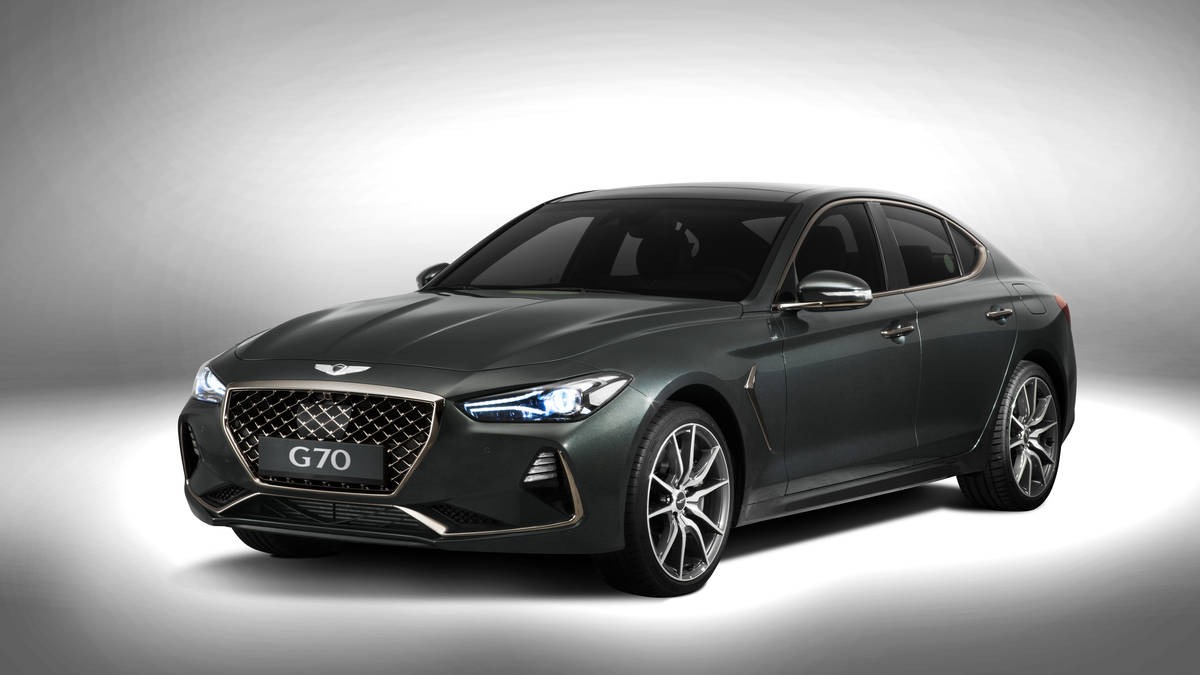
    The executive G80 model was the most popular in the Genesis lineup, with a cumulative 127,283 units sold worldwide, followed by the flagship G90 with 52,417 units sold and the G70 sports sedan with 27,182 units.

    Hyundai Motor said it will strengthen the Genesis lineup by upgrading popular models.

  • Alibaba Group Puts Spotlight on Indonesian Brands

    Alibaba Group Puts Spotlight on Indonesian Brands

    Chinese e-commerce giant Alibaba launched a special section for Indonesian products on its platform on Friday to promote the country’s best products to more than a billion Chinese consumers. The section, known as the Indonesian Pavilion, debuted on Alibaba’s Tmall Global, a platform dedicated to helping international retail brands and entrepreneurs reach out to the Chinese market despite not having a presence in the country.

    Indonesian Ambassador Djauhari Oratmangun and Ryan Wang, general manager of public affairs at Tmall, inaugurated the special section during an event in Shanghai.

    The Indonesian Pavilion was launched in time for Alibaba’s 2018 11.11 Global Shopping Festival, the world’s largest one-day shopping event, which takes place on Nov. 11 every year.

    The section will initially offer five leading Indonesian food and beverage brands: Indomie instant noodles, Kapal Api packaged coffee, Richeese biscuits, Yan Ty Ty swallow’s nests and Papatonk shrimp crackers.

    Through Tmall’s integrated service center, brands can increase consumer awareness of their products ahead of the upcoming shopping festival.

    Chinese consumers will also have a chance to learn about Indonesia’s cultural richness and exotic tourist destination, which will also be featured on the platform.

    This forms part of Alibaba’s ongoing initiatives over the past few years to support Indonesian startups and small and medium enterprises.

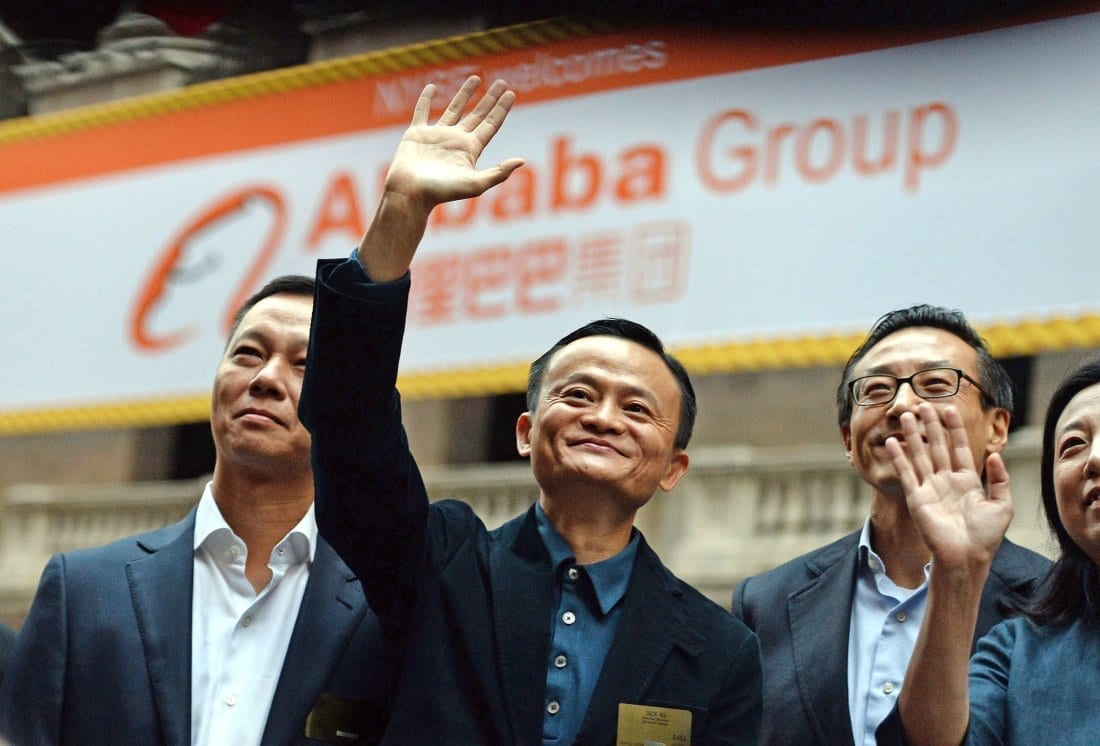
    Jack Ma, Alibaba chairman and co-founder, serves on Indonesia’s digital economy board, advising the government on how to best nurture and implement digital technology to drive development.

    The government and Alibaba are also discussing ways to help Indonesia train local talent in the digital field and increase innovations in financial technology.

  • Tanachira Retail buys out HARNN for $30m

    Tanachira Retail buys out HARNN for $30m

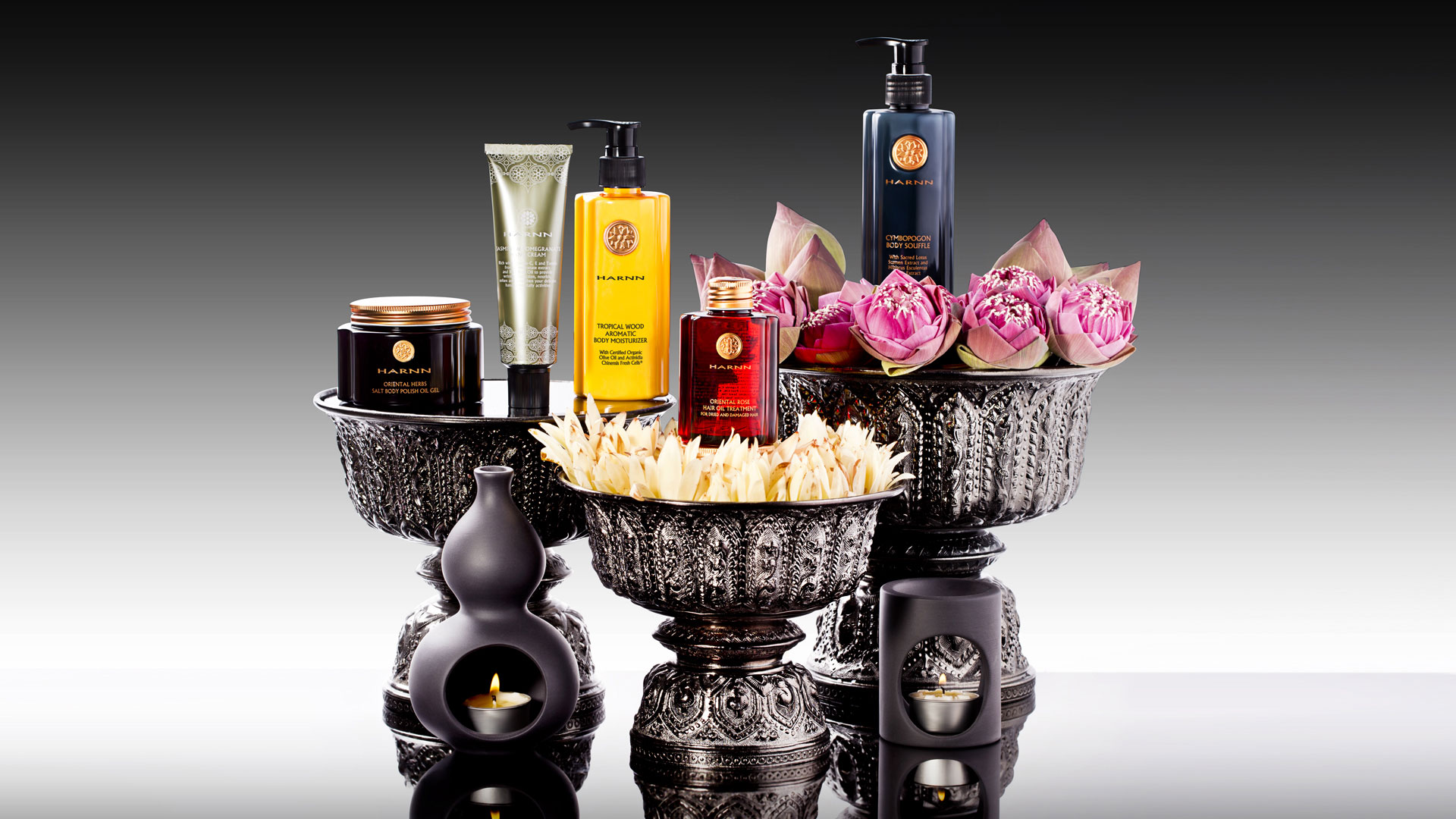
    International fashion and lifestyle brand distributor Tanachira Retail has acquired Thai health and beauty business Harnn. The THB1 billion (US$30.4 million) purchase is part of the firm’s moves to become a regional lifestyle company.

    Tanachira CEO Tanapong Chirapanidchakul said: “We will use our strength and expertise to expand Harnn’s business throughout Asia, with priority markets China, Taiwan and Japan.”

    Harnn products sell at more than 30 branches throughout Thailand and are distributed in 16 countries, predominantly in Asia.

    The acquisition, which covers brands, intellectual property assets, and business networks will help Tanachira to reduce risk from dependence on imported brand revenue. The firm will build brand awareness for Harnn among Thai consumers before building international partnerships with current and new dealers in new international markets, focusing on Asia.

    Tanachira’s CFO Aphichai Pholkosol said: “By 2020, we target Harnn contributing about 25 per cent of our total revenue at THB2.25 billion, helping us to list on the stock exchange in the second half of that year.”

  • Latest iPhone models sell well in first week out in Korea

    Latest iPhone models sell well in first week out in Korea

    After a week of presales, Apple’s new series of iPhones officially rolled out in the Korean market Friday. The response for the three phones – iPhone XS, XS Max, and the budget XR model – has been good.  According to local mobile carriers, the trio attracted the same number of or slightly more preorders than the previous iPhone generation: the iPhone X and the iPhone 8.

    “Overall, the new phones are generating more interest than the previous series,” a spokesperson from KT said. “Though the iPhone XS is getting more attention than the XR.”

    Presales data from Korea’s largest mobile carrier SK Telecom released Friday shows that 62 percent of the preorders were for iPhone XS, while 26 percent were for iPhone XS Max and 12 percent for the iPhone XR.

    The most popular color option was gold for iPhone XS and XS Max, followed by space gray and silver. For iPhone XR, black and white models led.

    The new phones are big with the young. About 30 percent of the early buyers were women in their 20s, according to SK Telecom. People in their 20s including men accounted for half of all customers making early reservations for the iPhones.

    “Younger people seem to be more interested in buying the new iPhones,” SK Telecom said in statement.

    As for storage, the 256 gigabyte (GB) option was the most popular for both iPhone XS and iPhone XS Max. Considering users have to pay over 1.8 million won ($1,611) for the 512GB option, many customers favored the slightly less pricey option. For iPhone XR, the mid-priced 128GB option was more popular than units with 64GB or 256GB of storage.

    It will take time to judge the true demand for the new phones from Apple, and questions are being raised as to whether the brand is up against the limits of efficiency gains and losing momentum.

    Apple posted $14.1 billion in net profit in the third quarter, up 32 percent year on year. Investors focused on weak unit sales and weaker-than-expected revenue guidance for the fourth quarter. Apple said it sold 46.89 million iPhones in the third quarter, a mere 0.4 percent increase year on year and below analyst expectations of 47.5 million unit sales. The revenue increase came from higher pricing.

    The U.S. phone maker also announced that starting next year it will not be reporting a breakdown of sales by product line. Luca Maestri, chief financial officer at Apple, said in a conference call Thursday that unit sales are no longer a good measure of the company’s performance.

    Apple stock fell by as much as 7.4 percent in aftermarket trading.

  • Vietjet to finalize $6.5 billion Airbus order: sources

    Vietjet to finalize $6.5 billion Airbus order: sources

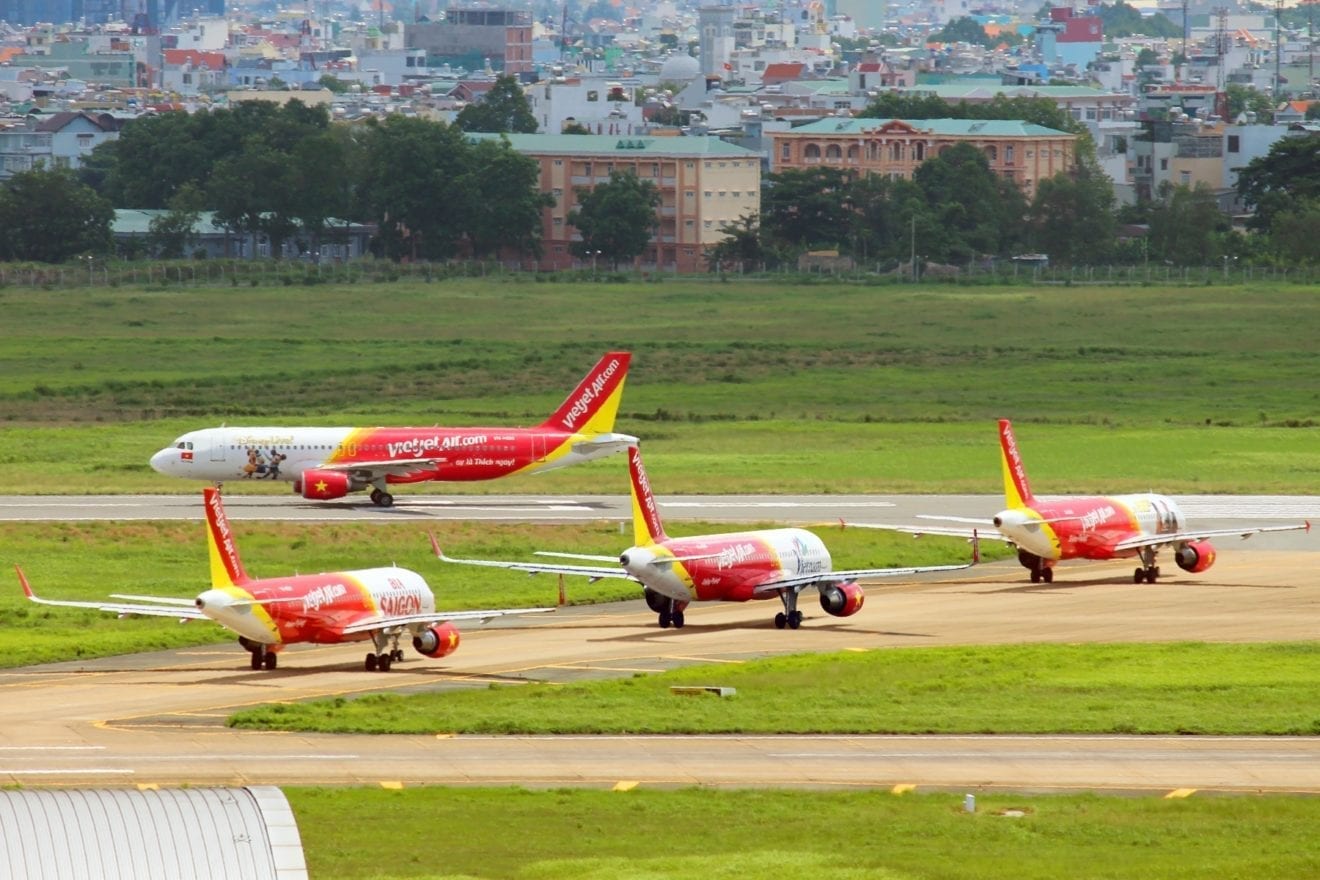
    Vietjet is set to finalize a $6.5 billion jet order with Airbus ​during a visit to Hanoi by French PM Edouard Philippe on Friday. The order for 50 A321neo jets is part of an aggressive investment in the Vietnamese fast-growing budget carrier Vietjet’s fleet that has provided lucrative business for both Europe’s Airbus and its U.S. rival Boeing.

    It is also a boost for Airbus as it seeks to turn a raft of provisional orders put together at July’s Farnborough Airshow into hard revenues, narrowing a gap against Boeing this year.

    The deal is the biggest economic component of an official visit to Vietnam by Philippe from Nov. 2-4, during which he will oversee deals with French firms and hold talks with Vietnamese counterpart Nguyen Xuan Phuc, people familiar with the matter said.

    Airbus and Vietjet both declined to comment.

    Vietnam and France also signed an agreement in September to expand defense collaboration, although details are scant.

    VietJet CEO Nguyen Thi Phuong Thao said this week that Vietjet plans to maintain an average fleet age of just three years to keep fuel and maintenance costs low.

    It placed provisional orders for the A321neo jets and 100 Boeing 737 MAX jets in Farnborough and has been negotiating to firm them up, with deliveries expected between 2020 and 2025.

    The formal signing, to take place on Friday, will help to dispel doubts over the substance of deals announced in Farnborough, which was marked by a rash of vague or incomplete order announcements.

    Finalizing such deals can involve tough negotiations as airlines try to squeeze out last-minute concessions.

    However, finance industry sources have expressed concerns about a glut of orders in Southeast Asia from airlines like Vietjet, Malaysia’s AirAsia and Lion Air of Indonesia and question whether all of the several hundreds of planes on order from the Asian low-cost carriers will actually be delivered.

    Vietjet told the Airline Economics conference in Hong Kong this week that low-cost airlines have a relatively low market position in Vietnam, and that those most successful in driving down unit costs would ride out any downturn in the market.

    Vietnam’s expansion has also been peppered with trade sensitivities as Vietjet – which says it enjoys government support – juggled Airbus and Boeing procurements: a strategy also designed to win bigger discounts.

    Two years ago, Boeing upstaged Airbus by clinching an order for 100 737s during a visit by then-U.S. President Barack Obama.

    Until then, VietJet had only bought from Airbus, including an order for 92 jets in 2013.

    Philippe’s visit is the latest example of Western leaders beating a path to Asia’s low-cost carriers, whose orders have secured thousands of manufacturing jobs, trade experts said.

  • LG Electronics launches new design

    LG Electronics launches new design

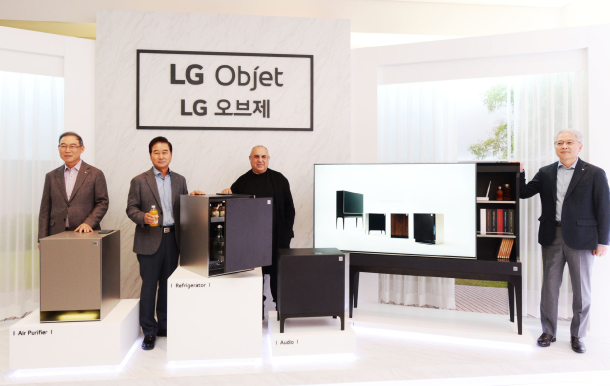
    LG Electronics has introduced a premium brand that combines furniture design with home electronics. The company rolled out four products under the LG Objet name at a press conference held Thursday in Gangnam District, southern Seoul: a mini refrigerator, an air purifier, a speaker and a television.

    “The thing about home electronics is that they are placed mostly in kitchens or living rooms but rarely inside bedrooms,” said Song Dae-hyun, LG’s president for home appliances. “Bedrooms, on the other hand, only have furniture, so in the last few years, we thought about ways to make home electronics coexist in that space.”

    All four items are covered with hard wood.

    Another way in which LG worked to make the appliances look more like furniture was to reduce the size of external features typical to electronic devices, like buttons or small screens. They are simplified or hidden in less visible areas of the product. An exception is the television, with its 65-inch screen, but LG added a furniture-like touch to it by placing a cabinet behind a sliding television screen.

    The fridge and the air purifier won Red Dot and iF design awards. Architect and industrial designer Stefano Giovannoni was involved in the development of the products.

    In terms of function, LG utilized technology to make the devices more appropriate for bedrooms.

    A compressor is a core component in a refrigerator, and it tends to be noisy. LG Objet’s refrigerator utilizes the type of cooling found in wine cellars to make the product quiet.

    For customers using the refrigerator or the air purifier as a bedside table, LG enabled a corner of the top surface to work as a wireless charger for portable devices.

    Song said during the press conference that he believes affluent customers in their 50s and 60s with strong purchasing power will be a source of demand as they look for ways to decorate their private spaces.

    The refrigerator and the air purifier are priced at 1.99 million won ($1,760); the speaker, 1.49 million won; and the television, 9.99 million won. The products were made available for sale at LG Best Shops starting Thursday.

    This is LG’s second high-end home appliances brand after the LG Signature series, introduced in 2016. Apart from sales, the other goal of LG’s premium product expansion is to maintain a leadership in the sector.

  • Rakuten  and Seiyu to partner in online grocery service

    Rakuten and Seiyu to partner in online grocery service

    Japanese online retail company Rakuten is partnering with Walmart-owned supermarket Seiyu to launch an online grocery service. Spokespeople from the companies say about 20,000 products will be available on the site, drawn from the Seiyu range, including fresh food. Orders will be fulfilled from stores, restricting the service – for now – to about 16 Japanese suburbs, however a warehouse has been opened near Tokyo to serve the capital.

    “We can tap into Rakuten’s 99 million-strong membership base,” said Seiyu executive officer Tamae Takeda. “[Rakuten’s] advantage is in technology, so we can combine our strengths.”

    The new online grocery service will compete with one launched by Amazon in April last year, as well as those offered by larger Japanese supermarket chains.

    Seiyu and Rakuten plan to offer free delivery on orders over a set threshold, or $4 for those under it.

  • Vietnam garment exports surge on US-China trade war

    Vietnam garment exports surge on US-China trade war

    Vietnam’s garment exports are set to rise by 14.8 percent this year to $35 billion, an industry official said on Friday. The expected growth is attributed to the fact that U.S. retailers diversify their product sourcing to keep costs under control amid an escalating trade dispute with China.

    The U.S. has already imposed tariffs on $250 billion worth of Chinese goods, and China has responded with retaliatory duties on $110 billion worth of U.S. goods.

    Garments, Vietnam’s second largest export-earner after smartphones, are not yet subject to U.S. tariffs, although some manufacturers have sought to move at least some production to the Southeast Asian country, anticipating potential penalties.

    “We are seeing more and more orders coming in, especially from the United States,” Vu Duc Giang, chairman of Vietnam Textile & Apparel Association, told Reuters.

    Garment exports to the U.S. rose 12 percent in the January-October period to $10.5 billion, while exports to China surged 40 percent to $1.1 billion, according to a government statement released on Thursday.

    Ngo Quang Thoa, chairman of Swimax International Joint Stock Co, a contractor which produces swimwear and underwear products for U.S. companies such as Target and Express, said he had received a large increase in orders from the U.S. since January.

    “This is because of the trade war between the U.S. and China,” said Thoa, who added that he expected to see his exports to the U.S. increase by up to 20 percent by the end of the year.

    “Some U.S. clients are already making strategic adjustments to their business plans to diversify their supplies, even though Trump hasn’t targeted Chinese garments in the tariff war yet,” he said.

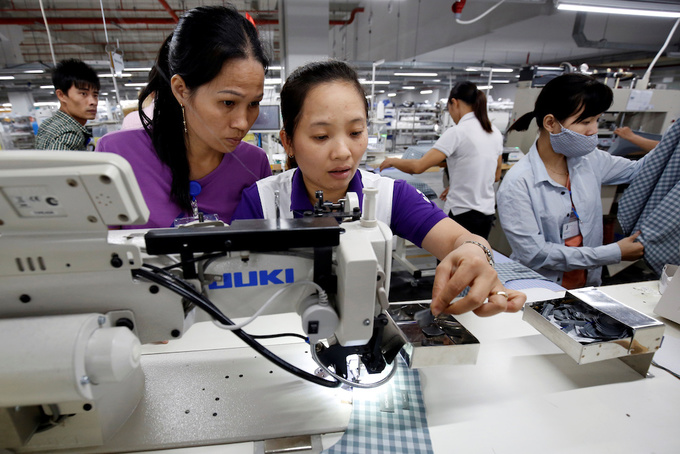
    Vietnam is home to over 6,000 textile and garment factories which employ around three million people, Thursday’s government statement said.

    Giang, chairman of Vietnam Textile & Apparel Association, told Reuters those figures were likely to grow, thanks to a plethora of Vietnamese free-trade agreements, and not just because of the U.S.-China trade spat.

    Vietnam has signed around a dozen free-trade agreements that will remove or reduce taxes on several imports and exports.

    Foreign investors poured in $2 billion in Vietnam’s garment and textile production in the first eight months of this year, Giang said.

    Most investors were from Japan, South Korea, Taiwan and China, he added.

    “They have been upping their investment in Vietnam for years,” said Giang.

  • CGV to boost its presence in Vietnamese cinema market

    CGV to boost its presence in Vietnamese cinema market

    CJ CGV Vietnam Holdings said Friday it will further expand its presence in Vietnam by maximizing funds from its planned listing in Korea this month. The cinema chain based in Vietnam is scheduled to go public on Seoul’s main Kospi bourse on Nov. 16. It plans to issue 5.71 million shares, with the share price to be set between 18,900 won ($16.80) and 23,100 won, according to the firm and the bourse operator, Korea Exchange.

    “We find great potential in the Vietnamese market, as its population is approaching 100 million and its income and domestic demand have been on a rise, but the entertainment market has not been developed,” chief Shim Jun-beom told reporters.

    Wholly owned by CJ CGV, Korea’s largest multiplex cinema chain, CJ CGV Vietnam Holdings has operated the Vietnamese chain through its subsidiary CJ CGV Vietnam since 2011.

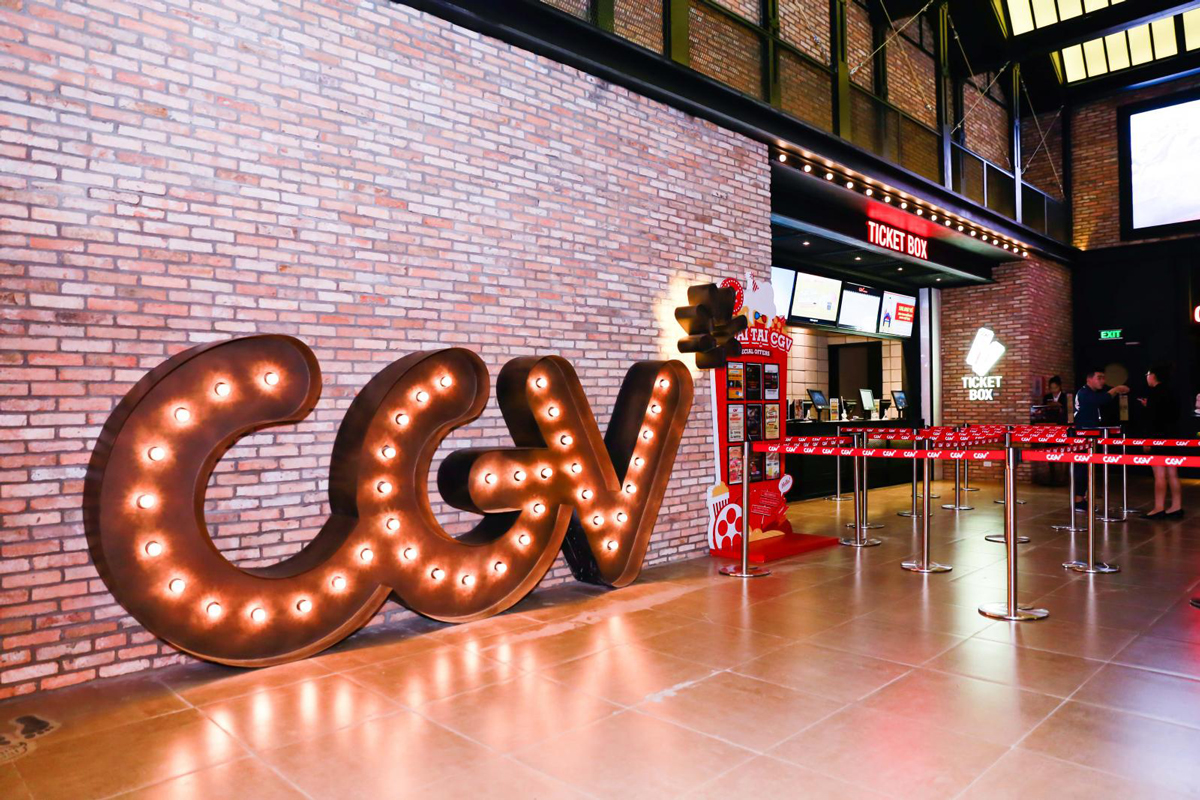
    It now leads the market there with 347 screens at 57 cinemas. In terms of film distribution and advertisement, CJ CGV also occupies the top spot.

    “We expect our market share to grow from the current level of 41 percent to around 60 percent in five years,” he added.

    Last year, sales of the holding firm came to 128.3 billion won, up 22.6 percent from the previous year, and its operating profit rose 4.8 percent on-year to 11.4 billion won.

    It has selected Hanwha Investment & Securities and Shinhan Investment Corporation as its lead managers for the IPO.

    In July, CJ CGV CEO Seo Jung said that the company aims to increase the number of its screens around the world to 10,000 in 11 countries by 2020.

    Currently, the multiplex chain, owned by the food and entertainment conglomerate CJ, is the world’s fifth-largest cinema chain with 3,459 screens around the world.

  • Victoria’s Secret reveales collaborative capsule with Mary Katrantzou

    Victoria’s Secret reveales collaborative capsule with Mary Katrantzou

    Lingerie brand Victoria’s Secret has announced its newest designer collaboration: Victoria’s Secret x Mary Katrantzou. The collaboration marks the second time that Victoria’s Secret has partnered with a luxury brand to create an exclusive range.

    Katrantzou, a London-based fashion designer dubbed the “Queen of Prints”, has designed an exclusive collection for VS that blends a feminine design aesthetic with the brand’s signature sexy and glamorous style.

    Katrantzou commented: “Everything that Victoria’s Secret creates is about a woman feeling confident and empowered – and also having fun with what she is wearing. This collaboration is going to be bold, fun and playful.”

    Katrantzou has also designed a section for the 2018 Victoria’s Secret Fashion Show. The Victoria’s Secret x Mary Katrantzou capsule collection will feature looks from the runway and will be carried in select Victoria’s Secret stores and on VictoriasSecret.com this holiday season.

  • Indonesia Falls in 2019 Ease of Doing Business Ranking

    Indonesia Falls in 2019 Ease of Doing Business Ranking

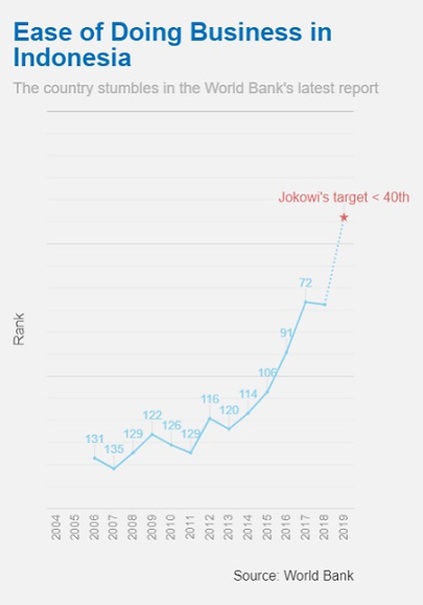
    If President Joko “Jokowi” Widodo wants to see Indonesia join the top 40 countries in the World Bank’s Ease of Doing Business ranking under his watch, he should make sure he wins re-election next year. Indonesia slipped one place to 73rd, behind Greece, the Ukraine and Kyrgyzstan, in the 2019 Ease of Doing Business report, released late on Wednesday. The president has set a target for the country to be in the top 40 by next year, but his second term will be decided in April, while the next report would not be out until next November.

    While Indonesia has made considerable progress in reforming the regulatory environment for businesses since Jokowi took office in 2014, Wednesday’s report reveals the stark realities of the country’s limited capacity to continue with these reforms.

    The country scored 67.96 out of 100 in the report’s aggregate measurement, up by only 1.46 points from last year. Slovenia, a Central European nation of only 2 million people and a $49 billion economy, sits in the coveted 40th place with an overall score of 75.61.

    Indonesia, for one, issued new rules that make starting a business, registering property and obtaining credit, easier for businesses and make it cheaper for them to get electricity. But reform stagnated in areas such as obtaining construction permits, protecting minority investors, paying taxes, trading across borders, enforcing contracts and resolving insolvencies.

    These bottlenecks allow economies like China, Kenya and Kyrgyzstan to overtake Indonesia. China made a leap to 46thplace in this year’s report, from 78th last year. Kenya moved up 19 places to 61st, while Kyrgyzstan went up seven places to 70th.

    Still, the report highlights Indonesia’s success in reforming its judiciary system and making the country a case study for others to emulate. The Supreme Court introduced training programs in 2003 for new and experienced judges, as well as special training for judges presiding over more specialized cases, such as those involving commercial or maritime disputes.

    “Indonesia’s efforts to train judges following judicial reforms bore positive results through a substantial decrease in court backlogs and insolvency case resolution times,” the World Bank said in the report.

  • Auchan products to be sold on Lazada

    Auchan products to be sold on Lazada

    Auchan Vietnam has launched its store on LazMall, a branded shopping mall from Lazada, allowing customers to purchase French products online with rapid delivery. Despite having its own online store, Auchan believes it can expand its reach and boost sales by working with Lazada Vietnam. Customers will be able to choose from Lazada’s same-day delivery, next-day delivery or low-cost delivery options.

    Free delivery applies to customers in Hanoi, Ho Chi Minh City, Hue, Danang, Dong Nai, Ba Ria-Vung Tau, Binh Duong and Long An with orders worth VND99,000 (US$4.24) or more.

    Initially, Auchan products on LazMall will be mainly consumer goods, with the range to expand over time.

    The French retailer will link all of its 21 brick-and-mortar stores with LazMall, so orders will be fulfilled from the nearest Auchan store to customers.

    Lazada was recently ranked the second largest e-commerce platform in Vietnam behind Shopee, which earns a monthly average traffic of 34.5 million visitors.