Author: Mei Ling Tan

  • Place to reate your own watch

    Place to reate your own watch

    The Mills officially opened at the end of 2018, becoming a new landmark that combines historical and cultural retailing, attracting a number of local brands in Hong Kong. The Mills is a revitalization project from Nan Fung Group scheduled for completion and actually completed in 2018. A destination consisting of a business incubator, experiential retail, and a non-profit cultural institution may be relatively unfamiliar to Hong Kong people; yet The Mills’ vision and history is a purely Hong Kong story.

    It witnessed the manufacturing heyday in the 1960s, and now it carries the legacy towards a future of applied creativity and innovation. Visitors can explore the continuity of an authentic Hong Kong story, where themes of textile and industry are woven into experiences of innovation, culture, and learning.

    Eoniq successfully raised funds for launching a project a few years ago on the Indiegogo crowdfunding network, which is for customers to make their own personalized unique watches at The Mills. Through engaging in different workshops such as designing automatic tourbillon, printing dial and burning blue steel pointer, customers may experience the watchmaking process.

    In recent years, Swiss watchmaking brands have opened shops all over Hong Kong, however, the Hong Kong local watch industry has also had a glorious history during the 1950 – 1980.

    Although local watchmaking has already faded out, Li Junguo (Quinn), one of Eoniq’s founders, decided to set up his own brand with two partners in 2014.

    “I started building up the brand after I left my work at McKinsey since 2011. It is because I am interested in watchmaking, so I find some fine caliber factory online, and  contact the French freelancer to help me ordering from France as the people from Swiss watch factory usually only speak in French,” he said.

    After buying the caliber from the factory, the brand will assemble the watch according to the custom design of the guests.

    In fact, Eoniq had opened stores in Sheung Wan and Tsim Sha Tsui K11 before, but the shop could hardly afford a monthly rental fee of 1 million HKD in Tsim Sha Tsui.

    In terms of online sales, Eoniq’s customer profile is diversified and located in different regions, namely, Taiwan, Malaysia, Australia, the United States, and Europe.

    “The Mills was interested in Eoniq, knowing that we were assembling the watchmaking on our own, and asked if we could make the watchmaking process transparent so that the visitors could see the process of watchmaking. Thus, we have been given a space on the ground floor at The Mills, which became our current flagship store.”

    For the Automatic Tourbillon design workshop, customers can engrave their name, special phrase, signature or pattern on the watch. With the assistance of a watchmaker, guests can assemble the watch by themselves.

    Guests can also add personal elements to the dial, such as handwritten words or patterns, and there is a traditional printing machine to allow customers experiencing the traditional printing method on the surface of the watches.

    “Our brand is getting bigger, so I hired more masters in watches, including a watchmaker who had previously worked in Omega. In addition to allowing our guests to design their own watches, we want to let more people understand the value of watchmaking.”


  • Onitsuka Tiger store in Singapore is biggest yet

    Onitsuka Tiger store in Singapore is biggest yet

    Onitsuka Tiger Singapore has opened its largest boutique in Ngee Ann City. As part of its efforts to become recognised as a fashion lifestyle brand beyond its sneaker business, the Japanese footwear firm’s new 165sqm store – the label’s fifth in Singapore – exclusively stocks the label’s Nippon Made collection as well as its usual retail offerings, focused on hand-made shoes following traditional Japanese methods.

    The store also sells Japanese-designed athleisure apparel and accessories in a store space fitted out with plush tiger toys.

    Onitsuka Tiger is owned by Asics.

  • Korean firms team up on insurance

    Korean firms team up on insurance

    SK Telecom, Korea’s top mobile carrier, and Hyundai Motor will jointly enter the insurance business, partnering with Hanwha General Insurance to bring their technology expertise to the industry. The Financial Services Commission (FSC), the country’s top financial regulator, said Wednesday it has given preliminary permission for SK Telecom, Hyundai Motor and Hanwha General Insurance to build an online insurance company that primarily deals with miscellaneous non-life insurance on digital platforms.

    “If the process goes smoothly, it can open in the fourth quarter of this year,” said a spokesperson at SK Telecom.

    In six months, the investing units are required to raise the promised capital, complete recruiting and have the physical operation in place, after which it will file for final approval.

    The companies said the unit will focus on cars, pets and travel.

    Hyundai Motor said the insurer will develop a product that differentiates insurance fees depending on a policy holders’ mileage and other driving behavior. Also on the cards is a system that discounts fees when subscribers are found to drive in a safe manner by adopting a real-time analytical technique to monitor driving habits.

    The insurance firm aims to carve out its own niche with lower fees and relatively short contracts.

    “We want to offer attractive alternatives for consumers who found existing insurance products expensive and requiring long-term commitment,” said Jang Yoo-seong, head of the artificial intelligence (AI) and mobility division at SK Telecom.

    The idea is based on InsurTech, a combination of insurance and technology that has quickly risen to prominence in the global financial industry.

    According to a study by the Korea Insurance Research Institute, the market has been rapidly growing in recently years. Investment in InsurTech start-ups, which amounted to $2.6 million in 2013, surged to $11.9 billion in 2017.

    The global InsurTech market revenue is valued at $532.7 million in 2018 and is expected to reach $1,119.8 million by 2023, according to Research and Markets, a U.S. market tracker.

    Hanwha General Insurance will raise 75.1 percent of the capital while SK Telecom puts in 9.9 percent. Hyundai Motor invested 5.1 percent and Altos Ventures Korea, an investment firm, 9.9 percent.

    In total, the companies will funnel in a total of 85 billion won.

    If passed, the new insurer will be the country’s second internet-only insurance company after Kyobo Life Planet.

  • Louis Vuitton celebrates the launch of Virgil Abloh’s SS19 collection

    Louis Vuitton celebrates the launch of Virgil Abloh’s SS19 collection

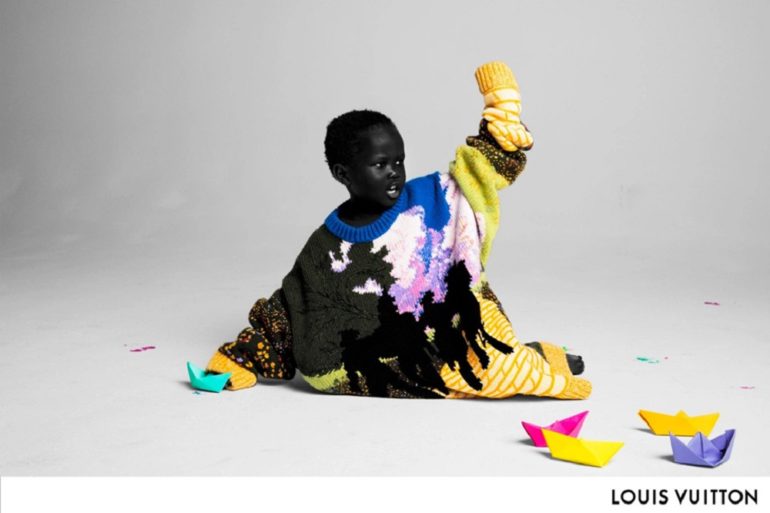
    For those that have been patiently waiting to get their hands on Virgil Abloh‘s debut Louis Vuitton collection, the highly anticipated Spring/Summer 2019 offerings are now available online. The online release comes shortly after Virgil opened up an exclusive pop-up at Chrome Hearts’ New York City flagship.

    The Yellow Brick Road Hand-Knitted Crewneck, Poppies Dorothy Graphic Windbreaker and colorful Calfskin Cut Away Vest serve as notable garments from the collection. Standout carrying options include the iridescent take on the classic Keepall Bandouliere 50, Soft Trunk Messenger Bag, Mini Polochon Messenger Bag and a host of holster-style utility pouches. Rounding things up is Virgil’s take on LV’s iconic Millionaire Sunglasses, early Jordan Brand model-inspired LV Trainer Sneakers, and the LV Creeper Ankle Boot Timberland homage.

    Check out some of the items above and head over to louisvuitton.com now to shop Louis Vuitton’s SS19 collection.

    In case you missed it, Virgil Abloh recently launched a comprehensive archive of his work.

  • Hong Kong retail rents tipped to turn

    Hong Kong retail rents tipped to turn

    Hong Kong retail rents are tipped for a modest rise of up to 5 per cent this year according to a research report from real estate advisor Savills. But the authors, Nick Bradstreet, MD, head of leasing and Simon Smith, senior director, research & consultancy, noted that this year has already got off to a positive start. “Landlords and retailers are wary given current uncertainties surrounding trade, stock market valuations, a weak renminbi and rising interest rates among other factors,” said Bradstreet. “But early indications are that the year has got off to a positive start.”

    Smith added: “The well-observed shift towards higher same day mainland visitor numbers and lower per capita spending continued last year and we believe that this year can expect more of the same.”

    Both prime street-shop and shopping-centre rents remained flat last year and rental growth had all but ground to a halt by the fourth quarter due to a weak sales performance, the report said.

    However, the new cross-border bridge and rail link led to a 40.3 per cent year-on-year rise in same-day mainland visitor arrivals in November to 3 million. The number of mainland tourists actually rose during the first 11 months of last year by 14 per cent.

    Smith said the increasing number of same-day visitors and a weak renminbi meant lower per-capita spending and unchanged retail rents by year end.

    “Retail sales growth decelerated to only 1.4 per cent in November, the slowest growth rate registered since June 2017; yet most retailers reported a better-than expected performance over the Christmas holiday period.”

    Thanks to the strong tourist demand, cosmetics and personal care products retailers are expanding rapidly in popular tourist districts such as Causeway Bay, Tsim Sha Tsui and Mong Kok. Food and beverage stores benefited, too, the report said.

    On the contrary, the fourth quarter saw zero rental growth over the previous quarter in prime street shops in most districts, except Tsim Sha Tsui (down -0.9 per cent quarter on quarter). Whilst shopping malls in Kowloon were largely responsible for the marginal decrease with a negative 0.3 per cent change over the third quarter, mall rents remained unchanged on Hong Kong Island and in the New Territories.

    “As a total of 2.3 million sqft of new supply will come on stream this year – the highest level since 2006 – the market fundamentals are expected to remain relatively stable.

  • Handsome markets brands in Paris Fashion Week

    Handsome markets brands in Paris Fashion Week

    Handsome, a Korean fashion brand owned by Hyundai Department Store, brought two of its labels to Paris Fashion Week in an effort to expand on the global stage. System for Women and System Homme, the two Handsome brands, showcased their fall and winter collections in a rented showroom for eight days starting from Jan. 17. The Handsome event included a presentation of the collections followed by showroom events, where item were modeled for clients.

    The brands are presenting their new collection one season early to major buyers in the fashion industry.

    In addition to 180 buyers, the event was attended by the Wall Street Journal, Vogue and GQ as well as by fashion influencers.

    It was the first time Handsome has taken its brands to a foreign showroom since being founded in 1987.

    System for Women debuted in 1990 and System Homme in 2008. The company has also introduced other names, including Time, Mine and SJSJ.

    Handsome was acquired by Hyundai Department Store Group in 2012.

    At the Paris event, which featured 200 items for men and women, around 40 department stores from 14 countries participated. Samples were purchased ahead of possible quantity orders.

    It was a buyers’ who’s who. The list included representatives from Bloomingdales, France’s Le Bon Marche, Hong Kong’s Lane Crawford, Japan’s Isetan and Shanghai’s 10 Corso Como. Inquiries also came in from parties in Switzerland and Israel.

    “We predicted the number of businesses that would visit our showroom would be 40 at maximum. But since System Homme was introduced via major media outlets and social media after the presentation on Jan. 18, a great number of fashion businesspeople visited,” said a source from Handsome.

    The company said that visitors appreciated the designs as being unique and set apart from other major Asian brands.

    “In the case of businesses that received the samples, they will decide on quantity purchases in February, and in June, the main products of System [for Women] and System Homme will be sold at department stores and in multibrand shops of each country,” said a source from Handsome.

    Handsome is planning to use the Paris showroom event as a stepping stone for its international expansion efforts.

    In line with the strategy, it will complete its product development earlier and present new design concepts to the market one season ahead.

    It is rare for a ready-made brand to utilize this sort of advanced development.

    “Our brand is still new in the global fashion market, but we will elevate awareness to the point where we could open an exclusive fashion show at a foreign fashion week,” said Kim Hyung-jong, the CEO of Handsome.

  • Shinesegae targets US$90 million with a new brand

    Shinesegae targets US$90 million with a new brand

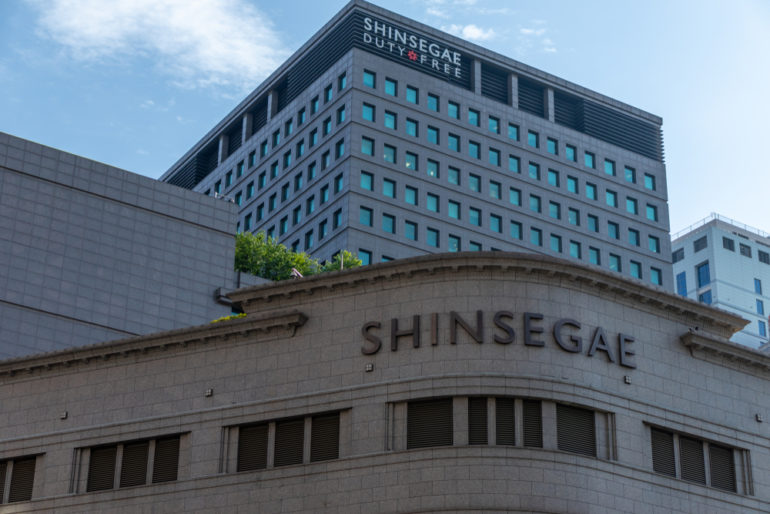
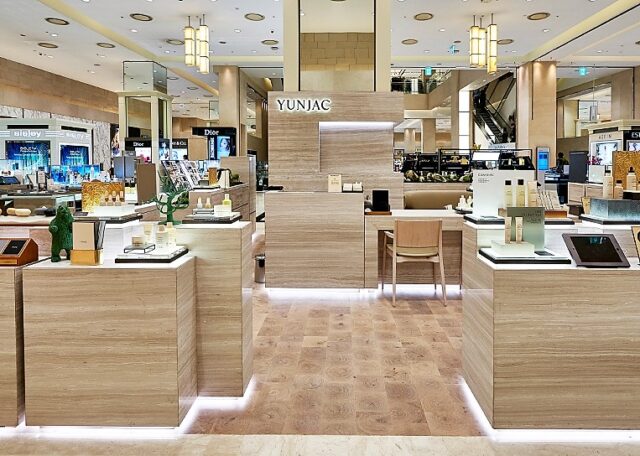
    Major South Korean travel retailer Shinsegae Group is set to launch an in-house developed cosmetics line, Yunjac, into the duty free channel at its Myeong-dong store in the capital city, Seoul. An ambitious sales target has been set for the brand. The opening on 2 February of an independent Yunjac cosmetics area adds to existing domestic market locations in Jung-gu and Gangnam in Seoul, and Centrum City in Busan. The brand was launched in October 2018.

    Fashion, beauty and lifestyle specialist, Shinsegae International, which developed the 42-strong product line, has told The Moodie Davitt Report that it aims to make US$90 million in sales by 2020. Four travel retail exclusive sets are part of the product range.

    The duty free exposure will promote Yunjac to a wider audience, with a particular focus on Chinese travellers. A Shinsegae Duty Free spokesman said: “The Myeong-dong store is a trendy shopping place where you can easily experience the world’s most popular brands. We will try our best to be the centre of world beauty. The line is targeting the global market including China.”

    Yunjac, which means ‘nature’s masterpiece’, is chiefly built around skincare with some makeup and other smaller segments, also part of the portfolio. It is the result of several years research and preparation by Shinsegae International. The product development was a joint effort with global cosmetics maker Intercos and world-renowned botanical research institute Vitalab.

    The manufacturing process involves extracting active ingredients from the best Korean herbs and combining them with state-of-the-art science. The end result is what Shinsegae describes as “the whole plant effect” which is claimed to restores the skin’s natural strength.

    Yunjac’s 42 products are priced at around US$30 for cleansing products, US$100 for skincare and US$50 for mother and infant items, according to Shinsegae Duty Free.

  • The coolest men’s sneakers from Paris Fashion Week

    The coolest men’s sneakers from Paris Fashion Week

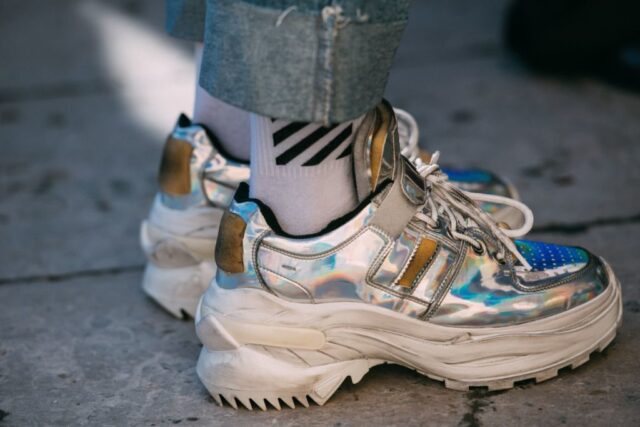
    Paris Fashion Week Men’s was not lacking in head-turning street-style looks this year. Attendees brought their sartorial A-game to take in new fall ’19 collections from the hottest designers. A guest paired trendy Off-White socks with shiny silver Maison Margiela sneakers that featured a chunky platform sole and an iridescent finish. Cuffed denim jeans highlighted the pairing perfectly.

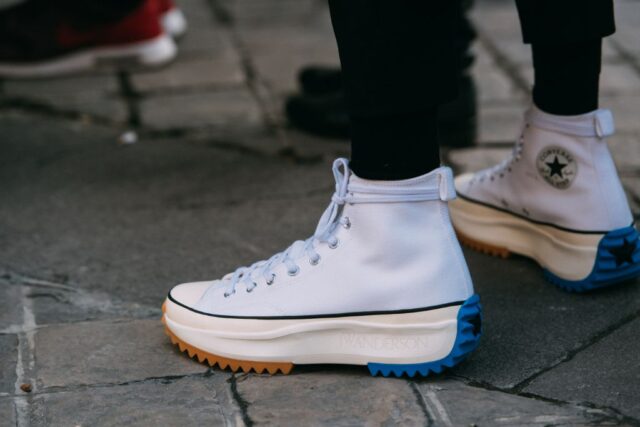
    Elsewhere, a guest showed off J.W. Anderson’s new Converse collab sneakers, which feature a rubber jagged platform sole. The high-tops debuted on the catwalk at Anderson’s spring ’19 show.

    Meanwhile, Adidas x Alexander Wang Turnout Mint White runners caught our attention with its chunky midsole design, a mash-up inspired by several previous Adidas sneakers.

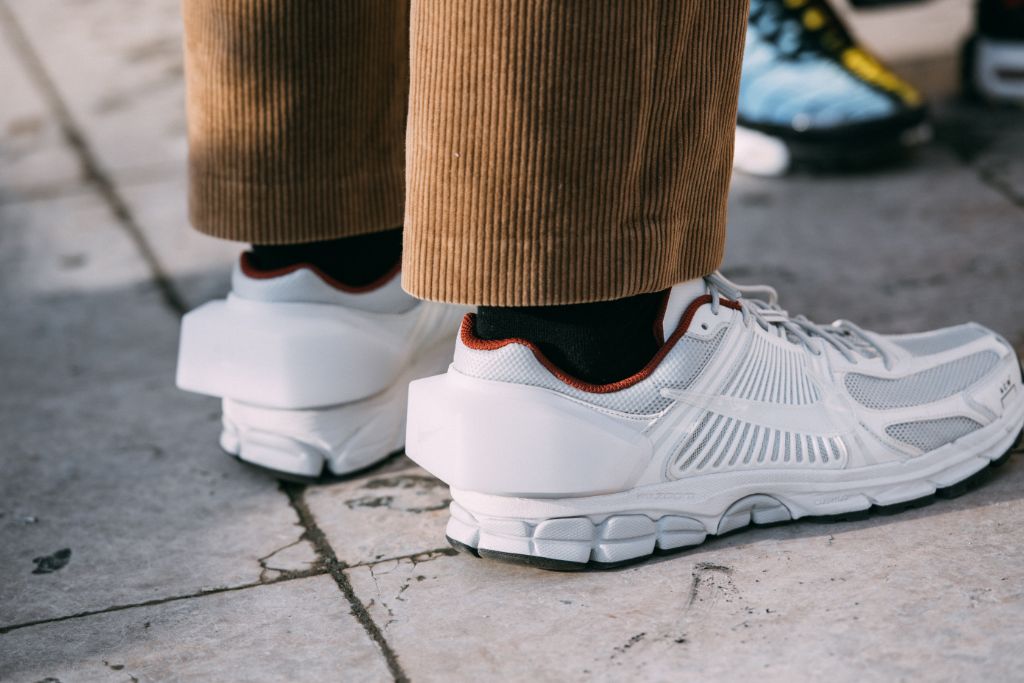
    The Nike x A-Cold-Wall Zoom Vomero +5, designed by Samuel Ross, undeniably stands out with its enlarged heel counter. The style, which dropped in November, blends retro and futuristic elements.

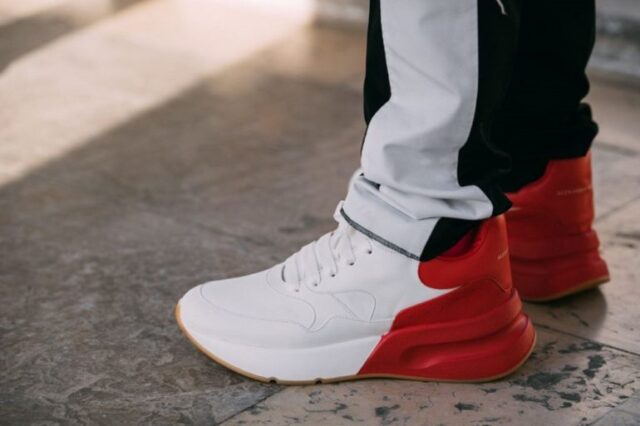
    Lastly, the oversized red and white contrast leather sneakers by Alexander McQueen, which Timothée Chalamet has worn on the red carpet, of course, made an appearance at fashion week.

  • Grofers crosses Rs 300 cr sales in single month

    Grofers crosses Rs 300 cr sales in single month

    Grofers, the low price online supermarket, announced the record revenue of Rs 310 crore in January 2019. With this, Grofers became the first online grocer to cross Rs 300 crore in monthly sales and also became the largest e-grocery company in the fast growing space. Aligned with its aim to drive the next wave of growth for e-commerce sector, the company has brought 2.5 lac new customers to its platform in January. The brand is eyeing a revenue target of Rs 2,500 crore for FY 2019.

    On the back of the industry’s biggest grocery sale – Grand Orange Bag Days, Grofers recorded an average of 14 lakh visits per day on the app. During this period, a total of 1.81 crore items worth Rs 207.5 crore were sold. With an average ticket size of Rs 2,640 and 20 items per cart, Grofers recorded highest customer engagement in Delhi NCR followed by Mumbai and Bengaluru.

    Speaking on the success Albinder Dhindsa, Co-Founder and CEO, Grofers said, “We are excited to emerge as India’s favourite e-grocer. We have received a tremendous response in the Grofers Orange Bag Days sale and we will sustain the momentum going forward. We are geared to bringing better priced grocery products to 100 million customers and this is just the start.”

    Customers received jaw dropping offers during Grofers Grand Orange Bag Days sale. Grocery and staples were the highest selling items followed by household items (detergents and dishwash bars) and personal care products. During this time period, Grofers recorded a 80 percent increase sales of Grofers branded products as well.

  • Sandro parent unphased by trade spat

    Sandro parent unphased by trade spat

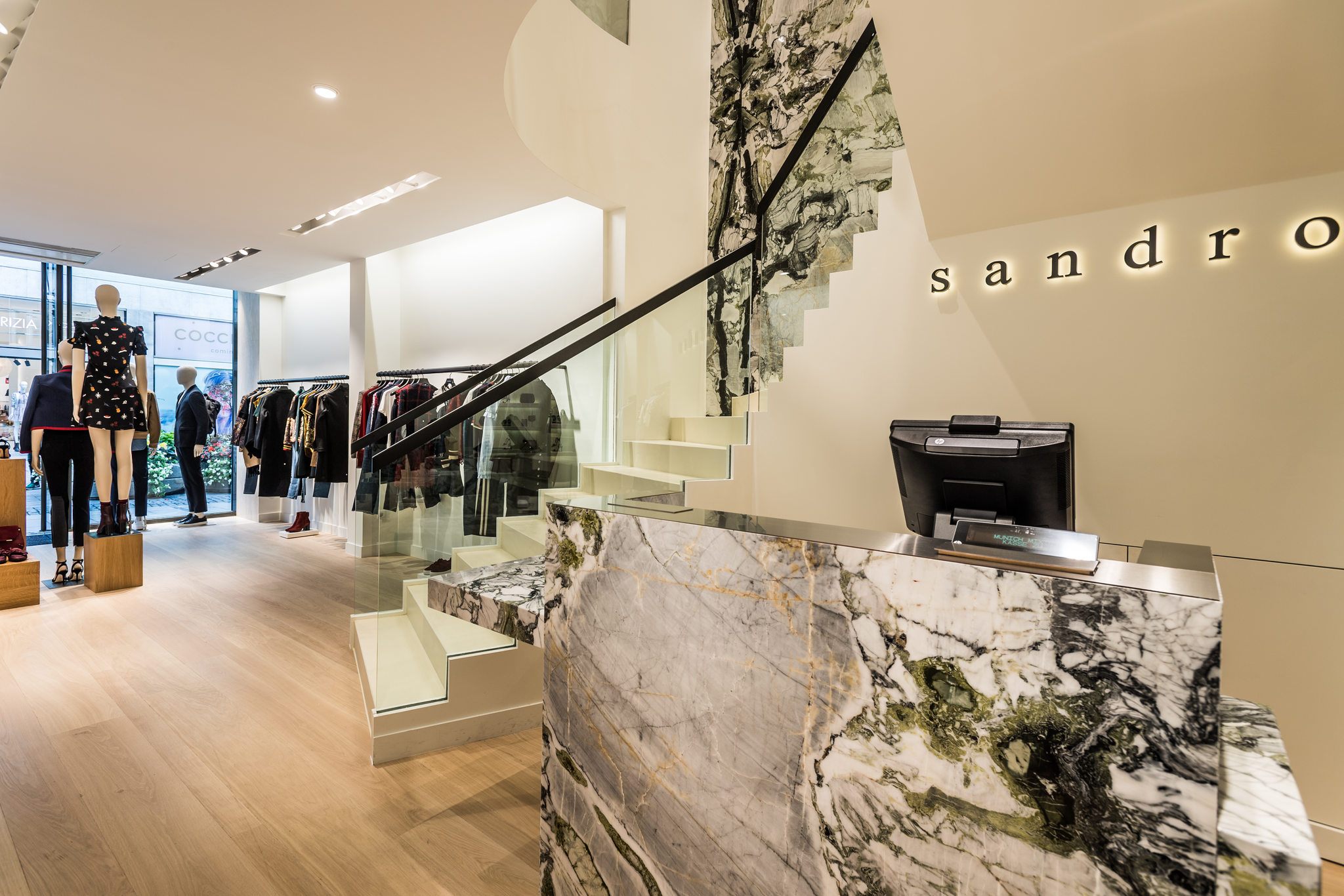
    The parent of affordable-luxury fashion labels Sandro, Claudie Pierlot and Maje appears unphased by the Sino-US trade spat, vowing to continue its expansion in the region. SMCP’s CEO Daniel Lalonde said in an interview that the company plans to continue to open new stores in Mainland China and invest in e-commerce across the region.

    “From our perspective, everything is still intact [in China]. Any slowdown in our business is related to the comparison base … and we still expect to grow that market by more than 20 per cent this year,” Lalonde said. “We’re still confident on the region.”

    France-based SMCP is controlled by Chinese company Shandong Ruyi. This week it reported an 8.1 per cent increase in fourth-quarter sales to €276.1 million.

    SMCP has doubled its annual sales during the past four years, reaching €1 billion last year, largely due to rapid expansion in Mainland China. Asia is now SMCP’s third-largest geographic market behind France and the rest of Europe, with China accounting for the bulk.

    However, he said sales in Hong Kong were “a little softer” as a result of currency fluctuations between the Hong Kong dollar and the renminbi.

  • LVMH is “eyeing stakes” in OFF-WHITE‘s parent company

    LVMH is “eyeing stakes” in OFF-WHITE‘s parent company

    LVMH is “eyeing stakes” in OFF-WHITE‘s parent company, New Guards Group, WWD reports. If the rumors are true, the move would bring LVMH Moët Hennessy Louis Vuitton even closer to fashion’s main man, Virgil Abloh, the founder of OFF-WHITE and artistic director of menswear at Louis Vuitton.

    New Guards Group Holding SpA is a Milan-based holding company that also looks after OFF-WHITE as well as Palm Angels, Heron Preston, and Marcelo Burlon County of Milan.

    This is not the only venture on the cards over at LVMH at the moment, either. The company is reportedly also making moves to create Rihanna her own luxury fashion house.

  • Oil rises as traders expect Venezuelan supply disruptions amid U.S. sanctions

    Oil rises as traders expect Venezuelan supply disruptions amid U.S. sanctions

    Oil prices rose on Wednesday as concerns about supply disruptions following U.S. sanctions on Venezuela’s oil industry outweighed downward pressure from a darkening outlook for the global economy. U.S. West Texas Intermediate (WTI) crude futures were at $53.54 per barrel at 0455 GMT, up 23 cents, or 0.4 percent, above their last settlement.

    International Brent crude oil futures rose 37 cents, or 0.6 percent, to $61.69 per barrel.

    The gains followed a 2 percent price jump in the previous session, when markets first digested the U.S. sanctions on Venezuela’s oil exports.

    Washington on Monday announced export sanctions against state-owned oil firm Petroleos de Venezuela SA (PDVSA), limiting transactions between U.S. companies that do business with Venezuela through purchases of crude oil and sales of refined products.

    “The sanctions so far have been mostly disruptive for refiners on the U.S. Gulf Coast, who are being forced to seek alternative heavy crude supplies, and have stepped up purchases from Canada,” said Vandana Hari of Vanda Insights, an energy consultancy.

    She added, however, that Canadian oil exports would be “constrained by pipeline capacity bottlenecks.

    The sanctions aim to freeze sale proceeds from PDVSA’s exports of roughly 500,000 barrels per day (bpd) of crude oil to the United States.

    Although the move pushed up oil prices, markets appeared relatively relaxed as the sanctions only affect Venezuelan supply to the United States.

    “The (Venezuelan) export volumes will not be eliminated from the market, but rather rerouted to other countries,” said Paola Rodriguez-Masiu, an analyst at consultancy Rystad Energy.

    With the United States dropping out as a customer for Venezuelan oil, she added that “China and India … will be able to pick up these oil volumes at great discounts.”

    Despite this, some analysts said that non-U.S. oil trading firms with operations in the United States may still avoid dealing with Venezuelan oil.

    The Schork Report, a daily oil and gas trading publication, said on Wednesday that many “international oil traders … have significant trading operations in the U.S. … At least in the short-term, these traders will undoubtedly quit buying from Venezuela until such a time that they are assured that they are not running afoul of U.S. sanctions.”

    TRADE TALKS

    Other analysts also pointed to economic weakness as countering supply-side efforts to tighten the market such as the voluntary supply restraint by the Organization of the Petroleum Exporting Countries (OPEC).

    “Pulling in the opposite (oil price) direction are heightened concerns about global growth, particularly that of China,” said Ole Hansen, head of commodity strategy at Denmark’s Saxo Bank.

    Global economic growth and fuel consumption are expected to slow this year amid a trade dispute between the United States and China, the world’s two biggest economies.

    Officials from Washington and Beijing are set to launch a new round of trade talks on Wednesday aimed at resolving their disputes amid which both sides have slapped hefty import tariffs on each other’s goods.

  • Apple sales and profit slip as demand falls

    Apple sales and profit slip as demand falls

    Tumbling iPhone demand drove an uncharacteristic decline in Apple sales in the first quarter trimming back its profit for the period. Sales of its iPhone range slumped 15 per cent year on year, and although burgeoning revenue from services like digital media subscriptions – up 19 per cent to a new high of US$10.9 billion – and other products compensated, total sales were down 5 per cent to $84.3 billion.

    Sales in China slumped 26.6 per cent during the period.

    Net income fell by $100 million, from $20.065 billion in the December 2017 quarter to $19.965 billion in the latest quarter. While the company championed setting “an all-time earnings per share record” that was a consequence of a share buyback program reducing the share pool rather than an improved bottom line.

    Commenting on the results, GlobalData Retail MD Neil Saunders said while Apple is still a money-making machine, the sales decline “symbolises a company that is starting to run out of steam”.

    “In our view, this is something to be corrected, not least because Apple is a costly company to run and it relies on strong revenue growth to drive up the bottom line. As this quarter’s figures show, failure to achieve that results in profit erosion.”

    Saunders said the slowdown in iPhone sales reflected Apple’s inability to come up with meaningful and valuable innovations that wow consumers.

    “The latest iPhones might be works of art from an engineering perspective, but they are essentially incremental products that lack the excitement and newness of earlier models. With the higher price points of top-end models, consumers expect a lot more for their money. The blunt truth is, Apple’s latest line up of phones doesn’t do that much more than the generations that came before.”

    He said the slowdown in China is a problem Apple shares with many other companies.

    “The country is suffering from more sluggish consumer demand which has put the brakes on retail growth rates across many sectors. However, the issue for Apple is that this has coincided with a rise in competition from local phones and devices which has helped to eat into its own growth. In short, China is no longer the engine of growth for Apple that it once was and this makes Apple uncomfortably more reliant on mature markets to drive revenues. Some of those markets, like Europe, are also not delivering – thanks to very high price points and consumers that are hesitant to spend on big-ticket items.”

    From must have to might buy

    Saunders said Apple’s iPads and some of its Macs are good, quality items, however they are simply not impressing the market and Apple is losing its lustre in terms of producing compelling products.

    “In our view, Apple has moved from a position of ‘must have this and must have it now’ to ‘might buy this at some point in the future’. Price increases may mitigate this but, ultimately, such a shift can only ever result in a softer sales performance.”

    While services are performing well, Saunders said Apple must push much harder.

    “Amazon is successfully creating an ecosystem of services through Prime. Apple needs to do something similar by building on its Apple Music subscription and its App Store offering. Movies and television content are also needed to propel sales.

    “In our view, Apple should seriously consider a big acquisition such as Netflix. Content is a big growth area and is becoming increasingly linked to devices. Apple needs to play more heavily in this space both to generate new opportunities but also to defend its own device business.”

    While Apple remains a solid and financially successful company, he said, a lack of serious and significant innovation means it runs the risk of diluting future earnings.

    “Apple thrives off serving a mass market; at the moment its moves to provide more expensive items to fewer people will ultimately do further harm to the bottom line. The clear blue water that once existed between Apple and its rivals is much diminished. The company has time to reopen the gap, but to do so, it needs to pull something new and unique out of its hat sooner, rather than later.”

    Cook’s positive spin

    Apple CEO Tim Cook delivered a positive spin on the results: “While it was disappointing to miss our revenue guidance, we manage Apple for the long term, and this quarter’s results demonstrate that the underlying strength of our business runs deep and wide. Our active installed base of devices reached an all-time high of 1.4 billion in the first quarter, growing in each of our geographic segments. That’s a great testament to the satisfaction and loyalty of our customers, and it’s driving our services business to new records thanks to our large and fast-growing ecosystem.”

    At the end of the quarter, Apple’s net cash balance was $130 billion.

  • Lancôme uses Alibaba Cloud Technology for Chinese New Year promotion

    Lancôme uses Alibaba Cloud Technology for Chinese New Year promotion

    Lancôme has teamed up with Alibaba Cloud, the cloud computing arm of Alibaba Group, to launch its Chinese New Year campaign in Hong Kong. The partnership leverages Alibaba Cloud’s cutting-edge technologies and Lancôme’s bestin-class beauty offerings to bring consumers the warmest festive wishes with fun and engaging experiences.

    As a leader of the beauty industry and a pioneer in adopting technology-enabled customerengagement, Lancôme has worked with Alibaba Cloud to create an augmented reality (AR) game for customers.

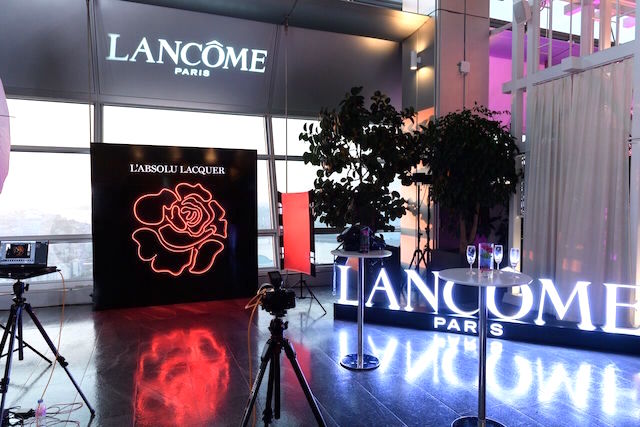
    The game, alongside a Lancôme pop-up store in Harbour City, Hong Kong, enable customers to engage with an online and offline brand experience during the Chinese New Year anywhere in the city, at any time. Lucky consumers will be able to bring home limited edition Lancôme products and special gifts.

    “Lancôme is glad to partner with Alibaba Cloud to engage with our consumers in Hong Kong using the most advanced data technologies. One of the brand’s priority is to build ‘Beauty-tech’ leveraging the latest innovations to transform our campaign and offering our customers better interactive experiences. We are excited to see these technological advancements helping us to create a modern Chinese New Year with better understanding of the consumer behavior and eventually with great business uplift with high conversion,” said Lee Sue Jong, Brand General Manager, Lancôme Hong Kong.

    “We are excited to partner with Lancôme to foster the digital transformation of Hong Kong’s retail industry. Our technologies not only offer innovative ways of engaging consumers, but also help Lancôme better understand customers’ needs using data analytic tools,” said Leo Liu, General Manager of Alibaba Cloud Hong Kong, Macau and Korea.

    Lancôme will spread joy and good wishes across the city for the coming Year of the Pig with thehelp of Alibaba Cloud’s image search technology and cloud services. Consumers can participate in a Lancôme-branded AR game on their smartphones. Those who find and capture augmented reality images of Lancôme’s signature beauty product Genifiques on their smartphone will be invited to send their seasonal wishes for a chance to win a selection of prizes.

    Alibaba Cloud Image Search is an intelligent service based on machine and deep learning. It enables end-users to take a screenshot or upload an image to search for desired products and fulfill other search requests.

    Alibaba Cloud’s cloud-based technology is part of the Alibaba Operating System, a holistic onestop solution to accelerate the digital transformation for corporations. With strong cloud-computing capabilities, the infrastructure is able to deliver insights and analytics instrumental to better satisfying customer needs and growing their business. New Retail, a strategy that drives innovation around online and offline solutions, is a key interface through which businesses can tap into the Alibaba Operating System.

    The latest collaboration on Lancôme’s Chinese New Year campaign follows L’Oréal Group’s longstanding working relationship with Alibaba businesses across multiple platforms. The beauty company has continuously deepened its use of Alibaba’s ecosystem to meet and create new aspirations from consumers. In terms of grasping the benefits of New Retail, L’Oréal Group was an early adopter of merging online and offline during the 2018 11.11 Global Shopping Festival.

  • Ready-To-Eat Food: Millennial’s new favourite

    Ready-To-Eat Food: Millennial’s new favourite

    Convenience food is a concept that has been prevalent and popular in the western countries for a long time now. Globally, the demand for ready-to-eat (RTE) food products has been increasing over the last few years on account of busier lifestyle of consumers and their rising income levels. Similar factors are fuelling the growth in the packaged food sector in India.

    Increased employment opportunities have increased migration of people from tier 1 and tier 2 cities to metropolitans, which is an important driver for RTE food products in the country. Nuclear families and bachelors residing in metros for study or employment purpose are among the major consumers of RTE food products in India. The number of working women is particularly on the rise, which is again driving the demand. All these factors are creating significant awareness about ready meals among consumers. Growth in retail chains and outlets is also adding to the product awareness among consumers in the country’s, supermarkets, convenience stores and hypermarkets, which are emerging as the key points-of-sale for offering a wide range RTE food products.

    The Indian cooking styles have undergone considerable changes over the past few years owing to the advent of modern technology and several other changes such as urbanization, increasing working population, increase in female work population and the rise of nuclear families. People have been increasingly shifting to ready-to-eat food items in order to save the time involved in preparing meals.

    With the growing media awareness, literacy rates and standard of living, people have grown more responsive towards the health and hygiene standards associated with food products. There has been a shift witnessed in the customers focus from price to quality in the recent years, particularly in the urban and a few semi-urban areas. Consumers have been drifting from openly or loosely sold food products to the consumption of hygienically packaged fortified RTE foods.

    The Indian food and grocery market is the world’s sixth largest, with retail contributing 70 percent of the sales. The Indian food processing industry accounts for 32 percent of the country’s total food market, one of the largest industries in India and is ranked fifth in terms of production, consumption, export and expected growth. It is believed that the Food Processing industry will be a US$ 25 billion market in India by 2020. Out of which, the serviceable metro market is expected to be close to almost US$ 20 billion. The past couple of years have seen a tremendous growth of this segment due to high consumer acceptance for convenience food nationwide.

    A recent survey done by Assocham (Associated Chamber of Commerce and Industry of India) says about 79 percent of Indian households today prefer to have instant food due to time constraints. With two working parents and families becoming nuclear, people prefer authentic, nutritious store bought options rather than spending hours in the kitchen after work. In recent years, the focus of the ready-to-eat market has gradually shifted from just homemakers or students to young professionals and families.

    It is found that 76 percent of parents in big cities, mostly both working with children under the age of five, are serving easy-to-make meals in some form or the other, at least 10-12 times every month! No wonder that the RTE market continues to expand at a brisk pace. The market for spreads, sauces and dips is now close to US$ 2 billion and growing at 22 percent CAGR. The RTE meals market is currently valued at INR 23 crore. It grew at a compounded annual growth rate of 3-5 percent in the last five years. According to data research company Nielsen, the breakfast mixes market is growing at 17 percent and is currently pegged at Rs 275 crore.

    However, as fancy as the various breakfast cereals available in the market might be, we crave the satisfaction that only a traditional dish can give. And hence the traditional brands are coming up with options that are suitable for the Indian palate. The traditional brands such as ITC and MTR have forayed into items such as bhel bar, pot upma, poha which can be had on the go, anytime, anywhere.To fulfil the demand of this large section of consumers, one will find a lot of new RTE brands in the market.

    Unlike the giant brands though, the new entrants are trying to create a niche category for themselves, be it breakfast cereals, canned, frozen foods, spreads, chutneys, and so on. Companies are looking to attract consumers within areas like olive oil, spreads and ready meals by offering promotions, new product developments, health and nutritional benefits and attractive packaging.

    The Indian consumer behaviour has been influenced by exposure to other cultures primarily in the West through travels, and popular literature. The ready-to- eat market is somewhat saturated in the West, hence developing countries like India are attracting the majority of big players in the promise of a high growth opportunity. The booming food sector, multiple food outlets, the popularity of international brands and distinctive distribution channels adopted by players are expected to help the market grow at a continuous pace.

    Consumers are increasingly realizing that majorly RTE foods are loaded with preservatives for a longer shelf life. Increasing health awareness, particularly in the young generation, is hindering the growth of this market. Still a large Indian population is price sensitive and therefore the price factor of RTE food makes them affordable only to select economic classes of the society. Hence it becomes all the more essential for new players in this field to marry convenience with health benefi ts to ensure convenience food does not mean compromising on quality. The key is to provide RTE food options focused on Indian taste for everyday consumption, which are is not harmful in the long run.

    This is the challenge taken up specifically by food tech start-ups who want to be considered as serious players and are getting into the game after years of R&D. With state of the art technology in packaging and processing to ensure the end product is not just a world class product that can eventually be on the shelves in countries across the globe but a product that is a strong contender in being a game changer.