Author: Mei Ling Tan

  • Higher Risk Still Means Higher Interest in Fintech Lending

    Higher Risk Still Means Higher Interest in Fintech Lending

    For platforms that boast superior debtor risk assessments and aim to compete with conventional banks, online peer-to-peer lending services have so far fell short of their promises.

    These services currently offer annual interest rates of 19 percent on average to their clients, most of which are small and medium enterprises. However, the Indonesia’s Financial Services Authority (OJK) says this is still too high to attract more borrowers that generally do not qualify for bank loans.

    In comparison, conventional banks offer SMEs loans at interest rates of up 10 percent, or 7 percent with the state subsidy. Ajisatria Sulaeman, director of the Association of Financial Technology (Aftech), said borrowers using peer-to-peer services are often those who do not meet banks’ requirements.

    It means there are risks that those banks do not want to take, hence the higher interest to adjust to the higher risk, Ajisatria said. While it is easy for peer-to-peer services to obtain potential borrowers’ behavior data on social media and through the use of services such as technology startup Go-Jek, it is still costly to verify.

    “Without data from the civil registry, how can we make sure that they use their own identity numbers and not those of others?” Ajisatria said.

    “So data from the Directorate General of Population and Civil Registration and the Financial Information Service System are still very important. With that, we can ensure that borrowers are not fraudulent,” Ajisatria said on Thursday.

    Some peer-to-peer lenders even resort back to conventional credit scoring services, such as Pefindo, but this comes at additional costs, which are passed on to borrowers in the form of higher interest rates.

    “The focus is on how we can easily identify borrowers, especially those with good intentions,” Ajisatria said.

    He said peer-to-peer platforms will be in a better position to assess loan risks if they have easy access to the population registry data. The number of bad loans can be reduced, which in turn, will allow peer-to-peer lenders to charge lower interest rates.

    Sluggish lending by banks over the past few years has seen Indonesia’s financial regulator welcome peer-to-peer platforms, which usually disburse small loans to micro, small and medium businesses that banks often consider high risk.

    Loan growth has dropped to below 10 percent over the past two years from 20 percent previously, central bank data shows. Chatib Basri, a former finance minister, said in March that a climate of healthy competition and a growing number of online lending firms could help to reduce high interest rates.

    “This approach can be made by multiplying the firms in the market segment, which will certainly cause interest rates to decline,” said Chatib, who just became an advisor to peer-to-peer lender ModalKu.

    Indonesia currently has 66 registered peer-to-peer lending firms, which have paid out Rp 7.8 trillion ($525 million) in loans as of July this year, compared with just Rp 247 billion by December 2016, according to the OJK.

    These firms serve to connect more than 250,000 individual lenders to 1.85 million borrowers. OJK deputy commissioner Sukarela Batunanggar said the financial regulator until now still has no intention to cap interest rates and limit the size of loans these financial technology firms can offer. Aftech, which was established in 2015 and now consists of 152 fintech startups offering various services, ranging from lending, insurance and investment, plans to issue a standard on fintech interest rates soon, but it is currently still finalizing the amount.

    Economic Contribution

    According to a study conducted by Aftech and the Institute for Development of Economics and Finance (Indef), fintech lending firms have contributed Rp 26 trillion to Indonesia’s gross domestic product since the OJK issued a regulation on such services in 2016.

    Indonesia’s nominal gross domestic product was Rp 13,558 trillion at the 2017 exchange rate, according to the Central Statistics Agency (BPS).

    “While this is relatively small, there is still hidden potential on fintech platforms, as until now, it has not reached those in need of loans across the country,” Indef economist Bhima Adinegara said.

    The presence of peer-to-peer lending firms has resulted in the creation of 215,433 jobs since 2016, with total wages amounting to around Rp 4.6 trillion.

    “The government must use this potential to increase financial inclusion by issuing easier regulations to expand the sector further, so it can contribute more to the Indonesian economy,” Bhima said.

  • Chiling Lin asked by H&M to help reinvent fashion industry

    Chiling Lin asked by H&M to help reinvent fashion industry

    The H&M Foundation is seeking a new round of innovators to help entrepreneurs “reinvent the entire fashion industry.

    Swedish fast-fashion retailer H&M has contributed a further €1 million into the foundation’s fund and reappointed Taiwanese actress Chiling Lin, who is also a sustainability influencer, to the expert panel overseeing applications for funding new ideas that help reduce waste across the industry.

    Intended as a means to speed up the shift from the standard linear fashion model, where clothes often end up in the landfill, to a circular model where materials can be reused or recycled, the Global Change Award was initiated in 2015 by the H&M Foundation, in collaboration with Accenture and the KTH Royal Institute of Technology in Stockholm.

    Now the foundation has opened the fourth round of its annual innovation challenge Global Change Award. With more than 8000 entries from 151 countries over three years, it has become the go-to competition for circular innovation and has been described as “the Nobel Prize of fashion”.

    “It provides powerful funding and yearlong coaching to innovators who come up with solutions to spark the shift towards a circular fashion industry, protecting the planet and our living conditions,” said an H&M Foundation spokesperson.

    Applications for this year’s program close on October 17 – and t year there is a special eye out for ideas embracing digitalisation.

    “New ideas are the foundation for change, but scaling them is an enormous challenge for every innovator,” observed Karl-Johan Persson, H&M’s CEO who also sits on the foundation. “Together with our partners Accenture and the KTH Royal Institute of Technology, we’ve seen previous winners cut years off their timeline through our accelerator program. Now, we are eager to welcome five new circular heroes and encourage everyone who wants to reinvent one of the world’s largest industries to apply.”

    The Global Change Award sets out to find innovations with the potential to make fashion circular and thereby protect the planet and our living conditions. Other criteria are its impact and scalability, that it is novel and economically sustainable, and that the team is suited to make a difference.

    Chiling Lin described it as an honour to be part of the program again this year.

    “We need to unite together to protect our planetary earth by contributing ideas and efforts to sustainability,” she said. “The planet needs our care and dedication to safeguard this world and through this meaningful event, we can gather ground-breaking ideas that provide the fashion industry possible solutions to make fashion truly sustainable.”

    Current winners’ progress

    This year’s Global Change Award winners are currently taking part of the one-year Innovation Accelerator Program, taking them to Stockholm, New York and Hong Kong.

    Crop-A-Porter makes sustainable bio-textiles by using leftovers from food crop harvests

    Its parent Agraloop received €300,000.

    Agraloop is more than one year ahead of its original development schedule and about to begin the optimisation of its Closed-Loop system. Initial patent filings will be developed in the second half of this year at the same time as it runs pilots to produce a prototype Agraloop BioFibre from banana, pineapple, and oil seed hemp. These natural fibres will be processed using their proprietary bio-chemical approach and applied to commercially viable yarns and fabrics. This will go into ground-breaking design collaborations with some of the world’s biggest brands.

    The Regenerator aims to recirculate fashion by separating cotton and polyester blends, turning them into new textile fibre. Parent company Swerea IVF received €250,000.

    Swerea IVF is focusing on the technical development of its process and how to scale it up, both technically and economically. A new, larger reactor is being installed and will be up and running during later this year. The company is also working on improving the efficiency and yield in the process.

    Algae Apparel is turning algae into bio-fibre and eco-friendly dye that is also good for the skin. Parent Algalife received €150,000.

    Algalife has received its first Patent Cooperation Treaty (PCT) and is preparing a second. The company has a fully equipped laboratory and is recruiting staff. The production of algae fibres has started in cooperation with German and Swedish institutes, and it is finishing the final formulas for the dye process of each colour, with fabrics from different brands.

    Smart Stitch is a dissolvable thread that makes repairing and recycling easy. Parent Resortecs received €150,000.

    Resortecs presented its first prototype of dissolvable stitching thread in March, and two months later featured its first fully dismantlable jacket. By July, it had four different solutions meeting all industry requirements and it is currently initiating seven pilots for testing these solutions on products, such as jeans and backpacks.

    Fungi Fashion is producing custom-made clothes from decomposable mushroom roots. Parent MycoTex received €150,000.

    MycoTex has launched the MycoTex shopper, a bag made from 100 per cent mycelium. The company worked with Utrecht University where it researched how to integrate electronic components in MycoTex, resulting in a light strand covering the bag which responds to a sound; and a chip directing customers to a website with more information. The company is now working on improving the material and testing different dyes. MycoTex was recently named “The modern-day makers” by the World Economic Forum, recognising pioneers which are reviving traditional techniques and developing cutting-edge technologies, or merging the old and the new.

  • Walmart unboxes America’s best toy shop

    Walmart unboxes America’s best toy shop

    When it comes to toys, Walmart is not playing around. Walmart has unboxed its plans for America’s Best Toy Shop: its destination for kids’ favorite products – toys! – in its stores and on Walmart.com. Walmart’s toy aisles are set to offer the best toys at the best prices along with more fun for everyone than ever before. Starting Thursday, America’s Best Toy Shop kicks off with:

    – Expanded aisles and the best selection of toys, with thousands of new and exclusive items from top brands, creating Walmart’s broadest assortment of toys ever.
    – The best experience for parents and kids to test, play and shop for toys – through in-store events and demos, and a new specialty toy experience online featuring exclusive content from toy influencers for the first time.
    – The season’s 40 top rated toys from the real toy authorities – kids – to make it easy for parents to know what toys are on trend and tops for kids.
    – Layaway…it’s back August 31.

    “Walmart has always been a destination for toys. Parents shop us for our wide selection of top brands and because we bring fun to stores in ways that only Walmart can,” said Anne Marie Kehoe, Vice President of toys, Walmart U.S. “But today, we are making even bigger investments in the category to ensure we have the widest selection of toys at the best prices and an unmatched in-store and online experience to show customers the best place to shop for toys is Walmart.

    BESTEST Assortment of Toys Ever

    To ensure Walmart has all of the toys kids want, the retailer has expanded America’s Best Toy Shop aisles in select stores across the country. This expanded assortment includes 30 percent new toys in stores and 40 percent more toys online.

    Walmart searched high and low for the biggest trends and the right toys to expand its assortment. New toy brands now available at Walmart include Pomsies, Fancy Nancy, Boxy Girls, Grumblies and Hairdorables. This year, the retailer has added hundreds of new exclusive toys in stores and online. Just one of the hundreds of new exclusives includes Ryan’s World, a line of 11 toys from first-grade internet toy sensation Ryan of Ryan ToysReview, available exclusively at Walmart until Sept. 30. The excitement continues on Walmart.com with new online-only exclusives such as the DC Comics 6-Volt Justice League Batmobile and KidKraft Uptown Espresso Kitchen with 30 Piece Play Food.

    Bringing the WHHHHOOOAAA to Stores and Online

    America’s Best Toy Shop is putting the fun in toys, the Walmart way. Walmart will host more than 2,000 toy play dates over the next two months at Supercenters across the country so that kids can play with top toys as they start to build their holiday wish lists. Here’s a look at the fun happening in America’s Best Toy Shop now through November 1:

    – America’s Best Toy Shop will host its first National Play Day on September 8 in more than 1,500 stores. Kids will leave seriousness and responsibility at the door and enjoy the opportunity to play with top toys, pose for pictures and take home toy booklets and other giveaways.
    – In-store toy demos, including events highlighting toys from Ryan’s World, Barbie and Transformers will take place from August 30 to November 1.
    – Toy roadshows for Nerf and Hot Wheels, will give kids the chance to play with the newest toys from these two classic brands with interactive activities at Supercenters from August 31 to November 1.

    Walmart.com will also open America’s Best Toy Shop online as a specialty shopping destination for customers to discover the perfect toy. As a part of the experience, this year, for the first time ever, customers can hear directly from 25 toy influencers including Clara Lukasiak, Gavin Raygoza, Kenzie Mitchell, and Gabe & Garrett, who will develop exclusive toy content throughout the year, giving customers the scoop on all things toys with advice, reviews and recommendations. The online shop will also include curated toy collections to help customers find inspiration and shop for toys with ease, whether that be by trending item, age, character or brand, among other ways to shop.

    “This year is all about an unmatched experience on Walmart.com,” said Chris Sponiar, General Manager, Toys and Seasonal, Walmart eCommerce U.S. “Whether customers know exactly what they’re looking for or if they want to browse our digital shelves, we are the destination for parents to discover that perfect toy for their child. And, we make it easy. With options like free, two-day shipping or Pickup Today on millions of items, customers can get their toys however they like, either straight to their door or at a Walmart store.”

    Hear ye, Hear ye: The Kids Have Spoken!

    America’s Best Toy Shop launches with a little help from the real toy authorities – kids! Walmart engaged hundreds of youngsters to test and play with dozens of toys. Their favorites resulted in Walmart’s Top Rated by Kids list. Up from 25 toys in previous years, this list of 40 toys will help guide parents on the “it” toys kids are wishing for. Straight from kids themselves, here is a look at the top 40:

    – Power Brands: These brands have been household names for generations and continue to be popular with kids today. Whether it’s a twist on a classic, or a fresh new way to play with beloved icons, these toys are tops with kids:
    – Barbie Dreamhouse
    – Fisher-Price Little People Take Turns Skyway
    – Hot Wheels Ultimate Garage (Walmart exclusive)
    – LEGO Creator Pirate Roller Coaster
    – Nerf Laser Ops 2 Pack
    – Playmobil Hidden Temple with T-Rex
    – Power Wheels Barbie Dream Camper (Walmart exclusive)
    – Razor Ultra Spark Scooter
    – Sing & Spin Scooter Minnie

    – Entertainment Properties: Toys that enable kids to play with their favorite characters from movies and television are all the rage. Here are the characters – in toy form – that kids will be buddying-up with off-screen:
    – Disney Princess Rapunzel Tower Vanity (Walmart exclusive)
    – Harry Potter Wizard Training Wands
    – Imaginext Jurassic World Jurassic Rex
    – Incredibles 2 Jack Jack Doll
    – Paw Patrol Fire Truck Ride-On (Walmart exclusive)
    – Paw Patrol Fire Truck
    – Peppa Pig Fun Fair Playset (Walmart exclusive)
    – PJ Masks Romeo’s Lab Playset

    – Collectibles: Few things can replace the sheer joy of discovering a surprise toy inside a mystery box. Kids may not know what they’re going to find, but that’s the delight! And, be sure they’ll want to collect them all:
    – New product from Hatchimal, hatching Oct. 5
    – Little Live Pets Wrapples
    – LOL Surprise House
    – Lost Kitties
    – Moj Moj Claw Machine
    – Fingerlings Hugs
    – Num Nom Silly Shakers Maker
    – PikMi Pops Super Flip
    – Ryans World Giant Mystery Egg
    – Treasure X Single Pack

    – Innovative Items: The future is here! As kids embark on new adventures, these innovative toys offer uncharted areas of play:
    – Air Hogs Supernova
    – All Star Hover Board (Walmart exclusive)
    – Fisher Price Laugh & Learn 3-in-1 Smart Car
    – Kumi Kreator
    – Little Live Pets Rollie My Kissing Puppy
    – Polaris 1.5 RC (Walmart exclusive)
    – Really Rad Robots Mi-Bro
    – Rideamals Scout Interactive Pony (Walmart exclusive)
    – STEM Jr. Wonder Lab
    – Terra Sect RC
    – Trail Buster RC (Walmart exclusive)
    – VTech Explore & Write Activity Desk (Walmart exclusive)
    – Zoom Tubes Car Trax

  • HK’s Globber plans global website

    HK’s Globber plans global website

    Hong Kong-based scooter maker Globber has partnered with retail technology specialist Red Ant Asia to develop a visual-led interactive website for 16 markets across Asia-Pacific, North America, and Europe.

    Built using the PrestaShop e-commerce platform, the site is designed to simplify the purchase of a scooter and related products. It features an interactive quiz that links directly to product detail pages; an interactive product comparison feature; recommendations for users, and a product spec comparison page with a drop-down list – allowing comparison of features across two to three products, which has effectively reduced product queries by 95 per cent.

    The site also offers a built-in scooter spare parts form aiming to modernise and simplify the approach to ordering new parts.

    Providing a single platform for Globber’s global team as well as local distributors, the new site supports Globber’s mixed market sales strategy and its international reputation.

    Emma Cox, Globber’s brand manager, said the team at Red Ant Asia understood the markets inside out that the company wanted to target.

    Globber has been selling scooters for toddlers, kids, teenagers and adults since 2014, and now retails in more than 74 countries.

  • CHARLES & KEITH to land in HK

    CHARLES & KEITH to land in HK

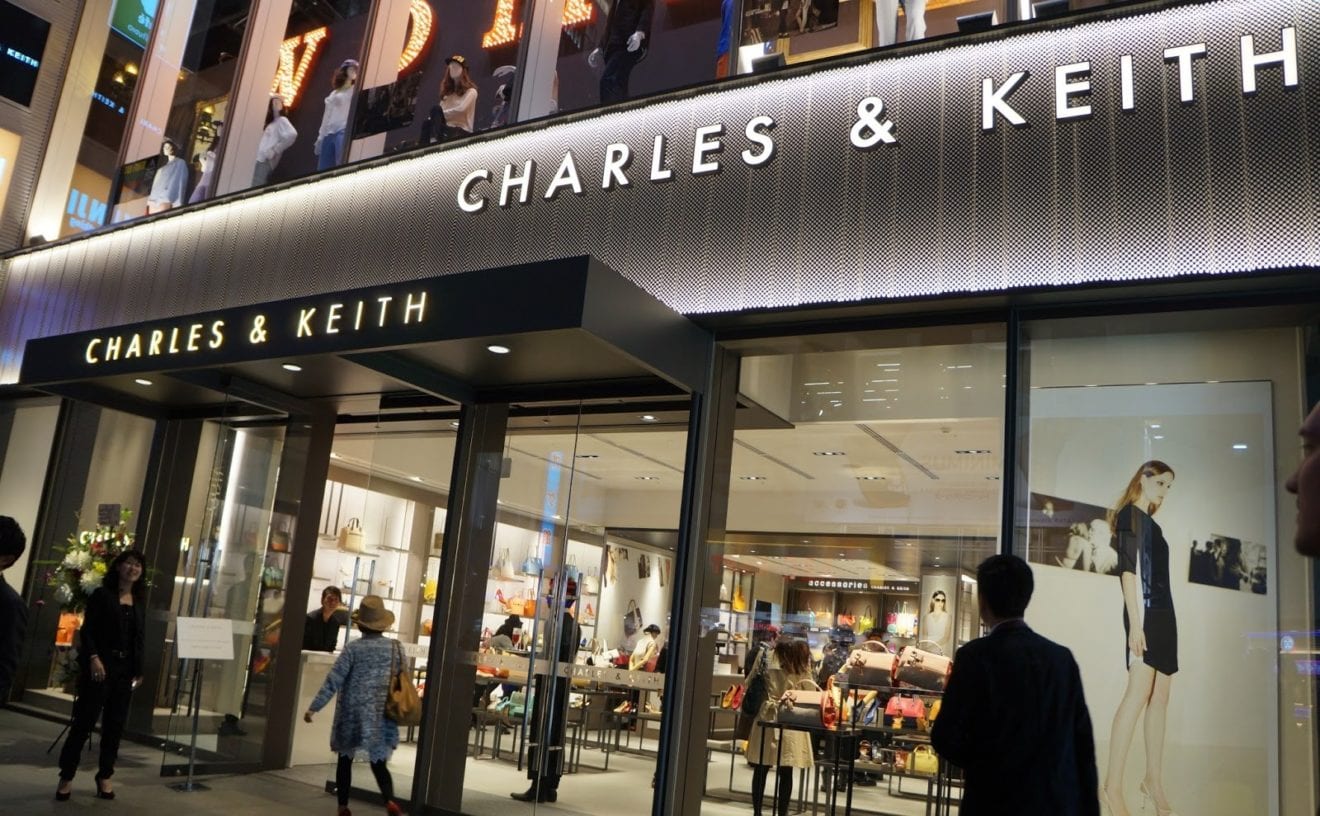
    CHARLES & KEITH is the go-to label for accessible designs that are always on the cutting edge of fashion.

    This October, CHARLES & KEITH is expanding its retail reach by opening two new stores in Hong Kong, an iconic shoppers’ paradise. These stores would be the first to open in the city. The brand’s collections of trend-focused shoes, bags and accessories would be presented and available for purchase at these new stores.

    The new stores are located at Parker House, Central and New Town Plaza, Sha Tin respectively. Parker House occupies a coveted spot in the prime CBD district and houses a selection of premium retail brands, while New Town Plaza is a trendy flagship shopping centre that offers an exceptional array of shopping, dining and lifestyle facilities. Both of these properties are conveniently situated within walking distance of a MTR station.

    The aesthetics of the new CHARLES & KEITH stores is inspired by the brand’s refined design philosophy. They have been thoughtfully designed to be in line with the CHARLES & KEITH brand identity, as well as to enhance the overall shopping experience.

    Featuring limestone fixtures that create a striking contrast with the dark grey powder furnishing, the store’s modern interior design reflects a sophisticated simplicity that perfectly complements the brand’s stylish and covetable collections.

    To provide customers with a curated experience, each section of the store communicates the different stories of the season. From footwear and bags to lifestyle accessories, customers are encouraged to explore the diverse product selection. They would also be able to discover the latest trends and enjoy impeccable service at the stores.

    CHARLES & KEITH is guided by the vision of creating a line of innovative lifestyle accessories with a clear design aesthetic for the chic women. Prompted by the pursuit to be directional and innovative in the global market, the brand works closely with appointed business partners to develop at a sharp pace.

    The panache of the brand being experimental yet integrable to any wardrobe soon saw the accessories line comprising of bags, belts, shades, key chains, tech accessories and costume jewellery run through the collection.

    Today, CHARLES & KEITH is the go-to label for hard to emulate yet accessible designs, available in strategically located stores at prime shopping districts around the world.

  • Alipay blooms outside Mainland China

    Alipay blooms outside Mainland China

    Alibaba’s Alipay payments outside Mainland China has skyrocketed during the country’s holiday season.

    According to Ant Financial, during July and August of this year, Alipay processed 2.6 times the number of in-store overseas transactions as it did during the same period last year.

    And while Asian countries topped the rankings, double-digit transaction-volume growth was recorded in countries in northern and western Europe, including Denmark, Luxembourg, Norway, Sweden and Switzerland.  The number of Alipay transactions in Russia increased by more than 5000 per cent, as Chinese travellers flocked to the host country of this year’s FIFA World Cup.

    In rankings for transaction volumes, Hong Kong overtook Thailand to take top spot, Australia and Singapore overtook Taiwan; and and Malaysia overtook the US.

    Top 10 overseas markets for Alipay Transaction Volumes July-August

    1 Hong Kong

    2 Thailand

    3 South Korea

    4 Japan

    5 Macau

    6 Australia

    7 Singapore

    8 Taiwan

    9 Malaysia

    10 USA

    Top 10 countries by Alipay transaction volume growth

    (Based on Summer 2018 vs. Summer 2017)

    1 Russia 50x

    2 Luxembourg 39x

    3 Switzerland 18x

    4 Cambodia 14x

    5 Sweden 12x

    6 Norway 11x

    7 Greece 7x

    8 Canada 7x

    9 Malaysia 5x

    10 Portugal 5x

    Average total spending per user increased 43 per cent to RMB2955 (US$432) from last year’s RMB2073 (US$303). The average total spending per user was highest in France (RMB11,386 or US$1666), followed by South Korea and Denmark. European countries accounted for more than half of the Top 10 countries in terms of average total spending per user.

    Top 10 countries by average total spending per user

    1 France

    2 South Korea

    3 Denmark

    4 Italy

    5 UAE

    6 Greece

    7 Spain

    8 Australia

    9 UK

    10 Japan

    Those born in the 1970s, 1980s and 1990s accounted for 85 per cent of all those who used Alipay overseas during the summer months of 2018.

  • The Coca-Cola Company to acquire Costa

    The Coca-Cola Company to acquire Costa

    The Coca-Cola Company has announced that it has reached a definitive agreement to acquire Costa Limited, which was founded in London in 1971 and has grown to become a major coffee brand across the world.

    The acquisition of Costa from parent company Whitbread PLC is valued at US$ 5.1 billion and will give Coca-Cola a strong coffee platform across parts of Europe, Asia Pacific, the Middle East and Africa, with the opportunity for additional expansion. Costa operations include a leading brand, nearly 4,000 retail outlets with highly trained baristas, a coffee vending operation, for-home coffee formats and Costa’s state-of-the-art roastery.

    For Coca-Cola, the expected acquisition adds a scalable coffee platform with critical know-how and expertise in a fast-growing, on-trend category. Costa ranks as the leading coffee company in the United Kingdom and has a growing footprint in China, among other markets. Costa has a solid presence with Costa Express, which offers barista-quality coffee in a variety of on-the-go locations, including gas stations, movie theaters and travel hubs. Costa, in various formats, has the potential for further expansion with customers across the Coca-Cola system.

    The acquisition will expand the existing Coca-Cola coffee lineup by adding another leading brand and platform. The portfolio already includes the market-leading Georgia brand in Japan, plus coffee products in many other countries.

    Costa also provides Coca-Cola with strong expertise across the coffee supply chain, including sourcing, vending and distribution. This will be a complement to existing capabilities within the Coca-Cola system.

    “Costa gives Coca-Cola new capabilities and expertise in coffee, and our system can create opportunities to grow the Costa brand worldwide,” said James Quincey, President and CEO, Coca-Cola.

    Quincey added, “Hot beverages is one of the few segments of the total beverage landscape where Coca-Cola does not have a global brand. Costa gives us access to this market with a strong coffee platform.”

    Coffee is a significant and growing segment of the global beverage business. Worldwide, coffee remains a largely fragmented market, and no single company operates across all formats on a global basis.

    “The Costa team and I are extremely excited to be joining The Coca-Cola Company,” said Dominic Paul, Managing Director, Costa.

    Paul added, “Costa is a fantastic business with committed and passionate associates, a great track record and enormous global potential. Being part of the Coca-Cola system will enable us to grow the business farther and faster. I would like to say a huge thank you to our customers and to everyone in the Costa team who have helped us build the business to this position, and I look forward to the next exciting chapter in Costa’s vision of Inspiring the World to Love Great Coffee.”

    Transaction details

    The purchase price is £3.9 billion. This translates to approximately US$ 5.1 billion. Upon the closing, The Coca-Cola Company will acquire all issued and outstanding shares of Costa Limited, a wholly-owned subsidiary of Whitbread. This subsidiary contains all of the existing operating businesses of Costa.

    Whitbread will be seeking shareholder approval for the transaction, which is expected to take place by mid-October. The deal is subject to customary closing conditions, including antitrust approvals in the European Union and China. It is expected to close in the first half of 2019.

    Coca-Cola expects the transaction to be slightly accretive in the first full year, not taking into account any impact from purchase accounting. For the fiscal year 2018 (ending March 1, 2018), Costa generated revenue and EBITDA of £1.3 billion and £238 million GBP, respectively. This equates to roughly $1.7 billion in revenue and US$ 312 million in EBITDA.

    Because Coca-Cola expects the transaction to close in the first half of 2019, there is no change to 2018 guidance. The company’s long-term targets also remain unchanged. Coca-Cola will provide additional information as part of comprehensive guidance provided during the fourth quarter 2018 earnings call.

    Advisers

    Rothschild acted as exclusive financial adviser to The Coca-Cola Company. Clifford Chance acted as legal counsel to The Coca-Cola Company, and Skadden, Arps, Slate, Meagher & Flom acted as tax counsel to The Coca-Cola Company.

  • Jinqing Cai, President of Kering Greater China

    Jinqing Cai, President of Kering Greater China

    Kering is reinforcing its corporate team in Greater China in order to adapt to the fast-changing business environment in this market, which has been continuously growing in importance for the luxury industry since Gucci opened its first store in China in 1997.

    This new management set-up will strengthen the existing corporate structure specifically dedicated to supporting the long-term development of Kering’s luxury Houses in Greater China.

    Ms. Jinqing Cai has been appointed President of Kering Greater China, starting from September 10, 2018.

    Her mission will be to reinforce the visibility of Kering in Greater China and to strengthen the links between the Group and its local partners. She will be based in Kering’s Shanghai office and will report to Jean-François Palus, Group Managing Director of Kering.

    François-Henri Pinault, Chairman and CEO of Kering, said: “Kering started to invest in Greater China some time ago and had built the foundations of a long-lasting and successful business, while continuously reinforcing our relationships with local partners. I am very pleased with the appointment of Jinqing Cai, which is a further testament to our long-term commitment in Greater China.”

    With this new organization, Kering will be best positioned to further support the rapid development of its luxury Houses in Greater China and to seize business opportunities in the Asia-Pacific region.

    Jinqing Cai started her career in 1993 in New York as an associate in a strategic consulting company. She then moved to Hong Kong to work for private equity fund management companies, k1 Ventures and Lark International Entertainment Limited, focusing on the media and entertainment industries.

    In 2002, she co-founded the PR firm New Alliance Consulting International in Beijing and managed the highly successful inaugural annual conference of Boao Forum for Asia.

    In 2005, Ms. Cai became the founding partner of Brunswick Beijing, playing a central role in the PR firm’s high profile cross-border transactions.

    In 2012, Ms. Cai joined the leading auction house Christie’s as the first Managing Director of Christie’s China. She was appointed President of Christie’s China in 2014 and then Chairman in 2016.

    Ms. Cai received her bachelor’s degree from Wellesley College in Massachusetts and a Master’s in Public Affairs from Woodrow Wilson School of International and Public Affairs, Princeton University.

    She was born and raised in Beijing and was an undergraduate student at Beijing University between 1986-1989, before pursuing her education overseas.

    Ms. Cai is on the international advisory board of the New York Philharmonic Orchestra, and serves as a board member of Teach for China, a non-profit organization focusing on education inequality in China

    In parallel with her new role at Kering Greater China, Ms. Cai will retain a consulting role at Christie’s, serving as Deputy Chairman of the company’s Asia Advisory Board.

  • Lippo Indonesia Delivers First Apartments in Meikarta Megaproject

    Lippo Indonesia Delivers First Apartments in Meikarta Megaproject

    The Lippo Group handed the first 863 apartments in its Meikarta megaproject in Cikarang, Bekasi, West Java, over to their new owners on Saturday, signifying the conglomerate’s success in meeting its commitments.

    Lippo Cikarang, the group’s property developer arm, said in a statement that the apartment units are in the towers known as Irvine Suites and Westwood Suites – both situated in the Meikarta CBD, which is the premium area inside the 500-hectare property development. The two towers have cost Rp 709 billion ($48 million).

    “This handover of apartment units in the Meikarta CBD is real proof of our achievement and success in honoring our commitments to our customers,” Meikarta president Ketut Budi Wijaya said in the statement.

    Saturday’s event marks the start of a series of handovers of apartments in the 84-tower first phase of the gigantic project. All units in the six 42-story apartment towers – Irvine, Westwood, Pasadena, Burbank, Glendale Park and Newport Park – have already been sold.

    The topping-off ceremonies of the first four towers, marking the placement of the last beam on top of the building, have already taken place, while those of Glendale and Newport are scheduled for December this year.

    Lippo plans to hand over the second batch of units in 28 more towers, which are between 32 and 42 stories in height, in February next year.

    The Rp 278 trillion project, which will ultimately consist of 200 skyscrapers hosting offices, apartments, shopping malls, educational institutions and health care facilities, is expected to redefine urban living in Indonesia.

    The developer plans to build 225,000 apartments in total and designate 1.5 million square meters as commercial space.

    Situated 34 kilometers east of the capital, the future city will eventually be home to around a million people who will benefit from several transportation infrastructure projects currently underway.

    In addition to an elevated section of the Jakarta-Cikampek Toll Road, scheduled for completion in 2019, there is also a light rail transit system connecting Cawang, East Jakarta, with East Bekasi. This project has already reached 47 percent completion. Another is the Jakarta-Bandung High-Speed Railway, which is expected to be operational by March 2021.

  • Nestlé and Starbucks close deal for global license of Starbucks CPG and Foodservice products

    Nestlé and Starbucks close deal for global license of Starbucks CPG and Foodservice products

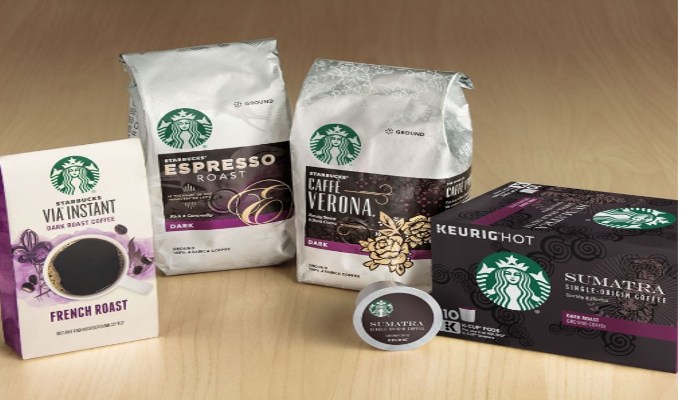
    Nestlé and Starbucks Corporation announced the closing of the deal granting Nestlé the perpetual rights to market Starbucks Consumer Packaged Goods and Foodservice products globally, outside of the company’s coffee shops.

    Through the alliance, the two companies will work closely together on the existing Starbucks range of roast and ground coffee, whole beans as well as instant and portioned coffee. The alliance will also capitalize on the experience and capabilities of both companies to work on innovation with the goal of enhancing its product offerings for coffee lovers globally.

    “This partnership demonstrates our growth agenda in action, giving Nestlé an unparalleled position in the coffee business with a full suite of innovative brands. With Starbucks, Nescafé and Nespresso we bring together the world’s most iconic coffee brands,” said Mark Schneider, Nestlé CEO.

    “The outstanding collaboration between the two teams resulted in a swift completion of this agreement, which will pave the way to capture further growth opportunities,” he added.

    The agreement significantly strengthens Nestlé’s coffee portfolio in the North American premium roast and ground and portioned coffee business. It also unlocks global expansion in grocery and foodservice for the Starbucks brand, utilizing the global reach of Nestlé.

    “This global coffee alliance with Nestlé is a significant strategic milestone for the growth of Starbucks,” said Kevin Johnson, President and CEO of Starbucks.

    Johnson added, “Bringing together the world’s leading coffee retailer, the world’s largest food and beverage company, and the world’s largest and fast-growing installed base of at-home and single-serve coffee machines helps us amplify the Starbucks brand around the world while delivering long-term value creation for our shareholders.”

    Approximately 500 Starbucks employees in the United States and Europe will join the Nestlé family, with the majority based in Seattle and London. The international expansion of the business will be led from Nestlé’s global headquarters in Vevey, Switzerland.

    The agreement covers Starbucks packaged coffee and tea brands, such as Starbucks®, Seattle’s Best Coffee®, TeavanaTM/MC, Starbucks VIA® Instant, Torrefazione Italia® coffee and Starbucks-branded K-Cup® pods. It excludes Ready-to-Drink products and all sales of any products within Starbucks® coffee shops.

  • Lululemon sportswear continues to surge

    Lululemon sportswear continues to surge

    Lululemon Athletica second-quarter sales rose 25 per cent in the second quarter to the end of July, with comp-store sales up 20 per cent.

    The Canadian activewear company reported net revenue of US$723.5 million and income from operations of $134.2 million, up 95 per cent year on year.

    “We are very pleased with the consistent performance of our business,” said chairman Glenn Murphy.

    The company ended the quarter with 415 stores and an inventory up 24 per cent to $392.7 million.

    The solid result followed a 25 per cent increase in the first quarter when net revenue reached  $649.7 million, and widening margins delivered a 130 per cent increase in income to $104.3 million.

    At the time, retail analyst and GlobalData MD Neil Saunders said the company was clearly outperforming the market by a “considerable degree”.

    COO Stuart Haselden said the “great” second-quarter result was achieved across all parts of the business and early indications are it is continuing into the new quarter.

    “This ongoing success positions us to achieve our 2020 goals and beyond. Above all, we want to thank our educators and teams around the world who make this possible.”

    Lululemon Athletica’s incoming CEO Calvin McDonald, said he plans to build on the success. “We have an incredible growth trajectory in front of us given the strength of the brand and our people.”

  • Zhang Ziyi, new Clé de Peau Beauté’s Global Brand Ambassador

    Zhang Ziyi, new Clé de Peau Beauté’s Global Brand Ambassador

    Clé de Peau Beauté, Shiseido Group’s prestige brand, announces that Golden Globe and BAFTA nominated actress Zhang Ziyi has been appointed as a Global Brand Ambassador. In a new campaign premiering this fall, Ms Zhang will represent La Crème — the iconic product that epitomises Clé de Peau Beauté’s dedication to excellence.

    Their first campaign together draws parallels between the legendary status of Ms Zhang and that of the legendary Clé de Peau Beauté product, La Crème. Expressive, lyrical and full of light, the campaign explores the uncompromising commitment to excellence the actress and cream share. Their story, building to the reputation they enjoy today, is narrated by Ms Zhang herself.

    Yukari Suzuki, Chief Brand Officer of Clé de Peau Beauté says of the collaboration: ”We have long admired Zhang Ziyi for her accomplishments and her dedication. Her beauty, warmth and generosity bring radiance to the world around her. Zhang Ziyi perfectly embodies the values of Clé de Peau Beauté because of her spirit and timeless elegance.”

    Jenny Sun, Brand Director of Clé de Peau Beauté China, says: ”Our collaboration with Zhang Ziyi will elevate the awareness and aspirational status of Clé de Peau Beauté in the China market. It will help to further establish the quality and luxury that Clé de Peau Beauté and La Crème are already renowned for.”

    Zhang Ziyi is an actress of rare beauty and monumental achievement. Following her debut in Zhang Yimou’s The Road Home, which won the Silver Bear Award at the 2000 Berlin Film Festival, she has gone on to appear in more than 20 movies including the internationally acclaimed Crouching Tiger, Hidden Dragon, House of Flying Daggers and Memoirs of a Geisha. Her role in 2013’s The Grandmaster earned her 12 Best Actress Awards — the most awarded actress for a single film — cementing Zhang Ziyi as a legendary talent.

    Ms Zhang became a lifetime member of the Academy of Motion Picture Arts and Sciences in 2005, and has been on the Cannes Film Festival juries three times. She is currently a coach on the number one-rated Chinese reality competition show in China, An Actor is Born.

    ”I’m delighted to be the Global Brand Ambassador for Clé de Peau Beauté. And to represent La Crème, an object of desire that is exquisite and modern. I’m proud to be part of bringing this energy to the world,” says Zhang Ziyi.

  • Indonesia’s E-Commerce Market Will Grow to $65b by 2020

    Indonesia’s E-Commerce Market Will Grow to $65b by 2020

    Online sales of physical goods in Indonesia are projected to increase more than eightfold to $65 billion annually by 2020, a study by global business consultancy McKinsey & Company shows.

    The report titled, “The digital archipelago: How online commerce is driving Indonesia’s economic development,” concludes that government support, large numbers of young, digitally savvy consumers and increased participation by micro, small and medium enterprises in e-commerce will drive the digital economy and boost online sales over the next five years.

    “We think there will be leapfrog growth for Indonesia’s e-commerce sales in the coming years, which is boosted by the number of internet users,” McKinsey Indonesia president director Philia Wibowo said in Jakarta on Wednesday.

    According to the Indonesian Internet Service Providers Association (APJII), there were 143 million internet users in the country last year, with about 44 percent of them using mobile devices to go online.

    McKinsey noted that e-tailing, or business conducted online through e-commerce firms such as Blibli, Tokopedia, Bukalapak and Lazada, will likely amount to $40 billion by 2020, while transactions on social media platforms, including Facebook, Instagram, Line, WhatsApp and Blackberry Messenger, may reach anything between $15 billion and $25 billion.

    Total e-commerce sales in Indonesia amounted to around $8 billion last year, with $5 billion of that from e-tailing.

    McKinsey also noted that 83 percent of internet users are expected to make online purchases by 2020, compared with 74 percent currently.

    The business consultancy interviewed 60 experts, ranging from chief executives of publicly listed companies, small and medium business owners, startup owners, former ministers to heads of government agencies, across the archipelago.

    The company also surveyed nearly 3,500 people, including 700 online merchants, 500 offline merchants, 2,000 online buyers and 250 dropshippers.

    “We conducted this research because we saw that there are rarely surveys out there that offer comprehensive reports on e-commerce. This particular sector has a real impact on the country’s economy,” Philia said.

    This is McKinsey Indonesia’s first e-commerce survey.

    Social Impact

    McKinsey said e-commerce has had a positive impact on job creation and social equity in Indonesia.

    As the largest e-commerce market in the region, Indonesia could generate about $20 billion in online sales by 2020, compared with $2.5 billion today.

    This projection shows that online sales in the coming years will also come from regions in Indonesia that are currently untapped.

    The business consultancy projects that e-commerce will support 26 million jobs both directly and indirectly by 2020, compared with 4 million now.

    Meanwhile, buyers can also save money through e-commerce. People living outside Java can expect to pay between 11 percent and 25 percent less for goods online, compared with brick-and-mortar shops.

    Buyers living in Java can save between 4 percent and 14 percent, McKinsey said.

    The business consultancy said e-commerce can also improve gender parity and financial inclusion.

    Challenges

    McKinsey noted that there are five key challenges if Indonesia wants to boost its e-commerce sector.

    The government should ensure that logistics and infrastructure are reliable. Indonesia still trails behind many other countries in terms of infrastructure development and it ranked in 63rd place among 160 countries globally in 2016, according to the World Bank data.

    Online payment systems meanwhile also play an important role in the growth of e-commerce. However, only 49 percent of Indonesians currently have access to financial services, compared with 85 percent in Malaysia and 82 percent in Thailand.

    McKinsey said while the internet is key to building a strong digital ecosystem, only around 60 percent, or 36 million small and medium business in Indonesia currently have an online presence. Of those, only about 15 percent have online ordering and payment systems, which shows an urgent need for small business owners to implement reliable technology and payment systems.

    Aside from that, McKinsey said Indonesia also faces a technical skills shortage. The country only produces eight science, technology, engineering and mathematics graduates per 1,000 citizens, while China produces 34 and India 20.

    Supportive Policies

    McKinsey further noted that supportive government policies also play an important part in boosting the country’s digital economy.

    Indonesia revised its negative investment list in 2016 to allow 100 percent foreign direct investment in e-commerce, if the investment exceeds Rp 100 billion ($6.8 million).

    The government is also committed to improving the country’s infrastructure, prioritizing the building and upgrading of ports and roads to lower logistical costs.

    “The focus on infrastructure projects must be continued, especially to improve access to rural areas,” Philia said.

    The government further established several agencies to support the digital economy, including the Bank Indonesia Fintech Office last year and the National Creative Economy Agency (Bekraf) in 2015.

  • Growth of Indian fashion e-commerce

    Growth of Indian fashion e-commerce

    E-commerce is the future of retail, and is taking giant steps as technology is being redefined with each successive year. But, contrary to popular belief, e-tailing can be expected to actually augment the growth of traditional retail in India along with consolidating wholesale and distribution channels.

    The Indian retail market is emerging as one of the most dynamic and fast-paced sector attracting several new domestic and international players. It accounts for over 10 percent of the country’s Gross Domestic Product (GDP) and around 8 percent of the employment. India is the world’s fifth-largest global destination in retail space. The Indian retail market is estimated at Rs 46,15,000 crore (US $710 billion) in 2017, and is expected to grow at a CAGR of 9 percent to reach Rs 1,08,58,000 crore (US $1,672 billion) by 2027. Corporatized retail had only a share of 11 percent in 2017, out of which, e-retail accounted for meagre 2 percent (Rs 92,300 crore). After the implementation of unified taxation under GST regime, it is expected that the share of corporatized retail will increase at higher rate. With increasing penetration of Internet in India, the acceptability of online shopping is expected to grow at a phenomenal pace.

    INDIAN RETAIL MARKET

    The Indian retail market is primarily dominated by food and grocery (~67 percent) followed by apparel and accessories (~8 percent), jewellery and watches (~8 percent) and others.

    India has witnessed a drastic shopping revolution in terms of retail formats, distribution channels and consumer buying behaviour. There has been an increase in purchasing power of consumers owing to the growth of middle class with higher share of disposable income, easy financial options, etc. The consumers today are more educated and well informed thus becoming more experimental and willing to try new products and new modes of purchases.

    E-retail is one of the fastest growing formats in Indian retail market owing to the convenient and personalized shopping experience. The Indian e-retail is estimate at US $16.3 billion in 2017 and is expected to grow at CAGR of 45 percent to reach US $49.5 billion by 2020.

    E-TAILING IN INDIA

    India is expected to become one of the world’s fastest growing e-tail markets, driven by robust investment in the sector and rapid increase in the number of internet users. Under Government initiatives like ‘Digital India’, Internet has penetrated to 400 million users, 48,000 gram panchayats are connected by optical fibres under Bharatnet program and 120.8 million have access to broadband. The increasing spectrum of Internet reach across geographies of India coupled with corporatization of apparel sector is paving way for emergence of e-commerce as a major retail channel in apparel category.

    E-tailing evolution took place in India starting with books and media as the key category. Electronics joined the e-tail bandwagon next and apparel, lifestyle were the third product categories. The other categories that have found traction include babycare, home and living, etc.

    At present, the e-commerce market is led by electronics category with a share of ~49 percent followed by apparel and lifestyle which is ~25 percent (including footwear, bags, belts, wallets, watches, jewellery, etc.). The adoption of e-tail in apparel and fashion industry is resisted by the consumers’ willingness to touch-and-feel the product before making purchase decision. To address this issue, initiatives like cash on delivery, easy return and exchange, discounts and offers are being implemented to encourage consumers to use online channel for shopping.

    E-tailing is in early stage but is growing rapidly and it will be further catalysed with the digital India program and structural reforms like GST implementation. Current share of e-retail in apparel and lifestyle segment is estimated at 4 percent in 2017 and is expected to grow four times from US $4 billion in 2017 to US $13 billion by 2020.

    E-retailers have rapidly scaled up their product offerings, providing a wide choice to customers. Several players have adopted marketplace models (pure or managed) which has enabled them to offer more categories, more brands and greater market reach for brands. E-retailers are opting for Omnichannel retail model by opening their physical store to capture a bigger market share. In addition, E-tailers are also investing into studios to improve uniformity in product catalogue for different suppliers, thereby enhancing customer’s shopping experience.

    Along with faster and easier navigation, most e-tailers provide detailed specifications of the products to make it easier for consumers to make purchase decisions. For instance, high resolution pictures and zoom in features are provided on the website to showcase the details of the products. Multiple images from different angles enable detailed view of product. Measurement charts assist the customer to make the right fit decision in case of apparel products, etc.

    KEY GROWTH DRIVERS OF E-TAIL IN INDIA

    Indian online retail has witnessed a surge in recent years and is expected to swell up to ~15 percent of the total retail by 2020 from current contribution of 4 percent (2017) in apparel and lifestyle segment. There are multiple factors which contribute to the growth of e-tail in India.

    Growth of digital penetration – India is in the midst of a digital revolution. The number of Internet users is likely to cross 650 million by 2020 and it is expected that half of the Indian population will be online in the next 3 years. Mobiles have become the most preferred device to access internet. The availability and affordability of smartphones with access to cheap internet data coupled with the rise in disposable income is fuelling the growth of digital penetration.

    Reach of e-retail channel – In next 3-4 years, more than half of India’s incremental Internet growth is expected to come from rural India. Additionally, the digital user demographic is expected to expand beyond the traditional stereotype, with a significant growth in female and older Internet users by 2020. This will result in a larger market size across different geographies, age and genders and not just a small targeted group. The diversity in the Internet users will facilitate an opportunity for online retailers to expand their product portfolio as per the increasing customer base.

    Impact of digital age – Though, Internet has penetrated to 400 million users today, but they are different in usage behaviour and needs. 60 percent of rural Internet users go online using Internet enabled phones and not smartphones. The major use of Internet in rural consumers is limited to entertainment, education and social networking. The online purchase behaviour is best predicted by the ‘digital age’ (years spent online), and not by demographics. With an increase in digital age, the internet users even from rural areas are expected to use e-retail for making their purchase decisions.

    Increasing fashion demands in small cities and towns – With the media exposure, rising awareness, growing aspirations and increasing share of disposable income, Indian consumers are looking to get access to global fashion brands. Limited reach of brick and mortar retail outlets of brands in smaller cities provides an opportunity for online retailers. Heavy discounts and promotions, availability of exclusive products, customized experience, availability of global brands, etc. Have made consumers residing in Tier -II and -III cities and semi-urban areas migrate to these online channels.

    Improved supply chain and end delivery logistics – E-commerce business is completely dependent on effective supply chain management. Successful supply chain management coordinates and integrates activities like manufacturing, operations, transportation and physical distribution of product with last mile connectivity to end users into a seamless process. For customer acquisition from traditional way of brick-and-mortar channel and their retention, it is necessary to provide customized shopping experience to the consumer by giving several convenience options like various payment options, mode of delivery, point of delivery, etc.

    Growth of private labels – With increasing acceptability of private labels among Indian consumers, e-retailers are entering into this emerging segment. The access to exhaustive informative data on consumer’s buying behaviour and preferences have provided an advantage to online retailers in terms of understanding the consumer’s needs. With private labels, online retailers are able to increase their revenues owing to lower distribution overheads, lesser number of intermediaries and negligible marketing cost involved in private labels.

    KEY CHALLENGES

    Despite high growth, e-tailers face several challenges in the country. Challenges and concerns related to e-tailing in India are enumerated as under:

    Competitive intensity – Changing customer preferences and their competitive demand has made e-tailing a highly competitive business which results in cash-burn with regular promotions/ discounts. High discounts by e-retailers to acquire customers have led to unreal customer expectations, low loyalty and losses.

    Sub-optimal logistics and infrastructural bottlenecks – Most of the logistics companies do not have pan-India reach. As some regions are not easily accessible, retailers have to cancel such orders due to inability of logistics partners to provide service in those areas. Inadequate infrastructure such as poor conditions of roads, highway, etc., is one of the main challenges faced by the e-retailers resulting in a major roadblock in their growth story.

    Inability to convert returns into retails – The conventional brick-and-mortar channel is able to convert the return of product into sales. Consumers when go to shop to return the product, they generally shop for other goods due to easy accessibility to other designs and variety in the shop, which is not the same in case of online shopping.

    Different Drivers for online purchase – The purchase drivers are very different across different geographies, regions and population centres. Factors such as promotions, discount and offers are the key driving factor for online purchase across all the regions – metros, tier -I and II cities. But there are other region specific factors such as, availability of new products, better product assortments, easy return policy, express delivery options, etc., which drive growth in different cities and regions. Thus e-tailers have to develop different strategies for different regions and geographies.

    CONCLUSION

    In the current shopper-centric era, Indian fashion industry is joining hands with technological advancements. Retailers are progressively accepting innovative ideas and tactics to create a memorable and personalized shopping experience, at the same time ensuring lower logistics and operational cost thus leading to higher revenues. With increasing internet penetration, e-commerce is expected to grow at relatively higher rate in comparison to conventional retail channels. With increasing acceptance of private labels within the Indian consumers, e-retailers are venturing into private labels.

    E-tailing can play a crucial role in consolidating wholesale and distribution channels, and in developing India-specific business models. By virtue of the advantages discussed in previous sections, e-tailing can bring down the cost of distribution and can complement the growth of traditional retail. In future, e-retail is expected to take a step ahead in adopting Omnichannel retail strategy, capturing higher market share.
  • Anais and Greygrei to make China debut

    Anais and Greygrei to make China debut

    Korean clothing brands Anais and Greygrei are set to enter the Chinese market under Korean young-casual clothing firm Maison de Anais.

    The label, which successfully launched in northern Europe earlier this year, will target the late 20’s to late 30’s womenswear market in China after having received interest at the Shandong Korean Product Exhibition last July.

    The Greygrei brand is currently pending its official release on VIP.com, one of the three leading B2C internet shopping malls with the largest sales among Chinese e-commerce mobile apps.

    A Maison de Anais spokesperson said online fashion platforms are attractive to brands as they can help establish brands in the fast-changing Chinese market.

    “By introducing on VIP.com, Maison de Anais hopes to promote the brand to various buyers and distribution channels in China by increasing the brand competitiveness and reference of Greygrei as we establish direct contact with the customers.”

    Company president Jeong Ho Lee added: “Times are changing where a wide range of age groups, especially female consumers from their late 20’s to late 30’s, are taking the main role in invigorating the fashion market in China, from an era where the early-to-mid-20’s used to be at the helm. Greygrei and Maison de Anais hope to write [a] success story with China as the main stage.”