Author: Mei Ling Tan

  • E-commerce giants rake in losses as market share war continues

    E-commerce giants rake in losses as market share war continues

    In for the long haul, online retailers are willing to ignore losses, focusing on promotions to attract more customers.

    Hoang has recently been able to buy a few electronic items online at a mere VND500,000 ($20), a fraction of what they would have cost at regular stores.

    He has been doing most of his shopping online in recent years, usually by hunting around for items sold at discounts of 50-80 percent.

    He said: “A few months ago I bought a shirt on sale for only VND5,000 (21 cents). I paid VND25,000 for shipping.”

    Customers like Hoang are the targets of Vietnam’s major e-commerce players. To attract more customers in an ultra-competitive market, these online shops are willing to spend large sums on promotions.

    In the first quarter online retailer Shopee Vietnam had around 30,000 orders a day, most of which were shipped free, according to a report by its owner SEA Ltd.

    Lazada also regularly offers discounts of up to 50 percent.

    But in this process these stores are bleeding, with Lazada, Shopee and Tiki all reporting losses.

    Lazada had an accumulated loss in 2016 of VND2.7 trillion ($115 million), the largest among online retailers in Vietnam.

    Tiki had a loss of VND600 billion ($26 million) in the same year, while Shopee reported a similar loss last year.

    SEA Ltd. said that most of the losses are due to the expenses on advertising and promotions.

    But it is a war that would go on for a long time, Truong Van Quy, CEO of marketing academy EQVN, predicted.

    To attract customers, they are willing to ignore their losses, he said, pointing out that even Amazon had to spend a large amount of money for 15 years just to attract users.

    For an online retailer to break even it first needs to have dozens of millions of customers within five to 10 years, he said.

    This was why Chinese e-commerce giant Alibaba bought Lazada last year for $2 billion, and injected another $2 billion into the company last March, he said.

    Tiki received an investment of $50 million from China’s second biggest online e-commerce firm, JD.com, earlier this year, while Shopee injected another VND1.2 trillion ($51 million) into its business, he added.

    Industry insiders said the sector has huge potential with the expanding middle class and smartphone usage.

    The World Bank has forecast that Vietnam’s $200-billion economy is likely to grow to a trillion dollars by 2035.

    More than half of its population, compared to only 11 percent today, is expected to join the ranks of the global middle class with consumption of $15 a day or more.

    Across the country, the ratio of people using smartphones among mobile phone subscribers reached 84 percent in 2017, up from 78 percent the previous year, according to the 2017 Nielsen Vietnam Smartphone Insights Report.

    Online sales in Vietnam have expanded rapidly in recent years, currently accounting for 3.39 percent of the country’s retail market. The total retail market grew 10.9 percent last year to $173.27 billion, as reported.

  • Slower earnings growth for Malaysia’s banking sector this year

    Slower earnings growth for Malaysia’s banking sector this year

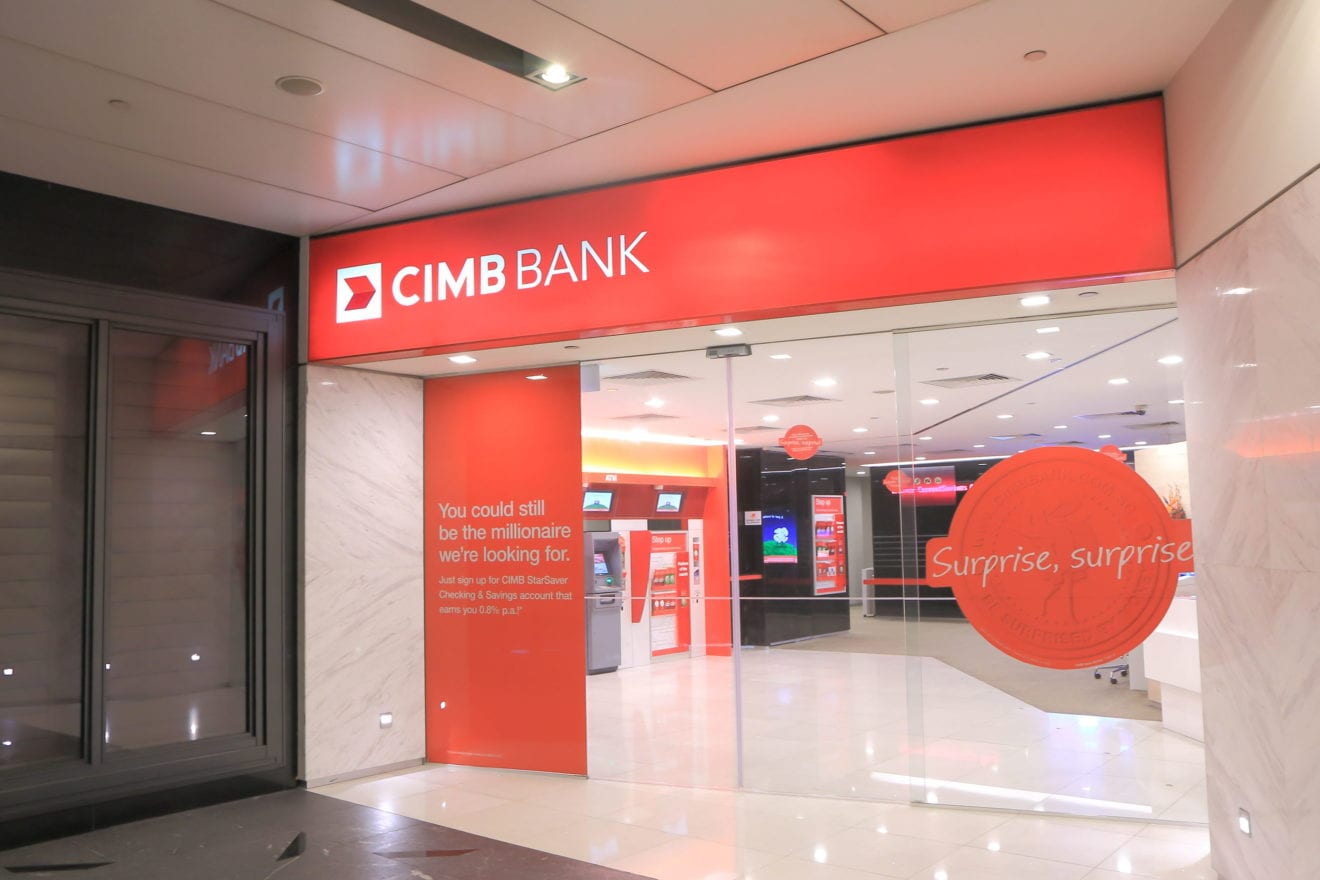
    AmResearch expects the banking sector’s core earnings growth to come in lower at 5.8% this year from the earlier projection of 7.6% in anticipation of slower economic growth.

    The Q2 core earnings fell marginally by 0.4% quarter-on-quarter after excluding CIMB’s one-off gain of RM928 million from the partial disposal of CIMB-Principal Asset Management and CIMB-Principal Islamic Asset Management and an additional gain of RM11 million from the sale of a 50% stake in CIMB Securities International as well as adding back Hong Leong Bank’s one-off loss of RM27 million from the dilution of stake in its associate Bank of Chengdu.

    However, first-half earnings registered a commendable 10.3% growth.

    For 2019, the research house foresees the sector’s earnings to grow 6.2% in 2019, with the inclusion of BIMB’s expected improvement in profits.

    AmResearch also expects a better loan growth in the second half of the year with consumer loans gaining traction in the third quarter as consumer spending rises with the tax holiday, while business loans are expected to improve judging from better momentum for domestic non-household loans in the recent months.

    “We retain our loan growth assumption of 5% for 2018 with a slight downside bias based on a GDP growth of 4.8-5% for the year.”

    The banking sector’s average net interest margin (NIM) fell 6 basis points qoq to 2.3% in Q2 after an Overnight Policy Rate (OPR) hike of 25 basis points in January 2018.

    “The decline of the NIM in the second quarter was due to the upward repricing of deposit rates after the OPR increase in Q1 and higher funding cost from deposit competition moving close to the adoption of the net stable funding ratio. We expect pressure to remain on funding cost in the near term due to deposits’ competition.”

    Nevertheless, AmResearch expects NIM for the second half to be either flat or slightly compressed compared with the first half as the deposit repricing from the earlier OPR hike has already largely worked its way through banks’ funding cost.

    Despite an uptick in the gross impaired loan ratio for the banking sector in Q2, it said the sector’s asset quality is expected to remain stable in the second half.

  • Ringer Hut opening in Philippines launch

    Ringer Hut opening in Philippines launch

    Japanese fast-food chain Ringer Hut is preparing to launch in the Philippines.

    The Tokyo-based firm will open a joint venture with local partners, taking a 40 per cent stake in the new business.

    The company had previously indicated that legal advice showed the partnership could proceed if the equivalent of US$2.5 million minimum was invested.

    Ringer Hut currently operates 600 stores in Japan, and has 16 stores in five other Asian countries, including Hong Kong, and in the US. It is also preparing to open in Vietnam. The chain’s stated goal is to run 50 international stores by 2020.

  • U Mobile inks RM1 billion credit facility with UOB Malaysia

    U Mobile inks RM1 billion credit facility with UOB Malaysia

    U Mobile Sdn Bhd has inked a three-year RM1 billion term loan credit facility with United Overseas Bank (Malaysia) Bhd (UOB Malaysia) to fund its various capital expenditure programmes, including the company’s network expansion and enhancement goals across the country.

    U Mobile CEO Wong Heang Tuck said the RM1 billion credit facility agreement is one of the largest to be signed in this country to date and this reflects the bank’s vote of confidence in U Mobile’s credit quality and business fundamentals.

    “The fresh injection also means we are able to expedite our network strategy and customers will soon enjoy much better experience throughout the whole of Malaysia.”

    He added that the agreement, apart from enabling U Mobile to build a financial track record, affirms the company’s position as a credible challenger in the telco landscape.

    Over the past few years, the company has enjoyed traction in the industry and its subscriber base crossed the 6 million mark at the end of last year.

    U Mobile’s rising popularity in Malaysia also enabled the telco to become ebitda (earnings before interest, tax, depreciation & amortisation) positive mid last year, highlighting the company’s improving financial health.

    As at Dec 31, 2017, U Mobile’s shareholders have invested over RM4 billion in the business. With the RM1 billion loan from the commercial bank, U Mobile would be investing over RM5 billion in its network infrastructure, aggressively expanding its network footprint nationwide as well as enhancing customers’ mobile experience.

    The investment will also accelerate the telco’s growth ambitions, reinforcing its position as a serious industry contender. The network infrastructure upgrade is also a critical foundation to U Mobile’s expanding suite of mobile digital services, which spans from telco-assurance to payments.

  • Biscuit maker Cookies Quartet applies for IPO

    Biscuit maker Cookies Quartet applies for IPO

    Hong Kong biscuit maker Cookies Quartet is planning an IPO to raise funds for expansion into Canada and Taiwan.

    The company, founded by former Miss Hong Kong Tse Ning, pastry chef Yiu Man Wong and food writer Yuen Tung Kwan in 2008, now has eight stores in Hong Kong and a bakery in San Po Kong.

    In a filing with the stock exchange, Cookies Quartet said it has an agreement with distributors in both new international markets and also plans to expand distribution in Mainland China where it has been selling online for two years.

    Of Hong Kong’s 32 biscuit retailers, Cookies Quartet claims a market share ranking it second in revenue terms with sales of HK$80.7 million giving it 13.6 per cent of the market.

    The company stated its profits at HK$24.7 million (US$3.1 million) this year, and $29.5 million last year.

  • Vietnam’s VCCI shared 3 solutions to resolve businesses’ credit crunch

    Vietnam’s VCCI shared 3 solutions to resolve businesses’ credit crunch

    A recent survey found that 217 out of 504 questioned businesses in various sectors could not get bank loans for lack of collateral.

    The survey was done last May for the “Assisting Vietnamese businesses with increased access to credit through improving governance and financial transparency” project of the Vietnam Chamber of Commerce and Industry (VCCI).

    Releasing the survey results last month, the VCCI said businesses have difficulty proving their creditworthiness to banks and other credit institutions.

    Nguyen Thi Mui, an economist, acknowledging the need to provide banks with collateral for loans, also pointed out that only a small proportion of businesses can fully meet banks’ requirements.

    The Government and the State Bank of Vietnam have in the past tried various programs to ease credit access but with no great success.

    The VCCI has three possible solutions but stressed banks have a major role in remedying the problem.

    Firstly, bank staff should devote time and effort to assist customers seeking loans. More importantly, banks should fully understand the challenges that businesses face.

    They should be able to detect whether or not investing in this business would benefit them in the long run. If so, the bank should help loan takers overcome the current finance problem.

    It said banks should adjust their risk appraisal methods to better serve small and medium-sized enterprises. A large part of Vietnamese banks’ income comes from interest on loans to businesses, it said.

    Secondly, the VCCI said, banks’ current interest rates do not only fit the nation’s current economic situation but also affects businesses’ competitiveness. It recommends that banks should narrow the gap between their deposit lending interest rates to two percent.

    Lastly, the VCCI said, businesses should look to improve themselves in terms of human resources and management to appeal more in front of lenders.

    According to the General Statistics Office (GSO), Vietnam had more than 600,000 enterprises at the end of last year, 95 percent of them small and medium-sized enterprises with an annual turnover of less than VND100 billion ($4.3 million).

    The number of enterprises with turnovers less than VND20 billion makes up over 70 percent of the total number of small and medium enterprises. VCCI statistics show that nearly 60 percent of these micro enterprises did not succeed in getting bank loans in 2016.

  • Uniqlo Canada network will double

    Uniqlo Canada network will double

    Uniqlo Canada has announced four new stores, almost doubling its retail footprint within the country.

    COO of Uniqlo Canada Yasuhiro Hayashi said the company was encouraged by the warm welcome the Japanese fast-fashion chain has received to date.

    “We are thrilled to be opening three new stores in the Greater Toronto Area and a fourth new store in Greater Vancouver.”

    The British Columbia location will open at Coquitlam Centre on September 14, while the rest will open in Ontario at Vaughan Mills on September 28; CF Markville on October 12; and Square One Shopping Centre on November 2.

    Consumers outside Toronto and Vancouver can now shop Uniqlo Canada via a newly launched mobile e-commerce platform.

    All Uniqlo Canada stores participate in a recycling initiative in which customers can drop off gently used Uniqlo clothing as donations for those in need.

  • Luxury perfume brand Creed to launch in India

    Luxury perfume brand Creed to launch in India

    London’s 250-year-old perfume brand Creed will be launched in India.

    Its maiden store is being launched in the country in partnership with Berkeley Beauty Brands Pvt Ltd, at The Chanakya Mall here.

    “The brand’s iconic status is in sync with the national capital that boasts of a cross-section of luxury connoisseurs. Owing to the globalisation and increase in the disposable income, India has become a profitable market for such luxury brands where the buyers want to experience international standards while shopping,” Gaganmeet Singh, Managing Director, Berkeley Beauty Brands Pvt Ltd, said in a statement.

    Founded in London in 1760, The House of Creed is the only family-owned luxury fragrance dynasty that has served royal houses as well as discerning patrons for over 250 years.

    Passed from father to son spanning seven generations since its London founding by James Henry Creed, it relies on a 4,000-year old infusion technique to capture the highest concentration of natural essential oils, and does not use preservatives.

  • Malaysia ahead of US in global Chinese tourist transactions

    Malaysia ahead of US in global Chinese tourist transactions

    Malaysia has climbed ahead of the US to become the ninth largest market worldwide for Chinese tourists’ spending overseas.

    This was recorded during China’s summer holidays, which took place between July 1 and Aug 31 this year.

    According to Alipay, a mobile and online payment platform offered by Ant Financial, the volume of transactions made by Chinese tourist using Alipay in Malaysia grew five times this year compared to the same period in 2017. This growth also makes Malaysia the only other Asian country apart from Cambodia to make the top 10 list.

    “Malaysia is a hotspot for Chinese tourists. When we established our network with Malaysian merchants in May last year, we looked forward to seeing both Chinese tourists and local businesses mutually benefit from our presence.

    Today, Chinese travellers can continue enjoying the smart lifestyle they enjoy back home, and Malaysian merchants are able to expand on their service offerings and see profit with Alipay,” said Cherry Huang, general manager, cross-border business for South and Southeast Asia Alipay.

    The two-month annual holiday period celebrated in China saw Alipay process almost three times as many in-store overseas transactions than during the 2017 summer break. It also saw a 43% increase in the average per-capita spend per user this year, going from RMB2,073 (RM1,257) to RMB2,955 (RM1,792).

    China was the third largest source of tourist arrivals (at 2.28 million) for Malaysia in 2017 and more tourists are expected to arrive over the years. Alipay’s presence locally allows merchants to leverage on Chinese tourists’ preference for cashless payments. This is evidenced by Nielsen’s findings highlighting that 99% of Chinese tourists have Alipay installed on their devices, with over 90% preferring mobile payments abroad given the option.

  • Japan retail sales continues positive result

    Japan retail sales continues positive result

    Retail sales in Japan have reportedly risen for the ninth straight month year on year, reflecting the importance of private consumption to the world’s third largest economy.

    However while the news has prompted enthusiasm in the Japanese central bank, claiming it reflects improved consumer confidence, other commentators suggest the pace of gains is slowing.

    A senior economist at BNP Paribas Securities Azusa Kato said employment and household incomes are not so robust as the Bank of Japan thinks.

    “As such, private consumption is likely to pull back from a rebound seen in the April-June quarter.”

    Senior Japan economist at Capital Economics Marcel Thieliant said the upshot is that private consumption started Q3 on a soft note.

    “However, the fundamentals for a continued improvement in spending remain in place. Both employment and wages are growing strongly, so household incomes are expanding rapidly.”

    Wages are on the increase in Japan with the gradual aging of the working population.

  • Vietnam’s Vinalines raises fraction of target in IPO

    Vietnam’s Vinalines raises fraction of target in IPO

    Vietnam National Shipping Lines, a state-owned shipping firm, raised VND54.3 billion ($2.33 million) from an initial public offering (IPO) on Wednesday.

    The figure was far below its target of VND4.89 trillion, the Hanoi Stock Exchange said on Wednesday.

    The company, better known as Vinalines, sold 5.43 million shares or only 1.11 percent of the shares offered at the IPO at an average price of VND10,002 apiece.

    Vinalines sold the shares to 39 individual investors and two corporate investors. Foreign investors bought 6,200 shares.

    Last month, bookrunner Saigon Securities Inc had said that Vinalines was seeking to raise around $210 million from the sale of 488.82 million shares, or a 34.8 percent stake, at the IPO.

    $1 = 23,313 dong

  • Shinsegae launches Paris boutique soon

    Shinsegae launches Paris boutique soon

    South Korean Department Store Shinsegae is to open a Paris boutique, Boon the Shop, in the iconic department store Le Bon Marche this month.

    Opening the multi-brand store follows the response to the brand’s popularity at a Paris exhibition last March. Shinsegae similarly entered the US market last year at luxury store Barneys New York. The Bon Marche opening is particularly prestigious given the department store’s status as the world’s first of its kind, having opened in 1836.

    Shinsegae will be Korea’s first department store to earn a spot in the French shopping institution.

    Boon the Shop was Korea’s first multi-brand boutique and retails more than 100 selected items.

  • Bank Negara Malaysia maintains benchmark rate, says trade tensions main downside risk

    Bank Negara Malaysia maintains benchmark rate, says trade tensions main downside risk

    Bank Negara Malaysia (BNM) maintained the Overnight Policy Rate (OPR) at 3.25% at its Monetary Policy Committee (MPC) meeting today, citing trade tensions as a key source of downside risk.

    “Greater volatility in the international financial markets and monetary policy normalisation in the advanced economies could lead to further capital outflows and financial market adjustments in emerging economies,” the central bank said in a statement.

    Despite persistent non-resident portfolio outflows due to ongoing global developments, BNM stressed that the domestic financial markets remain resilient with domestic monetary and financial conditions supportive of economic growth.

    “The financial sector remains sound, with financial institutions continuing to operate with strong capital and liquidity buffers. In addition, the domestic economy maintains its underlying fundamental strength, with steady economic growth, low unemployment and current account surplus of the balance of payments.”

    BNM said its monetary operations will continue to ensure sufficient liquidity to support the orderly functioning of money and foreign exchange markets and intermediation activity.

    “At the current level of the OPR, the degree of monetary accommodativeness is consistent with the intended policy stance. The MPC will continue to monitor and assess the balance of risks surrounding the outlook for domestic growth and inflation.”

    Commenting on the domestic economy, BNM said supply disruptions in the mining and agriculture sectors led to more moderate growth in the second quarter of 2018, but on the demand side, growth remained supported by private sector activity with further impetus from net exports.

    “Looking ahead, private consumption, which was boosted by the tax holiday, will continue to be driven by steady wage and employment growth. Investment activity is projected to be underpinned by continued capacity expansion in key sectors, particularly in the export-oriented industries, driven by favourable demand and efforts to enhance automation.”

    However, it opined that public sector spending will weigh on growth as the government embarks on reprioritisation of expenditure.

    The central bank said the external sector will continue to benefit from the sustained global growth momentum, but in the immediate term, the economy faces downside risks stemming from heightened trade tensions, prolonged weakness in the mining and agriculture sectors and some domestic policy uncertainty.

    “On balance, the Malaysian economy is expected to remain on a steady growth path.”

    Going forward and continuing into 2019, BNM expects headline inflation to edge upwards taking into consideration the impact of policy measures on domestic cost factors.

    “The impact of the changes in the consumption tax policy on headline inflation will be transitory and lapse towards the end of 2019. Underlying inflation is nevertheless expected to remain relatively stable.”

  • Tesco transform recycled plastic into a car park

    Tesco transform recycled plastic into a car park

    Tesco Extra has resurfaced a store car park using the equivalent weight of 225,000 plastic carry bags, saving 900kg of plastics going to landfill.

    The partnership with plastic road company MacRebur, is part of a broader Tesco initiative to improve its sustainability record, including looking for ways to reuse waste plastic, reduce carbon and promote a sustainable closed-loop system. More than 84 per cent of the packaging on the grocer’s own-brand products is recyclable, depending on local authorities collecting it.

    MacRebur carefully selected plastics, taken from old rubbish, which it adds to road paving to improve strength and durability, whilst reducing the quantity of the oil-based bitumen used in traditional road mix.

    The Tesco Extra Cuckoo Bridge car park was resurfaced using waste plastics that would have been destined for landfill or incineration. These are added into an asphalt mix without the need to alter the existing equipment used to make and install the asphalt.

    Tesco will be testing this new road surface out at the Cuckoo Bridge store through the winter and hopes to work with MacRebur on future projects to help reuse waste plastic.

    MacRebur is based in Dumfries & Galloway, Scotland. For every 10 tonnes of asphalt made with their additives included, they use the equivalent of 71,432 plastic bottles or 435,592 single-use plastic bags, or 32,399 used nappies. Ten tonnes of asphalt would surface about 90sqm.

  • Guess Asia enjoys sales, profit surge

    Guess Asia enjoys sales, profit surge

    Guess has returned to profit in the first half of this year, with high rate of growth in Asia-Pacific a key factor.

    Sales by Guess in Asia rose by 32.3 per cent during the first half of this year, expressed in US dollars, and by 27.1 per cent in constant currency, with same-store sales up by 20 per cent.

    That was more than double the sales growth of the company overall.

    For the full year, Guess is predicting comp sales in Asia to be up by the low teens in percentage terms, with profit up in the low- to mid-20 per cent region.

    The company is performing across all markets, even in its core US home market where it has been struggling in recent times.

    Globally, for the six months to August 4, Guess achieved net sales of US$1.17 billion, up 14.1 per cent. Net earnings were $11.6 million, compared to an adjusted net loss of $3.3 million for the same period last year.

    “Overall, I am very pleased by the momentum we are experiencing across the globe,” said CEO Victor Herrero in the company’s earnings statement.

    “We are now planning for positive comps in all regions, including the Americas. Looking forward, I feel confident that the ‘turnaround’ has only just begun, as we are well positioned to exit this fiscal year with every business segment profitable and the company firmly on the path to our 7.5 per cent operating margin goal by continuing to execute on our strategic initiatives,” he said.

    Operating margin for the Guess in Asia rose by 120 basis points over the first half to 3.4 per cent, from 2.2 per cent a year ago. The company said the improvement was driven by reduced occupancy costs, partially offset by higher expenses resulting from retail expansion in Australia.

    The company said a lower number of markdowns in the US also helped reverse its loss.