Author: Mei Ling Tan

  • Indonesia Gov’t Cuts Tax for Small and Medium Enterprises

    Indonesia Gov’t Cuts Tax for Small and Medium Enterprises

    Indonesia will cut the final income tax rate for small and medium-sized enterprises by half, to 0.5 percent of their annual sales, in a move to help businesses manage their cash flow and expansion.

    President Joko “Jokowi” Widodo announced the cut at the East Java Expo in Surabaya, East Java, on Friday.

    The new regulation will be effective on July 1.

    Today, businesses with annual revenue of less than Rp 4.8 billion ($340,000) pay a 1 percent tax on their total sales. Other businesses pay 25 percent of their profit as income tax and set aside 10 percent of sales for value added tax.

    While the current arrangement only demands simple accounting, small and medium-sized enterprises say it also means they have to pay income tax when they are at loss, which disrupts their cash flow.

    “The new regulation is intended to encourage SMEs to be more active in economic activities by providing a fairer taxpaying scheme,” Directorate General of Taxation spokesman Hestu Yoga Saksama said in a statement.

    To lower their tax bill, SMEs must file an application to the tax office. Individual taxpayers can enjoy the lower tax rate for seven years, corporate taxpayers for four years and limited liability companies for three years.

    “The cut from 1 percent to 0.5 percent is expected to facilitate SMEs in maintaining their cash flow, which can then be used as additional capital for their businesses,” said Yustinus Prastowo, executive director at think tank Center for Indonesia Taxation Analysis.

    The cut will cost the government around Rp 2.5 trillion a year, which according to Yustinus should be seen as an investment, as the policy is expected to increase the tax base.

    Tax office data show that tax revenue from SMEs last year amounted to Rp 106.3 trillion — only 60 percent of the government’s target. It was also nearly Rp 12 trillion lower than in the previous year.

  • Walmart to try new Sam’s Club concept

    Walmart to try new Sam’s Club concept

    Walmart is to test a new Sam’s Club concept which is less than a quarter the size of the current model.

    Stewart Samuel, program director at IGD Canada, says a typical Sam’s Club outlet in North America is 134,000sqft. But the new store opening in Dallas is just 32,000sqft.

    “This will be a new test format for Sam’s Club which will help it to further innovate and improve the member experience,” says Samuel, who shapes IGD’s research program across North America.

    “Offering a convenient shopping experience will be a key driver underpinning the format’s development. The retailer will focus on delivering a more digital-led experience, including fast membership sign-up, easy returns, checkout using Scan & Go and digital signage.”

    The new Sam’s Club concept will offer a tailored, locally-relevant assortment of between 1000 and 2000 items, including grocery and fresh foods, grab-and-go meals and frequently purchased consumable goods.

    While the test format will be radically different to the core Sam’s Club offer, it could provide Walmart with a new route to future club growth, particularly as e-commerce continues to become a larger part of the club model.

    “This has been a priority focus for the retailer, with its established Club Pickup model augmented by the launch of home delivery via Instacart earlier this year. In January, the retailer announced that it was closing 63 clubs, with around 10 of them earmarked for conversion into e-commerce fulfillment centres,” said Samuel.

    The format could also provide Walmart with new ideas to enhance its hypermarket model.

    “While the retailer has launched several initiatives as part of its ‘Supercenter of the future’ project, these have been within its existing store footprint. Sam’s Club has been an important incubator for new ideas at Walmart over recent years, so success with this new format could lead to a similar test for its core hypermarket format.”

  • Hackers steal $30 million in cryptocurrency from Bithumb

    Hackers steal $30 million in cryptocurrency from Bithumb

    Bithumb, one of the largest cryptocurrency exchanges in Korea, was hacked on Wednesday, causing the exchange to lose more than $30 million worth in cryptocurrencies.

    “We noticed that between last night and today early morning, about 35 billion won [$31.5 million] worth cryptocurrencies have been stolen,” Bithumb said through an announcement on its website on Wednesday. “Cryptocurrency deposit/withdrawal and Korean won withdrawal service will be halted for time being and until services are thoroughly reviewed.”

    “We are still checking on which currencies have been leaked, but so far, we discovered that the hacked coins include Ripple,” said a spokesperson from the exchange.

    According to the Bithumb spokesperson, 100 percent of the coins and tokens traded through the exchange are stored in offline cold wallets.

    “This loss will be compensated by Bithumb’s own reserves, and all the assets of our customers are securely saved in Bithumb’s cold wallets, hence all assets are completely safe and secure,” the company said in the announcement.

  • Lippo Invests Rp 628b in Chinese Internet Giant Tencent

    Lippo Invests Rp 628b in Chinese Internet Giant Tencent

    Indonesian diversified conglomerate Lippo Group has invested Rp 628 billion ($45 million), or 350 million Hong Kong dollars, in Chinese internet giant Tencent, the world’s eighth most valuable listed company and owner of leading internet services including WeChat, Snapchat and Spotify, and technology companies such as Tesla.

    The investment highlights Lippo’s continued digital transformation and investment into the fourth industrial revolution, the group said in a statement on Monday (25/06).

    Lippo, a pan-Asian group with strategic investments and operations across eight markets globally, is the largest integrated services group in Indonesia, serving more than 60 million unique customers across its real estate, malls, department stores, hospitals, telecommunications, media and financial services businesses.

    Lippo’s 350 million Hong Kong dollars investment into Tencent comprised of new Tencent shares and equity-linked notes (ELNs). The investment is made by Lippo’s Hong Kong investment subsidiary.

    Tencent’s market capitalization passed $500 billion last November, making it the first listed Chinese firm to do so and briefly overtaking Facebook as the world’s fifth biggest firm.

    Co-founder Ma Huateng, nicknamed Pony Ma, is the 17th richest person in the world, with a fortune of $45.3 billion — four places behind Google co-founder Sergey Brin, according to the latest Forbes rich list.

    Tencent’s core business is built on messaging app WeChat, the world’s largest mobile gaming franchises, and an ecosystem of services (for its 1 billion users) usually offered by Silicon Valley firms that have no foothold in China.

    Tencent Video, a streaming service much like Netflix, is the biggest of its kind in China and carries exclusive content including HBO series “Game of Thrones”. The service more than doubled in size in 2017, drawing more than 40 million paying subscribers.

    In Indonesia, Lippo’s nine unique sectors are all pushing to digitalize. In addition, it has established a digital investment group to lay strong foundations for the fourth industrial revolution. This includes Venturra Capital having invested in 24 start-ups in the last 2 years, mataharimall.com, and OVO — Indonesia’s leading payment and marketing platform.

  • One and only Limelight Stella watch

    One and only Limelight Stella watch

    A staff member at the Piaget boutique in Hyundai Department Store’s World Trade Center location introduces the 1.1 billion won ($985,340) Limelight Stella watch from the brand’s Exceptional Pieces collection. The watch’s dial and bracelet are encrusted with 577 diamonds with a total of 42.17 carats. Only one of this particular model was brought to Korea.

  • Indonesia to host franchise event next month

    Indonesia to host franchise event next month

    Prospective franchisees and investors will have the opportunity to meet with international franchisors at a VF Franchise Consulting event in Jakarta from July 18–19.

    VF’s CEO Sean T Ngo said foreign brands are eying the Indonesia franchise market because of its size and potential.

    “Not only is food & beverage fast-growing, it is also a market that is very high potential for education and services franchises,” he said.

    The invitation-only event, co-hosted by local partner IFBM, includes personal meetings with senior franchise executives of seven participating brands, which include F&B franchises Little Caesars, Texas Roadhouse, Brotzeit and Pronto; Hong Kong-based educational businesses The Edge Learning Centre and First Code Academy; and hygiene/disinfection firm Sureclean.

    According to Ngo, there are already more than 1200 active Indonesia franchise companies operating, including both local and international groups. He noted that Indonesia continues to have one of the fastest-growing franchise industries in Southeast Asia.

  • Cosmax opens factory in Thailand to tap market in Asean

    Cosmax opens factory in Thailand to tap market in Asean

    Cosmax’s manufacturing facilities in Thailand recently started up, the company said Monday, with the goal of tapping into Asean’s largest beauty market.

    An original design manufacturer for big-name beauty brands worldwide, the company announced that the 9,000-square-meter (836-square-foot) facility in Bangplee, Thailand, started running on Wednesday.

    With 150 employees, the facility has the capacity to produce 30 million units of skin care and cosmetics products per year.

    Cosmax set up an office in Thailand last year to tap into the beauty market of it and other neighboring countries in the Asean region.

    “Thailand has the biggest beauty market among Asean countries-it’s also an influential market that leads trends in the region,” said a Cosmax spokeswoman.

    Thailand is a rising target for global beauty brands. Johnson & Johnson, P&G and Unilever manufacture there. The research firm Euromonitor estimated the country’s beauty market at 5.6 billion won ($5.01 million) in 2016 and a Kotra report predicted it to reach 7.2 billion won in size by 2021.

    “Thailand has big market potential: It’s at the center of the hallyu wave and has a high level of interest in Korean cosmetics,” said Lee Geon-il, head of Cosmax’s Thailand corporation.

    “There’s also a wide perception that Korean beauty brands have good quality.”

    The spokeswoman added the company hopes to sign more deals with beauty companies in Thailand and other nearby countries.

    The Thai factory completes a two-track plan that Cosmax has for tackling the Asean beauty market. It already has one factory in Indonesia that manufactures halal-certified products.

    Combined, the two facilities will be able to make products for both Muslim and Buddhist populations in the Asean region.

    Cosmax now has six overseas factories in total, including the United States and China.

  • Indonesia Posts $1.52b Trade Deficit in May on Higher Oil Prices

    Indonesia Posts $1.52b Trade Deficit in May on Higher Oil Prices

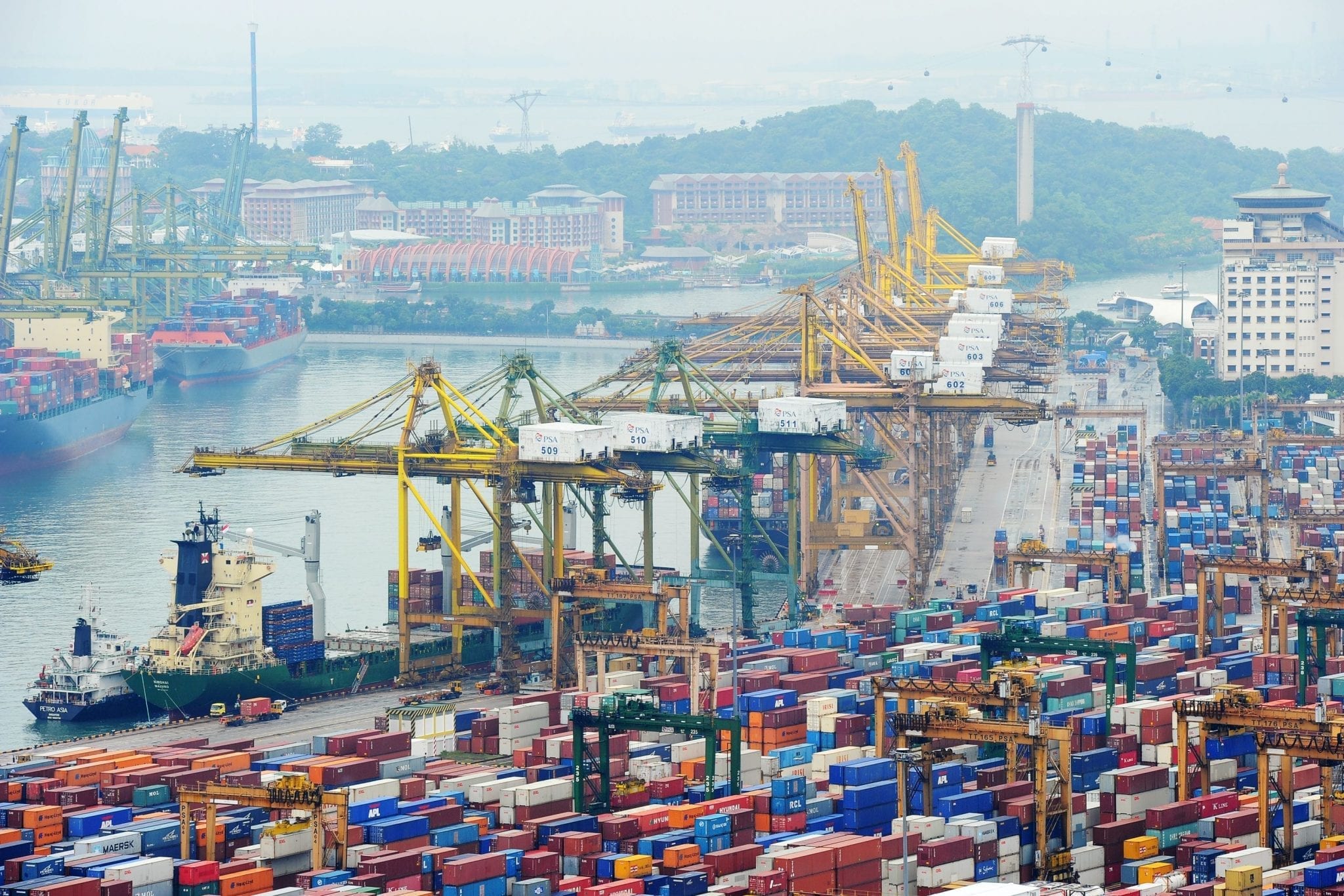
    Indonesia’s trade deficit narrowed to $1.52 billion in May, but was worse than expected, due to higher oil prices, the country’s statistics agency said on Monday.

    That compared to a revised $1.63 billion deficit posted in April, which was the largest in four years. A poll by Reuters was for a deficit of $380 million in May.

    Imports grew by 28.12 percent from a year earlier, after jumping by 35 percent in the previous month. Analysts had expected imports to grow 13.88 percent.

    “This increase [in imports] was due to higher oil prices,” Suhariyanto, the statistics agency’s chief said.

    Global oil prices rose in recent months due to supply concerns for some major producers.

    Total imports in May were valued at $17.64 billion.

    Exports from Southeast Asia’s largest economy grew by 12.47 percent annually in May, a higher-than-expected rate, with shipments of metals boosting the total exports to $16.12 billion.

  • Bulgari Hotel Shanghai opens

    Bulgari Hotel Shanghai opens

    ulgari Hotels & Resorts has opened a new property in Shanghai.

    The Shanghai boutique hotel has been built within a 48-storey tower in a protected heritage zone opposite the financial district of Pudong. It features 82 rooms, including 19 luxury suites, feature East-meets-West interiors designed for Bulgari by architectural firm Antonio Citterio Patricia Viel and Partners.

    In the course of construction, the Italian fashion firm restored the historic Chamber of Commerce Shanghai next door, which encompasses Italian gardens and features a lavish Bulgari ballroom and a fine-dining Cantonese restaurant.

    Guests will have access to a 25-metre indoor heated pool, luxury beauty treatments, and Italian & Chinese dining options.

    Following the launch of the Shanghai boutique hotel, Bulgari plans to open more in Moscow and Paris by 2020 and in Tokyo by 2022.

  • Naver to invest $134 million on overseas comics business

    Naver to invest $134 million on overseas comics business

    Korea’s top portal operator Naver said Monday it will invest 150 billion won in its online comic platform to better penetrate into overseas markets.

    Naver said it will make the investment through a paid-in capital increase program and acquire 300,000 additional shares in its wholly-owned affiliate, Naver Webtoon.

    Naver Webtoon said it plans to use the cash to expand its presence in foreign markets like the United States and Japan.

    The portal operator has been making various efforts to beef up its comic business, also investing some 60 billion won in January in its affiliate.

    Naver said it currently has some 5 million active users in the United States, claiming the investment will help Naver Webtoon achieve further growth going forward.

  • Alibaba plans massive 3-year expansion of Rural Taobao network

    Alibaba plans massive 3-year expansion of Rural Taobao network

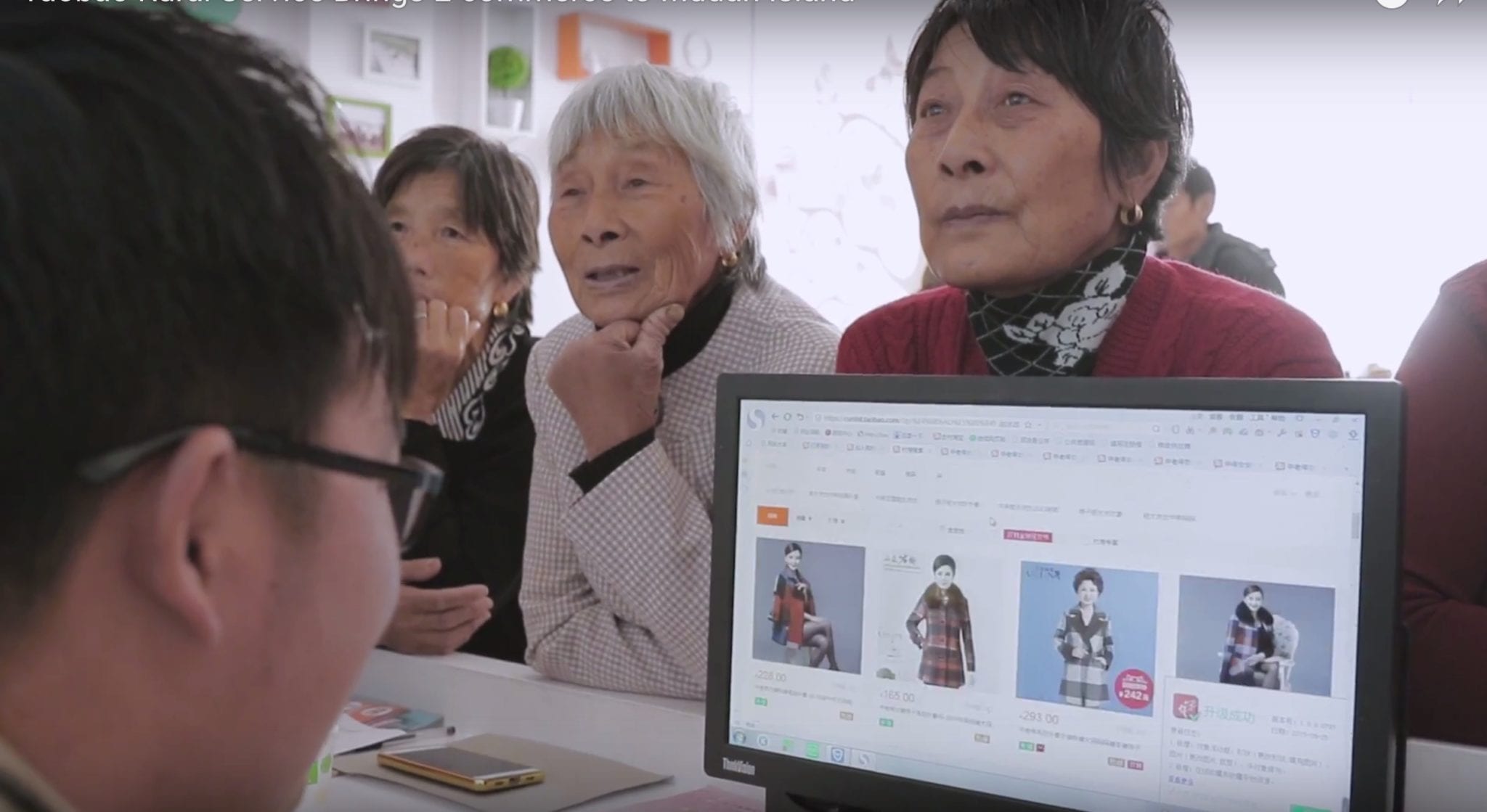
    Alibaba Group’s rural initiative – Rural Taobao – plans to expand its coverage to 1000 counties and 150,000 villages across China during the next three years.

    Launched in October 2014, Rural Taobao is one of Alibaba’s three main strategic projects in addition to globalisation and cloud computing. It aims to buttress trade between China’s remote regions and urban areas. Presently, around half of China’s 1.3 billion population reside in rural areas.

    “Our mission is clear: We want to improve the living conditions of China’s rural regions. To do so, we need to provide high-quality goods, personalised services, smart logistic solutions and prices comparable to that of the cities,” said Bill Wang, VP of Alibaba Group and GM of Rural Taobao.

    As part of the project, a network of e-commerce service centres has been created at the county and town level to provide services that enable villagers to purchase products online, as well as sell their goods via Rural Taobao’s dedicated online marketplace and other Alibaba e-commerce platforms. This way, villagers can enjoy a wider range of products and promote their own products beyond the village borders.

    Currently, the initiative covers 700 counties with over 30,000  service centres.

    Speaking at 2018 Rural Taobao Merchant Summit at Alibaba’s Hangzhou headquarters, Alibaba executives emphasised the consumption power of China’s rural population, though weaker than in urban centres, is gradually becoming a force to be reckoned with.

    According to the latest report from National Bureau of Statistics, in 2017, the average disposable income per capita in China’s rural region increased by 8.6 per cent year-on-year to RMB 13,432 (US$2066). Consumption per capita also climbed 8.1 per cent year-on-year to RMB 10,955.

    The amount of online retail shopping in rural areas is also booming. In 2017, sales reached RMB 1.24 trillion ($194 billion), representing an on-year surge of 39 per cent, said the Ministry of Commerce.

    One of the short-term goals is to offer next-day delivery of any goods and at-home installation of large electronic products, Wang added. Alibaba has also recently opened a number of “Taobao Select Service Stations,” where villagers can purchase an array of products, from food, to clothes and electronic items, at a physical location, without having to place the orders online.

    An integral part of the initiative is empowerment of the merchants, said Wang. By sharing insightful analytics about customer preferences and market trends with the brands, companies can develop products or craft marketing campaigns that are more befitting rural consumers.

    For example, Germany-based skincare and personal hygiene giant Beiersdorf Group recently sent a team of researchers on a three-month fact-finding trip in China’s villages to learn about their hair-washing habits. From the information they’ve gathered, the parent company of iconic brands such as Nivea and Eucerin is able to design a shampoo that best meets the local needs and demands.

    “Even though rural regions constitute a small portion of our total revenue, we treat it as an important market, not merely a sale channel,” said John Zhang, GM of Beiersdorf China, who has personally visited more than 50 villages in the country.

    In cooperation with brands, Rural Taobao also conducts frequent training sessions for service station managers to equip them with the necessary know-how and skill to deliver the best service to their customers, said Wang.

  • Indonesia’s Growing Thirst for Coffee Drains Premium Bean Supplies

    Indonesia’s Growing Thirst for Coffee Drains Premium Bean Supplies

    For decades, Indonesia has supplied coffee roasters worldwide with prized beans that give a distinctive taste to brews favored by connoisseurs. Most locals, however, preferred tea.

    But now, as younger generations switch to coffee and hundreds of independent coffee shops and roasters pop up across the archipelago, Indonesia’s consumption of beans is rising. That’s left less coffee for export and forced up prices for foreign buyers.

    A small harvest in Sumatra has eaten further into tightening supplies of that region’s unique arabica beans, which are sought for the heavy, earthy notes they give to roasted blends.

    Sumatran beans are a key component in Starbucks Corp’s Christmas Blend, which has been sold for more than 30 years.

    Sumatra’s lower production caused some exporters to delay and even default on deliveries, sources at importing companies said, forcing some US importers to pay more to secure supplies.

    Inventories in the United States have dwindled, with many importers saying they have enough to meet contracts with roasters but nothing left for the spot market.

    Major roasters Starbucks and Keurig Green Mountain are the biggest buyers of Sumatran arabicas, importers say, and smaller companies appeared to be facing the biggest challenges sourcing those beans.

    A Starbucks spokeswoman said the company has not been impacted by the region’s tight supplies this year. Keurig did not respond to requests for comment.

    Java Sales Rise in Java

    Coffee consumption in Indonesia has nearly doubled in the past 10 years, as many young Indonesians were influenced by coffee habits in countries such as Australia and the United States where a lot of them went to study.

    “We’re seeing very strong coffee expansion in many markets but Indonesia is very much a market where demand is growing heavily,” said Michael Schaefer, global lead of Food and Beverage at Euromonitor International.

    While major producing countries such as Brazil, Vietnam, Colombia and Indonesia have historically exported their best coffee, rising interest in premium beans from local coffee shops is changing this, Schaefer said.

    Many new roasters are offering farmers significantly higher prices for their arabica beans, said Pranoto Soenarto, vice president of the Association of Indonesia Coffee Exporters and Industries.

    “Farmers are wooed,” Pranoto said. “They will keep their beans for these micro-roasters, who only buy in small amounts.”

    Irvan Helmi, co-founder of local roaster and cafe Anomali in Jakarta, said local buyers’ close proximity to farmers enabled them to pay higher prices while selling directly to consumers at better profit margins.

    Wildan Mustofa, an arabica coffee farmer with a mill in Pangalengan, West Java, said his domestic sales are rising fast.

    “The local purchases grow by almost 100 percent every year,” said Wildan, while helping workers spread out coffee cherries to be dried under the sun.

    Output, Export Down

    Compounding the shortage of beans for overseas buyers is a fall in output.

    Indonesia’s annual coffee bean output has fallen by around 8 percent over the past five years, Indonesian Agriculture Ministry data shows. Farmers say unpredictable weather, poor crop maintenance and switching to other crops is responsible for lower yields.

    Exports from the world’s fourth largest-coffee growing nation have dropped by around 20 percent over the past five years, according to data from the US Department of Agriculture (USDA).

    The country’s tight supplies are already reflected in first-quarter 2018 shipping data, with coffee exports down 26 percent from the same period in 2017, Indonesia’s Statistics Agency data show.

    Sought After Sumatran Arabicas

    In Sumatra, a large and mountainous island west of the capital Jakarta, limited availability of arabica coffee sent prices to a record high in April.

    Arabica is a higher quality bean that is typically roasted and brewed. Its cousin robusta, known for its more bitter taste, is processed into instant coffee or used as a lower cost component in roasted blends. Robusta makes up nearly 90 percent of Indonesia’s coffee harvest.

    The arabica grown in Sumatra is unique, in part due to the unusual bean drying process employed there. While farmers in other countries have tried to replicate it, importers said results are unreliable and only on a small scale.

    “Competition to buy coffee from producers has been pretty fierce,” said Robert Babington Smith, a senior trader for California-based importer InterContinental Coffee Trading Inc.

    Prices of unprocessed or partially dried Sumatran arabicas purchased at farms rose to a record $5.90 per kilogram in April, while arabica beans already in US warehouses fetched premiums of$2.20/lb or more over the global benchmark price, nearly double last year’s price, Babington Smith said.

    Babington Smith said one his suppliers defaulted on a planned delivery due to that exporter’s lack of funds to purchase the increasingly expensive coffee.

    Another importer said five of his containers were defaulted on after his company refused to pay more than the contracted price.

    “We get calls every day from roasters asking if we have any Sumatrans, spot or on the water,” the importer said.
  • Woori Bank Korea changes its structure

    Woori Bank Korea changes its structure

    The board of Woori Bank approved a plan to convert the bank into a holding company, pushing up its shares on Wednesday.

    An announcement released late Tuesday said the country’s fourth largest bank would overhaul its structure to become an integrated financial service company with diverse non-banking affiliates.

    The holding company will have six affiliates: Woori Bank, Woori Credit Information, Woori Private Equity Asset Management, Woori FIS, Woori Finance Research Institute and Woori Fund Service.

    Woori Card and Woori Investment Bank will remain subsidiaries of the banking unit and may later be turned into separate affiliates under the new holding company, according to Woori Bank in a statement.

    A shareholder meeting will be held by the end of this year to approve the changes.

    “The plan will help boost competitiveness for Woori affiliates,” a source at Woori Bank said, “We will swiftly carry out the procedure.”

    Analysts said the change in corporate structure could increase the maximum amount of investment allowed by regulators to around 8 trillion won ($7.2 billion).

    Sohn Tae-seung, CEO of Woori Bank, has reiterated that the company is already looking to acquire non-banking companies like asset management and securities companies.

    Earlier this month, a local media outlet reported that Woori Bank plans to acquire Kyobo Securities, but Woori said that nothing has been decided.

    Samsung Securities was also among the potential targets cited by different reports, though Woori declined to confirm that.

    Investors welcomed the board’s decision on Wednesday, and shares of Woori Bank rose 5.88 percent to close at 17,100 won.

    “The decision to put the six Woori units under the holding company and keep Woori Card and Woori Investment Bank under Woori Bank will likely serve the interests of shareholders,” said Baek Doo-san, an analyst at Korea Investment & Securities.

    The plan to turn Woori Bank into a holding company accelerated after the Financial Services Commission, the country’s top financial regulator, said it would sell the government’s stake in the bank once the transformation is complete.

    The government holds 18.4 percent of Woori Bank through the state-owned Korea Deposit Insurance Corporation.

  • 11Street Shopping Mall to get US$449 million investment

    11Street Shopping Mall to get US$449 million investment

    South Korean mobile carrier SK Telecom has announced a US$449 million investment into a subsidiary’s e-commerce platform, 11Street Shopping Mall.

    In a decision yet to be approved by shareholders, SK will use the investment, sourced from the H&Q Korea private equity fund, to establish a new business entity. An SK spokesperson said that further reshuffling among its subsidiary firms will be aimed at seeking a new growth engine with a view to expanding its presence in the country’s online retail market.

    The move directly follows a joint venture set up earlier this month between an SK subsidiary and the country’s largest convenience store chain, CU.

    The improvements to 11Street’s operations will draw on artificial intelligence technologies, among other information and communications developments, to build new services – including improvements to its mobile payment system.

    A representative from SK Telecom said that the company’s new business structure is ready to promptly and flexibly respond to the fourth industrial revolution.

  • ‘Content marketing’ is definitely a game changer

    ‘Content marketing’ is definitely a game changer

    In a Red Bull video on the company’s YouTube channel, you don’t often see the drink itself. In a video entitled “Shaun White’s Private Pipe – Red Bull Project X,” American snowboarder Shaun White is transported to a half-pipe on snowy mountain via a helicopter. The helicopter has the Red Bull logo on its side, and as White does tricks on the half-pipe, a Red Bull flag waves in the background.

    The video, targeting extreme sports enthusiasts, promotes the Red Bull brand without actually showing a person sip out of a can.

    In marketing, that’s called content marketing. An advertiser must offer an advertisement that is essentially content attractive to a target audience. The brand gets its message across by offering something valuable – not just promoting itself.

    This has become a powerful type of marketing with the spread of smartphones and the rise of social media.

    According to a case study by Weidert Group, a marketing agency, Fisher Tank Company, which produces storage tanks, was able to expand its sales through what it described as an “inbound marketing” strategy: getting more people to visit its website by offering different types of content related to the company’s business.

    Robert Rose, chief strategist at Content Marketing Institute (CMI), whose list of consulting clients includes big names such as Dell, Microsoft and NASA, says that such a “disruptive” form of marketing is shifting the way companies around the globe do business, providing customers with new value and experiences – while also promoting a brand.

    Korean companies are not strangers to this model, Rose says.

    Viva Republica, developer of a P2P mobile payment platform Toss, is an example of a local company shaking up its industries, according to Ross, by providing experiences that customers have not seen before.

    Rose is visiting Korea to attend the Content Marketing Asia Forum, the first content marketing forum in the region, as the keynote speaker. The event, organized by CMI, will take place from June 27 to 29 under theme “Content Marking, the Game Changer of Business.”