Shares of Telekom Malaysia Bhd slumped as much as 12.1% this morning to a low of RM3.19 in anticipation of a drop of at least 25% in broadband prices by year-end.
At the noon break, the stock fell 39 sen or 10.7% to RM3.24 on 39.82 million shares done.
Multimedia and Communications Minister Gobind Singh Deo said yesterday that discussions by relevant parties on the final charges are expected to conclude by August, after which lower priced broadband packages are expected to be offered.
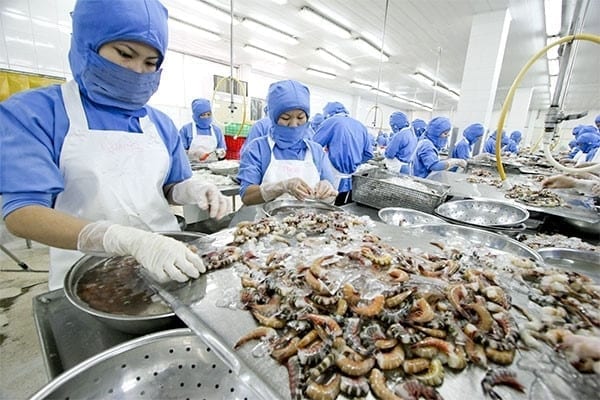
Almost unnoticed, ASEAN is emerging as big market with big potential for Vietnamese seafood, industry insiders say.
Vietnam exported $612 million worth of seafood last year to ASEAN countries, 9.2 times the $66 million in 1998.
Local media reports have cited the Vietnam Association of Seafood Exporters and Producers (VASEP) as saying that last year, Vietnam exported seafood to all nine countries in the regional bloc.
Of these, Thailand, the Philippines and Singapore were the largest importers. Thailand bought $248 million worth of seafood from Vietnam last year, accounting for 40 percent of total export value to ASEAN countries. Seafood export to Thailand reflected the regional intake, multiplying nine times in the last 20 years.
Philippines, in the second place, imported seafood worth $132 million, a 2,000-fold increase over the paltry $63,000 in 1999.
Export of sea fish to ASEAN countries reached $289 million last year, making it Vietnam’s main seafood export item to the regional bloc. Squid and octopus came in second at $71 million, more than 10 times the $7 million in 1998.
The surge and potential of the ASEAN market notwithstanding, Vietnamese businesses have kept their main focus trained on the traditionally top markets for seafood export – the U.S., Japan, China and South Korea.
These four countries account for 52.7 percent of total export value of Vietnamese seafood last year, according to the Ministry of Agriculture and Rural Development.
In the first four months this year, China recorded a strong year-on-year growth of 28.8 percent in seafood imports from Vietnam. China is also the largest importer of Vietnamese pangasius fish, and potentially of shrimp in the future, a VASEP report says.
The association has urged local businesses to look at ASEAN as the next potential market, saying establishment of ASEAN Economic Community (AEC) in 2015 has created an opportunity for Vietnam’s seafood industry with significant tax incentives.
Moreover, ASEAN population is estimated to reach 790 million in 2050, creating a considerable demand for food. VASEP estimates that seafood consumption in the bloc will increase from 24.5 million tons in 2015 to 37 million in 2030, and per capita seafood consumption will grow from 38.4 kilograms per person a year to 51.5 kilograms in 2030.
Vietnam exported $8.32 billion worth of seafood last year, a growth of 18 percent over 2016.
JD has developed a partnership with Chinese retailer Better Life as part of its Retail as a Service strategy.
The cooperation will further speed up delivery for mainland customers and integrates inventory across the two retailers by using technology to identify the most efficient way to source orders on JD.com, whether from JD’s own warehouses, or from Better Life stores.
Products sourced from Better Life will be delivered in less than an hour by Dada, China’s leading crowdsourcing delivery company. The efforts follow a cooperation with Walmart that uses a similar strategy of supply chain integration to increase overall efficiency and improve user experience.
“JD is uniquely able to improve our overall inventory management and reach a wider swath of customers more efficiently,” said Kevin Liu, grocery merchandising director at Better Life. “As the retail landscape is rapidly changing, we see this initiative as a prime example of how offline retailers can not only remain relevant, but actually become even more relevant.”
Ting Qi, director of user experience at JD FMCG and Foods, said the partnership marks another step forward in the Retail as a Service strategy, which leverages JD’s resources to help traditional companies excel in a changing environment.
“We are pleased that our customers will be able to get an even better shopping experience through this initiative with Better Life.”
The benefits for the customer, offline stores and JD through the integration of inventory include increased sales, faster inventory turnover, improved cash flow and even faster delivery.
JD is also exploring the option of integrating its online membership program with offline partner stores, so that offline stores can enjoy even more benefits from their partnerships with JD.
Vietnam is far away from realizing its short and medium term wind power goals, with no ready solution in sight to several impediments, experts say.
They said at a recent conference on wind energy development in Vietnam that high interest rates, low selling prices and inadequate power purchase agreements from the investors’ point of view were major stumbling blocks to realizing set targets.
Vietnam plans to produce 800 megawatts of wind energy by 2020 and 6,000 megawatts by 2030.
However, the country has just 7 functioning wind energy projects with a total capacity of 190 megawatts, noted Nguyen Van Thanh from the Ministry of Industry and Trade.
Tran Vinh Thong, technical officer for wind energy firm Thuan Binh, which is currently investing in the Phu Lac wind energy project in southern Binh Thuan Province, said the project’s initial cost was VND1.1 trillion ($49 million) and it generated an annual revenue of about VND100 billion, of which VND70-80 billion goes for just interest payments.
“We only have VND20-30 billion left each year to pay our employees’ salaries and meet maintenance costs,” he said.
Low electricity selling prices are also an issue, Thong added.
Currently, electricity derived from wind energy costs about 7.8 cents per kilowatt per hour. At this price, the Phu Lac wind energy project would need 14 years to recoup its initial cost, while a typical wind energy project only lasts 20 years before it is replaced as maintenance costs soar, he said.
Meanwhile, the buying price for wind power is 20 cents in Thailand, 29 cents in the Philippines and 30 cents in Japan.
However, disadvantageous power purchase agreements remain the biggest obstacle to grow Vietnam’s wind energy industry, said Bui Vinh Thang, business development officer for Irish sustainable energy firm Mainstream.
Currently, businesses in Vietnam who want to produce electricity can only sell their output to national distributor Vietnam Electricity Corporation (EVN), which has a monopoly on the service. Worse still, EVN can cancel the power purchase agreement at any time, regardless of the time agreed upon in the contract.
“That is too much of a risk,” Thang said.
Moreover, EVN unilaterally gets to temporarily suspend electricity distribution for energy grid maintenance should it deems necessary to do so.
“During the time electricity distribution is temporarily suspended, we don’t make any money. And EVN doesn’t have to reimburse us at all,” Thang said.
Last year, the Ministry of Industry and Trade proposed an increase in selling prices for wind energy. Land and sea projects would have their selling prices increased to 8.77 and 9.95 cents per kilowatt per hour, respectively.
Vietnam is trying to generate enough energy to sustain the country’s growth and connect those who still do not have access to power, while gradually shifting towards clean and low-carbon energy.
It aims to produce 10.7 percent of its total electricity through renewable energy by 2030, mainly through solar and wind sources.
AirAsia Group Bhd (AAGB) lambasted the Indian Central Bureau of Investigation’s (CBI) first information report (FIR) lodged against the low-cost airline, based on information from an unnamed “reliable source.”
“We question the motives of the unnamed person, persons or organisation that lodged this FIR but we will cooperate fully with the Indian authorities in accordance with due process provided in law,” it said in a filing with the stock exchange.
AAGB refuted strongly all the allegations made in the FIR as baseless, unsupported and unjustified and will vigorously challenge these allegations.
The FIR claimed that unknown public servants have engaged in a criminal conspiracy involving AAGB, AirAsia India, group CEO Tan Sri Tony Fernandes, deputy CEO Bo Lingam, four other named parties and unknown public servants and unknown private persons, to expedite the approval process and change in aviation policies to suit AirAsia India, by lobbying with stakeholders in the Indian government through non-transparent means.
AAGB explained that its move, together with other aviation players, to lobby the Indian government to remove the 5/20 rule was done in compliance with the law and without any unlawful payments. The 5/20 rule inhibits competition and the development of a healthy aviation sector that endures for the benefit of the Indian consumer.
“Further, AAGB has had an internal review and concluded that there has been no wrongdoing by either Fernandes or Lingam.”
AAGB said the joint venture with Tata Sons Ltd to set up its low cost carrier in India carrying the AirAsia brand, was primarily due to the sterling reputation and integrity of Tata Sons in India.
“All required approvals were obtained through normal channels and it took more than a year to get these approvals. Given Tata’s more than 100 years track record and that of AirAsia’s reputation, we refute any inference of impropriety in obtaining these approvals.”
AirAsia Investments Ltd holds 49% equity in AirAsia India, while the remaining 51% is owned by Tata Sons (49%) and two individuals on the board (2%) who are Indian nationals.
AAGB reiterated that all the allegations in the FIR are unfounded and are without any rational basis and are wholly inconceivable in the context of corporate governance norms in Malaysia.
“Accordingly AAGB denies all allegations of wrongdoing and will pursue all legal remedies available to address these allegations.”
Meanwhile, AAGB said AirAsia India lodged an FIR against former CEO Mittu Chandilya last year over the contract with HNR Trading Pte Ltd which was unauthorised by the company.
It also submitted a forensic audit report by an accounting firm in India to show that funds were illegally siphoned out of the company through that unauthorised contract.
“We believe that the Bangalore police are still investigating although much time has lapsed.”
No Signboard Holdings has signed a 10-year franchise agreement to develop and operate the Little Sheep restaurant chain in Singapore.
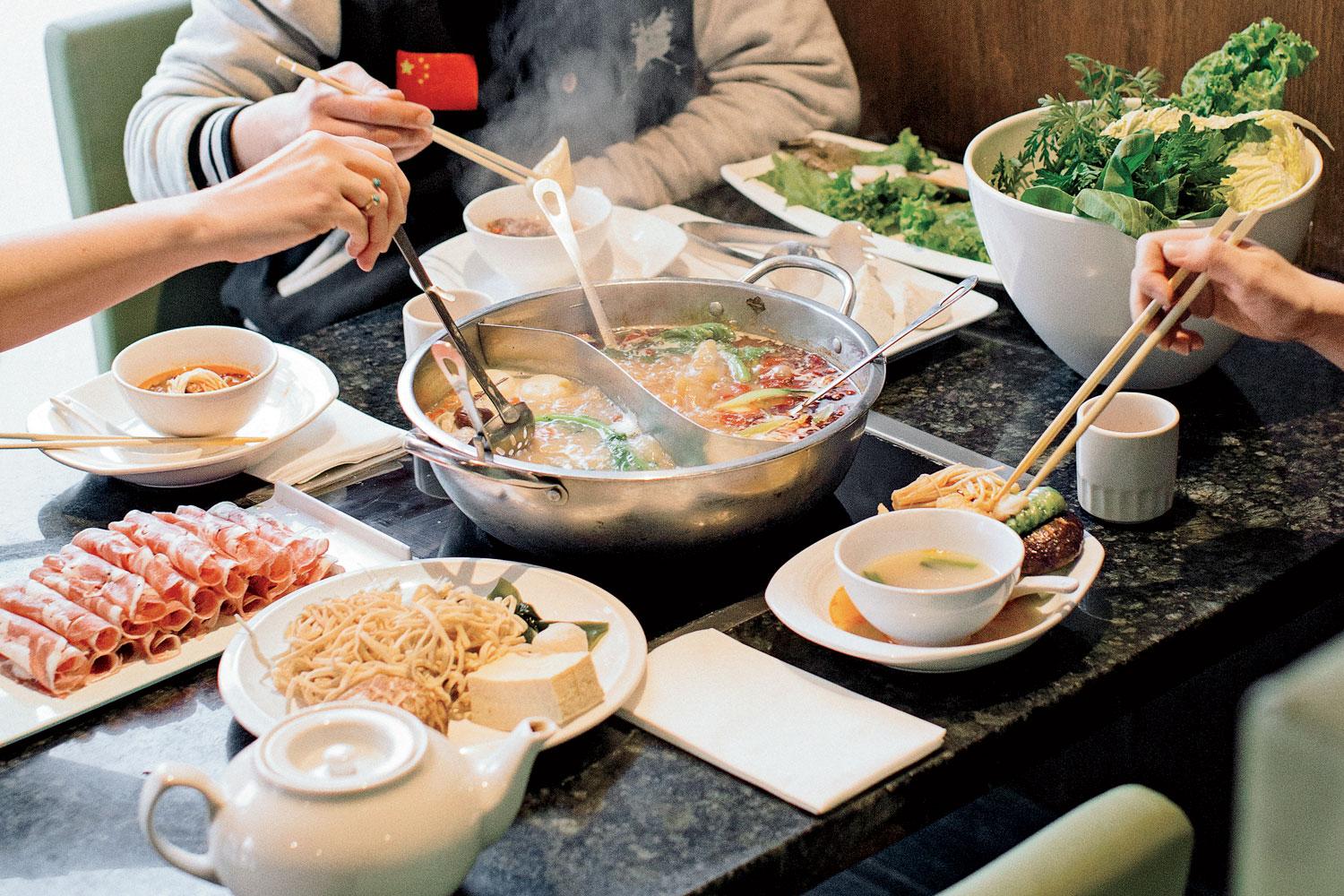
Little Sheep is a Chinese hot-pot eatery which has its origins in Inner Mongolia. It has since grown to more than 280 outlets across China, the US, Canada and Japan, the vast majority of them franchised.
Singapore-listed No Signboard, which has also just taken full control of Danish Breweries less than a year after it bought a controlling 80 per cent interest, plans to open one Little Sheep outlet a year for the next five years before deciding on a longer-term opening rate.
No Signboard executive chairman and CEO Sam Lim believes the Little Sheep restaurant concept has great potential in Singapore.
“Given the popularity of hot pot restaurants among Singaporean consumers over the last couple of years, we are confident that this venture would be a great success for the group.”
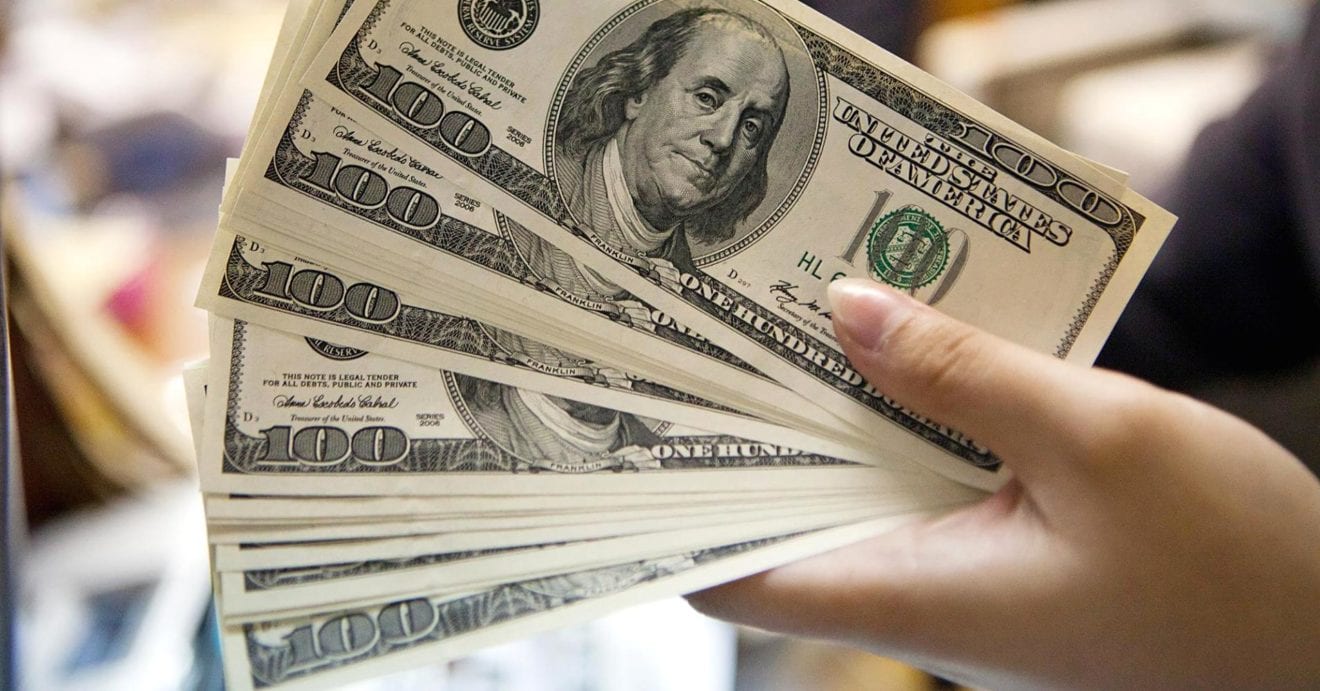
The dollar gained against the Vietnamese dong on Tuesday as the U.S. Federal Reserve raised interest rates last week.
As of 3 p.m. Tuesday, dollar selling prices reached 22,810 at some currency exchange points in Ho Chi Minh City. At Vietcombank, BIDV and Eximbank, the dollar was being sold for VND22,880, 22,885, and 22,890, respectively.
Buying prices also rose to VND22,800-22,815 per dollar at local banks by 3 p.m. Tuesday.
The USD/VND exchange rate has increased by VND40-45 from June 13 when the Fed upped dollar interest rates for the second time this year to between 1.75 and 2.00 percent, ending the pledge to keep rates low enough to bolster the economy for “some time.” It signalled it would tolerate above-target inflation at least through 2020.
High dollar prices will create difficulties for Vietnamese import businesses, economist Nguyen Tri Hieu said.
Viet Steel is a company which imports 1.5 million tons of raw materials every year for steel production. “As 80 percent of our material is imported, the company will be affected by the dollar hike,” said chairman Do Thuy Thai.
The company leaders are discussing increasing the prices of steel products to retain profit, Thai said.
As a small import business, the Como Textile Company is also worried about the high rate of the U.S. dollar. “We often import 60 percent of our material, thus this will be a big challenge for the company in the future,” chairman Nguyen Huu Phuc said.
However, the higher dollar rate is not a completely adverse development for Vietnam. Export businesses will enjoy the high rate as they often change U.S. dollars to Vietnamese dong, economist Nguyen Tri Hieu said. He added that they should push further in manufacturing and take foreign currency loans as interest rates are currently low.
Hike continues
As the U.S. economy “appears to be in a pretty good place” to U.S. Federal Reserve officials, they plan to increase the interest rate two more times this year.
Vietnamese experts are not too worried. They are confident that these hikes won’t affect the country’s economy in any major way.
Despite the hike in dollar prices, there is no sign of tension in the supply and demand of foreign currency, financial expert Ngo Xuan Hai said.
Vietnam currently enjoys record-high foreign exchange reserves at $63 billion. It recorded a $3.39 billion export surplus in the first five months this year and there is abundant foreign currency supply, so “there is no need to worry,” Hai said.
Echoing Hai, HSBC country head of global markets Ngo Dang Khoa said Vietnam currently has favorable conditions to keep the USD/VND rate from fluctuating too strongly, particularly with foreign direct investment disbursement reaching 13 to 14 billion USD each year and has been increasing.
“As foreign investors usually look at the long term, temporary fluctuations in exchange rate won’t affect their investment decisions” Khoa said.
The State Bank of Vietnam (SBV) can take monetary measures to stablize the economy, economist Hieu said. “With abundant foreign exchange reserves it may intervene into the market to maintain the rates,” he said, estimating that the exchange rate will increase by 1-3 percent this year.
“SBV is closely monitoring the exchange rate to take timely decisions,” SBV deputy director Nguyen Hoang Minh said.
Malaysia’s consumer price index (CPI) increased 1.8% in May 2018 – the fastest pace in four months – to 121.1 compared with 119.0 in the corresponding month of the preceding year due to a strong recovery in transport prices.
According to the Department of Statistics, among the major groups which recorded increases were transport (+3.8%); food & non-alcoholic beverages (+2.2%); housing, water, electricity, gas & other fuels (+2.1%); restaurants and hotels (+2.1%); health (+1.9%); and furnishings, household equipment & routine household maintenance (+1.5%).
MIDF Research expects inflation to moderate in the upcoming months amid zero-rated GST, tax holiday period until the implementation of the Sales and Services Tax in September and stable retail fuel prices, which will reduce business costs.
“At this juncture, we expect 2018’s fuel-related inflation to moderate amid higher base effects, re-subsidisation of domestic fuel price and high likelihood of a downward adjustment of global commodity prices in 2H18 from the current temporary factors, which pushed the prices up,” said MIDF Research.
It expects headline inflation to average at 2.6% this year compared with 3.8% in 2017 amid higher base effects, supported by inflation rate for 1Q18 which stood at 1.8% compared with 4.2% in the same period last year.
“As inflationary pressure remains steady, we anticipate Bank Negara Malaysia to maintain its current monetary policy with no more hikes in the overnight policy rate for the rest of 2018 barring any pleasant upward surprises in domestic economic growth,” it said.
The research firm said that food inflation in Malaysia continued to fall from 2.6% year on year (yoy) in April 2018 to 2.2% yoy last month. Prices for fresh food products such as meat and seafood continued expanding however at a moderate pace of 1.6% yoy and 5.9% yoy respectively.
In contrast, fruits inflation increased to 1.5% yoy while vegetables decreased further by 3.7% yoy. There is a potential for food inflation to rise in June due to higher demand for Ramadan and Hari Raya.
On a monthly basis, the May CPI was up 0.2% compared with April 2018.
Core inflation meanwhile, rose 1.5% in May 2018 compared with the same month of the previous year. Core inflation excludes most volatile items of fresh food as well as administered prices of goods and services.
For the first five months of the year, the CPI registered an increase of 1.7% against the same period last year.
In the overall CPI for May, inflation in three regions surpassed the national rate of 1.8%, namely Kuala Lumpur (+2.2%), Selangor & Putrajaya (+2.1%) and Johor (+2%).
According to MIDF Research, the inflation rate increased in May across all states except Penang.
A new age of identification technologies has arrived, giving physical stores an opportunity to level the playing field with online retailers.
And identification technologies, such as biometrics in retail, can create deeper customer engagement more in line with an e-commerce experience.
A recent Walker study found that by 2020, customer experience will overtake price and product as the key brand differentiator. Today’s customers will expect companies to know their individual needs and to personalise the experience to meet those needs. Equally significant: 86 per cent of these consumers are willing to pay more for it.
Simply put, customer experience is now the new battleground, and every retailer should think about how to jump on the bandwagon sooner rather than later.
E-commerce has traditionally held an edge over brick-and-mortar stores, with its ability to provide quality digital customer service and personal experience through the use of algorithms.
An algorithm can easily detect a shopper who prefers white over black, or jeans over skirt, through past browsing and purchasing history. The next time he/she visits the online store, more personalised recommendations can be made accordingly.
Now, the same function can be replicated across physical stores, and it doesn’t involve the use of any loyalty programs, membership cards or vouchers.
To start, imagine entering one of your favourite stores and getting a new pair of jeans. If the store can identify you at the point of sale, through biometrics for example, this can then be the gateway to a data and analytics engine. It will enable the store to recall your purchase history and generate predictive analytics on your consumption habits and preferences.
The store can recommend new stock which has arrived, like a shirt that would go perfectly with the pair of jeans you bought. And it is in black, your favourite colour. As a loyal customer, you receive a personalised recommendation or offer via an email newsletter, prompting you to visit the store again.
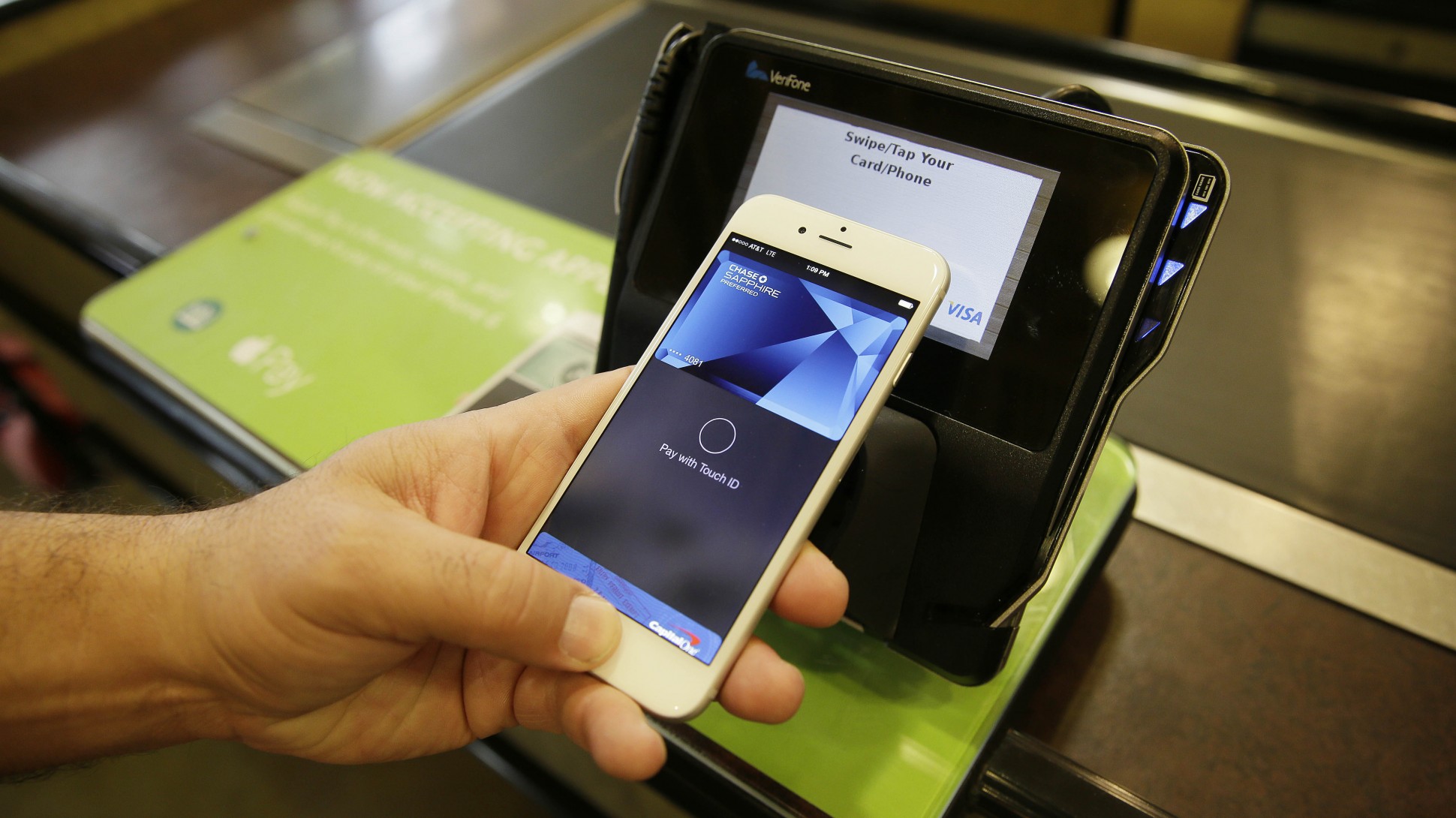
In traditional cash or card payments, that data would be lost. With more sophisticated identification at the point of transaction, all a customer has to do is to sign up and register their credit cards. When they next transact with that store, restaurant or hotel, the data can be used to create bespoke experiences for that customer. Patterns of behaviour can be identified and digital marketing tactics developed around those insights.
To top it off, customer-loyalty program entitlements are also applied automatically at every interaction and the customer is notified of the loyalty benefits or credit card promotional offers.
This eliminates the need for an additional membership card or voucher, making the shopping experience fast, convenient and seamless.
Biometrics will take the lead
The next issue is which kind of identification technology will become the norm in the future? In my view, biometric payment systems are a good choice as they can be highly secure if applied correctly. Of those, using fingerprints for payments is by far the least intrusive.
A recent Visa survey found that 96 per cent of consumers in Singapore would like to use biometrics for making payments, and 41 per cent said it is more secure compared to passwords and personal identification numbers. For a region where cash and credit cards dominate payments, the payment ecosystem remains inconsistent and inefficient. Customers are increasingly concerned with security and privacy issues.
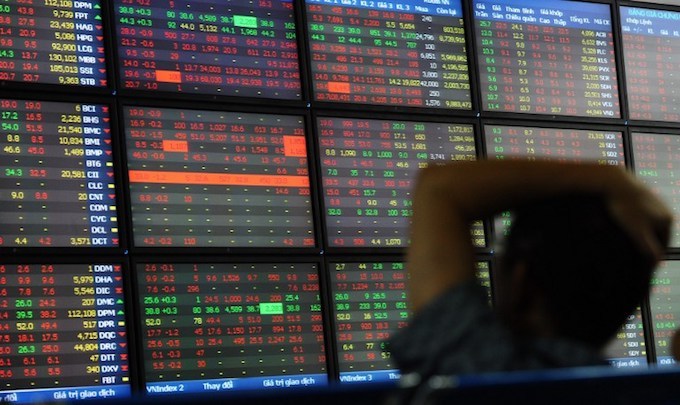
Most Southeast Asian stock markets declined on Tuesday, in line with broader Asia, as U.S. President Donald Trump threatened new tariffs on Chinese goods in an escalating trade war between the world’s top two economies.
Trump warned on Monday that Washington would impose a further 10 percent tariff on $200 billion of Chinese goods after Beijing’s decision to raise tariffs on $50 billion in U.S. goods, which was in retaliation for U.S. tariffs announced on Friday.
Trump said if China increases its tariffs again in response to the latest U.S. move, “we will meet that action by pursuing additional tariffs on another $200 billion of goods.”
“This is causing a little bit of uncertainty in the market. It is very worrisome for investors and they are staying on the sidelines and avoiding risky assets such as equities,” said Lexter Azurin, a senior equity analyst at Manila-based AB Capital Securities.
MSCI’s broadest index of Asia-Pacific shares outside Japan hit its lowest since February as safe-haven assets such as gold and the Japanese yen gained.
Philippine shares fell as much as 2.2 percent to their lowest since March 27, 2017, weighed down by industrials and financials. SM Investments Corp declined 3.2 percent, while BDO Unibank Inc shed 2.9 percent.
A slim majority of economists believe the Philippine central bank will raise interest rates on Wednesday, but opinions are sharply divided, with the weak peso likely to be the factor that will tilt the scale.
Thai shares fell nearly 1 percent to their lowest since Sept. 28, 2017 and were on track for a fifth straight session of decline.
On Wednesday, the central bank is expected to leave its policy interest rate near a record low to encourage more broadly-based economic growth at a time when inflation remains low, according to all 21 economists surveyed in a Reuters Poll.
Vietnam shares fell 2.8 percent to their lowest in nearly three weeks, with Petrovietnam Gas Joint Stock Corp declining to its lowest in six months, while Vietnam Technological and Commercial Joint Stock Bank dropped 6.8 percent.
Malaysian shares were down for a seventh straight session, while Singapore shares rose on the back of gains in financials.
Indonesian financial markets are closed through Tuesday for Eid Al-Fitr.
Two new CapitaLand Retail-managed malls will be opening in China.
CapitaLand Retail CEO Wilson Tan says the firm has signed 10 such agreements in China since announcing in August 2016 its intention to expand its existing retail footprint via management deals.
CapitaLand China’s new contract in Guangzhou will see the firm managing The Grand City in a Wanbo CBD-based project owned by Guangzhou Wan Shun Investment Management Co. Ltd. CapitaLand itself already owns two properties in the Guangzhou area, including CapitaMall SKY+ and also CapitaMall Rock Square, which it acquired last January. The three malls now constitute part of CapitaLand’s southern Chinese retail network that includes five malls comprising a GFA of 3.6 million sq ft.
In Chengdu, CapitaLand China will manage an open-lane, low-rise mall located in the commercial and cultural district of Qingyang. The property is under the ownership of Chengdu Lide Commercial Industrial Co. Ltd. It is CapitaLand’s second managed mall in the city out of seven CapitaLand projects.
The firm owns and manages a total of 11 malls, covering 11.3 million sq ft in retail GFA, across the Chinese west.
“With these new contracts, CapitaLand will further strengthen our leasing synergies across the portfolio of malls and increase our reach to the high-growth retail markets in Guangzhou and Chengdu,” Tan said.
“Including these two managed malls, 47 of our 51 malls in China are located in first- and second-tier cities. This is in line with our commitment to grow our retail portfolio with a focus on dominant assets located in core cities clusters.”
Tan says CapitaLand remains positive about China’s retail sector, which is experiencing growth both offline and online.
“Our expansion strategy enables CapitaLand to seize growth opportunities with agility while reaping economies of scale. We will continue to identify opportunities to grow our retail operating platform, reinforcing our position as the region’s leading mall operator and complement CapitaLand’s core business of owning and developing shopping malls.”
The two new contracts will be added to the company’s expanding portfolio of projects in the southern port city of Guangzhou and the central provincial capital of Chengdu. CapitaLand plans to open five of its own malls across China with a combined Gross Floor Area (GFA) of around 4.2 million sqft, comprising CapitaMall One in Changsha, CapitaMall Tiangongyuan in Beijing, CapitaMall 180 in Foshan, and CapitaMall LuOne and Alibaba Shanghai Center in Shanghai.
Facebook’s Instagram is letting people shop directly from its Stories, opening up a direct way for people to buy what they see.
Starting on Tuesday, some retailers, including Adidas, Aritzia and The Kooples can tag and link directly to their products. Instagram users can click on the link and buy the item directly, without having to leave the app.
The shopping function becomes very interesting when it relates to video. Coupled with Instagram’s reported plans to launch its own exclusive longer-length series, it’s plausible to think that one day a person could be watching a show on Instagram, see an actor or social media star wearing or using a certain product, and then tap on the link to buy that item directly.
Although the buy links are free for companies to use, if more customers start shopping through Instagram it could get marketers to move their money to the platform. This click-to-shop feature could be a more compelling way to get to shoppers than a traditional TV commercial, allowing the Facebook company to dip into the nearly $70 billion brands are expected to spend on commercials this year.
Instagram overall has 800 million daily active users — the Instagram Stories feature alone has 300 million daily users. It is especially popular with young adults, with 71 percent of 18- to 24-year-olds using the app according to Pew. Instagram Stories could be a way to get products in front of an audience that’s watching less TV.
Allowing sales from Instagram Stories could also take money away from Google’s YouTube, which has its own shoppable feature. And it makes it a stronger competitor to Snap, which recently allowed direct shopping from its Snapchat lenses.
The new Instagram Stories shopping feature is only available for businesses, not individual sellers or consumers trying to get affiliate payments. Moreover, companies can only directly link to products they sell themselves, meaning they won’t be able to sell through a third-party retailer for now. The feature also does not allow targeting to a specific audience, meaning most people who see the shopping-link enabled posts would have already been following the company on Instagram.
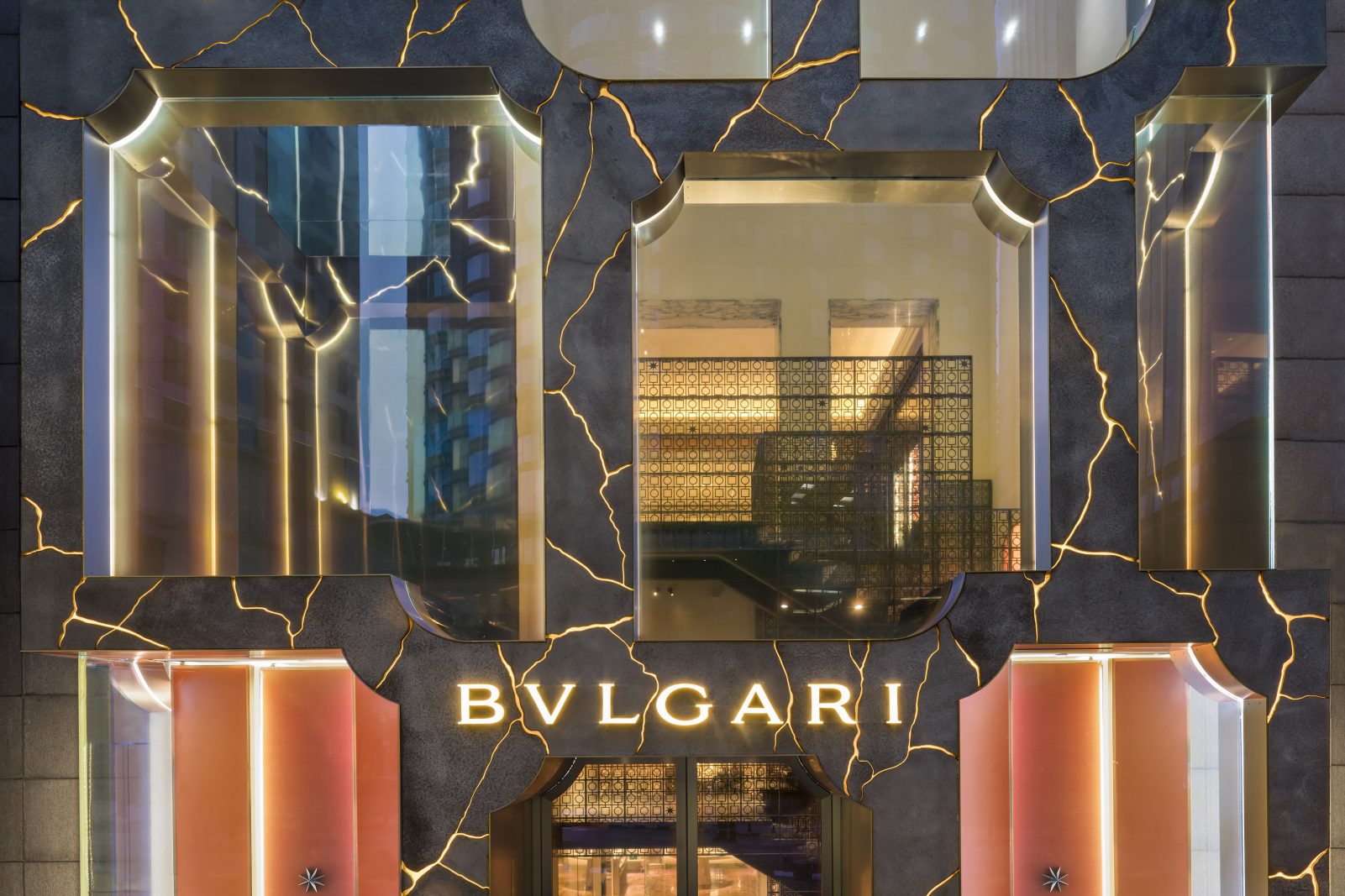
Bulgari Malaysia has opened a flagship store in Bukit Bintang district, Kuala Lumpur.
Built in the same style as the Via Condotti store in Rome, the 103sqm space sees the Italian brand experimenting with new ways to convey the luxury brand’s heritage.
The designer, Netherlands-based MVRDV, used rough concrete with resin veins to create a sense of historic Italian architecture. The store space is permeated with gold light.
Bulgari plans to adopt the new storefront facade in all of its global stores.
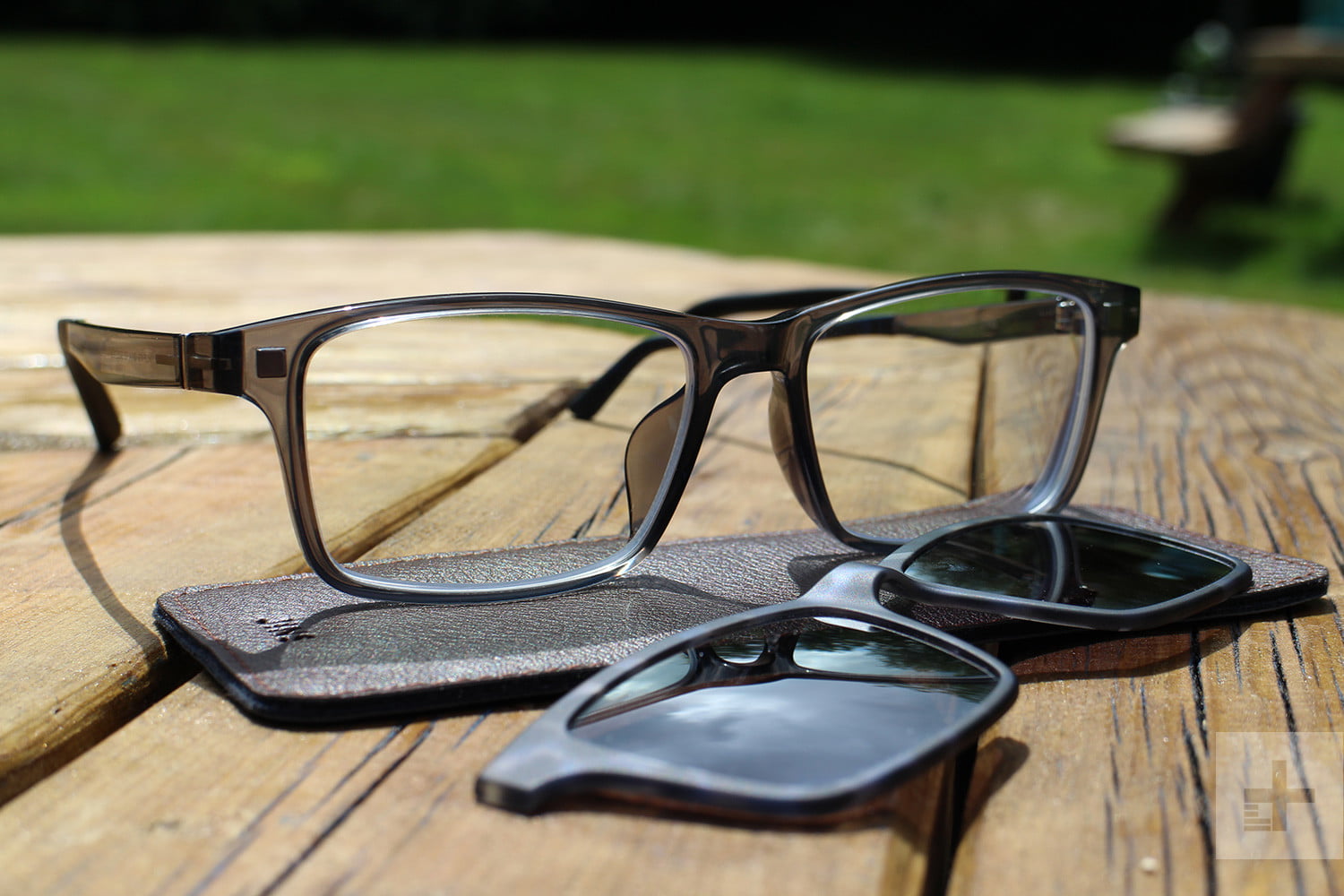
Japanese eyewear retailer Jins has opened its first store in the Philippines.
Located at SM Aura Premier in Taguig, the Jins Philippines store will offer up to 1000 styles of frames and match them with lenses within about 30 minutes.
Jins has about 350 stores in Japan and has recently started to expand into Greater China and the US.
The company pioneered the use of a new, lightweight material for glasses in its patented ‘Airframe line,’ as well as functional eyewear such as blue-light cut glasses, popularly known as Jins Screen.
The brand has been brought to the Philippines by Suyen Group, the parent of fashion brand Bench.
At a formal launch ceremony this month, a traditional sake barrel-breaking ceremony was led by Suyen Corp’s chairman Ben Chan, Taguig City mayor Lani Cayetano, Carol Sy of SM Supermalls, Dr Takeo Okada, first secretary of the Japanese embassy in Manila, Steven Tan, senior VP of SM Supermalls, Hitoshi Tanaka, CEO and president of Jins and Virgilio Lim, president of Suyen Corp.
“The breaking and partaking of sake from the sake barrel symbolizes prosperity and fruitful partnership between parties,” said Lim.
Jins Philippines offers a visual experience with stores designed like a pop-art gallery, collaborating with graphic artists and architects from Japan and other countries in designing both the eyewear line and their stores.
Recent collaborators include British product and furniture designer, Jasper Morrison, and Japanese graphic artists and architects Teruhiro Yanagihara and Sou Fujimoto.
KLASSE14 has officially landed in Hong Kong with its one-of-a-kind concept store.
KLASSE14 retail space incarnates the value for time, key element that defines the brand ordinarily unique experience.
KLASSE14 is a fashion & lifestyle brand with an Italian soul fed by Mario Nobile’s creativity. The brand, established in 2014, has rapidly enchanted millennials across different markets such as Japan, Korea, China, Taiwan, Hong Kong, Macau, Australia, and also Italy and Switzerland through hundreds point of sales and kiosks with major retail partners.
In 2018, the brand decided to open its first concept store Ciao Hong Kong in HK to pay homage to the city, where the company started its journey and it is still headquartered.
The store is the result of years of activity that forged the brand identity and personality of the brand, which found its ultimate materialization into a bright white canvas in Wyndham Street aimed to host dreams and love for its aficionados.
The retail concept has been created by Paolo Giannelli, Founding Partner at Area-17 exclusively for KLASSE14, in close collaboration with Mario Nobile, the Creative Director of the brand.
Shiny “winged hands”, KLASSE14’s emblem, welcome the visitors. KLASSE14 logo has its root in a photo with a couple shaking hands and wearing “Volare”, the brand’s top item. The photo became viral on the Internet and couples started sharing the same photo as symbol of their love, so that KLASSE14 decided to transform it into its symbol in order to highlight the important role that the community of fans has played in the brand development.
The store resembles a museum space, where timepieces are exhibited in a series of elements distributed diagonally in a narrow and deep room. The inspiration of the retail concept comes from KLASSE14 watches. The layout of the store is conceived as a canvas to host the visionary and essential product design, which led the research of materials, colours, shapes and lights that work as a natural extension of the products.
The store is divided into two levels. The ground floor is dedicated to the product, with showcases inspired by the design of the flared dial of the watches, with cuts of light on the edges display the products. The two plain walls, deliberately left free to let the products stand out, host very unique elements, such as the wall-mounted showcases, mixed with a lighting-box and a series of electronic devices that enable the customer to interact directly with the brand and use social media to share the moment, a touchscreen grafted in the wall also enables the visitors to explore the brand content online while waiting to be served.
Walking up to the second floor visitors’ attention is caught by split monitor tiles, on which the photos of the advertising campaign are looped, making a coloured waterfall that descends from the first floor to the ground floor. The first floor is an experiential space, where the brand invites its customers to a small lounge to know them better. The same space is also dedicated to packaging, which becomes a ritual as customers can personalize cards for their beloved ones.
The store is overall a celebration of white colour and light, and features as interior design elements masterpieces such as Tolomeo lamps by Artemide and Colubi armchairs by Viccarbe.
As the store is conceived as museum space, it will host different workshops to engage HK community. KLASSE14 is a very young brand which finds its muses in young tech-savvy generations setting fashion trends. The brand owes its popularity to its community of fans that post after post built a strong branding discourse around it made of moments of shared happiness.
KLASSE14 is positioned in the market as a fashion brand releasing different collections throughout the year inspired by global fashion trends, but also its community of fans’ new needs. KLASSE14 is a gifting company, its watches celebrate moments and are chosen to be a symbol of togetherness and connection with the beloved ones.