Author: Mei Ling Tan

  • Uniqlo Philippines plans more flagship stores

    Uniqlo Philippines plans more flagship stores

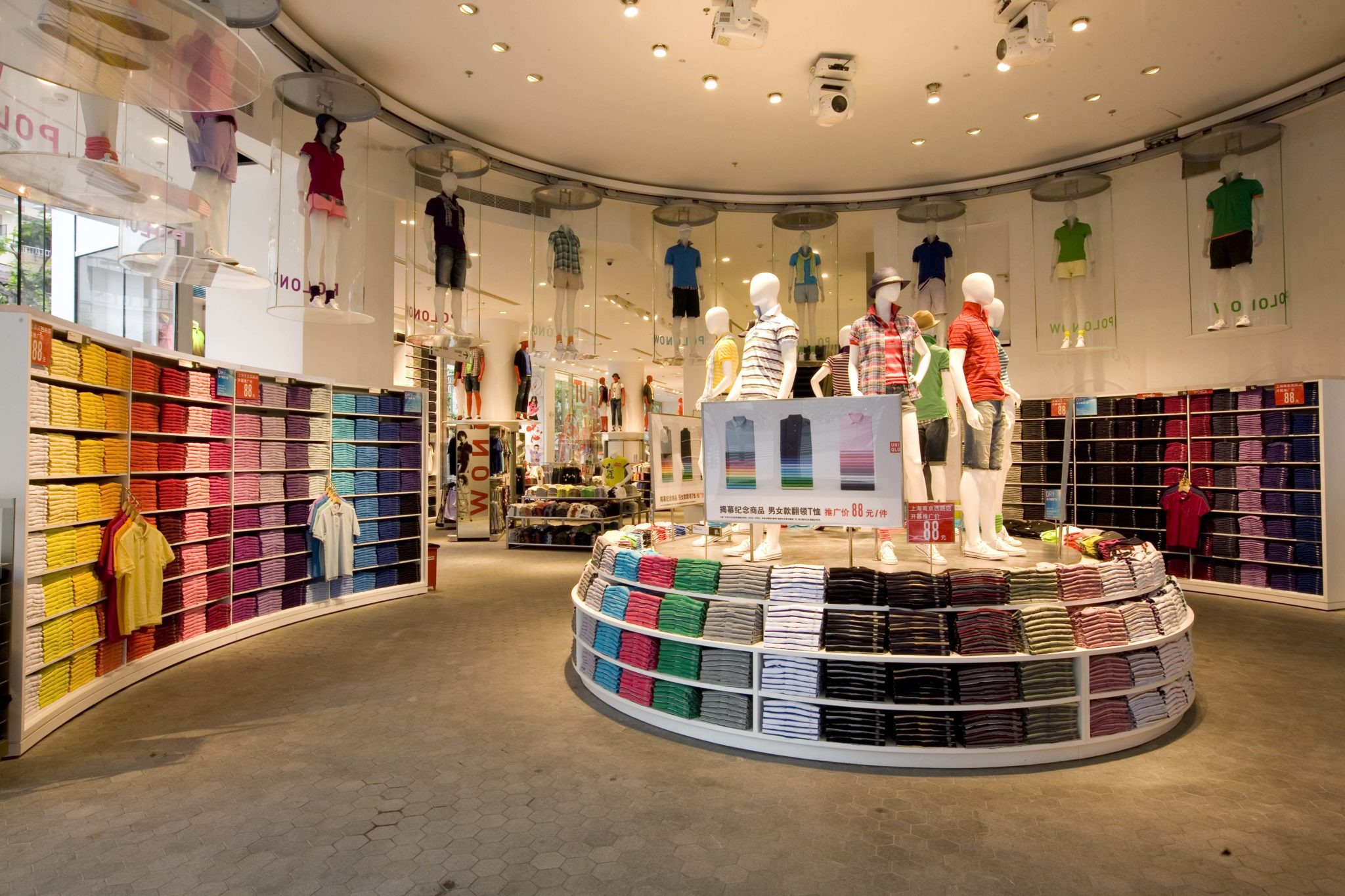
    Uniqlo Philippines will open a global flagship store this year, saying it will be the biggest in Southeast Asia.

    The Japanese fashion giant says the new flagship will be in Glorietta 5 in Makati. It will be the brand’s 15th global flagship store in 11 markets, including New York, London, Paris, Tokyo and Singapore.

    “Having been a member of the local retail scene since 2012, we remain committed to contributing to the community and to being an integral part of Manila’s growth and future,” says Uniqlo Southeast Asia/Oceania chief executive Satoshi Hatase.

    Its sales floor area will cover 4100sqm, and as with other global flagship stores will showcase the full lineup of “LifeWear” for men, women, kids and babies.

  • Samsung starts selling 2018 QLED TVs in Singapore

    Samsung starts selling 2018 QLED TVs in Singapore

    Samsung showed off its 2018 range of QLED or quantum dot light-emitting diode TVs this week in Singapore, seeking to win over users with its technology as rival OLED TVs start gaining traction.

    The new TVs promise more vibrant colours and with a higher dynamic range by using the QLED technology that the Korean manufacturer has kept to in recent years.

    It relies on what are known as quantum dots, or individual diodes or dots on a screen, that are able to offer a wider range of colours and improve brightness over regular LED or LCD TVs.

    That said, Samsung’s QLED TVs are still LED TVs. They are just the very best or souped-up versions available. To many premium TV buyers, however, the rival technology OLED used by LG, Sony and Panasonic has become more attractive because it offers deeper blacks and smoother motion.

    I did not have a chance to compare the two technologies side by side at this week’s Samsung launch. Just by looking at the new QLED lineup, I can say they are impressive as well.

    I certainly can see details in the bright and dark areas in the demo footage. This is an improvement over traditional LCD or LED screens that require a layer of colour filters, back-lit by white LEDs. Perhaps the biggest draw for Samsung’s QLED TVs is being able to integrate well with the interior design of your home.

    The company has improved on its Invisible Connection solution with the use of a single fibre optic cable to send visual and audio signals to the TV from a single box.

    It gives you four HDMI inputs, one Ethernet port, component inputs and a coaxial cable port. There’s one fibre optic audio output to send audio signals to the living room’s speaker system.

    Having this single fibre optic cable certainly makes it easier to hide all the home AV components. With a 15-meter cable included, Samsung certainly increases the number of options when it comes to placing your AV devices.

    The other new feature is the Magic Screen where the TV can show the latest weather forecast and stream music with the on-screen wallpaper matching the wallpaper that TV has covered. This creates an illusion that it is a transparent screen instead of a black rectangular abyss if we switch off the TV.

    I feel this will be a useful screen for the reception of an office, a meeting room where you can leave the screen on the whole day.

    For those who are sensitive to electricity bills, switching off the TV is definitely a better idea. Besides I can just get a quick audio weather update or stream music from Google Home if there’s a need.

    The top-range Q9F starts goes up to S$12,999 for a 75-inch version. If you prefer QLED on the budget, there’s a Q7F version costing S$10,499 for a 75-incher, S$6,399 for 65 inches and S$4,499 for 55 inches.

  • SG e-Auction bidding luxury goods

    SG e-Auction bidding luxury goods

    MoneyMax Financial Services has launched Singapore’s first online B2B auction platform for luxury goods, SG e-Auction, together with Japanese B2B internet auction company Aucnet Inc.

    As well as luxury branded merchandise, the site will bring buyers and sellers together for auctions involving gold and diamond goods.

    “This distribution channel allows us to tap into the growing market of pre-owned luxury goods in Southeast Asia on the back of a rising middle-income class,” says MoneyMax executive chairman/CEO Dr Lim Yong Guan.

    He says the channel already has members from Singapore, Malaysia, Vietnam, Hong Kong, Japan and the US. “With the eventual link up of SG e-Auction and Aucnet online platforms, buyers will have access to a greater variety of luxury goods while sellers will gain a wider pool of ready customers.”

    Listed since August 2013, MoneyMax is a pawnbroker, retailer and trader of pre-owned luxury items. Since its first outlet in 2008, the company has expanded to 68 outlets and has a presence in Singapore and Malaysia.

    In February 2015, the group launched MoneyMax Online as Singapore’s first pawnbroking chain to offer a platform for shopping, selling and appraising valuables.

    Established in 1985, Aucnet started as the world’s first provider of TV auctions of used cars, later developing its business to include used motorcycles, used digital products, flowers, used luxury items and used medical equipment.

    Incorporated in September, SG e-Auction is Singapore’s first B2B online auction platform for luxury branded merchandise, gold and diamond goods. A JV between MoneyMax (51 per cent) and Aucnet, SG e-Auction aims to transform and simplify how businesses buy and sell.

  • Vietnam’s communist heart Hanoi gets its first McDonald’s

    Vietnam’s communist heart Hanoi gets its first McDonald’s

    Global burger behemoth McDonald’s opened its first branch on Saturday (Dec 2) in the historic heart of communist Hanoi, a conservative city renowned for its traditional – and cheap – Vietnamese staples beloved by food-obsessed locals.

    Hungry customers lined up for Big Macs and Chicken McNuggets at the Vietnamese capital’s first location overlooking the tree-lined Hoan Kiem lake, which draws millions of tourists annually to see French-era colonial buildings and sample street-food favourites like pho noodle soup and banh mi sandwiches.

    The restaurant is the first outside of the southern commercial hub Ho Chi Minh City, where 16 branches have opened since McDonald’s first came to Vietnam in 2014 to much fanfare, especially among the rapidly-growing middle class and American-obsessed youth.

    The global fast food chain received a similarly warm welcome in Hanoi on Saturday, as hungry diners crammed into the two-storey eatery for a first taste of the Golden Arches.

    For 84-year-old Tran Dinh Luyen, who fought against the US in the Vietnam War, the restaurant was a sign of warming ties with a former enemy.

    “I am happy that McDonald’s has opened a restaurant in Hanoi. It’s a very famous American brand, so it shows how far US-Vietnam relations have come,” he told after mowing down on a Big Mac with his daughter and granddaughter.

    But not everyone agreed.

    “It’s a rip-off… this fast food is for kids only, it’s not good at all,” 90-year-old Ta Xuan Huong said, espousing his love for traditional cuisine.

    Some curious tourists stopped to see what all the fuss was about, perplexed that a brand ubiquitous in the West would draw so much attention.

    “It’s kind of random to see McDonald’s opening… it’s an interesting cultural experience to see how important it is that the store is opening here,” American Dan Moore told AFP, after his wife remarked she might not have expected to find one of the most salient symbols of capitalism in the communist country.

    The one-party state has seen dizzying economic growth in recent years as it has opened its doors to foreign investment – which has included an influx of Western chains like Starbucks, KFC and Burger King.

    Growth in the fast food sector has been buoyed by rapidly rising incomes – annual per capita income has more than doubled in the past decade to about US$2,100 (S$2,692) today – especially among under-30s, who make up half of Vietnam’s population of 93 million people.

    The fast food industry in Vietnam has seen double-digit growth annually for the past five years, and the country has the highest 2017 growth in Asia-Pacific for fast food chains, according to market research firm Euromonitor International.

    Though meals can cost as much as three times the local fare, customers are still showing strong appetite.

    “Young people like to hang out in fast food restaurants as they are seen as a cool and nice place… and these customers also like the taste of the food,” Euromonitor analyst Samuel Huynh told.

  • Tech products to drive reboot of Asia’s growth engine

    Tech products to drive reboot of Asia’s growth engine

    The technology boom powering Asia’s economies is about to get a reboot. Explosive growth in new-era gadgets such as wearable devices and internet-linked home appliances is tipped to offset cooling sales of smartphones, which has already dinged Asia’s tech manufacturers.

    “Where demand may be softening in some areas it will be strengthening in others,” Koshy Mathai, a senior official in the International Monetary Fund’s Asia Pacific Department, said in an interview. He pointed to upcoming demand from “a vast middle class in China, India and other frontier markets.”

    That’s good news for the world economy. Asia Pacific accounts for 60 percent of global growth, much of it from a technology-supply chain that’s vulnerable to smartphone cycles.

    The IMF isn’t alone in tipping the rise of a new tech cycle. The world is in the early stages of a shift from the late-stage mobile Internet era to a new, data-centered computing era, Morgan Stanley analysts wrote in a report last month.

    Crucially, it will be the first such era in which multiple technologies emerge at once, including the internet of things, artificial intelligence and virtual and augmented reality, and it will require IT investment unparalleled since the launch of the web in 1990, Morgan Stanley analysts said.

    Samsung Tops Profit Estimates, Warns of Weaker Phone Demand

    Take wearable devices. Global sales of body-worn cameras are forecast to reach 5.6 million units in 2021, more than triple the 1.6 million this year, according to forecasts by Gartner Inc. Smartwatch sales are expected to hit 81 million from 48 million over the same period, while those of head-mounted displays will more than double to 67 million.

    Spending on robotics and drones solutions will reach US$103.1 billion in 2018, up 22 per cent from last year, and more than double to US$218.4 billion by 2021, according to International Data Corporation.

    China, Japan, South Korea and Taiwan would be among the economies expected to benefit most — as they did from smartphones — with the new products stoking fresh demand for components such as semiconductors and displays.

    That is expected to benefit manufacturers such as South Korea’s LG Display Co., which makes displays used in products including smartwatches and Bluetooth devices, and Samsung Electronics Co., which makes memory capacity. Japan’s Sony Corp. is developing 3D sensors that can be used in drones, self-driving automobiles, gaming consoles, industrial equipment and more.

    “Manufacturers have always been able to shift their production line to cater to the newest trend in the market,” said Kenneth Liew, Singapore-based senior research manager at IDC. “We are now seeing products like wearables, smart home devices as some of the key products for future growth.”

    The upbeat view comes as a more-than-year-long rebound in Asia’s exports has hit a speed bump, with softening industrial and manufacturing activity. Smartphones contributed around one sixth of the estimated growth in trade in 2017, according to the IMF. Sales totaled close to 1.5 billion units last year — enough for one of every five people on the planet.

    But with more and more people already owning a smartphone, demand has peaked. That’s being felt at chip foundries and assembly plants across Asia.

    Taiwan’s Pegatron Corp., which assembles Apple Inc.’s iPhone 8, ramped up capacity in anticipation of a surge in business last year. A subsequent shortfall in demand led to lower utilization rates across its factories and operating margins almost halved. Both Pegatron and Hon Hai Precision Industry Co. — Apple’s principal assemblers — reported declines in net income in 2017 even as their biggest customer racked up record profits.

    To be sure, the smartphone sector is tapering off, not cratering, as evidenced by Apple’s results. And it will be some time before the emerging tech cycle reaches a point of matching demand generated through phone production, said Frederic Neumann, co-head of Asian economics research at HSBC Holdings Plc in Hong Kong.

    “While demand for consumer electronics like wearable devices and virtual reality headsets is growing rapidly, production runs still pale in comparison to smartphones,” Neumann said.

    Apple Earnings Show Growing Immunity to Smartphone Malaise

    Of course, all bets are off if an all-out trade war erupts between China and the U.S. Barring that, the next evolution in tech is poised to support global economic growth, even as smartphones reach saturation.

    “It is fair to say that economists often don’t understand technology well enough to understand what it can do in terms of growth,” the IMF’s Mr Mathai said.

  • Ninja Van ready to pounce on rivals in Singapore

    Ninja Van ready to pounce on rivals in Singapore

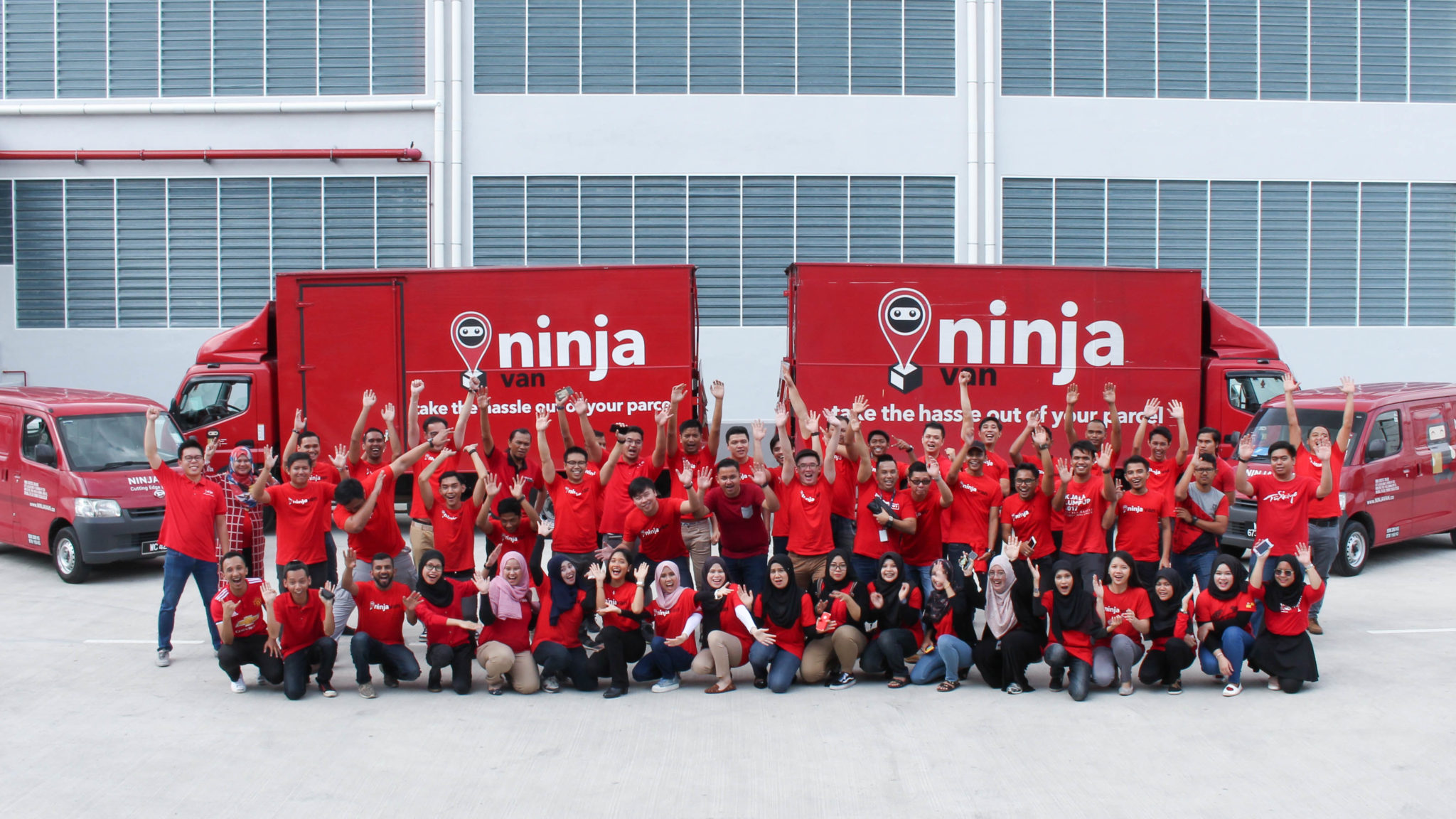
    Like the Japanese warrior it is named after, homegrown logistics tech startup Ninja Van is taking the fight to its rivals in its bid to become the top delivery e-commerce service here and in the region.

    For a start, Ninja Van plans to increase its parcel collection points to 500 by the end of the year — more than doubling its current number of 200 stations around the island. They are usually found near MRT stations and in shops, and the locations include Toa Payoh, Woodlands, Clementi, Punggol, and Orchard Road.

    To help enhance the customer’s delivery experience, it plans to give them a “live” option to redirect their parcels. Mr Lai Chang Wen, 31, Ninja Van’s co-founder and chief executive, said in an interview with TODAY that the service will be launched here before the end of the year, and will be gradually rolled out in other countries in South-east Asia.

    It will provide customers with information on when their parcels will arrive, and if they are unable to receive it in person, they can redirect it to a nearby Ninja Point, or request for it to be left at the door or neighbour’s house via the company’s website or mobile application.

    Mr Lai said this service is designed to cater to customers’ demands, making it “hassle-free”, and that it will help improve the collection experience.

    “We want to give customers more options, rather than just tracking,” he said.

    Currently, customers can also choose to self collect the parcels rather than have them delivered to their homes. Some collection points, such as those at shopping malls, are very “popular”, he added.

    The collection point service, known as Ninja Collect, includes automated parcel lockers called Ninja Box, as well as Ninja Points that allow for collection at retail shops.

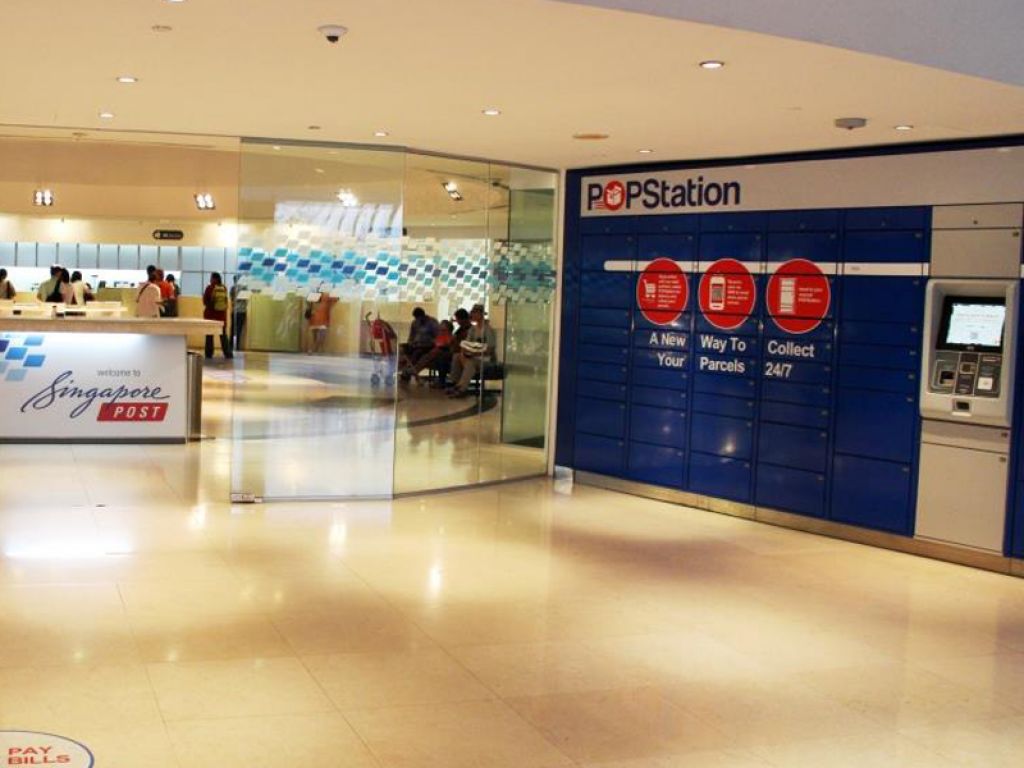
    Ninja Van’s 500 points islandwide ensures that there is a pick-up point located within 500 metres from any residential home, said Mr Lai. TODAY understands that its rival, government-linked company Singapore Post (SingPost), has over 150 automated parcel lockers, called POPstations, in Singapore.

    While this push by Ninja Van could be seen as a threat to SingPost, Mr Lai insisted that both firms can “co-exist and challenge each other to keep improving”. He believes that Ninja Van’s e-commerce parcel delivery service is “on par” with SingPost’s.

    In the next three to five years, the firm will focus on strategies such as social commerce where customers shop on social media platforms such as Facebook, Instagram and Internet forums.

    He added: “We are looking at how we can allow mid-tier Korean cosmetic brands to sell (their products) in South-east Asia. For social commerce… the sellers need to find a way to ship the parcels. We provide that solution for them.”

    Ninja Van’s social commerce business is currently focused on Indonesia, Thailand and Vietnam. An expansion within the region would potentially increase their driver numbers by over 300 per cent, bringing the total count in the region to between 30,000 and 50,000 drivers.

    WE’RE A RHINOCEROS, NOT A UNICORN

    Founded here in 2014 by Mr Lai and his partners, Ninja Van has since expanded its business to the rest of South-east Asia, including Malaysia, Indonesia, Thailand, Vietnam, the Philippines, and Myanmar.

    The Singapore office employs 200 staff and 400 drivers, while its businesses overseas have a total of 2,000 full time staff and 10,000 drivers.

    Early this year, the tech company raised a record amount — believed to be over US$85 million (S$111.5 million) — in its series C funding round. It is believed to be the largest series C funding raised for the region.

    The development drew the attention of observers, who said that Ninja Van could be the next “unicorn”, which is a privately held startup company that is valued at US$1 billion or more.

    Ninja Van has raised more than US$115.5 million to date.

    Mr Lai said that the company’s expansion plans are “on track”. The startup currently covers about 80 per cent of South-east Asia, and with the funding, it can grow its network of depots, trucks, drivers and sorting spaces, he added.

    He also said that the firm is focused on South-east Asia for now. There are also no plans to diversify from its core logistics business, nor does it plan to pursue new projects such as ride hailing firm Grab’s e-wallet payment solution Grabpay, for instance.

    Dismissing talk that the company could be a “unicorn”, Mr Lai prefers for it to be seen as a rhinoceros instead.

    “A unicorn gives the connotation of being sexy, too prim and proper, and elusive,” he said.

    “A rhinoceros is more grounded. It’s rare but you can actually find it. It is a bit grungy, and dirty and real. That’s the business we are in.”

    LIVING THE DREAM?

    Looking to the future, Mr Lai said that Ninja Van needs to keep its digital and innovative culture alive and well in order to prevent it from being “disrupted” by competitors.

    Aside from its staff, technology is also a key part of its business. For example, in Vietnam, the company uses a “certain form of machine learning” and tech algorithms to identify addresses in the country and check if the location is accurate.

    While running a startup and being your own boss might sound like he is “living the dream”, Mr Lai, who did not have any experience in logistics when he co-founded Ninja Van, said that would-be entrepreneurs should not think that way.

    He said: “People join for the wrong reasons. They think it is very cool, but it is quite tiring. The real reason to start a company should be because you want learn, to challenge yourself, and to try to make a difference.”

    The busy entrepreneur works seven days a week, and he is always on his phone replying to messages and taking business calls. He only spends around 80 days a year in Singapore, with the rest of his time spent travelling around the region for his business.

    He added: “There is no line (between business and leisure). Whatever needs to be done, you do it.”

  • Myanmar allows full foreign ownership in Retail Business

    Myanmar allows full foreign ownership in Retail Business

    Foreign companies are now allowed to invest in Myanmar’s retailers and wholesalers, including holding 100% stakes, as the country makes efforts to lift foreign investment amid the Rohingya refugee crisis.

    The Ministry of Commerce announced the change on Friday, explaining that it wants to increase competition in the sectors and promote price stability and technology transfers. The new rule took effect on Wednesday.

    But restrictions still apply. Foreign companies must invest at least $700,000 to take an up to an 80% stake in retailers, and $3 million for anything more. They cannot own minimarkets and convenience stores with floor spaces of 929 sq. meters or less. For wholesalers, the minimums are set at $2 million for up to an 80% stake and $5 million for more.

    The ministry is also letting foreign companies themselves bring their products into Myanmar and sell them instead of going through local importers as in the past. This could encourage automakers and appliance manufacturers to make further inroads here.

    Foreign companies could technically take stakes in Myanmar retailers and wholesalers before if they received the ministry’s approval. But almost none got the green light. Japanese retailer Aeon, one of the handful that did, began operating supermarkets with a local partner in 2016.

    Emerging economies often restrict foreign investment to protect homegrown retailers and wholesalers. It is unusual for a country like Myanmar, with per capita gross domestic product of only $1,200 or so in 2016, to relax the rules so much.

    But de facto civilian leader Aung San Suu Kyi has come under fire for delays in key economic reforms. And human rights abuses against the Rohingya Muslim minority, hundreds of thousands of whom have fled to neighboring Bangladesh, are making American and European businesses uneasy about operating in Myanmar.

    The country approved about $5.7 billion of foreign investment in the 12 months ended March, down for a second straight year. A further decrease could throw a wrench into a development strategy heavily reliant on foreign money.

  • New form of Hide and Seek IoT malware discovered

    New form of Hide and Seek IoT malware discovered

    Security researchers from BitDefender have discovered a new form of the ‘Hide and Seek’ IoT malware, which targets several generic devices.

    The most worrying aspect of this new strain is its ability to persist despite a reboot. With previous versions, equipment owners could always remove IoT malware from their smart devices, modems, and routers by resetting the device.

    Hide and Seek’s original version, discovered in January 2018, was notable for using a proprietary peer-to-peer network for both C&C and new infection communication. With persistence now added to the feature mix, the botnet has become a more pressing concern for owners of the 90,000+ IoT devices already infected and other equipment that are vulnerable and still unprotected.

    “The botnet seems to undergo massive development as new samples compiled for a variety of architectures have been added as payloads,” said Bogdan Botezatu, senior e-threat analyst at Bitdefender, in a blog post concerning the new variant of the malware.

    According to the Bitdefender researchers, there are at least 10 different versions of executables that can run on 10 different system variants.

    Botezatu said that new binaries now include code to leverage two new vulnerabilities to compromise more IPTV camera models. “In addition to the vulnerabilities, the bot can also identify two new types of devices and pass their default username and passwords,” he said.

    The malware targets several generic devices. Once infected, the device scan for neighboring peers for the presence of the telnet service. As soon as the telnet service is found, the infected device attempts brute-force access.

    “New variations of the Hide and Seek malware continue to exploit common issues with system/software hardening in deployed IoT devices,” Irdeto global head of software protection John O’Connor said.

    “The current generation of the Hide and Seek botnet could effectively be stopped in its tracks if diligent system hardening was applied during development, including proper management of applications, permissions, ports and user IDs/passwords. As a result, hardening should be a baseline requirement of a system in the development phase.”

  • AirAsia, Garuda cancel flights to and from Yogyakarta due to Merapi eruption

    AirAsia, Garuda cancel flights to and from Yogyakarta due to Merapi eruption

    AirAsia and Garuda Indonesia have cancelled a total of at least 26  flights to and from Yogyakarta after the eruption of Mount Merapi forced the ancient Javanese city’s airport to close.

    The cancelled AirAsia flights are AK 346, AK 347, AK 348 and AK 349 (Yogyakarta – Kuala Lumpur, Kuala Lumpur – Yogyakarta), QZ 659 (Singapore – Yogyakarta), QZ 7557, QZ 7550, QZ 7551, QZ 7552 and QZ 7553 (Yogyakarta – Jakarta, Jakarta – Yogyakarta), XT 8448 and XT 8449 (Bali – Yogyakarta, Yogyakarta – Bali).

    Passengers of cancelled flights will be given the option of rescheduling, rerouting their journey or a refund or credit. AirAsia also advised passengers to check AirAsia’s website and social media accounts for further updates.

    Meanwhile Garuda, Indonesia’s national carrier, cancelled 14 flights.

    Yogyakarta’s Adisutjipto International Airport, 520km south-east of Jakarta, was closed at about 10:42am on Friday local time, and reopened at 2:17pm, state air-navigation operator AirNav Indonesia said in a statement Friday.

    Mount Merapi’s eruptions are minor, caused by accumulation of volcanic gases, and shouldn’t lead to further outbursts, the Centre for Volcanology and Geological Hazard Mitigation at the nation’s Energy and Mineral Resources Ministry, said in a statement, adding its status is “normal.”

    Other airlines that canceled flights include those operated by the Lion Group.

    It said it would inform passengers of affected flights through email and text message.

    “AirAsia strongly encourages all guests to update their contact details at airasia.com to ensure that they are notified of any updates to their flights,” AirAsia said in a statement on Friday.

    Indonesia is located on the so-called Pacific Ring of Fire, an arc of volcanoes and geological fault lines surrounding the Pacific Basin. According to the Volcanological Survey of Indonesia, the archipelago has about 120 active volcanoes. It has had two of the world’s biggest volcanic eruptions in the past two centuries: Mount Tambora in 1815 and Krakatau in 1883.

    Last year, Mount Agung on the neighbouring island of Bali erupted and forced the airport at the popular holiday destination to close several times. Yogyakarta is also a prominent tourist spot for Buddhist pilgrims.

    The volcanic ash and gases spewed can be dangerous to planes passing through the plume. In 1982, all four engines on a British Airways Boeing Co. 747 stalled when the plane encountered the debris from Mount Galunggung in Indonesia.

    The plane dropped for almost four miles before the pilot was able to restart three engines and make an emergency landing in Jakarta.

  • SingPost back in black with $23.9m profit and a bright future

    SingPost back in black with $23.9m profit and a bright future

    Singapore Post (SingPost) swung back into the black for its fiscal fourth quarter, booking profit of $23.9 million in the absence of one-off impairment charges in the corresponding period last year.

    Revenue for the three months to March 31 was also up 13.5 per cent to $367.5 million on growth in e-commerce-related activities across its postal and logistics segments, SingPost said. Earnings per share were up to 0.9 cent from a loss per share of 3.03 cents last year.

    For the full year ended March 31, SingPost booked a profit of $126.4 million on the back of $1.46 billion in revenue.

    The board recommended a final dividend of two cents per share to be paid out on July 31.

    For the fourth quarter last year, SingPost was hit with an impairment charge of $208.6 million related largely to the TradeGlobal and Postea acquisitions, as well as a property in Toh Guan, which SingPost highlighted was partially offset by a fair value gain on investment properties of $108.7 million, mainly for the SingPost Centre building.

    The postal segment’s revenue rose 18.2 per cent in the quarter and 15 per cent for the full year as strong growth in international mail revenue helped offset the decline in domestic mail revenue, SingPost said.

    Domestic mail revenue declined 6.6 per cent for the full year to $229.4 million, due to lower letter mail volumes with the “continued migration” towards electronic forms of communication.

    Revenue for SingPost’s e-commerce segment rose 15.7 per cent in the fourth quarter to $65.31 million, and was stable for the full year.

    “SingPost is well positioned to benefit from the strong growth in global e-commerce and last-mile deliveries as we progress to the next phase of our strategy,” said group chief executive Paul Coutts. “We continue to execute on our transformation and build on our partnership with Alibaba in e-commerce. We are integrating and scaling our e-commerce businesses in the United States and South-east Asia, as well as the rest of our overseas operations, and optimising the cost structure of the SingPost group.”

  • McDonald’s Malaysia denies any connection to Israel

    McDonald’s Malaysia denies any connection to Israel

    The Malaysian franchise of McDonald’s Corp said it was “disappointed” with calls on social media to boycott the fast-food restaurant chain in apparent retaliation against the US’ recognition of Jerusalem as the capital of Israel.

    Social media users in the Muslim-majority country have called on people to boycott various American companies following United States President Donald Trump’s decision to relocate the US Embassy in Israel to Jerusalem.

    One Twitter user, who goes by the name, TheUsopIbrahim, stated without citing sources that US-headquartered McDonald’s “channelled funds to Israel”.

    McDonald’s Malaysia said in a statement on Facebook on Saturday that the chain does not support or engage in any political or religious conflicts.

    Mr Azmir Jaafar, managing director and operating partner of franchisee Gerbang Alaf Restaurants, said: “The claim that McDonald’s channels funds to Israel is a false accusation, a lie, fake and slanderous.”

    He added that Gerbang’s largest shareholder is Muslim.

    The Malaysian and Singaporean franchise rights were bought by Saudi Arabia’s Lionhorn a year ago, as part of the US parent’s strategy of moving away from direct ownership in Asia.

  • Mumuso Vietnam accused of fraud

    Mumuso Vietnam accused of fraud

    Fashion and lifestyle goods retailer Mumuso Vietnam has been accused of selling Chinese goods as Korean products.

    The allegation surfaced on South Korean SBS News, which reported that the Shanghai-based company has been duping customers into thinking it is a South Korean store chain selling South Korean goods. The news channel also said Mumuso’s registered office in Seoul could not be found.

    Legal representatives of Mumuso Vietnam say the company registered its brand under the protection of the Korean Intellectual Property Office without any production activities there. It also has a branch in Shanghai, redesignated as its headquarters.

    Mumuso authorised its Shanghai office to take over its business activities, including production and brand management.

    Mumuso’s business in Vietnam is under a franchise contract.

    “Mumuso wants to strengthen its brand overseas before returning home, where competition is fierce,” says Mumuso Vietnam director Nham Phi Khanh.

    He admits that no Mumuso merchandise has undergone quality inspections in Korea, but is imported directly from China. “Our products meet standards and regulations set by the Drug Administration of Vietnam and the Department for Food Safety and Hygiene under the Ministry of Health.”

    Mumuso Vietnam has 27 outlets, mostly in Hanoi and Ho Chi Minh City. The stores sell a wide range of goods, from cosmetics to household items, all labeled as “Mumuso – Korea”, with product information mainly written in Korean and Chinese, and prices ranging from VND22,000 (US$1). All come with a “Made in China” tag.

    The Mumuso retail concept is loosely based on that of another Chinese company Miniso, which has drawn criticism for marketing its products as Japanese.

    Meanwhile, Mumuso Vietnam has announced it intends to increase the number of its outlets in Ho Chi Minh City and Hanoi to 80.

  • Asia outpacing Europe by TETRA adoption

    Asia outpacing Europe by TETRA adoption

    Terrestrial trunked radio (TETRA) technology is gaining popularity in Asia, as well as in new markets beyond public safety, according to IHS Markit.

    The research firm estimates that TETRA deployments worldwide grew 16% in 2017, due to both refreshes in mature markets as well as fresh deployments in new areas.

    Europe remains the largest market for the European Telecommunications Standards Institute (ETSI) developed TETRA standard, but the Asian and Latin American markets for the technology are expected to grow at a faster rate than Europe over the next few years.

    Asia already posted its largest growth in deployments in 2017, with deployments across airports, metro systems and other transport hubs, the company said.

    TETRA has emerged as the technology of choice for emergency services, but is also seeing adoption in industries such as transport, utilities and the industrial sector.

    As well as land mobile radio (LMR) based TETRA systems, LTE is emerging as an alternative. Private LTE networks have been deployed in China, Australia, South America and several MEA markets, IHS Markit noted.

    The research firm said LTE might be used as a substitute for TETRA and other high-end LMR technologies over the next five to ten years. But in the short term, LTE is expected to be used to complement critical voice communications with data capability rather than replace LMR altogether.

  • NEC to help Docomo upgrade to 5G

    NEC to help Docomo upgrade to 5G

    Japan’s NTT Docomo has entered an agreement with NEC covering the supply of control units for 5G base station equipment to help commercialize 5G services.

    NEC plans to develop technology to enable existing telecoms equipment such as high density base station equipment to be fully compatible with 5G. Docomo plans to leverage this technology to meet its goal of launching 5G services in 2020.

    Under the agreement, NEC will achieve 5G compatibility through software upgrades and a minimal replacement of hardware to maximize the use of existing high-density base station equipment, using the base station technology NEC first launched in February 2015.

    The upgrade will allow Docomo to continue providing LTE and LTE-Advancedservices even after the equipment is upgraded to be made compatible with 5G.

    “Docomo aims to deploy and expand our commercial 5G services efficiently by maximizing the use of existing communications equipment,” NTT Docomo CTO and board member Hiroshi Nakamura said.

    “This agreement with NEC is in line with that policy and we expect it to make a significant contribution to our 5G services. Going forward, Docomo accelerates co-creation of new services and businesses with vertical industry partners.”

    The operator has separately announced that its board of directors has proposed a number of changes in executive positions for approval at next month’s shareholders meeting aimed at further developing the company.

    Among the proposed changes include the appointment of five senior executives to the board, the hiring of a new executive vice president, and the promotion of four candidates to senior vice president.

  • Koda’s Profit Skyrockets

    Koda’s Profit Skyrockets

    Furniture specialist Koda has reported a near fourfold rise in net profit for its third quarter thanks to growing exports, and increased sales of its Commune brand.

    Revenue for the period grew 22.5 per cent to US$13.4 million, while net profit was $1.2 million.

    Earnings for the first nine months soared 60.4 per cent to $3.6 million, closing in on net profit of 4.05 million for the entire year to the end of June.

    Barring unforeseen circumstances, the group expects its performance to improve.

    “Our third-quarter net profit jumped by more than 260 per cent,” says Koda MD James Koh. “Our China expansion plans have also exceeded my expectations.”

    Commune CEO Joshua Koh says its plan to have 100 stores in China by 2020 is well on track. We are thankful to Enterprise Singapore and the Info-communications Media Development Authority for supporting our growth strategies.”

    Commune has 45 stores in China as well as outlets in Singapore, Malaysia and Australia.