Author: Mei Ling Tan

  • HSBC is making a bet on Asia millionaires

    HSBC is making a bet on Asia millionaires

    HSBC Holdings is planning to increase its wealth-management staff in Asia as chief executive officer John Flint bets on growth in the region.

    The bank plans to add more than 1,300 positions, split roughly between retail and private banking, by 2022, according to the heads of the two divisions, which between them currently employ just over 32,000 people in the region. The bulk of the hires, some of which could be internal, will be in Hong Kong and Singapore.

    The wealth strategy is part of Mr Flint’s plan to grow HSBC by expanding in Asian markets including Greater China and South-east Asia. The CEO, promoted in February, said in June that HSBC will pour as much as US$17 billion by 2020 into expanding the region’s business and improving technology. The bank aims to grow revenue from Asia by at least US$1 billion during the same period.

    “We have a real opportunity to do more and that’s to further build on Hong Kong and to materially build what we do today in Singapore,” Kevin Martin, the firm’s Asia-Pacific head of retail banking and wealth management, said in an interview. “Both businesses need to do it in concert,” he said, referring to the retail and private banking units.

    THe London-based bank’s plans for wealth management in Asia, which is dominated by global banks such as UBS Group AG, Citigroup Inc and Credit Suisse Group AG, come as regional firms including DBS Group Holdings Ltd. and BOC Hong Kong (Holdings) Ltd are also expanding amid an unprecedented rise in the region’s assets.

    HSBC said on Monday that Antonio Simoes, who was head of UK and Europe, will run global private banking from Jan 1. Peter Boyles, who currently runs the group, will retire after 43 years at the company.

    Offshore wealth in Asia, excluding Japan, has been growing at about 10 per cent a year, according to Boston Consulting Group data, faster than the 5 per cent globally. Offshore wealth from China alone amounted to about US$1 trillion this year, the consulting firm estimated.

    Hong Kong’s wealth managers expect to double the money they handle over the next five years to about US$2 trillion, the city’s Private Wealth Management Association said in a recent report published with KPMG China, citing the increasing interest of Chinese nationals looking to diversify their holdings.

    “The wealth that the Chinese have already offshore is a massive piece of opportunity for us,” said Tan Siew Meng, Asia-Pacific head of global private banking at HSBC.

    The expected growth in the industry may exacerbate Hong Kong’s shortage of relationship managers, according to the Private Wealth Management Association’s report. Two-thirds of respondents said a “limited talent pool” was the biggest supply-side constraint.

    Mr Martin said the 1,300 staff boost is “not a big scary number” given that his retail bank, including subsidiary Hang Seng Bank Ltd, employs about 31,000 people in the Asia-Pacific region. Staff within the group may transfer to the wealth business, he said. Hiring will be both internal and external, and include relationship managers, product specialists and advisers, Ms Tan said. Her private bank had 1,100 employees in the region at the end of last year.

  • ASUS Handpicks SmartOSC for Its Ecommerce Push in Singapore

    ASUS Handpicks SmartOSC for Its Ecommerce Push in Singapore

    ASUS, one of Fortune magazine’s World’s Most Admired Companies, that is dedicated to creating products for today and tomorrow’s smart life, has appointed SmartOSC to be its ecommerce partner, following a competitive pitch in April. The event marked an important milestone in ASUS strategy to differentiate and enhance its offering for the Singapore market.

    Emma Ou, Country Manager of ASUS Singapore shared: “The current ASUS’s website is the best place to explore our wide range of products. Adding the ecommerce site will deliver a more convenient and immediate shopping solution in addition to all our brick and mortar stores at our brand stores and authorised retailers. Hosting our own ecommerce site is also align with our ongoing effort in providing our customers a seamless O2O shopping experience and an attractive rewards programme. Throughout the entire pitching process, SmartOSC demonstrated a holistic view of our requirement and passion for our brands. We get great ideas and constant feedbacks from their team for realizing our vision”.

    According to research firm Statistica’s report on Singaporean consumer ecommerce market, electronics & media is currently one of the leading ecommerce verticals accounted for 26% of total revenue. With user penetration is at 68% in 2018 and is expected to hit 72% in 2022, ecommerce is a captivating opportunity for any brands and retailers. Moreover, the research firm also reports that Asia contributed for almost 80% of all B2B e-commerce volume worldwide in 2017 and Southeast Asia is proving itself to be an attractive B2B procurement market in the region.

    SmartOSC will work closely with ASUS team to provide consulting, user-centric experience design, technical implementation and integration services. After launch, the website will be the one-stop shopping destination for both B2B and B2C customers. Customers will be able to order a wide range of product available across ASUS distribution network, and there will be options build customized gaming hardwares from its famous Republic of Gamers (ROG) product line.

    “ASUS is exactly the kind of ambitious partner SmartOSC is excited to work with. It gives us the opportunity to think out of the box and work on a project that goes beyond conventional requirements. We are confident that our ecommerce expertise and technical capability will make us a genuinely valued partner to ASUS.” Thai Son, CEO of SmartOSC, said.


  • Polish Active Wear and Lifestyle Brand “4F” Opening its First Store In Thailand

    Polish Active Wear and Lifestyle Brand “4F” Opening its First Store In Thailand

    Polish activewear and lifestyle brand 4F has launched in Thailand.

    The brand, recognised globally for its functional, contemporary design approach, opened its first retail store in the country at Siam Discovery.

    Local agent Sport Lifestyle Lab owner Hidekazu Fujii said: “Health and fitness is becoming increasingly popular in Thailand, as people look to eat healthier diets, gets more exercise or dress for it. We’re seeing more and more Thais embracing the athleisure trend by mixing and matching sportswear pieces into their everyday look. We saw an opportunity to introduce 4F to the market and Siam Discovery is a perfect central location for young Thais to shop. It gives tremendous exposure and opportunity for the brand to grow.”

    The firm is expected to open pop-up stores throughout Bangkok to make the brand more accessible to the local market.

    4F currently operates more than 200 retail and wholesale outlets in 35 countries.

  • NIKE, Inc. reports fiscal 2019 first quarter results

    NIKE, Inc. reports fiscal 2019 first quarter results

    NIKE, Inc. has reported fiscal 2019 financial results for its first quarter ended August 31, 2018. For the quarter, double-digit revenue growth was driven by the continued success of the Consumer Direct Offense, which fueled growth across all geographies as well as wholesale and NIKE Direct, led by digital.

    “NIKE’s Consumer Direct Offense, combined with our deep line up of innovation, is driving strong momentum and balanced growth across our entire business,” said Mark Parker, Chairman, President and CEO, NIKE, Inc. “Our expanded digital capabilities are accelerating our complete portfolio and creating value across all dimensions as we connect with and serve consumers.”

    Diluted earnings per share for the quarter were US $0.67, an increase of 18 percent driven by strong revenue growth, gross margin expansion, selling and administrative expense leverage, and a lower average share count, partially offset by a higher effective tax rate.

    “We are delivering stronger global growth and profitability than we anticipated entering this fiscal year,” said Andy Campion, Executive Vice President and Chief Financial Officer, NIKE, Inc. “While foreign exchange volatility has increased, our underlying currency-neutral momentum continues to build as we transform how NIKE operates, drives growth and creates value for our shareholders.”

    First Quarter Income Statement Review

    – Revenues for NIKE, Inc. increased 10 percent to US $9.9 billion, up 9 percent on a currency-neutral basis.

    Revenues for the NIKE Brand were US $9.4 billion, up 10 percent on a currency-neutral basis driven by double-digit growth internationally and in NIKE Direct, strong momentum in North America, and growth in almost every category led by Sportswear.

    Revenues for Converse were US $527 million, up 7 percent on a currency-neutral basis, mainly driven by growth in Europe and Asia.

    – Gross margin increased 50 basis points to 44.2 percent primarily due to higher average selling prices, favorable full-price sales mix and margin expansion in NIKE Direct, partially offset by higher product costs.

    – Selling and administrative expense increased 7 percent to US $3.1 billion. Demand creation expense was US $964 million, up 13 percent primarily driven by sports marketing investments, brand campaigns and key sports moments. Operating overhead expense increased 5 percent to US $2.1 billion driven by investments in capabilities to drive the Consumer Direct Offense, particularly in NIKE Direct and global operations.

    – The effective tax rate was 14 percent, which reflects the new U.S. statutory rate and implemented provisions of the U.S. Tax Cuts and Jobs Act.

    – Net income increased 15 percent to US$1.1 billion driven primarily by strong revenue growth, gross margin expansion and selling and administrative expense leverage while diluted earnings per share increased 18 percent from the prior year to US $0.67 reflecting a 2.5 percent decline in the weighted average diluted common shares outstanding.

  • Astro Malaysia Q2 earnings fall 93%

    Astro Malaysia Q2 earnings fall 93%

    Astro Malaysia Holdings Bhd’s net profit for the second quarter ended July 31 fell 93% to RM16.58 million from RM246.34 million a year ago due to an increase in FIFA World Cup content, merchandise sales and higher net finance costs.

    The decrease in earnings before interest, tax, depreciation and amortisation (ebitda) was mainly due to higher content costs from FIFA World Cup and merchandise sales, while higher net finance cost was mainly due to unfavourable unrealised forex movement arising from unhedged finance lease liabilities and vendor financing and increase in interest expenses from borrowings.

    Revenue for the quarter of RM1.42 billion was marginally lower by 0.2% mainly due to a decrease in subscription and advertising revenue.

    For the six months period, net profit plunged 57% to RM191.31 million from RM442.17 million mainly a year ago due to decrease in ebitda and increase in net finance costs.

    Revenue for the current period of RM2.73 billion was lower by 0.7% against corresponding period of RM2.75 billion, mainly due to a decrease in subscription and advertising revenue.

    The board of directors declared a second interim single-tier dividend of 2.5 sen per ordinary share in respect of the financial year ending Jan 31, 2019 amounting to RM130.35 million.

    Astro chairman Tun Zaki Azmi said Astro continues to be cash generative, cost disciplined and proactive in its capital management whilst navigating through a challenging market and competitive media environment.

    Astro CEO Henry Tan said it experienced increased content costs for the 2018 FIFA World Cup. In addition, financial results were affected by the reduced need to advertise during the tax holiday period from June 1 to Aug 31, 2018 and the depreciating ringgit.

    Nevertheless, it continues to have stable revenues across TV and radio with diversification from digital platforms, e-commerce, licensing income and theatrical sales.

    “Going forward, we expect the group’s second half performance to improve and we will remain focused on key business drivers. Astro is committed to improving customer experience beginning with a new interface for premium customers on TV and Astro GO allowing for a seamless viewing experience across all screens and the introduction of 4K Ultra HD offerings,” said Tan.

  • Gov’t Urged to Tighten Rules on Foreign Investment in Indonesian Startups

    One of Indonesia’s most influential business lobbies has urged the government to tighten its regulations on foreign ownership, taxation and user privacy at local digital startups to prevent domination by foreign entities.

    Indonesia, home to more than 260 million people – half of whom are active internet users – has seen a rise in the digital economy over the past five years.

    There are currently at least four unicorn startups in the country, but all are backed by foreign investments.

    Ride-haling service Go-Jek Indonesia received $550 million from Sequoia Capital and Warburg, and $1.2 billion from Google, Temasek and Meituan-Dianping. Online airline ticketing and hotel booking service Traveloka received $350 million from US-based travel company Expedia, while e-commerce website Bukalapak received an undisclosed amount from 500 American startups and QueensBridge Venture Partners. Tokopedia, another e-commerce site, meanwhile received $1.1 billion from Chinese e-commerce giant Alibaba.

    Over the long run, this means profit would be transferred to the investors’ countries, leading to an even larger current-account deficit, further increasing pressure on the rupiah.

    Bhima Yudhistira Adhinegara, an economist at the Institute for Development of Economics and Finance (Indef), warned that most of the startups still experience losses but foreign funding keeps pouring in, driving up their valuations.

    “Once the valuation is at its peak, they would sell their shares for a capital gain,” Bhima said.

    These startups are also well placed to harvest customer data, paving the way for foreign investors to gain a foothold in Indonesia’s tightly regulated payment and credit ecosystem.

    “It can be seen from Go-Jek that expanded its wings into a payment system. Companies such as Alipay and WeChat Pay could enter Indonesia by funding local startups with the intention to expand their scope in fintech,” Bhima said.

    “Don’t let them being too liberal like banks. If necessary, it might be better to introduce special regulations, such as limiting foreign ownership to 40 percent and requiring collaboration with domestic capital for the remainder,” he added.

    Johnny Darmawan, deputy chairman for industrial affairs at the Indonesian Chamber of Commerce and Industry (Kadin), agreed with Bhima’s assessment.

    “They aim for consumer data; that’s why they keep investing in the startups,” Johnny said.

    He also questioned the fact that despite attracting huge amounts of capital, startups are still categorized as small and medium enterprises, preventing the government from imposing limits on foreign funding.

    “Also, startups are often out of the tax authority’s scope; that’s why we must find a way to tax those that are funded by foreign entities,” Johnny said.

    Technology expert Heru Sutadi, a former commissioner of the Indonesian Telecommunication Regulatory Authority (BRTI), said it would be a great danger to share citizens’ data with foreign entities, as it is prone to abuse.

    “Citizens will be the victims. The user data belongs to citizens, while it is being exploited,” he said.

    The Financial Services Authority (OJK) banned hundreds of illegal foreign online lenders this year after a series of user-data abuses surfaced.

    Still, other businesses beg to give startups more opportunities, pointing out that Indonesia’s digital economy is still in its infancy.

    “Just let startups develop. But if they start to cause chaos in economy and make no contribution to it, they must be disciplined,” said Chris Kanter, secretary of the Indonesian Employers Association (Apindo). He believes the current size of foreign investment in local startups is still normal.

    Shinta Kamdani, deputy chairwoman for international relations at Kadin, said that instead of limiting foreign investment, more startups should be encouraged to list on the Indonesia Stock Exchange (IDX) to allow them to attract more local investors.

  • SSENSE Launches Chinese Online Store

    SSENSE Launches Chinese Online Store

    Canada’s Ssense has developed a Chinese language version of its online store as it seeks to boost sales in greater China.

    Described as a “personalised shopping experience” the site is in simplified Chinese and includes product descriptions and customer care services directly targeting customers in China.

    Mandarin-speaking customer care representatives will be available at certain times of the day to assist shoppers, and taxes or duties applicable to Chinese customers will be included on the price list.

    Chinese is the fourth language to be used on the Ssense platform.

  • U.S. Polo Assn. accelerates China growth with China Open sponsorship

    U.S. Polo Assn. accelerates China growth with China Open sponsorship

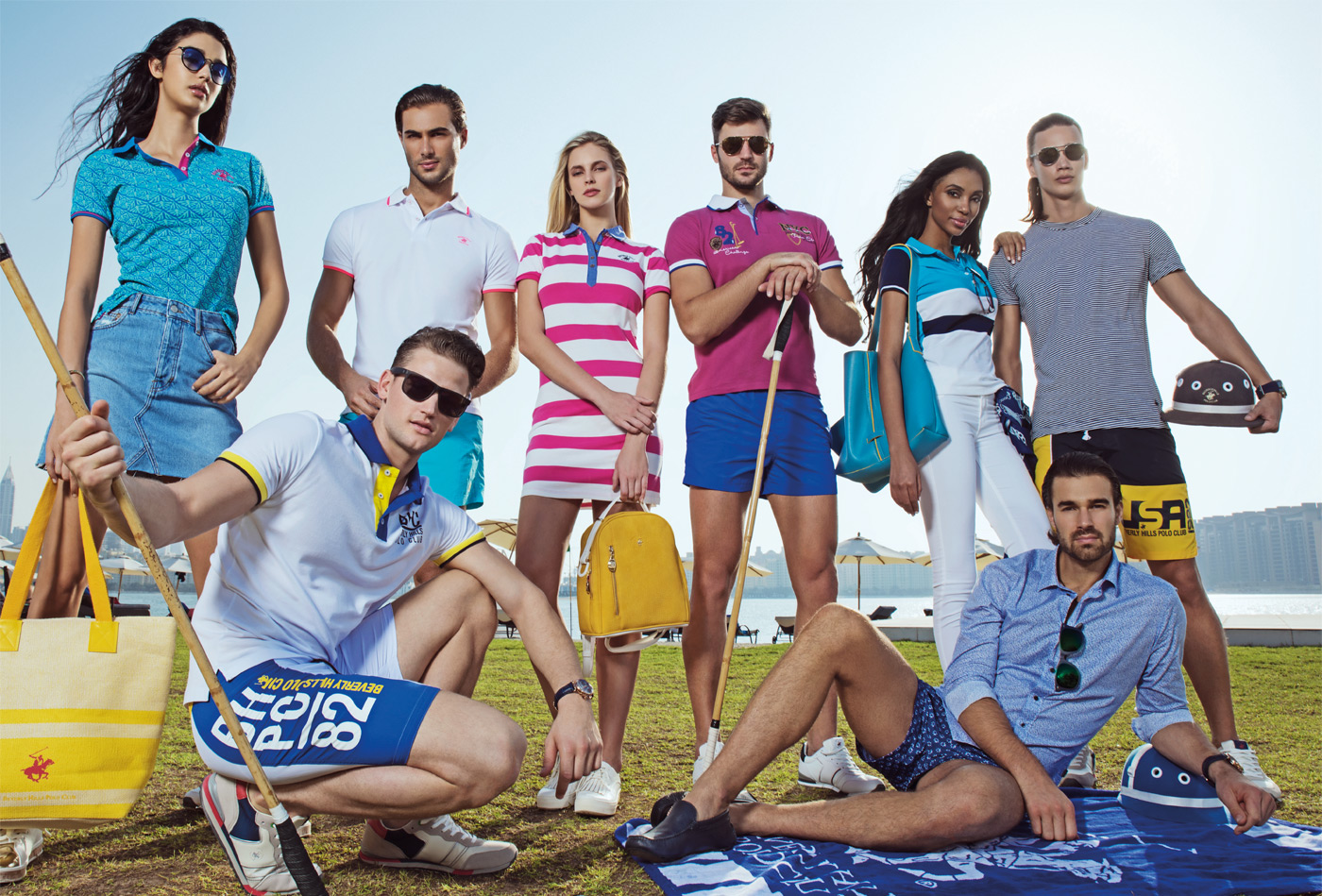
    The United States Polo Association, via its licensing arm and broadcaster — USPA Global Licensing — announced that U.S. Polo Assn. will return as the official apparel sponsor of the 2018 China Open Polo Tournament.

    Partnering with Chinese licensing partner, Yicai Brands Management, the West Palm Beach, Florida-based U.S. Polo Assn. will provide official jerseys for players and uniforms for staff of the event.

    The tournament will take place on Sunday, September 30, at the Tang Polo Club in Beijing and is recognised as one of the largest and most watched international polo tournaments in China. This year, four international polo teams will participate including Brunei, England, Malaysia and China.

    “We are excited to be the official apparel sponsor for the prestigious China Open Polo Tournament,” said USPAGL President and CEO, J. Michael Prince.

    “This will be another opportunity to build global brand awareness while also engaging consumers and sports fans in the sport and lifestyle of polo in one of the most important markets in the world.”

    With a global footprint worth $1.6 billion in retail sales and a presence across 166 countries, China has become the American brand’s premier market for growth, as it eyes a $2 billion dollar global sales target.

    In the next five years, U.S. Polo Assn. plans to have over 300 retail stores in China, representing one of the largest retail footprints for an international apparel brand in the Chinese marketplace. Earlier this year, the company also relocated its Chinese operations to the city of Changshu (nicknamed “Apparel City”) at the Changshu Brand Operations Centre, which specialises in product design, research & development, marketing, social media and e-commerce.

    “With our amazing partner, Yicai, U.S. Polo Assn. is building a significant brand presence in China while also driving tremendous long-term growth,” added Prince.

    The Chinese agreement comes after the brand announced expansion plans for the UK and Ireland, as part of a new strategy under new creative director Craig Prest. Earlier this year, the brand also inked a sponsorship deal to dress the U.S. national team at the 2018 Westchester Cup in the UK.

  • Apple cuts costs for the iPhone XS’s big display

    Apple cuts costs for the iPhone XS’s big display

    Apple shaved some parts from the display in its largest new iPhone, helping keep costs under control in what has become the priciest component of its phones in recent years, according to a new cost analysis of the device.

    TechInsights, an Ottawa, Ontario-based firm which rips open phones to analyze their contents and estimate the cost of the parts inside, said on Tuesday that the iPhone XS Max with 256 gigabytes of storage capacity contains about $443 in parts and assembly costs, compared with $395.44 for the 64-gigabyte version of last year’s iPhone X.

    Apple released a trio of new phones earlier this month, including an update to last year’s iPhone X, called the iPhone XS, that starts at $999, and the budget-minded iPhone XR that starts at $749.

    But it was the iPhone XS Max – with a 6.5-inch display that uses OLED technology for richer colors – that pushed new pricing boundaries, starting at $1,099.

    In its cost analysis released on Tuesday, TechInsights found that the single priciest part of the iPhone XS Max – the display – cost $80.50, compared with $77.27 for last year’s iPhone X, which featured a smaller 5.8-inch screen.

    The relatively small increase in cost despite the larger screen size was because Apple appeared to have removed some components related to its so-called 3D Touch system, which makes apps respond differently depending on how hard users press the screen.

    “All told, what they took out adds up to about $10, so this $80 estimate would have been about $90,” Al Cowsky, who oversees cost analysis at TechInsights said in an interview.

    “They had a trade-off in cost.”

    Apple declined to comment on the study.

    But Bob O’Donnell of TECHnalysis Research said Apple likely made the right decision to focus on ensuring it could deliver a larger-screened model this year economically.

  • Nike’s China sales booms in latest report

    Nike’s China sales booms in latest report

    Booming sales by Nike China helped the sportswear giant record a 10 per cent rise in global revenues in the first quarter.

    Footwear sales in greater China soared 26 per cent, apparel sales by 23 per cent and equipment sales by 8 per cent. Combined sales growth for the region was 24 per cent, from US$1.11 billion last year to $1.38 billion this year.

    Nike China profit rose 27 per cent to $502 million, while combined Asia Pacific and Latin America sales rose 7 per cent to $1.27 billion.

    “Nike’s consumer direct offense [program], combined with our deep line up of innovation, is driving strong momentum and balanced growth across our entire business,” said Mark Parker, chairman, president and CEO at Nike.

    “Our expanded digital capabilities are accelerating our complete portfolio and creating value across all dimensions as we connect with and serve consumers.”

    Revenues for the company’s Converse division rose 7 per cent to $527 million, mainly driven by growth in Europe and Asia.

    Net income increased 15 per cent to $1.1 billion driven primarily by strong revenue growth and improved gross margin.

  • LG U+ adds Google Assistant to its IPTV

    LG U+ adds Google Assistant to its IPTV

    Unlike its telecom service competitors SK Telecom and KT, LG U+, the smallest of the three, is taking a two-track strategy when it comes to voice commands for its internet protocol TV (IPTV) service.

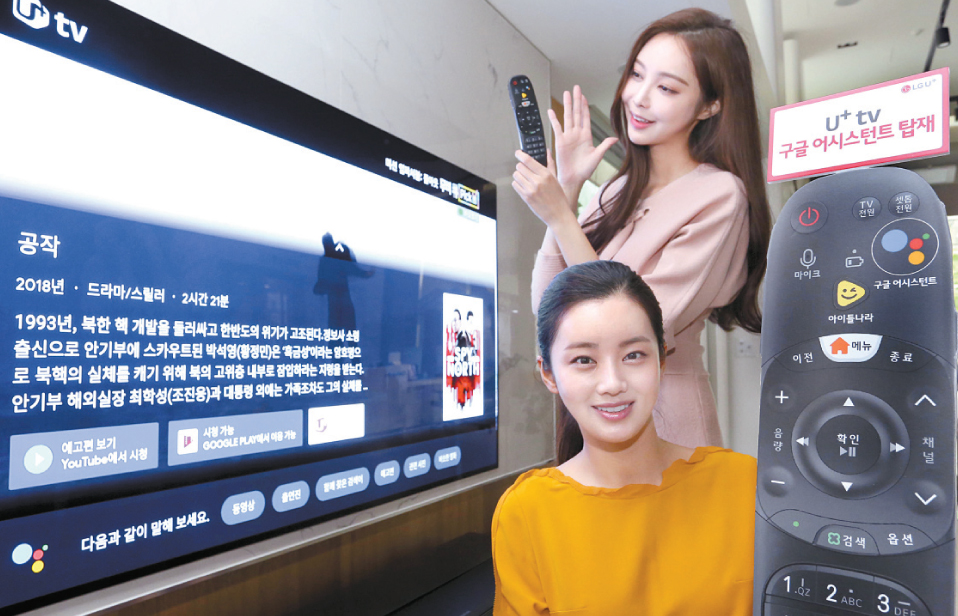
    LG U+ said on Wednesday that it will enable its customers to use Google Assistant for its IPTV set-top box. Subscribers to LG U+ IPTV service can use Google’s AI voice assistant to watch YouTube on TV, launch the Google Photos app as well as use translate and search features with a remote control specifically devoted to Google Assistant.

    Searching for videos on YouTube and viewing photos on smart TVs is hardly new for owners of the latest smart TVs, but using a remote control for real-time translation on a TV is a unique feature.

    “We plan to continue expanding the fields of cooperation with Google that began in 2012,” said Won Kang-hoon, leader of the IPTV partnership service team at LG U+.

    LG U+, an affiliate of LG Electronics, already joined forces with top domestic search engine and portal operator Naver last December to let its customers use Naver’s Clova AI platform for its cable TV service. The telecom operator even tied Clova Friends, an AI speaker, with its subscription services as part of a joint promotion.

    LG U+ IPTV subscribers, who total around 2 million, can use both Clova and Google Assistant. But the telecom has yet to decide whether to link the Google Home AI speaker with its IPTV service.

    SK Telecom and KT, the two largest telecom operators in Korea, have been building their own AI voice command platform. The former has Nugu and the latter has Giga Genie. Other tech firms, such as Samsung Electronics and Naver, have theirs as well. LG U+’s affiliate LG Electronics has its own ThinQ platform, but as of now it only works with home appliances and smartphones.

    LG U+ first released a set-top box equipped with the Google TV operating system in 2012. Four years later, it let subscribers watch some curated YouTube video content. Last August, LG U+ began offering YouTube Kids content to subscribers.

  • Indonesia’s Tauzia Hotels Joins Hands With Ascott for Southeast Asia Expansion

    Indonesia’s Tauzia Hotels Joins Hands With Ascott for Southeast Asia Expansion

    Green Oak Hotel Management, the holding company of Tauzia Hotels, announced on Thursday that it will cooperate with Ascott Limited, an international serviced-residence operator, to expand its business in Southeast Asia.

    The plan will see Tauzia open hotels in Malaysia, the Philippines, Cambodia, Laos and Myanmar.

    Tauzia currently operates 122 hotels, with a total of nearly 20,000 rooms, in Indonesia and Vietnam under six brands, including Harris, POP!, YELLO, Fox Harris, Harris Vertu and Préférence.

    Most of the company’s hotels are in Indonesia, mainly in Jakarta, Bali, Bandung (West Java), Surabaya (East Java) and Yogyakarta.

    “This partnership will enhance Tauzia’s future growth and performance as Ascott’s expertise and support will contribute greatly toward expanding our brand and product offerings in Asia and even beyond,” Tauzia Hotels founder Marc Steinmeyer said in a statement.

    Around 70 percent of its customers are business travelers, while the remainder are leisure travelers.

    The company has opened 10 hotels, with a total of 1,500 rooms, so far this year, including a POP! Hotel and Harris Hotel in Solo and Semarang in Central Java, a Fox Harris Hotel in in Bali and in Bandung, West Java, and a Harris Resort in Batam, Riau Islands.

    The company plans to open Liu Men by Préférence – its high-end hotel brand – in Melaka, Malaysia, before the end of this year.

    Through Ascott’s investment in Tauziah, the company expects to capture the untapped, but growing market in the region as it sees strong opportunities in the middle-class and business segments, Ascott chief executive Kevin Goh said.

    “[The growing middle-class] is brought on by the rise of the economy, commuters, infrastructure builders, other project-based workers and tech-savvy, self-sufficient and value-conscious leisure travelers. With our investment in Tauzia, we look forward to accessing this market, which is one of the fastest-growing segments in the hotel industry,” Goh said.

    He said Ascott will help Tauzia to access the international market by connecting the group to its 100,000 global corporate clients.

    Singapore-headquartered Ascott has had a presence in Indonesia for the past 22 years. The company operates 17 serviced residences, with a total of more than 3,000 residential units, in Jakarta, Bali, Bandung, Surabaya, Yogyakarta, Karawang (West Java) and Makassar (South Sulawesi).

  • Axiata Malaysia evaluating options on stake in M1

    Axiata Malaysia evaluating options on stake in M1

    Axiata Group Bhd, which is evaluating its options on a possible buyout offer by two of M1 Ltd’s major shareholders Keppel Corp Ltd (KCL) and Singapore Press Holdings (SPH), is hoping for accurate future value for its 28.7% interest in M1.

    News reports in Singapore cited that both companies are planning to launch a general offer for shares they do not own in M1. The deal is expected to fetch a market value of S$1.51 billion (RM4.6 billion).

    KCL and SPH hold 19.3% and 13.5% stake in M1, respectively.

    In a statement released today, Axiata said any transaction involving M1 stake should reflect its accurate future value as well as incorporate acceptable control premium based on market norms and precedent transactions of similar nature.

    Axiata said the group is currently reviewing its position in view of a possible transaction to be further announced by KCL and SPH on its M1 shares.

    “The company is already in discussion with a financial institution to act as its adviser to review various options available to Axiata with the sole objective that the company continues to vigorously protect and enhance shareholders’ value of both Axiata and M1, the latter via its board representation.”

    “The financial institution will also advise the company once KCL and SPH officially announce their proposed transaction,” it added.

    Axiata’s share price gained 19 sen or 4.2% to close at RM4.75 today with 3.02 million shares changing hands.

  • Weakening Rupiah Sees Calls for Gov’t to Scrap Palm Oil Export Tax

    Weakening Rupiah Sees Calls for Gov’t to Scrap Palm Oil Export Tax

    A lawmaker and an industry analyst have called on the government to scrap its export tax on crude palm oil to help improve the competitiveness of the sector and boost exports, amid a weakening rupiah.

    Since 2015, the  Indonesian Oil Palm Estate Fund (BPDPKS), which is tasked with strengthening and promoting sustainable practices in the industry, has been imposing a $50 per ton export levy on crude palm oil and $30 per ton levy on crude palm oil derivative products when prices drop below $750.

    The levies were imposed to encourage local producers to sell more of their products at home and to incentivize local biodiesel producers. However, palm oil producers have complained about this policy since the start, as it burdens those seeking to export their products, which is more beneficial during a stronger dollar.

    “Under this condition, the government needs to be flexible in imposing some policies. It should consider scrapping the export tax … to help us to achieve a trade surplus,” said Eriko Sotarduga, a member of House of Representatives Commission VI, which oversees trade, industry and business competition.

    The rupiah strengthened to 14,825 to the dollar on Friday from 14,840 previously, according to data. It has fallen by 8.5 percent so far this year. Indonesia’s trade balance returned to a $1.72 billion surplus in August after recording its first deficit in 19 months in July.

    Eriko said amid the current low price of crude palm oil, scrapping export levies could help producers to expand the market, because they have been struggling to compete with other vegetable oils.

    Meanwhile, Bungaran Saragih, an advisor at the Palm Oil Agribusiness Strategic Policy Institute, said the government must provide the industry with its full support, given the fact that the industry sustains millions of people, with about 40 percent of the country’s production coming from smallholders.

    “Nowadays, palm oil is the best commodity” to support the nation’s economy and currency. Therefore, it deserves some incentives, he said.

    The government has been very careful in dealing with the sector as the commodity is the biggest foreign-exchange contributor.

    Palm oil exports reached their highest value ever last year at $23 billion, which was a 26 percent increase from 2016.

    However, the current administration is also cautious about issuing new permits to producers. President Joko “Jokowi” Widodo ordered a review of existing permits on Wednesday, amid growing concern over deforestation in the country.

    As reported earlier this week, environmental activist group Greenpeace International accused 25 palm oil producers, supplying some of the world’s most renowned brands, of contributing to massive forest destruction.

  • Decathlon opened first Korean store

    Decathlon opened first Korean store

    The first Decathlon South Korea store has opened.

    The French-headquartered sports goods retailer is rapidly expanding its Asian footprint, last year opening its first store in Indonesia and in January planning its fourth Singapore store, a 5000sqm flagship.

    The new Decathlon South Korea store is takes up 7800sqm in Songdo, near Seoul. Its opening early this month coincides with the launch of its South Korean e-commerce platform. Four more outlets are in the works to be opened within two years.

    Stephane Guy, CEO of Decathlon South Korea, said: “Songdo is a sports city. There are many parks where we can run, walk and we have many families living here too. It‘s exactly what we wanted.”

    Decathlon operates 1415 stores in 47 countries.