Author: Mei Ling Tan

  • Payment security is paramount as Asia Pacific strives to become the global leader in cashless transformation

    Payment security is paramount as Asia Pacific strives to become the global leader in cashless transformation

    The importance of payments security was reinforced today at the Visa Asia Pacific Security Summit as the region is poised to lead the global transformation from cash to digital payments.

    Urbanization and increasing mobile usage are driving the appetite for digital payments across Asia Pacific. Half of the region’s population lives in towns and cities, and more than two thirds (1.3 billion) of the 1.9 billion internet users in Asia Pacific access the internet via their smartphones.

    Asia Pacific is an US$11 trillion market in terms of payment volume. Currently, more than half (55 percent), of all transactions are still cash, meaning there is a US$6.1 trillion cash opportunity waiting to be converted into digital payments.

    While new innovations are set to enhance the payments experience for consumers, security and maintaining the integrity of the payments system is key to growing commerce. The fast-changing payments ecosystem will require security measures that do not come at a cost of convenience for both customers and merchants.

    Joe Cunningham, Head of Risk Asia Pacific Visa, said: “Payments security and convenience were once considered opposing forces. Not anymore. We have reached a point where security is embedded in the process. It doesn’t come at the cost of convenience but, rather, it enables innovation.

    “Visa is committed to ensuring our network operates at the highest level of security available and will continue to steer the industry towards the adoption of strong technologies based on industry-standards such as EMV chip, tokenization and point-to-point encryption.”

    Closer to home in Thailand, around 75 percent of all transactions are still cash. However, the increased adoption of mobile and contactless payments technology will see electronic payments continue to penetrate into everyday payment segments like supermarkets, coffee shops, and cinemas, reducing the reliance on cash.

    Visa also reinforced the importance of taking a standards-based approach to innovation and applying a consistent set of principles for security, reliability and interoperability.

    “Visa advocates a standards-based approach to new innovations so all stakeholders in the ecosystem can benefit and participate. We want to promote standards that make it easier for all parties in the payments ecosystem to adopt and deploy new technologies that meet the highest security standards,” added Mr. Cunningham.

  • Stelux Holdings warns of annual loss

    Stelux Holdings warns of annual loss

    Stelux Holdings International has warned shareholders of an impending loss due to slow sales through its store network and narrower margins.

    The Hong Kong-listed retail company, which operates the Optical 88 and Egg eyewear chains and City Chain jewellers, said the closure of underperforming stores and a reduction of overheads has eased the loss, which it expects to be less than that recorded last financial year.

    It did not release an estimate.

    In the company’s half-year results, reported last November, Stelux’s turnover was down by 6.9 per cent to HK$1.3 billion (US$166.4 million) and gross profit margin fell from 59.6 to 58.1 per cent. Its first-half loss was down 15.2 per cent to $62 million.

    Stelux says it will report its full, March-year figures on June 21.

  • Luxottica sales hit by China restructure

    Luxottica sales hit by China restructure

    Luxottica announced a decrease in first-quarter sales for fiscal 2018, hurt by a slump in European revenues due to bad weather, and distribution restructuring in China.

    The maker and distributor of luxury eyewear said first-quarter revenue plummeted 10.7 percent to 2.13 billion euros, compared with 2.39 billion euros in the same period the previous year. With the effect of currency swings, sales were down 0.8 percent.

    For the three months ended March 31, the Italian firm’s wholesale channel recorded an 11.1 percent to 830 million euros, or 4.2 percent at constant exchange rates, hurt by bad weather in Europe, which delayed orders by several weeks.

    For the quarter, retail sales were down 10.4 percent to 1.3 billion euros, but grew 1.3 percent at constant exchange rates, while comparable-store sales decreased 0.6 percent, said the firm.

    By region, Asia-Pacific sales declined 9.3 percent to 279 million euros, representing 13 percent of total sales for the quarter.

    The dive was driven by China’s negative performance, as Luxottica continues to restructure its distribution channel, taking it to a more direct-to-consumer model.

    The overall China downfall was offset by Australia, Japan and India, as well as travel retail, benefitting from stellar retail performances at Sunglass Hut at OPSM in Australia and LensCrafters and Ray-Ban stores in China.

    By comparison sales in North America were down 13 percent to 1.19 billion euros, accounting for 56 percent of total revenues; Europe retail sales decreased 5.5 percent to 489 million euros, after twelve consecutive quarters of growth; and sales in Latin America decreased 9.8 percent to 131 million euros.

    Looking ahead, the Italian company confirmed its full-year guidance and remains in the process of merging with French lens maker Essilor. The merger has been cleared by antitrust authorities in 18 separate countries but awaits approval from China still.

    Luxottica is licensed to make eyewear frames for luxury fashion brands such Armani, Michael Kors and Prada, and is the owner and maker of sunglass brands Ray-Ban, Oakley and Oliver Peoples.

  • ‘Healthy’ sales for Macy’s physical stores

    ‘Healthy’ sales for Macy’s physical stores

    “Healthy” physical store sales for US department store have  exceeded expectations, prompting the retail giant to lift its business outlook for the year.

    Macy’s posted an overall sales increase of 3.6 per cent increase for the quarter compared to the same period last year to $5.5 billion.

    The company has raised its outlook for 2018 and is now expecting earnings to be between $3.75 and $3.95 a share, which is five per cent more than in 2017.

    “Macy’s Inc.’s results for the first quarter of 2018 reflect continuing momentum in the business,” said Jeff Gennette, Macy’s, Inc. chairman and chief executive officer.

    “We exceeded our expectations and saw strong performance across all three brands—Macy’s, Bloomingdale’s, and Bluemercury—as well as across all geographic regions and families of business. We are maintaining a healthy inventory position, which helped us deliver improved gross margin.”

    Gennette said the winning formula for Macy’s, Inc. is a healthy brick and mortar business, robust e-commerce and a great mobile experience.

    “While we have more work to do, the continuing improvement in our stores is encouraging and we once again achieved double-digit growth in the digital business,” he said.

    “Our best customer is responding well to the improvements we’ve made to her experience in our stores, on .com and through the Macy’s app.”

    Neil Saunders, managing director of GlobalData Retail, said Macy’s results showed a positive answer to the question on whether Macy’s could continue to deliver a recovery.

    “The sales uplifts are particularly impressive, with a 3.9 per cent rise in comparables (4.2 per cent on an owned plus licensed basis) suggesting that Macy’s recovery is gaining momentum,” Saunders said. “That said, there are a few caveats that need to be addressed in order to provide a balanced view.”

    Saunders said the first of these is the shift of the Friends and Family promotion to this period; last year this fell into the second quarter.

    “This event is a big driver of sales and added 250 basis points to the comparable numbers. Stripping this out means that comparables rose by a respectable, but more modest, 1.7 per cent on an owned plus licensed basis,” he said.

    “To be fair, this still represents progress from the 1.4 per cent increase Macy’s posted last quarter.”

    The second consideration, according to Saunders, is the very weak prior year comparative when sales dropped by 5.2 per cent on a comparable basis and by 7.5 per cent on a total basis. While beating prior year sales was never guaranteed, with a little effort it has been relatively easy for Macy’s to engineer a better performance. This is especially so given that many underperforming stores which dragged down the same-store figures have been shut.

    The third point relates to the general consumer economy which has been strong over the period. Tax cuts, bonuses and good tax refunds have all been a windfall to consumers who have responded by increasing spending.

    “This rising tide has floated most retail boats, Macy’s among them,” he said. “This does not mean that Macy’s deserve no credit for its advancement, but it does mean that the process of re-engineering the business is being carried out against a favorable backdrop.”

    The future danger, Saunders said, is that many of these dynamics will not hold as Macy’s moves through the fiscal year.

    “Prior year numbers become tougher, the second quarter will lose an important event, and the consumer finances will likely tighten,” he said. “Taken in concert, this suggests that performance may well deteriorate.”

    Saunders said the reason for their pessimism is that they believe Macy’s still has many fundamental issues that it needs to work through. These include sub-optimal ranges, a store experience that leaves a lot to be desired, and many locations where traffic is likely to decline over the medium term. On top of all of this, competition remains tough.

    “There are many tempting raw ingredients in Macy’s strategy,” he said. “Our main concern is that these need to be mixed together into a more coherent dish. And this dish needs to be served up at more of Macy’s stores across the country. In short, progress is being made, but Macy’s needs to up the pace if it is to maintain momentum.”

  • Enjoy A Good Dram At The Third Edition Of The DFS Whiskey Festival

    Enjoy A Good Dram At The Third Edition Of The DFS Whiskey Festival

    DFS Group, the world’s leading luxury travel retailer, is to host the third edition of The Whiskey Festival at Singapore Changi Airport. Taking place from now until June 17, the festival is set to celebrate some of the world’s finest whiskies and provide travelers with a platform to expand their whiskey knowledge and immerse themselves in some of the classics.

    Throughout the festival, travelers will be invited to taste some of the world’s best whiskies, including rare and limited-edition items, some of which are exclusively available only at DFS. A line-up of interactive masterclasses will take place each weekend, where leading brand ambassadors will be on hand to guide guests through an interactive tasting of handpicked whiskies and offer expert advice.

    “As interest in whiskey continues to grow, we aim to provide our customers with the best selection of products as well as a unique and engaging retail experience,” said Wilcy Wong, DFS Group Managing Director, Singapore and Indonesia. “DFS Singapore, Changi Airport is home to the largest assortment of single malt whiskies in Southeast Asia, so we feel education is important. The Whiskey Festival offers guests an opportunity to really understand our brands, their craftsmanship and their heritage.”

    The Festival activities will take place at The Whiskey House, located in Terminal 2 (T2) and Terminal 4 (T4), at DFS Singapore, Changi Airport. Since opening in July 2016 in T2 and in November 2017 in T4, The Whiskey House has been a popular spot for travelers and whiskey aficionados alike. The space offers an intuitive and experiential shopping destination where guests can enjoy complimentary tastings of over 100 different whiskies from across the globe.

    Ms Teo Chew Hoon, Group Senior Vice President for Airside Concessions, Changi Airport Group, said, “Together with DFS, we reignite the senses as we showcase a rich blend of the world’s most loved whiskey at Changi Airport’s Whiskey Festival. The exquisite whiskey tastings and calendar of activities will craft one-of-a-kind experiences for travelers as they journey through Changi Airport. ”


  • Overseas spending by Korean travellers sets new record in Q1

    Overseas spending by Korean travellers sets new record in Q1

    South Korean travelers’ spending overseas hit a record high in the first quarter this year as people went on trips during winter school breaks and extended holidays, statistics from the central bank showed on 6 May.

    Some 7.43 million South Koreans went abroad in the first three months, up 14.1 percent from the same period last year, setting a new record, according to the Bank of Korea. The period coincided with winter vacation and the extra-long lunar New Year holiday that combined with two weekends and a bridge off-day.

    The travelers spent US$8.5 billion, US$1.12 billion more than in the first quarter of last year. The latest number beats the previous record of US$8.21 billion in the fourth quarter last year. A monthly record was set in January with US$3.24 billion in spending.

    A strong local currency apparently encouraged overseas trips, especially to relatively close destinations such as Japan, Taiwan and Vietnam.

    The travel sector deficit in the first quarter increased from US$1.13 billion in the same quarter last year to US$4.87 billion this year. The level or deficit this year, however, is US$50 million less than the previous quarter, marking the first contraction in five quarters.

    Spending by foreign visitors to Korea contributed to the contraction. They spent US$3.63 billion while in the country in the first quarter this year, an increase of US$340 million from the previous quarter. In March, the incoming visitors spent US$1.4 billion, the biggest amount since December 2016.

    A total of 3.36 million foreigners came to Korea in the first three months, down 9.1 percent from the same period the previous year. The number of Chinese travelers dropped 30.5 percent, but people from Japan increased 2.5 percent.

  • Watsons Thailand embraces both online and offline approach

    Watsons Thailand embraces both online and offline approach

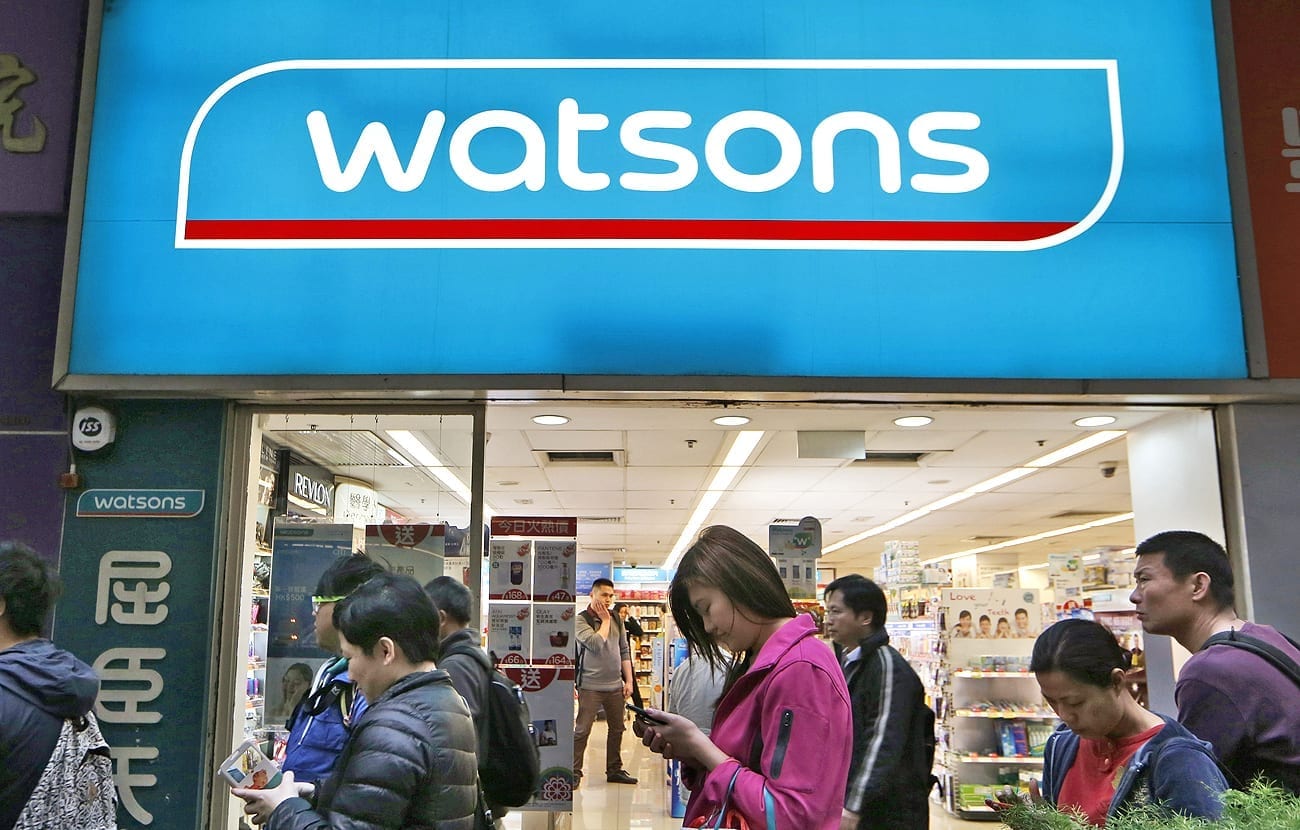
    Health and beauty retailer Watsons Thailand has announced it will have an “O and O” (“online+offline”) focus for its growth this year.

    AS Watsons regional MD Rod Routley says a strong store network, digital capabilities and growing e-commerce platform position the company well to meet evolving customer expectations.

  • Alibaba buys Pakistani online retailer Daraz

    Alibaba buys Pakistani online retailer Daraz

    Alibaba has bought Pakistani e-commerce firm Daraz, as the Chinese tech giant looks to increase its presence in South Asia.

    Financial details of the transaction, which was announced on Tuesday, were undisclosed.

    Daraz, founded in 2012, is backed by European tech incubator Rocket Internet. It operates in Bangladesh, Myanmar, Sri Lanka and Nepal as well as Pakistan.

    The deal marks another foray for billionaire entrepreneur Jack Ma’s Alibaba into the South Asian market. The e-commerce titan invested in India’s popular payment app Paytm in 2015.

    “Together with Daraz, we can now empower entrepreneurs to better serve consumers in the region through our technology and expertise,” Alibaba CEO Daniel Zhang said in a statement Tuesday.

    Daraz will continue to operate under the same brand, Rocket Internet said in a statement.

  • imageHOLDERS Showcased Innovative POS Solutions at RBTE 2018

    imageHOLDERS Showcased Innovative POS Solutions at RBTE 2018

    imageHOLDERS showcased their innovative iPad tablet kiosks and retail POS systems at Retail Business Technology Exhibition 2018 at London Olympia.

    Attendees who visited imageHOLDERS at RBTE were able to experience the diverse range of POS, loyalty and employee management kiosks imageHOLDERS offer. imageHOLDERS launched their new Integrator Pro 15, an all in one POS self-service kiosk. The solution was one of the most popular kiosks on the imageHOLDERS stand, due to its versatility with enclosing multiple different devices to create a bespoke solution for each customer.

    Adrian Thompson, CEO, imageHOLDERS said: “RBTE 2018 was a really successful show for imageHOLDERS. We have invested time in understanding the customer journey, ensuring our self-service kiosks are designed with the end user in mind. Our newest product, the Integrator Pro 15 is our latest take on one of our favourite products. Taking the existing form and updating it to reflect the markets needs, we’ve already seen the interest in the all in one solution, and look forward to working with our current and future customers to transform the world of self-service.”

    imageHOLDERS demonstrated their ability to securely enclose any tablet by showcasing over 25 different tablets and touch screens within their tablet kiosk stands. Among the many tablets enclosed were Linx, Apple, Microsoft, Samsung, Aures and Flytech touch screens.

    imageHOLDERS have been working closely with clients to provide both front of house and back of house retail solutions, supporting businesses with everything from POS to staff check-in systems. Some of the ways in which tablet kiosks have already been successfully used within the retail industry are:

    • Digital catalogue extensions
    • Express self-service check-outs with POS
    • Staff check-in and time management kiosks
    • Digital loyalty and tokenisation programs
    • Digital signage and wayfinding
  • NEC applies AI to subsea cable networks

    NEC applies AI to subsea cable networks

    NEC has announced it has applied AI to subsea cable networks to push the capacity limits of the transmission networks.

    During joint research with Google, NEC applied AI and probabilistic shaping using 64 quadrature amplitude modulation (64QAM) to the FASTER subsea cable linking Taiwan, Japan and the US west coast.

    The study demonstrated that the 11,000km FASTER cable can be upgraded to a spectral efficiency of 6 bits per second per hertz. This would represent a capacity of more than 26Tbps, over two and a half times the capacity originally planned for the cable.

    According to NEC, the team used probabilistic shaping techniques that near the Shannon limit, the theoretical maximum transmission speed over a telecoms network before the signal is drowned out by noise, at a modulation of 64QAM.

    For the first time on a live cable, AI was used to analyze data for the purposed of nonlinearity compensation (NLC). The trial used an NEC developed compensation algorithm based on deep neural networks to accurately estimate signal nonlinearity.

    “Other approaches to NLC have attempted to solve the nonlinear Schrodinger equation, which requires the use of very complex algorithms,” NEC GM of submarine networks Toru Kawauchi said.

    “This approach sets aside those deterministic models of nonlinear propagation, in favor of a low-complexity black-box model of the fiber, generated by machine learning algorithms. The results demonstrate both an improvement in transmission performance and a reduction in implementation complexity.”

  • AirAsia wants travel tax waived in Clark to lure more passengers

    AirAsia wants travel tax waived in Clark to lure more passengers

    AirAsia has asked the government to waive travel taxes and grant other incentives for Filipinos who will opt to fly from Clark to help decongest the main airport in Manila, the airline said Thursday.

    The Southeast Asian carrier also said it was transferring its main office to Clark, a former American military base that the government has transformed into an industrial hub.

    “We are requesting for the removal of travel tax for Filipinos. Hopefully, we can do that in Clark first para naman maakit sila to fly from Clark,” AirAsia Philippines President Dexter Comendador told reporters here.

    Filipinos are required to pay a travel tax of P1,600 when leaving the country.

    Comendador said the airline is also counting on the government’s “Build, Build, Build” program to make flying from Clark more appealing to travelers.

    “There are prerequisites to that which is the connector roads, mass transit system. So it’s [dependent on] how fast the government can build,” he said.

    AirAsia wants to turn Clark into the country’s low-cost carrier hub so that budget airlines would not have to queue along with international carriers at the Ninoy Aquino International Airport (NAIA), Comendador said.

    Last month, the Manila International Airport Authority (MIAA) proposed terminal reassignments for at least 26 carriers at NAIA to decongest the country’s main airport.In 2015, about 150 to 200 flights were delayed daily at the NAIA, airport officials said. NAIA serves about 7.5 million passengers annually, when its capacity is only at 5.5 million.

    AirAsia also intends to make Clark its main hub within 5 years as it increases its fleet size to 72 from 22 within a decade.

    “If I add 50 planes, where can I put them in Manila?” he said noting that they are already having problems finding space for their 22 planes in the capital.

    The airline is also planning to develop airports in Panglao, Puerto Princesa and Davao as secondary hubs, he said.

  • Cebu Pacific to expand footprint in Japan with new office

    Cebu Pacific to expand footprint in Japan with new office

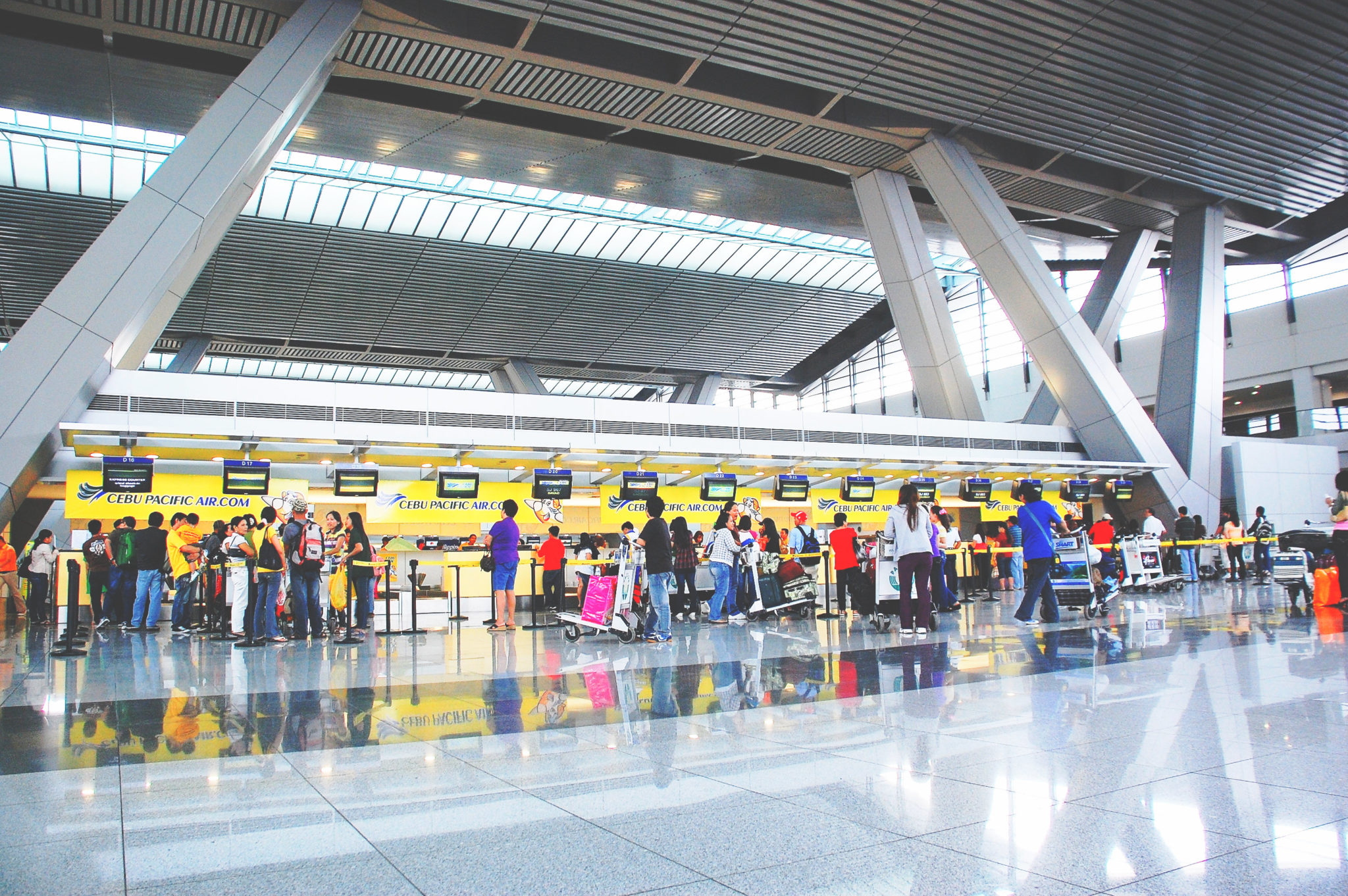
     Cebu Pacific opened an office in Japan, as the budget airline continues to expand in Asia Pacific and boost its presence in the Japanese market.

    Located in Chuo-ku, Tokyo, the airline’s Japan office will serve as the hub for Cebu Pacific’s activities and business transactions in Japan.

     “Our very own branch office in Japan symbolizes the next stage of growth into the Japanese market which has become one of the most important across our network,” Cebu Pacific chief executive adviser Mike Szcus said in a statement on Wednesday, May 16.

    Cebu Pacific offers flights to 37 domestic and 26 international destinations across Asia, Australia, the Middle East, and the United States (Guam).

    With the new office, Szcus said passengers can easily connect to top tourist islands in the Philippines, or to other cities around Southeast Asia, Guam, or Australia via Manila or Cebu.

    Tomohiko Matsumoto was appointed as the airline’s country manager for Japan in December last year. 

    Before joining Cebu Pacific, Matsumoto served as country manager and international air cargo manager for Qatar Airways. He was also Tiger Air Taiwan’s sales and marketing manager for Japan.

    “There is much opportunity for trade and tourism between Japan and the Philippines. Our vision is to bridge the gap between the Japanese market and Cebu Pacific Air,” Matsumoto said.

    “Cebu Pacific, with year-round low-cost fares, gives Japanese travelers more options and more choices. We look forward to enticing more Japanese to visit the Philippines and fly with Cebu Pacific,” he added.

    Now on its 10th year of operations in Japan, Cebu Pacific mounts about 70 flights a week between Japan and the Philippines.

    Cebu Pacific flies between Manila and Narita, Osaka, Nagoya, and Fukuoka, as well as between Cebu and Narita, using its fleet of Airbus A330 and A320 aircraft.

    “In 2017, we flew over 435,000 passengers between the Philippines and Japan. Compared to the number of Japanese travelers, there is much room to grow,” said Alex Reyes, vice president for cargo at Cebu Pacific.

    The airline’s 65-strong fleet includes 4 Airbus A321ceo, 36 Airbus A320, 8 Airbus A330, 8 ATR 72-500, and 9 ATR 72-600 aircraft.

    Between 2018 and 2022, Cebu Pacific expects delivery of 4 more A321ceo, 32 Airbus A321neo, and 7 ATR 72-600 aircraft.

    The Gokongwei-led airline saw its net income increase by 12% to P1.437 billion in the 1st 3 months of the year, despite the rise in global oil prices and the weakening of the Philippine peso against the US dollar.

  • China Tower files IPO application

    China Tower files IPO application

    Chinese state-backed tower company China Tower has filed an application for an IPO on the Hong Kong Stock Exchange (HKSE) that could raise as much as $10 billion.

    The company, which was created to hold the tower assets of China’s big three state-backed operators China Mobile, China Telecom and China Unicom, filed its IPO documents on Monday.

    The report cites unnamed sources as stating that China Tower is expected to seek a valuation of up to $40 billion, although the final size of the offer will depend on market sentiment.

    China Tower is the world’s largest tower company, operating around 1.9 million tower sites across China. The company’s net profit grew more than 25 times last year to 1.9 billion yuan, according to its prospectus.

    China Tower was established in 2015 as part of a government-directed initiative to eliminate inefficiencies and duplication of assets. China Mobile, China Unicom and China Telecom agreed to transfer their tower assets to the joint venture in exchange for a 38%, 28.1% and 27.9% stake respectively. State-owned asset manager China Reform Holding took the remaining 6%.

    The joint venture had initially planned to hold its IPO early this year, but had reportedly faced delays in securing the needed approvals.

    China Tower’s IPO could be the second $10 billion public offer on the HKSE this year. Earlier this month Chinese smartphone maker Xiaomi filed documents for its own IPO.

  • Tesla plans 6-day stoppage at factory for assembly line fixes

    Tesla plans 6-day stoppage at factory for assembly line fixes

    Tesla will pause production at its California factory for six days at the end of the May to work on fixes to its assembly line for its new Model 3 sedan, sources inside the company told Reuters.

    The Silicon Valley luxury electric car maker previously warned of 10 days of temporary shutdowns this quarter as the company addresses manufacturing problems that have delayed volume production of the Model 3 sedan, which is seen as crucial to Tesla’s long-term profitability.

    Two sources confirmed to Reuters that the next stoppage on the general assembly line at the Fremont, Calif., plant was scheduled for May 26-31.

    A Tesla spokesperson declined to comment.

    Tesla has been struggling to find solutions to manufacturing bottlenecks on the new assembly line that produces the Model 3, a sedan intended for volume production. An over-reliance on robots has complicated that task, CEO Elon Musk has acknowledged.

    Musk, Tesla’s billionaire founder, told employees it was “quite likely” the company would reach a rate of 500 Model 3s per day this week, or 3,500 a week, automotive news website Electrek reported on Tuesday, citing an internal email. Musk also told staff to alert him of “any specific bottlenecks” on the production line.

    The company shut down the Fremont assembly line last month, and also in February, for a few days to rework. The April shutdown, combined with the upcoming one, would add up to the planned 10 days of stoppages.

    Musk has said the planned stoppages are intended to give the company time to perform upgrades that will help it reach a goal of building 6,000 vehicles per week by the end of June. Musk last month said the company was producing 2,000 Model 3 cars a week.

    In order to meet the goal, Musk said last month that all Model 3 production would begin working around the clock. Reuters learned that the teams working on general assembly have already switched to three shifts, a schedule that helps maximize capacity and flexibility.

    Teams working on the body of the vehicle — where the external shell of the car is assembled — are working in two 12-hour shifts.

  • E-commerce giants struggle to find profit in Vietnamese market

    E-commerce giants struggle to find profit in Vietnamese market

    Some companies have been forced to shut down due to prolonged losses. Multiple online retailers in Vietnam have been struggling to gain profits for years due to high operational costs in a competitive market.

    Tiki.vn, one of the most popular e-commerce firms in Vietnam, recently reported a VND322 billion ($14 million) loss in two years.

    The loss in 2017 of the online retailer, which sells a variety of products including clothes, household items and electronic devices, has tripled its charter capital and is seven times its loss in 2016.

    Tiki.vn is not the only e-commerce company in Vietnam that has been suffering from losses in recent years.

    Before being acquired by the Chinese giant retailer Alibaba in 2016, Lazada Group said that it has lost $334 million in 2015 the Southeast Asia market, including Vietnam. This lost is double what it posted in 2014, according to TechCrunch.

    Some local e-commerce companies like Lingo.vn, Deca.vn and Beyeu.com have also been forced to shut down due to prolonged losses.

    Challenges for online retailers

    According to experts, e-commerce is an industry which requires a long time to recover capital and gain profit, therefore the losses of these giants in the Vietnamese market is understandable. Big brands in the field such as U.S.-based Amazon and Alibaba has to go for 10 years before having profit.

    Operating cost, especially logistics costs, is one of the main reasons for the losses. As large e-commerce firms often require massive warehouses covering thousands of square meters and hundreds of staff to work in them, logistics costs account for 60-70 percent of online retailers’ revenues, said trade expert Vu Vinh Phu.

    This enormous cost can be seen from the case of Tiki and Lazada Vietnam, each has a storage of over 4,000 square meters (about 1 acres) with 300 staff in Ho Chi Minh City. It is estimated that the operating cost of one of these storages is VND1 billion (about $44,000) a month. With three warehouses in operation, the two companies spend about $2 million a year, according to local media.

    In addition, marketing also plays a part in the high costs of e-commerce companies in Vietnam. When entering the market, Lazada Vietnam invested heavily in television and online advertising to attract users and gain market share. This company used to spend up to $2 million per month for advertising programs, local media said.

    The popularity of shopping on social networks such as Facebook or Zalo is also creating challenges for big online retailers. “There is an unbalanced competition between e-commerce giants such as Lazada, Tiki and Shopee with social network sellers,” said Pham Thai Binh, head of retails at property consultancy Savills Ho Chi Minh City.

    As businesses on social networks don’t have to pay high costs of investment, item price range is lower which in turn attracts the majority of Vietnamese people, Binh said. On the other hand, famous brands have to invest a great deal in terms of staff, operating system and other relating costs, he added.

    As Vietnamese has a habit of physically “touching” a product, they often surf the Internet for prices without actually ordering from the online retailers. The lack of information and customer service tools also plays apart in the problem.

    To compete in the market, retail giants in Vietnam are under pressure of price competition which leads to a loss of profit. Under pressure from investors, many businesses sometimes accept to sell 10 or 20 percent below market price, local media said.

    Potential market

    Despite those difficulties, experts believe that there is still great potential for e-commerce in Vietnam in the future.

    In a survey of about 1,000 participants conducted by CBRE Vietnam, a commercial real estate services and investment firm, 25 percent said that they will reduce the frequency of shopping at stores. About half of participants said that they will shop online more in the future.

    In the annual survey of Vietnam’s Business Studies and Assistance Center (BSA), the number of people shopping online has tripled from 0.9 percent in last year to 2.7 this year. As young people start to participate more in online shopping, e-commerce is a potential area for retailers to exploit, which will bring many benefits to customers, said a representative of BSA.

    E-commerce is a fast growing industry as customers’ behavior change every day, said Tran Tuan Anh, CEO of the online retailer Shopee Vietnam. “This year will be the year of e-commerce as Vietnamese people are now very familiar with online shopping,” he said.

    Price will continue to be an important factor for Vietnamese customers, but product quality and service are becoming more important, he said. As more and more consumers are aware of e-commerce, the brand, service, technology and value added services such as shipping and payment will need to be improved, Anh said.

    Tran Ngoc Thai Son, CEO of Tiki, also believes that the transition from traditional to online shopping is inevitable. E-commerce, now accounts for 3 percent of the $90-billion revenue of Vietnamese retail market, will grow to a 5 or 10 percent segment in the future, Son said. However, online shopping will not be able to replace brick and mortar businesses, he said.

    “The growth rate of Vietnam’s e-commerce market is estimated at about 35 percent, which is 2.5 times higher than Japan,” said industry expert Duc Tam at the Vietnam Online Business Forum 2017.

    According to one estimate, about 30 percent of the population will be buying goods and services over the internet in 2020, with each shopper spending an average of $350 per year.