Author: Mei Ling Tan

  • Richemont launches a new product to target millennials

    Richemont launches a new product to target millennials

    Luxury goods group Richemont has launched a new watch brand, Baume, offering trendy time pieces priced in the hundreds rather than the thousands of dollars to lure young people away from their smartphones for reading the time.

    Swiss watchmakers have seen sales improve recently, after a prolonged downturn, but are struggling to reach young people who wear no watch at all or a connected Apple Watch and want online services luxury watchmakers have been slow to embrace.

    The new Baume brand will be sold exclusively online with prices starting at $560, a clear indication it is aimed at younger customers. It will also try to appeal to their “green” conscience by using no animal-based or precious materials and only paper and cardboard for packaging.

    Richemont’s watch business consists of high-end brands, such as IWC or Jaeger-LeCoultre, that cost thousands or even tens of thousands of dollars and are still mostly sold in traditional brick-and-mortar stores.

    Luxury watch brands have only belatedly embraced digital marketing and distribution and are still seeking answers to the emergence of smartwatches such as the Apple Watch and the younger generation’s dwindling interest in traditional watches.

    The Baume brand, officially launched on Tuesday, offers unisex watches in a minimalist design with watch straps made of recycled materials. There is also a customizable series where users can choose from over 2,000 permutations through an online configurator, the brand said in a statement.

    Baume said it was “drawing experience and insight from the rich watchmaking history across the Richemont group” and was focused on “encouraging individuals to participate in a design-led global conversation”.

    “Maybe they want to try and become relevant for younger consumers,” Exane BNP Paribas analyst Luca Solca said.

    “They are using selling themes that should resonate well with millennials, at first sight. This could serve as the ‘access step’ into the category,” he said.

    Richemont reports full-year results on Friday.

    The group recently made an offer to acquire online retailer Yoox Net-a-Porter and has started selling more luxury timepieces online.

  • Giordano International sales boost by online sales

    Giordano International sales boost by online sales

    E-commerce has helped boost the first-quarter bottom line for Hong Kong-based clothing retailer Giordano International, particularly in China.

    Unaudited figures for the three months to the end of March show Giordano’s overall e-business generated HK$81 million (US$10.3 million) in revenue, representing a year-on-year increase of 44.6 per cent. Of this, Mainland China accounted for 87.9 per cent, with sales growth of 28.9 per cent.

    Giordano says growth momentum continued for the mainland. “The development of the two strategic channels of e-commerce and franchising were on track and will continue to be our growth drivers in the medium term.”

    Same-store sales (CSS) rose by 16.7 per cent despite 30 non-performing stores being closed in the past 12 months.

    A decline in gross margin by 1.3 points can be attributed to greater sales contribution from e-business, says the company.

    In Hong Kong and Macau, sales for the first quarter increased by 3.8 per cent, resulting from same-store sales growth of 9 per cent partly offset by the closure of a major non-performing store. Gross margin was down by 0.9 points as a result of a longer promotion period for the late Chinese New Year.

    In a rebound since last year’s second quarter, Taiwan grew same-store sales by 19.6 per cent and comparable store gross profit (CSGP) by 25.1 per cent.

    In the rest of Asia Pacific, sales increases mainly came from store expansion in Indonesia and the acquisition of its Vietnam business since July, which contributed to 5.9 per cent of the region’s sales.

    Despite a tough macro environment, other Southeast Asia markets delivered stable sales growth. Excluding the Vietnam acquisition, gross margin would have dropped by one point.

    South Korea – a 48.5 per cent JV under an independent management team – continued to deliver positive CSGP growth.

    “Inventory rationalisation and lower product costs through shared sourcing have contributed to a substantial gross margin improvement.”

    Overall, group sales for the quarter rose by 13.4 per cent to $1.4 billion while group gross profit grew by 12.5 per cent. Same-store sales and CSGP for the quarter grew by 9.5 and 8.7 per cent respectively.

    As at the end of March, the group had a network of 2414 outlets, of which 1271 were standalone stores – an increase of 40.

  • Shilla Duty Free outperforms in Q1 with record-high sales

    Shilla Duty Free outperforms in Q1 with record-high sales

    Hotel Shilla’s airport retailer Shilla Duty Free has posted record-high first-quarter sales of KRW1.14 trillion (US$1 billion).

    Korean-headquartered Shilla Duty Free earned KRW47.6 billion in operating profit in the quarter, mainly because of increased sales at its overseas duty-free shops.

    Sales last year hit KRW600 billion, and the company expects sales to hit KRW1 trillion this year.

    Shilla Duty Free opened its first overseas duty-free shop at Singapore’s Changi Airport in 2013, and in December opened its fifth overseas outlet at Hong Kong International Airport to become the first company to manage duty-free stores in the three largest airports in Asia – Incheon, Singapore and Hong Kong. It also has outlets at airports in Macau, Phuket and Tokyo.

  • Singapore tops list of app install fraud rates in Asia

    Singapore tops list of app install fraud rates in Asia

    Advertisers around the world lose as much as $700 to $800 million annually to mobile app fraud, according to a new global study.

    The State of Mobile Fraud Q1 2018 report by mobile marketing analytics and attribution platform AppsFlyer put Singapore, Indonesia and Hong Kong at the top of the list for app install fraud rates in Asia.

    According to the report, mobile app marketers were exposed to 30% more fraud compared to the 2017 quarterly average.

    Indeed, the share of fraudulent installs has also grown by 15% tainting 11.5 percent of all marketing-driven installs, with shopping, gaming, finance and travel apps the hardest hit – shopping apps is the most heavily hit vertical with $275 million exposed.

    The report concluded that bots are now the most dangerous threat, having replaced device farms as the most popular form of attack responsible for over 30% of fraudulent installs. A previous AppsFlyer study on “Device ID Reset” fraud had blamed device farms for costing advertisers up to $1.3 billion annually.

    And while the Android platform is more vulnerable to fraud, the iOS platform is also a target. Of course, the greater difficulty of device fraud on iOS means that fraudsters are resorting mainly to click flood methods. However, Android rates are higher for all other categories of fraud.

    While new protective measures are introduced, fraudsters are also adapting their techniques. The result is a slew of new measures, and new countermeasures in yet another game of cat and mouse. Ultimately, mobile marketing fraud has become a high stakes arms race as both sides leverage increasingly sophisticated methods.

  • Vinhomes’ shares jump 20 percent shortly after listing on Vietnam’s stock market

    Vinhomes’ shares jump 20 percent shortly after listing on Vietnam’s stock market

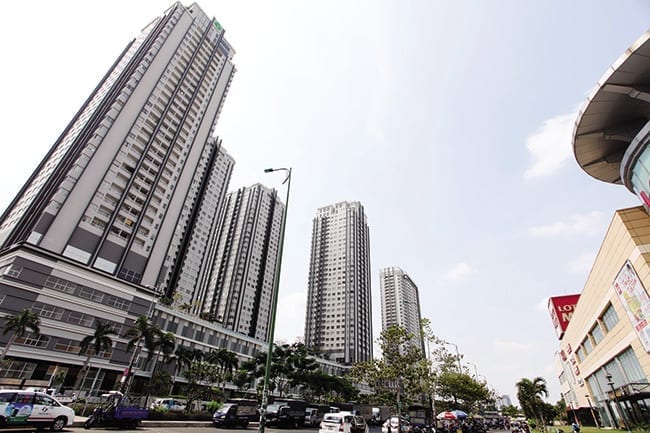
    Vinhomes JSC, the residential property developer of Vietnam’s biggest conglomerate Vingroup, saw its share price rise 20 percent from VND92,100 to VND110,500 ($4.85) per share in its first trading session after it was officially listed on the Ho Chi Minh Stock Exchange (HoSE) on Thursday morning.

    The company put 2.68 billion shares on Vietnam’s main bourse HoSE, and by Thursday afternoon, its market cap jumped to more than VND296 trillion ($12.9 billion).

    This means Vinhomes is now the company with second biggest market cap on the country’s stock market, standing behind its parent Vingroup, which is currently valued at VND333 trillion.

    An initial equity offering of Vinhomes JSC, the residential property development unit of Vingroup JSC, raised about $1.35 billion in Vietnam’s biggest ever issue, sources said earlier this month.

    Existing Vinhomes investors were selling about 268 million shares, or 10 percent of the firm’s equity capital, at VND114,700 ($5.03) each, versus an indicative range of VND110,500-114,700, said the sources, who are familiar with the matter but did not want to be named as terms of the pricing were confidential.

    This eclipsed an equity offering from Vietnam Technological and Commercial Joint Stock Bank, or Techcombank, which raised about $920 million last month.

    Vingroup JSC has been looking to raise as much as $2 billion from the listing of Vinhomes.

    Last month, Singapore wealth fund GIC came in as a pre-IPO investor and took a roughly 7 percent stake in Vinhomes for about $853 million by buying shares from Vingroup and other shareholders, sources said.

    Vinhomes’ first-quarter net profit jumped five times from the same period last year to VND3.99 trillion, and revenue surged three times to VND10.54 trillion, its financial statements showed.

  • Maki-san sushi chain to take a bow in Japan

    Maki-san sushi chain to take a bow in Japan

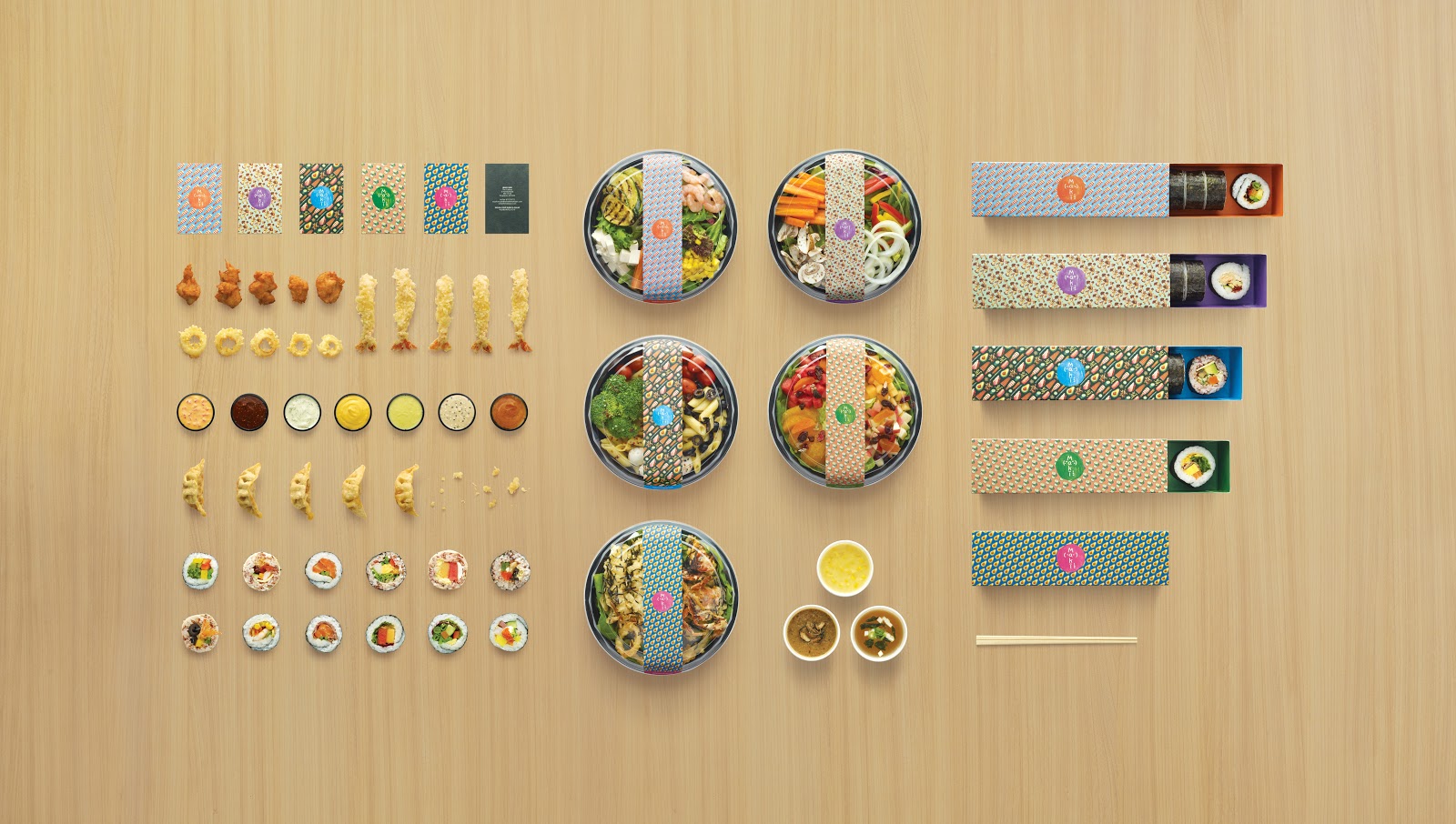
    Maki-san (“Mr/Ms Roll”), a Singaporean fast-food makizushi (rolled sushi) chain with 17 locations in its home country, is set to debut in Japan with an outlet in Osaka’s Shinsaibashi district in July.

    Maki-san has its own special take on the Japanese delicacy, saying it offers customisable sushi rolls and salad bowls including “a 60 per cent original Singaporean menu, 20 per cent original Japanese menu, and 20 per cent limited seasonal menu”. House specials are available for customers opting not to design their own sushi.

    Maki-san is also known for its cute posters and illustrations on social media.

  • Singtel posts record full-year profit

    Singtel posts record full-year profit

    Singtel has reported a record full-year profit of S$5.45 billion ($4.06 billion) for the 12 months ending in March, mostly as a result of the windfall the company received from the NetLink NBN Trust IPO last year.

    Singtel was required to divest 75% of its 100% stake in NetLink NBN Trust, the network company for Singapore’s next-generation national broadband network (NG-NBN), as a condition of the operator winning the tender for the NG-NBN project.

    NetLink NBN Trust completed an IPO that was more than two times oversubscribed in July, providing Singtel with a roughly S$2.3 billion windfall.

    Excluding this impact, underlying profit fell 8% as a result of a lower contribution from regional mobile associate Bharti Airtel and the lower economic interest in NetLink NBN Trust as a result of the divestment.

    Revenue for the year grew 5% to S$17.64 billion, driven by growth in mobile and fixed broadband customer numbers at Singtel’s wholly-owned Australian subsidiary Optus, as well as higher contributions from the group’s Digital Life division.

    Optus’ full-year revenue grew 3% as the company added 384,000 new mobile customers and 225,000 new NBN broadband customers.

    But Singtel’s share of pre-tax earnings from Singtel’s network of regional mobile associates fell 13.2% to S$2.3 billion due in part to the ongoing challenges faced by Bharti Airtel.

    For the current year, Optus is projecting a low single digit growth in consolidated revenue and flat ebitda. Dividends from Singtel’s network of regional associates are meanwhile expected to be around S$1.4 billion.

  • Luxury cosmetics brand Hera opens store in Singapore

    Luxury cosmetics brand Hera opens store in Singapore

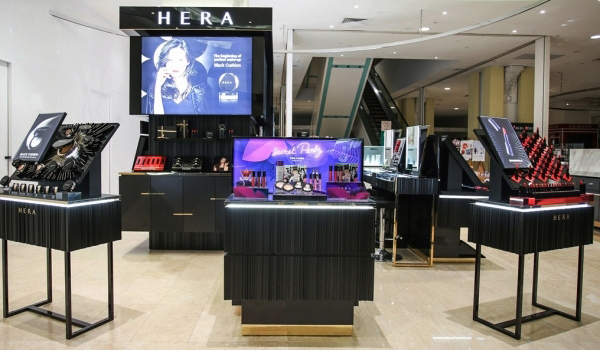
    Luxury beauty brand Hera under South Korea’s largest cosmetics conglomerate Amorepacific Group has opened its first store in Singapore that is expected to serve as the Korean beauty brand’s gateway to neighboring countries in Southeast Asia.

    According to Amorepacific on 11 May, Hera was officially launched in Singapore with the opening of its standalone boutique store inside Takashimaya Department Store.

    The move comes as luxury cosmetics brand Hera has been putting out efforts to expand its global business by entering into Association of Southeast Asian Nations (ASEAN) countries. Hera that entered China in 2016 plans to use Singapore as a bridgehead to venture into other markets in Southeast Asia.

    Hera expects the store in Singapore where hallyu, or Korean wave, is still catching on and consumers chase trendy lifestyle would help to accelerate its advance into other ASEAN markets.

    Amorepacific plans to mainly introduce skin care and beauty products that can help maintain fresh look against high humidity and temperature at its first store in the Southeast Asian country.

    In addition to the boutique store in Takashimaya Department Store, Hera plans to open a flagship store in the country before launching the brand in other neighboring countries.

    Amorepacific ventured into China immediately after Korea and China established diplomatic relations in 1992. The beauty powerhouse that has been seeking to drive the growth through overseas operations made a foray into Vietnam with its mid-tier Laneige brand in 2003 and now manages 20 direct outlets in the country.

    It also has been aggressively expanding its presence in other countries in Southeast Asia and the Middle East including Indonesia, Thailand, Singapore, and Dubai.

  • Hanoi approves plan for 203ha hi-biotech park

    Hanoi approves plan for 203ha hi-biotech park

    Ha Noi City’s People’s Committee has approved the adjustments of detailed planning for Ha Noi’s hi-biotechnology park in Tay Tuu, Lien Mac, Minh Khai and Thuy Phuong wards, Bac Tu Liem District.

    According to the approval, the hi-biotech park has a land area of ​​more than 203ha, including areas for the resettlement of about 1,000 people.

    The research area, located in the green belt of the Nhue River, will provide an open space, an ecological park that combines the functions of scientific research and the essential utility of the research environment.

    The Ha Noi hi-biotechnology park is being funded by Ireland’s Pacific Land Limited with a total investment capital of US$250 million for technical infrastructure and a number of service buildings, high-rise apartments and dormitories; and $800 million for specialised equipment, such as laboratory investments, research centres and universities.

    The park is to be developed into a high-tech, modern economic and scientific zone, serving research, education, development, application of experimental production and hi-tech transfers.

  • Lotte Group plans US$2.8 billion e-commerce spend

    Lotte Group plans US$2.8 billion e-commerce spend

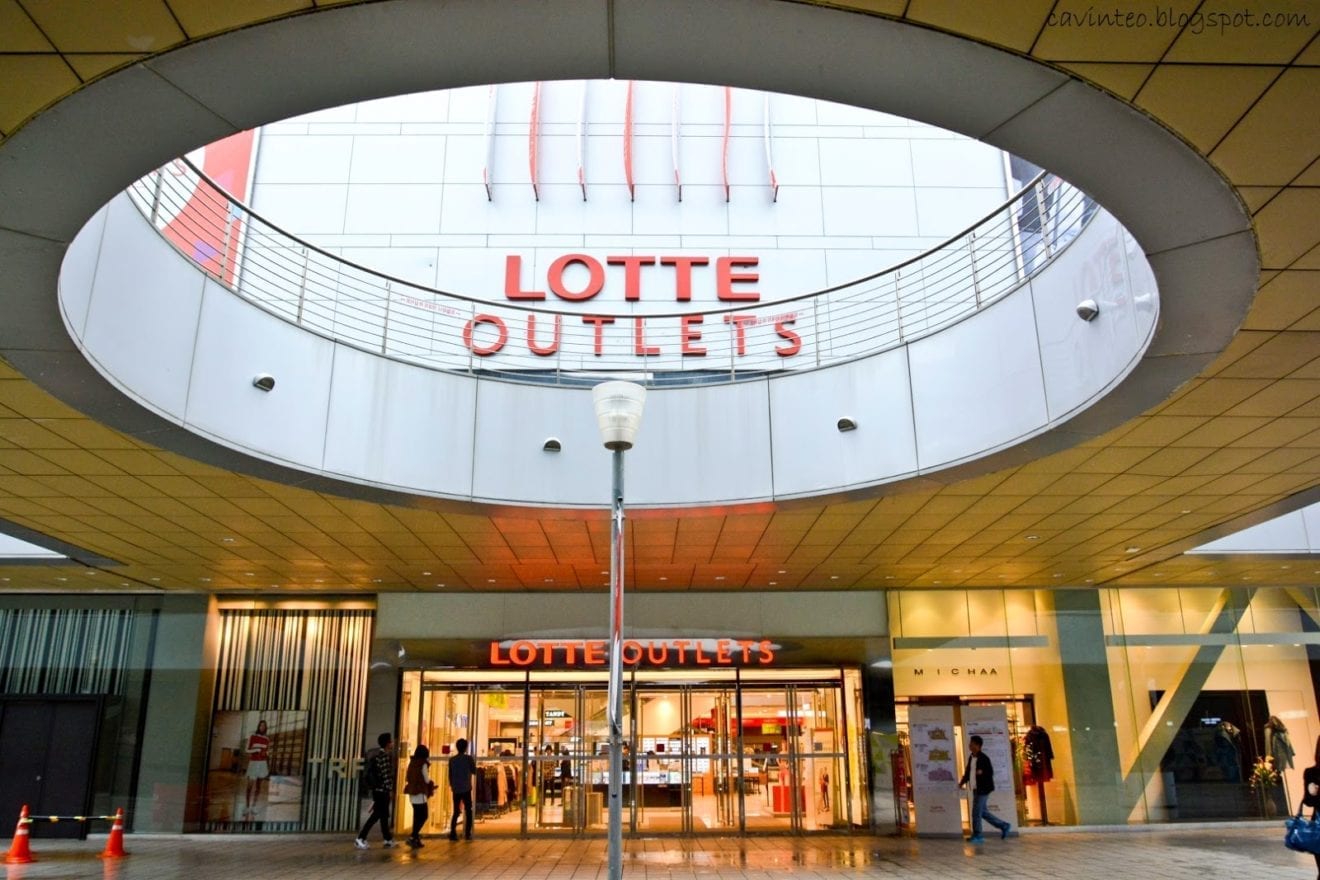
    Korea’s Lotte Group plans to invest KRW3 trillion (US$2.8 billion) into its e-commerce business.

    Lotte Shopping CEO Kang Hee-tae says a comprehensive online shopping platform will integrate all eight of its online stores by 2020. Lotte Group will form a business department in August dedicated to developing its e-commerce business. Its various retail businesses, including its discount chain Lotte Mart and electronics outlet Hi-Mart, each run separate online shopping platforms.

    “Lotte plans to dedicate KRW500 billion to developing the online and mobile service platform,” says Kang. “It will invest KRW1 trillion in systematising distribution and logistics and KRW1.5 trillion for marketing.”

    Lotte Shopping and Lotte Group will each invest KRW1.5 trillion in the project.

    Meanwhile, Lotte Shopping, which runs Lotte Mart, Lotte Department Store and Lotte Cinema, has already announced it will merge with Lotte.com, the retail giant’s first online shopping platform, which sells goods from the department store.

    Lotte.com, which was the first e-commerce site from a Korean conglomerate when it launched in 2000, has fallen behind industry rival Shinsegae’s SSG.com, which offers products from its discount chain Emart and Shinsegae Department Store.

    Lotte’s plan follows a January announcement by Shinsegae that it would invest more than KRW1 trillion in a company to oversee Shinsegae’s entire e-commerce business.

    Lotte is banking on its large number of registered customers and offline stores to strengthen its e-commerce business. It has 11,000 retail outlets in Korea, and also has data on more than 38 million registered customers across its online and offline stores.

  • A2P SMS to bring new life to aging messaging market

    A2P SMS to bring new life to aging messaging market

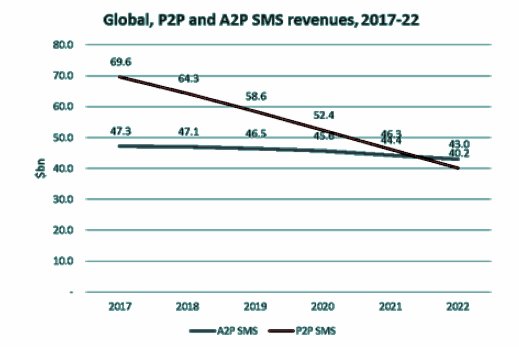
    SMS is not dead – not yet anyway. Ovum’s Mobile Messaging Traffic and Revenue Forecast: 2017-22 forecasts global revenues from application-to-person (A2P) SMS will finally exceed revenues from person-to-person (P2P) SMS by 2022, totalling $43 billion, even though A2P SMS traffic will be less than half of P2P SMS traffic by that time.

    P2P SMS revenues will generate just $40.2 billion in revenues by the end of the forecast period, but P2P SMS traffic will total 3.4 trillion messages in 2022, by comparison to 1.5 trillion A2P SMS.

    Figure 1: Global P2P and A2P SMS revenue, 2017-2022

    Figure 1: Global P2P and A2P sms revenue, 2017-2022Source: Ovum 2018

    The bulk of P2P and A2P SMS traffic and revenues will come mainly from the mobile-first, powerhouse markets of China, India and Indonesia.

    “Unfortunately for most telcos, P2P SMS has become essentially value-less, since they have had to bundle unlimited SMS into mobile tariffs to remain relevant to their customers, an increasing number of whom use chat apps such as WhatsApp, WeChat and Facebook Messenger. However, telcos can still charge a per-message termination rate for A2P SMS, which means it remains a more valuable source of revenues, since enterprises still value SMS for its global reach, affordability and mature ecosystem,” said Pamela Clark-Dickson, practice leader of Ovum’s communications and social team.

    Ovum forecasts chat apps will have 3.2 billion unique monthly active users (MAUs) by 2020, connecting enterprises with consumers via their platforms. Telcos and the wider ecosystem are therefore under pressure to protect their A2P revenues, driving them to upgrade from SMS to Rich Communication Services (RCS).

  • Luneng CC Plaza to use City park theme for the shopping mall

    Luneng CC Plaza to use City park theme for the shopping mall

    International architectural firm Benoy’s latest project in China has been unveiled in Tianjin – the Luneng CC Plaza Shopping Mall.

    Benoy was responsible for the interior design for the 120,000sqm retail offering, which is part of the 550,000sqm Luneng CC Plaza mixed-use development within the Nankai district. The scheme embraces a high-end hotel, boutique shopping street, five residential towers and a grade-A office tower as well as two underground metro stations.

    With the site’s prominence in central Tianjin and proximity to the Tianjin Water Park and Tian Ta Lake, Benoy developed the concept of a “city park” for its design of the six-storey mall.

    “We wanted it to be a place of recreation for the community, a space where visitors can enjoy entertainment, retail, art, activities and great food with their friends – all under one roof,” says Benoy director Simon Wong.

    This approach is brought to life through two thematic areas – the Spring Park and the Winter Park. The Spring Park defines the main six-storey atrium and brings Tianjin’s outdoors into the development with neutral wood detailing and bursts of decorative planting.

    With a cooler colour palette, the Winter Garden defines the secondary atrium. This design approach is carried through to the mall arcades, with interactive artistic displays and thematic rest areas.

    More than 30 new-to-market brands have been attracted to Tianjin among more than 200 stores covering entertainment, retail, dining, cinema, lifestyle and fitness.

    Benoy’s portfolio in Tianjin also includes the award-winning Riverside66.

  • Foreign real estate brokers expanding in Vietnamese market

    Foreign real estate brokers expanding in Vietnamese market

    In July, ERA Real Estate, a foreign broker, quietly opened five transaction points and one commercial office in the central business district of HCM City. The company now has 300 consultancy officers trained and certified in accordance with international standards.

    The broker revealed an ambitious plan to become the leading real estate distributor in Vietnam in the next five years with a network of 50 transaction offices in large cities and staff of 5,000 well-trained workers.

    To quickly adapt to the emerging market of Vietnam, the US broker decided to join hands with Eurocapital Group, an investment conglomerate which has had offices in Vietnam since 2008, to establish ERA Vietnam.

    Thanks to cooperation with the partner, the US broker, new in Vietnam, has approached high-end and luxury real estate projects developed by Vietnamese conglomerates, including Sun Group, CEO Group, MIK, Sacomreal and Kien A, and foreign developers, including Keppel Land and Sunwah Group.

    Foreign real estate brokers were once ‘the big fish in the little pond’ of Vietnam in 2006-2008, when the real estate market was ‘scorching hot’. They obtained the right to manage and distribute many large-scale projects because investors believed that foreign brokers would be more professional than Vietnamese. They included CBRE, Savills, Colliers International, DTZ, Cushman & Wakefield, Knight Frank, Coldwell Banker and JLL.

    However, later, when the real estate market stagnated, the operation of foreign brokers narrowed considerably. Aldy Vina, Setia and Coldwell Banker all withdrew from the market. CBRE and Savills are among the few foreign real estate service providers which stayed in Vietnam.

    Nguyen Khai Hoan from Khai Hoan Land said that the Vietnamese real estate market has been experiencing a difficult period with policies changing regularly and the market fluctuating all the time.

    “They have strong brands and good technology. However, the Vietnamese market is different from other markets with different conditions of material facilities and staff,” he commented.

    In such a context, Vietnamese brokers, which understand the market and follow a flexible way to approach clients, has gradually regained the distribution market. STDA alone in 2016 had 9,796 successful transactions.

    However, analysts commented that the best pieces of the cake still belong to foreign service providers which have stronger capability and experience. The services which bring high profits such as office, apartment and hotel management and leasing are managed by foreign companies.

  • Italy’s Ermanno Scervino comes to Hong Kong

    Italy’s Ermanno Scervino comes to Hong Kong

    Ermanno Scervino has opened its debut store in Hong Kong, with inauguration of an Ocean Centre Harbour City store last Saturday.

    Partnering with retail distributor Requing for the launch, the store is located inside the luxury mall and carries the Italian brand’s ready-to-wear and accessories collections, for men and women.

    “Over the years, customers in the Far East have learned to fully appreciate that Italian unique artisanal luxury which I offer with my collections,” Ermanno Scervino creative director Ermanno Daelli, told the press at the opening.

    “I’m happy to be in Hong Kong to attend the inauguration of this important boutique — Hong Kong is a dynamic city with an international soul, it’s the ultimate place-to-be for those who like me consider fashion a way to break national boundaries.”

    The store boasts the brand’s retail design codes, described as “refined and elegant.” This translates distinctively into tinted windows, mirrors, grey stucco and black Belgian marble.

    Ermanno Scervino founded his namesake brand in 2000. In 2016, the Florentine brand recorded revenues of 100 millions euros, with 70% of total sales witnessed overseas.

    The company operates 48 stores globally. In Asia, it has outlets in Tokyo, Japan and Shanghai, China, as well as in mega cities outside the region such as Paris, Paris and London. It most recently opened a store in the ritzy Monte Carlo.

  • China leads global 5G race by narrow margin

    China leads global 5G race by narrow margin

    China holds a narrow lead in overall 5G readiness ahead of South Korea and the United States, according to Analysys Mason. In a separate report, Recon Analytics said US 4G leadership drove significant economic benefits suggesting the need for the US to maintain its global leadership in the burgeoning new communication standard.

    In evaluating the current status of the global race to 5G, Analysys Mason studied 5G spectrum and infrastructure policies as well the commercial industry plans of ten countries and ranked these in terms of their 5G readiness.

    Establishing 5G leaders

    At the top of the pole is China, followed by South Korea, the United States and Japan. China’s narrow lead is due to a combination of both proactive government policies and industry momentum. The United States is hanging on to its position mostly on the back of significant investments in next-generation networks by the country’s wireless operators.

    All major Chinese providers have committed to specific launch dates and the government has committed to at least 100MHz of mid-band spectrum and 2000MHz of high-band spectrum for each wireless provider.

    Countries around the world are moving quickly to make spectrum available for 5G. This year alone, the UK, Spain, and Italy are all holding 5G spectrum auctions.

    Meredith Attwell Baker, CTIA president and CEO noted that “today’s research highlights the importance of policymaker action in 2018 to reform local zoning rules and unlock access to mid-band spectrum as part of a broader spectrum pipeline plan. I’m optimistic we will leapfrog China because key leaders in the Administration, on Capitol Hill, and at the FCC are focused on the reforms needed to win the race.”

    At the end of 2018, the USA will rank sixth out of the 10 countries in mid-band (3–GHz to 24-GHz) spectrum availability, a critical band for 5G. The USA joins Russia and Canada as the only countries currently without announced plans to allocate mid-band spectrum on an exclusive basis to mobile by the end of 2020.

    Kester Mann, principal analyst covering operators at CCS Insight, corroborated Baker’s analysis, adding that “the industry might be struggling to establish the business models for investment in 5G, but this isn’t stopping leading operators battling for bragging rights to launch the first networks. Competitive forces and the need for capacity are the leading drivers of early deployment, although we caution this could set unrealistic expectations for initial network capability”.

    Countries like the UK and regions like the European Union are taking significant steps to modernize infrastructure rules to facilitate the deployment of 5G networks.

    “When countries lose global leadership in a generation of wireless, jobs are shed and technology innovation gets exported overseas,” Recon Analytics founder Roger Entner said.

    “Conversely, leading the world in wireless brings significant economic benefits, as the USA has seen with its 4G leadership. These are the serious stakes that face American policymakers in the escalating global race to 5G.”

    Losing wireless leadership had long-term negative effects on Japan and Europe, contributing to job losses and the contraction of their domestic wireless industries.

    Opportunity

    CCS Insight’s forecast estimates total global 5G connections in 2020 at almost 60 million, rising more than 50% against October 2017 estimates, and presenting a stronger outlook for 2021 at 280 million connections — a 25% improvement. CCS Insight still expects the 1 billion mark to be breached in mid-2023, and its projection for 2025 has inched up to 2.7 billion.