Author: Mei Ling Tan

  • Apple Reconsidering Steve Jobs’s Stance: Touchscreen Macbook In The Horizon?

    Apple Reconsidering Steve Jobs’s Stance: Touchscreen Macbook In The Horizon?

    In 2010, Steve Jobs, the co-founder of Apple Inc., openly criticized the concept of a touchscreen MacBook, labeling the idea as ‘ergonomically terrible.’ However, Apple, one of the few mainstream laptop producers sans a touchscreen device, appears to be reconsidering this viewpoint. Recent reports suggest that the company may introduce a revamped MacBook with a touchscreen feature by late 2026 or early 2027.

    The Gospel of Steve Jobs vs. Financial Pragmatism

    The era of Steve Jobs, characterized by strong personal viewpoints and bold product design, is long gone. Today, Apple’s primary motivation in producing new devices and features is financial viability. While this might contradict Jobs’s initial perspective, it isn’t surprising to see the company considering the adoption of touchscreen technology in the MacBook lineup. After all, Jobs had once dismissed the idea of large-screen smartphones, yet Apple’s 6.9-inch iPhone 17 Pro Max is now a bestseller.

    The Touchscreen Debate

    Steve Jobs’s argument against touch surfaces being vertical, which explains his preference for trackpads over touchscreens, has largely stood the test of time. The past decade and a half have seen other laptop manufacturers experimenting with touchscreen technology, with varying degrees of success.

    Using a touchscreen on a laptop often proves to be awkward, with the need to reach over the keyboard making the experience uncomfortable and not particularly enhancing the user experience. In the early 2010s, when Windows laptops had subpar trackpads, touchscreens provided a much-needed alternative. However, this scenario is increasingly rare today as many of Apple’s competitors have caught up, and their laptop trackpads are no longer deficient in comparison to Apple’s.

    The Case for Convertible Devices

    Convertible laptops such as Lenovo’s Yoga series, which transition into a tablet-like form, are exceptions to the argument against laptop touchscreens. When the laptop transforms into a ‘tablet,’ the touchscreen becomes a primary mode of interaction, similar to an iPad or a Galaxy Tab. The introduction of a touchscreen makes sense in these devices as they differ fundamentally from traditional laptops.

    Questions & Answers

    What was Steve Jobs’s viewpoint on touchscreen MacBooks?
    Steve Jobs was strongly against the concept of a touchscreen MacBook. He considered the idea to be ‘ergonomically terrible’ and stated that touch surfaces don’t want to be vertical.

    Is Apple planning to release a touchscreen MacBook?
    Based on recent reports, Apple is said to be considering the release of redesigned MacBooks with touchscreen features by late 2026 or early 2027.

    What has been the experience with touchscreen laptops so far?
    The experience with touchscreen laptops has been mixed. While they provided a valuable alternative when laptop trackpads were inefficient, the need to reach over the keyboard to use the touchscreen often makes the experience awkward and does not significantly enhance the user experience. However, touchscreen technology proves useful in convertible devices that can transition into a tablet-like form.


  • Vietnamese Gold Bar Prices Climb Amid Global Market Fluctuations And Anticipation Of Us Interest Rate Cuts

    Vietnamese Gold Bar Prices Climb Amid Global Market Fluctuations And Anticipation Of Us Interest Rate Cuts

    Vietnamese gold bar rates experienced a climb on Monday morning, following a decrease over the weekend. Saigon Jewelry Company, a notable gold bar trader in the region, saw prices rise by 0.33%, bringing their rates up to VND151.5 million (US$5,750.62) per tael after their 1.31% fall over the weekend. Similarly, Asia Commercial Bank-branded bullion also saw its prices on par with the rates of Saigon Jewelry Company.

    Domestic gold bar prices now stand at VND15.5 million per tael higher than global rates. Meanwhile, the price for gold rings remained steady, circling around VND150.2 million per tael. Here, a tael is the equivalent of 37.5 grams or 1.2 ounces.

    Global Gold Market Trends

    In the global market, gold prices saw a slight ascent on Monday, influenced by the probability of more U.S. interest rate reductions. Investors with their eyes on the gold market are currently waiting for the release of U.S. inflation data along with the U.S.-China trade negotiations for further cues on market direction this week.

    Spot gold had an uptick of 0.1%, standing at $4,253.33 per ounce, while U.S. gold futures for December delivery saw an increase of 1.3%, adjusting to $4,266.30 per ounce.

    Spot silver experienced a rise of 0.5% to reach $52.12 per ounce. This came after prices took a 4.4% fall on Friday, marking their worst session since early April, despite hitting a record peak of $54.47 earlier that day.

    Kyle Rodda, a market analyst from Capital.com, remarked, “The gold market is trying to find its footing after Friday’s selloff. Sentiment is normalizing, cooling down a bit, after a few weeks of mania.” Gold experienced about a 1.8% plunge on Friday, marking the steepest fall since mid-May, following U.S. President Donald Trump’s statement that his proposed 100% tariff on goods from China would not be sustainable.

    Questions & Answers

    Why did the gold bar prices in Vietnam increase on Monday?
    The increase in gold bar prices on Monday followed a decline over the weekend. This is a common market fluctuation.

    How are global gold prices performing?
    Global gold prices saw a slight increase on Monday, influenced by the potential for more U.S. interest rate cuts. Investors are also waiting on U.S. inflation data and U.S.-China trade discussions for further market direction.

    What caused the drop in gold prices on Friday?
    Gold prices fell after a statement from U.S. President Donald Trump suggested that his proposed 100% tariff on goods from China would not be sustainable, leading to market uncertainty.

  • Panic withdrawals hit Cambodia’s Prince Bank after owner Chen Zhi accused of running Southeast Asian cybercrime empire

    Panic withdrawals hit Cambodia’s Prince Bank after owner Chen Zhi accused of running Southeast Asian cybercrime empire

    Following allegations of operating a multinational scam and money laundering network, Prince Bank owner Chen Zhi has elicited panic among customers in Cambodia. There has been a significant surge in account holders rushing to withdraw their funds from the embattled bank.

    Mass Withdrawals and Public Discontent

    On Saturday morning, throngs of account holders crowded outside Prince Bank’s main branch in Phnom Penh to retrieve their savings. Transactions were temporarily suspended at several other branches due to inadequate funds. Increasing public frustration was evident when customers found themselves unable to access Prince Bank’s website and mobile application.

    Hoping to assuage their customers’ fears, the bank issued a statement encouraging patience, assuring that their services were functioning normally despite facing a barrage of public complaints.

    The bank statement read, “The measures from the U.S. Treasury’s Office of Foreign Assets Control will not impact the bank’s operational ability. We continue to manage all our customer relationships with sincerity and transparency.”

    International Sanctions Trigger Panic

    The catalyst for the wave of withdrawals was an announcement on October 14 stating that sanctions had been imposed on Prince Holding Group (the parent company of Prince Bank) and its founder and chairman, Chen Zhi. These sanctions were implemented by the U.S. Department of Justice, the U.S. Department of the Treasury, and the British government.

    Chen has been charged with fraud and money laundering by the U.S. government, which resulted in seizing more than US$15 billion in Bitcoin, allegedly laundered by Chen and Prince Holding Group. This is a landmark case, representing the largest asset forfeiture in the history of the Department of Justice. If Chen is found guilty, he could face a prison sentence of up to 40 years.

    Additionally, the U.K. government imposed sanctions on Golden Fortune Resort World, which operates the Prince Compound near Phnom Penh. It also added the Jinbei Group, which is linked to Prince Holding Group via its hotels and casinos, and the digital currency platform Byex Exchange to its sanctions list.

    Both governments have accused Chen of leading a transnational criminal network, swindling victims worldwide, and exploiting trafficked workers across Southeast Asia.

    National Bank of Cambodia Reassures Depositors

    In an effort to alleviate depositor anxiety, the National Bank of Cambodia assured that customer accounts are functioning normally and remain secure. It emphasized that banks are legally mandated to maintain sufficient liquidity to meet depositors’ demands.

    Questions & Answers

    What prompted the rush to withdraw money from Prince Bank?
    The rush was triggered by allegations against the bank’s owner, Chen Zhi, accusing him of running a transnational scam and money laundering network.

    What actions have been taken against Chen Zhi and Prince Holding Group?
    The U.S. and U.K. governments have imposed sanctions on Prince Holding Group and its founder, Chen Zhi. The U.S. government has also charged him with fraud and money laundering, seizing over US$15 billion in Bitcoin that Chen and Prince Holding Group allegedly laundered.

    How has the National Bank of Cambodia responded to the situation?
    The National Bank of Cambodia has reassured depositors that customer accounts are functioning normally and remain secure. It also emphasized that banks are legally obligated to maintain sufficient liquidity to meet depositors’ demands.

  • Kuehne+nagel Boosts India’s Logistics Sector With Five New Fulfilment Centres, Creating 1,500 Jobs

    Kuehne+nagel Boosts India’s Logistics Sector With Five New Fulfilment Centres, Creating 1,500 Jobs

    Kuehne+Nagel, the international logistics firm, is expanding its operations in India with the establishment of five new fulfilment centres. The locations for these centres include Gurgaon, Kolkata, Nagpur, Mumbai, and Rajpura. This expansion will provide 100,000 square meters of additional capacity, raising the company’s total fulfillment centre footprint in the country to nearly 500,000 square meters. The new centres will create over 1,500 jobs nationwide, supporting local economic growth.

    India’s Economic Potential

    India is expected to rise to the position of the world’s third-largest economy by 2030, underpinned by robust growth in industries such as high-tech, automotive, consumer goods, and healthcare. As these sectors continue to expand, there’s an increasing demand for a scalable, efficient logistics infrastructure.

    Automation and Boosting Order Handling Capacity

    The new fulfilment centres will employ advanced automation technologies like telescopic conveyors and high-performance sorting systems. These will facilitate an increase in peak order handling capacity by 75%.

    City Selection and Industry Growth

    The locations of the new centres cover the spectrum of Indian cities. This includes tier-1 cities like Mumbai and Kolkata, tier-2 hubs Gurgaon and Nagpur, and the tier-3 city, Rajpura. The diverse location selection aligns with India’s industrial growth across multiple cities. Gurgaon and Nagpur are emerging as growth centres for various industries, while Rajpura is experiencing a surge in manufacturing and distribution.

    Strategic Investment

    Damian Raczynski, Senior Vice President of Contract Logistics at Kuehne+Nagel Asia Pacific, expressed his optimistic views regarding the company’s expansion. He shared that India is a crucial growth market for Kuehne+Nagel and that they invest where their customers are. He further emphasized that this expansion enhances their ability to serve high-demand sectors, like consumer and healthcare. The goal is to deliver a service that’s characterized by speed, reliability, and flexibility.

    Questions & Answers

    What is the purpose of Kuehne+Nagel’s expansion in India?
    The expansion aims to meet the growing demand for efficient logistics infrastructure in India’s expanding industries such as high-tech, automotive, consumer goods, and healthcare.

    What additional features will the new fulfilment centres have?
    The new centres will incorporate advanced automation technologies such as telescopic conveyors and high-performance sorting systems, which will boost peak order handling capacity by 75%.

    How will this expansion benefit the local economy?
    The expansion will generate over 1,500 new jobs nationwide, contributing positively to the growth of local economies.

  • Korean Air Leverages Airbus’ Advanced Data-driven Maintenance Program To Boost Operational Efficiency

    Korean Air Leverages Airbus’ Advanced Data-driven Maintenance Program To Boost Operational Efficiency

    Korean Air recently entered into a contract to implement Airbus’ sophisticated data-driven predictive maintenance program, Skywise Fleet Performance+ (S.FP+). The agreement was finalized on October 16.

    Upgraded Platform

    This advanced solution is an enhancement of the airline’s existing systems, Skywise Predictive Maintenance+ (SPM+) and Skywise Health Monitoring (SHM). Through the introduction of S.FP+, the airline aims to improve operational efficiency and harmonize maintenance systems. This move is critical in preparing for the anticipated expansion of the airline’s fleet, which will occur following the merger with Asiana Airlines.

    S.FP+ is designed to optimize aircraft availability and operational reliability by employing advanced data analytics. This system identifies potential component issues before they arise. The “Control” tier, chosen by Korean Air, offers features like pre-departure check support and smart troubleshooting tools powered by natural language processing (NLP). The proactive strategy is projected to noticeably decrease Aircraft on the Ground (AOG) situations and their related costs.

    Application to Fleets

    This solution will be used on Korean Air’s A321neo, A330, A350, and A380 fleets. After the full integration of Korean Air and Asiana Airlines, the tool will also be applied to the Asiana Airlines’ Airbus fleet.

    The head of the Predictive Maintenance Team at Korean Air, Jong Hoon Oh, highlighted the success of their data-driven maintenance strategy. He said, “This approach has successfully prevented over 100 potential flight disruptions in 2024 alone. This advancement to S.FP+ is a strategic move as we prepare for the incorporation of the Asiana fleet. We aim to uphold the highest levels of operational reliability and efficiency on a larger scale.”

    The partnership underscores a mutual dedication to innovative solutions, and Airbus is honored to assist Korean Air in achieving higher levels of operational reliability through data-driven maintenance.

    Questions & Answers

    What is the Skywise Fleet Performance+ (S.FP+) program?

    The S.FP+ program is an advanced data-driven predictive maintenance solution developed by Airbus to enhance operational efficiency and unify maintenance systems.

    What benefits does the “Control” tier of S.FP+ offer?

    The “Control” tier, chosen by Korean Air, provides pre-departure check support and intelligent troubleshooting tools powered by natural language processing. This proactive approach is aimed at decreasing Aircraft on the Ground (AOG) situations and associated costs.

    What is the impact of the data-driven maintenance strategy on Korean Air’s operations?

    The data-driven maintenance strategy has proved effective in preventing potential flight disruptions. In 2024 alone, it averted over 100 possible flight interruptions. This strategy is anticipated to maintain high levels of operational reliability and efficiency as the airline expands.

  • Kering Divests Beauty Division To L’oreal For $4.6b: A Strategic Push For Luxury Fashion Focus

    Kering Divests Beauty Division To L’oreal For $4.6b: A Strategic Push For Luxury Fashion Focus

    In a significant maneuver towards streamlining its operations, luxury conglomerate Kering has divested its beauty division to L’Oreal. The deal, valued at US$4.6 billion (EU$4 billion), is part of Kering’s broader strategy to concentrate on its essential fashion brands.

    Agreement Details

    Under the terms of the agreement, L’Oreal has gained 50-year exclusive rights to manufacture, develop, and circulate fragrances and cosmetics for renowned brands like Creed, Bottega Veneta, and Balenciaga. Furthermore, the deal encompasses the forthcoming acquisition of Gucci Beauty once its current license with Coty concludes.

    Kering’s CEO, Luca de Meo, views this partnership as a significant leap towards enhancing the expansion of its fragrance and cosmetics houses. De Meo expressed his optimism about the partnership, stating it would drive scale in the beauty sector and uncover extensive long-term potential for the brands.

    Strategic Coordination and Joint Ventures

    To ensure brand consistency, a strategic committee will be instituted to facilitate coordination between Kering’s brands and L’Oreal. The committee’s function will be to provide an alignment that reinforces the brands’ coherence across different categories.

    Additionally, both companies have plans to probe into potential business prospects through intended 50/50 joint ventures. These ventures are seen as opportunities to strengthen their brand portfolios and expand market reach.

    L’Oreal’s CEO, Nicolas Hieronimus, believes the partnership will assist in broadening the company’s reach into high-growth segments. Hieronimus is confident that this alliance will position them as leading contenders in the rapidly expanding niche fragrance market. He lauded Gucci, Bottega Veneta, and Balenciaga as exceptional couture brands possessing considerable potential.

    Deal Closure

    The agreement is anticipated to conclude in the first half of next year, with payment to be made in cash. The deal’s completion is still contingent on receiving regulatory approval.

    Questions & Answers

    What does this deal mean for Kering?
    This deal allows Kering to focus on its core luxury fashion houses, while also potentially enhancing the growth of its fragrance and cosmetics brands through a partnership with L’Oreal.

    How will L’Oreal benefit from this deal?
    L’Oreal will acquire exclusive rights to manufacture and distribute products for some of the world’s most prestigious brands, thus potentially expanding its influence in high-growth segments and the niche fragrance market.

    What are the future plans of both companies post this deal?
    Both companies plan to establish a strategic committee to ensure brand coherence. They also intend to explore possible business opportunities through equal stake joint ventures.

  • South Korea’s Retail Industry Expands Private Label Business Beyond Food And Household Items

    South Korea’s Retail Industry Expands Private Label Business Beyond Food And Household Items

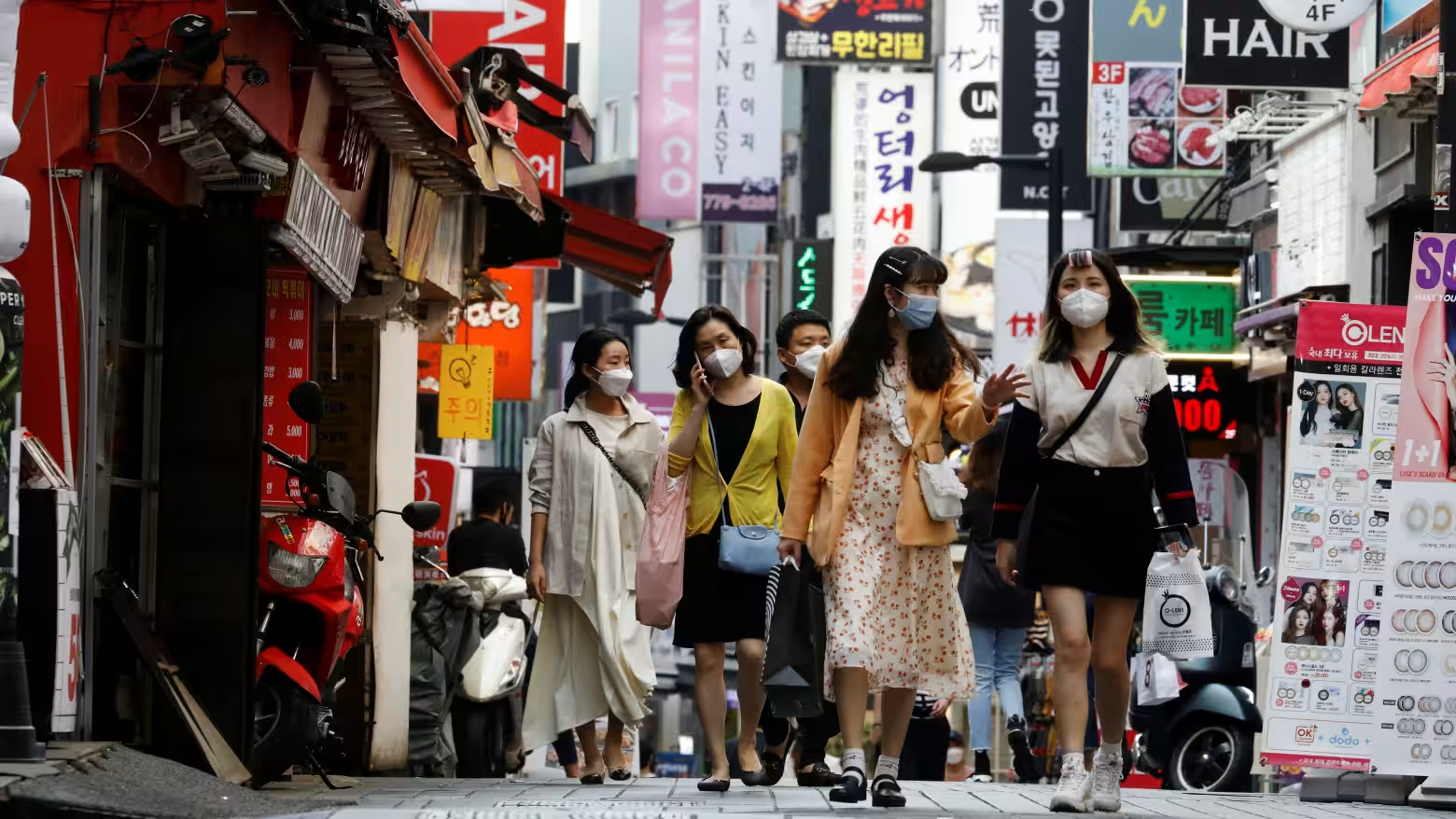
    South Korea’s retail industry is swiftly growing its private label (PB) business by extending beyond food and household items to include clothing, innovative digital platforms, and even international markets. This expansion comes as firms ranging from convenience stores and hypermarkets to e-commerce businesses vie to fortify their brand identities and profitability.

    Private Label Sales on the Rise

    BGF Retail, the parent company of the CU convenience store chain, reported noteworthy growth in PB sales. The years 2023 and 2024 saw increases of 17.6 percent and 21.8 percent, respectively, followed by an additional 19.1 percent surge during the first nine months of 2025.

    GS25, another retail chain, offers around 800 PB items via the YouUs line, which now make up nearly 30 percent of total sales. Their affordable Real Price range saw a significant year-on-year increase of 125 percent.

    Leading supermarkets are also jumping on the bandwagon. Approximately 8 percent of Emart’s sales and 10 percent of Lotte Mart’s sales come from private-label goods. Emart boasts well-known PB labels such as No Brand, Peacock, 5K Price, and Days, while Lotte Mart promotes Today’s Good and Cookit.

    Online retailers aren’t left behind either. Kurly, for example, reported a year-on-year increase of over 10 percent in sales of its flagship PB lines, echoing the growing consumer demand for retailer-exclusive products.

    Expanding Across Platforms and Borders

    The once rigid boundaries between retailers are now blurring as PB products start to appear across rival platforms. Even Coupang, an e-commerce platform, sells Lotte Mart’s Today’s Good and Homeplus’s Simplus brands, while Emart’s Peacock products can be found on Kurly’s online marketplace.

    Convenience chains are also making their mark on the global stage. GS25 exports PB products to 33 countries, including the United States, Australia, Japan, and China. CU also sells its own-label items in more than 20 countries, through outlets such as Japan’s Don Quijote stores.

    Earlier this year, BGF Retail forged a partnership with China’s Ningxing Youbei, a prominent importer and distributor. The partnership’s goal is to introduce CU-branded sections on Chinese e-commerce platforms and operate pop-up stores that showcase its products.

    In addition, 7-Eleven Korea ventured into the clothing sector in April, launching its own line of socks, underwear, and T-shirts, and recently, knitwear.

    A spokesperson from the retail industry emphasizes that selling robust PB products via external channels provides both marketing and revenue advantages. The more positive experiences that customers have with a retailer’s PB products, the more likely they are to become loyal to that retailer’s own platform.

    The Challenges and Risks of Brand Identity

    Despite the success of the PB trend, it has stirred concerns about potential conflict with national brands. For instance, Coupang was previously accused of allegedly manipulating search rankings to favor its own PB products.

    Experts also caution that expanding PB lines too broadly across platforms could blur brand identity and complicate logistics and inventory management, thereby undermining the very benefits that PB lines are intended to provide.

    Kurly, which previously sold select CU PB products, reverted to an in-house-only model. A spokesperson stated that the company is more interested in preserving brand integrity than achieving broader exposure, and has no plans to offer its PB products on external platforms.

    Questions & Answers

    What is the trend of private label sales growth in South Korea’s retail industry?
    The trend shows consistent growth, with companies like BGF Retail reporting significant year-on-year increases in private label sales.

    How is the expansion of private labels affecting the retail industry?
    The expansion is blurring boundaries between retailers, causing them to compete on multiple platforms. It’s also leading retailers to venture into new markets like clothing and international sales.

    What are the potential risks associated with the expansion of private label lines?
    Potential risks include conflicts with national brands, the blurring of brand identity, and complications with logistics and inventory management.

  • Muscle Nation, Raw C launch coconut pineapple protein water

    Muscle Nation, Raw C launch coconut pineapple protein water

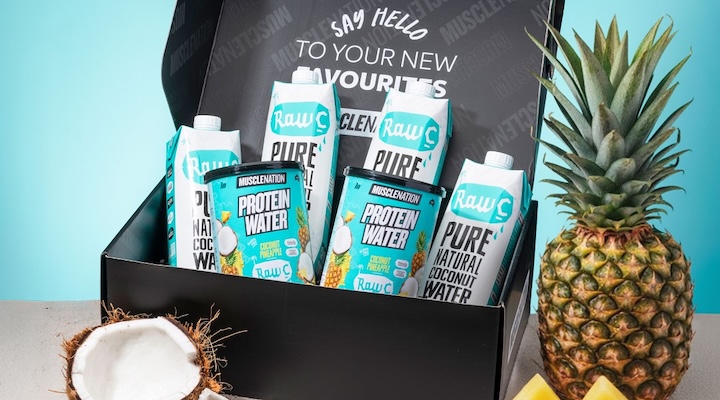
    Muscle Nation, a renowned fitness brand, has joined forces with Raw C, a prominent coconut water company, to introduce a new product: Coconut Pineapple Protein Water. This innovative beverage is designed with health-conscious consumers in mind.

    A Unique, Nutritious Blend

    Coconut Pineapple Protein Water combines the unique flavor of Raw C’s coconut water with the protein-packed formulation of Muscle Nation. Each serving delivers 22 grams of protein, zero sugars, and a mere 101 calories. The beverage is naturally sweetened with monkfruit and stevia, ensuring it contains no artificial colors, flavors, or preservatives.

    The protein water uses a specially-formulated blend of hydrolyzed collagen and whey protein isolate. This combination is enriched with electrolytes, Vitamins such as Vitamin C, and branched-chain amino acids (BCAAs) to aid in hydration and muscle recovery. For added electrolytes, Muscle Nation suggests pairing the protein water with Raw C’s Pure Natural Coconut Water.

    Refreshing, Light, and Performance-Oriented

    Chris Anastasi, the founder of Muscle Nation, shared his enthusiasm about the new product and its potential. He said, “We loved the idea of transforming recovery into something more exciting. Coconut water has become synonymous with health and fitness in Australia, which made it the perfect base for our protein water. The result is refreshing, light, and designed to enhance performance.”

    Availability

    The Coconut Pineapple Protein water, a collaboration between Muscle Nation and Raw C, is available for purchase at Muscle Nation’s online store. It will also be stocked in Woolworths supermarkets across the country.

    In addition to this, last month, Raw C announced another exciting collaboration. They teamed up with Pistachio Papi to launch a limited-edition beverage, Pure Coconut Water infused with Natural Pistachio and White Chocolate.

    Questions & Answers

    What is unique about the new Coconut Pineapple Protein Water?
    It combines the delicious flavor of Raw C’s coconut water with Muscle Nation’s protein-packed formulation. It’s also naturally sweetened and contains no artificial additives.

    What ingredients does the protein water contain to support fitness recovery?
    It contains a blend of hydrolyzed collagen and whey protein isolate, electrolytes, Vitamin C, and branched-chain amino acids (BCAAs).

    Where can consumers purchase the Coconut Pineapple Protein Water?
    It’s available through Muscle Nation’s online store and stocked in Woolworths supermarkets nationwide.

  • HelloFresh fined after criminal charges laid over subscription trap

    HelloFresh fined after criminal charges laid over subscription trap

    HelloFresh New Zealand, a subsidiary of global meal-kit supplier HelloFresh SE, has been hit with an NZ$845,000 ($748,294) penalty for deceiving customers into renewing their subscriptions. The imposition of this fine is the result of legal action undertaken by the Commerce Commission, New Zealand’s regulatory authority, in response to the company’s violation of the Fair Trading Act. HelloFresh New Zealand confessed to its true intentions of luring customers into renewing their food delivery service subscriptions without explicit awareness or agreement, a practice commonly known as a subscription trap.

    Deceptive Marketing Strategy

    Deputy Chair of the Commerce Commission, Anne Callinan, revealed the core of HelloFresh’s modus operandi. The company would cold call former customers under the guise of seeking customer feedback. However, the actual aim of these calls was to entice customers into reactivating their subscriptions by presenting them with discount vouchers. The company failed to clearly communicate that accepting these vouchers could result in the reactivation of the customers’ paid subscription.

    Over an 18-month period, HelloFresh made over a million calls to ex-customers and succeeded in reviving nearly 80,000 subscriptions. This action resulted in a surge of complaints to the Commerce Commission from disgruntled customers.

    Callinan provided further insight into the company’s misleading practices. “Upon reviewing a selection of call recordings, it became evident that agents downplayed or disregarded customers’ wishes, who on many occasions unequivocally stated their unwillingness to renew their subscription,” she stated. Callinan said that the deceptive behavior was a fundamental aspect of HelloFresh’s business operations and not an isolated incident.

    Lessons for Subscription-Based Services

    Callinan conveyed a stern warning to other subscription-based businesses in light of this case. The need for transparency regarding their terms and conditions and ensuring customers fully understand what they are signing up for is paramount.

    The Commerce Commission plans to maintain its focus on rectifying any misleading online sales behavior, including subscription traps. These practices remain a key focus area for the regulator.

    HelloFresh New Zealand operates under the umbrella of its Berlin-based parent company, HelloFresh SE, which is one of the largest meal-kit providers in the world with operations across 18 countries.

    Questions & Answers

    What was HelloFresh New Zealand fined for?
    HelloFresh New Zealand was fined NZ$845,000 ($748,294) for deceiving customers into renewing their subscriptions without clear communication or consent.

    What was the company’s deceptive marketing strategy?
    HelloFresh would cold call former customers under the pretext of gathering customer feedback. The actual aim was to persuade customers to reactivate their subscriptions by offering discount vouchers, without clearly stating that this would result in the reinstatement of their paid subscription.

    What is the key takeaway for other subscription-based businesses?
    Subscription-based businesses must ensure transparency in their terms and conditions and confirm that customers are fully informed before agreeing to sign up for their service.

  • Koh Disrupts $2.3b Laundry Industry With Groundbreaking Sensitive Skin Product Range

    Koh Disrupts $2.3b Laundry Industry With Groundbreaking Sensitive Skin Product Range

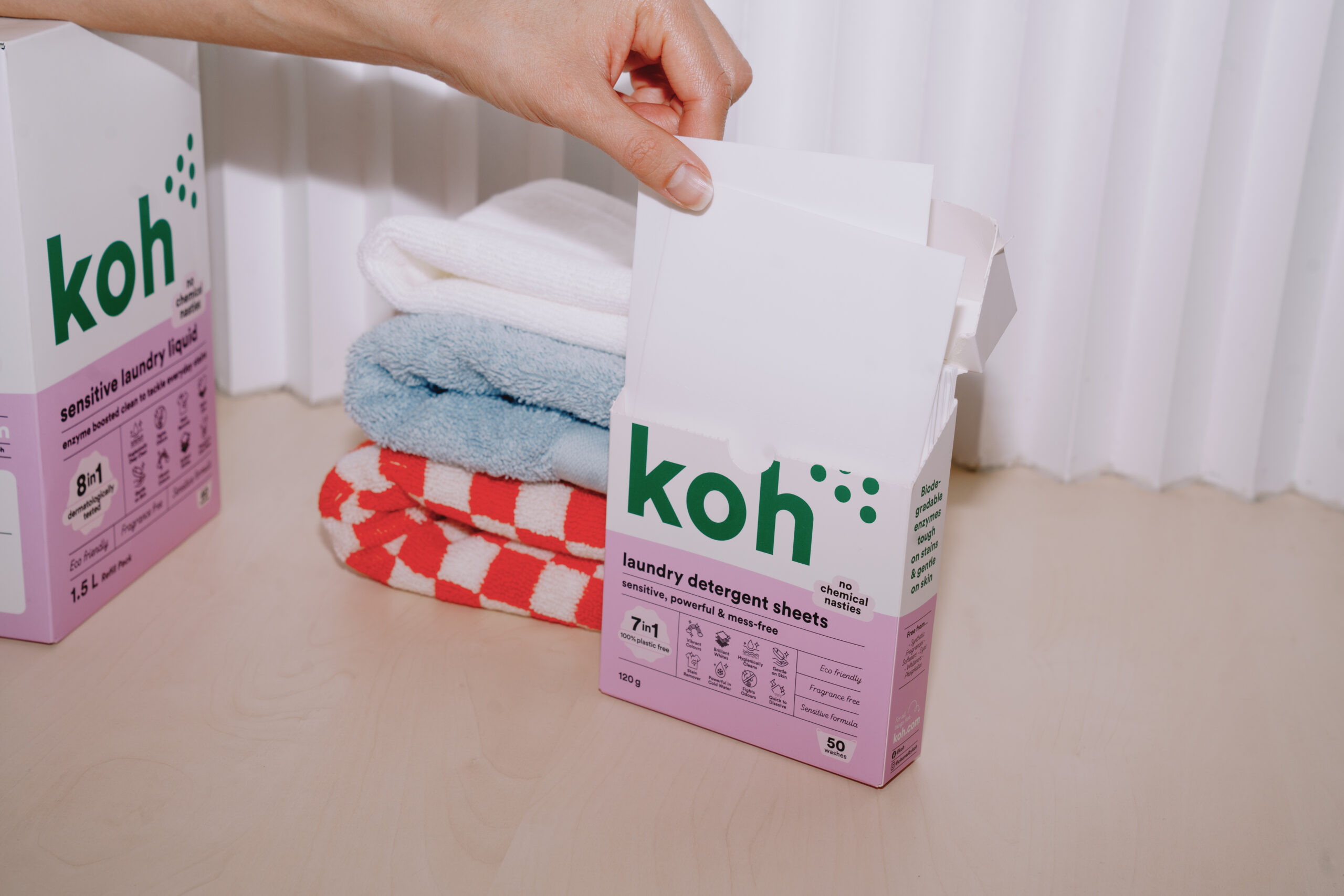
    Australian cleaning company, Koh, is making a strategic entrance into the nation’s $2.3 billion laundry industry by introducing a trilogy of products that leverage advanced enzyme technology and are tailored for sensitive skin.

    The New Laundry Range

    Koh is set to release three new products: Sensitive Laundry Detergent Sheets, Sensitive Laundry Liquid, and Sensitive Stain Remover. These offerings are designed to streamline laundry tasks by providing less but more potent alternatives as substitutes for several traditional items.

    The revamped Sensitive Laundry Liquid incorporates Lipex Evity, a specialty lipase enzyme created to dissolve stubborn greasy stains like body oils, sunscreen, and cooking fats. These stains often present a tough hurdle for many eco-friendly or sensitive skin products.

    The Sensitive Stain Remover features a unique combination of five enzymes: protease, amylase, cellulase, mannanase, and lipase. This blend is engineered to address a wide spectrum of household stains, sidestepping the use of bleach, synthetic scents, or optical brighteners.

    Revolutionizing the Cleaning Industry

    “The residential cleaning sector is undergoing rapid changes,” said Charli Walters, Koh’s CEO. She further added, “Customers are increasingly scrutinizing the ingredients and efficacy of the products they use, and we view this as an excellent opportunity to redefine what effective, sustainable cleaning should look like.”

    Koh’s venture into the laundry segment places it in direct competition with established mass-market brands as well as those with an eco-focused ethos.

    Questions & Answers

    What is the new product range that Koh is introducing?
    Koh is launching a three-product range, including Sensitive Laundry Detergent Sheets, Sensitive Laundry Liquid, and Sensitive Stain Remover.

    What unique features does Koh’s new laundry liquid offer?
    The updated Sensitive Laundry Liquid uses Lipex Evity, a specialist lipase enzyme, to break down stubborn greasy stains like body oils, sunscreen, and cooking fats.

    What is the aim of Koh’s new product range?
    Koh aims to simplify laundry routines by providing fewer, more concentrated options that can replace multiple traditional items and set a new standard for effective, responsible cleaning.

  • Great Wrap Collapses Under Debt: Unfortunate End For Sustainable Plastics Innovator

    Great Wrap Collapses Under Debt: Unfortunate End For Sustainable Plastics Innovator

    Great Wrap, an emerging leader in the alternative plastics industry, has unfortunately been forced to cease operations due to mounting debts. The company has reportedly accumulated about $39 million in debts, culminating in an unexpected end almost six years after its inception.

    Company Shutdown

    The Australian Securities and Investments Commission (ASIC) has confirmed that administrators were named to handle the insolvency proceedings on September 17. The shutdown has led to a complete halt in the company’s operations and the dismissal of all employees.

    Jordy Kay, co-founder and CEO of Great Wrap, verified the company’s closure in a professional networking platform post. He acknowledged the end of the company’s journey and expressed his gratitude to all supporters. Kay affirmed his commitment to work with the administrators to liquidate all company assets and repay the creditors in full.

    Innovation and Challenges

    Great Wrap, which Jordy and Julia Kay established in 2020, enjoyed recognition for its compostable cling film and pallet wrap manufactured from potato waste and other organic materials. The business had positioned itself as a sustainable substitute to petrochemical-based plastics. Their target customers were retailers and fast-moving consumer goods (FMCG) companies as well as logistics providers aiming to decrease plastic waste.

    Regrettably, changing market situations and a decrease in demand for compostable packaging were key factors in the company’s downfall. Kay explained that retailers and FMCG companies had started to transition from using compostable alternatives to establishing their own plastic recycling operations. This shift led to a slow-down in their business and a weakening demand for their products.

    While the company had plans to expand into the US market, the persistent struggle to make the Australian plant profitable left them without adequate time or capital to continue. The inability to turn a profit from the Australian plant, combined with a depletion of time and capital for US expansion, ultimately led to the company’s collapse.

    Despite the unfortunate development, Kay remains hopeful that their journey would inspire others to continue exploring opportunities in the challenging domain of alternative plastics.

    Questions & Answers

    Why did Great Wrap cease operations?
    Great Wrap was forced to shut down due to financial struggles, including a reported $39 million in debt.

    Who were the primary customers of Great Wrap?
    Great Wrap’s primary customers were retailers, FMCG companies, and logistics service providers looking to reduce plastic waste.

    What led to the reduction in demand for Great Wrap’s products?
    A shift in strategy from retailers and FMCG companies led to a decline in demand. These companies transitioned from using compostable alternatives to setting up their own plastic recycling operations.

  • Australia Mandates Acceptance Of Cash For Fuel, Groceries: Exemptions And Future Plans Explained

    Australia Mandates Acceptance Of Cash For Fuel, Groceries: Exemptions And Future Plans Explained

    The Australian Federal Government has made significant strides towards safeguarding the validity of cash as a payment mode for everyday necessities by issuing key provisional regulations mandating the acceptance of cash for fuel and groceries.

    Details of the Draft Regulations

    Outlined after a public consultation conducted in the early part of the year, these draft regulations dictate that the obligation to accept cash for fuel and groceries will be restricted to face-to-face transactions of less than $500.

    However, small businesses with a combined turnover of less than $10 million, along with those businesses that are part of a franchise arrangement netting under $10 million, are exempt from these regulations. Additionally, companies that face challenges in managing cash transactions are also exempt.

    Daniel Mulino, the Assistant Treasurer and Minister for Financial Services, agrees that while Australians are progressively opting for digital payment methods, the government recognizes that cash will still be a vital part of society. He appreciates this as a balanced, pragmatic, and judicious move to aid cash users while also taking businesses into account.

    A Three-Year Review Plan

    The Federal Government has announced that it will evaluate the mandate in three years to ensure the policy is effectively serving its purpose. This evaluation will also explore whether the mandate should extend to cover other businesses. It will consider the potential impact on companies presently affected by the mandate and any advancements concerning cash distribution and access.

    The Council of Financial Regulators and the Australian Competition and Consumer Commission, back in July, issued a consultation paper suggesting various propositions on the regulation of cash distribution. Mulino assured that the government would closely examine the CFR’s recommendations alongside industry feedback, and work diligently to ensure that Australians continue to have access to cash.

    Questions & Answers

    What are the new draft regulations issued by the Australian Federal Government?
    The new draft regulations mandate the acceptance of cash for fuel and groceries, specifically for in-person transactions that are less than $500.

    Who are exempted from these new regulations?
    Small businesses with an aggregate turnover of under $10 million, businesses that are part of a franchise arrangement netting under $10 million, and companies that find managing cash transactions difficult are exempted.

    What is the future plan for these regulations?
    The Federal Government will review the mandate after three years to evaluate its effectiveness. This review will also consider whether the mandate should extend to other businesses and the potential impact on the currently affected companies.

  • Nestlé To Cut 16,000 Jobs Globally In Cost-cutting Initiative

    Nestlé To Cut 16,000 Jobs Globally In Cost-cutting Initiative

    Nestlé, a global leader in the food and beverage industry, has recently announced plans for a significant reduction in its worldwide workforce. Over the next two years, the company intends to eliminate approximately 16,000 positions as part of its ‘Fuel for Growth’ cost-cutting initiative.

    Workforce Reduction Plan

    In a bold move to streamline operations and achieve financial targets, Nestlé’s management has decided to cut costs by raising the ‘Fuel for Growth’ program’s objective to CHF 3.0 billion (equivalent to US$3.8 billion) from the previously set goal of CHF 2.5 billion (approximately $3.1 billion) by the close of 2027.

    The proposed downsizing, which will be implemented following applicable consultative processes, is expected to affect around 12,000 salaried professionals across various functions and geographical locations. The company believes that this measure will facilitate annual savings of up to CHF1 billion ($1.26 billion) by 2027.

    In addition, Nestlé plans to layoff 4,000 employees as part of ongoing productivity efforts in its manufacturing and supply chain operations.

    Adapting to Change

    “The world is evolving rapidly, and to stay ahead, Nestlé must adapt at an even faster pace,” stated CEO Philipp Navratil. He acknowledged the necessity of making tough decisions, including reducing staff numbers, over the coming two years.

    Emphasizing the company’s commitment to handling these changes with respect and transparency, Navratil affirmed that these actions are crucial to securing Nestlé’s future as a leader in its industry.

    Financial Focus

    Beyond workforce reduction, Nestlé also plans to intensify its focus on driving cash generation. This shift is designed to ensure sustainable returns to shareholders, with the aim of delivering free cash flow exceeding CHF8 billion within the current year.

    In terms of sales growth, Nestlé reported an organic growth of 4.3% in the third quarter. The company also noted ongoing challenges in the Greater China region, which is now managed by a new team focused on business transformation. The first nine months of the year saw organic sales growth of 3.3%, with real internal growth (RIG) at 0.6% and pricing at 2.8%. There were sequential improvements across major markets, global businesses, and categories during this period.

    Despite a more challenging comparison base expected in the fourth quarter, the company anticipates recording annual organic sales growth for the full year.

    Leadership Changes

    Earlier in the month, Nestlé’s chairman Paul Bulcke stepped down from the board ahead of schedule. Vice chairman Pablo Isla is set to assume the role.

    Questions & Answers

    What is Nestlé’s ‘Fuel for Growth’ program?
    This is the company’s cost-cutting strategy aimed at achieving financial targets by streamlining operations and reducing expenditures.

    How many employees will be affected by Nestlé’s workforce reduction plan?
    The plan entails a reduction of approximately 16,000 positions worldwide over the next two years.

    What other financial plans does Nestlé have in place?
    Aside from cost-cutting, the company also intends to concentrate on driving cash generation to ensure sustainable returns to shareholders.

  • Maxis Berhad Pioneers Quantum Safe Networking In Malaysia, Bolstering Data Security For Businesses

    Maxis Berhad Pioneers Quantum Safe Networking In Malaysia, Bolstering Data Security For Businesses

    Maxis Berhad (Maxis), Malaysia’s leading telecommunications company, has introduced the country’s inaugural Quantum Safe Networking (QSN) solution, primarily targeting government agencies and businesses. This cutting-edge security feature has been launched through Maxis Business – the company’s business-to-business branch – and was developed in collaboration with Nokia. The managed service offers data encryption directly at the optical layer.

    Securing Critical Information Against Quantum Computing Threats

    The QSN solution ensures the significant protection of critical data against possible risks linked to future quantum computing. It empowers businesses to prosper in the era of artificial intelligence (AI) and cloud technology. The introduction of this solution was made at the Cyber Digital Services, Defence and Security Asia 2025 event, hosted by Maxis Business.

    The aforementioned event was held at the Malaysia International Trade and Exhibition Centre (MITEC). Here, Maxis Business showcased an exhibition titled ‘Building Tomorrow’s Security Today,’ featuring the QSN solution, along with other innovative network monitoring solutions, real-time field visibility, and solar energy.

    This revolutionary solution offers quantum-safe encryption for data in transit. In doing so, it addresses the severe threat of future decryption by quantum computers of data intercepted today, a situation often dubbed as “harvest now, decrypt later.” The solution is particularly advantageous for sectors that demand stringent data integrity and sovereignty, such as banking and financial services, healthcare, and the public sector.

    Enhancing the Security of Maxis’s Fiber Connectivity Services

    The QSN solution augments the security of Maxis’s fiber connectivity services, which are particularly critical for enterprises, cloud providers, and financial institutions that rely on data center interconnects and high-capacity fiber links. This solution perfectly complements the company’s Data Centre Connect solution, thereby providing secure, private access to leading cloud providers and data centers nationwide for businesses operating in physical, hybrid, or multi-cloud environments.

    In the words of Prateek Pashine, Chief Enterprise Business Officer of Maxis, “Securing today’s data against tomorrow’s risks is a vital necessity for any organization, especially in the face of rising cyber threats. By becoming the first Malaysian telco to provide quantum-safe networking, we are establishing a new benchmark for network protection. This gives businesses and government agencies the confidence to expedite their digital transformation journeys. This initiative also showcases our dedication to strengthening Malaysia’s digital resilience, which aligns with the national cybersecurity agenda.”

    To this, Ming Kin Ngiam, Head of Southeast Asia South for Network Infrastructure at Nokia, added, “Our collaboration with Maxis tackles a pressing business requirement: safeguarding data in transit against evolving security threats without compromising the performance enterprises rely on.”

    Maxis’s Commitment to a Secure, Resilient Digital Infrastructure

    Maxis has successfully completed the fiberization of all major data centers in Malaysia, thereby connecting them to its national network. This robust infrastructure allows Maxis to provide up to three diverse fiber routes to these data centers, ensuring businesses benefit from exceptional resilience and high availability. Furthermore, this secure network can be fortified with quantum-safe encryption, thereby ensuring that data in transit remains secure against current and future quantum threats.

    The introduction of QSN enriches Maxis Business’s extensive spectrum of end-to-end solutions, which includes core connectivity, IoT, cloud computing, cybersecurity, and other digital services.

    Questions & Answers

    What is the Quantum Safe Networking (QSN) solution?
    The QSN solution is a security feature that offers quantum-safe encryption for data in transit, protecting it from potential threats posed by future quantum computing.

    Which sectors will benefit the most from the QSN solution?
    The solution is particularly beneficial for industries that require strict data integrity and sovereignty, such as banking and financial services, healthcare, and the public sector.

    What does the introduction of QSN mean for Maxis and its customers?
    The introduction of QSN establishes Maxis as a pioneer in network protection in Malaysia. For customers, it means enhanced security, protection against emerging cyber threats, and a boost in confidence to accelerate their digital transformation journeys.

  • India’s 5g Infrastructure Surges With 6,400 New Stations: Reinforcing Digital Economy Growth

    India’s 5g Infrastructure Surges With 6,400 New Stations: Reinforcing Digital Economy Growth

    In September 2025, India significantly extended its 5G coverage, introducing over 6,400 new 5G base transceiver stations (BTS). This latest data was provided by the Department of Telecommunications (DoT), which also reported that the total count of nationwide 5G BTS has increased to 504,588 compared to 498,135 in August.

    Exponential Expansion of 5G Infrastructure

    The robust additions in September are an upward trend from the 5,615 sites incorporated in August, emphasizing India’s consistent growth in the expansion of next-generation mobile infrastructure. This steady rise, marked by monthly BTS additions consistently surpassing 4,000 since March 2025, is a clear indication of strong operator commitment to a nationwide 5G rollout.

    Key Industry Players

    Vodafone Idea (Vi) made a significant move in expanding its 5G reach by introducing services in Dehradun on September 17, 2025. This is part of Vi’s implementation across 17 priority circles where it aims to utilize its 5G spectrum assets to elevate customer experience and match the competitiveness of market leaders like Reliance Jio and Bharti Airtel.

    Bharat Sanchar Nigam Limited (BSNL), on the other hand, is advancing its focus on indigenous technology with the launch of its fully Indian-developed and manufactured Swadeshi BSNL 4G network. This network, which incorporates a core developed by C-DOT, Tejas Networks’ radio access solutions, and TCS integration, is now connected with over 22 million subscribers across 92,000 sites. The Ministry of Communications has hailed this achievement as a significant milestone in India’s self-reliance efforts for telecom infrastructure.

    Continued Growth and Future Prospects

    The DoT data points to a steady monthly growth in BTS deployments, which is anticipated to continue. As the India Mobile Congress (IMC) 2025 approaches, all major telecom operators are expected to enhance their network expansion and innovation efforts. It is expected that industry giants Reliance Jio, Airtel, and Vi will reveal new 5G and AI-driven solutions during the event.

    The robust expansion of India’s 5G infrastructure solidifies its position as one of the world’s rapidly growing digital economies. This growth lays the groundwork for enhanced connectivity, enterprise innovation, and a robust digital ecosystem.

    Questions & Answers

    What is the total number of 5G BTS in India as of September 2025?
    As of September 2025, the total number of 5G BTS in India is 504,588.

    How is Vodafone Idea (Vi) expanding its 5G reach?
    Vodafone Idea (Vi) is expanding its 5G reach by introducing services in Dehradun and other priority circles, using its 5G spectrum assets to improve customer experience and competitiveness.

    What is the significance of Bharat Sanchar Nigam Limited (BSNL)’s Swadeshi BSNL 4G network?
    The Swadeshi BSNL 4G network is significant as it is fully developed and manufactured in India, marking a major milestone in the country’s self-reliance efforts for telecom infrastructure.