Author: Mei Ling Tan

  • Reviving Nostalgia: Bandai’s Tamagotchi Factory Revamps Interactive Retail In Tokyo’s Harajuku District

    Reviving Nostalgia: Bandai’s Tamagotchi Factory Revamps Interactive Retail In Tokyo’s Harajuku District

    A unique factory-themed concept store named “Tamagotchi Factory!” is preparing to open its doors in the Harajuku district of Tokyo. This venture is Bandai’s first permanent retail space since the shuttering of Tama Depa in 2017 and it comes in response to a resurgence in the brand’s popularity worldwide.

    The Tamagotchi Factory! will be located on the third floor of the Harakado building in the Jingumae area of Shibuya. This store will offer patrons an opportunity to blend retail shopping with an interactive experience, centered around the theme of a fun, functioning factory.

    Visitors to the store will have the opportunity to customize their virtual pets to their liking. The store’s interior decor, as well as the staff uniforms, have been designed to reflect the whimsical factory theme, effectively immersing patrons into the lively factory environment.

    Of the store’s many attractions, one standout feature is the “Minitama Fill-Up!” station. Here, customers will be able to fill up Tamagotchi-shaped bottles with miniature figures and themed items. The selection will include a variety of items such as sweets, rice balls, and even the brand’s signature “poop” icons.

    The virtual pet franchise, which made its debut in the 1990s, has sold over 100 million units globally. It continues to expand and evolve, capturing the hearts and minds of both nostalgic collectors and a new generation of Tamagotchi fans.

    Questions & Answers

    What is Tamagotchi Factory!?
    Tamagotchi Factory! is a factory-themed concept store owned by Bandai, located in the Harajuku district of Tokyo. This store encompasses a unique combination of retail shopping and interactive elements, providing a fun and immersive experience for visitors.

    What can visitors expect at the Tamagotchi Factory!?
    Visitors to the Tamagotchi Factory! can customize their virtual pets, fill Tamagotchi-shaped bottles at the “Minitama Fill-Up!” station with a variety of miniature figures and themed items. The store’s interior decor and staff uniforms are designed to reflect a whimsical factory theme.

    What is the history of the Tamagotchi brand?
    Tamagotchi is a virtual pet franchise that debuted in the 1990s and has since sold over 100 million units worldwide. The brand continues to expand, appealing to both nostalgic collectors and a new generation of fans.

  • Adidas Unveils Flagship Store At Jewel Changi Airport: Integrating Peranakan Heritage With Innovative Retail Experience

    Adidas Unveils Flagship Store At Jewel Changi Airport: Integrating Peranakan Heritage With Innovative Retail Experience

    Adidas has launched its premier showroom at Jewel Changi Airport in Singapore, incorporating interactive spaces that seamlessly blend the brand’s core identity with local narratives.

    The flagship store offers both lifestyle and performance products, providing customers with a comprehensive shopping experience, according to the brand’s announcement.

    Taking inspiration from Singapore’s rich Peranakan heritage, the two-level showroom features contemporary adaptations of traditional tile designs throughout the interior.

    The store’s aesthetic design prominently features the Jewel Rain Vortex on its second level, providing a stunning retail backdrop.

    The ground level of the store hosts Adidas’s women’s collection, while the second level showcases the men’s line. The second floor is home to interactive areas including the ‘Made for You’ zone, a customization studio allowing customers to personalize their Adidas’s ‘Three Stripes’ products to their preference.

    The Y-3 Premium Corner of the store displays Adidas’s collaboration with Yohji Yamamoto, highlighting a predominantly black palette and minimalist design that underscores Adidas’s position in the luxury market.

    Naful Gani, Adidas Senior Manager of Brand Activation in Singapore, commented on the new store’s design. “With the Jewel Changi Airport store, we’ve deliberately created a space that seamlessly transitions between performance and lifestyle, mirroring our day-to-day life – transitioning between training in performance, living in Originals, and shuttling between both worlds daily,” said Gani.

    Gani further stated that the store’s interiors, inspired by local culture, offer international visitors immediate insights into Singapore’s distinct heritage while enjoying the familiarity of a globally reputed brand environment.

    Questions & Answers

    What does the new Adidas store at Jewel Changi Airport offer?
    The new Adidas store at Singapore’s Jewel Changi Airport offers a comprehensive shopping experience with both lifestyle and performance products. It also features a customization studio allowing customers to personalize their Adidas products.

    What is the unique aspect of the store’s design?
    Inspired by Singapore’s rich Peranakan heritage, the store features contemporary adaptations of traditional tile motifs throughout the interior. The second level of the store prominently features the Jewel Rain Vortex as a stunning retail backdrop.

    What does the Y-3 Premium Corner feature?
    The Y-3 Premium Corner of the store displays Adidas’s collaboration with Yohji Yamamoto, emphasizing a predominantly black palette and minimalist design that underscores Adidas’s luxury positioning.

  • Apple’s Subtle Strategy: Unveiling New Ipad Pro Amidst Rising Competition And Foldable Tech Future

    Apple’s Subtle Strategy: Unveiling New Ipad Pro Amidst Rising Competition And Foldable Tech Future

    While there might not be any flashy Apple product launch event in the offing, it seems a new collection of Cupertino’s devices are set for a low-key announcement in the following days. This subtle approach to unveiling a new generation of iPad Pro via a simple press release, though not entirely unheard of, sparks the question: does Apple still have faith in its tablet line?

    Apple’s Shift in Focus: iPad or Not?

    Considering Apple’s current range of iPads, including the 11-inch iPad, two 2025 iPad Air models with M3 power, a seventh-generation iPad mini only around a year old, and the May 2024-released 11 and 13-inch iPad Pros with M4 power expected to be succeeded this month, the answer seems to be a resounding yes.

    However, some might argue that iPads have been relegated to the background in Apple’s product lineup in recent years. This wasn’t always the case; recall the buzz surrounding the release of the 2020 iPad Pro (4th Generation) with its “breakthrough LiDAR” technology.

    While the iPad might not have been the apple of the company’s eye as much as the iPhone family, it does seem that the gap between the two product lines is widening. For instance, when was the last time you saw an iPad advertisement on TV, on YouTube, or elsewhere? If Apple’s marketing budget is anything to go by, AirPods and Apple Watches have taken precedence, making iPads feel like third-class citizens in the product hierarchy.

    The Puzzle of Market Leadership

    Despite this, iPads still dominate the tablet industry. So, why is the new M5-powered iPad Pro edition not receiving the grand launch it deserves? In the second quarter of 2025, Apple sold around a third of the world’s tablets. Moreover, during the same period the previous year, when the predecessor of the iPad Pro debuted on the market, Apple’s market share stood at an even more remarkable 36.6 percent, beating out competitors Samsung and Lenovo.

    Indeed, competition might be part of the problem. With competitors like Samsung, Lenovo, Amazon, Xiaomi, Huawei, and Microsoft stepping up their game in the tablet market, one would expect Apple to follow suit and increase both advertising efforts and innovation for the iPad line.

    The Innovation and Marketing Conundrum

    However, iPads have an apparent problem with innovation and marketing. Consider, for instance, the 60Hz refresh rate-limited iPad Air (2025) screens, the largely unchanged iPad Pro design over the years, or the outdated Apple A16 Bionic processor in the 2025 “vanilla” iPad.

    Despite these issues, it’s challenging to criticize the potentially familiar-looking iPad Pro (M5) edition, especially when competitors like the Galaxy Tab S11 Ultra have their own flaws and a high starting price of $1,200.

    The Age of Foldables

    In recent years, Apple seems to be focusing on more than just enhancing the iPad Pro. The tech giant appears to be investing in the development of foldable devices. Rumors of the first-ever foldable iPhone, likely to be launched next year, and the first foldable iPad, which may follow soon after, are making the rounds. The latter is anticipated to be a hybrid between a tablet and a full-scale Mac computer, potentially carrying a hefty price tag.

    Questions & Answers

    Does Apple still believe in tablets?
    Given their current lineup of iPads and upcoming releases, it appears that Apple still has faith in its tablet line.

    Why isn’t the new M5-powered iPad Pro receiving a grand launch?
    While iPads are still market leaders, it seems that Apple has shifted its marketing focus towards other products like the iPhone, AirPods, and Apple Watches.

    What are the upcoming innovations expected from Apple?
    Apple appears to be focusing on the development of foldable devices, with rumors suggesting the launch of the first-ever foldable iPhone and iPad in the near future.

  • VR is dead! And even Apple and Samsung can’t save it

    VR is dead! And even Apple and Samsung can’t save it

    My Decade-Long Journey with Virtual Reality

    Nearly a decade ago, I was struck by the potential of virtual reality (VR) technology when I had my first experience with an early prototype of the HTC Vive. The dynamics of VR were expected to dominate the tech industry and influence lifestyle on a global scale. However, the present scenario seems to paint a different picture with growing rumors of Apple’s plans to transform the Vision Pro headset into a lighter, more affordable, augmented reality system. This has made me question the success trajectory of VR, a technology that was expected to revolutionize our world.

    The Limitations of Virtual Reality

    As time went on, some of the issues that initially seemed like minor growing pains have turned out to be significant drawbacks. The most persistent of these is the discomfort associated with VR headsets. The first generation HTC Vive, weighing 470 grams, proved to be quite tiresome to use after just fifteen minutes. This discomfort has only increased with the Apple Vision Pro headset, which weighs between 600 and 650 grams. This weight does not include the additional 350 grams of the battery pack that’s meant to be carried in your pocket.

    Another deterring factor is motion sickness, commonly referred to as VR sickness, characterized by symptoms such as sweating and eye strain. Although one can adjust to these physical discomforts over time, the sense of disconnect from the real world remains a significant negative factor.

    The Challenge of Affordability

    The high cost of VR technology has been a significant barrier to its widespread adoption. The Apple Vision Pro comes with a hefty price tag of $3,500, whereas the HTC Vive retails for $799. These are not price points that would encourage mass adoption of the technology. To add to this, a report from analyst firm Omdia indicated a 10% decrease in sales of consumer VR headsets in 2024.

    Developers’ Skepticism Towards VR

    Interestingly, there’s a growing skepticism towards VR even among developers. A recent study found that only 13% of developers, who do not currently work in VR, envision shifting their focus to this technology in the next 5 years. This is not a promising figure for the future of VR. The software scene also seems to lack innovative advancements that could make VR indispensable.

    The Future: Augmented Reality?

    The Samsung Galaxy XR headset, which has been leaked extensively, shows the Korean company’s attempt to mainstream the headset Apple Vision Pro couldn’t. However, the Galaxy XR does not seem to offer anything significantly different. On the other hand, Augmented Reality (AR) seems to be making its mark by offering features that are more user-friendly and essential. AR glasses enhance users’ interaction with their environment without the physical discomforts associated with VR.

    Questions & Answers

    What is one of the biggest challenges VR technology faces?
    One of the biggest challenges VR technology faces is the physical discomfort users experience when using VR headsets for extended periods. This includes motion sickness and the heavy weight of the headsets.

    How has the cost of VR technology affected its adoption?
    The high cost of VR headsets has been a significant barrier to its widespread adoption. With price points in the hundreds or even thousands of dollars, many potential users are discouraged from purchasing these devices.

    What is the outlook for VR according to developers?
    A recent study showed that only 13% of developers who do not currently work in VR can see themselves shifting focus to this technology in the next 5 years, pointing to a bleak outlook for the future of VR.

  • Samsung Challenges Apple’s Dominance: Unveils Project Moohan, Its First XR Headset

    Samsung Challenges Apple’s Dominance: Unveils Project Moohan, Its First XR Headset

    Samsung has officially entered the extended reality (XR) market with the announcement of its “Worlds Wide Open” Virtual Galaxy Event. The event, which will live-stream on October 21st at 10 p.m. ET, will reveal “Project Moohan,” the company’s first XR headset.

    A New Entrant in the XR Arena

    Samsung’s “Project Moohan” is the first device to be officially unveiled as a product of the collaboration between Samsung, Google, and Qualcomm in the XR space. The headset is built on the new Android XR platform and marks the dawn of “multi-modal AI.” The design of the product has been kept under wraps until its official reveal at the event. To create excitement among customers, Samsung is offering a $100 reservation credit on its official website.

    Why This is a Significant Development

    The XR space has been primarily dominated by Apple’s expensive Vision Pro, which is priced at $3,499. However, due to its high cost and closed ecosystem, there has been a significant gap in the market for a rival product. The Samsung-Google-Qualcomm alliance is set to fill this gap, leading to a classic Android vs. iOS competition in spatial computing. The open platform of the new product encourages developers to create a variety of apps, potentially leading to faster innovation and increased consumer choice. For those seeking an alternative to Apple’s XR vision, Samsung’s “Project Moohan” could be the ideal solution.

    The Battle for the XR Market is On

    The launch of “Project Moohan” brings a much-needed heavyweight competitor to challenge Apple in the XR space and potentially drive down prices. While Apple’s Vision Pro is a remarkable piece of technology, its high price tag makes it inaccessible for most people. The alliance between the tech giants has the potential to offer a compelling alternative that is more affordable. The hope is that “Project Moohan” will be released at a more consumer-friendly price point. If Samsung can deliver a premium experience without the high cost, it could be the device that finally brings XR into the mainstream, promoting an open ecosystem over Apple’s polished, closed one.

    Questions & Answers

    What is “Project Moohan”?
    “Project Moohan” is Samsung’s first XR headset, unveiled at the “Worlds Wide Open” Virtual Galaxy Event.

    Who is involved in the creation of “Project Moohan”?
    The headset is a product of the collaboration between Samsung, Google, and Qualcomm.

    How does “Project Moohan” compare to Apple’s Vision Pro?
    Unlike the expensive and closed ecosystem of Apple’s Vision Pro, “Project Moohan” operates on an open platform, encouraging faster innovation and increased consumer choice due to its more affordable price point.

  • Revolutionizing Photo Editing: Google Photos Unveils Voice-commanded Tool

    Revolutionizing Photo Editing: Google Photos Unveils Voice-commanded Tool

    Google has unveiled a new tool within its Google Photos application, allowing users to alter and enhance their photos with simple voice or typed commands. Equipped with the ability to understand conversational English, the feature offers users a user-friendly and innovative way to edit their photos.

    Using Google Photos’ New Feature

    To access this new tool, Android users can open the Google Photos app and select the image they wish to modify. Once the photo is chosen, tapping on the “Help me edit” option in the editor will prompt the user to either speak or type their desired changes. No need for complicated photo editing terms or jargon; the feature responds to plain English instructions.

    Google provided several examples showcasing the potential of this new tool. In one instance, a photo was marred by an unwanted window reflection. By simply telling the app to “Remove the reflection on the window,” the user could effortlessly rectify this issue, resulting in an improved image.

    Transforming Photos Using Conversational English

    In another scenario, a photo depicted a child standing before an unsightly fence. To remedy this, the user could instruct the app to “Erase the text and the fence in bottom, zoom out, and sharpen.” The outcome was a vastly improved photo where the child, not the fence, took center stage.

    The feature is not limited to landscape or portrait photography and can be applied to selfies as well. If a user desires to brighten a shadowy selfie, they can instruct the app to “Add studio lighting to make me stand out.”

    Expanding the Frame with Imagination

    Users can also manipulate the composition of their photos using this feature. By saying, “Expand the composition and make it better,” the tool can effectively broaden the photo’s borders, enhancing the overall aesthetic. If a user wishes to add elements to an otherwise empty background, they can instruct the tool to “Reimagine this room with a bookshelf and lights.”

    Google’s new feature demonstrates how the use of conversational English can significantly alter an image. A simple command such as “Fill the grass with beautiful sunflowers” can completely transform a photo, adding an entirely new dimension to the image.

    Questions & Answers

    Does the Google Photos feature work on selfies?
    Yes, the tool can be used to enhance any type of photo, including selfies.

    Can the tool add elements to a photo’s background?
    Yes, the tool can add elements to a photo’s background. For example, a user can instruct the tool to add a bookshelf and lights to an empty room.

    Is it possible to remove unwanted elements from a photo using this tool?
    Yes, the tool allows users to remove unwanted elements. For instance, a reflection on a window or an unsightly fence can be removed with a simple instruction.

  • Google Meet Revolutionizes Video Calls With Ai-powered Makeup Filters

    Google Meet Revolutionizes Video Calls With Ai-powered Makeup Filters

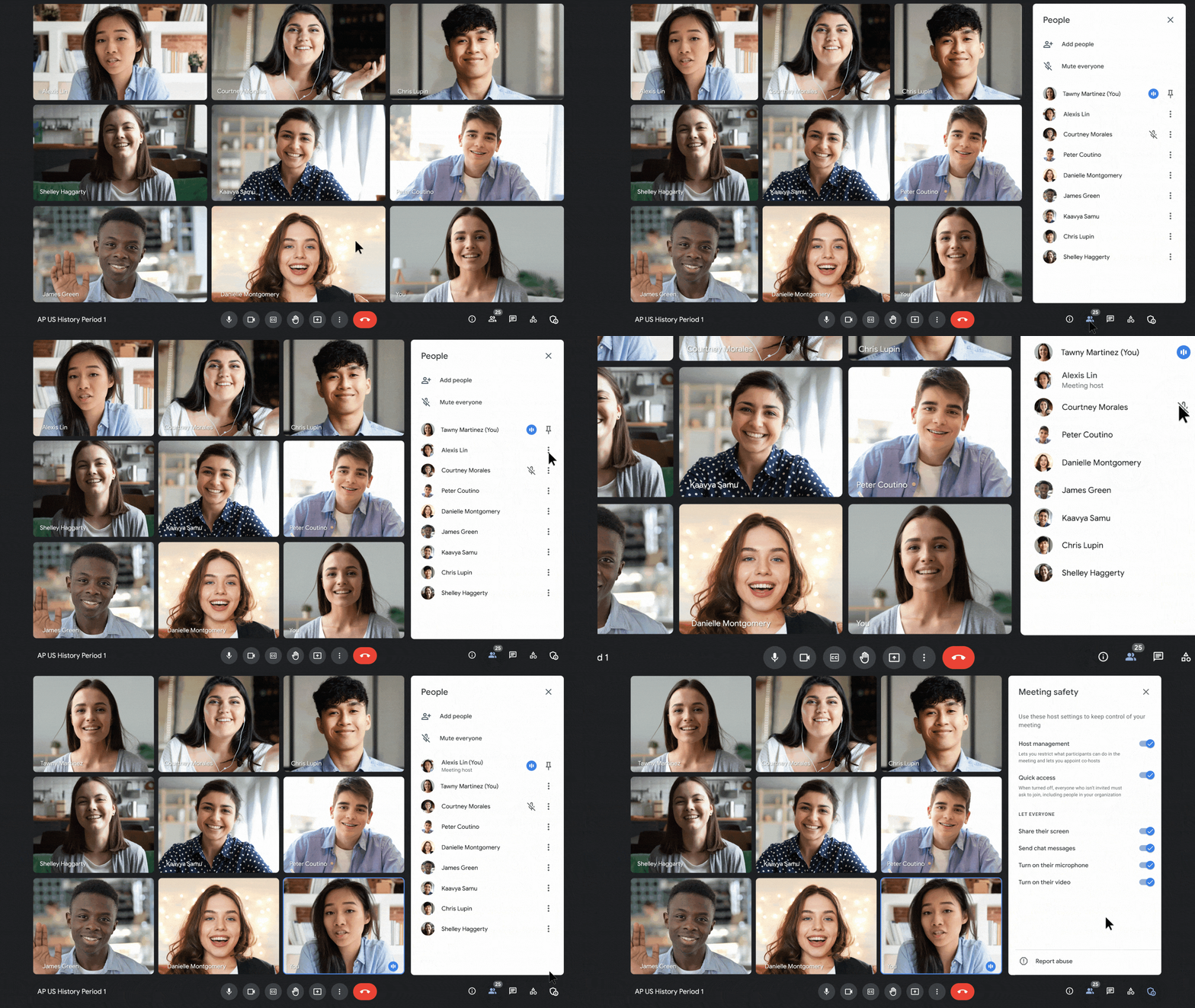
    Google Meet, the popular online conferencing platform, has introduced a game-changing feature: AI-driven makeup filters. Users can now choose from 12 different styles, ranging from subtle to dramatic, that lend an instant touch of refinement to their on-screen appearance.

    Always Camera-Ready with Google Meet

    There’s no question that the prevalence of video conferencing has necessitated new ways to stay camera-ready, often at a moment’s notice. Google Meet’s latest upgrade is designed to meet this exact need. Building on their existing ‘Touch-up’ feature, they have added 12 new makeup filters powered by artificial intelligence.

    Notably, these filters are more than just standard overlays that are prone to flaws or glitches. Google assures that these AI-driven filters maintain a natural and consistent effect, regardless of whether you’re sipping coffee, touching your face, or moving around. Depending on your mood or preference, you can opt for a look that is professional and polished, or one that’s a bit more daring.

    While the feature is not activated by default, users can easily enable it and select their desired look on either the web-based platform or mobile application. The chosen look will conveniently be saved and applied for subsequent meetings, creating a seamless solution for users wanting to maintain their on-screen appearance.

    Keeping Pace with Competitors

    Google Meet is not the first video conferencing platform to venture into virtual makeup. Both Microsoft Teams and Zoom have previously integrated similar features. This trend underlines an acknowledgment from tech giants that virtual meetings are here to stay, and offering features to enhance these experiences is crucial.

    For individuals working remotely or in hybrid work environments, these kinds of features can be highly beneficial. They provide a quick and easy solution to appearing more professional and confident on camera, eliminating the need to get fully ready for each call. This can significantly affect how you present yourself professionally.

    Practicality Over Vanity

    While the introduction of makeup filters in video conferencing might initially be met with skepticism, their practicality soon becomes apparent. It isn’t so much about vanity as it is about convenience and confidence. For those with early morning meetings or days filled with back-to-back calls, the ability to click a button and instantly look presentable is undoubtedly advantageous.

    However, the use of this feature is optional, and it is deactivated by default. Users can activate and use it as required. Currently, this service is available to certain Google Workspace Business and Education tiers and to Google One and Google Workspace Individual subscribers.

    Questions & Answers

    What is Google Meet’s new feature?
    Google Meet’s new feature is an AI-driven makeup filter that users can apply to enhance their on-screen appearance during video calls.

    How can I enable the new makeup filter feature on Google Meet?
    The makeup filter feature can be enabled on the settings page of either the web-based platform or mobile application of Google Meet.

    Who can use the AI-driven makeup filter feature on Google Meet?
    Currently, this feature is accessible to certain Google Workspace Business and Education tiers and to Google One and Google Workspace Individual subscribers.

  • Deutsche Bank: Bitcoin May Become Key Central Bank Reserve

    Deutsche Bank: Bitcoin May Become Key Central Bank Reserve

    The global inclination towards safe assets is anticipated to stimulate increased demand for both gold and bitcoin as primary reserves for central banks by the year 2030.

    Gold and Bitcoin: Safe Haven Assets

    Gold has a long-standing reputation as a safe haven asset; however, Bitcoin could soon join this precious metal in garnering such recognition and become a crucial reserve within central banks by 2030, based on a report by Deutsche Bank. The report, penned by senior economist Marion Laboure and analyst Camilla Siazon, highlights the similarity in behavior towards gold in the 20th century with current discussions surrounding Bitcoin.

    The Trend of De-Dollarization

    Significant shifts regarding central bank allocations have been occurring, affecting the US dollar’s share of global reserves, which has fallen from 60 percent in 2000 to 41 percent in 2025. Nevertheless, Deutsche Bank remains confident that the US dollar will maintain a key role in global economics.

    The report emphasized that neither Bitcoin nor gold will fully replace the US dollar, referring to digital assets as “complementary” to national currencies within the central bank reserve strategy.

    Questions & Answers

    What are safe haven assets?
    Safe haven assets are investments that are expected to hold or increase in value during market downturns. Examples include gold and, recently, Bitcoin.

    What is the current trend in central bank allocations?
    There is a noticeable shift away from the US dollar, with its share of global reserves falling from 60 percent in 2000 to 41 percent in 2025.

    Will Bitcoin and gold replace the US dollar entirely?
    According to a Deutsche Bank report, neither Bitcoin nor gold will fully supplant the US dollar. Instead, they are seen as “complementary” to national currencies within the central bank reserve strategy.

  • HSBC’s Hang Seng Deal Bets on Long-Term Gains Beating CRE Risks

    HSBC’s Hang Seng Deal Bets on Long-Term Gains Beating CRE Risks

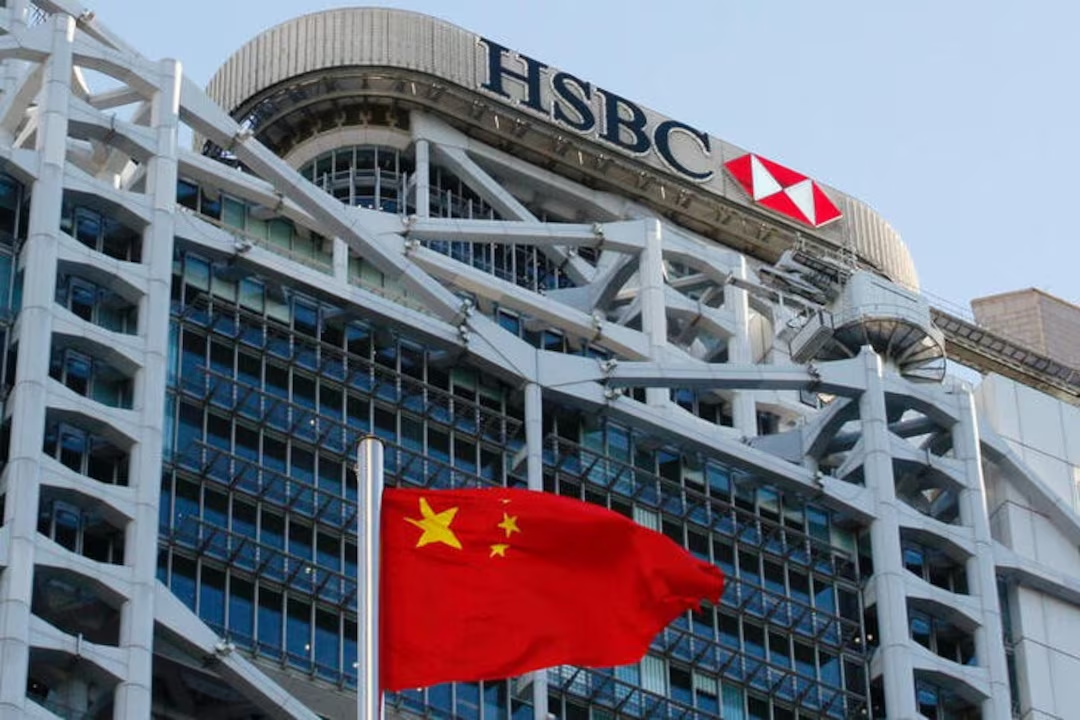
    HSBC’s recent proposal to purchase Hang Seng has raised questions due to the potential commercial real estate risk in Hong Kong. However, some experts believe that possible long-term advantages such as cost synergies may offset these concerns.

    Deal Details

    HSBC last week proposed to take over its Hong Kong-based subsidiary, Hang Seng Bank, by purchasing the remaining 37% stake currently held by minority shareholders for HK$106 billion ($13.6 billion). This transaction values Hang Seng at $155 per share, representing approximately a 30% premium at the time of the announcement. Hang Seng is expected to maintain its individual brand, banking license, and board.

    The acquisition will be entirely financed by HSBC, which plans to restore its CET1 ratio to its target operating range of 14-14.5% by generating capital organically and pausing any further buybacks for three quarters.

    Post-announcement, Hang Seng’s share price saw an increase of approximately 26%, while HSBC’s shares dropped by nearly 8%.

    Potential Bailout Concerns

    One of the most significant concerns surrounding the deal is Hang Seng’s exposure to Hong Kong’s commercial real estate (CRE) sector, which has been experiencing a sustained decline due in part to reduced rental demand and enduring vacancies. Close to half of HSBC’s Hong Kong CRE exposure is linked to Hang Seng, which reported HK$25 billion of impaired loans in the sector as of the first half of 2025.

    Reports indicate that Hang Seng was in the initial stages of selling more than $3 billion worth of property-backed loan portfolios following HSBC’s directive to its London-based global chief corporate credit officer and the head of its special credit unit to initiate such a process three months prior. Additionally, HSBC’s Hong Kong CEO Luanne Lim was appointed as Hang Seng CEO in September, replacing Diana Cesar who was promoted to Hong Kong vice chair at HSBC.

    However, HSBC CEO Georges Elhedery maintains that the deal aims to stimulate growth. He has stated that the Hang Seng transaction was not motivated by pressure to rescue the local lender and added that the British firm would consider further acquisitions in Hong Kong, with transaction banking and wealth identified as priority growth areas.

    Analysts’ Take

    The business community has offered mixed reactions to the deal, which is yet to receive approval.

    According to a UBS report, benefits could arise from increased exposure to the high return on tangible equity (ROTE) market in Hong Kong and simplified operations. However, concerns about provisions for CRE loans persist. Jefferies downgraded HSBC from a “buy” to a “hold” status after the planned $8.5 billion share buyback plan was scrapped, noting that the Hang Seng deal would have a neutral impact on earnings per share before synergies.

    Michael Makdad, a senior equity analyst at Morningstar, stated that “parent-subsidiary double listings are inherently problematic in terms of governance and in this sense, it’s a positive and long-overdue move. Of course, HSBC will need to pay a premium so it likely wouldn’t be positive in terms of my fair-value estimate for HSBC but there should be some opportunities for cost synergies.”

    Questions & Answers

    Q: What is the potential impact of the HSBC and Hang Seng deal?
    A: While increased exposure to the high ROTE market of Hong Kong and reduced operational complexity are expected benefits, there are concerns about provisions for CRE loans.

    Q: Has HSBC’s stock been affected by the announcement to buy Hang Seng?
    A: Yes, the announcement has led to an approximately 8% drop in HSBC’s share price.

    Q: Is there a risk of a bailout related to the HSBC and Hang Seng deal?
    A: There have been speculations about a potential bailout due to Hang Seng’s significant exposure to Hong Kong’s declining commercial real estate sector. HSBC’s CEO, however, maintains that the purchase is aimed at driving growth.

  • Standard Chartered Pushes Bank-Wide Skills Revolution

    Standard Chartered Pushes Bank-Wide Skills Revolution

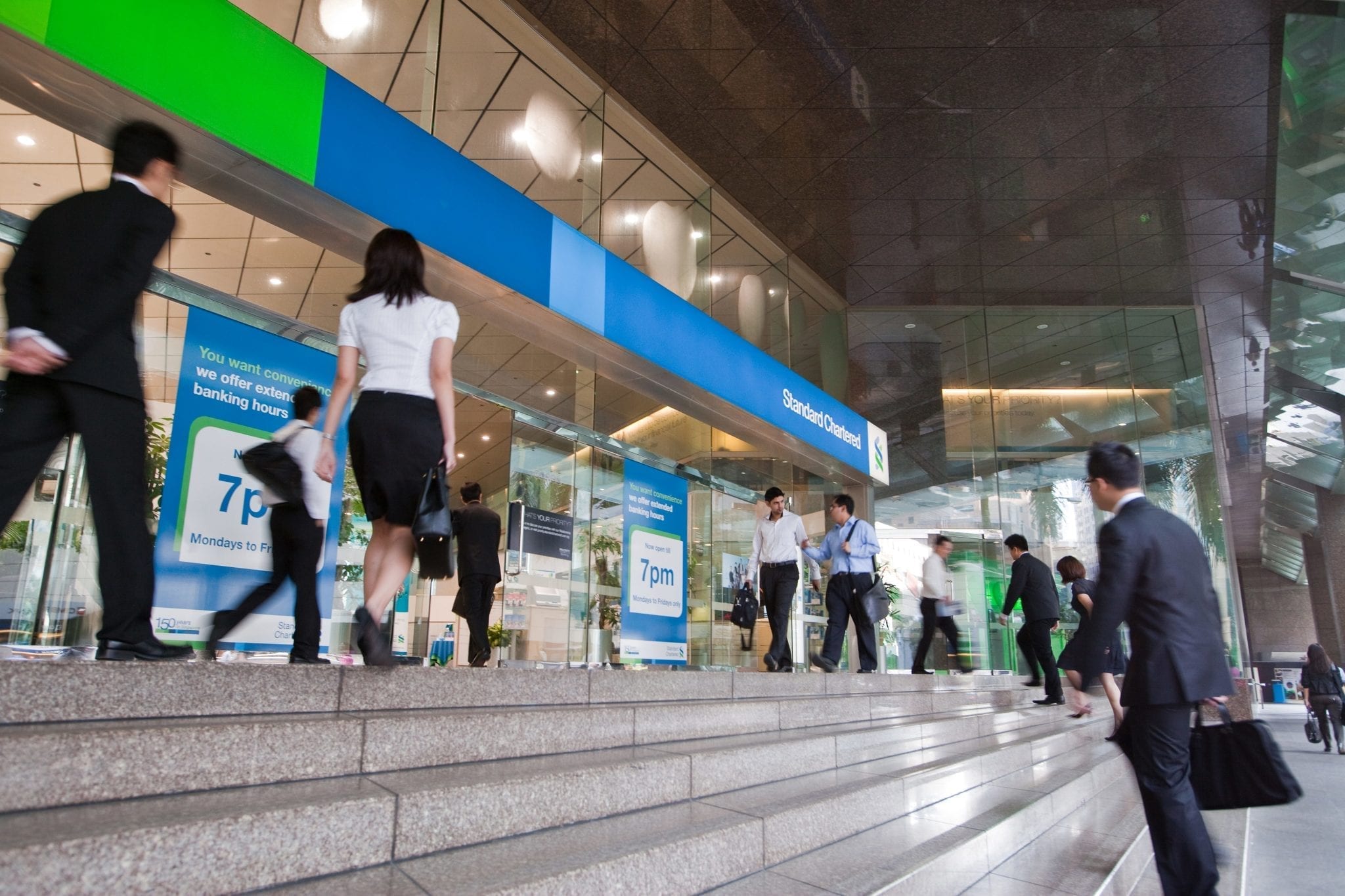
    Standard Chartered, the British banking heavyweight, is investing heavily in an initiative aimed at fostering a skills-based approach within the organisation. This multi-million-dollar venture is focused on generative AI and data literacy, intending to ensure that each employee is equipped with the necessary tools to excel in an increasingly digitized, rapidly changing financial environment.

    Investing in Future-Ready Skills

    Since its inception, Standard Chartered has invested over S$4.5 million in the initiative, which is dedicated to expediting training in emerging technologies such as generative AI and data analytics. The goal, according to Patrick Lee, CEO for Singapore and ASEAN, is to empower every employee to work more efficiently, think more creatively, and adapt rapidly to the evolving landscape. The aim is to transform the work they do and help the bank achieve its business and personnel objectives.

    Structured Learning and Recognition

    To actualise its vision, the bank established a comprehensive learning ecosystem, incorporating an AI Learning Hub and an array of IBF-accredited training programmes. The AI literacy course, which aligns with the Institute of Banking and Finance’s (IBF) Future-Enabled Skills Framework, has already been taken up by more than 15 percent of the Singapore workforce.

    SkillsFuture@SC, an initiative aimed at deepening employees’ expertise has been rolled out. Moreover, tools like SC GPT, one of the largest enterprise deployments in banking of its kind, are being employed to enhance efficiency and customer interaction.

    Data Management and Generative Intelligence

    Standard Chartered’s latest innovation is the Data Management Learning Marathon (DMLM), a program providing employees with a thorough understanding of concepts such as data quality, the data life cycle, and responsible AI.

    Used alongside SC GPT, the DMLM underscores the bank’s dedication to integrating digital intelligence into every aspect of its operations.

    Recognition for Skill Development

    Standard Chartered’s commitment to skills development has earned them the IBF Advance Award. Three of their senior leaders, Jaclyn Dove, Lee Woei Shiuan, and Richard Sykes, have been named IBF Fellows in recognition of their contributions to Singapore’s financial sector.

    CEO Patrick Lee asserted that the bank would continue to invest in talent in Singapore as a crucial global market.

    Skills Transforming Work

    Employees have already begun to see the benefits of the skills-based initiative. A senior manager in Technology & Operations now uses AI tools to streamline decision making. Similarly, a Product Wealth Specialist has incorporated GenAI capacity into an advisory platform to customize client emails and detect portfolio gaps. A business analyst is using SC GPT to decipher complex data and enhance code development.

    Commitment to a Digital Future

    With a 166-year history in Singapore and significant presence across ASEAN markets, Standard Chartered continues to demonstrate its commitment to innovation and talent development. Being awarded the “Significantly Rooted Foreign Bank” status by the Monetary Authority of Singapore (MAS) furthers the bank’s belief that transformation begins with people.

    Questions & Answers

    What is the primary goal of Standard Chartered’s training initiative?
    The main objective is to equip every employee with the skills necessary to succeed in a rapidly evolving, digital financial environment.

    What is the Data Management Learning Marathon (DMLM)?
    The DMLM is a program that offers employees a comprehensive understanding of important concepts such as data quality, the data life cycle, and responsible AI.

    What recognition has Standard Chartered received for its skill development efforts?
    The bank received the IBF Advance Award for Skills Development and three of its senior leaders were named IBF Fellows for their contributions to Singapore’s financial sector.

  • Singlife Pioneers Ai Integration In Singapore’s Insurance Industry With Salesforce’s Agentforce

    Singlife Pioneers Ai Integration In Singapore’s Insurance Industry With Salesforce’s Agentforce

    Singapore’s leading insurer, Singlife, has become the trailblazer in its field as it has integrated Agentforce, an Artificial Intelligence (AI) platform developed by Salesforce, into its operations. This collaboration is noteworthy as it is the first in Singapore that an insurance company has adopted the Agentforce technology.

    Unlocking AI Capabilities

    The new AI assistant will aid customer service executives by providing swift and accurate responses to diverse product-related inquiries. This will eliminate the need for manual search, thereby enhancing efficiency and precision in customer interaction.

    Enhancing Customer Service with AI

    Singlife has leveraged the Data Cloud of Salesforce, a high-capacity data engine built into the platform, to consolidate its vast internal resources, including product manuals, training materials, and FAQs, into a single, coherent system. In the past, customer service representatives had to manually peruse these resources to extract the needed information. Now, with the help of Agentforce, they can receive answers almost instantaneously, ensuring a faster, more dependable, and seamless customer experience.

    AI as a Key Business Strategy

    Romil Sharma, Singlife’s Group Head of Technology and Operations, has expressed that AI is more than just a tool, it is a vital component of their business strategy. The partnership with Salesforce enables Singlife to use AI practically, aiding their customer service executives in providing faster and more accurate responses. Sharma also noted that this integration marks the beginning of Singlife’s broader strategy to adopt AI across all its operations, including customer service, underwriting, claims, and distribution.

    Sharma further emphasised that Singlife’s primary goal is to establish AI as a crucial driver of growth, efficiency, and customer-centricity throughout its operations.

    Redefining customer engagement

    Arun Kumar Parameswaran, Executive Vice President & Managing Director, South and Southeast Asia at Salesforce, expressed his excitement over their partnership with Singlife. He believes that by using Agentforce and Data Cloud, businesses like Singlife can enhance their service efficiency, creating trusted and seamless experiences that result in lifelong customer loyalty.

    Empowering Financial Advisors with AI

    Following the successful implementation of Agentforce among its customer service executives, Singlife plans to extend the use of this AI technology to its network of financial advisor representatives. The goal is to equip advisors with timely, accurate, and reliable information that will enable them to serve their customers better.

    This initiative reflects Singlife’s ongoing investment in AI-driven transformation, underscoring its commitment to deliver faster, smarter, and more personalised service. It also sets a new standard for digital innovation in the insurance industry.

    Questions & Answers

    What is the significance of Singlife’s partnership with Salesforce?
    The collaboration signifies Singlife’s adoption of Agentforce, becoming the first insurer in Singapore to integrate this advanced AI technology into its operations.

    How does Agentforce enhance the work of customer service executives?
    Agentforce assists customer service executives by providing real-time, accurate responses to a variety of product-related inquiries, thereby improving efficiency and accuracy in customer interactions.

    What are Singlife’s future plans with AI technology?
    After the successful integration of Agentforce among its customer service executives, Singlife plans to extend its usage to its network of financial advisor representatives, aiming to empower them with reliable information to better serve their customers.

  • Standard Chartered Expands Reach In Singapore: Strategic Partnerships To Boost Global Indian Operations

    Standard Chartered Expands Reach In Singapore: Strategic Partnerships To Boost Global Indian Operations

    Standard Chartered, a London-based financial institution, has recently entered into strategic agreements intended to increase its reach within Singapore’s business networks and boost the growth of its global India operations. These partnerships are with the Singapore Indian Chamber of Commerce & Industry as well as with the Institute of Chartered Accountants of India in Singapore.

    Unlocking Indian Networks

    The primary aim of these collaborations is to strengthen Standard Chartered’s global Indian proposition. This will be achieved by expanding its access to Indian business networks in Singapore and increasing its involvement within these communities.

    According to Standard Chartered, the number of high net worth individuals in India has doubled over the past decade. This demographic is projected to expand to 1.6 million individuals by the year 2027.

    James Lye, Standard Chartered’s Global and Singapore International Banking Head, has stated that these local partnerships will bolster the bank’s relevance in critical markets. It will also solidify its unique proposition and place the bank in a position where it can support and grow alongside the significant wealth creation occurring within these communities. He noted an increasing demand within the global Indian community for cross-border banking and wealth management solutions.

    Continuing the 2024 Initiative

    These new agreements are a continuation of broader efforts initiated in 2024 to update Standard Chartered’s global Indian proposition. The initial phase of this initiative involved enhancing connectivity with the bank’s hubs in various locations such as Singapore, Hong Kong, the United Arab Emirates, and the United Kingdom. This also included the development of a comprehensive set of global solutions and the provision of access to a new affluent wealth center in Mumbai, as well as various lifestyle experiences.

    Celebrating Deepavali

    A notable example of these lifestyle experiences was an exclusive Deepavali celebration recently hosted by the bank in Singapore. The event saw more than 200 clients from priority, private, and corporate banking sectors in attendance. This celebration was headlined by acclaimed Hindi playback singer Sonu Nigam and featured a traditional Diya lighting ceremony, as well as a classical sitar and tabla performance.

    Questions & Answers

    What is the aim of Standard Chartered’s recent strategic agreements?
    The aim is to strengthen the bank’s global Indian proposition by expanding its access to Indian business networks in Singapore and increasing its involvement within these communities.

    What demographic trends have been noted by Standard Chartered in India?
    The number of high net worth individuals in India has doubled over the past decade, and it is projected to continue growing, reaching 1.6 million individuals by 2027.

    What was the 2024 initiative by Standard Chartered?
    Initiated in 2024, the project aimed at updating Standard Chartered’s global Indian proposition. This included enhancing connectivity with the bank’s hubs across the globe, developing comprehensive global solutions, and providing access to an affluent wealth center in Mumbai, along with various lifestyle experiences.

  • First Brands’ Bankruptcy Exposes $500 Million UBS Exposure: Unsecured Creditors Unearthed Amid Complex Financing Structure

    First Brands’ Bankruptcy Exposes $500 Million UBS Exposure: Unsecured Creditors Unearthed Amid Complex Financing Structure

    On September 29, 2025, First Brands Group, a formerly profitable manufacturer and distributor of automotive aftermarket parts, filed for Chapter 11 protection in the U.S. Bankruptcy Court for the Southern District of Texas. The company reported over $10 billion in liabilities against an annual revenue of approximately $3.5 billion.

    A Shift in Financial Structure

    First Brands Group, once a standard parts supplier, progressively developed into a complex system of layered financing and circular cash flows. This intricate evolution involved multiple originators factoring receivables, inventory collateral purportedly mixed or pledged to several lenders, and substantial payables securitized off the balance sheet. As liquidity evaporated, the company’s creditors grappled with identifying legitimate collateral.

    UBS Hedge Fund Solutions and UBS O’Connor Funds

    In the midst of this financial turmoil, the UBS Hedge Fund Solutions platform and UBS O’Connor funds surfaced as First Brands’ most substantial unsecured financial creditors. The two entities held a total of $349.8 million in supply-chain-finance claims and additional secured exposures, pushing the total beyond $500 million. No other major bank was identified in the list of unsecured creditors. However, indirect involvement through the financing of working-capital originators or conduits might still transpire as the bankruptcy proceedings continue.

    Potential Misunderstood Risks

    UBS’s involvement in the case was unexpected, casting an unfavorable spotlight on the small player in U.S. corporate finance. Even though the immediate impact on shareholders seems minimal, the situation recalls earlier controversies. UBS could once again face accusations of endorsing products with poorly understood risks and unreliable marketing strategies.

    In 2023, UBS Asset Management marketed a strategy to professional investors promising double-digit returns, using a presentation titled “UBS Working Capital Finance Strategy.” The presentation featured a North American auto-parts manufacturer with a 35 percent EBITDA margin and over $2.8 billion in revenue. The company was described as participating in an uncommitted supply-chain-finance program that started in August 2019, with a 17 percent fixed yield, a 60-day tenor, and a B2/B corporate rating.

    Alarming Economic Implications

    The economic implications of such a strategy were alarming. No financially stable industrial company would willingly surrender 17 percent of its margin merely to lessen supplier payments for two months. In the case of First Brands, their aggressive, debt-fueled acquisition strategy left the balance sheet perpetually low on cash. For credit investors, this pricing should have been viewed as a red flag rather than a lucrative opportunity, highlighting the dangers of adverse selection.

    Questions & Answers

    Q: What led to First Brands Group’s financial instability?
    A: An aggressive, debt-fueled acquisition strategy left First Brands’ balance sheet perpetually short of cash, leading to its financial instability.

    Q: Who were First Brands’ largest unsecured financial creditors?
    A: UBS Hedge Fund Solutions platform and UBS O’Connor funds emerged as First Brands’ largest unsecured financial creditors.

    Q: What could be the potential repercussions for UBS?
    A: UBS could face accusations of endorsing products with poorly understood risks and unreliable marketing strategies, similar to past controversies.

  • Adapting To Trade Changes: Fedex Bolsters Support For Asia Pacific Businesses Amid Market Shifts

    Adapting To Trade Changes: Fedex Bolsters Support For Asia Pacific Businesses Amid Market Shifts

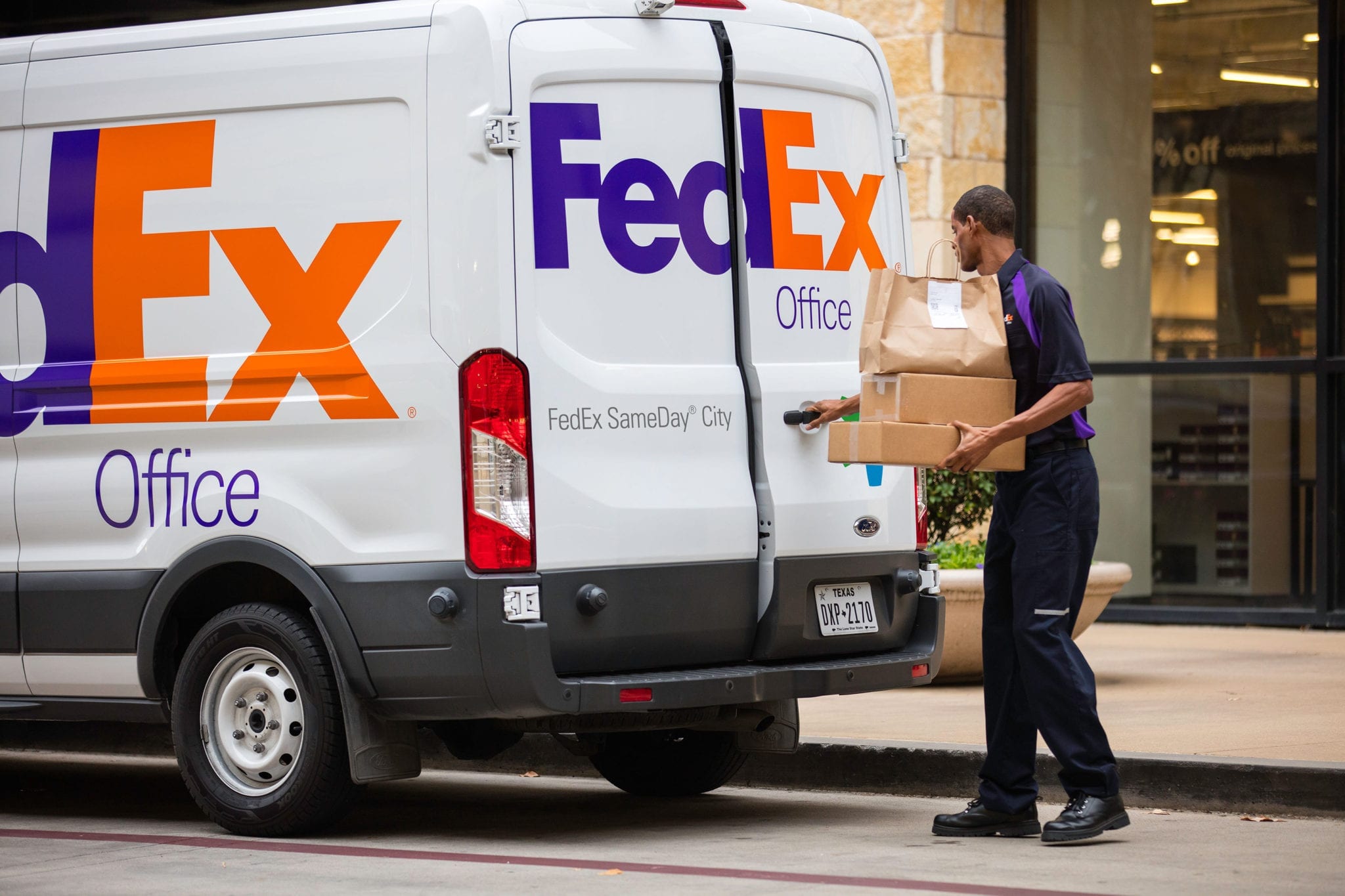
    Federal Express Corporation, a world-leading express transportation company, is enhancing its support for businesses throughout the Asia Pacific. This move is in response to adapt to shifting market priorities, alterations in tariffs, and changes in customs regulations.

    In response to recent modifications to the U.S. de minimis exemption rules, FedEx arranged a series of webinars across nine markets in the Asia Pacific. These sessions attracted over 3,800 customers ranging from small- and medium-sized enterprises to multinational corporations. The webinars offered valuable insights on maintaining operational efficiencies, customs clearance, avoiding unexpected costs, and enhancing shipping automation. This has equipped businesses with the necessary tools and guidance to navigate the intricate trade environment of today.

    Trade Priorities and Market Shifts

    Feedback received after the webinars underlined two significant trends in cross-border trade priorities: Delivered Duty Paid disbursement fees and shipment duties and taxes.

    Whilst one-fourth of the APAC businesses surveyed still regard the United States as their primary market, over 40% are planning to redirect their attention to Intra-Asia (22%) and Europe (21%) over the coming year.

    Cost control and duty visibility are key concerns, with 25% of APAC businesses emphasising the need for clear pre-regulatory volatility. The difficulty of keeping pace with ever-changing rules has been cited by 27% of businesses as a significant barrier to trade.

    Salil Chari, Senior Vice President of Marketing and Customer Experience for the Asia Pacific at FedEx, stated, “We are working closely with our customers to ensure they maintain efficient access to vital markets. We are leveraging our deep regulatory expertise, innovative digital tools, and the strength of our global network to help Asia Pacific businesses improve cost and duty transparency, reduce clearance friction, and unlock new growth opportunities across the region and Europe with confidence.”

    Strengthening Cross-Border Business

    In response to businesses’ increasing demand for greater trade guidance and digital solutions to support supply chain diversification and cross-border trade expansion, FedEx plans to expand its comprehensive suite of offerings.

    FedEx is one of the leading entry-filers in the U.S. and provides 24/7 support to ensure smooth shipment movement across more than 220 countries and territories. For U.S.-bound trade requiring particular attention, FedEx’s U.S. Tariff Hub offers updated guidance on tariffs, required documentation and customs policies.

    Furthermore, 27% of APAC businesses are seeking automated tools to expedite customs clearance. To this end, FedEx continues to invest in digital trade solutions, such as the industry-leading AI-enabled Harmonized Tariff Schedule code-lookup feature and a Customs AI chatbot.

    FedEx is also working to strengthen connectivity across critical intra-Asia and Asia-Europe trade corridors to support Asia Pacific businesses looking to diversify beyond the U.S.

    Questions & Answers

    What initiatives has FedEx introduced to support businesses in the Asia Pacific?
    FedEx has arranged a series of webinars providing insights on maintaining operational efficiencies, customs clearance, and cost management. They are also expanding their suite of offerings to include automated tools for customs clearance and strengthening connectivity across critical trade corridors.

    What are the top concerns of APAC businesses according to the feedback received by FedEx?
    The top concerns are cost control, duty visibility, and the difficulty of keeping pace with changing trade regulations.

    What digital solutions has FedEx introduced to support customs clearance?
    FedEx has introduced an AI-enabled Harmonized Tariff Schedule code-lookup feature and a Customs AI chatbot to help expedite the customs clearance process.

  • Pharma Leaders At Flypharma Highlight Air Cargo’s Role In Global Health

    Pharma Leaders At Flypharma Highlight Air Cargo’s Role In Global Health

    At the FlyPharma Amsterdam 2025 conference, leaders from the worldwide pharmaceutical industry gathered to highlight the importance of collaboration for the steady global transportation of essential healthcare items and life-saving medicines. The conference took place amidst the backdrop of rapidly changing regulations, shifting trade flows, and an uncertain geopolitical landscape.

    Growth in Pharma Sector Increases Demand for Specialised Air Cargo

    The global healthcare and pharmaceutical industry is projected to achieve a total worth of USD 1.77 trillion by 2025. This growth is primarily attributed to advances in biologics, digital health, and personalized medicine, along with increased patient access on a global scale.

    The industry’s momentum is directly reflected in increased demand for airfreight capacity, especially for temperature-sensitive, high-value shipments. The pharma airfreight segment alone is predicted to witness over 6 percent annual growth, as manufacturers and logistics providers prioritize speed, dependability, and adherence to Good Distribution Practice (GDP) standards.

    Air cargo carriers and airports are making significant investments in IoT tracking, cold-chain infrastructure, and digital visibility tools to cater to this growing vertical. The fastest growth is anticipated in corridors linking Asia, Europe, and North America. The pharma and healthcare logistics sector is emerging as a strong and premium segment within the global air cargo market.

    Schiphol: A Global Centre for Pharma Logistics

    Amsterdam Airport Schiphol is a crucial global hub for pharmaceutical logistics. With its central European location, advanced infrastructure, and robust network of logistics partners, the airport is essential for global pharmaceutical supply chains. Schiphol contributes significantly to the worldwide distribution of vaccines and medicines and enhances the Dutch economy, further establishing the Netherlands as a hub for international trade and innovation in life sciences.

    The pharmaceutical logistics ecosystem at Schiphol has considerable implications not only for global public health but also for the Dutch economy. In 2024, the Netherlands exported pharmaceutical products worth USD 38.49 billion, highlighting the sector’s role in driving trade, innovation, and high-value employment. Schiphol’s success as a pharma logistics hub encourages companies to invest, expand, and drive innovation in the Netherlands, making the country more competitive and appealing to life sciences entities.

    Schiphol’s importance as a global logistics hub was further underscored during the COVID-19 pandemic, during which it served as one of Europe’s primary gateways for vaccine transportation and temperature-sensitive pharmaceuticals.

    The Role of Air France KLM Martinair Cargo in Pharma Logistics

    Air France-KLM Martinair Cargo (AFKLMP Cargo) has positioned itself as a leading player and innovator in pharmaceutical logistics, being among the first airlines to receive IATA CEIV Pharma certification. The airline’s dual-hub structure in Amsterdam Schiphol and Paris Charles de Gaulle, situated in Europe’s “pharma belt,” provides unique resilience and adaptability in a fluctuating market.

    According to GertJan Roelands, SVP Commercial, AFKLMP Cargo, the company’s growth in the pharmaceutical and healthcare segment has been a strategic priority over the past five years. The airline has made considerable investments in infrastructure and introduced new digital solutions while optimizing processes to enhance resilience and transport quality. The airline’s commitment to this strategy is reflected in its record-breaking performance in the pharmaceutical and healthcare segment and its increasing market share.

    Innovation, Sustainability, and Excellence in Cool Chain

    AFKLMP Cargo continues to expand cool-room capacity, develop digital monitoring dashboards for operational visibility, and pioneer sustainable temperature-control solutions such as CO₂-based refrigerant technology at Paris CDG. As personalized medicine and advanced therapies gain traction, the airline collaborates closely with shippers, forwarders, and life science clusters, providing time-critical solutions that are fully compliant with GDP and CEIV.

    Despite market volatility and geopolitical pressures, AFKLMP Cargo remains steadfast in its focus on on-time delivery and maintaining the integrity of the cool chain supply. The resilience demonstrated during the pandemic continues to shape the airline’s long-term strategy.

    In the words of GertJan Roelands, “Pharmaceutical logistics is not just about transportation — it’s about trust, responsibility, and resilience. Our mission is to deliver healthcare products safely and reliably, adapting to new challenges while ensuring patients around the world receive the medicines they need.”

    Questions & Answers

    What are the main factors driving the growth of the global pharmaceutical industry?
    The main factors driving this growth include advances in biologics, digital health, and personalized medicine, along with increased patient access globally.

    What is the projected growth for the pharma airfreight segment?
    The pharma airfreight segment is predicted to grow more than 6 percent annually.

    What role has Schiphol played in global pharmaceutical logistics?
    Schiphol serves as a crucial global hub for pharmaceutical logistics, contributing significantly to the worldwide distribution of vaccines and medicines, and enhancing the Dutch economy.