Author: Mei Ling Tan

  • Ex-Google engineer fired over gender memo sues for discrimination

    Ex-Google engineer fired over gender memo sues for discrimination

    A former Google engineer fired after he asserted in a memo that biological causes were behind tech industry gender inequality sued his former employer on Monday, saying he was discriminated against as a white man with conservative political views.

    James Damore last year caused an uproar in Silicon Valley and beyond when he wrote the internal memo, which later became public. Google said he had perpetuated gender stereotypes and fired him in August.

    In the months since, his firing has become a popular cause among right-leaning U.S. bloggers, and Damore hired a Republican Party official as his attorney.

    Damore and another white male former Google engineer, David Gudeman, filed the lawsuit as a proposed class action in Santa Clara County Superior Court in California. The lawsuit alleges workplace discrimination and retaliation.

    Google, a unit of Alphabet Inc based in Mountain View, California, said in a statement: “We look forward to defending against Mr. Damore’s lawsuit in court.”

    According to the lawsuit, the company has failed to protect employees, especially white men, from workplace harassment related to their support of U.S. President Donald Trump or conservative political views.

    “Damore, Gudeman, and other class members were ostracized, belittled, and punished for their heterodox political views, and for the added sin of their birth circumstances of being Caucasians and/or males,” the lawsuit said.

    The lawsuit also accused Google of maintaining a secret blacklist of conservative media personalities who are not allowed inside the company’s offices.

    The lawsuit requested an injunction barring Google from discriminating against individuals with conservative political views, as well as for unspecified compensation.

    Google Chief Executive Officer Sundar Pichai said when Damore was fired that portions of his memo “violate our Code of Conduct and cross the line by advancing harmful gender stereotypes in our workplace.”

    Gudeman was fired in December 2016 after a confrontation with a Muslim coworker on an internal Google forum, according to the lawsuit.

    The coworker said on the forum that the Federal Bureau of Investigation had targeted him for being a Muslim, and he expressed worry about his personal safety, the lawsuit said. Gudeman responded with skepticism, saying the coworker had provided “zero evidence” for the claim and suggesting the FBI may have had justification.

    A human resources employee later told Gudeman he had accused his coworker of terrorism based on religion, and that he was being fired as a result, the lawsuit said.

  • Idea Cellular plans to raise $1b

    Idea Cellular plans to raise $1b

    Indian operator Idea Cellular said Thursday that its board has approved plans to raise up to 67.5 billion rupees ($1.06 billion) in the sale of new shares, in a bid to strengthen its capital position ahead of completing its planned merger with Vodafone India.

    The company, which is poised to merge with Vodafone’s India unit to create the country’s biggest mobile carrier, will raise 32.5 billion rupees by selling shares to its controlling shareholder the Aditya Birla Group (ABG) and raise the remaining 35 billion rupees by selling shares to institutional investors or a rights issue, the company said.

    As a result, ABG will buy a minimum of 2.5% of the merged entity from Vodafone, or such higher stake as required in order for ABG to ultimately own at least 26% of the merged entity.

    The purchase of the 2.5% interest by ABG follows the increase in its ownership in Idea to 47% from 42%, as a result of a fundraising by the Indian carrier.

    Under the original merger agreement, ABG is expected to reach a shareholding of 26% in the merged entity.

    Vodafone will receive minimum proceeds of 19.6 billion rupees from such sale and its ownership in the combined entity is expected to be approximately 47.5% at the completion of the merger.

    The companies said such changes to the capital structure were already contemplated in the scheme of arrangement for the merger. Vodafone’s stake in the combined entity in excess of 45.1% will not be subject to any lock-up.

    The merger of Vodafone India with Idea Cellular — the country’s second and third-largest mobile operators, respectively–was announced in March 2017. The proposed deal has already been approved by shareholders and creditors and the Competition Commission of India, but still needs clearance from the Department of Telecom and the National Company Law Tribunal.

    The companies expect to complete the merger in the first half of calendar 2018.

  • Natuzzi, Kuka signed JV agreement

    Natuzzi, Kuka signed JV agreement

    Natuzzi has signed a preliminary agreement to form a JV with China’s Kuka furniture company with the aim of expanding the Italian brand’s retail network in Greater China.

    “We have known Kuka for many years and have always admired its growth-oriented entrepreneurial spirit and approach,” says Natuzzi chairman/CEO Pasquale Natuzzi. “This partnership will enable Natuzzi and Kuka to become the leading player in the emerging and growing market for branded luxury home furnishings in Greater China.”

    Kuka chairman Jiangsheng Gu says Natuzzi is the right product and brand for the new growth in the Chinese home-furnishing market.

    Subject to certain terms and conditions in the preliminary agreement, and to applicable authorisations, it is expected Natuzzi will contribute exclusive perpetual distribution rights for the Natuzzi Italia and Natuzzi Editions trademarks into a Chinese corporate entity, and that Kuka will invest €65 million (US$77.5 million) to sustain the expansion of the Natuzzi retail network in Greater China, particularly Mainland China, Hong Kong and Macao.

    Of Kuku’s investment, €15 million is in exchange for Natuzzi’s trademark contribution. Natuzzi and Kuka will own 49 and 51 per cent respectively of the entity.

    The preliminary agreement also envisages Natuzzi will contribute its existing stores and commercial organisation in China. Further, the venture will employ Natuzzi’s retail management team.

    It is also expected the JV will take over existing distribution agreements related to the Natuzzi network of franchised stores.

    If the parties fail to reach a final agreement by March 31, the preliminary agreement will be voided.

  • H&M apologizes for ‘coolest monkey’ racist campaign

    H&M apologizes for ‘coolest monkey’ racist campaign

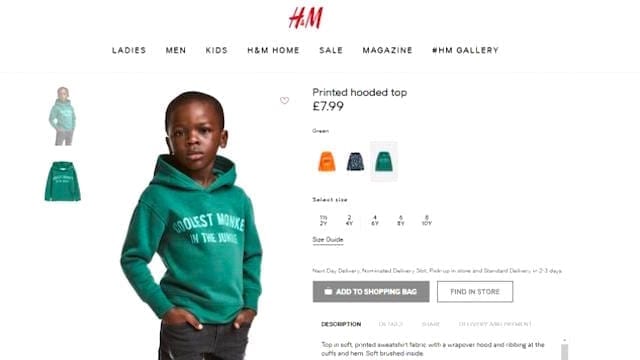
    Swedish fast fashion chain H&M has apologised for featuring a black child modelling a garment with the text “coolest monkey in the jungle”, also removing the advertisement and item from stores.

    H&M was forced to apologise following widespread backlash from consumers, staff, stakeholders and the media.

    “Our position is simple and unequivocal – we have got this wrong and we are deeply sorry,” the retailer stated.

    “H&M is fully committed to playing its part in addressing society’s issues and problems, whether it’s diversity, working conditions or environmental protection – and many others. Our standards are high and we feel that we have made real progress over the years in playing our part in promoting diversity and inclusion. But we clearly haven’t come far enough.”

    The retailer said it agreed with all the criticism that the controversy had generated and stated that “even if unintentional, passive or casual racism needs to be eradicated wherever it exists.”

    The item will be recycled after being removed from shop floors.

    “We appreciate the support of those who have seen that our product and promotion were not intended to cause offence but, as a global brand, we have a responsibility to be aware of and attuned to all racial and cultural sensitivities – and we have not lived up to this responsibility this time,” the retailer stated.

    “Racism and bias in any shape or form, conscious or unconscious, deliberate or accidental, are simply unacceptable and need to be eradicated from society. In this instance we have not been sensitive enough to this agenda.”

  • Amazon goes shopping

    Amazon goes shopping

    All sorts of rumors are out there talking up potential Amazon acquisitions.

    First, it was Kohl’s that was going to be bought by Amazon. It seemed reasonable; after all, they are already selling some of the Amazon electronic equipment like Alexa. Kohl’s also agreed to take back Amazon merchandise from customers.

    It was a good idea for Amazon to initiate brick and mortar returns. At the same time, Kohl’s is counting on gaining more customer traffic

    Then, technology analyst Gene Munster of Loup Ventures wrote that Target was a candidate to be purchased by Amazon. The locations of Target stores are appealing and would provide a great opportunity for the sales of Amazon hardware. Moreover, the fashion appeal of Target’s 1,834 stores makes this an interesting candidate.

    As long as we are guessing who the next candidate might be, Walmart could be a great candidate. It has stores in every state of the U.S.A., a significant global presence, and is a fierce competitor to Amazon. All the more since Mark Lore has intensified online sales, so eliminating competition could enrich Jeff Bezos’s coffers. However, Walmart has 11,650 stores worldwide.

    Here is another option. Forbes contributor and Columbia University Professor Mark Cohen’s belief that Costco could be the most likely candidate has merit since I believe both the food and non-food sections of Costco continue to function well and generate higher revenues and earnings every quarter.

    Many Costco customers stay loyal to the company because of the quality of Costco’s offerings and value of every product they sell. And, membership renewals are very high. This acquisition would also strengthen Amazon’s presence in the food business. Amazon’s 2017 acquisition of Whole Foods Markets was a spectacular move.

    Amazon is an amazing company – hated by the industry but loved by its customers. Their next acquisition is most likely going to be a ready-to-wear retailer that will intensify its fashion presentation. Kohl’s fits that description. Maybe J.C. Penney, but that company has too much debt. So what about Macy’s? Dillard’s?

    The industry is fighting for survival. Amazon recognizes the opportunities and may act. However, this is still just a guessing game. Amazon will choose if and when to act when it’s ready, so we can just wait and watch as none of this is going to accelerate what Amazon will do.

  • Xiaomi IPO plan reportedly eyes $200b valuation

    Xiaomi IPO plan reportedly eyes $200b valuation

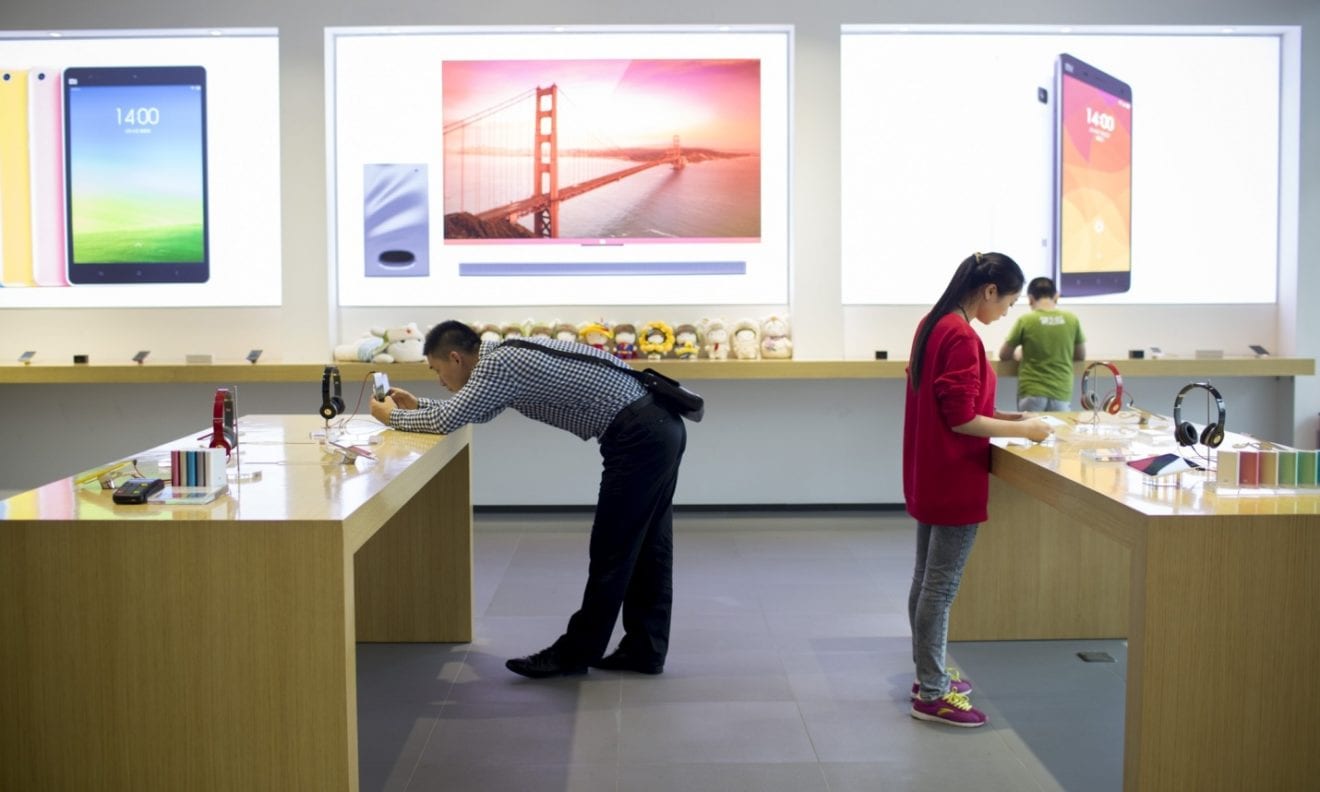
    Planning to go public late this year, Chinese smartphone maker Xiaomi Corp is said to be seeking a valuation of up to US$200 billion.

    Based in Beijing, the electronics and software company prefers Hong Kong over New York for its listing mainly because Hong Kong retail investors are more familiar with its products and founder as reported.

    Xiaomi chairman/founder Lei Jun started liaising with investment banks in November, according to media reports in China. Also, senior executives have told several employees of the impending public issue, reports News.163.com.

    The company was valued at $46 billion in its latest funding round in 2014. After declining sales in 2016, the company managed to revive growth last year, partly by opening offline retail stores and expanding its presence internationally, especially in India.

    In the third quarter of last year, Xiaomi caught up with Samsung to become the largest smartphone brand in India. It had 23.5 per cent of the market with a shipment of 9.2 million units, marking a 300 per cent year-on-year jump, data from research company International Data Corp shows.

    Xiaomi says it topped its annual revenue goal of RMB100 billion (US$15 billion) by the end of October.

    Should it reach US$200 billion valuation, Xiaomi would be the biggest technology IPO after Alibaba Group Holding, which raised a record $25 billion for a $231.4 billion market value in 2014.

  • Paid less than male peers, BBC China editor quits and speaks out

    Paid less than male peers, BBC China editor quits and speaks out

    The BBC’s China Editor Carrie Gracie has quit her post in Beijing to fight for her right to pay equality with male peers, posting an attack on what she called the “secretive and illegal BBC pay culture”.

    Gracie’s revolt is part of the fallout from pay disclosures the British broadcaster was forced to make last July, which showed that two thirds of the highest earners on air were men, and that some of them were earning far more than women in equivalent roles.

    Funded by a license fee levied on TV viewers and reaching 95 percent of British adults every week, the BBC is a pillar of the nation’s life, but as such it is closely scrutinized and held to exacting standards by the public and rival media.

    Gracie’s stand was one of the top news headlines of the day on the BBC itself and on other British media, and many prominent women from the BBC and beyond voiced their support on social media under the slogan #IStandWithCarrie.

    Gracie, who speaks fluent Mandarin and has reported on China for three decades, has not left the BBC. She said she was returning to her former post in the TV newsroom in London where she expected to be paid equally to men in equal jobs.

    “I am not asking for more money. I believe I am very well paid already — especially as someone working for a publicly funded organization. I simply want the BBC to abide by the law and value men and women equally,” she wrote on her website.

    Gracie said she was paid 135,000 pounds ($182,800) a year as China editor. According to last July’s disclosures, North America Editor Jon Sopel earned between 200,000 and 250,000 pounds a year, while Middle East Editor Jeremy Bowen was in the 150,000 to 200,000 bracket.

    Europe editor Katya Adler, the BBC’s only other female editor in foreign news, did not feature in the disclosures, meaning her pay was less than 150,000 pounds.

    Gracie said managers had offered to increase her pay to 180,000 pounds, but that was no solution. She rejected the rise and insisted that all four of the BBC’s international editors should receive equal pay.

    “I was not interested in more money. I was interested in equality,” she said during an interview on BBC radio.

    Britain enacted legislation outlawing sex discrimination in the 1970s and this was followed by an equality act in 2010, but women still earn less than men across much of the economy.

    “Enough is enough”

    The BBC defended itself by saying its gender pay gap was below the national average and less bad than at many other organizations, adding that it was committed to wiping it out by 2020. It also said an independent audit of rank and file staff had found “no systemic discrimination against women” at the BBC.

    Several high-profile women seized on the Gracie story to say the problem was much bigger than the BBC and affected the whole of society.

    “Tip of the iceberg in @BBC & most other orgs (organizations). Equality Act 2010 means no hiding place for shameful discrimination against women. Ending it long overdue,” wrote prominent lawmaker Harriet Harman of the opposition Labor Party, a long-time advocate of women’s equality, on Twitter.

    As in many other countries, pay inequality based on gender has been a persistent problem in Britain, which by some measures has performed worse than comparable European countries in recent years. Britain was ranked 15th in the World Economic Forum’s global gender gap index 2017, below France and Germany.

    But Gracie said her complaint was not about the gender pay gap the BBC admits to, which stems from men earning more on average because they do more of the best paid jobs. “It is men earning more in the same jobs or jobs of equal value. It is pay discrimination and it is illegal,” she said.

    Gracie accused the BBC of adopting a botched “divide and rule” response to the legitimate anger of female staff, offering pay rises to some women while locking down others in a protracted complaints process. In her own case, the process had been “dismayingly incompetent and undermining”, she said.

    “Enough is enough. The rise of China is one of the biggest stories of our time and one of the hardest to tell,” she wrote, citing Chinese state censorship, surveillance, police harassment and official intimidation.

    “I cannot do it justice while battling my bosses and a byzantine complaints process.”v

  • Taiwan to switch off 3G networks at year end

    Taiwan to switch off 3G networks at year end

    Taiwan’s telecoms regulator has revealed that the nation’s 6.4 million 3G users will need to migrate to a 4G network by the end of the year, when operators’ 3G licenses are due to expire.

    The 3G licenses are scheduled to expire on December 31 and services will terminate in 2019, as reported.

    Four operators are still offering 3G services – Chunghwa Telecom, Taiwan Mobile, Far EasTone Telecommunications and Taiwan Star. Asia Pacific Telecom switched off its 3G service in 2017.

    According to the report, officials expect the 3G switch-off to be smoother than last year’s 2G service termination, as operators have retained ownership of their 2,100-MHz spectrum holdings and will be able to use these frequencies to serve their 3G users.

    Operators are also expected to continue to use circuit-switched fallback technology to offer voice over 3G.

    But the nation’s 6.4 million 3G customers may need to switch to a 4G SIM and a new 4G plan in order to continue using services. This represents around a fifth of the market’s mobile customers and compares to roughly 22 million 4G users.

  • Tartine Bakery to Open in Seoul in 2018

    Tartine Bakery to Open in Seoul in 2018

    Award-winning Tartine Bakery is expanding from San Francisco and will open its first overseas branch in Seoul’s Hannam Dong area on February 9.

    There are plans to also open about four more Tartine Korea outlets over the next 12 to 18 months.

    Heading the Korean branch will be pastry chef Lee Hyun Hee and chef Edward Lee, co-founder of Baroque Bakery and Pizzeria d’Buzza in Seoul. The two Korean chefs have spent six months in San Francisco learning the bakery’s recipes, says Food And Wine magazine.

    Tartine founder Chad Robertson, who has studied Korean martial art taekwondo, describes Korea’s food culture as “really amazing” with its take on Western food.

    Tartine’s San Francisco shop attracts queues for its morning buns, a croissant dough rolled into a bun form and dusted with sugar, orange zest and cinnamon, as well as its buttermilk scones studded with currants, and fresh loaves ranging from baguettes to offerings made with buckwheat and quinoa.

    Meanwhile, the bakery has just opened a 464sqm bread factory in San Francisco that combines a pastry shop, restaurant, ice-cream parlour and coffee shop in a warehouse space. The company plans to replicate this concept in a 3716sqm space in downtown Los Angeles, which will also include a coffee lab and roastery as well as a trattoria and pizzeria.

  • Vietnam to tighten tax control as it legalizes Grab, Uber after 2-year trial

    Vietnam to tighten tax control as it legalizes Grab, Uber after 2-year trial

    Ride-hailing apps Grab and Uber are to be officially authorized in Vietnam after completing trial runs, but the government has pledged to impose the stricter controls it currently imposes on local transport firms.

    The phone-based transport services have created healthy competition but they need to be regulated, the Ministry of Transport said.

    Director of the ministry’s transport department, Tran Bao Ngoc, said that ride-hailing services will have to register their businesses with investment authorities and the transport ministry and the tax authorities.

    “Tax agencies will keep track of fares so management can be more transparent,” said Ngoc.

    Ho Chi Minh City’s Tax Department is looking to collect more than VND53 billion ($2.34 million) in suspected back taxes from Uber by January 10. The department has asked five commercial banks to help retrieve the money.

    Uber Vietnam, a subsidiary of Uber International Services Holding B.V. based in the Netherlands, filed a lawsuit last month, saying that it is not subject to taxes according to Vietnam’s agreement on double taxation avoidance with the Netherlands.

    But the city court dismissed the lawsuit earlier this week, saying Uber Vietnam does not have the legal status for such action.

    Grab and Uber arrived in 2014 and operate both car and motorbike taxi services. The two services have been running on a trial basis since early 2016, but have been caught up in a war with traditional taxi drivers.

    Many taxi firms have accused Grab and Uber of “unfair competition” that has hindered their businesses and caused thousands of drivers to quit.

    Last September, Hanoi Taxi Association said Uber and Grab had been transferring around $150 million overseas every year to evade taxes. Grab denied the accusation.

  • China 1Q11 search engine revenues over USD492m

    China 1Q11 search engine revenues over USD492m

    Search engines in the China market generated total revenues of CNY3.245 billion (USD492 million) in the first quarter of 2011, decreasing 15.62 percent on quarter but increasing 66.76 percent on year, according to China-based consulting company Analysys International.

  • Target’s holiday sales are stronger than expected

    Target’s holiday sales are stronger than expected

    US discount department store chain Target has raised its quarterly profit and sales forecasts, after a better than expected festive trading period.

    Comparable sales growth of 3.4 percent in the November/December period was driven by strong traffic growth and continued strength in digital sales, which are expected to grow more than 25 percent in 2017.

    Stores fulfilled 70 percent of Target’s digital volume in November/December, meaning that stores enabled approximately 80 percent of the company’s comparable sales growth in that period.

    “As we look ahead to 2018, we will build on the foundation we established this year by launching additional exclusive brands, enhancing our digital capabilities, opening approximately 30 small-format stores and tripling the size of our remodel program to more than 325 stores,” said Brian Cornell, chairman and chief executive officer of Target Corporation.

    While Target’s holiday growth is respectable and makes it a holiday winner, GlobalData Retail managing director Neil Saunders prior year comparatives – when same-store sales fell by 1.3 per cent – are very weak and since that time Target has undertaken a raft of initiatives that should have boosted performance.

    “All that said, the growth does indicate that Target is on the right track and that it’s various ventures are starting to pay dividends. However, we believe that it also highlights some deficiencies in execution – especially in stores.”

    “Target’s holiday focused Wondershop is another example of a lost opportunity. Like last year, Target’s range of holiday decorations and sundries was comprehensive and, in our view, one of the best in the market. However, also like last year, Target buried this offer at the back of the store and, as a consequence, lost custom. We note that more effort was made to signpost the collection this year, but this proved to be inadequate.”

    Digital was the undoubted success, according to Saunders, with robust online growth underpinning performance.

    “Overall, this is a positive outcome. It shows Target is doing the right things and that its ideas have merit. However, it also indicates the need for more care in execution, a faster roll-out of the initiatives, and a greater sense of ambition. Ultimately, Target is doing well, but it could be doing better.”

  • Axiata Group appoints heads for business service, info security

    Axiata Group appoints heads for business service, info security

    Axiata Group has made two key appointments for its business services and information security, as part of its transformation efforts into a “new generation digital champion.”

    The Malaysia–based telecoms conglomerate has recently appointed Asri Hassan Sabri – Axiata’s group chief business operations officer since January 2016  –  as chief executive officer of its newest subsidiary, Axiata Business Services. His appointment is effective January 1, 2018.

    Asri has 30 years of experience in various management, consulting and entrepreneur engagements in the IT and telecom industries. Prior to joining Axiata, he was a strategic partner with Provident Capital Partners, an established South Asia private equity company.

    Operating under the brand Xpand, Axiata Business Services will drive the group’s enterprise and Internet of Things (IoT) business across all of Axiata’s footprint in ASEAN and South Asia.

    The subsidiary was established in 2017 as a new area of focus for the group, one which is earmarked to achieve double-digit growth and holds great promise as a multi-billion dollar addressable market within the next few years, according to a company statement.

    Axiata has also hired Abid Abdul Adam as group chief information security officer, as part of the operator’s continued focus and commitment to improving cyber security capabilities. Abid will also assume the position of group head of privacy given the increasingly critical nature of data privacy and protection.

    Abid joins Axiata from South Africa where he was the chief information security officer and deputy information protection officer for a leading financial services organization. He brings to the table over 15 years of experience in developing, implementing, and leading an Information security and technology risk management function.

    Commenting on the appointments, Axiata president and group CEO Tan Sri Jamaludin Ibrahim said the move is in line with the group’s hope to build a leading digital company, beyond its core mobile business.

    “Asri’s role as CEO of Axiata Business Services is to scale up this addressable area of growth in the enterprise and IoT space and to ensure that group aggressively capitalizes on the opportunities in the ASEAN and South Asia market, to eventually bring a significant uplift in revenue,” he said in a statement.

    “Abid’s two led functions work in tandem to help us to achieve cyber resilience and data privacy across the group.”

  • IPhone addiction may be a virtue, not a vice for investors

    IPhone addiction may be a virtue, not a vice for investors

    Apple Inc investors are shrugging off concerns raised by two shareholders about kids getting hooked on iPhones, saying that for now a little addiction might not be a bad thing for profits.

    Hedge fund JANA Partners LLC and the California State Teachers’ Retirement System (CalSTRS) pension fund said on Saturday that iPhone overuse could be hurting children’s developing brains, an issue that may harm the company’s long-term market value.

    But some investors said the habit-forming nature of gadgets and social media are one reason why companies like Apple, Google parent Alphabet Inc and Facebook Inc added $630 billion to their market value in 2017.

    “We invest in things that are addictive,” said Apple shareholder Ross Gerber, chief executive of Gerber Kawasaki Wealth and Investment Management.

    He also owns stock in coffee retailer Starbucks Corp, casino-runner MGM Resorts International and alcohol-maker Constellation Brands Inc.

    “Addictive things are very profitable,” Gerber added.

    Still, the investment community is increasingly holding companies to higher social standards, and there is some concern that market-leading tech companies could draw attention from regulators much like alcohol, tobacco and gambling companies have in the past.

    Apple, Alphabet and Facebook could not immediately be reached for comment on Monday, but Facebook has said social media can be beneficial if used appropriately.

    Apple shares traded marginally lower on Monday. CalSTRS holds $1.9 billion in Apple stock, a sliver of the company’s nearly $900 billion market value, while JANA declined to disclose the size of its smaller stake.

    “Before Apple speaks, I think it’s too early to change the narrative” for investors, said Peter Jones, vice president of research for Ferguson Wellman Capital Management, which has about 350,000 Apple shares.

    Social media companies, not hardware makers, are more deserving of any addiction-related scrutiny, some said.

    Jordan Waldrep, who invests in alcohol, tobacco and gambling stocks as manager of the USA Mutuals Vice Fund, said blaming Apple for their customer’s addiction was analogous to blaming makers of cigarette packs instead of tobacco companies.

    “The social media, the cigarettes, are the addictive product,” he said. Waldrep’s Vice fund does not own Apple but he said he would consider including social-media companies.

    Kim Forrest, senior portfolio manager and vice president at Fort Pitt Capital Group, agreed that companies like Facebook, Twitter Inc and Snap Inc might be more at risk than Apple if investors and regulators push back on how much time people spend on mobile devices.

    “Apple is just the delivery device,” said Forrest, who said Fort Pitt has limited Apple holdings. “It’s only compelling with software. Software is the dopamine releaser that keeps you coming back.”

    Twitter declined to comment and Snap could not immediately be reached.

    The letter from JANA and CalSTRS recommends Apple set up a committee of child-development experts and make more new tools available to parents.

    The addiction issue gained notoriety when former Disney child star Selena Gomez said she canceled a 2016 world tour to go to therapy for depression and low self-esteem, feelings she linked to a social media addiction.

    Fears about smartphone addiction have already kicked off regulatory backlash. In December, the French education minister said mobile phones would be banned in schools, and draft legislation in France would require children under 16 to seek parental approval to open a Facebook account.

    Even tech insiders are among the vocal critics of social media and its addictive potential.

    “Apple Watches, Google Phones, Facebook, Twitter – they’ve gotten so good at getting us to go for another click, another dopamine hit,” said Tony Fadell, a former Apple executive, on Twitter.

    John Streur, chief executive of Calvert Research and Management, an Apple shareholder that focuses on social responsibility, said it is plausible that tech devices may some day be understood to hold risks we do not currently understand well.

    That would hurt investors if evidence later emerged that companies intentionally built features that create dependency and had evidence that doing so was unsafe.

    For the time being, John Carey, a portfolio manager at Amundi Pioneer Asset Management in Boston, said concerns over the human impacts from being glued to screens are not likely to cut into profits. The company holds Apple stock, but the funds Carey manages do not.

    “I doubt there will be any impact on the use of smartphones. We’re already addicted to them,” he said.

  • Neiman Marcus appoints new CEO

    Neiman Marcus appoints new CEO

    It is a new era for Neiman Marcus. The US luxury department store chain has appointed a new CEO, Geoffroy van Raemdonck, in the wake of the departure of current chief executive, Karen Katz.

    Karen Katz, who is retiring after more than 30 years with Neiman Marcus, served in her capacity as CEO for seven years. She will relinquish her role next month, 12 February 2018.

    Having served as President for Europe, the Middle East and Africa (EMEA) and global travel retail at Ralph Lauren, van Raemdonck joins Neiman Marcus at a tumultuous time in the company’s history.

    With a solid track record at Ralph Lauren, spearheading the luxury brand’s omnichannel transformation, the luxury executive’s appointment hopes to lead Neiman Marcus into future growth and relieve heavy debts.

    “We are thrilled to welcome Geoffroy to Neiman Marcus, and look forward to extending the company’s positive momentum under his leadership,” said Neiman Marcus chairman David Kaplan.

    “He is a global industry leader and business builder with exceptional vision and energy.”

    Katz will remain on Neiman’s board of directors, and will work with van Raemdonck during the transition process.

    “Geoffroy has an impressive track record of success at luxury brands, and he is the right person to lead the company through this next phase of growth,” Katz said.

    During his career, Van Raemdonck has also spent time at French luxury group Louis Vuitton from 2008 to 2013 and Victoria’s Secret owner, L Brands Inc.

    Neiman Marcus, the Dallas-based group, which owns MyTheresa.com and Bergdorf Goodman, has been struggling since 2013, after Ares and Canadian public pension fund CPPIB acquired it from other private equity firms, and left it with a nearly $5 billion debt load.

    The firm’s most recently financial quarterly result saw losses widen to $26.2 million from $23.5 million over the same period last year, as debt and previously accrued losses continued to weigh on the business.

    However, Neiman Marcus recorded a 4.2% rise in comparable revenue in the first quarter of 2018, which it attributed to its ‘digital first’ strategy and new technology investments.

    Quarterly revenue rose to $1.12 billion, up 3.8% from $1.08 billion a year ago, said the firm.