Author: Mei Ling Tan

  • Philippines rejects all bids for T-bills amid weak demand

    Philippines rejects all bids for T-bills amid weak demand

    The Philippines’ Bureau of the Treasury rejected all bids for T-bills at an auction on Monday amid weak demand.

    Tenders totalled 7.576 billion pesos ($150.6 million) against the government’s offer of 20 billion pesos worth of 91-day, 182-day and 364-day T-bills, the bureau said.

    It also rejected all bids at the Nov. 27 T-bill auction, while raising 255.4 billion pesos from its latest retail treasury bond offering. For previous auction results, click on ($1 = 50.3000 Philippine pesos)


  • Baseus Opens Flagship Store in the Philippines at Trinoma

    Baseus Opens Flagship Store in the Philippines at Trinoma

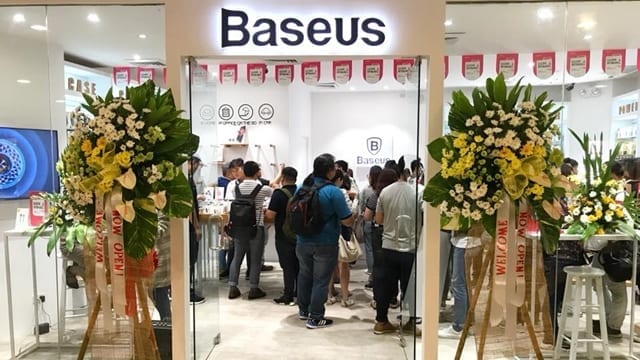
    Chinese tech accessory brand Baseus has opened its first flagship store in the Philippines.

    Baseus PH 1


    Baseus PH 2

    The Shenzhen company has partnered with Digits CEO Charles Paw for its outlets in the Philippines, and opened its first store in Trinoma, Quezon City.

    Baseus makes cellphone accessories and gadgets such as car chargers, multi-use cables, car mounts, flash drives, wireless chargers and power bank cases. It has received such accolades as the IF Design Award, and plans to open 10 stores a year in the Philippines.

    It is offering special deals to mark the store launch.

  • Is e-commerce taking over sales in Indonesia?

    Is e-commerce taking over sales in Indonesia?

    The growth rate for retail stores is now at single-digit levels, falling from above 10% in recent years. Online shopping is shouldering part of the blame, but the main culprit is a slowdown in overall consumer spending — long the driver of Indonesia’s economy — due to sluggish wage growth.

    Since the busy Ramadan shopping season ended in the summer, Indonesian consumers apparently have tucked away their wallets, at least at brick-and-mortar establishments. Retail store sales in October 2017 grew by an anemic 1.3% from a year earlier, according to preliminary data released by Bank Indonesia, the country’s central bank.

    This is causing store closures across the country, where the modern retail business model had entrenched itself over the years. At the end of June, all Indonesian 7-Eleven convenience stores closed their doors. In September 2017, Matahari Department Store, the nation’s largest department store chain, shuttered two southern Jakarta stores.

    Same-store sales of the chain over the first nine months of the year fell 2.7% from the same period last year.

    The recent lack of foot traffic at a major Jakarta department store typified the trend. As some 40 clerks stood idly chatting away, a nearby supermarket swarmed with shoppers.

    Many of the vacant store fronts in the country’s commercial centers are due to the increase in e-commerce. According to one survey, online sales surged 22% in 2017 from the previous year to around $7 billion.

    A bevy of powerful e-commerce sites — among them Tokopedia, one of Indonesia’s largest online marketplaces, and Alibaba Group Holding’s Lazada — are siphoning shoppers away from stores, a trend that shows no sign of abating. Online sales are projected to keep climbing at a brisk annual rate of around 20% for the foreseeable future.

    The growth in smartphone usage has also spurred online shopping, especially in rural areas where modern retail shops are still few and far between.

    But the rise in online shopping tells only part of the story. The main reason for tepid consumer spending is weak wage growth. The minimum wage growth rate will slow to 8.71% in 2018, the lowest in recent years, according to the government, noting that relatively low-income earners will be hit particularly hard.

    As recently as 2013, minimum wages had soared more than 40%, fueling the country’s free-spending ways. Now, consumers are being forced to cut back in order to save for future outlays, such as on housing and education. This has put a crimp on spending for even daily products.

    With a population of over 250 million, Indonesia is the largest consumer market in Southeast Asia. Many economists say the country’s consumption will continue to rise over the long term.

    There is little doubt, however, that Indonesian’s retail industry is facing a crisis of sorts, and the government is not helping with the situation.

    If this trend continues, the ensuing shock waves may hit other sectors of the economy, possibly dampening foreign direct investment in the country’s consumer market.

  • Samsung Pay Extends Through Many Arms of Hong Kong’s Octopus

    Samsung Pay Extends Through Many Arms of Hong Kong’s Octopus

    A big new partnership could help to dramatically extend Samsung Pay’s presence in Hong Kong: Samsung has teamed up with Octopus to enable its ubiquitous Octopus Cards in its mobile payments platform.

    The Octopus Card is essentially a reloadable electronic payment card, but what makes it special is its extensive reach throughout Hong Kong society. In addition to being a popular payment method at a range of retail stores and restaurants, the Octopus Card can also be used at vending machines and pay parking meters, on public transportation, at tunnel tolls, and even for access control in buildings. There’s even a whole page about it on Hong Kong’s official tourism website.

    As such, its integration into Samsung Pay represents a big win for Samsung in Hong Kong. Dubbed ‘Smart Octopus’, a virtual Octopus Card will be available to Samsung Pay users, and consumers will also be able to transfer their current Octopus Cards into the app. Summing up the partnership’s prospects in a statement, Samsung Electronics H.K. Co. Head of IT and Mobile Communication Business Yiyin Zhao asserted, “Together with Octopus, the go-to payment method for most transportation operators and retail stores, Samsung hopes to bring a revolutionary smart mobile payment service to Hong Kong.”

    It’s a win for Octopus, too, with CEO Sunny Cheung pointing out that the Samsung Pay partnership “represents a significant milestone for Octopus to introduce NFC payment via smartphones, offering our customers a fast, simple and seamless over-the-air mobile payment solution.”

    Smart Octopus will go live at 9:00 a.m. on December 14th, and will be supported wherever the Octopus Card is accepted.

  • LUMINE opened in Singapore

    LUMINE opened in Singapore

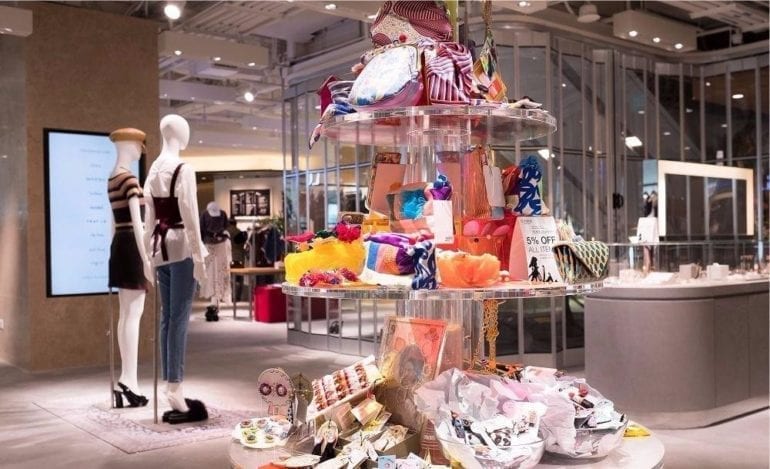
    LUMINE  opened in Singapore’s Clarke Quay Central with an exciting new shopping experience.

    Visitors to the mall found a mall-in-mall experience in LUMINE, where they can have their pick of Japan — and eat it too. Both established and younger brands will be available, as well as an in-house café that is the first of its kind. To kickstart the festivities, LUMINE introduces a guiding philosophy, I Am Who I AM, which is derived from LUMINE’s aim to inspire the sense of taste and value via variability in fashion from Japan for Singaporean women.

    I Am Who I AM promotes self-confidence and encourages women to be as beautiful inside as they are on the outside, through one’s personal journey of growth. As part of the launch in Singapore, the brand presents popular individuals from Singapore and Japan who strive on being different and are not afraid to express themselves.

    “Opening in Singapore is a very important milestone in our business plan because it is an important gateway to the Asian market and pivotal in positioning the brand on the world map. LUMINE chose to be in Singapore because of its vibrant business climate and strategic positioning. Having a presence in Singapore opens doors to many new opportunities. We have also set our sights on other Southeast Asian markets,” said Mr Naokazu Kozakai, Managing Director of LUMINE Singapore.

    With expertise in direct management and subleasing, and an unprecedented access to more than 2,200 tenants in its malls, LUMINE Singapore aims to be the platform in which Japanese brands can jumpstart their entry and successfully penetrate into the local market, and subsequently other markets in the region.

    Kozakai says, “Singapore’s market is a strong indicator of the Southeast Asian retail climate. She is a renowned shopping paradise and consumers here have a cosmopolitan mix. We believe the data acquired from our research and experience in Singapore will be an important model case study for our future business plans.”

    The 10,000 square feet specialty lifestyle store is targeted at independent and sophisticated women; Clarke Quay Central was chosen for her prime geographical location in the city centre. In addition to replicating the first-class shopping experience offered by LUMINE’s 15 malls in Japan, LUMINE Singapore aims for its store to be a place where fashion, art and people interact. This results in the birth of LUMINE café which will be operated by Create Restaurants Asia Pte. Ltd.

    Set in a clean, simple and modern space design, the new store presents a collective of 20 on-trend wardrobe must-have fashion brands targeted at sophisticated women with a strong sense of individuality. The selected brands are iconic in Japan and enjoy immense popularity within LUMINE Japan; they are: TOMORROWLAND, IÉNA, Spick & Span, snidel, FRAY I.D., Lily Brown, Mila Owen, MOUSSY, SLY, Ungrid, LAGUNAMOON, shoes and accessories brands Le Talon, drama H.P.FRANCE, roomsSHOP and exclusive offerings from the popular Japanese eyewear brand Zoff (which recently also launched in Hong Kong).

    The brands’ offerings range from wardrobe fundamentals such as classic, quality wear and timeless basics with modern twists, to interesting and unique designs that give an outfit that necessary flair. With a price range of SGD$15 to SGD$850, shoppers can certainly expect a wide variety with quality Japanese craftsmanship.

    Apart from the success of its exciting shopping concept, sound brand curation ethos and high-quality product offerings, the retail company also invests heavily in market research and a brand incubation programme is introduced, as part of its business strategy.

    “We have created a space as a testbed for Japanese brands in the new store called LUMINE LAB. It aims to share and explore the diversity in Japanese fashion and craftsmanship to Singapore with a vision to create a new fashion culture in Singapore.” Kozakai shares.

    An exciting line-up of influencer-based Japanese brands including EMODA, MURUA, MERCURYDUO, rienda and And Couture, was the first collection of brands to be under the LUMINE LAB concept space.

    For the opening, LUMINE Singapore partnered with strong, independent women from Singapore and Japan who strive on being different and are not afraid to show it. This includes musician and entrepreneur, Aarika Lee, entrepreneur Savina Chai, food artist Suwa Ayako, model and DJ Una, musician Yuuki (YJY), and many others.

    These partnerships are a perfect symbolism of LUMINE Singapore’s I Am Who I AM philosophy and aims to encourage a new fashion conversation in Singapore, thereby illustrating and reinforcing and the mix-and-match shopping concept LUMINE aims to offer.

  • PTT earmarks P500 million for coffee-fuel expansion mix

    PTT earmarks P500 million for coffee-fuel expansion mix

    PTT Philippines expects to spend PHP500 million (US$9.9 million) on beefing up its retail network, including a foray into the Japanese market.

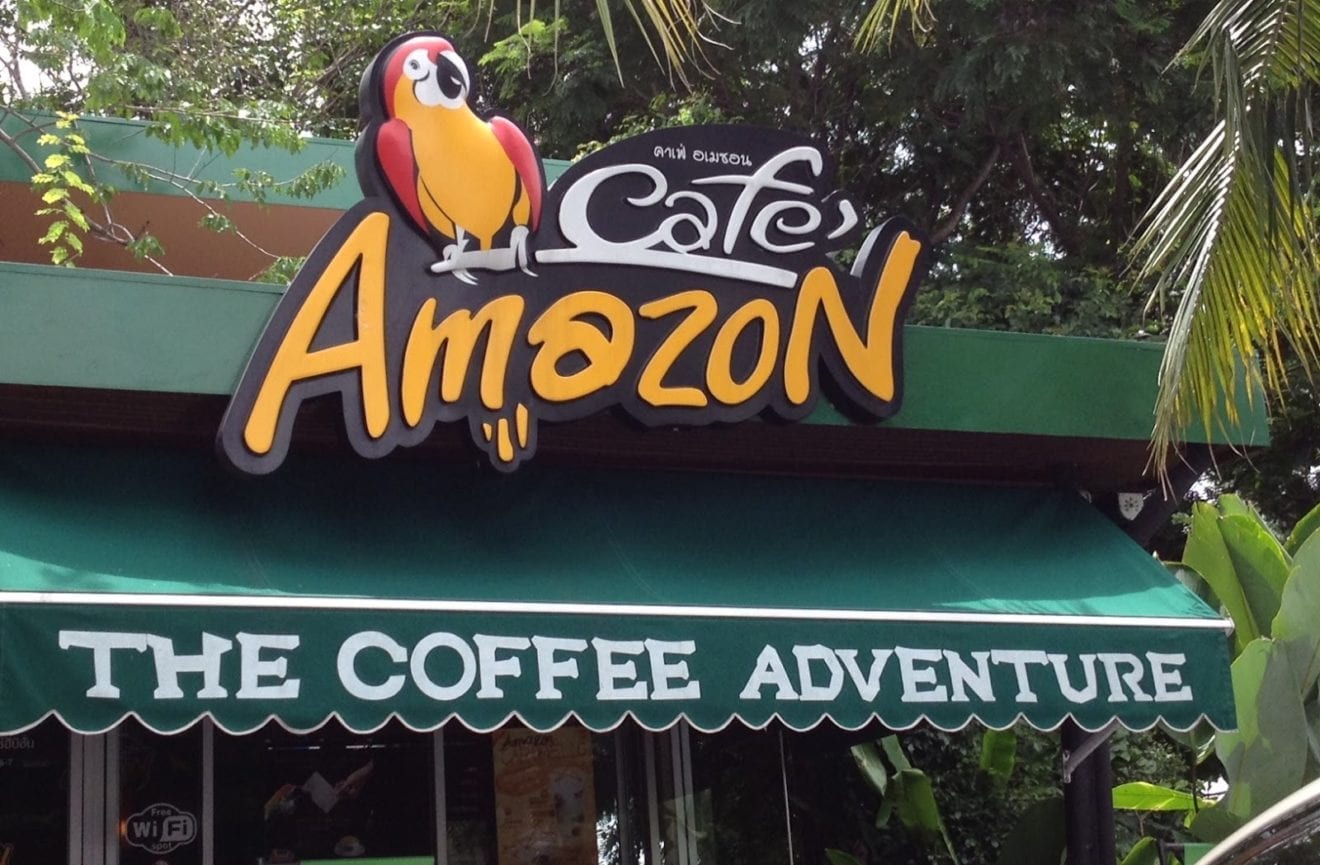
    President/CEO Sukanya Seriyothin says that while the bulk of the expansion for the Thai oil and gas giant PTT subsidiary will be gasoline stations, it includes about 12 Cafe Amazon outlets, mainly in Luzon.

    Following its diversification into the coffee business, PTT has started investing in the Philippines to complement its more than 1850 stores in Thailand and other parts of Asia, including one in Japan, says the company.

    With a “notable landscape change” in its investment plan, the company aims to open 100 cafes in the near term, with six to be up and running by year end.

  • Foreign convenience store chains expansion plans

    Foreign convenience store chains expansion plans

    Nguyen Thu Ha has abandoned traditional markets on her afternoon shopping trips in favor of a more convenient option.

    Uncomfortable with the crowds and dubious origins of the food, the 35-year-old from Hanoi now prefers to spend her money in the convenience stores that are mushrooming across the city.

    “The quality in convenience stores is guaranteed, unlike grocery shops and traditional markets,” she said. “That’s why I go to them now.”

    Like Ha, many shoppers are turning to convenience stores, encouraging foreign retailers to expand their presence in the market.

    The number of convenience stores had increased to over 1,500 as of June 2016, according to market research firm Nielsen Vietnam. Famous foreign brands now occupy 70 percent of the market.

    In June, Seven & i Holdings, which operates Japan’s biggest convenience store chain 7-Eleven, opened its first outlet in Ho Chi Minh City.

    A company representative said that it plans to open 100 stores in Vietnam within three years and expand the number to 1,000 in the next decade.

    American chain Circle K has around 250 stores, mostly in the country’s two biggest cities, Ho Chi Minh and Hanoi.

    FamilyMart, Japan’s second largest convenience store chain, has a combined 130 stores in Ho Chi Minh City, the nearby resort town of Vung Tau and Binh Duong Province.

    Southeast Asian chains Shop&Go and B’s mart are running another 300 stores.

    South Korea’s GS Retail also plans to enter the market in the near future with the first outlet bearing its GS25 convenience store brand in Ho Chi Minh City.

    GS25, which will be the first Korean convenience store chain operator to enter the Vietnamese market, is expected to open 2,500 outlets in the next 10 years.

    “We have received requests from many countries, including China and other Southeast Asian countries, to export our brand,” said a GS Retail spokesman. “After months of research, we concluded that Vietnam had the largest potential for growth.”

    A.T. Kearney’s Global Retail Development Index this month named Vietnam the sixth most attractive retail market in the world. The country made headlines worldwide when it topped the list in 2008.

    International market research organization IGD forecasts double-digit compound annual growth rate over the next four years in Vietnam, reaching 37.4 percent in 2021.

    “Convenience stores in Vietnam have become popular destinations for young consumers to shop and hang out, as the stores provide them with an air-conditioned environment, well-organized shelves and seating areas, high quality products and, in some stores, free Wi-Fi,” said Nick Miles, head of Asia-Pacific at IGD. “It is also easier to get licenses for stores under 500sq.m, which is why retailers have been expanding to gain market share.”

    Vu Vinh Phu, former chairman of the Hanoi Association of Supermarkets, said convenience stores have expanded with the growing middle class, who are increasingly willing to pay a little more for the convenience of mini-marts that are open for longer hours and can be found in more locations.

    Economists say Vietnam has great potential for convenience store expansion, considering the number of existing stores now is still small compared to the population.

    There is one convenience store for every 2,100 residents in South Korea, 2,300 in Japan, and 24,900 in China. The ratio in Vietnam is one per 54,400 residents, according to a recent report by international property research firm Savills.

    Vietnam’s trade ministry has projected the country’s retail market will hit $179 billion by 2020, a jump of 52 percent from last year.

    Uneasy to earn

    Despite bright prospects for convenience stores in Vietnam, their development has not always been smooth, as in the case of FamilyMart. Japan’s second largest convenience store chain plans to stay focused on its domestic market after reporting losses in several Southeast Asian countries, including Vietnam.

    Koji Takayanagi, the company’s president, said the firm is reviewing its loss-making businesses in Indonesia, Thailand and Vietnam. “If we can get them to rally we will, but we cannot continue to pour in resources,”

    Another example is the case of a joint venture between Ministop, an affiliate of Japan’s second largest retailer AEON, and G7, an arm of local coffee producer Trung Nguyen. The joint venture aimed to develop 500 convenience stores across the country within five years from 2011. However, the partnership ended in 2015 when Trung Nguyen withdrew from the deal after only 17 stores had been opened. The venture reportedly failed to reach the target because of difficulties in finding premises in Hanoi and Ho Chi Minh City.

    Ministop now has only 80 convenience stores in Ho Chi Minh City and Binh Duong Province.

    As well as the difficulties they face finding retail space, convenience stores must also compete with other retail channels, which are also expanding rapidly, especially online shopping, said head of the Association of Vietnam Retailers, Dinh Thi My Loan.

    Explaining why retailers are continuing to expand in the convenience store market, despite losses, an industry insider said their current goals is to stretch their influence in the market. Retailers often suffer losses in the first four to seven years, he said. “It’s not time to make a profit yet. It’s time to grab more market share.”


  • Ferragamo and Versace watches to innovate

    Ferragamo and Versace watches to innovate

    It is no secret that retailers, distributors and manufacturers need to find new ways to meet consumers’ changing expectations in the luxury and fashion markets.

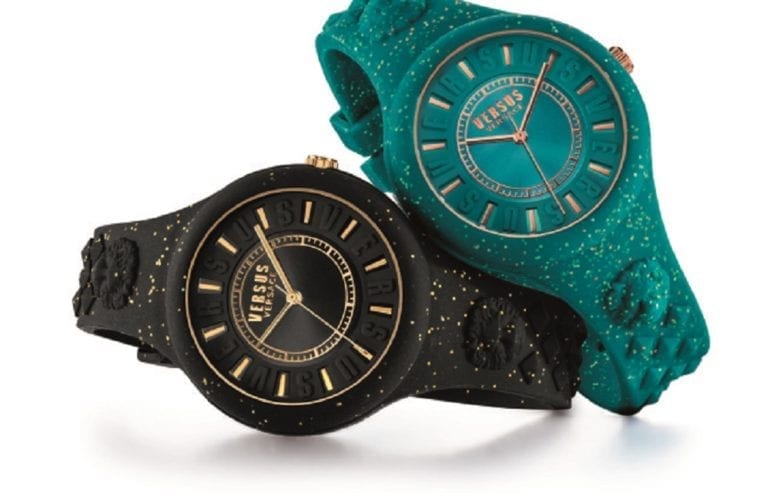
    These changes in consumer behavior led Paolo Marai, president and CEO of the Timex Group Luxury Division, which manages the timepiece business for Salvatore Ferragamo, Versace and Versus Versace, to appoint the MadaLuxe Group as its U.S. and Caribbean distributor.

    This new arrangement was actually announced in January 2017 but the two companies have spent almost a year formulating a strategy before truly making the partnership known in November 2017. It is a multi-tiered approach that ultimately focuses on the in-store experience for consumers.

    “We started in January 2017, but we really wanted to have a kind of honeymoon period and develop an understanding of the way we need to work and the way we need to develop and that is why we decided not to make it a big event in the very beginning. Let’s work a few months together and get a really strong team,” Marai said in a recent interview.

    The companies have spent this year hiring people in management roles experienced in both the fashion and the Swiss watch industry, including people who used to work with Fossil, Burberry, Tom Ford and Tag Heuer.

    They are working on sales training, product pricing, inventory management at the store level, in-store displays and after-sales service that are all uniform in the experience they provide. It’s not an easy task as the watch brands are sold in department stores, independent specialty stores and in branded boutiques. So relationship building is vital for this effort to be successful.

    “This year has been a transition year but we are seeing very positive signs that 2018 will be a strong year. First of all because we have a bunch of new products coming that we feel good about; and second, we organized ourselves to have this smooth transition not to disrupt the market,” he said. “I feel that 99% of the time we are absolutely aligned at what needs to be done.”

    MadaLuxe Group is a 30-year-old family-owned business that is one of the largest distributors of luxury fashion and accessories. It designs, produces, buys, sells, markets and distributes apparel, accessories and home goods from well-known luxury and contemporary brands. This is the company’s first time in the watch business, which is one reason why it has been on a hiring spree looking for talent. However, this is a company well-experienced in providing solutions for luxury fashion brands with a distribution network of about 300 retail stores in the U.S.

    The company, which has seven divisions, was co-founded by the mother and son team of Sandy Sholl, CEO, and Adam Freede, president. They created the luxury segment of their business seven years ago and see it as a growth business because of younger consumers who are well-educated and curious when it comes to luxury.

    “We just believe many more Americans understand what luxury is,” Sholl said during the same interview with Marai. “In the past they may have been intimidated to walk into a luxury store but now they are a lot more knowledgeable. We penetrated the luxury market very aggressively and spent a lot of time with all types of luxury lifestyle products.”

    Freede added, “We see the American market as a very big growth area in all categories, not just timepieces, because of the quality and craftsmanship of heritage brands. These timepieces go right into what we believe are major trends in the U.S.”

    Marai said MadaLuxe has long-term relationships with department stores. He believes MadaLuxe will increase their presence of Ferragamo and Versace watches, ensure the sales staff is well trained and properly manage the inventory.

    “We needed a partner who knows luxury and who has a distribution-enhanced approach with department stores. They know the heads when going from one department store to another. This helps a lot. We chose someone with tremendous luxury experience and with a very open-minded approach.”

    Marai is also happy that MadaLuxe has created a division just for the management of the Ferragamo and Versace watch business.

    “There is a complete new team dedicated to watches, which is something that makes us feel good,” he said. “We really hired a bunch of people who are expert in the watch category.”

    Marai, a native of Milan, has seen first-hand the changes in the fashion and luxury watch businesses since he began to lead the Timex Group Luxury Division in 2005, headquartered nearby in Lugano, Switzerland.

    “It is a new type of consumer that wants to buy in a different way and we have to learn how to process this new consumer,” he said. “It’s not just about new products because new products mean nothing if you don’t have the entire marketing story around it. I’m not even talking about marketing as it has been done in the past. It is a completely different story right now.

    “What is happening is that when people are entering a store they don’t want to buy a product. They want to have an experience, which involves the quality of service and the way you display your story inside the store,” Marai continued. “There is a lot of history behind a brand and there’s a new generation of people who want to know more about it in order to feel that they’re not just buying a product. Instead, they want to buy something that pertains to their world.”

    Much of the strategy is dealing with how young people digest fashion today and what appeals to them. Some fashion brands, such as Versace, have an identity based on its enormous popularity in the 1990s. When asked if young people still identify with this esthetic, Sholl said that in her experience Versace is as relevant today as it ever was and she points to her Versace watch as an example.

    “Versace is the most recognized and the most popular brand. It’s actually astounding how good Versace does in general as a brand,” she said. “When you look at this watch I would buy this as jewelry. It’s more than just a timepiece. It’s just a great fashion statement.”

    Marai pointed to Milan Fashion week, where Versace was the highlight with its tribute to its founder, Gianni Versace, who was tragically killed 20 years ago. For the runway show, the fashion house brought back supermodels of the ’90s: Cindy Crawford, Naomi Campbell, Claudia Schiffer, Carla Bruni and Helena Christensen. But Marai also noted that the show was a statement about the future of the brand.

    “The strength of the brand is not from a position of the past. It must show that it has a capacity of what it says for the future generations. Definitely, Versace as a brand is showing they are really turning the page. The last show they did in Milano was in honor of Gianni. But it also was statement that said, ‘You did it, now it’s time to move forward.’ It was a very important message.”

  • Singapore Retail Sales Rebound In October

    Singapore Retail Sales Rebound In October

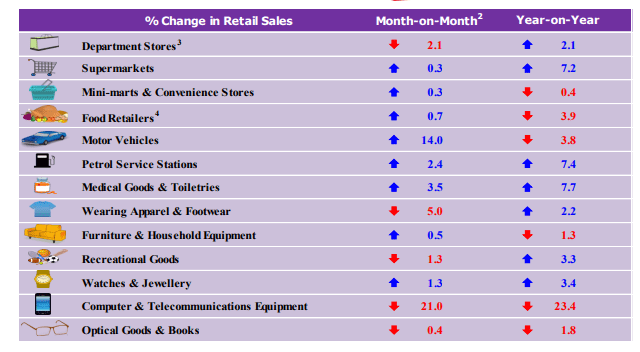
    October Singapore retail sales rose a meagre 0.8 per cent over the same month last year, falling 1 per cent from September.

    Those figures exclude motor vehicles which typically skew Singapore’s data. Including those, retail sales declined 0.1 per cent year on year.

    Month on month, real retail sales fell 1 per cent, but they rose 1.5 per cent including vehicles.

    The total retail sales value in October 2017 was estimated at S$3.6 billion.

    The greatest negative contributor to year on year October Singapore retail sales data was the computer and telecommunications category, which slumped 23.4 per cent. Sales by food retailers, of optical goods and books, furniture and household equipment and at mini-marts and convenience stores decreased between 0.4 per cent and 3.9 per cent.

    However, sales of medical goods and toiletries, at supermarkets, of watches and jewellery, recreational goods, clothing and footwear and sales of goods at department stores rose by between 2.1 per cent and 7.7 per cent in October.


    Sales of food and beverage services at restaurants, cafes and fast-food outlets increased 0.7 per cent in October.

  • German burger chain Hans Im Gluck opens in Singapore

    German burger chain Hans Im Gluck opens in Singapore

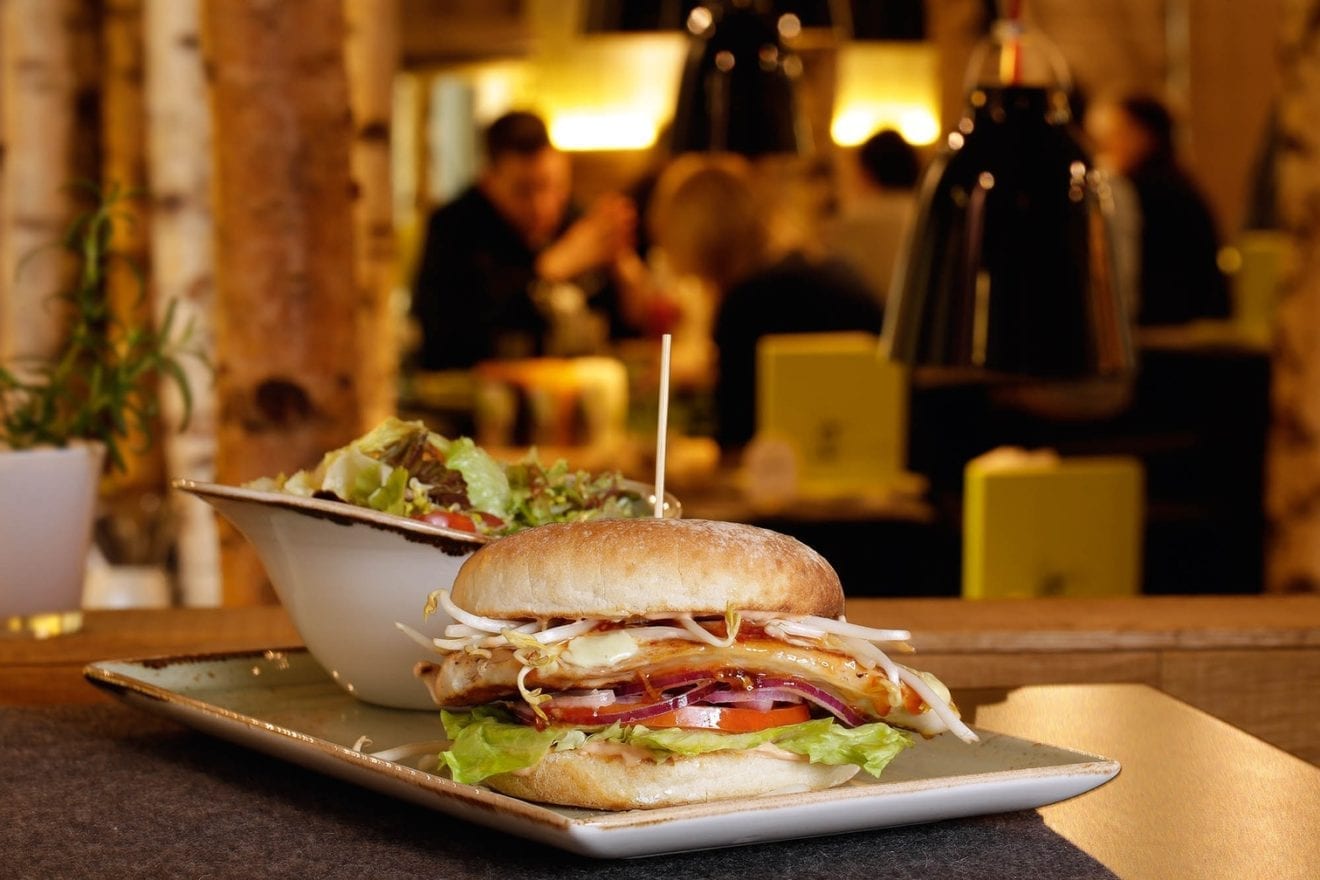
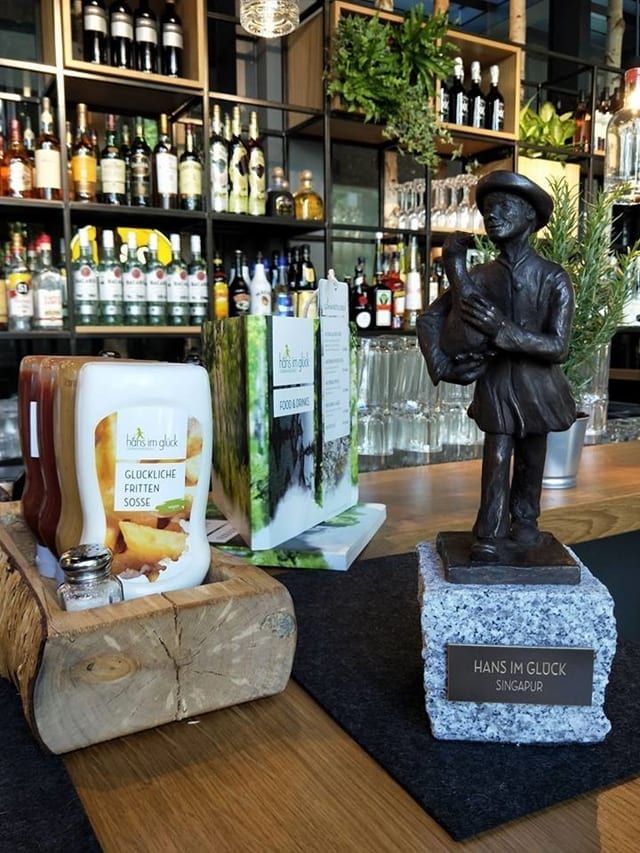
    Following a holiday in Singapore last year, a restaurateur couple has returned to open a casual gourmet burger restaurant, Hans Im Gluck, in Orchard Road.

    The brand’s 50th outlet and first outpost in Asia, it specialises in vegan, vegetarian, beef and chicken burgers served alongside salads, tea infusions and cocktails.


    Hans Im Gluck was launched seven years ago by Gunilla Hirschberger, a vegan, who set herself the goal of shaking up Germany’s meat-focused dining scene. The 53-year-old Munich-based Swede saw a gap in the market for vegan-friendly offerings at burger restaurants, and with her German husband Thomas Hirschberger opened the first Hans Im Gluck in 2010, named after a German fairytale by the Brothers Grimm.

    They now run 49 outlets in Germany and Austria, with more coming up in Italy and Switzerland.

    Meanwhile, the Singapore restaurant is in a purpose-built outlet between International Building and the Royal Thai Embassy. Next year, the couple will open two more outlets – at Boat Quay and at Republic Plaza, Raffles Place.

    For 15 years, the Hirschbergers ran a Californian-Mexican restaurant chain with 40 outlets across Germany, which they have since sold. When they visited Singapore they say they felt an instant connection to the city.

    “Singapore has a good spirit and is full of different kinds of cultures. People here are open-minded and happy to see new things,” says Gunilla. “The city is innovative and has a good flow.”

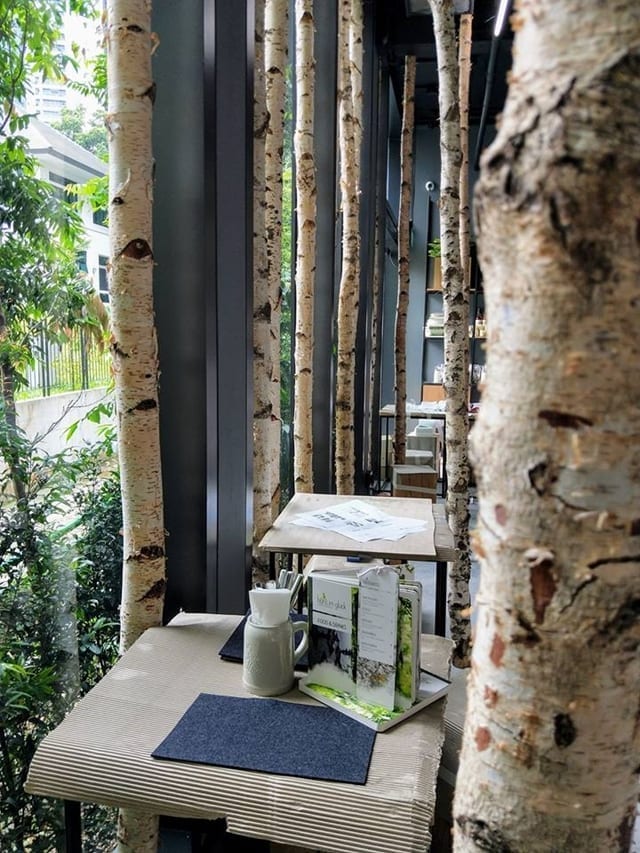
    Their Singapore store features imported German-made oak furniture and 180 birch logs, installed throughout the restaurant to resemble a German forest. The menu, which looks like a children’s storybook, features 30 burgers.

    It has its own sauces including vegan mayonnaise and orange mustard, as well as multigrain and sourdough buns made exclusively for the chain and sent frozen from Germany.

    At 4000sqft (370sqm) and seating 180 diners, the restaurant is small compared with the German outlets, of which 23 are family-owned. Those restaurants are usually about 10,000sqft with about 400 seats, excluding the terrace.

    The Singapore restaurants are wholly owned by the Hirschbergers, and the chain is looking to expand into other parts of Asia, including Hong Kong and Taipei.

  • Airbnb pushes back on Singapore’s tough home rental rules

    Airbnb pushes back on Singapore’s tough home rental rules

    Short-term home rental service Airbnb on Friday called Singapore’s regulatory framework “untenable” as authorities said they planned to hold discussions with home-sharing platforms and resident groups soon on how such accommodation may be allowed.

    The reaction by Airbnb to the latest regulatory hurdle came amid its efforts to work with authorities around the world keen to minimize its impact on private housing and the hotel industry.

    While Singapore has been an early adopter of the sharing economy, it has strict rules regarding property rentals in the city-state and charged two men with unauthorized short-term letting of apartments earlier this week.

    “The current framework is untenable and does not reflect how Singaporeans travel or use their home today,” Airbnb said on Friday in a statement addressing Singapore’s regulations.

    “Nearly three years since the URA’s first public consultation, it’s disappointing that the discussion has not moved forward,” it said, referring to the Urban Redevelopment Authority.

    Private homes in Singapore are subject to a minimum stay of three consecutive months, under rules revised earlier this year, and cannot accommodate transient occupants.

    While saying there was space for short-term accommodation in Singapore, the URA told Reuters the government will review and consider safeguards to ensure it does not negatively affect the “amenity” of residential estates.

    It said it would soon start a public consultation on the matter. A previous consultation in 2015 did not reach a clear consensus on short-term rentals.

    Airbnb may be conscious of the knock-on effect that Singapore’s tough stance may have on other cities in the region, said Brian King, associate dean of the School of Hotel and Tourism Management at Hong Kong Polytechnic University.

    “They may be feeling like they need to take a slightly more aggressive stance this time to avoid this leading to crackdowns elsewhere,” King said.

    This week, Singapore charged two men with unauthorized short-term letting of four apartments in the first such prosecution. If found guilty, the two are liable to a fine of up to S$200,000 ($148,150) per offence.

    The rentals were arranged through Airbnb, which was not referred to in court documents.

    In a message seen by Reuters, Airbnb this week alerted hosts in Singapore to the court case and asked them to “share” their reason for hosting and why it is important the government pass laws that permit short-term home sharing.

    Airbnb, which matches people wishing to rent out all or part of their homes to temporary guests, said it has 8,700 listings in the city-state. Singapore has high population density, and its limited land area means a majority of the 5.6 million people live in apartments.

    Hunreds investigated

    The URA said part of the public consultation will involve working with key stakeholders such as representatives of home-sharing platforms, resident groups and other accommodation providers.

    The planning agency said it investigated 985 cases of unauthorized short-term accommodation in private homes in 2015 and 2016, and about 750 cases in 2017’s first 11 months.

    The firm, founded in 2008 in San Francisco, has clashed with hoteliers and authorities in cities including New York, Amsterdam, Berlin and Paris, which in some cases are limiting short-term rentals. Critics accuse Airbnb of exacerbating housing shortages and driving out lower-income residents.

    One host in Singapore, who has listed on Airbnb for the past two years after failing to find a long-term tenant and uses the income to pay the mortgage, is considering pulling the apartment from Airbnb’s website due to the authority’s increased scrutiny.

    “I am worried that I will have an empty apartment sitting there, that is not going to generate any income,” said the person, who spoke to Reuters on the condition of anonymity. “Any income that I earn doesn’t justify this kind of risk.”

  • Big retailers expect solid final quarter

    Big retailers expect solid final quarter

    There are more signs of recovery in spending power, noting that there is talk about the government and the Bank of Thailand introducing further stimulatory measures to boost employment and the broader economy.

    TRA president Jariya Chirathivat said that since 2013, retail growth has fallen off. The main factor has been the restructuring of the macro-economy, for which the results will not be felt for many years. Base consumer spending power has still not improved and household debt is still high. Sales of fast-moving consumer goods (FMCG) have also dropped, the association’s figures show.

    The TRA represents the big department stores and supermarkets along with chain stores – collectively dubbed modern retailers – that account for about 30 per cent of the country’s retail sales.

    Among households, middle level consumers still have large credit card debts, and private investment has still not recovered. Meanwhile, farm prices have not been doing as well as expected, the association said.

    While growth in retail sales for the fist nine months of 2017 was clear across all product categories, spending was clustered in Bangkok and other large cities. Fast growing categories included supermarkets aimed at middle-high level consumers, and the health and beauty segment, which is split into beauty stores, pharmacies and health and personal goods shops.

    Department store products remained impacted by a shopping atmosphere which is still not normal, while prices do not encourage tourist spending because of import duties on luxury brands. These are still high compared to other countries that have a policy of reducing luxury taxes to entice tourists to their shopping destinations.

    The home improvement and home appliance and electronics categories did not register the expected growth because of a slump in the construction and real estate sectors.

    As for the food category (hypermarkets and convenience stores) targeting middle-low consumers, this has faced growth problems as spending in this group is still weak. Measures to get spending budgets to the grassroots is starting to become more efficient and have started to stimulate spending, but slowly.

    After the great national loss of 2016, most Thais slowed down spending until last month, when there were signs of a recovery in spending power. This was partly from improved sentiment and partly from government efforts to stimulate the base with budgets, as well as the New Year spending season. The result should be a fourth quarter recovery in 2017 compared to the same quarter of 2016.

    The government’s “Shop Chuay Chart” measures will be implemented in November this year, but the project tends to assist consumers in the middle to high bracket who have started shopping in anticipation of receiving tax rebates.

    The Ministry of Commerce is launching a campaign called “Ruam Jai Perm Suk Shop Sanuk Lod Rub Pi Mai” from December 14 to January 4, involving cooperation from manufacturers, distributors, retailers and wholesalers nationwide to stimulate consumption and affect buying power in every sector.

    The TRA believes the economy in the last quarter of 2017 will become brighter, whether from a lack of spending sentiment for over a year, the Pracha Rat Welfare Card that has given cash to the grassroots to stimulate spending or the state projects “Shop Chuay Chart” and “Ruam Jai Perm Suk Shop Sanuk Lod Rub Pi Mai”.

    This is on top of private sector promotions and sales activities throughout the long holiday until January, which will increase money in circulation and result in a retail index that is improved on expectations at the start of the year. Growth is forecast at about 3.2 to 3.4 per cent (on projected national GDP growth for 2017 of 3.9 per cent).

    Gross domestic product grew 4.3 per cent in the third quarter compared to the same period last year, with projections that GDP growth for the whole year will be as high as 3.9 per cent.

    The TRA projects 2018 growth in the retail index should be in the range of 3.8 to 4 per cent.

  • Japanese making $62m with an instant-second hand website

    Japanese making $62m with an instant-second hand website

    What if you paid people instantly for their used goods over the internet, with no guarantee that they would hand them over?

    The 36 year-old e-commerce entrepreneur, Yusuke Mitsumoto, launched an app in June 2017 to test the idea. It worked better than he imagined; after 16 hours, he was stunned to discover he was on the hook for 3.6 billion yen (£23m) and shut the service down.

    A day later, truckloads of clothes and electronics gadgets started to arrive, with his startup’s employees forming a bucket line to move packages into his company’s tiny office in Tokyo.

    All told, less than 1 in 10 second-hand-goods sellers didn’t deliver as promised. That was good enough for Mitsumoto, who relaunched the service, called Cash, in August 2017 as a new way to gather inventory for an online flea market.

    Total daily purchases are capped at 10 million yen, and are limited to smartphones, luxury handbags, watches, clothing and other specific items from a list of several thousand. Customers take a photo and are given a non-negotiable offer. Prices are set automatically based on data gleaned from other second-hand marketplaces and Cash makes money by reselling the goods.

    “It was a social experiment,” said Mitsumoto, who started selling goods on the web in 1996. He later launched Stores.jp, Japan’s version of Shopify, which he sold and then bought back. “Of course, I believed that good people would outnumber the bad, but the question was by how much. That’s not something you can find out without trying.”

    Second-hand sales are a big business in Japan and a market worth 1.6 trillion yen, according to the Reuse Business Journal. Bookoff has hundreds of stores that buy and sell everything from used books to video games and electronics. Yahoo Japan operates the country’s biggest online auction site. Mercari became Japan’s first startup to be valued at more than $1bn with a smartphone app that made it easy for people to sell unwanted things to each other.

    What Mitsumoto discovered was a way to remove the last bit of friction for sellers to get rid of stuff, unlocking value wasting away in people’s closets. He tapped into a market of people who lacked either the time or the patience to take nice pictures, write product descriptions and haggle with buyers.

    He also knew that it was only a matter of time before bigger rivals followed with similar offerings. So when Mitsumoto got a Facebook message on 4 October 2017 at 1:58 am, “Hi! This is Kameyama~! Sell Cash to me~! No?” he saw a way to stay ahead of the competition.

    Keishi Kameyama is one of Japan’s richest people and the founder of DMM.com, a media and technology empire with $1.6bn in revenue. Kameyama started with pornography but has grown his company into a vast collection of enterprises that spans a currency trading platform, video games, an online English school and solar farms. Mitsumoto agreed to sell Cash to DMM for 7 billion yen and continue running the business.

    “For people doing internet businesses in Japan, DMM is a scary presence,” Mitsumoto said. “You never know when they may launch their own business and become a tough rival. I figured it’s best to at least meet.”

    Indeed, a week after the deal was announced, Mercari launched an identical offering.

    Kameyama said his team recognized the potential of the market uncovered by Mitsumoto, but admits that the eye-popping valuation for a company of six people that’s not even one year old was also partly an “acquihire” —an acquisition based on hiring.

    “Doing business on the internet is not all capital and equipment, you need a certain intuition, a design sense and ability to get a service going,” Kameyama, 56, said in an interview. “I can also appreciate a bold play. There aren’t that many audacious people in this world.”

  • More Chanel Flagship for Asian Shoppers

    More Chanel Flagship for Asian Shoppers

    Seoul will have one of six Chanel flagship stores being launched next year, with the brand also about to open in Beijing’s China World mall.

    “These will be either brand new stores or major re-openings, which will be very impactful,” says Chanel fashion and accessories divisions president Bruno Pavlovsky.

    On December 1, Chanel opened a second Tokyo flagship in Ginza following a three-year renovation by architect Peter Marino.

    Just before that, designer Karl Lagerfeld was in Chengdu, where Chanel reprised its Ancient Greek Goddess cruise collection, originally shown in Paris in May.

    “We scored 698 million hits from that show on WeChat and Weibo and so on,” says Pavlovsky. “That impact allows us to create an accessible dream: a chance to see and touch and understand what the brand is all about. That has nothing to do with customers – we don’t have 500 million customers in our boutiques.”

    He believes the key equation in luxury is balancing accessibility to the dream with exclusivity inside boutiques. This is why Chanel’s e-commerce is essentially limited to beauty and eyewear.

    “Chanel is not a click,” says Pavlovsky. “But when you think of a $5000 jacket or a $10,000 dress, the customer experience has to be more than just a click.”

    He says business in China has been boosted by the policy of global price harmonisation he started introducing in 2015. “We see more and more Chinese in China coming to our boutiques regularly.

    They don’t need to travel to Paris, New York or London to buy Chanel, and this is very important.”

    One vehicle to boost sales in China will be harnessing influencers, says Pavlovsky. “What is interesting about influencers in China is their point of view of the brand. Some are followed by 20 or 25 million people, which is quite impressive. And they are very clear that what their followers want from them is a point of view. We have to work with them not to dilute this kind of positioning.”

  • OldTown shareholders agreed to accept JDE offer

    OldTown shareholders agreed to accept JDE offer

    Malaysian cafe chain and coffee manufacturer OldTown is about to sell a majority shareholding to Jacobs Douwe Egberts (JDE) for about US$361 million.

    It is part of a move by the global coffee and tea company to expand its coffee empire.

    OldTown, which has 232 outlets, mostly in Malaysia, says shareholders holding about 51.45 per cent of the total issued share capital of the company have irrevocably undertaken to tender all their shares in acceptance of the offer, says the company.

    Jacobs Douwe Egberts Holdings is an indirect wholly owned subsidiary of Netherlands-based JDE, which owns such coffee and tea brands as Jacobs, L’Or, Moccona, Senseo and Tassimo, and has a presence in more than 120 countries.

    Earlier this year JDE acquired Singapore-listed Super Group, a pan-Asian integrated instant F&B brand for S$1.45 billion (US$1.05 billion).

    “We are deeply honoured JDE recognises the powerful brand and platform we have tirelessly built over the past 18 years,” says OldTown group MD Lee Siew Heng.

    OldTowns’s cafes are spread across Malaysia (189 outlets) and Singapore (nine outlets), with Malaysia accounting for 59 per cent of its revenue. Born out of a merger between the coffee businesses of US snack company Mondelez with coffee and tea company DE Master Blenders in July 2015, JDE says it is on track for an annual revenues of more than €5 billion (US$ 5.8 billion), claiming a leading position in 28 countries across Europe, Latin America and Asia Pacific.