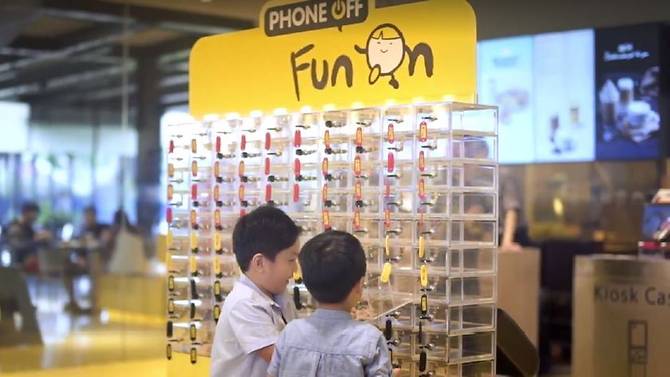
McDonald’s has introduced mobile phone lockers and table service at its flagship Marine Cove outlet in Singapore to help families rediscover quality time together, the fast-food chain said.
The mobile phone locker, the first-of-its-kind in Singapore, encourages parents and children to put their devices away safely and focus on family bonding, it said.
“As a popular restaurant destination for families, we have observed that the use of mobile devices during meal times may sometimes get in the way of family bonding,” said director of brand communications and customer care Linda Ming.
A survey of 302 parents conducted by McDonald’s last month found that 98 per cent of parents and 91 per cent of kids use their mobile devices whenever they are together, with more than two-thirds of respondents using their smartphones during mealtimes.
This is despite most of the parents in the survey saying that the use of mobile devices had decreased their interaction with their loved ones, and that they would like to be more disciplined in staying away from digital distractions during family time, McDonald’s said.
To allow parents to spend more time tending to their children, the fast-food chain is also piloting table service at its Marine Cove outlet, led by “guest experience leaders” whose main role is to engage with families.
Customers can select the table service feature when placing an order at the self-ordering kiosk, it said.
Responding to queries from Channel NewsAsia, McDonald’s said there is no extra charge for customers who use the table service feature, and that the service is open to everyone, not just families or parents.
“We have introduced the service in our Marine Cove flagship restaurant as well as selected restaurants, and have received positive feedback especially from families so far.”
McDonald’s added that mobile phone lockers would be locked with physical keys. To make sure that customers do not forget to retrieve their phones, staff members will remind them about their phones before they leave the restaurant.
The fast food restaurant chain will be “actively gathering feedback” from customers about the new initiatives, to decide on whether to expand them to other restaurants.
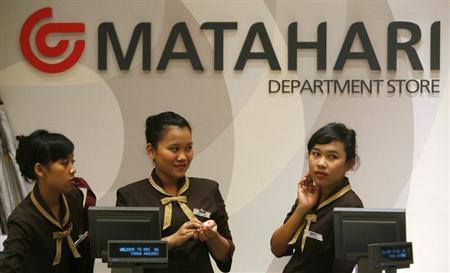
Matahari Department Store, Indonesia’s largest department store retailer of fashion, beauty and home products, received bronze medals in the 2017 Retail Asia Pacific Top 500 Award in the categories of top department store retailers and top three retailers in Indonesia, in an event held at Westin Hotel Kuala Lumpur on Tuesday (24/10).
According to an official statement we received on Friday, the awards were presented to outstanding retailers from major countries across the Asia Pacific, including Australia, Hong Kong, Indonesia, Malaysia, the Philippines, South Korea, Thailand, China, India, Japan, New Zealand, Singapore, Taiwan and Vietnam.
Retail Asia, auditing firm KPMG and Euromonitor International ranked retailers across 14 countries according to performance and categorized by outlet types. Matahari is included in the department store category.
Matahari won the award for its ability to adapt to changing habits of customer who rely more on online shopping in the digital era.
The retailer recently announced a partnership with Walt Disney Company to increase the number of visitors coming to its chain of stores.
Matahari currently operates 155 outlets across the country, and plans to open three new stores by the end of the year.
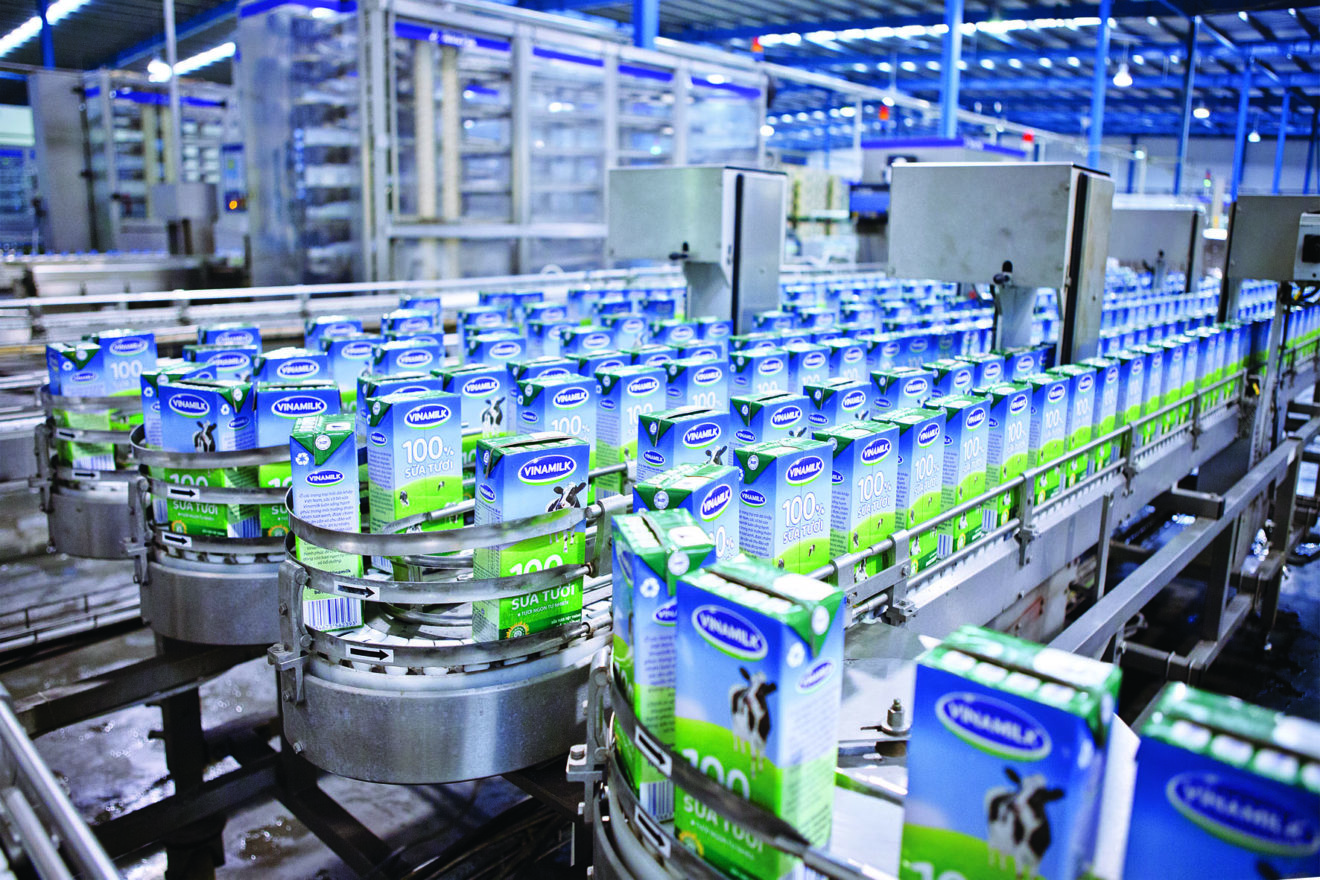
Vietnamese dairy giant Vinamilk sold a 3.33 percent to an unnamed foreign investor for VND8.99 trillion ($396 million) on Friday.
The investor bought the 48.3 million shares on offer for VND186,000 ($8.20) apiece, 24 percent higher than the asking price.
The share sale, which attracted 19 investors including six foreign firms, reduced the state ownership in Vinamilk, Vietnam’s biggest listed firm, to 36 percent, still enough to retain veto rights.
Vietnam’s State Capital Investment Corporation had forecast the sale would fetch VND6.5 trillion to VND7 trillion ($286.3 million to $308.4 million).
In December, the state investor put on offer a 9 percent stake in Vinamilk, but was only able to offload 5.4 percent to two investors – both units of existing shareholder Fraser and Neave Ltd.
Investors looking to gain a degree of control over Vinamilk were deterred by the size of the stake on offer. The government had initially planned to sell its entire 44.7 percent stake.
The government is trying to divest from hundreds of state-owned enterprises, including brewers Hanoi Beer Alcohol and Beverage JSC (Habeco) and Saigon Beer Alcohol Beverage Corp (Sabeco) in which it owns a combined $7.8 billion worth of shares by market value.
Peugeot maker PSA Group signed a joint venture agreement with three Algerian partners on Sunday to build cars in the North African country.
The French carmaker said it would invest around 100 million euros ($117 million), equalling 49 pct of the joint venture’s capital.
The joint venture will set up a plant in the western Algerian city of Oran, where French automaker Renault opened a plant in 2014.
The Algerian partners are Condor Electronics, Palpa Pro and Entreprise Nationale de Production de Machines-Outils (PMO), PSA said in a statement.
The plant will start some production next year and be fully operational in 2019, PSA said.
The agreement was signed in Algiers as part of the France-Algeria joint economic committee (COMEFA), in the presence of French Foreign Minister Jean-Yves Le Drian and French Economy, Finance and Industry Minister Bruno Le Maire.
They said France was seeking to boost investment in its former colony after losing ground to countries including China, Turkey and Italy.
French firms including Renault, Alstom, and Sanofi were expected to sign deals in Algeria in the near future, Le Maire said.
Algerian ministers present at the signing also said they hoped France would boost its investment in the North African country.
“We need to point out the weakness of the partnership in our economic relations, including FDI (foreign direct investment),” Algerian Foreign Minister Abdelkader Messahel said.
The agreement will enable PSA to achieve its goal of selling 700,000 vehicles in the Middle East and Africa region by 2021, PSA Executive Vice President, Africa-Middle East, Jean-Christophe Quemard said in the statement.
Groupe PSA said it sold 383,504 vehicles in the region in 2016.
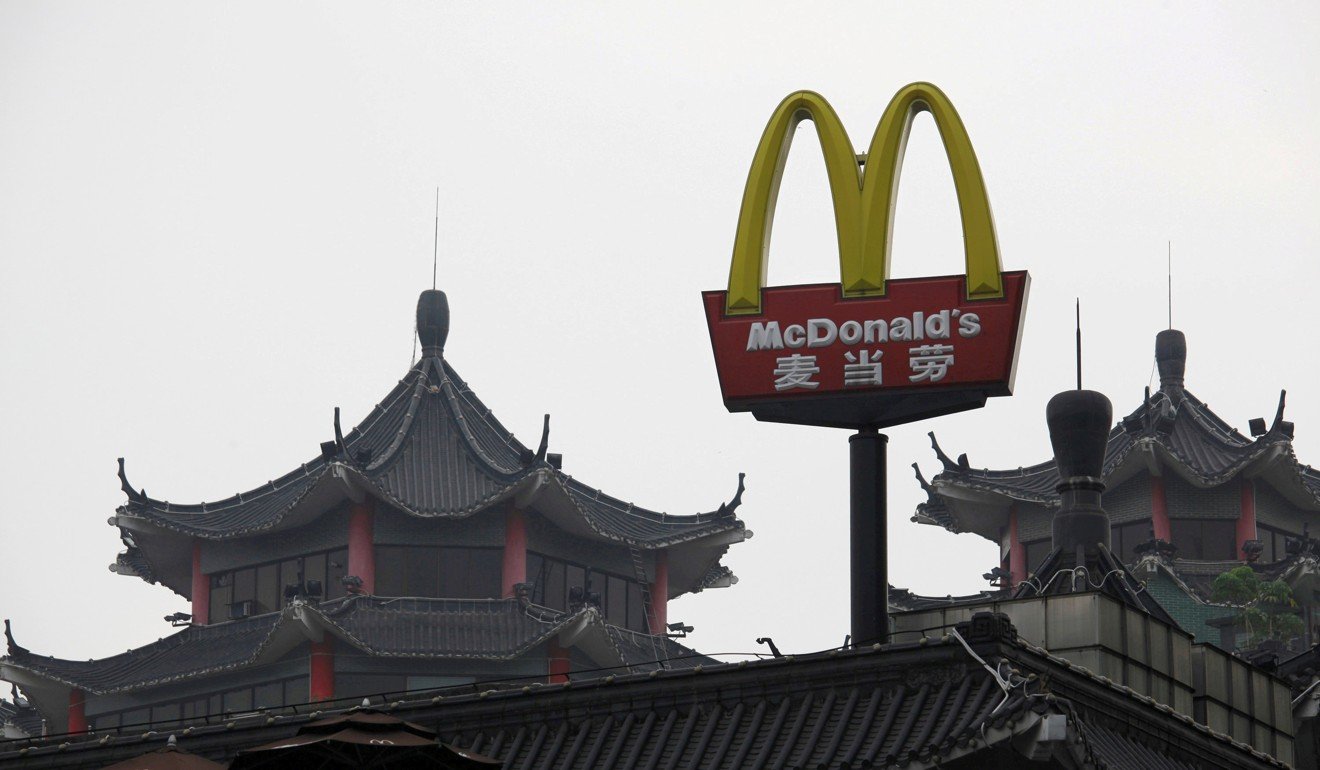
It is always tricky for multinationals to pick a name that sounds right to Chinese ears, but few went as wrong as McDonald’s latest business tweak.
When the news broke last week that the American fast-food giant had changed its business name in China, ditching the previous Maidanglao – a transliteration of the company’s English name – in favour of Jingongmen, which roughly translates as “Golden Arches,” Chinese social media gorged itself with amusement.
“[The new name] sounds like a furniture store. Are you sure the food is edible?” one wrote, while another observed “even Ronald McDonald cannot stand the new name”, referring to a widely circulated image of the clown mascot on the phone, saying: “Boss, I have to quit. The new name is unbearable.”
Construction on mainland China’s first McDonald’s in Shenzhen takes place in 1990.
McDonald’s responded online, reassuring its customers that no one would dine at restaurants carrying the Jingongmen label and the change was for official paperwork only. It is unclear whether McDonald’s will manage to shake off this PR disaster, but even if it does, there are worries the American food giant cannot escape the fate of being downgraded.
“McDonald’s and KFC do not command the brand power they used to in the 1990s,” Jeffrey Towson, a business professor at Peking University in Beijing, said. “They are not viewed as upscale as they were in the 2000s.”
Once a tourism destination in China and a symbol of rapid modernisation, McDonald’s is now known as a low-end, cheap eat for many Chinese. Experts say this colossal change in attitude mirrors the rise of China, where local businesses have become increasingly competitive and Chinese customers no longer have to rely on Ronald McDonald to get a taste of America.
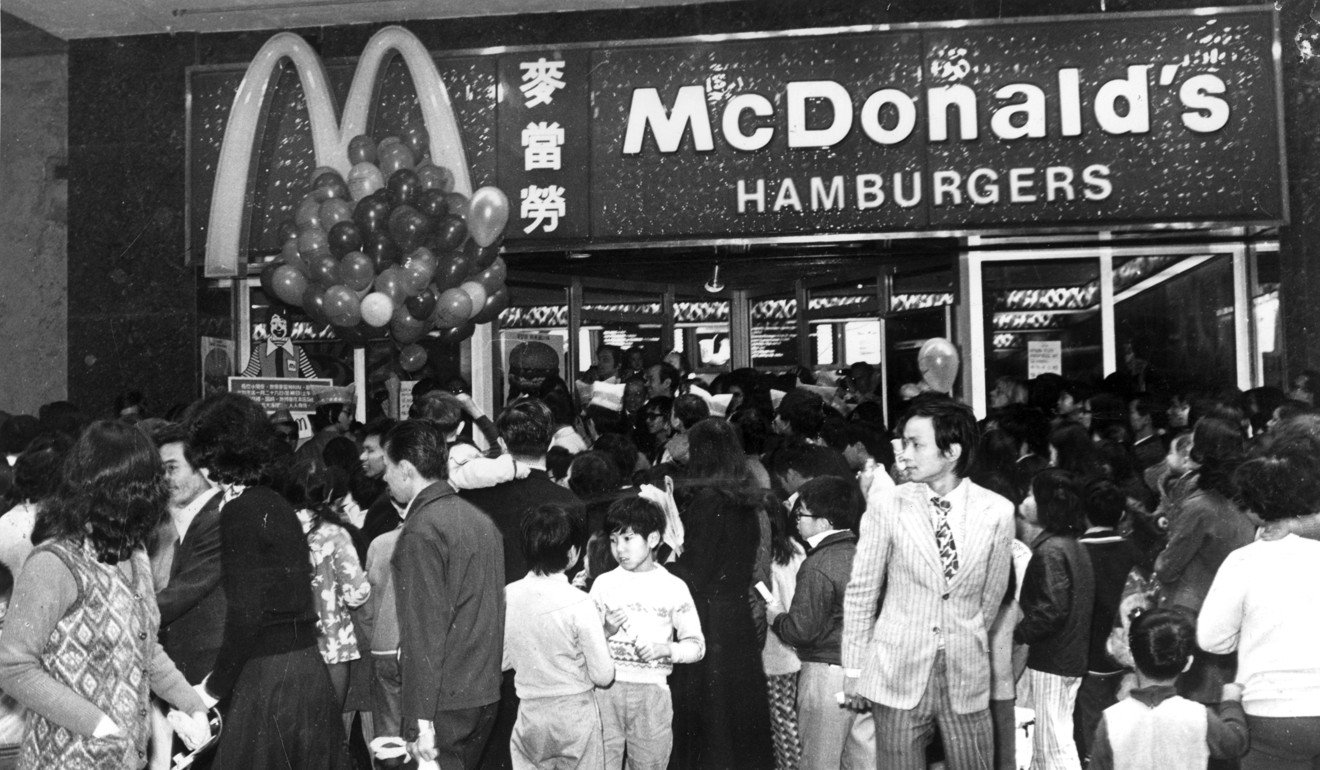
The first McDonald’s in Hong Kong opened in 1975 on Paterson Street in Causeway Bay.
Back in 1975, when McDonald’s opened its first store in Hong Kong, the popularity of McProducts in the then British colony created a phenomenon one local newspaper described as “Big Mac” fever. The fervour spread to Shenzhen, where McDonald’s made its debut in 1990. Media reports showed hundreds of Chinese queuing up outside McDonald’s first store on mainland China, and in the first three hours of its opening day, a week’s supply of products had sold out.
According to Yan Yunxiang, a professor at the University of California who studied the company’s operations in China in the 1990s, McDonald’s was so popular some parents thought the Big Mac contained a hidden ingredient luring their children to this exotic food.
And it was not just the children who had an appetite for it. When the first McDonald’s outlet arrived in Beijing in 1992, 82-year-old Wang Yonglu was one of the first customers. Munching on a hamburger, Wang explained to the United Press International: “I am just a retired proletarian. What chance do I have to go to the United States? This way, I can spend only 10 yuan (US$1.75) to see what America is like.”
Beijing’s first McDonald’s opened in Wangfujing in 1992.
Fast forward to the 21st century, the landscape in China is somewhat different. In 2016 alone, roughly 122 million Chinese – equivalent to the population of France, Spain and Denmark combined – went abroad, according to Beijing-based think tank China Tourism Academy.
“McDonald’s has lost that position because Chinese consumers are getting more sophisticated,” Shaun Rein, managing director for Shanghai market consultancy CMR China, said. “If they want Western culture and Western food, they can go to America.”
Zhang Yue, a 34-year-old marketing specialist in Chongqing, knows this well. When McDonald’s entered her hometown in southwestern China in the early 2000s, Zhang happily stood in line as she loved its “spotless dining environment.”
But now, she rarely goes. “There are so many good restaurants out there.”
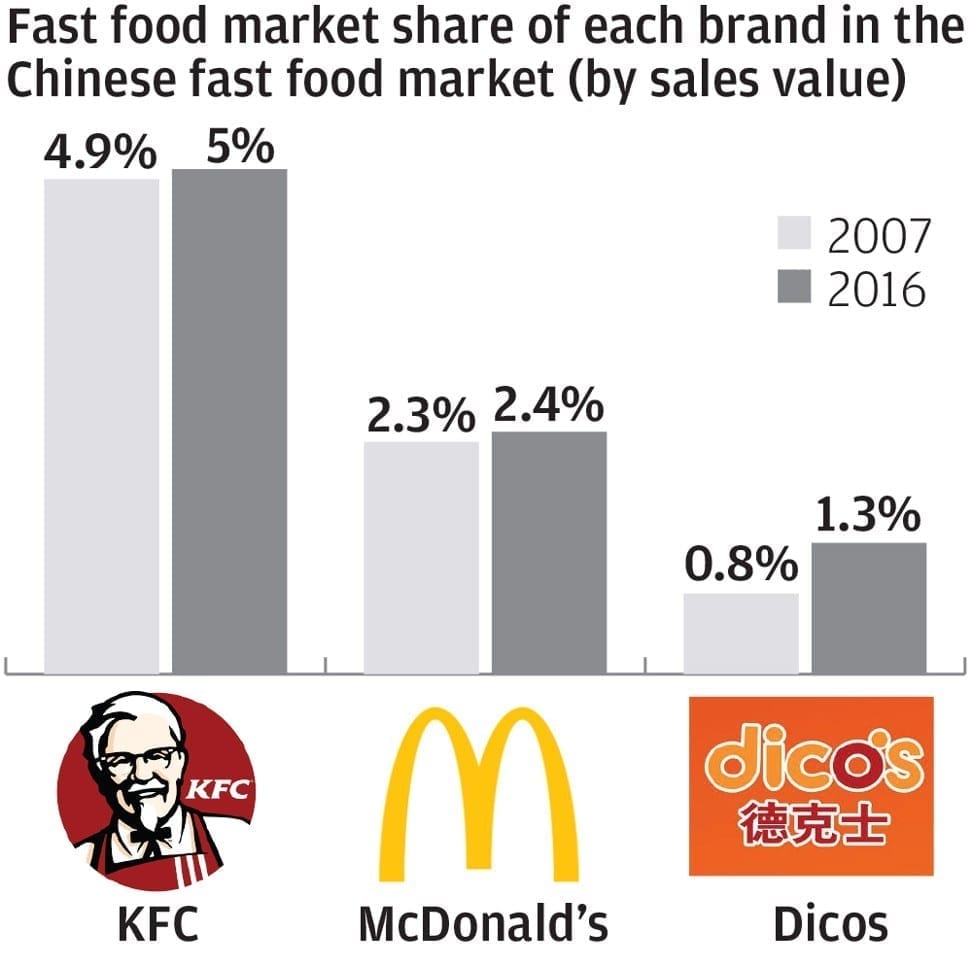
In recent years, a growing number of Western brands have flocked to China, hoping for a bite of the world’s biggest consumer market. Starbucks has opened 2,600 stores, and plans to add a coffee shop a day for the next five years. Meanwhile, home-grown food firms are catching up. Dicos, China’s third-largest fast food chain by retail value, has almost as many outlets as McDonald’s.
The boom of delivery businesses has made getting fed as simple as tapping a smartphone. Last year, at least 7.5 million hungry mouths a day were sated this way, according to a government report. That, in turn, has hampered the business for chains such as McDonald’s.
To lure in more diners, McDonald’s China has localised its menu. Currently, nNearly a quarter of items in its breakfast menu is Chinese food, including congee and soy milk.
To lure in more diners, McDonald’s China has localised its menu. Nearly a quarter of its breakfast menu is Chinese food, including congee and soy milk. Earlier this year, the American food chain also sold most of its business in China and Hong Kong to a Chinese consortium for more than US$2 billion. With the help of its new partner, McDonald’s said it will increase the number of Chinese outlets from 2,500 to 4,500 by 2022, with most of the new stores in smaller cities.
“When I studied McDonald’s in the early 1990s, I was told by management the strategy was to stick to the original American menu, not to apply McDonald’s franchise model in Beijing, and not to offer breakfast,” recalled Yan, the university professor. “It looks like the company has done everything now that it said it would not do in the early 1990s … either proactively to go [to] the next level or reactively to meet new challenges.”
The name tweak came after McDonald’s completed its China sale. A spokeswoman said it hasn’t affected the business in China and the company is happy Chinese diners no longer view it as an upscale brand. “After all, we never meant to be a five-star restaurant; McDonald’s is created to serve everyone,” she said.
China’s propaganda authority also had its say. The Beijing-based Guangming Daily, a newspaper backed by the Publicity Department of the Chinese Communist Party, wrote in a commentary last week: “Foreign brands have become ‘rustic’ [as] we Chinese have become more international.”
Parkson Retail Asia Limited (O9E.SI)’s moving averages reveal that the Tenkan line of the shares are below the Kijun-Sen line, indicating potential downward momentum building in the bearish chart. Parkson Retail Asia Limited moved -0.001 in the most recent session and touched 0.078 on a recent tick.
The Tenkan-Sen is generally used in combination with the Kijun-Sen to create predications of future momentum. A buy signal is created when the Tenkan-sen line moves above the Kijun-Sen, while a sell signal is created when the Tenkan-Sen line moves below the Kijun-Sen line.
Many technical traders use the Tenkan-Sen as a tool for predicting levels where the price of the asset will find short-term support.
When reading Ichimoku Kinko Hyo charts, investors should note that the Tenkan-Sen line leads the Kijun-Sen, and tracks price with more sensitivity because it covers a shorter period of time. When the Tenkan-Sen line crosses and moves above the Kijun-Sen line, this is generally considered a bullish signal. Alternatively, when the Tenkan-Sen line crosses below the Kijun-Sen line, it is considered a bearish signal.
The tenkan sen/kijun sen cross is one of the most traditional trading strategies within the Ichimoku Kinko Hyo system. The signal for this strategy is given when the tenkan sen crosses over the kijun sen. If the tenkan sen crosses above the kijun sen, then it is a bullish signal. Likewise, if the tenkan sen crosses below the kijun sen, then that is a bearish signal. Like all strategies within the Ichimoku system, the tenkan sen/kijun sen cross needs to be viewed in terms of the bigger Ichimoku picture before making any trading decisions, as this will give the strategy the best chances of success. In general, the tenkan sen/kijun sen strategy can be classified into three (3) major classifications: strong, neutral and weak.
Conducting further technical review, shares of Parkson Retail Asia Limited have a 200-day moving average of 0.10. The 50-day is 0.08, and the 7-day is sitting at 0.08. Using a wider time frame to assess the moving average such as the 200-day, may help block out the noise and chaos that is often caused by daily price fluctuations. In some cases, MA’s may be used as strong reference points for spotting support and resistance levels. Employing the use of the moving average for technical equity analysis is still highly popular among traders and investors. The moving average can be used as a reference point to assist with the discovery of buying and selling opportunities.
Investors have the ability to approach the stock market from various angles. This may include using technical analysis, fundamental analysis, or a combination or the two. Investors watching the technical levels may be trying to chart patterns and discover trends in stock price movement. Investors tracking the fundamentals may be looking closely at many different factors. They may be focused on industry performance, earnings estimates, dividend payouts, and other factors. They might also be studying how the company is run, and trying to figure out the true value of the firm. Keeping track of all the data may seem overwhelming, but it may help give a needed boost to the portfolio.
Parkson Retail Asia Limited’s Williams Percent Range or 14 day Williams %R currently sits at -100.00. The Williams %R oscillates in a range from 0 to -100. A reading between 0 and -20 would point to an overbought situation. A reading from -80 to -100 would signal an oversold situation. The Williams %R was developed by Larry Williams. This is a momentum indicator that is the inverse of the Fast Stochastic Oscillator.
Parkson Retail Asia Limited currently has a 14-day Commodity Channel Index (CCI) of -67.38. Active investors may choose to use this technical indicator as a stock evaluation tool. Used as a coincident indicator, the CCI reading above +100 would reflect strong price action which may signal an uptrend. On the flip side, a reading below -100 may signal a downtrend reflecting weak price action. Using the CCI as a leading indicator, technical analysts may use a +100 reading as an overbought signal and a -100 reading as an oversold indicator, suggesting a trend reversal.
Currently, the 14-day ADX for Parkson Retail Asia Limited is sitting at 26.66. Generally speaking, an ADX value from 0-25 would indicate an absent or weak trend. A value of 25-50 would support a strong trend. A value of 50-75 would identify a very strong trend, and a value of 75-100 would lead to an extremely strong trend. ADX is used to gauge trend strength but not trend direction. Traders often add the Plus Directional Indicator (+DI) and Minus Directional Indicator (-DI) to identify the direction of a trend.
The RSI, or Relative Strength Index, is a widely used technical momentum indicator that compares price movement over time. The RSI was created by J. Welles Wilder who was striving to measure whether or not a stock was overbought or oversold. The RSI may be useful for spotting abnormal price activity and volatility. The RSI oscillates on a scale from 0 to 100. The normal reading of a stock will fall in the range of 30 to 70. A reading over 70 would indicate that the stock is overbought, and possibly overvalued. A reading under 30 may indicate that the stock is oversold, and possibly undervalued. After a recent check, the 14-day RSI is currently at 42.31, the 7-day stands at 37.98, and the 3-day is sitting at 26.04.
Lam Dong Province, home to the popular highlands resort town of Da Lat, has issued a list of rules for tourists that includes a dress code and shopping guidelines.
The code of etiquette, drawn up by the province’s tourism department, asks visitors to be “civilized, decent and responsible”, Tuoi Tre newspaper reported.
They should wear suitable clothing, respect cultural differences, avoid littering and stealing, and queue in line when they are shopping or buying tickets.
The purchase of undocumented goods and wildlife products is deemed “inappropriate” behavior, the rules state.
Hotels, restaurants and other services are also warned not to overcharge, sell copycat or low quality products, or pester customers.
The code of conduct is based on a national set issued by the tourism ministry in March this year, and will be printed in Vietnamese and English in time for the annual Da Lat Flower Festival in late December.
Lam Dong received around three million visitors in the first half of this year, of which foreign travelers increased 44.3 percent from a year ago to more than 204,400.
The Central Highlands province is best known for Da Lat, which is often dubbed “Little Paris” due to its colonial history.
But like many places across Vietnam, Da Lat has both benefited and lost out to the recent travel boom.The mostly quiet and charming town, surrounded by pine trees, flowers and vegetables farms, is famous for its cool climate and has gained in popularity both as a romantic getaway for lovers and an oasis in a country that usually sweats all year round.
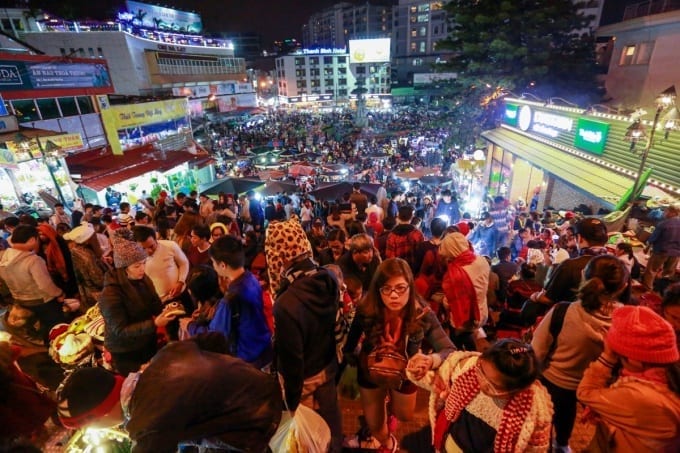
Its center is covered in garbage on big holidays, when complaints of thefts and rip-offs are not uncommon.
This year, Da Lat has reported multiple cases of local gangsters and racketeering gangs colluding with businesses to scam travelers, usually on strawberry farms or in souvenir shops.
The gangs have reportedly threatened to assault tour guides and drivers from several travel companies who have refused to lure tourists into their traps.
The issue got physical in May when a tourist was beaten after trying to return a product, prompting the government to order immediate measures be taken to protect visitors from these new groups of gangsters.
Fast Retailing, operator of casual clothing chain Uniqlo, will introduce IC tags at all its outlets worldwide within a year, President and Chairman Tadashi Yanai said.
The retailer will be Japan’s first to use the tags on a global basis.
IC tags will save time for payment and inventory control, allowing the company to swiftly increase production of hot-selling products. The tags will also lessen checkout times, ensure that items are in stock, and provide other benefits.
Fast Retailing will introduce the tags at all of its approximately 3,000 stores, including Uniqlo’s 2,000 outlets, both at home and overseas. Initial investment is estimated at several tens of billions of yen.
The move is aimed at better coping with the demands of Amazon.com and other e-tailers, which have boosted their presence in the apparel industry.
Becuase IC tags read information automatically and wirelessly, they can save more on labor and inventory costs compared to bar codes, which require manual operation. The tags can instantly and accurately gather detailed information on volume, size and color.
In addition, IC tags take only one-tenth the time to inspect products as some systems currently in use.
The company will use the tags to obtain detailed sales information analyze consumer behavior, such as when products are handled by consumers and returned to shelves, as well as when and where products are sold.
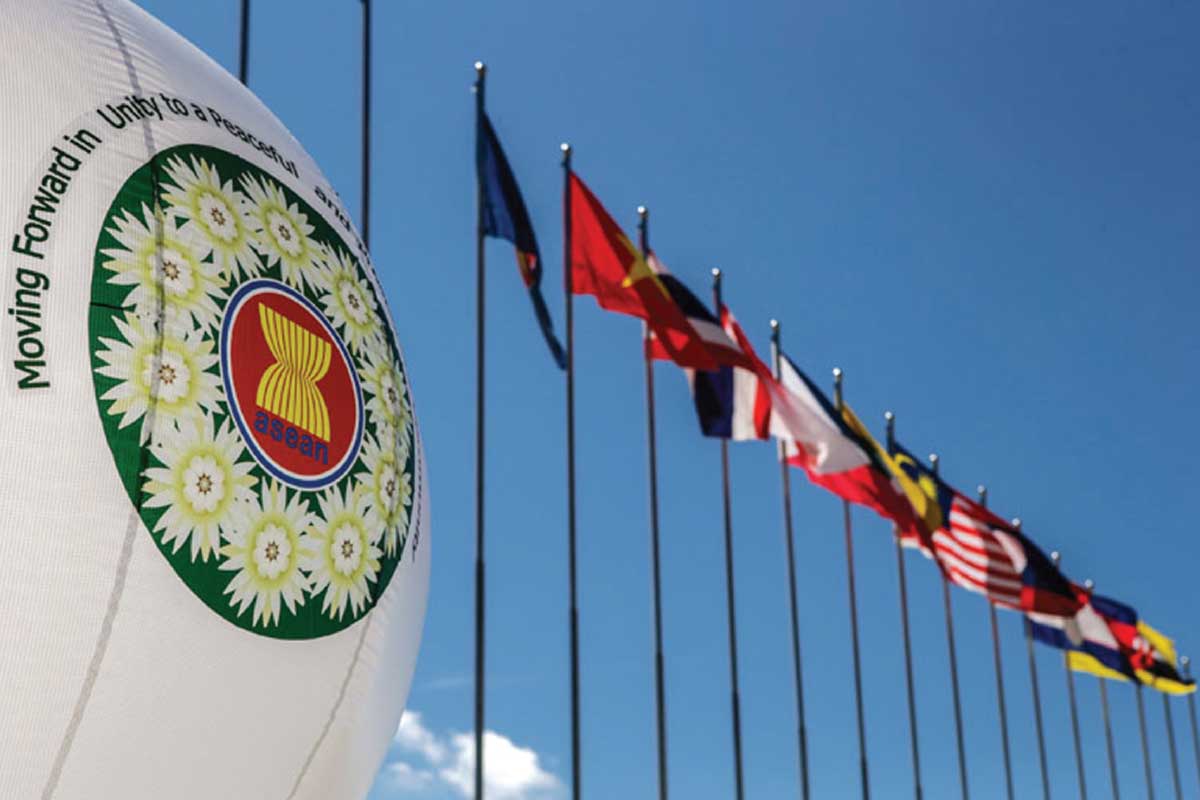
Hong Kong on Sunday signed free trade and investment pacts with the ten-nation Association of Southeast Asian Nations, in what one of the Chinese territory’s senior officials called a “loud and clear” vote against rising regional trade protectionism.
The pacts conclude nearly three years of talks, are expected to take effect on January 1 at the earliest, and aim to bring “deeper and bolder” integration of market access with the bloc, said Edward Yau, Hong Kong’s commerce and development secretary.
“In the face of protectionist sentiments in other parts of the world, these two agreements are in fact a loud and clear vote from all of us here for freer and more open trade,” Yau said.
“Hong Kong, being a free trade promoter and advocate of a strong, rule-based multilateral trading system, will continue to take this pathway, continue to do our utmost.”
Total merchandise trade between Hong Kong and ASEAN was HK$833 billion ($107 billion) last year, official figures show. Total services trade was HK$121 billion ($16 billion) in 2015.
The ASEAN Hong Kong China Free Trade Agreement (AHKCFTA) was signed on the sidelines of a summit of the regional grouping in the Philippine capital of Manila.
It came after leaders attending an Asia-Pacific Economic Cooperation (APEC) summit in Vietnam agreed to tackle “unfair trade practices” and “market distorting subsidies” in a statement on Saturday that bore the imprint of U.S. President Donald Trump’s efforts to reshape the global trade landscape.
That summit offered a contrast between the vision of U.S. President Donald Trump’s “America First” policy and a traditional consensus favouring multinational deals that China now seeks to champion.
While Hong Kong already has one of the world’s freest and most open economies, the pacts will see many ASEAN countries gradually eliminate or slash customs duties on goods from the former British colony that returned to Chinese rule in 1997.
Professional services are also expected to benefit, with increased investment flows, Yau added.
The ASEAN grouping includes Brunei, Cambodia, Indonesia, Laos, Malaysia, Myanmar, the Philippines, Singapore, Thailand and Vietnam.
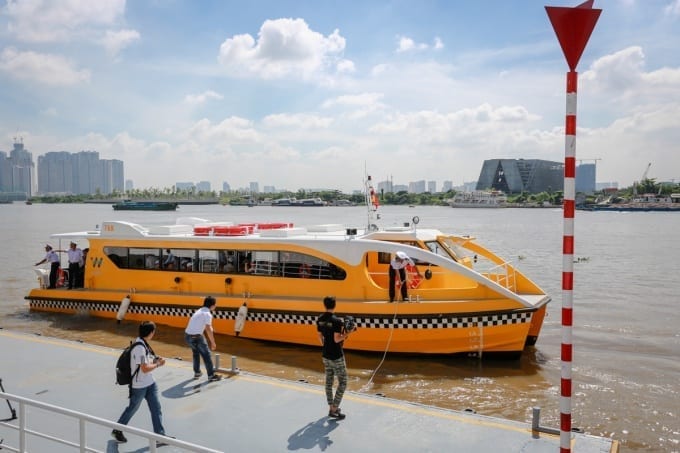
Saigon’s first river bus service will hopefully be up and running later this month, according to local authorities.
The service will cruise 10.8 kilometers (6.7 miles) from Bach Dang Wharf in District 1 to Linh Dong Station in Thu Duc District, passing through District 2 and Binh Thanh District.
With 12 stops in total, the entire trip will take half an hour, cutting a third off the time it would take to travel by road and costing just VND15,000 (66 U.S. cents).
The first river bus was due to launch this summer, but the city has kept passengers waiting on the dock. In August, it said that construction delays would not allow the first river bus to set sail until October.
The city’s transport department explained that as it is the city’s first river bus, it wants to make sure the service is as user-friendly and convenient for passengers as possible.
However, the only passengers to have experienced the service thus far are those recruited by the city for two test runs.
Saigon has more than 1,000km of inland waterways, so the river bus service should ease traffic and attract more tourists, director of the city’s transport department Bui Xuan Cuong told local media in August.
A second route from Bach Dang Wharf to District 8 is scheduled to open in early 2018. The two routes are said to have cost an estimated VND120 billion ($5.28 million).
In April, the city’s municipal administration approved two more routes connecting the downtown with new urban areas in District 7.
In September, the city also agreed to a plan tabled by a private firm to add three more routes connecting the city’s downtown with the outlying districts of Can Gio and Cu Chi, as well as the stunning Con Dao Island, which is administered by the southern province of Ba Ria-Vung Tau and lies 230 kilometers (143 miles) away from Saigon.
Visa, the world’s leader in digital payments, has obtained a domestic network licence from the Bank of Thailand. Through a partnership with National Interbank Transaction Management and Exchange (National ITMX), Visa will provide banks and merchants with a comprehensive suite of Visa’s debit products and resources to grow digital payments for the people of Thailand.
A Visa debit card provides consumers with fast, simple and secure access to the funds in their bank account and can be used to make purchases wherever Visa is accepted online and at more than 40 million merchant locations around the world.
Suripong Tantiyanon, Country Manager, Visa Thailand said: “As the demand for faster, more convenient and secure electronic payments grows in Thailand, we see a tremendous need for a solution such as Visa Debit. The world of commerce continues to evolve at a phenomenal pace. Visa Debit can be used as a physical card or as the underlying digital account for QR Code or mobile payments, while also enabling cardholders to receive rewards and other benefits.”
This licence allows Visa to fully participate in Thailand’s domestic debit market and support the government’s National ePayment Plan.
“By obtaining a domestic network licence, Visa can continue to drive innovation and expand access to electronic payments in Thailand creating a more financially inclusive ecosystem for all. Visa Debit will be a key tool in the adoption of electronic payments in the country, helping Thais to become more financially confident,” said Mr. Suripong.
For decades, Visa, together with its financial institution and merchant partners, has consistently invested in growing electronic payments in Thailand. This has included growing card issuance and acceptance, educating consumers and merchants on the benefits of electronic payments, and introducing new payment innovations.
Visa operates one of the world’s largest retail electronic payments networks, VisaNet, processing more than US$9.5 trillion worth of transaction a year, with built-in fraud protection for consumers and assured payment for merchants. Thailand will benefit from Visa’s technological expertise and more than half a century of knowledge in growing an open and sustainable payments ecosystem.Based on payments volume, total volume, number of transactions and number of cards in circulation.
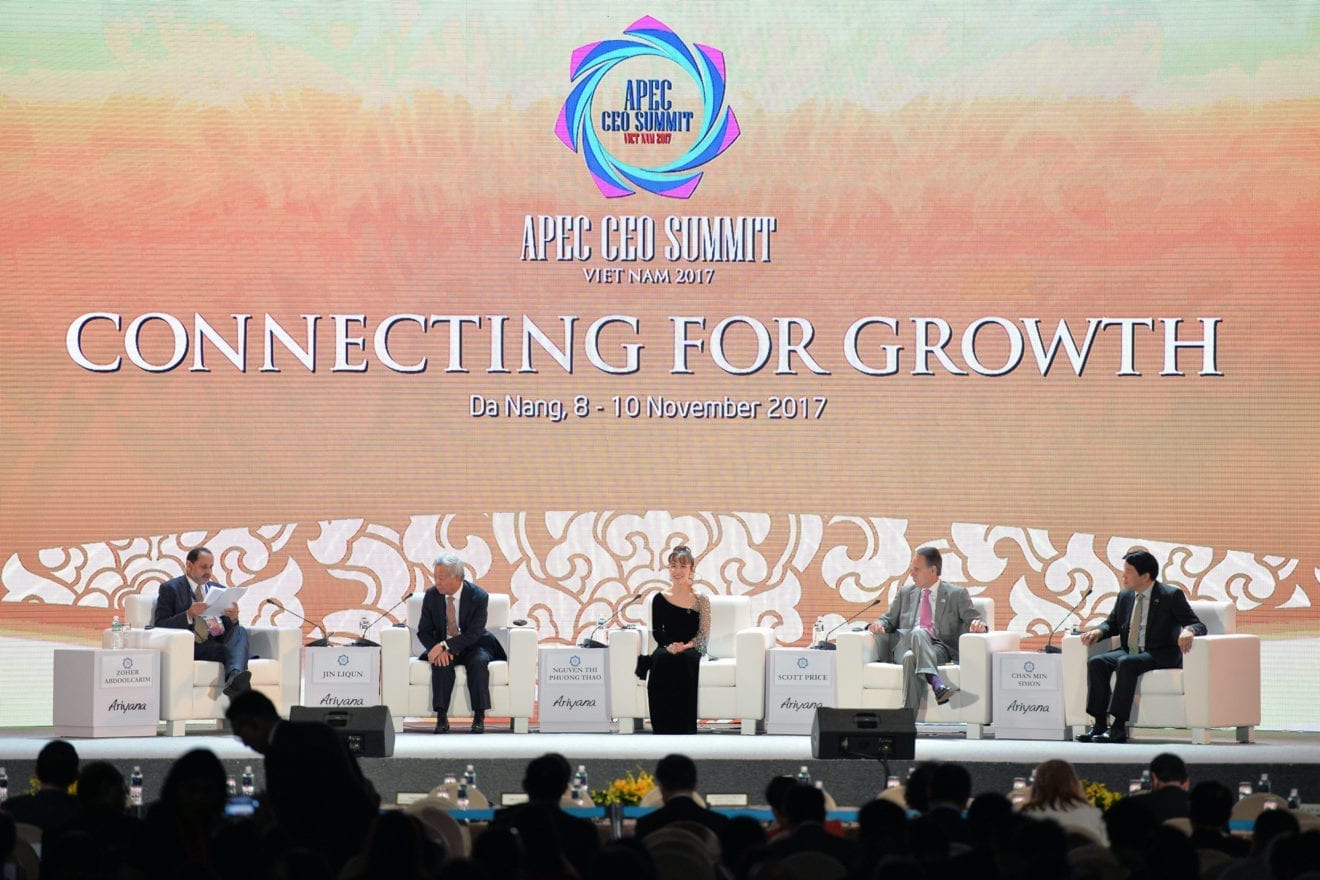
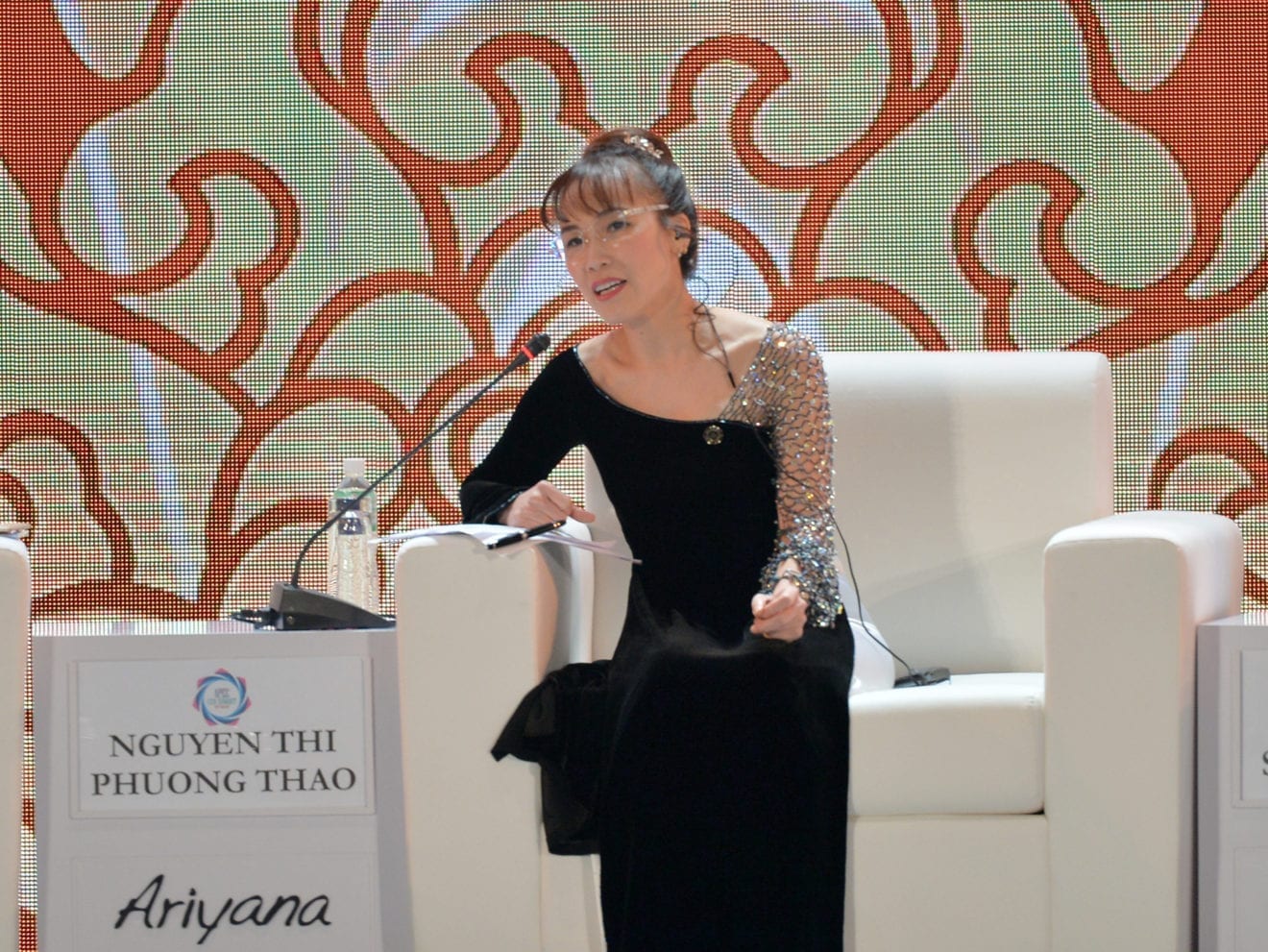
Fast growing Vietjet is evolving to become a “Consumer Airline” in its next phase of development, according to its President and CEO, Nguyen Thi Phuong Thao, at the APEC CEO Summit 2017 in Danang, Vietnam.
Speaking at the session themed “Connecting for Growth,” Nguyen said Vietjet is heading to build up the airline that serves consumption demands, using e-commerce platform and logistics and consumption product distribution system.
“We are leading a digitalization and automation trend in the 4.0 technology revolution. I believe that direction plays a very important role to fulfill the target of – connecting for growth,” she said.
Sharing the Vietjet success story, Nguyen said “our pride named Vietjet” is a typical corporate culture trait which is the key of success for all our plans, all strategies and all ambitions.
“Each of us is proud of being a member of our organization. We do strongly believe that with the connection of civilizations and nations and cultures, trading sectors which create ecological systems for human development and economic growth, there is a prosperous and brighter future in the sky. We are dedicated to realizing that future soon.”
She also presented the Vietjet vision with a global development plan that comes with efforts to build up the airline into a multi-national company and multi-cultural environment homing staff from more than 30 countries.
Defined by our motto “Sky Connection,” Vietjet international routes now account for more than two-third of our operating network, she said.
“We are heading our international network via interlines with credited airlines in the world. We successfully did it with Qatar Airways, doing it with Japan Airlines and will do it with Asiana soon. We are also working with one carrier in the US and one carrier in EU for possible co-operations. Other than standard low-cost carriers which can only fly around with a radius of less than three hours, in a very near future, our passengers can fly to many destinations around the world,” she added.
At the helm of Vietjet’s rapid expansion, Nguyen Thi Phuong Thao has been named by Forbes as one of the world’s top 10 power women in business. It is her ambition to grow Vietjet, which she founded in 2011 into an international airline. Vietjet, the first airline in Vietnam to operate as a new-age airline with low-cost and diversified services, was listed in the country’s largest IPO on the Ho Chi Minh City Stock Exchange last February.
After only five years of operation, Vietjet has captured the biggest share of the Vietnam local market and become the country’s largest domestic carrier.
The APEC CEO Summit 2017, held in Da Nang between 8 – 10 November, 2017 is Asia-Pacific’s premier business event. It provides unparalleled opportunities for global business executives to engage in dialogue with APEC Leaders, high-level government officials and influential thought leaders.
In this rapidly-evolving digital age, the relationships of Thai people are weakening and technology is one of the main culprits. Technology, which includes social media, is the second-leading cause of arguments among couples in Thailand, according to the recent Prudential Relationship Index (PRI) 2017 report.
Relationships breathe life into our lives, adding colour, tears and laughter. But how much do we truly understand them? In the pursuit of deeper relationship insights, Prudential has launched the second edition of the PRI, a year after the inaugural report was launched in 2016.
This year, Thailand retains its fifth position on the PRI index among the nine markets surveyed in Asia, with a score of 70/100 – a one-point decrease from 2016. This indicates that relationships in Thailand fulfil 70% of people’s needs and expectations, leaving a 30% relationship gap. The highest PRI scores across the region were recorded in Cambodia and the Philippines.
CEO of Prudential Thailand, Aman Chowla said, “We are delighted to launch the second edition of the PRI in Thailand, which provides interesting insights into the state of relationships among Thai people. Highlights from this year’s results reveal that physical health and financial security for loved ones continue to be a key priority among Thai people.”
On the importance of relationships, Aman Chowla said, “Research has shown that better relationships directly translate to a greater sense of well-being and significant improvement in health and longevity. We consider Prudential to be a life partner to our customers and will strive to provide fresh and innovative experiences to them.”
Does technology make relationships stronger or weaker?
While social media can bring people together, many couples in Thailand say it drives a wedge between them. Thirty-six percent of respondents argue with their partners over the amount of time spent on smartphones or computers. Close to the same proportion say they sometimes get upset by what their partner posts on social media (37%).
Forty-six percent of people in Thailand say their families spend too much time on the phone rather than talking to each other, while 40% admit the time spent on the phone has a negative impact on their family relationships.
The difference between men and women in the utilisation of technology is also clear: 71% of Thai men say they are on their phones more than their partner, compared to 51% of women.
Thais do care about their health…but to what extent?
According to the PRI 2017, people in Thailand are aware of the need to be more physically healthy, but do little to maintain their health.
Sixty-nine percent of Thais are concerned whether they will stay physically healthy when they are older. More imminently, 34% believe their health will worsen in the coming five years.
Despite these concerns, 61% of Thais say they are not currently active in maintaining their health. When asked what they would like changed in their partners, making their partners healthier topped the wish list – as mentioned by over half of the people (54%) surveyed in the PRI 2017.
“The insights from the PRI 2017 provide us with an in-depth understanding of the top needs and concerns in the market. While health is a key concern, a third of Thais (66%) are also worrying about saving enough for their future retirement, with 55% citing retirement as their key financial priority. The findings from this insightful report reinforce our commitment to provide tailored products and services to enhance our customers’ overall quality of life, from health and medical to savings and life protection,” concluded Mr Aman Chowla.
Travel Retail Asia Pacific is delighted to announce the launch of a global campaign,
‘Declaring Happiness’, which will be celebrated through a series of brand events across
Asia. In line with the global direction to strengthen LANCÔME’s digital presence in the
region, each of these events will leverage on the digital influence of celebrities and key
beauty opinion leaders to engage a broader audience, and at the same time converge the
offline and online retail experiences to foster a stronger brand engagement with
consumers.
Beginning in Korea, the global initiative was kickstarted with a store event
and cocktail party graced by renowned Korean actress, Kim Go-Eun, at Lotte Hotel, the
first 2020 concept store for LANCÔME Travel Retail Asia Pacific to offer a unique retail
experience with its consumer centric and high retail quality that allows travellers to freely
discover various travel exclusive products in the shop. After which, the campaign landed
on the shores of Singapore, with a resplendent LANCÔME Holiday Wonders pop-up
store that lit up Singapore Changi Airport in festive spirit for the holiday season. Moving
forward, the campaign will make a stop in China, with a launch event in November at
Haitang Bay that is set to continue the brand’s journey in sharing happiness with all
women, before concluding with a Hong Kong event in December.
The Soul Behind The Campaign
“The LANCÔME ‘Declaring Happiness’ global campaign richly illustrates our passion to
inspire and share happiness with women by making their lives more beautiful. Ultrafeminity,
emotion, joie de vivre and beauty have always been at the heart of LANCÔME’s
DNA. Through this series of ‘Declaring Happiness’ events across Asia, we hope to
continue creating moments of happiness for all women by exploring different consumercentric
innovations at our events that allows us to foster a deeper connection and
engagement with our consumers.” says Ms. Tao Zhang, General Manager of
LANCÔME Travel Retail Asia Pacific.
‘Declaring Happiness’ Kick-off Event in Seoul
The ‘Declaring Happiness’ campaign started off in Seoul on 12 October 2017 with
LANCÔME Travel Retail Asia Pacific’s first-ever live streaming event, attended by
guests from all across Asia – most notably, renowned Korean actress Kim Go-Eun and
social media influencers from China. The 11 Chinese social media influencers livestreamed
at both the event venue and concept store through Weibo, creating organic,
user-generated content by sharing their experience with millions of their followers and
interacting with them during the live feed.
At the beauty talk session, Kim Go-Eun revealed her beauty secret for porcelain skin and
attributed it to some of her favourite LANCÔME products – the UV Expert Aqua Gel
and Blanc Expert Cushion.
Other highlights of the event also include activities for new product launches such as the
‘Génifique’ zone, which employed touch-screen gaming technology to create a unique
platform on which guests could experience the Génifique Sensitive. Guests were also
given the opportunity to be the first to experience the fruity floral scent of LANCÔME’s
new fragrance, the Miracle Secret, as well as the newly launched L’absolu Gloss.
LANCÔME Holiday Wonders Pop-Up Store at Singapore Changi Airport
Following its launch in Seoul, the ‘Declaring Happiness’ campaign arrived in Singapore
with a much-anticipated LANCÔME Holiday Wonders pop-up store at Changi Airport
on 16 October 2017, the first of its kind to blend retail with entertainment to create a
captivating pop-up experience. The launch event was officiated with a ribbon cutting
ceremony and champagne toast graced by VIPs and partners, followed by a speech given
by Ms. Tao Zhang, General Manager of LANCÔME Travel Retail Asia Pacific.
Pop-up store is designed to enrapture travellers at Singapore Changi Airport with various
multi-dimensional retailtainment. An instant crowd-favourite at the launch event is the
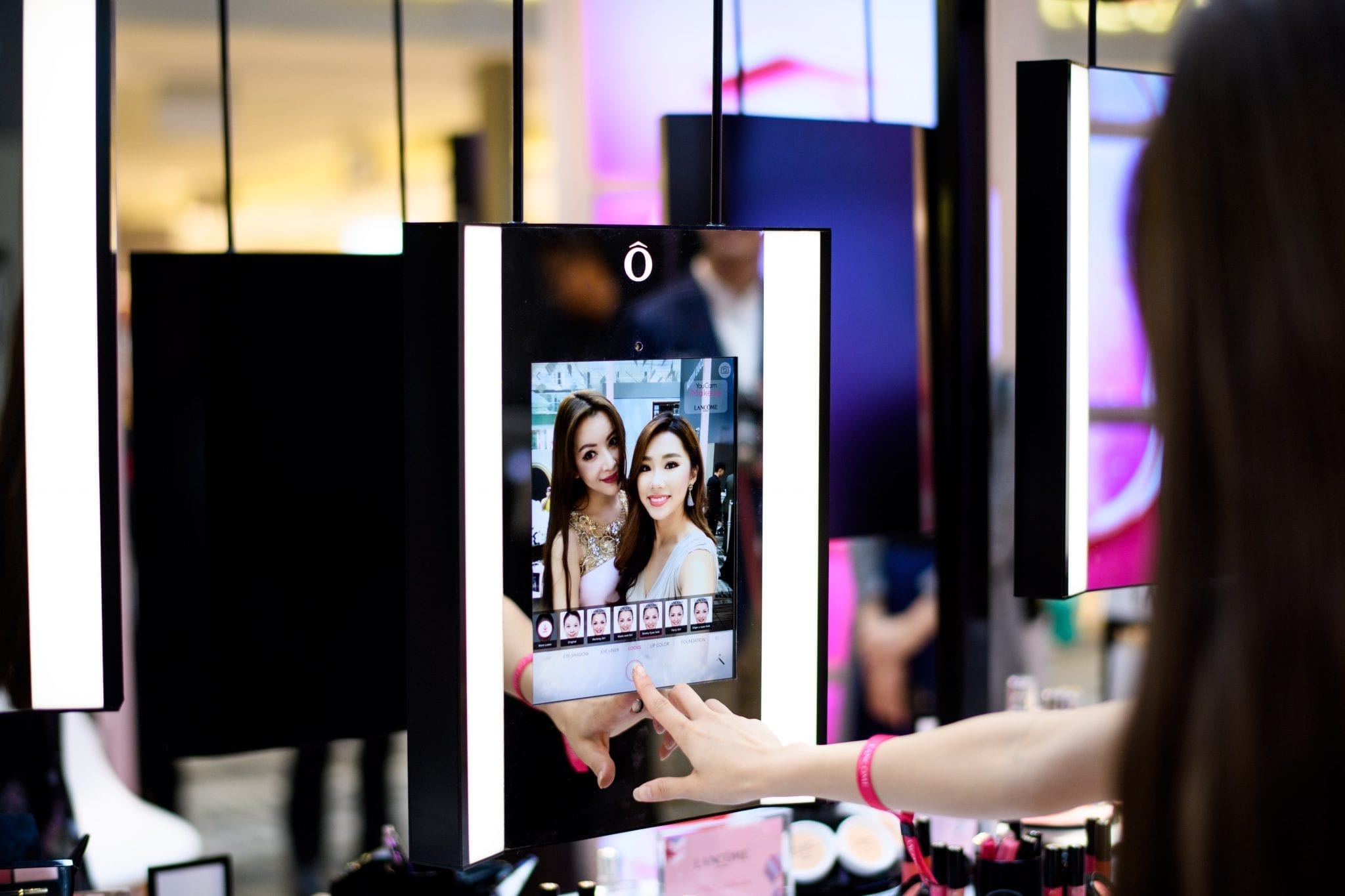
Virtual Mirror, a LANCÔME Travel Retail Worldwide exclusive at Singapore Changi
Airport that allows guests to try on different makeup looks via a augmented reality virtual
makeover application. Fans of Virtual Mirror at the event included notable beauty
personalities and key opinion leaders such as Andrea Chong, Christabel Chua, Kimberly
Wang, Liv Lo, Mongchin Yeoh, Sheila Sim, and Chinese fashion opinion leader Lu Min,
all of whom indulged in the exciting opportunity to experience the Virtual Mirror. Guests
were also kept entertained with a LANCÔME photobooth at the storefront which
featured a splendid backdrop of floating balloons over Paris. Finally, for a chance to win
the brand’s bestselling L’Absolu Rouge lipstick samples, guests did their best to clock up
top scores at the LANCÔME digital touchscreen game.
Consumers at the LANCÔME Holiday Wonders Pop-up store will also be treated to a
complimentary engraving service for the ‘LANCÔME x SINGAPORE’ luggage tag, an
exclusive holiday collectible for those who purchase the ‘Your Perfect Travel
Companion’ sets.
Hereafter, consumers can look forward to a uniquely LANCÔME beauty experience
when the ‘Declaring Happiness’ campaign makes its stop at Haitang Bay, China in
November and Hong Kong in December.
New age airline Vietjet is certainly no stranger in the aviation arena, making headlines for its innovative campaign executions and exponential growth in recent years.
It comes as no surprise that the airline was recently bestowed the inaugural Best Ultra Low Cost Airline Award 2018 title by AirlineRatings.com – the world’s only air safety and product rating review website. Joining the likes of Air New Zealand and Singapore Airlines, Vietjet was named a winner of the Airline Excellence Awards by the website which promotes excellence in the airline industry.
Geoffrey Thomas, Editor-in-chief of AirlineRatings,com said, “Vietjet is a real innovator bringing very affordable, safe and enjoyable travel with an outstanding product to millions across Asia and Vietnam. The airline has done the impossible – bringing top class travel to the region at amazing prices and ultimate flight experiences.”
“The new award, taken out by Vietjet, celebrates a new breed of airlines that offer extraordinary value to passengers, while not compromising on product or service,” added Thomas.
Since its debut in December 2011, Vietjet has rapidly grown its fleet and expanded its route networks to include a number of local and international destinations, opening up affordable travel to all across the region.
To date, the airline has flown over 40 million passengers, and been presented with numerous awards including 32 domestic and nine international accolades such as being named ‘The Pioneer Airline’ by The Guide Awards 2017 at the annual festival of national tourism 2017 Vietnam and the ‘The Best Asian Low-Cost Carrier 2015’ at the TTG Travel Awards 2015.
At the helm of Vietjet’s success is its Founder and CEO, Nguyen Thi Phuong Thao who was recently listed in Forbes World’s 100 Most Powerful Women list.
“I have always aimed big and done big deals. I have never done anything on a small scale and this is the same driving force behind the growth of Vietjet. It is my goal to continue propelling Vietjet forward and leading it to its highest point of success,” said Thao. Vietjet plans to open six new routes in the fourth quarter, increasing its total new routes by 19 for the year 2017.
The AirlineRatings.com Airline Excellence Awards, judged by six editors with over 180 years’ industry experience, combines major safety and government audits, with 12 key criteria – up from nine last year – that include: fleet age, passenger reviews profitability, investment rating, product offerings, and staff relations.