Author: Mei Ling Tan

  • Bob Bakish takes helm at Viacom

    Bob Bakish takes helm at Viacom

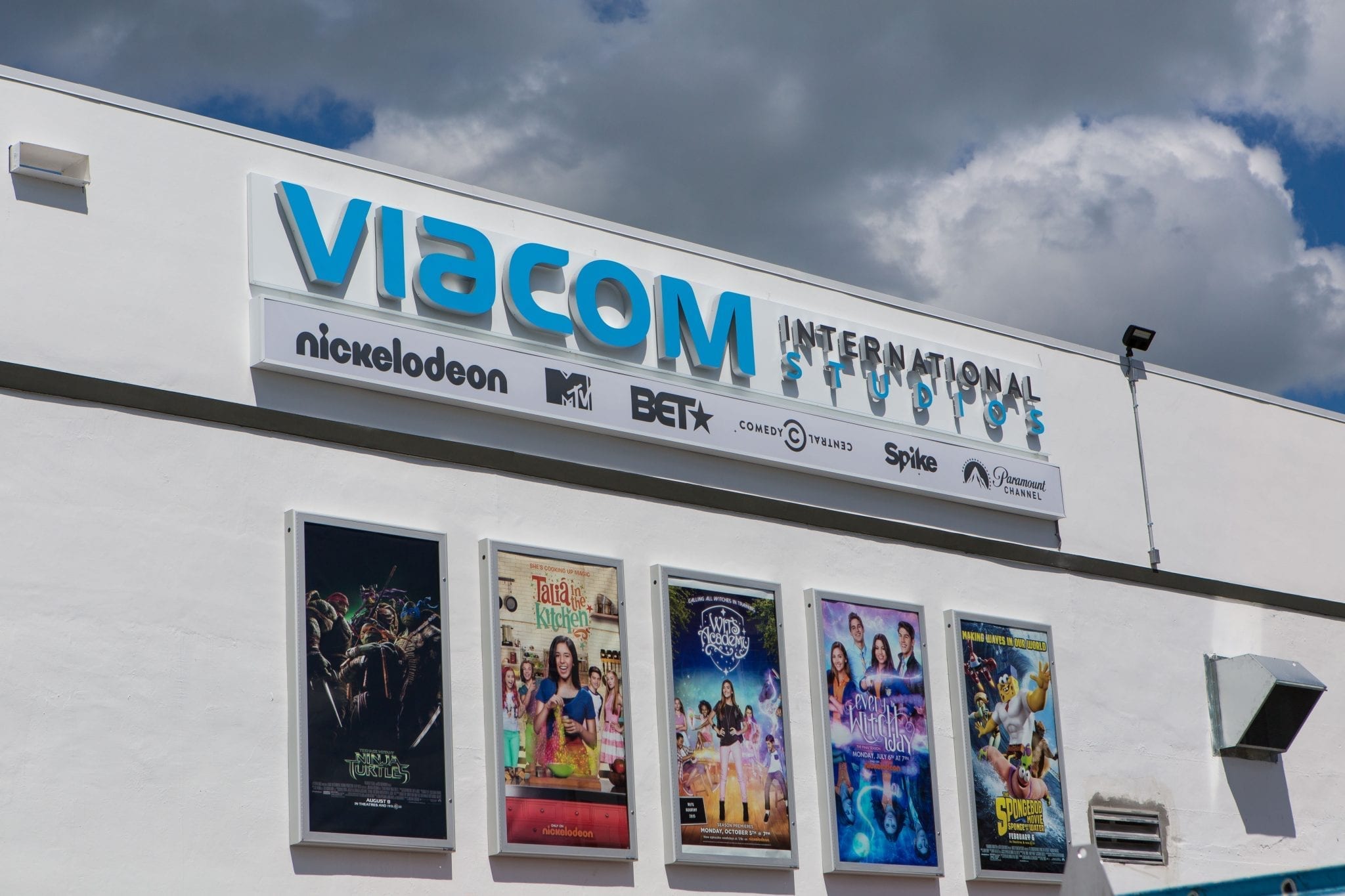
    Viacom has discontinued the exploration of a potential combination with CBS and has appointed Bob Bakish as president and CEO, and as a member of the board.

    Bakish has held leadership positions throughout the company since joining in 1997, most recently serving as president and CEO of Viacom International Media Networks prior his acting CEO role.

    “We’ve been working very quickly to mobilize the organization, reenergize our culture and address our areas of greatest need,” said Bakish.

    Also, Fox Networks Group Asia has appointed Italo Zanzi as EVP and managing director for its Sports network. The veteran sports executive leads the management of the Fox Sports business and team across Asia-Pacific and the Middle East.

    Zanzi joins Fox from Italian Serie A football club A.S. Roma where he was CEO for three and a half years, overseeing all aspects of the club’s operations and business.

    At Eutelsat Communications, Sandrine Téran will assume office as group CFO and member of the executive committee on January 9.

    Téran was formerly managing director of Louis Dreyfus Holding (based in the Netherlands) and has occupied other key executive positions in the Louis Dreyfus Group during the past eight years, notably global head of tax and corporate secretary, and subsequently global CFO of Louis Dreyfus Company.

    Téran succeeds Antoine Castarède who will be an advisor to the CEO over the coming months before leaving Eutelsat to pursue other interests.

  • DHL adding drones and ‘copters to its courier workforce as e-commerce operation expands

    DHL adding drones and ‘copters to its courier workforce as e-commerce operation expands

    DHL, the world’s largest logistics company, is poised for a major expansion of its delivery channels, including the wider use of shops where customers can collect parcels, drone deliveries, and what the company is calling “Parcel-copters”, says the chief executive of its rapidly growing e-commerce division.

    Speaking in Hong Kong, Charles Brewer suggested the routine procedure of having a uniformed courier delivering to your doorstep is rapidly becoming less popular, simply because customers these days are less willing to sit at home and wait for arrivals.

    So the company is now in the rapid process of introducing “alternative methods”, which Brewer – who’s been with the German deliveries titan since 1984 – is tipping to see the fastest growth.

    “We are going to have a big, big expansion in the choice of deliveries in some places,” he told on Thursday.

    Courier and delivery market leaders such as DHL, UPS and FedEx are having to adapt fast to ever-changing customer demands, with the emphasis very much now on faster, more convenient, internet-based methods.

    Brewer said his and other firms are increasingly facing what the industry likes to call the “parcel conundrum” – instances when shoppers enjoy the comfort and ease of picking their favourite items and placing their orders online, but are disappointed by the delivery efficiency that follows.

    “Their experience quickly begins to sour as the delivery process starts to take over,” Brewer said, citing a recent DHL survey result that showed more than 80 per cent of consumers are either dissatisfied or very dissatisfied with their online delivery experience.

    Many logistics firms, he added, only made deliveries to people’s homes within a time-banding, of say between 8am and 6pm, when typically people are at work.

    “Nobody wants to stay at home, waiting and waiting,” Brewer added.

    Brewer noted that customers are increasingly asking for what he calls “parcel lockers” and parcel shops, where they can easily collect their deliveries.

    We are going to have a big, big expansion in the choice of deliveries in some places

    A tie-up with intelligent locker makers will allow customers to retrieve parcels from lockers using a secure pin.

    “The fastest growing delivery channel is alternative,” said Brewer, outlining the future emphasis of his e-commerce offshoot.

    Since last year DHL has been running schemes in Germany to have packages actually delivered to the boots of people’s cars – in partnership with Daimler and Audi, the carmakers.

    The company is also partnering with Deutsche Telekom to launch a joint research into applications of unmanned aircraft for the safe and rapid delivery of parcels in urban areas.

    The first application is going to be the DHL Parcel-copter, which has been trialling since 2013.

    In September, it concluded a test of shipping products including urgently needed medicines via unmanned aircraft called “Parcel-copters,” in a Bavarian village of Germany.

    The planes were equipped with a mobile communications module allowing them to be located through GPS data.

    “One thing that will be very popular in Asia are parcel shops,” Brewer said.

    Already logistics companies such as Chinese company S.F. Express have been scrambled to join hands with bricks-and-mortar retailers such as 7-Eleven, to arrange convenient parcel pickup points.

    These alternative delivery methods are still in their infancy, accounting for just six per cent of total market share, while in mature e-commerce markets such as Germany and the Nordic countries, they already represent 10 to 15 per cent, Brewer said.

    “But that’s where we will end up in the rest of the world in the coming years.” he noted.
  • Ladies Market fake products seizure largest for three years

    Ladies Market fake products seizure largest for three years

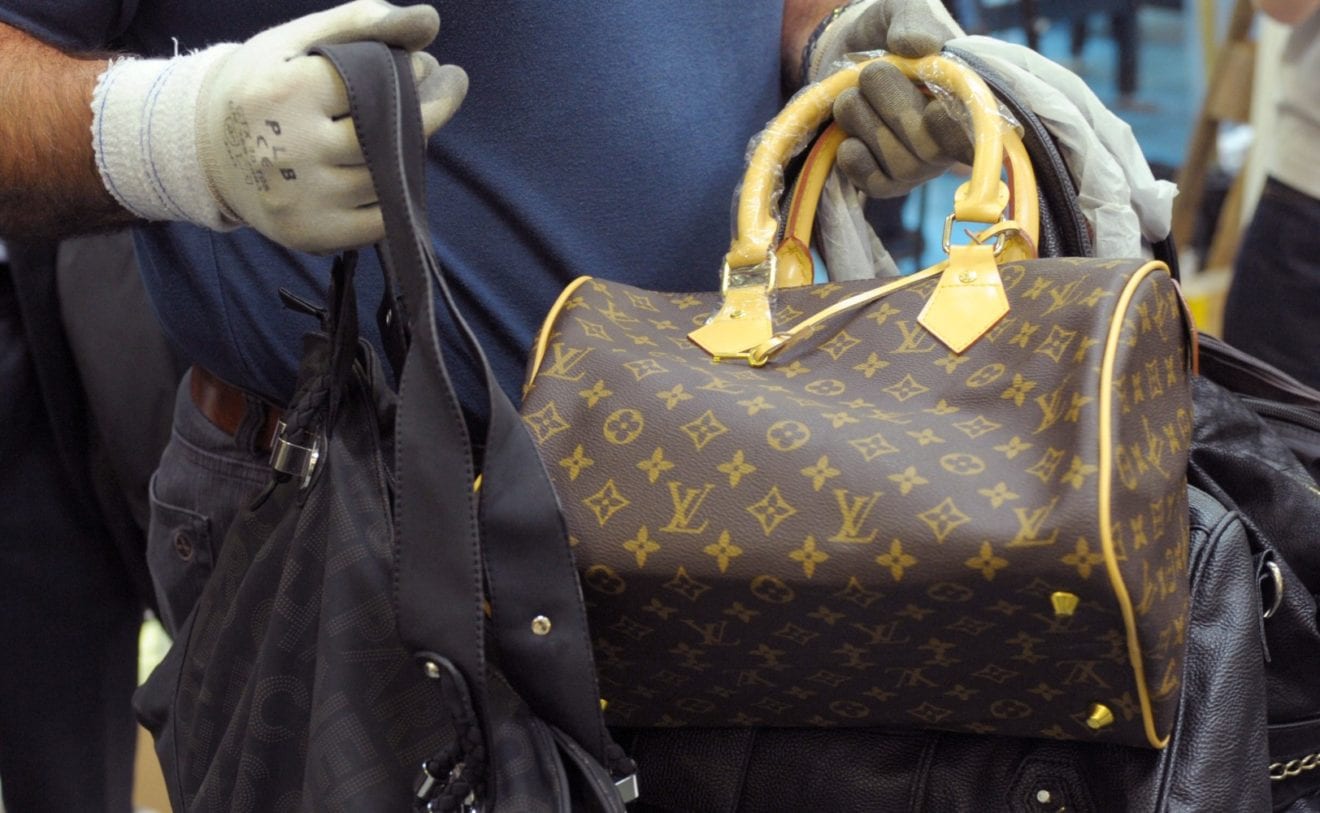
    Hong Kong Customs has arrested 10 people and seized HK$10 million (US$1.2 million) worth of fake products, smashing a counterfeit syndicate at the Ladies Market.

    It was the largest syndicate caught in three raids by the Customs and Excise Department this year on Tung Choi Street in Mong Kok. In January and August, officers nabbed 12 people and seized HK$7.5 million in fake goods.
    Following those busts, the syndicate just nabbed had chosen potential customers more carefully to avoid detection, says Customs official Guy Fong Wing-kai.

    “The gang served only tourists from Europe and America,” he says. “They did not approach locals or Asian tourists in case they were undercover customs officers.”

    The syndicate sold their goods at 5 to 20 per cent of the genuine products’ price, he says.
    An investigation revealed the syndicate sold counterfeit goods at four hawker stalls in the market, using electronic tablets to show clients photos of the products.

    “Some clients were taken to its upstairs showroom nearby, which was packed with about 600 counterfeit products,” says Fong. Four nearby flats were used as warehouses, and a female ringleader went to the mainland regularly to buy the fake products.

    After a month-long investigation, about 90 Customs officers raided the four hawker stalls, the secret showroom and the four warehouses. Seven men and three women were rounded up and more than 10,000 fake products seized including watches, handbags and leather goods.

    Fong says it was Customs’ largest seizure of fake products in a single operation in the past three years.

    Aged between 24 and 38 years, the 10 Hongkongers are being held for questioning. None have yet been charged.

    Fong says the department will enhance its enforcement activities against counterfeiting during the holiday season. He says that selling counterfeit goods is regarded as a serious crime, carrying a maximum penalty of a HK$500,000 fine and five years in jail.

  • Cebu Pacific boosts capacity for festive season

    Cebu Pacific boosts capacity for festive season

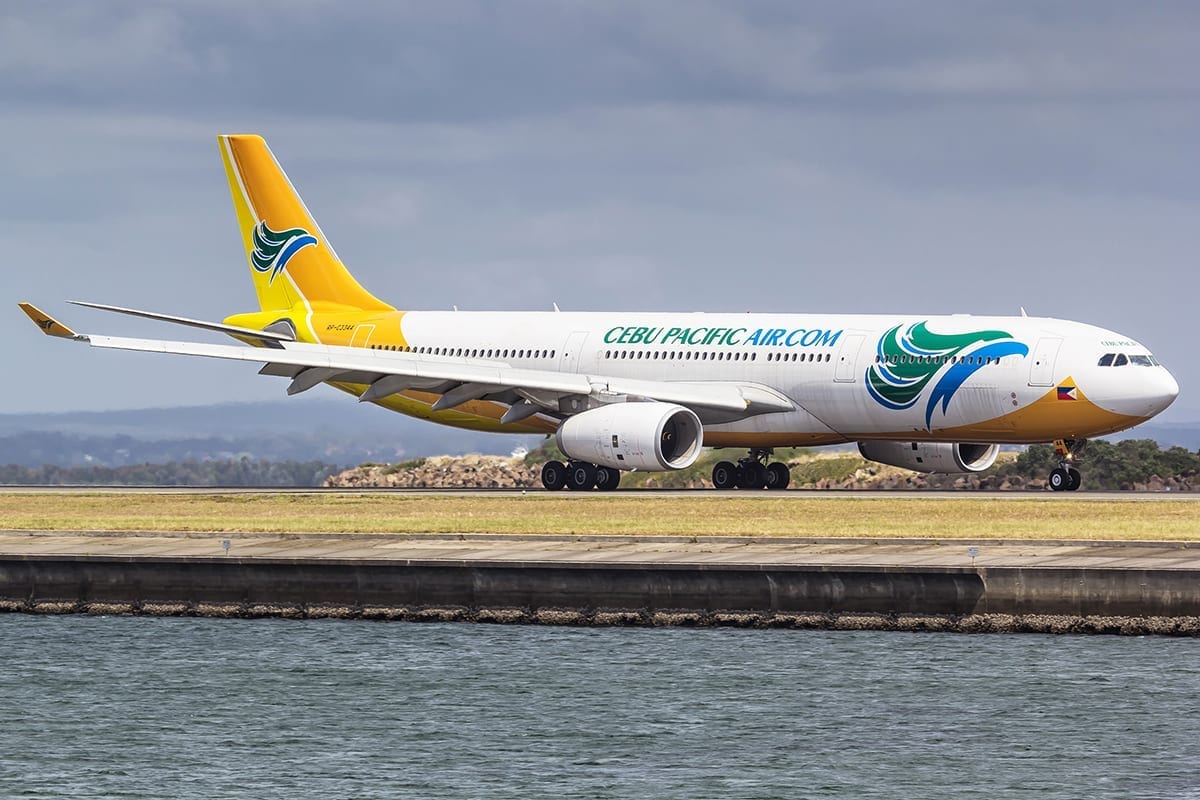
    Cebu Pacific has taken delivery of a new Airbus A330-300 aircraft in time for the festive peak season.

    The new twin-aisle jet was delivered on 14 December and has now entered service on the airline’s route between Manila and Hong Kong. This deployment has led to a 22% increase in terms of seat capacity on the popular route.

    As a low-cost carrier, Cebu Pacific equips its A330s with 436 seats in an all-economy class layout. This gives it a greater capacity than some airlines’ A380s.

    Cebu Pacific is the largest Philippine carrier operating in Hong Kong, offering flights to Cebu, Clark and Iloilo, as well as Manila.

  • Ooyala launches applications for collaborative asset management

    Ooyala launches applications for collaborative asset management

    Ooyala has launched new versions of its MAM (media asset management) application and Reviewer application for its media logistics platform, Ooyala Flex.

    The new solutions make it easier for broadcasters, publishers and media companies to manage, review and approve video assets while automating steps in the workflow and capturing the associated data in the management phase of video production.

    Both applications are highly configurable, taking advantage of the workflow capabilities of Ooyala Flex. With a modular approach, the applications can be used separately or together.

    When deployed together, customers benefit from enhanced collaboration and efficiencies not found in traditional offerings on the market, allowing creative teams to focus only on the tasks that add value and creativity to productions.

    The HTML-5 based MAM application can be tailored to match each customer’s unique production workflow. Non-technical users are able to easily upload and organize video and image assets, search for and update metadata, perform rough-cut edits and review assets with internal teammates.

    The Reviewer application for Ooyala Flex lets individuals that are either inside or outside of the organization securely review, approve and submit time-coded comments on selected content from anywhere in the world, anytime-including real-time collaboration and annotation for images.

  • Turner, Snapchat ink content, ad deal

    Turner, Snapchat ink content, ad deal

    Turner and Snap are expanding their partnership by bringing new brands to Snapchat’s Discover platform, extending live coverage of Turner’s premium sports events, and working with several Turner brands to develop Snapchat shows.

    The deal encompasses content, distribution and advertising centered around Turner’s leading portfolio of networks, programming, events and brands.

    “This deal marks the latest strategic move for Turner to innovate within the digital arena and provide complementary viewing experiences for a younger, mobile-centric audience,” said David Levy, president of Turner.

    “Snapchat is a powerful outlet to directly connect with the millennial generation and perfectly aligns with our portfolio-wide strategy to engage with audiences at every touch point,” said Levy.

    As part of this deal, Turner will work with Snap to develop original shows from its series and brands such as TBS, Adult Swim, truTV, Great Big Story and Super Deluxe.

    Turner’s portfolio will create and produce original content from its popular franchises and networks specifically for Snapchat’s mobile-first audience.

    Turner’s Bleacher Report, the digital sports brand for the millennial generation, will launch a Discover Channel in the United States, comprised of videos, images, animations and graphics covering the top stories in sports each day.

    It will join the CNN Discover Channel, which will expand its offering to feature more daily content than ever before, including in-depth, global news stories hand-curated for the Snapchat community.

    The agreement continues to leverage Snapchat’s immersive Live Stories with expanded coverage of Turner’s premium sports content, including the NCAA Division I Men’s Basketball Championship and the PGA Championship.

    The exclusive access around these premium sports properties brings Snapchatters closer to the action with behind-the-scenes coverage, videos and photos from on-site correspondents.

    Turner and Snapchat will collaborate on advertising sales, developing exclusive and immersive ad experiences that provide brands the space to connect with millennials in a dynamic mobile environment within original shows and Live Stories.

    The two companies will also provide sponsors with creative advertising opportunities on the Discover Channels, offering brands a full-screen, creative canvas for mobile storytelling.

  • Vodafone Australia builds cyber security center for enterprise customers

    Vodafone Australia builds cyber security center for enterprise customers

    Vodafone Hutchison Australia (VHA) has contracted Dimension Data and FireEye to build its first Cyber Defence and Response Centre (CDRC) to offer services to enterprise customers.

    The CDRC will provide around-the-clock advanced event monitoring, threat protection and intelligence, and incident response to help protect Vodafone Enterprise and its customers against online security threats, as well as assist with the aftermath of an attack.

    Vodafone signed a five-year contract with FireEye and a three-year contract (with a two-year option for extension) with Dimension Data to help deliver a range of services through the CDRC, including proactive threat hunting, global threat intelligence correlation, vulnerability management, penetration testing, digital forensics and crisis management.

    “Cybercrime is a topic that we take very seriously at Vodafone. We have partnered with the industry’s best providers to help us protect our critical information and infrastructure, as well as intellectual property,” said Vodafone chief technology officer Kevin Millroy.

    “The capabilities, maturity, flexibility, and scalability of Dimension Data and FireEye enables us to be ready and open to exchange threat information and knowledge with the federal government’s Australian Cyber Security Centre, and ultimately contribute to protecting Australia’s national security and economic prosperity from online threats.”

  • Cebu Pacific receives new Airbus A330-300 aircraft

    Cebu Pacific receives new Airbus A330-300 aircraft

    The Philippines’ leading carrier, Cebu Pacific Air (CEB), has received a new Airbus A330-300 aircraft, creating more available seats in time for the holiday season.

    CEB will be utilising this aircraft for flights between Manila and Hong Kong from Tuesday, a move that will provide more than 9,800 available seats per week on this route.

    In a statement, CEB said this upgrade reflects a 22% increase compared to the number of seats offered in the previous periods, which allows the airline to maintain its position as the largest Philippine carrier operating the Philippines – Hong Kong market.
    “CEB also takes pride as the only Philippine carrier linking Hong Kong to other cities in the Philippines, such as Cebu, Clark and Iloilo,” said JR Mantaring, vice president for corporate affairs, CEB.

    With this easy connectivity to such hubs, CEB aims to strengthen economic trade and tourism from one of Asia’s largest financial centers to the Philippines.

    This new aircraft, configured with 436 all economy-class seats, will join CEB’s existing fleet of six A330s flying on long haul and selected regional and domestic routes.

    CEB continues to modernise its current 58-strong fleet of five Airbus A319, 36 Airbus A320, seven Airbus A330, eight ATR 72-500, and two ATR 72-600 aircraft to further expand its route network and frequencies all over the world.

    Recently, the airline announced two new domestic routes from Manila to Masbate and Tablas. With these additions, CEB now offers flights to 38 domestic and 30 international destinations, spanning Asia, Australia, the Middle East, and USA.

  • Croatian Beer Now Available for Purchase in Korea

    Croatian Beer Now Available for Purchase in Korea

    Korean’s can now have a taste of Croatia under the market slogan, “Croatian beer froths up in the Korean market,” as from last week in South Korea, Croatia’s very own Ožujsko beer can be purchased.

    The liquor importer CKB will be pushing out 4 kinds of Ožujsko to the Korean market, of which two will be lagers and two will be the sweet fruit-flavors (Radler lemon and grapefruit). The lager-style Ožujsko has 5% alcohol content and the fruit-flavored types hold only 2%, assures the Korean portal.

    “Ožujsko is the top-selling beer in the European country, with a 40% market share,” said the statement by CKB, the liquor importer of Ožujsko in Korea.

    You can now find the popular Croatian Ožujsko available in all major retail chains in South Korea, and a 330-milliliter bottle will cost 2,300 won (around 14 kuna), while a 550-milliliter can will cost 2,500 won (around 15 kuna) at big malls across the country.

  • Sandriver cashmere launches in US

    Sandriver cashmere launches in US

    Luxury cashmere brand Sandriver has officially entered the US market, building on its base of 11 stores in Asia and a worldwide eCommerce presence.

    Sandriver cashmere has been active in the international fashion scene since 2007, sourcing directly from the grasslands of the Alashan Plateau in Inner Mongolia, home to 70 per cent of the world’s cashmere.

    Founder and CEO Juliet Guo (Guo Xiuling) is an Inner Mongolian native, and has built the brand’s own sourcing base of 30 local herding families, some of whom operate on Guo family-owned grasslands.

    Setting itself apart from global fashion giants, Sandriver says it hones its niche role in the industry by merging the traditional sophistication of cashmere with the innovation of modern fashion.

    Its creative team comprises a dynamic group of international designers and artists, including world-renowned Japanese designer and multiple fashion award recipient Junko Koshino, French-Columbian artist Francesca Brenda-Mitterrand, and German and Chinese fashion designers Antje Weidner and Qin Wanyu.

    junko-koshino-sandriver-designer

    Sandriver cashmere continues to attract attention on an international scale and has been presented at major fashion shows in both Tokyo and Paris. Its collections suit a variety of budgets and tastes with prices ranging from around US$100 to $3000 for original designs.

    Product lines include, among others, scarves and wraps for every season, full-length coats and blankets, reversible and ready-to-wear garments and comfortable ensembles. Recent additions include kids wear and luxury travel garments and accessories.

    Sandriver products are available online, shipped directly from Shanghai to the US via DHL Express within four days, and include a local US-based return policy.

  • Arcadia to launch first stores in mainland China

    Arcadia to launch first stores in mainland China

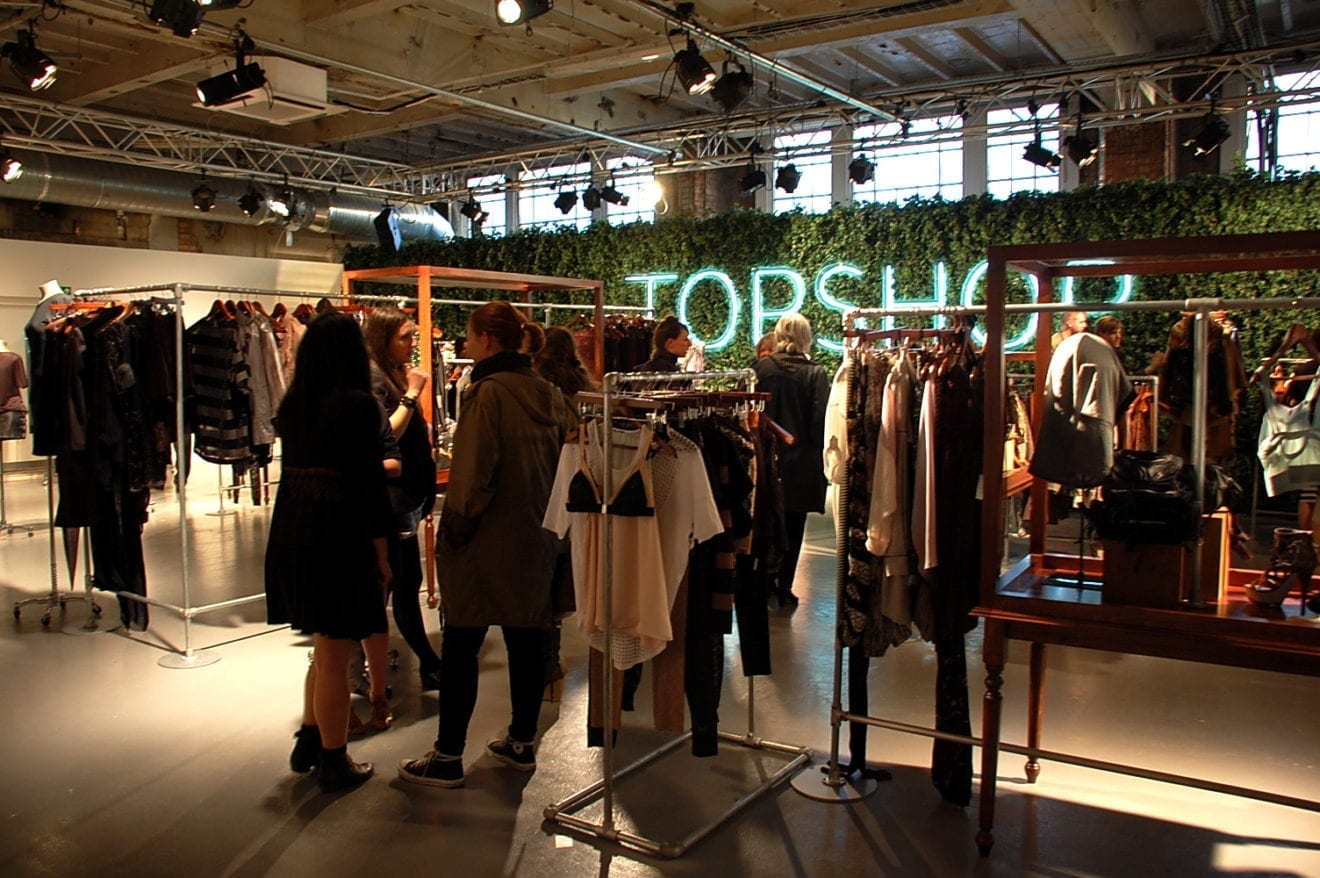
    A deal struck with local retailer ShangPin will see five stores open in the country, with a further 75 in the pipeline if the venture is a success. Topshop opened its first store in Hong Kong in 2013 and Green has been eying further expansion for a number of years.

    The Arcadia Group chairman said the deal would “cement Topshop and Topman’s mission of becoming truly global businesses.”

    He added: “For the first time both brands will deliver high fashion to the shop floor and beyond by opening full scale stores in China – host to the world’s largest growing retail economy.”

    Department store House of Fraser is also poised to open its first Chinese store in Nanjing at the end of this month.

  • Miniso targets 6000 stores by 2020

    Miniso targets 6000 stores by 2020

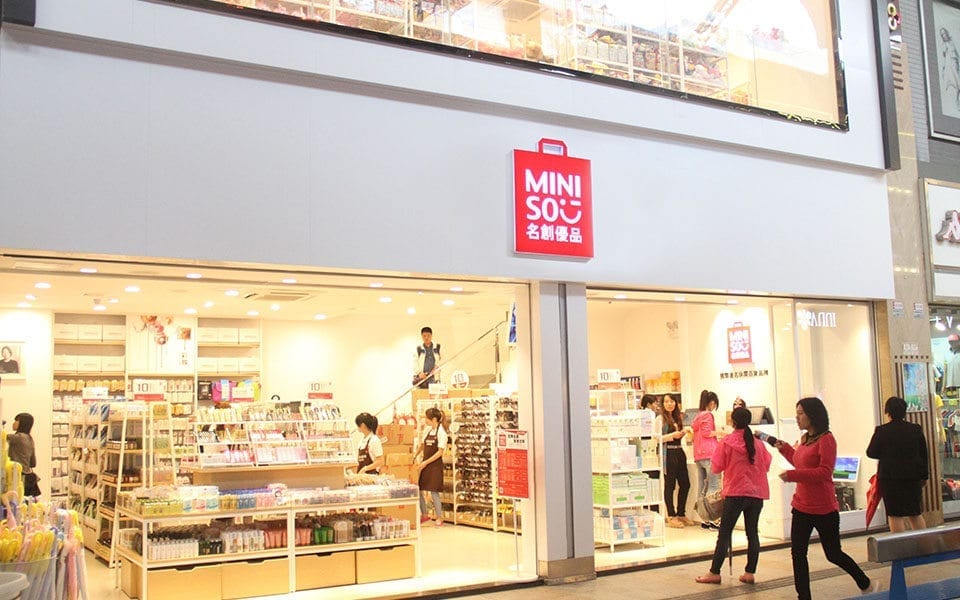
    Chinese discount brand Miniso expects to open 6000 stores worldwide by 2020, co-founder Ye Guofu has told a conference in Singapore.

    He was speaking at a three-day investment conference hosted by Miniso and attended by more than 250 agents, potential agents and suppliers from 100-plus countries.

    Following the event, Miniso signed a strategic co-operation agreement with the Mazuli Group from Israel.

    Also from Miniso at the event, named “Hello! World Miniso – Saiman Fund International Conference on Global Investment”, were global co-founder/chief designer Miyake Junya, Asia-Pacific VP Li Minxin and international department director Huang Zheng.
    While established for only three years, Miniso has opened more than 1400 stores in more than 40 countries and regions. Its global revenue reached RMB5 billion (US$719 million) last year and expected to exceed RMB10 billion this year.

    To help conference attendees understand the brand’s rapid development, Junya spoke about the “Miniso model”, using the brand’s development in Singapore as an example. Miniso launched three stores in Singapore simultaneously, and within a year was able to open more than 20 stores. As well as its quick development, its turnover rates repeatedly set sales records and it grew faster than any other retail brands.

    Junya believes its success is because of its powerful brand, its “high quality, creativity and low price”, the special experience if offers shoppers, and its efficient and reliable supply chain.
    Guests were invited to visit five major Miniso stores in Singapore and one warehouse.
    As a fast-to-market brand, Miniso launches new products every three days and completes goods circulation through retail outlets every 21 days.
    Ye Guofu spoke about the essence of a brand with competitiveness, saying he believes there is no essential difference between online and offline.

    He says the traditional retail industry must undergo transformation, not only because of the impact from eCommerce, but most importantly because of consumers’ ever-growing cleverness.

  • The rupiah may soon have three fewer zeros

    The rupiah may soon have three fewer zeros

    Indonesia’s central bank governor said yesterday that the bank is seeking to slash three zeros off the face value of rupiah notes to simplify its currency system.

    Bank Indonesia Governor Agus Martowardojo said he has asked President Joko Widodo to revive a previously shelved plan to redenominate the rupiah to make it “more efficient and simpler”.

    A draft law backing redenomination was submitted to parliament in 2013, but it was put aside due to instability in Indonesia’s financial markets then

    If approved, the central bank would need two years to prepare new notes and another seven years of transition, Mr Martowardojo s.aid.

    “Prices of goods and services have to also be simplified. Because of the transition period, in which people can use both the old and new rupiah denominations, we are sure it wouldn’t affect inflation,” he said at the launch of a new series of new currency designs.

    The largest rupiah denomination is currently 100,000 and the smallest is 1,000.

    Indonesian Finance Minister Sri Mulyani Indrawati said she would discuss the proposal with parliament. However, it is not on the list of current legislative priorities for next year.

    “A redenomination would strengthen assurance in Indonesia’s currency, but it does not affect anything nominally,” she told reporters.

  • Apparel recovery evident in US retail sales

    Apparel recovery evident in US retail sales

    Apparel was  stand-out category in a mixed month of fortunes for US retailers in November.

    According to official government data, US retail sales rose by just 0.1 per cent month-on-month, or 3.8 per cent year-on-year, including motor vehicles and petrol.

    Within core retail categories, apparel sales grew by 1.9 per cent year-on-year.

    “This may sound fairly subdued, but it is much better than the year-to-date growth rates which have seen volumes and prices slip,” observes Neil Saunders, CEO of retail consultancy Conlumino.

    “That said, most of this is down to weather that is much more conducive to sales compared to last year’s most unseasonal temperatures which left much winter wear hanging on the rails.”

    Saunders says that while at headline level November data suggested a good month for retail with strong overall growth across most parts of the sector, “in reality, it was a very choppy month with a great deal of variation between the weeks”.

    It was also a month affected by the election, the uncertainty from which hurt sales during October and the first week of November.

    “Fortunately, once the election was over some of the latent demand produced a much better growth figure in week 3. During this week furniture retailers and home improvement retailers put in a particularly good performance, the latter being aided by the onset of colder weather. “Early discounting in the period before Black Friday also helped to stimulate demand during this week. The run-up to Thanksgiving also saw a solid performance from grocery stores which, despite some ongoing deflation, notched up some reasonable volume uplifts,” said Saunders.

    As the month moved into Thanksgiving and Black Friday week, growth moderated to more subdued levels. “The Black Friday weekend was a fairly lackluster affair, partly because many shoppers had snagged bargains well before the event. The performance from physical retailers was poor over this period, with some anemic numbers coming from department stores.”

    Saunders said rising gas prices were starting to show in the US retail sales figures.

    “This has the potential to act as a brake on retail consumer spending as we enter the Christmas period. Overall, however, Conlumino maintains its view that it will be a reasonable, though not spectacular, holiday period.”

  • OneWeb secures $1.2b from Softbank-led investment

    OneWeb secures $1.2b from Softbank-led investment

    OneWeb has raised $1.2 billion in a new funding round led by Japan’s Softbank, bringing in fresh capital for the US satellite startup to compete with Elon Musk’s SpaceX.

    Softbank is investing $1 billion of the total $1.2 billion and has become a strategic partner, with one of its directors, Ronald Fisher, joining OneWeb’s board of directors.

    The remaining $200 million will be funded by its current investors, which include Airbus Group, Bharti Enterprises, Intelsat-owned Hughes Network Systems, Qualcomm, and Virgin Group. The transaction is expected to close in the first quarter of 2017.

    OneWeb said the money will be used to build a high-volume satellite production plant in Florida, which is expected to create almost 3,000 new engineering, manufacturing and supporting jobs in US over the next four years.

    “With this new round of funding and based on our rapid technical progress over the past year, we also announce a much larger goal: to fully bridge the digital divide by 2027, making internet access available and affordable for everyone,” said OneWeb founder Greg Wyler.

    The new facility, which will begin production in 2018, aims to produce 15 satellites each week “at a fraction of the cost of what any satellite manufacturing facility in the world can produce today,” the company said.

    For Softbank, the $1 billion investment in OneWeb is the first tranche of a $50 billion US investment the Japanese conglomerate’s founder and CEO Masayoshi Son pledged to President-elect Donald Trump.

    “Earlier this month I met with President-Elect Trump and shared my commitment to investing and creating jobs in US,” Son said in a media release. “This is the first step in that commitment.”

    It is also Softbank’s latest attempts to strengthen the company’s foothold in the burgeoning IoT sector. In July, Softbank, which also owns US mobile carrier Sprint, acquired UK chipmaker Arm for a whopping $31 billion to pursue business opportunities in the emerging IoT sector.

    “SoftBank has a long history of investing in disruptive, foundational technologies that promise to help us realize the future sooner. OneWeb is a tremendously exciting company poised to transform internet access around the world from their manufacturing facility in Florida,” Son noted.

    Founded in 2012, OneWeb aims to build a communication network with a constellation starting with 720 low earth orbit (LEO) satellites to deliver affordable, high-speed, low latency internet access to rural areas across the United States and emerging markets.