Author: Mei Ling Tan

  • Garuda Indonesia Increases Flight Frequency in Banyuwangi

    Garuda Indonesia Increases Flight Frequency in Banyuwangi

    Garuda Indonesia airlines will increase the flight frequency at Blimbingsari Airport, Banyuwangi to twice a day from May 16, 2016. The decision was made after the issuance of the permit to increase Garuda Indonesia flight services of Surabaya-Banyuwangi route and vice versa by Directorate General for Air Transport of the Transportation Ministry.

    At present, Garuda Indonesia flight schedule only serve one daily flight at Blimbingsari Airport namely Surabaya-Banyuwangi route at 11:35 a.m. – 12:35 p.m. and Banyuwangi-Surabaya at 1:05 p.m. – 2:00 p.m. After the issuance of the permit from Transport Ministry, Garuda will have an additional schedule of morning flight, namely Surabaya-Banyuwangi route at 6 a.m – 7 a.m. and Banyuwangi-Surabaya at 7:30 a.m. – 8:25 a.m.

    “We gladly welcome the additional flight schedule of Garuda morning [flight], making it two flights a day. It’s a solution to the high volume of airline passengers that often leads to complaints about the lack of seats, either to Banyuwangi or vice versa. I hope it could trigger a surge in tourist arrival,” said Banyuwangi Regent Abdullah Azwar Anas on Wednesday, May 4, 2016.

    In addition to new schedule of Surabaya-Banyuwangi route, Garuda Indonesia also plans to re-open Denpasar-Banyuwangi service. “I heard that the planned Denpasar-Banyuwangi service is ready, but we are still waiting for further confirmation about it,” Anas said.

    The number of passengers at Blimbingsari Airport continues to grow after it started operation. It has significantly increased up to 1,308 percent from only 7,826 passengers in 2011 to 110,234 passengers in 2015.

    Banyuwangi district administration has also arranged evening flights. It has prepared several infrastructures to achieve the target to start operation in 2016. “We hope that evening flights would offer a wider choice of flight schedules to Banyuwangi,” Anas said.

  • KinerjaPay Establishes Wholly-Owned Subsidiary in Jakarta

    KinerjaPay Establishes Wholly-Owned Subsidiary in Jakarta

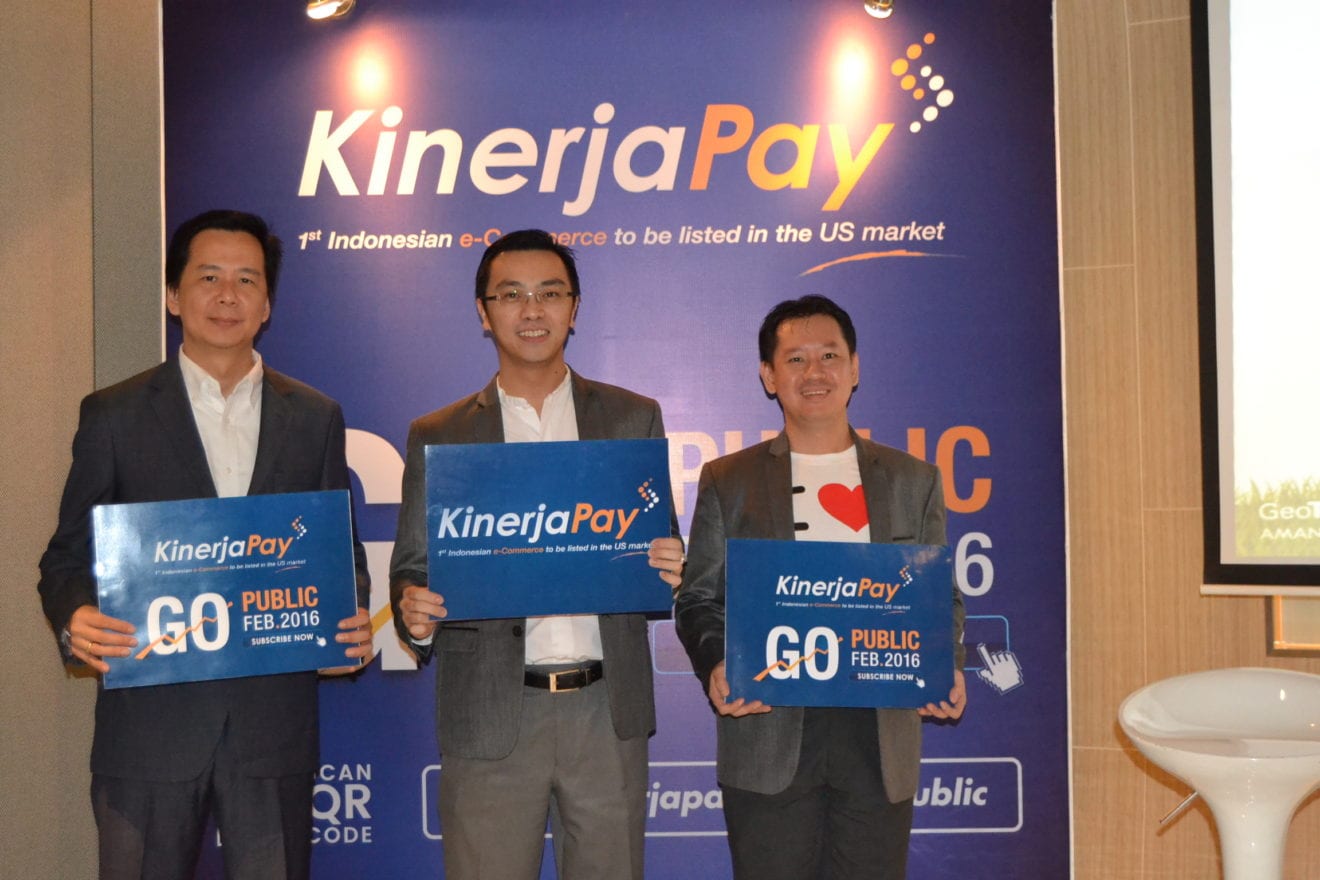
    KinerjaPay, today announced that it established its new wholly-owned subsidiary, PT Kinerja Pay Indonesia, with offices located in Jakarta city, Indonesia. The new Subsidiairy was organized under Indonesian Incorporation Law Article No.34, dated 14 April 2016, and Principal License from Indonesia Investment Coordinating Board (BKPM) No.909/1/IP/PMA/2016 dated 06 April 2016. The Company has also appointed Mr. Deny Rahardjo as Chief Executive Officer (CEO) of PT Kinerja Pay Indonesia.

    Mr. Edwin Ng , Chairman and CEO for KinerjaPay Corp. stated. “We are extremely excited that Mr. Rahardjo accepted his appointment as CEO of our new subsidiary, PT Kinerja Pay. With his extensive experience in Information Technology and Business Management, Mr. Deny Rahardjo is the right person to manage and expand Kinerja Pay’s business operations in Indonesia. With Deny Rahardjo at our helm, we plan to grow our business and become one of the largest mobile payment and eCommerce providers in Indonesia. Since 2015, we have registered more than 35,000 active users with total of 170,000 transactions to date. We fully believe that Mr. Rahardjo, formerly a Microsoft, Polycom, and Telstra Executive in Singapore, will truly revolutionarize eCommerce in Indonesia and enable Kinerja Pay to become the most highly used and popular online payment solution/platform within the next several years, as well as expand its business opportunities throughout the SE Asian marketplace.”

    Mr. Ng further stated that “we chose to establish our initial business operations in Indonesia due to several economic factors, including its population size (est. 260 million according to Worldometers), user demographics, which consists of younger generations, and its ever-growing eCommerce market, which is expected to reach USD $3.8 billion by 2019.”

    With the growing trend of online shopping, Kinerja Pay will offer its users with convenient shopping experience as well as secure payment option. The Company also expects to launch several other applications to complement its mobile eWallet business by entering into other eCommerce verticals such as travel industry, fashion, online games, time-saver application, and many more.

    Notice Regarding Forward-Looking Statements

    This press release may contain forward-looking statements, about KPAY’s expectations, beliefs or intentions regarding, among other things, its product development efforts, business, financial condition, results of operations, strategies or prospects. In addition, from time to time, KPAY or its representatives have made or may make forward-looking statements, orally or in writing. Forward-looking statements can be identified by the use of forward-looking words such as “believe,” “expect,” “intend,” “plan,” “may,” “should” or “anticipate” or their negatives or other variations of these words or other comparable words or by the fact that these statements do not relate strictly to historical or current matters. These forward-looking statements may be included in, but are not limited to, various filings made by KPAY with the U.S. Securities and Exchange Commission, press releases or oral statements made by or with the approval of one of KPAY’s authorized executive officers.

    Forward-looking statements relate to anticipated or expected events, activities, trends or results as of the date they are made. Because forward-looking statements relate to matters that have not yet occurred, these statements are inherently subject to risks and uncertainties that could cause KPAY’s actual results to differ materially from any future results expressed or implied by the forward-looking statements.

    Many factors could cause KPAY ‘s actual activities or results to differ materially from the activities and results anticipated in such forward-looking statements, including, but not limited to, the factors summarized in KPAY ‘s filings with the SEC. In addition, KPAY operates in an industry sector where securities values are highly volatile and may be influenced by economic and other factors beyond its control. KPAY does not undertake any obligation to publicly update these forward-looking statements, whether as a result of new information, future events or otherwise. Please see the risk factors associated with an investment in our securities which are included in our Annual Report on Form 10-K as filed with the U.S. Securities and Exchange Commission on February 11, 2016.

  • Asia Pacific Premium OTT Market Will Experience Exponential Growth Despite Challenges

    Asia Pacific Premium OTT Market Will Experience Exponential Growth Despite Challenges

    Vindicia, the leader in enterprise-class subscription billing, and Ooyala, a leading video, analytics, and advertising technology provider, today announced key findings from a study that explores the Asia Pacific (APAC) market opportunity for premium over-the-top (OTT) services. Conducted by top research and strategy consultancy, MTM, the findings reveal significant challenges to expansion due to broadband infrastructure and content localization, revenues are expected to grow strongly between now and 2019.

    The report explores the evolution of premium OTT in APAC, focusing on three key territories: Australia, Indonesia and Thailand. Over 80 participants, including a broad range of senior industry professionals, provided their perspectives on current and future market trends and developments.

    The study’s central finding was that despite challenges, APAC’s premium OTT market will undergo rapid growth by 2019: from around $85M in 2015 to $230M in Australia; from $7M to $40M in Indonesia; and from $8M to $45M in Thailand. Local service providers will own a significant portion of the market and will dominate in Indonesia and Thailand, while Netflix will be the dominant player in Australia.

    The study highlights three main challenges to premium OTT market expansion:

    • Broadband infrastructure. Industry executives believe broadband infrastructure challenges and limited access to affordable fixed-line services are significant barriers to growth. In Australia, the average connection speed is 8.2 MBps, about half that of the UK and US. Thailand has a similar average of 9.2 MBps, but only 9 percent of consumers subscribe. In Indonesia, there is only 1 percent broadband penetration with an average speed of 3.9 MBps. Participants view APAC as a mobile-first market.
    • Content localization. Despite the appeal of international content, respondents believe local-language programming is essential to the proliferation of premium OTT services in Indonesia and Thailand. Furthermore, they expect stiff competition among local pay-TV providers over licensing of existing local content libraries.
    • The Netflix Factor. While the presence of Netflix will drive OTT market expansion in general, consumers will struggle with Netflix’s one-size-fits-all offering. Because of this, there will be a period of uncertainty as consumers choose between standalone Netflix and competing offerings from local content providers, whose multiplatform and bundled packages ultimately may prove more appealing.

    “There’s no doubt that Asia Pacific is a hotbed of premium OTT service expansion that will evolve based on regional nuances, tastes and economics,” said Bryta Schulz, Vindicia senior vice president of marketing. “The next 12 to 24 months will function less as a test of whether or not premium OTT will take off, but more as a measure of how it will penetrate popular appetites. Among the creative and flexible approaches to generating reliable revenue, service providers will need platforms that can accommodate a range of content delivery and payment preferences. This is where solutions from Ooyala and Vindicia become vital.”

    “Intensifying OTT competition and major market consolidation, like what we’re seeing in Australia, are key identifiers of an industry on the crux of a massive opportunity,” said Vice President and General Manager of APAC for Ooyala, Keith Budge. “APAC OTT providers must build a rich, personalized user experience with unique content offerings that are competitively priced, and further, have a data-driven approach to understand audience behavior and preferences. Having analytics and insights will be a major differentiator to drive revenue and reduce churn as new OTT services launch into the market.”

    “The study provides a snapshot of industry perspectives about the prospects for premium OTT across the region. Local executives are positive and excited about future market prospects – and expect local players to perform strongly, especially in Thailand and Indonesia,” said Jon Watts, managing partner and co-founder at MTM. “International providers will need to find ways to partner with local pay-TV providers, telcos and ISPs to gain traction with local customers.”

  • Tourists claim tour rates in Raja Ampat expensive

    Tourists claim tour rates in Raja Ampat expensive

    Some tourists have assessed that the tour rates offered in Raja Ampat, West Papua, were expensive, and it was feared to affect other travelers keen on visiting this tourist area.

    “Raja Ampat is much more beautiful than Bali, but the tour rates are also more expensive as compared to Bali,” Sami Ninggoroh, a tourist of Indian descent who visited Raja Ampat along with some Japanese tourists, stated on Tuesday.

    According to Ninggoroh, the rates of the Raja Ampat tour should be reconsidered as it is quite high, and the high prices will have a major impact on the number of visitors to the area.

    “We have ever been to Bali and found that the services offered there were better, and the travel rates were cheaper as compared to Raja Ampat,” he pointed out.

    Further, Ninggoroh opined that tourists visiting Bali will certainly want to revisit it, but ironically, visitors to Raja Ampat will think twice to return as it is quite expensive.

    He noted that besides being costly, there were other issues in Raja Ampat that should be addressed, especially with regard to the services, so every visitor will feel comfortable and will crave to come back.

    “The services offered by the people of Bali to the tourists are very good as they highly value the tourism sector. They serve the tourists as best as possible, and the same thing should also be applied in Raja Ampat,” he emphasized.

    Ninggoroh stated that Raja Ampat, as a marine tourism attraction, was already popular across the world, but the offered tourism packages should be made cheaper, so that tourists would yearn to revisit the region.

    “The local governments must lower the tour rates and improve the tourism supporting facilities, so Raja Ampat is thronged by as many visitors as Bali,” he added.

  • Five million more households to use gas for fuel

    Five million more households to use gas for fuel

    The government hopes to built gas pipe networks for 5 million household consumers in the next 10 years at a cost of Rp70 trillion.

    Utilization of gas as household fuel is more efficient, said Energy and Mineral Resources Minister Sudirman Said, when commissioning the ground breaking ceremony to mark gas network projects here on Monday.

    In five years or by 2019 networks of gas pipes are expected to be already installed for 1.3 million households with an investment of Rp18.2 trillion.

    The projects would be financed with funds from the state budget, state-owned energy company PT Pertamina and state owned gas company Perusahaan Gas Negara (PGN).

    With 1.3 million households using gas for fuel , the country is estimated to save Rp936 billion a year, the minister said.

    Most households and commercial consumers in urban areas in the country use liquefied petroleum gas (LPG), which is relatively expensive.

    Based on the availability of gas and infrastructure of transmission pipelines in 38 cities , gas could be distributed to around 7.9 million households with a cost of Rp111.3 trillion, Sudirman said.

    So far the government already built gas pipe networks serving 204,766 households in a number of cities in Indonesia including pipes built by Pertamina and PGN.

  • Indonesian Embassy Introduces Ijen Coffee in New Zealand

    Indonesian Embassy Introduces Ijen Coffee in New Zealand

    The Indonesian Embassy in Wellington held the “Coffee Talk and Coffee Cupping” event to promote Indonesian coffee by brewing Java Arabica coffee from Mount Ijen, Banyuwangi.

    “The presence of Ijen Coffee will add more variety to coffees served in cafes in Wellington, which is known as the world’s capital of coffee,” said Jose Tavares, New Zealand Ambassador to Indonesia.

    Tavares added that Indonesians should be grateful because the country has numerous variety of specialty coffee from Aceh to Papua.

    The event was attended by representatives from several coffee companies in Wellington. They also provided with the chance to taste the flavor of Ijen Coffee during the coffee cupping event.

    The event is also expected to increase Indonesia’s coffee export to New Zealand, which reaches up to a monthly average of 60 tons in 2015.

  • Hang Seng Index Registers Sharp Weekly Losses

    Hang Seng Index Registers Sharp Weekly Losses

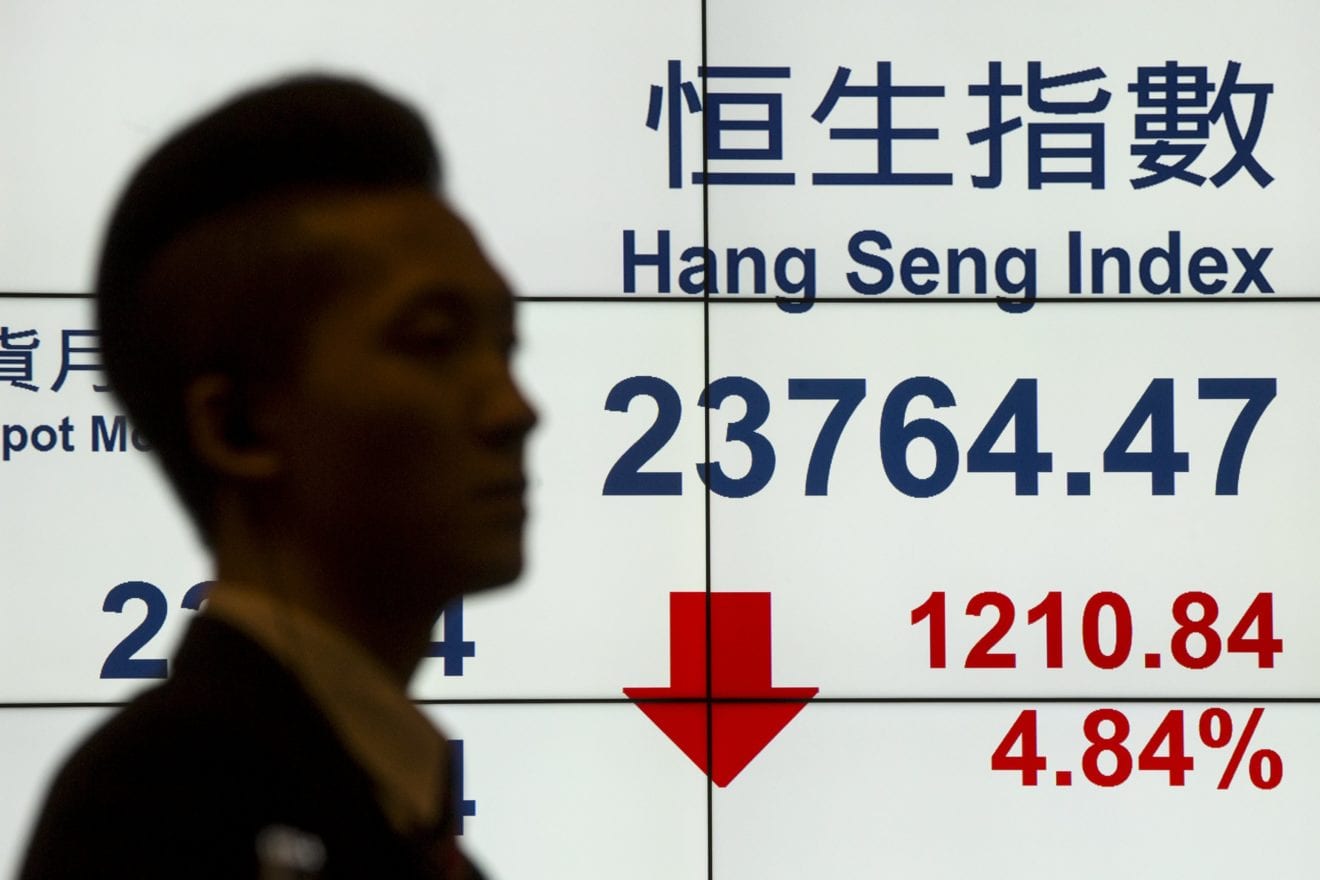
    Hong Kong shares continued to move lower on Friday with the fifth successive daily Hang Seng retreat and sharpest weekly decline for close to three months as confidence deteriorated further.

    US equity markets were unable to make any significant impression on Thursday with marginal losses in the S&P 500 index and weakness in Asian markets. Oil prices were subjected to choppy trading conditions with slight net losses.

    There were further concerns surrounding the Chinese economic outlook with fears that stronger data in March and April would not be sustainable. Sharp declines in mainland Chinese equity markets also had an important impact in undermining Hong Kong confidence.

    Hong Kong retail sales data, released after Thursday’s market close was weaker than expected with a 9.8% annual decline in the year to March, the 13h successive decline with domestic demand subdued and weakness in international arrivals. There were some hopes that a weaker yuan in trade-weighted terms and recent dollar losses would help improve competitiveness and cushion the retail sector from further selling pressure.

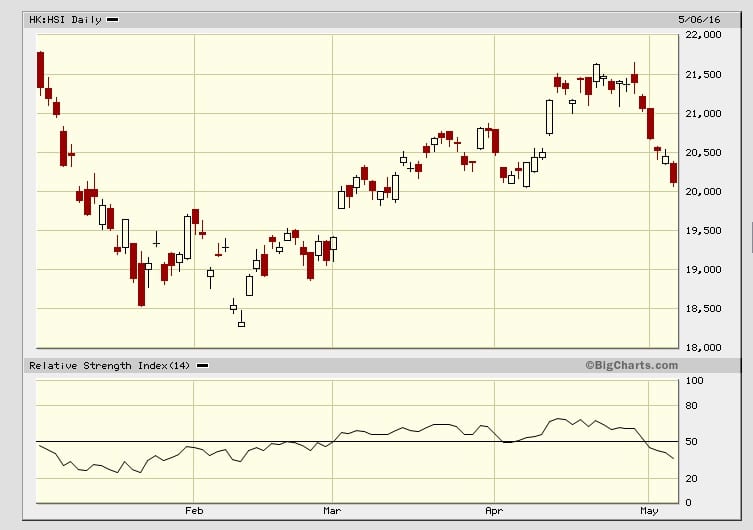
    After opening significantly lower the Hang Seng index moved steadily weaker during the morning session with lows close to 20,150 ahead of the break. Buyers were unable to make any impression during the afternoon session and there was fresh selling late in the session. The index closed with a loss of 339.95 points and 1.66% at 20109.87, the weakest close since the second week of March.

    There were daily losses of over 2.00% for the finance and property sectors and the utilities sector also edged slightly lower despite gaining defensive support. HSBC and AIA dipped significantly lower during the day. The China Enterprises index fell 1.80% for the day, also the fifth successive retreat.

    Friday’s US employment data will be important for global markets with a particular focus on the dollar, which will influence regional markets next week. China’s trade and international reserves data is scheduled over the weekend, which will have an important impact on confidence surrounding the Chinese economy and equity markets with any decline in exports undermining sentiment.

    Hang Seng Daily Chart

    hangseng daily chart 06-05-16

  • Gucci sorry for warning to Hong Kong funeral offering shops

    Gucci sorry for warning to Hong Kong funeral offering shops

    Gucci and its parent company apologized Friday after drawing heavy criticism for warning some Hong Kong shops not to sell paper offerings for the deceased that resembled the fashion brand’s luxury products.

    The brand and its Paris-based owner, Kering, also said in a statement that they regretted any misunderstanding caused by the letters, which were sent to six shops last month.

    After meeting with the shop owners, “Kering and Gucci would like to reiterate their utmost respect with regards to the funeral context,” the statement said.

    In Hong Kong and some other parts of Asia, people burn paper offerings at funerals and during grave-sweeping festivals for deceased relatives to “use” in the afterlife.

    Specialty shops near funeral parlors sell a diverse array of paper offerings, including bundles of “hell money,” mansions, iPhones, cars, cigarettes and designer handbags, cans of beer and soda, mahjong tables and dogs and cats.

    The letters, which were sent as part of the companies’ global intellectual property protection efforts, did not suggest legal action or compensation because they did not believe the shop owners intended to infringe on the Gucci trademark, the statement said.

    Gucci operates 11 boutiques in Hong Kong and is one of the brands most coveted by shoppers, including many visiting from mainland China, where luxury goods are more expensive because of higher taxes.

  • Hong Kong Sees Signs of Improving Retail Sales

    Hong Kong Sees Signs of Improving Retail Sales

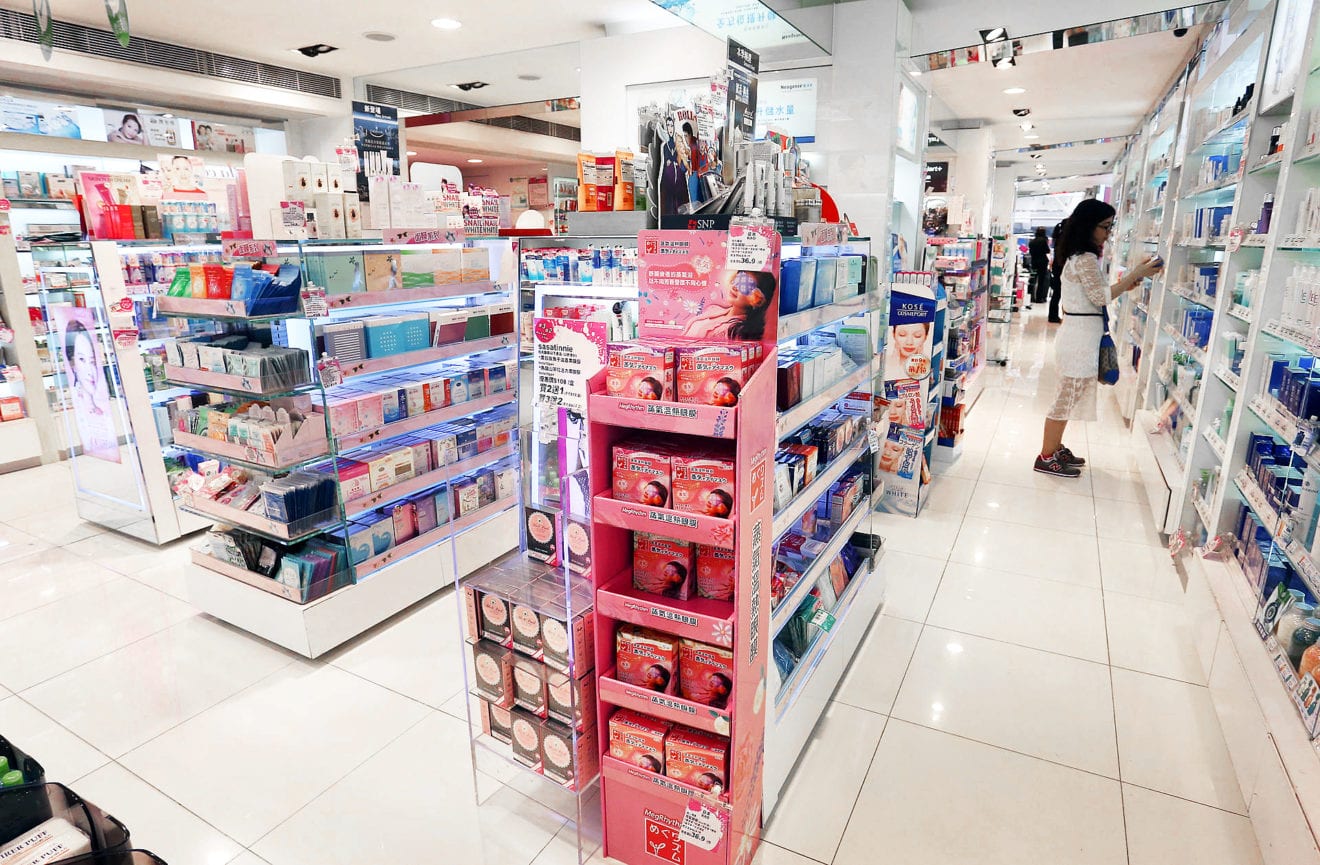
    The latest figures show retail sales in Hong Kong continued falling in March. However, signs of improvement are in sight, with sales of drugs and cosmetics rising slightly.

    However, the biggest question on the minds of many in Hong Kong is how long the overall downturn in Hong Kong’s economic fortunes is going to continue.

    Retail sales in Hong Kong have been suffering through a year-long contraction, the longest decline since 1999. Overall retail sales are down around 10 percent in March compared to a year ago. However, March’s figures are far better than the 20-percent drop in sales registered through February.

    Through the first quarter of this year, retail sales in Hong Kong have fallen 12.5 percent compared with the same period last year. The Hong Kong government attributes the severe drag on retail sales to the slowdown in inbound tourism.

    However, there are some signs of life for the struggling city. The just-concluded three-day May Day holiday saw tourism numbers from the mainland come in 10 percent higher than most observers had been forecasting.

    At the same time, cosmetics firm Sasa has registered a slight growth in same-store sales. Cheng Wai Hung, Head of Hong Kong’s Retail Management Association, says even though there are signs of improvement, retailers still need to do more to keep people buying.

    “Retailers know it is hard to run businesses this year, so stores will start promotions earlier than usual to make up for the losses. It is likely that we will see sales starting from this month. Even some big brands will follow suit.” However, Banny Lam, co-Head of Research at Agricultural Bank of China International Securities, believes retail sales in Hong Kong are not likely to pick up in the short term.

    “I believe the rate of decline will narrow a little bit, but it won’t be a significant change, and sales won’t get back to positive territory any time soon. The current economic environment is rather weak, which has led to a sluggish overall retail performance. Another factor that’s worth noting is that the Disneyland in Shanghai is going to open soon. So the question is, is this going to affect Hong Kong’s tourism? ”

    At the same time, Deputy Director of Hong Kong Department Stores and Commercial Staff General Union, Tung Cheong Sing, says retailers in Hong Kong have to transform their business models to appeal to the changing demands of mainland tourists.

    “For example, stores should be selling middle or low-range priced watches, rather than luxury ones. Despite a decline in rents, many stores may have to close down some of their branches to adapt to the new environment.”

    Even though times have been tough for Hong Kong retailers, some are performing better than others.

    One store selling Japanese products has witnessed a 30 percent spike in sales through the first three months of this year.

    Store Manager Chuang Tin Chi says they’ve been able to keep their finger on the pulse of what’s been trendy this year.

    “There have been a number of movies released over the past couple of months which have featured a wide range of digital, video products or cell phone accessories. So to capitalize on that, we order in these products right away into Hong Kong from Japan, which has significantly increased our sales.”

    One bright spot for Hong Kong retailers has been the recent rise in the value of the renminbi to the US dollar, as the Hong Kong dollar remains pegged to the value of the greenback.

    This means mainland shoppers are getting a more favorable exchange rate when converting from the yuan into Hong Kong dollars, which may prompt more shoppers to cross the border.


  • SM Retail sales boosted

    SM Retail sales boosted

    SM Retail sales grew across all operations – which consist of both SM Markets and The SM Store.

    Total sales grew 8 per cent to P48.8 billion (US$1.0 billion) in the first quarter, while net income rose 16 per cent  to P1.5 billion.

    SM’s food retail business continued to expand, adding five new stores. At the end of March, SM Retail had 314 stores comprising 53 The SM Stores, 45 SM Supermarkets, 44 SM Hypermarkets, 140 Savemore and 32 WalterMart stores.

    Two acquired Cherry Foodarama grocery stores are now fully operational inside SM Cherry malls in Shaw and Congressional Avenue.

    SM earlier announced the merger of SM Retail with a group of specialty retail stores such as Ace Hardware, SM Appliance Center, Homeworld, Our Home, Toy Kingdom, Watsons, Kultura, Baby Company and Sports Central. The combined entity will have over 1900 outlets and 2.4 million sqm of GFA.

    “We are pleased with SM’s strong underlying growth in the first quarter as consumer spending continued to be vibrant and sentiment about the Philippine economy remains strong. Our continuing efforts to improve efficiencies in all our businesses have also helped ensure solid earnings growth,” SM president Harley Sy said.

    SM Investments posted a 12 per cent growth in recurring net income in the first quarter of 2016. Consolidated net income (including non-recurring items) stood at P7.0 billion for January to March, up 3.6 per cent from P6.7 billion year-on-year. Consolidated revenues grew 7 per cent to P69.8 billion for the first quarter.

  • Under Armour in trademark fight with Uncle Martian

    Under Armour in trademark fight with Uncle Martian

    Uncle Martian, a new competitor for sportswear brand Under Armour in one of its main markets, China, is in hot water for co-opting the US company’s logo.

    Under Armour uses a U over an inverted U that intersect to form a stylised A. Uncle Martian has the same two-U configuration, but the letters do not touch.

    Apparel manufacturer Tingfei Long Sporting Goods in Fujian province, in southeastern China, is the company behind the new brand, which is offering shoes in its first foray into athletic wear.

    Executive Huang Canlong says the brand aims to be associated with “comfort, excellence and innovation”. He told Shoes.net.cn he wants to create a high-profile brand with “high standards”.
    Out of Baltimore in the US, Under Armour has seen its sales in China almost triple in the first quarter of this year compared with the same period last year.

    Meanwhile, Chinese consumers have been criticising Uncle Martian for its blatant hijack of the Under Armour logo.

    “How come you can’t even design a logo? All you do is plagiarise – don’t you feel it’s disgusting?” one critic wrote on Weibo.
    Another Weibo user, Zhang Gemeng, has pointed out that such blatant copying goes against the national policy of encouraging homegrown creativity.
    “Don’t blame people when they say they look down upon domestic brands,” wrote another user, indicating the move as a “loss of face” for China.

    Under Armour, of course, is also unamused and is pursuing “all business and legal courses of action” according to spokesperson Diane Pelkey.

    “Uncle Martian’s uses of Under Armour’s famous logo, name and other intellectual property are a serious concern and blatant infringement.”

  • Esprit sales flat

    Esprit sales flat

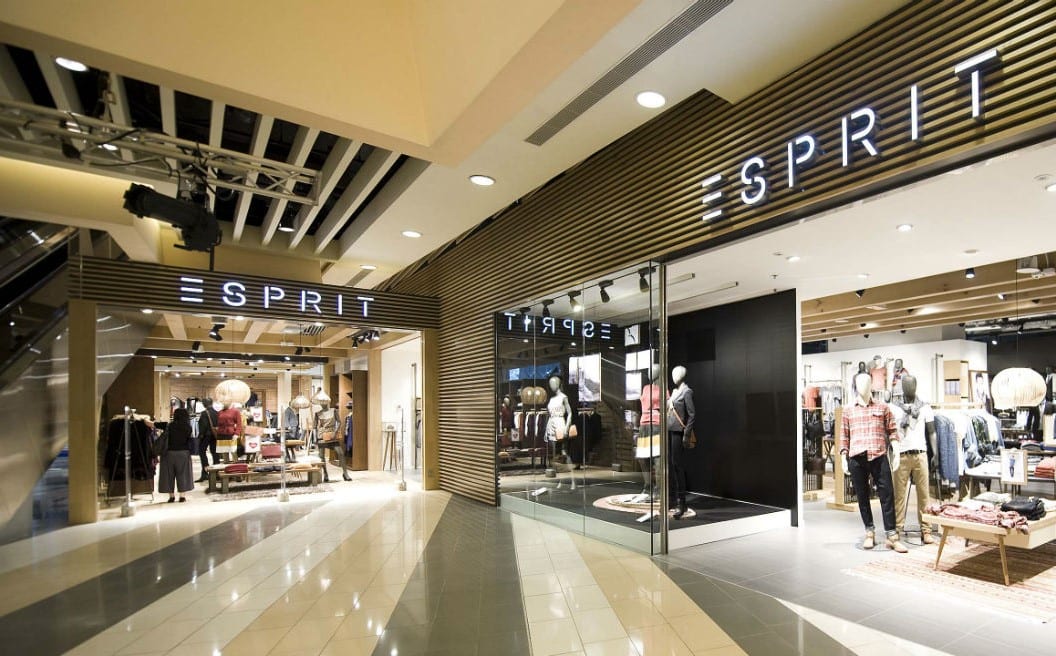
    Reporting “flat” revenue for its third quarter, Hong Kong-listed clothing retailer Esprit Holdings points the finger at negative growth in its Asia Pacific stores, as well as weakness in its wholesale channel.

    There was a marginal decline of 0.1 per cent in Esprit sales for the three months but the company continued to benefit from improved product performance, as well as improved marketing and channel operations.

    Retail revenue (63.3 per cent of the group’s income) grew 3.1 per cent year-on-year, primarily driven by the European region.

    Particularly encouraging for the group was the continuation of the positive trends in several areas. The women’s divisions (including Esprit and EDC branded products) had retail revenue growth of 6.6 per cent for the quarter; plus comparable stores sales growth (including online) was up 10.3 per cent; while online sales totalled HK$984 million (US$126.8 million) – 35.4 per cent of the group’s retail revenue and an increase of 11.7 per cent.

    Performance, meanwhile, was still weak in Asia Pacific (15.2 per cent of the group’s revenue), with revenue tumbling 15.3 per cent.

    Esprit says the performance of Asia Pacific continued to be undermined by a combination of unfavourable macro-factors, including volatility in the financial markets, weak consumer sentiment amid the slowdown of economic growth in China, and reduced tourist flow in the region.

  • Estee Lauder to axe up to 1200  jobs

    Estee Lauder to axe up to 1200 jobs

    Beauty giant Estee Lauder has announced a multi-year initiative named Leading Beauty Forward to build on its strengths and better leverage its cost structure to free resources for investment to continue its growth momentum.

    The plan involves the reduction of between 900 and 1200 jobs – about 2.5 per cent of its workforce – and restructuring on a number of fronts aimed at saving US$250 million to $300 million in overheads.

    “Leading Beauty Forward is designed to enhance the company’s go-to-market capabilities, reinforce its leadership in global prestige beauty and continue creating sustainable value,” the company said in an announcement coinciding with its latest quarterly financial results.

    Globally, net sales for the company’s third quarter to March 31 totalled US$2.66 billion, a 3 per cent increase compared over the $2.58 billion in the prior-year quarter. Net earnings were $265.6 million, down on the $272.1 million of last year.

    Fabrizio Freda, president and CEO of Estee Lauder, said: “We are launching this initiative from a position of exceptional strength. With the aid of our 10-year compass, we are proactively anticipating long-term industry trends and positioning our brands in more promising and faster growing areas. Leading Beauty Forward should further position us better to continue winning on a complex global stage and generate savings to help sustain our long-term sales growth and margin progress.

    “This initiative is expected to provide further resources to invest in brand growth, increase speed-to-market and flexibility in resource allocation, and better leverage growth for continued profitability improvement,” he concluded

    Leading Beauty Forward will begin during the company’s current quarter. Specific initiatives are expected to be approved through to the end of the 2019 fiscal year and be complete by 2021. Key actions include:

    • Better leveraging growth through cost savings, more scalable processes and organisational design;
    • Redesigning select areas of the company’s go-to-market brand, region and affiliate organisations to strengthen capabilities in areas such as digital and retail;
    • Redesigning and restructuring select corporate functions that support the company’s brands, channels and geographies through the development of scalable global and regional shared services with a more efficient cost base;
    • Investing in brand growth, such as new products, social media, communications, in-store merchandising, point-of-sale activities and advertising.

    The company expects to take restructuring and other charges of between $600 million and $700 million, before taxes, consisting of employee-related costs, asset write-offs and other costs associated with implementing these initiatives.

    Estee Lauder said the job cuts will take into account the elimination of some positions, retraining and redeployment of certain employees and investment in new positions in key areas.

  • Lazada Malaysia claims double-digit growth

    Lazada Malaysia claims double-digit growth

    Online retailer Lazada Malaysia claims it had at least double-digit growth in sales last year, yet is still losing money.

    It was a challenging year for retail, says CEO Hans-Peter Ressel of Ecart Services Malaysia, the company behind Lazada Malaysia.

    He says the focus is now on making Lazada’s service more accessible to the “general masses”, particularly those in east Malaysia, starting with improving its logistics and distribution centres in east Malaysia, where the company had 80 per cent sales growth last year.
    However, this growth was lower than in other regions, which saw at least 110 per cent year-on-year growth, says Ressel.

    He says Lazada would appeal to most Malaysians because of its affordability, accessibility and convenience. With its complex supply chain, Lazada and its 10,000 third-party sellers can now offer products below store prices, and many of the 5.5 million items on sale are not even available in stores in Malaysia.

    Lazada had the most application downloads of e-tailers in Malaysia, 2.3 million as at the end of December. Second is 11street.my at half of Lazada’s downloads, while fashion application Zalora had 700,000 downloads.

    Malaysia has 10.3 million smartphone users, according to mobile marketing firm Vserv.
    Ecart Services wants to double its items in inventory to 10 million stock-keeping units this year. The company will also have a third warehouse 16 times larger than its first warehouse in Subang Jaya, plus there is another warehouse and distribution centre in Sarawak.

    Ecart Services’ new loss blew out by 72.94 per cent to RM87.54 million (US$22.28 million) in the financial year ended December 31, but its its top-line growth of 142.22 per cent saw record sales of RM114.81 million from RM47.4 million the previous year. Ressel says the company has yet to break even.

    Following Alibaba Group Holdings’ purchase of Lazada Group, founded by Germany’s Rocket Internet in 2012, Ressel said he looks forward to more synergies between the two eCommerce giants.

    “With Alibaba’s eCommerce knowhow, systems and processes, we will also be better able to help our sellers grow their businesses.”

  • Robotics roll into Indonesian retail with launch of Sphero in Jakarta

    Robotics roll into Indonesian retail with launch of Sphero in Jakarta

    Global robotics firm Sphero has signed a distribution agreement with Halo Robotics to distribute Sphero’s full range of robotic gaming systems in Indonesia.

    Sphero is the creator of intuitive smartphone-controlled robots such as the BB-8 app-enabled Droid popularized in Star Wars, whose enormous popularity has defined a new product category, “connected play.”

    Sphero’s  engaging robotic toys roll and jump in response to voice and app controls, and that constantly improve with regular software updates.

    New products and apps, include Ollie, a rebellious, cylindrical robot that rolls at speeds of up to 15 mph; and SPRK, a clear shelled Sphero, that when coupled with the Lightning Lab app, teaches foundational programming through STEM activities.

    “This is an exciting time for Sphero, and we are excited to celebrate the launch of our long-term connection with Indonesia,” said Aurelien Joly, Sphero’s APAC Channel Director.

    Halo Robotics said the connected play toy market has grown dramatically over the last several years and appeals to a full range of consumer audiences.

    Nearly half of Indonesia’s population of 249.9 million are under the age of 30, with among the world’s fastest-growing consumer demographics for Sphero products. Famously tech-savvy, over 100 million Indonesians will be smartphone users by 2017, laying a strong foundation for app-controlled robots.