Author: Mei Ling Tan

  • Fortress Hong Kong flagship opens

    Fortress Hong Kong flagship opens

    Electronics chain Fortress has opened a 10,000 sqft flagship at Times Square.

    The AS Watson Group subsidiary, sells mobile phones and consumer electronics across Hong Kong and Macau. Its new Times Square store is spread over two floors – eight and nine – and split into themed areas.

    Fortress Times Square Hong Kong2

    A dedicated home theatre and TV zone is dominant and there is an area dedicated to demonstrating 3D printing technologies.

    There is also a dedicated Apple space.

    Fortress Times Square Hong Kong1

    Another unique feature of this Fortress Hong Kong store is a cafe serving fresh coffee and offering free WiFi.

    The store was opened by Hong Kong actor and singer Andy Hui.

    It’s been likened to “a digital theme park”.

  • Singapore retail sales stabilise

    Singapore retail sales stabilise

    Real Singapore retail sales rose 2.6 per cent in July over June and by 0.8 per cent year on year.

    That’s according to official government data after the sales of motor vehicles are removed from the figures.

    That follows falls of 3.9 per cent and three per cent in June, respectively.

    The total retail sales value in July 2015 was estimated at $3.5 billion, higher than the $3.3 billion in July 2014.

    Singapore retail chart 1509

    Year on year, sales of watches & jewellery fared the best, up 11.7 per cent. Retail sales of medical goods & toiletries, telecommunications apparatus & computers, recreational goods and department stores all rose between three and 10 per cent.

    In contrast, retail sales of petrol service stations decreased 16.4 per cent; sales of furniture & household equipment, optical goods & books, mini-marts & convenience stores, food & beverages, wearing apparel & footwear and supermarkets declined between 0.8 per cent and 5.5 per cent.

    After seasonal adjustment, month on month sales of wearing apparel & footwear, furniture & household equipment, supermarkets and petrol service stations declined between 0.7 per cent and five per cent.

    Watches & jewellery, medical goods & toiletries and recreational goods increased between 10.6 per cent and 13.4 per cent compared to June. Sales of telecommunications apparatus & computers, optical goods & books, food & beverages, mini-marts & convenience stores and department stores rose between 0.7 per cent and 8.2 per cent.

    Singapore retail chart -1509

    Meanwhile, sales of food and beverage services (seasonally adjusted) increased 3.1 per cent in July 2015 over June, but declined one per cent year on year. The total sales value of food & beverage services in July 2015 was estimated at $640 million, lower than the $647 million in July 2014.

  • Singapore’s Changi seeks retail tenants

    Singapore’s Changi seeks retail tenants

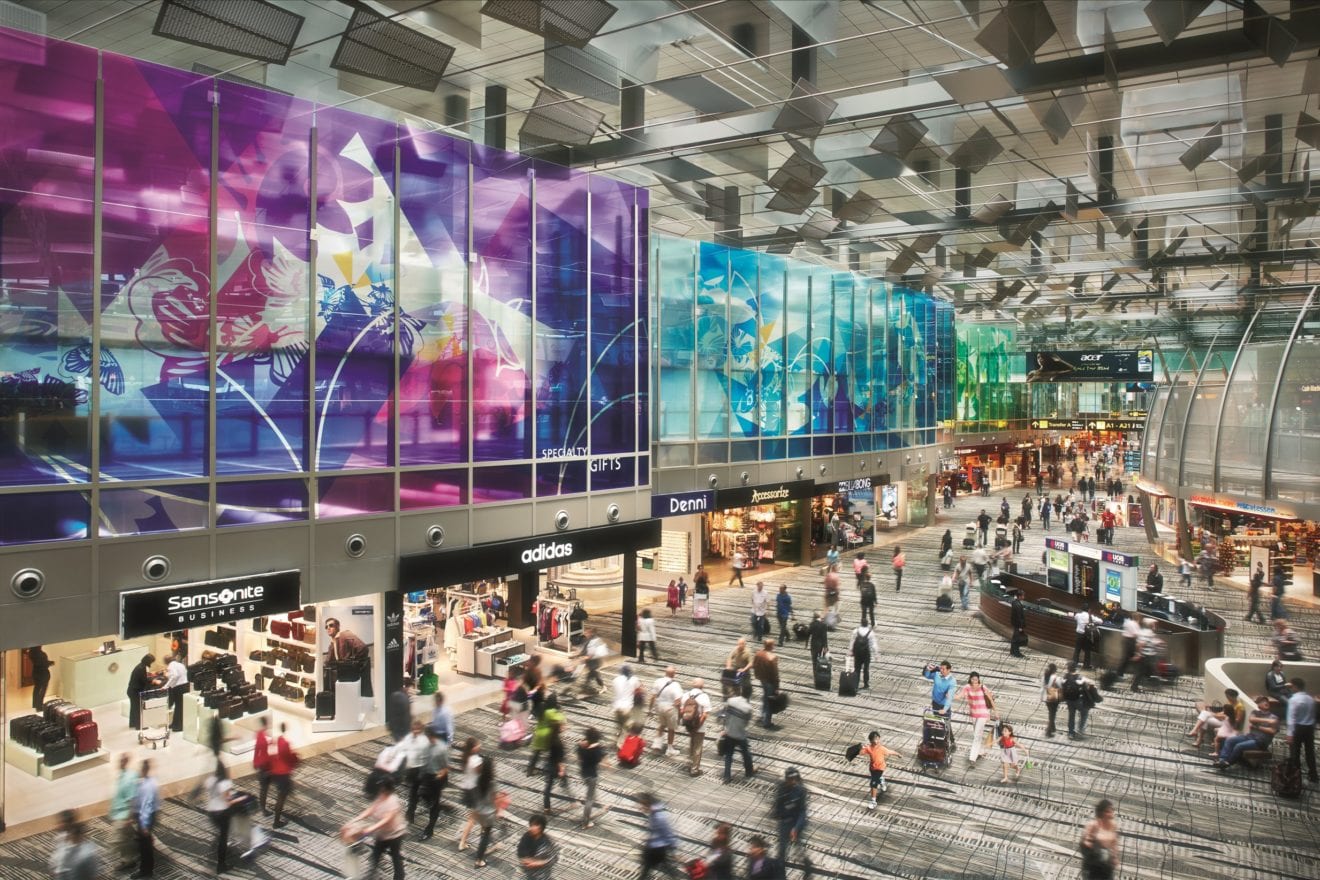
    Changi Airport is seeking new retailers for concessions in Terminals 2 and 3, along with food and beverage operators.

    The airport has a fashion concession available in Terminal 2 within the departure/transit lounge area for which it says it is seeking a multi-brand boutique from a retailer capable of delivering “a luxurious shopping experience”.

    The space is 519 sqm with a contract period of three years. Changi says the space can incorporate store-in-store concessions for individual brands.

    In Terminal 3 it has an open category concession, meaning it is open to approaches from retailers in any category. That 25.4 sqm space is on Basement 2 in the northern end of the terminal, and also has a three year term.

    “We are looking for brands with proven track record over the years that will differentiate the retail offering at Terminal 3,” said CAG in its documentation.

    Submissions close on September 21.

    Meanwhile, the airport is seeking a range of food and beverage operators – including Chinese restaurant, a food court solution and a canteen.

    The deadline for submissions for these spaces range from September 28 to October 15.

  • Indonesian HR startup Talenta snaps up funding from Fenox and East Ventures

    Indonesian HR startup Talenta snaps up funding from Fenox and East Ventures

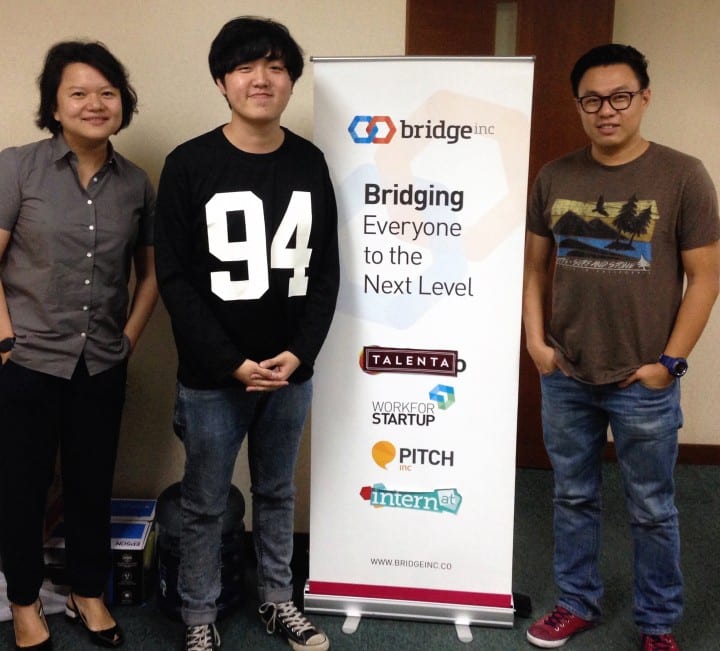
    Indonesian cloud-based human resources management startup Talenta announced earlier today it raised a bridge funding round of an undisclosed amount. The round was led by Fenox Venture Capital and participated in by existing investor East Ventures. Talenta says the funding will be used to ramp up hiring, bolster sales, and increase marketing efforts.

    Since inception, the startup has managed to garner several tech clients in Southeast Asia, including some well-known firms like Go-Jek, GrabTaxi, TopasTV, FlowerAdvisor, Qraved, MicroAd, Kudo, ShopDeca, and more. “It has been a roller­coaster ride for the past six months for Talenta but we finally managed to get a product­-market fit,” says founder Joshua Kevin. “I believe that the trend is with us. SaaS is going to be the new standard”

    Last September, Kevin told that the company’s original concept was to provide varied services for local startups including public relations, community outreach, and events organization. But soon after, following a seed investment from Grace Tahir and East Ventures, Talenta moved its core focus toward human resource services only. It launched in beta the following February.

    “It’s been exciting to see Talenta’s progress this year. They’re hitting a billion-dollar industry with full force by offering a tool to help tackle one of the biggest verticals most Indonesian businesses struggle with today,” says Anis Uzzaman, partner at Fenox.

    Following the funding round, Talenta plans to expand its monetization method from subscriptions only to include transaction-based revenue. Kevin did not reveal exactly what transactions Talenta will monetize, or what the profit margins could look like, but he did say Talenta will likely work with Jakarta fintech players like CekAja, HaloMoney, and Cermati to help its users apply for products like loans and credit cards.

    “It was a natural movement for us as we grow from product to platform,” explains Kevin. “The subscription-based model has limitations in and of itself while [the] transactional [model] has huge potential.” With more than 1,500 employees on Talenta, the startup is also pushing to partner up with large companies instead of focusing on SMEs only. In the past, Kevin cited Talenta’s focus on small and medium-sized businesses as the company’s core offering.

    Talenta has also launched its software with a new design. It has added more features, including an employee self service option for leave, overtime, and reimbursement requests. Now that Talenta is gunning for larger enterprises, it will likely start to see more direct competition from the likes of international players like Oracle, SAP, DataOn, and SunFish HR.

  • AirAsia flying high again

    AirAsia flying high again

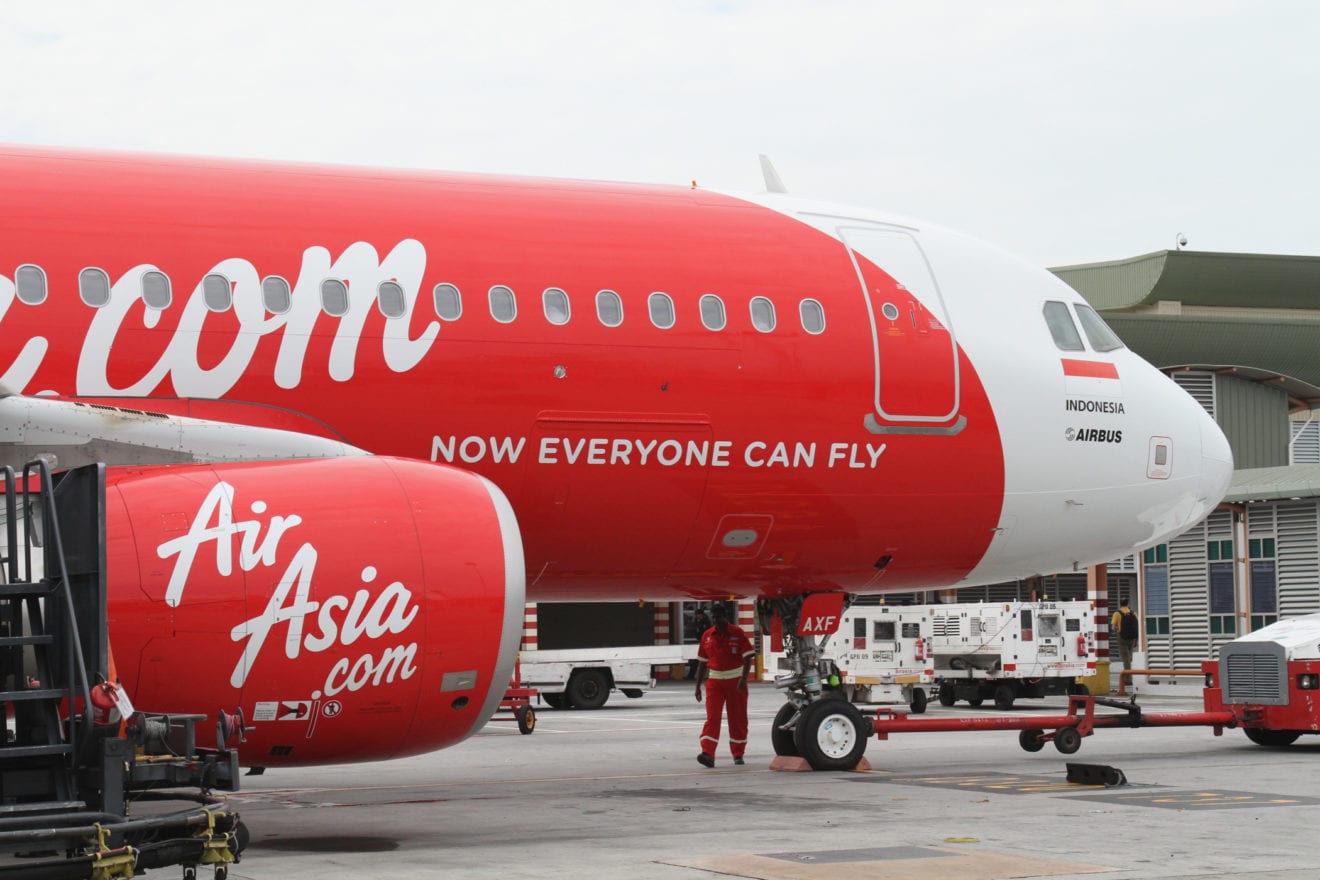
    AirAsia Bhd has been facing strong headwinds lately. The budget carrier’s share price has been on a roller-coaster ride over the past couple of months, fluctuating dramatically.

    The airline’s shares have been under pressure for some time and plunged to 78 sen on Aug 26. Its share price has since rebounded sharply from that recent low, with analysts calling it an overshooting of its price during the selldown. AirAsia became a penny stock at the end of last month and stayed below the RM1 mark for about two weeks. Its share price has since rebounded, closing at RM1.31 yesterday.

    Year to date the counter has lost more than 50%.

    What triggered the quick recovery?

    Analysts say the recent selldown was overdone and the market has ignored the significant value of its portfolio comprising non-airline businesses within the group. In addition, they note that AirAsia’s fundamentals are intact and it is undervalued.

    Maybank Investment Bank Bhd analyst Mohshin Aziz concurs that the selldown was overdone and maintains a “buy” call on AirAsia with a target price of RM2.05.

    “It is a highly beaten down stock. Given the situation, it is the highest candidate (to be picked up by investors),” he tells StarBizWeek.

    Mohshin notes that AirAsia has been very active this year engaging the investment community by having meetings, teleconferences and so forth but to no avail as it shares continued to be beaten.

    “AirAsia is cheap. Cheapest in its history in US dollar terms and also the cheapest airline stock in the world currently,” he says.

    Mohshin says there is no point talking about valuations of AirAsia, as it is beyond fire sale.

    “We derived an alternative and tangible valuation methodology for AirAsia, given that the conventional ones are gaining no traction. We took the latest available appraised value of its fleet, net off its long-term debt and times it by the ringgit at RM4.3 to the dollar and we get an intrinsic value of RM1.34 per share. Basically, the metal value of the business is higher than the current market capitalisation.

    “Shareholders can make a nice 18% gain by just selling off the fleet whilst keeping the RM4.8bil of equity,” he remarks.

    It is worth noting that the US-based Wellington group of companies which had reduced their stakes in the low-cost carrier in June this year have started buying shares in AirAsia.

    According to the latest filings with Bursa Malaysia, Wellington Management International Ltd has 200.74 million shares, or 7.214% stake in AirAsia. Wellington Management Global Holdings Ltd has an indirect 228.19 million shares or 8.2% stake, while Wellington Group Holdings LLP has an indirect 278.99 million or 10.025% stake.

    The Employees Provident Fund (EPF) had on Sept 3 acquired 2.498 million shares in AirAsia but it disposed 892,500 on Sept 9.

    “AirAsia took a beating but it is now a V-shape recovery. Wellington and EPF are back. They have been buying and hopefully the worst is behind for AirAsia. The counter has been attracting high trading volume,” an analyst say.

    The turbulence comes not in just its shares being sold down. AirAsia is also battling with other issues such as the report by accounting research firm GMT Research that raised questions about related party transactions. GMT Research had highlighted problems with the company’s accounting practices and raised concerns regarding the firm’s cash flow, leverage and group structure.

    News that PT Indonesia AirAsia (IAA) may be shut down by the end of July also caused a panic among investors.

    AirAsia’s 49%-affiliate IAA has received a letter from Indonesia’s Transport Ministry laying out terms for it to ensure a positive equity position by July 31.

    Indonesia’s Transport Ministry has ordered 13 airlines to raise funds to reach positive equity positions out of concerns that a negative equity would affect safety oversight.

    Futhermore, the company’s latest quarterly results provided little cheer to investors. In the first six months to June 30, AirAsia’s net profit fell to RM392.36 mil from RM506.87 mil a year ago, with a relatively flat revenue of RM2.6bil.

    AirAsia is also battling the Malaysia Airport Holdings Bhd (MAHB) over its operations at KLIA2. It was reported that AirAsia and MAHB would be having a “peace dinner” at the end of the month to resolve their disputes.

    Analysts, however, are not too optimistic that their differences could be resolved over a dinner. “One dinner cannot bury the hatchet. We will just have to wait and see,” one analyst says.

    Analysts believe that another concern weighing down AirAsia is the continued weakening of the ringgit against the strong greenback as about 70% of operating expenses and 80% of debt are US dollar-denominated. So far this year, ringgit has weakened by about 20% year-to-date.

    “We believe that one overhang over AirAsia’s share price performance year-to-date is the weakening of the ringgit against the US dollar.

    “We estimate that 64% of operating expenses (jet fuel, MRO and aircraft leasing) are US dollar denominated. As 8% of operating costs are hedged to reduce the impact from US dollar over ringgit volatility, the impact of every 5% drop in the ringgit equals to an increase in operating cost by 3%. Separately, 73% of its US dollar borrowings are hedged,” MIDF Research says.

    At 50%, jet fuel constitutes the largest operating cost component for AirAsia.

    AirAsia’s exposure to spot jet fuel is 49% in fourth quarter 2015 (51% hedged) and 100% in FY16 (fully unhedged). Thus, the impact on a 5% drop in jet fuel price reduces operating cost by 1.2% in fourth quarter 2015 and 2.5% in FY16.

    MIDF Research also notes that daily short value on AirAsia has reduced from a daily average of RM706,000 in the first week of September to RM335,000 in the second week of September.

    “This is also a major improvement from RM1mil to RM2mil average seen in previous months. We also believe that short sellers have been covering their positions by buying back the stock as share price rose 60% off its 77 sen low, typical in a short-squeeze situation,” it says.

  • Nearly 40 percent of Asian food retailers unaware of logistics costs

    Nearly 40 percent of Asian food retailers unaware of logistics costs

    More than 1 in 4 food retailers in some of Asia’s fastest-growing economies expect to grow by 10 percent or more this year, according to research commissioned by DHL Supply Chain, the global market leader for contract logistics solutions.

    Based on interviews with more than 300 industry decision-makers in India, Indonesia, Thailand and Vietnam, Hungry for Growth: Logistics Trends in Asia’s High-Growth Food Retail Markets also found that the majority of food retailers – more than 6 in 10 – predict significant growth of 6 percent or more this year as a result of expanding populations and rising income levels.

    DHL_Supply-Chain_Micrographic_04-03

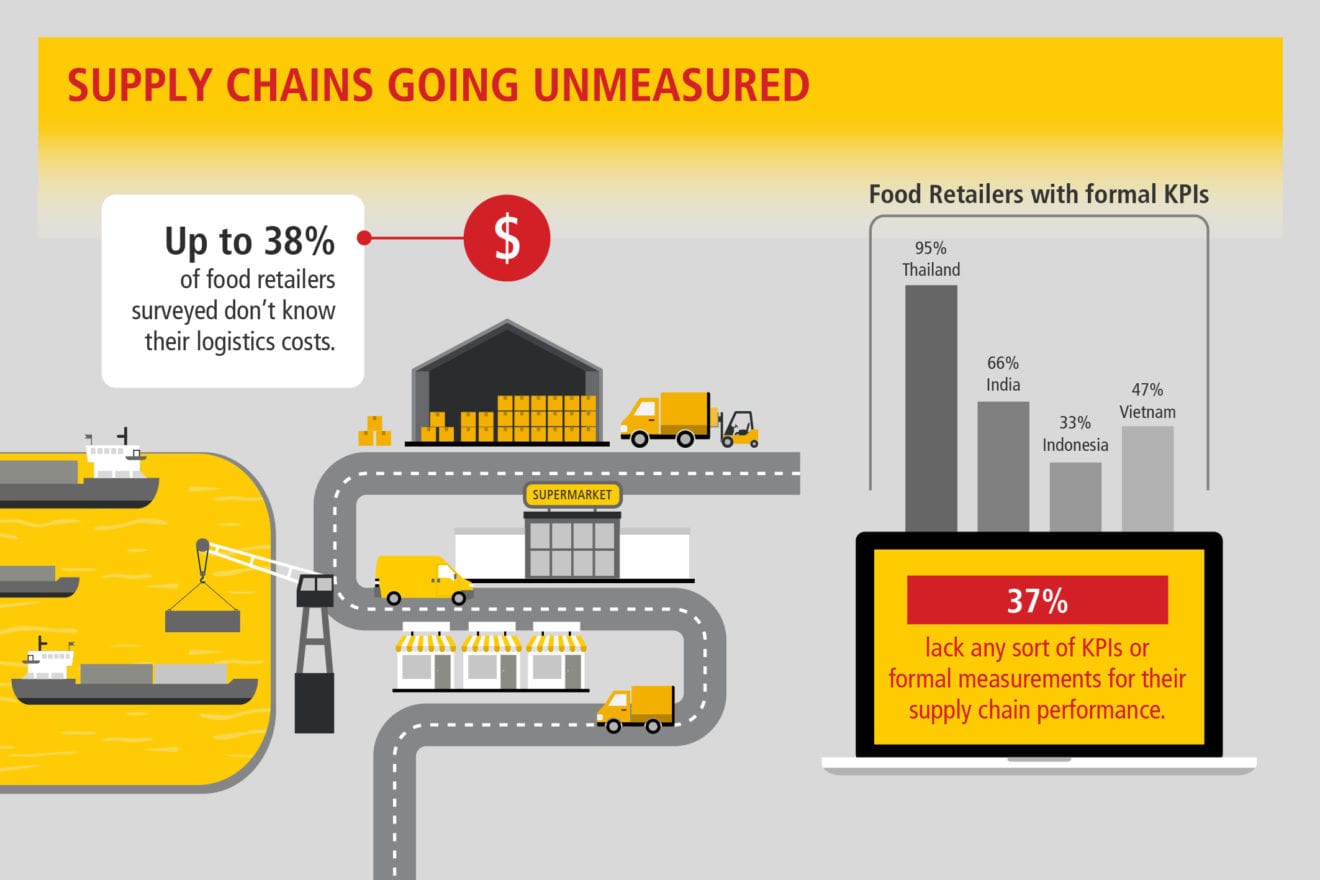
    However, the report also found that up to 38 percent of those surveyed were unaware of their total logistics costs, while 37 percent lacked any KPIs or formal measurements for their supply chain performance – potentially impacting their ability to keep shelves stocked and orders filled as demand and competitive factors grow increasingly complex.

    “Rapid increases in purchasing power, coupled with surges in demand driven by population growth, will yield obvious expansionary benefits to food retailers,” said Dean Eichorn, Vice President – Retail, DHL Supply Chain Asia Pacific. “However, any food retailer’s success is ultimately dependent on the agility of their supply chains when faced with demand volatility, seasonal fluctuations, and other complex market factors. Asia’s food retail industry looks set to undergo significant growth in the next year, and only with greater understanding and control of their logistics operations will companies be able to take advantage of new opportunities.”

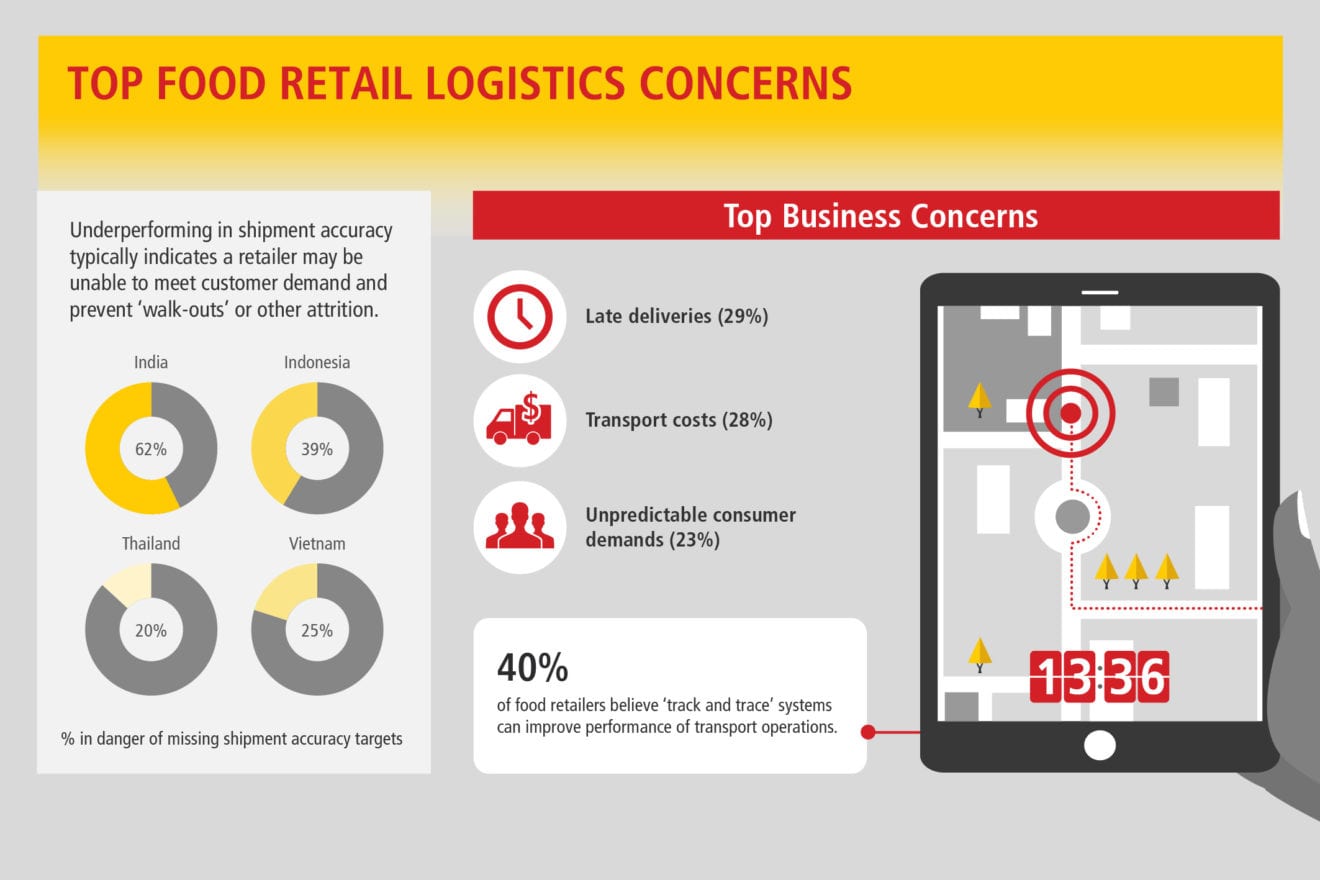
    The research found that food retailers are increasingly at risk from unpredictability on both demand and supply sides of their operations. In the four countries surveyed, late supplier deliveries were most commonly cited as food retailers’ top concern, while 36 percent admitted that demand volatility had a major impact on their businesses. Issues around supply chain performance and costs varied around the region: fuel, labor, and imbalances between supply and demand ranked amongst retailers’ top cost issues.

    “Many of these concerns are amplified because a large number of food retailers don’t have visibility of their logistics operations, let alone the resources or subject expertise to improve and optimize them,” said Eichorn. “Food retailers need reliable, agile supply lines if they’re to focus on their core competencies and compete. At DHL, we believe this agility only comes from being able to manage the supply chain as an end-to-end process across transport, warehousing, and value-added services in a way that’s rapidly scalable without creating extra complexity.”

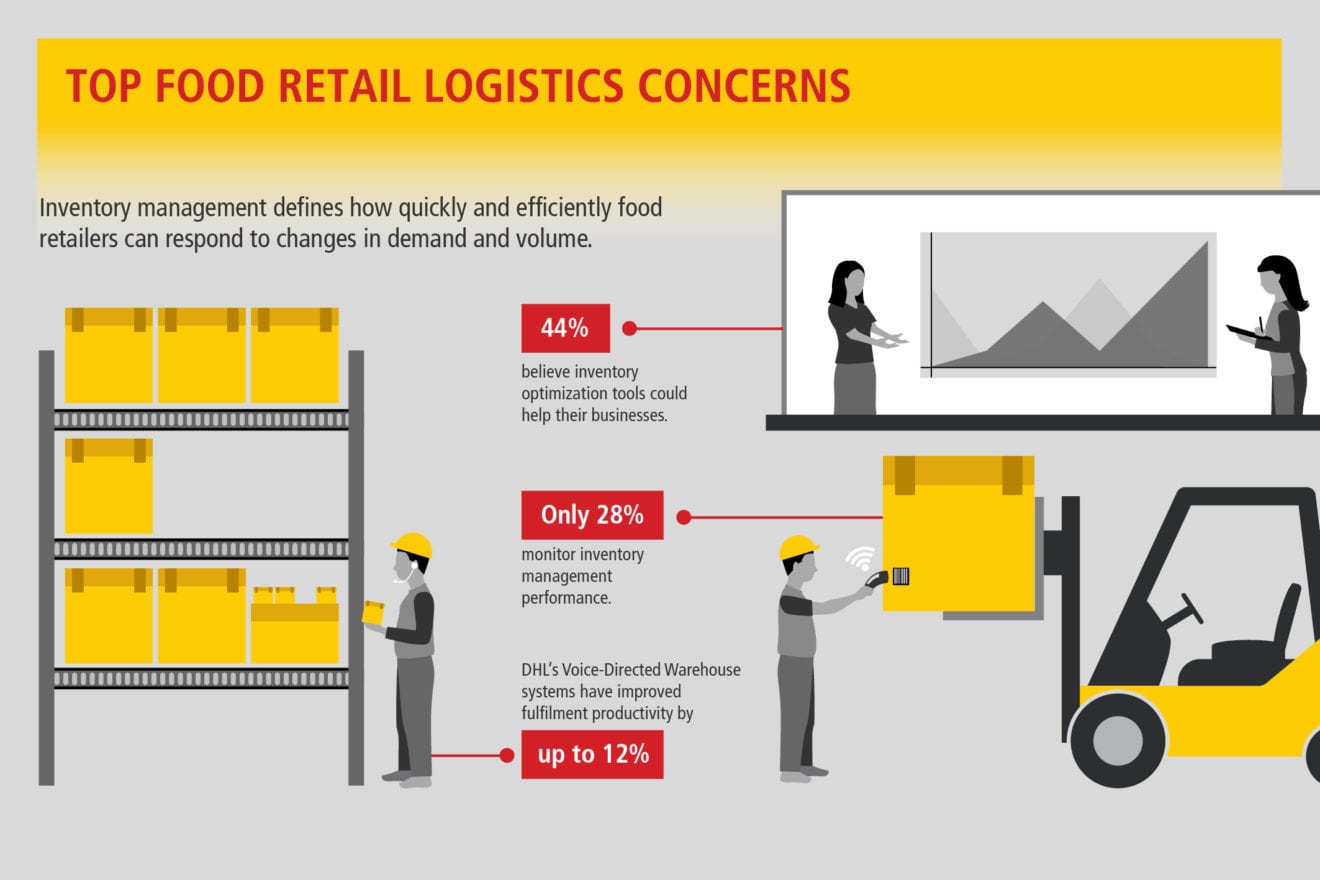
    The research also found that more than 60 percent of food retailers have not outsourced any aspects of their supply chains, suggesting that retailers who actively adopt third-party logistics solutions stand to gain significant “first-mover advantages” against their competition. Of those surveyed, 44 percent believe inventory optimization technologies would be beneficial to their overall performance, while 38 percent see advanced transport management services, like “track and trace”, as helping them improve reliability in meeting demand.

    DHL_Supply-Chain_Micrographic_04-04

    “Asia’s food retailers recognize the need to innovate and change, but the technologies and process transformations required to do so aren’t their domain of expertise – and nor should they be,” said Eichorn. “The key to growth and expansion in Asia’s food retail industry, and those of other developing regions where we’re seeing similar trends, will be how effectively operators can take advantage of third-party expertise and managed solutions in everything from technology to end-to-end supply chain management. For food retailers looking to leapfrog their competition and stay on top of growth’s complexity, the time to embrace advanced supply management principles is now.”

    About the Research:

    Commissioned by DHL Supply Chain and conducted by Redshift Research, the Hungry for Growth report draws on responses collected between December 2014 and April 2015 from more than 300 food retail professionals in India, Indonesia, Thailand and Vietnam. The report defines “food retail” as referring to retailers who sell food to consumers primarily for off-premise consumption, including (but not limited to): grocery stores, convenience stores, hypermarkets, supermarkets, and specialist stores like butcheries and bakeries.

    The full report can be downloaded from https://www.dhl.com/hungryforgrowth.

  • Breaking The Rules Phenomenon To Rock The Retail Business

    Breaking The Rules Phenomenon To Rock The Retail Business

    Siam Piwat Co., Ltd., the owner and management of the leading shopping centers in downtown Bangkok including Siam Paragon, Siam Center and Siam Discovery, invests a large sum of over 4 billion baht in revamping Siam Discovery both the interior and exterior. This is a part of strengthening the company’s vision “The Icon of Innovative Lifestyle”. Set to bring a phenomenal experience to rock the retail business world under the concept of “Break The Rules”, the captivating re-launch of Siam Discovery tends to be scheduled for the first quarter of 2016—welcoming the country’s participation in the ASEAN Economic Community (AEC).

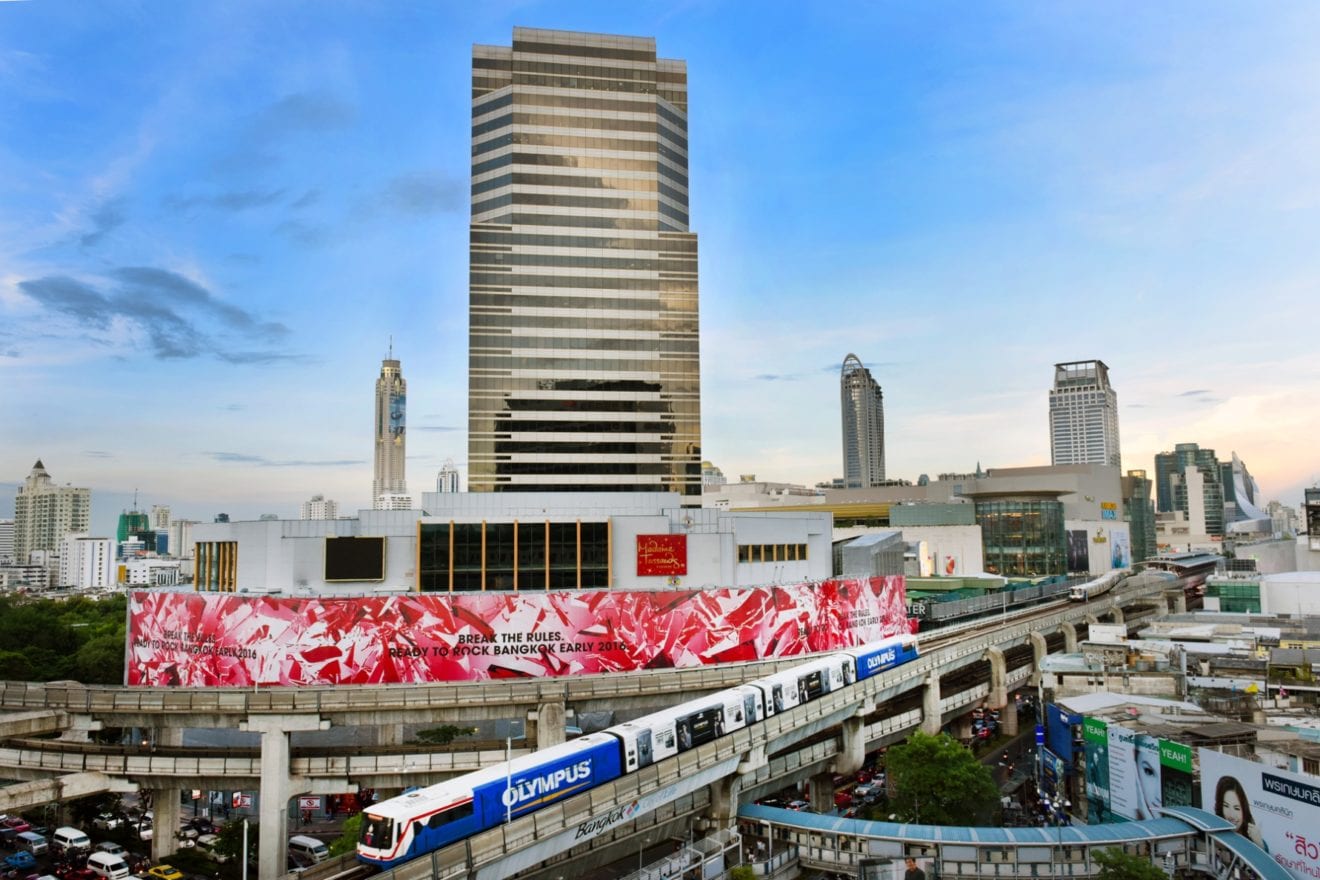
    In the middle of a major renovation, Siam Piwat has therefore designed vinyl to wrap the whole building for safety to match international standards. Located in the center of Pathumwan Intersection, the vinyl has been formed into a gigantic billboard on which is the graphic designing of shattering glass. This symbolic image represents a familiar sight of Siam district before being changed to make a better creation. It is absolutely the talk of the town among both Thais and foreign tourists who look forward to seeing the new look of Siam Discovery. This will also modify Siam district to maintain its rank of being Thailand’s everlasting shopping destination.


  • Lalamove Announces Expansion in 12 New Cities and USD$10M in New Funding

    Lalamove Announces Expansion in 12 New Cities and USD$10M in New Funding

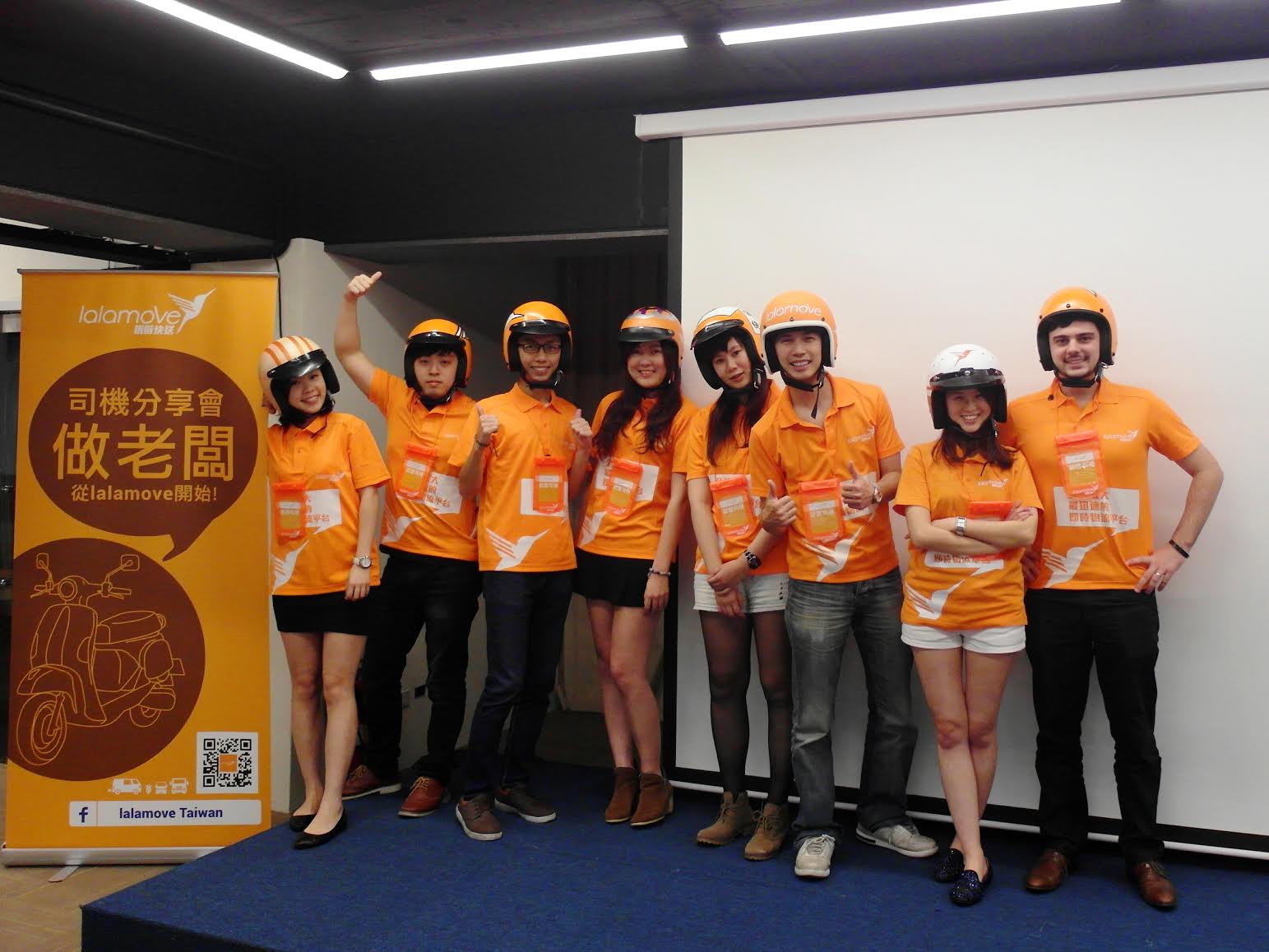
    Following their one millionth delivery, Huolala Global Investment Limited shares news that they have secured an investment of USD$10 million led by MindWorks Ventures as well as AppWorks, Crystal Stream and individual investors.

    As the leading professional on-demand delivery service throughout Asia, Lalamove has officially announced their security of a USD$10 million dollars investment from MindWorks Venture, AppWorks, Crystal Stream and individuals investors.

    The company, which is known as “EasyVan” in Hong Kong, features iOS and Android apps that allow businesses to instantly transport goods across a city using their network of delivery vehicles. It is similar to Uber’s on-demand model, but for intra city deliveries — qualified individuals with a valid license and vehicle can sign up to be a driver. The app serves as an affordable platform for businesses to “share” delivery vehicles.

    “While very few startups thrive in both South East Asia and China markets, we are thrilled to show such growth in the past 18 months,” explains lalamove’s CEO and Founder, Shing Chow. “This continuous success validates our hypothesis — delivery as it exists in Asia isn’t optimal and bringing technology to this aging industry reduces drivers’ idle time, increases speed and efficiency while lowering costs.”

    This investment comes at a pivotal moment as the company nears the end of the fourth quarter of the fiscal year – lalamove, known for connecting users in need and drivers of vans, motorcycles, trucks and lorries to move items and documents fast and efficiently, has also announced their expansion to 12 additional cities throughout China. The company’s push to spread across Fujian, Anhui, Guangdong, Sichuan, Zhejiang, Shandong and Hubei is set to be fully operational within the next three months starting with Shanghai and Chongqing this week.

    Chow adds, “This new round of funding will help us extend our services to several new cities and provide businesses a faster and more efficient way to do delivery. We will also use the funding to help build best in class products to enhance our customers’ experience.”

    While lalamove is actively seeking out new strategic partners, the company is also preparing for the advanced stages of its expansion — adding 50 cities throughout Asia to the company’s delivery network by the end of 2016. To learn more about the app and its technology, download Lalamove on Android or iOS for free.

    “lalamove has been growing from strength to strength in Thailand,” said Santit Jirawongkraisorn, Co-founder and managing Director of lalamove Thailand. “We serve personal users and are also  focused on SMEs in Thailand  to meet with corporate courier and customer delivery demands,” he added.

    “Since the launch of our app this year, we have a network of 1,100 drivers serving clients in Bangkok, and our app has had 25,000 downloads.”

  • China ‘no catastrophe’ says Bulgari CEO

    China ‘no catastrophe’ says Bulgari CEO

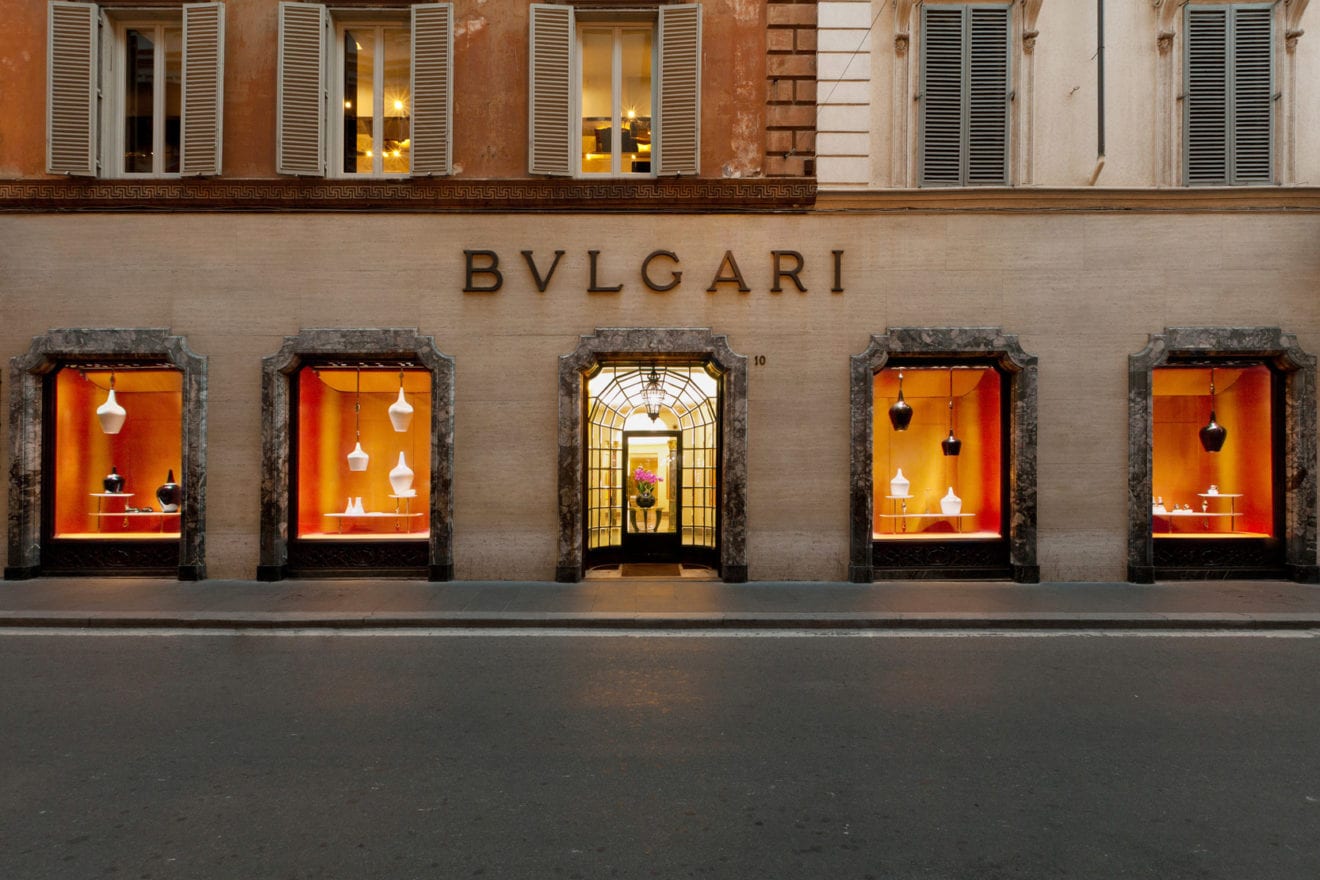
    Slowing luxury sales growth in China is “not a catastrophe, it’s a correction” says Bulgari CEO Jean-Christophe Babin.

    In an interview with international business news organisation Bloomberg, during the World Retail Congress in Rome, Babin warns of overstating China’s current slowdown

    A decline in the luxury sector began last year when the Chinese central government announced a clampdown on graft and gift giving and was later exacerbated by a sharp devaluation of the Chinese currency which triggered a slump in share prices.

    But in the interview – watch it here online – Babin points out that the share price declines have only brought world markets back “to what we all considered a good level last year”.

    He said China’s economy is still growing at about 6.8 per cent which produced enough customers to buy Bulgari’s luxury jewellery.

    While not disclosing figures, Babin said Bulgari’s July and August figures were “exactly in line with the first semester”despite the currency and stock market realignments.

  • Shop from a magazine page

    Read, snap buy: See something you like in a magazine? Now you can shop from a magazine with new Singapore technology being trialled in Thailand.

    iQNect is a Singapore company described by Enterprise Innovation as a “visual search startup”. It has partnered with a Thai creative agency C True to merge image recognition technology with an mCommerce application to allow readers of two Thai magazines to literally shop from a photo.

    Two popular Thai magazines are involved in the trial – fashion publication Image and IN – along with four international titles, Her World, Maxim, Madame Figaro and Attitude.

    As Enterprise Innovation explains “iQNect’s visual search app enables magazine readers to access interactive digital content simply by taking a picture of any page’s images with their smartphone. This instantly brings up content like videos, invitations, exclusive digital offers or coupons and the option to  buy the item photographed without having to go to a website or store.”

    “We challenge the belief that print is a dying medium,” Niamh Byrne, iQNect COO told the website.

    “Visual search acts as a bridge between the sumptuous tactility of print media and the instant responsiveness of mCommerce.”

    iQNect’s full mCommerce platform will be publicly available from mid-November.

    Read more about the technology on Enterprise Innovation.

  • Ikea sets new records

    Ikea sets new records

    Ikea has set new records in sales and store visits in its latest financial year, to August 31.

    The Swedish furniture and homewares chain now has 328 stores in 28 countries and says it served 771 million customers in the last year.

    Total sales reached US$35.5 billion.

    “We are growing in almost all our markets and we are happy about last year’s sales development,” said president and CEO Pete Agnefjall.

    The chain’s two fastest growing markets are China and Russia.

    “The Chinese middle class continues developing and in pace with its growth an interest for our product rises too,” said Agnefjall.

    “We have more visitors in our department stores now and we have opened three new stores in China during the year. We are going to open three new stores the next year too…”

    Sales were also strong in Germany, North America and Southern Europe.

  • Hong Kong retail has lost its edge

    Hong Kong has lost its edge as the go-to destination for international tourists seeking retail therapy.

    In a presentation to the 22nd CLSA Investors Forum, CLSA’s  head of consumer and gaming research Aaron Fischer, said luxury retail prices in Hong Kong are now higher than in other markets and if they stay that way “the retail market will suffer”.

    He cited an example of a Louis Vuitton handbag priced 20 per cent cheaper in Tokyo than in Hong Kong.

    Tourists – especially those from the Mainland – are now considering the price differential with Europe and other Asian destinations – and concluding there are more exciting tourist attractions, or new experiences, so deciding against Hong Kong.

    He said while there is no danger of the Hong Kong retail market “collapsing” – it would take threats to personal safety from terrorism or a pandemic to cause that – the sector needed to adjust.

    He said Hong Kong luxury brands were over-stored here. Brands like Louis Vuitton and Prada had about 10 stores in Hong Kong – and more in Macau – yet in cities like New York they had just two or three. If the profitability of these brands in Hong Kong was to be maximised, store networks would need to be cut by 20 or 30 per cent.

    “While sales declined, it does not mean these stores are loss-making. They might close one or two stores but they definitely won’t leave Hong Kong,” he added.

    The 22nd CLSA Investors’ Forum provides more than 1400 global fund managers and 230 leading listed corporations from 30 countries a platform for discussion and debate on market drivers including foreign policy and currency volatility; financial, political and structural reform; capital preservation, corporate governance and more.

  • McDonald’s India to double network

    McDonald’s India to double network

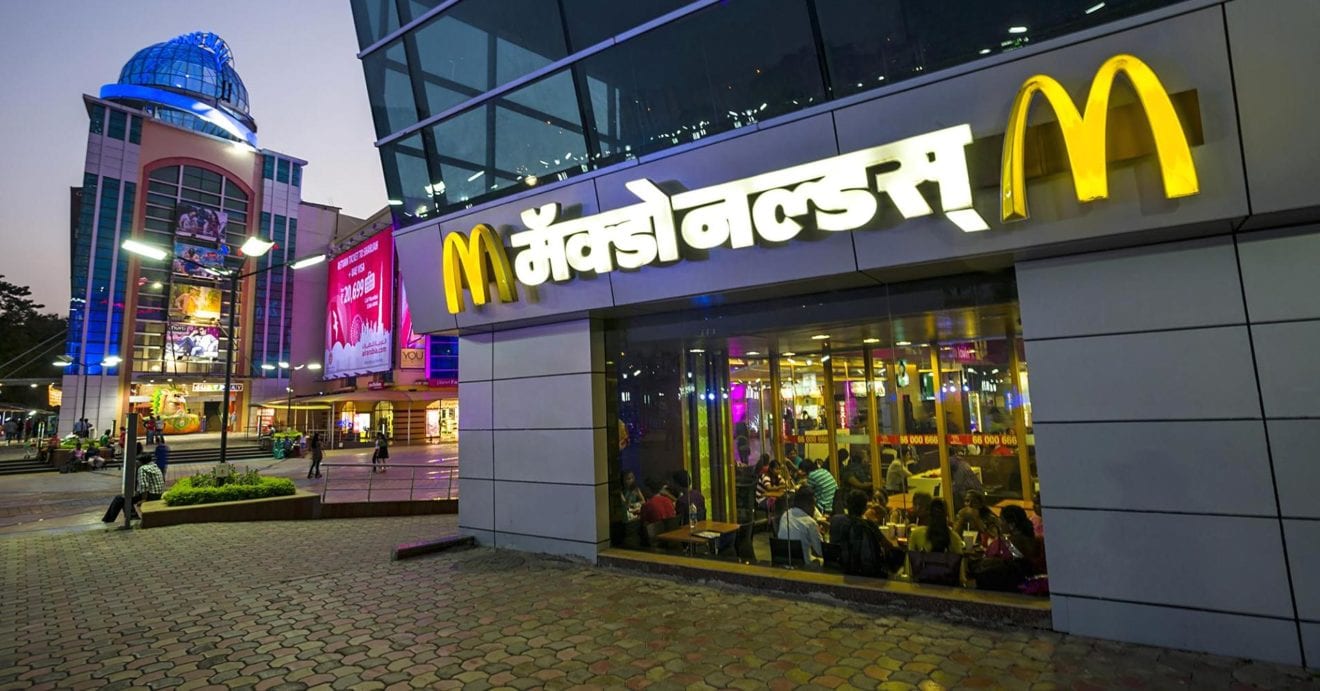
    McDonald’s India says it plans to open a new restaurant every week for the next five years.

    That’s 250 restaurants by the end of 2015, more than double its current network of 231.

    McDonald’s India master franchisee is Westlife Enterprise, whose vice chairman Amit Jatia says the growth focus will be on the western and southern parts of the country.

    McDonald’s launched in India 20 years ago, essentially the first of the crop of global fast food chains to establish a presence there. Now it faces growing competition from the likes of Burger King, Domino’s and Pizza Hut for a share of the growing fast food market.

    Jatia says McDonald’s will be expanding its coffee offer, opening the McCafe concept within its fast food restaurants as part of a move away from softdrinks.

    “We offer a range of smoothies, besides coffees and this encourages customers to opt for non-carbonated drinks,” he said in an interview with the India Times.

    The McCafe network will be expanded from the current 45 to about 140 within two years.

  • No sale threat to Tesco Thailand

    No sale threat to Tesco Thailand

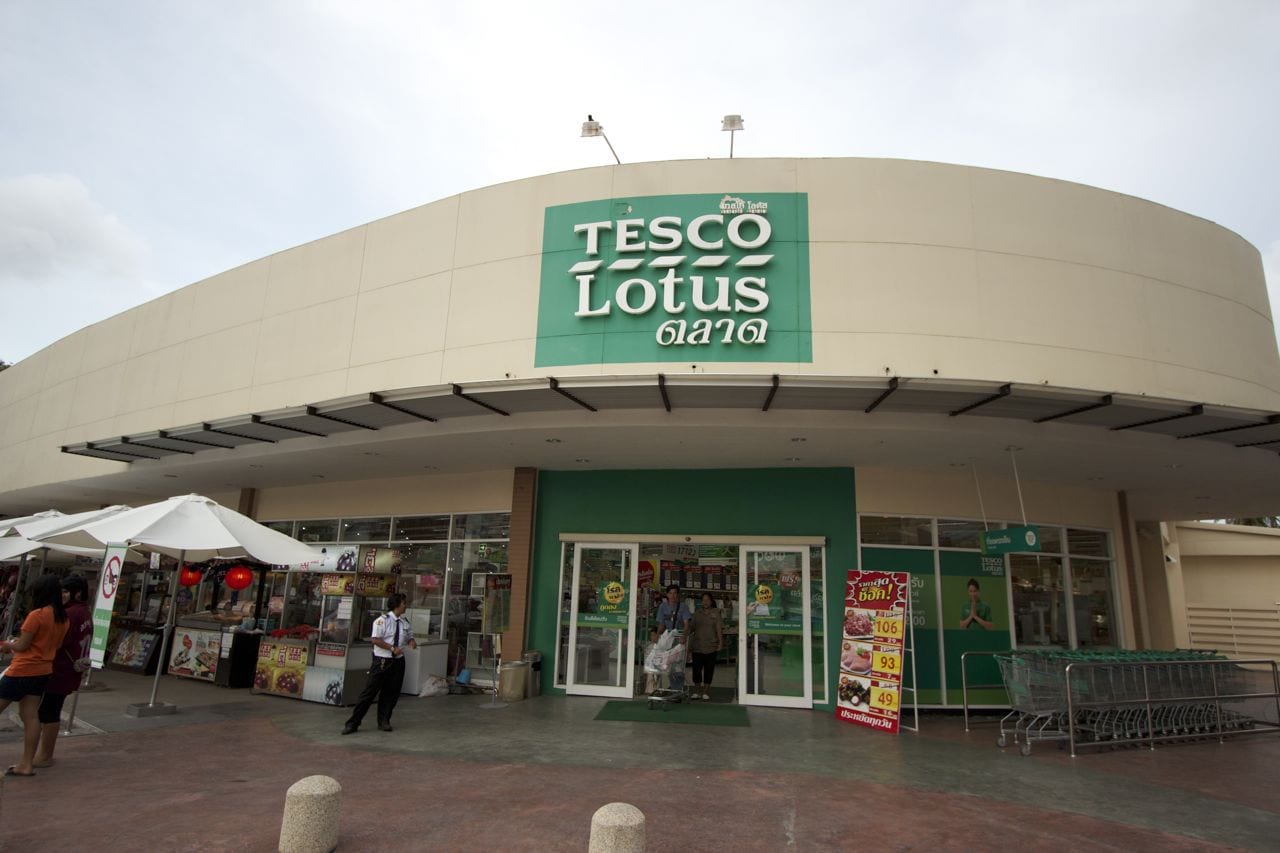
    There seems little prospect of the Tesco Thailand business – trading as tesco Lotus – being sold or scaled back in the wake of the British JV partner’s sale of its South Korean Homeplus business last week.

    Tesco PLC is under intense pressure to reduce debt and improve its trading profit, a goal which received a significant boost last week with the US$6 billion sale of the Homeplus business.

    Tesco Lotus operates some 1400 stores in Thailand, 1100 of them Express outlets, essentially oversized convenience stores, the balance hypermarkets.

    The company said in a statement that it has confidence in the Thai market’s growth prospects and planned to continue with expanding its store network.

    Early this year the company projected it would open 50 new Express format stores in 2015 and five new hypermarkets.

    Meanwhile, an “industry source” told the Bangkok Post newspaper following the Homeplus sale that it was unlikely Tesco would sell its stake in Tesco Lotus.

    “I don’t think the Thai operation will be sold, as it is healthy and profitable with a lot of market potential and expansion,” the source said.

  • Honestbee, NTUC FairPrice partner online

    Honestbee, NTUC FairPrice partner online

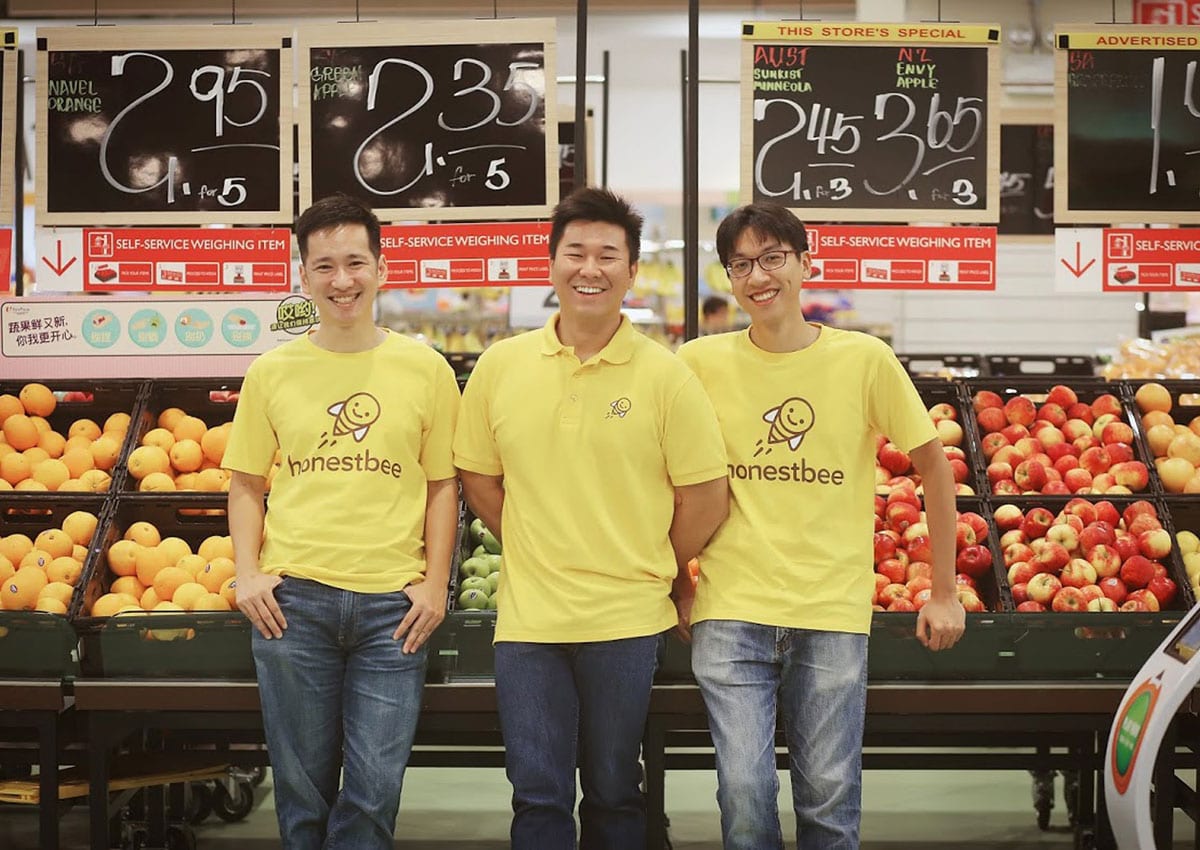
    Singapore-based Honestbee and NTUC FairPrice have partnered to enable customers to have FairPrice products delivered to them within the next hour.

    This enables customers to carry out their grocery shopping from their favorite stores – in the comfort of their homes – via the honestbee online portal and receive their delivery in the next hour.

    Honestbee started just eight months ago and is already planning imminent expansion into Hong Kong and Taiwan and with further Asian markets on the radar.

    It is the first ‘concierge grocery delivery service’ in Singapore.

    “Through this partnership, we look to enhance the overall retail experience for customers and elevate the online supermarket retail industry to even higher heights,” said Honestbee co-founder and CEO Joel Sng.

    “With honestbee, we are now able to provide an on demand level of convenience for NTUC FairPrice and all customers.”

    “Through this partnership, we look to enhance the overall retail experience for customers and elevate the online supermarket retail industry to even higher heights,” said Dominic Ng, deputy GM (FairPrice Online) NTUC FairPrice.