Author: Mei Ling Tan

  • Specsavers tops in Asia-Pacific region

    Specsavers tops in Asia-Pacific region

    The staff at Specsavers Gisborne have been named the best customer service team in the whole Asia-Pacific region.

    Just four months after the Gladstone Road store was named as Retail New Zealand’s overall customer service winner at its Top Shop Awards, the Federation of Asia-Pacific Retailers Association (FAPRA) recognised Specsavers Gisborne by awarding the store its top customer service excellence award.

    Specsavers Gisborne co-director Tania Richards said she was thrilled to win the award “on behalf of New Zealand”.

    “Seventeen countries go in for the awards. They all have their conferences and put their best stores forward. Retail NZ entered us into the awards as the best in New Zealand and we got the Best Country award on behalf of Retail NZ.”

    Ms Richards put the award down to the attitude of staff, which had been on display during a “mystery shop” conducted by an undercover examiner.

    “So that’s really good. We try hard to provide good customer service.”

    The FAPRA Awards take place every two years and involve retailers nominated by 17 national retail associations across Singapore, Thailand, Malaysia, Indonesia, Vietnam, the Philippines, China, Hong Kong, Chinese Taipei, Japan, Korea, Australia, New Zealand, India, Mongolia, Fiji and Turkey.

  • Giant to open six new stores and relaunch 28 existing stores nationwide

    Giant to open six new stores and relaunch 28 existing stores nationwide

    Giant plans to open six new stores and relaunch 28 existing stores nationwide to provide a renewed shopping experience for customers next year.

    Among the six new stores to be opened are in Setapak, Kuala Lumpur, ICangar, Kedah; Kota Baru, Kelantan; and Jeneh. Terenggam while the remaining two have yet to be revealed.

    Giant operations director Ernest Potgleter said the company has decided to relaunch its stores after receiving complaints from customers that the stores have started to tool outdated.

    ‘Our customers said we look old. We have to revive the business. The stores have not been refurbished for the past five years and It Is time to give a new look.

    “Giant Malaysia listens to customers and the transformation is tailored with the customer in mind, aiming at providing greater value and customer friendly lay out.

    “We serve 23 million customers a week. You have to give them what they need and customers these days are very demanding. We have to be cheaper than other retailers and provide good service, good products and good environment in Giant stores,” he said at the relaunch of Giant Hypermarket Shah Alam, here, yesterday.

    Potgleter said Giant spent RM2.5 million in capital expenditure to re-furbish the Shah Aim store and the amount would differ according to the size of the stores.

    General merchandising director Lee Slew Mei said the relaunch embraced a change of layout making shopping a one-stop experience for customers.

    “Children-related products are put together and We have a dedicated seasonal promotional area. Now, there is a back-to-school pro-motion running for six weeks and all back-to-school retatect products including stationery, school bags and uniforms are in one place,” she said.

    At the same time, Lee said Giant has brought in many new ranges including those exclusive for Giant.

    We have the O’Fresh range which comes directly from the farms in Cameron Highlands. The vegetables do not go through distribution cen-tres, therefore they are of better quality and the price is also lower,” she said.

    Giant announced a special “Re-launch Promotion”, In conjunction with the relaunch of Giant Shah Alam from December 23 to January 31.

  • Suzhou selected to host China Retail Trade Fair

    Suzhou selected to host China Retail Trade Fair

    The China Retail Trade Fair, more commonly known as CHINASHOP, the benchmark and barometer of China’s retail industry, announced that following voting by exhibitors and followers, Suzhou International Expo Center, the convention and exhibition venue owned and operated by Suzhou Culture and Expo Center Co., Ltd., has been selected to host 18th edition of the event, CHINASHOP 2016, with 41% of votes.

    CHINASHOP rolled out a voting campaign on December 11, 2015, inviting exhibitors and followers to select the host venue for the 18th CHINASHOP by choosing between five cities: Haikou , Qingdao , Nanjing , Suzhou and Chongqing .

    Suzhou outrivaled other cities with 41 per cent of votes. Following a wide-ranging consultation with exhibitors and on-site investigation of the venue, the organizers announced that the event will be held at Suzhou International Expo Center between the 3rd and the 5th of November 2016.

    With the approval and support of China’s Ministry of Commerce, CHINASHOP is organized by China Chain Store & Franchise Association and Beijing Zhihe Lianchuang Exhibition Co., Ltd. With a 16-year track record under its belt, CHINASHOP has become China’s largest and the world’s second largest retail industry event and is regarded by retailers worldwide as a key annual gathering.

    The city’s unique advantages lend to Suzhou International Expo Center’s popularity

    Suzhou, located in the fast-growing Yangtze River Delta, is in close proximity to major commercial centers including Shanghai , Nanjing and Zhejiang and is, itself, a city which is seeing a rapid expansion in its commercial activities. Recent statistics show that dozens of large shopping malls and supermarkets opened their doors here in 2015 and that the local retail industry has been on the fast growth track.
    At the same time, Suzhou and the nearby cities of Shanghai , Wuxi and Kunshan are all home to China’s leading manufacturers of commercial shelves, logos and signs. CHINASHOP 2016 in Suzhou will not only allow purchasers to visit and inspect suppliers, but also reduce exhibitors’ labor and transportation costs. Jiangsu province is also a very active hub in terms of the development of China’s online businesses, giving exhibitors an opportunity to enter into face-to-face conversations with China’s leading Internet companies and further explore how to best be a part of the transformation of the traditional retail industry in the new consumption environment.

    Suzhou International Expo Center is located in Suzhou Industrial Park. The center has available 60 conference rooms of varying sizes, occupying a combined area of 50,000 square meters, as well as 100,000 square meters of indoor exhibition space and 60,000 square meters of outdoor space. Its 8,000 square meter column-free luxury banquet hall is among the best in Asia . Based in Suzhou, a city with deep historical and cultural roots, the center has a full range of support facilities in immediate proximity including hotels, restaurants, shopping malls and entertainment venues. At the same time, the center is conveniently located in terms of transportation, with proximity to airports and high-speed railway stations in Shanghai and Wuxi, facilitating access for exhibitors and visitors.

    “We are honored to provide the venue for CHINASHOP 2016,” said Yin Weidong , chairman of Suzhou International Expo Center. “We sincerely invite all to the center between November 3 and 5, 2016 , when we will offer exhibitors and visitors all over the world an international expo with the most advanced exhibition facilities, the most comprehensive support services and the most professional exhibition team.”

  • Korean tobacco group fights ‘duty free threat’

    Korean tobacco group fights ‘duty free threat’

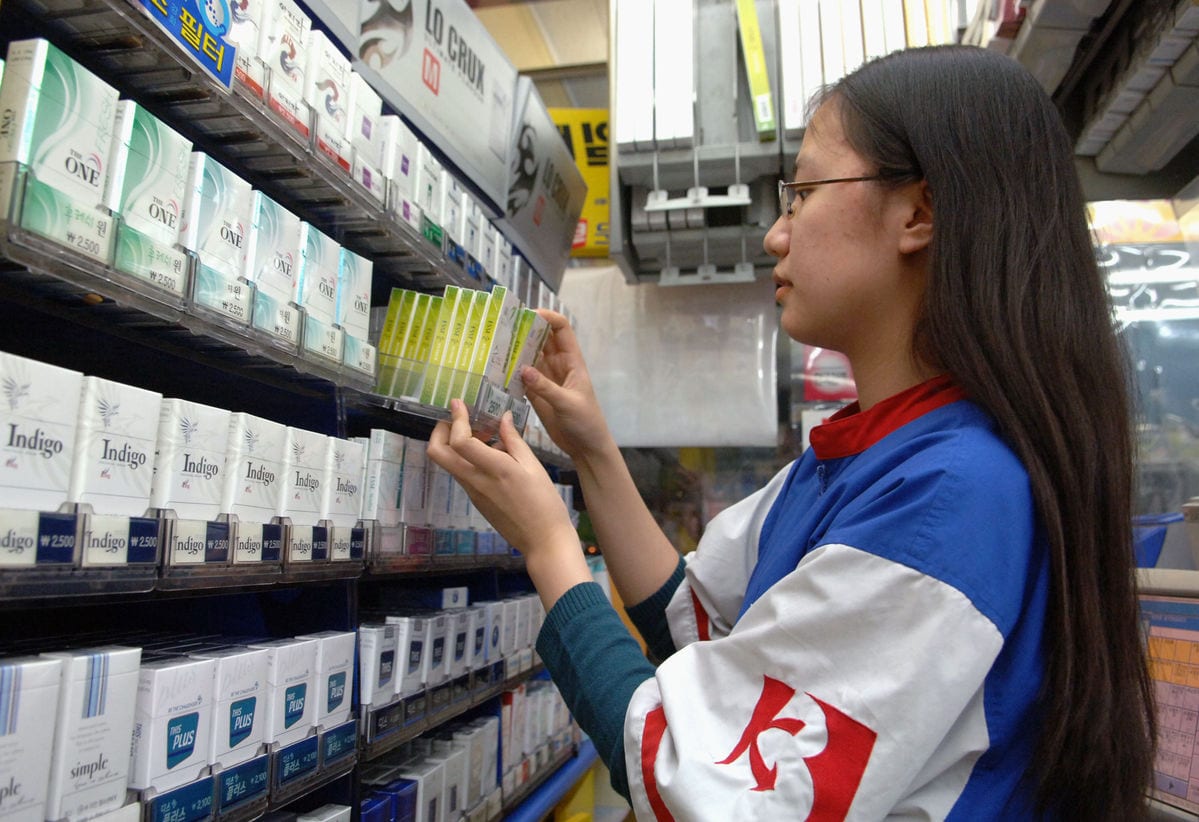
    Several media organisations in South Korea and beyond have reported criticism from the 100,000-strong ‘I Love Smoking’ online pro-smoking group towards ‘alleged’ plans by the South Korean government to halt sales of duty free cigarettes at Jeju International Airport’s shops.

    The pro-smoking group has told local media that if duty free cigarettes at Jeju are banned, the government believes these sales will simply migrate to the domestic market, where all cigarettes and tobacco products are subject to normal taxation.

    Customers are currently allowed to buy and import one duty free carton of 200 cigarettes, saving around 60% of the comparative domestic market retail price.

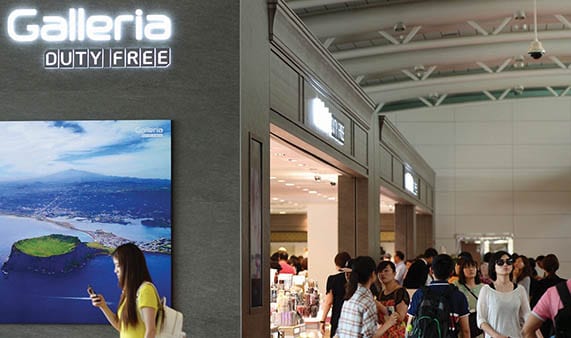
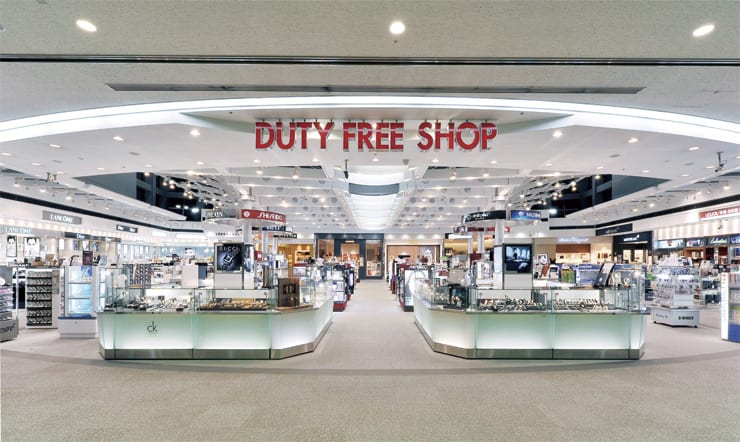
    Hanwha Galleria Timeworld trading as Galleria Duty Free

    At the same time, the I Love Smoking group in South Korea has suggested that if the Finance Ministry does have a public health agenda on this issue then it may have to ban duty free cigarettes altogether in South Korea – a move that would certainly prove hugely unpopular with many Korean and overseas customers, as well as duty free retailers and suppliers.

    Any such ban, local or otherwise, would also be certain to trigger contract renegotiations between affected retailers and airport landlords.

    Jeju International Airport is the biggest airport within the Korean Airports Corporation (KAC) portfolio. Hanwha Galleria Timeworld operates the 410sq m mixed category duty free store, having taken this over from Lotte Duty Free in mid-2014.

    Currently, around 95% of the Jeju duty free shop’s customers are Chinese, compared to an average for all South Korean duty free shops at about 60%, with tobacco sales four times bigger than liquor. Chinese cigarettes also dominate, accounting for more than 80% of all the store’s tobacco sales.

  • Alibaba is preparing to do battle with rural China’s terrible roads

    Alibaba is preparing to do battle with rural China’s terrible roads

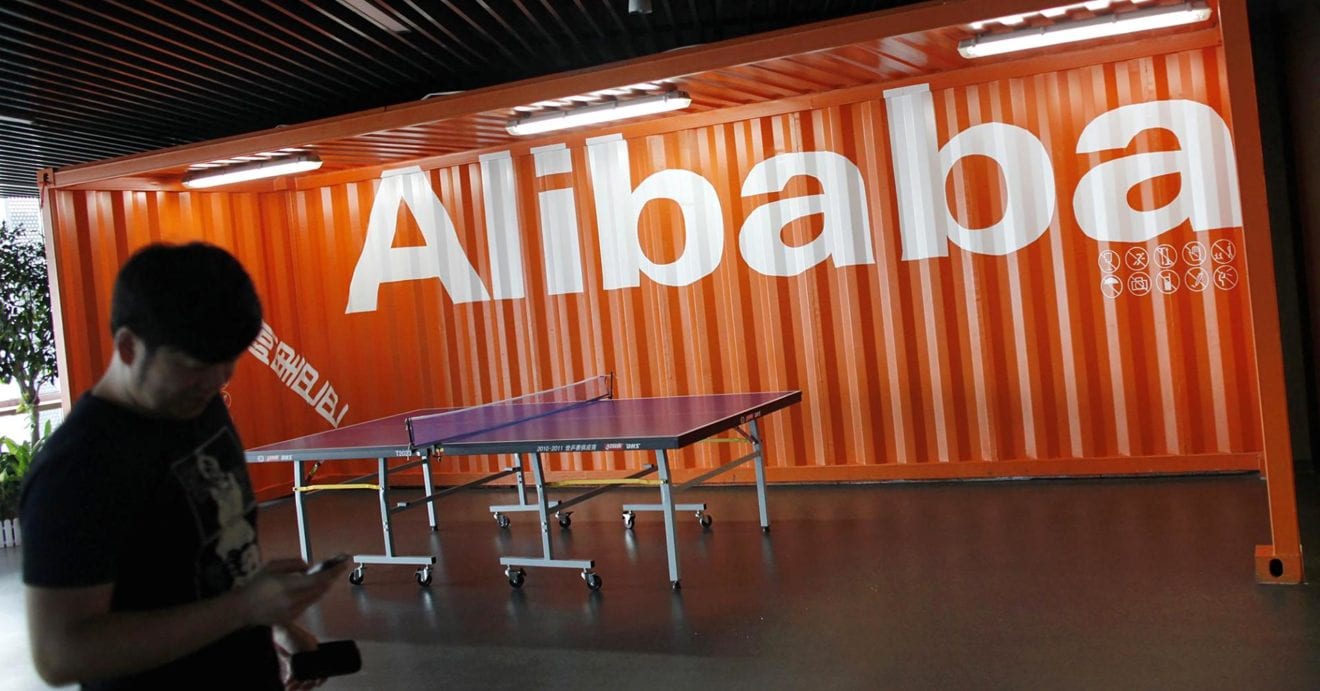
    Alibaba, China’s e-commerce giant, is hungry to expand its reach into less developed parts of northern China, and it’s prepared to do it even though it’s going to have a tough time delivering its goods to customers there.

    Part of the company’s 2016 strategy involves growing its operations in China’s biggest cities. That includes paying more attention to online grocery and electronic sales in Beijing, a gateway for serving the some 400 million people in the less developed northern territories, the company said.

    It’s being packaged as an “Alibaba everywhere” approach, and hinges on making it easier for rural populations to buy from Alibaba. The company’s slowing growth (paywall) in larger Chinese cities has spurred it to make inroads in untapped regions.

    The problem? Getting “everywhere” is tough. China’s postal system is notoriously unreliable, there are too few distribution centers, and rural roads are in bad shape.

    Total online sales in China are expected to reach $356 billion in 2016, according to the Journal. In large cities, that means millions of packages being delivered by couriers zipping through streets on scooters. In far-flung communities, though, getting deliveries is a more cumbersome venture.

    Customer complaints about lost mail have led China to strip (paywall) more than 100 delivery companies of their permits—a challenge for a country that’s been ranked by the World Bank as 26th in the world for logistics infrastructure, according to the Journal.

    One reason for this is that China has fewer dominant national retail chains that serve consumers than in the US, where big- and medium-sized box stores are sprinkled generously across the 50 states. The US also benefits from the roads built in the late 1800s to accommodate a robust postal system.

    And because China’s retail store networks are less developed, more than 11% of total retail sales take place online, versus 8% in the US, according to Moody’s. That’s expected to increase to just under 16% by the end of this year. That means Alibaba will have its work cut out finding a way to get reliably get packages from online to off-road.

  • Samsung Pay is coming to Singapore

    Samsung Pay is coming to Singapore

    South Korean technology giant Samsung Electronics is expanding its mobile payments service to three additional countries, including Singapore.

    The Korean company made the announcement during its press conference at the Consumer Electronics Show on Tuesday, held ahead of the show’s official opening. Samsung Pay allows consumers to pay at retail locations using their smartphones.

    It also confirmed the news in a Twitter update. “I am happy to announce we’re adding Australia, Singapore, and Brazil to the Samsung Pay roadmap,” said Samsung Electronics America President and COO Tim Baxter. No official date was announced for the three launches.

    The service launched last year in South Korea and the United States, with plans to enter other markets, including China, Spain and Britain.

    Samsung hopes the payments service will set its phones apart from competing devices, helping to protect market share against rivals such as Apple and Huawei Technologies and compel users to pay a bit more for the convenience. Apple announced in October last year its competing Apple Pay service was also coming to Singapore this year.

    Samsung has reported a strong response to Samsung Pay in its home country and the US, though the service does not generate revenue on its own for Samsung. An early advantage for Samsung Pay is its compatibility with magnetic stripe card readers already in wide use among retailers. In comparison, Apple Pay requires retailers to install new equipment supporting near-field communication technology.

  • Two Malaysian firms plan agarwood venture in Laos

    Two Malaysian firms plan agarwood venture in Laos

    Two Malaysian companies plan to invest US$18 million (RM79 million) for the inoculation of agarwood in Laos that is expected to generate US$200 million in three years.

    Agriculture transaction company Aseagate (M) Sdn Bhd, forestry management company Richwood Capital Sdn Bhd (RWC), together with non-governmental organisation Global Outstanding Chinese 100 Organisation of Singapore (GOC100) yesterday inked a memorandum of understanding (MoU) for the project.

    GOC100 inked an MoU with Aseagate that gave the latter sole rights to plantation management for over 2,000ha of land in Bolikhamsai province, Laos, while Aseagate inked an MoU with RWC to spell out their roles in the management, inoculation and supply of agarwood in the Indochinese state.

    The formalisation of the two MoU will be implemented in March.

    RWC CEO Kendrick Ho Qing Tyat said the parties are in the process of raising funds for the project and plan to get institutional investors from China.

    “Given the platform that we have, with GOC100 backing and the Lao government’s support, there’s no reason why people won’t believe and invest with us. This is a good opportunity for them to earn money as well. This market may be new to them but it’s not new in this world,” he told a press conference after signing the MoU yesterday.

    Agarwood is a dark resinous heartwood and is the most expensive wood in the world. Agarwood is pricier than gold with a retail price of between US$5,600 and US$10,000 per kilogramme. A litre of agarwood oil can be sold at US$10,000 to US$14,000. It is valued in many cultures for its distinctive fragrance, and thus is used for incense and perfume. One of the main reasons for the relative rarity and high cost of agarwood is the depletion of the wild resource.

    GOC100 was awarded the exclusive concession by the Lao central government’s Ministry of Agriculture and Forestry to manage the country’s agarwood plantation. GOC100 had in August 2015 signed an exclusive agreement with the Lao Ministry of Agriculture and Forestry for concession to these trees that are planted within the Lao military base and guarded by military.

    The Aseagate-RWC partnership will see the inoculation of agarwood trees aged from 15-22 years to produce resin on behalf of the government of Laos.

    GOC100 Singapore secretary-general Peter Lee said the Lao venture is significant to tap into the growing demand for agarwood, especially in the Middle East and China markets.

    He said the agarwood project is a safe investment, as it is more resilient to economic fluctuations as compared to stocks and bonds, with insurance purchased for its proven inoculation technique and against natural calamities.

    The parties are confident of the venture as the management and technical team has accumulated over seven years of experience in forestry management and agriculture technology, having provided solutions to plantation owners in Malaysia.

    Ho said it utilises technology from Singapore to artificially induce trees to produce resin.

  • How online and offline will dominate retail in Asia in 2016

    How online and offline will dominate retail in Asia in 2016

    Innovations in technology are predicted to make progressive strides related to online and offline commerce, thus improving the retail experience significantly in 2016.

    With new developments like Google’s Physical Web and Eddystone, we’ve started to get a glimpse of what the future might look like in a perfect online to offline marketing world. But is this futuristic new line of digital marketing really so far away, or are we on the cusp of a new reality?

    Here are major trends that I anticipate will lead to progressive shifts in how online retail addressed this year in the Asia Pacific region:

    1. Full integration of online and offline

    In my last column, I talked about Google’s Physical Web and Eddystone. Technologies like these will enable users and shoppers to communicate via their mobile devices with physical objects, sending their real-time location and behavior to marketers who can now identify them, in exchange receiving more personalized and customized experiences when visiting offline shops.

    With these new innovations, the traditional challenges of user anonymity are being resolved. Therefore, we can expect to start seeing user retail experiences that truly bridge the gap between offline and online (O2O) by the mid-2016.

    2. Deep customer insights meet highly targeted displays

    How to drive traffic the most effective and efficient traffic to your website is an ongoing challenge for marketers. By “most effective traffic,” I mean traffic that comes from the cheapest source, and “efficient traffic” refers to the frequency at which your traffic will eventually convert (ideally instantaneously).

    In the past, one solution was to use a large proportion of marketing budgets to acquire new customers using Google SEM. However, this has proven to be very expensive and less efficient in driving qualitative traffic to a website over time. It is also only focused on capturing demand.

    This has driven marketers and budgets to Facebook, where interest-based targeting could be used to find new users. And what happens when everyone does the same thing? Eventually the channel becomes more expensive and less efficient.

    Publishers can now address this challenge via the use of an Audiences feature. Both Google and Facebook now have Audiences as a core function in their display offerings, allowing advertisers to target more accurately when uploading emails or finding specific audience demographics. Such technology enables advertisers to deliver the right ads, to the right people, across devices.

    Many platforms also use sophisticated look-alike modeling, which lets advertisers target similar profiles of those already targeted, specifically by email. There are also retargeting technologies that can find people that have browsed a particular website, and present them with ads or even specific products from that site.

    To complete the value proposition, marketers are provided with reporting that highlights conversions and contributions to online sales. But here’s a little secret: revenue from abandoned carts contribute significantly to these sales numbers.

    How many times have you been presented with display ads for products that you’ve already purchased? Well, here is how this happens; let’s say someone has a basket full of goodies, but bounces over to a different site momentarily, before coming back to their basket and completing their purchase. This will cause a view-through conversion, which means that revenue will be attributed to the retargeting campaign, even if the purchase occurs without clicking on the display ad. Retargeting companies focused on pricing for cost per click (CPC) or cost per action (CPA) models make a lot of money this way.

    counting money youtube screenshot

    Going back to Google and Facebook, the ability to target someone specifically is great, however it is important to know the context in which a user/shopper is being targeted. How do we link both audiences and standard retargeting to the purchase cycle as well as to the interaction a user has with your brand?

    In 2016, we will start to see the emergence of more quality identification technology that is able to work across mobile devices and computers. Marketers will be able to find users and send contextual display ads that feature the right product or coupon, on the right device, with incentives based upon insight regarding what really makes the user tick. This delivery will also be matched with the right objective based on where the customer is in the lifecycle.

    In the beginning, identification will probably range between 30 and 50 percent of the users, but I predict we’ll see these numbers increase as the technology evolves. Though these advancements are on the horizon, this level of sophistication will only occur once matching email addresses to third-party cookies becomes feasible. More importantly, this cannot happen unless multifaceted user insights are aligned with intelligent advertising platforms.

    3. AI driven marketing

    Artificial intelligence will be one of the hottest topics in the tech industry in 2016. Just recently, Google launched TensorFlow, a very powerful artificial intelligence and machine-learning open source software.

    Added to this is a recent announcement to commit $1 billion to researching artificial intelligence from a group of Silicon Valley entrepreneurs, which includes Elon Musk, chief executive officer (CEO) of Tesla.

    How does all this come into play for the marketing landscape?

    Marketers today are very operative. First, they think about an idea or a campaign, then they automate it with either display ads, email campaigns, push messaging, social releases, and so on. After that, they test against it and continue to optimize. They go through this process again and again and again, and do so because of the vast amount of variables and data sets that need to be taken into account to get the best results. With this process, solutions rooted in artificial intelligence will change the lives of the marketers and their audiences, helping each make more informed decisions.

    Think about the type of software needed to create the customer journey and then execute after uploading all the necessary data and required content; this year, marketers can expect some of the functionality affiliated with this process to be automated. Expect this progress to in ways that will cover most of the operational decisions marketers make today, and for this evolution to continue over the next three to four years.

    4. Messaging dominates media activity

    Over the past five years, messaging has become one of the fastest growing online channels, according to Activate’s Tech and Media Outlook 2016. Messaging has developed more quickly than social media, coming only in second to the time spent online by users globally. By 2018, messaging is expected to grow by an additional 1.1 billion users.

    The global messaging space continues to be dominated by Facebook Messenger and WhatsApp. In the Asia Pacific region, local players include China’s WeChat, Japan’s Line, and Korea’s KakaoTalk.

    Messaging services are now accessible by third-parties, thus resulting in an explosion in of real-time offerings for services, including booking taxis, making payments for practical necessities like utilities bills, music and television entertainment, games, stickers, e-commerce capabilities, video, and live voice calls. The messaging app has transformed into a hub of communication and consumption of services for users, creating monetization possibilities for both for media owners and third-party developers.

    So, what can digital marketers ultimately expect for 2016?

    In conclusion, the integration of online and offline real-time marketing opportunities isn’t something we can hope to see somewhere in the future, as what was once a fantasy is finally materializing into reality. Now that these technological innovations have made linking these contrasting realms much easier, wise marketers and retailers will take advantage of this progress immediately….will you?
  • Victoria’s Secret to open first flagship store here

    Victoria’s Secret to open first flagship store here

    Victoria’S Secret will open its first South-east Asia flagship store in Singapore by year end and unveil a full assortment of its sexy wares.

    The international lingerie brand will open the 12,000 sq ft outlet in the fourth quarter of the year at Mandarin Gallery in Orchard Road.

    The two-storey store, which faces the street, will take over the units that Mont Blanc, Bimba Y Lola and Bathing Ape used to occupy.

    These brands will be moving to other areas in the four-storey mall. The concierge counter on level two was also relocated to level three to accommodate the largest American retailer of women’s lingerie.

    The nine existing Victoria’s Secret stores here are all the brand’s beauty and accessories stores. They sell fragrances, accessories like bags and only a small range of women’s underwear.

    Patrina Tan, senior vice-president of retail, marketing and leasing at Overseas Union Enterprises, which manages Mandarin Gallery, said that the hoarding on the mall went up last week.

    “Mandarin Gallery has always been known to be a mall that houses the best of the best in retail and food. We have the king of ramen, the king of ribs. So naturally, Victoria’s Secret echoes and reinforces what the mall stands for,” she said.

    There are plans for the brand to hold fashion shows here on top of other events, she said. “It is a long-awaited brand that has never been available in this part of the world.”

    The Straits Times understands that prices at the store here will differ from those elsewhere as they will be based on domestic variables like taxes and profit margins.

    Its product range will be identical to that offered in stores in the United States and will not be tailored to the local market.

    Victoria’s Secret is one of several global brands that have chosen to set up shop here recently.

    French sporting goods store Decathlon will open a 35,000 sq ft store in Chai Chee Technopark next week; popular French women’s wear label Maje opened its first flagship store at The Shoppes at Marina Bay Sands in October; Singapore’s first Apple store will open next year; and the renowned Dover Street Market will soon make its debut here.

    Experts said that international retailers, faced with economic challenges in developed markets, are looking to emerging markets such as South-east Asia.

    “Singapore is seen as an ideal test bed for brands looking to break into South-east Asian markets and is viewed as an important place to build brand awareness,” said Sarah Lim, Singapore Polytechnic’s senior retail lecturer. “Customers in countries in the region will identify with the brand when it moves over to their countries.”

    She said that Victoria’s Secret will up the ante in the retail scene here: “They don’t just sell products, but strengthen their brand with fashion shows and experiential shopping. Other brands can learn from them.”

    Shoppers like Gina Farr, 32, are excited.

    The fitness trainer is a fan of the brand’s underwear and owns several pairs that she bought from the smaller stores here.

    “The quality is great, and there will be a wider range including bras. The range of items they have here now is too small,” she said. “I would probably shop there quite often when it opens.”

  • Korean Customs to issue more duty free licenses?

    Korean Customs to issue more duty free licenses?

    Park Geun-Hye’s South Korean government has commissioned a formal review of the domestic duty free industry, its impact on tourism and what it perceives as the dominance of Lotte Duty Free and Shilla Duty Free in the sector.

    A private consulting firm has been commissioned to undertake the review, which is expected to forward its findings to government before releasing the results into the public domain.

    We understand that Korea Customs Service officials have informally told duty free industry executives that new Seoul downtown duty free shop licenses could be issued in 2016 – and possibly other key locations – as part of government efforts to reduce Lotte’s and Shilla’s present duty free industry dominance.

    “The government is researching the duty free environment and will announce the results including whether new downtown licenses will be issued and where, and the number of new licenses,” commented a reliable duty free industry source in Seoul.

    “The government has asked a private consulting company to research the duty free market here to boost tourism and reduce the present duty free market duopoly. The government is looking at a different solution to taking away existing licenses; instead they are planning to have more licenses. We hope there will be a positive result from the government’s announcement.”

    Although no decision has been made so far, Korea Customs Service officials are understood to have told duty free industry executives that new downtown licenses may be issued this year. Seoul, the South Korean capital, and Busan are the most likely locations for new downtown shop licenses, along with Jeju Island.

    ‘RUMOURS’ OF MORE LICENSES…

    “KCS is leaking rumours that there will be new duty free licenses around March 2016. There is still a debate in our National Assembly about diluting existing duty free retail monopolies by giving new licenses,” said the source.

    “KCS is thinking to issue more duty free licenses for Seoul and Busan. Tourism in Busan is growing, but not like Seoul. Lotte’s grip already is weaker as they have lost their Lotte World Tower license; also, Shinsegae Duty Free is coming into central Seoul with their new Namdaemun super store, which will take a significant part of Lotte’s Sogong shop’s sales.”

    News of the government’s duty free industry review comes as speculation continues to grow over the future use of Seoul’s Lotte World Tower duty free store and the Walkerhill downtown duty free shop, after both retailers recently lost licenses to successful rival bids from Shinsegae Duty Free and Doosan Duty Free.

    Under KCS regulations, losing duty free license holders may continue to operate their shops for a grace period of six months after license expirations to allow them to sell off stock, find new employment for staff and wind up their businesses.

    Both the Lotte World Tower and Walkerhill downtown stores are continuing to trade while their owners decide future arrangements for their outlets.

    PRESIDENT PARK GEUN-HYE SAID TO BE ‘CONCERNED’

    South Korean President Park Geun-Hye (top right) has only recently voiced concern about the large financial losses that both Lotte and Walkerhill face under KCS’s new non-renewable license arrangements, after investing in multi-million dollar new duty free facilities, only to lose their licenses soon afterwards.

    “There is a rumour that Lotte will try to pass its Lotte COEX duty free shop license in Seoul to Lotte World Tower duty free shop,” the source said. In the Lotte World Tower shopping complex there are already duty paid Louis Vuitton, Chanel and other luxury brand boutiques.

    “Without its Lotte World Tower duty free license there is no reason for Lotte to keep its former duty free boutiques there as well and have double stores in one location. Lotte will have to destroy all its investment in these duty free boutiques. The government does not want to see this happen, so it is thinking of different options.”

    Other possibilities apart from Lotte being permitted to transfer its COEX downtown duty free store license are that it could win a new license if KCS issues a new series in Seoul this year. Alternatively, another company winning a new duty free license might be permitted to operate the Lotte World Tower outlet, though it is unlikely that Lotte would agree to this.

    WALKERHILL RECONFIRMS IT IS LEAVING THE BUSINESS

    While Lotte continues to search for a solution, the SK Group parent of Walkerhill Duty Free has reconfirmed that it is to leave the duty free industry altogether and it will not seek a new duty free license in future.

    The Walkerhill duty free store actually represents only a very small share of the SK Group’s total revenue compared with its major business activities, that include telecommunications, transportation, oil refining and other energy-related interests.

    SK recently invested more than US$30m in upgrading and expanding its Walkerhill duty free store which forms part of the Walkerhill hotel and entertainment complex in eastern Seoul. The retailer’s options now include converting the duty free store back to hotel use, or leasing the shop to another retailer.

    Paradise Casino, which operates the Walkerhill complex casino, is understood to be disappointed at the loss of the duty free license as many high spending Chinese visitors to the duty free store visited the casino after shopping.

    In fact, the Walkerhill duty free shop and casino rely upon each other to attract customers, as many visitors to Paradise Casino also visit the ajoining duty free shop, which has built a strong reputation for its wide range of high-priced watches, along with other luxury goods.

  • Why More Retailers Could Default in 2016

    Why More Retailers Could Default in 2016

    Last year was grim for retailers. This year could be even worse. Despite a late surge in holiday sales, companies like J. Crew Group Inc. and 99 Cents Only Stores are struggling under debt they took on in leveraged buyouts years ago. Their bond prices have plummeted — in some cases to as little as 25 cents on the dollar — as investors brace for possible defaults.

    The industry has been limping along for a while now due to a variety of forces. Spending has migrated to the Internet, lenders have turned wary and the debt burdens of pre-crisis buyouts will make it tough to revive struggling merchants. Eleven retailers defaulted last year through Dec. 14, the highest annual tally since 2009, according to Standard & Poor’s data. And the near future doesn’t look much brighter.

    “We expect more retail defaults in 2016 than 2015 and 2014,” said Robert Schulz, an S&P credit analyst.

    The credit market is echoing that sentiment. Bonds of indebted retailers dropped further last year in anticipation that some will need to restructure.

    This wave of distress is different from the tough times of the Great Recession, said Patrick Dalton, chief executive officer of Gordon Brothers Finance Co., an asset-based lender that works with retailers. Now, “it’s an industry issue, not an economy issue,” he said. Shoppers are seeking value and turning away from pricey logos, which is hurting the teen-clothing category in particular. “What looks the same but costs three times less is where everyone’s going,” Dalton said.

    In general, shoppers are spending less on stuff and more on experiences such as going out to eat. They’re also saving more. And retailers that once reigned in America’s shopping malls are losing customers to online rivals like Amazon.com Inc.

    “Amazon is crushing everybody,” Dalton said.

    Buyout Burden

    Bond prices of the most distressed companies reflect those problems. J. Crew’s bonds lost 7.4 percent in December, dropping to a record low of 25 cents on the dollar on Dec. 22, reflecting creditors’ lack of confidence that the retailer will be able to shoulder $2.1 billion of debt from a 2011 leveraged buyout by TPG Capital Management and Leonard Green & Partners.

    Bon-Ton Stores Inc.’s 8 percent notes last traded at 33.4 cents on the dollar on Dec. 23, according to Trace, the bond-price reporting system of the Financial Industry Regulatory Authority.

    Margot Fooshee, a J. Crew spokeswoman, declined to comment. Angela Thurstan at 99 Cents Only and Christine Hojnacki at Bon-Ton didn’t respond to requests for comment.

    Restructuring advisers have already started circulating names of retailers proposing various debt-renegotiation plans as bond prices continue to drop.

    “It’s going to be a busy year of restructuring for retailers,” said Steven Ruggiero, a credit analyst focusing on retail at RW Pressprich & Co. in New York. “Hedge funds and private-equity investors that were taking a pause at the end of the year waiting to see how December sales would pan out and how redemption was for their funds are now ready to pounce.”

    Things could have been a lot worse. Sales during November and December rose 3.4 percent, according to research and consulting firm Customer Growth Partners. An uptick in shopping during the week between Christmas and New Year’s helped mitigate what Craig Johnson, the research firm’s president, called a terrible year for margins, as retailers jockeyed to win over lukewarm shoppers.

    The days when retailers could load up on debt and hope to sell their way out of it appear to be over. In the meantime, obligations heaped on during pre-2008 leveraged buyouts are coming due.

    Refinancing Debt

    Sports Authority Inc., for example, has a $300 million term loan due in May 2017, but its private-equity owner Leonard Green & Partners is already under pressure to refinance it while there’s still more than a year to maturity. Once an obligation passes that threshold, it becomes current, which is considered more difficult to deal with in a restructuring.

    Although the sportswear retailer received a $95 million infusion in late 2015 to shore up vendor confidence, addressing that debt appears to be a challenge. Kellie Kerwin, a spokeswoman for Sports Authority at ICR, didn’t comment.

    Even healthy retailers are posting disappointing results. Bed Bath & Beyond Inc. said third-quarter profit and comparable-store sales will be less than forecast. Department stores including Macy’s Inc. and Nordstrom Inc. have cut their annual forecasts. Some of that is due to record-high temperatures, which have produced a glut of coats, sweaters and other seasonal goods.

    “The merchants that have been lagging don’t have the luxury to lag anymore,” said Jonathan Eyl, a consumer analyst at Nasdaq Advisory Services in New York.

  • Apple on a roll with retail expansion in China as it announces 30th store

    Apple on a roll with retail expansion in China as it announces 30th store

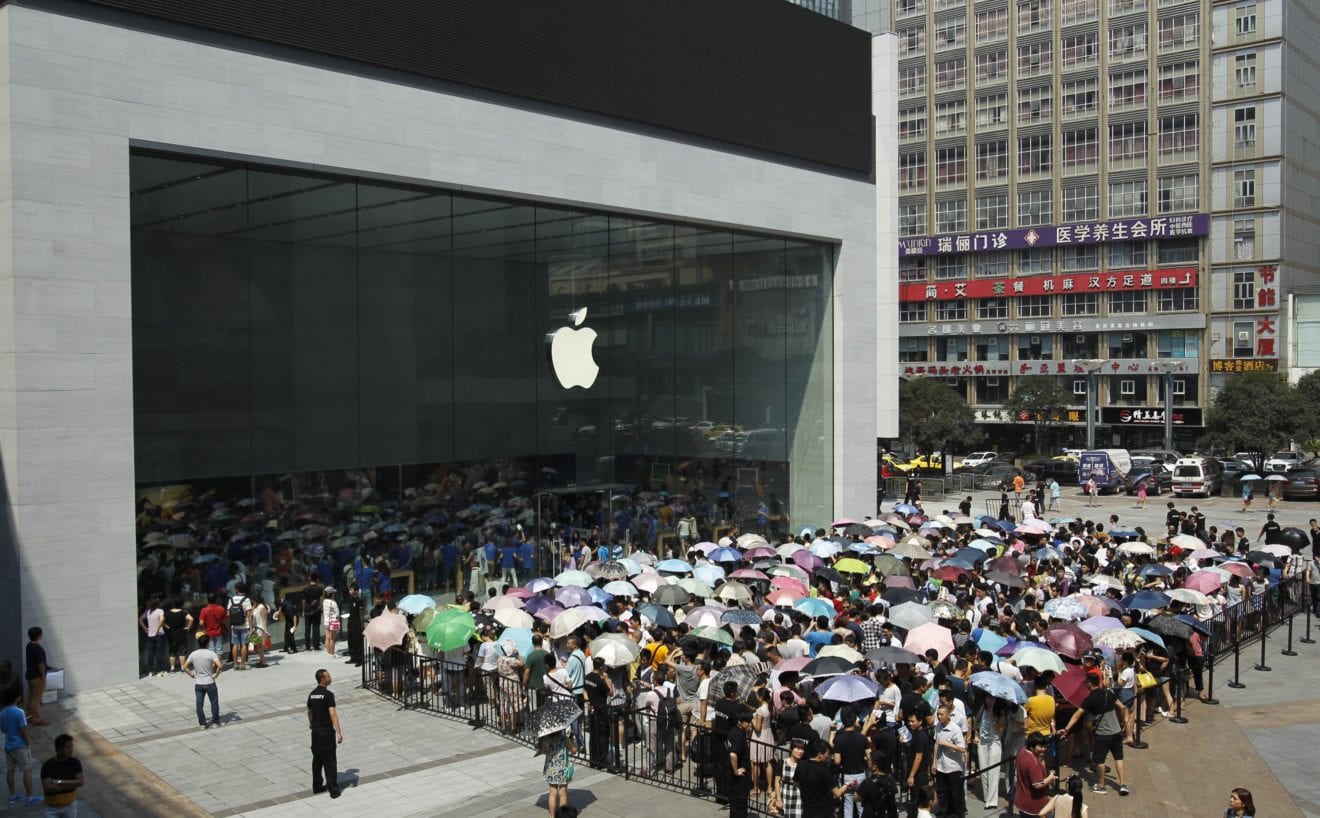
    China’s current economic problems – share trading suspended for the second time in a week after stocks fell 7% – doesn’t seem to be impacting Apple’s retail store expansion program in the country. The company has announced the opening of its 30th retail store in China, the second one it is opening this month. Back in 2014, the company set a goal of opening 40 stores in the country by October of this year.

    The latest store is in Xiamen, a port city on the Taiwan Strait. Xiamen is home to one of the four Special Economic Zones established by the Chinese government back in the 1980s, to encourage foreign investment and trade.

    Unusually, the store opens on a weekday, with Apple’s website showing that it will open at 10am on Thursday 14th January. The store is located in the SM Lifestyle Center at 399 Jiahe Road, in the Siming District of the city. It opens just a few days after the 29th store in Shenyang.

  • Amazon opens web services in Korea

    Amazon opens web services in Korea

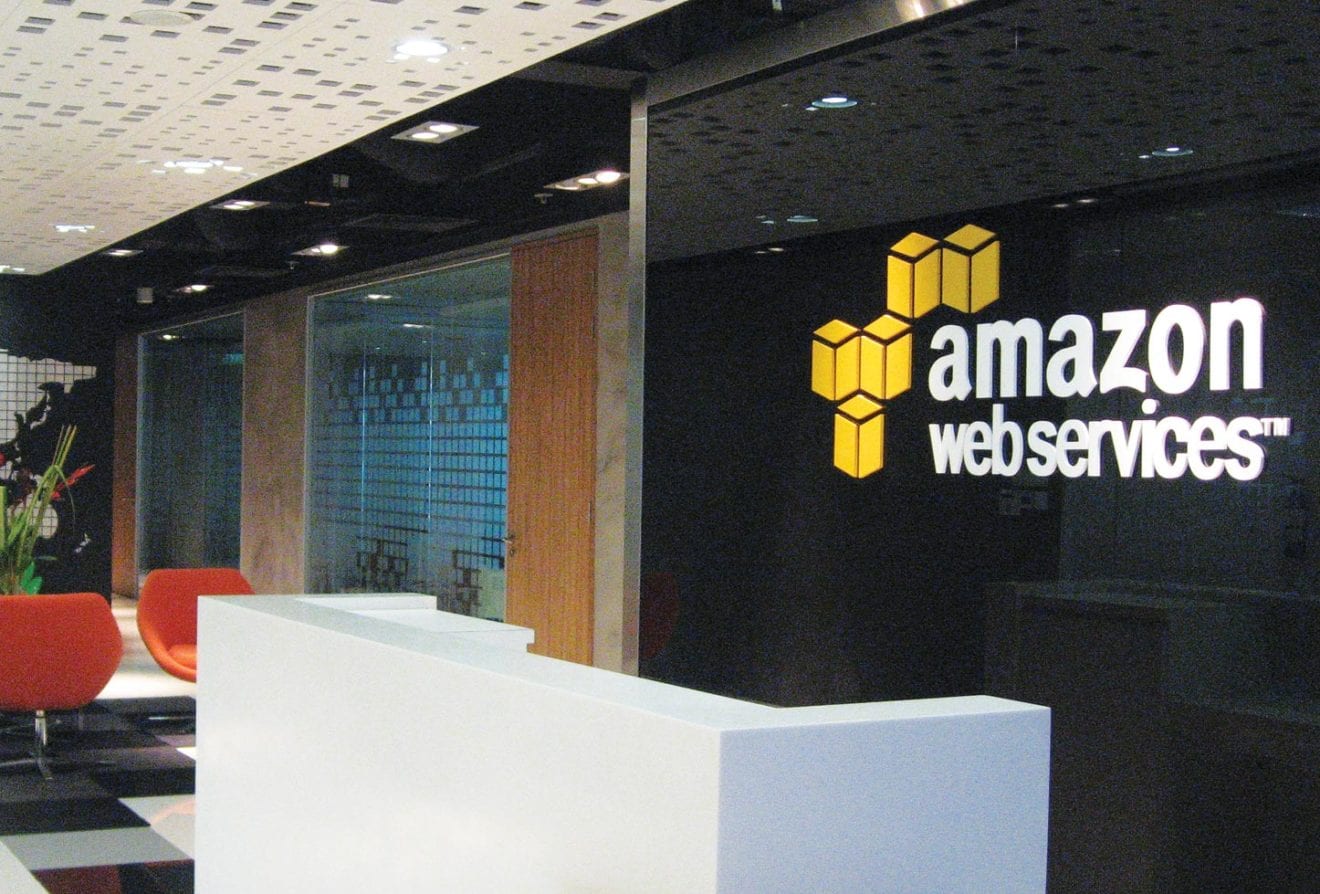
    Amazon Web Services has reported the opening of its twelfth geographic locale in Korea bringing the number of accessibility zones to 32. There are two new accessibility zones accessible in Seoul giving Korean clients the power alternative that they have been asking for quite a while.  The new zones bolsters Amazon EC2 , T2, M4, C4, I2, D2, and R3 occurrences . Other services incorporate Amazon Elastic Block Store (EBS), Amazon Virtual Private Cloud, Auto Scaling, and Elastic Load Balancing. A full posting is accessible in a site by Jeff Barr, Chief Evangelist at Amazon Web Services.

    The service is accessible now and developers can get to the zone details from https://aws.amazon.com. Itemized data relating to the zones was not made accessible but rather every zone comprises of one or more server farms. For Korean clients these will convey low dormancy arrangements anyplace in Korea, conveying under 10 millisecond service the nation over, something that was not accessible before to Amazon clients.

    The Act on the Development of Cloud Computing and Protection of Users (Korean Cloud Act) came into action on 28th September 2015 and was the first Cloud processing law to be passed in the world. With two zones accessible, adaptation to internal failure and failover between the two zones inside of the single national fringe is additionally ensured. The accessibility zones have been produced to be profoundly adaptable so that if request develops AWS will have the capacity to meet it.

    Andy Jassy, Senior Vice President, Amazon Web Services remarked: “Customers continue to choose AWS as their infrastructure technology platform because we have a lot more functionality than any other cloud provider, a significantly larger partner and customer ecosystem built around AWS, and unmatched maturity, security, and performance.”

  • Mercedes-Benz Malaysia hits highest ever record sales for 2015

    Mercedes-Benz Malaysia hits highest ever record sales for 2015

    The Mercedes-Benz brand recorded an all-time high of 10,845 units sold for 2015, which also represents a year-on-year growth of a massive 56 per cent growth over 2014 sales units of 6,932.

    Locally-assembled models, namely the C Class, E Class and the S Class made up the bulk of the total sales, accounting for 7,989 units, while the remaining 2,856 were made up of imported units. Of the imported (CBU) units, 2,811 units were made up of the A Class, CLA and the GLA models, which helped to pump up the total to make Mercedes-Benz the leading Premium brand in Malaysia. The latter three models represent Mercedes-Benz Malaysia’s (MBM) very successful foray into the compact size passenger car segment.

    Locally assembled Mercedes-Benz models accounted for 74 per cent of total sales for 2015. — Picture by YS Khong

    Locally assembled Mercedes-Benz models accounted for 74 per cent of total sales for 2015. — Picture by YS KhongThe highest volume, surprisingly, came from the E-Class, which maintains its tradition for being the most popular “Towkay” (meaning ‘boss’ in the Chinese Hokkien dialect) sedan, with 3,383 units sold. Following closely behind was the C Class, also a highly desired aspiration of newly-successful businessmen and corporate executives, which accounted for 2,697 units sold. The highest growth segment was in the flagship model, the S400L hybrid, which grew 201 percent in 2015 compared to the same period in 2014, accounting for 1,909 units.

    The timely introduction of the new compact vehicles series, which includes the A Class, CLA, and GLA models, and these models, together with MBM’s EEV strategy that actually saw a reduction in retail prices across certain key models, helped Mercedes-Benz Malaysia to achieve its record-breaking sales numbers. With a recent announcement that it will continue to pass on the benefits derived from certain tax exemptions back to its customers, MBM looks forward to continued leadership for 2016.

  • Apple to open its 25th new retail store in China

    Apple to open its 25th new retail store in China

    Apple has declared that its 29th retail location in China opens in Shenyang, the capital city of Liaoning, on Saturday, January 9 at 10:00 a.m. local time. The store will be situated in the MixC shopping center at 288 Qingnian Street in Shenyang’s Heping District.  The new store will be open Monday to Sunday between 10 a.m. to 9:30 p.m. local time, and offer traditional Apple Store services, including the Genius Bar, Workshops, Joint Venture, events and classes.

    This new MixC area in Shenyang will be Apple’s 25th retail location in Chinese territory, and the organization also operates in four retail locations in Hong Kong. Shenyang is situated around 250 miles (402 km) upper east of Dalian, a noteworthy port city in southern Liaoning where Apple’s 21st retail location in China opened on October 24, 2015.

    Apple has forcefully extended its foot print in China under the initiative of retail chief Angela Ahrendts, having opened new stores in Nanning on December 12, Beijing on November 28 and Chengdu on November 21. Apple likewise opened stores in retail locations in Chongqing, Hangzhou, Hong Kong, Nanjing and Tianjin all through 2015.