Author: Mei Ling Tan

  • Gap matches employees’ donations to aid group for Nepal Earthquake

    Gap matches employees’ donations to aid group for Nepal Earthquake

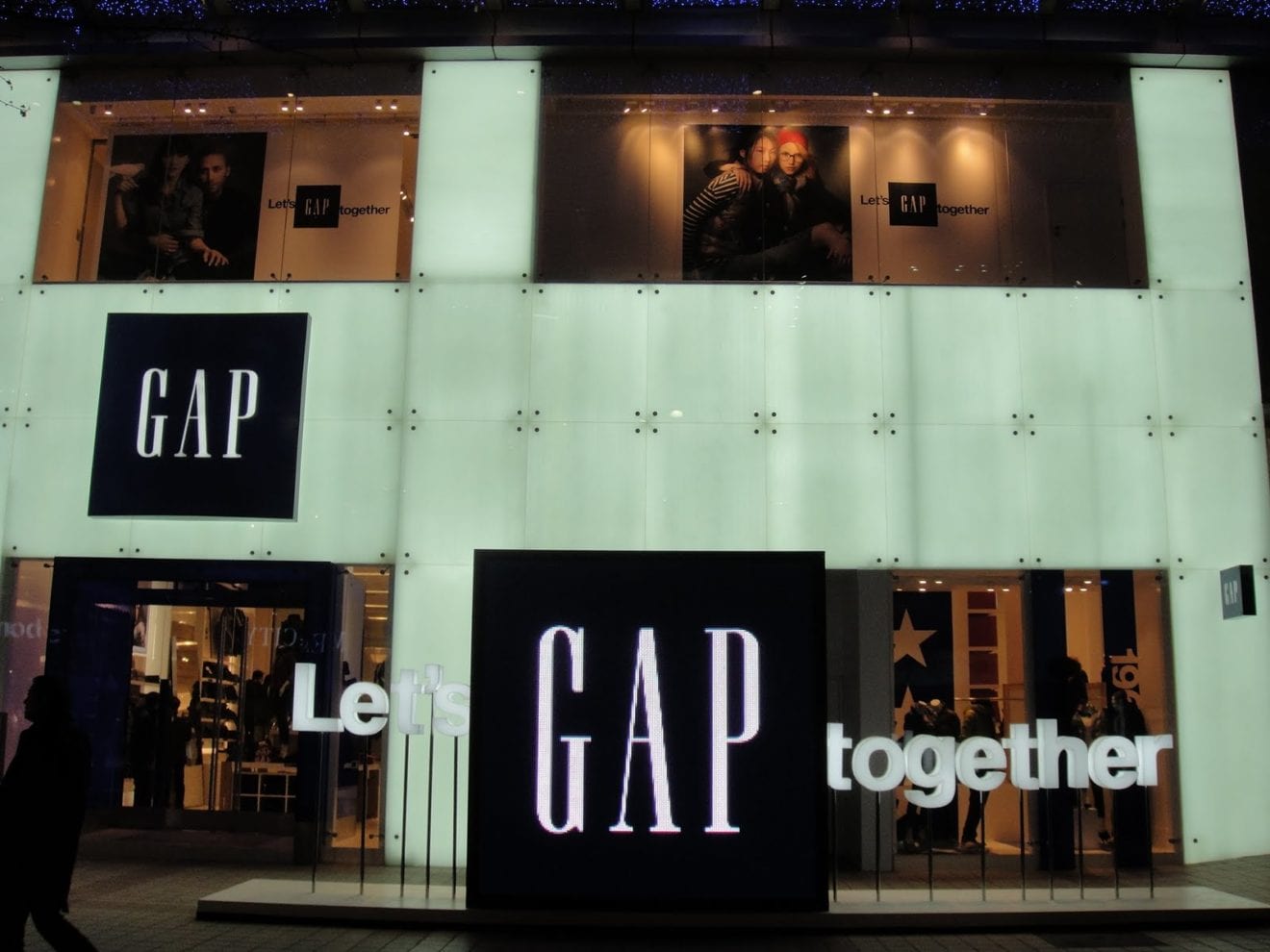
    Gap is matching funds of any eligible Gap employee who donates to the aid group Mercy Corps in response to the devastating earthquake that recently hit Nepal and the surrounding area, the US fashion giant said on Saturday. The disaster has injured over 8,000 people and killed more than 4,400 by Tuesday.

    “Gap Inc. and our employees extend our deepest sympathies to the victims and the families of all those affected by the devastating earthquake in Nepal, and those impacted across South Asia,” the company said in a statement.

    In respond to the concerns about whether the earthquake may have resulted in structural damage in some Bangladesh garment factories, the company said it’s working with the Alliance for Bangladesh Worker Safety (AFBWS) on the ground, the Bangladesh Garment Manufacturers and Exporters Association, the Accord on Fire and Building Safety in Bangladesh, and the Government of Bangladesh to ensure that all workers are safe.

    AFBWS is a group of 26 major global retailers formed to develop and launch the Bangladesh Worker Safety Initiative, a binding, five-year undertaking with the intent of improving safety in Bangladeshi ready-made garment factories after the 2013 Rana Plaza building collapse. Gap is a founding member of the group.

  • Growing prospensity among Malaysian consumers to shop online

    Growing prospensity among Malaysian consumers to shop online

    Malaysians are joining other South-East Asian consumers in a growing propensity to shop online, particularly for personal care items.

    In a statement today, Nielsen said based on its Global Survey on The Future of Grocery, at least one third of the 518 respondents intended to buy items such as body wash, shampoo and conditioner online within the next six months.

    Other top 10 grocery items which Malaysian consumers would purchase online in the next six months included laundry detergent, dish soap and hand or body lotion, it said.

    It said 16% of the Malaysia consumers would remain vigilant with their online orders for home delivery or using online/mobile coupons for their online shopping (16%).

    Nielsen said only 9% of Malaysian consumers were willing to use a virtual supermarket for their grocery shopping.

    It said the survey also revealed the growth in modern retailing channels such as hypermarkets and supermarkets, putting open-air/wet markets at their expense.

    “Malaysian consumers prefer the modern channel with only 18% keen to patronise open-air or wet markets when buying food and groceries in the next 12 months.

    “A quarter of Malaysians feel that grocery shopping in the retail store is a fun way of spending time with one-self or the family where 24% find grocery shopping to be an enjoyable and engaging experience,” it said.

    Nielsen’s executive director of client service in South-East Asia, North Asia and Pacific, Kaushal Upadhyay, said savvy retailers would look to provide digital strategy that included interaction at each point along the path to purchase.

    “The connected commerce era has arrived where the most successful retailers and manufacturers will be at the intersection of the physical and virtual worlds, leveraging technology to satisfy shoppers however, wherever and whenever they want to shop,” he said.


  • McDonald’s supplier fined for pollution in China

    McDonald’s supplier fined for pollution in China

    A Chinese joint venture of U.S.-based J.R. Simplot, which supplies frozen french fries to McDonald’s, was fined 3.92 million yuan ($632,370) on Wednesday by the Beijing city government for water pollution, the official Xinhua news agency reported.

    The Beijing government found the venture had been discharging contaminated waste water that exceeded stipulated levels, according to Xinhua.

    Xinhua said the business was a joint venture between Simplot, a unit of McDonald’s, and a local firm. Reuters could not independently verify the relationship.

    Phone calls to Simplot in China were left unanswered.

    Simplot, headquartered in Idaho, is a global potato supplier for McDonald’s.

    “Simplot has assured us that they have implemented a corrective action plan, and we will continue to hold them accountable for implementation and enhanced procedures for compliance,” McDonald’s said in an emailed statement to Reuters, adding it took the infraction “very seriously.”The fine comes as China is strengthening its environmental regulations as public anger builds over worsening pollution.

    China will ban water-polluting paper mills, oil refineries, pesticide producers and other industrial plants by the end of 2016, as it moves to tackle severe pollution of the water supply which has left one-third of China’s major river basins and 60 percent of its underground water contaminated.

    Chinese sales at McDonald’s and Yum Brands’s KFC slumped last year after one of their suppliers, Shanghai Husi Food, was forced to suspend operations after an undercover Chinese media report showed workers using out-of-date meat and doctoring production dates.

    U.S-based meat supplier OSI Group is the parent company of Shanghai Husi.

  • Wesfarmers says independent, specialty retailers will lose more market share

    Wesfarmers says independent, specialty retailers will lose more market share

    “For some but not all, lower interest costs, and then, in Sydney and Melbourne particularly, there’s the wealth effect of higher house prices. And [share]markets have generally been OK so people’s superannuation balances are probably looking OK.”

    Mr Goyder said the main threat to the resurgence in sentiment was unemployment.

    “The thing that we always worry about is unemployment because we think that’s the thing that can knock consumer confidence. That’s the one thing I’d be watchful of,” he said.

    “But at the moment, you know, I think these numbers in some way belie a sense of negativity on the Australian economy.”

    Excluding new store openings, Wesfarmers on Wednesday posted 3.8 per cent growth in Coles  food and liquor sales in the three months to March 31, 2015. This was its weakest growth rate for a year, as deflation took a toll across its 775 supermarkets, with food and liquor prices falling 1 per cent.

    Including new stores, total food and liquor sales posted 5.4 per cent year-on-year quarterly growth to $7.1 billion.

    Wesfarmers says its “strongest set of numbers for some time” demonstrate the health of the Australian economy, but unemployment remains the biggest risk to consumer confidence.

    Wesfarmers, Australia’s largest private sector employer, on Wednesday reported a 3.3 per cent increase in retail sales to $13.12 billion for the March quarter compared with the same quarter last year.

    The result was boosted by stellar sales at its Bunnings hardware chain and market-share gains by supermarket chain Coles, but dampened by weakness in liquor and at its discount department store Target.

    “I think consumers right now have got the benefit of lower fuel prices, probably lower energy prices,” managing director  Richard Goyder said.

    Meanwhile, Bunnings exceeded expectations with quarterly same-store growth of 9.4 per cent, and discount department stores Kmart and Target reported disparate results: Target same-store fell by 1.9 per cent, while Kmart’s rose by 6.3 per cent.

    Bruce Smith, portfolio manager at Alphinity Investment Management, said the results were pretty much in line with expectations. “Bunnings is a brilliant business and going strongly, the Kmart recovery continues and Target’s still pretty ordinary,” he said.

    Deutsche Bank analyst Michael Simotas said the third-quarter results were solid, with all divisions stronger than expected except Target. “We expect this result to be well received by the market but it is too early to judge the impact of Woolworths’ planned price investment,” he said, referring to supermarket rival Woolworths’ announcement in February that it would spend at least $500 million on cutting its prices and improving its stores.

    Mr Goyder said Wesfarmers “changed nothing based on what any competitor has done in the past few months”.

    And finance director Terry Bowen said Coles had plenty of opportunity to steal market share in fresh food, such as meat, from independent and specialty retailers. “In broad terms, independents have lost market share [over the past five years] and if you look … more holistically at the market, Aldi and Costco … have gained market share and Coles and Woolworths have basically maintained and moved their market share around a bit.

    “But the big movements have been Aldi and Costco growing – bearing in mind they are the largest retailers in the world, multinationals. And the independents have lost market share.”

    Wesfarmers estimated Coles had about 25 per cent of the Australian food market, about 20 per cent of liquor and less than 20 per cent of the home improvement and office supply markets.

    Shares in Wesfarmers defied a 1.85 per cent fall in the broader market to close down 15¢, to $43.
  • Aldi under fire on disclosure of credit card, tap-and-go fees

    Aldi under fire on disclosure of credit card, tap-and-go fees

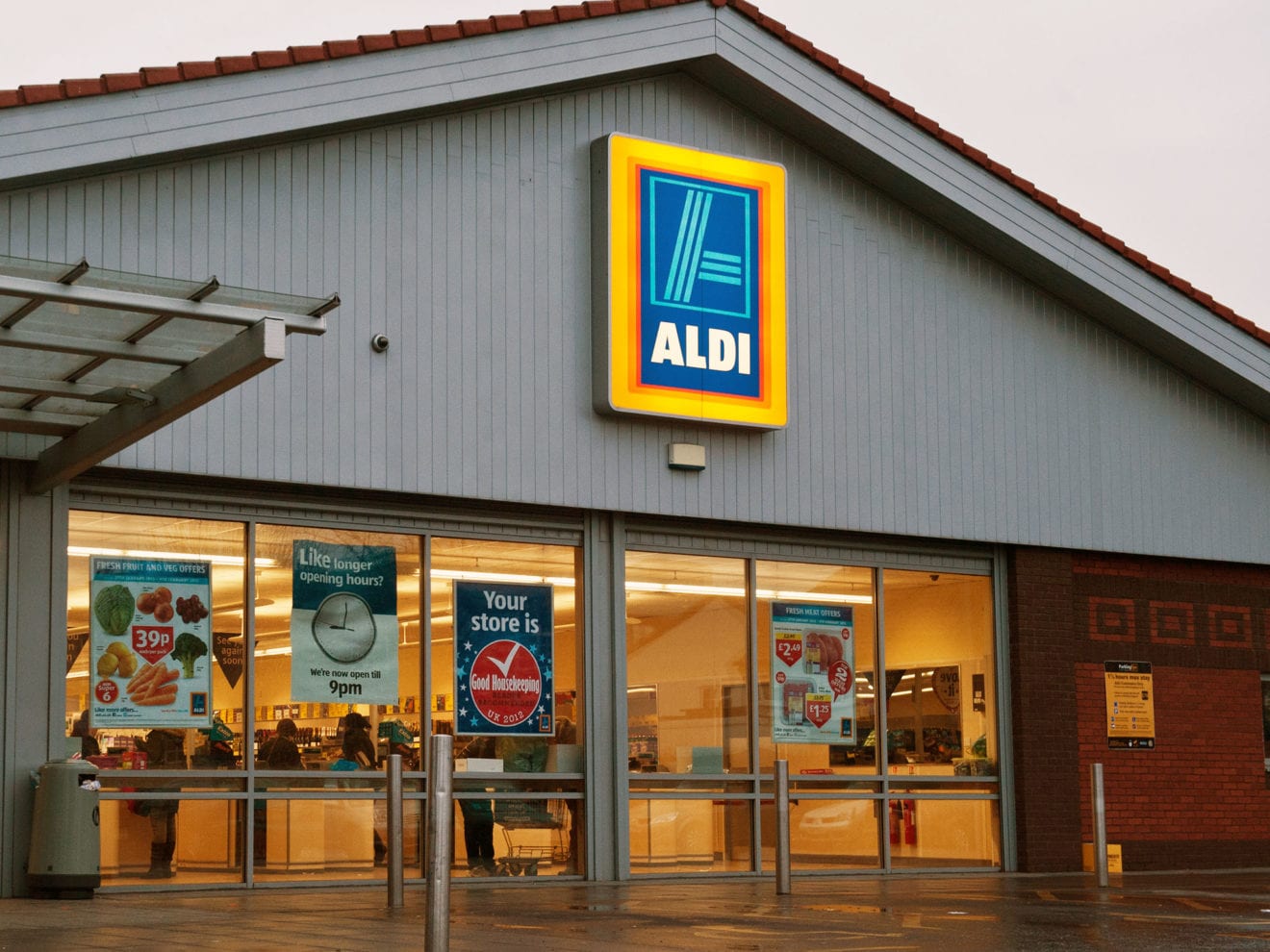
    The corporate regulator is expected to grill Aldi over its failure to consistently notify customers of fees for using credit cards and ‘tap and go’ cards, six months after the discount supermarket promised it had done so.

    Aldi told the Australian Securities and Investments Commission it would improve its disclosure of the 0.5 per cent surcharge by October last year, it is understood. It said it would do so through signs at the entrance of the stores and the registers, and by ensuring its cashiers notified shoppers before payments were made.

    But Aldi supermarkets visited by Fairfax Media have not consistently disclosed the surcharge, leaving customers disappointed and irritated. Fairfax Media spoke to Aldi customers outside Melbourne stores on Wednesday and none knew about the fee or were informed by their cashier.

    The store in Prahran does not have signs at the entrance. Instead, like many stores, it displayed the warning in tiny print on a sticker at the register.

    The Aldi store in Box Hill South put up signs in recent weeks, while the Balaclava store had none as at February.

    Aldi customer and German citizen Claudia Scent said, “I didn’t know before now, lucky I paid in cash. I come from Germany and there’s no surcharge at Aldi there.”

    St Kilda East resident Claire had just paid for some groceries with her credit card. “It would be nice to know. I’d like a bigger sign or for them to tell you,” she said.

    Aliska Angyal-Kvalic, of Greensborough, said, “They should probably let people know.  If you had a sign people could read you wouldn’t need to tell people.”

    A spokeswoman for Aldi said the supermarket had conducted an audit last year to ensure its stores had appropriate signs and stickers.

    “If for any reason an Aldi store does not have the required signage, we will ensure that this is corrected immediately,” she said.

    Aldi is the only supermarket chain to apply the surcharge on credit card and tap-and-go purchases. Woolworths, Coles, Costco and IGA supermarkets do not.

    Under the ASIC Act, a failure to adequately disclose surcharges, or creating the impression that surcharges do not apply, may be misleading or deceptive.

    But because Aldi’s was a voluntary undertaking, it’s understood there was no deadline for ensuring the signs were in stores, and there are no real consequences for failing to comply. ASIC can resume talks with Aldi, however, if it believes Aldi has not complied with its commitment.

    Aldi has 367 supermarkets throughout Australia and is eyeing 15 per cent market share through expansion into Western Australia and South Australia, and double-digit store openings each year on the east coast.

  • China brands favoured by domestic consumers in marketing, experts say

    China brands favoured by domestic consumers in marketing, experts say

    CHINESE brands are generally outperforming their multinational counterparts in terms of consumer preference as they’re quicker to catch up with latest media trends and bold with new marketing campaign formats, industry experts noted.

    “Chinese entrepreneurs and marketers have a better understanding of local consumers and are quick to adapt to new marketing trends and Chinese brands will enjoy a golden age in the next 10 years,” Tian Tao, deputy general manager of market research firm CTR China, told the China Insight Summit in Shanghai today.

    “Domestic brands are quicker to spot popular entertainment shows and they have a shorter decision making process than most multinational players, which gives them more opportunities to impress picky consumers,” general manager of CTR’s Media Intelligence unit Zhao Mei told Shanghai Daily.

    In the first quarter, almost all of the popular TV program sponsorship was dominated by domestic brands, according to CTR’s media monitoring data.

    Among the top 50 most frequently purchased consumer products of Chinese urban households, more than 30 of them are made by home grown manufacturers, according to data tracked by Kantar Worldpanel, CTR’s consumer research service.

    In the first quarter this year, total advertising expenditure calculated by published rate cards in China shrank 1.9 percent, with TV ad spending declining 2.9 percent from a year ago.

    Internet ad expenditure was the fastest growing segment, rising 33 percent from a year ago, while office building digital screen advertising added 16 percent and movie theaters’ video ads were up 31 percent.

    TV will stay play a major role in helping build a brand name and popular TV programs as well as some better performing regional TV stations are expected to enjoy a higher premium in the coming year, according to Zhao.

  • V-Mart to invest Rs 200 cr, add 200 stores in 5 years

    V-Mart to invest Rs 200 cr, add 200 stores in 5 years

    Retail chain V-Mart will invest around Rs 200 crore to add nearly 200 new stores in different part of the country in the next five years.

    The company is also targeting over four-fold jump in revenue to touch Rs 2,500 crore by 2020 with smaller towns expected to be its key growth drivers.

    “We will have around 300 stores in the next five years with a revenue of around Rs 2,500 crore by then,” V-Mart Retail Chairman and MD Lalit Agarwal told PTI.

    The company had a revenue base of Rs 574.96 crore in FY 2013-14. It is, at present, operating 109 stores in 91 cities.

    Agarwal said: “We have clear vision that smaller towns will be our growth drivers as they have very high potential and aspiration level is growing up.”

    Of the total stores that the company has, 56 are in tier III clusters, 35 are in tier II towns and 18 in tier I cities.

    “Presently, the tier III clusters contribute between 55 to 60% of our revenue and we strongly believe that it would go up to 75% in next three years,” Agarwal said.

    V-Mart is present at district level markets including Purnia, Saharsa, Madhubani, Motihari, Basti, Gonda, Lakhimpur, Bahraich and is in process to expand its base in the Eastern regions of Bengal and Orissa.

    “We are finalising the properties there. Presently we are concentrating on Orissa and Bengal,” he said.

    He said in order to drive up sales further, the company would enhance its in-house labels, while also increasing offering existing brands. Currently, it has 21 in-house labels, which contributes around 25% of the sales.

    “We would increase the ratio to 50% from the existing 25% in the next three years. We would add more labels and expand the depth of the existing ones,” he added.

  • Woolworths ads not so cheap, but Coles ads down, down

    Woolworths ads not so cheap, but Coles ads down, down

    The supermarket wars have pushed two of Australia’s big advertisers in different directions, with No. 1 supermarket Woolworths revving up its spending while Coles winds its down.

    Woolworths is estimated to have spent $18.8 million on traditional advertising from January to March this year. This was an 8 per cent increase on its $17.4 million supermarket spending in the first three months of last year.

    By contrast, Coles is estimated to have slashed its ad spend to $13.7 million from January to March. This is down 17 per cent from $16.5 million in the same period last year.

    The Nielsen advertising expenditure estimates cover the bulk of the supermarkets’ ad spend, across television, radio, print, outdoor, cinema and some online. It doesn’t cover advertising booked through exchanges, specialist press and social media.

    Credit Suisse analyst Grant Saligari said Woolworths had “increased advertising frequency [on TV] and has been running more promotions in the third quarter [from January 5] than in prior periods.”

    Woolworths and Coles declined to comment.

    Coles’s long-running “Down, Down” campaign, featuring rockers Status Quo, has been widely described as successful but annoying. Woolworths responded last year with a less lauded campaign featuring a “Cheap, Cheap” slogan, animated birds and singer Samantha Jade. Its ‘BrandZAC’ campaign for Anzac Day last month was widely panned.

    Sources have suggested Coles’s lower ad figures this year could be because it was working out its response to Woolworths’ campaign, or because its existing campaign was successful.

    Ben Willee of Spinach Advertising said: “Just because you spend more doesn’t necessarily mean your campaign is more effective. The hardest part is getting your creative right.”

    Woolworths – owner of major retailers including alcohol business Dan Murphy’s and discount department store Big W – and Wesfarmers – owner of Coles and hardware chain Bunnings – are two of Australia’s biggest advertisers.

    Responding to disappointing grocery sales and an improving Coles, Woolworths in February said it would spend at least $500 million on cutting its prices and improving its stores.

    Coles this week reported a marginal increase in market share in the third quarter and tipped independent and specialty retailers would continue to lose market share at the hands of foreign supermarkets Aldi and Costco. Coles has about 25 per cent of the Australian food market, Wesfarmers said.

    Excluding new store openings, Coles food and liquor sales grew by 3.8 per cent in the three months to March 31. Including new stores, Coles food and liquor grew by 5.4 per cent, to $7.1 billion.

    Woolworths is set to hold a strategy briefing day and store visits next week, and is tipped to post third-quarter sales growth of about 0.9 per cent.

  • China to cut consumer good tariffs

    China to cut consumer good tariffs

    China’s government says it will cut tariffs on consumer goods in a bid to get local Chinese to spend more in the mainland.

    The  move may well prove an additional blow to Hong Kong’s retail sector already reeling from reduced spending by mainland visitors.

    Reports from China’s mainland say tariffs on imported consumer goods will be cut “in parts of China” by the end of June. The move is aimed at increasing domestic consumption, shoring up economic growth and reducing the amount of money spent by mainlanders overseas.

    The decision was made last week at an executive meeting of the State Council, presided over by Premier Li Keqiang, who is concerned that mainlanders are now not only buying luxury goods overseas, but everyday items as well.

    The China Daily reports more duty-free stores will open at China’s borders and the individual allowances will be raised. The process of obtaining tax refunds will be eased – in tandem with a greater focus on catching smugglers.

    Chinese now account for an estimated 40 per cent of luxury good sales in France and for 35 per cent of luxury sales in Italy, according to data from the HSBC.

    Mainland retailers and travel specialists say it is difficult to predict the effect of the government’s move until a more detailed tariff schedule is released, along with duty free allowances and clarification on which product categories will be affected.

  • Future Group merger creates Indian giant

    Future Group merger creates Indian giant

    Future Group, one of India’s highest profile retailers, has agreed to merge its operations with Bharti Retail to create a retail powerhouse with more than 570 stores.

    Bharti Retail currently runs more than 200 Easyday branded stores of multiple formats across 114 Indian cities, traversing Punjab, Haryana, National Capital Region, Western Uttar Pradesh, Uttarakhand and Bangalore.

    Future Group has more than 17 million sqft of retail space in a variety of formats and categories in 166 Indian cities.

    Post merger, the combined group will comprise two organisations, both listed. One, named Future Retail will run the combined store network. The other, Future Enterprises, will manage the assets, and infrastructure of the two companies.

    Post-merger, Future Retail will run stores in 243 cities with 18.5 million sqft of floor space. The network will include 203 Big Bazaar and Easyday hypermarkets, 197 Food Bazaars and Easyday supermarkets and 171 other retail shops including eZone, Foodhall, Home Town and FBB.

    Kishore Biyani, founder and CEO of Future Group said the Bharti operations and network “complement perfectly” with Future Retail’s.

    “It will bring us closer to millions of consumers and provide new opportunities for our supply partners. The operational efficiencies that can be derived from the merger will create significant value for our shareholders,” he said.

  • Horror quarter for McDonald’s Japan

    Horror quarter for McDonald’s Japan

    McDonald’s Japan had already warned investors it would be a nightmare year.

    Earlier this month it announced the closure of 131 stores, a menu revamp and refurbishment of 500 stores in a bid to stem a projected US$319 million loss.

    This week, McDonald’s Holdings Company (Japan) released its first quarter trading results: same-store sales plunged 32.3 per cent due largely to a 24.3 per cent drop in customers and total sales fell 39.9 billion yen (US$332 million) to 83 billion ($691 million).

    Sales were hampered by ongoing food safety issues relating to suppliers, and even a widely reported shortage of fries, which led to unprecedented rationing to customers.

    The result was an ordinary trading loss of 11.1 billion yen ($92.4 million) which after the first round of one-off restructuring costs grew to a total 14.5 billion ($121 million) loss for the three months to March 31.

    But the fast food company said same store sales are trending upwards – with expectation they will turn positive in the third quarter. Provisional figures for April show a drop of 21.5 per cent, nearly a third less than the first quarter.

    For now, the company says its focus is on executing the Business Revitalization plan in order to accelerate the business recovery, lay the foundations for future growth, and achieve mid- and long-term goals.

    “Going forward, regaining customer confidence will remain our number one priority. In addition, we aim to accelerate the pace of business recovery and lay the foundations for future growth through the flawless execution of our Four-pillar Business Revitalization Plan: “Customer Focused Initiatives”, “Accelerate Restaurant Revitalization”, “Localize Our Business Structure”, and “Improve Cost and Resource Efficiency”,” McDonald’s Japan said in its earnings statement.

    “Through these structural changes along with customer and community focused activities, we will strive to achieve our vision of becoming a Modern Burger Restaurant that Connects with Customers.”

  • Tesla Posts Wider Loss, Highlights Energy Storage Demand

    Tesla Posts Wider Loss, Highlights Energy Storage Demand

    Tesla Motors reported a wider first-quarter net loss on Wednesday, but outperformed expectations and stuck to key milestones for the year ahead, despite pressure on margins.

    Chief executive officer Elon Musk said during a conference call that demand for the company’s new line of stationary energy storage systems, unveiled last week, is “off the hook.”

    Over time, it was possible stationary storage could be a bigger business for Tesla than selling cars, he added.

    Tesla said in a letter to shareholders on Wednesday that “total addressable market size for Tesla Energy products is enormous and much easier to scale globally than vehicle sales.”

    Musk said last week that the stationary battery storage systems could be “materially profitable” sometime next year.

    The shares of the Silicon Valley electric car maker rose about 2 percent after hours from their close of $230.43.

    The challenges confronting Tesla’s auto business were illustrated by the company’s continued cash burn and signs of pressure on profit margins.

    Tesla’s cash reserves fell to $1.5 billion as of March 31 from $1.9 billion at the end of 2014. The company said it plans a total of $1.5 billion in capital spending this year, much of it to buy production tools for the Model X, complete its large battery “gigafactory” in Nevada, and for other facilities.

    Musk said Tesla’s cash flow should turn positive later in the year.

    “It’s extremely likely cash flow is really good” by the end of the fourth quarter, he said.

    Chief financial officer Deepak Ahuja said Tesla is looking at establishing asset backed lines of credit to “assure we have a strong balance sheet.”

    Tesla reported an adjusted net loss of 36 cents a share in the latest quarter, excluding certain expenses, compared with a profit of 14 cents a share on the same basis a year ago. Analysts had expected a loss of 50 cents a share on that adjusted basis.

    Tesla had a net loss in the first quarter of $154.2 million, or $1.22 a share, on revenues of $939.9 million. A year ago, Tesla reported a net loss of $49.8 million, on revenues of $620.5 million.

    However, the automaker warned that a “less rich product mix” could push down average selling prices for the Model S sedan, which now starts at $76,200.

    Tesla delivered 10,045 Model S sedans in the first quarter, a 55 percent increase from the year before. The company forecast deliveries of 10,000 to 11,000 vehicles in the second quarter.

    Tesla could face more competition in the future as established automakers field new electric vehicles with longer driving ranges. There is also the potential other well capitalized Silicon Valley companies such as Apple Inc or Google Inc will move into the market.

    Asked about that, Musk said: “I certainly hope Apple gets into the car business. That would be great.”

    Tesla said it will start delivering its Model X sport utility vehicle late in the third quarter, still within the window the company promised earlier this year. The Model X is critical to Tesla’s goal of delivering 55,000 vehicles this year.

  • Middle-aged Koreans embrace mobile shopping

    Middle-aged Koreans embrace mobile shopping

    As grocery shopping through major retailers’ mobile shopping platforms is becoming a normal practice among Koreans, women in their forties are increasingly using mobile devices to buy their groceries.

    According to the Ticket Monster social commerce site, 73 per cent of the company’s female customers made purchases through the company’s mobile platform in the first quarter of the year.

    The figure represents a three per cent increase over the average for 2013 as a whole. Women in their thirties were the largest group of purchasers at 52.7 per cent, while women in their twenties and forties stood at 27.4 per cent and 16.1 per cent respectively.

    However, purchases among women in their forties increased the most, with growth of 3.5 per cent, while sales among those in their twenties actually declined by 4.8 per cent.

    These groups purchased groceries the most, including fresh food.

    Customers of both sexes in their thirties were the most frequent buyers of fresh food through the Ticket Monster mobile platform with a 51 per cent share, compared to 23 per cent and 21 per cent for those in their forties and twenties respectively.

    Ticket Monster saw its mobile platform fresh food sales grow threefold in the first quarter compared to the same period last year.

  • Foodpanda seals $110m funding

    Foodpanda seals $110m funding

    One of the world’s best-known merchant bankers has taken a strategic stake in fast-growing food delivery service Foodpanda.

    Just 50 days after securing $110 million cash injection from its parent and other new investors, the Rocket Internet subsidiary says Goldman Sachs has invested another $110 million into the business and will take a seat on its advisory board.

    The funds are being used by Foodpanda to snap up rival delivery services in new and existing markets to help it gain critical mass and eliminate competition. Since its launch in 2012 the business has now raised more than $310 million.

    Its latest acquisitions have been in Malaysia and other Southeast Asian markets, along with Russia, Mexico and Eastern Europe.

    Foodpanda says it will use the Goldman Sachs funds to expand its own delivery activities and improve overall customer experience across its 40 markets.

    Foodpanda’s service standards are slipping in some established markets and customers often lack an alternative supplier due to Foodpanda’s ‘scorched earth’ acquisition strategy. Improving delivery times, the temperature control and delivery condition of food and improving customer response times is becoming a major challenge for the company in some markets.

    “Last-mile delivery has been part of Foodpanda’s operations since the beginning. It will now accelerate its efforts to drive customer satisfaction, aiming to offer the most convenient way of ordering food – from the mobile app and online,” the company said in a statement.

    Ralf Wenzel, co-founder and CEO of Foodpanda group, said Goldman Sachs has deep expertise in online marketplaces and will help the company build the leading mobile food delivery marketplace in Emerging Markets targeting over 3 billion consumers.

    “The Emerging Markets represent the largest opportunity in online food delivery and we are committed to create the most convenient way for ordering and delivering food.”

    Foodpanda now has partnerships with more than 45,000 restaurants across 40 countries, and claims market leadership in 32 of those markets.