Author: Mei Ling Tan

  • Lowe’s opens India innovation centre

    Lowe’s opens India innovation centre

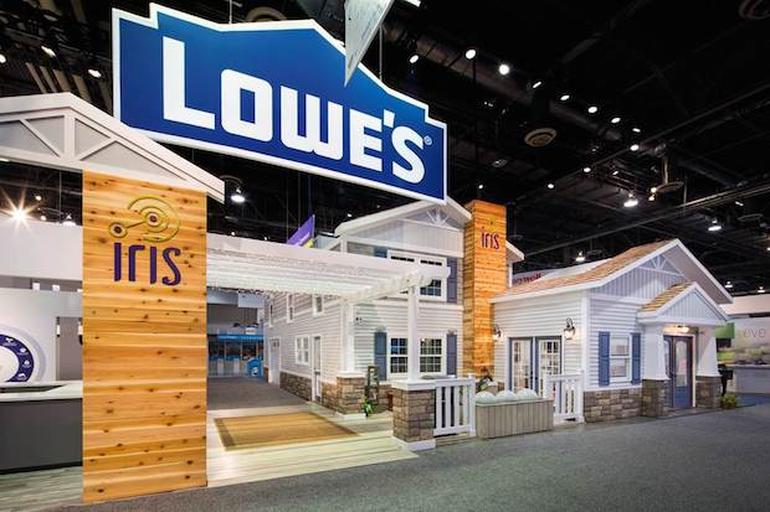
    Lowe’s Services India, a subsidiary of Lowe’s Companies US, has opened a Global Innovation Center in Bangalore, India.

    Lowes, the world’s second largest home improvement retailer, says the centre will focus on “the next-generation customer experience”, by emphasising technology and analytics to provide customers with a more personalised shopping experience.

    “This centre will work towards building a strong team to support Lowe’s efforts to become an omni-channel home improvement company,” the company said in a statement.

    The new GIC is led by Narayan Ram, MD of Lowe’s India and will provide Lowe’s with a strategic footprint to leverage Bangalore’s potential for technology-led innovation, in addition to engaging India’s growing talent pool. The facility, spread over 110,000 sqft, expects to employ approximately 500 people by the end of 2015.

    Robert Niblock, chairman, president & CEO of Lowe’s Companies, said,the centre will bring to fruition a valuable part of the company’s analytics and technology potential.

    “We feel confident that with this strengthening of our presence in India, we will be able to provide more personalised experiences to customers, helping us continue our pace of strategic growth.”

    Ram said the centre will employ the concept of ‘one team, multiple locations,’ as the company works across its global organisation to apply the power of analytics and technology to the Lowe’s business, “so customers can engage with us whenever and however they need support”.

    “We are planning to invest even more in our local teams and innovate omni-channel retail, which underlines our commitment to delivering a consistent experience to the customer, however they choose to shop with Lowe’s.”

    Lowe’s serves some 15 million customers a week in the US, Canada and Mexico at more than 1835 home improvement and hardware stores and online at lowes.com, lowes.ca and lowes.com.mx.

  • Atletico Madrid plans 200 China stores

    Atletico Madrid plans 200 China stores

    La Liga football league champions Atletico Madrid are set to cash in on growing Chinese fascination of European football by opening a retail store network in China.

    Atletico Madrid will open 200 retail outlets in China, according to Chinese news agency Xinhua.

    Such a network would be considerably larger than other football teams’ retail presence in China. Manchester United, Chelsea, Real, FC Barcelona and Arsenal all have a presence, on differing scales.

    The stores will be opened in Wanda Malls, owned by Chinese businessman Wang Jianlin, who took a 20 per cent stake in the Spanish club earlier this year.

    The club sees the stores as an important tool to broaden its brand awareness in Asia.

    Atletico already has a deal with Chinese football club Shanghai Shenhua and trains a number of Chinese youngsters as part of ‘Project Wanda’ to help develop young footballers.

    Atletico is expected to tour China between seasons.

  • Woolworths bolsters David Jones team

    Woolworths bolsters David Jones team

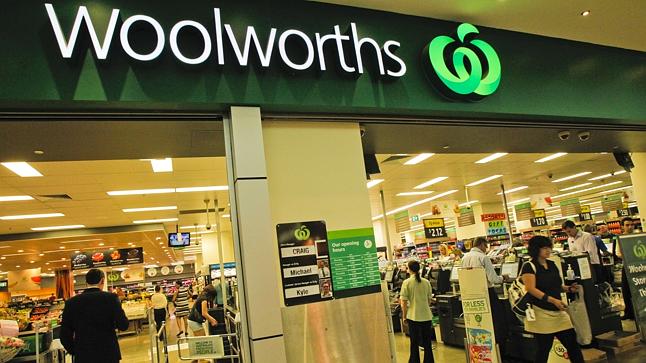
    South African retailer Woolworths has bolstered the board of its Australian subsidiary, Vela Investments, the vehicle for its AUD2.1 billion (USD1.63b) takeover of David Jones last year.

    Woolworths has appointed four new directors to the Vela Investments board – corporate adviser Patrick Allaway, David Jones acting chief financial officer John McRae, Woolworths’ finance director Reeza Isaacs, and Woolworths’ chief operating officer Daniel Ngumeni.

    They join Woolworths chief executive Ian Moir, David Jones chief executive Iain Nairn and David Jones chief operating officer David Thomas on the Vela board.

  • Sherri Hill wins Hong Kong copycat case

    Sherri Hill wins Hong Kong copycat case

    A Hong Kong retailer of knock-off designer dresses has been hit with a $2.25 million judgment by US-based Sherri Hill and order to shut down a string of online stores.

    Sherri Hill, a US designer and retailer of quality prom dresses and evening gowns, has won a permanent injunction against Dress Market , a Hong Kong-based dress retailer who had been operating a network of websites peddling cheap knockoff prom and pageant dresses.

    Additionally, after the injunction had been entered, Dress Market had committed contempt of court by defiantly re-posting Sherri Hill’s copyrighted images. In addition to imposing monetary damages, the court ordered all eight domain names and websites operated by the Hong Kong company be completely shut down and transferred to Sherri Hill.

    Gioconda Law Group Sherri Hill Dress

    In the original complaint filed in federal court in Manhattan in August 2013, Sherri Hill had accused Dress Market of selling hundreds of Sherri Hill dresses through multiple websites, including MerleDress.com, which, as a result of the case, now directs to Sherri Hill’s website.

    The complaint alleged that, by using Sherri Hill’s copyrighted images, Dress Market deliberately confused consumers into thinking they were getting the same style and quality products, when the actual quality of the dresses was much lower. Several dresses had been shipped to investigators in New York City by Dress Market’s employees, according to court papers.

    Dress Market’s lawyers unsuccessfully sought to have the case dismissed, arguing that the US federal courts lacked jurisdiction because Dress Market was operating its business entirely out of China and Hong Kong.

    But the court found that the sale and shipment of several dresses to the New York investigators, along with the unauthorised display of copyright images to New York consumers, were sufficient activities to warrant granting US federal courts jurisdiction over the infringing conduct occurring in China.

    After the preliminary ruling, Dress Market’s lawyers then sought to formally withdraw, claiming that the defendant had ceased communication.

    The federal lawsuit, filed by New York brand protection specialist Gioconda Law Group, successfully sought the statutory damages and a permanent injunction.

    “Sherri Hill will continue to protect her valuable trademarks and copyrights aggressively, both online and in the bricks-and-mortar context,” said Joseph C. Gioconda, her attorney for Sherri Hill.

  • Periwinkle childrens clothing targets ASEAN

    Periwinkle childrens clothing targets ASEAN

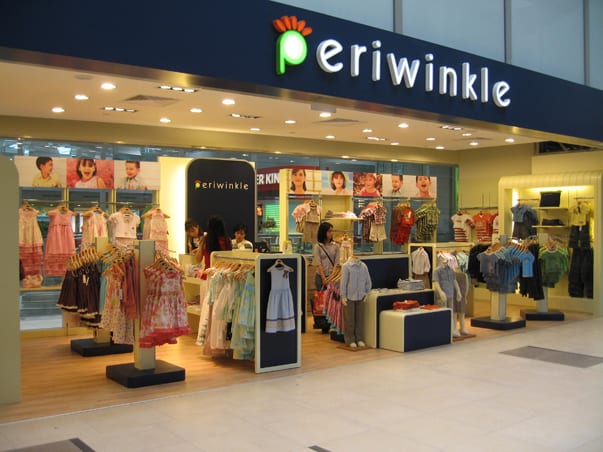
    Periwinkle childrens clothing has opened its first store in Indonesia through a licensing agreement with an Indonesian partner.

    The Philippines retailer, which already has a presence in Singapore and Canada, received support from the Department of Trade and Industry, as part of a program to help retailers from the Philippines expand into other ASEAN markets with the advent of the Asian Economic Community (AEC) this year.

    “We intend to assist local companies with established brands, expand in the international market by partnering with foreign companies, particularly in the Asean countries, and promote the Philippines as a reliable and competitive source of global fashion retail brands,” said Trade Undersecretary Ponciano C. Manalo Jr.

    Periwinkle’s first store is a concession at the newly opened Central Department Store at the Grand Indonesia East Mall in Jakarta.

    It will open a second concession at British department store Debenhams at the Senayan City Mall and is currently evaluating franchising in Indonesia.

    Periwinkle’s partner in Indonesia is the Boga Group, which is active in the food and beverage and retail sectors, operating some 1000 hundred restaurants and retail outlets in Jakarta, Bandung, Surabaya, Yogyakarta, Medan, Makassar and Bali.

    “Periwinkle’s presence in Indonesia is an excellent opportunity for the retail brand to aim for wider regional expansion in light of the AEC 2015,” said Alma Argayoso, Philippine Trade and Investment Center Jakarta commercial counsellor.

    “We are optimistic that Periwinkle’s high-quality design will be patronised by Indonesian society, particularly sophisticated mothers, who love dressing up their children,” he said.

    The DTI is providing support to retailers through business counselling, business matching and brand promotion.

    Periwinkle executive Allan Hao Chin said the Boga Group partnership is purely a licensing agreement and the company will consider a full scale franchise and other options including a joint venture, depending on the success of the initial stores.

    “It is a milestone for Periwinkle to be present in Indonesia, Southeast Asia’s largest economy, and being able to share our brand globally,” Chin said.

  • China tops tax free shopping rankings

    China tops tax free shopping rankings

    The Chinese remain the world’s biggest spenders on tax free shopping according to new rankings released by Global Blue.

    Travellers originating from China spent 18 per cent more in 2014 than the previous year, extended their lead over Russians whose spending fell 17 per cent in wake of the rouble’s dramatic devaluation.

    Global Blue, a specialist in international tax free shopping, operating duty refund concessions, runs a research unit monitoring duty free spending trends around the world. The company says China and Russia are by far the most lucrative countries of origin for globe shoppers, with Chinese shoppers now accounting for one third of all tax free shopping spend globally. Chinese residents account for 30 per cent of spending and Russians 14 per cent. It’s a long way back to the US, which accounts for just four per cent (perhaps reflecting while the US economy is massive, its citizens rarely travel internationally).

    Indonesia is a surprising fourth accounting for three per cent, then Japan with two per cent.  Five of the top 10 nationalities increased their Tax Free Shopping spend by more than 15 per cent in 2014 – Taiwan, Hong Kong, China, Kuwait and Saudi Arabia.

    Almost half of purchases were related to fashion and clothing – by far the largest category globally – followed by watches and jewellery at 17 per cent.

    “Clearly we are entering a new normal in terms of Tax Free Shopping growth, however it is important to remember that for the seventh consecutive year Chinese globe shoppers are still the biggest spending nationality, spending on average 736 euros per transaction,” said David Baxby, Global Blue’s CEO.

    Top 10 Shopper Nations in 2014, with growth vs. 2013:

    1 China  +18%

    2 Russia -17%

    3 USA +8%

    4 Indonesia -10%

    5 Japan -12%

    6 Taiwan +29%

    7 Hong Hong +25%

    8 Thailand -10%

    9 Saudi Arabia +15%

    10 Kuwait +18%

    Exchange rates impact

    Fuelling the spending growth of residents of Taiwan, Hong Kong and China in 2014 was a good exchange rate against the euro, which continues to improve with little sign of a forecasted EU economic recovery.

    “Essentially residents of these countries are getting better and better value compared to shopping at home with every month that passes. In 2014, the number of Chinese transactions increased by a significant 38 per cent,” said the report.

    While spending by Russian residents may be down, there are always new nations emerging. Storming into sixth place, Taiwan recorded an enormous 29 per cent growth compared to 2013. The emergence of Taiwanese globe shoppers was not just felt in Asia – they also made their presence felt in Europe’s leading destinations.

    During October 2014 in Paris, Taiwanese were the fourth most valuable tourist nation growing their spending by 15 per cent year-on-year, while in November they grew their spending by 65 per cent.

    At this rate, Global Blue predicts their spending will overtake that of the Japanese in 2015.

    In Seoul, fast becoming the shopping honey pot of Southeast Asia, Taiwanese grew their spending by 25 per cent in October and were outspent only by the Chinese. In November they grew their spending in Seoul by 30 per cent and in December by 44 per cent.

    Meanwhile, Paris topped the list of cities for spending by all nationalities, ahead of London, with Singapore the highest placed Asian city in third. Seoul was sixth, the only other Asian destination in the top 10.

  • “Fifty Shades of Grey” arouses sex toy boom

    “Fifty Shades of Grey” arouses sex toy boom

    The erotic bestselling novel “Fifty Shades of Grey” was devoured across the world by millions, from British housewives to Guantanamo Bay inmates. Now manufacturers and retailers are hoping that its Valentine’s Day movie release will fuel a boom in sex toy and bondage accessory sales.

    The books have been translated into 50 languages, and have sold more than 100 million copies worldwide, making it one of the fastest-selling book series ever. It’s perhaps so mainstream that US discount retail giant Target, which specialises in everyday items, is selling “Fifty Shades of Grey” lubricant, blindfolds and “love rings”.

    British company Lovehoney worked closely with the author E L James to design official “Fifty Shades” sex toys in late 2012 and before the movie release have branched out into luxurious items. Lovehoney co-owner Neal Slateford credited the books and growing acceptance of sexual openness with causing “the adult sex toy industry to explode”.

  • Matahari expands into Ketapang

    Matahari expands into Ketapang

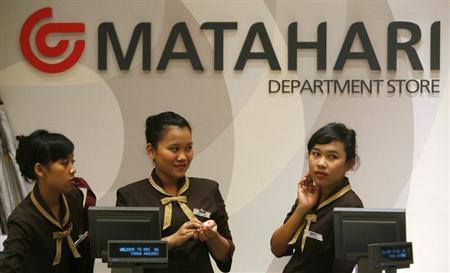
    Matahari Putra Prima has opened its 10th hypermarket – and its first in Ketapang, Kalimentan.

    The multi-format Indonesia Indonesian retailer operates Hypermart, Foodmart and Boston Health & Beauty stores. The new hypermarkets is located at Borneo City Mall, Ketapang, one of the largest shopping centres in West Kalimantan.

    It has a gross selling area of 5000 sqm and is the chain’s 11th in Kalimantan.

    An opening ceremony was attended by the Regent of Ketapang, Drs. Henrikus, MSi, Director of Hypermart, Gilles Pivon, VP Operational Hypermart, Anto Suwartono, representatives from suppliers, as well as invited guests.

    “The opening of Hypermart Borneo City Mall Ketapang is further strengthening the company’s commitment to continue the direction of its business expansion beyond the island of Java, in this case in the area of West Kalimantan,” said Danny Kojongian, director of PR and communications.

    “The Hypermart’s presence as one of the modern retail and the national pride is expected to boost the economy and urban lifestyle in Ketapang and the surrounding regions,” he said.

    Matahari Putra Prima has the widest store network among Indonesia’s hypermarket operators, located in more than 60 cities ranging from Tanjung Balai (Medan) to Jayapura (Papua).

  • Huawei in retail push

    Huawei in retail push

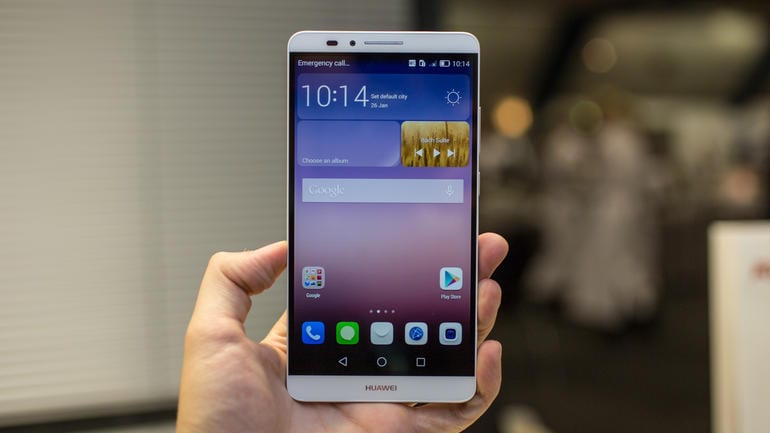
    Huawei Australia will rollout  ‘Experiential Zones’ at select Sydney Westfield shopping centres, showcasing its consumer product range in one location for the first time.

    Continuing its marketing push in Australia, the Huawei Experiential Zones offer customers the opportunity to explore the latest in mobile and mobile broadband technology.

    The Huawei Experiential Zones are located at Chatswood and Parramatta. An official launch will be held on February 7 and 8 at Westfield Chatswood and Westfield Bondi.

    Bondi Junction will launch on February 7, followed by Sydney City, February 9; and Miranda, March 16.

    To recognise the launch, Huawei ‘keys’ will be given to Westfield customers to access the Huawei Vault containing five Huawei Mate7 devices, with five to be won each day at each location.

  • Asians embrace Valentines Day

    Asians embrace Valentines Day

    Indonesians, Taiwanese and Singaporeans are far more likely to splurge on Valentine’s Day than shoppers in Germany or the UK, a survey reveals.

    Japan’s home-grown global online retailer Rakuten has surveyed 7000 people across the globe to gauge attitudes to Valentine’s Day and found that Asians embrace the concept much more than Europeans.

    The Rakuten Shopping Secrets survey found Indonesians (57 per cent), Taiwanese (53 per cent) and Singaporeans (45 per cent) placed top of the multi-national poll for being the most expectant to celebrate Valentine’s Day this year, heading off other countries in the poll – the US (where the tradition has been the most commercialised), the UK, Spain and Germany.  According to the survey, love is not in the air for Germans (18 per cent) or the British (36 per cent), who were least likely to celebrate the occasion.

    The survey also revealed that the majority of Singaporeans (59 per cent) do not expect to receive gifts on Valentine’s Day. But for those that are spirited enough to celebrate the occasion – receiving a trip or vacation (41 per cent), fashion accessories (27 per cent), chocolates wine and other food or drink (26 per cent) and jewellery (22 per cent) ranked highest among what they hoped to receive.

    The survey also asked respondents about choosing shopping as “a break-up therapy”. Singaporeans, not surprisingly given their penchant for shopping, were the most likely (39 per cent), followed by neighbours Indonesia (38 per cent). Germans ranked lowest at just 19 per cent.

    For those who hit the stores upon singlehood, fashion and accessories were the items most frequently bought post-breakup.

    More than half of Singaporeans who have gone through a bad breakup or relationship prefer to drown their sorrows by shopping online rather than offline in the one month after a breakup. Not feeling like going out and interacting with people (58 per cent), wanting more privacy (55 per cent) and not wanting to let people see that they look depressed (26 per cent) were the top three reasons cited.

    Launched in Singapore in January 2014, the Rakuten Singapore Marketplace currently carries over 200,000 goods from 300 merchants with a diverse mix of product categories, including fashion apparel and accessories, health and beauty products, consumer electronics, toys and games, food and beverages and home furniture.

    Rakuten is headquartered in Tokyo, with over 10,000 employees and partner staff worldwide.

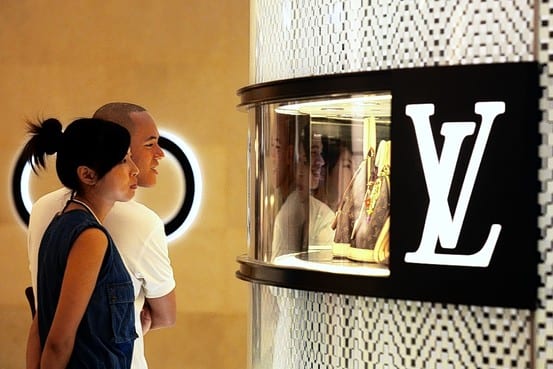
  • LVMH 2014 profit boosted by Hermès stake sale

    LVMH 2014 profit boosted by Hermès stake sale

    LVMH Moët Hennessy Louis Vuitton SA said on Tuesday that US consumers helped drive revenue gains last year, offsetting continued sluggish sales in China.

  • China online ad revenue soars

    China online ad revenue soars

    China’s online advertising revenues rose 40 per cent last year – to a record 154 billion Yuan.

    (US$24.6 billion), according to iResearch Consulting Group.

    The strong rise occurred despite slowing economic growth and subdued consumer spending. But it did come at a time online shopping rose by a similar rate.

    iResearch said in a report that the rise was slightly lower in percentage terms than the previous year, predicting the sector might now be entering a new “maturity age”.

    “Some traditional internet media faced slow growth… while some showed strong momentum driven by new advertising technology and emerging forms of advertising. Moreover, the brand advertisers’ spending flocked {from traditional media} to digital media.”

    According to iResearch, keyword search advertising made up 28.5 per cent of the total spend, the share up two per cent on 2013.

    China online ad revenues

    Next was eCommerce advertising with market share of 26 per cent, a slight fall compared with 2013. Brand graphic advertising occupied 21.2 per cent.

    Advertising on portals and social media increased, mainly due toTencent’s Guangdiantong advertising service and Sina’s Weibo.

    “It reflected that internet enterprises more efficiently match advertising demand with advertising sources via data analysis and technology in order to raise their advertising revenues.”

    In-video advertising revenues also maintained a high growth rate in China in 2014, due to widespread interest the World Cup in Brazil and popular variety shows such as I Am Singer II, Where are we going? Dad II, and Voice China III.

    “Moreover, well-known brand advertisers attached more importance to online video and their increasing online video advertising budget contributed to growth of in-video advertising revenues,” said iResearch.

    The biggest player in China’s online ad market remains Baidu’s, China’s equivalent of Google, which is blocked in the mainland. Baidu’s ad revenues surpassed 49 billion Yuan in 2014, increasing 53.5 per cent from 2013. Taobao gained 37.5 billion Yuan in revenues, ranking second. Together, Baidu and Taobao accounted for 56.2 per cent of the total online advertising market.

    iQiyi & PPS, Qihoo 360 and Tencent all posted good revenue growth. iQiyi & PPS increased their investment in exclusive broadcast of quality content and kept adding more user-generated content. Moreover, it managed to monetise its mobile business and increase its advertising revenue.

    Qihoo 360 raised brand awareness of its search business in 2014, increasing traffic, which boosted its market share. Search became the core contributor of Qihoo 360’s advertising revenue.

    iResearch predicts a broadening of WeChat’s advertising sources and development of Guangdiantong mobile advertising networks will push up Tencent’s ad revenue.

  • Korean marketplace to launch in Malaysia

    Korean marketplace to launch in Malaysia

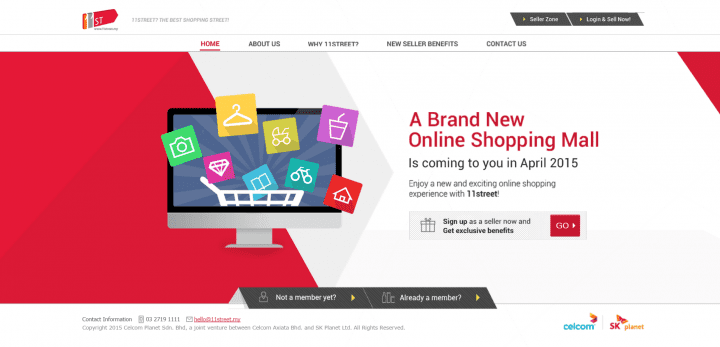
    Korea’s largest online marketplace 11street says it will launch in Malaysia in April.

    The company will invest more than RM35 million (US$10 million) to drive seller participation and aims to have 11,000 sellers on board by launch date. The site will be at

    www.11street.my

    11street’s Malaysia CEO Hoseok Kim says the company wants the new site to become Malaysia’s largest online marketplace.

    Established in Korea in 2008, 11street now has online marketplaces in Turkey and Indonesia as well as in its home market and boasted a combined network of 22 million sellers, serving 40 million consumers. Shoppers spend $6 billion annually on its sites.

    “The online shopping paradise 11street in Malaysia is the company’s commitment to deliver local consumers a trustable and convenient e-commerce platform where they can shop for a variety of products across a broad range of categories available at anytime, anywhere,” said Kim.

    “To deliver greater satisfaction and a more rewarding online shopping experience, it will be the first online marketplace in Malaysia that promotes not only physical products but also deal offerings such as e-vouchers under a single platform.”

    Kim said the company’s $10 million investment would aim to encourage Malaysian sellers – including bricks and mortar businesses – to join 11street.

    “We wish to foster continued eCommerce growth and elevate the maturity of the industry by empowering more local offline businesses particularly SMBs to break-through the traditional business model and explore the numerous eCommerce opportunities in the online space.”

    Kim said that unlike other existing eCommerce websites, 11street has a hybrid eCommerce model whereby its ecosystem can support all types of sellers, including individual sellers, e-entrepreneurs, SMBs, retailers and service providers.

    “Bolstered with expertise and know-hows gained through its worldwide ventures, 11street can empower the online sellers as well as traditional brick and mortar businesses to maximise sales and succeed in eCommerce – which in turn will accelerate Malaysia’s online shopping market growth.

    “11street is equipped with unique and sophisticated online merchandising tools to support the complete online business set-up. Our ‘Seller Zone’ will be the first eCommerce education centre and support facility in Malaysia to advocate eCommerce sellers, where seminars and workshops will be given on a regular basis.

    “Seller Zone is among the most significant investments that 11street has put in to grow the Malaysia’s eCommerce sector,” said Kim.

    “In response to the mobility trends, we will also offer an integrated mobile interface and application upon 11 street’s official launch to support sellers in better managing their stocks, product marketing programs, payment settlements; and offer the analytics capability to help them retain customers with improved online shopping experience.”

    As part of an early bird promotion to attract sellers prior to April, 11street will offer free stores, 50 per cent discount on transaction fees, complimentary use of Seller Zone facilities, promotion credits and product listing coupons. sellers who register before April 2015.
    eC
    “11street’s merchandising approach has a proven track record given that its worldwide ventures have grown remarkably well over the past few years. Against such backdrop, similar approach will be adopted to help Malaysian online sellers to excel in today’s increasingly competitive market.”

    11streeet in Malaysia will be hosted by Celcom Planet, established in November 2014 as a joint venture between Celcom Axiata Berhad and SK Planet – a leading Korean eCommerce open marketplace provider, which is also a wholly-owned subsidiary of mobile operator- SK Telecom.

  • Snapdeal gains a lot of weight, turns 5

    Snapdeal gains a lot of weight, turns 5

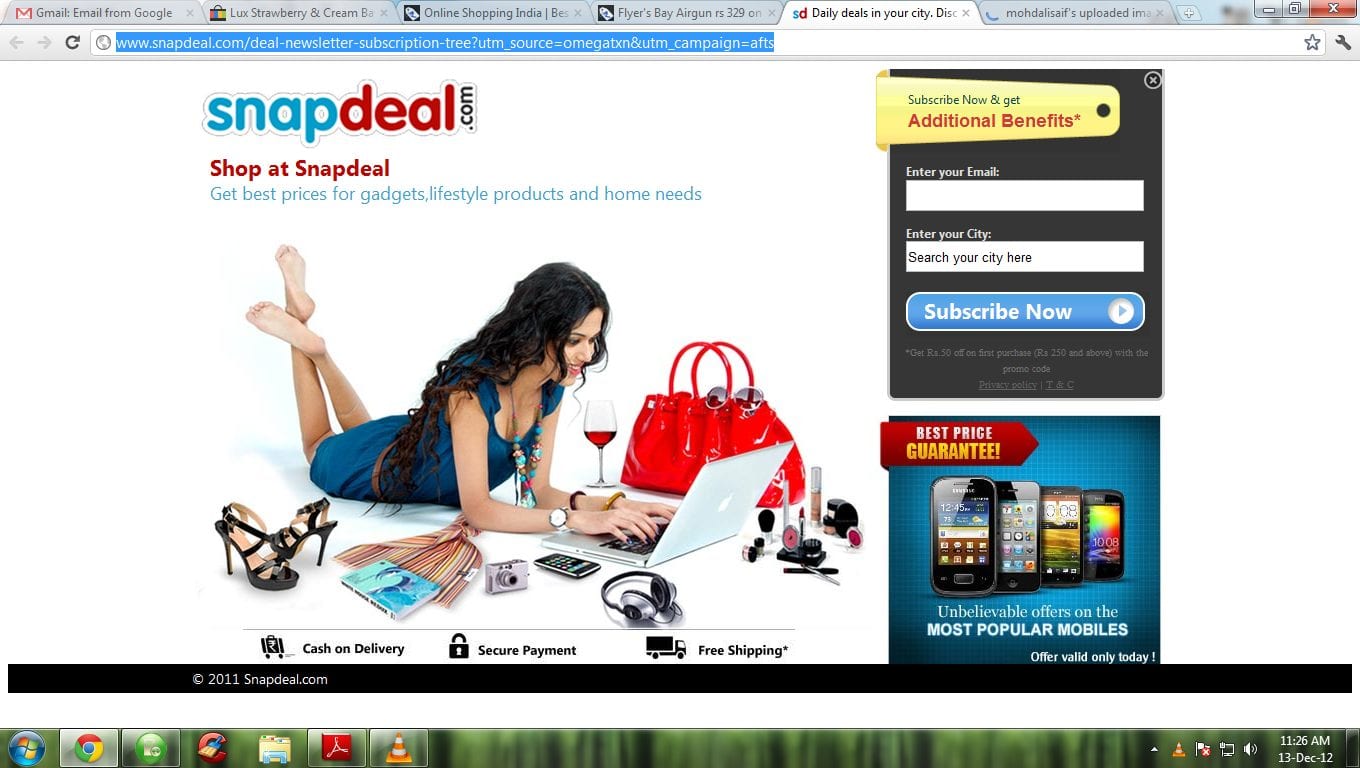
    After doing USD2 billion gross merchandise value of sales last year, Snapdeal seeks to hit USD3 billion in the next two months; Its seller base has grown to 100,000, from 1,000 in 2012.

  • Tata International to set up outlets for footwear brands

    Tata International to set up outlets for footwear brands

    Tata International, the global trading and distribution company of the Tata group, is planning to set up exclusive branded outlets for four new footwear brands. The company will launch these for the domestic market by September this year.