Author: Mei Ling Tan

  • WhatsApp is working on multi-account support for iOS

    WhatsApp is working on multi-account support for iOS

    WhatsApp recently added new camera effects, self stickers, and quick reactions to its app, but there are a lot more improvements its engineers plan to introduce in the coming months.

    One of the improvements involves the ability to switch WhatsApp accounts on the same device. The folks over at WaBetaInfo have just learned that a new iOS update that brings WhatsApp to version 25.2.10.70 includes the ability to add and manage multiple accounts within the app.

    The same feature was spotted for the first time back in August 2023, but WhatsApp was only testing multi-account support on Android at that time. Now it looks like WhatsApp plans to bring this feature to iOS users too at some point in the future.

    It remains to be seen how multi-account support will be implemented on iOS, but currently users can choose between setting up the device as a primary account or scanning a QR code to link a new account as secondary. This will allow iOS users to switch between WhatsApp accounts on the fly without having to use multiple devices.

    Adding multi-account support isn’t as easy as it may sound, as the app will have to keep all conversations organized on a single device while keeping the accounts separated. Notifications, chats, backups, and settings will remain unique for each account, unless the user wants them to operate similarly.

    Unfortunately, it’s hard to tell when exactly WhatsApp plans to roll out multi-account support on iOS but seeing that the company is already working on this feature means that we won’t have to wait too long.

  • Changi Airport reports handling 67.7 million passengers in 2024

    Changi Airport reports handling 67.7 million passengers in 2024

    Singapore Changi Airport handled 67.7 million passenger movements in 2024, registering a 14.8% year-on-year increase. This was 99.1% of the passenger movements recorded in 2019, prior to the Covid-19 pandemic. Aircraft movements, totalled 366,000 in 2024, up 11.5% compared to 2023. A total of 1.99 million tonnes airfreight throughput was recorded in the year, surpassing 2023’s level by 14.6%.

    For the fourth quarter (Q4) of 2024, Changi Airport handled 17.8 million passenger movements. This was a 10.7% increase compared to the same period in 2023, and marked a full traffic recovery compared to Q4 of 2019. Aircraft movements, which include landings and take-offs, totalled 95,300, up 9.3% year-on-year. For the quarter, 521,000 tonnes in airfreight throughput was recorded, an increase of 15.0%.

    December 2024, with 6.4 million passenger movements, was the busiest month in the year, the first time monthly traffic has exceeded six million since December 2019. The busiest day of the year was 21 December 2024 – the Saturday before Christmas – when 226,000 passengers passed through Changi’s terminals.

    While all regions witnessed growth, North Asia was the fastest growing in 2024, registering an increase of 40% compared to 2023. Changi Airport’s top five passenger markets for the year were China, Indonesia, Malaysia, Australia and Thailand.

    China was Changi’s largest source market of the year, with passenger traffic almost doubling 2023’s level and surpassing the pre-Covid level by 6%. Hong Kong and Japan also recorded significant growth of more than 20% year-on-year.

    Kuala Lumpur, Bangkok, Jakarta, Denpasar (Bali) and Hong Kong were Changi Airport’s busiest routes during the year. Shanghai entered Changi’s top 10 cities list for the first time since 2011, registering a 94% growth compared to the previous year.

    On the cargo front, growth was seen across all cargo flows – exports, imports and transshipments, contributed by major improvements in cargo flows between Singapore and China, as well as the United States. Growth was also driven by the recovery of Singapore’s electronics exports and re-exports, strong global demand for cross-border e-commerce shipments and the modal shift from ocean to air freight arising from disruptions in maritime transport. For the year, Changi’s top five air cargo markets were China, Australia, the United States, Hong Kong and India.

    Mr Yam Kum Weng, Chief Executive Officer of Changi Airport Group, said, “We witnessed a year of strong growth in passenger and cargo traffic as well as connectivity in 2024. Changi added a bumper crop of 11 new city links, strengthening the air hub’s network and opening up a world of new destinations to support business ties and for travellers to explore. We are deeply grateful for the close partnership with our airline partners and are pleased to welcome the new airlines to Changi. Their collaboration has been instrumental in driving this growth.

    “Looking ahead, we are optimistic of another year of growth in passenger traffic.Operating a major air hub in Asia-Pacific, Changi Airport Group will continue to invest in our airport’s infrastructure, systems and processes to augment our handling capacity, so as to be well-placed to support the rising demand for air travel in the coming years.”

    Enhancing connectivity
    In 2024, Changi Airport welcomed eight new passenger airlines – Aero Dili, AirAsia Cambodia, Air Canada, Air Japan, Loong Air, Peach Aviation, Tianjin Airlines and West Air. As Changi expanded its connectivity to the world, it added 11 new passenger city links to its network, connecting Singapore to Broome, Brussels, Guiyang, Kertajati, Lhasa, Linyi, Malacca, Phu Quoc, Quanzhou, Vancouver, and Wenzhou.

    During the year, Changi also established flights to London Gatwick Airport and Subang Airport, providing more options for travels to London and Kuala Lumpur. More exciting new routes are already on the horizon, and travellers can look forward to new destinations including Labuan Bajo from March, and Vienna from June this year.

    Changi Airport also welcomed two new freighter airlines in 2024 – Shandong Airlines, which also resumed passenger services during the year, and Air Incheon. Two new freighter city links were added, connecting Singapore to Haikou and Nagoya.

    As of January 2025, 100 airlines operate over 7,400 weekly scheduled flights at Changi Airport, connecting Singapore to 163 cities in 49 countries and territories worldwide.


  • The Secret to Outstanding Customer Service: Empowering and Energising Store Associates

    The Secret to Outstanding Customer Service: Empowering and Energising Store Associates

    In the world of retail and service, the phrase “the customer is always right” has long been a guiding principle. Originally popularised by Swiss hotelier César Ritz, who is famous for the Ritz in Paris and the Carlton in London, this idea marked a significant shift in customer service. Back in the late 1800s, when consumer protection was minimal and “buyer beware” was the norm, Ritz’s emphasis on putting the customer first was revolutionary.

    Today, while the core of customer service remains crucial, it has evolved beyond simply satisfying customer demands. In our modern era of blended physical and digital commerce, exceptional service is about more than just fulfilling requests—it’s about understanding each customer’s unique needs and providing a seamless and personalised experience at every touchpoint.

    Despite the importance of a frictionless retail experience, one critical element is often overlooked: the store associates. Happy and engaged store associates are integral to providing a superior customer experience. As shoppers return to physical stores in increasing numbers, the role of store associates becomes even more crucial. They are often the difference between a memorable and forgettable brand experience. Therefore, equipping them with the right tools, software, and data is essential in today’s competitive retail landscape.

    Here are four key areas where retailers can enhance customer experience through happier, more engaged store associates and unified retail systems:

    1. Optimising Checkout Processes

    The checkout process remains a pivotal touchpoint for retailers. Understanding and adapting to the diverse preferences of customers in terms of payment and checkout options is crucial. By offering ultra-fast transactions with optimised checkout flows, including rapid scanning and locally cached item and price data, retailers can ensure that customers complete their purchases quickly and efficiently. This not only improves the customer experience but also makes the store associate’s job easier and more efficient.

    1. Modernising Point-of-Sale Systems

    There’s nothing more frustrating for a store associate than struggling with a cumbersome point-of-sale (POS) application. A modern, refined user interface with intuitive navigation and clear information is essential. POS systems should feature familiar cart and checkout options that allow associates to focus on assisting customers rather than grappling with technology. An effective POS system enhances efficiency and contributes to a smoother customer interaction.

    1. Ensuring System Reliability with Offline Support

    In today’s fast-paced retail environment, downtime is unacceptable. Store associates need reliable systems that support native offline functionality. This ensures that even if the store network experiences an outage or system instability, associates can continue to serve customers without interruption. A robust, offline-capable system is crucial for maintaining service quality and avoiding disruptions.

    1. Leveraging Customer Engagement Tools

    Knowledge is power when it comes to customer interactions. Utilising advanced customer engagement tools to access insights into a customer’s cross-channel purchase history and preferences enables store associates to offer personalised service. By understanding individual customer needs, associates can tailor their interactions, making each customer feel valued and unique. This not only enhances the customer experience but also makes the associate’s role more fulfilling and efficient.

    Empower Your Team, Elevate Your Experience

    The key to unlocking outstanding customer experience lies in investing in store associates and equipping them with the right tools and systems. Happy, engaged associates are more likely to deliver exceptional service, contributing to a positive and memorable customer experience. As the retail landscape continues to evolve, focusing on these critical areas will help retailers create a competitive advantage and foster lasting customer loyalty.

    For more information: https://www.manh.com/en-sg

    Written by Richard Wright, Managing Director, SEA, at Manhattan Associates


  • Skechers opens world-first Performance Flagship

    Skechers opens world-first Performance Flagship

    Skechers has unveiled its first-ever Performance Flagship at West Edmonton Mall in Canada, offering an interactive retail experience space incorporating a half-court layout staging a range of performance products.

    Featuring half-size pickleball and basketball courts, the 700sqm store houses an extensive sales floor and the brand’s innovative athlete-worn technology performance products of footwear, apparel, and accessories.

    “Our new performance store offers competitors at every level the complete experience: from our largest-ever offering of performance footwear, apparel and accessories to Skechers specialists and educators for our diverse sports technologies, and courts where consumers can discover how our product performs without ever leaving the store,” said Michael Greenberg, president of Skechers.

    In addition, customers can explore the latest performance products for any level player, including golf, soccer, training, hiking, running and trail, supported by a roster of elite athletes. The Edmonton store also showcases signature technologies like Hyper Burst Pro, Performance Fitknit, Hands Free Slip-ins, Max Cushioning, and Arch Fit.

  • Sa Sa International’s sales fall in fiscal third quarter

    Sa Sa International’s sales fall in fiscal third quarter

    Sa Sa International’s sales declined in the fiscal third quarter amid a significantly weaker performance in Mainland China, Hong Kong, and Macau.

    The group’s sales declined 10.7 percent year over year to HK$1.06 billion (US$136.2 million) as Mainland China sales plunged 35.8 percent to HK$120 million while Hong Kong and Macau slid 8.1 percent to HK$817 million.

    Southeast Asia sales rose 12.4 percent to HK$115.4 million, while other regions decreased 11.8 percent to HK$2.7 million.

    In Mainland China, the company has already closed 13 offline stores due to a continuous sluggish environment. The group ended the period with 175 stores.

    The company intends to boost promotion on popular social media platforms and channels, tapping influencers to promote brand awareness and establish credibility among target buyers.

  • Muji to open its largest store yet in Nara Prefecture

    Muji to open its largest store yet in Nara Prefecture

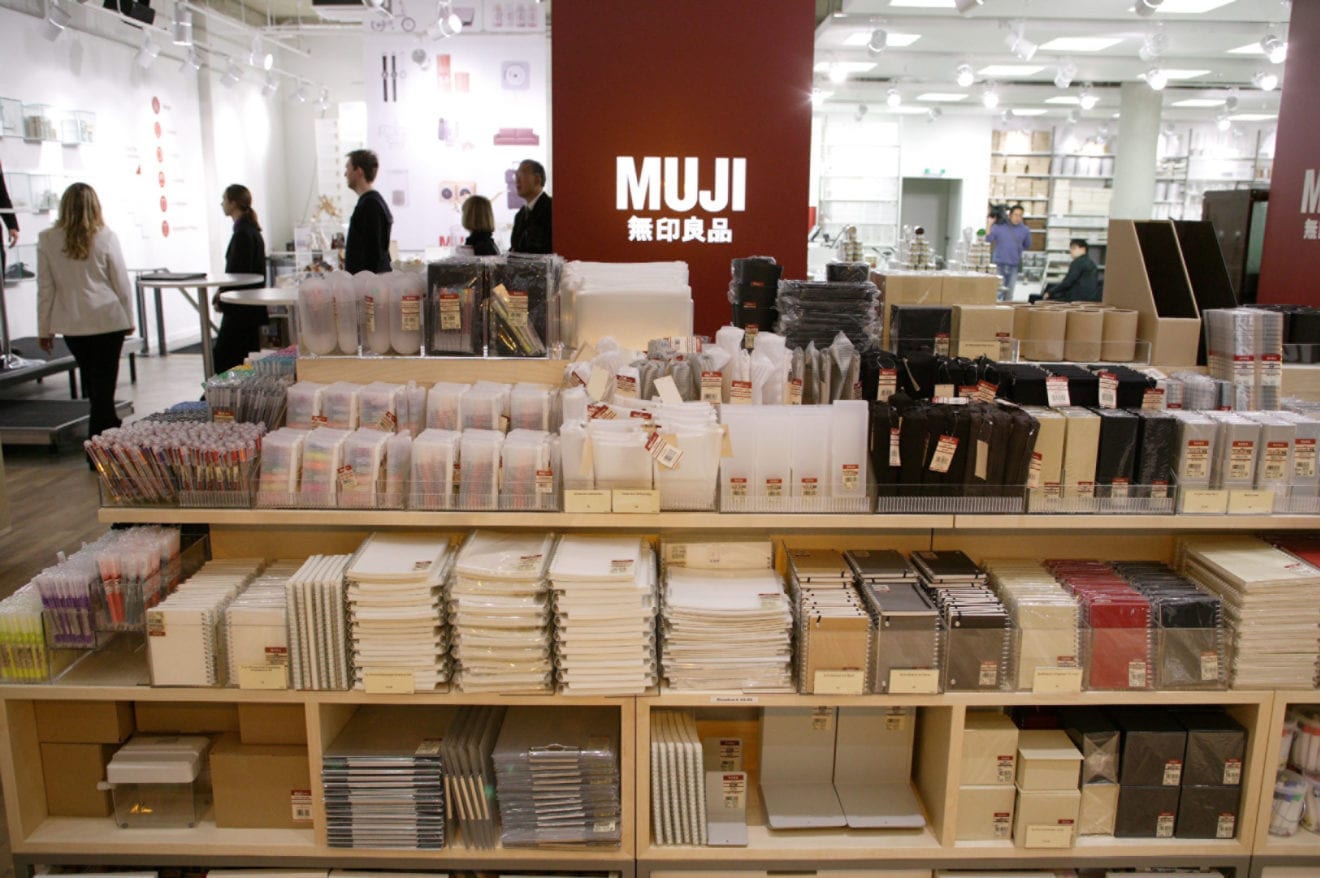
    Muji will open its largest store in Kashihara City, located in Japan’s Nara Prefecture, on March 1.

    The Japanese variety retailer is set to unveil the expanded Muji Aeon Mall Kashihara, the sales floor area of which will be about 10 times larger than the previous store that closed last November.

    The venue will offer a wide range of food, clothing, and home products. It will also have a workshop to repair, maintain, and sell second-hand furniture from Japan and overseas, making it a new resource circulation base.

    Another highlight is the Books and Cafe, featuring over 100,000 books from Kashihara Bookstore and rice bowls, coffee, tea, and ice cream from Cafe&Meal Muji.

    Earlier, Ryohin Keikaku executive vice-president and director Satoshi Shimizu delivered a new management policy plan for Muji, underscoring the lifestyle brand’s ambition to pursue its “second founding” via global expansion.

  • Korean sandwich brand Eggdrop lands in the Philippines

    Korean sandwich brand Eggdrop lands in the Philippines

    Korean sandwich brand Eggdrop has opened its first store in the Philippines, located in the SM Mall of Asia.

    The brand is known for making egg sandwiches using brioche buns, organic eggs, and other fresh ingredients. Some of its signature offerings are Garlic Bacon Cheese, Avo Holic, and Mr Egg.

    Eggdrop said to maintain its standards; the company uses a local supply chain to guarantee freshness while supporting Filipino farmers.

    Stuart Wong, head of Eggdrop Philippines, said he was inspired by seeing Eggdrop in the Korean drama Hospital Playlist.

    “It made me want to share this experience with Filipinos,” he added.

    “The joy of taking that first bite of an Eggdrop sandwich is unforgettable.”

    The company plans to open a second store in Bonifacio Global City (BGC) early this year to advance its expansion across Asia.

  • Adidas posts higher revenue, profit

    Adidas posts higher revenue, profit

    Adidas saw its revenue surge in the last fiscal year, according to the athleticwear company’s preliminary results.

    Revenue soared 24 percent to €23.68 billion (US$24.70 billion), while gross margin improved to 50.8 percent, with operating profit up 398.9 percent to €1.34 billion.

    “We clearly see that consumers’ and retailers’ interest in our products is growing across both lifestyle and performance,” said Bjorn Gulden, Adidas CEO.

    “Strong growth across all regions and divisions proves the good job our teams are doing across regions and functions.”

    Last October, the company said it expects full-year revenue to rise 10 percent and operating profit to reach around €1.2 billion.

    Adidas will publish the final results and 2025 financial guidance on March 5.

  • Guess Jeans to launch in India

    Guess Jeans to launch in India

    GUESS? Inc. is bringing its California-based denim lifestyle label, Guess Jeans, in India.

    The move comes as part of a long-term strategic franchise partnership with Tata Group’s multi-category e-commerce platform, Tata CLiQ, operated by Tata UniStore Limited.

    Under the partnership, Tata CLiQ will serve as the exclusive retailer for Guess Jeans in India, offering the brand’s products through both physical stores and online platforms. The collaboration is aimed at establishing an omnichannel presence, providing Indian customers with seamless access to the latest collections.

    The partnership is expected to drive significant growth for Guess Jeans by expanding its retail footprint across the country.

  • Thailand resumes durian exports to China after temporary ban due to carcinogen detection

    Thailand resumes durian exports to China after temporary ban due to carcinogen detection

    Thailand has resumed exporting durians to China following a temporary ban due to the latter’s stricter requirement regarding Basic Yellow 2, a carcinogen.

    Itthi Sirilathayakorn, deputy minister of Thailand’s Ministry of Agriculture and Cooperatives, said exports were resumed on Monday, with 96 tons of durian worth 7.8 million baht (US$228,900) to be shipped to China on Monday and Tuesday via border channels in Nakhon Phanom and Chiang Rai.

    The shipments underwent stringent screening and certification to comply with China’s tougher import standards, The Bangkok Post quoted Itthi as saying.

    Basic Yellow 2, also known as Auramine O, is a coloring chemical typically used in fabrics, paper, leather, and house paint. It is classified as possibly carcinogenic to humans.

    Traces of the chemical were detected in some Thai durian shipments in late 2024, prompting China to enforce tougher import requirements earlier this month, including the newly added testing for the chemical.

    At the time, customs checkpoints across China were instructed to reject durian shipments lacking the lab test results certifying that the fruit was free of the chemical.

    Itthi said the ministry has since enhanced screening measures. As of Jan. 17, On January 17, six laboratories in Thailand were authorized by China customs to conduct Basic Yellow 2 testing, according to the Department of Agriculture. Four more labs are expected to be approved next week, increasing testing capacity to 1,300 samples per day.

    Some 100 durian containers from Thailand were reportedly sent back due to the increased scrutiny.

    These fruits were being sold at local markets for just 110-120 baht per kilogram, down from their initial prices of 230-240 baht, due to being overripe.

    The abrupt shift in import standards similarly left many Vietnamese businesses unable to adapt quickly, leading to delays or returns of durian shipments at the border.

    Some companies in Vietnam also had to redirect the durians to the local market, selling them at massive discounts instead of waiting for customs clearance.

    China imported 1.53 million tons of durian worth US$6.83 billion in the first 11 months of 2024, up 9.4% in volume and 3.9% in value from a year ago, according to customs data reported by Vietnam Agriculture News.

    Thailand accounted for 52% of the shipments, down from 65% a year earlier, while Vietnam’s share grew from 35% to 47% during the same period.

  • Mt Yengo Wines gains momentum with international expansion

    Mt Yengo Wines gains momentum with international expansion

    Mt Yengo Wines – Australia’s first indigenous-owned wine brand – has reported a tenfold increase in growth over the past three months, attributed to expanded retail partnerships and entry into the international market.

    The company’s expansion includes adding three new wines into Vintage Cellars and First Choice Liquor stores, part of the Coles Liquor network. These retail partnerships have introduced Mt Yengo to 93 Vintage Cellars locations and 102 First Choice Liquor stores nationwide.

    In addition to domestic retail, Mt Yengo said it has been active in the US for four years and is set to enter the Chinese market this year. The company plans to expand further globally, including Europe.

    Mt Yengo has also entered a supply agreement with Carnival Cruises, including P&O and Princess Cruises. The wines are now served on cruise ships alongside existing placements in venues such as Rockpool Sydney and Midden by Mark Olive at the Sydney Opera House.

    Wayne Quilliam, a Palawa man, artist, and co-owner, expressed his enthusiasm as the company sees its hard work pay off as it reaches more consumers.

    “Our people are proud to see an Indigenous-owned brand thriving,” Quilliam said. “We aim to celebrate our culture while offering a premium product that resonates globally.”

  • Kellogg’s launches master brand campaign for ‘healthier’ cereals

    Kellogg’s launches master brand campaign for ‘healthier’ cereals

    Kellogg’s is launching its first master brand campaign featuring its popular sub-brands, including Nutri-Grain, Coco Pops, and others.

    The ‘For Real’ campaign, in collaboration with marketing agency Bastion and comedian Celeste Barber, objects to unrealistic eating trends and misinformation promoted on social media.

    According to Kellogg’s, its new healthy cereals represent a simpler, more realistic method to get real nutrition for breakfast.

    The commercial highlights Kellogg’s latest ‘healthier’ varieties, including Nutri-Grain High Protein Crunch and multigrain Coco Pops Chocos, emphasising the brand’s commitment to providing healthier breakfast options.

    “There are so many mixed messages, myths, and mistruths about breakfast out there that people don’t know what to believe. It leaves them questioning the nutritional value of cereal,” said Bastion national chief strategy officer, Angela Morris.

    Last year, confectionary company Darrell Lea partnered with cereal and snack brand Kellogg’s to create the Darrell Lea Crunchy Nut Corn Flakes Chocolate Block, which is made from 100 per cent sustainably sourced cocoa.

  • Czech’s top automaker Skoda to complete Vietnam factory this quarter

    Czech’s top automaker Skoda to complete Vietnam factory this quarter

    Czech’s biggest automaker Skoda is set to complete its $500 million factory in northern Vietnam, its first in Southeast Asia, by the end of March.

    The company plans to launch two locally assembled models this year after the completion of the plant, which it develops with Thanh Cong – a local distributor of Hyundai cars, according to the Vietnam Government Portal.

    The plant, located in the northern province of Quang Ninh, has a capacity of 120,000 vehicles a year.

    Its chairman Klaus Zellmer told Prime Minister Pham Minh Chinh Sunday that the Vietnam factory is an important milestone in the company’s expansion strategy in Southeast Asia.

    The PM requested the company to accelerate its research and development of electric vehicles in the country and increase its localization rates as part of a technology transfer effort.

    He said that the Vietnamese government would offer incentives to investors who meet requirements related to technology transfer, increasing scientific and technological content, and helping Vietnamese businesses participate deeper the supply chain.

    Skoda chairman Klaus Zellmer affirmed the company’s commitment to long-term investment in Vietnam.

    He promised to pump up the current localization rate of 40%.

    He considers Vietnam a strategic gateway to access the rest of the Southeast Asian market. The country has potential to become a production and export hub for Skoda vehicles to other countries.

    He expressed hope that the Vietnamese government would continue to support and provide favorable policies for businesses.

    Skoda said earlier that it saw the region’s potential when it started exporting completely-built units to Vietnam in 2023.

    “We realized Skoda has a future in Vietnam and Asia,” chief marketing officer Vu Manh Cuong said previously in an interview.

    He added: “It takes time to show [cars] to the customer, for people to try the product, feel it out.”

  • Guess Jeans to launch in India

    Guess Jeans to launch in India

    Guess sub-brand Guess Jeans will launch in India through a long-term franchise agreement with Tata Group’s multi-category e-commerce platform, Tata CLIQ.

    As part of this collaboration, Tata CLIQ will become Guess Jeans’ exclusive retailer in India, growing its retail footprint through brick-and-mortar stores and digital storefronts.

    According to the brand, the collaboration between Guess Jeans and Tata CLIQ will be critical in extending distribution channels and supporting Guess Jeans’ ambition to expand its store network nationwide.

    “As the next step in our global growth initiative for Guess Jeans, we expect a rapidly expanding and prosperous partnership with Tata CLIQ, which is part of the Tata Group in India,” said Nicolai Marciano, chief new business development officer, Guess Inc.

    “Our brand’s legacy, heritage, and innovative outlook on denim, paired with the local knowledge and expertise of Tata Group, ensure a strong and enduring partnership.”

    Guess Jeans is a West Coast lifestyle brand founded by Nicolai Marciano. The brand offers a full line of core basics, concentrating on denim, that captures Guess’s spirit.

    Last year, Tata announced it would postpone the plans to open m

  • Record number of ramen shops shutter in Japan amid rising costs

    Record number of ramen shops shutter in Japan amid rising costs

    A record number of ramen shop operators in Japan went bankrupt in 2024 as many hesitated to hike prices above 1,000 yen (US$6.4) despite surging costs.

    Some 72 of them shuttered with over 10 million yen (US$64,400) in liabilities last year, a 30% increase from 2023, Kyodo News reported, citing research firm Teikoku Databank.

    Around 34% of the 350 ramen businesses surveyed by the firm reported operating at a loss during the 2023 fiscal year, which ran from April 1, 2023, to March 31, 2024.

    Ramen, a beloved Japanese noodle soup, is regarded as a low-cost meal especially popular among individuals with lower income, students and young people, whether enjoyed as a quick lunch or a late-night treat.

    But the cost of making these affordable bowls of noodles has been going up, with ramen shop owners reporting that the prices of nearly every ingredient, including meat, seaweed, green onions, and even soy sauce, have increased.

    Energy costs have also been a challenge, as ramen shops need to simmer the broth for extended hours to develop its rich flavors, often requiring them to keep power running at all times.

    With over 90% of Japan’s energy supply imported, global disruptions, such as those caused by the ongoing conflict between Russia and Ukraine, have had a large impact on energy costs.

    “Not only the gas costs for cooking but electricity costs. Keeping the air conditioner on is essential, since it’s so hot in the summer. So we are using a lot of energy,” Tetsuya Kaneko, the 44-year-old owner of the Mendokoro Isshou ramen restaurant in Tokyo, told The Washington Post.

    “I think everyone in the industry is struggling,” he said, noting that the rise in prices in the last few years has been “unbelievable.”

    Despite rising costs, Teikoku Databank reported that the average price of a bowl of ramen remains below 700 yen.

    A number of ramen eateries have been raising their prices, but the average customer spending at these establishments remains lower than at other restaurants.

    The average spending per customer at ramen shops was estimated at 880 yen in 2023, as against 1,360 yen for family restaurants and 1,190 yen for conveyor belt sushi restaurants, according to Fuji Keizai, another research firm.

    However, businesses are hesitant to raise prices closer to or above 1,000 yen, a move that they believe could damage ramen’s reputation as an affordable option and potentially drive customers away.

    Some restaurants that hiked prices reported that their customers did not respond positively.

    Takatoyo Sato, 52, manager of Menkoi Dokoro Kiraku noodle shop in Tokyo’s Shimbashi business district, said customer numbers dropped after the price of shoyu ramen went up from 780 yen in 2021 to 950 yen last May. “People don’t say it, but they think it’s just ramen — that view is going to change,” he said.

    Some shop owners decided to raise prices above 1,000 yen and maintained high quality to attract returning customers, while others have relocated to suburban areas, where profitability has increased over urban locations with expensive rents.

    As for ramen enthusiasts, some have adapted to the 1,000-yen price tag.

    Yuya Henmi, a 28-year-old IT worker from Tokyo, said he would accept higher prices for tasty ramen and would even spend up to 2,000 yen for an exceptional one. “But for a normal ramen without toppings, I think 1,500 yen is the max,” he added.

    Teikoku Databank has predicted that ramen shop closures in Japan could persist this year, with smaller businesses more hesitant to adjust their menu prices than larger chains.

    Sato hopes costs do not rise any further this year as customers are not ready to accept higher prices yet.

    Meanwhile, Mendokoro Isshou’s Kaneko wants to hold on to ramen’s traditional appeal. “Ramen has always been a staple for people with lower income or students and young people so I don’t necessarily want ramen to become something out of reach for them.”