Author: Mei Ling Tan

  • Google Play Store to make app installs easier with an always visible Install button

    Google Play Store to make app installs easier with an always visible Install button

    If you own an Android phone, you probably spend a lot of time in the Google Play Store, where countless apps and games are available to choose from. However, sometimes app listings can get so lengthy that the Install button can disappear, forcing you to scroll back to the top, which, to be honest, can be annoying. Well, an upcoming change to the Google Play Store aims to address this by making the Install button a permanent fixture on app listings.

    A recent report suggests that Google Play Store version 43.1.19 contains code hinting at a feature that will keep the header fixed in place on app listings. This means the Install button will remain visible as you scroll through the app details.

    The header is packed with essential info about the app, including its icon, name, developer, average rating from the Play Store, and whether it has ads. You’ll also spot the handy Install button for quick downloads right to your device, plus a dropdown that lets you install the app on your other gadgets. And the best part? This header sticks around, so you can always access it easily.

    The header with the Install button sticks at top while you scroll through the app listing. | Image credit – Android Authority/AssembleDebug

    It may seem like a minor tweak, but I think this change could really benefit app developers. Why? Well, while a lengthy app store listing does a great job of informing users, it unintentionally punishes developers for being thorough. When the Install button is stuck at the top, the more you scroll down, the more likely you will bounce instead of scrolling back up to hit that button.

    If the Install button had a fixed position, users could easily download the app after checking out the details, ultimately boosting conversions for developers who invest time in creating rich, informative listings.

    In other news from the Google Play Store, there’s chatter that it might soon spotlight tablet-optimized apps that are also compatible with cars. On top of that, the search feature is getting a new spot on Android tablets and foldable devices.

  • OpenAI begins recruiting in Singapore

    OpenAI begins recruiting in Singapore

    OpenAI is hiring a team in Singapore for its second office in Asia following the launch of its Japan outpost four months ago.

    The new office is planned to be launched by the end of the year and will serve as a hub for the company to work with partners and customers across the region, Bloomberg reported.

    “Singapore, with its rich history of technology leadership, has emerged as a leader in artificial intelligence,” Sam Altman, chief executive officer of OpenAI, said in a statement.

    “We’re excited to partner with the government and the country’s thriving AI ecosystem as we expand into the Asia Pacific region.

    Open positions in Singapore include sales director, customer manager, architect and engineer.

    OpenAI is also partnering with local company AI Singapore, a state initiative which connects local research groups.

    The San Francisco-based startup is accelerating its expansion following recent funding and credit deals which helped it reach a valuation of $157 billion.

    Among its backers is SoftBank Group Corp., a major AI-focused investor.

    In April it launched its first office in Asia, located in Tokyo, and introduced a specialized GPT-4 model tailored for Japanese-language users.

  • Gasoline prices surge

    Gasoline prices surge

    Gasoline prices increased sharply Thursday afternoon after inching down last week.

    The popular fuel RON95 rose 6.36% to VND21,060 (US$0.85) per liter.

    Biofuel E5 RON92 increased by 5.25% to VND19,840.

    Regulators said that prices in the last seven days rose as a hurricane made landfall in the U.S., resulting in a spike in demand in that country, and concerns over the military conflict in the Middle East.

    In the last seven days, fuel prices have increased by 7-7.9% and oils have gained 5.2-7.4%. RON95 is now at $88.2 per barrel and diesel at $90.

  • BYD’s luxury EV brand Denza launches in Singapore

    BYD’s luxury EV brand Denza launches in Singapore

    Chinese auto giant BYD’s premium electric vehicle brand Denza has made its official debut in Singapore with two variants, both costing over US$200,000.

    According to Singapore-based car selling platform Motorist, the brand launched its first model in the city-state, the D9 large multi-purpose vehicle, on Thursday.

    It comes in two variants: the D9 Elite, which has a price tag of S$296,888 (US$227,500), and the D9 Grandeur priced at S$341,888 (US$262,000). Both prices include Certificate of Entitlement, a permit required to own and use a vehicle in Singapore.

    Some 300 orders have been placed for the D9, according to a BYD representative cited.

    Another Denza model, the Z9 GT sedan, is planned to debut in the city-state by mid-2025.

    BYD will directly distribute Denza vehicles and has named two existing partners, Vantage Automotive and Harmony Auto, as its dealers.

    The Singapore launch came as the brand is looking to expand to large markets in the Asia-Pacific region.

    Liu Xueliang, BYD’s Asia-Pacific sales general manager, said at the Thursday launch event that Denza will launch in Thailand later this year and in Australia, New Zealand, Indonesia and Malaysia in 2025.

    Apart from Denza, Singapore recently saw the launch of Zeekr, another luxury EV brand, in August and is expected to welcome EV maker Neta by the end of 2024. Both brands are from China.

    While more Chinese automakers are seeking to enter Singapore, BYD has been dominating the country’s car market, The Straits Times reported.

    In the first half of 2024, it registered 2,587 new vehicles, accounting for 13.9% of the market, and is the best-selling brand when considering only authorised dealer registrations.

  • Telegram adds the ability to verify phone numbers for businesses

    Telegram adds the ability to verify phone numbers for businesses

    Telegram continues to make concessions in order to comply with various rules imposed by regulators. After being pressured to provide customers’ phone numbers and IP addresses to authorities, Telegram announced this week that it will allow businesses to verify the phone numbers of their customers.

    The latest update also introduces the ability to send gifts for Telegram Stars, as well as a brand-new redesigned video chat UI on iOS. In addition, Telegram is adding support for livestreaming with RTMP on Android and an improved reporting interface.

    Going back to the new verification platform launched by Telegram, the company announced that starting this week, any business, app or website can send verification codes via Telegram and pay for them on Fragment.

    According to the messaging app, these verification codes are faster, cheaper, more secure and convenient than SMS or other alternatives. If you’re using Telegram and interact with a business, you might receive a message with a code in a special chat inside the app.

    Besides the verification platform for businesses, Telegram is adding the ability for users to send each other gifts for Telegram Stars. Once you receive a gift, you can immediately display it on the new Gifts tab of your profile. You can even discard the gift and get some of its Stars to spend elsewhere, including on more gifts.

    If you want to send a gift to someone, simply open the user’s profile and tap Send a Gift. You can also add any message or emoji to the gift before sending it. Even though you can choose to hide your name, the recipient will still know who sent it, but no one else will be able to see your name if the gift is displayed on their profile.

    Moving on to the new video chat UI, Telegram confirmed it has redesigned video chats on iOS to increase performance and improve battery life. According to Telegram, longer calls will not overheat your iPhone anymore, even with multiple video feeds from dozens of participants.

    Last but not least, Telegram now features an improved reporting interface. For example, the reporting menu has been expanded with more detailed options for each category. Also, the list of reporting reasons is being dynamically updated from the server, which means that it will allow Telegram to suggest the most relevant reporting reasons in real-time.
  • NTT Com’s Osaka 7 Data Center Earns NVIDIA DGX-Ready Certification

    NTT Com’s Osaka 7 Data Center Earns NVIDIA DGX-Ready Certification

    This certification validates the data center as a secure location for enterprises to run AI and other demanding applications using NVIDIA-accelerated computing infrastructure. The certification was awarded to the Osaka 7 Data Center (OS7) in Ibaraki City, Osaka Prefecture.

    The NVIDIA DGX-Ready Data Center program certifies data centers’ ability to host high-density accelerated computing systems like the NVIDIA DGX platform and accommodate supercomputer clusters like NVIDIA DGX SuperPOD, considering storage and cooling facilities.

    NTT Com has also joined the NVIDIA Partner Network as a data center provider. Within the OS7 data center, NTT Com offers high-quality network services, exceptional connectivity with Internet Exchange (IX) points, and optimal network environments. The facility can accommodate the high-density racks needed for applications like generative AI (GenAI), making it ideal for operators looking to host cutting-edge and large-scale computing systems.

    OS7 plans to become a Green Nexcenter® colocation data center equipped to support liquid-cooling systems for high-density and accelerated computing systems. NTT Com also offers the “APN Dedicated Line Plan powered by IOWN” service, which connects data centers with ultra-high-speed wide bandwidth, cloud-based NVIDIA GPU services, and other networking and storage facilities.

    OS7, operational since December 2019, features a server room area of approximately 4,600 m2 and has plans to expand its surface area to around 9,500 m2.

    To meet the increasing demand for generative AI and other advanced applications, NTT Com plans to equip more data centers with Green Nexcenter® facilities. The first of these will be offered at the Yokohama 1 Data Center in March 2025, along with OS7 in the Kansai region.

    Additionally, Green Nexcenter® will be standard equipment at the Keihanna Data Center, scheduled to open in March 2026 in Seika-Cho, Kyoto Prefecture. Overall, NTT Com is committed to providing state-of-the-art data center facilities to support the evolving needs of enterprises in the digital age.

  • Telkomsel Trials Facial Recognition for Prepaid SIM Registration

    Telkomsel Trials Facial Recognition for Prepaid SIM Registration

    This makes Telkomsel the second telecom company in the country to adopt this biometric technology.

    On Friday, Telkomsel announced that it is trialing facial recognition in its customer service portal, GraPARI Online, and the MyGraPARI app.

    The facial scan compares the individual’s features with government identity databases to confirm the customer’s identity. Facial recognition will be used alongside current validation methods like Population Identification Numbers (NIK) and Family Card Numbers (KK).

    Telkomsel’s MyGraPARI has been indirectly using facial recognition by supporting eKTP, the digital version of Indonesia’s ID card that includes biometric data. MyGraPARI also offers fingerprint scanning as an ID verification option.

    Telkomsel’s Sales Director, Adiwinahyu Basuki Sigit, mentioned that facial recognition will simplify and secure the process of registering and replacing prepaid cards, while also enhancing personal data protection.

    He stated, “This biometric technology not only streamlines the registration process but also supports the implementation of Know Your Customer (KYC) standards to ensure the accuracy of customer data and reduce the risk of fraud and identity theft in today’s digital age.”

    Telkomsel’s announcement follows XL Axiata’s launch of a new prepaid SIM card registration process using facial recognition after a successful trial last month.

    These developments signify that facial recognition technology is becoming more prevalent in Indonesia, especially among government agencies and companies. There is a notable focus on immigration checkpoints.

  • Maximising Retail Competitiveness: Automation to Drive Customer Service Levels, Reduce Costs and Increase Flexibility

    Maximising Retail Competitiveness: Automation to Drive Customer Service Levels, Reduce Costs and Increase Flexibility

    In today’s retail environment across the Southeast Asia region where customer expectations are constantly evolving, a key differentiator has become the ability to handle diverse products and deliver orders rapidly, accurately and at the lowest cost to various channels including brick and mortar stores and online customers, where they want it and when they want it.

    The growth in e-commerce has further heightened the need for optimised and efficient order fulfilment processes. Customers demand products to be affordable, readily available, delivered quickly, without errors and expect a seamless returns process. To remain competitive, businesses must navigate complexities such as increased product ranges, seasonal fluctuations, and disruptions caused by environmental and geopolitical factors.

    This makes supply chain performance and efficiency paramount for retailers seeking to gain a competitive edge in Southeast Asia. However, supply chains face numerous challenges: labour shortages and reliability, increasing costs, and land & real-estate constraints to combat transportation challenges and be close to customers who expect speedy delivery. With all these fluctuating market dynamics, supply chains can become a competitive differentiator.

    Supply Chain Automation

    Many Southeast Asia and global retailers, including leading online retailers, recognise that supply chain automation technologies are an imperative for addressing these challenges. These companies – large and small – have been investing in logistics automation systems as a key strategic enabler and differentiator for optimising customer service levels while minimising costs, and enhancing supply chain resilience and agility.

    Four automated order fulfilment solutions — Dematic Multishuttle®, AutoStore™, Autonomous Mobile Robot (AMR) Bin-to-Picker and Shelf-to-Person — have emerged in Asia and globally as the leading solutions for supply chain optimisation.

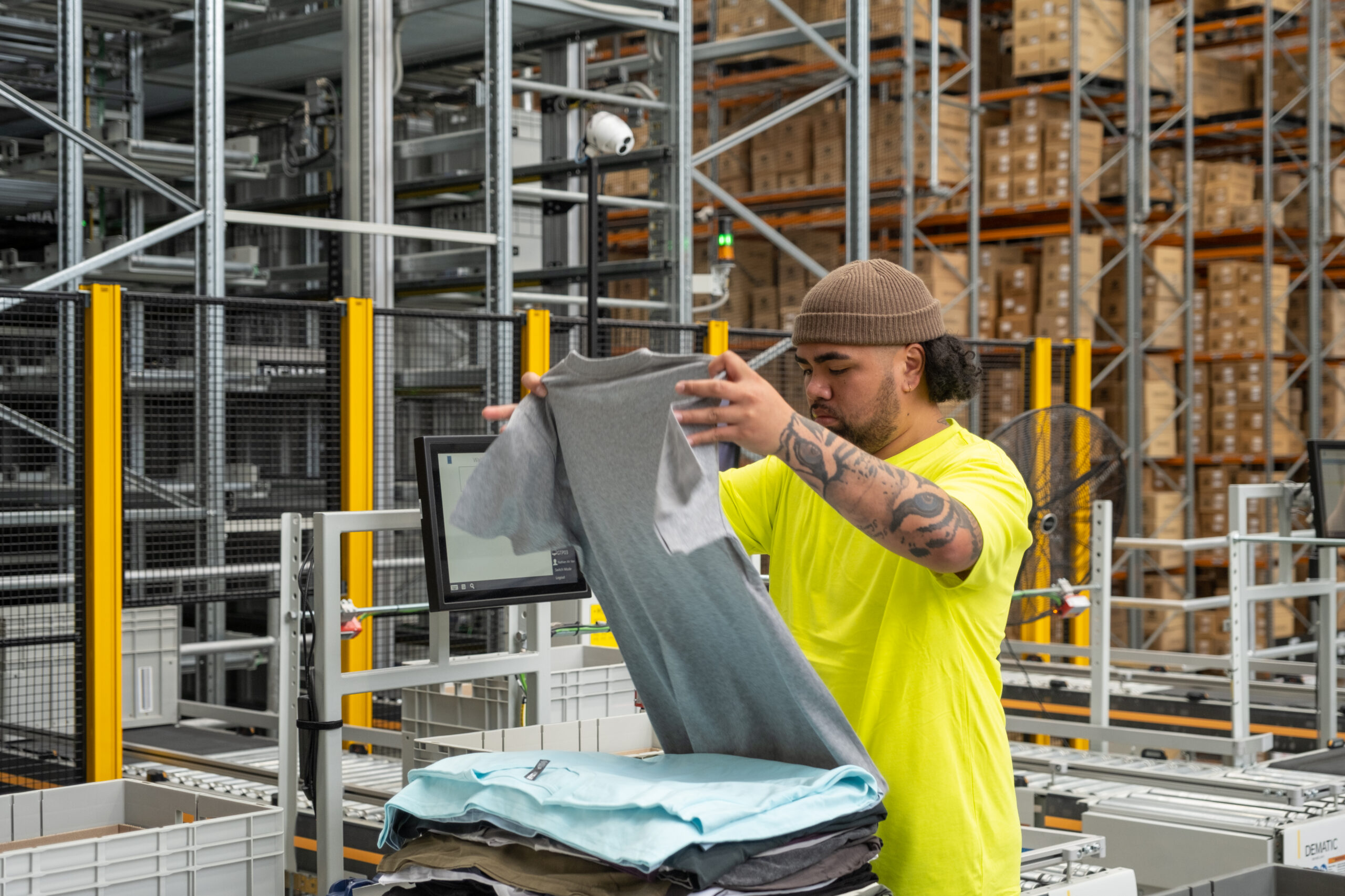
    Working on the Goods-to-Person (GTP) principle, where automated storage engines deliver product for orders automatically to pickers at ergonomic workstations, each of these solutions provides significant benefits in terms of productivity (from 250% up to 600% increase versus manual systems, with the corresponding decrease in labour required), increased capacity, speed, accuracy, flexibility and scalability. These systems can be tailored to fulfil different types of orders in the one system, whether to retail stores and/or online purchases. Advanced software oversees and manages the system, ensuring seamless integration into host systems, optimal performance and comprehensive management, reporting and decision-enabling capabilities.

    AS Colour: Multishuttle GTP

    Premium apparel company, AS Colour, embarked on a strategy to support its expected growth over the next decade by building a new 7,500 square metre distribution centre in Auckland, New Zealand. A key automation feature of the new DC was the deployment of the Dematic Multishuttle GTP system to help increase throughput by 344% per worker, drive accuracy, fulfilment speeds, operational efficiencies and reduce the overall size and power requirements of its warehouse.

    “The Multishuttle GTP system has been a game changer for our business, and we’ve actually seen a big increase in sales in New Zealand as a result of having it in place because our customers see how fast and accurately we get their orders to them,” says Lawrence Railton, Managing Director, AS Colour

    Radial: Bin-to-Picker AMR

    Radial Europe is a leading global e-commerce third-party fulfilment provider whose fashion, health and beauty customers include doTERRA, Calvin Klein, Cole Haan, Express, Gymshark, Lucky Brand, TaylorMade and Tommy Hilfiger.

    With a commitment to customer and operational excellence, and facing challenges of high-volume volatility, a sprawling storage area, and a diverse array of 20,000 constantly changing products, Radial deployed an innovative Dematic Bin-to-Picker AMR system at a new facility in the Netherlands.

    The system comprises 300 robots delivering products automatically to pickers. The system provides a significant improvement in operational performance, with picking speeds quadrupling and accuracy significantly increased, all in a reduced footprint.

    “We are now in a stronger position where we can fulfil every requirement a customer has. They simply tell us what they want to have happen and we can do it. Automation has proven to be a tremendous help in achieving the goals we had from the start,” says Ron Kleinsmit, Warehouse Manager at Radial Europe.

    Benetton Group: Autostore

    Benetton Group, one of the best-known fashion companies in the world , implemented a Dematic AutoStore system at its logistics facilities in Italy to boost the company’s e-commerce channel by optimising storage capacity and order processing.

    Mobile robots, traverse the top of high-density storage units to retrieve items in bins and deliver them to pickers, significantly enhancing picking efficiency while reducing travel previously undertaken by Benetton staff.

    “We chose Dematic because we were interested in a partner with significant experience in the e-commerce sector and a solid international background,” says Valentino Soldan, Head of Logistic at Benetton Group. “The AutoStore-based solution will meet our business needs perfectly, and we are confident in facing an increasingly challenging market with a structured and technologically advanced solution, capable of accompanying our development for many years to come.”

    Comparative Analysis

    Each automation solution offers unique advantages and considerations, making it essential for businesses to carefully evaluate their options before making a decision. Bin-to-Picker AMR systems prioritise speed and flexibility, making them ideal for dynamic environments with fluctuating order volumes. AMR Shelf-to-Person systems are typically applicable in small order fulfilment systems or where headroom utilisation, storage capacity, pick rates, and ergonomics are less of a consideration. AutoStore excels in maximising storage density and space optimisation, making it suitable for businesses with space constraints. Multishuttle systems prioritise throughput and scalability, making them ideal for high-volume fulfilment centres where productivity is of utmost importance, and with the capability to go high, they potentially provide the highest storage capacity in tall warehouses.

    Automation a Necessity to Stay Ahead of Your Competition

    Automated order fulfilment solutions offer tremendous potential for enhancing supply chain efficiency and agility. In an era defined by rapid change and intense competition, automation is not just a luxury but a necessity for businesses seeking to thrive in the Southeast Asia retail landscape.

    To help companies determine which automation solution is the best fit for their operations, Dematic has released an Optimising Store and Online Order Fulfilment eBook, deep diving on the challenges facing retailers, opportunities for optimisation and competitive differentiation, and evaluating the features and benefits of these leading automation technologies. Download the eBook.

    By: Garret Lu,Senior Sales Manager for Dematic Asia.



  • Uniqlo to open global flagship in former Bicqlo site in Shinjuku

    Uniqlo to open global flagship in former Bicqlo site in Shinjuku

    Uniqlo is set to open a new global flagship store in Shinjuku, replacing the former Bicqlo location, as part of its aggressive expansion plan.

    In addition to offering its range of clothing and accessories, the store will feature unique elements such as Uniqlo Flower, Uniqlo Coffee, and Re:Uniqlo.

    Uniqlo Flower is located on the first floor, selling seasonal flowers and will be displayed at the store’s entrance. On the second floor, Uniqlo Coffee will serve beverages and local sweets.

    Additionally, the third floor will house Re:Uniqlo Studio where customers can access embroidery and clothing repair services, encouraging shoppers to care for and extend the life of their garments.

    To celebrate its opening, Uniqlo will release an exclusive Shinjuku Mainstore Special, which will feature select Western products not previously available in Japan; and a Shinjuku Department Store Guidebook, a booklet introducing the town, insights from staff from long-established local stores, and cultural figures from the district.

  • Singapore retail sales remain subdued, but show signs of recovery

    Singapore retail sales remain subdued, but show signs of recovery

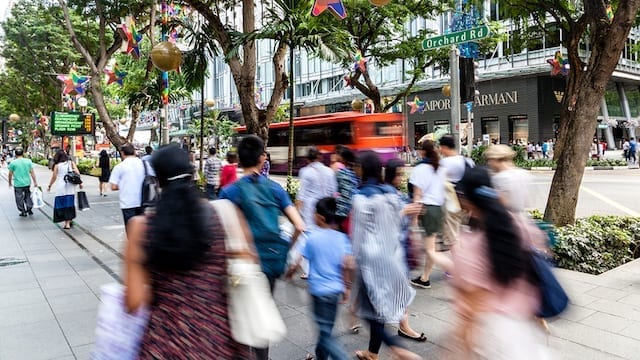
    Singapore retail sales – excluding motor vehicles – continued to decrease in August, but at a slower pace compared to the previous months.

    The city-state saw a 1.5 percent drop in retail sales for the month, a slight improvement from the 2.3 percent reduction in July and 3.1 percent decline in June.

    According to the Department of Statistics, the total value of retail sales was about SG$3.5 billion (US$2.7 billion), of which 14.1 percent were from online retail sales.

    Within the retail trade sector, wearing apparel & footwear reported the biggest drop in sales – at 6.7 per cent, followed by department stores with a 6.2 per cent decrease. The remaining majority also saw poorer results, such as petrol service stations, optical goods & books, and recreational goods.

    The food and alcohol sector swung against the trend with an 8.1 percent increase. Retailers of cosmetics, toiletries, and medical goods and supermarkets and hypermarkets also enjoyed improvements of 3.1 percent and 2.2 percent, respectively.

  • Japanese burger chain Niku Niku Oh! Kome debuts in Hong Kong

    Japanese burger chain Niku Niku Oh! Kome debuts in Hong Kong

    Japanese-style burger chain Niku Niku Oh! Kome – owned by Japanese restaurant chain operator Monogatari Corporation – has launched its first outlet in Hong Kong as part of its broader expansion across Asia.

    Located in Sha Tin, the restaurant has 40 bar seats surrounding an open kitchen. It specialises in freshly handmade wagyu burgers seated on hot plates or served on rice with egg yolk for a “classic Japanese experience”.

    The wagyu hamburgers are crafted from a blend of Kyushu black wagyu beef and US beef, while the rice served is Niji No Kirameki, sourced from Japan’s Tohoku region.

    Makoto Hori, senior executive officer, Monotogari Corporation, said that Hong Kong, being an international city close to the mainland, offers the company an opportunity to raise brand awareness in the Asian region.

    “We have already opened 16 restaurants in Mainland China since November 2022, and local customers have well received our food,” he added.

    Established in 1949, Monogatari Corporation has more than 700 restaurants in Japan and overseas, with 15 restaurant brands serving various Japanese foods, including yakiniku, ramen, okonomiyaki, sushi and shabu-shabu.

  • Dior opens reinvented Galaxy Macau boutique

    Dior opens reinvented Galaxy Macau boutique

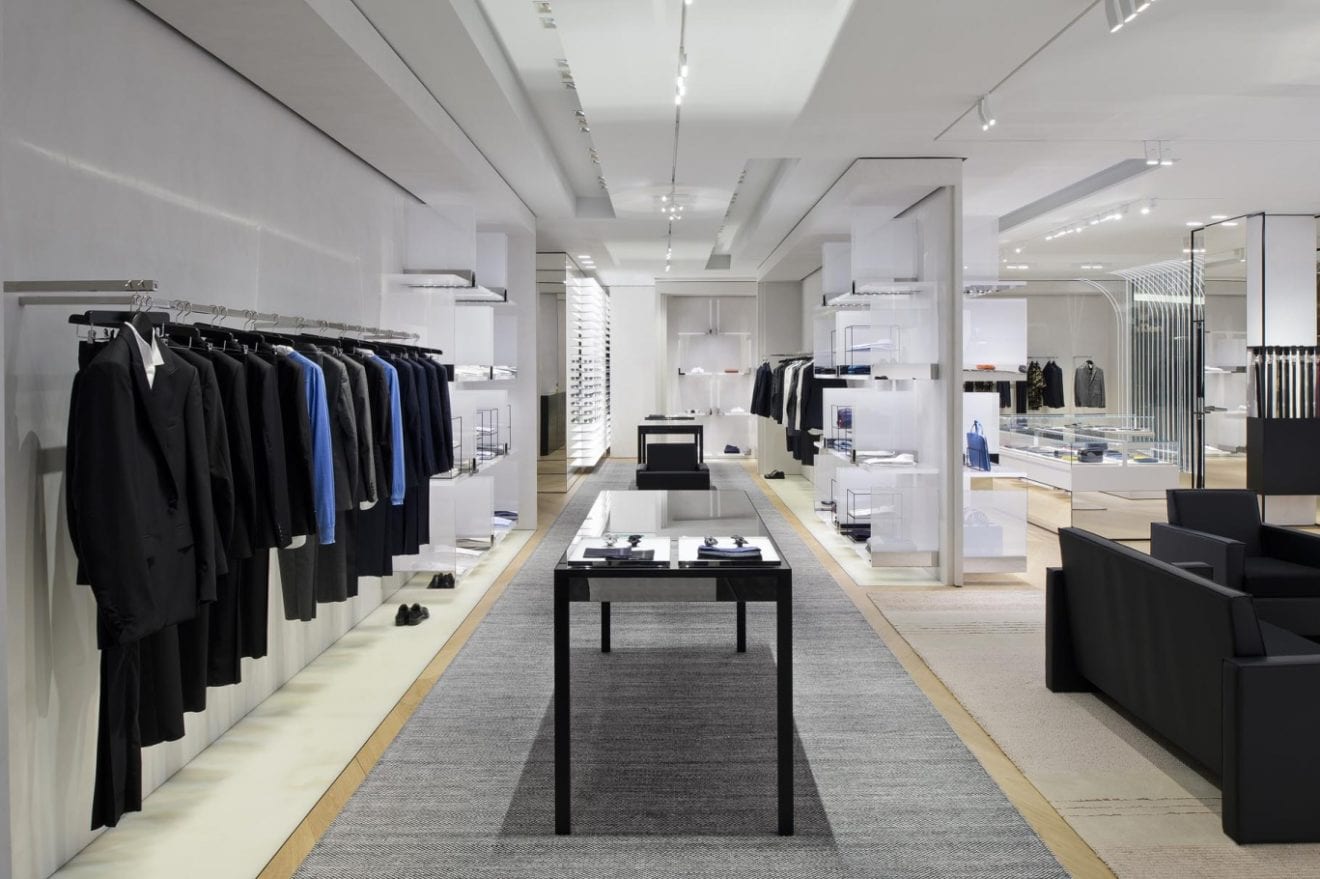
    Luxury fashion house Dior has launched its revamped Galaxy Macau boutique, offering more exclusive shopping experiences.

    The store, located at one of the finest shopping locations, Galaxy Promenade, has two floors and offers a varied range of items such as ready-to-wear and accessories designed by Maria Grazia Chiuri and Kim Jones, as well as watches and jewellery.

    The venue also features the My Dior fine jewellery line, the Dior autumn-winter 2024-2025 ready-to-wear collection with 30 Montaigne models, and Victoire de Castellane’s Rose des Vents and My Dior designs.

    The second store features men’s clothes from the Dior Winter 2024-2025 collection, as well as the Lifestyle Capsule, which focuses on board sports.

    In addition, the boutique offers VIP private shopping spaces.

  • Li & Fung to launch Sanctuary denim under licensing partnership

    Li & Fung to launch Sanctuary denim under licensing partnership

    Li & Fung – a global brand distribution company based in Hong Kong – has teamed up with US apparel brand Sanctuary to create and distribute a new line of women’s denim under a licensing agreement.

    Sanctuary said the partnership will help the brand expand its denim category, reach more customers, and diversify its distribution channels.

    The collection will feature a various denim in different cuts and washes, as well as shorts, skirts, and jackets. The washes will include white, light, medium, dark, and black colour options.

    Additionally, the denim line will be made from responsibly sourced cotton and recycled materials, using innovative, eco-friendly washes to minimise water usage and chemical waste.

    Deb Polanco, co-founder and chief creative officer of Sanctuary, said the collaboration aims to leverage Li & Fung’s expertise to meet the growing demand for their products.

    “We are dedicated to providing perfectly fitting pants, building on our reputation as master pant makers and creators of the original 90s cult cargo,” Polanco added.

    “We are excited for our customers to explore the new denim collection this spring and find their new favourite jeans, shorts, or jacket.”

    The Li & Fung x Sanctuary denim collection is set to launch in February next year at department stores, specialty retailers, and online, and will also be available for wholesale.

    Sanctuary was founded in Los Angeles in 1997 by Polanco and her husband Ken. The company says on its website that its designs reflect “the laid-back aesthetic of California, the effortless attitude of New York, and the adventurous spirit of the world to inspire and guide women through their 24/7 style”.

  • Vietnam fetches $227M from crab exports

    Vietnam fetches $227M from crab exports

    Crab exports in the first nine months surged 66% year-on-year to $227 million, the strongest growth recorded among major fishery products.

    The rise in sales came as major markets, especially China, pumped up demand for Vietnamese crabs, the Vietnam Association of Seafood Exporters and Producers (VASEP) said in a report.

    Japan was also a major market as Vietnamese high-quality crabs are priced competitively there.

    Crab exports are expected to hit $300 million for the whole year.

    Fishery exports in total rose 8.5% to $7.16 billion in the first nine months. Shrimps led the gain with a 10.5% growth.

    VASEP forecasts that Vietnam’s seafood exports in 2024 can grow 7% to $9.5 billion, with shrimp, pangasius, tuna, squid and octopus making up the bulk of delivery.

  • WhatsApp testing new privacy feature to manage the contact syncing option on Android

    WhatsApp testing new privacy feature to manage the contact syncing option on Android

    WhatsApp is rolling out a new privacy feature to manage the contact syncing option for some beta testers. This feature, available in the latest WhatsApp beta for Android 2.24.21.26 update, gives users more control over their contact syncing experience.

    With this new privacy feature, users can manage contacts across their linked devices. This means that contacts can be added, edited, or deleted from any device linked to a user’s WhatsApp account, without relying on their mobile phones. For example, people who use WhatsApp on a tablet or desktop can still modify their contact list, and those changes will automatically sync across all their linked devices, providing a more integrated experience. If users disable contact syncing for a particular account, WhatsApp will stop pulling and displaying contacts from that account. This can help maintain privacy, preventing certain contacts from appearing in their WhatsApp contact list on a secondary account.

    WhatsApp uses cryptographic hashes to support another layer of privacy protection. These hashes allow WhatsApp to secure the phone numbers of contacts who don’t have WhatsApp accounts while still ensuring that they can monitor for unusual behavior, such as attempts to misuse the contact upload feature.

    Despite disabling contact syncing, users can still interact with their existing contacts on WhatsApp. In addition, WhatsApp will automatically restore contacts linked to a user’s account if they switch to a new phone or reinstall the app. This allows for a smooth transition without the need to re-add or recover contacts manually.

    Users have full control over their privacy preferences. If they choose to opt out of the new contact experience entirely, they can disable WhatsApp contacts in their privacy settings at any time. This makes it easier for users to maintain their privacy according to their own preferences.

    This new privacy feature is available to some beta testers who install the latest updates of WhatsApp beta for Android from the Google Play Store, and it is rolling out to even more people over the coming weeks.

    As an avid WhatsApp user who communicates with other users overseas, I think it’s important for users to have more control over their data, and I’m glad to see WhatsApp taking steps to improve user privacy.