Author: Mei Ling Tan

  • Google Messages is testing an easier way to send multiple images

    Google Messages is testing an easier way to send multiple images

    Google Messages, the default messaging app for most Android devices, offers a reliable and consistent experience when sending text messages. However, compared to other messaging apps, it does lack in certain areas pertaining to multimedia, such as when sending multiple images at once. Thankfully, it looks like Google is working on improving this experience.

    Currently, sending an image from your gallery in Google Messages is a fairly simple process: tap the image attachment icon, pick your photo, and send. The app even has a built-in camera shortcut, so you can snap a photo on the fly. But for those in a rush, the workflow needs refinement. Each new photo requires you to reopen the attachment sheet, negating the time-saving benefits of the in-app camera.

    The latest Google Messages beta (version 20240318 openbeta_dynamic) brings a UI refresh designed for quicker image sharing. In this version, the preview screen of a newly snapped photo shows the biggest change. The button at the bottom right now says “Send,” cutting out an extra step for single images. The bottom left gains an “Add more” shortcut, reopening the attachment sheet for further selections or to use the camera again. This is far easier than saving to your camera roll.

    That said, this change does have its downsides. One curious omission in this beta is the “Edit” option for basic photo annotations. Knowing that the new UI is still being tested, we are hopeful that these tools will be restored prior to making it to the production phase. We need more features added, not taken away!

    Regardless of this small setback, this streamlining is a welcome change for Google Messages. With such broad testing, we can likely expect a stable release soon, potentially bringing back those missing editing tools. While not a huge change, it demonstrates Google’s continued efforts to refine the core messaging experience.

  • WhatsApp will reportedly let you use Meta AI straight from its search bar

    WhatsApp will reportedly let you use Meta AI straight from its search bar

    Artificial Intelligence (AI) is everywhere these days, and we’d be pretty naive not to admit that it is transforming how we use our devices on a daily basis. Meta is one company that has been at the forefront of integrating AI into its platforms, and WhatsApp, Messenger, and Instagram users in the US already have a taste of what it can do. But soon, interacting with Meta AI might become even more seamless.

    According to WABetaInfo, Meta is working on a new feature for WhatsApp that allows you to ask Meta AI questions directly from the app’s search bar. This means that it will no longer be necessary to manually start separate AI chats.

    We can see a new prompt that reads “Ask Meta AI” beneath the search bar in the screenshot above from WABetaInfo. This prompt would reportedly eliminate extra steps, make interacting with the AI incredibly more convenient, and wouldn’t require that unsightly Meta AI shortcut that got in the way of accessing your messages.

    In fact, if you’ve ever used ChatGPT, Meta AI will feel familiar, as it is designed as an all-around assistant. However, one advantage that this chatbot will have is that instead of having to hunt it down, you’ll simply type your question into the search bar. WhatsApp is even planning suggested prompts to get your creative AI juices flowing.

    This feature is still under development and will likely appear in a future version of the app. In the meantime, WhatsApp is showing us that it is clearly all in on AI, as it is reportedly also working on implementing AI-powered image editing tools into its platform.

    WhatsApp’s new features are a glimpse into a future where AI is woven deeply into our everyday apps. It’s likely just the beginning, and I’m excited to see what other innovations Meta and other tech giants have in store.

  • Simplifying its app for users, Waze removes one crowdsourced reporting choice

    Simplifying its app for users, Waze removes one crowdsourced reporting choice

    Can you believe that it has been nearly 11 years since Google bought Waze for more than $1 billion? Many people were confused at the time, and many still are, as to why Google made the acquisition considering that it owned the number one navigation app in Google Maps. Part of the reason was to allow Google to obtain some of the features that Waze offers but Google Maps doesn’t.

    The thing is that both navigation apps cater to different users. Google Maps not only shows you how to get from point “A” to point “B” quickly and safely, but it also shows you where to go when you arrive at “B” if you want a meal, need a hotel room, want to be entertained, need a cup of Joe, or want to visit a local landmark. Waze, on the other hand, is all about the journey, and instead of using data and algorithms, Waze depends on crowdsourced information that members of the Waze community share using their phones.

    According to Autoevolution, Waze has removed the option that users had to report when there is a “vehicle on road.” This was an important road hazard to know about since no one wants to be motoring along at the speed limit only to end up rear-ending the stuck car. But Waze wanted to simplify the reporting options and figured that users would understand that the new “blocked lane” option could also include a “vehicle on road.” After all, a vehicle stuck on a road is also usually blocking a lane.

    Based on a survey that was conducted by finance app MarketWatch, Google Maps is the most popular navigation app with 70% of respondents saying that they use the app for navigation. Waze was second as 27% of those surveyed admitted to using the app. Apple Maps, available only on Apple devices, is used by 25% of those surveyed.

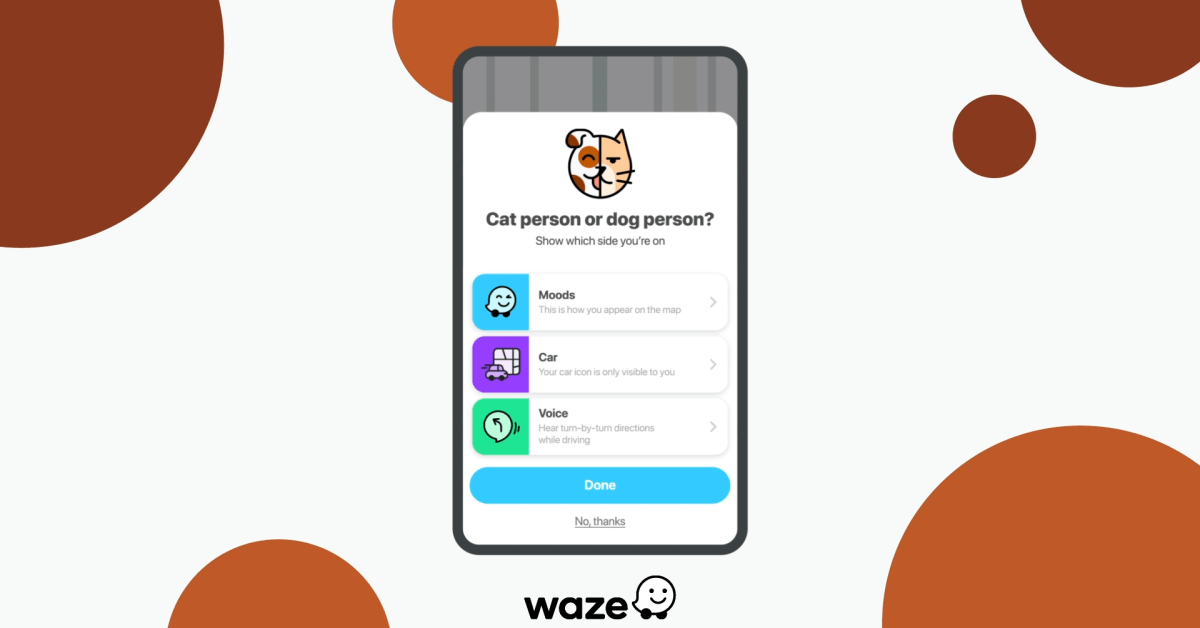
    If you’ve never tried Waze, you might want to give it a shot. You can choose from a wide range of voices giving you the turn-by-turn directions including your own! If you have an iPhone, you can tap on this link to install the app. Android users can load the Waze app from the Google Play Store.

  • PepsiCo to invest $400M more in two new plants in Vietnam

    PepsiCo to invest $400M more in two new plants in Vietnam

    U.S. food and beverage giant PepsiCo has committed to investing an additional US$400 million to build two new plants powered by renewable energy in Vietnam, its government said.

    The announcement came last Friday as delegations of more than 60 U.S. enterprises, including Suntory PepsiCo Vietnam Beverage, paid a 3-day work visit to Vietnam last week.

    The Vietnamese government said one beverage manufacturing factory will be in southern Long An Province and cost over $300 million, and another for food processing will be in northern Ha Nam Province, with an investment of $90 million.

    The report did not give details on the commissioning time of the two factories.

    Late last year, the company said it had been granted an investment certificate for the Ha Nam factory, which was scheduled to start operating in the third quarter of 2025.

    PepsiCo, which runs five factories across Vietnam, entered the country in 1994.

  • AirAsia Cambodia to launch in May, with international flights following in third quarter

    AirAsia Cambodia to launch in May, with international flights following in third quarter

    AirAsia’s Cambodian unit will commence operations on 2 May, as the low-cost operator looks to drive tourism demand into the country.

    Launching with a network of three domestic points, AirAsia Cambodia will link its Phnom Penh hub with Siem Reap and Sihanoukville using a fleet of two Airbus A320s.

    Airline chief Vissoth Nam says that the airline is also looking to commence international flights as soon as the third quarter of the year – with the airline looking at existing AirAsia hubs Bangkok and Kuala Lumpur, as well as Singapore.

    When it launches, AirAsia Cambodia will fly daily between Phnom Penh and Siem Reap, Siem Reap and Sihanoukville, and Sihanoukville and Phnom Penh.

    National carrier Cambodia Angkor Air is currently the sole domestic operator in the country: it has two daily flights between Phnom Penh and Siem Reap, and one daily flight between Sihanoukville and Siem Reap. There are no airlines flying between Phnom Penh and Sihanoukville.

    Vissoth, speaking at the airline’s launch event in Phnom Penh, adds that the airline is starting with domestic flights to drive its brand awareness within the country, as it awaits regulatory approvals to commence international services.

    In the longer term, the airline hopes to grow its fleet to 16 aircraft, he adds.

    The airline, which is starting with 88 employees, is 51% controlled by AirAsia Aviation, with local firm Sivilai Asia controlling the remaining 49%. It is the group’s fifth airline unit after Malaysia, Thailand, Philippines and Indonesia.

    AirAsia Cambodia’s launch has been delayed for months – the airline unit was to have begun operations in late-2023. AirAsia Aviation Group chief Bo Lingam attributes the slip to the global supply chain crunch. “That’s the basic issue… and for us to get planes into service…[and] the parts we need – the whole supply chain has been affected worldwide,” he adds.

    Lingam says AirAsia Cambodia “will be connecting the dots” in the group’s Southeast Asia network strategy.

    While the unit will initially feed traffic into the broader group’s network via hubs in Malaysia and Thailand, Lingam envisages the airline also operating its own flights to areas in North Asia, China and India.

    “The launch of AirAsia Cambodia represents more than adding a new airline for the group… it symbolises our commitment to empowering communities and driving economic development across the region.”

    AirAsia MRO sister unit Asia Digital Engineering is also expanding its presence in the country, working with Sivilai on a new mainteance joint venture based in Phnom Penh.

  • Vietnam ranks third in crypto gains

    Vietnam ranks third in crypto gains

    Vietnam ranked third globally in cryptocurrency gains last year with US$1.18 billion in profits, according to a report from U.S. crypto data provider Chainalysis.

    It was behind the U.S. ($9.36 billion) and the U.K. ($1.39 billion). China and Indonesia were in fourth and fifth places with $1.15 billion and $1.06 billion.

    Vietnam’s crypto gains were doubled that of Spain and the Philippines and triple that of Thailand.

    Eight countries recorded more than $1 billion.

    Chainalysis said the positive trends of 2023 have carried over into 2024, with notable crypto assets like Bitcoin achieving all-time highs in the wake of Bitcoin exchange-traded fund approvals and increased institutional adoption.

    “If these trends continue, we may see gains more in line with those we saw in 2021,” it said, adding that as of March 13 Bitcoin was up 65.4% and Ether was up 70.2%.

    The large crypto gains in Vietnam, however, might be enjoyed only by the minority.

    A report by Coin98 Insights earlier this year showed that 64% recorded no profit last year, with 44% of them making losses.

  • WhatsApp could double the length of status videos

    WhatsApp could double the length of status videos

    WhatsApp seems to have rolled out a bunch of updates in the last couple of weeks for those enrolled in the beta program. While many of these updates address various bugs, some of them introduce new features that users can test and provide feedback.

    With WhatsApp beta version 2.24.7.6, the developer is increasing the length of videos users can add to their status. Currently, WhatsApp users can add videos of up to 30 seconds to their status, but the latest beta version of the up extends the length to 1 minute.

    Discovered by the folks at WABetaInfo, the new feature that allows users to share videos of up to 1 minute in length via status updates seems to be only available to select WhatsApp beta testers on Android.

    While this certainly isn’t a core WhatsApp feature, it’s nice to know that developers are listening to feedback and try to accommodate many of the requests that make sense.

    As with all the beta features, it’s hard to say whether or not this will make it to the stable version of WhatsApp. Still, since it doesn’t seem to be that hard to implement, chances are that all WhatsApp users on Android will eventually be able to share longer videos via status updates.

  • WhatsApp on Android may soon be getting voice message transcription like on iOS

    WhatsApp on Android may soon be getting voice message transcription like on iOS

    For nearly a year, iOS users have enjoyed the convenience of transcribing WhatsApp voice messages. Now, it’s looking like WhatsApp is working to bring the same functionality to Android, and its users may soon get the same time-saving feature.

    TheSpAndroid‘s @AssembleDebug completed an APK breakdown that reveals there is code in WhatsApp Beta for Android (version 2.24.7.7) that indicates this feature is in development. Furthermore, the code also reveals that enabling transcription will require a 150MB download, suggesting that the feature relies on your device’s speech recognition software.

    The feature is expected to be located within the Settings > Chats menu, mirroring the feature’s location on iOS devices. End-to-end encryption will also apply to voice transcripts, meaning that your privacy will remain intact even when your voice messages are turned into text.

    The feature could not be activated yet, leaving only the strings in the code to go off of. This means that screenshots could not be gathered, which strongly suggests that this feature is still in its very early stages. However, WhatsApp’s timeline for new features can often be unpredictable, so while there is no specific date for when this feature will become widely available, it could appear in future WhatsApp beta releases at any time.

    Once released, this move will put WhatsApp on a more even footing with rivals like Telegram and Google Messages, which already offer transcription tools on Android. However, it is unclear if there will be limitations on the use of this feature. While Google Messages has a free transcription service, Telegram limits non-premium users to a few transcripts per week.

    It will be interesting to see how WhatsApp decides to implement this feature and if they will follow a similar model or offer it without restrictions. This could potentially impact the user experience and determine how successful the feature will be in attracting new users to the platform.

  • Apple in talks to license Google’s Gemini AI to improve Siri, add new iOS features

    Apple in talks to license Google’s Gemini AI to improve Siri, add new iOS features

    The upcoming iOS 18 update is expected to be one of the biggest-if not the biggest-in iOS history. Part of that is due to the myriad AI features that Apple will be adding to the operating system including possible improvements to digital assistant Siri. While the date has not yet been announced, many iPhone users are looking forward to this June’s WWDC 2024 developer conference to see what changes Apple plans for its digital assistant.

    When Siri first hit the scene in 2011 with the introduction of the iPhone 4s, it appeared that Apple was on to something big. But eventually, Siri’s capabilities and performance were surpassed by Google Assistant and Amazon’s Alexa and a shot of AI could be the cure for what ails the old gal. Apple is talking with Google about licensing the latter’s Gemini AI. The talks between the two tech giants have progressed to the negotiating stage.

    Besides improving Siri, Apple hopes to use Gemini to add new AI-based features to iOS 18. Apple and Google already have an agreement to make Google the default search engine on Safari, a deal that reportedly pays Apple nearly $20 billion annually. Because the DOJ is investigating this deal, any deal involving Apple and Google, including one that would allow Apple to use Gemini, would probably have to be agreed to by the Justice Department or some other regulatory agency in the U.S.

    On Android, users can install the Gemini app and opt-in to have Gemini replace the Google Assistant although some features, such as reminders, controlling media, and routines will not work with Gemini. If you opted in to replace Google Assistant with Gemini and want to switch back, go to the Gemini app, tap the profile icon, go to settings, tap on “Digital assistants from Google” at the bottom, and select Google Assistant. On iOS, Gemini can be accessed from the Gemini tap in the top center of the Google app, right under the digital assistant.

    Should Apple and Google agree to license Gemini, we should see a greatly improved Siri, which is what all iPhone users have been hoping for.

  • Google Wallet is rolling out support for Apple Wallet pass files

    Google Wallet is rolling out support for Apple Wallet pass files

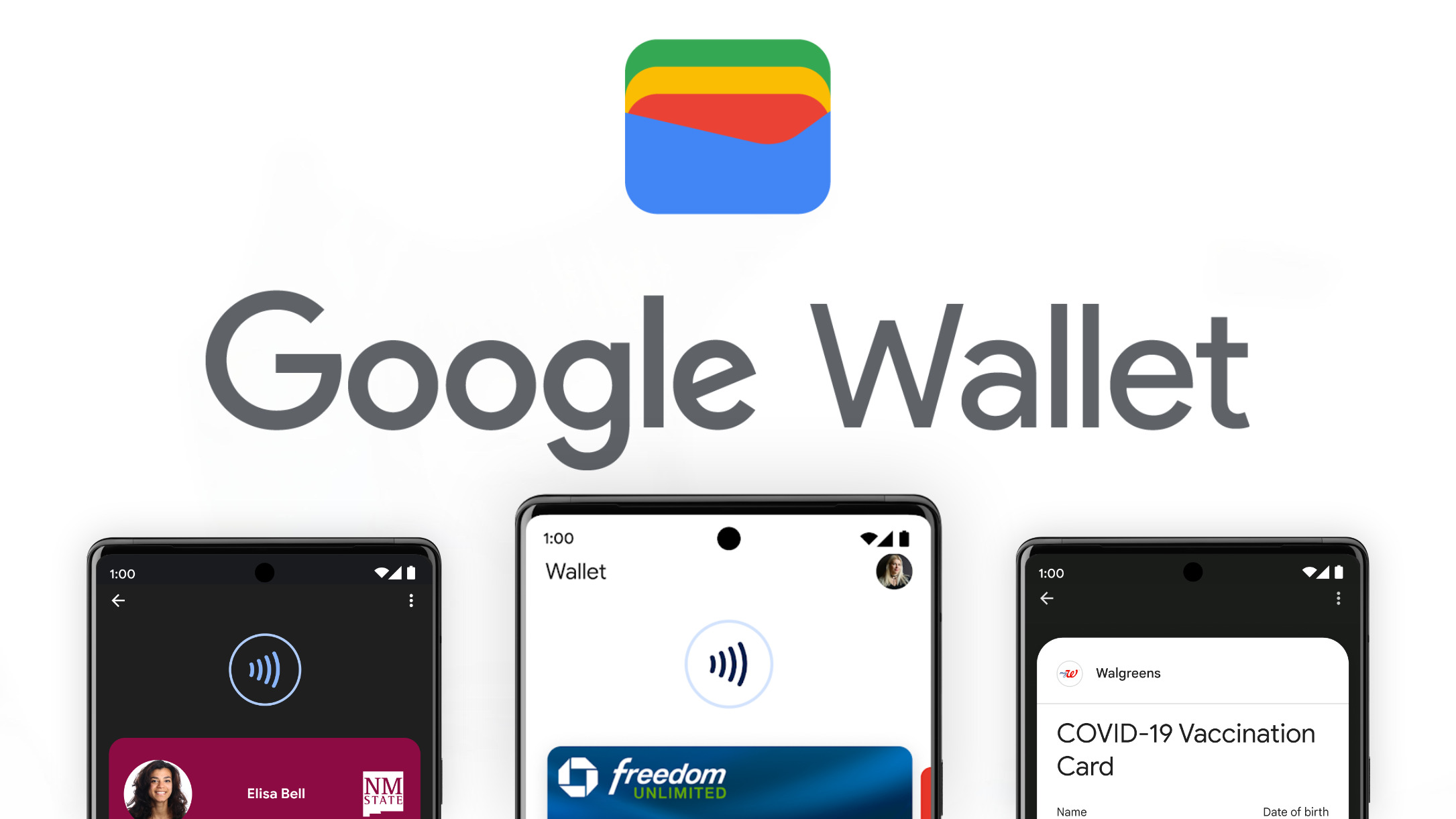
    Last year, Google Wallet rolled out a new feature that allowed users to share boarding passes and event tickets with others via a link. This feature was designed as a convenient way to share passes with friends and family, but mostly for those who didn’t actually have the Google Wallet app installed on their devices, such as iOS users. Now, a new update is rolling out that expands on this and now allows Apple Wallet passes to be used in Google Wallet as well.

    This update, which Android expert Mishaal Rahman documented, aims to narrow the disparity with Apple Wallet. Apple currently holds an advantage in this area due to its wide use among apps and services that distribute digital tickets and passes on iPhones. Additionally, it provides a more streamlined and integrated experience for users, as it most often provides the “Add to Apple Wallet” option.

    This hasn’t always been the case with Android devices, as “Add to Google Wallet” isn’t as universally available and recognized. However, with Google Wallet adopting support for “pkpass” files, which are used to add passes to Apple Wallet on the iPhone, this can quickly change and help standardize the process across both Android and iPhone devices.

    By expanding support for “pkpass” files, Android devices can now offer a similar level of convenience and integration when it comes to adding tickets and passes. This move by Google Wallet could potentially bridge the gap between the two platforms in terms of digital ticketing services.

    As promised over a year ago by Google, this support is now beginning to reach some Android users. However, despite some users confirming that “pkpass” files are opening in Wallet and importing to the app successfully, the functionality remains a server-side update on Google’s end. It will be interesting to see how this change impacts the user experience and convenience for consumers using Google Wallet on Android devices.

  • Chrome for Android will soon allow you to use your preferred password manager

    Chrome for Android will soon allow you to use your preferred password manager

    Google Chrome might be the default browser on many Android phones, but that doesn’t mean it’s the only – or even the best – option. Browsers like Firefox, with its expanded extension support, and privacy-focused browsers loaded with anti-tracking features, offer compelling reasons to switch. Now, Chrome is making a change that lessens one major reason for users to jump ship.

    Historically, if you wanted to use a password manager on Chrome for Android, you were stuck with Google’s solution. However, a new hidden setting finally lets you choose your preferred password manager. This means if you use a service like LastPass, Bitwarden, or 1Password, you can now integrate it seamlessly into Chrome on Android.

    This was spotted by Leopeva64 on X who shared his discovery while going through the code. According to him, this can be enabled right now on the Stable, Beta, and Canary builds of Chrome on Android, but the experimental flag “enable-autofill-virtual-view-structure” will need to be enabled first before the setting can show up. Once enabled, a new autofill option will appear within settings that will allow you to decide between the default (Google Password Manager) or other providers.

    This new feature is currently in development and not yet working as it should. For instance, attempts to save a new password after entering one failed, indicating that there is still work to do before the public can use it. The feature will likely undergo further testing and improvements before it no longer needs an experimental flag.

    Chrome’s lack of flexibility in this respect was a point of frustration for those who preferred a dedicated password manager. This integration, when released, will streamline your browsing and give you greater control over the password services you use. While a little more polish is needed, users now have more reasons to consider sticking with Chrome on Android.

  • How Thailand’s Gambling Scene Differs From Other Southeast Asian Nations

    How Thailand’s Gambling Scene Differs From Other Southeast Asian Nations

    Southeast Asia is home to some of the most exciting countries in the world in terms of travel, culture, and industry. Many countries could be described as being conservative and traditional and because of this, gambling regulations can be relatively strict.

    Gambling laws are subject to significant differences between Southeast Asian countries, and this article will explore the differences between Thai gambling laws and those of other nearby countries.

    Thai Gambling Laws

    Gambling in Thailand is subject to strict regulations and only horse racing and the Thai Lottery are permitted. Thailand first passed a gambling act in 1930 before revising it in 1935.

    Before these acts were passed, gambling was a popular activity in Thailand, or Siam as the country was known until 1939. The country welcomed the steady immigration of Chinese settlers during the 17th and 18th centuries, and gambling helped them settle and contribute financially through taxation.

    Following the prohibition of gambling activities in the country, the government introduced a monthly lottery draw as an incentivized way to tax the public. 

    The state-backed lottery initially started as a monthly draw, before changing to bi-monthly draws in 1989. The draws typically take place on the 1st and 16th of the month with a total of 38 million tickets being made available to the public per round.

    60% of the revenue generated from the lottery is returned to players in prize money. 12% goes towards covering administration charges and management, with the remaining 28% going to the government.

    Horseracing in the country dates back to 1897 when Siam’s King Chulalongkorn visited Europe and brought the tradition back. The Royal Bangkok Sports Club and Royal Turf Club were established in 1901 and 1916 respectively, and the sport grew in the years to come.

    Further restrictions took place after betting on horse racing was viewed as being immoral and it races were limited to being available once per week. 2018 saw Bangkok’s Royal Turf Club close and the country’s active racecourse circuit being reduced to six.

    As a traditional Buddhist country, gambling in Thailand is looked upon as being one of the four vices that can lead to ruin.

    Illegal gambling in the country is actively discouraged with the government enforcing restrictions.

    The rise in online gambling facilities has provided the people in Thailand with a loophole with online betting remaining unmentioned in Thai Law. There is still the risk that Thai law enforces regard online gambling as falling under the same regulations as traditional gambling.

    Offshore operators provide consumers with a wide variety of betting markets, including sports betting and casino games. This provides players with the opportunity to learn and enjoy a wider variety of betting options, including poker, slot machines, baccarat, and more. It is advisable to read more about each game before you start playing and to learn the regulations for the country you are playing from.

    Gambling Regulations Across Southeast Asia

    Some countries in Southeast Asia operate strict gambling policies that make gambling completely illegal for citizens and visitors. Indonesia and Brunei do not permit any form of gambling.

    Other countries recognise the value in allowing visitors to place bets and visit casinos, and Cambodia and Vietnam offer some forms of betting to tourists. 

    Some forms of betting in the Philipines, Myanmar, Laos, Singapore, and Malaysia are legal and these countries see great returns in revenue from legal betting operators every year.


  • E-commerce Outsourcing Philippines: Cynergy BPO on How 24/7 Multilingual Support Has Become the New Gold Standard

    E-commerce Outsourcing Philippines: Cynergy BPO on How 24/7 Multilingual Support Has Become the New Gold Standard

    In today’s digital age, where the sun never sets on the global marketplace, the imperative for e-commerce businesses to provide 24/7 multilingual support has never been more pronounced. Cynergy BPO, a leading outsourcing advisory firm in the Philippines, is at the forefront of championing this essential service paradigm, recognizing it as the new gold standard in customer care. With the digital marketplace operating non-stop across different time zones, the ability to offer immediate, culturally attuned customer service has become a critical determinant of success in the international e-commerce arena.

    Leveraging its extensive experience in collaborating with Fortune 500 retailer such as eBay, Sears, and Home Depot, the Cynergy BPO is adept at understanding the nuances of global consumer behavior. The firm emphasizes the significance of not just communicating but connecting with customers in their native language, ensuring that every interaction is meaningful and personalized. “In the realm of global e-commerce, the power of language and cultural understanding cannot be underestimated. It’s about making every customer feel valued and understood, transcending geographical and linguistic barriers,” says John Maczynski, CEO of the advisory firm.

    The demand for around-the-clock service reflects a consumer base that shops online at all hours, expecting not only instant responses but also interactions that are culturally and linguistically relevant. Ralf Ellspermann, CSO of Cynergy BPO, further elaborates on the importance of this service, “Offering multilingual support around the clock is not just about being available; it’s about being present in a way that deeply resonates with the customer’s cultural context and expectations.”

    The firm’s strategic BPO advisory services are instrumental in forging successful partnerships between e-commerce companies and the Philippines’ highly skilled multilingual customer service providers. “Our goal is to facilitate connections that not only meet but exceed the dynamic needs of a diverse global clients,” Maczynski emphasizes. This commitment to excellence extends to ensuring that e-commerce outsourcing providers can deliver a seamless, culturally rich customer experience, leveraging the Philippines’ renowned hospitality and technological prowess.

    Plus, the adaptation of cutting-edge technology in customer service, such as AI-driven chatbots and CRM systems, has further enabled providers to offer personalized and efficient support across various channels. “Integrating technology with human empathy allows us to provide a customer service experience that is both innovative and genuinely caring,” Ellspermann notes.

    The transformative effect of offering 24/7 multilingual support on business growth is significant. It not only enhances brand loyalty and customer satisfaction but also positions e-commerce businesses as leaders in the global market. “Being able to effectively communicate with customers in their language, at any time, sets a brand apart, fostering a global community of loyal customers,” states Maczynski 

    As e-commerce continues to expand its global footprint, the integration of 24/7 multilingual support will increasingly become a defining feature for companies that excel in customer experience. Cynergy BPO is at the helm of this evolution, advocating for comprehensive support services as the standard of excellence. Through their expertise and strategic partnerships, the advisory firm is enabling businesses to achieve unparalleled customer loyalty and success on an international scale.

    Cynergy BPO is not merely navigating the shift towards global customer service standards; it is actively shaping the future of global commerce. By endorsing the adoption of 24/7 multilingual support as the new benchmark, the firm ensures its clients are well-equipped to meet the demands of today’s global consumer, paving the way for a future where exceptional customer service transcends borders and languages, defining the very essence of e-commerce outsourcing success in the Philippines.


  • Intel will bring a performance-improving feature to its chips one year ahead of TSMC

    Intel will bring a performance-improving feature to its chips one year ahead of TSMC

    In October 2021, Intel CEO Pat Gelsinger said that Intel would reclaim process leadership from TSMC and Samsung Foundry by 2025. Intel is looking to challenge TSMC and Samsung Foundry in the contract foundry segment of the industry. A contract foundry takes the chip designs from fabless chip designers (fabless means that they do not own a fabrication facility, like Apple for example) and manufacturers the chip. TSMC is the global leader followed by Samsung Foundry.

    Currently, both TSMC and Samsung Foundry are shipping 3nm chips and in the second half of next year, both could be mass-producing 2nm chips. Later this year, according to The Motley Fool, Intel will be using its 20A process (equivalent to 2nm for TSMC and Samsung Foundry) which will be used to build Intel’s Arrow Lake PC chips. So at that point, Intel will have process leadership and that will only continue next year when Intel debuts its 18A process node, equivalent to 1.8nm when you compare it to TSMC and Samsung Foundry. The latter two will be debuting their 2nm node in the second half of next year.

    Everyone is expected to catch up with each other in 2027 when Intel’s 14A (1.4nm) joins 1.4nm output from TSMC and Samsung Foundry. The bottom line is that the size of the transistors used with these chips gets smaller as the process node shrinks. That means more transistors can fit inside a component. The more transistors inside a chip, typically the more powerful and/or energy efficient a chip is.

    But starting with its 20A production later this year, Intel will have a bit of a head start on TSMC and Samsung Foundry with a key feature that the American chipmaker calls PowerVia (also known as known as backside power delivery). TSMC is expected to use this technology with its N2P node which it will use starting in 2026. Samsung Foundry is supposedly going to use backside power delivery on a particular node launching next year, although Samsung Foundry has not confirmed this.

    So what is PowerVia? Most of the small wires that deliver power to a chip are found on top of all of the layers that make up a silicon component. As these chips become more powerful and complex, the wires on top that connect to power sources are competing with the wires that connect components. This results in wasted power and low efficiency.

    PowerVia moves the wires bringing power to the chips to the backside of the chip. As a result, clock speeds can increase by 6% resulting in greater performance. Add to that the increase in performance delivered by using a more advanced process node, and the result is a more powerful chip used to run a more powerful device.

    Intel CEO Gelsinger said, “I’ve bet the whole company on 18A.” Intel expects that the performance and efficiency of its 18A node will top TSMC’s best. Intel also inked a deal with Arm allowing Arm’s chip-designing customers to have low-power SoCs built using Intel’s 18A process node. Last month, Intel agreed to build a custom chip for Microsoft using its 18A process. Four unnamed large companies (it’s not clear whether Microsoft is one of the four) have signed on to have Intel produce their chips using the 18A process.

    Recently, Intel became the first company to take delivery of its $400 million High-NA Extreme Ultraviolet Lithography machine from Dutch manufacturer ASML. With billions of transistors stuffed inside application processors, the High-NA EUV can etch extremely thin circuitry patterns on silicon wafers.

    The older EUV machines have an aperture of .33 (equivalent to a resolution of 13nm), and the High-NA machines have an aperture of .55 (equivalent to a resolution of 8nm). With a higher resolution pattern transferred to a wafer, the foundry could avoid having to run a wafer through the EUV machine twice to add additional features saving both time and money. While TSMC and Samsung Foundry have both ordered one of the High-NA machines from ASML, Intel will probably get to use the time-saving lithography machine first.

  • How The Body Shop Vietnam does business

    How The Body Shop Vietnam does business

    Operated by a Malaysian firm in some Southeast Asian locations, cosmetics retail chain The Body Shop Vietnam posted its first loss last year after three years of declining profits.

    InNature Berhad, which owns The Body Shop Vietnam, said that the company has been unaffected by the shutdown of The Body Shop U.S. operations last week. The company also operates The Body Shop in Malysia and Cambodia.

    The Body Shop, a 50-year-old brand founded in the U.K, has been scaling down its operations in the U.K. and Canada.

    The first The Body Shop store in Ho Chi Minh City opened in 2009. After 15 years, it now has 41 outlets nationwide.

    Revenues before Covid-19 were on the rise from VND112 billion in 2018 to VND162 billion in 2020. Its annual growth rate of over 20% were higher than InNature Berhad’s revenue, which dropped 8.8%.