Author: Mei Ling Tan

  • UBS Asia Job Cuts Show What Switzerland Faces

    UBS Asia Job Cuts Show What Switzerland Faces

    It is a year since the government and regulators forced UBS to rescue Credit Suisse. The recent news of job cuts in Asia makes it very clear what could be just around the corner for the domestic financial hubs.

    UBS is cutting about 70 jobs in Asia, according to various media reports on Thursday. Most of the redundancies are taking place in Singapore and Hong Kong.

    The step also ostensibly affects the bank’s core Global Wealth Management (GWM) business even though the number of employees has been growing steadily in that region since 2022. But as UBS reported in February, the Asia Pacific made significantly less money in the fourth quarter of last year. Pre-tax profit fell by 46 percent to $97 million compared to the same period a year earlier. At the same time, the cost-income ratio rose to 87.7 percent.

    That is in itself remarkable. Besides the US, Asia is a strategic growth market for the bank. Both regions are integral to its future financial success and key to its investment growth story with UBS making large investments in both markets in recent years. The results are there for everyone to see, particularly after integrating Credit Suisse’s business. There is no other bank in Asia that has such a large wealth management business with such high levels of invested assets.

    At the end of 2022, before the forced takeover of Credit Suisse, about 16,500 individuals worked at UBS in Asia Pacific. At the time, that was 22 percent of the group’s entire workforce.

    The current job cuts are likely due to plain economics. But they also have to be seen in the context of a wider restructuring. This has now started just about a year after the government and regulators forced UBS to take over its former rival and Switzerland’s second-largest bank. That is also exactly what the bank announced in February.

    Singapore, Hong Kong, and Luxembourg come first, followed by Switzerland afterward, an order of events that is expected to hold up over the next few years.

    We got a taste of that this year. In April, the bank will start consolidating its branch network with that of Credit Suisse’s domestic business. About 85 branches belonging to both will be impacted by the consolidation. What is currently happening in Singapore and Hong Kong shows what can be expected in Switzerland very soon.

    Moreover, when following the UBS schedule step-by-step, it is clear that the domestic market is to see very significant disruption.

    The integration of the franchises of the country’s two largest banks will change the financial hub sustainably and substantively. And it will be on a scale that we can’t yet really imagine. With that, the fact that UBS’s management is not wasting any time should be welcomed. The sooner the process is completed, the sooner the bank can concentrate on its actual job. Focusing on doing business with clients.

    As part of that, it will be this exact core business experiencing the current round of cuts that will determine the success of its efforts to become a wealth management powerhouse – both in Asia and Switzerland.

  • Google Messages gets new Camera UI for users to access during a chat

    Google Messages gets new Camera UI for users to access during a chat

    Google is adding a new camera UI for Google Messages that Android users can employ instead of relying on their phones’ default viewfinder. The camera UI can be accessed from within a Google Messages conversation using the camera icon inside the text field. Before Google started to push out this change, those using the Google Messages app would have to use the system camera app for a preview.

    Before the update, Pixel users accessing the system camera app could customize the White Balance, and exposure, and set a timer if they so desired. The new viewfinder for Google Messages users is built using the Compose toolkit that Google recommends for building Android user interfaces, and it is stripped down more than the system camera app UI used now. The controls will allow users to adjust the zoom using three default settings and pinch-to-zoom. There is also a button to enable or disable flash, found in the upper right corner, and a button to switch between using the rear and front-facing cameras.

    A new feature added to the Google Messages camera UI appears on the bottom of the screen and allows users to switch between taking a photograph and recording a video. With this new feature, you can choose between capturing an image or recording a video after opening the camera app. Previously, the user had to make this decision before opening the Google Messages camera UI.

    The new Google Messages camera UI is being disseminated today via a server-side update and appears on beta version 20240312_00_RC00 of the Google Messages app. To see which version of the Google Messages app you’re running on your Android phone, go to Settings > Apps and tap on “See all xxx apps.” Scroll down to Messages and tap on it. That takes you to the Google Messages App info page. Scroll all the way to the bottom to see which version of the app you’re running.

    On my Pixel 6 Pro running Android 14 QPR3 beta 2, the version of Messages I have is 20240126_04_RC00 which means that I do not have the new Messages camera UI at this time. You can see if the update with the latest version is in your app update queue by opening the Play Store and tapping on the profile icon in the upper right corner. From the menu that appears, click on Manage apps & device, and under Updating apps, tap the blue link to Update all and hope that the new feature is part of an update pushed out to Google Messages that was waiting to be installed.

  • Singaporean women earn 14.3% less than men

    Singaporean women earn 14.3% less than men

    The median income difference between women and men working in Singapore was 14.3% last year, down from 16.3% in 2018, according to the Ministry of Manpower’s study.

    Differences in occupation between men and women remained the key factor influencing the gender pay gap. Men are overrepresented in higher-paying occupations, according to a study examining the incomes of full-time employees aged 25 to 54, who are either Singaporean or permanent residents.

    Women often receive lower pay than men, even when they share the same job title, work in the same industry, and have similar age and education levels.

    In 2023, 75% of women were employed in professional, managerial, executive, and technician (PMET) roles, marking an 8.8 percentage point rise from 2018. Meanwhile, the proportion of men in PMET positions climbed by 6.3 percentage points, reaching 79.4% in 2023.

  • South Korean burger chain Mom’s Touch enters Japan

    South Korean burger chain Mom’s Touch enters Japan

    Korean burger and chicken fast food chain Mom’s Touch is set to open its first directly managed Japanese store in Shibuya, Tokyo.

    Scheduled to open on April 16, the new 418 sqm Shibuya store will sit in a location that used to be occupied by McDonald’s and have a seating capacity of 200 people. According to local media, the new store will be adjacent to Shibuya Scramble Square where the daily floating population reaches about 3 million people.

    “We believe this is an important first step for Mom’s Touch to make the leap to become a global brand and make full-fledged overseas expansion,” the company said in a statement.

    As part of the expansion plan, Mom’s Touch has participated in the Tokyo Franchise Show as it seeks to further expand internationally and promote its Korean burger in the country, which has a burger market estimated at US$5.3 billion.

    The company launched a pop-up store in Shibuya last October, luring about 33,000 visitors. As of February, Mom’s Touch operates 1420 stores in its home market.

    The Japan expansion follows the chain’s launch into Mongolia last year.

  • Coupang launches overseas direct purchase service in Japan

    Coupang launches overseas direct purchase service in Japan

    Coupang customers in South Korea can now directly purchase products from Japan, thanks to the e-commerce platform’s expansion of its overseas direct purchase service.

    With Japanese products now available through the Rocket Jikgu direct purchase service, customers can now purchase food from brands such as Nissin, Meiji, LeTao, and AGF, and beauty items from brands such as Senka, Bioré, Fino, Tsubaki and P&G Japan.

    The platform will also offer home improvement brands Ishida and Joseph Joseph and stationery products from Zebra, Mitsubishi, and Pentel.

    The company first launched Rocket Jikgu in the US in 2017 and has expanded the direct purchase service since.

    The South Korean online retailing giant has then added China to its Rocket Jikgu network in 2021 and Hong Kong in 2022.

    Last year, the Japanese overseas direct purchase market grew by 11 percent, with food purchases surging about 45 percent.

  • FedEx makes ‘historic’ cross-border delivery with electric vehicle

    FedEx makes ‘historic’ cross-border delivery with electric vehicle

    FedEx Express has set a record for successfully executing the first cross-border package delivery from Malaysia to Singapore with an electric vehicle.

    The attempt was recognized by the Malaysian Book of Records for ‘First Zero Emission Cross-Border Delivery.’ On 27 February 2024, the milestone journey commenced at a FedEx station in Shah Alam and concluded at Changi Airport in Singapore, spanning a total distance of 406 kilometres,

    “When we set our goal of carbon neutral operations by 2040, we knew we were setting a bold target that set us apart in our industry and across other industry sectors. Transitioning successfully to a zero emissions operating model means we need to think strategically about all of our ground operations, not just last mile delivery,” said Kawal Preet, president of Asia Pacific, Middle East, and Africa region.

    FedEx discovered that the zero-emissions package delivery, which was completed with just a single charge in Johor, demonstrated an approximately 100 kilogram reduction in tailpipe CO2 emissions compared to diesel-powered vans.

    “This cross-border trial has been a successful proof of concept that will help advance our fleet electrification program. This will be pivotal in shaping the future of its operations, which will not only benefit the environment, but also improve the efficiency of its fleet, while providing excellent service to its customers.”

    FedEx is using the insights gained from this trial to assess operational effectiveness for future cross-border pick-up and delivery operations. In addition to vehicle electrification, the company has a tailored approach to efficient and responsible resource management of both its air and ground operations. Specific sustainability efforts include fuel savings initiatives, renewable energy investments, and sustainable packaging solutions implementation.

    The company also recently launched a cloud-based carbon emissions reporting tool, FedEx® Sustainability Insights, giving customers access to historical emissions information on their shipments within the FedEx network.

  • Chip Apple developed for the Apple Car reportedly carried a whopping 536 billion transistors

    Chip Apple developed for the Apple Car reportedly carried a whopping 536 billion transistors

    Last month, Apple put an end to the development of the Apple Car after spending ten years and ten billion dollars to create an autonomous vehicle. One of the components that Apple built for the car was a new chip that supposedly had the same performance capabilities as four M2 Ultra chips! Considering that each M2 Ultra chip is equipped with 134 billion transistors, a 24-core CPU, a 76-core GPU, and a 32-core Neural Engine, stitching together four of these components creates an extremely powerful chip.
    Imagine a chip carrying 536 billion transistors with a 96-core CPU and a 304-core GPU. While there is no definitive proof that the chip Apple was planning to use to power the Apple Car was perfectly equivalent to four M2 Ultra chips, consider that the number of transistors inside a chip determines how powerful and/or energy efficient that chip is. Using the “UltraFusion” technology that helped Apple combine two M1 Max chips to become the M1 Ultra, and combine two M2 Max chips to become the M2 Ultra, Apple might have been hoping to create an incredibly powerful silicon component from four M2 Ultra chips.
    Let’s do a simple comparison. The A17 Pro application processor (AP) that powers the iPhone 15 Pro and iPhone 15 Pro Max contains 19 billion transistors, only 3.5% of the number of transistors that might have been placed inside the chip Apple would have used to “drive” the Apple Car. Wccftech says that the new chip that Apple was developing for the Apple Car was “nearly done” before Apple put the kibosh on the project. Could that chip have been the M3 Ultra?
    When Apple introduces the M3 Ultra, it will be interesting to see whether any of that chip’s specs match the rumored powerhouse chip that would have been used on the Apple Car. One thing that we can be sure of, this chip would have been built by TSMC, the world’s largest foundry.
  • Spotify to launch new Audiobooks feature in April

    Spotify to launch new Audiobooks feature in April

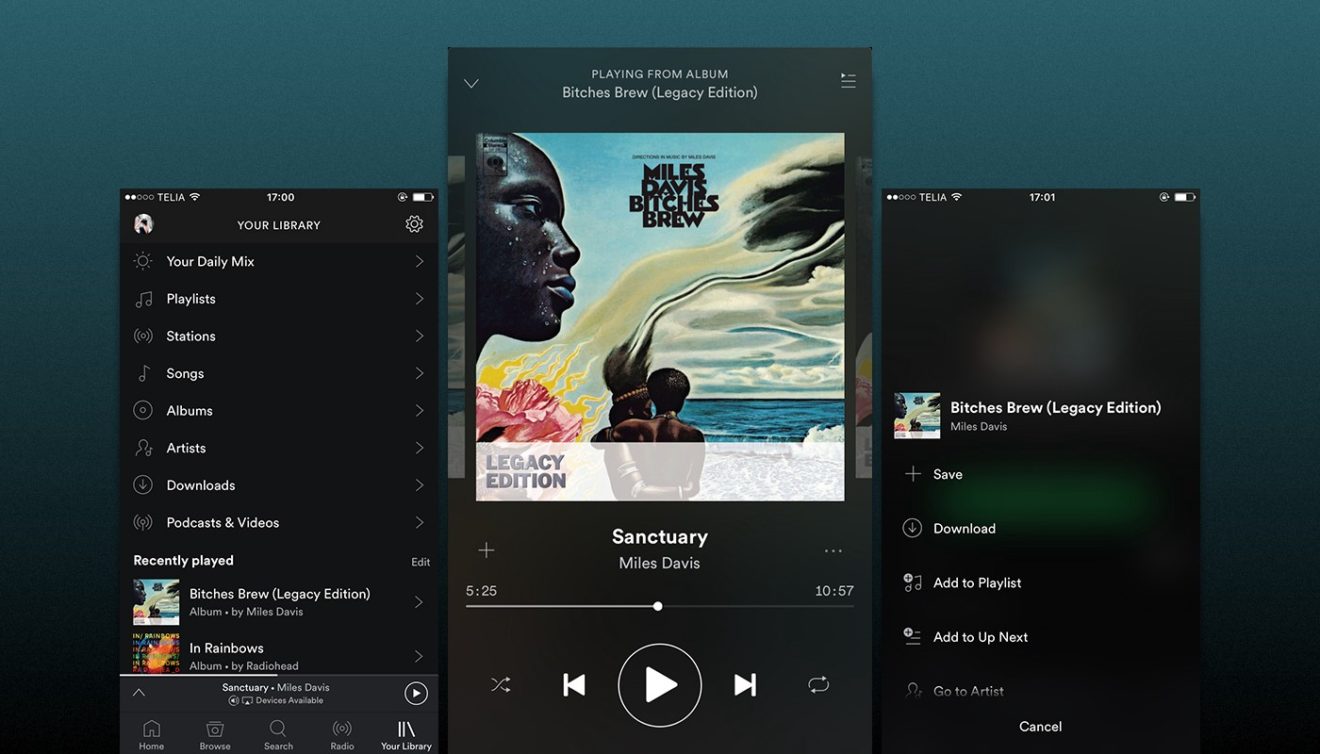
    After bringing music videos to Premium users in select markets, Spotify announced a brand-new feature coming to Audiobooks in April: Countdown Pages.

    This is the same feature that’s been successful for music releases. It allows Spotify users to “pre-save” audiobooks prior to a book’s release date, while authors and publishers can promote their new titles ahead of launch.

    Once an audiobook is pre-saved, a timer countdown will be visible above it until its launch. When the book is actually released, Spotify will notify users so they know they can start listening to it.

    Thanks to Countdown Pages, Spotify users can search for titles on the streaming service as soon as they’re announced. After next month’s update, a “Pre-save” CTA on pages of the books that haven’t been released yet. Additionally, a “More like this” tab will show users similar released book that they can start listening to straight away.

    Countdown Pages for Spotify will be available in all markets where Audiobooks are available beginning in mid-April.

    Since it was released back in 2023, users have played more than 150,000 unique titles through Spotify’s premium service. With a catalog of over 200,000 titles, Spotify believes that there’s room for improvement when it comes to the number of listeners engaging with audiobooks, especially considering that the streaming service has a user base of over 600 million.

  • TIDAL launches Circles, a safe space dedicated to artists

    TIDAL launches Circles, a safe space dedicated to artists

    TIDAL is trying to turn itself into a comfy home for artists. Circles is the latest new feature introduced by the music service, an artist-to-artist forum that allows artists to discuss their career experiences and connect with their peers on how to navigate the music industry.

    Although it’s not available to everyone, TIDAL announced that it’s giving select artists early access to use Circles, which is available in TIDAL Artist Home.

    According TIDAL, Circles is secure and safe, so if you’re an artist seeking guidance or insight from peers who may have gone through similar career experiences, this might be the right space for you.

    As artists, we have a tendency to feel like we’re on an island, which is why I love having artist friends because hearing about another artist experiencing this niche thing.

    If you’re interested in Circles, you can start using it directly within TIDAL Artist Home where you can also browse discussions on the home feed, as well as dive deeper into key topics using the search feature.

    TIDAL also confirmed that only verified artists on TIDAL Artist Home will be allowed to participate in conversations. Moreover, artists who can access TIDAL Circles have the option to post publicly in forums or anonymously to encourage a safe space for artists.

  • Gold heads up after plunge

    Gold heads up after plunge

    Saigon Jewelry Company gold bar price rose 0.75% to VND81.1 million ($3,283.73) per tael Thursday.

    Gold bar plunged 2.42% Wednesday after reaching a new historic peak of VND82.5 million.

    The gold ring price increased VND0.88% to VND69 million per tael on Thursday. A tael equals 37.5 grams or 1.2 ounces.

    Globally gold prices traded flat in early Asian trade hours on Thursday, within close range of record-high levels on a broadly weaker dollar, as traders awaited more economic data that could steer hopes for a mid-year rate cut by the U.S. Federal Reserve.

    Spot gold was flat at $2,173.89 per ounce. U.S. gold futures dipped 0.1% to $2,178.20.

    The Fed is expected to hold rates steady at its policy meeting next week, but the focus will be on the ‘dot plot’ projections. The U.S. central bank in its December meeting pencilled three-quarter-point rate cuts for 2024.

  • YouTube reveals new design for its TV app

    YouTube reveals new design for its TV app

    YouTube has just announced a new design for its TV app that will be rolled out to all users over the next few weeks. The new design is supposed to bring familiar YouTube features and interactivity to the living room while maintaining the same experience that fans of the service know and love.

    The main change is the reduced size of the video player, which is meant to simplify interactions. In addition to the visual changes, the new design will include a broad range of new experiences such as shopping and viewing live scores, as well as improvements to existing functionality like accessing video descriptions and comments.

    Before deciding what to actually change and what to keep in the new design, YouTube tapped into user feedback provided by long-time users, and here what the service learned:

    • The new design works for features that require equal or more attention than the video itself (e.g. comments, description, live chat) but obscuring the video would be detrimental to the viewing experience.
    • We need to continue to prioritize simplicity over the introduction of additional lightweight controls.
    • A one size fits all solution may not be the best approach, as features such as live chat and video description benefit from different levels of immersion.

    The end result “keeps the video front and center, but layers in the ability to access the features that make YouTube unique – all without interrupting the viewing experience.

    The bottom line is the new experience focuses on the ability to read through comments and video description while still having the video player in front of your eyes. It’s an interesting concept that will allow YouTube TV subscribers to explore Views without disrupting what they’re watching.

  • Apple further loosens grip on iPhone apps in the EU by allowing direct downloads

    Apple further loosens grip on iPhone apps in the EU by allowing direct downloads

    Just recently, Apple rolled out iOS 17.4, introducing big changes to the App Store landscape in the European Union. Why? To comply with the newly adopted Digital Markets Act (DMA). These changes include support for alternative app marketplaces, new business terms, in-app purchase options, and more.

    Now, in response to developers’ feedback, Apple has announced a few additional tweaks. Notably, the Cupertino tech giant will introduce a new Web Distribution feature this spring, allowing developers to offer their apps for direct download from their websites.

    For developers in the EU who have agreed to the Alternative Terms Addendum for Apps, the new options include the ability for app marketplaces to exclusively offer apps from the marketplace developer. This change allows a company to run an app marketplace and provide only its own apps for download.

    Additionally, when guiding users to complete transactions on external web pages, developers can now choose how to design promotions, discounts, and deals, with Apple’s design templates becoming optional.

    As mentioned earlier, Apple is introducing a Web Distribution feature, set to launch later this spring. This feature will allow developers to distribute their iOS apps directly from their websites. iPhone users in the EU will have the freedom to download apps without relying on the App Store or any alternative marketplace.

    However, apps distributed through the web must adhere to Apple’s notarization guidelines, restricting installations to registered website domains in App Store Connect.

    For EU iPhone users, this could mean a broader array of apps to choose from, potentially leading to increased competition and, thus, lower prices. Nonetheless, users may need to pay more attention when downloading apps from sources outside the App Store, and managing these apps and updates might be less convenient.

    The recent changes in digital practices, including those made by Apple, are a response to the EU’s Digital Markets Act. This law targets big tech companies like Apple, Google, Microsoft, Meta, TikTok, and Amazon, instructing them to follow new rules to encourage competition and offer users more options. Apple, adapting to comply with these regulations, is even working on a tool to make it easier for iPhone users to switch to Android.

  • Apple doubles down on China R&D amid iPhone sales slowdown

    Apple doubles down on China R&D amid iPhone sales slowdown

    As iPhone sales face a slowdown in the largest smartphone market globally, aka China, Apple is expanding its applied research operations in the country. With stiff competition from Huawei and other prominent domestic smartphone makers, Apple is doubling down on its research operations to stay ahead in the game.

    In a statement provided to the South China Morning Post, Apple revealed its intentions to bolster its research center in Shanghai, with a focus on supporting all its product lines.

    Additionally, the tech giant plans to open a new lab in Shenzhen by the latter half of 2024. This new facility will be dedicated to testing and research, focusing on key products such as the iPhone, iPad, and Vision Pro headset.

    The company underscored that the upcoming facility in Shenzhen will enhance its collaboration with local suppliers and provide support for local employees. Apple’s vice president and managing director of Greater China, Isabel Ge Mahe, expressed pride in fostering stronger connections in China and expanding the company’s footprint there. She remarked:

    We have already invested 1 billion yuan (US$139.2 million) into the existing applied research lab in China.

    These recent moves come on the heels of a commitment by Apple to ramp up capital spending in Greater China, the company’s third-largest market globally, following the Americas and Europe.

    This strategic shift follows a decline of 24 percent in iPhone sales in mainland China during the first six weeks of 2024. Apple faced formidable competition from a resurgent Huawei at the high end of the market, coupled with pricing pressures in the mid-range from Chinese smartphone heavyweights such as Oppo, Vivo, and Xiaomi.

    Recently, the Cupertino tech giant took action in response to sluggish sales and intensified competition from Huawei by offering discounts on the iPhone 15 line in China.

  • Australian job hunt increasingly difficult for international graduates

    Australian job hunt increasingly difficult for international graduates

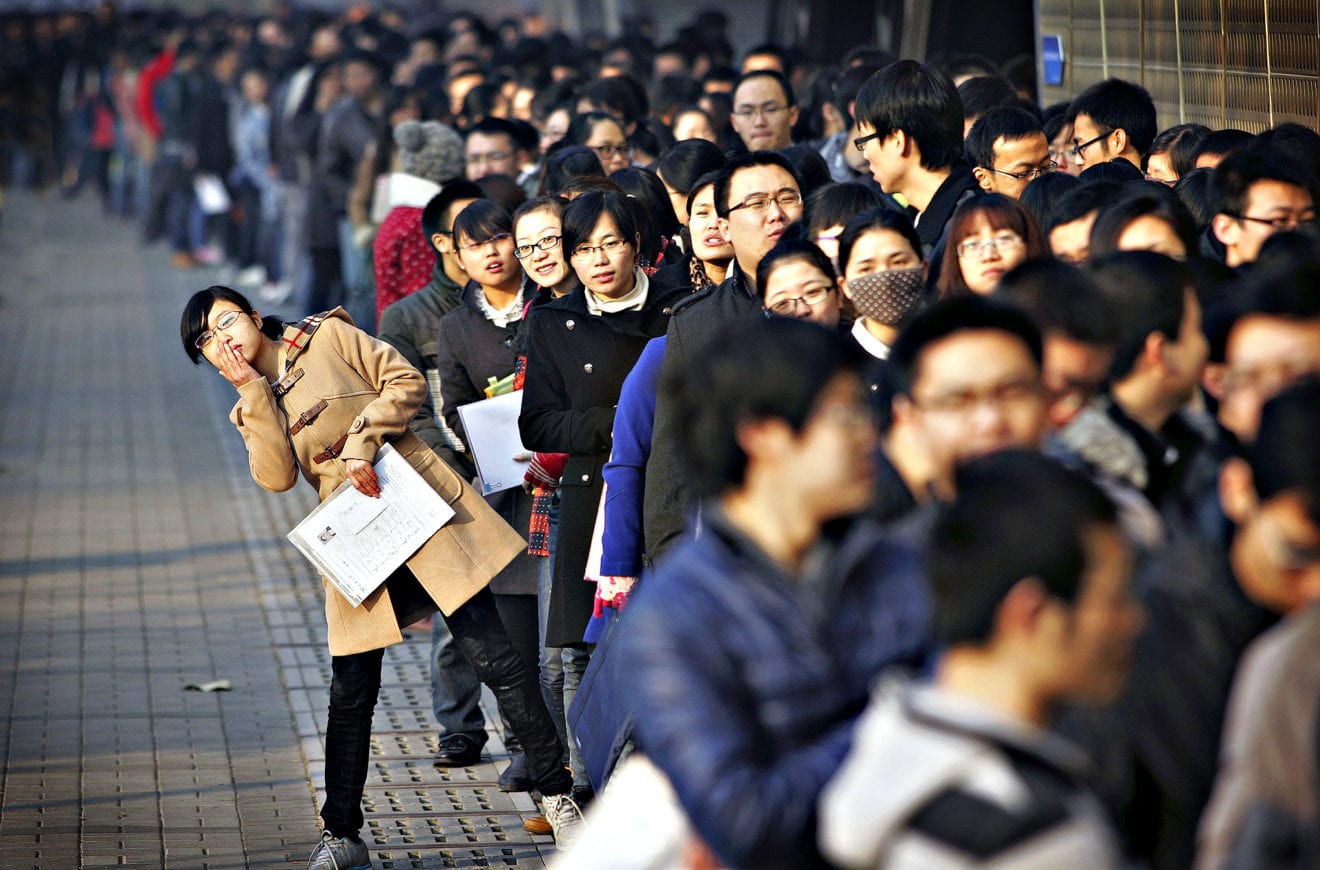
    When she began pursuing her master’s degree at Melbourne University, Tran Thi Phuong did not anticipate how challenging it would be for her to secure a job after graduation.

    The 27-year-old Vietnamese woman has now lost track of the number of job applications she has submitted. Her two years of experience at the auditing firm EY Vietnam, along with a master’s degree in a globally respected field (Information Systems) from a prestigious university appear to have done little to aid her job search in Australia.

    “I have never experienced such panic,” Phuong said “At certain points, I’ve doubted whether or not I’ll ever secure employment here.”

    Ever since receiving her diploma in June 2023, it’s been 9 months of persistent effort. Phuong was finally offered a position as a strategy analyst at a land consulting firm associated with the Western Australian state government in Perth, a small city located 3,419 km from Melbourne.

    Phuong’s experience underscores the wider challenges faced by temporary graduate visa holders in Australia as they pursue employment in the country following their studies.

    The 2022 Graduate Outcomes Survey, which was carried out by the Australian government’s Quality Indicators of Learning and Teaching suite, found that 28.5% of international students with undergraduate degrees in Australia had remained jobless for at least six months following graduation. For those with international postgraduate research degrees, the percentage was 14.4%.

    To put it another way, roughly two out of every seven international undergraduates and one out of every seven international postgraduate research graduates in Australia found themselves without employment six months after graduation.

    Moin Rahman, a 28-year-old Bangladeshi graduate from the University of Queensland, found himself in this exact situation. Despite submitting applications for over 80 job openings, he struggled to secure a full-time role in civil engineering, his field of study at university.

    “That takes a psychological toll,” the Australian Broadcasting Corporation (ABC) quoted him as saying.

    Despite being on a temporary graduate visa, Rahman said he encountered “friction” that held him back from progressing beyond casual and part-time jobs.

    “If I somehow miraculously made my way through to an interview stage, I would be asked about my visa status,” he said.

    “When I would say that I am an international student but I have full-time work rights there was a shrug of shoulders and all of the preceding qualities that actually made the employer interested in me was overtaken by this one fact.”

    The struggle has persisted for some international graduates even after obtaining employment, as they have often settled for positions at lower salaries than their local counterparts.

    A report from the Grattan Institute titled “Graduates in limbo: International student visa pathways after graduation,” which was unveiled in October 2023, pointed out that “only half [of international graduates in Australia] secure full-time employment, most work in low-skilled jobs, and half earn less than A$53,300 (US$34,964) a year.”

    This income is significantly below that of domestic graduates, essentially aligning more closely with the earnings of working holiday makers, most of whom come to Australia to travel.

    The report also revealed that almost 75% of those holding a temporary graduate visas had incomes below the median for Australian workers in 2021.

    Specifically, international graduates possessing postgraduate coursework degrees in business management were found to earn approximately A$58,000 annually less than their domestic counterparts holding the same qualifications.

    Similarly, those with postgraduate coursework degrees in computing and engineering faced a yearly income deficit of about A$40,000 compared to domestic graduates.

    International students who graduated with an undergraduate degree in engineering or computing were found earning A$12,000 less annually than their Australian peers, according to the report. The gap for business undergraduates was roughly A$10,000 a year.

    In discussions with her colleagues from India, Thailand, and the Philippines, Phuong learned that achieving a salary comparable to that of Australians is “difficult and uncommon” for them.

    In addition to being underpaid, international graduates in Australia often find themselves accepting jobs that neither require tertiary education nor match their academic fields of expertise.

    A joint study conducted by the Australian Financial Review (AFR), Deakin University and University of Adelaide demonstrated that merely 36% of 1,156 international graduates polled from 35 universities secured full-time jobs in their studied field upon completing their education.

    Some 40% of international graduates in Australia actually found themselves in roles considered low-skilled, notably in sectors such as retail, hospitality, or in positions like cleaning or driving.

    Ruva Muranda, who graduated with a bachelor’s degree in biomedical science in 2018, said she had to work in a warehouse until the early months of 2020.

    “I got really depressed,” she said. “It made me feel like I wasn’t good enough. It made me feel very ‘othered.’”

    As she observed her colleagues advancing in their careers, securing employment, climbing the professional hierarchy, acquiring vehicles, purchasing homes, and achieving their vocational aspirations, her sense of stagnation intensified.

    “It feels like you’re held back at the starting line.”

    With her options constrained, Swastika Samanta, who possesses a master’s degree in environmental management, said she worked casual and part-time jobs for the length of her temporary graduate visa.

    “Beggars can’t be choosers. You take the best job that comes to you,” she said.

    Fear of quick replacement.

    Lack of English language proficiency is a roadblock for many foreign graduates seeking jobs in Australia.

    The situation is evident as even in Victoria, the state with the largest proportion of laborers from non-main English-speaking countries, where these individuals still make up only 28.8% of the total labor force, according to the Australian Labour Market for Migrants report released by the Australian Government in October 2023.

    Visa uncertainties also have employers reluctant in hiring foreign graduates.

    According to the “Australian international graduates and the transition to employment” report by Deakin University and University of Technology Sydney (UTS) researchers, almost every interviewed employer expressed a preference for hiring graduates holding permanent residency visa status.

    Dr. Thanh Pham, a researcher from Monash University said: “They employers make the assumption that international students cannot stay in Australia for long and are unaware of other visa pathways like bridging and residency visas … When I interviewed them, they explained that if they hire an international student, they will have to employ someone new to replace them in a couple of years.”

    This policy was precisely the obstacle Phuong encountered during her job search, a realization that dawned on her only after accumulating significant time and experience.

    -Phuong pursued job openings in the oil and gas industry, as it’s an area she is passionate about and has experience in. “However, employers tend to favor local candidates for positions in this sector within Australia, attributing their preference to the job’s involvement with highly confidential information regarding mineral and gas resources — commodities Australia is renowned for and deems highly sensitive,” she said.

    In some cases, Pham said she found employers discriminated against international students on the basis of what she called “fit-in” culture.

    The report by Deakin University and UTS also showed that employers hesitate to hire international graduates because of higher costs and this necessitates additional on-the-job training to acclimate them to the Australian work environment.

    Consequently, in the absence of an immediate skill shortage, employers show a preference for local graduates, aiming to avoid the perceived lengthy, expensive, and frequently exasperating sponsorship procedure.

    Individuals arriving from nations with little representation in Australia face additional challenges, notably in forging connections within their ethnic communities.

    According to the Australian Department of Education, as of last October, the country hosted about 768,000 international students, with the largest groups from China, India, and Nepal.

    Harder future

    Given changed economic environment and additional considerations, Australia, from mid-2024, will adjust its post-study work rights policy for international students, reducing the duration international graduates can stay in the country for work purposes.

    Previously, the Australian government had extended the post-study work visa durations for undergraduates, master’s, and PhD students in selected programs, allowing them to stay for up to 4-6 years depending on their level of study.

    These durations will now revert to the original 2-3 years, according to the announcement made by the Australia’s Department of Education.

    Additionally, the age limit for applicants has been lowered from 50 to 35 years, and there will be no further opportunities for the extension of post-study work rights, except for those who have completed their education in a regional area. Roughly 350,000 individuals now hold graduate visas in Australia.

    In the context that many employers hesitate to employ foreign graduates due to fear of their perceived visa status uncertainties, this policy could cut employment opportunities for international graduates in the country.

    However, according to the views of some people, this also has positive aspects, which are ensuring more sustainable development for students and for Australia itself.

    Policy analyst Andrew Norton from Australian National University expressed his general support for the reforms to the Times Higher Education: “This is a better, fairer system for the students themselves and it gives better results for Australia overall.”

    He added: “If you’re relatively young and have a good career start, the prospects will be reasonably good.”

    This positive view resonated with Phuong, even amidst the challenges she has faced. She maintains a hopeful outlook about the job-hunting process in Australia for international students.

    “I consider myself luckier than many others I have encountered,” she said. “And while the future remains uncertain, I am resolved to do whatever it takes to surmount any further hurdles that come my way.”


  • Vietnam Airlines to launch new routes to Europe

    Vietnam Airlines to launch new routes to Europe

    Vietnam Airlines will launch two new routes connecting Hanoi and Ho Chi Minh City with Germany’s Munich starting October.

    The state-owned carrier said Tuesday that it will use the wide-body Boeing 787 aircraft for the routes.

    The Hanoi-Munich route will have two flights per week, departing on Friday and Sunday and returning on Monday and Saturday.

    The HCMC-Munich route will have one flight per week, leaving on Monday and returning on Tuesday. Starting in December, another flight will be added every Wednesday.

    Vietnam Airlines is the only Vietnamese airline to have direct routes to Europe.

    Private carrier Bamboo Airways used to operate flights to Germany and the U.K. but had shut them down since the end of last year as part of its business strategy change.

    Munich is the third-largest city in Germany and an economic, cultural, and transport hub. It is also famous for its mix of ancient and modern architectural structures and for the Oktoberfest beer festival, which is held every October.

    With the new routes Vietnam Airlines will have four routes from Vietnam to Germany, including the Hanoi and HCMC routes to Frankfurt. It also has flights from Vietnam’s two biggest cities to Paris and London.

    The carrier’s chairman Dang Ngoc Hoa said in January that it would open more international routes this year, with possible destinations being Milan, Copenhagen, Seattle and Vancouver.