Author: Mei Ling Tan

  • TV boxes disappear as smart TVs and phones take over

    TV boxes disappear as smart TVs and phones take over

    The popularity of smart TVs and smartphones have left TV boxes, or set-top boxes, high and dry.

    This month a leading electronics retail chain stopped selling TV boxes. Others sell only two of them: Xiaomi Mi Box and Apple TV.

    Even a few years ago there were no less than five TV box brands with dozens of models.

    “The golden age of TV boxes in Vietnam was in 2017-18,” Tien Vuong, manager of a electronics store on Hang Bai Street, Hanoi, says. “Now there are few buyers and sales are less than a 10th of the peak time. Those who want low prices choose Xiaomi devices, while those who love the Apple ecosystem will buy Apple TV.”

    The set-top boxes mostly used the Android operating system and were Chinese or Vietnamese brands made in China.

    But since 2019 demand for them has steadily decreased.

    The appearance of Mi Box from Xiaomi at reasonable prices and excellent configurations has caused other Chinese brands to almost disappear.

    In China, the world’s largest TV box market, too sales have plummeted over the years, according to Chinese tech news site Gizchina.

    The first half of this year saw a year-on-year fall of 30% to 929,000 units. In 2016, some 14 million TV boxes had been sold.

    Soon after smart TVs appeared, set-top boxes were favored because they could make old TVs smarter and more convenient.

    Smart TVs had their own operating systems, but only high-end models had hardware good enough to satisfy users.

    So many people chose to spend VND1-2 million (US$42-84) to buy a set-top box instead of tens of millions on high-end smart TVs.

    Now, all TVs on the market are smart, and even the cheapest models are good enough to run YouTube, and OTT media services and applications like Netflix.

    All three popular TV operating systems, Google TV, webOS of LG and TizenOS of Samsung, have well-stocked software stores, enough for the entertainment needs of smart TV users.

    According to technology expert Nguyen Minh Tien, another reason for the gradual disappearance of TV boxes is that people are spending less and less time watching TV, and more and more time on smartphones.

    “People may still buy and use TV sets as a habit, but the demand for this product is not as high as before.”
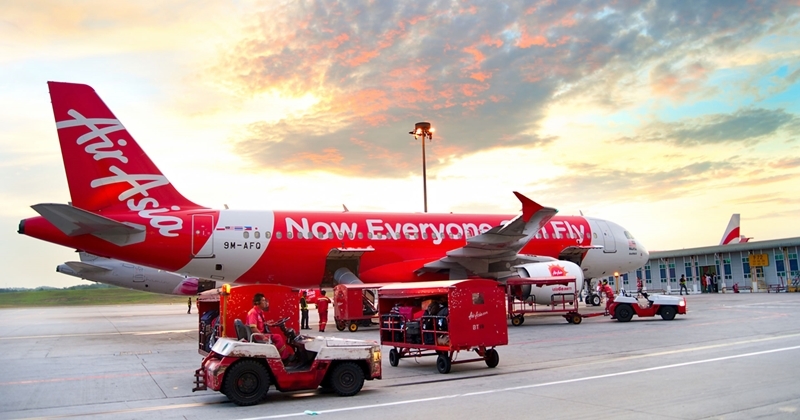
  • Batik Air Malaysia, AirAsia X Cleared To Launch Central Asia Routes

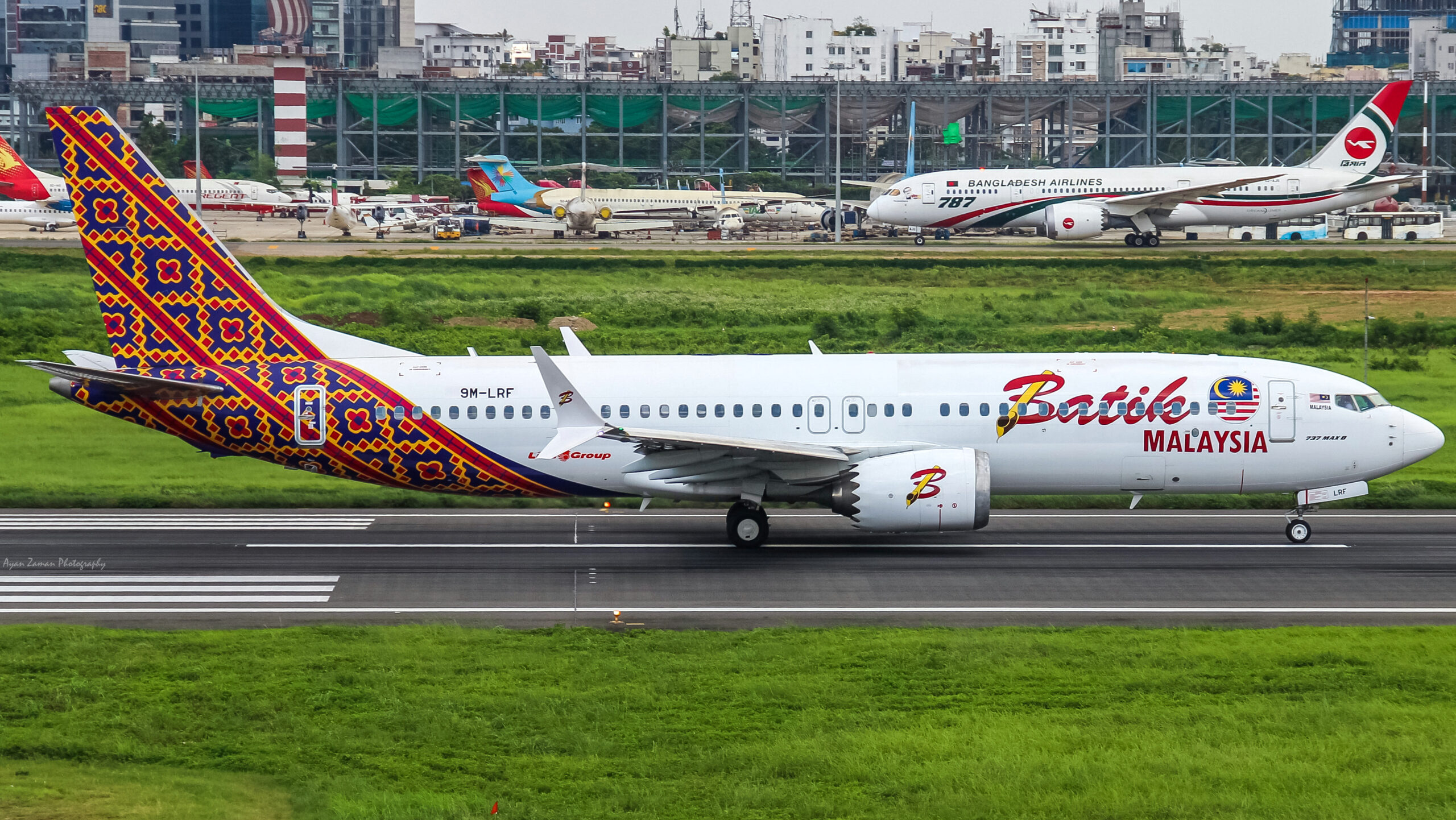
    Batik Air Malaysia, AirAsia X Cleared To Launch Central Asia Routes

    The Malaysian Aviation Commission (MAVCOM) has granted air traffic rights to Batik Air Malaysia and AirAsia X, enabling them to expand their networks into Central Asia.

    Under these newly awarded rights, Batik Air has received approval to initiate scheduled flights linking Kuala Lumpur and Tashkent, Uzbekistan. Concurrently, AirAsia X has been given the go-ahead to inaugurate a route connecting Kuala Lumpur with Almaty, Kazakhstan. The move paves the way for both Batik Air and AirAsia X to launch their first flights to Central Asia.

    According to data provided by OAG Schedules Analyser, Batik Air has already scheduled the launch of the Tashkent service, with flights set to operate twice a week from Nov. 1 using Airbus A330 aircraft. The carrier will compete on the sector with Uzbekistan Airways, which resumed the route in November 2022 after a hiatus of more than two years because of the pandemic. It currently provides a 2X-weekly service aboard A321neos.

    In the Kuala Lumpur-Almaty market, AirAsia X will be the sole operator of nonstop flights between the cities if the route launches as planned. Air Astana previously provided a direct link, but last operated the flights in October 2020.

    Alongside awarding the traffic rights for Kuala Lumpur-Tashkent and Kuala Lumpur-Almaty, MAVCOM says it approved 55 other requests between April and June 2023, consisting of 43 international and 12 domestic routes. The total represented an 87.5% increase year-on-year, signalling “an invigorated momentum within the aviation sector.” The number of air traffic applications during the second quarter of 2023 was also 5.3% higher than during the same period in 2019.

    “As part of the commission’s continued efforts to ensure that Malaysia’s aviation industry remains dynamic and responsive to global travel trends, we have approved [air traffic rights] for various new destinations as well as to establish new hub connections,” says MAVCOM Executive Chairman Datuk Seri Hj. Saripuddin Hj. Kasim.

    “These decisive measures are specifically tailored to enhance connectivity, spur economic growth and catalyse the recovery of the aviation sector. We are particularly encouraged to see airlines seizing these opportunities for expansion.”

    In addition to securing permission to fly to Tashkent, Batik Air also gained rights to serve Okinawa, Japan. The airline intends to open a Kuala Lumpur-Taipei, Taiwan-Okinawa route on Aug. 16, operating four times per week using Boeing 737-800s.

    Elsewhere, Malaysia Airlines’ LCC subsidiary Firefly has been approved to launch flights from Kota Kinabalu, on the island of Borneo, to Tokyo Narita and Taipei, while AirAsia has been awarded a host of rights, including a routing from Kuala Lumpur to Jaipur, India, and from the northwestern Malaysian state of Penang to Hong Kong.

    MYAirline has also been cleared to serve several destinations in Indonesia, Thailand and Vietnam from Kuala Lumpur. These include Ho Chi Minh City and Da Nang, Vietnam; Jakarta, Indonesia; and Krabi, Thailand. Airlines are required to utilize the air traffic rights allocated within six months from the approved date.

  • AirAsia India takes over Air India Express Sharjah flights

    AirAsia India takes over Air India Express Sharjah flights

    AirAsia India will begin operating flights to Sharjah on behalf of Air India Express on August 28. This follows the carrier beginning to operate codeshare flights on Air India’s behalf earlier this month.

    According to ch-aviation schedules data, from August 28, AirAsia India will deploy one of its A320-200Ns onto a daily Delhi International – Sharjah – Varanasi – Sharjah – Delhi rotation, replacing the B737-800 service operated by Air India Express. It comes ahead of the merger of the two low-cost airlines. Following recent approval from India’s Directorate General of Civil Aviation, that merger is now expected to finalize in early 2024. The Sharjah flights also mark AirAsia India’s sole foreign foray. Presently, it only flies within India.

    As recently reported in ch-aviation, AirAsia India also began operating some domestic codeshare flights for Air India on August 1. AirAsia India is putting the full-service carrier’s flight designator on selected flights between Bangalore International and Bhubaneswar, Mumbai International – Goa Dabolim, Delhi International – Lucknow, and Delhi International and Pune.

    The closer cooperation comes as Tata Sons seeks to consolidate its Indian airline interests. In addition to the AirAsia India – Air India Express merger, it also intends to merge Vistara with Air India, in the process creating one large low-cost carrier and one large full-service carrier.

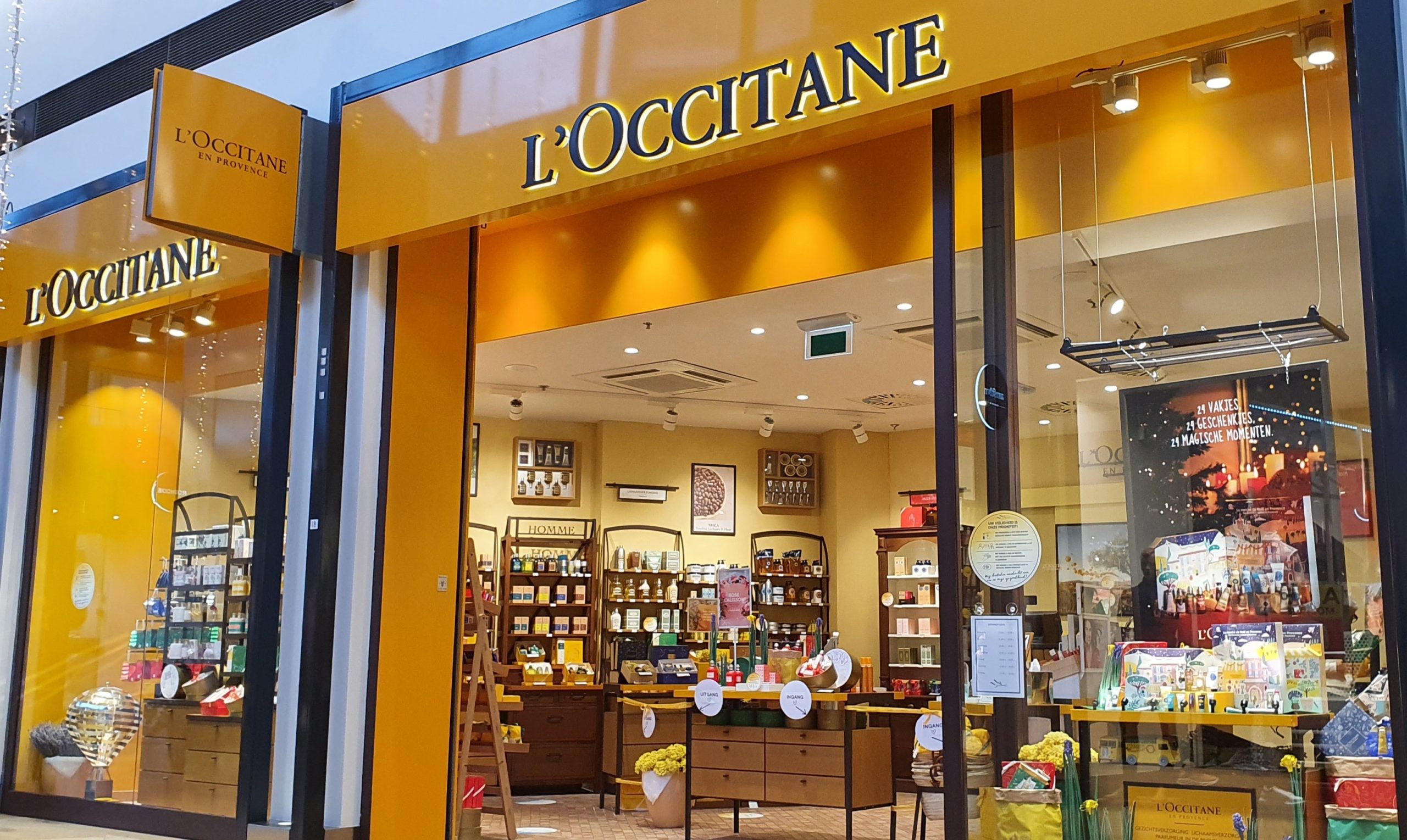
  • L’Occitane enters trading halt ahead of probable takeover bid

    L’Occitane enters trading halt ahead of probable takeover bid

    Hong Kong-listed cosmetics giant L’Occitane International has entered a trading halt – fuelling speculation that the company’s controlling shareholder is about to launch a takeover bid ahead of a delisting.

    Bloomberg reported on July 25 that L’Occitane’s Austrian billionaire chairman Reinold Geiger, whose interests control 70 percent of the issued stock, was mulling buying out minority shareholders. The news agency cited sources that requested anonymity.

    Today, Bloomberg said an offer is “possible” at about US$4.48 per share, representing a 37 percent premium to the company’s closing price on Tuesday.

    In June, the company reported 19.8 percent growth in net sales for the year to March 31 to surpass US$2.33 billion, but a decline in operating profit of 23 percent to $261.12 million, largely due to impairments. During the past year, L’Occitane’s share price has shed 20 percent of its value to about $4 billion.

    L’Occitane’s recent sales growth has been largely driven by its Brazilian brand Sol de Janeiro – now the group’s second-largest label behind its namesake, achieving sales growth of 135.2 percent last year – and another spinoff brand, Elemis collagen creams. At the end of March, L’Occitane bought Australian skincare brand Grown Alchemist for an undisclosed sum and promptly set about expanding its reach and store network. Its other labels include the Korean skincare brand Erborian and the French organic beauty label Melvita.

    This would not be the first time the company has considered going private. In late 2018, US-based private equity group Advent International – which this week acquired a majority stake in Australian fashion brand Zimmermann – reportedly enquired about acquiring the company, which then had an estimated market value of US$2.7 billion.

    According to Bloomberg data, L’Occitane was listed in 2010 with an IPO that raised $787 million. The news agency said Geiger was also considering relisting the business in Paris or another European market as early as next year.

  • Heytea opens first store outside Asia in London

    Heytea opens first store outside Asia in London

    Chinese tea brand Heytea has launched its first store outside of Asia in London’s Chinatown, accelerating its international expansion.

    The London Heytea store is located on Shaftesbury Avenue in the neighbourhood of Soho, close to Leicester Square, the Prime Minister’s Office, and Buckingham Palace.

    The expansion follows the brand’s success when launching its first overseas store in Singapore in 2018.

    Heytea reportedly announced the opening of applications for overseas business partnerships earlier this year, including plans to open in countries including the UK, the US and Canada.

    Established in 2012 and headquartered in Nanshan District, Shenzhen, Heytea is one of the most popular tea brands in China due to its modern interior design, photogenic packaging and innovative drinks.

    Heytea currently operates more than 1000 stores in China and four locations in Singapore. The brand launched its convenience-store-like concept in Singapore in 2021, as part of its strategy to attract more young customers, especially Gen Z.

  • Chinese car Lynk & Co to come to Vietnam in October

    Chinese car Lynk & Co to come to Vietnam in October

    Lynk & Co cars will be sold in Vietnam from October, according to their distributor GreenLynk Automotive.

    The brand is jointly owned by China’s Geely and Volvo Car, who develop the cars on the compact modular architecture Evo platform with engines produced in Sweden and the vehicles assembled in China, GreenLynk said.

    Its models have serial numbers rather than names, and currently the range extends from 01 to 09.

    04 is a foldable electric scooter. GreenLynk said it would be selling 01, 03, 05 and 09. 01 is a C-segment SUV, 03 is a C-segment sedan, 05 is also a C-segment SUV but with a coupe-like hybrid design, and 09 is a midsize SUV developed with Volvo.

    GreenLynk is an affiliate of transport infrastructure developer Tasco, which fully owns car distribution giant SVC Holdings.

    It can thus take advantage of the 83 car showrooms SVC Holdings has, but has not said if it would use them for the Lynk & Co cars.

    Lynk & Co was founded by Geely in 2016, six years after it bought Volvo from Ford.

    In Europe, Lynk & Co does not sell cars in the traditional manner: Its customers do not own the cars, but pay a monthly or other usage fee.

    It is the latest Chinese car brand to enter Vietnam in the last few months after Wuling and Haval.

    According to experts, the wave of Chinese cars flooding Vietnam has become overwhelming this year though the vehicle market is dormant due to the economic situation.


  • iPhone 14 Pro Max price down 24%

    iPhone 14 Pro Max price down 24%

    After 10 months of being sold in Vietnam, iPhone 14 Pro Max has seen its selling price fall by 24% to VND25.7 million (US$1,089).

    In early August, some Apple authorized resellers (AARs) in Vietnam lowered the price of iPhone 14 Pro Max to less than VND26 million, the lowest since its launch in October 2022.

    Di Dong Viet is selling iPhone 14 Pro Max for VND25.7 million, Hoang Ha Mobile for VND25.9 million, CellphoneS and FPT Shop for VND26.4 million, and The Gioi Di Dong (Mobile World) for VND26.7 million.

    The current price of iPhone 14 Pro Max at AARs is some VND5 million lower than the smartphone sold at Apple Store Online Vietnam.

    Phung Phuong, a manager of Di Dong Viet, said the price decline stemmed from both Apple’s assistance given to AARs and their own efforts.

    Besides iPhone 14 Pro Max, other models of Apple have seen selling prices drop by VND300,000-500,000 per unit. The prices of iPhone 14, iPhone 14 Plus, and iPhone 14 Pro currently are at least VND18.5 million, VND21 million and VND23.6 million, respectively.

    The manager of a big AAR said the prices of iPhone 14 models have decreased the most drastically.

    After 10 months of being sold in Vietnam, the price of iPhone 13 Pro Max declined by 15.7% to VND26.9 million from VND31.9 million.

    The third quarter is always a quiet period for the market as users wait for a new model of iPhone, usually launched in September and sold in October in Vietnam.

    However, this year the price competition has become more intense, forcing AARs to offer big discounts to attract users.

    “This may be the bottom price of iPhone 14 Pro Max, and the price race is showing signs of ending,” a manager of Hoang Ha Mobile said.

    In addition to smartphones, AARs have lowered selling prices of other Apple products by VND0.5-1 million per unit to lure customers before the new school year starts in September.

    This year, AARs in Vietnam not only compete with each other but also with Apple when its online store is offering students many incentives and promotions.

  • Gold prices down

    Gold prices down

    SJC gold price fell 0.07% to VND67.35 million ($2,838.18) per tael Tuesday morning.

    Gold ring price was stable at VND57 million per tael.

    Globally gold prices rose on Friday after a slightly weaker-than-expected U.S. jobs report pushed the dollar and Treasury yields lower, offering some respite to bullion which was still on track for its worst week in six.

    Spot gold was up 0.4% at $1,940.86 per ounce by 2:52 p.m. Bullion, however, was down 0.9% so far this week.

    U.S. gold futures settled 0.4% higher at $1,976.10.

    “The jobs report has allowed the market to propose that the Federal Reserve is not as likely to raise interest rates. As a result, we’ve seen bond yields drop along with the dollar and that is certainly supporting the price of gold,” said David Meger, director of metals trading at High Ridge Futures

    Following the data, the dollar fell 0.5% against its rivals, making gold less expensive for other currency holders. Benchmark U.S. 10-year yields retreated from a nine-month high.

  • UBS Welcomes Top Credit Suisse Investment Bankers in Asia

    UBS Welcomes Top Credit Suisse Investment Bankers in Asia

    In the coming months, UBS will look to downsize Credit Suisse’s investment banking unit globally. Within Asia, the top regional leaders have reportedly been unveiled.

    UBS appoints Kuan-Ern Tan as co-head of Asia coverage, alongside John Lee, according to a report citing an internal memo. Tan will also partner with Nicolo Magni, head of global banking Southeast Asia & India, to build the business in Southeast and South Asia.

    Tan was the former co-head of investment banking for Asia Pacific at Credit Suisse while Lee is the existing head of Greater China at UBS.

    Kyungin David Lee joins from Credit Suisse as head of global banking for Korea and vice chair for Asia. In the latter role, he will support cross-border activities between North Asia and Southeast Asia.

    24-year Credit Suisse vet Christian Deiss has also been named co-head of the global industrials group for Asia, alongside Eileen Chan.

    The note also includes appointments for sector and product coverage in the region including Allan Chu as APAC co-head of technology, media, and telecom division with UBS’s Axel Granger and Tim McKessar.

    Aaron Tan will lead Southeast Asia’s energy transition and global industries group. Tan was the former head of APAC energy and transition at Credit Suisse. Credit Suisse’s ex-director of energy and transition Fabrice Delacroix will head renewables at UBS.

    Aaron Oh, former co-head of Credit Suisse’s Asia financing group, will head structured origination within capital markets. The equity-linked team will report to Oh. Jennifer Choi joins as co-head of equity-linked Asia, alongside UBS’s Brian Chau.

    Credit Suisse’s former APAC co-head of equity capital markets (ECM) Cheun-Hon Ho has been appointed a vice chair of ECM Asia.

    Following the UBS takeover of Credit Suisse in June, the enlarged Swiss giant has been focusing on integration, and the latter lender’s investment banking arm has been highlighted for risk reduction worldwide.

    In Asia, there are plans to reportedly cut two-thirds of headcount – around 200 jobs – and keep 100 investment bankers in the region. Those retained will mainly be focused on markets outside of Hong Kong, where about 80 percent of staff will be laid off with cuts reportedly commencing this week.

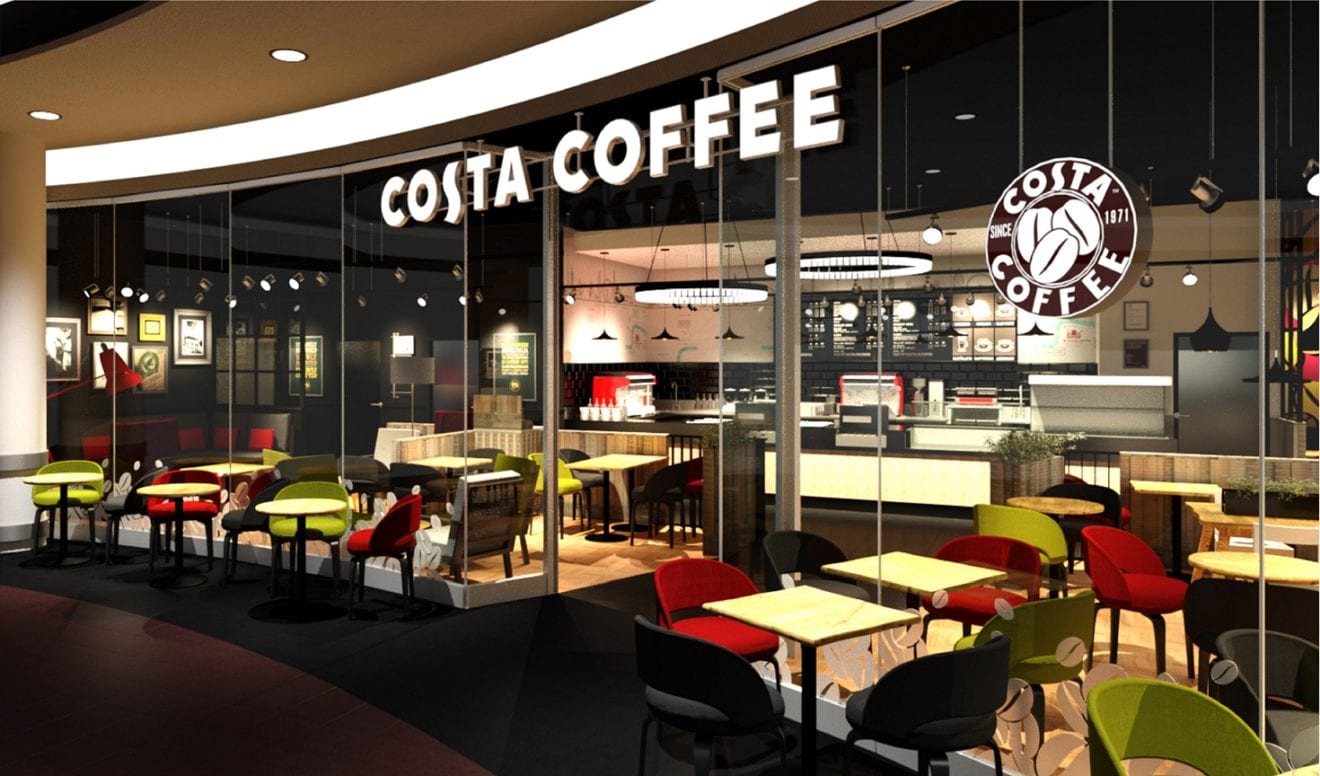
  • Costa Coffee enters Japan with three stores planned to open

    Costa Coffee enters Japan with three stores planned to open

    UK coffee chain Costa Coffee has expanded its presence into Japan under a joint venture dubbed Sojitz Royal Cafe between Sojitz Corporation and Royal Holdings.

    The chain’s first location in Japan was launched in the Shibuya district, featuring the brand’s signature design that uses Costa Red and Costa Pink accents. The store opening will be followed by the brand’s second store in Otemachi in September and its flagship store’s launch in Ginza the following month.

    Sojitz Royal Cafe, established in January, acquired the exclusive franchise rights of Costa Coffee in Japan earlier this year.

    Founded in London by Italian brothers Sergio and Bruno Costa in 1971, Costa Coffee has more than 4000 stores across 45 countries.

    Further reading, Japan’s % Arabica set for franchised European expansion in next year.

  • Jollibee Group brings two Singaporean chains to the Philippines

    Jollibee Group brings two Singaporean chains to the Philippines

    Jollibee Foods Corporation (JFC) has formed a joint venture company with Singapore-based Food Collective Pte. Ltd. (FCPL) to launch Common Man Coffee Roasters and Tiong Bahru Bakery in the Philippines.

    The joint venture company will franchise the café chains in the country, with JFC owning 60% of the business and FCPL the remaining 40%. JFC will also take the lead in the management and operations of the joint venture, with both companies committing up to P250m ($4.5m) in the partnership

    Founded in 2013, café concept and coffee roaster Common Man Coffee Roasters currently operates five outlets in Singapore alongside a single site in Malaysia.
    JFC expects to open at least one Common Man Coffee Roasters in the Philippines this year. However, the joint venture remains subject to regulatory approval.

    Tiong Bahru Bakery currently operates 16 cafés across Singapore.

    “We are excited to enter this joint venture with FCPL to own and operate the Tiong Bahru Bakery and Common Man Coffee Roasters in the Philippines. These brands will be a strong addition to JFC’s foreign franchised brands and will allow JFC to capture an even greater opportunity and strengthen JFC’s position for further growth in the Philippine market,” said Ernesto Tanmantiong, CEO, JFC.

    Based in Singapore, FCPL is a majority-owned subsidiary of Titan Lifestyle Holdings Pte. Ltd., a division of Titan Dining LP, in which JFC has a 90% participating interest. Common Man Coffee Roasters and Tiong Bahru Bakery are its primary brands.

    JFC operates more than 6,500 outlets globally across its 16-strong food and beverage portfolio, which includes its eponymous fast-food restaurant chain Jollibee and coffee chains Highlands Coffee and The Coffee Bean & Tea Leaf.

  • Singapore records minor retail sales growth in June

    Singapore records minor retail sales growth in June

    Singapore retail sales (excluding motor vehicles) grew by 2.5 per cent to SG$3.4 billion (US$2.5 billion) in June, following May’s 1.7 per cent increase.

    The country’s seasonally adjusted retail sales were up 0.2 per cent month over month, data from the Department of Statistics Singapore shows.

    Online retail sales accounted for 14.3 per cent of the total sales, it added.

    The food and alcohol sector reported a 30.7 per cent jump in sales year over year, attributed to higher demand for alcoholic beverages, including those in duty-free shops.

    While most of the remaining sectors posted a year-on-year increase in sales, petrol service stations saw a 24.2 per cent dip. Sales of motor vehicles also declined by 8.4 per cent in June.

    The sales increase of food and beverages services continued to slow down for the month, up 7.2 per cent compared to the 8.7 per cent growth in May and 15.3 per cent in April.

    The sales value of food and beverages services was $956 million, with 23.4 per cent coming from online transactions.

  • Gold prices up again

    Gold prices up again

    SJC gold price increased 0.07% to VND67.35 million ($2,843.57) per tael Monday morning.

    Gold ring price downed 0.08% to VND57.05 million per tael. A tael equals 37.5 grams or 1.2 ounces.

    Gold prices were off three-week lows on Monday after slowing U.S. job growth knocked the dollar and bond yields from their recent highs, while investors braced for this week’s inflation test that could influence the Federal Reserve’s policy path.

    Spot gold was steady at $1,940.99 per ounce by 0325 GMT, having slid to its lowest since July 11 on Friday before settling 0.4% higher. U.S. gold futures were flat at $1,976.10.

    “While a softer U.S. dollar and lower bond yields in its (jobs data) aftermath have provided some relief for gold… it may have to take a more significant weakening in the U.S. dollar to bring traction for the yellow metal,” said Yeap Jun Rong, a market strategist at IG.


  • Instagram’s new feature puts an end to DM requests spamming

    Instagram’s new feature puts an end to DM requests spamming

    Instagram is finally adding one of the most requested features since it introduced the ability to send direct messages. A new update makes it possible for Instagram users to restrict who can send them DM requests.

    The new feature was tested last month and now it’s rolling out to all Instagram users. The first limitation introduced with the new feature prevents you from sending more than on DM request to a person who doesn’t follow you on Instagram. If they accept your request, then you will be able to continue to send them new DM requests.

    The second limitation is that DM invites can’t contain images, videos or voice notes, so you can send text-only DM requests to those who don’t follow you on Instagram.

    “We want people to feel confident and in control when they open their inbox. That’s why we’re testing new features that mean people can’t receive images, videos or multiple messages from someone they don’t follow, until they’ve accepted the request to chat. We’re grateful for the feedback we hear from our community — and we’ll keep listening to find ways to help everyone feel safer on Instagram.

    Apart from introducing these new limitations that basically remove DM requests spamming, Instagram also added a Restrict setting that makes it possible to monitor an account that you don’t want to block, but still want to restrict their presence on your Instagram page.

    Once you restrict an account, their comments on your posts will only be visible to them. More importantly, they won’t know that no one can see their posts, and their DMs will be automatically sent to your DM requests folder. It’s a middle-ground solution in case you don’t want to outright block an account, but still want some protection against bullying.

  • 100 Tesla Model Y Cars Will Be Introduced in Japan Under Uber Premium Service

    100 Tesla Model Y Cars Will Be Introduced in Japan Under Uber Premium Service

    Uber Japan has announced a strategic partnership with local cab and hire car operator, Hinomaru Kotsu and Tesla Japan to introduce 100 Tesla Model Y vehicles into their Uber Premium fleet.

    As part of the initiative, 30 Tesla Model Y vehicles will be deployed in November 2023 at Hinomaru Kotsu’s offices in Setagaya, Edogawa, and Adachi. The fleet will subsequently expand to include affiliated companies of Hinomaru Automobile’s wireless group, bringing the total number of Model Y vehicles to 100 by the end of 2024. These vehicles will be exclusively available under Uber Premium, and a dedicated menu on the Uber app will enable users to request rides in the Tesla Model Y.

    Uber chose Tesla’s Model Y because of its cruising range, driving performance, serene quietness, and premium interior and exterior, making it an ideal choice for discerning passengers seeking an elevated travel experience.

    Furthermore, to address the concerns of charging infrastructure for long-distance taxi operations, Hinomaru Kotsu plans to implement Tesla charging solutions at their Adachi and Setagaya offices from November 2023.

    Shiro Yamanaka, General Manager Mobility Business, Uber Japan Co., Ltd. said, “I am very pleased to be able to work with Hinomaru Kotsu and Tesla Japan to promote zero-emission vehicles. Uber Premium is a service that allows you to easily and reasonably call a luxury vehicle using the Uber app. It has been very well received in the deployment area. We expect that the demand for Uber Premium will increase further with the introduction of the Tesla Model Y, which is popular as a luxury vehicle, as a dedicated vehicle.”

    Kazutaka Tomita, Representative Director of Hinomaru Kotsu Co., Ltd. said,  “We are very proud to be able to play a role in promoting the introduction of zero-emission vehicles in the taxi and hire industry together with Uber Japan and Tesla Japan. We promise to deliver safe and secure transportation to our customers with a diverse lineup of vehicles that meet the needs of our customers.”

    Ryokusai Inoue, Country Manager, Tesla Motors Japan LLC, said, “We are also focusing on the taxi and hire business, mainly in North America, and we are very pleased to be able to realize an initiative of 100 units in Japan as well. We believe that business owners will also benefit greatly from this, and we will continue to have everyone experience the appeal of Tesla and expand it widely throughout Japan, regardless of whether it is a corporation or an individual.”