Author: Mei Ling Tan

  • Apple removes 8,000 Vietnamese apps for fraud

    Apple removes 8,000 Vietnamese apps for fraud

    Vietnam is among the countries with the most apps removed from the App Store in 2022 for fraud or poor user experience.

    In its App Store 2022 Transparency Report, Apple said it has around 1.78 million applications and removed 186,195 last year.

    The largest number, 38,883, was in the Games category.

    Vietnamese apps accounted for 8,462. Most of them — 4,657 — were removed for violating design standards. Fraud caused the removal of 3,626 apps, the second highest of any country’s.

    According to Apple’s guidelines, design violations include applications that are outdated or have worse user experience than it expects, like redirecting to a website before running the app.

    Fraud included applications that create fraudulent reviews of competitors, unfair competition or false content to lure users.

    There were also other reasons for removal such as violating developers’ code of conduct, copying other apps’ designs, spam apps, violating intellectual property rights, fake news, etc.

    The report also showed that Vietnam was among the top 10 countries to appeal removals, with 11 out of 416 proving successful.

    China had the most apps removed with 41,000, followed by the U.S. with 32,000, and India with 10,000.

    China had the most apps removed for fraud and violating developers’ code of conduct, while the U.S. led in design violations and spams.

  • Timber exporters face sharp decline in orders

    Timber exporters face sharp decline in orders

    Vietnamese wood and wooden furniture enterprises have been facing many difficulties as export orders have dropped 50-60% since the beginning of this year, pushing firms to cut off at least half of their production capacities.

    Data from the General Department of Customs showed that the export turnover of wood and wooden products reached $3.9 billion in the first four months, down 30.6% year-on-year.

    At the same time, the import value of wood and wooden products also decreased significantly to $634 million, down 33.6% over the same period last year.

    During the four months, Vietnamese exports of these goods to major markets all decreased sharply such as the U.S. ($2.02 billion, 38%); Japan ($556 million, 1.5%); South Korea ($274 million, 22%) and China ($481 million, 13%).

    Analysts and businesses have said that the decrease in wood and wooden goods exports was foreseeable. They attributable the decline to inflation surges in some countries, which were also major importers of Vietnam’s wood and wooden goods, resulting in sluggish demand for these products.

    For example, the U.S. imported $1.24 billion worth of timber and wooden products from Vietnam in the first three months, a year-on-year drop of 42%.

    In the context of inflation and the banking crisis, U.S. banks have tightened credit, making importers unable to finance import goods in large quantities. The demand for U.S. wooden furniture imports has plummeted, analysts said.

    According to wood exporters, their export orders from the U.S. market have decreased between 50% and 55% depending on the type of wood products. Meanwhile, orders from the E.U. – another key export market, also dropped 60%.

    Chairman of the Binh Duong Woodworking Association Nguyen Liem said amid the current difficult context, the provincial wood enterprises had slashed their production capacities by 60%.

    “The current global economic situation is very unpredictable,” Liem said. “All market signals are not bright, and it is hard for wood enterprises to draw up their business plans.”

    Liem also predicted that when the market situation improved, and the inventory decreased, foreign customers would continue to order but not sooner than early 2024.

    Around the beginning of 2024, the market would be less difficult, and businesses would have export orders again. Still, only small ones, he said, forecasting that the market would likely recover at the end of 2024. However, the recovery growth would depend on the world’s economic and political situation.

    Despite a sharp slump in orders, trade experts said the U.S. remained a key export outlet for Vietnam’s wood industry. Therefore, businesses need to maintain the U.S. market by updating information and converting production according to the market’s consumption trends.

    In addition, management agencies should support businesses to bring Vietnamese wooden goods into large distribution systems such as Walmart, Costco and Amazon. This was an effective way for the firms to develop their brands, avoiding relying too much on intermediaries, trade experts said.


  • WhatsApp finally rolls out the ability to edit messages

    WhatsApp finally rolls out the ability to edit messages

    Tipped a few times in the past by reliable sources, the ability to edit WhatsApp messages is finally coming to all users. WhatsApp confirmed earlier today that users should see the new feature over the coming weeks.

    Correcting a misspelling or changing the message completely to provide extra context can now be done via a simple long-press on the sent message. You’ll have to choose the Edit option from the menu, which will only be available for up to 15 minutes.

    Despite the fact that it comes with one limitation, more often than not we notice a misspelling or change our mind regarding a WhatsApp message soon after it’s been sent. As expected, all edited messages will display “edited” alongside them, allowing recipients to see the correction without showing edit history.

    According to WhatsApp, all edited messages, just like personal messages, media and calls, are protected by end-to-end encryption. Although the rollout of the new feature has already begun, WhatsApp states that it will be available to everyone “in the coming weeks,” so be patient if you don’t see the option to Edit messages right away.

  • Bamboo Airways names Vietnam Airlines ex-deputy general director as CEO

    Bamboo Airways names Vietnam Airlines ex-deputy general director as CEO

    Bamboo Airways has appointed Nguyen Minh Hai as CEO to replace Nguyen Manh Quan with effect from May 24.

    The carrier said Quan had asked to step down from the position he had held since July 2022.

    Under his leadership, Bamboo earned record revenues in the second half of 2022 through innovative business initiatives.

    As of the end of the first quarter this year its fleet utilization rate had risen close to 100%.

    Hai, 51, has a bachelor’s degree in tourism business management from the National Economics University and 25 years’ experience in the airline industry.

    He was deputy general director of Vietnam Airlines between April 2015 and January 2019.

    Bamboo Airways had said last week there will be some changes in the board of directors and management.

    Hideki Oshima, a former director of international relations and airline alliance at Japan Airlines, is set to join the board of directors and executive board, while Masaru Onishi, a former president of Japan Airlines, will become senior advisor to the board of directors.

  • Google Fi Wireless rolls out redesigned app with updated branding

    Google Fi Wireless rolls out redesigned app with updated branding

    Google Fi Wireless, which is Google Fi’s new name after the rebrand last month, has updated its mobile app with a redesign that makes it easier for customers to manage their family’s Fi subscription. The new app offers several new capabilities, including the option to check how much data each family member has used, set data limitations, and add new people to the plan.

    The app redesign was also teased last month with a short animation showing off the new family-oriented features. These also include parental controls to protect any minors added to the plan.
    As part of the redesign, a visible “Cycle ends” timer now appears on the top right of the app, alerting you when your plan resets. Right below that, you will see letter avatars representing each member that is part of the plan, which you can click on to check individually. Additionally, there is a “Group” avatar which is where you can check your plan highlights and any offers or deals that may be of interest to you.

    If you’re not on an Unlimited plan, your manager account will show data consumption with Overall and Daily views. The top “Your safety features” or “Help protect” area shows the status of silencing unknown callers or selecting only to receive calls or texts from phone contacts. It also s hows the status of your Location sharing and any Data alerts.

    This family dashboard sports the familiar Material You UI and allows you to check all of your family members’ data consumption in one spot. This can be useful for tracking who is using how much data and ensuring that everyone is staying on track with their usage in the case that you don’t have an unlimited plan.

    This redesign is rolling out with version 85 of the Google Fi Wireless app on Android, however, there is a server-side component that needs to be switched on before the changes can be seen. Fortunately, it appears that this switch has been flipped for more users in the past few days.

  • Bacardi Australia appoints Luiz Schmidt as new MD

    Bacardi Australia appoints Luiz Schmidt as new MD

    Luiz Schmidt will take over as Managing Director of Bacardi in Australia and New Zealand after more than two years in Panama working as Regional Marketing Director for Bacardi in Latin America and the Caribbean.

    A University of Technology MBA graduate and FMCG marketing specialist with over 20 years of international experience, Schmidt will lead Bacardi’s sales, marketing, finance and supply chain functions, as well as expand the company’s premium portfolio and market share in the region.

    Vijay Subramaniam, Regional President for Asia, Middle East & Africa and Global Travel Retail at Bacardi, said Schmidt is uniquely qualified to take over as Managing Director as a dual Australian and Brazilian national with a wealth of experience.

    “The appointment of Luiz Schmidt as our new Managing Director marks an exciting chapter for Bacardi in Australia and New Zealand,” he said.

    “Thanks to his extensive international experience leading both developed and emerging markets with the company and more broadly within the industry, Schmidt brings a deep and nuanced understanding of the global premium spirits market.”

    Schmidt said he’s excited to return to Australia, where he’ll be based with his family and take charge of a talented team across Australia and New Zealand.

    “These markets are one of the most developed and attractive premium spirits markets in the world, offering Bacardi a tremendous opportunity to accelerate the growth of our iconic brands in close partnership with our customers and consumers,” he said.

    Bacardi is the world’s largest privately held spirits company, and according to IWSR market share data, holds a leadership position across premium vodka, super-premium tequila, premium gin and white rum globally.

    Schmidt has experience leading long-term marketing and business strategy in companies such as Brown-Forman and Edrington in Australia, USA, Brazil, Mexico and Latin America.

    In his most recent role as Regional Marketing Director for Bacardi in Latin America and the Caribbean, Schmidt successfully transformed the region’s marketing and commercial execution functions and increased market share for brands including Patrón and Bombay Sapphire while co-led Bacardi ́s marketing transformation in Mexico.

  • Smartphone exports to Vietnam plunge in deepest fall in Southeast Asia

    Smartphone exports to Vietnam plunge in deepest fall in Southeast Asia

    Shipments of smartphones to Vietnam plunged 30% year-on-year in the first quarter, the deepest decline among the five major Southeast Asian markets, according to a new report.

    Malaysia came second from bottom in terms of negative growth, down 29% year-on-year. Thailand saw shipments drop 1%, according to market research company Counterpoint.

    The five main Southeast Asian markets, including Indonesia and the Philippines, saw an overall drop in shipments of 13%.

    Counterpoint analyst Glen Cardoza said that consumer sentiment has not fully recovered in Vietnam.

    He added that inflation in Southeast Asia has affected buyer sentiment, leading to a decrease in demand for new phones.

    A report by another market research company showed that 2.5 million smartphones were sold in Vietnam in the first two months, down 30% year-on-year.

    “This year, people started to tighten their spending right from January,” said a representative of a smartphone retail chain.

    Cardoza said that another reason for the first quarter decline was that Vietnam had received many shipments in the last quarter of last year.

    Counterpoint data also shows that economic challenges have not affected the high-end segment.

    Samsung posted the biggest sales in Vietnam in the first quarter and claimed 21% of the market, followed by Oppo at 20%, Vivo with 14%, Xiaomi 14%, Realme 12% and Apple 7%.

    However, all brands saw a decline compared to the same period last year, except for Apple which posted growth of 18%.

  • Fuel prices rise after 6-week decline

    Fuel prices rise after 6-week decline

    Gasoline and diesel prices on Monday gained for the first time since April 11.

    The popular gasoline RON95 went up 2.33% to VND21,490 per liter.

    Biofuel E5 RON92 rose 1.74% to VND20,480. Diesel increased by 1.70% to VND17,950.

    Fuel prices globally have been rising by 0.73-3% in the last 10 days due to a production cut by OPEC+, concerns of the U.S. public debt, stalled manufacturing and high interest rates which could lead to an economic recession.

    RON95 price went up 2.6% to $89.63 per barrel, and diesel rose 2.2% to $89.18.

  • AirAsia adds new routes to China

    AirAsia adds new routes to China

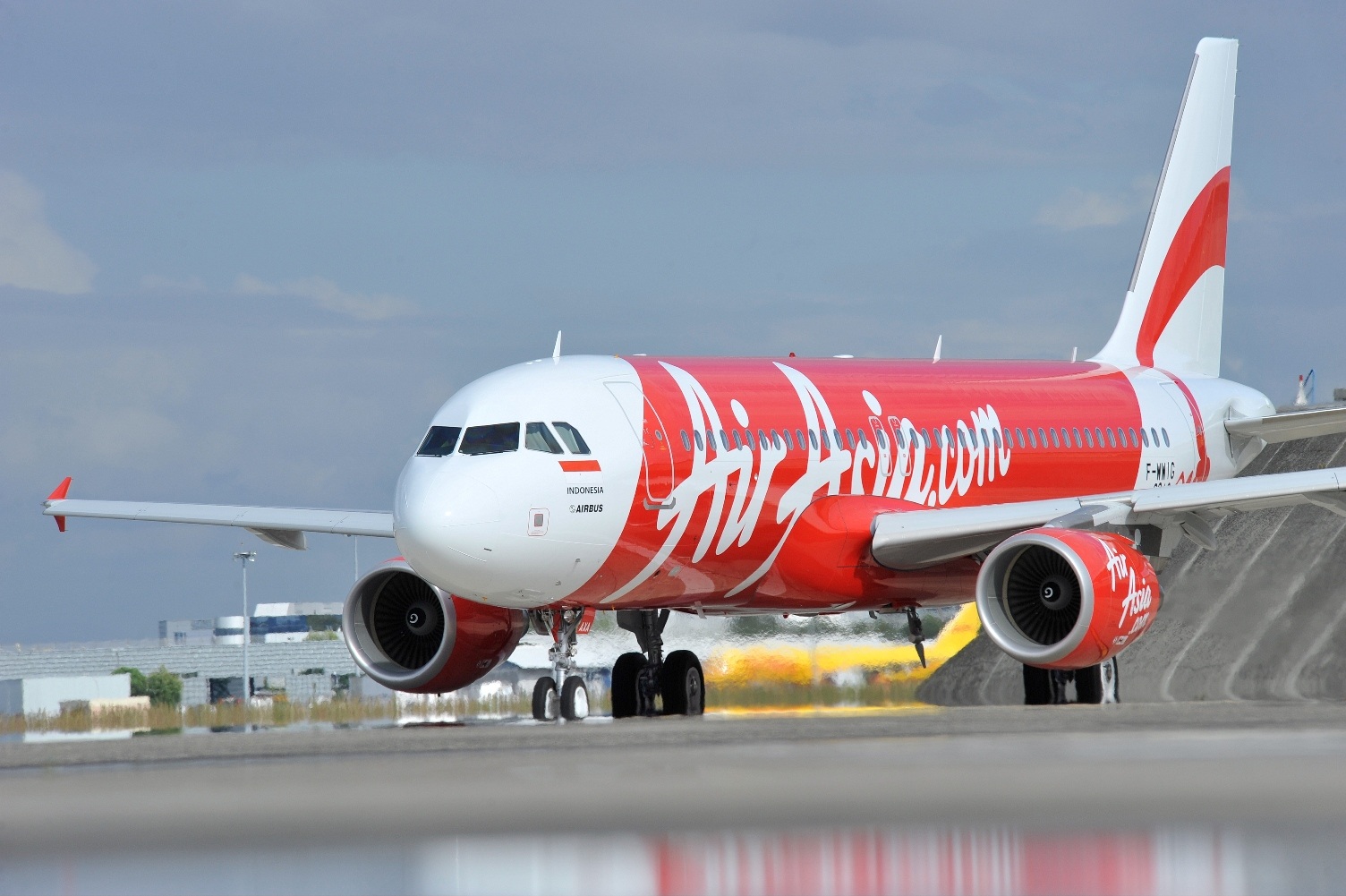
    AirAsia announced the addition of three new routes from Kuala Lumpur to the southern regions of China, further cementing its position as the largest foreign carrier serving the most populous country in the world. New services to Quanzhou and Guilin operated by AirAsia Malaysia (AK) and to Chengdu (Tianfu) operated by AirAsia X Malaysia (D7) are now added to the extensive network of 15 routes with over 129 flights weekly between China and Malaysia.

    Flights to/from Quanzhou will recommence twice weekly and start operating on 18 June 2023. Flights to/from Guilin will restart thrice weekly on 18 July 2023 and flights to/from Chengdu (Tianfu) will start twice weekly on 1 July 2023 and increase to thrice weekly from 4 July 2023. Recently, AirAsia Malaysia (AK) also resumed daily services from Kota Kinabalu to Wuhan, further strengthening its position as the Malaysian carrier with the most connections and capacity in China.

    AirAsia Malaysia CEO Riad Asmat said: “Following the recent opening of China to the world and strong pent up demand, our rapid expansion into China continues and we are proud to connect millions of guests not only to major destinations but also to underserved second-tier cities and launch unique routes such as Quanzhou and Guilin. China remains a key market for our future growth and we will continue to review a number of other potential Chinese routes that we hope to be in a position to announce soon.”

    AirAsia Malaysia (AK) will be flying 11 routes to/from China with over 118 flights weekly from Kuala Lumpur to Guilin, Quanzhou, Guangzhou, Kunming, Shenzhen, Nanning, and Shantou; Kota Kinabalu to Guangzhou, Shenzhen, Wuhan; and Johor Bahru to Guangzhou. AirAsia X Malaysia (D7) will be flying four routes to/from China with over 11 flights weekly from Kuala Lumpur to Chengdu (Tianfu), Beijing (Daxing), Shanghai, and Hangzhou.

    Etihad Airways is set to fly to Osaka five times per week beginning 1 October 2023, connecting one of the world’s most culturally animated cities to the already extensive Etihad network. “We’re delighted to introduce flights to Osaka for the first time,” said Antonoaldo Neves, CEO of Etihad Airways. “As one of the world’s most cosmopolitan cities, I know visitors will enjoy exploring its heritage and sampling some of Osaka’s renowned hospitality. Equally, the new route opens up Abu Dhabi to visitors from Osaka, and we look forward to welcoming guests to our vibrant home as well as giving them access to our growing, global network.”

    The introduction of this route will support the growing trade and tourism ties between the countries and add to Etihad’s existing Tokyo service by providing another route to Japan. Etihad will be flying a state-of-the art Boeing 787-9 Dreamliner on the new route, offering guests a taste of the airline’s celebrated service, catering and onboard entertainment.

  • China bans shipments from U.S. memory chipmaker Micron Technology

    China bans shipments from U.S. memory chipmaker Micron Technology

    The U.S. has banned phones and networking equipment from Huawei and ZTE due to fears that these companies’ products have backdoors that send information to Beijing. This weekend, China went on the attack against U.S. memory chip maker Micron Technology by banning its chips from the country. According to the South China Morning Post (SCMP), Micron is considered a “national security risk” which is exactly what the U.S. calls Huawei and ZTE.
    The U.S. Commerce Department said it “firmly opposes restrictions that have no basis in fact.” Besides getting back at the U.S. for banning products made by Huawei and ZTE, the move against Micron is retaliation for U.S Export rules that were put into place in 2020 that prevent certain chips made using American technology from being shipped to China.
    The U.S. Commerce Department added that “We will engage directly with PRC (People’s Republic of China) authorities to detail our position and clarify their action. We also will engage with key allies and partners to ensure we are closely coordinated to address distortions of the memory chip market caused by China’s actions.”
    Micron Technology, located in the heart of potato country in Boise, Idaho, released its own statement early Monday morning which said that it was aware of the decision made by Beijing and was examining its next steps. It also said, “We look forward to continuing to engage in discussions with Chinese authorities.” Last year Micron generated 11% of its $30.8 billion in revenue from China selling DRAM, NAND flash memory, and solid-state drives.
    China’s Cyber Security Review Office under the Cyberspace Administration of China (CAC) had said back in March that it was investigating Micron and on Monday China said that Micron failed to pass a cybersecurity review. As a result, Micron’s chips cannot be used by telecom operators, banks, water utilities, and other companies. The CAC said that its review of Micron revealed “severe cybersecurity risks, posing significant security risks to China’s critical information infrastructure supply chain and to our national security.”
    We’re sure to hear more about this in the coming days.
  • Company fined $37,000 for not disclosing stock market transactions

    Company fined $37,000 for not disclosing stock market transactions

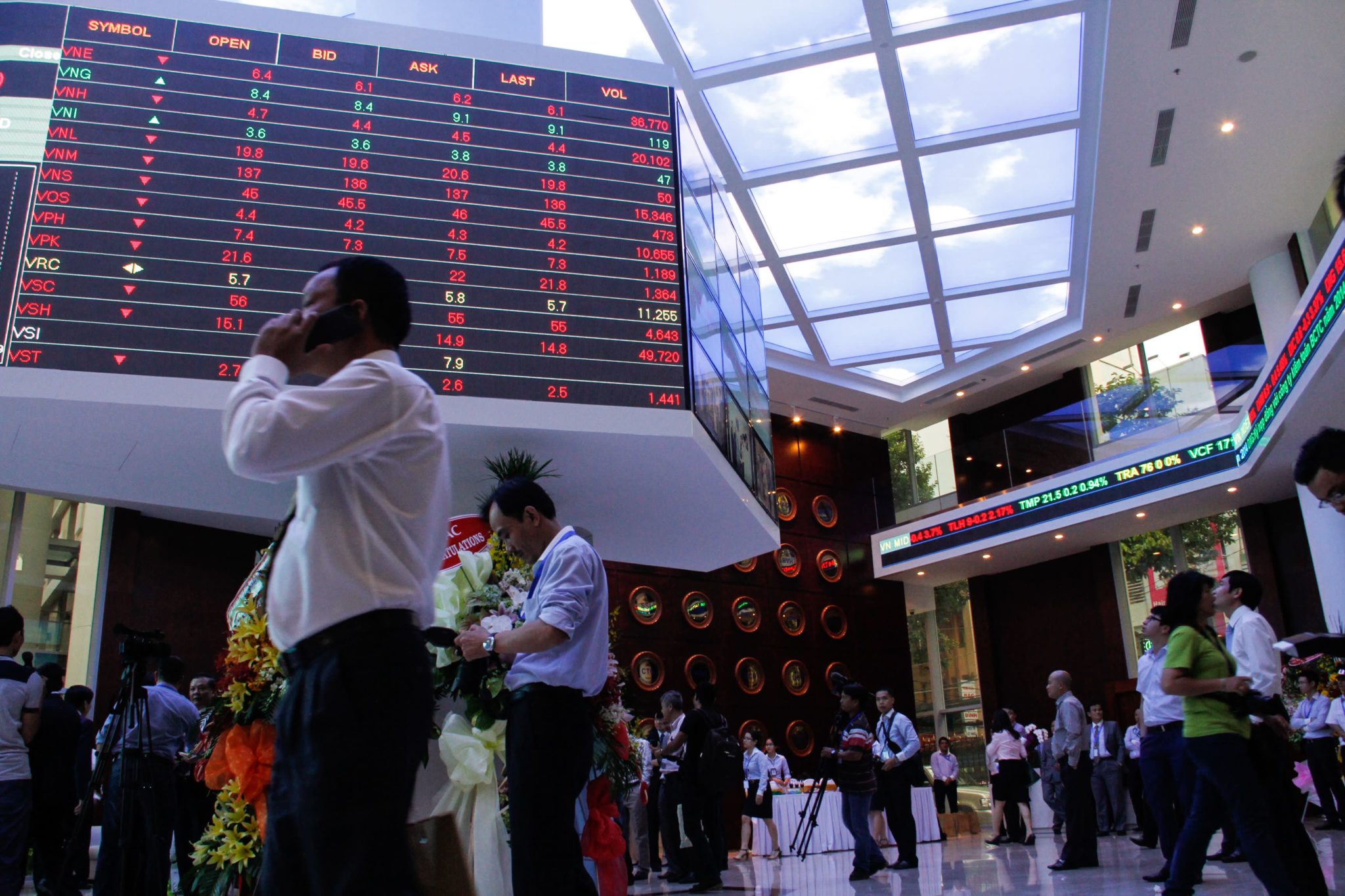
    Thai Son Investment Solutions Jsc has been fined VND870 million (US$37,100) for selling and buying back a stock in October last year without disclosing the information.

    The State Securities Commission of Vietnam announced the fine recently and prohibited the company from trading on the stock market for three months starting May 19.

    Thai Son surreptitiously sold 1.5 million shares of Electricity Investment Service Trade Jsc (EIN) on October 19, 2022, and bought 1.4 million shares three days later.

    The SSC recently placed Tan Viet Securities under restrictions for four months for publishing its unaudited financial statements.

    The company had been fined VND745 million in 2021 and 2022 for multiple stock market violations.

  • Walmart refuses to admit it might be better off accepting Apple Pay

    Walmart refuses to admit it might be better off accepting Apple Pay

    If you use Apple Pay or Google Pay when you checkout at the supermarket. the pharmacy, or other retail stores, you see how convenient the whole thing is even if you have to use your fingerprint or face to verify your identity. Apple and Google take such a small slice of your purchase that the big money is made on volume. For example, Apple is believed to earn .15% (not 15% but .15%) of the value of a transaction paid for with Apple Pay. So a $10 purchase gives a penny and a half to Apple while a $100 purchase puts 15 cents in its pocket.
    When you think about how many times a day an iPhone is whipped out to cover a purchase, you can see that even while getting crumbs from your transaction cake, it adds up to plenty of money for the company over a single 24-hour day. Apple would probably be collecting more money from Apple Pay if the nation’s largest retailer was onboard. Yes, that’s right. You cannot use Apple Pay at Walmart.
    Considering that every day the discount retailer brings in almost $1.6 billion in revenue, certainly a small percentage of that money would have ended up in Apple’s coffers thanks to Apple Pay. Walmart does have its own Walmart Pay system that works with QR codes. We first told you about Walmart Pay when the retailer was expanding it back in 2016 and it just has not caught on the way Walmart thought it would.
    Walmart’s former Senior VP Daniel Eckert told Bloomberg in 2017 that Walmart Pay would soon surpass Apple Pay in the number of shoppers who use the service in eligible stores. At the time, Eckert said, “If daily enrollments don’t slow down, I think that’s pretty well in the cards shortly. I would have to imagine we are getting pretty close.” Those words go right up there with former Microsoft CEO Steve Ballmer’s initial response to the iPhone when he said about Windows Mobile, “I like our strategy. I like it a lot…right now we’re selling millions and millions and millions of phones a year. Apple is selling zero phones a year.”
    Looking at Walmart, it’s hard to believe that giving up .15% of the value of a transaction is going to do damage to the company’s profit margin dramatically. And it could more than make up the difference by getting back some of the business that has gone to Target and other retailers that support Apple Pay. Perhaps the company is too invested in Walmart Pay to admit it has made a mistake.
    With that in mind, kudos to Kroger for realizing that not allowing the use of Apple Pay at the cash register was not a good strategy. Now we’ll see whether Walmart can make its own admission. We should also point out that Walmart does not accept Google Pay or any other mobile or digital wallet.
  • Bentley recalls two Continental models due to fire risk

    Bentley recalls two Continental models due to fire risk

    Luxury carmaker Bentley is recalling its Continental GT First Edition W12 and W12 cars in Vietnam to fix a faulty water pump that poses a threat of fire.

    Due to a design defect, the water pump could create a vacuum within the electrical area of the pump and cause liquid from the coolant system to permeate the housing of the water pump and damage the electrical circuitry which could cause a fire, it said.

    The recalled vehicles were manufactured in 2018 and imported from the U.K.

    Dealers of distributor CT Wearnes Vietnam are handling the recall, and it will take some 50 minutes to replace the faulty water pump.

    A spokesperson for the British carmaker in Vietnam said if the engine management light lights up or smoke is detected, people should immediately stop the vehicle wherever it is safe to do so, turn off the ignition, evacuate the vehicle, and contact the nearest retailer immediately.

    Bentley has an authorized dealer each in Hanoi and Ho Chi Minh City.

    The Continental GT is a two-door sedan with a price-tag of at least VND18 billion (US$762,700) in Vietnam.

  • Poor demand drags MacBook prices down

    Poor demand drags MacBook prices down

    Apple’s MacBook Pro laptops have seen their prices tumble by tens of millions of dong (VND1 million = $42.6) in the two months amid underwhelming demand.

    Quy Thien, a video editor, said when the MacBook Pro 16-inch was released in Vietnam at the end of March, he ordered a high-end model with an M2 Max chip, 96 GB RAM, and 4 TB storage for VND149 million (US$6,400).

    But Apple dealers told him the model was not available, but would arrive in two months. When his device arrived, he checked the prices and found it had fallen to VND133 million.

    “In two months, I lost VND16 million when I hadn’t even received my device,” he said.

    A retailer explained that the MacBook Pro is a niche product due to its high price. Dealers do not stock some high-end models, and users have to order and wait for six to 12 weeks. Thus, early buyers got a bad break since prices started to fall as they waited, he said. Even the standard version has become cheaper.

    At the time of launch the 14-inch version with 16 GB RAM, 512 GB storage and an M2 Pro chip cost VND52.9 million, and the 16-inch version cost VND65.9 million. If they had M2 Max chips, the prices were VND81.9 million and VND92.9 million.

    In the next two months retailers slashed the prices of the 14-inch model by VND5 million if it had an M2 Pro chip and VND8 million if it had an M2 Max chip.

    VND million (VND1 million = $42.63)MacBook pricesMarchMayMacBook Pro 14 inch M2 ProMacBook Pro 14 inch M2 MaxMacBook Pro 16 inch M2 ProMacBook Pro 16 inch M2 Max0255075100

    However, it has not worked and sales have not picked up, and the MacBook Pro only accounts for 2-3% of total laptop sales.

    Hoang Ha Mobile said the high prices are the biggest dampener of demand.

    Other Apple laptops have also become cheaper.

    The MacBook Air M1, which used to be the best-selling laptop in Vietnam, currently costs VND17.9 million, VND11 million down since its launch in January 2021.

    The MacBook Air M2’s prices have fluctuated. At the end of April its price briefly went down from VND28 million to VND25.9 million before climbing back up at the beginning of May.

  • Construction steel sales fall 15% in April

    Construction steel sales fall 15% in April

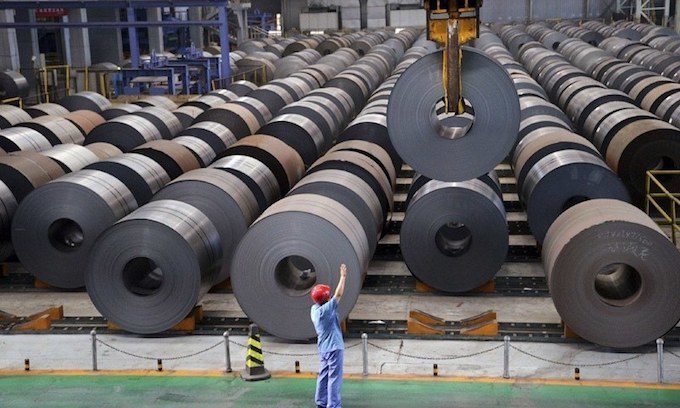
    According to the Vietnam Steel Association, over 735,000 tons of construction steel were sold in April, the second-lowest monthly sales figures since 2022.

    The sale was down 15% against the same period last year.

    Over 710,000 tons of construction steel were produced, posting the smallest monthly output since 2022, and a year-on-year drop of 37%.

    According to Hoa Phat Group, which holds one-third of the market share for construction steel, demand remained weak worldwide, so it sold only 214,000 tons of construction steel in April, down 28%.

    To spur sales, Hoa Phat on May 19 reduced the price of rebar by VND200,000 (US$8.50) to VND15.09 million per ton. Other steel makers lowered the price by VND150,000-250,000.

    Since early April, steel prices have decreased six times. At present, the average price of most common products is around VND15 million per ton, similar to that in October 2022 when steel demand started to plummet.

    According to Vietcombank Securities Company, steel prices started to fall in late April when prices of input materials such as iron ores, steel scrap and coke went down.

    Construction steel prices are likely to drop further in the coming time because of weak demand, the company said, noting that real estate developers and people are discouraged to build houses amid economic difficulties with high lending interest rates.

    According to the World Steel Association, the global steel demand is likely to increase by 2.3% to 1.82 billion tons this year, and by 1.7% to more than 1.85 billion tons next year. However, the demand will still be affected by high leading interest rates.