The feature has not been pushed out to all Google Messages users yet. To see if the “Send photos faster” option is available on your phone, open the Google Messages app and tap the profile picture on the right side of the search field at the top of the screen. Press on Messages settings and the fifth item down from the top should be the “Send photos faster option.” The feature is toggled on by default.
Author: Mei Ling Tan
-

Google adds “Send photos faster” option for RCS messaging
The feature description says, “Resolution is reduced for faster sending.” By toggling on this option, you are giving up your higher-resolution photo sharing via Rich Communication Services (RCS) in exchange for a quicker delivery of a lower-res image. Since SMS already shares low-res images, the toggle should apply to RCS users only in areas with slow data speeds.RCS is Google’s version of iMessage that allows two Android users running the platform for messaging to share messages with larger character limits and end-to-end encryption. Higher-resolution pictures and videos can be sent and features like read receipts and typing indicators appear. But should an iOS user dare to get into a group chat, all of these lovely features go away. Sound familiar?Remember that all RCS features won’t be found if an Android user isn’t using the Google Messages app. Some U.S. carriers offer their own messaging apps for Android but if you want the best messaging experience on the platform, you need to install Google Messages and stop using the carrier-branded messaging apps.The “Send photos faster” option would come into play in areas where mobile data speeds are slower. In these situations, if the feature is enabled, sending a lower-res image would allow a photo to be delivered faster than it might otherwise. -

Hyundai automobile sales in Vietnam increased by 5.5% in March
Thanh Cong Group (TC Group) on April 11 announced its sales results for March with over 5,770 Hyundai automobiles sold in Vietnam last month, up 5.5% over February.
Hyundai Accent continues to be the best-seller model in March with 1,355 units delivered to customers, followed by Hyundai Creta with 1,035 units – equal to the level a month earlier, and Hyundai Grand i10 with 664 units.
Over 640 Hyundai Stargazer were sold last month, 2.5 times higher than February’s. The TC Group recorded sales of 514 Hyundai Santa Fe units, equivalent to the previous month Hyundai Tucson of 307, up 54.2% compared to February.
Hyundai commercial models achieved sales of 1,016 vehicles in March, an increase of 42.1% compared to February 2023.
In the first quarter of 2023, Hyundai-branded models achieved sales of 14,736 units, down 21.1% compared to the same period last year.
TC Group expects higher sales in the second quarter of this year, explaining that the demand will increase thanks to the peak tourism season with greater travel demand.
-

Vietnam exports 1.7 million tonnes of rice in Q1
Vietnam exported 1.7 million tonnes of rice in Q1 worth over $900 million, a 19% increase in quantity and 30% rise in value over the same period last year, according to Vietnam Customs.
According to the Ministry of Industry and Trade (MoIT), Vietnamese rice has seen some success in improvements in quality and demand over the last several years.
The majority of exported rice came from the Mekong Delta, with the rest of the country’s rice production centres mainly serving the domestic market.
Le Thanh Tung, deputy head of the plant cultivation department under the Ministry of Agriculture and Rural Development (MARD), said rice production this year for the Mekong Delta alone is projected to reach 24 million tonnes. Consumption for the Delta and Ho Chi Minh City, Vietnam’s most populous city, will stay around 11 million tonnes, leaving 13 million tonnes for export.
Of which, premium-quality rice for export accounts for 3 million tonnes, specialty rice 2.1 million tonnes and regular rice 1 million tonnes.
Vietnamese rice will likely continue to be sought after in the second quarter of the year as demand has been on the rise in major markets including the Philippines, China and Africa, said the Vietnam Food Association (VFA).
Nguyen Ngọc Nam, President of the VFA, said Vietnamese rice has been fetching good prices on the international market despite a gloomy outlook for the global economy as countries look to stock up on food for uncertain times ahead.
In addition, major free trade agreements including the European Union – Vietnam Free Trade Agreement (EVFTA) have seen tariffs on Vietnamese rice reduced by as much as EUR175 per tonne, giving Vietnamese premium rice an advantage in the European markets.
As demand soars, exporters have been trying to purchase additional amounts from farmers to maximise efficiency and profit. However, many have voiced concerns over a lack of capital.
Phan Van Chinh, Director of MoIT’s Agency for Foreign Trade, said the ministry has been working closely with exporters to find solutions to minimising logistic costs and dealing with import/export protocols in international markets.
On the other hand, the ministry said it is to keep a close watch on the amount of rice being exported to ensure the country’s food security.
In an earlier development, the State Bank of Vietnam (SBV) has ordered commercial banks to review and streamline the borrowing process for rice traders to help them access additional capital sources.
-

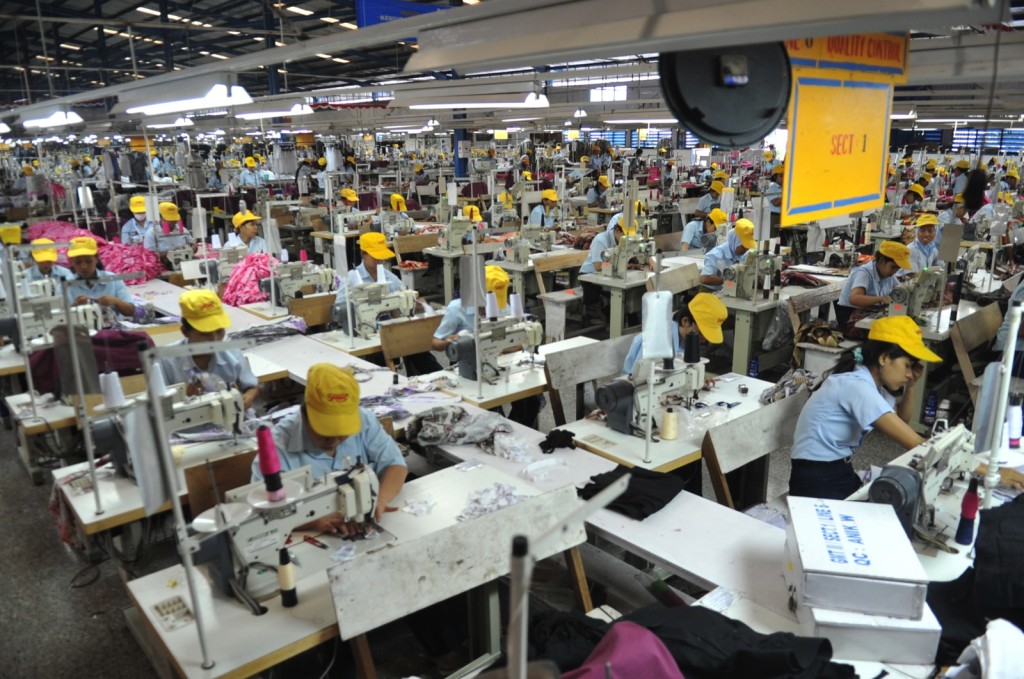
Garment exports slump in Q1
The value of textile and garment exports in the first quarter of 2023 reached $7.1 billion, down 17% compared to the same period in 2022, due to the impact of global inflation, according to the General Statistics Office (GSO).
This was the deepest decline in the first quarter since 2009, the GSO said.
The global inflation made consumers tighten spending on non-essential products, causing textile and garment exports to major markets such as the U.S. and EU to drop sharply.
Many forecasts are saying that the domestic textile and garment industry’s exports growth will slump this year.
Since the fourth quarter of 2022, textile and garment enterprises have had a shortage of export orders, leading to a sharp drop in export turnover and factories operating at below capacity.
Export orders in the second and third quarters are still shrinking, and workers are working reduced hours.
Than Duc Viet, General Director of Garment 10 Corporation, said the reduced demand for textiles and garments this year was due to the impact of inflation, pandemic, and geopolitical tensions between Russia and Ukraine. In addition, concerns about financial market instability and a banking crisis have also affected demand.
In the first quarter of this year, exports of May 10 were estimated to decrease by 10% compared to the same period last year.
Product volume in the second quarter is estimated to decrease by 20-30%, and until now, May 10 has not received new orders for production in the third quarter, said Viet.
Viet Thang Jean Co, Ltd (VitaJean), a large garment firm, has also reduced factory capacity, and temporarily closed a high-grade product production line because of a lack of orders.
Pham Van Viet, VitaJean Chairman and Vice Chairman of the HCM City Garment, Embroidery and Knitting Association, said that purchasing power has not recovered in Japan, the US and EU, while it has reduced by about 20-30% in February in the domestic market.
He said that the prospects of the textile and garment industry in the first half of 2023 are still bleak. From the third quarter of 2023, the market may gradually recover, as input materials prices decrease, reducing pressure on businesses.
However, all forecasts lack clarity because Russia and Ukraine’s conflict has not yet cooled down.
In this context, textile and garment enterprises have to implement many solutions such as restructuring enterprises, markets and products to maintain production and keep workers while waiting for the market to warm up.
The VitaJean chairman said that besides traditional markets such as the US and EU, his company is trying to boost exports to Australia and Canada, and at the same time, increase domestic consumption to partly compensate for the decline in exports to the traditional markets.
Meanwhile, Than Duc Viet said that May 10 has also restructured its businesses and sustainable development strategies. It also needs to review product position, market, management, technology, and production models to meet customer requirements.
He also said for the domestic market, this business is looking for products to meet customers’ needs in the context of the economic downturn.
For exports, May 10 is seeking new markets besides its traditional markets including the US, Europe and Japan.
Vietnam’s 15 signed free trade agreements (FTAs) bring a lot of opportunities to expand to new export markets, so South Africa, Africa, the Middle East and China are likely to all be huge markets in the future, he said.
The May 10 general director said now is also the time of sustainable development associated with green production.
The world is encouraging green growth, and Vietnam committed to reduce carbon emissions at COP26. Therefore, May 10 is switching to using green materials and green energy. As it increases the proportion of green products, this business will have many opportunities to promote production and exports in the future.
Vu Duc Giang, Chairman of the Vietnam Textile and Apparel Association (Vitas), said that the textile and garment industry last year still exported product worth more than 42.2 billion USD, up 8.5% over the same period the previous year.
However, that result mainly came from export growth in the year’s first six months. From the third quarter of 2022, exports began to show signs of weakness due to China’s zero-COVID policy and the global recession.
The textile and garment industry’s production continued to deteriorate in late 2022 and remained in that situation until the first quarter of 2023.
In 2023, Giang forecasts that the textile and garment business will still have many challenges. The most significant is the trend of increased layoffs and moving the workforce away from big cities.
Meanwhile, domestic enterprises have not been able to meet a number of complex orders.
Foreign markets also have requirements for recycled products and transparency in operations. Those are issues that businesses cannot immediately respond to, tiny and medium-sized enterprises.
According to Giang, the most important solution now is diversifying markets, products and brands produced in Vietnam.
On the other hand, businesses should use more green and recycled products, and have infrastructure investment plans and in-depth strategies to meet the requirements of foreign markets.
In addition, textile and garment enterprises need strategies to respond to the fast changes of the market, such as fast delivery times, competitive prices, stable quality, and product transparency.
Businesses must also build connection channels to grasp the challenges and opportunities of the global textile industry, digital technology trends and new policies.
Giang said that large-scale enterprises with production chains of yarn, weaving, dyeing and sewing will survive, while businesses specializing in processing will face great challenges.

-

Telecom operators want OTT players to pay for use of networks
Vietnamese telecom operators want OTT communications service providers to pay for using their networks, which they use to deliver their services but end up competing with them.
Paying for the use would ensure a more fair and sustainable business model for themselves since they invest in setting up and maintaining the networks, telecom companies said at a meeting with the Ministry of Information and Communications on April 6.
The CEO of Viettel Telecom, Cao Anh Son, said while telecom operators are witnessing a sharp decline in such services as calling and SMS, foreign OTT service providers operating in Vietnam are growing strongly, some in double digits.
“The operators provide infrastructure for OTT players, but the OTT players do not contribute to the infrastructure development. The investment burden on the operators is big.”
Data from Viettel shows 80% of Internet traffic between Vietnam and the world is for Facebook, Google and Netflix.
A minor change in user behavior or content delivery, such as upgrading videos from HD to 4K resolution, can put a lot of pressure on network transmission. Bui Son Nam, deputy general director of MobiFone, hoped the amendments to the Telecommunications Law being drafted by the ministry would require cross-border OTT players to share infrastructure development costs with telecom operators.
Nam and Son also pointed out that if cross-border OTT players and social networks cooperate with telecoms operators, it would help the ministry manage platforms and their contents better.
In the amendments being made to the law, the ministry’s Vietnam Telecommunications Authority has called for regulating OTT services such as Zalo and Telegram.
These OTT services are similar to calling and texting, and so should be regarded as basic telecom services on the Internet and need to be brought under the Telecommunications Law.
In March European telecom operators they asked big tech firms in the U.S. to pay for the use of their networks.
But the latter argued that they should not be asked to pay for the use of networks because they are already paying for the data they use as consumers.
It would stifle innovation and competition in the internet and OTT space, and could lead to higher costs for end-users, they claimed.
At a seminar held to discuss the proposed amendments on March 23 Vu Tu Thanh of the US-ASEAN Business Council said 10 years ago U.S. telecom company AT&T asked OTT players to pay, resulting in a major controversy.
Eventually, OTT players did not pay after the principle of net neutrality was invoked to prevent discrimination between various services on the Internet, he said.
“For example, high-priced services will be prioritized for bandwidth, while bandwidth for free services will be squeezed. This will make it difficult for essential social services, and services for small and medium-sized businesses.”
-

Aldi Australia CEO Tom Daunt set to become global chief
Aldi Australia chief executive Tom Daunt is leaving the local discount chain and moving to Salzburg to become the global joint managing director of the German supermarket.
He is the first Australian to take the helm of the global business from Matthew Barnes, who resigned earlier this year to return to the UK.
Staff was told of the news today, with suppliers to be officially informed tomorrow. Mr Daunt takes up his new role on May 1 and the local discount retailer will now be led by Anna McGrath and Marietta Schorn.
Ms McGrath has worked with Mr. Daunt for several years and is a 17-year veteran of discount supermarket, while Ms Schorn will move to Australia from Austria where she had been running the Aldi network.
This is not the first time Aldi has operated a dual management model.
Aldi Australia launched in 2000. By 2014, German-born Stefan Kopp, alongside Mr Daunt – who at that time was group managing director – were both running the local chain.
Mr Kopp left the Australian operations in 2017 and returned to Aldi in Germany, while Mr Daunt remained as the local CEO. He helped the company defy skeptics who had suggested the discount retailer would never find sufficient sites and that its narrow range of private-label brands would not resonate with Australian shoppers.
In the UK, Aldi has been taking market share from the major supermarket chains as living costs rise and real wages fall behind amid heightened inflation.
Analysts expect a similar trend to play out in Australia, with Aldi tipped to regain market share it lost during the COVID-19 pandemic, when consumers sought convenience over price and favored neighborhood stores over shopping centres. Aldi’s share plateaued at between 10 percent and 12 percent before the pandemic.
“Starting in the second half of 2022, we are seeing an incremental rise in the number of customers choosing to shop with us, and our expectation is that will continue this year.”
Mr Daunt has committed to three years in the global role and will likely return to Australia in future. He did not return calls on Wednesday.
-

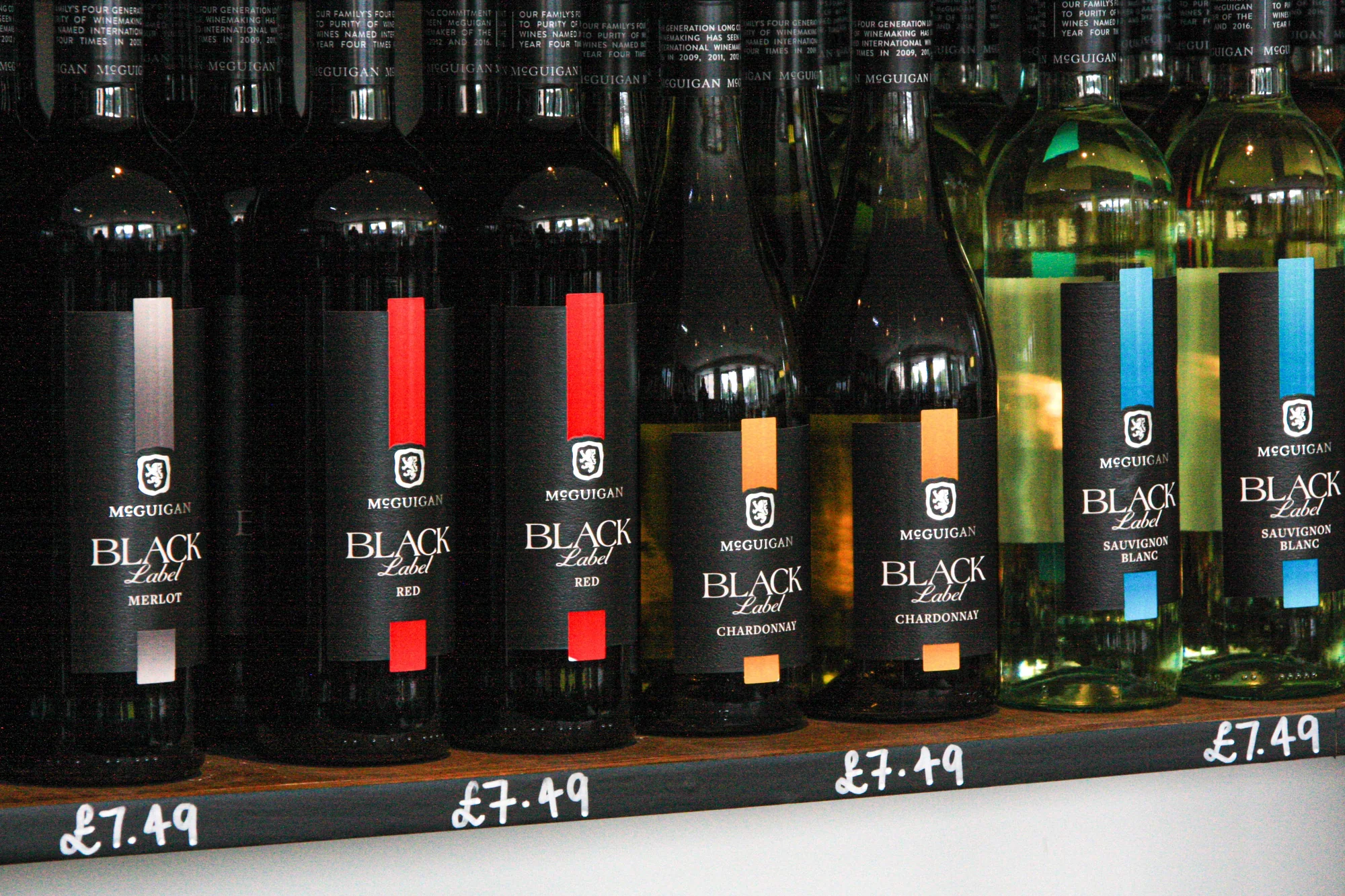
McGuigan expands into mid-strength wine
The new McGuigan Black Label Mid is the first mid-strength wine launched under the Australian winemaker. Consumers call for quality and variety in the rapidly expanding mid and low-alcohol category.
Promising the same full-bodied, fruity flavor of the iconic McGuigan Black Label Red, the new Mid is crafted to be 20 percent lighter in both calories and alcohol, using Australian Vintage’s unique spinning cone technology.
In a recent blind taste testing1 of the new McGuigan Black Label Mid against the original, 80 percent of consumers were surprised at their preference for the new Mid over the classic full strength. Additionally, nine out of 10 said they’d consider buying the new McGuigan Black Label Mid for healthier consumption of alcohol1.
With the new McGuigan Black Label Mid, the winemakers have reimagined the classic McGuigan Black Label Red, crafting a drop with 5.8 standard drinks and 9.8 percent alcohol for Australians to enjoy on any occasion.
Tom Dusseldorp, chief marketing officer of Australian Vintage, the ASX-listed parent company behind McGuigan Wines, says consumers can feel confident choosing McGuigan Black Label Mid, trusting the brand to deliver on great quality and value.
“McGuigan Black Label has been a staple in Australian households for nearly 30 years and McGuigan has a rich heritage of winemaking credentials. As cultural and societal attitudes shift towards a more conscious consumption of alcohol, we want our customers to still be able to enjoy the full-bodied flavors that Black Label offers, just tailored for mindful moderation,” said Dusseldorp.
With consumer moderation driving category growth – mid-strength beer now accounts for 25 percent of the beer category – Australian Vintage anticipates wine to follow suit, with ‘lighter’ wine growing at 14 percent compared to total ‘wine’, which is growing at just 2 percent.
Research commissioned by partner DrinkWise Australia also found a third of Australians (37 percent) who have reduced their alcohol consumption are using low and non-alcoholic options to cut back.
“McGuigan has already seen great success adapting to the new societal norms, with McGuigan Zero fast becoming Australia and the UK’s number one selling no-alcohol wine range,” added Dusseldorp.
McGuigan Black Label Mid is the natural choice for consumers looking for a modern drinking experience and for Boomers who are becoming more health conscious.”
Promising the same great-tasting flavors of McGuigan Black Label Red, consumers of McGuigan Black Label Mid will enjoy:
• A classic red with delicious fruit flavors of spicy plum, cherry and blackberry. This off-dry, deep wine boasts a hint of sweetness.
• Well-balanced with a smooth finish, this versatile wine pairs brilliantly with tomato-based dishes.
• 9.8 percent alcohol and 5.8 standard drinks, 20 percent less than Black Label Red
• Only 103.5 calories per 150ml serve, 21.5% lighter in calories than Black Label Red McGuigan Black Label Mid will be ava
-

South Korean pizza chain GoPizza eyes major Asian expansion
South Korean fashion chain GoPizza has launched its first physical location in Indonesia as part of a broader Asian expansion plan.
This brand’s first direct-to-consumer store in Indonesia is located in Jakarta. It follows the opening of a small store inside CGV Grand Indonesia in October of last year in collaboration with Korean multiplex operator CGV. The brand reportedly will open its second branch at Mall of Indonesia this month and the KM 6B Toll Rest Area the following month.
Beyond Indonesia, the company aims to increase its footprint in India from 25 to 100 locations this year and is preparing to expand into other markets, including Vietnam, Thailand, Malaysia, and the US.
-

Japan’s Seven & i review to continue under investor pressure
Seven & i’s independent directors said on Thursday the Japanese retail giant’s board would continue to review strategic alternatives as it faces pressure for broader reforms from some shareholders, including activist ValueAct Capital.
ValueAct, which owns a 4.4 percent stake in Seven & i and has been pushing for change since 2020, calls for a spin-off of its 7-Eleven convenience store chain and seeks to replace four of the 14 board members at an upcoming annual meeting.
” The eight directors said, “The board will continue to review optimal group structure and strategic alternatives,” including a possible initial public offering or a spin-off.A source has said Seven & i president Ryuichi Isaka is one of the board members ValueAct wants to replace.
“The board is currently discussing the shareholder proposals and new board composition, and we plan to announce our decisions in mid-April,” Isaka told reporters and analysts on Thursday.
Last month, Seven & i announced the results of a strategic review and said it would close an additional 14 Ito-Yokado supermarket stores in Japan and fully exit its apparel business. Some investors, though, said the review did not go far enough.
The company said on Thursday it would reshuffle its financial services.
Seven & i said in a separate statement that its operating profit rose 30.7 percent to a record 506.5 billion yen ($3.85 billion) in the financial year to end February. For the financial year that began on March 1, it forecasted a 1.3 percent profit increase.
-

Papa Johns to open 650 new stores in India
Popular US-based pizza chain Papa John’s has partnered with PJP Investments Group to expand in India. It plans to open 650 outlets in the country by 2033. The first of these restaurants will be opened in Bengaluru in 2024. Papa John’s had forayed into India earlier too, but closed down its restaurants in 2017.
The pizza chain, based in Atlanta, Georgia, has plans to open its stores in Southern cities first, and then scale up to other regions of the country. Papa John’s deems India an important market because of its size, as well as the rising aspirations of the middle class and the increasing income.
Amanda Clark, Papa John’s Chief International and Development Officer said that the pizza chain first partnered with PJP in 2005 as they were expanding into the UAE. “We are excited that their commitment to the flawless execution of Papa John’s high standards is now being brought to India,” said Clark.
PJP operates over 100 Papa John’s restaurants in the UAE, Saudi Arabia and Jordan. It will also open the first Papa John’s outlet in Iraq in 2024.
PJP CEO Tapan Vaidya said Papa John’s expansion in South Asia would introduce an enormous new customer to the popular pizza chain’s offerings. The private equity investment firm will operate around 1,000 Papa John’s restaurants within the next 10 years.
Meanwhile, Papa John’s partner FountainVest Partners plans to open more than 1,750 new Papa John’s restaurants in China by 2040.
Established in 1984, Papa John’s original pizza dough is made of only six ingredients and is never frozen. It is also known for topping its pizzas with cheese made from mozzarella, pizza sauce made with vine-ripened tomatoes that go from vine to can in the same day, and meat free of fillers. It stated that it does not use artificial flavors and synthetic colors in its food menu. As of December 2022, it had 5,700 restaurants in around 50 countries and is the world’s third-largest pizza delivery company.
-

South Korean burger chain Mom’s Touch to expand into Mongolia
South Korean chicken burger chain Mom’s Touch&Co. said Tuesday it inked a master franchise agreement with Mongolia’s Foodville Farm LLC, in its first steps to enter the central Asian country.
Foodville Farm is an independent company established by the local franchise operator Monbakery LLC to expand the Mom’s Touch brand in Mongolia. The company operates the South Korean coffee franchise Caffe Bene and bakery chain Tous les Jours in the Asian country.
The South Korean chicken burger franchise said it has decided to enter Mongolia due to the country’s rapid economic growth, a relatively young population and a growing interest among Mongolians in Korean food, and products from K-pop and the broader Korean Wave.
Experts said the Korean Wave generated by K-pop and TV dramas could turn fans in foreign countries into active consumers of South Korean products.
Mom’s Touch’s first Mongolian restaurant is set to open in the first half of this year. The company plans to add more than five stores by the end of the year, it said.
-

Vietnam’s sole female billionaire becomes chairwoman of Vietjet
Nguyen Thi Phuong Thao, Vietnam’s only female billionaire, has become the chairwoman of budget airline Vietjet.
Dinh Viet Phuong, who has been with the company since its establishment in 2007, moved up to CEO.
Thao, who replaced Nguyen Thanh Ha as chairwoman on Thursday, was the deputy chairwoman and CEO of Vietjet for many years. She is the first self-made female billionaire in Vietnam.
Phuong has been holding the chief operations officer title since October 2020. He has made many contributions to the airline, helping it to survive during the Covid-19 period.
He has an engineering degree from Vietnam Maritime University, an MBA degree from France’s CFVG and a doctorate in transport from Russia’s Moscow State Academy.
Last year Vietjet transported 20.5 million passengers on 116,000 flights and saw number of domestic passengers grow 20% from pre-Covid.
-

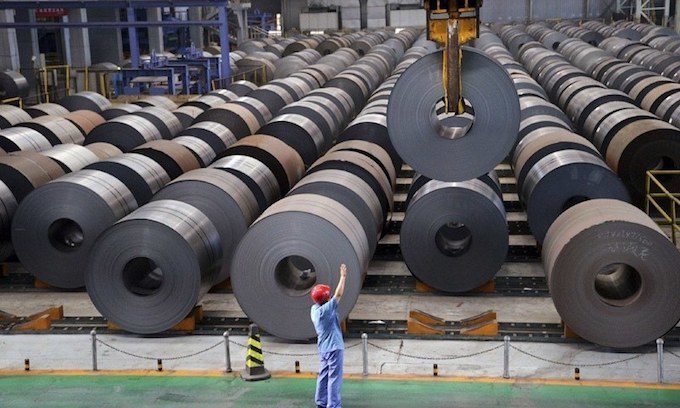
Steel prices drop after upward streak
Weak demand has begun pushing steel prices down after they climbed to a seven-month high in March.
Leading steel manufacturer Hoa Phat Group has accordingly lowered its rebar steel price by 0.63% to VND15.89 million ($677.55) per ton.
It also brought the price of wire rod steel price down 1.88% to VND15.66 million per ton.
Viet Y Steel lowered its product prices by the same rate to VND15.86 million for rebar steel and 15.61 million for wire rod steel.
The decline now has steel prices down from their seven-month peak recorded at the end of March. Prices had been rising since last year.
Hoa Phat reported that the lower prices reflect a decline in material costs, while Viet Y said that the adjustment was made according to market fluctuations.
Steel products sales in the first two months of 2023 plunged 23% year-on-year to 3.8 million tons, while exports dropped 10% to 1 million tons, according to the Vietnam Steel Association.
Hoa Phat, which accounts for 40% of the segment’s market share, recorded a sales drop of 34% in the first two months.
Sales at distributor Steel Online plunged 30% year-on-year through March.
Bui Duy Anh, deputy director of the company, told VnExpress that prices will likely drop further as demand remains low with consumers cutting spending amid ongoing inflation.
He added that not enough public projects are being developed to significantly boost demand.
However, not everything is pessimistic.
“The drop, however, will have its benefits, as it will bring down costs of public infrastructure projects and urge steelmakers to find more buyers overseas,” he said.
At the same time, the Vietnam Steel Association has reported that it expects the market to begin recovering in the third quarter of this year at the earliest.
Brokerage VNDirect has reported it also agrees that steel consumption will likely start to rise in the third quarter.