Author: Mei Ling Tan

  • Netflix to launch Nike Training Hub on December 30

    Netflix to launch Nike Training Hub on December 30

    Netflix would like to help you stick to your fitness-related new year’s resolutions this year. Starting December 30, 30 hours of video content will become available on the platform, through a partnership with NIke.

    Reality check: in recent years, the number of new year’s resolutions related to losing weight are seeing a decline, but that isn’t a cause for celebration, as obesity rates are going up. However, it would be best if you remembere: there is no time like the present.

    While new year’s resolutions may not be the best method for losing weight, having access to content from Nike Training Club on your Netflix app certainly is. It will be released in two bahes, available in multiple languages and to users of all subscription plans, so all that is required of you is to get motivated and give it a shot.

    In case this is the first time you’ve heard about Nike’s training program, it is built around an app that wants you to stick to your decision and help you build healthy habits through fine-tuned training regimens and workout sessions.

    We still don’t know what the second series will include, but we know that it will become available some time in 2023. Until then, batch one will certainly give you enough to sink your sport shoes’ heels in to with:13 episodes of basics of Fitness

    • 7 episodes of core workouts
    • 6 episodes of yoga
    • 14 episodes of strength training
    • 5 episodes of feel-good fitness

    Considering that this is not your typical binge-worthy series, but content that you will actually revisit multiple times — or at least until you’ve gotten a steady workout routine down — it is certainly more than enough to help you get started on that new you.

    The program will also feature videos, suitable for people of all fitness levels, meaning that you will be able to tell the ones that aren’t for you yet, but they will still be available to you when you decide to push things further.

    The videos will be led by certified trainers from Nike’s Training Club solution. And if you like what you see on Netflix, you can also download Nike’s app too for a full experience. Oh, and by the way — the app is completely free, and offers tons more, like additional workouts, goal reminders and expert tips on nutrition and diet.

    As Netflix is stepping up their game regarding, um… well, games on the platform, we can definitely expect them to bring more fitness options too, especially if Nike’s series receives a warm welcome. And you know what? This year might be it, so you should definitely try going for Netflix and Treadmill instead of Netflix and Chill.

  • Hong Kong delivery platform Lalamove doubles growth in Vietnam

    Hong Kong delivery platform Lalamove doubles growth in Vietnam

    Hong Kong delivery platform Lalamove has claimed its year-on-year growth in Vietnam doubled in the first 11 months this year.

    But it has not released figures for either year. Vietnam is a key and positive market, its CEO Paul Loo said during a recent visit to the country, and his company has seen opportunities in long-distance delivery grow.

    It now covers 40 localities.

    “Inter-province delivery still accounts for a small ratio of our revenues but it is growing very fast,” Loo said.

    The e-commerce boom has also contributed to the growth, he said.

    Vietnam’s e-commerce market is estimated at $14 billion this year, up 14% from 2021, and is set to reach $32 billion in 2025, according to a report by Google, Temasek and Bain & Company.

    The report said 85% of urban residents use online delivery services. Lalamove, which operates in over 350 cities in mainland China, has a presence in 11 global markets.

    Since entering Vietnam in 2017 it has signed up over 100,000 drivers and 20,000 business partners.

    Businesses are now reluctant to invest in their own vehicles and drivers due to fear of risks amid an uncertain future, which is why they rely on delivery services to transport their products, Loo said.

    His company is investing in technology to improve the algorithm connecting vehicles and customers, he said.

    With $700 million invested in online private transportation companies in the first half of this year, the sector is believed to have high competition.

    There is great potential to increase market share as long as a company meets the needs of its customers and increases the value of its ecosystem, Loo added.

  • Vietnam remains top global peppercorn exporter

    Vietnam remains top global peppercorn exporter

    The volume of Vietnam’s pepper exports to important markets has decreased this year, but the country has retained its top spot in the global rankings, heard a conference held in Ho Chi Minh City on December 21.

    The Vietnam Pepper Association Chairwoman Hoang Thi Lien said in 2022, the product was at a disadvantage due to inflation and economic recession in many markets, and China’s zero-Covid policy, hence a reduction in export volume.

    Vietnam has shipped about 230,000 tonnes of peppercorns overseas this year for more than $970 million, down 13% in quantity but up 2% in value annually. The export turnover of all spices is forecast to hit $1.5 billion.

    Vietnamese enterprises import pepper from other countries such as Brazil and Indonesia for processing, then re-export for higher value. From the beginning of the year to the end of November, the nation purchased 34,273 tonnes of the product, an increase of 48.9% against the same period in 2021.

    Vietnam has an advantage over other pepper production countries such as Indonesia, Malaysia, India, Sri Lanka and Cambodia thanks to the the EU-Vietnam Free Trade Agreement, Lien said. Under the trade pact, the EU’s import tax on Vietnamese ground pepper has been reduced from 4% to 0%.

    The proportion of processed goods currently accounts for about 30% of its total export turnover, she added.

    The expert suggested the sector work to capitalise on untapped potential in many markets, particularly Eastern Europe.

  • France fines Microsoft $64M over advertising cookies

    France fines Microsoft $64M over advertising cookies

    France’s privacy watchdog said Thursday it has fined US tech giant Microsoft 60 million euros ($64 million) for foisting advertising cookies on users.

    In the largest fine imposed in 2022, the National Commission for Technology and Freedoms (CNIL) said Microsoft’s search engine Bing had not set up a system allowing users to refuse cookies as simply as accepting them.

    The French regulator said that after investigations it found that “when users visited this site, cookies were deposited on their terminal without their consent, while these cookies were used, among others, for advertising purposes.”

    It also “observed that there was no button allowing to refuse the deposit of cookies as easily as accepting it.”

    The CNIL said the fine was justified in part because of the profits the company made from advertising profits indirectly generated from the data collected via cookies — tiny data files that track online browsing.

    Bing offered a button for the user to immediately accept all cookies, but two clicks were need to refuse them, it said.

    The company has been given three months to rectify the issue, with a potential further penalty of 60,000 euros per day overdue.

    The fine was issued to Microsoft Ireland, where the company has its European base.

    In a statement Microsoft said that it had “introduced key changes to our cookie practices even before this investigation started.”

    “We continue to respectfully be concerned with the CNIL’s position on advertising fraud,” it said, adding that it believes the French watchdog’s “position will harm French individuals and businesses.”

    Cookie control

    Cookies are installed on a user’s computer when they visit a website, allowing web browsers to save information about their session.

    They are hugely valuable for tech platforms as ways to personalise advertising — the primary source of revenue for the likes of Facebook and Google.

    But privacy advocates have long pushed back.

    Since the European Union passed a 2018 law on personal data, internet companies have faced stricter rules that oblige them to seek consent from users before installing cookies.

    Last year, the CNIL said it would carry out a year of checks against sites not following the rules on using web cookies.

    Google and Facebook were sanctioned by the French regulator with fines of 150 million and 60 million euros respectively for similar breaches around their use of cookies.

    The two firms also face scrutiny over their practice of sending the personal data of EU residents to servers in the United States.

    And tech giants continue to face a slew of cases across Europe.

    Earlier this month, Europe’s data watchdog imposed binding decisions concerning the treatment of personal data by Meta, the owner of Facebook, Instagram and WhatsApp.

    The European Data Protection Supervisor said in a statement that the rulings concerned Meta’s use of data for targeted advertising, but did not give details of its ruling or recommended fines.

    The latest case follows complaints by privacy campaigning group Noyb that Meta’s three apps fail to meet Europe’s strict rules on data protection.

  • HSBC ups Vietnam growth forecast to 8.1%

    HSBC ups Vietnam growth forecast to 8.1%

    Lender HSBC has raised its 2022 growth forecast for Vietnam from 7.6% to 8.1%, a prediction that if manifested would make the country the second fastest growing economy in ASEAN behind Malaysia.

    For Vietnam, 2022 was a year of booming recovery as the Southeast Asian nation appeared set to remain one of Asia’s outperformers thanks to a 13.7% GDP expansion in the third quarter.

    Vietnam’s unemployment rate dropped to 2.3% by the third quarter and that number is expected to drop as jobs in tourism-related sectors could boom when the travel industry comes back to life post-lockdown.

    But increasing trade headwinds have also brought a few clouds to the horizon of Vietnam’s optimistic growth outlook.

    After growing over 17% year-on-year in the first three quarters of 2022, export growth mellowed significantly in October, with November then seeing the first meaningful year-on-year decline in two years.

    The primary drag came from electronics shipments, which account for 35% of Vietnam’s total exports. The economic slowdown in the US has exacerbated Vietnam’s export woes, as the North American economic powerhouse is the largest market for many of Vietnam’s goods exports.

    Vietnam is also now under the pressure of stronger inflation, with the latest data exceeding the State Bank of Vietnam’s 4% inflation growth “ceiling.”

    Not only has core inflation accelerated, but Vietnam is also experiencing a domestic energy shortage, keeping headline prices high in the sky.

    Rising core inflation increasingly suggests that the State Bank of Vietnam will continue its cycle of rate hikes. HSBC expects the central bank to raise its refinancing rate by 50 basis points each in the first and second quarter next year, raising the refinancing rate to 7.0% by mid-2023.

    Challenges will likely be more acute next year, particularly after the post-lockdown re-opening effect fades and the lagging impact of high inflation starts to kick in. Therefore, HSBC expects a more moderate growth figure of 5.8% for Vietnam next year.

    The international bank has also emphasized that the biggest risk to growth in Vietnam is intensifying trade headwinds.

    “Since the advent of the U.S.-China trade tensions, Vietnam has been one of the biggest beneficiaries in terms of both trade and foreign direct investment diversion, boosting its export share in the US market in particular,” according to HSBC.

    But this comes with a major downside, according to the bank’s analysts: “As a result, Vietnam has become increasingly vulnerable to a U.S. economic slowdown,” the global lender reported.

    However, despite cyclical headwinds, major companies continue to invest in Vietnam. Global electronics firms Samsung and LG both recently announced that they will continue increasing investment in Vietnam over the next few years, highlighting Vietnam’s long-term attractiveness.

  • Kuala Lumpur’s The Starhill reopens after major refit

    Kuala Lumpur’s The Starhill reopens after major refit

    Kuala Lumpur’s luxury shopping centre The Starhill has unveiled its new look, after a two-year transformation announced in 2019.

    Integrating hospitality into the retail experience, the shopping centre in Kuala Lumpur’s Bukit Bintang retail district has been repositioned as the “Home of the Tastemakers” where customers can shop and stay in a sophisticated home-like setting that offers experiential retail in a cosy, intimate boutique atmosphere.

    The new extension is linked with the lower retail area in one vertical seven-floor construction, featuring four floors of experiential retail space and three floors housing 162 hotel rooms under the JW Marriott Kuala Lumpur. More than 1100 rooms are connected to The Starhill by combining JW Marriott Kuala Lumpur and The Ritz-Carlton, Kuala Lumpur.

    “Our focus is to offer a holistic experience that goes beyond retail and dining, encapsulated in an intimate space with a sense of familiarity where patrons can escape from the hustle and bustle of the city,” said Joseph Yeoh, VP of YTL Land & Development.

    “This reinforces The Starhill as the place to be in Bukit Bintang, especially following the unveiling of Taiwanese bookstore Eslite Spectrum after a two-year journey setting up this creative art and cultural destination.”

    Defying the conventional mall developer’s mentality of ‘more is better,’ The Starhill is boutique-sized at 28,000sqm of retail space, of which more than 92 per cent is already tenanted, with 30 per cent taken up by food and beverage enterprises.

    The Starhill is home to local brands including Apollo Wellness Centre, Biologique Recherche and Opera Cafe, and international labels such as Paul & Shark, Philipp Plein, Roberto Coin, Shiatzy Chen, Stefano Ricci and Tom Ford.

    The Eslite flagship, the first in Southeast Asia, opened at The Starhill last week.

    Eslite Spectrum Kuala Lumpur, which occupies the entire 6500sqm of Level 1, offers a variety of books in addition to handmade goods and lifestyle brands. With more than 40 locations in Taiwan, including one open 24 hours, and branches in Hong Kong, China, and Japan, Eslite is of the largest retail book chains in Asia.

  • Canadian luxury jewellery brand Korite to expand to Asia

    Canadian luxury jewellery brand Korite to expand to Asia

    Canadian luxury jewellery brand Korite has named Kaimirra Tutan as its exclusive distributor in Asia.

    Kaimirra Tutan will bring Korite’s luxury lines of jewellery and ammolite gemstones to customers across Asian markets, including Malaysia, Singapore, Thailand, Vietnam, and South Korea. The partnership between the two jewellers follows the launch of Kaimirra Tutan’s flagship boutique in Malaysia’s shopping complex Mid Valley Megamall earlier this year.

    “Kaimirra Tutan gives us the ability to reach customers through their retail stores, e-commerce, and wholesale opportunities,” said David Lui, CEO at Korite. “This partnership not only allows us to work with another Canadian company, but it is also an essential element of our future growth and we couldn’t be more excited.”

    Founded in 1979, Korite specialises in ammolite gemstones and jewellery that is ethically mined and handcrafted by skilled artisans. Kaimirra Tutan is a luxury jewellery brand launched in 2010 in Toronto.

    In case you missed this news, Japanese bridal jewellery company I-Primo has opened its first Southeast Asia flagship store in Singapore after launching a pop-up in June.

  • TikTok will soon let you see why it has recommended a specific video to you

    TikTok will soon let you see why it has recommended a specific video to you

    Have you ever wondered why TikTok recommends certain videos to your “For You” feed? Well, if you have, you will soon know the answer. As TikTok announced in a new blog post, it will introduce a new tool in the coming weeks that will allow you to see why a particular video appears in your “For You” feed.

    Once TikTok releases the feature, you will be able to find it in the share panel on your For You feed. When you tap the share button, you will see a new question mark icon named “Why this video.” Choosing it will reveal why TikTok recommended the video you are currently watching.

    For example, the app may let you know that it is showing this clip because of your previous interactions with the application, such as content you watched, liked, or shared comments you posted, or searches you performed. It may also tell you that you’re seeing this video because it was uploaded from an account you follow or from an account that has been suggested to you.

    Another reason the app could give is that the displayed video is popular in your region, which is why it is being shown to you, or that the clip was just recently posted in your area.

    In its blog post, the social media platform also shared that it is currently working on many other ways to bring “meaningful transparency” to its users.

    We should not be surprised by TikTok’s sudden desire to offer more transparency because it’s most likely due to the attacks that it is currently facing. The social media platform is once again under fire by the US government.

    Recently, a new bill was introduced that would prevent TikTok from operating in the country. The bill follows on the heels of a proposal prohibiting the app’s installation on government-owned devices. As you probably know, a similar ban already exists for devices used by the United States military, the State Department, and the Department of Homeland Security.

  • Microsoft Surface tablet that iPad aspires to be when it grows up is a whopping $412 off

    Microsoft Surface tablet that iPad aspires to be when it grows up is a whopping $412 off

    We have almost made it to the end of the year and surely deserve to treat ourselves to a little something with a lot of power. The Microsoft Surface Pro 8 is one device that fits this description and the best part is that it’s currently on sale.
    The Surface Pro 8 is a versatile portable device that easily morphs from a tablet to a laptop. It is very lightweight, ultraportable, and sturdy, and sports a 13-inch screen with a fluid refresh rate of 120Hz. The screen has a tall aspect ratio so there is more vertical room for viewing articles and working on text documents. There is also a kickstand for multiangle viewing.

    The Intel 11th Gen Intel Core i5-1135G7 processor powers the variant that Amazon has discounted. It provides ample performance for everyday tasks, including moderately heavy workloads, so it’s easy to recommend to students and professionals.

    There are two USB-C ports with support for USB4 and Thunderbolt 4, ensuring fast data transfer rates.
    Microsoft promises a battery life of 16 hours, and while it may not last this long for everyone, it will easily get you through a whole workday. The tablet’s cameras and microphone are also impressive and the device also has the Windows Hello facial recognition system.

    What makes the Surface Pro 8 special is that it comes from a company that has a long history of making productivity-centric devices. Microsoft has successfully taken the best bits from laptop and tablet form factors for the ultimate portable experience, giving the Surface Pro 8 an edge over other top 2022 tablets.

    The Core i5 model with 8GB of RAM and 256GB of storage has been marked down by 34 percent, meaning you can currently get it for $787.99 instead of $1,199.99.
    That’s a seriously chunky discount for a modern-looking standalone productivity machine with a beautiful screen and promising battery life. This deal has been going on for a while and other variants have already sold out, so get this model while you can.
  • Samsung releases new Star Wars accessories

    Samsung releases new Star Wars accessories

    At this point, the Samsung Galaxy Z Flip 4 is just as much a foldable smartphone as it is a fashion accessory. For the most part, this is the result of the Korean tech giant’s persistent efforts to consolidate the latter’s status as one through extensive collaborations with many different brands.

    This time around the clamshell foldable will be receiving a Star Wars treatment in the form of a number of exclusive accessories. Today, Samsung launched a Star Wars Bundle Pack consisting of a Ring Case and a strap for the Galaxy Z Flip 4, in addition to a Star Wars case and band for the Galaxy Watch (4 or 5), and a Star Wars case and strap for the Galaxy Buds 2 Pro.

    The entire bundle costs $149.99 and is available at Samsung’s official online store. Each item can be purchased independently, however. It should be noted that this is just the latest in a series of exclusive accessories that Samsung has debuted this year.

    We have already seen Pokémon-themed merchandise and a fair share of other less-prominent collaborations. It should be noted that this is not nearly as ambitious as the company’s limited edition bundles.

    For reference, they always feature the device itself, sometimes with a unique design tweak, and are much more expensive. The bundles are also most often available for a limited time only and seldom make it out of South Korea.

    A notable exception to the general rule outlined above is Samsung’s recent collaboration with Maison Margiela. The Galaxy Z Flip 4 Maison Margiela edition has been released internationally and is still available.

    These Star Wars accessories are much more accessible in comparison and make the perfect present for a Samsung user who is also a fan of the cult classic.

  • Vietnam’s Elon Musk challenger turns heads in 2023

    Vietnam’s Elon Musk challenger turns heads in 2023

    Vietnam is an unlikely home of the next Elon Musk. That’s why Le Thi Thu Thuy is one person to watch in 2023. The 48-year-old is at the wheel of VinFast, a money-losing electric-vehicle maker racing the U.S. entrepreneur’s Tesla on Western roads. It’s a complicated route.

    VinFast has made its name selling gas guzzlers in the Southeast Asian nation, where its parent Vingroup is the top conglomerate. Now Thuy is heading in an entirely new direction by turning the carmaker fully electric, and by taking its brand global. Within a year, she plans 70 showrooms across the United States, Canada and the European Union to sell cars like the VF9 sports utility vehicle, which is priced at $76,000, around 15% more than Tesla’s comparable Model Y.

    The former Lehman Brothers investment banker is leaning on sophisticated suppliers like battery-maker Contemporary Amperex Technology and electronic products-outfit Aptiv rather than counting on VinFast to develop proprietary technology. It is building a local factory in the United States too, something that’s hard for Chinese auto rivals like Nio and Xpeng to replicate as tensions fester between Washington and Beijing. An expensive marketing campaign is starting to yield results: VinFast reported 58,000 reservations as of December.

    A planned initial public offering in New York is key to fund the expansion. Thuy must convince investors that the company isn’t desperate for money. Hanoi’s crackdown on the real estate sector is a drag on the property-heavy Vingroup. That makes it look like VinFast has a weak parent at a time when the auto business is also deep in the red: its net loss almost doubled to 34.5 trillion dong ($1.48 billion) in the first nine months of 2022.

    Yet accessing Vietnam’s stock market is tricky and, to date, only nine Vietnamese companies have listed overseas, raising less than $1.5 billion in total, Refinitiv data shows. VinFast’s listing would, therefore, present a rare opportunity to tap an economy the International Monetary Fund expects will grow 6.2% in 2023. Thuy can at least count on a scarcity premium to fuel her big drive.

    Context news

    Vietnamese electric-car maker VinFast is planning a U.S. initial public offering, an initial prospectus published on Dec. 6 shows.

    VinFast reported a net loss of 34.5 trillion dong($1.48 billion) for the nine months to the end of September, against 18 trillion dong for the same period a year earlier. Revenue fell to 10.5 trillion dong, down from 11.2 trillion dong.

  • Gasoline prices dip to 18-month low

    Gasoline prices dip to 18-month low

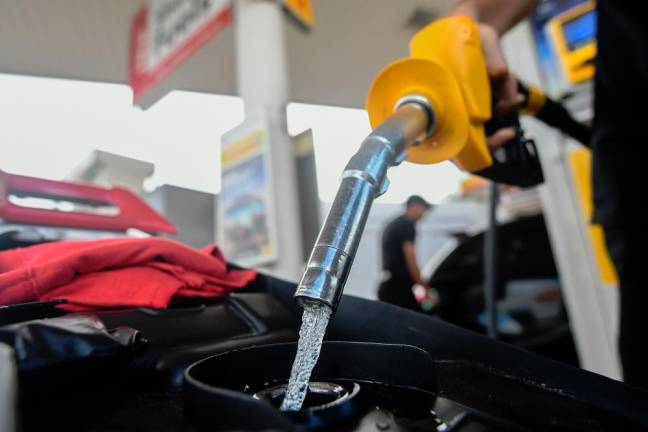
    Gasoline prices plunged to the lowest since June 2021, with RON95 dropping 2.36% to VND20,700 ($0.87) per liter.

    E5 RON92 fell 1.82% to VND19,970. Diesel dropped 0.32% to VND21,600. Gasoline prices have fallen four times in a row since mid-November.

    They are now 37% lower than the previous peak on June 21.

    Vietnam fuel prices are adjusted on the first, 11th and 21st of each month.

    Ho Chi Minh City has proposed that prices are adjusted every three to five days instead of the current 10 to resolve the recent supply issues.

  • A New Image for a Royal Banknote

    A New Image for a Royal Banknote

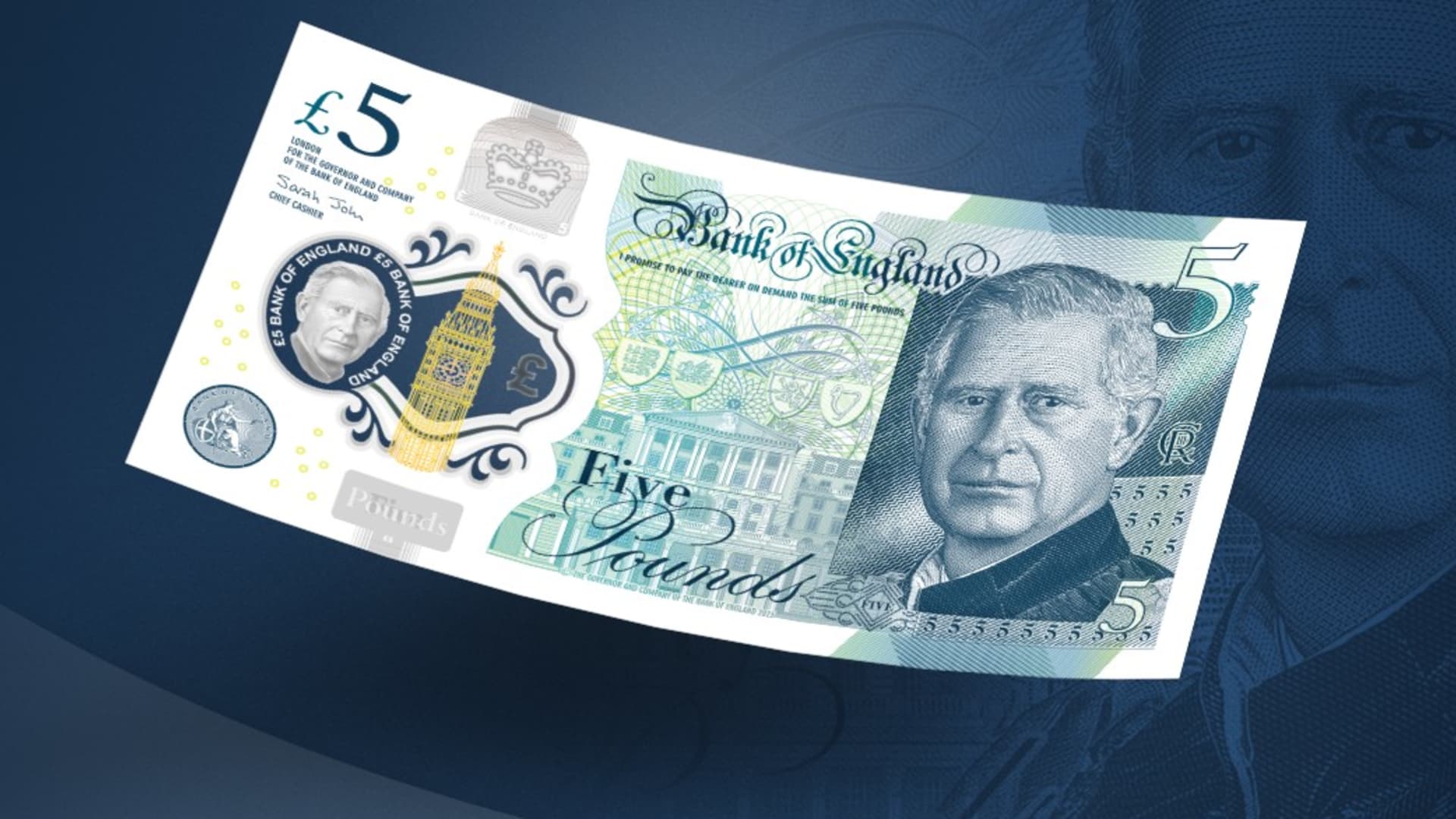
    For his entire adult life, King Charles III saw the image of his mother, Queen Elizabeth II on English banknotes. Today the Bank of England announced new polymer notes bearing the new King’s likeness.

    The Bank of England unveiled the design of the King Charles III banknotes, with the portrait of The King to appear on all existing denominations of polymer banknotes of £5, £10, £20, and £50, with no other changes to the existing designs, the Bank of England announced Wednesday.

    The new notes are expected to enter circulation by mid-2024. All of the polymer banknotes bearing the portrait of HM Queen Elizabeth II remaining legal tender, which the public can continue to use as normal. As of September, paper banknotes were no longer accepted as a means of payment, although they can be exchanged at the Bank of England.

    Polymer banknotes were first issued in 2016, and the current notes use the same portrait of Queen Elizabeth II that first appeared in 1990. Instead of a watermark, they feature a see-through window containing a smaller, clearly-defined version of the portrait. They will remain in circulation and can be used normally.

    Although HM Treasury authorized the use of the portrait of Queen Elizabeth II on a new series of banknotes in 1956, it was not until 1960 they first appeared on the £1 note. King Charles, born in 1948, has seen the image of his mother on the notes for his adult entire life, underscoring the duration of her reign.

    To minimize the environmental and financial impact of this change, new notes will only be printed to replace worn banknotes and to meet any overall increase in demand for banknotes, according to guidance from the royal household, meaning the notes featuring The Queen and King Charles III will be in circulation together.

    Although the image of the monarch graces the front of the banknotes, the reverse celebrates other prominent Britons. The £5 note features former wartime Prime Minster Winston Churchill on the reverse, while author Jane Austen is on the £10 note. Painter JMW Turner on the £20 and £50 has computer pioneer Alan Turing.

    Bank of England Governor Andrew Bailey said ahead of the release of the notes that  I am very proud that the Bank is releasing the design of our new banknotes which will carry a portrait of King Charles III. This is a significant moment, as The King is only the second monarch to feature on our banknotes. People will be able to use these new notes as they start to enter circulation in 2024.

    Starting in 1957, with its 5th series of banknotes, Switzerland started featuring prominent Swiss citizens on its note. Poet Gottfried Keller appeared on the 10 franc note and General Guillaume Henri Dufour who served under Napoleon I is on the 20 franc version.

    This tradition continued up through the eighth series of banknotes issued, featuring other prominent Swiss, including Le Corbusier and Alberto Giacometti.

    That tradition came to an end with the issue of the ninth series of notes, which features instead of people features an action on the front of the note and a Swiss location and object on the reverse. The 10 franc note, for example, shows a pair of female hands conducting time with a baton, and a globe around the international date line.

    On the reverse, it shows rail tracks connecting the world’s longest railway tunnel, the Gotthard Base Tunnel, part of the world’s most dense railway network reducing the time for traversing the Alps in Central Switzerland.

    It would seem time is indeed money. Or at least on it.

  • HSBC Launches Wealth Management Center in Taiwan

    HSBC Launches Wealth Management Center in Taiwan

    Taiwan is becoming a key market for HSBC in Asia as the bank set up a wealth management center in Taipei. Two more outlets are planned for 2023.

    British-based financial institution HSBC has opened a new wealth management center in the capital of Taiwan, serving private banking and high-net-worth clients. The flagship center in the Xinyi district is equipped with an international financial center, which allows clients to manage cross-border finance accounts.

    We observe that Taiwan’s wealth market has rapidly grown in recent years. Clients would be able to consult and plan their wealth management needs, such as wealth growth, children’s education, retirement and legacy planning, with their exclusive financial advisory teams in a comfortable environment, said Linda Yip, head of wealth and personal banking at HSBC Taiwan.

    Apart from the Taipei center, the bank also plans to establish two other wealth management centers in the cities of Taoyuan and Taichung in 2023. The three centers will cost around $3.3 million, according to HSBC.

    The bank added that its assets under management recorded a 22 percent year-over-year growth in 2021, while the number of private banking clients has recorded double-digit growth. In the first six months of 2022, HSBC Taiwan recorded a 70 percent rise in pre-tax profit from its wealth management and personal banking business, compared with the same period in 2021 to $19 million, according to company data.

  • Everstone Group to bring Lavazza back to India

    Everstone Group to bring Lavazza back to India

    Italian major Lavazza has joined hands with private equity company Everstone Capital to reenter India’s retail landscape.

    A franchise pact has been signed between Everstone and Lazazza to run the latter’s coffee outlets in India, according to a media report.

    According to the report, both the companies have signed a deal several weeks ago. As part of the agreement, PE major Everstone will also sell also sell Lavazza coffee vending machines in India.

    The US-based food chains Burger King and Subway are being operated by Everstone, and the coffee chain Lavazza would supplement its portfolio.
    Burger King outlets have BK coffee shops, and Everstone intends to add Lavazza across its Subway stores.

    Lavazza shuttered India operations citing mounting operational expenses several years ago. In a bid to focus on its profit making fresh & honest coffee brewing machine business, the Italian group sold Barista Coffee chain to Carnation Hospitality for Rs 100 crore in 2014. The company changed ownerships four times to turn the brand viable.

    India’s coffee culture has brought in Canada’s Tim Hortons, which plans to open 100 outlets over the next four years, US-based Starbucks, which is a major coffee chain player in India, also runs 300 outlets across the county.