Author: Mei Ling Tan

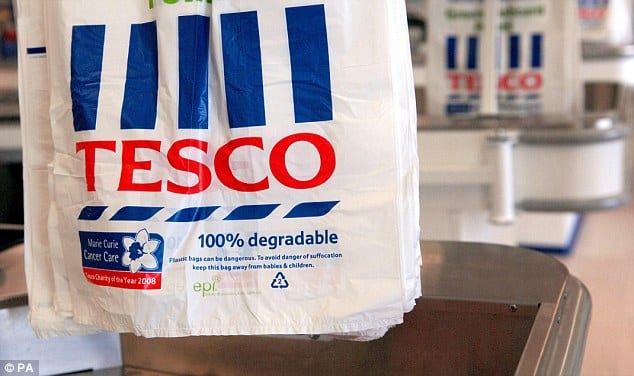
  • Tesco faces legal claims over worker conditions at Thai clothing factory

    Tesco faces legal claims over worker conditions at Thai clothing factory

    A group of 130 former employees at VK Garment Factory in Thailand are suing the supermarket and auditing specialists Intertek.

    The workers, represented by law firm Leigh Day in the UK, claimed that they were paid up to £4 a day, working seven days a week, and “trapped in a cycle of forced labour and debt bondage”.

    VK Garment Factory, which is located in Mae Sot, employs a workforce of predominantly Burmese migrant workers.

    The legal claim said that the unlawful practices were not identified, despite both Tesco and Intertek carrying out audits at the factory.

    Tesco conducted operations in Thailand from 1998 to 2020 but sold its Thai and Malaysia interests for £8bn at the end of 2020.

    A Tesco spokeswoman said: “Protecting the rights of everyone working in our supply chain is absolutely essential to how we do business. In order to uphold our stringent human rights standards, we have a robust auditing process in place across our supply chain and the communities where we operate.

    “Any risk of human rights abuses is completely unacceptable, but on the very rare occasions where they are identified, we take great care to ensure they are dealt with appropriately, and that workers have their human rights and freedoms respected.

    “The allegations highlighted in this report are incredibly serious, and had we identified issues like this at the time they took place, we would have ended our relationship with this supplier immediately. We understand the Thai labour court has awarded compensation to those involved, and we would continue to urge the supplier to reimburse employees for any wages they’re owed.”

  • Netflix denies accuracy of report that says its new ad-supported tier is off to a sluggish start

    Netflix denies accuracy of report that says its new ad-supported tier is off to a sluggish start

    According to data released by Antenna, Netflix’s new ad-supported monthly service is not off to such a great start. The lower-priced service launched on November 3rd and for the month, the “Basic with Ads” plan was responsible for only 9% of U.S. sign-ups in November. Last month, 0.1% of existing Netflix subscribers switched from another plan to the streamer’s ad-supported service.
    The data posted by Antenna shows that in the U.S. from May through October of this year, 29% of Netflix subscribers were signed up for the Premium service, 31% were members of the Standard tier, and 40% were subscribers to the Basic plan. At the end of last month, when the “Basic with Ads” service had been around for about four weeks, the plan made up 9% of Netflix’s total subscriber count in the states.
    The new ad-supported plan reduced the percentage of Premium subscribers to the platform by 14% to 25%. The Standard plan was hit the hardest as the percentage of U.S. Netflix subscribers signed up to that plan declined by 23% to 24% from 31%. The Basic tier actually added 3% to 41%. Antenna computes its numbers from millions of raw transaction records including online purchases, and credit and banking data.
    According to LightReading, Antenna “cleans and models” the raw data to compute the numbers you see in this article. But the Journal says that Netflix doesn’t believe that the data presented by Antenna is accurate. A Netflix official stated, “[it’s] still very early days for our ad-supported tier and we’re pleased with its launch and engagement, as well as the eagerness of advertisers to partner with Netflix.”
    Still, Netflix reportedly had to return some ad revenue back to advertisers after failing to meet viewing estimates for its “Basic with ads” service. This was the subject of a report published earlier this month by Digiday. According to unnamed agency executives, in some cases, Netflix delivered approximately 80% of the expected audience. “They can’t deliver. They don’t have enough inventory to deliver. So they’re literally giving the money back,” said one agency executive.
    Ted Sarandos, Netflix’s co-CEO, said at the UBS Global Technology, Media & Telecom Conference earlier this month, “Advertising for us is ‘crawl, walk, run.’ We just turned it on, and it works.” Calling advertising a “long-term initiative” for the streamer, the executive hinted that there will “likely” be more than one ad-supported tier of service available to Netflix customers in the future.
    The “Basic with ads” service is $6.99 per month. Netflix describes it this way: “Basic with ads is a great way to enjoy movies and TV shows at a lower price. You can stream your favorites on any device with limited ad breaks. This plan does not allow downloads and a limited number of movies and TV shows are not available due to licensing restrictions. Some location and device restrictions also apply.” Video streams in HD resolution with this plan.
    The Basic service is priced at $9.99 per month and while content is also available on just one supported device at a time, with Basic you can download content. Subscribers to the Basic tier see Unlimited movies, TV shows, and mobile games in HD resolution.
    There is a big jump between the $9.99 monthly cost for the Basic plan and the next tier up, Standard. The latter is priced at $15.49 per month and delivers content to two supported devices at a time in Full HD resolution. Subscribers can view Unlimited movies, TV shows, and mobile games and download them.
    For $19.99 per month, Netflix offers its top-tier service called Premium which allows content to be viewed by four supported devices at a time. The content, which includes Unlimited movies, TV shows, and mobile games, is streamed in Ultra HD resolution.
  • Google Voice update will put users on the best quality Cellular or Wi-Fi network automatically

    Google Voice update will put users on the best quality Cellular or Wi-Fi network automatically

    If you need a second number that will still ring through to your smartphone, you might consider the Google Voice app. Subscribers to the service can also make phone calls using this second number, and send/receive text messages. The second phone number could be used for personal calls, or if you have a business that you don’t want to have connected with your personal number, you can use the second phone number for that. This way, calls made to your business number will be sent directly to your smartphone even if you’re on the go.
    Using Google Voice for personal use is free anworks withth Android and iOS-flavored devices. It also will work on the web. As long as you use the phone number provided by Google to make or take a call once over a six-month period, you will keep that phone number for the following six months. Once you go more than six months without using the assigned number, it reverts back to Google to give out to another Voice subscriber.
    Besides using the app to make and take calls and send/receive texts, Google Voice will also save your voicemail. In fact, not only will it save your voicemail, Voice will also transcribe these messages and save the transcriptions or share them with others.
    If you are using Google Voice for business, pricing for the “Starter” tier is $10 per month per user with a 10-user maximum. Calls can be made to 10 domestic locations. The “Standard” tier with unlimited domestic calls will cost $20 per month per user with no cap on the number of users. And the Premier tier, which offers unlimited domestic and international calls, is priced at $30 per month per user with no cap on the number of users.
    Google has just made a useful change to Google Voice. According to a Google Workspace support page, “To ensure the best call experience, Google Voice now automatically switches ongoing calls between cellular data service and Wi-Fi when it determines that one network type will lead to better call quality. Previously, Voice identified the ideal network only at the time the call was placed and did not make any corrections for changes in network performance that might occur during the call.”
    In other words, before the update, if you were in the middle of a Google Voice call made over cellular and the call quality deteriorated, you were out of luck since you could not switch to a Wi-Fi connection in the middle of the call. But now, after the update, Google Voice will switch automatically to the network offering the best call quality. The new feature is now available to all Google Voice users.
    To install Google Voice tap this link for Android handsets and press on this link for iOS-powered phones.
  • Vietnam to become one of Apple’s main manufacturing hubs

    Vietnam to become one of Apple’s main manufacturing hubs

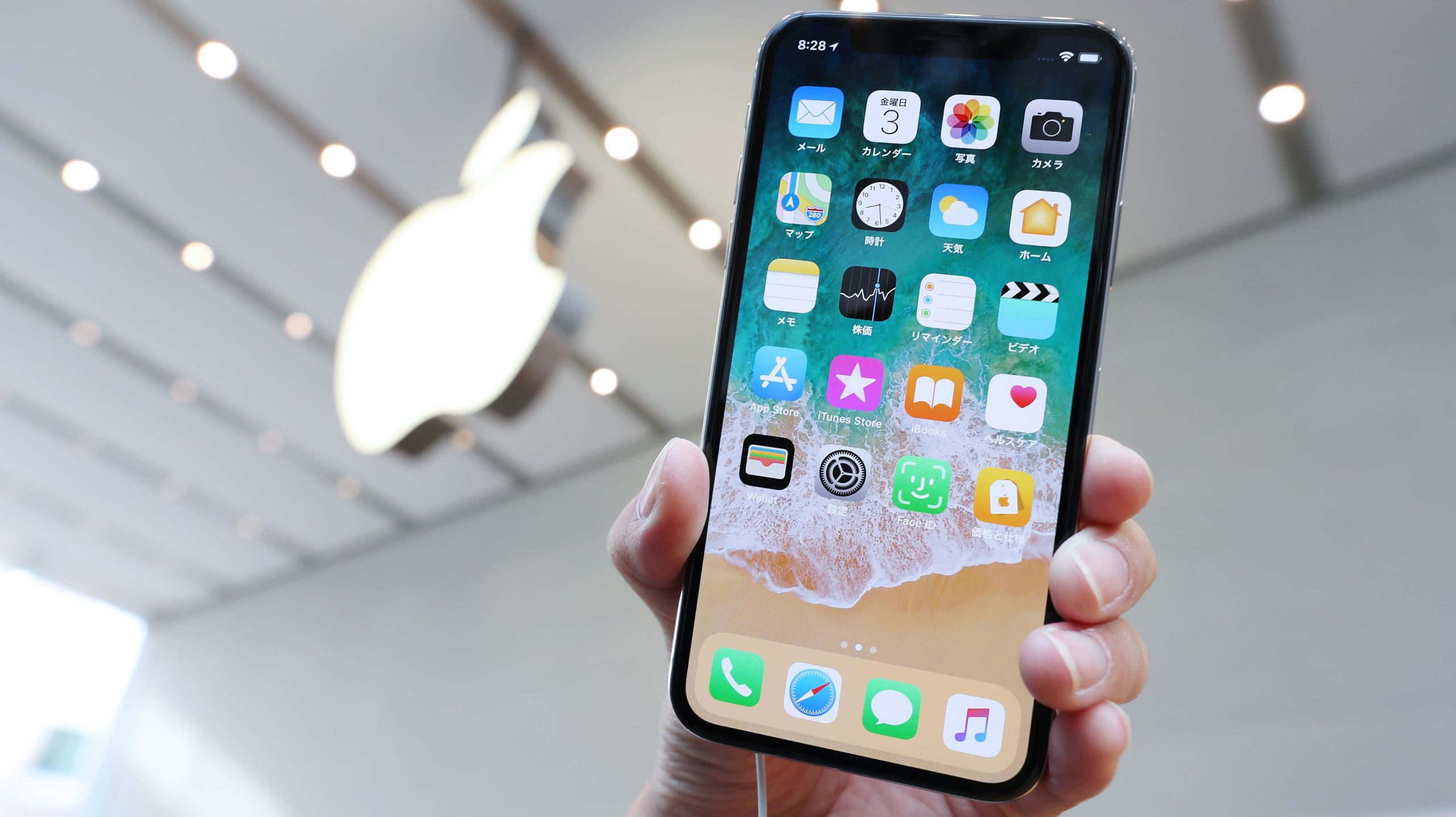
    India, Vietnam and Brazil could account for as much as 30% of Apple supplier’s Foxconn production in upcoming years as Apple seeks to diversify its supply chain out of China.

    Key electronics manufacturers are moving faster to diversify their capacity globally, taking advantage of local incentive policies, according to Counterpoint Research analysts Ivan Lam and Shenghao Bai as cited.

    “Led by Foxconn and Pegatron, companies have already invested in factories, production lines, relatively advanced manufacturing processes, and personnel training in India,” they wrote.

    The country’s vast population and high birth rate make it an attractive market for end-products as well as a manufacturing base, while Vietnam’s workforce offers lower labor costs than in China, they added.

    According to the report, Vietnam has attracted 21 Apple suppliers to operate in the country, though it lacks the ability to produce the all-important iPhone handset.

    Apple has reportedly tapped its top supplier, Taiwan’s Foxconn, to start making MacBooks in Vietnam as early as around May next year.

    The company has been working on plans to move some MacBook manufacturing to Vietnam for nearly two years, and has set up a test production line in the country.

    Vietnam will make 65% of Apple wireless AirPods by 2025 as the U.S. tech giant continues to shift its production away from China, JP Morgan analysts have forecast.

    The country would also reportedly account for 20% of iPad and Apple Watch output and 5% of MacBook.

    Foxconn, a key supplier, in August leased 50.5 hectares of land in Bac Giang Province and plans to build a $300-million factory there, employing 30,000 workers.

  • Gold prices inch up

    Gold prices inch up

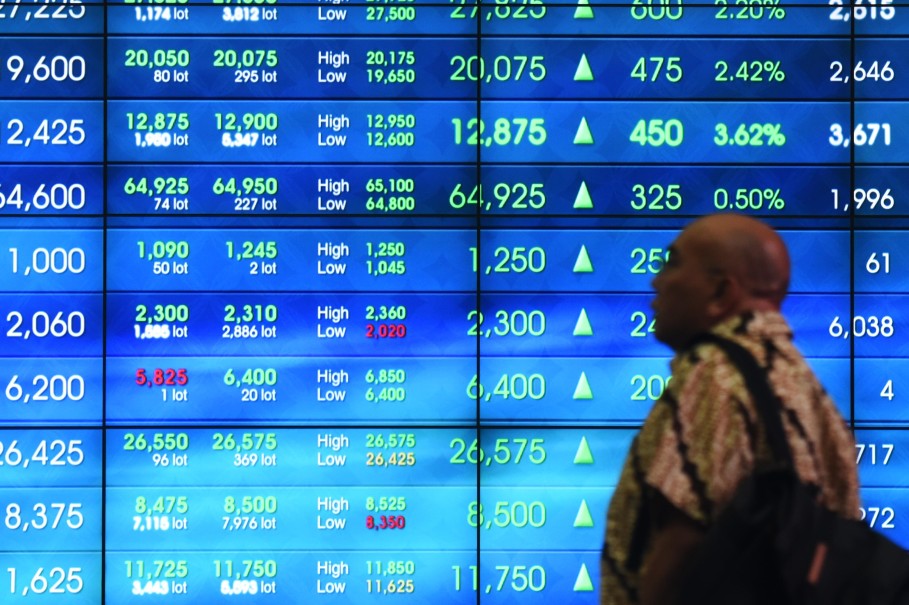
    SJC gold prices went up 0.22% to VND67.15 million per tael Tueday. Gold ring prices fell 0.09% to VND53.95 million. A tael equals 37.5 grams or 1.2 ounces.

    Global spot gold increased by 0.3% at $1,791.91 per ounce as the dollar dipped, although lingering worries about further interest rate hikes from the U.S. Federal Reserve kept the non-yielding bullion’s gains in check.

    European Central Bank Vice-President Luis de Guindos signaled the bank was determined to keep raising interest rates.

    Investors also took stock of news that in top bullion consumer China, Covid-19 is sweeping through trading floors in Beijing and spreading fast in the financial hub of Shanghai. The country reported five new Covid deaths for December 19.

    “If China brings back restrictions and if that were to happen over the holiday period, it is the perfect catalyst for large moves (in gold) to the downside,” Simpson added.

  • Apple to start MacBook production in Vietnam next year

    Apple to start MacBook production in Vietnam next year

    Apple’s MacBooks are set to be produced in Vietnam starting next year for the first time, the latest of several Apple products that will be shifted to the country.

    Apple has tapped its top supplier, Taiwan’s Foxconn, to start making the laptops in Vietnam as early as around May, sources said.

    “After the MacBook production shifts, all of Apple’s flagship products basically will have one more production location beyond China … iPhones in India and MacBooks, the Apple Watch and iPads in Vietnam,” one person with direct knowledge of the matter said.

    “What Apple wants now is an ‘out of China’ option for at least part of production for all of its products.”

    The company has been working on plans to move some MacBook manufacturing to Vietnam for nearly two years, and has set up a test production line in the country, the Japanese news outlet reported earlier.

    Vietnam will make 65% of Apple wireless AirPods by 2025 as the U.S. tech giant continues to shift its production away from China, JP Morgan analysts have forecast.

    The country would also reportedly account for 20% of iPad and Apple Watch output and 5% of MacBook.

    Foxconn, a key supplier, in August leased 50.5 hectares of land in Bac Giang Province and plans to build a $300-million factory there, employing 30,000 workers.

    Vietnam has been one of the fastest growing markets for Apple products this year, with especially high demand for iPhones.

  • Swiss Stock Exchange Gets Boost From China

    Swiss Stock Exchange Gets Boost From China

    After a record year for IPOs in 2021, the market for initial public offerings (IPO) cooled significantly this year. Yet Switzerland has been able to buck the trend.

    The Swiss stock exchange listed more companies than London and Amsterdam this year, while a recent EY study shows that globally the number of IPOs fell 45 percent from 2021, which was a record year for IPOs.

    The fourth quarter of 2022 was the weakest fourth quarter in more than 10 years, both in terms of numbers and proceeds, Tobias Meyer, head of transaction accounting and IPO services at EY in Switzerland said in the firm’s report.

    Yet, in Switzerland, the stock exchange SIX Group recorded 13 additions this year with a total volume of more than 3.8 billion Swiss francs ($4.1 billion), with 2.26 billion francs coming in the fourth quarter.

    The increase is due to a program launched by SIX and approved by the financial regulator Finma in July this year, allowing Chinese companies to list global depository receipts (GDRs) on the Swiss exchange.

    In 2022, significantly more companies went public on the Swiss stock exchange than in 2021, in particular, due to GDR listings by Chinese companies, Meyer is quoted as saying.

    However, the Chinese listings have failed to attract European investors, or even Western banks at scale, as reports. Chinese banks are pitching these listings as arbitrage opportunities where they sell new stock listings in Zurich back to shareholders in China at a discount, the outlet wrote, quoting a BNP Paribas equities expert.

    The expert also said that in future larger, more liquid offerings would transpire.

    Yet, looking ahead globally, there are no signs of a change in sentiment on the IPO market due to the difficult market environment and geopolitical tensions, with EY’s study showing that companies were still holding back on their IPO plans.

    Nonetheless with interest rate rises slowing and volatility declining, IPO activity could pick up in the second half of next year, Meyer said.

    Citigroup investment bankers recently came to a similar conclusion, saying that the second half of next year could see an increase in IPO activity when pent-up deals materialize.

  • Top UBS Banker Departing

    Top UBS Banker Departing

    A banking veteran who shaped UBS’s wealth management is leaving.  Joe Stadler is leaving UBS at the end of 2023 for retirement, citing anonymous sources.

    Stadler, the architect of UBS’ family office business and once considered one of the most influential people within the world’s largest private bank, has announced his departure at a time when the business is making a comeback.

    The same anonymous source communicated that the business with rich Eastern Europeans, burdened by sanctions against Russia and under Caroline Kuhnert will be integrated into the Europe region led by Christl Novakovic. Kuhnert, however, will remain with the big bank.

    Earlier this year, UBS reorganized its global family office division by bringing it into the newly formed global family and institutional wealth (GFIW) unit under George Athanasopoulos, to combine various services including Lombard lending, trading, hedge fund services (prime brokerage) and private market activities.

    As part of the revamp, Stadler was appointed executive vice chair to global wealth management (GWM) head Iqbal Khan, effectively sidelining him.

  • Zwei Wealth Adds an Experienced Wealth Manager

    Zwei Wealth Adds an Experienced Wealth Manager

    Zwei Wealth seeks to become the family office in your pocket. An experienced wealth manager joins the Zurich-based wealth advisor.

    Daniel Hug becomes a partner of the wealth advisor Zwei Wealth co-founded by former UBS chief economist Klaus Wellershoff, the firm announced Tuesday.

    As wealth officer, he manages client mandates at his new employer, using his expertise in serving ultra-high net worth individuals (UHNWI) and family offices, helping to expand the firm’s footprint.

    Like many Zwei Wealth partners, Hug looks back on a long career at UBS where he worked in wealth management as managing director for multi-family offices and in corporate banking as head of Western Europe for banks and regulated brokers. Starting in 2015, he was responsible for the high-net-worth private client segment at Liechtenstein’s LGT private bank.

    Zwei Wealth further announced that the firm has already hired 20 new advisors this year.

  • Delgados Tequila Soda teams up with UFC

    Delgados Tequila Soda teams up with UFC

    UFC, the world’s premier mixed martial arts organization, today announced Delgados Tequila Soda as the Official Tequila Soda of UFC in Australia and New Zealand.

    The partnership will comprise of year-round activity across Australia and New Zealand, including live event integration at two UFC events in the region and VIP Sweepstakes featuring highly in-demand tickets to UFC 284: MAKHACHEV vs. VOLKANOVSKI as well as UFC event viewing parties.

    “We are absolutely delighted to welcome Australia’s Tequila Soda pioneers Delgados into the UFC fold as the Official Tequila Soda of UFC across Australia and New Zealand,” said Nick Smith, Vice President of Global Partnerships, UFC. “This partnership has culture and lifestyle at its core, and we cannot wait to introduce our fans to this refreshing drop and the ‘Sin Problemas’ ethos.”

    Brought to you by Superdrop, Delgados Tequila Soda has pioneered the Tequila Soda category in Australia. It combines Mexico’s finest blue agave tequila, soda water, and natural ingredients.

    The young tequila brand aims to transport tequila lovers to the ultimate Mexican getaway, bringing the 60s retro vacation vibes right into the palm of your hand.

    “We are thrilled to partner with the cultural juggernaut that is UFC, and we’re beyond excited to introduce their loyal fans to our delicious and refreshing tequila ready-to-drink beverage, Delgados Tequila Soda,” said Ewen Pettit, Director, Superdrop.

    “Just like our product, UFC is as real as it gets. We have a full calendar of events, activations and promotions that will truly connect with our drinkers and UFC fans. We can’t wait to get started, as all roads lead to Perth in February for UFC 284.”

    UFC fans can get their hands on a Delgados Tequila Soda in three flavours: Grapefruit & Jalapeno; Lime & Basil; and Pineapple & Ginger… all a perfect match up for your UFC Sundays over the coming months.

  • Ugly Vodka seeks to tackle Australia’s fruit waste one bottle at a time

    Ugly Vodka seeks to tackle Australia’s fruit waste one bottle at a time

    This latest venture was created in collaboration with independent Australian music and events company, Untitled Group, and has sustainability at its core, seeking to help address food wastage, support local farmers and reduce carbon emissions.

    Ugly Vodka is made using apples that are rejected from sale at supermarkets simply because of their ‘ugly’ look. According to Horticulture Australia, this problem impacts around a quarter of all produce – 25 per cent of crops don’t leave the farm due to aesthetic reasons. Ugly Vodka has been making an impact in this issue already, with its first batch alone saving approximately 20 tonnes of ‘ugly’ apples from going to landfill where they would produce methane emissions.

    “Thanks to campaigning from eco-groups in Australia, food waste is an issue that is top of mind – people understand what ugly produce is, and what impact it has on our environment,” says Shane Barrington, Director at 80Proof.

    “Our vodka directly supports Aussie farmers at a time when drought, hail storms and extreme weather events are hitting them hard. On top of all that, we are climate negative and are actively trying to reduce wastage in every area of our supply chain from product to bottles.”

    In an effort to minimise the brand’s carbon footprint, all parts of Ugly Vodka, except the glass bottle, are produced and sourced within 80Proof’s home state of Victoria.

    Apples are sourced from the Goulburn Valley, with the juice five-times distilled with premium grain vodka then passed through an activated coconut carbon filter to maximise smoothness. The end result is a premium spirit perfect for mixed drinks and cocktails.

    The process to creating this high quality vodka was not a short one though. One of the founding partners of 80Proof grew up in the Goulburn Valley and saw the issue surrounding ‘ugly’ produce first hand, noting that up to 40 per cent of fruit was not deemed sellable solely due to aesthetics. After years in the industry, he revisited the area to discuss the idea to turn this fruit into alcohol.

    “Technically the idea has been in fruition and development for five years. However, we’ve only been full-time on the project for 18 months. There has been plenty of trial and error as no one has tried making traditional vodka from Australian ugly apples before,” said Jess Conti, Co-founder of 80Proof.

    Ugly Vodka launched to consumers online this week, and will be available to the trade in late January. In the meantime it will see a major event launch, being poured at Untitled Group’s Beyond The Valley Festival later this month to a whopping 35,000 attendees.

  • Barilla takes the plastic out of its blue-box range

    Barilla takes the plastic out of its blue-box range

    We decided to get rid of the plastic window we had on our boxes to move towards a more sustainable solution and reduce the number of materials used for our packaging. This allowed us to avoid placing unnecessary plastic on the market, amounting to around 126.000 kg of plastic per year*.

    Although the window on our boxes wasn’t limiting the recyclability of our packs—as modern recycling systems can differentiate—we opted for a more sustainable one: as we will always look at how we can become even more sustainable at Barilla.

  • Gold prices inch up

    Gold prices inch up

    SJC gold prices went up 0.22% to VND67.15 million per tael Tueday.

    Gold ring prices fell 0.09% to VND53.95 million. A tael equals 37.5 grams or 1.2 ounces.

    Global spot gold increased by 0.3% at $1,791.91 per ounce as the dollar dipped, although lingering worries about further interest rate hikes from the U.S. Federal Reserve kept the non-yielding bullion’s gains in check, Reuters reported.

    European Central Bank Vice-President Luis de Guindos signalled the bank was determined to keep raising interest rates.

    Investors also took stock of news that in top bullion consumer China, Covid-19 is sweeping through trading floors in Beijing and spreading fast in the financial hub of Shanghai. The country reported five new Covid deaths for December 19.

    “If China brings back restrictions and if that were to happen over the holiday period, it is the perfect catalyst for large moves (in gold) to the downside,” Simpson added.

  • Thai coffee chain Café Amazon struggles to expand in Vietnam

    Thai coffee chain Café Amazon struggles to expand in Vietnam

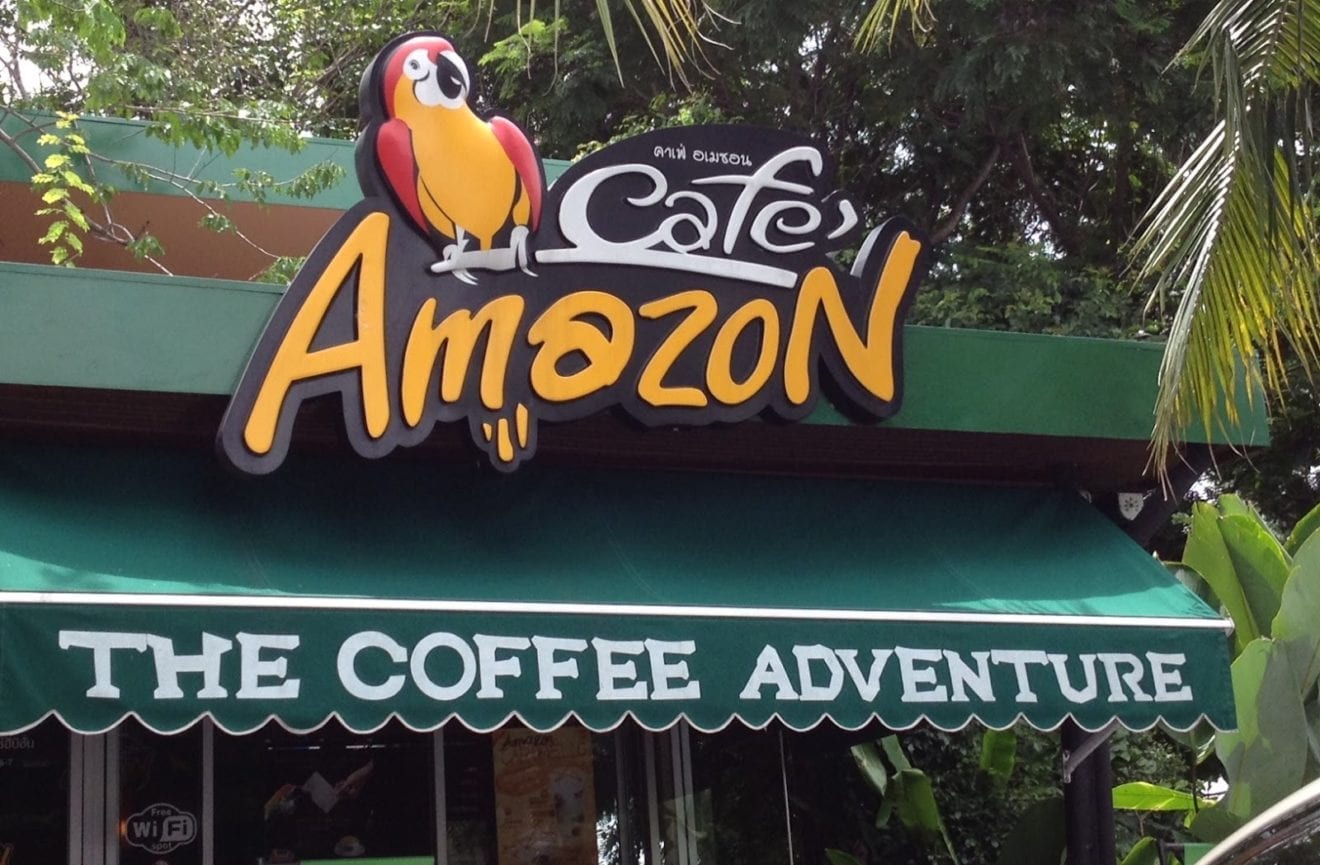
    Thai coffee chain Café Amazon, which entered Vietnam two years ago, has been slow in expanding due to intense competition and the Covid-19 pandemic stymieing its plans.

    With 15 outlets mostly in Ho Chi Minh City and some southern localities, it remains a world away from its biggest competitor, Highlands Coffee, which has 573 across the country.

    Café Amazon hopes to have 20 stores by the end of this year, none in the north.

    Other competitors The Coffee House has 153 stores, Phuc Long has 118 stores and 1,062 kiosks and small outlets and Trung Nguyen Legend has 95 stores and 572 E-Coffee outlets.

    In contrast, in Thailand, Café Amazon had over 3,400 stores as of mid-2021.

    “Everyone knows the Vietnam food and beverage market is difficult and so we are in the process of opening new stores while researching into Vietnamese consumption habits,” A-Tathak Srinon, marketing director of Café Amazon Vietnam, said.

    The Vietnam operation is 60% owned by Thai state-owned oil and gas firm PTT Public Company Ltd and 40% by retail giant Central Group.

    Its first store opened in the southern province of Ben Tre in October 2020, followed soon after in two other southern localities.

    But with Covid raging in 2021, restrictions were in place year-long, which included F&B businesses having to close for months.

    Besides, it has been unable to open coffee shops at gas stations, a strategy that has underpinned its success in Thailand, where most of its outlets are in PTT Oil fuel stations.

    Srinon said Vietnamese gas stations are smaller than in Thailand and not suitable for setting up coffee shops.

    The chain is therefore is focusing on its menu to distinguish itself from other competitors, he said.

    Last week it launched three new drinks with a distinctly Thai taste, including one called Tom Yum Ice Tea.

  • Dollar moves up at most banks

    Dollar moves up at most banks

    On Monday, the U.S. dollar went up against the Vietnamese dong at most banks and the black market.

    Vietcombank sold the dollar at VND23,800, up 0.34% from Saturday.

    Eximbank sold the greenback at VND23,770, up 0.30%.

    The rate at Techcombank is VND23,800, up 0.21%, and at ACB is VND23,900, up 0.42%.

    The State Bank of Vietnam (SBV)’s reference rate is at VND23,645, down 0.02%.

    The dollar is sold at VND24,100 on the black market, up 0.27%.

    The greenback has gained over the dong by 3.84% since the beginning of the year.