Author: Mei Ling Tan

  • Refresco expands into Australia with Tru Blu acquisition

    Refresco expands into Australia with Tru Blu acquisition

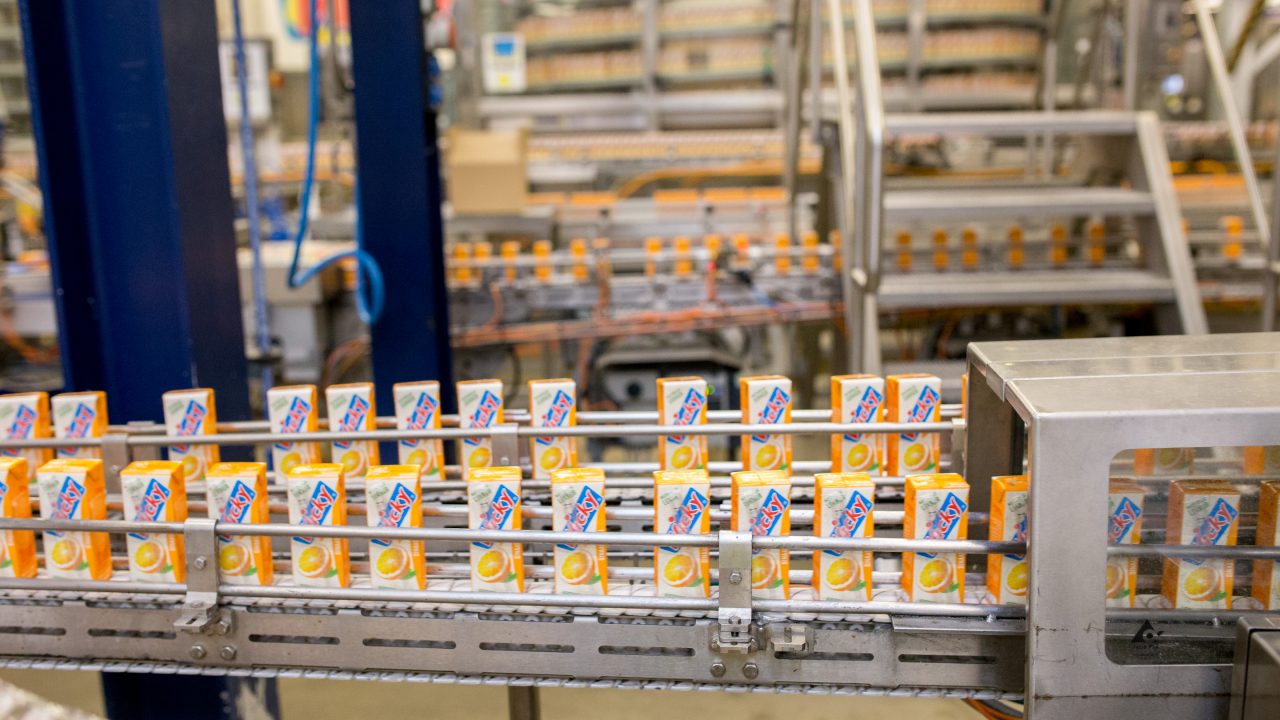
    Refresco Group, the global independent beverage solutions provider for Global, National and Emerging (GNE) brands and retailers in Europe and North America, today announces it has entered into an agreement to acquire Tru Blu Beverages Pty Ltd. (“Tru Blu Beverages”), one of Australia’s leading manufacturers of non-alcoholic beverages. This transaction is subject to regulatory approval.

    “Today’s announcement is a testament to our proven Buy & Build strategy. We started with one factory in Europe just over two decades ago and steadily built a diversified, pan-European platform. Only six years ago, we took our first step into North America. We now operate over 70 manufacturing sites globally, with just about half of those located across North America and the rest throughout Europe, offering a full range of beverage solutions to a broad customer base.

    The acquisition of Tru Blu Beverages in Australia creates a new platform for Refresco, in line with our strategic promise to expand into a third continent. The three strategically located manufacturing sites are the starting point for our future footprint in the region. Acquiring Tru Blu Beverages further strengthens our position as beverage solutions provider to branded customers and leading retailers globally, and provides new opportunities for further growth.”

    “By joining Refresco, our customers, suppliers and employees will be able to benefit from the Company’s broad capabilities, experience and expertise. We are proud to become part of the Refresco family, with its strong entrepreneurial spirit and passion to deliver quality service to its customers. Tru Blu Beverages’ leading capabilities and blue-chip customer base gives Refresco a solid entrance into the Australian market. We look forward to building an even stronger platform together.”

    The acquisition of Tru Blu Beverages expands Refresco’s addressable market and provides opportunities to leverage Refresco’s size and scale, as well as its track record of successfully integrating companies. Tru Blu Beverages fits right into Refresco’s business model, with its wide range of beverage solutions for retailer brands and global, national and emerging brands. In addition, Refresco’s strategic ESG agenda will enable Tru Blu Beverages to accelerate its efforts of minimizing the environmental impact of manufacturing processes, packaging and transport.

    Refresco obtains a national Australian market position by acquiring Tru Blu Beverages, with opportunities to drive continued growth in the region, both organically and through acquisitions.

    Refresco intends to continue expanding its global and strategically located footprint to better serve existing and new customers through a range of formats and channels. We will continue to make selective investments and acquisitions, targeting value-accretive opportunities.

  • Red Bull owner Dietrich Mateschitz dies aged 78

    Red Bull owner Dietrich Mateschitz dies aged 78

    Considered to be the richest man in Austria, the entrepreneur built a global empire around the energy drink.

    Mr Mateschitz’s fortune is estimated at around €25bn (£21.8bn), putting him 51st on Forbes’ list of the world’s richest people.

    Formula 1 praised his “unforgettable contribution” to the sport and said he leaves behind a “lasting legacy”.

    Little is known about Mr Mateschitz’s private life – he was publicity shy and rarely gave interviews.

    After graduating from the University of World Trade in Vienna, he worked as a marketing specialist for various companies in the 1970s.

  • French Refinery Strike Further Hits Petrol Supplies

    French Refinery Strike Further Hits Petrol Supplies

    Petrol supplies at French service stations fell further over the weekend due to a weeks-long strike at oil major TotalEnergies, Prime Minister Elisabeth Borne said on Sunday, prompting possible further requisitioning of services.

    President Emmanuel Macron’s government is facing mounting social unrest due to high inflation, with thousands protesting on Sunday against soaring prices and several trade unions calling for a general strike.

    “We’re at about 30% of the stations that have a supply problem on at least one of the fuels,” Borne said in an interview on French TV channel TF1.

    Energy ministry data on Saturday showed 27.3% of French petrol stations were facing supply problems, down from 28.5% the previous day and 30.85% on Wednesday, when requisitioning started.

    Under the requisitioning plan, some workers are ordered to go back to work to guarantee the resumption of minimum services.

    “If there are very tense situations tomorrow… we will also carry out requisitioning,” Borne said.

    “There is a wage agreement that has been signed by organisations representing the majority of employees (at TotalEnergies),” Borne said.

    “(Workers) have to go back to work.”

    Borne said the general discount on fuel prices at service stations that it introduced in response to the surge in global oil prices would be extended to mid-November.

    The discount of 30 cents per litre was previously due to be reduced to 10 cents on Nov. 1.

    The prime minister added she had talked with TotalEnergies  CEO Patrick Pouyanne and that he had agreed to extend the company’s additional discount of 20 cents per litre.

    The country’s refinery strike, led by the hardline CGT union, is also emboldening the political opposition, likely leading the government to use special constitutional powers to pass its 2023 budget bill, Borne said.

    The government is set to use special constitutional powers that would allow it to bypass a vote in parliament, Borne said.

    Opposition parties would be likely to respond with a motion of no confidence, which would likely fail but would nonetheless be damaging as the government seeks to build bridges for planned pension reform.

    Lacking a sound majority to pass the bill through a regular vote, the government decided to use the special powers, decried by opponents as being undemocratic, to avoid the humiliation having the country’s tax-and-spend law voted down.

  • TSMC suspends production of powerful GPU chip for Chinese tech firm

    TSMC suspends production of powerful GPU chip for Chinese tech firm

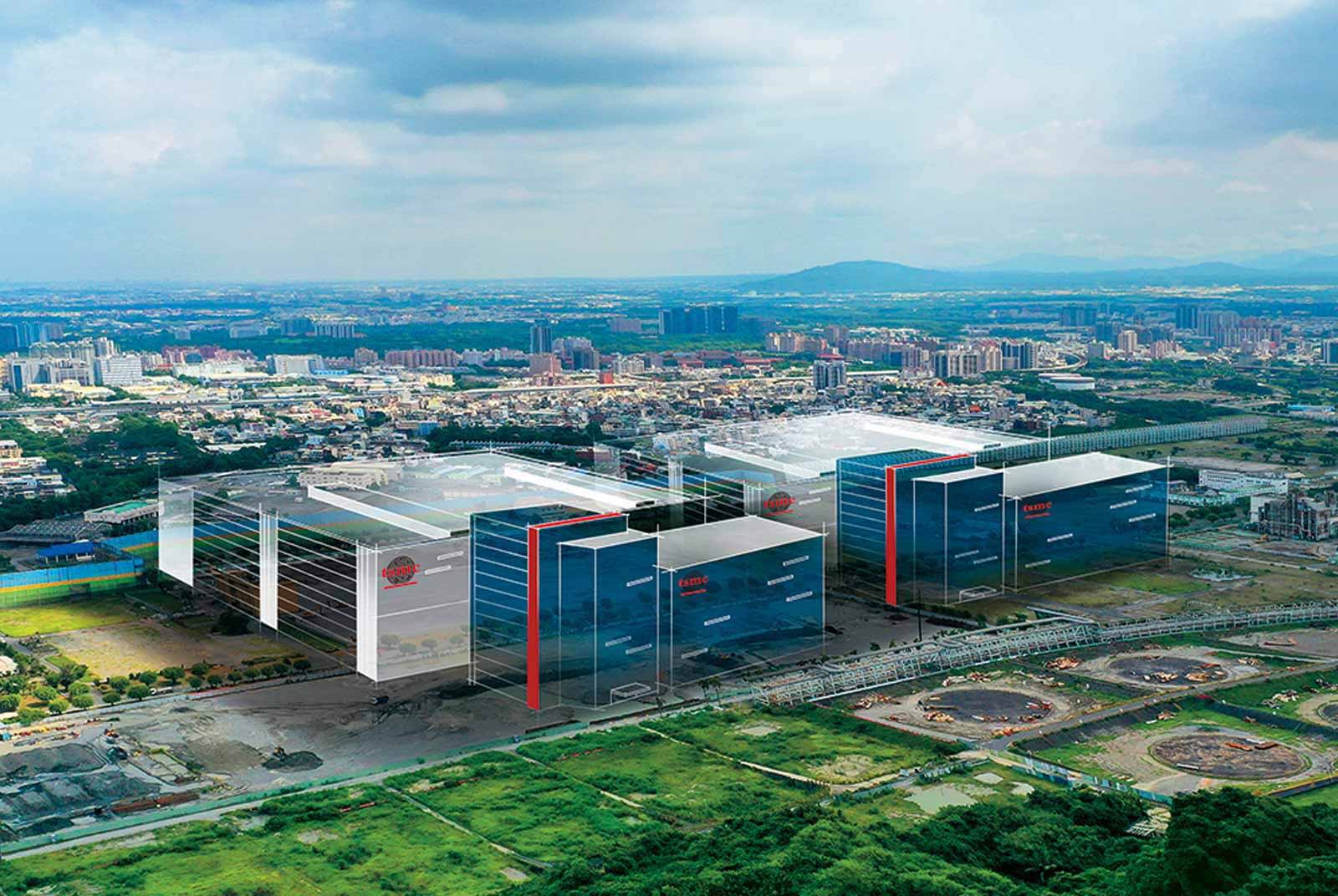
    Taiwan Semiconductor Manufacturing Company Ltd. is known throughout the planet as TSMC. The largest foundry in the world produces chips based on the designs presented to it by companies like Apple, Qualcomm, Nvidia, MediaTek, and more. In fact, Apple is TSMC’s largest customer and accounts for approximately 25% of the company’s revenue.
    TSMC currently produces powerful and energy-efficient chips such as the Apple A16 Bionic found inside the iPhone 14 Pro series, and the Qualcomm Snapdragon 8+ Gen 1 found in newer high-end Android phones including the Samsung Galaxy Z Fold 4, Galaxy Z Flip 4, and the Motorola Edge 30 Ultra. TSMC has suspended production for Chinese start-up Biren Technology.
    The reason for halting production for this company is that TSMC is following U.S. regulations that prevent it from making chips for the Chinese-based firm. Part of the reason for this is that Biren’s products outperform Nvidia’s A100 Graphics Processing Unit (GPU) silicon based on what the English language South China Morning Post calls “information in the public domain.” The U.S. is trying to keep cutting-edge chips away from China.
    This past September, the U.S. ordered that Nvidia stop shipping the A100 chip to China to “…address the risk that products may be used in, or diverted to, a ‘military end use’ or ‘military end user’ in China.” The A100, according to Nvidia, is used to “power the world’s highest performing elastic data centers for AI, data analytics, and high-performance computing (HPC) applications.”
    The U.S. Commerce Department last month expressed a goal to “keep advanced technologies out of the wrong hands.” China called it a “tech blockade.” At the same time, commerce ministry spokesperson Shu Jieting said that “the U.S. continues to abuse export control measures to restrict exports of semiconductor-related items to China, which China firmly opposes.”
    Biren was trying to raise funds earlier this year at a valuation of $2.7 billion. The company designs its BR100 and BR104 processors to be competitive with GPUs designed by Nvidia and AMD that work with AI and Machine Learning models and algorithms.
    TSMC itself isn’t sure that Biren’s chips are covered by U.S. regulations but has decided to halt their production anyway. Biren, of course, says that its AI chips are not covered by U.S. export restrictions. A TSMC spokesperson made a limited statement noting that the foundry complies with all relevant rules. The U.S. Commerce Department’s Bureau of Industry and Security (BIS) announced new semiconductor restrictions on October 7th.
    A spokesperson for the U.S. Commerce Department said, “While BIS cannot comment on company-specific actions, we expect all companies to comply with export controls. Since the rule’s release on October 7, BIS has been undertaking a vigorous outreach effort to educate those impacted by it to aid compliance efforts.”
    One of the Biren GPU chips that TSMC was going to produce for the company was the BR100 GPU which was manufactured using TSMC’s 7nm process node and features 77 billion transistors in each chipset. This particular component was said to be 2.8 times faster than Nvidia’s A100.
    Export rule changes have been used before to restrict the distribution of silicon to China. A restriction announced by the U.S. Commerce Department in 2020 prevents foundries using American technology to manufacture advanced chips from shipping these chips to Huawei. The latter is considered a national security risk by both major political parties and the restriction has forced Huawei to abandon its own Kirin 5G Application Processor (AP) chips. Its current flagship Mate 50 and Mate 50 Pro handsets are powered by the Snapdragon 8+ Gen 1. While this is Qualcomm’s current top-of-the-line mobile AP chipset, the chip sold to Huawei is tweaked to prevent it from working with 5G networks.
  • YouTube removes 2,000 animated Vietnamese videos for copyright violation

    YouTube removes 2,000 animated Vietnamese videos for copyright violation

    Nearly 2,000 Wolfoo videos about the animated wolf and his family have been removed by YouTube for copyright violation, causing losses of around US$2 million for their Vietnamese producer.

    Between June and October the three YouTube channels, Wolfoo Family, Wolfoo Channel and Wolfoo’s Story potentially each lost 2-3 billion views, according to social media data provider Social Blade. This caused the company losses of $2 million, and “The damage is increasing every hour,” it said.

    Sconnect said YouTube removed the videos following a demand by the UK’s Entertainment One, the producer of Peppa Pig, an animated series about a pig and his family.

    “Entertainment One has falsely identified our videos as a product derived from Peppa Pig and filed their complaints to YouTube, which accepted all their copyright claims and deleted Wolfoo videos.”

    YouTube allows users to seek the removal of videos they deem a violation of its policies.

    The fact that YouTube removed the videos showed that its request was “per the procedures as prescribed” by the platform, eOne said.

    YouTube said Saturday it never acts as an intermediary to resolve conflicts between two parties and only provides a tool for users to protect themselves.

    Content owners are provided with a tool to protect their videos while users are provided with a tool to report copyright violations, it added.

    Sconnect said 195 Wolfoo videos are no longer restricted, but nearly 2,000 others remain flagged and restricted.

    Nguyen Xuan Cuong, deputy chairman of the Vietnam Digital Communications Association, said YouTube’s removal of nearly 2,000 Wolfoo videos has caused great damage to Sconnect.

    All parties involved should contribute to the case so that it could be a learning experience for other Vietnamese businesses of cross-border services. Sconnect was launched in 2014 as a social media video platform. It has a total of 56 million subscribers to its 19 channels and 18 billion views. Peppa Pig debuted in 2004 on TV before being uploaded on social media platforms.

    Sconnect recently filed a lawsuit against the British company for unfair competition, claiming losses of nearly $292,000 as a result.

    It had been sued by the latter in January in Russian and British courts for intellectual property infringement, claiming Wolfoo is a “reworked” version of the Peppa Pig characters. But the Moscow City Court ruled against eOne. Immediately the company withdrew all claims.

    Sconnect said during the legal battle eONE had used the unresolved lawsuit to copyright “Wolfoo” videos on YouTube.

  • Mobile virtual network operators hold 1% market share

    Mobile virtual network operators hold 1% market share

    With over one million subscribers, the country’s three mobile virtual network operators, who piggyback on large telecom companies, have a market share of 1%.

    iTel, Reddi and Local do not have their own infrastructure or radio frequencies and instead pay to use VinaPhone, Viettel, MobiFone, Vietnamobile, or Gtel’s.

    iTel, which depends on VinaPhone’s infrastructure and frequencies, has one million subscribers, according to the Ministry of Information and Communications.

    It reported revenues of VND442 billion ($18.4 million) this year, 4.5 times the whole of last year’s, and profits of VND28 billion.

    Reddi, which has nearly 50,000 subscribers, saw sales of VND15 billion. It had losses of VND27.8 billion and VND55.9 billion in 2020 and 2021.

    Local, which launched its services in mid-2022, focuses on providing low-cost data packages, which are preferred by young people.

    In April Digilife Vietnam Digital Services Company received a mobile virtual network operator’s license but has yet to begin offering services.

    Such companies focus on attracting customers interested in large data packages at reasonable charges such as workers, students and foreign tourists.

    Vietnam had nearly 120 million mobile phone subscribers, including some 93.7 million using smartphones, according to the ministry.

  • Brewer Sabeco profits up 75% in 9 months

    Brewer Sabeco profits up 75% in 9 months

    Vietnam’s biggest brewer Sabeco gained after-tax profits exceeding VND4.42 trillion ($1=VND24,800) in the first nine months of 2022, a year-on-year surge of 75%.

    Sabeco’s revenues surpassed VND25.1 trillion, up 44% on-year, according to its latest financial statements. Meanwhile, the firm spent over VND1.8 trillion on advertisements and promotions.

    In the third quarter, Sabeco made revenues of over VND8.635 trillion, doubling last year’s figures, and after-tax profits of more than VND1.3 trillion, nearly treble the previous amount.

    Bao Viet Securities said the brewer’ beer selling prices would increase 10% this year against 2021, amid room for Vietnam’s beer industry to grow.

    The country produced over 4.3 billion liters of beer in the first nine months, up nearly 36% against the same period last year, and up 15.5% against the same period of 2019, the pre-Covid period, according to the General Statistics Office.

    Vietnam is the biggest beer consumer in Southeast Asia and the ninth biggest in the world, according to Japanese drinks company Kirin Holdings, with demand likely to grow further as a large young population reaches adulthood, Nikkei reported.

  • Globe Deploys 252 More 5G-Ready Cell Sites on Philippines’ Southern Island

    Globe Deploys 252 More 5G-Ready Cell Sites on Philippines’ Southern Island

    Globe announced it has deployed 252 5G-ready cell sites on the Philippines’ southern island of Mindanao. The telco giant’s scaled-up deployment of 5G wireless technology across the country has yielded 933 cell sites in the first half of 2022.

    As of June 30, Globe’s 5G network had reached 85.8% of key cities in Visayas and Mindanao and 96.6% in the National Capital Region in terms of 5G outdoor coverage.

    Data showed a steady hike in 5G usage in Mindanao, particularly in Davao City, which almost tripled in June from the January figures. Likewise, hefty increases were registered in June by Cagayan de Oro and the town of Libona.

    Nationwide, Globe saw a 73.4% increase in 5G data traffic from January to June this year.

    “We continue to invest in the latest mobile technologies like 5G as part of our commitment to bring better mobile experiences that can uplift the lives of our customers no matter where they are in the country,” said Darius Delgado, head of Globe’s consumer mobile business.

    So far, Globe has already spent more than half, or 50.5 billion pesos, of its 89 billion-peso budget for capital expenditures this year. It was used to build new cell sites, upgrade existing sites to 4G/LTE, accelerate the rollout of 5G connectivity and ramp up the fiberization of Filipino homes nationwide, as part of Globe’s commitment to the United Nations Sustainable Development Goals.

    By the end of the first half of 2022, the number of devices serviced by Globe’s 5G network had increased by 52.6%, to 2.7 million, from 1.62 million in January.

    Globe 5G has fiber-fast download speeds of up to 156.84 Mbps (nationwide average) and even higher in Metro Manila at 167.63 Mbps on average as of May this year. These speeds peak at 342.7 Mbps nationwide and 347.2 Mbps in the capital region.

  • Swiss Banks Face a Tense Future in China

    Swiss Banks Face a Tense Future in China

    President Xi Jinping’s report to the 20th Communist Party congress hints at more tax and regulatory measures aimed at reducing wealth disparities.

    In the last two decades, the Swiss wealth management sector has been forced to directly confront and contend with the vagaries of the world’s two largest economies in the world – China and the US.

    In the case of the US, it has been anything but a delicate balancing act. Most of the wealth management industry has been manhandled into coughing up material fines for abetting tax evasion attempts by American citizens.

    China has been different. The wealth management sector has seen the country as the greatest new market of our time. For decades, bankers have returned wide-eyed from trips to Beijing and Shanghai, effusively spouting about this wide-open, boundless future full of promise. Many have been able to benefit copiously, from the unheard-of growth rates that country has experienced since the turn of the millennium.

    The two major Swiss banks have built onshore presences. And the smaller private banks and wealth managers that haven’t can still catch any passing outflows from the wealthy Chinese with their booking centers in the proximate cities of Hong Kong and Singapore.

    Although the political and economic differences between the US and China are indescribably wide, there is one striking similarity. They both tax citizens on their worldwide income. In China, almost all nationals are defined as being domiciled in China unless they live in Hong Kong, Macau, or Taiwan.

    That similarity could be a very significant inflection point for private banks and wealth management. And that looks likely to continue unhindered, at least according to President Xi Jinping’s report to the 2022 party congress on Sunday. In a translated transcript published by Nikkei Asia that was provided to journalists covering the event, he indicated:

    We will enhance the roles of taxation, social security, and transfer payments in regulating income distribution. We will improve the personal income tax system and keep income distribution and the means of accumulating wealth well-regulated. We will protect lawful income, adjust excessive income, and prohibit illicit income.

    That message has already been made very clear to China’s celebrities and influencers who were fined late last year for tax evasion.

    It is going to be very tough going for anyone trying to bank what many would consider the core target client base for a wealth manager or a private bank.

    That view seems to be borne out more generally, with Hong Kong’s daily English newspaper, the South China Morning Post , writing on Thursday that the wealthy Chinese could face a rocky road ahead.

    All of this, taken together, puts wealth managers in a double bind. Not only are they going to have to parse carefully and regularly review and re-review their client base for possible tax discrepancies, but they are going to have to go to pains to make sure that they are not making anyone excessively wealthy, at least not in the eyes of the Chinese government.

    What that means in practice is anyone’s guess. But for an industry traditionally known for privacy and discretion, it is a very big ask.

  • Signs of Slowing at UBS

    Signs of Slowing at UBS

    Over the past two weeks, the balance sheets of major US banks have provided clear indicators of where international banking is headed. It is unlikely that UBS will be able to escape the global market trend.

    Rising interest rates and the continued weakness of financial markets will have shaped the course of business at UBS in the third quarter. Yet, the developments are partly contradictory.

    While in global wealth management, the higher interest margin is expected to have a positive impact, weakening asset valuations might weigh on total assets under management.

    As recently as September, wealth management head Iqbal Khan spoke of positive development in net new money inflows in the third quarter. He referred to the slowdown in the second quarter as an “anomaly.” The bank set a target of increasing net inflows of fee-generating assets by more than five percent over the cycle.

    The slump in mergers and acquisitions and significantly lower issuance activity are also likely to have weighed on investment banking at UBS. ZKB analyst Michael Klien expects profits to slump by around 60 percent in this area.

    Profits in asset management and personal & corporate banking are also likely to be significantly lower than in the same period last year, although the latter is expected to show the smallest drop. Provisions for credit risks, which have grown due to the economic trend and rising interest rates, are still variable.

    It will be interesting to see how new offerings such as Key4 or the Circle One platform launched in Asia are received by customers.

    At the bank’s half-year results, CEO Ralph Hamers confirmed its outlook, saying that the growing uncertainty caused by the Ukraine war, energy prices, inflation and rising interest rates would likely affect customer activity.

    The bank is likely to stick to its strategy of reducing costs and digitalization. Technology is needed to improve both the interaction with customers and the bank’s own way of working.

  • How to Manage Supply Chain Disruptions

    How to Manage Supply Chain Disruptions

    As we have seen over the past few months, while facing numerous global crises caused by countless factors such as political tensions, environmental disruption, financial instability and biological risks, we also learnt an essential lesson about today’s business landscape, which is that many companies are not entirely well prepared to withstand or even recover from the supply chain disruptions that are occurring nowadays. Many companies currently suffer from a lack of the right level of visibility over their supply chains to effectively prevent, identify and mitigate disruptions. In addition, their IT infrastructures and supply chain management strategies are not sufficiently resilient to allow them to respond quickly to any potential risks and emerge unscathed from unexpected disruptions.

    Companies are experiencing a difficult time, but there are a variety of platforms available on the market, such as EDI systems and IT services that can help companies to transform their environment into agile and resilient supply chain ecosystems, and help to remove many of the supply chain bottlenecks.

    In this article we will explore how to overcome supply chain disruptions with the use of modern technology, being prepared for,  preventing and surviving major supply chain disruptions and achieving a competitive edge in such difficult times while counting on a digital supply chain.

    Supply chain disruptions are constantly occurring

    Supply chain disruptions are omnipresent and unexpected at the same time and can arise from a variety of factors (such as shortages, natural disasters, global health pandemics, political uncertainty, economic upheavals, etc.). Supply chain disruptions are growing rapidly, and the last few years have been particularly intense for many companies, including in Asia.

    Supply chain operations are also becoming more costly every year, due in part to the expectations of end-customers, who have grown to expect nearly instant order fulfillment, tailor-made offers and products, and complete transparency on product information and delivery status. In order to remain competitive in the marketplace, today’s companies need to ensure that the communication channels established with their suppliers and customers allow them to transfer large volumes of business-relevant data in the shortest possible time. That can be daunting and disturbing, but this is the current business scenario. However, this doesn’t mean that your company can’t do anything to prepare and protect your supply chains, even in the face of extraordinarily difficult circumstances.

    The importance of supply chain risk management strategy

    The most significant risks of which any company has to be aware are related to manufacturing, workforces and logistics. Therefore, the goal of supply chain management is predominantly to achieve full transparency, resilience and agility in this area.

    This is particularly challenging now, as most businesses have expanded their supply chains significantly in terms of size and complexity to meet today’s customer needs and expectations. The companies operating similar chains are more vulnerable to a wider range of risks, including those over which they have no control.

    In order to be able to predict disruptions and manage risks, it is necessary to redefine and improve supply chain risk management and strategy to ensure that your company and its employees will operate within an efficient supply chain network, while ensuring cost efficiency and contributing to the achievement of company goals. This includes various improvements to your business. If a company approaches such a process in an appropriate direction, it will certainly discover that changing models can be even faster, easier and more cost-effective than your management think. Some supply chains may adopt more scalable operating models that allow more flexibility in assembling and reorganizing components. Others may focus on developing an integrated, end-to-end digital roadmap. It is therefore crucial that businesses assess their current strategies, identify their weaknesses and act on their priorities in order to close the gaps.

    Digitization is evolving in the supply chain

    Digital transformation is a trend that continues to evolve in the supply chain. Many companies are already benefiting from it, and have already invested in multiple tools, including EDI supply chain for data exchange.

    Digitization itself consists of completely redesigning and improving all business communication channels and exchange processes between trading partners along the entire supply chain, with the aim of making it easier for a company to build and collaborate within a supply chain network system and enable it to protect its assets when disruption occurs. The essential part of this process is the digitization of procurement processes, which starts with eliminating the use of paper and the manual handling of orders, delivery notes, invoices and other documents. This is achieved by introducing digital tools for data exchange and document management. The combination of the right IT tools and the information they contain will help streamline various procedures and introduce a more effective way of controlling activities within the supply chain. Furthermore, reporting and data analysis tools will guide your company in the land of business opportunities, and point you in the most profitable direction for your company. By incorporating these solutions into your IT infrastructure, your internal departments – sales, production and logistics – will use one common data platform to share information.

    Key advantages of a digital supply chain

    As mentioned, a holistic approach to supply chain management is extremely important to improve flexibility and protect your company against future disruption, and it is therefore vital that companies build long-term resilience into their existing supply chains to handle future challenges. This approach must be driven by technology that supports analytics, AI and ML to ensure end-to-end transparency across the supply chain.

    Here is an overview of some of the benefits of digital supply chain, which offers companies countless advantages:

    • Digitization of supply chain processes eliminates major supply chain bottlenecks by providing a comprehensive overview of activities and inventory levels. With the right monitoring and data exchange tools, you can be sure that your company will never run out of stock.
    • Managing operations digitally, you create a working environment in which ordering and delivery times can be drastically reduced.
    • Cash flow can be vastly improved, as less money is needed to maintain excess stock.

    A digital supply chain can help optimize decision-making processes and reduce operating costs, enabling you to adopt the just-in-time (JIT) methodology, and allowing you to collect, share and analyze your business data efficiently while giving full visibility and real-time monitoring of your operations. Thus, you can create a solid business roadmap and make important decisions based on real data.

    The impact of digital technologies

    Today’s companies are using various digital tools and services to avoid, anticipate, and overcome supply chain disruptions. However, methods that are data-driven and cloud-based are considered the most effective, because such solutions allow businesses to react to all kinds of market changes almost instantaneously, and to scale their supply chain operations up and down whenever they want to meet their needs and goals.

    Solutions such as electronic data exchange (EDI)   are now instrumental to running a business, and without digital tools it is impossible to predict, prevent, or even survive supply chain disruption. In order to remain competitive, companies need to develop fully dynamic, transparent, and highly efficient supply chains – and this can be done only with data exchange and document management platforms and services. Of course, these cannot be basic solutions. They must be powerful enough to allow businesses to monitor their supply chain flows in real time so that they can react to any disruptions accordingly – letting you focus more on what is the most important in your business.

    Author: Vincenzo Cirillo

    Vincenzo Cirillo leads global EDI and e-invoicing solutions at Comarch for Asian clients, drawing on his extensive experience in the supply chain and automotive industry in several countries. He has developed a passion for enabling digital business.

  • WhatsApp’s new feature Call Links begins rollout

    WhatsApp’s new feature Call Links begins rollout

    WhatsApp announced a new feature last month called Call Links. Those excited to utilize secure group calls that only take a few seconds to set up may rejoice: the feature has officially started rolling out on a larger scale.

    As the name suggests, the feature allows WhatsApp users to create group calls, with or without video, accessible only by a simple link. These calls can host up to 32 people at a time, while the link itself is valid for 90 days.

    Naturally, all invitees must have a WhatsApp account and as of now, the feature is only supported on mobile phones. If you should open a Call Link on the WhatsApp desktop web app, it will inform you of the limitation and provide you with several options to get on the group call via your phone, like another link and a QR code.

    While it may seem redundant, as if you can open the link on the web app, then you must already have access to it on your phone, having an easy way to generate QR codes for calls that can last 3 months sounds like a nice hidden feature.

    Those interested in trying out Call Links can check if it’s available to them via these simple steps:

    1. Open WhatsApp on your smartphone
    2. Navigate to the rightmost tab labeled “Calls”
    3. On the top you should see the “Create call link” option

    And that’s all it takes to get a group call started on WhatsApp! While this is a significant improvement for individuals yearning for fast options that are known to be secure, the process is a tad more complicated than that of competitors.

    Zoom and Google Meet come to mind almost immediately. Both services provide video calls for up to 100 participants without any extra fees. You can also get access to extra options at a premium. Zoom’s calls can go up to 300 participants, while Google offers features such as streaming directly to YouTube.

    Both services will let you join in on a call without an account, which makes them a bit more accessible. Google even has an additional merit here: most people already have accounts set up, as you can’t really make the most of an Android device without one.

    You can even use your Google account to log into Zoom. While WhatsApp still requires your phone number, meaning that the only barrier that Call Links actually lifts is having another person’s number in your contact list.

    While WhatsApp’s service is completely free, it doesn’t have any extra features beyond voice calls. But their mission is different too: to let people communicate freely, without barriers. And Call Links completely matches that criteria.

    … And that would’ve been a poetic finale, if WhatsApp hadn’t been reported on testing calls for groups of over 1000 people. Given their ambitious experiments, this might just be the start for Call Links. Its future renditions may give competitors a run for their money.

  • Indonesian chain Kopi Kenangan makes international debut

    Indonesian chain Kopi Kenangan makes international debut

    Indonesian coffee chain Kopi Kenangan has launched its first store in Malaysia under the name Kenangan Coffee.

    The store, which sells the brand’s exclusive coffee drinks, is situated in the Kuala Lumpur shopping centre Suria KLCC. This is a part of the company’s strategy for international growth, and co-founder and CEO Edward Tirtanata said Malaysia would have 100 new stores by the end of the first quarter of next year.

    There are four locations under the construction including Sunway Pyramid, Pavilion KL, MyTown Cheras and NU Sentral KL. All will be launched at the end of this year.

    According to Statista, Malaysia’s Coffee segment is expected to generate US$1.296 billion in revenue this year and the market is anticipated to increase by 7.28 per cent annually (CAGR 2022-2025).

    Warm beverages such as tea and coffee have long been a part of the majority of Malaysians’ daily lives. The growth of global retail coffee companies like Starbucks and The Coffee Bean, The Tea Leaf, as well as regional coffee shop brands like OldTown White Coffee, can also be attributed to the rise in popularity of coffee among young people.

    Tirtanata told local sources that Malaysia is the brand’s first international market due to its steady expansion in coffee culture, particularly the grab-and-go trends, and the similarities between Malaysians and Indonesians in terms of taste preferences and openness to trying new things

    Kopi Kenangan is also eyeing to make a debut in three or four Asian markets in the future. Last year, the brand raised $96.1 million in a Series C funding round, helping its chain be valued at more than $1 billion.

    Founded in 2017 by Edward Tirtanata, James Prananto and Cynthia Chaerunnisa, the F&B chain Kopi Kenangan operates 850 stores in 64 cities across Indonesia. It has increased the variety of its products by launching Kenangan Manis, Chigo, and Cerita Roti.

  • Automakers To Double Spending On EVs, Batteries To $1.2 Trillion By 2030

    Automakers To Double Spending On EVs, Batteries To $1.2 Trillion By 2030

    The world’s top automakers are planning to spend nearly $1.2 trillion through 2030 to develop and produce millions of electric vehicles, along with the batteries and raw materials to support that production, according to a Reuters analysis of public data and projections released by those companies.

    The EV investment figure, which has not previously been published, dwarfs previous investment estimates by Reuters and is more than twice the most recent calculation published just a year ago.

    To put the figure in context, Alphabet, the parent company of Google and Waymo, has a market cap of $1.3 trillion.

    Automakers have forecast plans to build 54 million battery electric vehicles in 2030, representing more than 50% of total vehicle production, according to the analysis.

    To support that unprecedented level of EVs, carmakers and their battery partners are planning to install 5.8 terawatt-hours of battery production capacity by 2030, according to data from Benchmark Mineral Intelligence and the manufacturers.

    Leading the charge is Tesla, where Chief Executive Elon Musk has outlined an audacious plan to build 20 million EVs in 2030, requiring an estimated 3 terawatt-hours of batteries. Musk in late October said Tesla already is working on a smaller vehicle platform targeted to cost half as much as the Model 3 and Model Y.

    While Tesla has not fully disclosed its spending plans, such exponential growth – a 13-fold increase over the estimated 1.5 million vehicles it hopes to sell this year – will come at a cost of hundreds of billions of dollars, according to a Reuters analysis of Tesla’s financial disclosures and forecasts for global EV demand, and battery and battery mineral production.

    Germany’s Volkswagen, while lagging behind Tesla, has ambitious plans through the end of the decade, targeting well over $100 billion to build out its global EV portfolio, add new battery “gigafactories” in Europe and North America and lock up supplies of key raw materials.

    Japan’s Toyota Motor Corp is investing $70 billion to electrify vehicles and produce more batteries, and expects to sell at least 3.5 million battery electric models (BEVs) in 2030. It plans at least 30 different BEVs and expects to transition the entire Lexus range to battery electric over that span.

    Ford Motor Co keeps boosting its spending level on new EVs – now at $50 billion – and at least 240 gigawatt-hours of battery capacity with its partners as it aims to produce around 3 million BEVs in 2030 – half its total volume.

    Mercedes-Benz has earmarked at least $47 billion for EV development and production, nearly two-thirds of that to boost its global battery capacity with partners to more than 200 gigawatt-hours.

    BMW, Stellantis and General Motors each plan to spend at least $35 billion on EVs and batteries, with Stellantis laying out the most aggressive battery program: A planned 400 gigawatt-hours of capacity with partners by 2030, including four plants in North America.

  • Honda Motorcycle and Scooter India To Launch Flex-Fuel Engined Motorcycle

    Honda Motorcycle and Scooter India To Launch Flex-Fuel Engined Motorcycle

    Honda Motorcycle and Scooter India (HMSI) confirmed that will launch motorcycles with flex-fuel engines in the next two years. Atsushi Ogata, President, MD & CEO, HMSI, said that the company’s internal target is to launch at least one commuter motorcycle with flex-fuel engine by the end of 2024, although he did not mention which model will it be. Honda already has motorcycles with flex-fuel engines, which it sells in Brazil.

    TVS Motor Company was the first two-wheeler company to launch a flex-fuel motorcycle, which was the Apache RTR 200 Fi E100 in July 2019, which could run on petrol as well as Ethanol. It had an E100 200 cc single-cylinder engine which has a power output of 20.7 bhp at 8,500 rpm and peak torque of 18.1 Nm at 7,000 rpm. TVS claimed a top speed of 129 kmph. The ethanol powered Apache gets electronic fuel injection with twin-spray-twin-port system that ensures better power delivery while burning cleaner and emitting up to 50 per cent less Benzene and Butadiene gases.

    HMSI’s announcement comes at the same time as Toyota showcasing the Corolla Altis Flex-Fuel model, earlier this month, which will be launched soon. The new Corolla Altis is powered by a 1.8-litre flex fuel engine paired with the company’s self-charging strong hybrid system. The debut marks the return of name plate to India after Toyota pulled the plug on the previous generation model in 2020. The flex fuel