Author: Mei Ling Tan

  • Accelerating Digital Upgrades in the Public Sector

    Accelerating Digital Upgrades in the Public Sector

    Huawei has been working with governments across the globe to help them build a national digital foundation based on “one cloud” and “one network”; to promote the construction of national digital infrastructure; to further open key opportunities in various markets such as government, healthcare, education, and emergency response; and to accelerate the digital upgrade of the public sector.

    Huawei leverages its wide-ranging ICT capabilities of cloud-network synergy to deliver basic computing support and high-speed network services for inclusive digital services and converged public governance.

    In an interview with Huawei’s Global Public Sector team, they delved into the latest developments and business scope of Huawei’s Global Public Sector and shared their future strategic direction and vision of promoting the upgrade of national digital infrastructure.

    “One cloud means we are focusing on providing cloud services and cloud infrastructure to the various segments of public sector. We are building government cloud, education cloud, and cloud for all these segments, as well as network, which is also very important. We are building the government’s national backbone. We provide networking for schools, hospitals and various scenarios. And at the same time, we are looking for ecosystem partners across the globe to provide end-to-end solutions for global government and public sector,” said Simon Zou, Huawei’s vice president for global public sector.

    Huawei’s one cloud, one network strategy has so far covered more than 700 cities in more than 100 countries across the globe. Among the major successful projects that serve as a good example is their partnership with the government of Thailand. Huawei sees Thailand as a promising digital hub in Southeast Asia for its policies as well as its constant support of the digital economy.

    Among Huawei’s remarkable projects in Thailand is at Srinakharinwirot University (SWU), which is seen as a global demo site for smart education. This also sets a new standard for the digital transformation of universities and colleges across the globe. Huawei’s Intelligent Multi-Service Network Solution for Higher Education now serves as a complete response to the complex network requirements of SWU by offering campus-wide network connectivity, multi-network convergence and high-speed interconnection. “We provide the connection to millions [of] students across the world so they can have the internet access to the content they should enjoy. By doing this, we provide the students the equal rights to education,” Zou added.

    Aside from education, Huawei has also helped Thailand streamline its government operations by deploying its cloud technology in the country’s Government Data Center and Cloud (GDCC) project to support cloud adoption and transition in government.

    Key Challenges in Different Public Sectors Worldwide

    While Thailand has proven to be at the forefront of digital transformation in the region, not all its regional neighbors are on the same track.

    However, since the pandemic, many governments have updated their digital agendas. Koh Hong Eng, global chief public services industry scientist of Huawei, said, “We’ve been working with many governments around the world on digital transformation, and we could tell very clearly that COVID has actually accelerated their digital agenda. Most governments have realized that digital agenda is no longer an option, it’s mandatory for the survival of a country, not just competitiveness.”

    Koh, however, pointed out that no two governments are the same, especially for a big country. He has identified three key challenges that different governments are facing. First, many countries still lack the basics of connectivity and computing capabilities.

    Koh explained, “Digital transformation should be for the people, but without data, you cannot have digital transformation. And data is the new crude oil…so digital transformation needs to create values from the raw data. And without the pipe, you cannot have the oil. That pipe is always neglected, and that is challenge number one in many countries.”

    The next challenge is that many governments today have existing ICT infrastructures that are mostly silos. Koh stressed that having a single point of service is important. “No government can have a super department or super ministry, having a person as a teacher, a doctor [or] even police at the same time. That’s impossible. So, in any government – whether national level or city level – you need different professionals to provide different services. So, as a result, we tend to build silos infrastructure, and this is not people-centric…Digital transformation to me [is]you start with computerization, then go with digitalization and digital transformation; you should be people-centric. You want to provide people-centric services, whether to the citizens, to the businessmen [or] to the foreigner.”

    And another challenge that many countries still face is literacy and talent. Koh offered these as among the highlights in the digital transformation agendas of many countries, specifically in Thailand’s digital vision.

    Building a Robust Digital Infrastructure

    Vision and leadership, governance and structure, and a good local technology ecosystem — these are the key factors for a successful digital transformation according to Koh.

    He said that the digital agenda of a country covers three areas, namely: digital government, the most important, followed by digital economy and digital society.

    Koh said that for a digital economy to be viable, there needs to be trust. This means everyone – including citizens, businessmen and foreigners – must trust the government when they use the products or services of digital transformation.

    Koh cited Singapore as an example: “We built data centers around the world to run Huawei Cloud. We have five availability zones in Singapore to support Huawei Cloud. We have many Huawei Cloud customers outside Singapore. It means these customers trust Singapore when they use Huawei Cloud based in Singapore. This is why digital agenda must be backed by a strong government, strong governance that people can trust.”

    Furthermore, Huawei suggests the need for three types of cloud depending on the security, sovereignty and privacy of a government’s services and data. And Huawei has the technologies and services to support these three types.

    Koh names the first type as the public services cloud, where all e-government services can be accessed via the Internet. Second is the administration cloud, which is a platform for different ministries and departments to share information so as to offer people-centric services. Some of the customer details and citizen details will be there too. The third type of cloud is the security cloud, which is for very sensitive and very private data such as health records, criminal records and even the annual treasury budget.

    Meanwhile, from the supply perspective, Koh sees the public services cloud being offered by a private company, including Huawei or its partner, so long as it has its data center within the country’s jurisdiction. The administration cloud will likely be undertaken by the ministry that has the overall responsibility for ICT, he said. And finally, for the security cloud, it would be with the respective ministry that is in charge of a particular service, such as the Ministry of Health for health records.

    Since Huawei is creating the core driving force for a country’s digital transformation, it also offers its one-stop full-stack data center. Zou explained, “To construct a data center, first you need to understand the customer requirements; secondly, you need to have a precise engineering on location selection; thirdly, you need to design the data center. And you need to have a full capability to make the data center construction starting from level zero, which is the basic infrastructure – electricity, power supply – to make the data center more efficient. And you need the level one devices which is the data center facility devices like the modular data center to ensure the data center will be running. Then level two devices, which are the computing nodes, and the storage nodes. We are very proud that Huawei offers this full stack of capabilities.”

    And amid the continuing move by many countries to digital transformation, Huawei is committed to becoming a key contributor to their digital economy, particularly in the Asia-Pacific region.

  • AIS and ZTE to Launch ‘5G A-Z Center’ in Thailand

    AIS and ZTE to Launch ‘5G A-Z Center’ in Thailand

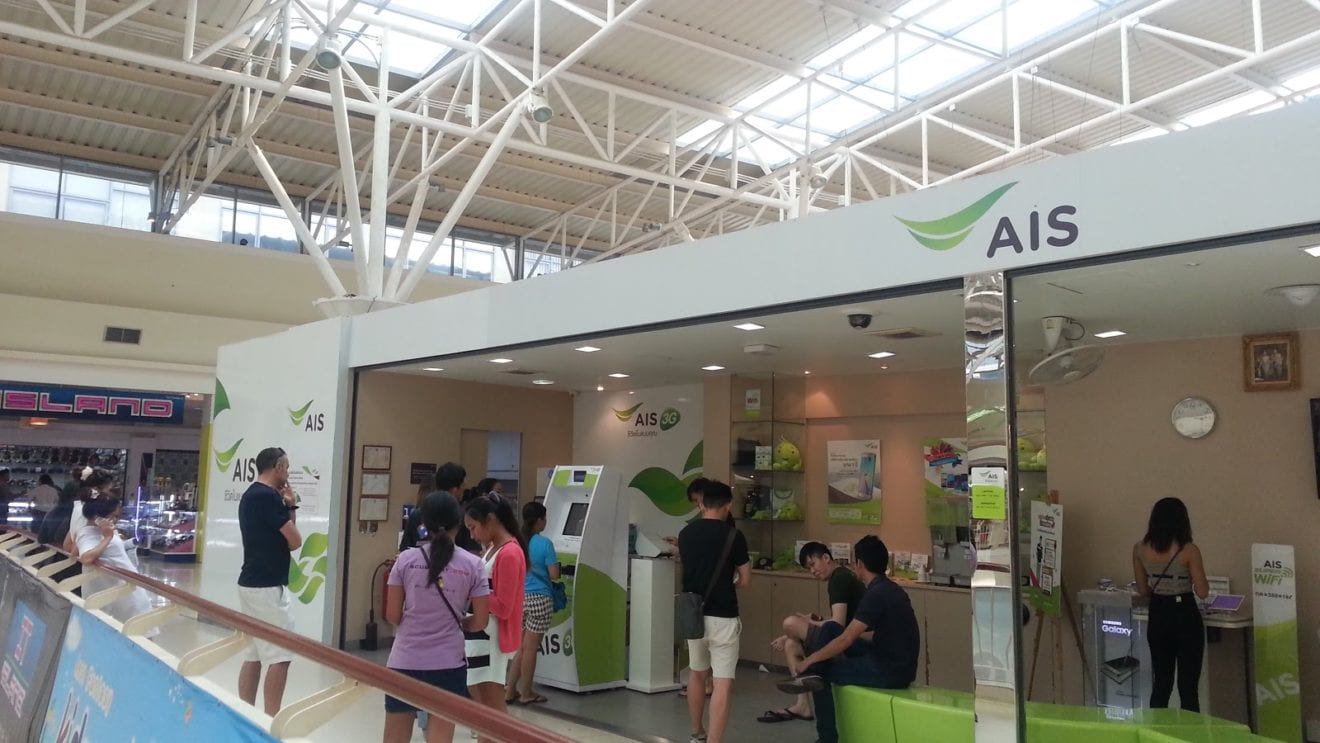
    ZTE and AIS have jointly launched Thailand’s first 5G innovation hub, named “5G A-Z Center.” Both parties have signed an MOU of a strategic partnership to develop 5G tech and enhance the digital infrastructure construction, to bring excellent 5G experiences to Thailand, and strengthen the country’s competitiveness on 5G.

    “We are here because 5G is a technology to power the country,” said Somchai Lertsutiwong, CEO of AIS. “As the network service provider with the most frequency spectra and the best network coverage in Thailand, we prioritize sustainable innovation for the country.”

    Currently, AIS has strategically partnered with ZTE on three components. Firstly, they are upgrading Thailand’s 5G network, not only in terms of speed, but also intelligence, to make the network control itself in real-time. At the same time, both parties have jointly developed solutions for business sectors and enhanced competitive capabilities under Thailand 4.0. In addition, they have delivered a vast range of 5G services to improve the quality of people’s lives in Thailand.

    “Towards the well-being of individuals and industries, the value-based digital development provides Thailand with soil of innovation,” said Xu Ziyang, CEO of ZTE Corporation. “The center is a seed of hope, and the alphabet ranging from A to Z also represents the end-to-end coverage. We will be dedicated to satisfying the needs of people and industries and creating a 360-degree digital and intelligent world.”

    At the center, ZTE has released a series of next-generation RAN products. The AAU (Active Antenna Unit) for 5G mmWave bandwidth, first jointly developed by ZTE and AIS, can support 1.2GHz and increase data throughput by 50%. The power consumption of the next-gen sub-6GHz TDD massive MIMO has decreased by 25%, reflecting the demand of Thailand to provide excellent user experiences. Moreover, the next-generation FDD 3G/4G/5G multi-mode Massive MIMO, with its performance improved by 100% compared to the previous generation, is going to be verified in the center and will be deployed in the network of AIS.

    In terms of 5G industrial applications, ZTE and AIS, with the aim of empowering various industries and promoting digital transformation through 5G, have demonstrated several industry application scenarios at the “5G A-Z Center,” including 5G AGV (Automated Guided Vehicle), 5G machine vision, 5G XR, 5G Holography and so on.

    In addition, both parties have launched the new 5G ZTE Blade A72 handset, which is expected to hit the market in October 2022, alongside other smart terminals such as 5G CPE and 5G Pocket Wifi.

    The cooperation between AIS and ZTE is a crucial step in achieving the goal of becoming a Cognitive Tech-Co by developing the 5G smart autonomous network. Moving forward, both AIS and ZTE will be committed to delivering better user experiences and bringing opportunities to the industries, thereby boosting the digital economy of Thailand.

  • UBS Brings Key4 to Pensions and Retirement

    UBS Brings Key4 to Pensions and Retirement

    Switzerland’s largest bank is expanding its digital offering.

    UBS is making its UBS key4 available to clients saving in 3a retirement accounts or retirement custody accounts, it said in a statement Thursday.

    The offer, which clients can access on their phones, is part of the bank’s range of UBS key4 products. It is available to all users and not exclusively to UBS key4 clients, the statement said.

    It’s never too early to start saving for your retirement. With our fully digital offering for private pension planning, we can give young people in particular access to a very important financial topic. In just a few minutes, they can start paving the way for their future on their smartphones, chief operating officer of UBS Switzerland Sabine Magri, said in the statement.

  • Face mask not compulsory on AirAsia flights

    Face mask not compulsory on AirAsia flights

    Face masks are now exempted on AirAsia Malaysia flights with immediate effect. This comes following the announcement by the government that face masks are no longer mandatory on flights.

    In a statement quoted by Bernama, AirAsia said the use of face masks onboard flights was optional for its guests unless they were traveling to or from destinations that required a face mask.

    However, guests who wish to wear a face mask onboard may continue to do so.

    “All our aircraft are equipped with powerful HEPA filters that remove 99.99% of dust particles and airborne contaminants, including viruses and bacteria. The cabin air is completely refreshed every three minutes to ensure the highest possible air quality throughout your flight,” it said yesterday.

    On Wednesday, the Health Ministry had announced that the wearing of face masks onboard aircraft was no longer compulsory after taking into consideration that aircraft technology had improved and that Covid-19 cases in Malaysia had been brought under better control.

  • Jollibee plots Tim Ho Wan expansion in China

    Jollibee plots Tim Ho Wan expansion in China

    Philippine fast food chain operator Jollibee Foods on Wednesday said it will inject over $60 million into its dim sum chain, Tim Ho Wan, to expand in mainland China, where strict COVID-19 lockdowns have battered the restaurant industry.

    Jollibee, which aims to join the likes of McDonald’s and Yum Brands as one of the world’s largest quick-service restaurant companies, has seen its business rebound as economies reopen. But recovery in China has hit a snag due to President Xi Jinping’s zero-COVID strategy, which relies on lockdowns and wide-scale testing to fight outbreaks.

    Yet Jollibee remains upbeat about its prospects in China, announcing fresh funding for Titan Dining, the fund that owns the Michelin-starred Tim Ho Wan chain.

    Jollibee owns 90% of Titan Dining and will raise its committed capital in the fund to 315 million Singapore dollars ($217 million) from SG$225 million in November, the company said.

    The fresh capital, Jollibee said, will mainly fund Tim Ho Wan’s store expansion and capital requirements.

    Jollibee Foods aims to open 100 Tim Ho Wan branches in mainland China in the next four years. It currently has 11 stores there, mostly in Shanghai.

    Jollibee Foods had over 6,300 branches worldwide under more than a dozen brands, as of August. The company regards China as one of its three key markets. The others are the U.S. — where it has taken over Los Angeles-based Coffee Bean & Tea Leaf and Denver-based Smashburger — and the Philippines, where the company started out as an ice cream shop before becoming an industry leader that outsells McDonald’s in the country.

    Before investing in Tim Ho Wan in 2018, the company had built other businesses in China, such as Yonghe King, a Taiwanese food-inspired restaurant famous for its freshly prepared soy milk, and Hong Zhuang Yuan, which serves congee and other hot dishes. Yonghe King and Hong Zhuang Yuan have 410 and 54 branches, respectively.

    But the pandemic has hit the restaurant industry hard and a recovery in China has been derailed by the government’s continued reliance on strict lockdowns.

    In its latest quarterly report ended June, Jollibee reported record systemwide (franchised and company-owned stores) sales of 73.1 billion Philippine pesos ($1.24 billion), up 44.8% on the year. But while most of its business units expanded during the quarter, China sales fell 28% “due to COVID-related restrictions” that forced the company to temporarily shut some stores.

    Even before the pandemic, China has not always been an easy market for Jollibee, which was founded by company Chairman Tony Tan Caktiong, who was born to emigrant parents from Fujian province.

    In 2017, the company closed over a dozen hot pot outlets after selling its stake in a beef noodle chain as part of a restructuring the previous year. In 2015, the company announced plans to open more than 1,400 Dunkin’ Donuts shops in China over 20 years under a franchise deal, but it had only opened seven outlets as of June.

  • Yoplait launches new Yop range

    Yoplait launches new Yop range

    Yoplait has expanded its Yop drinkable yoghurt brand for teens with a new chocolate variant.

    Pitched as a “permissible treat”, the NPD joins Yop’s existing strawberry and raspberry variants, and will go on sale in Asda from 23 August.

    Yoplait said the new variant contained no colouring and was “ideal for larger families and is great for portion control on the go”.

    The product’s bottles are made from high density polyethelene (PEHD), which Yoplait said was the safest and “most commonly recycled plastic”.

    “Teens love our fruit flavours as the ideal snack or lunchbox addition, so we’re confident they’ll enjoy our new, more indulgent chocolate variant,” said Joanna Goodman, head of marketing (northern Europe) at Yoplait’s current owner General Mills. The brand is in the process of being sold to French dairy co-op Sodiaal.

    “Yop sales have increased by 12.6%, boosting household penetration by 72.6%. We’re confident there is a huge opportunity in the months ahead for dairy drinks, both at-home or whilst on the move as the on-the-go market starts to recover.”

    It comes after the brand announced earlier this week it would shift the standard Yop range away from white PET plastic to clear PET from 2022.

    Yoplait had come under criticism from comedian Joe Lycett over the recyclability of white PET earlier this summer. However, the supplier said it had been working on the packaging improvement in advance of his criticism, with the switch featured this week in his new Channel 4 consumer affairs show Joe Lycett’s Got Your Back.

  • Gelatissimo debuts new gelato pint range in Coles

    Gelatissimo debuts new gelato pint range in Coles

    The frozen food aisle at one major supermarket has just gotten a brand new addition with a popular dessert making its grocery shop debut.

    Ice cream chain Gelatissimo has launched tubs of ice cream that can be picked up at your local Coles supermarket, making some of the brand’s favorite flavors available outside of its own stores for the first time.

    The five flavours will be available from September 28, with a price discount for the first two weeks on shelves.

    The flavours include Caramel Cookie Butter, Cheesecake Swirl, Decadent Chocolate, Peanut Butter Brownie and Italian Hazelnut.

    “We developed this range with our loyal family of customers in mind,” Gelatissimo’s head of product innovation Filiz Kaya said.

    “We looked at our most popular flavours as well as ones that have stood the test of time, then also considered current trends both here and around the world to create this range.”

    The products will be available at Coles.

    Gelatissimo has 42 stores in Australia as well as 26 others around the world.

    It comes as the gelato business celebrates it’s 20th anniversary, with plans for several new stores in Australia by the end of the year.

  • Google reiterates cool new features coming to Google Maps

    Google reiterates cool new features coming to Google Maps

    Google is teasing new features that are coming to Google Maps including Immersive View. Using a combination of Artificial Intelligence, Street View, and aerial images, this feature is designed to take you into an area that you’re planning to visit (using your phone’s screen), add the current weather and traffic, and even allow you to virtually enter a store or a restaurant. With Immersive View, you can get used to the restaurant you have reservations for and even know what to expect in terms of the size of the crowd.
    As an example, Google shows how Immersive View can show you what it will be like to view a ball game at Oracle Park. You’ll see in advance where the parking lots and exits are, see what the weather will be on the day of your visit (so you can dress accordingly) and allow you to take a virtual walk around the restaurants near the ballpark so you’ll know where to go to eat before or after the game.
    Immersive View will be available on Google Maps (on iOS and Android) over the next few months in Los Angeles, New York, San Francisco and Tokyo. It will also be available in more cities in the future. Earlier this year we wrote this about Immersive View: “If you want to know what the atmosphere is like inside a restaurant, with Immersive View, you’ll be able to swoop down to street level and get a peek of the inside of the eatery.”
    With Neighborhood Vibe, Google Maps can tell you what makes a particular neighborhood special. Is it an area for foodies? Is it an area with an “artsy vibe?” You can find out by exploring photographs of a particular neighborhood to see what it looks like.
    And using Search with Live View, Google bring Augmented Reality (AR) to your phone. You might be familiar with Live View which allows you to see arrows and directions on your screen layered over a live feed from your phone’s camera. Live View is used to navigate walks in certain cities using Google Maps. Search with Live View will allows you to search and find certain things in your area such as ATM machines.
    Chris Phillips, the VP and GM of Geo at Google told reporters, “You can also see coffee shops, grocery stores and transit stations. You really get a sense of what an area is like at a glance. You can even see the business hours of a place that’s down the street. It’s an amazing way to bring it all together at once, it really simplifies the experience and gives you confidence when you’re trying to see what’s around you in that moment.”
    Over the coming months, Search with Live View will be available in London, New York, Paris, San Francisco and Tokyo for both iOS and Android users. Google, which revealed many of these new features during its I/O developers conference in May, mentioned them again during its Search On 22 event held on Wednesday. Google also released a video of the event for those who might have missed it.
    Google is also allowing developers to include Google Maps eco-friendly navigation with their apps. This will allow food delivery or ride share drivers using Google Maps to help them navigate, take routes that are more fuel efficient. Developers will be able to allow users to select the kind of engine being used to make this feature even more fuel-efficient. This will be available later this year in areas where Google already offers eco-friendly routing such as in the United States, Canada and parts of Western Europe.
    These features will be coming to Google Maps during the coming months. The company says that they are part of its efforts to build a “visual-first” Maps experience so that users can more naturally navigate the world.
  • Gold prices dip further after two-month low

    Gold prices dip further after two-month low

    Vietnam gold prices continued to fall Wednesday after hitting a two-month low as the precious metal faces pressure from the surging U.S. dollar.

    Saigon Jewelry Company (SJC) sold its gold at VND64.5 million ($2,716) per tael in the morning, down 1.68% from Tuesday. VND million per tael (VND1 million = $42.11)SJC gold price

    Other companies also let prices slide down by roughly the same rate. Global gold price has gone down 0.31% this week to $1,625 per ounce as the USD Index has gone up nearly 0.4% in a single day.

    Also global gold price improved slightly Tuesday, “it was just a little bit of a recovery after some of the extreme weakness seen over recent days,” said Ryan McKay, commodity strategist at TD Securities.

    He said that the rebound did not show really fundamental change taking place in the gold market.

  • Starbucks opens its 6,000th China store

    Starbucks opens its 6,000th China store

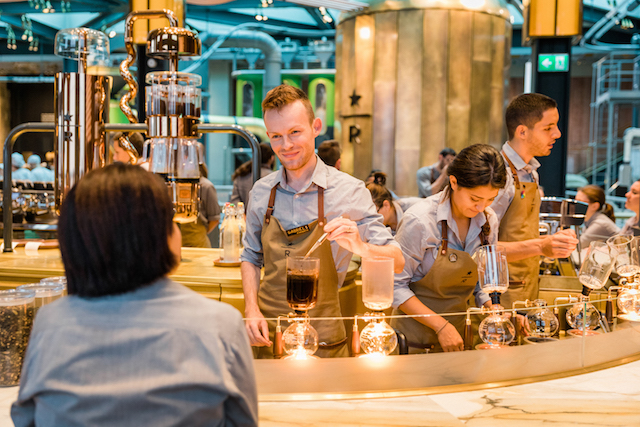
    Starbucks Tuesday celebrated its 6,000th store in the Chinese mainland, located in downtown Shanghai. Shanghai thus became the first city in the world to have 1,000 Starbucks stores, Starbucks China said.

    In 2018, Starbucks announced it would have 6,000 stores on the Chinese mainland by the end of its fiscal year in September 2022. The company achieved that as scheduled despite challenges, including the COVID-19 pandemic.

    Starbucks opened its first store on the Chinese mainland in January 1999 in Beijing.

    The number of Starbucks stores on the Chinese mainland has grown dramatically over the past decade and is expected to grow to 9,000 by 2025, creating 35,000 new jobs, according to the company’s strategic plan released recently. Starbucks China also revealed a plan to set up its first digital technology innovation center on the Chinese mainland over the coming three years.

    A Starbucks coffee creative park in Kunshan, east China’s Jiangsu Province, is expected to be completed and start operating in the summer of 2023.

    Starbucks Tuesday celebrated its 6,000th store in the Chinese mainland, located in downtown Shanghai.

    Staff members work at a Starbucks store in downtown Shanghai, east China, Sept. 27, 2022. Starbucks Tuesday celebrated its 6,000th store in the Chinese mainland, located in downtown Shanghai.

    Shanghai thus became the first city in the world to have 1,000 Starbucks stores, Starbucks China said.

  • Chinese snap up used Rolexes, Birkins amid slowdown

    Chinese snap up used Rolexes, Birkins amid slowdown

    China’s coronavirus-driven economic slowdown is proving to be a boon for Mr Zhu Tainiqi, the Shanghai-based founder of second-hand luxury goods marketplace ZZER, who is now scouting for shop space to expand the business.The former venture capitalist is seeing a surge in people looking to sell their Hermes Birkin bags or Rolex watches to raise cash, as well as a jump in interest from belt-tightening shoppers.

    “More and more people are now aware they can sell luxury goods for some money and the buyer side is noticing that they can get a great deal,” said Mr Zhu, 33. “They think, ‘Why not give it a shot?’”

    He said the number of ZZER’s consigners, or people putting up their goods for sale, has soared 40 per cent so far in 2022 over the same period of 2021. The platform now has 12 million members and expects to sell 5 million luxury pieces this year.

    The trend indicates a significant change in China’s US$74 billion (S$107 billion) luxury goods sector, where the second-hand luxury sub-segment has been slow to take off versus other markets such as Japan and the United States due to a preference for newness and fears of unsuspectingly buying a fake.

    It could have ramifications for the China-focused strategies of the world’s big luxury goods makers, who are grappling with softening demand in the key market.

    “I think because of China’s interest…that can really move the needle for some brands to think about how they’re going to handle this (resale) market, and what role they are going to play in the whole process,” said Ms Iris Chan, a partner and head of client development at consultancy Digital Luxury Group.

    China’s second-hand luxury market is tipped to grow to US$30 billion in 2025 from US$8 billion in 2020, consultancy iResearch said late last year. New estimates from this year are yet to be released.

    Office worker Wang Jianing is exploring buying second-hand luxury products, given the economic climate.

    “My consumption will definitely be downgraded (this year), but I still like what I like, and I can’t control the desire to buy it,” she told Reuters, standing in front of a wall displaying Louis Vuitton and Gucci bags in ZZER’s cavernous downtown Shanghai warehouse.

    The company, which started as an online platform in 2016, began opening offline stores in Shanghai and Chengdu last year and is now looking for more shop space in Beijing, Guangzhou and Shenzhen.

    Besides ZZER, other top platforms are local names, such as Feiyu, Ponhu and Plum. Each of them drew tens of millions of dollars in venture capital funds in 2020 and 2021 with an eye to improving authentication practices, widening customer reach and, in some cases, moving from online-only to online-offline models.

    China’s luxury resale marketplace is expected by analysts to remain dominated by local players for now. International companies such as Vestiaire Collective and The RealReal are yet to enter the mainland China market and confirmed to Reuters they have no immediate plans to do so.

    Though handbags remain the top-selling category on luxury platforms such as ZZER, Mr Zhu said sales of watches and jewellery are also growing fast.

    While a nylon Prada Messenger or Fendi Baguette bag sells for 30-40 per cent less on resale platforms than in luxury boutiques, some products have seen the price gap widen further as more consigners rush to sell goods online.

    Veteran vintage seller Ou Huimin, who opened her Ding Dang store in Guangzhou a decade ago and also sells country-wide via livestreams, said speculators in the market have sent prices for top-tier luxury goods soaring.

    Ms Ou said Rolex Submariner watch prices rose almost 250 per cent between 2020 and 2021, but have pulled back as much as 60 per cent this year.

    “Now consumption has become more rational,” she added.

  • Apple moved iPhone 14 production out of China in mere weeks

    Apple moved iPhone 14 production out of China in mere weeks

    Apple is trying to diversify its supply chain away from China on rolling pandemic lockdowns there, as well as geopolitical headwinds between US and China, on one hand, or China and Taiwan, on the other, as that’s where the headquarters of its main assembler Foxconn is located.

    Foxconn, however, has also built operations in India, in factories near Chennai, and Apple’s iPhone 14 production diversification effort there went so well, that it was able to start shipping phones made in India mere weeks after the Chinese output instead of the two months expected initially.

    According to Jeff Pu, an analyst with Haitong International Securities, “India is now an attractive location for manufacturing as it offers better labor cost structure while Apple is looking to reduce geopolitical risks,” while Aruna Sundararajan, a former government secretary there, adds that “all major companies are now looking at India as part of their ‘China-plus one’ or ‘China-plus two’ strategy.”

    When asked for a comment on the successful transition of part of the iPhone 14 production schedule from China to India, Apple simply commented that it is “excited to be manufacturing iPhone 14 in India,” somewhat confirming that the conveyor belt launch has been smooth and earlier than anticipated.

    Apple started its production plans in India slow, with lowly entry-level iPhones like the SE, assembled by Winstron, then moved up the ladder to handsets like the iPhone 13 in the newfangled Foxconn factories.
    It typically doesn’t start manufacturing there on the same year the iPhone models are released, but 2022 is apparently different as it is in a hurry to diversify production away from China.
    Coordinating hundreds of component and critical material suppliers, delivering assembly equipment, and training a competent workforce must have been a Herculean task. Tim Cook’s supply chain management knowledge and Foxconn’s production prowess must have coalesced to shine with an iPhone 14 Indian production mere weeks after Foxconn started assembling the new series in China.
  • Gold prices dip further after two-month low

    Gold prices dip further after two-month low

    Vietnam gold prices continued to fall Wednesday after hitting a two-month low as the precious metal faces pressure from the surging U.S. dollar.

    Saigon Jewelry Company (SJC) sold its gold at VND64.5 million ($2,716) per tael in the morning, down 1.68% from Tuesday.

    Other companies also let prices slide down by roughly the same rate.

    Global gold price has gone down 0.31% this week to $1,625 per ounce as the USD Index has gone up nearly 0.4% in a single day.

    Also global gold price improved Tuesday slightly, “it was just a little bit of a recovery after some of the extreme weakness seen over recent days,” said Ryan McKay, commodity strategist at TD Securities.

    He said that the rebound did not show really fundamental change taking place in the gold market.

  • Rubber industry faces uncertain profit prospect

    Rubber industry faces uncertain profit prospect

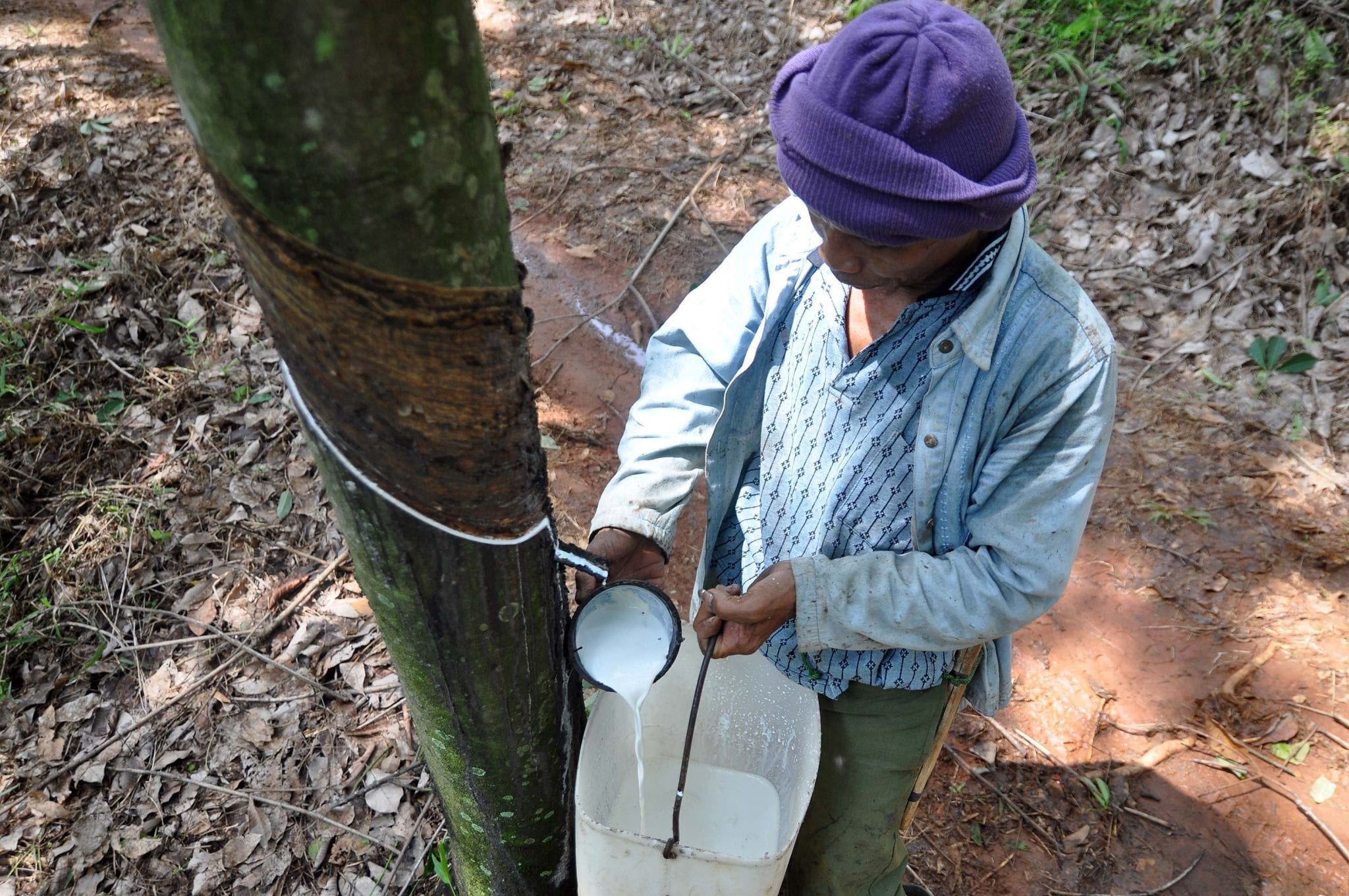
    Rubber companies in Vietnam are facing a cloudy profit prospect for the remaining months as global demand falls and input costs surge.

    Vietnam Rubber Group expects profit to flatten at VND5.34 trillion ($225.13 million) this year and revenue to rise a mere 5%, as prices have been falling due to low consumption while input costs have been rising.

    Phuoc Hoa Rubber saw its second-quarter profit dropping by a third to VND54.80 billion and revenue plunging nearly 50% to VND231 billion, while Da Nang Rubber Company saw profit falling nearly 22% to VND83.88 billion.

    Both said that rising input costs and decreasing sales were the main reason for the profit drop.

    Global rubber prices have fallen by a third year-on-year to around $1,750 per ton due to geopolitical tensions, the shortage of containers, rising transportation and slow customs clearance globally.

    Vietnam export rubber prices had dropped by 7.6% year-on-year to $1,516 per ton in August, the fourth monthly fall in a row.

    China, the biggest importer of Vietnam rubber, paid 9.3% less year-on-year at $1,474 per ton. The decline in consumption in China is said to be the reason for the drop.

    But the Association of Natural Rubber Producing Countries is optimistic about the short-term prospect of the rubber market, as it estimates that the world is in short of 93,000 tons of natural rubber.

  • Moving CX From Engaging With Service Providers to Deep Interaction With Products

    Moving CX From Engaging With Service Providers to Deep Interaction With Products

    Telstra’s Angela Logothetis, keynote speaker at FutureNet Asia, which is set to take place on October 18-19, at The Westin, Singapore, explains how the next phases in automation are to constantly evolve customers’ experiences of using cloud, edge and network products.

    Ms. Logothetis is executive group owner of edge, cloud and industrial networks at Telstra, which encompasses dedicated and private networks. Her job is to accelerate the adoption of these technologies by enterprises in parallel to and stimulated by the convergence of “the best of global compute with Australia’s best connectivity.” Although she has only been in her post at Telstra since February of this year, her rounded CV has prepared her as well as any for her pioneering role in crucial new territory for Australia’s biggest telecoms service provider.

    “We are really looking at automation from the aspect of how we best deliver an amazing product experience to organizations across Australia. Our automation goes all the way from our network through our IT stack and to the way we build strategic partnerships, including with cloud hyperscalers. We want automation around all those capabilities and to make them modular and expose them through APIs,” Logothetis states.

    She stresses the importance of decoupling the architecture “to build a highly digital, highly automated, amazing product experience using those capabilities. This enables us to be intuitive and agile in what we can deliver to the market; quarter after quarter, we’re getting more and more product experience out to the market. The [decoupling approach] gives us a high degree of reuse: I can reuse the capabilities in edge products. I’ve used them in cloud products and private network products. We are starting to get that consistency of experience across products as well.”

    The modular, API-enabled operating model is also fundamental to collaborating efficiently and effectively with partners. Telstra works with cloud hyperscalers as its cloud compute and edge compute partners, plus some of the large data center vendors and dominant OEM-type vendors. In this ecosystem, Telstra takes on either part or all of its partners’ technology stacks in this modular way via the APIs, then figures out “how we bring that together into a product we can market to our customers,” Logothetis explains. “Luckily, I work with partners that are building technology natively in this way.”

    She clarifies that “natively” in this context means both cloud native and softwarisation – building offers as-a-Service using APIs. She notes, “We are doing that inside Telstra and relying on our partners to do it so we can create this experience for the customer.”

    Automation Beyond Self-Service

    “People tend to think about automation as being about how a customer buys something from and engages with an organization; the order-to-activation process has always been key for telcos…Once we start to build automation, we look at the onboarding experience to make it faster and simpler for customers, so it’s just a clicking this or swipe that type of exercise.”

    Logothetis further stresses, “We have very good digital portals, in the consumer and enterprise spaces, and will continue to develop them. But the more recent innovation we’re working on with our customers is understanding how they use our products and what they want, including using telemetry data.” For example, if a Telstra customer has a cloud tenancy, how can they scale it up or create a new tenancy? How can they add AI on top of it? How can they move the tenancy closer to them? In other words, “It’s less of an interaction with us through a digital channel and more of an interaction with the product itself,” she details.

    While in the first instance, automating this product interaction is geared to the enterprise market where Telstra expects “really deep engagement with products,” according to Logothetis, “I think as we look out into AR and VR augmented and virtual reality, immersive experiences, and the metaverse – depending on [what] it ends up being – it becomes a very similar sort of scenario, right? It’s about how consumers engage with the product or act inside the product versus engagement between them and our organization.”

    Cloud Matters

    In the meantime, she says, “We talk about key things like hybrid and multi-cloud, which enable our customers to put their workloads in the place that best meets their demands. Some are best placed in the public cloud with any one of a number of public cloud vendors. For sovereignty and security reasons, some might need private cloud. For legacy reasons, some might run virtualized technology on a public or a private cloud. Other customers want private cloud workloads. We offer that spectrum.”

    Telstra has multiple partners at all layers of the cloud stack, and this is where edge compute comes into play. Logothetis says, “We start to talk about distributed computing, because customers will have more and more applications and data workloads with unique sets of requirements. Some they’ll want to have much closer to them because it’s data intensive – they want to collect, store and process the data close to where it is – or because they need actionable insights from it to correct a safety issue, say, or change a manufacturing process.”

    Distribute, Compute

    However, these needs might only apply during the day, not overnight, when instead some applications could run at the network edge or in the cloud. Logothetis explains, “I think this notion of distributed compute, with very good connectivity between it, and some smart software sitting on top, for an enterprise or a government organization, places workloads in the right place at the right time.

    “That’s what we’re working on. We already offer all those components today but where we see this industry and demand heading is that all those components work seamlessly together.”

    This is not an easy undertaking. So what are the challenges in this level of automation? And are the limitations of AI an issue? Logothetis’ view is that it depends on what you’re trying to automate and why. She says, “From my role, the trickiest thing is to establish what we are trying to deliver to the customer – a better experience of something they have today or using automation to come up with a fundamentally different experience, maybe something that didn’t exist before.”

    Starting With Desired Outcomes

    It’s refreshing to find an organization that starts by thinking about what they want to achieve and then reverse engineers to where it is today to figure out how to get there. It’s more common for telcos to focus on a shiny new piece of technology, then figure out what they can do with it and how to justify the investment. This common wrong-headedness is often compounded by technology becoming “legacy” at the fastest rate ever.

    Logothetis agrees, and furthers, “That all comes back to the principles of decoupled architecture with the APIs around it; then building this product experience we’ve talked about on top of that – that architecture and that way of interacting will enable us to be really agile in getting things to market and changing things quarter on quarter, based on what we see the customers doing with it.”

    Internal Ops Enable External Experience

    Telstra is also working on AIOps because, as she says, “If you have a highly manual back office or operations, it is very difficult to automate the experience. Even if it looks great on the surface, underneath, it’s like those images of swans sitting serenely on the surface, but their feet are moving frantically under the water. So internal automation and customer experience absolutely are linked, but not tightly coupled because we take a modular approach that is API-driven; then build this experience layer on top. As things change in the underlying organization or in the capabilities of ecosystem partners, we can bring things in without having to build a brand new product from scratch.”

    Logothetis emphasizes how important this is and that the ecosystem is “developing very quickly, particularly around the edge cloud and in private networks. The customer-facing parts are very much an ecosystem play, because customers want a broad spectrum of capabilities, and there’s no single vendor that they want to be totally tied into. Customers want multiple different things, and a big part of our role is to work as a part of that ecosystem and make it easy for our customers to work in that ecosystem as well.”

    She concludes, “We need to build the ecosystem from the experience for the customer and the engagement with the product, as well as building automation behind scenes, which is probably what you hear most about in the industry – things like automating provisioning and billing. That’s happening, but what we’re doing is really interesting – the automation of experience and interaction with products.”

    A version of this article was first published in September 2022 on the FutureNet World website.